Light in the Darkness by Lesa Cline-Ransome, illustrated by James E. Ransome, 2013.
As the subtitle of the book says, this is “A Story About How Slaves Learned in Secret.” During the history of slavery in the United States, slaves were often forbidden to learn to read, and there were punishments for people who taught slaves to read. These anti-literacy laws were the norm for most people prior to the Civil War. However, there were some slaves who managed to acquire some basic reading and writing skills in secret, in spite of the anti-literacy laws, and that is what this story is about.
The story is told from the point of view of a young slave, Rosa. Rosa’s mother wakes her in the middle of the night, and they sneak out to go to the secret reading and writing lessons. They have to be careful because there are patrollers out, looking for runaways and slaves who are doing what they’re doing.
The risks are serious because slaves are whipped for learning how to read. Rosa and the other slaves were once forced to watch a girl being given a lash for each letter she learned. The slaves who go to this secret school know that the same thing will happen to them if the patrollers catch them and turn them in to their master.
The man teaching the secret school, Morris, was taught to read Bible stories by his master’s wife when he was young, although nobody expected him to teach other slaves. Morris’s “school” is an improvised pit hut, a pit dug in the ground and covered over with branches. He uses sticks to show his students the shapes of the letters by the light of a lantern.
During the day, the slaves who go to this secret school have to proceed with their usual chores and pretend like they don’t know anything about reading and writing at all. By night, they help each other learn their letters. It’s a slow process, and sometimes, they can’t hold the school because they know that patrollers are traveling the area, and it’s too dangerous. However, they keep coming back when they can because this is important to them. They are doing something that their masters don’t think they’re bright enough to do, and they know that this secret knowledge will be an important tool in their eventual quest for freedom.
My Reaction
I thought that this was a good book, focusing on a particular area of history that isn’t always explored in detail in other sources. I’ve read other books that refer to slaves, both real and fictional, as having found ways to read in secret, but this book focuses solely on that process, how they managed it, how they organized others to participate, what the risks were, and what it meant to them. There is an Author’s Note in the back of the book, which explains that the author was doing research for a book about Frederick Douglass when she found a reference to “pit schools”, like the one in the story, where slaves would meet in secret for lessons from each other. I had never heard about pit schools before, and I found the concept fascinating.
The subject of education and literature is a particular sore point for me when it comes to the Confederacy, and I’m sure I’ve mentioned it before. Slavery apologists sometimes talked about how slave owners treated slaves like “family” and taught them to read and gave them Bible lessons, etc. These claims have been made since the 19th century, and you can see it in plantation or “anti-Tom” literature, including some 19th century and early 20th century books for children. (I discussed this earlier in my list of Books from the 1850s, the decade when Uncle Tom’s Cabin was published. “Anti-Tom” literature was a direct response to that book.) However, such lessons were actually forbidden by law in most slave-owning areas. There were exceptions to this rule, like Phillis Wheatley in the 18th century and Frederick Douglass in the 19th century, but the reason why these people became famous was because they were the relatively rare exceptions. Only a small percentage of slaves ever achieved any level of literacy, and of those who did, few received any help from their masters or their masters’ family because the practice was discouraged more than encouraged, with laws and punishments in place against it. In real life, Frederick Douglass received some basic lessons in reading and letter recognition from the wife of one of his masters, but that ended when his master found out about it and made his wife stop.
I never believe those stories about slaves and masters being just one big, happy family or the assertion that it was common for masters to benevolently educate their slaves to better their lives because I already know that was not at all the case for the vast majority, by design, with intention, and enforced by law. The “history” books produced by the United Daughters of the Confederacy particularly try to create this impression of slavery as a benevolent institution, but actual benevolent institutions do not have laws that specifically restrict both the personal development and freedom of movement of the people they serve with harsh physical punishments for violations. I resent the mere existence of these history books and the organization that produced them because I resent anyone who lies to me (whether directly or indirectly or even by omission or implication) about anything important, and it is personally insulting to me that they would think I would ever be dumb enough buy that bunk. I’m sure they didn’t mean it as a personal insult to me because they’ve been doing it since long before I was born. I’m sure they have no idea who I am and couldn’t care less about me as a person, but at the same time, the fact that they did it at all carries an implied insult to anyone who may potentially believe them or is pressured to read and believe them. They must either think very little of other people’s intelligence or simply never think about other people outside of their own family lineage at all except as resources to be used or manipulated for social aggrandizement. I don’t blame people for merely having ancestors who owned slaves, but when someone works hard to make me believe that slavery wasn’t bad, that their ancestors weren’t bad for doing things they admittedly did, that I don’t really know the things I actually do know about that, and that I should not only be respectful but reverent toward these people and their institutions, I blame them a lot, specifically for that. When I was young and found out about censorship, propaganda, and book burnings, I daydreamed about writing something that would personally offend this type of person as much as they offended me, and it seems like the best way to do that is just by telling the truth about history.
Although some people like to think of people in the past, especially their own ancestors and family, as being above average, most people are average, by definition. It’s not that it never happened, because I know that it did in rare cases, but most people are simply not rare exceptions. If they were, the average would have looked very different indeed, and those anti-literacy laws would not have existed in the first place, but that’s just not the reality. The reality is that those laws did exist, and most people both followed and enforced them because they both agreed with them and feared the consequences of disobedience. Most people, by definition, are basically average, and this is just what the basic average was. The average slave-holder was harsh, punitive, anti-education, and far more interested in what they could get out of their slaves than in the slaves themselves because that was the entire reason for having them in the first place.
Plantations were not non-profit organizations, and they were not run like non-profits as tools for the welfare and social betterment of clients. Non-profits serve others. Slave owners forced other people to serve them, and that’s seriously all there is to it. Slave owners were takers, not givers, although I’m sure that they engaged in occasional public philanthropy for the social cred because one of their primary goals was climbing that all-important social ladder and maintaining their place on it. Plantations were family businesses for the wealth and social betterment of the families who owned them, designed to maximize profits, and the profits were meant entirely for the owners and no one else.
In the story, Morris becomes a teacher for the other slaves because he is the rare exception among them, having had lessons from his master’s wife when he was young. Most were not given any lessons at all, and both the slaves and their potential teachers could face serious consequences if they were caught. Everyone knows that, if Morris is caught teaching the others, he will be punished much worse than the rest of them. They’re all taking a serious risk, but Morris is in the most danger if they are discovered.
Those who cannot remember the past are condemned to relive it.
Santayana
It’s an appropriate quote for the story, which is about memory and a repeated wrong that has led to a seemingly endless cycle of violence. The story is framed as having been told to the author by the boy who actually had this frightening adventure.
Kenny Huldorf is unhappy when his parents decide to move the family from California to Rhode Island. Kenny was happy in California, the weather was much better there, and the streets and buildings in Rhode Island all seem small and old. The house they move into is called the Daniel Stillwell House, and it was built in 1789. Right from the beginning, the house gives Kenny a strange feeling, like there’s something or someone there when there shouldn’t be anyone or anything.
Kenny starts to feel better when his parents give him the big, renovated room with the private bathroom in the attic of the house. He likes that room, but there are two smaller rooms off the attic that haven’t been renovated, and they give Kenny a strange feeling. His parents think they were probably old servants’ quarters. One of them has a stain on the floor that makes Kenny think of death, and even more frightening, Kenny gets an odd sense that, somehow, it’s a death he may be responsible for. For a time, Kenny tries to tell himself that it’s nothing but an old stain and occupies himself with unpacking and getting settled. Since school hasn’t started yet, Kenny gets bored and does some exploring of the area. He starts wondering about the history of the town and the house.
Then, one night, Kenny hears a strange sound from the room with the stain. When he goes to investigate, he sees a pair of ghostly, glowing hands reaching up out of the stain on the floor. The hands pull the rest of the ghostly person out of the floor, and Kenny can see that it’s the figure of a boy. When the boy tries to reach out to him, Kenny reacts defensively, and the ghost boy seems frightened and vanishes. The next day, Kenny asks his parents if they believe in ghosts. His father says he doesn’t but that Providence is a very old town and a lot of things have happened there over the years. His mother later says that she doesn’t really believe in ghosts either, but she believes that places have memories. Kenny’s parents conclusions seem to be that Kenny is sensing the general history of the town, but Kenny feels that it’s something more specific than that, that the ghost he saw is a specific person from a specific incident in the history of the house.
The family was given a scrapbook with a list of former owners of their historic home, so Kenny decides to do some research about the past owners and see if he can learn more about where the ghost came from and who it is. When he arrives at the local Historical Library, Kenny is surprised to find out that someone there is expecting him. He is directed to the office of an historian named Pardon Willinghast. Willinghast tells Kenny that he keeps track of the owners of historic homes, which is how he and others at the library recognized his last name, and he expected that someone from the Huldorf family might come to ask about the house. Kenny gives him the list of past owners and asks what Willinghast can tell him about them. Willinghast looks at the list of names and says that there probably won’t be much about them in the library but that he’ll do some research and see what he can find. Kenny also gets the idea to have the local pharmacy test a sample of wood from the stained floor to find out what the stain is.
The next time Kenny sees the ghost, he tries to talk to the ghost boy and ask him who he is. The ghost has trouble talking but manages to communicate one word: “slave.” The pharmacy tells Kenny that the stain on the wood is human blood. They can tell that the stain is more than 100 years old, which is why they haven’t reported it to the police, like they’d have to with a recent blood stain. When Kenny talks to Willinghast again, he wants to know about people who lived in his house over 100 years ago who might have owned slaves, which limits the scope of his investigation to the first three families who owned the house. Willinghast is oddly vague in his reply, and when the subject of abolitionists comes up, he makes vague references to “agitators” and people who want to “rush history.” When Kenny tries to ask him about a murder that may have occurred in the house, Willinghast becomes agitated himself and tries to discourage Kenny from inquiring further. He says that if a slave was murdered, it probably wouldn’t even have been reported in a newspaper because it wouldn’t have been considered important.
However, now that Kenny understands that a young slave was murdered in his house and is still haunting it, he can’t leave the situation alone. He continues trying to communicate with the ghost boy, and the ghost gradually finds it easier to talk to him. He says that his name is Caleb and indicates that he is tied to the stain on the floor. He can’t seem to move very far from it. He says that he’s a memory of what happened there. He is aware that he was murdered, but he doesn’t know who did it because he was killed in his sleep. He senses that he was killed by someone who wanted to keep him a slave because he and other black people were trying to free themselves from slavery. Kenny asks Caleb if there’s anything he can do to help him, and Caleb asks him to find his murderer. Kenny asks how he can do that when the murder happened so long ago.
Then, the attic changes, and Kenny finds himself back in the past, in Caleb’s time. Kenny looks out the window and sees a strange man in a black cape watching the house. As he explores the town, he witnesses a public argument about slavery and someone asks him to deliver a note. The next morning, Kenny is back in his own bed, in his own time. When Kenny talks to the ghost again, he describes what he saw in the past, and Caleb recognizes these events and people as being part of the circumstances that led to his death. He has trouble believing that Kenny really cares about what happened to him so long ago. He says that white people have broken their promises to him before, but Kenny insists that he does care and that he wants to not only solve his murder but prevent it so Caleb can finally be free from haunting that room.
However, that’s going to be even more difficult than Kenny thinks. On his next trip into the past, he discovers who their true enemy is: Pardon Willinghast. Willinghast isn’t just an historian. Almost like Caleb, Willinghast is memory, a piece of the past that keeps coming back to haunt the people who live in Caleb’s old house and who have tried to help Caleb before. Willinghast has figured out that if someone from the future comes to the past and they lose something they’ve carried with them or if they get hurt or change themselves in some way, they can get stuck in the past, seeming like ghosts to the people there. (Or, so he says.) He has used this knowledge before against other people who have tried to help Caleb, blackmailing them into helping him instead. Now, he has the lucky key chain that Kenny always carries with him. Until Kenny gets this key chain back, he’s stuck in the past, and Willinghast won’t return it until Kenny does what he wants. In fact, he implies that Kenny is already doing what he wants, leaving Kenny to wonder if he’s accidentally leading Caleb into a trap while trying to help him escape from one.
Kenny set out to help Caleb, but he’s in danger of becoming a part of the same cycle of murder that has been repeated over and over for almost 200 years. As Kenny tries to help Caleb, he knows he’s being manipulated by Willinghast into playing a role in a very old story, but since he doesn’t have a copy of the script, he struggles to figure out what has to change to break the cycle. Can he find a way to break cycle and escape without either himself or Caleb losing their lives?
Th book is available to borrow and read for free online through Internet Archive (multiple copies).
My Reaction and Spoilers
This is a book that I remembered from when I was a kid, but strangely, I’m sure that I never heard the end of it back then. I’m having trouble remembering exactly why I never heard the end. I think it might have been one that a teacher was reading aloud, and maybe I was absent the day she finished it. Either that, or I started reading it myself and chickened out before the end because I was spooked.
This book poses a kind of “gun-to-your-head” type of decision, forcing both Kenny and the readers to consider what they would do if they were forced to make a choice between two horrible options. In this case, Kenny is put into the position of being pressured into committing a murder or being trapped forever in the past. Willinghast committed the original murder, and he tells Kenny that the only way he’ll return his keychain to him and let him go home is if he shoots Caleb himself this time. Willinghast is confident that he can force Kenny to do what he wants because he’s done the same to others before him. Other past owners of the house have tried to help Caleb before, but Willinghast has manipulated each of them into betraying Caleb and shooting him instead. These are the betrayals that Caleb referred to earlier. Willinghast claims that each of these people has lost their memory of what they’ve done when they return to their own time, so Kenny won’t have to worry about feeling guilty about killing Caleb. But, if Kenny gives in, he knows that Caleb will remain a ghost, and someday, someone else will also be in Kenny’s position, another pawn in Willinghast’s sick game of endlessly repeated murder. As long as Willinghast gets his way, not only is Caleb going to be his perpetual murder victim, but every person who tries to help will continue to be victimized and forced to participate in his bloody crime.
There is also a deeper theme to this story. Violence begets violence, and hate begins hate. Murder, revenge, hatred, and yes, also slavery and racism, are part of violent cycles that draw other people into them long after the original deed was done. People are haunted by the past in many ways … especially those who feel like they’ve got something to prove about it. It’s a theme that’s been very much on people’s minds in the early 21st century, and there are many, like Kenny, who are unwilling to be pulled into going along with violence, murder, racism, and everything that goes with it just to save some past people’s public images or some modern people’s egos.
Willinghast has correctly realized that the reason why he’s able to come back is because he’s a part of Caleb’s memory as his original murderer. Every time Caleb’s ghost tries to solve his murder and change the past, Willinghast gets reawakened to interfere. In his role posing as the historian, he rewrites the accounts of Caleb’s death in the archives to trick the people trying to help him. He’s not about truth but manipulation, much like the pseudo-historians who resurface to tell “their truth” when certain controversial topics come up. He has a vested interest in lying to cover up his own shameful deed and to force others into helping him get things his way. Willinghast does not care either about accurate history or about the welfare of future generations; he only uses them to cover up his own misdeeds. He’s used other people to repeat his dirty work before, and he’ll do it again, blaming Caleb each time for bringing it on himself by trying to survive instead of just accepting his own murder and staying dead … unless things are different this time around. The violence ends when someone finally says no and refuses to play along. So, what Kenny is really looking for, in this situation where he seems to be given a choice between two horrible options, is a third option that allows both him and Caleb to escape.
Because the story is framed as one being told by Kenny to the author later, readers know from the beginning that Kenny finds another solution to the problem that doesn’t include murdering Caleb or being trapped in the past as a ghost. The suspense comes from the readers wondering how he’s going to do that. Kenny’s solution isn’t entirely peaceful (spoiler) because he ends up shooting Willinghast, but that could be seen as an act of self-defense, not only saving himself but also Caleb and all of Willinghast’s future victims. It seems like eliminating Willinghast was the only way to end the cycle of murder because it wasn’t really Caleb’s attempts to save himself or bring his murderer to justice but Willinghast’s attempts to cover up his crime that kept the cycle going. Willinghast blames Caleb for trying to avoid being murdered, but the truth is that it’s his original act of murder that created this situation from the beginning and his continual cover-up and recruitment of unwilling abettors that has kept the cycle going. Readers can debate whether there was another way to solve the problem, but once Willinghast is gone, the cycle is broken.
Some might also point out that the reason why Willinghast targeted Caleb in the first place was that Caleb shot one of Willinghast’s associates first, but the reason why Caleb did that was that Willinghast’s associates were violently targeting a black neighborhood, and Caleb was trying to hold them off. Once again, violence begets violence until someone decides not to participate. In the end, Kenny commits a violent act, but the cycle ends because he gets the one person who was at the center of all of the other violence from the beginning. Kenny also remembers everything that happened when he returns to his own time, which brings up a point that I’ve already mentioned but I’d like to explain in more detail: Willinghast is a liar.
The only reason why Kenny knows, or thinks he knows, that Willinghast has power over him and can prevent him from returning to his own time as long as he holds one of his belongings is because Willinghast says so. Nobody else in the story says that, and frankly, Willinghast is a known liar. He was never a real historian. He’s only another ghost from the past masquerading as one to trick people into doing his bidding. He fakes historical records to manipulate people. He is an admitted murderer. He said that Kenny wouldn’t remember what happened in the past when he returns to his own time, so he wouldn’t have to feel guilty about shooting someone, but Kenny remembers everything. This didn’t occur to me when I first encountered this story as a kid, but looking at it now, I can’t help but think, why the heck should Kenny believe anything that Willinghast says about how the time travel works?
At the point in the story where Willinghast tells Kenny that he’s trapped in the past as long as he has his key chain, Kenny already been to the past once and returned from it without either Willinghast’s help or interference. Kenny did not get to the past by Willinghast’s power, but through Caleb’s memories. Willinghast was counting on Kenny to be frightened and confused so that he would rely on his word for what’s going to happen to him in the past and feel like he had something real to lose for not going along with his plans, but even as I read the story, I doubted him. I think what he said about Kenny needing his key chain to return home might have just been another of Willinghast’s lies. I don’t recall seeing anything in the story that proved that Willinghast was right, and it seems that none of his other victim/accomplices put his lies to the test to find out. There is no one else trapped in the past as a ghost because we never see any such people in the story. So, if that hasn’t actually happened to anyone before, how would Willinghast or anyone else know that such a thing was even a possibility?
The fact that Kenny remembers shooting Willinghast also suggests that everything Willinghast said may have been a lie. He claimed that none of the other time travelers retained their memories, so Kenny wouldn’t remember if he shot Caleb. If Kenny wouldn’t remember shooting Caleb, how would he be able to remember shooting Willinghast? Unless Willinghast needs to be alive after Caleb’s death to rewrite people’s memories, it sounds like the idea that Kenny wouldn’t remember what happened in the past was a lie. We never see or hear from the other people Willinghast manipulated, so we don’t know for sure that they had no memories or guilt over what happened. That could be another subject for debate among readers, but from what I saw in the story, I’m thinking that Willinghast should be considered a liar on everything he said. I think the real trap wasn’t that Willinghast was holding Kenny in the past so much as Willinghast was making Kenny believe that he was. Although he tried to make Kenny believe that he only had two choices, Kenny himself found a third one. Perhaps there were other possible choices, but we know that there was at least one more option than Willinghast led Kenny to believe he had.
Because there are violent themes in this story, it isn’t for very young kids, but it does combine some historical details with excitement for kids who enjoy scary stories. There is also some use of the n-word on the part of the villains in the story, so be warned. The story is thought-provoking on the subjects of history and personal choices.
In the end, after Kenny has finished telling his story to the author, he says that he knows that Caleb survived the room where he was murdered before and no longer haunts it. Caleb ran away after Willinghast was dead, but Kenny doesn’t know where he went after that or what happened to him. He finds himself worrying that the violence caught up with him again somewhere else and that maybe he’s just haunting a different house now because the memory of all that was done to him will never end. This is the final question the story leaves readers. Is that how it really is? Is there an end to the wrong, or are Caleb and others like him still ghosts who haunt us all?
This story reminds me somewhat of a YouTube video made by Kaz Rowe in 2022 about the history of ghost hunting. While talking about the history of belief in ghosts and our society’s fascination with ghosts and ghost stories, Kaz Rowe points out that many of our historical American ghost stories focus on moments when our society failed and innocent or vulnerable people suffered. The ghosts that haunt our society often represent unresolved situations – unpunished crimes, unacknowledged injustices, perpetuated wrongs, and tragedies that can’t be undone. There is a feeling that there was more that our society could have done and should have done to prevent needless death and suffering, and that’s probably true. Perhaps some of these problems were the result of people who thought (or convinced others) that they only had one option or just one choice between two bad options – black-and-white thinking, if you will – so they made terrible choices, never considering or choosing to acknowledge that there might be other ways. One of the difficult parts of studying history is considering the choices not made and the things people of the past left undone. It does create an unsettling a sense of the unresolved, that the past is still with us and haunting us today. What Kaz Rowe was talking about is that part of the interest in communicating with ghosts is that sense of the unresolved. There were people in the past who needed help and didn’t get it, people whose voices weren’t heard when they needed someone to listen, and people who suffered when no one seemed to care. When people reach out to ghosts, they seem to be saying that, even if no one heard them or cared about them in their time, someone does care now and wants to hear what they have to say. We don’t have the ability to go back and change the past, like the character in the story, but there may be the hope that caring and listening can, in some way, offer peace to the ghosts of the past because someone finally understands what they went through and how they felt.
Do I think Caleb and others are still haunting us? Yes, after a fashion, I think so. There is the haunting feeling of a past that can’t be changed or entirely made right. Caleb isn’t haunting Kenny’s house anymore, but he is haunting Kenny’s mind because of the shared trauma of what they went through and Kenny’s lingering fears about Caleb’s life after the events.
In that sense, I would say that maybe the ghost hunters have it right. Maybe the best thing to do with the ghosts of the past is not to be afraid of them but to pay attention to them and see them and their situations for exactly what they were. The haunting in the back of our minds comes from our inability or unwillingness to see what we can sense is there and is begging to be seen. That feeling comes from the human impulse to investigate and understand. It’s the unknowables and uncertainties in life that are the most frightening. When you know, even when you know the worst, you stop worrying so much about it. There are no more unanswered questions and things that just don’t add up, the questioning little voices in your head fall quiet, and the ghosts have nothing more to say because they’ve been heard and seen.
Colonial American Holidays and Entertainment by Karen Helene Lizon, 1993.
This book explains how people living in Colonial America would entertain themselves and celebrate holidays. Both entertainment and holidays varied between time periods and geographical areas.
In the early days of European colonies in North America, life was hard. People were occupied with daily survival and the establishment of their communities. As their communities expanded and became more settled, they were gradually able to have more leisure time. The book begins with a general history of the American colonies, briefly explaining the range of countries the early colonists came from, the effect their arrival had on Native Americans, and the role that indentured servants played in society and the adoption of slavery as a means of obtaining workers.
I was glad that they brought up the point about indentured servitude and slavery because I remember discussing it in my college history courses. Indentured servants were people who would agree to work for someone for a period of time in return for having that person pay for their passage to the colonies. There was a benefit for both sides in indentured servitude. For the indentured servants, they used their labor as a means to pay for transportation to the colonies that they could not have afforded by themselves, and once they had worked for the required period, they would be free to establish themselves independently in the colonies. For those who paid for the indentured servants, they would have guaranteed workers for the period of the indenture. However, plantation owners and other employers soon realized that they were not finding as many indentured servants as they wanted, and they didn’t like losing their labor force when their terms of indenture ended the workers left their employ. Therefore, they began to turn to slavery as a means of gaining a steady stream of workers who could not say no to them, no matter what the working conditions were like, and could never leave. Slavery wasn’t so much about race in the beginning as economics and employers who wanted cheap, permanent labor and didn’t care how they got it or what it would mean to the people they bought. But, I have other books that say more about what that led to. This book is mostly about lighter subjects, but it does acknowledge the serious aspects of American history and also makes the point that these completely unwilling immigrants also became a part of American society and, like other groups who came to America willingly, also brought traditions and folklore of their own that would gradually become part of American society, entertainment, and celebrations.
During the Colonial period, celebrations and entertainment varied throughout the regions of the American colonies, depending on the mixture of colonists living there and the holidays and traditions they brought with them from their homelands. Some of their holidays were ones that we still celebrate today, while others have fallen out of favor.
The book is divided into chapters based on different aspects of entertainment, and I’ve given a brief description of each, although all of these sections have more detail than I’ve provided. I particularly recommend reading the book if you would like more information about Native American entertainment or the lives of slaves because there is more information about these topics than I’ve described.
The chapters are:
Winter and Spring Holidays
Christmas seems like one of the most obvious holidays for colonists to celebrate, but it wasn’t so straight-forward. First, not all of the colonists were Christian (there were some Jewish people in parts of the colonies, and they celebrated Hanukkah in the winter), and even among those who were Christian, not all actually celebrated Christmas. The Puritans, who wanted to separate themselves as much as possible from traditions which they thought were not part of pure Christianity, did not celebrate Christmas. In fact, they didn’t celebrate many holidays or special days at all. Apart from the Sabbath, they only had a Day of Humiliation and Fasting and a Day of Thanksgiving and Praise, and those were not regularly scheduled events to be held on any specific date; they were only declared when it seemed that circumstances called for them. A Day of Humiliation and Fasting would happen at a time when things were going badly and the community was suffering, and the Puritans would use that day for prayer, reflection on their sins, and repentance. A Day of Thanksgiving and Praise would happen when the community was prosperous and felt blessed, and it was a time of prayer and feasting.
Also, among the Christians who did celebrate Christmas, not all of them celebrated it on the same day, and different groups had different customs for Christmas, depending on where they were originally from. People from Sweden celebrated St. Lucia Day on December 13th, and people from the Netherlands celebrated Sinterklaas Eve and Day on December 5th and 6th. It was also common for Christmas celebrations to continue through the Twelfth Night from Christmas itself, January 6th, also call Epiphany (the day that the Wise Men visited Jesus).
Easter is a common Spring holiday in modern times, but in Colonial times, it wasn’t so widely or elaborately celebrated. Colonial children were not told stories about an “Easter Bunny” delivering eggs or candy, although colonists from the Netherlands did decorate eggs with natural dyes and scratched designs into the shells.
A spring holiday that many of the colonists celebrated (but not the Puritans) but few people celebrate in modern America was May Day. On May 1st, people would gather flowers and dance around a Maypole.
Summer and Fall Holidays
The Fourth of July is the essential summer holiday of modern America, but it didn’t exist until the signing of the Declaration of Independence in 1776.
Many people’s lives centered around agriculture in colonial times, so fall was harvest time for them. Some colonists (although, not all, and definitely not the Puritans) also celebrated Halloween. The holiday was particularly celebrated in communities where there were people of Irish descent. (This book doesn’t say so, but at this time, it was particularly a Catholic holiday, the eve before All Saints’ Day on November 1st, although some other Christians celebrated it, too. Some Protestant groups, especially the Puritans, shunned the holiday as being too Catholic. I covered the general history of Halloween in more detail on my site of Halloween Ideas, including how Halloween became a secular American holiday.)
In some areas, colonists celebrated an anti-Catholic holiday called Pope’s Day on the 5th of November, where they would burn effigies of the pope. This was an older holiday than the English Guy Fawkes Day, celebrated on the same day, and that holiday was also celebrated in the parts of the colonies with English influence.
Of course, both colonists and Native Americans had harvest celebrations in the fall, including the periodic Thanksgiving feasts that led to our modern Thanksgiving holiday.
Sports and Recreation
Much of the lives of the early colonists focused on basic survival and the establishment of their new communities. (The book explains some of the ways Native Americans helped the early colonists to survive and adapt to their new environment and to unfamiliar foods.) There was always work to be done, and even young children had to help with daily chores. Still, they found ways to enjoy themselves. Hunting expeditions were a kind of adventure, and children were often assigned the fun chore of picking berries.
Then they had leisure time, they would enjoy games like shovelboard (like shuffleboard but played on long tables), ninepins or bowling (done at first outside on the village green), and billiards (some of the more prosperous families had their own billiard tables). In the 17th century, ninepins was the primary form of bowling with pins instead of our modern ten-pin games. Ninepins, also called Skittle, was the game that Rip Van Winkle played in the story set during this time by Washington Irving. When they talked about just “bowling”, they didn’t use pins at all, instead rolling a ball toward a designated mark on the ground. Boys played stick-and-ball types of games, like stool ball. Even Colonial women enjoyed a game of stool ball. Other games and sports Colonial people enjoyed include quoits (a ring toss game), tennis, battledores, swimming, canoe races, foot races, wrestling, and horse races. Wealthy families even engaged in fencing and (believe it or not) jousting.
During the winter, children built snow forts and had snowball fights and went sledding. Both adults and children went ice skating.
Games and Toys
Many Colonial children’s toys were homemade. It was common for boys to whittle wooden toys for themselves such as whistles and windmills. Boys also had toy guns and bows and arrows. Colonial children liked to roll hoops, either homemade wooden ones or metal hoops from an old barrel. They rolled the hoops upright along the ground using a stick to keep them going, and the object was to go as fast as possible without loosing control of the hoop or having it fall. (They did not use hoops as hula hoops.) Native Americans also played with hoops, and they liked to make it a challenge to throw a spear through a moving hoop. In modern times, jump rope is often considered a girl’s game, but in Colonial times, it was more popular with boys, and they had their own jump rope rhymes. Colonial children also played with spinning tops, marbles (Native Americans had their own traditional marble games as well), jackstones (a precursor to modern Jacks), kites, toy boats, balls, and swings. Girls had dolls (usually homemade and sometimes corn husk dolls at harvest time and paper dolls they made themselves), and some of the more fortunate girls had doll cradles and dollhouses with furniture. Many homemade toys were actually very durable and were passed on through families for generations.
Children also played many games that are still popular on modern playgrounds, including various forms of tag, counting-out rhymes (like the kind modern children use to choose who is going to be “it” in a game), hide and seek, blindman’s buff, leapfrog, cat’s cradle, and hopscotch (which they called “scotch hoppers”). Sometimes, they played board games, like Checkers, Chess, Backgammon, and Nine Men’s Morris.
People throughout the colonies played various types of dice, domino, and card games, some of which were gambling games. Gambling rules and taboos differed throughout the colonies, but in some areas, even children were allowed to gamble.
Social Amusements
A primary form of entertainment in Colonial times was visiting friends and neighbors, and they developed a form of social etiquette around visiting. Some people had specific days when they were expected at friends’ homes, and people often left calling cards to show that they had visited. (Since people couldn’t phone someone to say that they were coming to visit, they either had to prearrange the visit ahead of time to ensure that they were expected or leave a calling card if the person they were visiting happened to not be home, so they would know that a friend stopped by and wanted to talk to them.) Women who lived in towns held tea parties, and pioneer families had picnics that included fishing and berry-picking.
There were seasonal fairs in spring and fall with entertainment like juggling, puppet shows, tightrope walking, fortune-telling, music, exotic animal shows, and various types of contests. The fairs were also part business and involved trading and selling various types of products.
Colonists’ social lives also included political and religious community meetings. Towns would hold meetings to discuss town business and issues of local concern. Election days for public offices often had an air of public celebration as people watched public speeches and debates and booths sold good things to eat to the spectators. Citizens were welcome to attend criminal court trials and witness public punishments designed to humiliate offenders. Communities held market days when farmers, businessmen, and even Native Americans could gather to buy, sell, and trade products.
Church attendance and activities varied by denomination and geographical location. In some areas, church attendance was mandatory, and people would not engage in any other business or activity on Sunday. In areas where neighbors didn’t live close to each other, church was one of their main opportunities to see each other, and it was common for families to meet and share meals after church or for young men to visit with girls they liked.
Taverns, inns, and coffee houses also became important community meeting places. They could be uses as places for community meetings, political discussions, arranging business deals, distributing news and mail, and (as a later chapter explains) sometimes theatrical performances.
Entertainment and Pastimes
Because Colonial life was often hard and full of work, learning how to entertain yourself at home and keep yourself amused while performing chores were important. Work and entertainment often went hand-in-hand, and social occasions were often accompanied by chores and activities to keep the hands busy. Children started learning useful skills early in life. By the age of five years old, girls were able to sew. They also learned knitting, weaving, and embroidery, showing off the range and variety of stitches they knew in hand-sewn samplers. (Originally, samplers were meant to be exactly that – samples of the variety of sewing stitches a girl knew how to do. They were meant to be a demonstration of learning and accomplishment. They were very different from modern samplers that only contain one stitch – cross stitch.) Girls as well as boys knew how to whittle wood, and it was common for children to trade things they had made themselves for other things they wanted. Families had gardens where they grew vegetables, herbs, and flowers that the family could enjoy, and some women developed side businesses selling vegetable and flower seeds from the family garden.
While not everyone knew how to read, many people did, and they would read books like the Bible, works by Shakespeare, and books of poetry. Some people even wrote poetry for fun. Benjamin Franklin opened the first lending library in Philadelphia in 1731. Families often provided their own entertainment in the evening, telling stories and folktales around the fire.
Communities also had musical performances and public dances. Different colonies had different customs regarding dancing, with some communities making it taboo for men and women to dance together. Wealthy plantation owners held fancy formal balls. Music was a common part of children’s education because people who knew how to sing or play an instrument could help entertain their families at home. Some people simply used improvised instruments made out of various objects that they happened to have on hand, like a comb covered in paper, spoons, or tin kettles.
Early American Observances
Aside from the holidays described earlier, there were other special occasions that communities celebrated. Families gathered to celebrate births, baptisms, and weddings. Even funerals, while being a time of mourning, were also social gatherings. Sometimes, wealthy families would give little gifts to those who attended family funerals.
Some children had birthday parties. In the early days of the colonies, people were too occupied with the business of survival to bother much with remembering birthdays, but as communities became more settled and stable, birthdays were increasingly celebrated, especially among the more prosperous families. Sometimes, children were excused from chores on their birthday, and they were often given practical gifts.
Native American groups also had their own seasonal festivals and ceremonies of thanksgiving that varied among tribes. These seasonal festivals marked times for planting or harvesting crops or moving to seasonal quarters. They would also have ceremonies to mark special life events, like testing boys to see if they were ready to be men in their communities.
Working Bees
As I said, work and fun often went hand-in-hand in Colonial America, and sometimes, the colonists would hold special working parties called “bees.” When people got together in big groups to take care of major chores, the work got done faster, and they could have fun talking and visiting with each other while they did it. When they finished with whatever task they set out to do, they would finish the event with food, games, and other fun activities.
At harvest time, they would hold harvest parties to harvest food and prepare it for storage. At apple bees (the parties, not the restaurant), people would peel and core apples and make apple-based foods, like cider and applesauce. At husking bees, they would husk corn. There was also an element of flirting to husking bees because, if a man found an ear of red corn, he was allowed to kiss a woman sitting near him.
At other times of the year, they would hold different types of bees for specific tasks or crafts. “Raising days” were when people got together to build a new building, like a house, barn, or public building, like a schoolhouse. Women held quilting bees and knitting bees. Children today still compete in spelling bees, just like colonial children did. “Sparking bees” were kind of like colonial singles meetups. Single young people in the community would come to the bee to meet each other, and if they found someone who “sparked” their interest, they could begin a formal courtship with that person.
Games, Goodies, Gifts
The final chapter of the book has words for the counting-out rhyme “Intry, Mintry” and the rules for the tag game Fox and Geese and the spinning top game Chipstones. There are recipes for Maple Sugar-on-Snow, Furmenty, Speculaas (a Dutch Christmas cookie), and Raspberry Flummery (a sweet drink). There are also instructions for making a pomander ball.
The book is available to borrow and read for free online through Internet Archive.
Mystery of the Secret Dolls by Vicki Berger Erwin, 1993.
Bonnie Scott is visiting her great-aunts, Nell and Mollie, in Callaway County over the summer. Aunt Nell invited her to come and help set up her new doll museum, but Bonnie also wants to take advantage of the trip to work on a project about family history. Aunt Mollie has a restaurant, and Bonnie wants to talk to her about old family recipes that she uses and make a book about them. Unfortunately, when Bonnie arrives in her aunts’ town, she learns that Aunt Mollie has closed her restaurant and is helping Aunt Nell with her doll museum. From Bonnie’s awkward arrival, when no one comes to meet her at the bus stop and Marc, the grandson of the local doctor, Dr. Allen, has to help her find her way to her aunts’ house, she begins to see that things aren’t quite what she thought they were in her family and in her aunts’ town.
The reason why no one came to meet Bonnie is that Aunt Nell accidentally injured herself when she fell off a table she was standing on in order to change a light bulb. She broke her leg and had to go to the doctor. Now that Aunt Nell is in a wheelchair, she says that she will especially need Bonnie’s help, although Aunt Nell and Aunt Mollie also have a young black girl, Lynette Key, staying with them and helping out. Lynette is the daughter of an old family friend, and her family’s history is intertwined with Bonnie’s family. Through her aunts and Lynette, Bonnie comes to understand a little more about her family’s history with dolls and the relationship between Aunt Nell and Aunt Mollie.
Aunt Nell is the older of the two sisters, and she’s been bossing Aunt Mollie around for years, and she’s apparently the one who convinced Mollie to close her restaurant and help her with the doll museum project. The old family home belongs to both of them, although Mollie lived in another house while her husband was still alive. Now that both women are childless widows and Mollie has moved back into the family home, Nell has gone back to her old ways of bossing Mollie around. Bonnie is alarmed when Mollie reveals that there has been a break-in, vandalism, and a fire, apparently deliberate, at the museum, and she thinks that Nell should put off the opening, but Nell is trying to ignore the situation and charge ahead with the project, dragging Mollie and Bonnie with her. The aunts are going to have a security system installed at the museum.
Aunt Nell says their family, the Scotts, have made dolls for about 150 years. She shows Bonnie her doll collection, including the portrait dolls, startlingly realistic dolls made of every member of their family, including Bonnie’s ancestors, like her great-great-great-grandfather who fought for the Confederacy during the Civil War. Aunt Nell apparently strongly identifies with the South and Confederacy because she keeps trying to blame the troubles at the museum on “some Yankee.” Not in a specific sense and not necessarily with any particular person in mind (although there is one person who is also labeled as a Yankee who is a suspect for awhile), it’s more that she just generally associates Yankees with bad stuff, and she says that she hopes that Bonnie hasn’t turned into a Yankee from living in a big city like St. Louis. Although the dolls belong to both of the sisters, Aunt Nell really thinks of the dolls as being hers, and she’s determined to make Bonnie’s family history project about the dolls, whether Bonnie wants it to be or not. Aunt Nell says that Lynette’s grandmother used to work for her, making dolls, and she’s pleased that Lynette shares her interest in dolls, but Lynette privately tells Bonnie that the situation goes deeper than that.
As you might have guessed, Aunt Nell’s mental version of history, including the history of her own family, isn’t entirely accurate. Marc lends Bonnie a history book about the area written by his grandfather, but Lynette tells Bonnie not to let Aunt Nell see it because she and Dr. Allen have very different views about history, and Dr. Allen is a “Yankee.” Bonnie asks her what she means by that, and Lynette says that the Scotts have never gotten over being on the losing side of the Civil War. Dr. Allen, by contrast, believes that the Civil War turned out just fine with the South losing, which makes him a Yankee. It matters because Aunt Nell’s interpretation and attitude toward the past is affecting life in the present.
Although Aunt Nell is mentally on the side of the Confederacy, she doesn’t say anything in support of the idea of slavery and doesn’t seem to have bad feelings about Lynette being black. Nell is actually very fond of Lynette, treating her almost like a young niece, and I suspect that Nell probably mentally replaces the word “slave” with “servant” in her head, as some of the other characters in the book do until Lynette reminds them that there’s a difference and it matters. Nell’s attachment to her family’s grand history (which may not be quite what she makes it out to be) and her feeling that the doll-making business must pass to a blood relative keep her from fully seeing the potential that Lynette has to continue the doll-making traditions that their families both share, something that Lynette really wants to do.
Lynette says that women in her family have worked for the Scott women for generations, making dolls. They were originally slaves belonging to the Scott family, and they even shared the same last name because slaves were sometimes given the surnames of their masters. (In my home town, I’ve met black people with the surname White, which might seem a little odd and contradictory, but this is the probable reason why they have that last name.) Some slaves changed their last names after Emancipation, but not all. Lynette says that even after her ancestors were freed from slavery, one of her ancestors, Rosa, chose to keep the last name Scott because of her connection to the doll-making business.
Lynette points out a section in Dr. Allen’s history book about the Scott dolls having a connection to the Underground Railroad because some of them seemed to have been used as signals for escaping slaves. Margaret Scott, an ancestor of Bonnie’s, used to make black dolls, each with a distinctive little red heart sewn on the chest, and after she made one, a slave would mysteriously disappear. She eventually had to stop doing it because people in the area were getting suspicious of her and put pressure on her to stop. In fact, Lynette says Margaret’s own father, the Confederate colonel, tried forced her to stop, saying that he’d close down her doll-making business if she didn’t, but that Margaret and Rosa actually continued making the black dolls in secret, something that Aunt Nell doesn’t believe. The history book notes that the dolls are rare and valuable collectors’ items. Lynette says that Aunt Nell only has one of these black dolls, and she keeps it locked up for safe-keeping, denying that there even are others, but Lynette is sure that there are more, possibly hidden somewhere. Lynette wants to find these dolls, not only because they are valuable but because they can help prove her family’s connection to the Scott doll-making business. Lynette says that her ancestors never got the credit for the beautiful dolls they made because they were only ever slaves or employees of the Scotts, and the entire doll business was in the Scott family name.
Lynette wants to become a doll maker herself, but Aunt Nell really wants Bonnie to take over the family tradition, even though Bonnie has never really been interested in dolls and would prefer to talk cooking and recipes with Aunt Mollie. The realistic dolls portrait dolls actually kind of give Bonnie the creeps, but Lynette has a sentimental attachment to them because she’s been around them all her life, since her grandmother was a doll maker. Once Bonnie understands the history between her family and Lynette’s and Lynette’s doll-making ambitions, she sees why Lynette seemed a little cold to her at their first meeting, but she isn’t interested in learning the doll business or competing with Lynette to be Aunt Nell’s successor. Even though Aunt Nell is bossy and doesn’t understand Lynette’s deep desire to be a doll maker and continue the Scott doll-making business, Lynette kind of likes her and wants to show her that she is just as attached to the doll-making traditions as she is. Lynette and Bonnie make a deal that Lynette will help Bonnie get the recipes she wants from Aunt Mollie if Bonnie will talk to Aunt Nell about the black dolls and try to get more information about them.
Bonnie thinks that hunting for the long-lost dolls sounds exciting. It occurs to her that the valuable dolls might be the reason why someone broke into the doll museum. The aunts’ old house is spooky, right next to a graveyard, and on Bonnie’s first night there, someone leaves Margaret’s portrait doll (which looks a great deal like Bonnie) in Bonnie’s room with a note that says, “Don’t believe everything you hear.” What does the note mean? Who left the doll, and is it connected to the other strange things happening around the doll museum? Is someone trying to scare Bonnie? Are the missing black dolls still somewhere nearby, and can Bonnie and Lynette find them? What is the real truth about the dolls and what happened in Callaway years ago?
The book is available to borrow and read for free online through Internet Archive.
My Reaction and Spoilers
Although this story doesn’t quite deal with racism in the sense of people hating other people because of race, there is a lot in here about the nature of prejudice, on several levels. Aunt Nell has many preconceived notions about her family and how things in her family ought to be. She assumes from the beginning, when Bonnie contacts her aunts to talk about family history, that Bonnie will do her project about the dolls and the family’s doll-making history and that Bonnie will help her with her doll museum and eventually take over the dolls from her. Aunt Nell started out their relationship with a lot of assumptions, and her assumptions about Bonnie have blinded her to the possibility that Lynette could be the successor to the doll-making business and doll museum that she really wants because they share a common love of dolls and skill in making them. Lynette has already started learning the doll-making business, first from her grandmother and then from Nell, because she loves it, and she is willing to work at developing her skills. She has a similar vision to Nell about the doll business and museum, and the two of them get along well, in spite of Aunt Nell’s bossy personality. It’s only Aunt Nell’s narrow vision of family and sense that the doll-making business should pass to family that keep her from considering the possibility at first. Meanwhile, Bonnie and Mollie are both being forced to go along with Nell’s plans because of what Nell thinks they should do as family, while they both have very different interests and would like the freedom to pursue them. Aunt Nell also has been assuming many things about her sister Mollie for years.
Over 100 years earlier, Margaret Scott also belonged to a family that did not share her interests and her vision of the future. Although she used slave labor in building her doll-making business, she and Rosa found a way to use their craft to help escaping slaves. The Scott family took pride in the doll-making business for generations, but there were sides to Margaret and the dolls that they didn’t understand and appreciate. Before the end of the book, Aunt Nell comes to understand that their family has more variety than she had ever considered and that her goals might not be everyone’s goals.
The ending of the story makes sense and is realistic, but I’ll admit that there were a couple of points that I might have clarified or done differently if I had written the ending. Sometimes, when I’m not entirely satisfied by the ending of a book, I like to say what I would have changed about it, but it’s difficult to do that here without giving too much away. Part that I can say is that I wished that Nell and Mollie had thought of more creative ways to combine their separate interests, like how Bonnie’s final family history project ends up being a combination of both – a cookbook of family recipes, illustrated with pictures of the portrait dolls that represent the people who invented or enjoyed the different recipes. In fact, a cookbook of historical recipes with pictures of historical dolls sounds like a book that many people would actually be interested in buying if they published it professionally and even sold copies through the doll museum, and I found myself wishing that one of the characters would mention that before the end of the book.
The story ends with the impression that Lynette will keep working with Nell and the dolls because, while Bonnie says that she’ll come back and visit, she doesn’t have the interest in doll-making that Lynette does, but I also kind of wished that they would clarify more definitely that Lynette would be continuing the doll-making business. The girls are young yet, so maybe they didn’t feel the need to decide their futures definitely, and it’s enough just to show that’s how things are looking at the end of the book. I had half expected that it would turn out that Lynette and Bonnie are actually related because sometimes slave owners did have children with their slaves, and I suspected that one of the Scott family secrets might have been that Rosa was actually a blood relative and that was part of the reason why she was so close to Margaret and why she kept the Scott family name. The story doesn’t bring up that possibility, focusing on a different secret relationship instead, but I’m still keeping it in mind as a private theory. I like the idea because, if it was true, then it would strengthen Lynette’s ties to the doll-making business she loves, and I think that Nell would appreciate the idea of bringing her more fully into the business as a relative. But, perhaps it’s enough that they just both share the same interest in life
The House of Dies Drear by Virginia Hamilton, 1968.
Thomas Small, a thirteen-year-old African American boy, is moving from North Carolina to Ohio with his family in order to live in an old house with an unusual history. His father is a history professor and has rented a house for them that was once owned by an abolitionist named Dies Drear. Dies Drear was part of the Underground Railroad that smuggled escaping slaves out of the South around the time of the Civil War, and his old house still has secret passages from that time. The local people believe that Dies Drear still haunts the house along with the ghosts of a couple of slaves who never made it to freedom.
The caretaker of this strange old house is a strange old man called Mr. Pluto. He lives on the property in a cave that he has made into a house. Mr. Pluto frightens Thomas, and Thomas is sure that he’s hiding something.
The Smalls’ new town is a close-knit community that doesn’t welcome outsiders. The people seem unfriendly and suspicious of the Smalls, especially the Darrow family. They know something about the secret passages at the house, but Thomas’s parents don’t want him poking around the passages anymore after he is briefly lost in them. However, that is where the real secret of the house lies.
Thomas comes to believe that someone is sneaking into the house at night, using the old secret passages. One night, this person leaves three small metal triangles at the bedroom doors. These mysterious triangles seem to fit together, but there also seems to be a missing piece. The Smalls have no idea what these pieces mean or who put them there. Mr. Pluto holds many of the answers, and he is going to need their help to protect the secret that he has kept safe for many years.
The book is currently available on Internet Archive (multiple copies). The book won the Edgar Award for Best Juvenile Mystery in 1969. There is also a made-for-tv movie version of the book. Sometimes, you can find it or clips of it on YouTube.
There is a sequel to this book called The Mystery of Drear House. There are only two books in this short series.
My Reaction and Spoilers
I love how the Smalls help Mr. Pluto deal with the Darrows in the end, using the ghost stories about the house to their advantage. There are hints that besting the Darrows, although it hurt their pride, may actually lead to a better relationship with them in the future.
Thomas and Pesty (a nickname for the young adopted daughter of the Darrow family, her real name is Sarah) are also memorable characters. Pesty is brave for learning the secret that her family has tried to learn but choosing to protect it instead of reveal it. Thomas is a thoughtful boy who, because of his earlier upbringing, actually feels more comfortable around older adults than around people his own age.
If you’re wondering about why the abolitionist had a strange name like “Dies Drear”, it isn’t exactly explained. At one point, the story says that he was from New England. A possible explanation that I found online is that Dies might actually be another form of the Germanic surname Diess, which may be related to the Biblical name Matthias. Perhaps Dies Drear might have some Germanic ancestry. Some people use the mother’s maiden name as a first or middle name for a child. But, that’s just a theory.
Some teachers use this book to introduce students to the concept of the Underground Railroad. While I was researching the book online, I also found this pdf of classroom worksheets related to the story. (I had a link to a different set of worksheets before, but those were removed, and I found a different set.) If you’re looking for additional lesson plans, I suggest looking at Teachers Pay Teachers, where teachers can buy lesson plans from other teachers. (I’m not sponsored by them, I just know about them from a friend who is a teacher and think it’s a useful resource.)
One final point that I would like to make is that there are no white characters in the story. Dies Drear was a white man, but he doesn’t actually appear in the book, having died over 100 years before. Every character who does appear in the book is black. The funny thing is that I can’t remember any point where the book explicitly describes the characters as black. It might be my memory playing tricks on me, but I seem to remember knowing that they were all black as I read the book, but I can’t think now why I knew it, and I don’t remember a point where the book actually described anyone’s appearance. I think I probably knew it partly from context, perhaps subtle hints in the story, but it might also be that I knew what the book was about before I read it because someone told me. I might even have seen the movie version at some point before reading the book, although I’m not sure now because it’s been years since I first read this story, and I can’t remember if I read the book or saw the movie first. The movie or clips of it sometimes appear on YouTube. It’s also available on dvd, although I haven’t seen many copies available.
Robin Goodfellow, nicknamed Puck (her parents were fond of Shakespeare), is a human girl from Earth in the future. When the story begins, she has been kicked out of boarding school on Earth and is traveling by space ship to join her parents, who are scientists who have been working on another planet. They left Robin with her grandmother on Earth, who enrolled her in an English boarding school in order to give her some discipline and some friends her own age, but she was expelled for failing her classes (not to mention throwing a fit and burning her books when she discovered that she had failed). Puck dreads what her parents will say when she arrives on the planet where they are now living because they had always hoped that Puck would also become a scientist and work with them, but this journey will change Puck’s life.
Before
the ship she will be traveling on leaves Earth, Robin witnesses a man attacking
someone else, possibly killing him.
Robin does not report the attack because she doesn’t know whether or not
the other person was killed, and she doesn’t think that anyone will believe her
anyway. She witnessed this attack while
sneaking around a place where she wasn’t supposed to be, and she is being sent
to her parents in disgrace after being expelled, so she doesn’t sound like a
very credible witness. However, the man
in the fight, Mizzer Cubuk (“Mizzer” is how they say “Mister” in the book),
turns out to be traveling on the same ship as Puck. All Puck can think of to do is to try to
avoid him on the ship and hope that he didn’t get a very good look at her after
she ran away from his fight.
To
Puck’s surprise, the captain of the ship she is traveling on, Captain Cat Biko,
asks her if she could make friends with an alien who is also traveling on the
ship. The alien is one of the Shoowa,
who were enslaved by another group of aliens called the Grakk. Now, he is free and finally traveling home to
Aurora, the same planet where Puck is going.
The captain feels sorry for him and thinks that he might appreciate a
friend and that he might find a human child less intimidating than an adult.
Later,
Puck and other passengers are woken out of their sleep by the sounds of wailing
and moaning. One of the women on board,
Leesa, says that she saw something that looked like a ghost that walked
straight through her. Other people, who didn’t see or hear it, assume that it
was nightmares or imagination, but Puck knows that it wasn’t. One of the crew members, Michael, tells Puck
that there have been rumors that the ship is haunted and that other people have
seen and heard strange things.
Strange things are happening on the ship, and some of the passengers seem to be hiding something. Who can Puck trust, and who isn’t who they seem to be?
The
alien who is traveling on board the ship understands Puck’s feeling of
failure. The alien, called Hush, says
that he carries shame because he lost something important, something that his
people were counting on him to take home to their planet. Puck and Hush discuss how people from Earth
had fought the Grakk and sought to learn about Grakk technology from Shoowa
slaves who were freed after the war.
Even the ship they are now traveling on was once a Grakk ship. The Earth people kept delaying sending the
slaves home because they wanted to pump them for more information and because
they were trying to decide if they could really trust them more than the Grakk. After negotiating with the Earth people about
returning home, the Earth people agreed, with some provisions. They arranged for some of the Shoowa to stay
on the Grakk home planet, still working with humans. Some of them would travel on ships with Earth
people, and some others could go home to their own planet. Hush is the first one to head home, and he
was entrusted carrying home an important symbol of his people that his family
had protected for generations: a statue that represents a child because
children are the future and a source of freedom, according to an ancient Shoowa
prophecy. Unfortunately, the statue was stolen from Hush before he could return
it to its rightful home. He reported the theft to the Earth security personnel
at the station, but they didn’t take him seriously. They thought that he probably
just lost it by accident.
The
haunting is real in this book. On a tour
of the ship, Puck learns that the ship’s navigator has also seen the ghost
aliens. One of the characteristics of a
ship’s navigator is the ability to see hyperspace, something that not everyone
has the ability to do, although even scientists in Puck’s future time don’t
seem to know why some people can do that and others can’t. Slowly, it becomes evident that people who
are able to see hyperspace are also able to see the ghosts.
On the journey to Aurora, Puck also learns that she is one of the rare people who are able to see hyperspace, giving her a possible future in navigating a space ship, something that she would really enjoy learning. When she arrives at Aurora and is greeted by her parents, who have missed her while they were apart, Puck also comes to realize that her parents will always love her, even in spite of failing her classes. Even Hush’s people tell him that, although they are happy to have the statue back, his safe arrival was always the most important thing, and they wanted him to come home, whether he successfully brought the statue or not. Both Hush and Puck come to realize that their families will always love and value them even with their imperfections and failings. With parents who love her and a new vision of the future ahead of her, Puck is ready to make a new life on Aurora.
The book is available to borrow and read for free online through Internet Archive.
After escaping from slavery, Addy and her mother finally arrive in Philadelphia, Pennsylvania, where they will start a new life. Philadelphia is a big city, and at first, Addy feels lost, not knowing where to go and what to do. They have no family or friends to turn to, and neither she or her mother can even read the street signs, never having been taught to read. They are dependent on help from other free black people, former slaves who have already established themselves in the community.
The first people they meet in Philadelphia are Mrs. Moore and her daughter, Sarah. They are part of the Freedom Society of Trinity A.M.E. Church, which helps new arrivals escaping from slavery, like Addy and her mother. The Moores take them to the church, where they attend a church supper, along with some other new arrivals. Mrs. Moore asks Addy’s mother what work skills she has, and when she says that she can sew, Mrs. Moore says that she might be able to get a job in a dress shop. Mrs. Ford, the white woman who owns the shop, is strict and fussy, but she hires Addy’s mother and gives them a room to live in.
Life in freedom isn’t as glamorous as Addy thought it would be at first. Her mother works hard for little pay, and the attic room where they live is small and uncomfortable. She misses the rest of their family and still doesn’t know where her father and brother are. There are also things that black people in Philadelphia can’t do, even though they aren’t slaves, like riding on the streetcar.
However, there is one thing that Addy is looking forward to: going to school for the first time. Sarah Moore is Addy’s age, and she tells Addy about her family escaped from slavery in Virginia. Like Addy, she couldn’t read when she first arrived, but now, Sarah attends school. Addy is excited about attending the same school as Sarah and happy that she has made a new friend. Addy’s new teacher, Miss Dunn, was also a former slave from North Carolina, and she reassures Addy that, although she hasn’t been to school before or learned to read yet, it won’t be long before she learns.
All of the other children at school are black, many of them former slaves. However, Addy can’t help but notice that some of their families are more prosperous than others. In particular, a girl named Harriet wears beautiful dresses, the kind that Addy has dreamed of having herself. Sarah and Harriet don’t get along because Harriet is snobbish, but Addy is fascinated by her, wishing that she could have things like Harriet has. Harriet says that her family were never slaves, and as bossy as Harriet is, Addy can’t help but admire her. Harriet is nice to Addy at first, bragging about how smart she is and how much she can help Addy, but she isn’t as patient or as helpful to Addy as Sarah is.
When there is a spelling match at school, Addy accepts Harriet’s invitation to go to her house to study. Harriet always seems to do well in class, and Addy is curious to see what her house is like. However, Harriet and her friends force Addy to be their “flunky,” carrying all of their books, and they say insulting things about Sarah. Then, Harriet retracts the invitation to study.
As Addy sees the way Harriet takes advantage of her, she comes to realize some important things about the way people act and about herself and the type of friends she really wants in her new life. Unlike Harriet, Sarah is Addy’s real friend. Addy realizes that she doesn’t need to admire people like Harriet because she is smart and works hard and can do just fine without Harriet’s false friendship.
In the back of the book, there is a section of historical information about education during the American Civil War, especially for black children. It was actually against the law to teach slaves to read during Addy’s time, although some were able to learn in secret. Even for free blacks in the North, there were few educational opportunities. Black children couldn’t go to school with white children, and the schools for black children were poor, unable to afford many supplies. Over time, more and more black people were able to get an education, in spite of the difficulties involved, and education helped to improve their lives. However, segregated schools remained the norm until the 20th century.
I liked the way they showed the medal that Addy wins in the spelling bee. Students who particularly excelled at a subject in class were sometimes given a small medal on a pin to wear as a badge of honor, something that people don’t do in modern times.
Addy is nine years old, and she has lived her entire life so far as a slave on a plantation in North Carolina. It is the time of the American Civil War, and Addy’s parents are worried about the future of their children.
One night, she hears her father saying to her mother that they ought to take the whole family and run away. Her mother is worried that it’s too dangerous. She hopes that soon the war will end, and they will be freed. However, Addy’s father is worried that the family might be split up before that can happen because there is talk that the plantation owner, Master Stevens, might sell some of his slaves, and families wouldn’t necessarily be sold together.
His fears turn out to be justified because, soon after, while Addy is helping to serve dinner to a guest at the plantation house, she finds out that Master Stevens is planning to sell her father and brother to someone else. She tries to get to them and tell them to run away before they can be taken away, but the overseer stops her. Addy sees her father and brother taken away in chains.
With Addy’s father and brother gone, her mother has a serious talk with Addy about their future. The two of them can follow the plan and run away to the North, establishing a new life for themselves and hopefully arranging for their family to be reunited later. If they don’t take this opportunity to leave, there is the possibility that the family will be fractured further. The man Master Stevens sold Addy’s father and brother to has already said that he might like to buy Addy as well.
Although Addy and her mother are frightened at the idea of running away, they decide that this is their only chance to escape together. Addy is upset when her mother tells her that they can’t bring her baby sister with them. She is too young for the journey, and if she cries, it might give them away. Instead, they will leave little Esther with their close friends, Auntie Lula and Uncle Solomon Morgan. They plan to find a way to send for them when the war is over.
Addy and her mother have to seek out the woman that Addy’s father had talked about, Miss Caroline. She’s a member of the Underground Railroad and can help them get out of North Carolina and go to Philadelphia, where Addy’s father had planned to take the family.
They leave in the middle of the night and travel by night. The journey is hazardous, and there are times when they are almost caught. At one point, Addy’s mother nearly drowns crossing a river. But, together, they face the dangers, knowing that a better life awaits them at the end of their journey. Even when they reach Miss Caroline, Addy’s story is really just beginning.
In the back, there is a section with historical information about the origins of slavery in North America and what the lives of slaves were like. One thing that I kind of wish they had mentioned was about how widely indentured servitude was used in early American history and how it helped to make the idea of slavery more appealing in early America, which was something one of my old college professors once talked about.
Indentured servitude is when someone works off a debt by working for someone else for free for certain period of time. Often, this was how poor people could pay for passage to America during Colonial times. In exchange for someone paying the price of their passage on a ship, they would work for them for awhile. When that time was over, the indentured servant could move on to new employment or had to be paid for his work. When plantation owners started buying slaves, what they were really saying was that they wanted permanent indentured servants, ones that could never leave them, that wouldn’t have any end to their servitude because it wasn’t based on any debt. It couldn’t be based on any debt because the slaves owed them nothing. The issue for the plantation owners was that they couldn’t build plantations the size they wanted and pay the labor to support them at the same time, so their solution to the problem was free labor — or at least, labor that cost no more than an indentured servant would: one initial outlay for the purchase and then some basic food and clothing to keep the workers going.
The practice of slavery is disgusting, but for me, it’s the attitude behind it that’s the real problem. The plantation owners didn’t have any right to anyone’s free labor, and they knew there was no debt involved. They just didn’t want to pay people, and just not wanting to pay people was a good enough reason for them. In the end, whatever they said about race and their own superiority, it was all really about the money all along. They would have said anything, done anything, to turn more profit for themselves, and because no one stopped them for a long time, that’s exactly what they did. The rest was basically excuses piled upon justifications piled on more self-entitled excuses and more self-centered justifications. They did what they did mainly because they could get away with it, and the fact that they could get away with it made them feel like it was all right. It wasn’t.
Mystery of the Roman Ransom by Henry Winterfeld, 1971.
This is the sequel to Detectives in Togas, a mystery story about a group of boys in Ancient Rome. Like the first book, it was originally written in German and translated into English.
On Xantippus’s birthday, his students decide that they want to give him a special present because they think he’s turning 50. Actually, it turns out that they did their math wrong because Xantippus (whose real name is Xanthos and only known as Xantippus as a nickname among his students) was born in Athens, and the Greeks use a different dating system from the Romans. His Roman students forgot even after he had explained that in their history lessons, which really annoys him. He is also really annoyed that the special present they decided to give him was a slave of his very own so that he can concentrate on his studies while the slave does all of his chores. Xantippus points out that, far from being a present, slaves are actually a burden because there are extra expenses for owning them and it would end up costing him more money than he could afford (much like the “free” cars that Oprah Winfrey gave to some of her audience members), and Xantippus wants no part of it. He gives the boys the day off from lessons to reward them for being thoughtful (although, not quite thoughtful enough), and tells them to return the slave to the dealer who sold him and get their money back. But, it turns out that this slave isn’t just any ordinary slave.
When they return to the slave dealer’s home, he is gone, and the place is boarded up. An elderly slave who was left behind said that all of the other slaves were sold, and then the dealer simply fled, abandoning him. He also says that there was someone else who had come to see the dealer, demanding that he hand over the slave called Udo (the one that the boys had already bought). This man was a former gladiator with only one eye, and he was very angry that Udo was gone. He swore that he would he would get Udo one way or another, dead or alive. He threatened the dealer, saying that he would return later and kill the dealer and all of his slaves if Udo was not among them then. The slave dealer, not knowing the names of the boys who had bought Udo or where he could be found and therefore unable to get Udo back, fled in fear of the former gladiator’s threats.
During this time in Rome’s history, crime rates were high because gangs of ex-gladiators, runaway slaves, and criminals roamed the city, robbing and terrorizing the citizens. The boys soon learn that the dealer’s fears were well-founded when the ex-gladiator finds them in the marketplace while they are trying to decide what to do with Udo. He tries to take Udo from them by force, but they fight with him and manage to escape by dumping a pail of honey over his head.
Once the boys are safely away and in their secret hideout with Udo, he reveals his true story to them. At first, they had believed that Udo was deaf and mute because he acted like he couldn’t speak, but he tells them that he was afraid to do so because he is a hunted man. He was the slave of a powerful Roman army commander now stationed in Germania. He was sent to Rome by his master in order to deliver an important letter, but upon learning that he would be killed after handing over this letter, he did not complete his mission.
The meeting was to take place in a cemetery at midnight, and when Udo arrived, he became frightened and hid. Then, he overheard his contacts, two men who did not seem to even know each other, talking about how he would be eliminated after passing on his message. Now, these men are looking for him for the message that he did not give to them, and Udo cannot go back to his master because his master would probably kill him for disobeying orders.
Udo discovered that the letter contained instructions for an assassin to murder an important Roman senator, and upon learning that, all of the boys are immediately worried because they are all the sons of senators. They demand to know which senator will be murdered, but Udo cannot tell them because that information was in the letter, and he lost it after he fled from the cemetery. He thinks that it’s in a cellar where he hid and spent the rest of the night before he was found by a group of gladiators who sold him as a slave the next day. Now, he’s not quite sure where that cellar was. Udo also says that his master will arrive in Rome himself in three days and will probably just pass on the name of the intended target to the assassins then when he learns that Udo didn’t. With time running out and their fathers’ lives possibly on the line, the boys and Udo struggle to find the letter and stop the assassination plot before it’s too late!
In Ancient Rome, slaves were common among the wealthy, and owners had the power of life and death over them. They could punish a slave severely for even a small mistake, abandon them if they were sick or elderly, and even sell them to the gladiatoral arenas, where they would have to fight for their lives or die as public entertainment. To the boys in the story, such things are simply facts of life as they have always known it. Rome in general was a violent place.
The book is available to borrow and read for free online through Internet Archive.
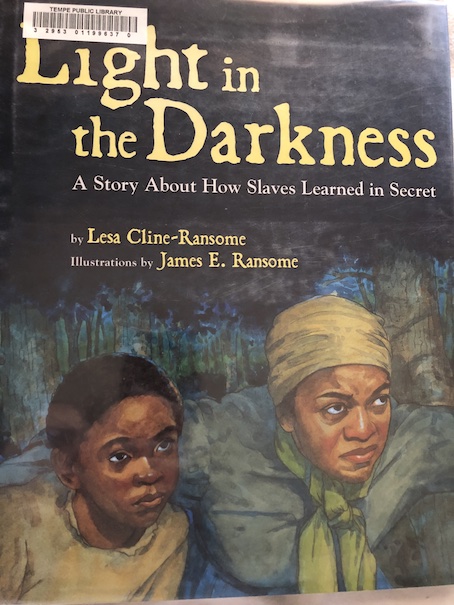
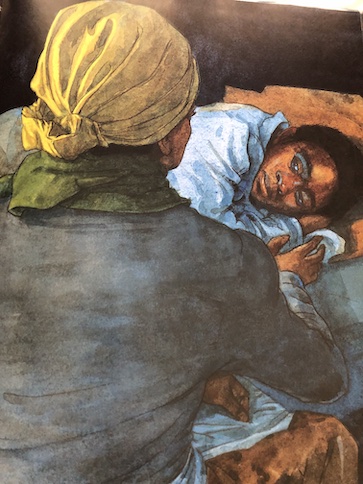
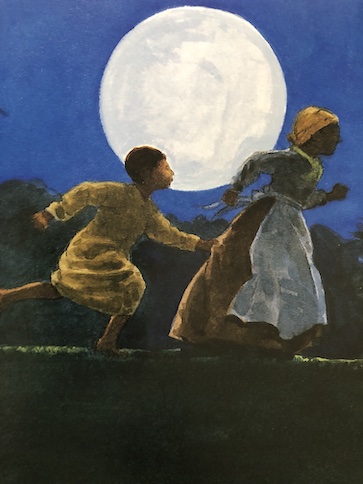
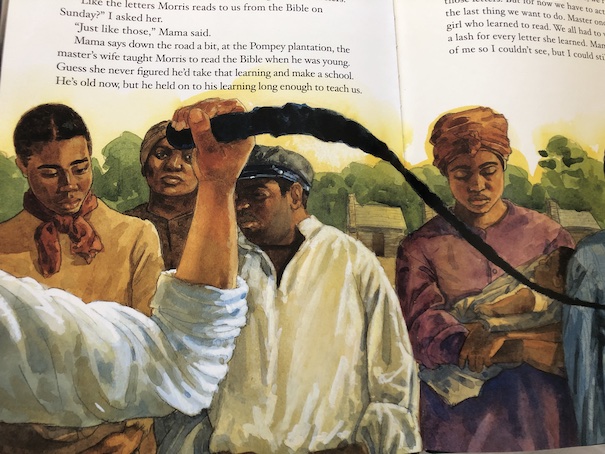
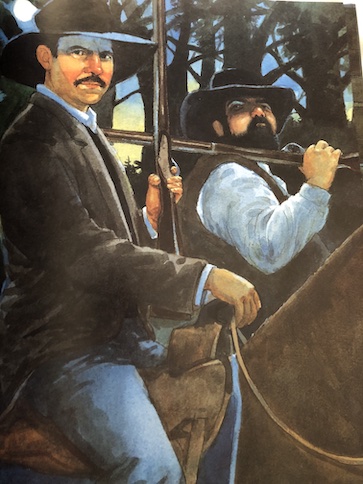
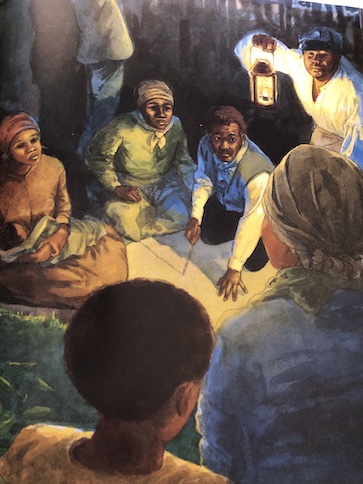
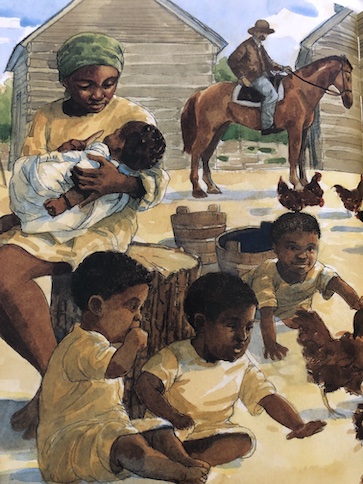
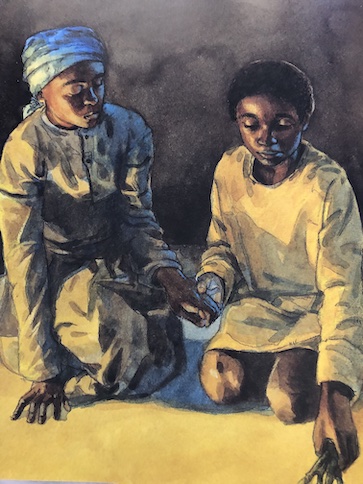


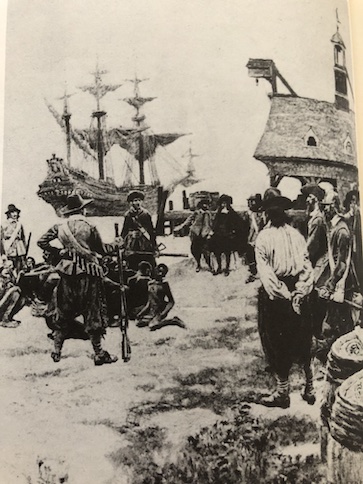
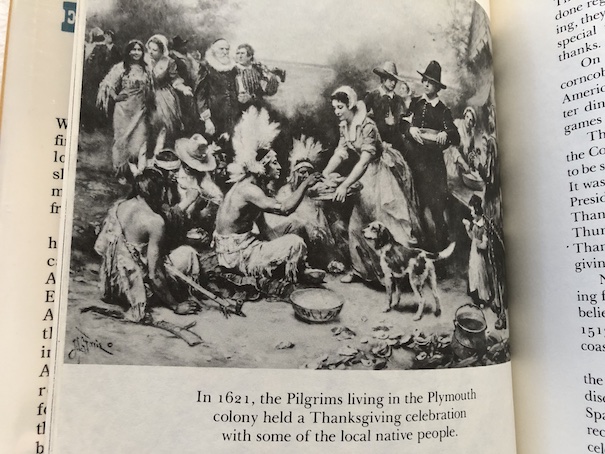


 The House of Dies Drear by Virginia Hamilton, 1968.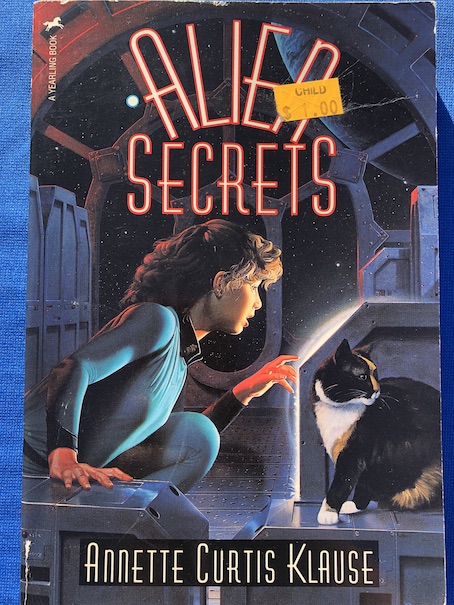

 After escaping from slavery,


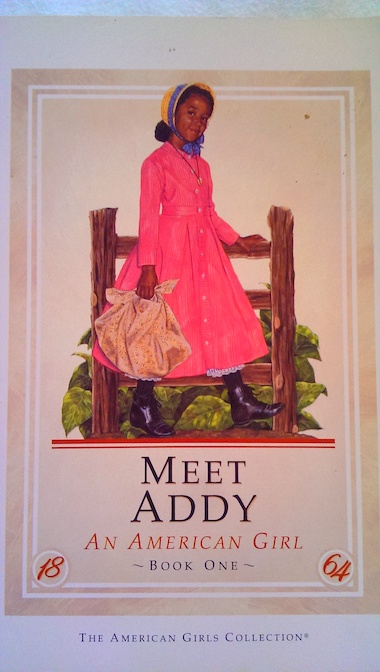
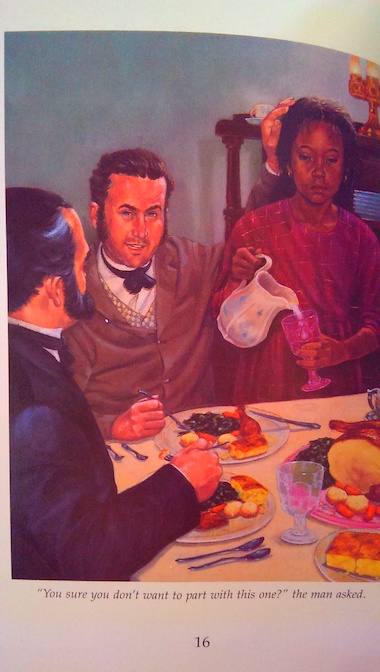
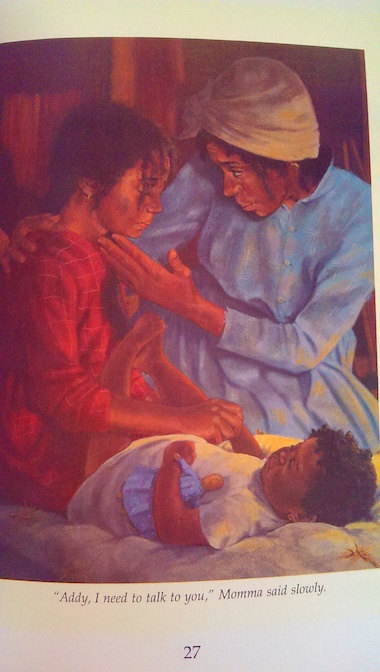 Although Addy and her mother are frightened at the idea of running away, they decide that this is their only chance to escape together. Addy is upset when her mother tells her that they can’t bring her baby sister with them. She is too young for the journey, and if she cries, it might give them away. Instead, they will leave little Esther with their close friends, Auntie Lula and Uncle Solomon Morgan. They plan to find a way to send for them when the war is over.

 Mystery of the Roman Ransom by Henry Winterfeld, 1971.
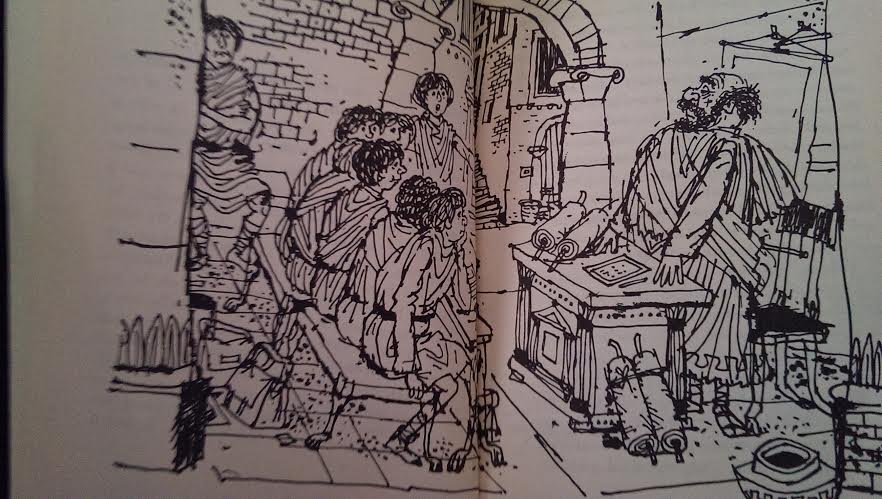 When they return to the slave dealer’s home, he is gone, and the place is boarded up. An elderly slave who was left behind said that all of the other slaves were sold, and then the dealer simply fled, abandoning him. He also says that there was someone else who had come to see the dealer, demanding that he hand over the slave called Udo (the one that the boys had already bought). This man was a former gladiator with only one eye, and he was very angry that Udo was gone. He swore that he would he would get Udo one way or another, dead or alive. He threatened the dealer, saying that he would return later and kill the dealer and all of his slaves if Udo was not among them then. The slave dealer, not knowing the names of the boys who had bought Udo or where he could be found and therefore unable to get Udo back, fled in fear of the former gladiator’s threats.
 Jestress's Forgotten Books and Stories