Betsy-Tacy

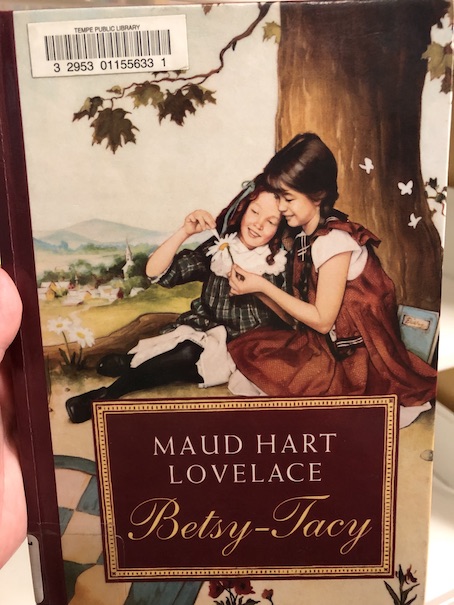
Betsy-Tacy by Maud Hart Lovelace, 1940.

This is the first book in a series about two best friends growing up in Minnesota around the turn of the 20th century. The stories in this book and the rest of the series are based on the author’s own childhood experiences with her best friend.

At the beginning of the book, Betsy meets her best friend, Tacy (short for Anastacia), for the first time after Tacy’s family moves into a house nearby when the girls are both about five years old.  Tacy is very shy and doesn’t want to talk to Betsy at first.  It isn’t until Betsy’s fifth birthday party, a short time later, that the girls really get to know each other and become friends.  After that, they are inseparable, almost to the point where people begin to think of them as one person, Betsy-Tacy. 

Each of the chapters in the book is a short story.  Some of them are about everyday things, like how Betsy would make up stories about her and her friend, how the girls would play dress up and paper dolls, or how they would have a “store” and sell bottles of colored sand to their friends.  Some of the stories are touching, as the girls help each other through some of the most important times of their young lives.  Betsy, the more out-going one, helps shy Tacy through the trauma of their first day of school.  Tacy, who has many brothers and sisters, reassures Betsy that everything will be alright when Betsy’s younger sister is born.  Both girls struggle to come to terms with the death of Tacy’s baby sister. 

At the end of the story, the girls make a new friend when a family moves into the chocolate-colored house with the stained glass window that the girls had always admired.

In the 60th anniversary edition of the book, there are pictures of the author and her best friend, Bick, who is the model for Tacy in the stories, and pictures of the author’s family.  There is also a description of the author’s early life and how the stories were based off her recollections of her own childhood.

This book is available to borrow for free online through Internet Archive.

The Goggles

Goggles

The Goggles by Ezra Jack Keats, 1969.

Peter and his best friend, Archie, live in a big city (probably New York City), and they often play in empty lots between the apartment buildings.  One day, Peter and Archie are playing in a lot filled with old, discarded junk, when Peter finds a special prize: a pair of motorcycle goggles!

GogglesFinding

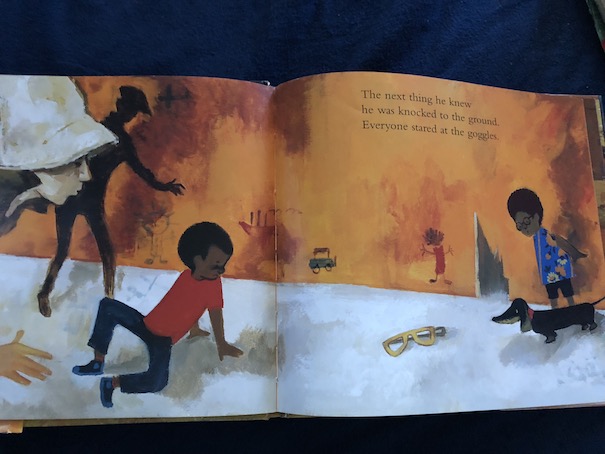
The boys have fun playing with the goggles, but then they’re spotted by a gang of bigger boys.  The bigger boys try to make Peter give them the goggles, one of them even knocking him to the ground when he attempts to take them.

GogglesBullies

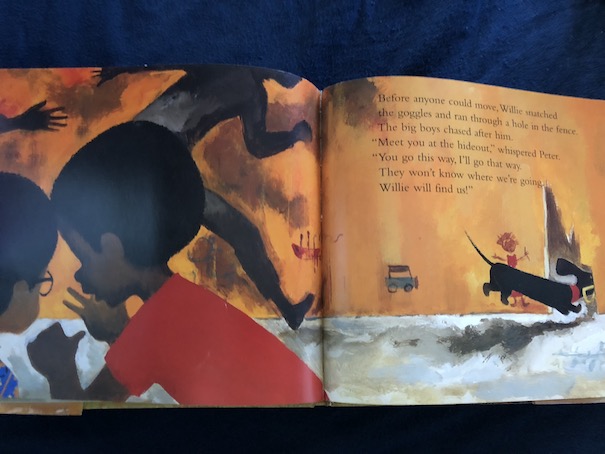
Peter’s dog, Willie, runs off with the goggles, and the boys split up to get away from the bullies, meeting back at their “hideout” in the vacant lot.

GogglesRunning

However, the big boys are still looking for Willie and the goggles.  What can Peter and Archie do to get rid of them?

GogglesTrick

The Snowy Day

SnowyDay

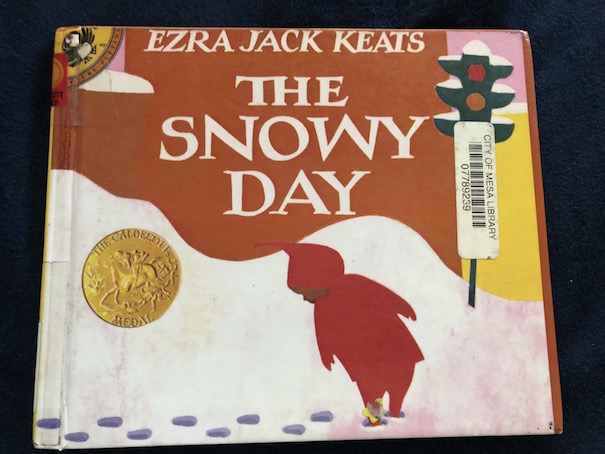
The Snowy Day by Ezra Jack Keats, 1962.

This is a pleasant, slice-of-life story about the fun and wonder of a snowy day for young children.

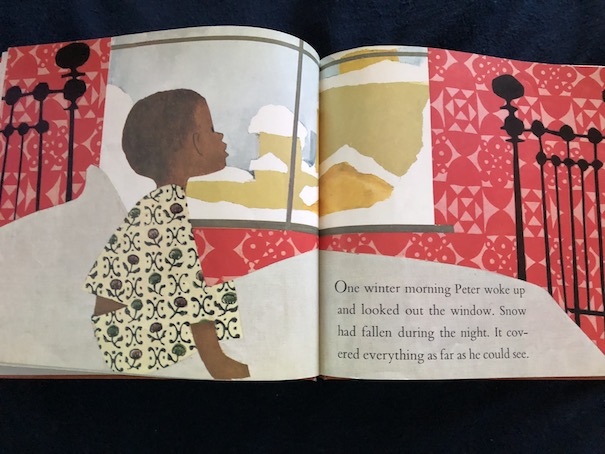
A young boy named Peter wakes up on a winter morning to discover that it snowed during the night.

SnowyDayMorning

Peter hurries out into the snow, experiencing all of the fun it has to offer.  He studies the footprints that he makes in the snow and uses a stick to make marks in the snow and knock snow off of tree branches.  He’s still too little to join in the snowball fight that the big boys have, but he has fun making a snowman and snow angels.

SnowyDayAngels

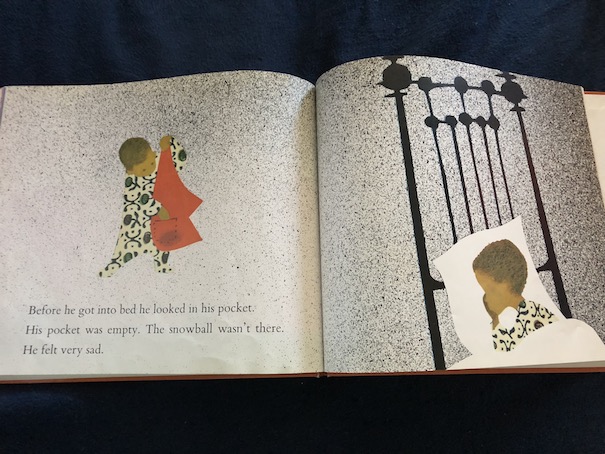
The snow is so much fun that Peter makes a snowball amd put it in his pocket to save for later.  Of course, the snowball in his pocket doesn’t last, and he worries that the snow outside will disappear as well, but there is even more snow the next day.  He gets a friend of his to come outside and join him in the fun.

SnowyDaySnowball

It’s a simple, sweet story about one of the simple pleasures in life and one boy’s discovery of the wonders of snow. It would make a nice, calm bedtime story for young children.

SnowyDayFriend

This book is also a Caldecott award winner, and it is noted for being one of the first children’s books to feature a black main character.  Peter’s race is never mentioned in the text and is not directly a part of the story, but it is shown in the pictures.  Really, I think that’s part of what makes the book so great; although the book was considered ground-breaking for representing minorities, it does so in a way that’s completely relatable because his story could really happen to just about any child.

The White Marble

WhiteMarble

The White Marble by Charlotte Zolotow, 1963.

WhiteMarbleGoingToPark

It’s a hot night in the city, and John Henry’s parents decide that they should go to the park to cool off.  John Henry is a little thrilled to be out with his parents at night, stopping to pick up a beautiful white marble he finds as they enter the park, but disappointed when he realizes that he is the only child there.

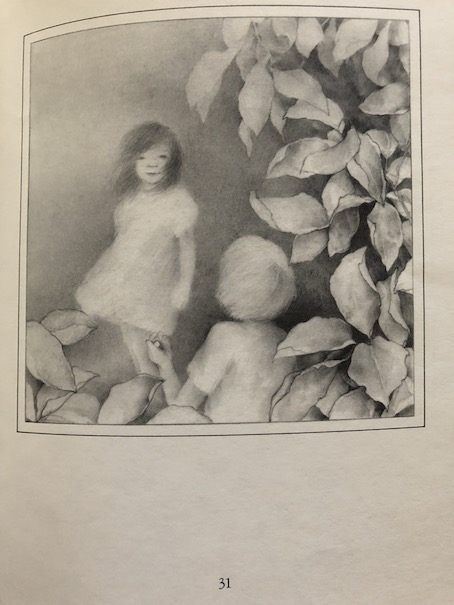
Then, a little girl he knows from school, Pamela, comes to the park with her mother.  John Henry is pleased to see her because only another child could understand how magical this night in the park really is.  He calls to her to come run with him, and the two children run off to play in the park together.

WhiteMarbleTwoKids

The children kick off their shoes and run barefoot in the cool grass.  They lie in the grass for awhile, drink water from a fountain, and have ice sticks (we always called them popsicles when we were kids) from the ice cream man.

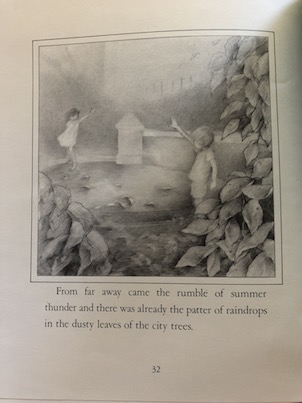
John Henry shows Pamela the little white marble he found.  Pamela thinks it’s as beautiful as he does, and John Henry realizes that no adult could understand how beautiful a small, simple thing like that could be, only another child.  That’s what binds John Henry and Pamela together.  As children, they can still appreciate the simple pleasures of life and the beauty and magic of small, ordinary things that adults take for granted, like a small white marble someone forgot in a park or how nice an evening can feel as rain moves in after a hot day.

WhiteMarbleGoodNight

When it’s time to go home, John Henry gives Pamela the white marble, a memento of this special night.

The pictures in this edition of the book are different from the ones that I remembered from the first time that I read it as a child.  This edition of the book, available through Internet Archive, shows the pictures that I remember.  The pictures in the later edition of the book are black and white, but the ones in the original edition are done in three colors: black, white, and blue.  Of the two, I really prefer the original drawings.  They capture the magic of a lovely night shared with a friend.

Summer Fun

SummerFunSummer Fun by Carolyn Haywood, 1986.

This is a cute book of short stories featuring favorite Haywood characters, including Betsy and Eddie.  The children spent their summer in different ways, having fun summer adventures.  None of the adventures is particularly scary.  Although a couple of the kids find themselves in semi-dangerous situations, everything is resolved pretty quickly, and the rest of the stories are more slice-of-life style stories about fun and funny things that the kids do or lessons they learn.

The stories are very easy to read and great for children beginning chapter books or for some light bedtime reading for younger kids.

The book is currently available online through Internet Archive.

The stories in this book are:

Bears and Blueberries

Peter is at summer camp, and when he goes on a hike and camp-out with his camp friends, they have encounters with wildlife.

SummerFunPic2The Watermelon Party

Betsy’s father tells her that he used to have watermelon parties with his friends when he was young, and that the person who had the most watermelon seeds at the end of the party would win a prize.  Betsy decides that she wants to have a party like that, but her friend Rodney learns why cheating takes all the fun out of a contest.

A Bell for Jim Dandy

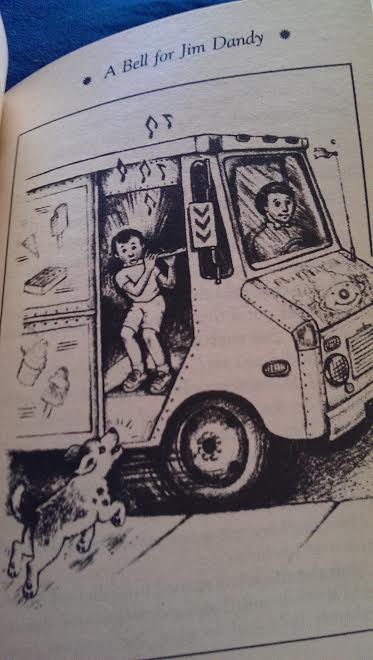
Jim Dandy is a brand of ice cream that comes on a stick.  When the bell on the ice cream truck is broken, Billy gets a job trying to help the driver attract customers in exchange for free ice cream.  But, without a bell himself, how will he get people’s attention?

Betsy’s Property

While Betsy is visiting her aunt and uncle at their summer home by the beach, she discovers a special rock a little ways out from the shore that she likes to think of as all her own.  She likes to sit out on the rock and read with her aunt’s dog, but what will she do when a sudden storm leaves her stranded?

SummerFunPic1Betsy’s Hammock Club

Betsy loves the hammock that her father bought for her, but so does every other kid in the neighborhood!

Eddie and His Hermit Crab

Anna Patricia buys a couple of hermit crabs at the beach as pets.  When she gives one to Eddie, he decides that his crab will win the hermit crab race at the beach!

Eddie and His Money Sheet

Eddie sets out to make some money with sand sculptures and ends up convincing Anna Patricia to adopt a stray cat.

The Picnic

Eddie and Anna Patricia find out that her new cat actually belongs to someone else.  But, they become friends with the cat’s owners, who take them out for a sailing trip and picnic.  When the kids’ parents are late arriving with food for the picnic, Anna Patricia tries to let the kids into the house and discovers how different the Goldilocks story would have been if the bears had a security alarm.

An Afternoon on the Farm

Teddy and Babs visit a farm with their parents and make friends with the grandchildren of the owners, Mark and Sarah.  While the children are playing at being explorers one day, they find a dead animal they’ve never seen before.  When they bring it back to show their parents, they learn why you shouldn’t mess with a skunk, even a dead one. (No mention of disease, just smell, although I’d think that would be a more serious issue.)

End of Summer

It’s time for Mark and Sarah to go home after visiting their grandparents.  With all of the things they have to remember to take with them and all of the things they forget, will they actually make it to the train on time?

In Grandma’s Attic

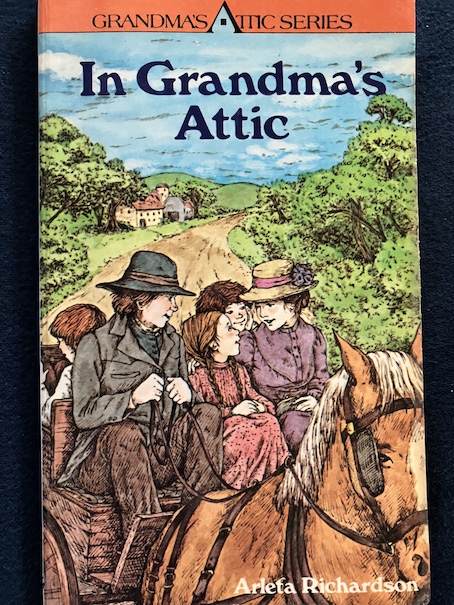
The books in the Grandma’s Attic Series are collections of short stories (although I think later books in the series are novel-length stories) told by a grandmother to her granddaughter about life when she was young.  They typically begin with the young granddaughter (unnamed in the stories) asking her grandmother, Mabel, about an object in her house, and Mabel then tells the story about it.  These are usually short, slice-of-life family stories with a humorous twist, often with a moral (the stories generally have Christian/Biblical themes).  The inspiration for the stories was the author’s own grandmother, who grew up on a farm in Michigan in the 1800s.  I’m kind of sentimental about them because the books I have were presents from my own grandmother, who also grew up on a farm.

This series is good for discussing aspects of life in the 1800s. They include little details about daily life like the types of chores children did, how they got to school and what lessons were like, and other little household details like warming clothes on a wood-burning stove and throwing water from washing dishes outside because they didn’t have a modern sink.  They’re also good for talking about morals or making ethical decisions (it’s not just Christian themes, Mabel also talks about more general issues of growing up, like honesty, responsibility, and the awkward mistakes children make when they try to act more grown-up than they really are) or just for a good laugh because some of the stories are really funny (learn the perils of attempting to sit down in a hoop skirt without really knowing how)!

In Grandma’s Attic is the first book in the series and it is available to read for free online through Internet Archive.

Pride Goes Before a Fall

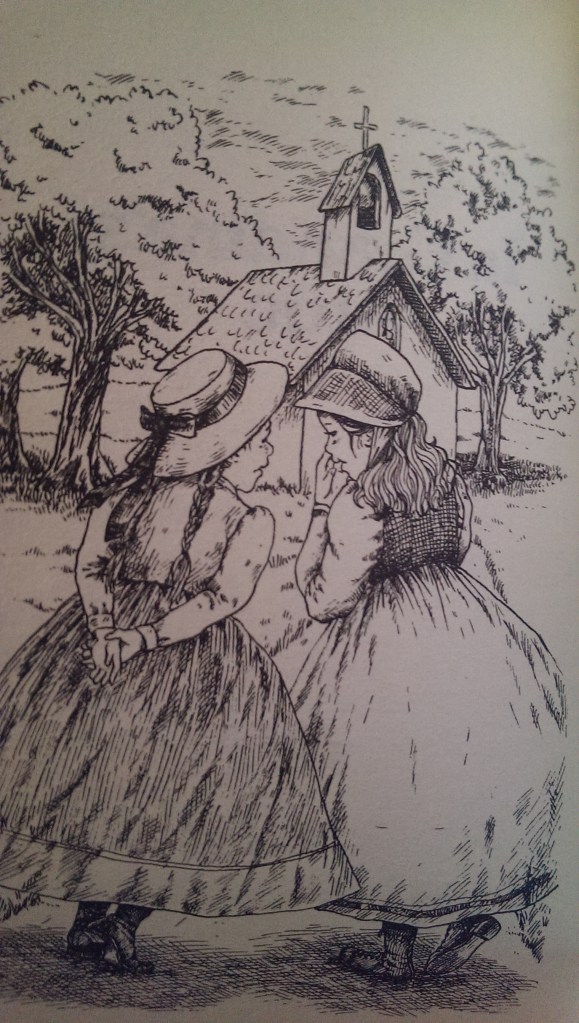
Mabel and her best friend, Sarah Jane, badly want to wear hoop skirts like the fashionable young ladies and have everyone admire them, even though their mothers say they are really too young. When they get the chance to wear them in front of everyone, they make a mistake and learn the lesson in the title of the story.

When God Knew Best

Mabel talks about a childhood disappointment that turned out well in the end because she was saved from disaster.  Sometimes disappointments are blessings in disguise.

The Red Bonnet

A lost bonnet gives everyone the wrong impression, and a search begins for a not-so-missing child.

Grandpa’s Apron

The other guys teased him when he asked Mabel to make him a work apron with pockets because aprons were supposed to be women’s clothing, but his comes in handy in some unusual ways.

Ma’s Busy Day

Being a mother is hard work, and when a hectic day leaves Mabel’s Ma no time to change her aprons when one after the other gets dirty, the layers of aprons she has on at the end of the day become a record of the day’s events.

Grandma’s Mistake

Mabel misunderstands something her mother says, and it causes her problems at school.

The Button Basket

A strange Indian (Native American) comes to the farm and trades a beautiful basket for food.  Unfortunately, they can’t speak the same language, so they never learn the reason why, and they marvel over the mystery of the basket’s origins.

The Little Gray Shoes

Mabel learns that vanity comes at a price when she insists that she wants a beautiful pair of gray shoes that don’t fit her properly.

Nellie and the Buttons

Why does their horse, Nellie, keep trying to bite the buttons on Mabel’s new coat? Nellie might be smarter than they think.

The Pearl Buttons

When Mabel has trouble fastening the buttons on her new dress, she finds a creative solution that causes her some embarrassment.

Nellie’s Trips to Town

When Mabel’s family makes a trip to town, their horse and buggy suddenly disappear.  Then, as soon as they get a ride from a friend, they are suddenly returned.  Why?

The New Pump

Young Mabel learns the hard way why it’s a bad idea to lick cold metal in the winter.

You Can’t Always Believe

When strange things start happening around the farm, Pa blames one of Mabel’s brothers but learns that it isn’t a good idea to be too quick to blame.

The Old Door

Mabel’s brother plays a trick that causes some embarrassment for their mother.

Pa and the Dishwater

Mabel’s fear of the dark makes it difficult for her to throw the dishwater outside after they wash the supper dishes.  When she thinks she’s found a shortcut for getting rid of the dishwater, it gets her into trouble.

The Dishes

Mabel tries to put off her chores so that she can play with her friend, but the guilt she feels takes the fun out of it.

Ma’s Birthday Cake

Mabel is so pleased to be making a cake for her mother on her birthday, but has she gotten the recipe right?

Grandma’s Warm Clothes

Mabel and her brothers used to warm their clothes by the stove on cold winter mornings, but Mabel’s attempt to make it easier on herself and her forgetfulness have unintended consequences.

Grandma’s Prayer

Mabel thinks that a selfish prayer she made may have brought bad luck to her family.

Molly Blue

Molly Blue the cow always gives Mabel trouble.  Her family thinks it’s funny until they see how much Mabel needs their help.

Grandma and the Gun

Gun safety is a big issue in modern times, and it was back then, too.  Mabel is a curious child and makes a mistake that almost has very serious consequences, but she learns an important lesson.

What Grandma Lost

When Mabel’s brothers are sick and she gets to take the family’s horse and buggy to school by herself (a special privilege for a child of her time), she decides to show off a little.  But, in her attempt to look more grown-up and responsible, she ends up proving that she’s not as grown-up and responsible as she thought.

What Did You Expect?

Not exactly a full story, but Mabel shows her granddaughter what a miracle looks like because she believes it can happen.