Blossom Culp and the Sleep of Death

BlossomSleepDeathBlossom Culp and the Sleep of Death by Richard Peck, 1986.

This book starts shortly after the previous book in the series ends.  After Blossom’s old history teacher was run out of town for his scandalous behavior, he was replaced by Miss Fairweather.  Miss Fairweather is a tough, no-nonsense woman who pushes her students to study hard and take history seriously.  Unexpectedly, she comes to appreciate Blossom, an outcast from a poor family, because Blossom demonstrates some knowledge of Ancient Egypt.  Little does Miss Fairweather know that Blossom’s comments in class were inspired by one of the visions that Blossom occasionally gets because of her psychic gifts.

Blossom experiences a visitation from the spirit of an Ancient Egyptian princess who says that she needs Blossom’s help.  Years ago, her mummy and some precious objects were stolen from her tomb.  The princess doesn’t seem to know exactly where her “earthly form” is now, but she’s sure that it’s somewhere nearby.  She’s very concerned because she senses that archaeologists in Egypt are digging to find her tomb and knows that when they finally reach it, they will discover that she isn’t there.  Rather than being concerned about her tomb being violated by the archaeologists, the princess senses that they are searching for her remains in order to venerate them, that if they find her mummy, they will take it to a place of great beauty where it will be treated with the utmost care and respect (a museum).  She wants that and fears that she will miss her chance at the kind of immortality that this form of glorification, care, and study will provide.  So, she asks Blossom to find her earthly remains and inform the searchers of her true whereabouts.  At first, Blossom has no idea how she can accomplish that, but the princess threatens her with a true Egyptian curse if she doesn’t try.

Then, Blossom receives a clue to the mystery in the form of a beautiful Egyptian scarab that her mother found one day while she was out scavenging.  If Blossom can find the place where her mother found the jewel, she can also find the princess’s mummy.  Fortunately, Miss Fairweather has assigned the class special projects about Ancient Egypt, and she is thrilled when Blossom says that she wants to study grave robbers.  Blossom sees this as a good way to collect some extra information about grave robbers that she can use to find the princess’s mummy as well as get a good grade in Miss Fairweather’s class.  It also proves to be an excellent way to draw Alexander Armsworth into her search for the mummy.

Alexander still denies to Blossom that he has real psychic abilities like hers, even after their previous adventures together.  He insists that it was just a phase that they were going through, one that he wants to leave behind.  He’s been busy flirting with Letty, the class snob, and he’s trying hard to get into a prestigious fraternity so that he can give Letty his fraternity pin.  Not only does Blossom think that the boys in the fraternity are a bunch of idiots who do stupid things, but the idea of Alexander giving Letty his pin as a sign of their relationship is just sickening.

Blossom is reluctant to admit her real feelings for Alexander, but the two of them are close in ways that Letty and Alexander never will be because of their shared abilities and adventures, and Blossom has a sense that their futures will be intertwined as well.  Alexander is angry that Blossom is roping her into yet another supernatural escapade, but he has to go along with her project idea because he has already gotten on Miss Fairweather’s bad side and needs to do well on the project to save his grade in class.

Along with the supernatural adventure, there is also a look into the past, the world of 1910s America as well as Ancient Egypt.  First, there are the traditions of stunts associated with Alexander’s initiation into his fraternity and the tradition of giving a girl a fraternity pin as a precursor to engagement (“engaged to be engaged”).  Then, they discover that Miss Fairweather is a suffragette, which is the reason why she left her previous teaching job.  Her feminist ideals cause problems for her in her new, small town when they become known, but with Blossom’s help, she wins over some of the influential women in town as well as a male admirer.

The book is currently available online through Internet Archive.

Janie’s Private Eyes

JaniesPrivateEyes

Janie’s Private Eyes by Zilpha Keatley Snyder, 1989.

This is part of the Stanley Family mysteries series.

Janie Stanley has decided to open her own detective agency, The J.V. Stanley Agency, Incorporated, Private Eyes, with the help of her younger siblings and some other friends.  Eight-year-old Janie has had many different aspirations in her young life, from being a Shakespearean actress to being a vampire, so her older brother, David, doesn’t take her detective games too seriously at first.

However, at Mr. and Mrs. Stanley’s New Year’s Eve party, Janie’s “investigations” come to everyone’s attention when she borrows David’s tape recorder to make audio recordings of guests talking and plays them on the stereo that has been hooked up to speakers to play music for the party.  Gossipy Mrs. Dorfman recognizes her own voice, saying uncomplimentary things about her hosts and the other guests, and leaves in a huff of embarrassment.  When Janie’s father confronts her over the incident, Janie says that she was trying to find evidence on a murderer.  When her father and David question her further, she says that old Mr. Rupert, the deceased father of the Mr. Rupert who owns the local grocery store in Steven’s Corners, was murdered.

When old Mr. Rupert died around Thanksgiving, all the kids in the area were sad.  He was always nice to kids when they were in the grocery store and would sometimes give them candy for free.  They called him Grandpa Rupert.  But, Grandpa Rupert’s death was a heart attack, natural causes.  When David asks Janie what makes her think it was murder, she says that she suspects his son and his wife because they inherited the grocery store.  David says that he doesn’t think that Al Rupert would have killed his father.  Janie also says that she heard that there was no autopsy after the death, and she thinks that’s suspicious.  David says that it was well-known that Grandpa Rupert had heart trouble, so a heart attack wasn’t unexpected.  Janie also says that Huy, the younger brother of her friend, Thuy Tran, saw the mailman talking to Grandpa Rupert just before he died, but David doesn’t see why that’s so suspicious.  Eventually, David and her father talk Janie out of her murder investigation idea, but it turns out that the “murder” wasn’t the only investigation that Janie has undertaken.

Dogs in the area have been disappearing, and the Tran family has come under suspicion.  The Trans haven’t been living in the United States for very long.  Originally, they came from Vietnam.  The reason why people are looking at them suspiciously is because dogs started disappearing around the time the Trans moved to the area, and there are rumors that Vietnamese people eat dogs. (Hint: No, the Trans aren’t eating dogs. That’s an old stereotype/rumor that’s been used against various immigrant groups, and no dogs are eaten in this story.)  Janie knows that the Tran family isn’t guilty of dognapping, but proving it is another matter.  After the trouble at the New Year’s Eve party, she asks David and Amanda to help her investigate.  At first, they don’t want to, but David does have to do a journalism project for school with a partner, Pete Garvey.  Pete Garvey is the school bully who also has a crush on Amanda (which is established in a previous book in the series), but he likes the idea of interviewing people about their missing dogs.

However, even though David, Amanda, and Pete Garvey begin talking to people about the missing dogs, Janie and the other members of her detective agency are still on the case!  David has great misgiving about Janie’s involvement.  Then, suddenly, Pete doesn’t want to work on the project anymore and starts behaving suspiciously.  What does he know that no one else does?

The book is available online through Internet Archive.

Mystery Behind Dark Windows

MysteryDarkWindowsMystery Behind Dark Windows by Mary C. Jane, 1962.

Recent years have brought misfortune to the formerly wealthy Pride family.  First, Tony and Ellie’s father was killed while on a business trip on behalf of the family’s mill.  Then, the workers in the mill went on strike, and the children’s grandfather died.  Their Aunt Rachel blames the strikers for putting stress on her father while he was still grieving for his son, thereby causing his death.  Because of that and because she doesn’t believe that she can handle the running of the mill herself, she has closed down the mill, putting all of the workers out of a job.

The townspeople of Darkwater Falls struggle to get by without the mill and are angry with the remaining members of the Pride family for the lay-offs, but Aunt Rachel thinks that their suffering is earned and so does nothing to help.  If Aunt Rachel would be willing to sell the mill to someone who would put it back into good use and employ people, the community’s problems would be solved, but Aunt Rachel can’t bring herself to do that, in spite of the offers she’s received and the urging of the family lawyer, Mr. Ralph Joslin.  She has high hopes that Tony might revive the mill one day when he’s grown up, and in the meantime, she wants to punish the strikers with unemployment and underemployment.  However, Aunt Rachel, absorbed in her personal pride and bad feelings, is ignoring some serious issues.  The taxes on the disused mill are costing the family dearly, the equipment is rusting, and Tony isn’t even sure that he wants to go into the family business.  Tony and Ellie are unhappy with their family’s situation, their aunt’s bitterness, and the way many of the townspeople now look at them, but they’re not sure what to do about it.
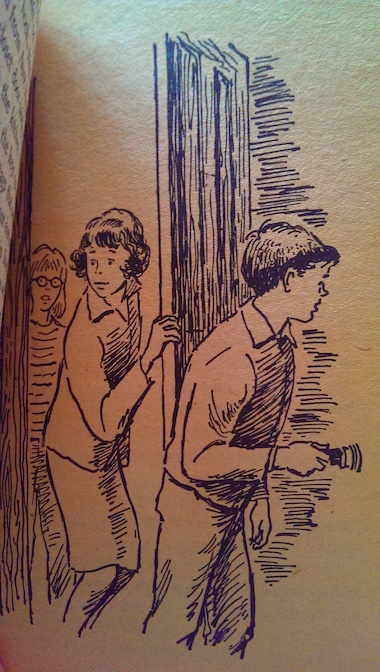
MysteryDarkWindowsMillSearchThen, one night, Ellie goes out to look for her aunt’s missing cat and hears someone in the old, supposedly empty mill.  When she tries to tell Tony, he doesn’t take her seriously, but Ellie knows what she heard.  Ellie later goes back to the mill to take another look at the place, and she sees Jeff, a boy from Tony’s high school, hanging around.  Later, she confides what she’s heard and seen in Hank, an old friend who lives on the other side of the river, and Violet, another girl from her class whose family has suffered since the closure of the mill.  The two of them start helping Ellie to investigate.

Some people in town have become concerned about children in the area getting into trouble, and they think that maybe some of the local youths have formed a gang.  Ellie worries about Tony, who has started sneaking out of the house at night to hang out with friends.  Is he now part of a gang?  Are he and his friends the ones who were sneaking around the old mill? Or could it be some of the disgruntled townsfolk, bitter about the mill remaining empty and not providing much-needed jobs?

While the kids have a look inside the mill, they discover that someone has been using the place as a hideout.  A fire at the mill reveals a number of secrets and sheds light on a town and a family caught in a cycle of bitter feelings and revenge.  Aunt Rachel is stunned when some of the townspeople accuse her of setting the fire herself in order to get insurance money for the mill.  The fire was clearly arson, and since Aunt Rachel has gone out of her way to make life difficult for people in town, many of them would be ready to believe just about anything of her.  It’s up to the young people to put the pieces together and reveal the true arsonist before the mill, the town, and the Pride family are completely destroyed.

Many of Aunt Rachel’s decisions are guided by a mixture of grief and anger, but she is also stubborn and prideful.  The Pride family was aptly named.  Although they have suffered misfortune, their privileged position as the (former) main employer of the community has given Aunt Rachel the sense that she and others in her family could do no wrong.  Aunt Rachel is absorbed in herself, her own feelings (which she places above others), and the past to the point where she feels justified in deliberately causing harm to her community and the people in it, failing to see the consequences of her actions, even the effects that her attitude has on the orphaned young niece and nephew in her charge.  Ellie feels like they don’t have a real family because her aunt’s bitter feelings prevent her and her brother from getting close to their aunt.  Her aunt’s actions have also made it difficult for her and Tony to get along well with other members of the community, further isolating them from comfort in their own grief.

In a way, the fire brings Aunt Rachel back to reality, forcing her to see the consequences of her actions (and inaction).  It comes as something of a shock to her that, while she felt fully justified in her bad feelings for the town, they are also fully justified in feeling badly about her.  Somehow, it never occurred to her how someone, doing the things she’s been doing and saying the things she’s been saying, would look to the people she deliberately set out to hurt.  For most of the story, the only feelings that were real to Aunt Rachel were her own.  Even when she thought about how people hated her, she didn’t think that what they thought would matter until she began to see how it was affecting Ellie and Tony as well as the other children in town.  Ellie can see that many things would have been resolved sooner if both her aunt and her brother could open up and discuss things honestly, both within the family and with other people.  Although neither of them set the fire, their secretiveness and self-absorption at first create the impression that they did.  Ellie’s eventual outburst at her aunt and the real guilty person force both of them to acknowledge the reality of their actions and motives.

I was somewhat fascinated by the motives of the arsonist, who understands the effects that Aunt Rachel’s bitterness and revenge have been having on the young people in town, even her own nephew, better than she does.  This person was wrong in the path he tried to take to fix the situation, but he does correctly see that unemployed men not only lack the money they need to properly take care of their families but may also set a bad example for boys and young men, either through the habits and attitudes that they let themselves fall into or by becoming too absorbed in their difficulties to see what’s happening to their own children.  I also agree with his assertion that those responsible for putting people out of their jobs bear some responsibility for the results of their actions, something which resonates in today’s economy, where many people are still unemployed or underemployed.  The Pride family’s previous high standing in the community was directly because of their ability to employ people and improve the lives of others.  When they began making life hard for others and refused to use their ability to help people, they lost that standing.  Aunt Rachel was just the last to realize it, which was part of the reason why she was surprised to discover just how badly the town thought of her.  She didn’t have a good reputation because she had done nothing to earn one, no matter what her family used to do.  She was no longer using their powers for good, so she turned herself into a villain.  However, it’s important to point out that the arsonist isn’t really in the right himself because, as Ellie points out, the spirit behind his actions isn’t much different from her aunt’s.

Ellie is correct in pointing out that both her aunt and the arsonist were wrong, not just because of what they did, but because of the feelings and motives behind it.  In their own way, each of them set out to deliberately hurt others because they had each been hurt.  Which of them was hurt first or hurt worse ultimately doesn’t matter.  Their mutual desire for vengeance against each other not only hurt the people around them but kept each of them from doing what they needed to do in order to heal their own wounds.  That is also a message that resonates today, in these times of political division, with two large parts of society trying to one-up each other and even actively harm one another, largely because they can’t stand the idea of someone wanting something or believing something that they don’t.  Whatever the circumstances, when people focus on winning on their own terms, no matter what the cost, everyone loses in the end.

Toward the end of the story, as Aunt Rachel and the arsonist begin making grudging apologies to one another and reluctant steps to fix things, Ellie decides that grudging and reluctant aren’t good enough and finally gets up the nerve to tell them what she really thinks, what they most need to hear:

“Just selling the mill won’t make things better . . . It’s the way [they] feel about it that’s wrong. That’s what made them act the way they did in the first place. They just wanted to get even with people, and hurt people, because they’d been hurt themselves. And they feel the same way still. You can see they do.”

How much can people help what they feel? It partly depends on what people choose to do about their feelings.  Actions guide feelings, and feelings guide actions.  Aunt Rachel and the arsonist indulged their bad feelings, nursing them, amplifying them, and making them their first priorities, the guiding force of their actions.  As long as they keep doing that, Ellie knows that the problems aren’t really over, and everyone will remain trapped in this bad cycle.  Ellie’s honest outburst finally breaks through to both of them, showing them what they really look like to others and making them reconsider their feelings and priorities.

One of my favorite characters in this story was Mr. Joslin, the lawyer.  Although he looks a little suspicious himself for a time, he is actually a good man, who looks after the family’s interests and genuinely cares about them as well as about the town.  He is the one who convinces Tony to be honest with his aunt about the friends he hangs out with and helps persuade Aunt Rachel to see things from others’ point of view.  He loves Aunt Rachel, in spite of her faults, and is honest with her about those faults, telling her what she needs to hear.  Of all the characters, with the exception of Ellie, he seems to have the most insight into other people’s feelings and situations.  He supports what Ellie says, quoting Lord Bacon, “A man who studieth revenge keeps his own wounds green, which otherwise would heal and do well.”

Mystery Back of the Mountain

MysteryBackMountainMystery Back of the Mountain by Mary C. Jane, 1960.

Anne and Stevie Ward are thrilled when they discover that their father has inherited a house in the country from a distant relative who has recently died. Neither of the children had met their father’s “Uncle” James (really a distant cousin of their great-grandfather), and even their father hadn’t seen him for years. Probably, the only reason Uncle James left him the old farm where he used to live was because he had no children of his own and the two of them shared the same name.

The children think that a country house would be a great place to spend the summer, and even their mother thinks that perhaps they should keep the house as a vacation home, but their father has some reservations about it. For starters, the old farm house, located outside of a small town in Maine, is kind of shabby and has no running water or electricity. It’s so isolated that people named the area Back of the Mountain. Then, there’s Uncle James’s reputation. Uncle James was the black sheep of the family, having apparently made his money in some unethical business dealings and then became involved in some kind of inappropriate romance that ended tragically. The children’s father isn’t completely sure of the details because he only heard whispered rumors about Uncle James when he was young, but he knows that the people of his town weren’t very fond of him, and he suspects that they might feel the same way about his relatives. He thinks that it might be better just to sell the house and forget about it. Nevertheless, he agrees with his wife that the family should go there and take a look at the house and decide what they’re going to do with it.

MysteryBackMountainMissingPictureWhen they get to Maine, they meet Uncle James’s lawyer, Mr. Palmer, to collect the key to the house.  Mr. Palmer tells them that the house has a few items in it that could be considered valuable antiques, including a portrait of the woman that Uncle James had wanted to marry, Drusilla Randall.  The children’s father asks Mr. Palmer more about Drusilla Randall, and he says that all he knows is that she had an argument with Uncle James and then disappeared.  He thinks that she just left town, although he says that there are rumors that Uncle James may have murdered her.  Mr. Palmer thinks that the rumors are ridiculous and doesn’t take them seriously, but Stevie and Anne are disturbed at the idea that their relative may have been a murderer, or that people thought he was.  Mr. Palmer also mentions that Drusilla’s sister, Marion, has decided to return to her family’s old house for the summer as well, so she’ll be living close to their farm.
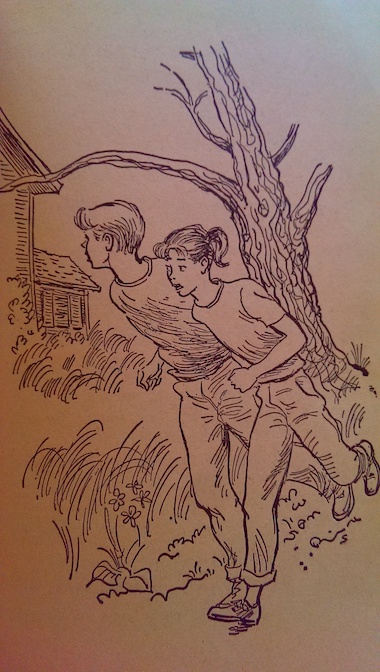
MysteryBackMountainRunningThe house is certainly an isolated place, and their closest neighbors, the Hodges have an old grudge against Uncle James.  The unethical business deal that Uncle James did years ago involved buying some of the Hodges’s family’s best land.  Bert Hodges, who was young at the time, says that the deal ruined his father’s life, and it’s making his miserable, too, because he really needs that land to make his farm profitable.  Anne hears this from Bert’s young niece, Oleva, an orphan who has come to live with her aunt and uncle.  Although Uncle Bert is strict with her and somewhat bitter about the past and the family’s circumstances, Oleva likes her aunt and uncle and wishes they would adopt her, giving her the stable home she’s longed for since her parents died and she began being traded around among her relatives.  However, Bert doesn’t have much faith in other people, and even though he likes his young niece, is afraid to commit to adopting her.

MysteryBackMountainBridgeAnne feels badly that Uncle James’s land deal seems to have ruined people’s lives.  Oleva also tells her something disturbing about Drusilla, the girl that Uncle James loved.  They were supposed to be married when Drusilla turned twenty, but she disappeared before that happened, and most people think that she drowned in the natural pool on Uncle James’s property.  It’s deeper than it appears at first, and some things belonging to her were found nearby, so everyone thinks that she probably drowned and that her body is still somewhere at the bottom of the pool.  Whether her death was an accident, suicide, or murder is still unknown.

Mysterious things are happening around Uncle James’s property.  The portrait of Drusilla that Mr. Palmer said would be in the house is missing.  The family hears eerie howls in the night.  Oleva is sneaking around, doing something that she says her uncle would disapprove of, but which she insists that she can’t stop.  Then, Anne finds a poem engraved on a stone in an old graveyard, apparently written by Uncle James in Drusilla’s memory that points to the secret of their quarrel and her death.  The things that Uncle James did in his life still cast their shadow, and the only person who can tell them the full story of what really happened all those years ago and set things right . . . is Drusilla.

Uncle James’s problem, as the children eventually learn, was the nature of his ambitions.  He wanted to be a big man more than a good one.  It wasn’t that he was completely awful.  Drusilla herself (once the children learn where she really is and who she is) tells them that he could be charming, and she knows he never really meant to do anything wrong.  The problem was that he wanted to be important and admired by others to the point where “getting ahead” of others was all that really mattered to him.  There was a point when he could have used what he had to help his neighbors when they were in trouble, but instead, he used their troubling situation to his own advantage to take what they had for himself.  When he discovered something valuable on the land he’d acquired from Hodges family, something that would have saved them from their problems if they had known about it before the sale of the land, he could have turned it over to them to help make things right, but he refused to do it, which was the basis of his quarrel with Drusilla.  As far as Uncle James was concerned, he was entitled to what he found because he had bought the land legally, but Drusilla argued against keeping it on moral grounds, out of compassion for the Hodges.  In the end, Uncle James was admired by no one because of his selfishness, and Drusilla realized that wasn’t a quality that she wanted in the man she was going to marry.  Uncle James’s attempts to make people admire him for being wealthy and important ended up costing him friendships, relationships with relatives, and ultimately, the woman he wanted to marry.  Like others, Uncle James believed that Drusilla was dead, that she had drowned herself over their quarrel.

Uncle James’s drive to make people like him causes Anne to reconsider something that was bothering her as well.  She isn’t as good at making friends as her brother because her brother is more outgoing and good at sports.  The other kids always want Stevie to play for their team.  Anne often wishes that she could be more athletic, “to come in first,” so that other kids will like her better and want her to play with them more, instead of picking her last for every game.  However, she comes to realize that being “first” in things isn’t what really wins friends in the end.  Caring about others and being there for them when they need you wins real friends.  As Anne explores the old graveyard, she thinks about how just being alive and enjoying life is a great feeling by itself, whether you’re “first” or not, and sometimes, good things come to those who take their time instead of just rushing to be “first.”

Mystery on Nine-Mile Marsh

Nine Mile MarshMystery on Nine-Mile Marsh by Mary C. Jane, 1967.

Lucille Pierce has been feeling lonely because her other friends joined a club with some other girls that meets over the weekend, and Lucille hasn’t been invited to join. The only people who are available to hang out with now are her brother Brent and his friend Kevin, and they don’t always want a girl hanging out with them.

When Brent and Kevin have an argument because Kevin laughed at Brent’s horrible spelling during a spelling bee (Brent is horrible at spelling because he never stops to think about what he’s doing, and he gets into fights fast because he also has a quick temper), Kevin invites Lucille to join him as he goes out to have a look at the old house on Moody Island before the new owners take over. The old farmhouse stands on an island in the marsh. Sometimes, people hear odd sounds coming from the house, and some people believe that it’s haunted by the ghost of John Moody, who was lost at sea years ago. Old Mrs. Moody, John’s widow, was a hermit in her final years, and now, the only living member of the Moody family is Clyde Moody, John’s nephew. Everyone had expected that Clyde would inherit the old Moody house, but instead, Mrs. Moody left it to a man named Arnold Lindsay, an apparent stranger. Miss Rand, who owns the diner not far from the Moody house thinks that Mrs. Moody should have left it to Clyde. Clyde has had problems with alcohol and hasn’t been able to hold any job for very long, and Miss Rand thinks that having the house to care for might have been good for him, providing him with some stability. No one even has a clue who Arnold Lindsay is.

Nine Mile Marsh HouseLucille and Brent take a bike ride out to the island, but a noise in the barn frightens them away. It isn’t that they really think there’s a ghost, but they’re concerned that someone may be trespassing on the property. They decide to keep an eye on the house to see if they can see anyone sneaking around, but they don’t.

A short time later, Lucille, Brent, and Kevin meet Arnold Lindsay, who turns out to be a nice man. Like the children, he becomes concerned about the condition of Pedro, the donkey that the Turner family owns and leaves neglected in one of their fields. To give the donkey a better life, Mr. Lindsay buys Pedro, telling the kids that they can come out to the Moody house and visit him.

Mr. Lindsay doesn’t have any idea why Mrs. Moody left him the house, either. He’s a writer, but not a famous one. He just writes newspaper columns. All he or the children can think of is that Mrs. Moody must have been a fan of his columns. She didn’t get out, but she did read newspapers.

Nine Mile Marsh PedroMr. Linsday has also heard strange noises around the Moody house, and he asks the children what they know about it. They tell him the ghost stories about the Moody place, but they say that they don’t really believe that there’s a ghost. Mr. Lindsay is fascinated by the stories. He says that his impression was that the noises he heard came from the cellar, but he didn’t see anything when he investigated. He invites the children to help him investigate further sometime.

Meanwhile, Lucille tries to make friends with a new girl at school, Barbara Rosen. At first, Barbara doesn’t want to be friends because she thinks that Lucille is part of the Saturday Club with the other stuck-up girls, but she becomes friendlier when Lucille tells her that she’s not with them. Barbara had worried that the snobby girls didn’t like her because they thought something was wrong with her, but she really likes Lucille and thought for sure that she would have been asked to join the club, too, having been involved in a lot of other activities at school. Both girls find it reassuring that the fact that they weren’t asked to join the club doesn’t mean that that there’s anything wrong with them, but maybe with the girls running the club and their priorities in choosing friends. Having each other for friends makes them both feel less lonely, so they can stop worrying about the club and its members so much.

Nine Mile Marsh MeetingBarbara’s father owns a clothing store in town, and she says that some of his customers have been saying bad things about Mr. Lindsay. Some of them have even said that he might be a spy. Lucille thinks that’s ridiculous and that they’re only saying things because they wanted to buy the property or see it go to Clyde. Lucille has to admit that she doesn’t know much about Mr. Lindsay, so she can’t swear that the rumors aren’t true, but she still thinks that he’s probably just a nice guy, and she wants to see him keep the house so that Pedro will have a safe place to live.
With Clyde Moody and others sneaking around the property, seeming to look for something, and Clyde’s new accusations that Mrs. Moody was never legally married to his uncle and therefore had no right to will the property to anyone, Lucille, her brother, and their friends try to help prove that Mrs. Moody was really Mrs. Moody and that the house does rightfully belong to Mr. Lindsay.

Part of the theme of this story is about loyalty.  Lucille feels hurt that the girls she had previously thought were her friends abandoned her to join the Saturday Club.  She thinks that people who are real friends should stand by each other, no matter what other friends come into their lives.  However, looking back on her friendship with these other girls, she comes to realize that she was mostly friends with them because they were the girls who lived nearby, and neither of them really had other options.  In the end, they didn’t really have much in common, and she realizes that she doesn’t think very highly of them, so she is as free to move on and make new friends as they are.

Similarly, that is how some of the people in town feel about Clyde Moody.  It isn’t so much that they like him as he’s always been there.  He’s familiar to them, and it would have made sense for Mrs. Moody to will the Moody house to him.  It doesn’t make sense to them that she would leave her house to someone she’s never met, so they get upset about it and assume that there must be something wrong with the situation or with Mr. Lindsay himself.  However, nothing is wrong with Mr. Lindsay, and Clyde isn’t really worth their loyalty.  He’s a known troublemaker who associates with other troublemakers, like the Turners. Mr. Lindsay really is a better person.

In part of the story, the children catch Miss Rand sneaking around the property.  At first, they think that she was there to help Clyde or get Mr. Lindsay in trouble, but she tells Mr. Lindsay that she was actually there for very different reasons.  There was something on the property that she wanted to protect.  She wasn’t sure that she could trust Mr. Lindsay, and she knew that she couldn’t trust Clyde, so she was taking it on herself to look after it.

Liars

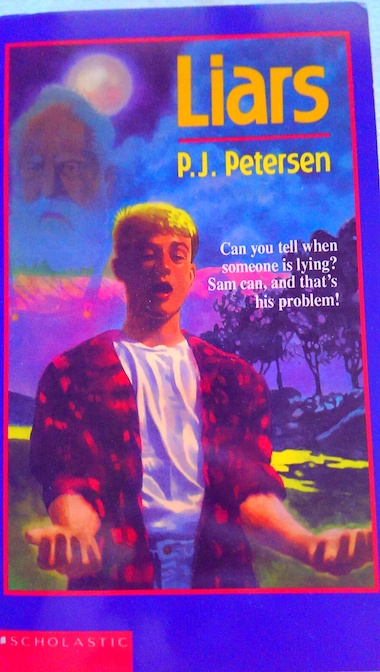
LiarsLiars by P.J. Petersen, 1992.

Sam lives in the small town of Alder Creek in California. The town is so small that they only have a one-room school (well, two rooms, if you count the library/storage room). Sam’s friend, Marty, describes most of what happens there as SOT (Same Old Thing) or MOTSOT (More of the Same Old Thing). However, their town contains some disturbing secrets, which they are about to learn.

Uncle Gene, an old man in town, has a reputation for being a “water witch.” He has the ability to find good sources of water when they need to dig a new well. He lets the local kids watch him when he’s using his dowsing stick and even lets Sam and Marty have a try. Sam has never really believed that Uncle Gene has any special abilities, even kidding Marty for believing in it. However, when Sam takes hold of the dowsing stick, he finds it drawn toward sources of water, like a magnet. Uncle Gene says that Sam has the gift and is a water witch, too. Sam is still somewhat skeptical, thinking that there’s probably something more scientific behind what he experienced, but from that time on, he finds himself sensing other odd things from the people around him.

In particular, Sam can sense when people around him are lying. It sounds like it would be a handy gift to have, but it has some drawbacks. Even when he can tell that someone isn’t telling the truth, he can’t tell exactly what they’re lying about. Some lies are obvious, like those of classmates bragging about things or Mr. Lopez saying that he enjoys living in the small town when, apparently, he really doesn’t. However, Sam can’t always distinguish between small lies or serious ones. Some lies seem to affect him more than others, possibly because the liars themselves feel more guilty about those, but by itself, that doesn’t tell him whether the lie is serious or not. He knows about Mr. Lawlor poaching animals in the forest, so that lie is also obvious to Sam, and he later realizes that his wife is lying about her teaching credentials. When he exposes Mrs. Lawlor’s lies, everyone becomes aware of Sam’s gift.

This ability becomes disturbing for Sam because it seems like everyone around him is lying about something. It’s also somewhat unsettling for some of his friends, like Carmen, who worries about what he’ll think of her if he catches her in a lie. Even Sam lies somewhat himself, saying that he knows that Carmen wouldn’t lie to him when he’s already caught her. But, Carmen sees right through his reassurance, even without sharing Sam’s gift. She’s the one who points out to him that the problem with his gift is that, even though he can tell when someone lies, he can’t tell exactly what they’re lying about or why they’re doing it. She mentions the little white lies people tell to spare someone’s feelings, like saying that they like a person’s clothes when they really don’t, but also how people sometimes lie when the truth is none of someone else’s business. The lie that Carmen told Sam earlier was about why the two of them couldn’t hang out together one day. She said that her parents were expecting company that evening, but the truth was that her parents have been fighting a lot, and she didn’t want Sam to see it because their personal problems are no business of his. This incident, along with a time when Sam has suspicions about an innocent person because the person falsely thought that she might actually be guilty of a crime lead Sam to worry even more about his gift.

However, there are real crimes being committed in his town, and Sam’s gift might be the only way to find who is behind it all. First, someone tries to break into Uncle Gene’s house. Uncle Gene thinks he knows why. Supposedly, there’s a hidden mine in the area, and he’s been looking for it for a long time. He thinks that he’s getting close and that someone was after his maps. Later, his house is set on fire.

But, is the lost mine the real reason why someone is after Uncle Gene? He’s been poking around in some out-of-the-way places during his search, and the kids know that he’s reported someone for growing illegal marijuana. Is the grower out for revenge? With Sam’s own father lying to him about his whereabouts, Sam worries that he may have something to do with what’s going on. It’s only a pity that his gift can’t tell him what his father, or anyone else, is lying about. It only tells him that they’re liars.

With more places making marijuana legally these days, this part of the story might not seem so serious as it did back in the 1990s, when schools were emphasizing that kids should “just say no” to drugs. Marijuana was viewed as being as bad as any other drug, and in this book, the grower doesn’t seem concerned about the possible medical uses.

Sam’s father is not the villain of the story, although he is engaged in something that he doesn’t want to reveal to his son or the rest of the town immediately. There is also a subplot about the death of Sam’s mother. She is already dead when the story begins, but Sam and his father haven’t completely healed. At the urging of Marty’s mother, who also helps Sam to explore his gift, the two of them begin talking about her more, when they had been avoiding discussing her for some time because talking about her was too sad for them.

In the end, Sam thinks that he’s found a way to stop sensing people’s lies (the less he pays attention to what he senses, the less he feels it, so he thinks that ignoring his gift will cause it to fade over time), which is a relief to him because he didn’t like always wondering what people were really lying about, and as Carmen said, some lies are for the best and should be none of his business. I think that’s true, especially the part about lying about things that should be no one else’s business. Some people can be rather pushy in wanting to know the details of other people’s lives, and if they won’t accept “I don’t feel like talking about it” or “I don’t want to tell you” for an answer, a lie of some sort might be a person’s only recourse. Depending on the circumstances, a lie might be harmful or it might protect. Like with Sam’s gift, it may not be immediately obvious which it is, either. Not that people should make a habit of lying, but there are times when it might be the best course of action for all concerned.

I’d like to add that there are many different ways of being truthful as well as lying.  If there are partial lies, and there are partial truths as well.  Some people think that politeness is a kind of lying, like in Carmen’s example of pretending that you like someone’s clothes when you really don’t, but that’s not necessarily so.  Being polite doesn’t mean that you’re pretending but perhaps you’re just choosing which of your thoughts are the most important to mention. Many, perhaps most of us, don’t just think one thing when someone asks us what we think about something.  For example, when someone asks your opinion of their clothes, you might think something like, “Well, I like the color, but I don’t like the style.  At least, I don’t like the way that style looks on you.  But, maybe that’s just because I’m not used to seeing you wear things like that.  I might change my mind later.  Actually, later on, I’ll probably forget that you ever wore that because I don’t care that much about clothes anyway.  Still a nice color, though.”  At least, that’s what goes on in my mind frequently.  There’s no point in telling anyone those random, meandering thoughts, so I just pick the most important part and tell them that I like the color.  Why bother being critical in an effort to sound truthful when the real truth of the matter is that clothes in general aren’t that important to me and I’ll probably just change my mind later, if it sticks in my mind long enough for me give it a second thought?

Then, there are the lies that some people label as the truth for their own purposes. I’ve seen plenty of people say harmful and insulting things to others and then hide behind the defense that they are “just telling it like it is,” when they actually aren’t. Usually, when people say that, they’re actually telling it like it isn’t: lies, exaggerations, or just plain insults disguised as truth. In those cases, their intentions were not to point out some important truth for the benefit of anyone.  Often, they were just trying to hurt someone’s feelings and then further hurt them by accusing them of not being able to handle the truth.  My rule of thumb for distinguishing between people who are really “telling it like it is” and liars who are just pretending is the same as the one I use with assessing advertisements: If a company has to shell out lots of money to tell you something about their product, it’s because what they’re saying isn’t something that you’d ever notice by actually using it.  If it were obviously true, there would be no need to put so much effort into telling you because you’d just know.  I think it’s the same with people who “tell it like it is.”  If someone has to actually say that they’re “telling it like it is,” it’s a strong hint that they’re probably not.  Similarly, anyone who brags about being truthful and trustworthy is probably doing it because they know that no one else would ever think to associate those qualities with them without being told.

The General Store

Historic Communities

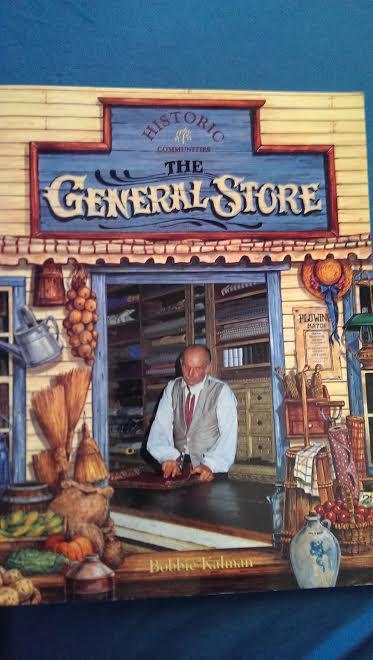
GeneralStoreThe General Store by Bobbie Kalman, 1997.

Besides providing 19th century communities with needed goods, general stores were often centers for community life.  Everyone would need to come and purchase or barter for supplies they couldn’t make for themselves, and it was also where mail for the area was delivered and sorted.  People gathered there to pick up what they needed and to exchange news and gossip with other members of the community.  The book explains how general stores functioned, what kinds of goods they carried, and how they helped to build growing communities.

Basically, they were like small department stores, carrying a little of everything that people in the area needed, including food items, dishes and silverware, tools, plant seeds, ready-made clothes and shoes, bolts of cloth, books, newspapers, and medicine.  Store owners had to decide what they would carry in their stores and how much of it to stock.  If they stocked too little of an item everyone wanted, they would run out, and if they had too much of an item hardly anyone wanted, they would either have to sell it at a discount or keep it themselves.  If someone wanted something that the storekeeper didn’t have on hand, they would have to ask the storekeeper to order it for them from a catalog or get it themselves by making a trip to a larger town where they could find what they were looking for.

GeneralStoreDrawersStore owners also had to decide how much they should charge for each item or how much they would be willing to take in trade.  Farmers often bartered for goods with the produce from their farms, and it was common for store owners to use a form of credit to keep track of what their customers owed and what they owed to their customers.  Farmers would typically sell their goods at harvest time, and the store owners would give them a certain amount of credit at their store, based on what they thought the farmers’ produce was worth.  Then, the farmers could use the credit on their account at the store until the next harvest and selling time.  If a farmer ran out of credit before the next harvest, the store owner would usually extend credit at the store to the farmer to allow him and his family to buy some necessities, knowing that the farmer could make up for it when he came to sell his next batch of produce.

To keep their customers from disputing the prices they charged at the store, store owners often used a kind of code to keep track of the amounts they spent to buy each item and the price they wanted the customer to pay in order to make a decent profit.  The codes were usually something like a substitution code, using letters to represent numbers so customers would need the store owner to interpret the price tags and manage their credit account.  This code system became less common after the 1870s because more people were simply using cash instead of bartering for goods, but I thought that it was a fascinating piece of history.

GeneralStoreMailAnother odd kind of code that the book mentions was the kind that people would use on mailed letters.  Instead of the sender paying the postage, as they do now, people receiving letters were supposed to pay for them when they picked them up from the general store.  If a receiver returned a letter unopened, they wouldn’t need to pay anything, so some people would try to cheat the system by writing a message in code on the outside of the envelope so the receiver would know the most important part of what the writer wanted to tell them for free.

People who practiced special trades, such as blacksmiths or printers, would often set up shop near the general store, and that would be the basis for the main street of growing towns.  Later, when railroads connected more towns, more people began ordering what they wanted themselves through catalogs (not unlike the way people have begun ordering more goods through the Internet). Mail started being delivered to individuals’ homes, and general stores were replaced by more modern department stores and specialty shops.

I loved the pictures in the book, a combination of photographs from living history museums and drawings.

The book is currently available online through Internet Archive.

GeneralStoreFun

Mystery of the Black-Magic Cave

MegMagicCave

Mystery of the Black-Magic Cave by Holly Beth Walker, 1971, 1978.

MegMagicCavePic1Meg’s Uncle Hal takes her and her best friend, Kerry, with him on vacation to Merrybones, Maine.  He has a cabin there, and it’s a good place to go fishing or exploring in the woods.  However, Uncle Hal isn’t just there to relax this time.  His friend, Emily Hawthorne, has asked for his help because she’s received some mysterious, disturbing messages.

Emily was born in Merrybones but moved away at a young age to live with an aunt on the west coast because she was orphaned after the death of her father.  Her father’s death was mysterious, and Emily has had the feeling that people haven’t told her the full truth of it.  It was known that he had a heart condition, and he was found dead in the woods one morning, apparently having died of a heart attack.  Emily herself was also found wandering in the woods alone, frightened and talking about a “dark monster”, but she was very young at the time and no longer remembers what happened or what she saw that night.

MegMagicCavePic2She has returned to Merrybones to teach in the local school, but people in this town look at her as an outsider because she has spent so many years away.  Now, she has received threatening messages written in rhyme and signed with a star with the number 13 inside.  Her pet black cat, Melissa, has also mysteriously disappeared, and Emily is worried about her.
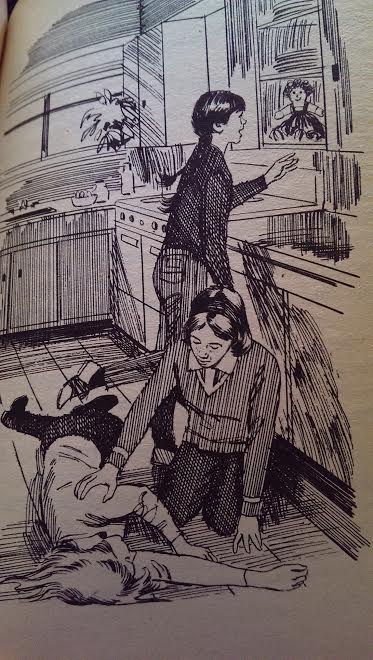
Someone doesn’t want Emily to stay in Merrybones, possibly because they’re afraid of what she might remember about the past.  Meg and Kerry soon learn that there are strange legends and stories of witches connected with a cave in the woods.  They later discover that someone has been there recently, lighting candles and drawing pentacles like the ones on the threatening messages to Emily.  In fact, Mrs. Stoner, the woman who owns the bed-and-breakfast where Meg and Kerry are staying because Uncle Hal’s cabin only has one room, has what appears to be a witch’s spell book hidden in the storage room next to where the girls sleep.  To get the answers, Meg and her friends, including Mrs. Stoner’s own children, must summon the courage to go the cave once more and learn more about these mysterious “witches.”

The book is part of the Meg Duncan Mysteries.  It is available to borrow and read for free online through Internet Archive.

My Reaction and Spoilers

A creepy mystery like this was just the sort of thing I loved as a kid, but this story kind of bothered me, reading it again as an adult.  I had forgotten how it ended, but as I was reading about the secret society in the book and the clues that Meg and her friends uncovered about them, I found myself not just thinking that their spells and witch names were a little hokey for a secret society of adults (“Endorella” indeed!) but also getting angry at the juvenile way they behaved.  Part of me thought at first that it was because the witches’ scariness was toned down for the sake of juvenile readers, but more and more, I found myself thinking of them as adults who never really grew up, whose mean, cliquish ways were carried over into adulthood, long after they should have grown out of them.  There are adults in real life who are like that.  To my surprise, that sense wasn’t just because their little rituals were toned down for children but was actually a genuine clue to the identities and motives of the “witches” and the origins of their secret society.  Discovering that actually made me feel a little better.  I also think the author did a good job of explaining how a little harmless “fun” can get out of hand and showing the adults’ embarrassment at being caught in their “game.”  The secret society isn’t quite as mean or sinister as it first appears, which is also a relief.

There is an interesting twist to the story in who the real author of the threatening messages was.  I was pretty sure who the writer was, and I guessed right, but I had expected that this person would be a member of the secret society, which wasn’t true.  Also, the secret that the villain is trying to protect isn’t how the father died years ago, which turns out to be just because of his heart condition with no foul play, but the fact that someone stole the money that the father had in his possession at the time he died.  The story does end happily, though, including the thief repaying Emily (this person had actually been trying to work up to it for a long time) and Emily agreeing to spare the person’s reputation.  The kitty is okay at the end, too!

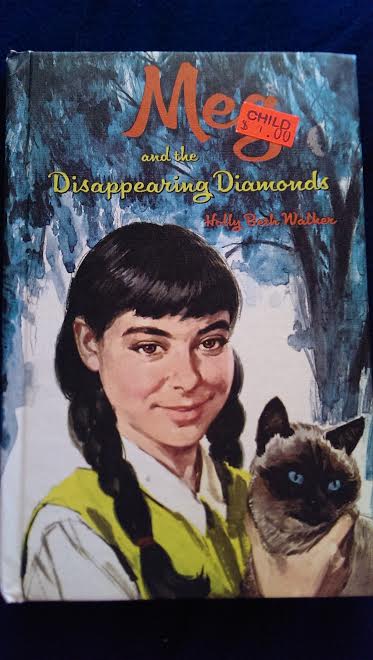
Meg and the Disappearing Diamonds

MegDisappearingDiamondsMeg and the Disappearing Diamonds by Holly Beth Walker, 1967.
Margaret Ashley “Meg” Duncan lives in a small town called Hidden Springs in Virginia, not too far away from Washington, D.C., where her father works.  Her mother is dead, and she has no brothers or sisters. When her father is away in Washington, working, Mr. and Mrs. Wilson, the gardener and housekeeper, take care of her.  For company, Meg has her beloved cat, Thunder (who doesn’t like anyone but Meg), and her best friend, Kerry.

People in Hidden Springs have been talking lately about Mrs. Partlow and her diamond jewelry.  Mrs. Partlow is the wealthiest, most important woman in town.  Usually, she keeps her jewelry in a vault at the bank, but recently, she brought it to her house so that she can wear it at her niece’s wedding.  Then, someone attempts to break into Mrs. Partlow’s house.  Nothing is taken, but everyone can guess what the thief was after.

MegDisappearingDiamondsPicMrs. Partlow invites a few friends to her house for tea to show them her jewelry and thoughtfully invites Meg and Kerry to join the women.  Meg and Kerry are excited at the chance to attend a grown-up tea party and to see Mrs. Partlow’s fabulous jewelry.  However, the party is crashed by Mrs. Glynn, a new woman in town.  Mrs. Glynn has three trained dogs that she dotes on.  She dresses them up in fancy costumes, and she can’t resist the opportunity to show them off when she wanders into the gathering in Mrs. Partlow’s garden.  The dogs cause a disruption, and after it’s over, everyone realizes that Mrs. Partlow’s diamond jewelry is missing!

Could the dogs have been an intentional distraction?  What about the person who tried to break into Mrs. Partlow’s house earlier?

Kerry’s much younger cousin, Cissie, is visiting her family and has a habit of taking things that catch her eye and hiding them in her secret “playhouse” which changes locations from time to time.  So far, the girls know that she’s taken Meg’s ballet slippers. Cissie also slipped into Mrs. Partlow’s party, uninvited and unnoticed by the other guests.  The girls don’t know for sure that Cissie took the jewelry, but the theft is a serious crime, and they don’t want to see little Cissie get into trouble.  They have to either find Cissie’s new “playhouse” and search it for the jewelry or to discover who else might have taken the diamonds before anyone else realizes that Cissie might be the thief.

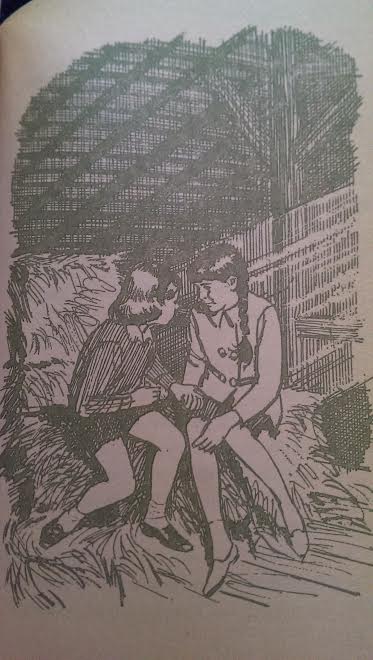
My edition of the book has drawings that are done in kind of a gray green color.

The book part of the Meg Duncan Mysteries.  It is available to borrow and read for free online through Internet Archive.

A Year Down Yonder

YearDownYonderA Year Down Yonder by Richard Peck, 2000.

This is the sequel to A Long Way from Chicago. The story takes place shortly after the Great Depression, in 1937.

Times are still hard, and a recession has left a lot of people out of work again. Mary Alice’s father is out of work, and her brother Joey is out west working for the Civilian Conservation Corps. Because her family has to move to a smaller apartment, fifteen-year-old Mary Alice leaves Chicago to stay with her Grandma in the country for the year. Times are hard in Grandma’s small town as well, but Mary Alice’s Grandma is as wily and eccentric as ever.

Like the first book, this book is really a series of short stories about Mary Alice’s adventures with her Grandma during their year together. The stories generally have a hilarious turn as Grandma gets the better of everyone, often in the name justice or a good cause.  (Although, Grandma’s sense of justice is debatable since it involves “borrowing” pumpkins from the neighbors in the dead of night and other questionable activities.)

These stories present a detailed picture of rural life during the 1930s, from pranks played on Halloween to how Armistice Day was celebrated in the years following World War I, when people were still alive who had strong memories of that war. The stories also capture some of the personalities and politics of life in a small town, from a disreputable family of outcasts to the local elite, who have more money than the others and brag about having ancestors who fought in the Revolutionary War (which may or may not be so).

Rich Chicago Girl: Mary Alice arrives in Grandma’s small town and is enrolled in the local school.  She meets the class bully, and Grandma helps her to deal with her.

Vittles and Vengeance: At Halloween, Grandma gets revenge against a group of pranksters and raids her neighbors for ingredients to make the school Halloween party better.

A Minute in the Morning: Armistice Day, November 11, has more meaning for people who have actual memories of The Great War (World War I).  Grandma makes sure that those who can afford it pay what they owe to the veterans of that war and shows Mary Alice the price that some soldiers paid for supporting their country.

Away in a Manger: Mary Alice is picked to play Mary in the school’s Christmas Nativity play.  The baby Jesus turns out to be a surprise for the whole town, and Grandma arranges a special surprise for Mary Alice.

Hearts and Flour: The head of the local branch of the DAR pushes Grandma to make cherry tarts for their annual tea in honor of George Washington’s birthday.  Since she will neither allow Grandma to join the DAR (because Grandma doesn’t have the proper lineage) nor pay Grandma for her work (she thinks Grandma should ‘volunteer’ her services as part of her patriotic duty), Grandma insists that if she bakes, she must host the tea as well . . . with a couple of special surprise guests.  Meanwhile, a handsome new boy named Royce joins Mary Alice’s class at school.

A Dangerous Man: An artist working for the WPA rents a room from Grandma, treating Mary Alice and Royce to a scandalous but hilarious sight when his subject matter gets out of hand.

Gone with the Wind: A tornado sweeps through the town, and Grandma and Mary Alice go to check on residents who live alone.  Mary Alice also prepares to return home to her parents in Chicago.

Ever After: The final story in the book is about Mary Alice’s wedding, years later, toward the end of World War II.

This book is a Newbery Award winner.  There are multiple copies currently available online through Internet Archive.