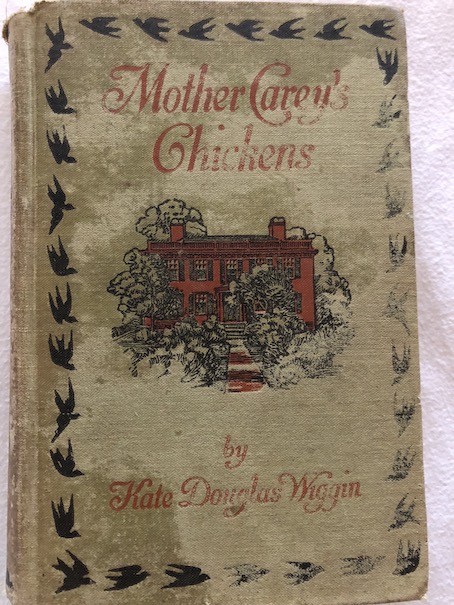
Mother Carey’s Chickens by Kate Douglas Wiggin, 1911.
The book begins with a quote from an older children’s book, Water Babies:
“By and by there came along a flock of petrels, who are Mother Carey‘s own chickens…. They flitted along like a flock of swallows, hopping and skipping from wave to wave, lifting their little feet behind them so daintily that Tom fell in love with them at once.”
This book is very different from the story in Water Babies (which is actually a very dark book for children), but the quote is foretelling some of the events of this story, and the characters refer to the story now and then throughout the book. Mother Carey’s Chickens is the book that the Disney movie Summer Magic was based on. The basic premise of the story is the same between the book and the movie, but there are also many differences in details. For example, in the movie, the Carey family had only three children, and in the book there were four. The oldest children in the family also seem older in the movie than they were in the book, and their stuck-up cousin Julia was also much younger in the book.
When the book begins, Mrs. Carey is not yet a widow, but she has received news that her husband, a Navy captain, is ill with what appears to be typhoid. She has to go to him, leaving her four children Nancy, Gilbert, Kathleen, and Peter, at the house with their two servants. (Kathleen was the child who did not appear in the movie.) She gives them some instructions to call on their relatives if they need any further help and refers to them as her “chickens” in reference to the bit of seafaring folklore that the earlier quote mentioned. They explain that this nickname for the children was based on a joke made by their father’s Admiral back when Nancy turned ten years old.
Nancy is the eldest of the Carey children (played by Hayley Mills in the movie), and from the way that the book describes her, I suspect her to be something of a Mary Sue for the author. Nancy has a knack for making up and telling stories, and at one point, the book says, “… sometimes, of late, Mother Carey looked at her eldest chicken and wondered if after all she had hatched in her a bird of brighter plumage or rarer song than the rest, or a young eagle whose strong wings would bear her to a higher flight!” Nancy and her younger sister, Kathleen, are both pretty, but Nancy is definitely the center of attention and a much livelier personality. The book is complimentary to all of the children, however. Gilbert is described as a “fiery youth” and little Peter, the youngest, as “a consummate charmer and heart-breaker.” Although Peter is only four years old, the book says, “The usual elements that go to the making of a small boy were all there, but mixed with white magic. It is painful to think of the dozens of girl babies in long clothes who must have been feeling premonitory pangs when Peter was four, to think they couldn’t all marry him when they grew up!” So, the Carey children are generally idealized as children, something pretty common in older children’s literature, especially in stories that are meant to teach certain lessons or morals, as this one does.
While the children wait for their mother to return home, they are on their best behavior even more than usual, with Nancy and Kathleen having the following conversation:
“It is really just as easy to do right as wrong, Kathleen,” said Nancy when the girls were going to bed one night.
“Ye-es!” assented Kathleen with some reservations in her tone, for she was more judicial and logical than her sister. “But you have to keep your mind on it so, and never relax a single bit! Then it’s lots easier for a few weeks than it is for long stretches!”
“That’s true,” agreed Nancy; “it would be hard to keep it up forever. And you have to love somebody or something like fury every minute or you can’t do it at all. How do the people manage that can’t love like that, or haven’t anybody to love?”
“I don’t know.” said Kathleen sleepily. “I’m so worn out with being good, that every night I just say my prayers and tumble into bed exhausted. Last night I fell asleep praying, I honestly did!”
“Tell that to the marines!” remarked Nancy incredulously.
So, the kids are pretty good, but perhaps not perfect. Still, Mary Sue characters usually do have a flaw that’s not really considered much of a flaw, making them more endearing.
Even if you don’t know the story from the movie, you may have guessed that when the children’s mother returns home, it is with the news that their father has died. With the father’s death comes many changes for the Carey family, which is the point in the story where the movie begins. Without the father’s salary, and with all four children less than fifteen years old, the family has to cut expenses, letting the servants go.
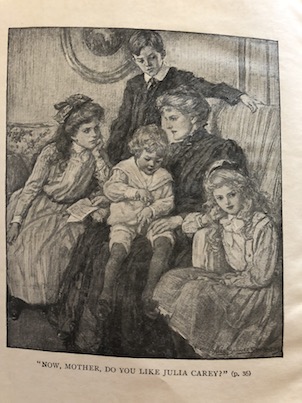 Then, the family receives word that Captain Carey’s brother is in failing health and that his business partner, Mr. Manson, is seeking to place his daughter, Julia, with a relative. Mr. Manson has already spoken to a cousin of the family about Julia, but this cousin has refused to take her. The now-fatherless Carey family knows that taking on another relative will be an added burden on them, but Julia has no other family and nowhere else to go, so they see it as their duty to help her. Admittedly, none of them likes Julia very much. They remember her as a spoiled child who was always bragging about the wonderful things that her wealthier friend Gladys Ferguson had or did. Even now, the Ferguson family has invited Julia for a visit before she goes to live with her aunt and cousins, but unfortunately, they have no intention of adopting her or even trying to care for her until her father is well themselves. Nancy sees them as simply spoiling Julia and preparing her for a life that the Carey family can’t possibly support.
Then, Nancy has an idea that changes everything for the family. She reminds them all of a trip that they took to Maine years ago and a beautiful old house that they saw in a small town called Beulah. The memories of that happy time and idyllic house and small town call to them, and Nancy and her mother wonder what happened to the house. They decide to talk to a friend of Captain Carey’s who had a small law office in the area, sending Gilbert to Beulah to find him. In Beulah, Gilbert learns that the Yellow House (as people commonly call it, although it also has the name Garden Fore-and-Aft) belongs to the wealthy Hamilton family, who don’t live there but have used it as a kind of vacation home. The father of the family, Lemuel Hamilton, is in diplomatic service and lives overseas. During the last few years, the younger Hamiltons had used the house to host house parties of other young people they knew from school, but now the young people are living all over the world, and the house has been empty. Gilbert’s father’s friend, Colonel Wheeler, and a local store owner, Bill Harmon, describe the house’s current condition to Gilbert. Since the younger Hamiltons renovated the barn and put in a dance floor for their parties, it’s too fancy and no longer usable for its original purpose, which is why no farming families have been interested in the house themselves. The men say that they can rent the house to the Carey family on behalf the Hamilton family (who, after all, still have to pay taxes on the property and wouldn’t mind a little extra money to cover it) for a sum much less than the rent of their current house. The house could use a few minor repairs, and the barn is more fixed up for holding dances than keeping animals, but that’s no problem for the Carey family. Living there would save the family a lot of money until the children are grown and able to start earning their own livings. Even though Gilbert is only about fourteen, he is able to rent the house on his mother’s behalf.
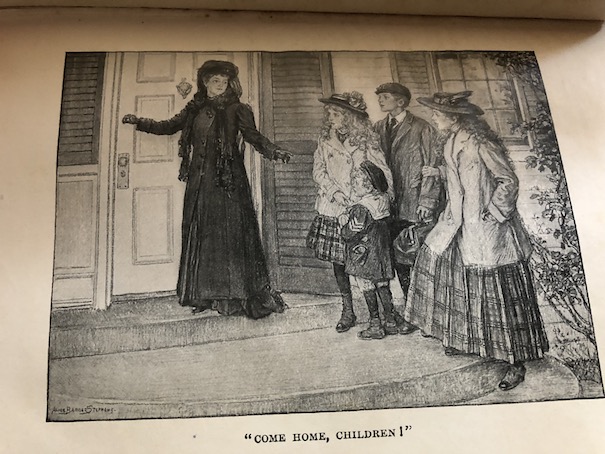
The entire family is pleased, except for Julia, who is still a snob. The book explains that Julia had always been a very well-behaved little girl although neglected by her somewhat flighty mother. (The book doesn’t say exactly what happened to Julia’s mother, although she is no longer part of Julia’s life. She may be dead, or she may have run off a long time ago.) Because she was an only child and always seemed the “pink of perfection” (which provides the title of a song about Julia from the movie version of the book), always seeming to say and do the right thing, her father spoiled her from a young age, giving her every possible advantage he could. When Julia first arrives at the Yellow House in Beulah to stay with her relatives, she still prattles on about her wonderful friend Gladys and all the luxuries she has. The book says, “She seemed to have no instinct of adapting herself to the family life, standing just a little aloof and in an attitude of silent criticism.” So, if Nancy sounded a little too wonderful in her earlier description, understand that Nancy thinks that Julia is too sickeningly perfect and smug. Julia’s problem, as I see it, isn’t so much that she’s too perfect as she expects the rest of the world to be too perfect. Because she is so focused on perfection, she isn’t sympathetic enough to other people or accommodating to imperfect situations. As the book says, “She seldom did wrong, in her own opinion, because the moment she entertained an idea it at once became right, her vanity serving as a pair of blinders to keep her from seeing the truth.” Besides being spoiled, she is very naive and rigid in her thinking. She thinks that she knows what’s what and how things ought to be, and that’s all there is to it.
A major part of the story deals with Julia’s adjustment to family life and the realities of the family’s situation. At first, she thinks that Mrs. Carey should save up for college for Gilbert and a proper coming-out for each of the girls in the family to give them all the advantages that life has to offer. She’s sure that her father will get better and be able to help pay for everything when the time comes. However, Mrs. Carey doesn’t want to wait on that hope. She says that she’s sure that the children will be able to make something of themselves even without the advantages. Matters come to a head with Julia when Kathleen gets tired of Julia complaining about everything and everyone and says that if her father hadn’t lost so much of her parents’ money as well as his own, the whole family would be better off. Julia demands to know from Mrs. Carey if that is true, and Mrs. Carey says that she and her husband did invest in her father’s business, an investment which he may never pay back, due to his poor health. She also tells Julia:
“You are not a privileged guest, you are one of the family. If you are fatherless just now, my children are fatherless forever; yet you have not made one single burden lighter by joining our forces. You have been an outsider, instead of putting yourself loyally into the breach, and working with us heart to heart. I welcomed you with open arms and you have made my life harder, much harder, than it was before your coming. To protect you I have had to discipline my own children continually, and all the time you were putting their tempers to quite unnecessary tests! I am not extenuating Kathleen, but I merely say you have no right to behave as you do. You are thirteen years old, quite old enough to make up your mind whether you wish to be loved by anybody or not; at present you are not!”
It’s an awful thing to say to a child that she isn’t loved, but it is something of a wake-up call to Julia to realize that the way that she was behaving was making herself unlovable to the people who should have been closest to her. When she tells Mrs. Carey that Gladys loves her, Mrs. Carey says, “Then either Gladys has a remarkable gift of loving, or else you are a different Julia in her company.” Mrs. Carey tells her to consider what the Bible says about “the sin of causing your brother to offend.” It’s probably the first time that Julia was ever criticized for anything, breaking her perfect record of apparent perfection. Julia has greatly provoked the rest of her family and realizes that she has earned whatever bad feelings they have toward her. She has ignored their difficulties because she was too focused on what she wanted for herself and the way that she thought that life should be, not realizing how much harder she had made things for everyone. For the first time in her life, Julia admits that she is not perfect and asks for another chance to make things right, marking a real change in her character. Personally, though, I think that some of this drama could have been avoided if, knowing Julia and her behavior as she does, Mrs. Carey had spoken to her when she first came to live with the family, explaining the family circumstances in a straight-forward way and making it known that she expects certain standards of behavior from Julia when she’s in her house. Making the rules and enforcing them them from the beginning may have prevented a lot of stress and saved Kathleen from exploding emotionally.
 A character that appears in the movie, Ossian “Osh” Popham, is also in the book, although instead of being the store owner, he’s a local handyman who helps the family get the house in order. His children, also characters in the movie, are in the book, too, although I didn’t like the way the book described his daughter, Lallie Joy. It says that “she was fairly good at any kind of housework not demanding brains” and that she “was in a perpetual state of coma,” in case you didn’t understand that she’s basically stupid. I always hate it when stories make a character intentionally stupid. I did appreciate her explanation of her name, though: “Lallie’s out of a book named Lallie Rook, an’ I was born on the Joy steamboat line going to Boston.” I had wondered where the name came from.
While the family continues fixing up the house to make it nicer to live in, Nancy writes a letter to the owner of the house, 50-year-old Lemuel Hamilton, who is an American consul in Germany, telling him about her family and their life at the house. Lemuel Hamilton finds her letter charming. Seeing the picture of her family that Nancy encloses with the letter makes Lemuel think of his own family, scattered to the four winds, the children grown or nearly grown, either away at school or starting their first business ventures in various parts of the world. He’s lonely for the comforts of having all of his family living together and surprised at how happy this much-poorer family looks in the old house in the small town that his ambitious, social-climbing wife always thought was beneath them. Then, it occurs to him that his sons are of an age when they’ll start thinking about marriage soon, and he wonders what wives they’ll choose and what their family lives will be like. On an impulse, Lemuel writes to the Carey family, telling them that they can live in the house rent-free as long as they continue with the household improvements, and he also forwards Nancy’s letter to his younger son, Thomas (tying the story back to the quote at the beginning of the book), who is living in Hong Kong and who was the one who always liked the Yellow House the most.

 When Lemuel tells the Careys that they can stay in the house for as long as they like, unless his son Tom wants the house, Nancy begins thinking of Tom as a possible threat to her family’s happiness. (She thinks of him as “The Yellow Peril” in a reference for the old xenophobic term used by people who were afraid of immigrants from Asia, since he would be coming from China, and as a pun on the Yellow House that they might be competing for. This term is also mentioned in the Disney movie.) Of course, Tom turns out to be no threat. Tom has been lonely pursuing his tea business in China, and Nancy’s letter and happy family life call him home to a romance that will change the lives of the Careys as well. By the end of the book, Nancy is seventeen years old, old enough for romance and charmed by the romantic Tom.
The lessons that the story emphasizes are the importance of family relationships and togetherness over personal ambition and developing the ability to triumph over adversity instead of waiting for life advantages that may never come. Like other books from the early 20th century, the values of hard work and cheerfulness are emphasized, and there is the implication that important people will recognize and reward these qualities when they see them. Pretentiousness and snobbery are criticized. A settled, happy family life is the ultimate goal.
Overall, though, I really prefer the movie to the book. I think that cutting down some of the side plots improved the story. Besides removing the younger daughter, Kathleen, from the story, the movie also eliminated other side characters, like Cousin Ann and the Lord siblings, Cyril and Olive, who also live in Beulah and become friends of the family. Also, making Julia older than she was in the original book, closer to Nancy’s age than Kathleen’s, improves the sisterly relationship that the girls eventually have.
My copy of the book originally belonged to my grandmother, who was born the same year that this book was originally written.
The book is now public domain and available online through Project Gutenberg.
 Blossom Culp and the Sleep of Death by Richard Peck, 1986.
 Mystery Behind Dark Windows by Mary C. Jane, 1962.
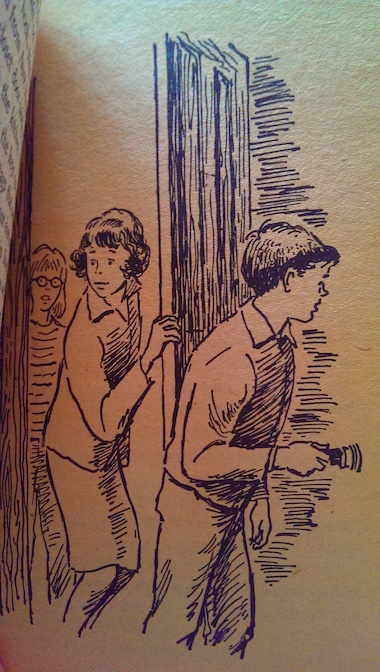 Then, one night, Ellie goes out to look for her aunt’s missing cat and hears someone in the old, supposedly empty mill. When she tries to tell Tony, he doesn’t take her seriously, but Ellie knows what she heard. Ellie later goes back to the mill to take another look at the place, and she sees Jeff, a boy from Tony’s high school, hanging around. Later, she confides what she’s heard and seen in Hank, an old friend who lives on the other side of the river, and Violet, another girl from her class whose family has suffered since the closure of the mill. The two of them start helping Ellie to investigate.
 Mystery Back of the Mountain by Mary C. Jane, 1960.
 When they get to Maine, they meet Uncle James’s lawyer, Mr. Palmer, to collect the key to the house. Mr. Palmer tells them that the house has a few items in it that could be considered valuable antiques, including a portrait of the woman that Uncle James had wanted to marry, Drusilla Randall. The children’s father asks Mr. Palmer more about Drusilla Randall, and he says that all he knows is that she had an argument with Uncle James and then disappeared. He thinks that she just left town, although he says that there are rumors that Uncle James may have murdered her. Mr. Palmer thinks that the rumors are ridiculous and doesn’t take them seriously, but Stevie and Anne are disturbed at the idea that their relative may have been a murderer, or that people thought he was. Mr. Palmer also mentions that Drusilla’s sister, Marion, has decided to return to her family’s old house for the summer as well, so she’ll be living close to their farm.
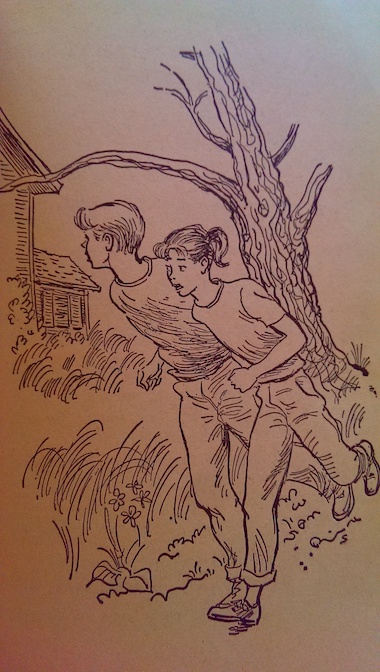 The house is certainly an isolated place, and their closest neighbors, the Hodges have an old grudge against Uncle James. The unethical business deal that Uncle James did years ago involved buying some of the Hodges’s family’s best land. Bert Hodges, who was young at the time, says that the deal ruined his father’s life, and it’s making his miserable, too, because he really needs that land to make his farm profitable. Anne hears this from Bert’s young niece, Oleva, an orphan who has come to live with her aunt and uncle. Although Uncle Bert is strict with her and somewhat bitter about the past and the family’s circumstances, Oleva likes her aunt and uncle and wishes they would adopt her, giving her the stable home she’s longed for since her parents died and she began being traded around among her relatives. However, Bert doesn’t have much faith in other people, and even though he likes his young niece, is afraid to commit to adopting her.
 Anne feels badly that Uncle James’s land deal seems to have ruined people’s lives. Oleva also tells her something disturbing about Drusilla, the girl that Uncle James loved. They were supposed to be married when Drusilla turned twenty, but she disappeared before that happened, and most people think that she drowned in the natural pool on Uncle James’s property. It’s deeper than it appears at first, and some things belonging to her were found nearby, so everyone thinks that she probably drowned and that her body is still somewhere at the bottom of the pool. Whether her death was an accident, suicide, or murder is still unknown.
 Mystery on Nine-Mile Marsh by Mary C. Jane, 1967.
 Lucille and Brent take a bike ride out to the island, but a noise in the barn frightens them away. It isn’t that they really think there’s a ghost, but they’re concerned that someone may be trespassing on the property. They decide to keep an eye on the house to see if they can see anyone sneaking around, but they don’t.
 Mr. Linsday has also heard strange noises around the Moody house, and he asks the children what they know about it. They tell him the ghost stories about the Moody place, but they say that they don’t really believe that there’s a ghost. Mr. Lindsay is fascinated by the stories. He says that his impression was that the noises he heard came from the cellar, but he didn’t see anything when he investigated. He invites the children to help him investigate further sometime.
 Barbara’s father owns a clothing store in town, and she says that some of his customers have been saying bad things about Mr. Lindsay. Some of them have even said that he might be a spy. Lucille thinks that’s ridiculous and that they’re only saying things because they wanted to buy the property or see it go to Clyde. Lucille has to admit that she doesn’t know much about Mr. Lindsay, so she can’t swear that the rumors aren’t true, but she still thinks that he’s probably just a nice guy, and she wants to see him keep the house so that Pedro will have a safe place to live.
 Liars by P.J. Petersen, 1992.
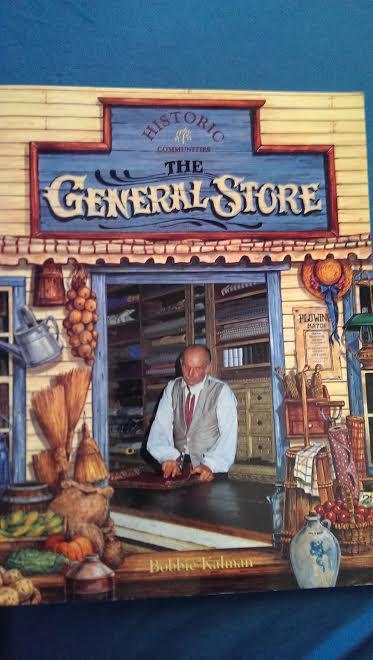 The General Store by Bobbie Kalman, 1997.
 Store owners also had to decide how much they should charge for each item or how much they would be willing to take in trade. Farmers often bartered for goods with the produce from their farms, and it was common for store owners to use a form of credit to keep track of what their customers owed and what they owed to their customers. Farmers would typically sell their goods at harvest time, and the store owners would give them a certain amount of credit at their store, based on what they thought the farmers’ produce was worth. Then, the farmers could use the credit on their account at the store until the next harvest and selling time. If a farmer ran out of credit before the next harvest, the store owner would usually extend credit at the store to the farmer to allow him and his family to buy some necessities, knowing that the farmer could make up for it when he came to sell his next batch of produce.
 Another odd kind of code that the book mentions was the kind that people would use on mailed letters. Instead of the sender paying the postage, as they do now, people receiving letters were supposed to pay for them when they picked them up from the general store. If a receiver returned a letter unopened, they wouldn’t need to pay anything, so some people would try to cheat the system by writing a message in code on the outside of the envelope so the receiver would know the most important part of what the writer wanted to tell them for free.

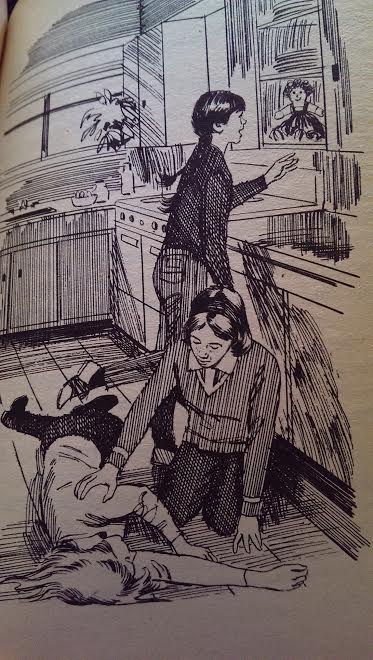 Meg’s Uncle Hal takes her and her best friend, Kerry, with him on vacation to Merrybones, Maine. He has a cabin there, and it’s a good place to go fishing or exploring in the woods. However, Uncle Hal isn’t just there to relax this time. His friend, Emily Hawthorne, has asked for his help because she’s received some mysterious, disturbing messages.
 She has returned to Merrybones to teach in the local school, but people in this town look at her as an outsider because she has spent so many years away. Now, she has received threatening messages written in rhyme and signed with a star with the number 13 inside. Her pet black cat, Melissa, has also mysteriously disappeared, and Emily is worried about her.
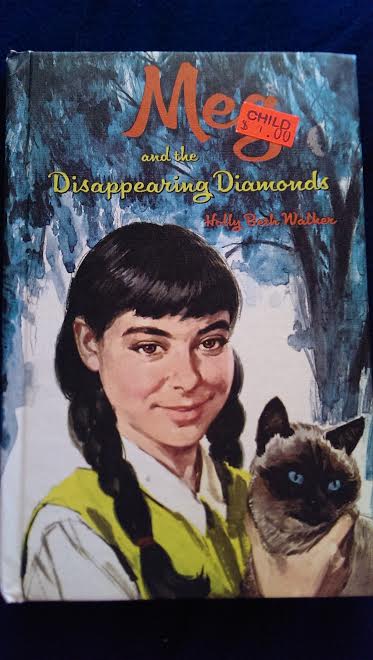 Meg and the Disappearing Diamonds by Holly Beth Walker, 1967.
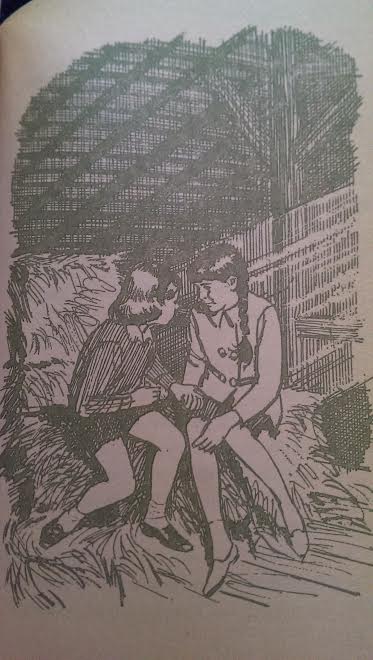 Mrs. Partlow invites a few friends to her house for tea to show them her jewelry and thoughtfully invites Meg and Kerry to join the women. Meg and Kerry are excited at the chance to attend a grown-up tea party and to see Mrs. Partlow’s fabulous jewelry. However, the party is crashed by Mrs. Glynn, a new woman in town. Mrs. Glynn has three trained dogs that she dotes on. She dresses them up in fancy costumes, and she can’t resist the opportunity to show them off when she wanders into the gathering in Mrs. Partlow’s garden. The dogs cause a disruption, and after it’s over, everyone realizes that Mrs. Partlow’s diamond jewelry is missing!
 Jestress's Forgotten Books and Stories