Coat of Many Colors by Dolly Parton, 1969, 1994, 2016.
It’s fall, and a little girl needs a new coat. Her family doesn’t have much money, but someone gives her mother a box of rags, which her mother sews into a patchwork coat for the girl.
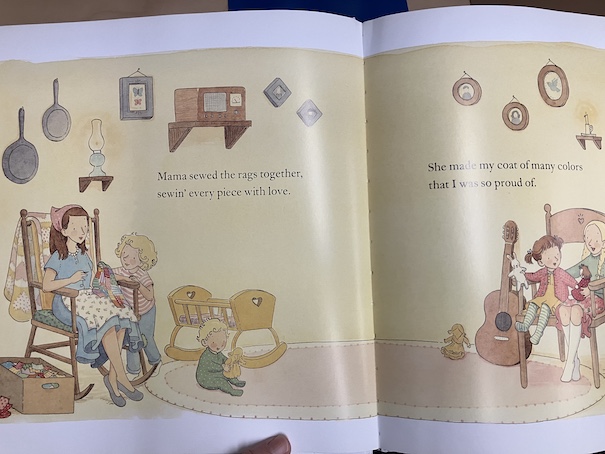
As she sews, the mother tells the girl the Bible story of Joseph and the Coat of Many Colors. The little girl loves her new coat, associating it with the Bible story and her mother’s love for her.
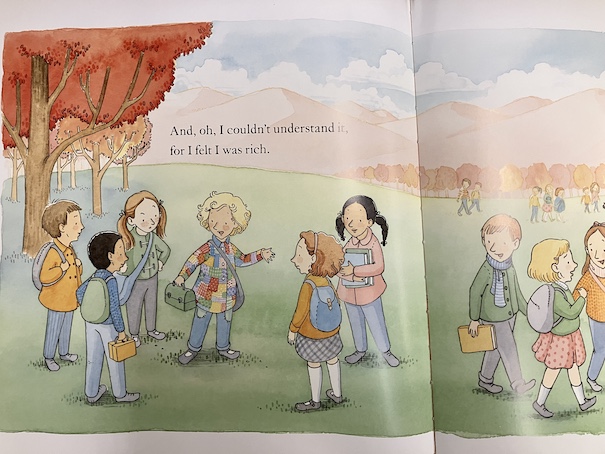
When the girl goes to school in her new coat, other kids tease her because having an improvised coat made from other people’s rags is a sign of poverty. The other kids know that her mother made her that coat because she couldn’t afford to buy one.
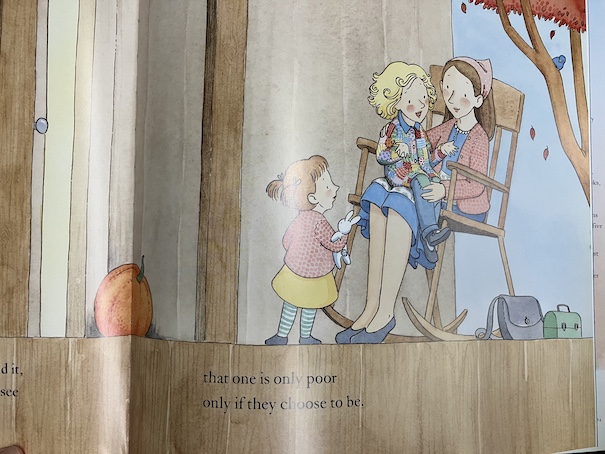
However, the girl looks at the situation differently. Rather than focus on what her family couldn’t buy, she loves what they gave her. The coat is a sign of her mother’s love and sewing skill. Whether a person is rich or poor depends not just on what they have but on their feelings about what they have. When a person looks at the good points of what they have rather than what they don’t have, they feel rich.

My Reaction
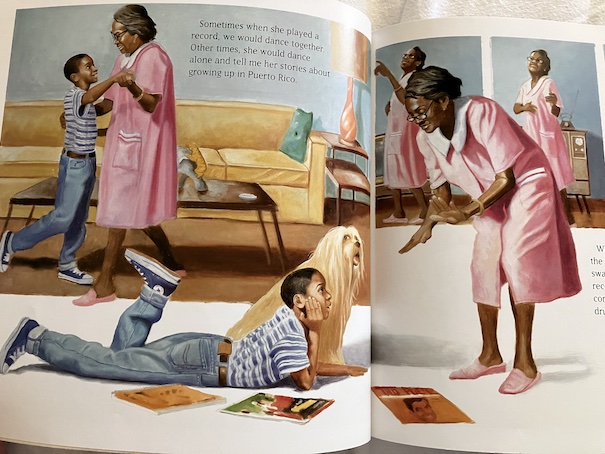
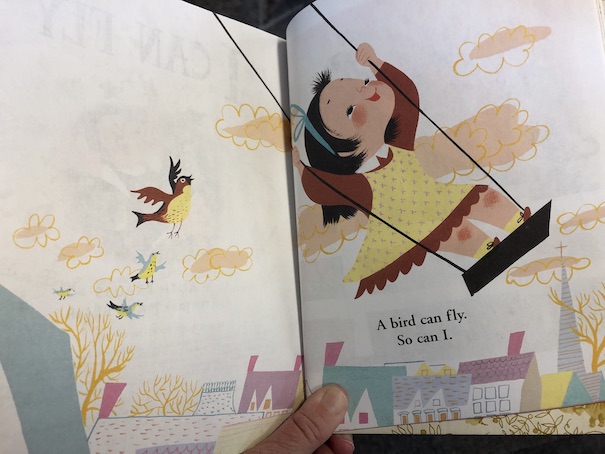
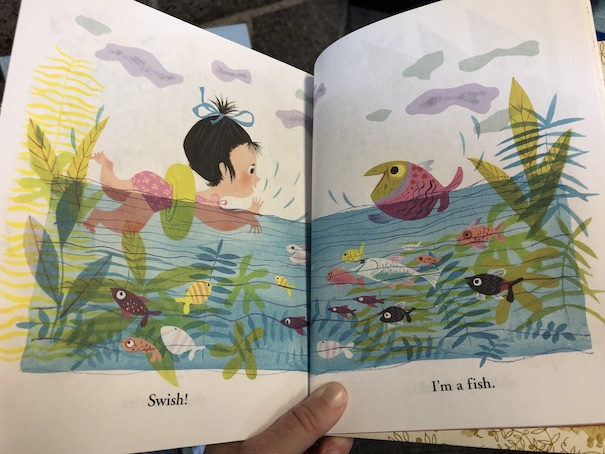
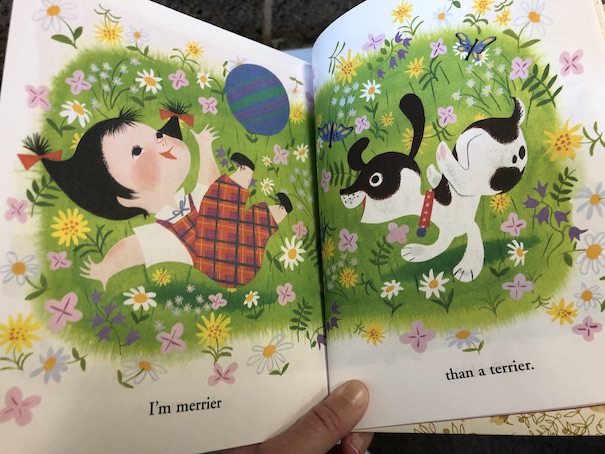
The reason why I put multiple copyright dates for this book is that the story has been printed in multiple versions. The text of the book is from a song called Coat of Many Colors written by Dolly Parton in 1969 (listen on YouTube). The text is literally the words of the song, and it’s fun to listen to the song and read the book together! The other two copyright dates are because the story has been printed as a picture book more than once, with different illustrators. The illustrations I show here are from the latest version, from 2016.
There’s a very similar story to this one that I reviewed earlier, The Rag Coat, which is also a picture book about a girl with a patchwork coat who is teased by other kids at school. The Rag Coat was published a few years before Coat of Many Colors was first published as a book, but years after Coat of Many Colors was published as a song, and a note in The Rag Coat acknowledges the song as part of the inspiration for the story. The story in The Rag Coat doesn’t take quite the same turn as Coat Many Colors because it doesn’t relate the girl’s coat to the Bible story and because the way the girl in that book reconciles herself and the other students at school to her rag coat is pointing out that the rags that make up her patchwork coat came from their families and that she knows the stories behind each of them, the stories of her classmates’ lives. It’s a little longer story with a little more depth and backstory behind the coat, but I like Coat of Many Colors for its lighthearted approach to the idea of what makes a person rich or poor and depths that are more implied than stated.
The connection to the story of Joseph and the Coat of Many Colors is important because, in the Bible story, Joseph’s colorful coat was a sign of his father’s love for him, and in this picture book, part of what makes the patchwork coat made of rags important to the girl is the fact that her mother made it for her and it’s a sign of her mother’s love. There is a section in the back of the book where Dolly Parton explains that the story is based on a real incident from her life, and that’s why the song she wrote about it has always been special to her. She also wants people to consider what it really means to be rich or poor. In both the story and in real life, Dolly’s attitude was focusing on the richness of what she had (like an original coat, handmade by a loving mother) rather than the things she couldn’t afford, and that’s what she recommends to other people.
Actually, it occurs to me, too, that in the early 21st century, a bespoke patchwork coat might actually be considered both more stylish and more valuable than any ordinary coat bought off the rack from any store. It’s the stuff of cottagecore fans and Etsy aficionados! Sewing is a time-consuming hobby that requires skill and can cost considerably more than buying a cheap coat at Walmart. People who can do it really well can charge a fair amount for their work. The only ways to get something like that these days are either to do it yourself, know someone who’s willing to make it for you, or be willing to pay for it. (I wrote this in July 2025, and I checked the going rate for a patchwork coat on Etsy. It was about $100 at that time. The cheapest options were about $84 dollars, and some were more than $200, with some vintage coats priced at more than $300.)
I find this hilarious, that what the kids who went to school with Dolly Parton back in the day teased her about as a sign of poverty would cost quite a lot to buy from someone else these days, with older “vintage” ones costing the most of all. With the rise of cottagecore and other pop culture influences, some of their grandkids would probably have begged to own something like that. (Remember when Harry Styles wore a patchwork sweater, and a bunch of people made their own versions or sold patterns to make them? I do!) Their families might not have the skill to pull off making such a thing themselves, which may be yet another way of looking at who’s poor and who’s rich. Remember this the next time someone’s wearing something that seems a little odd or improvised. It might turn out to be ahead of its time, a smarter use of money, a unique demonstration of real skill, and a far more interesting or timeless fashion statement than something that’s more generically trendy that will look cringy in yearbook photos in 5 to 10 years. Take the long view!
Dolly Parton said that the original “coat of many colors” that her mother made for her when she was a child wore out long ago and was probably remade into something else, like a quilt, because her family never wasted anything. However, there is still a picture of young Dolly wearing the coat, and after she wrote her song about it, her mother made another one similar to it, as best she could remember, to show what it was like. This replica coat, made by her mother, is the one on display in Dolly’s Chasing Rainbows Museum. In 2015, this story was made into a television movie, although the movie had some darker themes in it, with the family coping with the death of Dolly’s baby brother.