The Power Twins

Fritz (real name Richard) and Helen Price are twins, and their mother runs a seaside guesthouse. Their younger cousin Jonathan, called Tubs (a nickname that annoys him), comes to visit during the summer, although the twins find him annoying. It isn’t really Tubs’s fault; it’s just that he’s three years younger than they are, and they find him childish. Then, one day, Tubs tells them that Uncle Grigorian is coming to visit.

Fritz and Helen say that they’ve never heard of Uncle Grigorian before, and they ask their mother about him. She says that Uncle Grigorian hasn’t come to see them since the twins’ father died in a car crash, and Uncle Grigorian came to the funeral. The twins’ father originally came from Poland as “more or less an orphan”, and his family was split apart during “the war.” Even he wasn’t sure exactly how many brothers he had, and he never heard from the rest of his family after he arrived in Britain.

(The implication is that he was probably one of the children brought to Britain by the Kindertransport, which transported refugee children from Nazi Germany and Germany-occupied territories, including Poland, to Britain between 1938 and 1940 and placed them with foster families or in temporary homes. The Kindertransport prioritized particularly vulnerable children, especially Jewish children whose parents were already in concentration camps or who were homeless, living in poverty, or were already orphans. The hope was that many of these children would be reunited with their parents after the war, but many of them never saw their families again and continued living with their foster families because their parents were likely killed during the Holocaust. The father in this story was likely very young at this time or even an infant and so didn’t understand his family’s full situation, didn’t have many memories of them, and never learned their ultimate fate. None of this is stated explicitly in the story, but it fits with the father’s apparent age, the time period, and Poland during “the war.”)

Uncle Grigorian was living in Germany at the time the father died about 10 years earlier, but he said that he happened to be on a business trip in England at the time the father died and saw the notice in the newspaper, so he came to pay his respects and check on the family. Now, Uncle Grigorian has bought a farm in Wales, and since he will be living in Britain, he would like to spend more time with the children and get to know them better. Although Tubs is related to the twins on their mother’s side rather than their fathers and isn’t a blood relation to Uncle Grigorian, Uncle Grigorian invites all three children to visit him on his farm. The children’s mother admits that the guesthouse is very busy at this time of year, and a family has shown up with more children than they originally said they would bring, so it would be helpful if the children went on a visit, and the children are excited about seeing the farm.
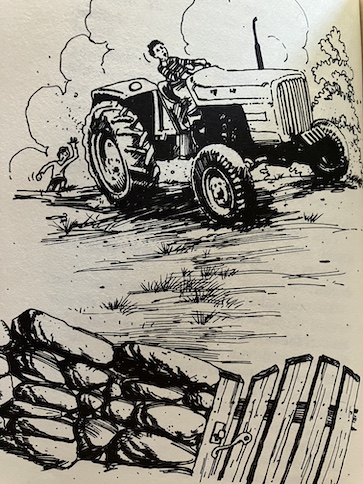
At first, this seems like just a fun farm visit. Uncle Grigorian is indulgent with the children, letting them eat as many chocolate cookies as they want, teaching the boys how to drive a tractor, and letting Helen play with the lambs. A man named Mr. Rhys manages the farm, and Mrs. Rhys is his cook and housekeeper, making them all a big, traditional, full English breakfast. Things get complicated when Tubs asks Uncle Grigorian what he does while Mr. Rhys manages the farm.

Uncle Grigorian shows the children his office in the farmhouse. At first, it just seems like an ordinary office. Then, Uncle Grigorian opens the filing cabinet, which contains dials and switches instead of files. The room changes so the ceiling and walls become transparent, and the children have a view of Earth from space. Tubs says that it looks like they’re on the moon. Fritz thinks that it’s just a trick with projectors, but Uncle Grigorian says that Tubs is actually correct, and they are on the moon. At first, Fritz doesn’t believe him, so Uncle Grigorian changes their location again, taking them to Trafalgar Square in London. Since they’re on Earth now, he invites Fritz to step outside and check their location. He does, and to his astonishment, they really are in Trafalgar Square. He buys a newspaper, and it has the current date on it.

Uncle Grigorian explains to the astonished children that the office actually contains his spaceship, which is about the same size as the room itself. He can travel through space easily, but traveling around Earth is more tricky because he can’t risk colliding with other objects. He has to know the exact coordinates for where to land, so it’s best for him to go to rooms that he has already rented as office space, where he will know the exact coordinates and knows that the room will be the right size for the spaceship.

At this point, Fritz begins to suspect that Uncle Grigorian, whose oddly-positioned thumbs were already a source of curiosity for them, might not actually be human. Tubs had earlier joked about those thumbs meaning that he’s from outer space, and once again, Tubs is more right than anyone else suspected. Uncle Grigorian admits to the children that they’re not actually related at all. Uncle Grigorian is a kind of sociologist from a planet called Klipst, and he’s also a kind of secret agent for the Galactic Empire. He studies societies on different planets and keeps an eye on planets that are just starting to discover space travel. He latched onto the children’s family as a cover for his identity and activities, specifically because their father had been a war orphan who didn’t know much about his family or what happened to them. Most people would be suspicious about an unknown relative suddenly turning up, but with their family, it would be entirely plausible for them to have an uncle they knew nothing about. He says that Earth is getting close to discovering hyperdrive travel, and when it does, the Galactic Empire will need to decide whether or not to admit Earth to the community of planets.

The reason why Uncle Grigorian is telling them all of this is that he needs the children’s help. There is a dispute that needs to be settled between planets, and he asks the children to be arbiters in the dispute. The planets involved specifically want the arbiters to come from outside the Empire, and they don’t want politicians, who would probably be motivated by biases and self-interest. They have decided that they want child arbiters to hear the dispute because children have a great sense of fairness, and adults are often hardened to the unfairness of life in general. Children would be completely unbiased in this situation and not have a jaded point of view. Uncle Grigorian tells the children that it’s up to them whether they would be willing to accept this mission or not. Tubs is eager to accept and go to outer space, but the twins are more hesitant. They’re not sure if they know enough or would be able to be arbiters in an intergalactic dispute. Uncle Grigorian tells them that, if they accept the mission, he will give them something that will change that, and they decide to accept.

Uncle Grigorian says that he will give them “the Powers”, which is a special mental weapon that’s only been recently developed. It works a little different for everyone, but it enhances people’s mental abilities. Anything that a person has as talent will be enhanced so they become a natural expert in it. To gain these powers, the children have to sleep for the night in Uncle Grigorian’s spaceship while wearing special earpieces.

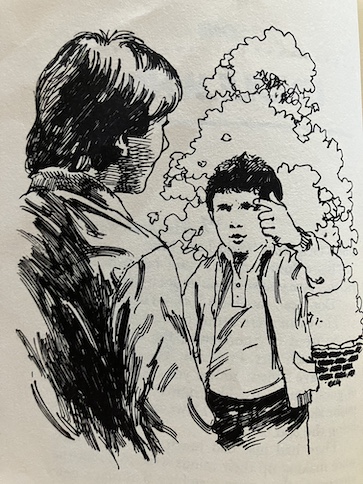
In the morning, he checks on them and asks them if they notice anything different about themselves. Helen can tell right away that Fritz isn’t telling the truth when he says no because she has acquired the ability to read people’s emotions and body-language like an expert. Uncle Grigorian calls her a Reader because of her ability to read people. Further, Helen can tell that the reason why he denied noticing anything was because he wanted to hear what the others would say first. Fritz admits that this is true. He says that what he has noticed is that he went to sleep trying to figure out how the ship can travel such long distances so quickly, and when he woke up, the answers just came to him. Uncle Grigorian calls him a Synthesist, someone who can put together pieces of information quickly, seeing how things relate to each other and how they work.

At first, Tubs can’t figure out if anything about him has changed or not, but Uncle Grigorian tries giving him a small, round, fuzzy creature called a Petball. (Sort of like one of the Tribbles from Star Trek.) Tubs loves it immediately. It also seems to like him, and Tubs gives it the name Glob. Uncle Gregorian says that his attachment to the creature is a sign that he’s a Maverick. Petballs are strange creatures, and they don’t like everyone, but they do like Mavericks. Maverick Powers are difficult to understand because people who have them have an odd way of saying or doing unusual things that turn out to be the right decision or reaching conclusions that turn out to be unexpectedly correct. It’s hard to say exactly when or how Tubs will use his Power, other than getting along well with Glob, but Uncle Gregorian says that it will be there at the right time for him to use it.

Tubs’s Power begins to show after they arrive at Palassan, the capital of the Galactic Empire. A strange girl comes up to them soon after their arrival and tries to offer a flower to Helen. Without him being able to explain exactly why, Tubs automatically reaches out and knocks the flower to the ground. When it hits the ground, it breaks, and they realize that is it really an electronic device that was supposed to transmit a subliminal message to Helen. Someone is already trying to influence the children as arbiters in the dispute. Soon after that, Fritz begins to notice how closely they’re being guarded, but are the guards there for their safety or because they’re now prisoners?
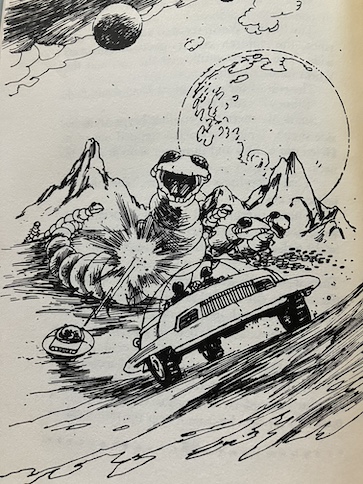
When the kids begin hearing about the dispute, they are told that a new planet has been discovered in a place where there has not been any planet before. It is not near any star, and there doesn’t seem to be any explanation of how it got there. An expedition to the planet discovered that what looks like “clouds” is actually some kind of vegetation that emits light, and there are worm-like creatures living on the surface. The problem is that these large Worms spin a substance called Unilon, which is very valuable. Since the Worm World was discovered, people have flocked to the planet to harvest it for selling. Some of them have captured Worms and forced them to spin continually until they die. The League of Life says that it is concerned about the welfare of these creatures, and the Unilon Harvesters Association says that it’s concerned about jobs. With her Power, Helen can tell that neither side in this dispute is telling the truth. Fritz does some research and uncovers some ulterior motives and hidden sides to both sides of the dispute. He decides that finding a solution means going to the Worm World itself, but learning the secrets of the mysterious world will put them all in danger.

The book is available to borrow and read for free online through Internet Archive.

I thought that the premise of this story was interesting, a mysterious “uncle” who is actually an alien in disguise who gives the kids a mission in space and special powers. The secret of the Worm World is also intriguing. It turns out (spoiler) that the world itself is alive, and they have to find a way to communicate with it. It’s a plot that sounds a little like some of the early Star Trek episodes or maybe inspired by them.

Most of the emphasis of the story is on the twins, even though there are three kids involved. Tubs helps in the story, but I was expecting that he would be more central to the solution of the problem or that the solution would be more of a cooperative effort than it was. I was a little disappointed at how quickly the story ended.

One thing I’d like to point out that, even with their enhanced “Powers”, the kids aren’t perfect at them. Fritz puts information together pretty easily, but he still has to do research and observe things directly to get the information he needs. Even when he has it, he doesn’t necessarily understand its full significance right away. His comment about how it looks like they’re being held prisoner rather than being simply guarded for their protection turns out to be more accurate than I thought it might be at first, but he doesn’t seem to have fully realized the reason why or who they can’t trust. Even Helen, with her ability to read people’s emotions and body-language doesn’t realize at first that their guard isn’t trustworthy. She could tell that he was uneasy, but she attributed his uneasiness to the wrong reason.

Actually, I think the part about Helen not being perfect at reading people is a good callback to the argument between the children about Tubs’ nickname at the beginning of the story. Helen argues that Tubs shouldn’t mind his nickname because Fritz never complains about his, but Helen hasn’t accurately read even her own twin’s feelings about his nickname. The truth is that Fritz doesn’t like his nickname any more than Tubs likes his, but the book says that he’s old enough to have figured out that, if he makes a fuss about not liking it, people will use it even more. I know that people can be like that, but being even older than Fritz is, I’m old to have figured out that this rule only holds true as long as the people involved decide it does. This isn’t something everyone does naturally or all the time; it’s a thing that some people do habitually because they’re pushy and like provoking reactions from people. When they get a negative reaction from someone, they just push harder to get more reactions rather than realize that they’re getting on that person’s nerves and cutting it out. What I’m saying is that Fritz seems to have correctly realized that Helen is that type of pushy person, which is why he doesn’t complain to her about how much he hates his nickname, while Helen has totally missed both Fritz’s real feelings and the fact that he’s figured her out. We’re supposed to accept that Helen already had a natural ability to read people even before getting her enhanced “Powers”, but the whole nickname incident had me rolling my eyes about Helen’s ability to read even her own family members and wishing that she would get a clue.

I expected that the characters would eventually revisit this situation with Tubs’ nickname before the end of the book and that Tubs would do something to help the situation that would earn his cousins’ respect. However, neither of those things happened. Fritz is the one who mainly solves the problem, and he does so rather quickly toward the end of the book. I was surprised at how quickly the book ended. Because the kids all keep their powers and Tubs is able to keep Glob at the end of the story, I wondered if maybe the book was originally intended to be the first in a series, with further adventures and more character development in later books, but if that was the case, I can’t seem to find anything about it.

I found the issue of language in the story interesting. People in the Galactic Empire speak a common language that Uncle Gregorian describes as being sort of like Esperanto, no matter what planet they come from. The treatment that gave the children their powers also gave them the ability to speak and understand this language, even when they’re not fully aware that they’re doing it. I liked the idea of a common language that’s a kind of conglomerate of other languages with Esperanto as the inspiration. Because the characters aren’t fully aware of that they’re hearing or speaking this language, we don’t have any hints of what it would be like, but I just thought the concept was interesting.
Miss Pickerell Goes to Mars

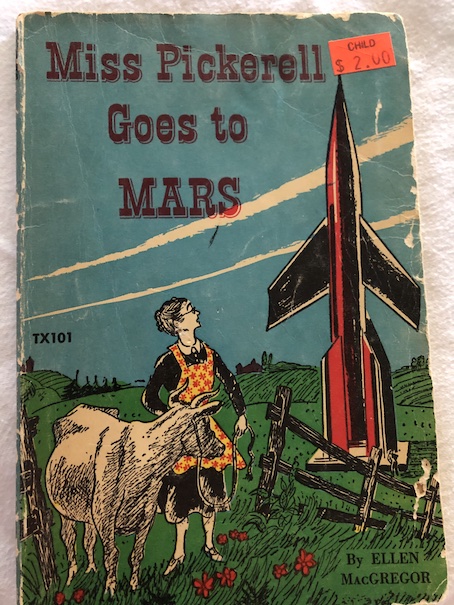
Miss Pickerell Goes to Mars by Ellen MacGregor, 1951.

This is the first book in the Miss Pickerell series, which was written to introduce scientific concepts to children in an entertaining way.

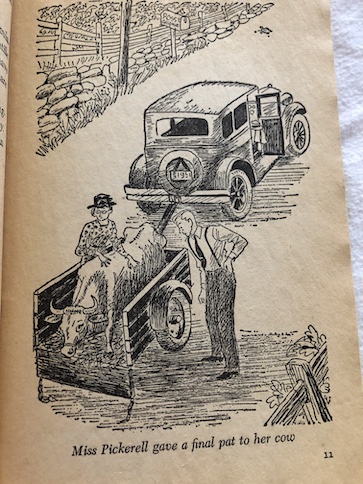
The story begins when Miss Pickerell is visiting her brother and her nieces and nephews. She takes the children to ride on a ferris wheel, but she refuses to get on it herself because she’s afraid of heights. Really, all she wants to do is take her pet cow home and start getting her rock collection ready for the exhibition at the state fair.

As she leaves, she offers a ride to a man when the bus he was waiting for didn’t stop for him. Although she isn’t anxious for conversation and would prefer silence after her visit with her noisy nieces and nephews, she does make a comment about the sound of a jet overhead. She explains that airplanes are her nieces’ and nephews’ newest obsession, and she’s glad because they were obsessed with flying saucers before, and at least airplanes actually exists. The man riding with her, Mr. Haggerty asks Miss Pickerell if she believes in flying saucers and space travel. Miss Pickerell says that she doesn’t believe in flying saucers and doesn’t think any intelligent person would, but Mr. Haggerty tells her that he will soon be traveling to Mars. At first, Miss Pickerell doesn’t believe him. He says that he works for a scientific expedition whose headquarters is nearby, but the captain in charge of the expedition wouldn’t want him to say too much about it too soon, just in case it doesn’t work out well.

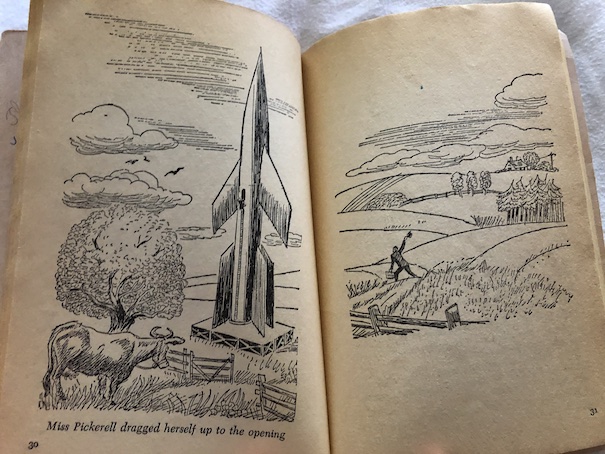
However, Miss Pickerell can’t help but get involved in the project, considering that they’re doing it on her land. Miss Pickerell lets Mr. Haggerty out of the car in front of her farm, but when she enters her own house, she can tell that someone else has been there in the weeks that she’s been gone. Then, she spots the space ship at the end of her cow pasture.

Miss Pickerell marches up to one of the people working on the expedition and demands to know what they’re doing on her property. The man says that they thought that the house was abandoned because it had been empty for weeks and they wanted a quiet place to work on their project. Miss Pickerell threatens to call the governor and report them. She picks the governor to call because, since she lives in the country, there are no police nearby, and she’s met the governor before at the state fair, where he’s given her prizes for her rock collection.

When she calls the governor, he isn’t there, so she leaves a message with his wife and decides to talk to the men at the space ship again while she waits for the governor to call her back. Although she’s afraid of heights, Miss Pickerell climbs into the space ship to talk to the men – right before it launches.

Soon, Miss Pickerell is in outer space and headed for trouble because it turns out that, not only was she not supposed to be there but they’ve accidentally left Mr. Haggerty behind. Mr. Haggerty is important because he’s the one who’s supposed to do the calculations for the flight.

The book is available to borrow and read for free online through Internet Archive.

My Reaction

I vaguely recalled my mother reading us one or two of the Miss Pickerell books from the library when we were kids. I think I liked them at the time, but it had been so long that I’d really forgotten what they were like.

I can definitely see the educational lessons in the book. After the ship launches, it takes awhile to impress on Miss Pickerell the seriousness of their situation and why they can’t just turn around and go back, during which they talk about Mars as a planet and how the ship’s course is programmed into the computer. A young man on the crew, Wilbur, shows Miss Pickerell how to drink water in outer space, and they talk about what gravity is and why there isn’t any in space. By accident, Miss Pickerell has caused further problems by bringing her hammer with her onto the ship because the hammer is magnetic, and the magnet is interfering with the ship’s equipment. Miss Pickerell’s first instinct is to throw the hammer out a door or window, but there are no windows, and Miss Pickerell is treated to an explanation about atmospheric pressure and oxygen in the space ship. Each event on the ship and on Mars itself requires explanation.

Fortunately, they do make it safely to Mars and back, and Miss Pickerell turns out to be surprisingly helpful and is actually glad that she made the trip. On their return, she finds out that Mr. Haggerty has been taking care of her cow, and the governor has invited her for a visit. The governor gives her an award, and she even brings back rocks from Mars with her and gives some to her nieces and nephews.

Alien Secrets

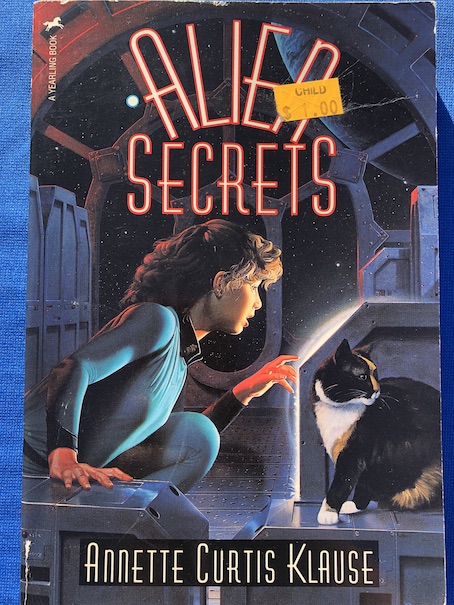
Alien Secrets by Annette Klause, 1993.

Robin Goodfellow, nicknamed Puck (her parents were fond of Shakespeare), is a human girl from Earth in the future.  When the story begins, she has been kicked out of boarding school on Earth and is traveling by space ship to join her parents, who are scientists who have been working on another planet.  They left Robin with her grandmother on Earth, who enrolled her in an English boarding school in order to give her some discipline and some friends her own age, but she was expelled for failing her classes (not to mention throwing a fit and burning her books when she discovered that she had failed).  Puck dreads what her parents will say when she arrives on the planet where they are now living because they had always hoped that Puck would also become a scientist and work with them, but this journey will change Puck’s life.

Before the ship she will be traveling on leaves Earth, Robin witnesses a man attacking someone else, possibly killing him.  Robin does not report the attack because she doesn’t know whether or not the other person was killed, and she doesn’t think that anyone will believe her anyway.  She witnessed this attack while sneaking around a place where she wasn’t supposed to be, and she is being sent to her parents in disgrace after being expelled, so she doesn’t sound like a very credible witness.  However, the man in the fight, Mizzer Cubuk (“Mizzer” is how they say “Mister” in the book), turns out to be traveling on the same ship as Puck.  All Puck can think of to do is to try to avoid him on the ship and hope that he didn’t get a very good look at her after she ran away from his fight.

To Puck’s surprise, the captain of the ship she is traveling on, Captain Cat Biko, asks her if she could make friends with an alien who is also traveling on the ship.  The alien is one of the Shoowa, who were enslaved by another group of aliens called the Grakk.  Now, he is free and finally traveling home to Aurora, the same planet where Puck is going.  The captain feels sorry for him and thinks that he might appreciate a friend and that he might find a human child less intimidating than an adult.

Later, Puck and other passengers are woken out of their sleep by the sounds of wailing and moaning.  One of the women on board, Leesa, says that she saw something that looked like a ghost that walked straight through her. Other people, who didn’t see or hear it, assume that it was nightmares or imagination, but Puck knows that it wasn’t.  One of the crew members, Michael, tells Puck that there have been rumors that the ship is haunted and that other people have seen and heard strange things.

Strange things are happening on the ship, and some of the passengers seem to be hiding something. Who can Puck trust, and who isn’t who they seem to be?

The alien who is traveling on board the ship understands Puck’s feeling of failure.  The alien, called Hush, says that he carries shame because he lost something important, something that his people were counting on him to take home to their planet.  Puck and Hush discuss how people from Earth had fought the Grakk and sought to learn about Grakk technology from Shoowa slaves who were freed after the war.  Even the ship they are now traveling on was once a Grakk ship.  The Earth people kept delaying sending the slaves home because they wanted to pump them for more information and because they were trying to decide if they could really trust them more than the Grakk.  After negotiating with the Earth people about returning home, the Earth people agreed, with some provisions.  They arranged for some of the Shoowa to stay on the Grakk home planet, still working with humans.  Some of them would travel on ships with Earth people, and some others could go home to their own planet.  Hush is the first one to head home, and he was entrusted carrying home an important symbol of his people that his family had protected for generations: a statue that represents a child because children are the future and a source of freedom, according to an ancient Shoowa prophecy. Unfortunately, the statue was stolen from Hush before he could return it to its rightful home. He reported the theft to the Earth security personnel at the station, but they didn’t take him seriously. They thought that he probably just lost it by accident.

The haunting is real in this book.  On a tour of the ship, Puck learns that the ship’s navigator has also seen the ghost aliens.  One of the characteristics of a ship’s navigator is the ability to see hyperspace, something that not everyone has the ability to do, although even scientists in Puck’s future time don’t seem to know why some people can do that and others can’t.  Slowly, it becomes evident that people who are able to see hyperspace are also able to see the ghosts.

On the journey to Aurora, Puck also learns that she is one of the rare people who are able to see hyperspace, giving her a possible future in navigating a space ship, something that she would really enjoy learning.  When she arrives at Aurora and is greeted by her parents, who have missed her while they were apart, Puck also comes to realize that her parents will always love her, even in spite of failing her classes. Even Hush’s people tell him that, although they are happy to have the statue back, his safe arrival was always the most important thing, and they wanted him to come home, whether he successfully brought the statue or not. Both Hush and Puck come to realize that their families will always love and value them even with their imperfections and failings.  With parents who love her and a new vision of the future ahead of her, Puck is ready to make a new life on Aurora.

The book is available to borrow and read for free online through Internet Archive.

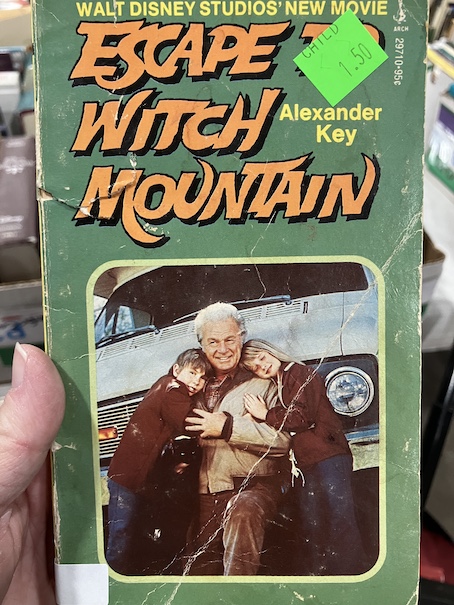
Escape to Witch Mountain

EscapeWitchMountain

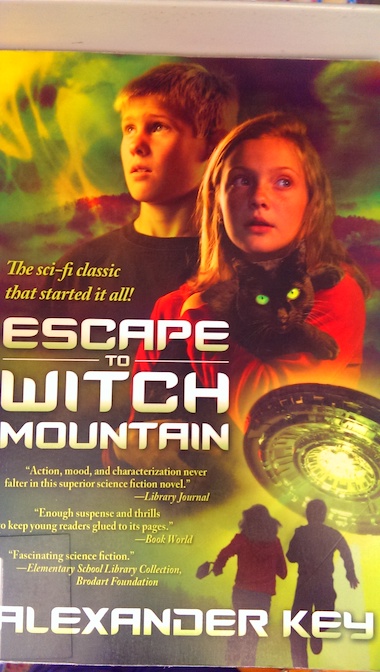
Escape to Witch Mountain by Alexander Key, 1968.

This is the book that the Disney movie of the same name was based on.  In fact, there have been three movie renditions of this book, although the 1975 Disney version is the one I know the best, and it’s the only film version to call the children by their original book names, Tia and Tony (other versions use the names Danny and Anna or Seth and Sara).  There are some major differences between the book and each of the the movies.  For one thing, most people in the book think that Tia is mute because she speaks at a frequency that ordinary humans can’t hear.  Only her brother, Tony, can hear what she’s saying.  She uses the little case with the double star emblem that she’s had ever since she can remember to carry paper and pencils so that she can write messages in order to make herself understood by other people.  In the 1975 movie, Tia can speak to Tony telepathically, but both children can speak aloud normally and be understood by everyone.

When the book begins, Tia and Tony know that they’ve always been different from other children.  They look different: they have olive skin, pale hair, and very dark blue eyes, which is a somewhat unusual combination. They can do things that others can’t: Tony can make things move with his mind, Tia can open locks without using a key or any other device, and only Tony can understand the strange way that Tia talks that others can’t even hear. They can’t remember any other home than the one they had with Granny Malone, the woman who adopted them, but now that she’s dead, they find themselves wondering who they really are and where they came from.  Tia has shadowy memories of a time before they came to Granny Malone, when they were on a boat and something bad happened to them, but she can’t quite remember what.

With no known relatives to go to, the children are taken to an orphanage, Hackett House, after Granny Malone’s death.  It’s a tough, inner-city environment, where no one has any patience with Tia and Tony’s strangeness.  However, when the children from the orphanage are sent to Heron Lake Camp in the mountains during the summer, a nun recognizes the double star symbol on Tia’s case as one that she had seen before on a letterhead, giving the children their first clue to finding their origins.

Then, a figure from one of Tia’s memories, Mr. Deranian, comes to the orphanage to claim them, saying that he’s their uncle. The children can tell that he’s no relative of theirs. They run away to see a kind priest, Father O’Day, an associate of the nun they met earlier. Father O’Day is the only one who believes the children when they talk about what they remember of their past and isn’t frightened by their strange mental powers. When the children show him a map that they found in a hidden compartment in Tia’s case, he offers to help them find the place marked on it and, hopefully, someone who knows who the children are and where they belong.

The book is currently available online through Internet Archive.  There is a sequel to this book which was also made into a movie, Return from Witch Mountain.

My Reaction and Spoilers

As the children and Father O’Day try to elude Deranian and the others who are chasing them, more of Tia’s memory returns. The children are from another planet. Years ago, their planet was destroyed when it crashed into one of their twin suns. Their people, who call themselves the Castaways, knowing that their planet would not be habitable for much longer, had already begun looking for a new home. Earth was the nearest habitable planet, so some scouts arrived early and began to create a home for them in the mountains of North America, which was the closest environment to their former home.

Unfortunately, when the rest of the children’s people came to Earth, the group that Tia and Tony were with crashed in Eastern Europe. The book was written during the Cold War, so the place where they crashed was controlled by Communists. When the Communists realized the powers these people possessed, they planned to make use of them themselves. One of Tia and Tony’s people escaped with the children and managed to get them aboard a ship heading for America. Before he died of a gunshot wound, he placed some money and a map in Tia’s case so that the children would know where to find the rest of their people. However, the children were traumatized by the experience, and Tia blocked the memory out of her mind. The ship’s captain, upon reaching the United States, gave the children to Deranian, a friend of his. Deranian, not knowing who the children were or what powers they possessed, gave them to Granny Malone to raise. Later, he found out about the children’s abilities from his contacts in Eastern Europe and tried to get the children back.

In the end, Father O’Day manages to reunite the children with the rest of their people, who take them to the community they have built on Witch Mountain, a place where locals are too superstitious to go, named for the odd things they’d seen there when the Castaways first arrived. Father O’Day plans to go there and join the community along with the children someday.

In spite of the Communists being enemies during the Cold War, Tia and Tony say that one of the reasons why their people had trouble establishing themselves in America at first was that they were unaccustomed to the idea of having to buy land to live on.  On their world, no one owned land; land was just there for people to live on and care for.  Their people’s early scouting expedition included selling pieces of their ships in order to raise enough money to buy some land in order to build their community.  Father O’Day is impressed with the Castaways’ commitment to the common good of all people and unselfish sharing.  So, although the oppressive Communist regimes of the Cold War are enemies in the book, some of the ideals of sharing and supporting the common welfare of everyone are still attractive ideals in the book.  The implication in the book is that Tia and Tony’s people are socially as well as technologically advanced and have created the best of all possible systems, a blending of ideals to create the ideal balance.

I can understand why the movies did not include Tia speaking at a frequency no one else can hear and appearing mute.  That would be difficult to show in a movie that relies on characters being able to communicate with each other, and it makes sense to replace it with an ability to communicate telepathically by choice instead.  None of the movies include the Cold War references that were present in the book, and the character of O’Day or the person who helps the children to reach Witch Mountain changes from movie to movie, but the plot of the 1975 Disney movie is still the closest to the original book.

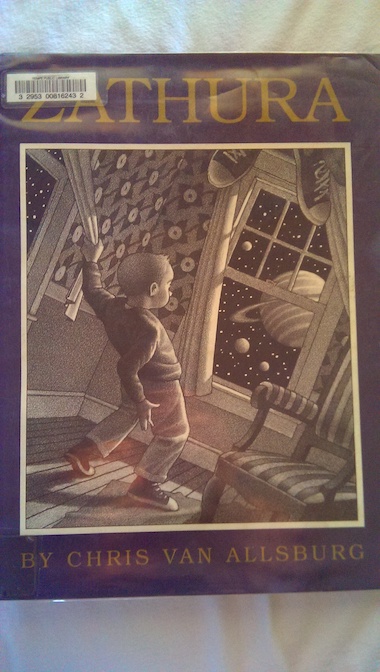
Zathura

Zathura

Zathura by Chris Van Allsburg, 2002.

This book begins where Jumanji ends. It’s not completely a sequel because it has a different set of children and a new game, but it’s connected because the two children from Jumanji left the board game in the park again after they finished it, and they saw two boys that they know pick it up and take it home.

ZathuraBrothersWrestling

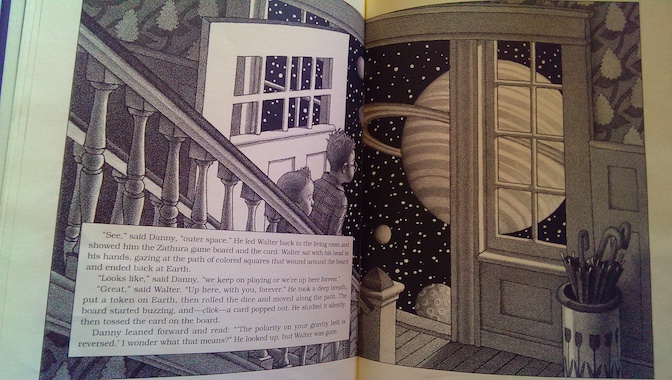
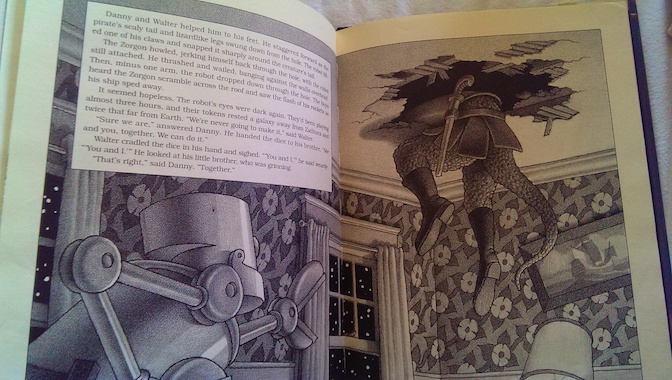
However, the two boys, Danny and Walter, don’t end up playing the same jungle board game, Jumanji, that was in the previous book. They find a second board game in the Jumanji box called Zathura and decide to try it instead. Zathura is a space-themed game where players travel a path from Earth to the planet Zathura. Like in Jumanji, elements from the board game come to life as the boys play, and someone must reach the end in order to end the game.

ZathuraStartingGame

Danny and Walter, a pair of brothers, fight a lot. Walter hates doing things with Danny. However, when Danny starts playing the game, sending their house into outer space, Walter must join in and play with his brother in order to bring the game to an end so they can go home. The two of them learn teamwork as they help each other face the dangers of the game while trying to reach Zathura.

ZathuraOuterSpace

There is a movie version of this book, but there are major differences between the original book and the movie. The conflicts between the two boys are similar in the book and the movie, but the movie added a subplot about the boys’ parents being divorced (they weren’t in the original book), an older sister for the boys (it was just the two of them originally), and a kind of alternate reality where the older boy was trapped in the game by himself for years because he wished his brother away before finishing the game until his alternate self realized that he cared about his brother and wanted to cooperate with him.  In the original book, nobody was trapped in the game.

ZathuraAlienRobot

Chris Van Allsburg illustrations are always good, although I have to admit that I preferred the illustrations in Jumanji to the ones in Zathura.  It just seems to me that the pictures in Jumanji were more detailed and realistic.

The book is currently available online through Internet Archive.

ZathuraGoingHome

The Magic School Bus Lost in the Solar System

MSBSolarSystem

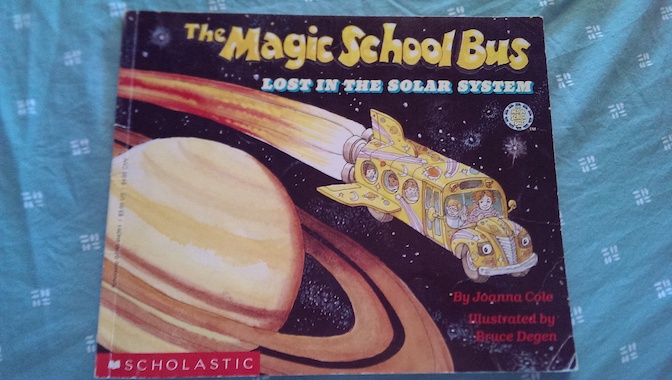
The Magic School Bus Lost in the Solar System by Joanna Cole, 1990.

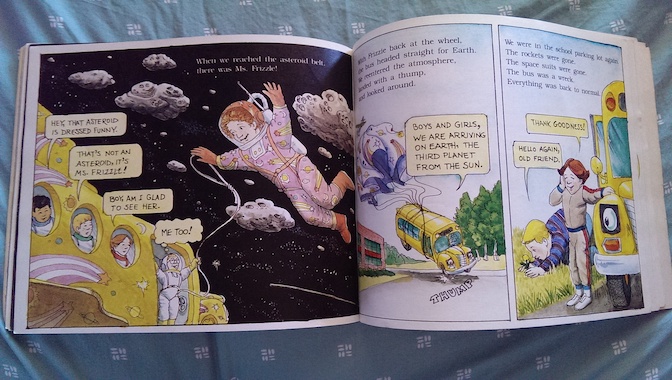
Ms. Frizzle’s class is planning a trip to the planetarium as part of their lesson about the solar system, but of course, their magic school bus has other plans.  When they get to the planetarium and find out that it’s closed for repairs, the bus sprouts rockets and takes them on a real trip through the solar system.

MSBSolarSystemBlastOff

This time, the class is accompanied by Arnold’s visiting cousin, Janet.  Janet is a show-off who brags constantly about everything, making up stories when she has nothing real to brag about.  She gets on the other kids’ nerves, but when they’re separated from Ms. Frizzle because she got out of the bus to fix a taillight broken in the asteroid field, Janet takes charge, using Ms. Frizzle’s lesson plan to continue the field trip, eventually figuring out how to turn the bus around to rescue her and get back to Earth.

MSBSolarSystemMoon

All through the book, there are facts about the sun, the moon, and the planets in the solar system from the students’ reports.  Each time they stop at a planet, a scale shows the difference between Arnold’s weight on Earth and his weight on each planet.  The book considers Pluto to be a planet because it was written before its planet status was reconsidered.

The book is currently available online through Internet Archive.

MSBSolarSystemRescue

The Mysterious Queen of Magic

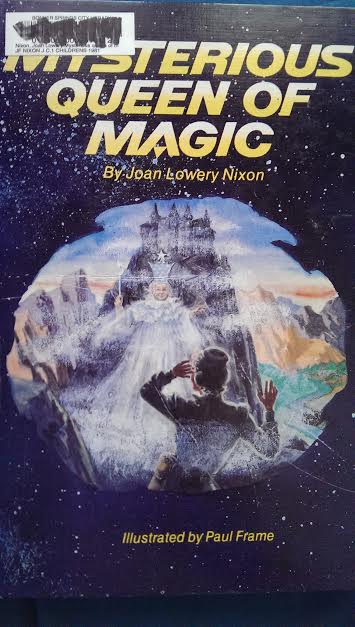
KleepQueenMagicThe Mysterious Queen of Magic by Joan Lowery Nixon, 1981.

This is part of the Kleep: Space Detective series.

Kleep and Till meet a strange young man who is looking for Kleep’s grandfather, Arko.  The young man, Mikkel, tells them a wild story, that an evil wizard is after him.  He is controlling Mikkel’s people on the planet Durth, putting them under a spell and forcing them to become his slaves. Mikkel believes that Arko may have the key to getting rid of him because an old wise man told him to ask Arko how to find Queen Stellara.  Queen Stellara was a legendary queen who could do magic, and Arko has some old write-rolls, scrolls of the kind people used to use before people began using computers alone for learning, that talk about her and her kingdom.  However, Arko doesn’t believe in wizards or magic spells or anything of the kind.

Kleep remembers Arko telling her the old stories from the write-rolls when she was little, and unlike her grandfather, she believes that wizards and magic may be real and wants to try to help Mikkel.  When Arko says that he doesn’t believe in magic and can’t help Mikkel, Kleep and her friend Till decide to use the scrolls to try to help Mikkel find Queen Stellara.  Taking Kleep’s robot, Zibbit, with them, they journey to the planet Loctar, where Queen Stellara was supposed to live.

Although this series is mostly sci-fi with a bit of mystery thrown in, this book is more fantasy.  When Kleep and her friends arrive on the planet Loctar, they discover that they must face a series of challenges to reach the legendary queen’s palace, like heros in a fairy tale.  Magic is real, and they must prove themselves worthy in order to meet the queen and ask her for the solution to the problem of the evil wizard.  But, their ordeal doesn’t quite end there because, while Queen Stellara provides them with the means to fight the wizard, they must face him themselves!

A little corny, but fun, although it’s not my favorite book in the series.  The others were more sci-fi, and this is more fantasy.  Also, for a “detective” series, there isn’t much mystery, more adventure.  It sort of reminds me of the original Star Trek episode Catspaw, except that the magical beings in this one are apparently really magical and not just aliens.  Like the other books in this series, I like the pictures, too.

KleepQueenMagicPic3

Kidnapped on Astarr

KleepKidnappedAstarrKidnapped on Astarr by Joan Lowery Nixon, 1981.

This is part of the Kleep: Space Detective series.

Till’s mother, Falda, has mysteriously disappeared, and Till is sure that someone has abducted her.  The only clue he has is an unfinished note that his mother left for him with the letters “RU” on it.  He takes it to Kleep and her grandfather Arko, and the three of them puzzle over what it could mean.  Arko and the kids decide that the two most likely things the letters could be part of are a kind of metal that Arko and Falda are using in the project they’re currently working on (“ruthenium”) or a group of people who are enemies of theirs, the Ruzenians.  The people of Ruzena lived on Astarr before Kleep’s people arrived from Ruel (another possible “RU” word that they ruled out) and have resented their intrusion.

Arko decides that he will first visit the mine where they get their metal, hoping that Falda has gone there in connection with their project to create a new way to anchor small space ships at outer space docks.  However, Kleep and Till can’t help but think that the Ruzenians have kidnapped Falda.  Arko wants them to stay at the house with the robot Zibbit until he returns, but they feel like they can’t wait and decide to take Zibbit with them to investigate the Ruzenians.

It’s a harrowing journey through Ruzenian territory, through a dark forest with giant worms and singing trees whose music threatens to overtake their minds, but they do discover that is where Falda is being held prisoner.  Unfortunately, Kleep, Till, and Zibbit are also captured.  With the king of Ruzena suspicious of the projects that Arko and Falda are working on (he thinks they’re designing weapons, but they’re not), what can they do to escape or get help?

ColSec Rebellion

ColSecRebellionColSec Rebellion by Douglas Hill, 1985.

This is the final book in the ColSec Trilogy, a sci-fi series.

In a future where Earth is controlled by an oppressive government, dissidents are exiled to distant planets to start colonies whose resources can be exploited by the government.  However, the colonists have been plotting to take their destinies into their own hands.

Cord MaKiy and his friends, once exiled colonists on the planet Klydor, have joined up with the resistance movement.  They hijack a ColSec ship and return to Earth to gather allies for the rebellion against Earth’s government, called The Organization.

Once on Earth, they turn to the societies that they came from, little groups of outcasts on the fringes of Earth’s society. Cord’s people, the Highlanders who live in the wild areas of Scotland without modern technology, welcome them, and many of the young people are interested in joining the colonies, seeing other worlds, and living in freedom. Similarly, the rebels find more friends among the Vampires, the youth gang that lives in the Bunkers (what’s left of the old subway system under London).

However, the Streeters (a youth gang in the Chicago area) are a different story. Although many of them want to escape their little hideouts in the urban jungle called Limbo, their leader, Tuller, is unwilling to give up his relatively comfortable position of power. When he betrays the rebels to the government, the others have to decide where they stand and if they’re willing to take the risks necessary to gain their freedom.

In a way, the colonists seem to gain their ultimate freedom more easily than expected, but that’s partly a product of the type of repressive government that controls Earth. It isn’t really a military dictatorship, although they do use deadly force against their enemies; it’s more of a greedy corporate structure, designed to bring vast amounts of wealth to the people at the top of the structure, while keeping the lower levels in line to do their bidding.  In the end, as Lathan had guessed in the previous book, The Organization is more concerned with profit and loss than anything else, and the rebels manage to cut them a deal after showing them that fighting would only bring heavy losses with no material gain.

There’s plenty of action in the story as the young rebels struggle to prove themselves to potential allies on Earth and flee the forces of ColSec to return to Klydor, where they issue their ultimatum.  The negotiations with Earth are summed up fairly quickly, and although there are no more books in the series, the ending sets it up for Cord and his friends to continue their life of exploration on other worlds, seeking out new places for people who want to flee the dull repression that still exists on Earth.

The Caves of Klydor

CavesKlydorThe Caves of Klydor by Douglas Hill, 1984.

This is the second book in a sci-fi series, the ColSec Trilogy.

The five remaining colonists on the planet Klydor have been exploring their new planet and trying to survive and to decide what they will do when the government department that exiled them to this planet, ColSec, sends its ship to check on their progress.  Under Earth’s repressive government, dissents are sent into exile to become colonists on alien planets so that the government can later reap the benefits of anything they find or produce.

They get worried when a ship arrives on their planet earlier than expected.  While searching for the ship to see who it is, the colonists encounter Bren Lathan, the best space explorer that works for ColSec.  It’s his job to seek out new planets for ColSec to colonize.  But, it turns out that he’s not there on an assignment for ColSec.  He’s crash-landed on the planet, apparently frightened of pursuers, who may be the people in the space ship now on the planet.

Unfortunately, it turns out that Lathan is being hunted by CeeDees (Civil Defenders, the harsh law enforcement department that Earth’s government uses to keep the civilian population in line).  Worst still, these ones are Crushers, a group known for using extreme force and not leaving survivors.  They spot Cord and Samella, and they think that the two of them killed one of their people (who was actually killed by an alien creature).  Cord and Samella manage to get awhile, stealing one of the CeeDee’s weapons.

Then, they discover that the reason that the CeeDees are after Lathan is that he is involved with a rebellion against the government of Earth, a rebellion that these colonists would very much like to join.

The themes of the story are still survival and teamwork.  The colonists often have differing opinions about how to solve their problems, but they have to work them out because they only have each other to rely on.  Lathan, who is much older than they are, doesn’t really respect them much at first or want to involve them in his plans, comes to realize that their skills and ideas are valuable and that they may be just the people he needs.

The book is available to borrow and read for free online through Internet Archive.