
The Mysterious Horseman: An Adventure in Prairietown, 1836, by Kate Waters, 1994.
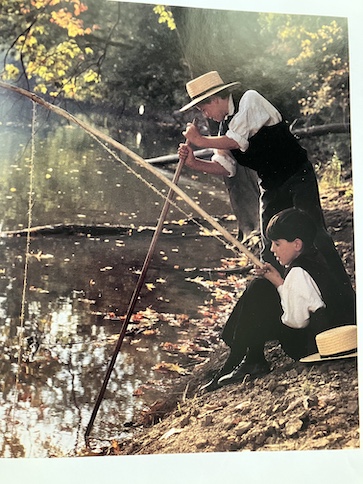
This book is part of a loose series of books by Kate Waters, showing child reenactors at living history museums, having adventures in the roles of the characters they play. While most of the books are set in Colonial times at Plymouth and Colonial Williamsburg, the setting for this story is the Connor Prairie living history museum in Indiana, which shows life in a small town in the 19th century.

The story centers around a boy named Andrew McClure. He is the only one of his siblings left still living with their parents. His older sister is now married, and his baby brother died of an illness during the last year. His family is still grieving for his little brother. Andrew’s best friend is a boy named Thomas Curtis, who lives nearby, and Andrew works part time at a local inn to earn some money.


One day, while Andrew is doing some sweeping at the inn, he overhears some men talking in the taproom. He doesn’t hear their entire conversation, but he hears them talking about a mysterious rider without a head who chased a schoolmaster. Andrew is startled, and he wonders if that has something to do with the new schoolmaster who is supposed to arrive in town.


When Andrew is done with his work, he goes to the schoolhouse, and he finds his friend Thomas and Thomas’s sister, helping the new schoolmaster to clean the schoolhouse and prepare it for lessons to start. Andrew wants to talk to Thomas about what he overheard at the inn, but the schoolmaster only wants to talk to the boys about lessons.

Later, Andrew does have a chance to talk to Thomas, and both of the boys are spooked by the idea of a headless rider. They even think that they hear the rider on the road! The frightened boys go see Thomas’s father, the blacksmith, and tell him about the rider. Fortunately, the blacksmith knows what the men were talking about, and he can settle the boys’ fears.
The book is available to borrow and read for free online through Internet Archive.

My Reaction
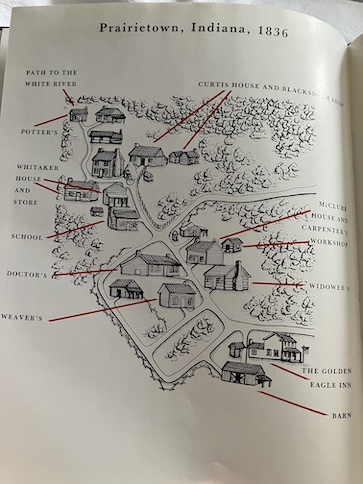
I didn’t know about this book until I was looking up Kate Waters’s books for my younger cousins. I was surprised because Kate Waters’s living history museum books are mostly set on the East Coast or focus on the Colonial era. This 19th century book set in Indiana somewhat departs from the theme and has a different feel from the other Kate Waters books, but I enjoyed it. I’ve been to Connor Prairie because I have relatives in the area, and I enjoyed my visit. It’s been years since I’ve been there, so I didn’t immediately recognize the setting. When I read the explanation in the back of the book, I was fascinated to realize that I had visited that location before.
Andrew has a fascination for life on the frontier because he often watches people pass through his town on their way further west, and he daydreams about going west himself. His family is also still coming to terms with the death of his little brother, so the subject of death is still on Andrew’s mind. The deaths of children due to illness were sadly common in the 19th century and on the frontier, and the mourning in Andrew’s family adds to the melancholy and spooky atmosphere of the story.
Most adults and older children will probably recognize what the men at the inn where actually talking about when they were discussing the headless rider who chased the schoolmaster. When the boys talk to Thomas’s father, he immediately recognizes the story as the plot of The Legend of Sleepy Hollow by Washington Irving, originally published in 1820, about 16 years before the story in this book is suppose to take place. The men at the inn were just discussing the plot of the story, not something that they saw on the road themselves.



 Jestress's Forgotten Books and Stories