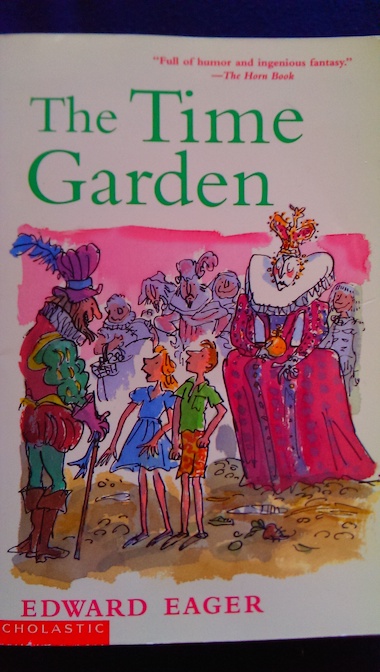
The Time Garden by Edward Eager, 1958.
About a year after the events in the previous book in the series, Roger and Ann are excited when their father writes a play and announces that it will be performed in England. Unfortunately, their parents aren’t planning to take the children to England with them because the trip there will be just business, focusing on getting the play together. If the play is a success, they plan to send for the children so they can do some sightseeing in England, but until then, the children will need to stay somewhere else during summer vacation. Their mother, Martha, calls her sister Katharine to see if the children can come visit their cousins, but it turns out the Katharine is also looking for a place where Eliza and Jack can spend the summer. By coincidence, Katharine and her husband are also planning a business trip to Europe.

The adults talk it over and end up arranging for all four children to stay with Katharine’s husband’s great aunt, Mrs. Whiton, who lives in a house by the sea, not far from Boston. The children don’t find this prospect very exciting. Then the adults tell them that Mrs. Whiton writes children’s books, Eliza is sure that she’ll be trying to analyze them for inspiration for her stories, but Mrs. Whiton turns out to be better than they thought. She is unsentimental, something that Eliza appreciates, and her house is very nice. There is a pretty garden there, and a staircase that leads right down to the beach.
One day, when Mrs. Whiton sends them out to play in the garden, they find an old sundial that has a motto written on it: “Anything Can Happen When You’ve All the Time in the World!” The children have had experience with magic before, so they begin to suspect that this garden isn’t quite what it appears . . . and they’re right. A strange, toad-like creature call the Natterjack introduces himself to the children and tells them that the thyme garden, where there are many varieties of thyme growing, is also a time garden. He explains that he and his family have helped this garden grow since his grandfather’s grandfather was brought there from England along with a shipment of primroses and that they’ve put all of their magic into the garden and its plants. If the children would like to visit another time, all they have to do is to pluck a sprig of thyme and smell it.

Jack, who has decided that he’s too old for magic and is now only interested in girls, refuses to try it at first, denying the existence of magic, even in spite of the talking toad. The other children try it and find themselves at the same house during the time of the American Revolution. Everyone who sees them seems to think that they are the Whiton children of that time, and they end up participating in a ride very much like Paul Revere’s, riding through the countryside to alert people that the British are coming. At first, their ride is thrilling and successful, but if you know the other books in this series, you can guess that things are going to go wrong at some point.
When the kids reach a tavern, they try to tell the drunken men inside that the British will be at Lexington soon, and they say that they don’t care. As far as they’re concerned, if the British are going to Lexington, let the guys in Lexington deal with it. The children are offended that they don’t want to help and try to appeal to their patriotism and fellowship with other Americans. It turns out that they don’t have much patriotism (the United States isn’t a separate country yet, so there is that) or feelings of fellowship because their plan for if the British are defeated is basically “every man for himself.” (I understand this scene so much more now as an adult than I did when I read this as a kid. I think I’ve met their descendants.) The children are angered at this mercenary attitude, and Ann accuses them of being pro-British. One of them insists that they’re not because, “We ain’t pro-anything.” (Yep, this is familiar. Some people just want to be contrary until there’s something in it for them to gain.)
It gets worse when the anti-British talk causes the Natterjack, in a surge of British patriotism, to cry, “Rule, Britannia!” The drunks in the tavern then decide that the kids were trying to deceive them about the British coming because they’re actually on the side of the British, trying to distract them from the British army’s real plans. When they discover that the voice actually came from a talking toad, they declare that it’s witchcraft and decide to throw the children into the pond to see if they will float (an old test in witchcraft trials).
In a bizarre twist, they are saved by a band of attacking American Indians. (Native Americans ex Machina?) There’s no real reason for a tribe of American Indians to be attacking at this particular moment, and the kids in the story seem to realize that. This incident, like many others in this series, is partly based on other books in classic children’s literature, especially the works of E. Nesbit, the author’s favorite children’s author. A similar incident occurs to the children in E. Nesbit’s Five Children and It, although under different circumstances. The author of this story frequently pokes fun at tropes of classic children’s literature in his books and makes pop culture references from the 1950s, so the more old books you’re familiar with, the more you see the jokes, although I admit that, even knowing the background, this scene still bothers me. In the grand tradition of cheesy 1950s westerns, there’s a vague description of the carnage of the attack with the requisite scalping and tomahawking (yes, they use it as verb). Ann is upset about the attack and covers her eyes, although Roger says that he doesn’t think that this attack could really have occurred in real life because they would have heard about it if it were a real, historical event. Ann worries that they somehow caused it by messing with history. When the tribe is done tomahawking their attackers, the children are worried that they’ll be next, but the Natterjack tells the children that they can escape by smelling the thyme again.
Before we move on, I should point out here that, in different books in this series, it’s never entirely clear how much of the children’s adventures occur in the real world or in some kind of magical, alternate reality or maybe in their own minds, and this is actually intentional. The idea of sniffing a magical herb and being transported through time sounds kind of trippy. The whole “savage painted Indians” (their words, not mine) trope was a staple of old western shows, the kind that kids growing in the 1950s might have watched because that genre was popular, particularly in the late 1950s, when the book was published, so the children’s experiences may be partly patterned after what a 1950s kid might have imagined after watching those shows. (Sort of like the Arabian fantasies that their mothers had in previous books in the series, probably inspired by The Sheik.) So, this incident in the book is partly a take-off on similar ones in other children’s books, but it might also be the author’s commentary on the types of shows that were popular and children’s expectations. Perhaps some of the implication is that the children’s expectations, based on things they’ve read or seen on tv are what caused this weird, otherwise inexplicable attack in the first place. (It’s like on tv, kiddos, and now you can see it in full color! You expected it, so you got it. Still think this stuff is fun?) Part of the problem with this scene for me is that it’s difficult to tell exactly how the author means it. I can guess a little, given the author’s taste for making literary references and parodying tropes of children’s stories, but even as a parody, it’s uncomfortable by modern standards and still makes very little sense why it’s even happening at all. This scene is just plain needless and cringe-worthy in my opinion, but you sometimes run into things like that with older children’s books. It’s some consolation that this is the worst scene in the entire book, so it’s good to get it out of the way early.
Before we return to the main plot again, I’d also like to say that the children themselves don’t seem to understand exactly how the magic works (like other children in this series) or whether what happened to them was completely real or not. They debate about it periodically and wonder about the children that they replaced on this adventure (and on later ones as well). They never quite know if those children went somewhere else while they took their place or if both sets of children were just living out the same adventure at the same time, just seeing it in slightly different ways. These time travel questions are fun to ponder, but are never really explained, just theorized.
When the children get back to their own time from the Revolutionary War period, the Natterjack apologizes for getting them into trouble and asks them to put the plant sprig back in the ground, where it grows again (no “wasting thyme”, ha, ha). He also further explains that the name of the particular variety of thyme they pick in the garden is important because it has some bearing on where in time they will go. The thyme they had chosen was “wild thyme”, and they had to admit that their time was pretty wild. Ann borrows a gardening catalog from Mrs. Whiton’s old gardener and begins studying the different varieties of thyme. When they ask the Natterjack about the massacre at the tavern, he tells them that the mistakes they make or bad consequences of their interference will be erased by the good deeds they do, so their timely warnings about the British coming will have an effect, but that massacre has been erased from history. (Too bad it’s still in the book. There’s still no real reason for it to be there, dang western trope.) Good deeds performed during their adventures will earn them more adventures, so they have to remember to do some good in every time they visit.
So, while Jack spends most of his time getting to know the local teenage girls and doing normal teenage things and trying to ignore his sister and cousins when they talk about magic, the others get to spend their summer having magical time adventures. The next variety of thyme they pick is “splendid thyme.” Once again, they are taken back in the history of the house, where they are again mistaken for past Whiton children. The time period is around the Civil War, and the house is being used as a station on the Underground Railroad. The children help some escaping slaves to flee to Canada. (Their sentiments are strongly anti-slavery, which is a relief after that massacre scene. The escaping slaves aren’t portrayed too badly, although mostly, they’re in hiding during the adventure and are oddly unquestioning of how the kids managed to use magic to get them to Canada so fast, just embarrassingly grateful for it.)

After that, Eliza wants to know if they’re restricted to historical adventures only or if they can visit times that are fictional as well, referencing their adventures with Ivanhoe in the previous book. It turns out that the time garden is very accommodating, and they are able to go back in fictional time to visit the characters in Little Women (which, fortunately, took place not far from where they are staying), especially since Louisa May Alcott based the characters on herself and her sisters, giving the book a sense of semi-reality. Jack, who has been denying the magic all along, comes with them on this adventure, and spends all of his time fawning over the teenage Meg and Jo. The children help to reform an ungrateful family that has been taking advantage of the girls’ generosity (and, as Jo says, reforming “is punishment enough”).
Sharing in this adventure with the other children is enough to get Jack to admit that they’re having adventures, although he still refuses to look at it as being magic, preferring more scientific terms. At one point, he describes a theory of time as looking down on the world from an airplane. From high above, you can see many different places at once, but it would take a person on the ground a long time to get from one place to another. Similarly, Jack thinks that everything in history is happening all at once, but it just takes people a long time to get from one event to another because of their vantage point.

Then, the children get the idea to go visit their mothers in England. However, when they use Common Thyme with their wish, they end up seeing their mothers in the past, not the present. This is the point in the story where it crosses over with their mothers’ magical adventures as children in Magic By the Lake.
Eliza then gets the idea of using thyme seeds to travel through time instead of using a full-grown plant. She and Jack end up traveling to England. However, they end up in the wrong period of history, and because the magical rules are broken, everyone sees them as the modern children they really are and not as people from the appropriate time period. When Eliza manages to offend Queen Elizabeth I and ends up in the Tower of London, they need the help of Ann, Roger, and the Natterjack to straighten things out!
I think my favorite part of the story is really the thyme/time garden itself. Not only is it a fun pun, but I thought that it was clever how the titles of particular varieties of thyme relate to the times and places where the children end up. Different varieties of thyme plants really do have some incredible names in real life. At the end of the book, after the children go to England to join their parents because the play was successful, the Natterjack waits in the garden for the next set of children who will go on adventures, and after looking up other varieties of thyme that the book never mentioned, the possibilities for new adventures are tantalizing: Leprechaun Thyme (for adventures with leprechauns), Elfin Thyme (either for adventures with elves or maybe becoming smaller?), and Woolly Thyme (Want to go see a woolly mammoth? On the other hand, maybe it just goes to a sheep farm. This magic stuff never works like you think it will).
The book is currently available online through Internet Archive.

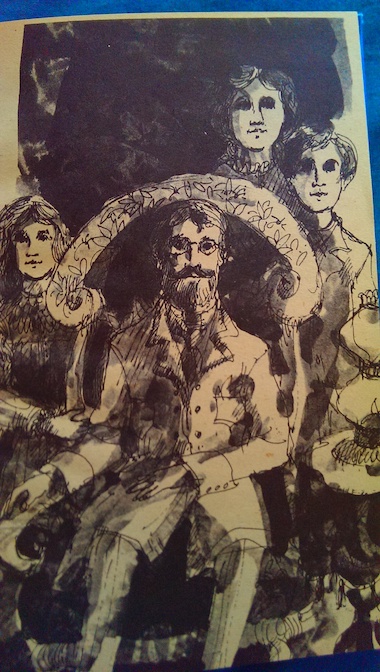 It’s 1851, and Professor Carver of Boston is living in an apartment above a candle shop with his wife and two children, his son Jamie and daughter Lorna. One day, a man named Mr. Giddings comes to see Professor Carver to request his help. For years, he has wanted to buy a particular farm with a beautiful house called Windy Hill. However, when he finally succeeded in buying the house and he and his wife went to live there, his wife became very upset. She said that she felt strange in the house and that she had seen a ghost. Now, she is too upset to return to Windy Hill. Mr. Giddings has heard that Professor Carver once helped a friend get rid of a ghost haunting his house, and he asks the professor if he would be willing to do the same for him.
 Jamie and Lorna are thrilled by the house, which is much bigger than their apartment in town. They can each have their own room, and there is an old tower in the house that was built by a former owner, who was always paranoid about Indian (Native American) attacks (something which had never actually happened). However, their new neighbors are kind of strange. Stover, the handyman, warns them that the house is haunted and also tells them about another neighbor, Miss Miggie. Miss Miggie is an old woman who wanders around, all dressed in white, and likes to spy on people. There is also a boy named Bruno, who apparently can’t walk and often begs at the side of the road with his pet goat, and his father, Tench, who is often drunk and doesn’t want people to make friends with Bruno.
 Then, strange things do start happening in the house. The quilt that Lorna has been making disappears and reappears in another room in the middle of the night. At first, the family thinks maybe she was walking in her sleep because she had done it before, when she was younger. However, there is someone who has been entering the house without the Carvers’ knowledge, and Jamie and Lorna set a trap that catches the mysterious “ghost.”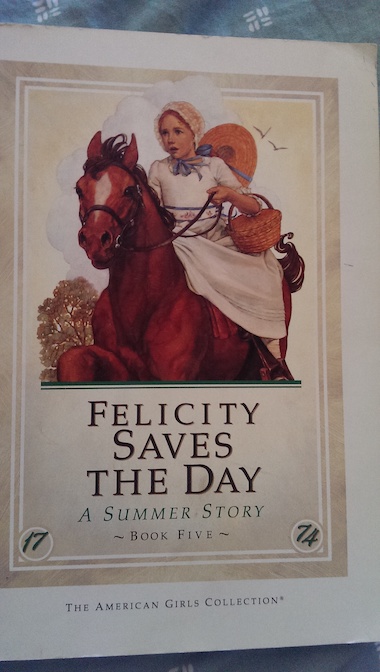
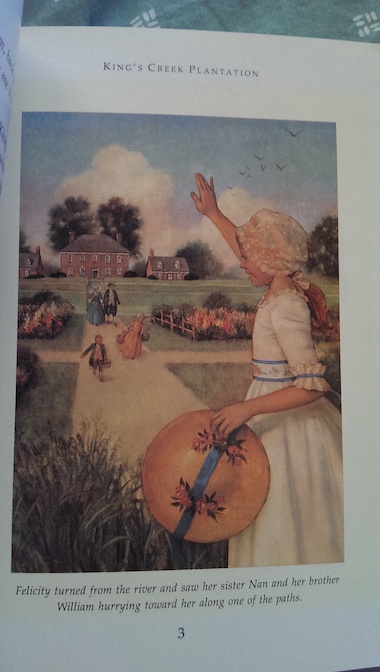 Felicity’s grandfather is a wealthy man who owns the Kings Cross Plantation. Every summer, Felicity and her family go to visit him there, and Felicity loves it. Her grandfather teaches her a lot of things, like which plants can be used for food and medicine, and takes her for horse rides around his estate.
 Ben tells Felicity that he ran away from his apprenticeship to join the revolutionary army. He wants badly to fight for the colonies’ freedom from England, but he had a bad fall while traveling and hurt his leg. Felicity tries to convince Ben to let her get help for him and to return to her father to finish his apprenticeship, but Ben doesn’t want Felicity’s grandfather to find out that he’s there or why he ran away because he knows that he disapproves of the revolutionaries. Because Ben kept her secret when she used to sneak out to see Penny, Felicity reluctantly agrees to keep Ben’s presence a secret for awhile, sneaking him some food and supplies. She tells Ben that, while she thinks that standing up for what he believes is good, he’s going about it in the wrong way because breaking his apprenticeship was dishonest.

 Fudge-A-Mania by Judy Blume, 1990.
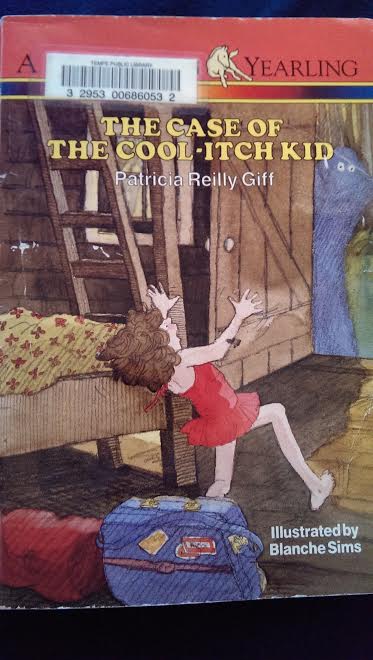 #5 The Case of the Cool-Itch Kid by Patricia Reilly Giff, 1989.

 The Mystery of the Haunted Trail by Janet Lorimer, 1989.
 Summer Fun by Carolyn Haywood, 1986.
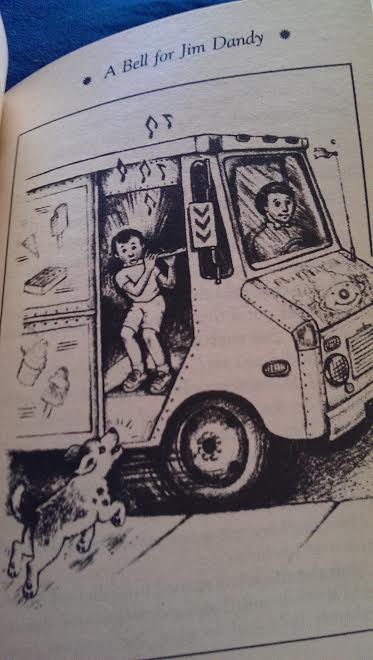 The Watermelon Party
 Betsy’s Hammock Club
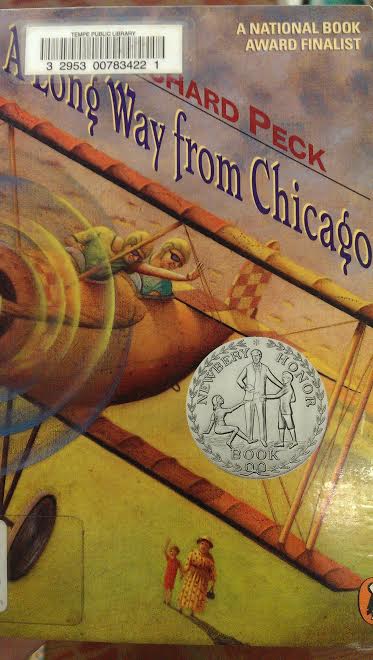 A Long Way from Chicago by Richard Peck, 1998.
 The Ghosts of Cougar Island by Peggy Parish, 1986.

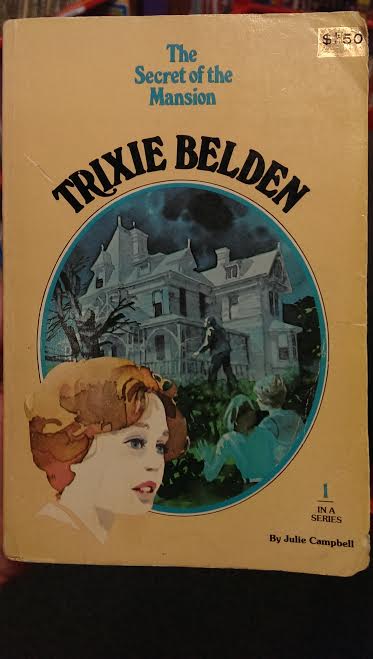 #1 The Secret of the Mansion by Julie Campbell, 1948.
 Jestress's Forgotten Books and Stories