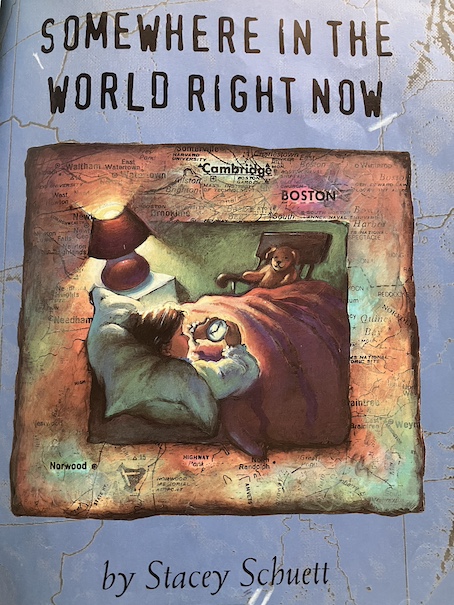
Somewhere in the World Right Now by Stacey Schuett, 1995.
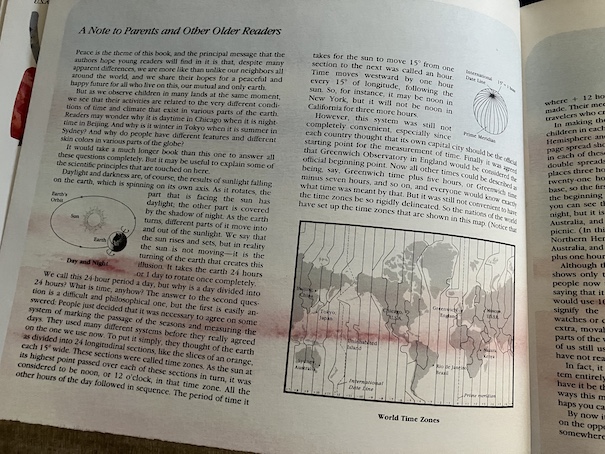
This picture book explains time zones by showing what people and animals all over the world are doing at the same time, reminding children that, somewhere in the world right now, it’s a different time of day.
The book begins with A Note to the Reader, explaining that it takes 24 hours for the Earth to make one full rotation on its axis and that the Earth is constantly turning. This rotation is what makes the sun seem to move across the sky and creates our periods of day and night. Then, it explains how, in 1884, our formal system of time zones was established to standardize how times of day are expressed around the world. There are 24 time zones, roughly equal in size, with a few adjustments for geographical boundaries. Within each time zone, it is the same time, and it is one hour different from the time zones on either side of it. It also explains that the international date line is an imaginary boundary drawn through the middle of the Pacific Ocean that marks the point at which new days begin. There is a map in the book that illustrates all the time zones we will be traveling through and the International Date Line. The places we see in the rest of the book are also labeled on the map.
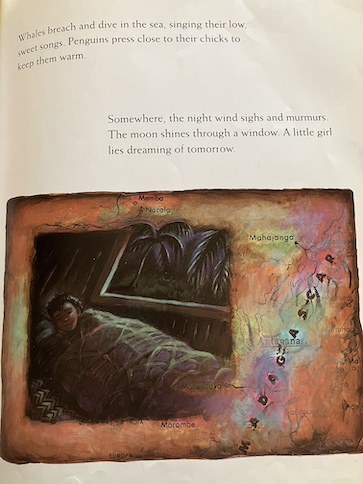
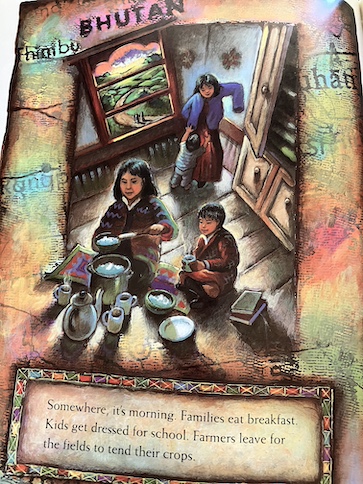
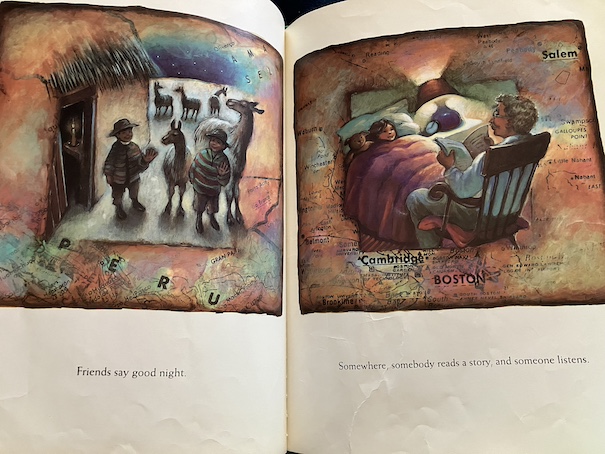
The main part of the book shows what people and animals around the world are doing “right now”, compared to a child in the United States. We don’t see the child in the United States until the very end of the book, but everything else is based around her “right now.” The text doesn’t specify where each of the places are, but each picture has a map in the background with labels that indicate the location to readers.
The first place we see is London, England. It’s the middle of the night (or possibly very early in the morning, after midnight but the sun isn’t up – according to the map at the beginning of the book, it’s 1 am), but a baker is preparing fresh bread to sell in the morning. Meanwhile, there are elephants sleeping in Uganda, whales swimming in the sea, penguins protecting their chicks in Antarctica, and a little girl sleeping in Madagascar.
It’s dawn in India, and people there are waking up. People are eating breakfast in Bhutan, and people are on their way to work in the morning in China. At the same time, it’s lunch time in Siberia, and there are kangaroos and koalas eating their own lunch in Australia.
Meanwhile, it’s afternoon on the western coast of the United States. There’s a fishing boat returning to port in Alaska, and a girl on a farm in California. As we move further east, it gets later and later. When we reach Chicago, it’s evening, and people are heading home. In Guatemala and Honduras, children who have been playing outside head for home, and families are having supper.
Eventually, we reach Boston, Massachusetts, where someone is reading a story book to a little girl before bed. It’s 8 pm, according to the time on the map at the beginning and the clock next to the little girl’s bed. All the things that we’ve seen in the book are happening, somewhere in the world, right now, as she is going to bed.
The book is available to borrow and read for free online through Internet Archive (multiple copies).
My Reaction
This book is educational, showing children how time and time zones work around the world, but it’s also a good, gentle bedtime story. Although we don’t really know it until the very end, it’s framed around a girl who is going to bed and is hearing a bedtime story. It is relaxing to think about how different things are happening in different places, to people and animals around the world, almost counting them off like counting sheep. No matter when it is or where you are, there’s someone, somewhere in the world, going through a different point in their day.
I found the human parts of the story more interesting than the animal portions, but I think children would enjoy hearing about the animals and seeing the animal pictures. It’s also relaxing to think about animals just going about their routines, like people go about theirs. There’s nothing stressful happening to any of the people or animals in the story.
I remember, when I was younger, I sometimes pictured things happening around the world when I had trouble sleeping. I can’t remember why I started doing this, if it was because I read this book or one like it. Somehow, though, I found it reassuring to think that, somewhere, it was daytime for someone else and that there were always people awake somewhere. It might be just me, but somehow, I found that idea reassuring because it meant that there were other people taking care of things, and it was their turn to be awake and do things, so I could have my turn to relax and rest.
All in a Day is a picture book on a similar theme, but instead of just showing what’s happening around the world at one particular moment, All in a Day follows children in various countries through the course of an entire day.
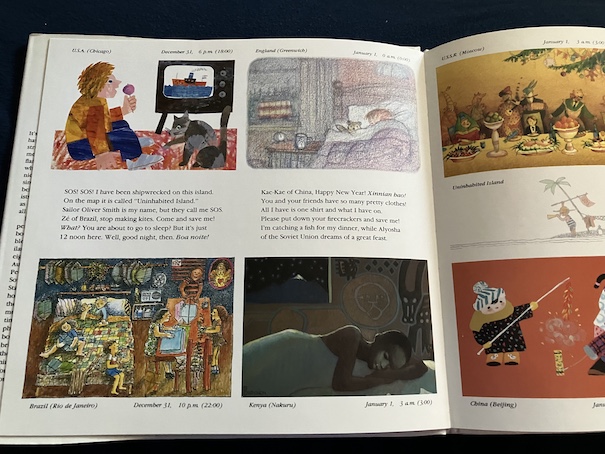
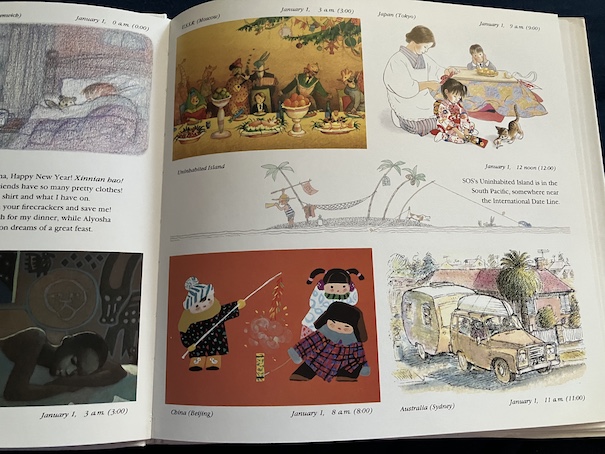
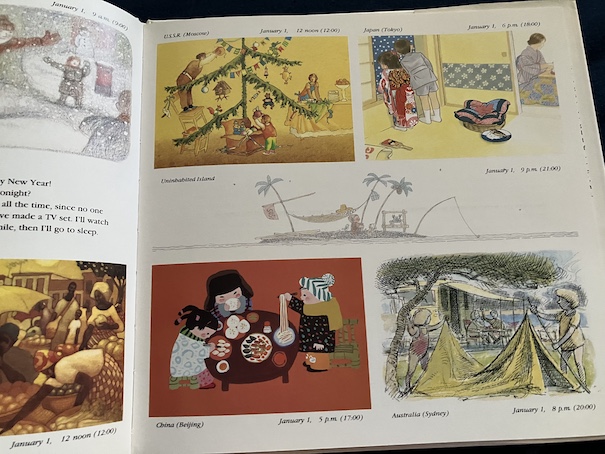
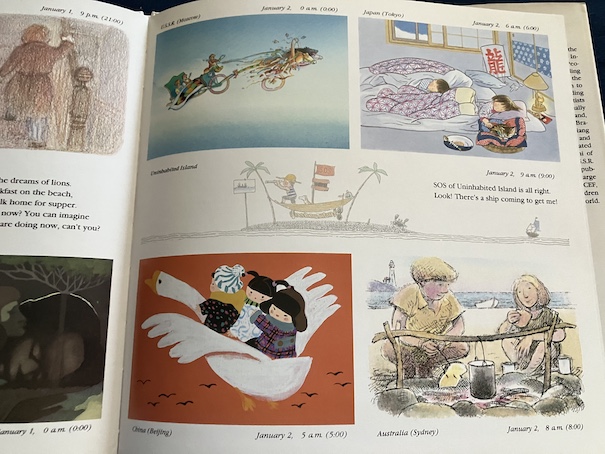
The format of this book is a little unusual. The book was a cooperative project among authors and illustrators from different countries to show children what is happening around the world at the same moment in different time zones.
Mitsumasa Anno, the primary author of the book, is from Japan, but he writes as a boy called Sailor Oliver Smith, or “SOS”, who has been shipwrecked with his dog on an uninhabited island near the International Date Line in the Pacific Ocean at noon on January 1 (which is also midnight on New Year’s Eve, Greenwich Mean Time). He is on the island for a full day before he is rescued, sending out appeals for help and thinking about what other children around the world are doing at every hour of the day as they celebrate the New Year.
As you read through the book, the small pictures of the children in different countries tell a complete story for each child in each country. The little mini-stories within the main story are presented almost comic book style. They contain no text themselves, but the boy on the island offers commentary on what’s happening with the children in other countries. During the time when SOS is asleep on his island, his dog, Matey, takes over the narration.
Children in Brazil are making and flying kites with their family and going swimming at the beach. People in Australia also go to the beach because it’s summer there in January, and they camp out overnight. A boy in the US sneaks out of bed to get a look at the party his parents are having at midnight, and is woken by his cat the next morning. The boy in England wakes up his too parents early in the morning by playing his trumpet. People in Kenya go a busy market and have dinner as a family. Children in China set off firecrackers, watch fireworks, and eat special foods. The story in Japan is about a little girl whose toy is stolen by a dog, and her cat chases after the dog to get it back. At first, they worry because the cat doesn’t return home for dinner, but the cat eventually comes in late with the toy, eats its fish, and goes to bed. Because this book was written in the 1980s, the book refers to Russia as the Soviet Union. The boy in the Soviet Union goes sledding with his friends and tries to ride his bike in the snow, which doesn’t work well. Children in various countries watch tv and read books during the day, and readers get to see their dreams when they sleep. At the end of the book, SOS sees a ship coming to pick him up at 9 am on January 2.
There is a message at the beginning of the book from all of the authors and illustrators who participated about children around the world, encouraging children to think about children in other places and what they might be doing throughout their day. Because it’s a different time of day in different places, some children are asleep in bed while others are awake and playing. However, it reminds readers that, no matter who we are, where we live on Earth, or what we look like, we’re all human beings on the same planet with the same sun and moon looking down on our days and nights. It’s a call for empathy and unity among nations and the people who live everywhere on Earth. In the back of the book, there is more scientific information about the movement of the Earth around the sun and the rotation of the planet and what makes different time zones. There is also information about the different authors and illustrators around the world who contributed to the project.
The book is available to borrow and read for free online through Internet Archive (multiple copies).
My Reaction
I have a vague memory of reading this book when I was young, but I can’t remember exactly when I read it. I think I was an older child because I already understood the concept of different time zones. I do think that kids who are a little older would get more out of the story and the concept of different time zones than very young children.
Older children would also probably find it easier to follow the different story lines of the children in each country. The format of the story may be a little difficult for very young children to follow because it does feel a little disjointed, getting just a snippet of each child’s day and night per page. However, the book is interesting to reread multiple times, following each child’s day, and I remember being fascinated by the notion of what everyone around the world was doing at different times.
The call for people to think about other people in other places and the call for international understanding is a nice, peaceful message for the New Year. As an adult, I was interested in seeing which authors and illustrators contributed to the book. Each set of illustrations for different countries has a different style. The illustrator for the boy in the US is Eric Carle, known for The Very Hungry Caterpillar. Not all of the illustrators are actually from the countries they illustrated, but more are. The two exceptions were for Brazil and Kenya, but the illustrator who did the pictures for Brazil did live there for a time, and the the couple who did the pictures for Kenya wrote and illustrated other books about Africa.
Somewhere in the World Right Now is a picture book on a similar theme, but instead of following children around the world through an entire day, it just shows what’s happening around the world at one particular moment. I think that makes Somewhere in the World Right Now a little easier to follow for younger children.
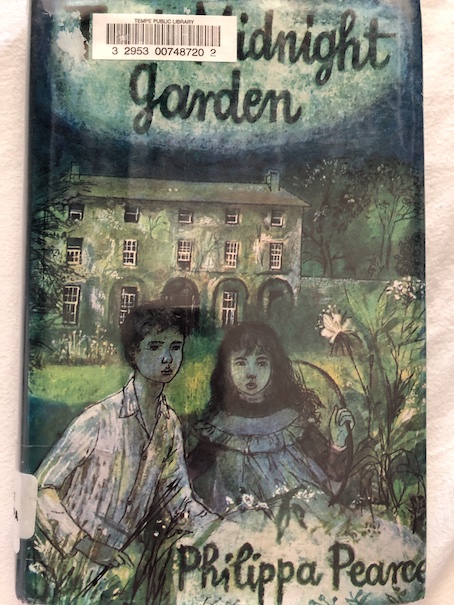
This is one of the most famous time slip stories for children! I remember either reading it or having it read to me when I was a kid, but I have to admit that I really remembered only the broad strokes of the story until I reread it as an adult.
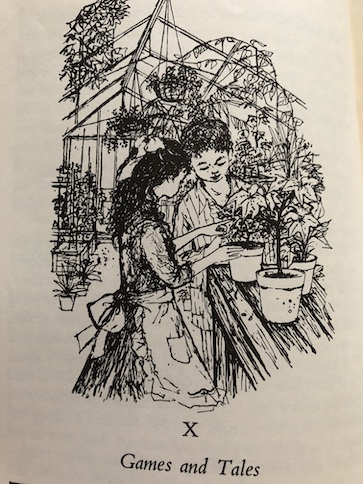
When the story begins, Tom Long is sad and angry because his brother, Peter, has caught the measles, and it’s going to ruin their summer holidays. The two of them originally planned to spend the summer building a tree house in the apple tree in their backyard garden, but now, Tom is being rushed away from the house (sent into exile, as he thinks of it) so that he won’t catch the measles from his brother. Tom thinks that he would rather be sick with Peter than sent away by himself.
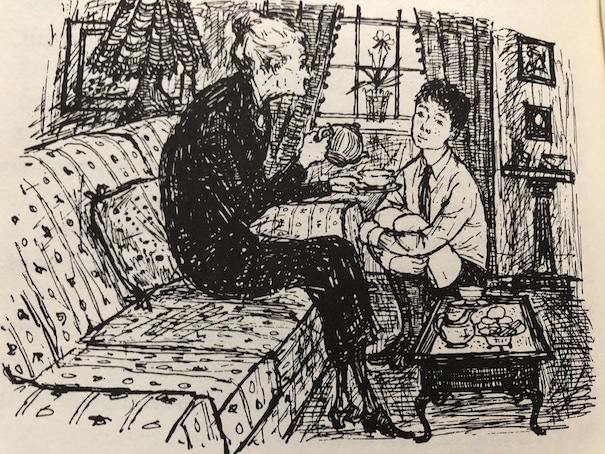
Tom is going to stay with his Uncle Alan and Aunt Gwen. His aunt and uncle are kind people who like kids, and in a way, it makes Tom feel worse because it makes him seem unreasonable for resenting spending the summer with them. If they were cruel, he could run away and everyone would tell him he was right for doing so, but when people are nice to you, there’s less to complain about, and Tom is in a complaining mood. The major problem with staying with Uncle Alan and Aunt Gwen is that they live in a small flat with no garden. Tom can’t even get out and see the sights of the city because he’s supposed to be in quarantine for awhile, just in case he’s already caught the measles from Peter and it hasn’t started to show yet. (It takes about 10 to 14 days after infection before measles symptoms start to show, so Tom has to stay in quarantine that long to be sure he’s not sick. Anybody with experience of coronavirus quarantines knows the drill, even if they didn’t before.) So, basically, Tom is going to be temporarily shut up like he’s sick, with the goal of making sure that he’s not sick and not going to be, but without the company of his brother or the comforts of his own home. They’re doing it for Tom’s welfare because measles can have serious side effects, and it’s not something anybody wants to get. There are sound reasons for trying to both protect Tom from infection if he hasn’t been infected already and also trying to protect others that Tom might infect while they’re waiting to make sure that he’s really okay, but it’s still a depressing situation. They’re planning on Tom quarantining for ten days with his aunt and uncle, just about a week and a half, provided that he doesn’t show any symptoms that would force him to quarantine for longer. The only people Tom is allowed to see during his quarantine period are people who have already had measles and are now immune to it, like his aunt and uncle.
The flat where Uncle Alan and Aunt Gwen live is in an old house in or near Ely, England that has been divided up into flats. It’s not a bad house, but Tom doesn’t think it seems particularly welcoming. He’s also a little offended that the guest room where he’s supposed to be staying used to be a nursery and has the characteristic bars on the windows that old-fashioned nurseries have to keep children from falling out. Aunt Gwen explains that those are left over from when the house used to be a private home and aren’t meant for him, but Tom is in no mood to be treated like he’s a baby. The one feature of the house he likes is the old grandfather clock that belongs to Mrs. Bartholomew, the owner of the house and his aunt and uncle’s landlady, who lives upstairs. The clock’s chimes can be heard all over the house, and it’s something of a joke and a source of irritation to the people living in the house because, even though the clock keeps perfect time, it never chimes the right number. The chimes are always some random number for no apparent reason. Of course, there is a reason.
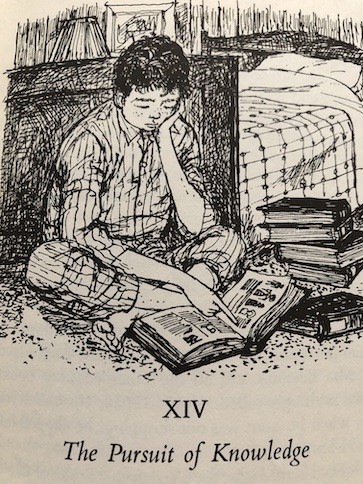
Tom is bored and restless. All he has for entertainment is crossword puzzles, jigsaw puzzles, and his aunt’s old books from when she was a kid, and the books are just school stories for girls, so Tom doesn’t find them interesting. Tom helps his aunt in the kitchen, and he loves her cooking, but it’s a bit rich and gives him indigestion. Because of that, he often has trouble sleeping, but his aunt and uncle insist that he get ten hours of sleep a night because that’s what kids his age are supposed to need. They won’t let him read or get up or do anything when he can’t sleep, so he just has to lie awake, bored.
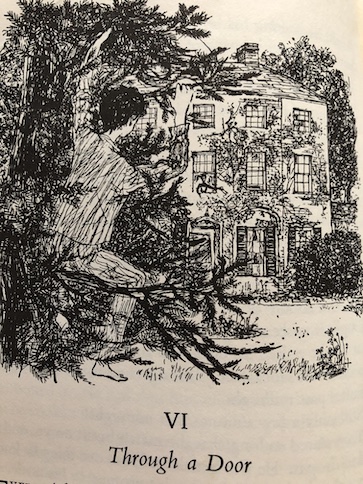
One night, while lying awake in bed, Tom hears the clock downstairs strike thirteen. That strikes him as odd because he’s never heard a clock strike thirteen times before, and he didn’t even think it was possible for a wrong clock to do that. He starts considering that maybe there is actually a hidden, thirteenth hour of night that his uncle knows nothing about, so that one free hour should belong to Tom, to with as he wishes. He’s not sure that idea really makes sense, but he feels compelled to get up and go downstairs to investigate.
When Tom gets downstairs, he can’t read the clock because it’s too dark, and he can’t find the light switch. Then, he gets the idea to open the back door so he can read the clock by moonlight. However, when he opens the back door, he sees a beautiful lawn and garden instead of the empty yard his aunt and uncle told him was there. At first, Tom is angry that they lied to him about there not being a garden. He thinks to himself that he’s going to come back and see the garden in daylight. As he’s heading back inside to look at the clock, he encounters a young maid. He’s surprised to see the girl enter someone else’s flat without knocking or ringing the bell in the middle of the night. Then, he begins to notice that the house is different from the way he saw it during the day. The grandfather clock is still there, but the laundry box, milk bottles, and travel posters have been replaced by an umbrella stand, a dinner gong, an air gun, and a fishing rod. The girl calls out that she’s lit a fire in “the parlour,” and Tom watches as she crosses to another room, kind of melting through the door instead of opening it like a living person would. Is Tom seeing a ghost? Then, the vision fades, all of the old-fashioned furnishing are gone, and everything in the downstairs hall looks the way Tom remembered it from his arrival.
In spite of realizing that the house might be haunted, Tom is happier from his adventures and knowing about the beautiful garden outside. He now has something more exciting to think about than just being bored. However, he’s still mad at his aunt and uncle for keeping him in the dark about the garden outside. He tries to hint to them that he knows about it, but when he mentions seeing hyacinths blooming, his aunt tells him that’s impossible because it’s summer, and hyacinths are out of season. Tom is unsettled by that, and he runs downstairs to check. When he gets there, the lock on the back door is different from what he remembered the night before, and when he opens the back door, there’s no garden there, only the dust bins his aunt and uncle mentioned and a man working on a car. Tom asks the man, who lives in the flat where Tom saw the maid enter to light a fire if he has a maid, and man tells him no. Tom tries to ask him about the garden, but he starts crying when he realizes that the garden couldn’t have been real. The man tries to ask him what’s wrong, but Tom doesn’t want to explain it. He stops Tom from running into old Mrs. Bartholomew, who has come downstairs to wind the grandfather clock. Tom watches the winding process with fascination and feels calmer.
Tom begins to reason out how he could have seen a garden the night before when there isn’t one there now. He’s sure that he didn’t just dream it or imagine it, so he decides to conduct an investigation. He considers the different pieces of the puzzle – the house that looks different at night, the clock that chimes thirteen times, and trees that are now in the backyards of neighboring houses but which must have been part of the large garden he saw. Tom begins writing a series of letters to his brother about what he’s experiencing and his investigations into it, which he asks Peter to burn after reading. At night, he stays up, waiting for the clock to chime thirteen again … and it does. When it does, everything is as he saw it before – the different furnishings downstairs, the different latch on the back door, and best of all, the garden.
Tom visits the garden every night, noting that every time he goes, it’s a different time of day or a different season of the year. Time in the garden doesn’t correspond to time in the real world. Months can pass between his visits, even though Tom goes there every single night. It seems like, no matter how long Tom spends there, exploring, only a few minutes of the night has passed when he returns. One night, he sees a tree struck by lightning, but the next time he looks, the tree is just fine. Tom starts a discussion with his aunt and uncle about time without fully explaining why he wants to know how time works. When he poses the question of how a tree could fall over and then be standing upright again later, his aunt thinks that he’s talking about fairy tale or something he dreamed or imagined. His uncle says that it’s impossible without turning back the clock. The mention of a clock being turned back intrigues Tom, but his uncle says that’s just an expression, meaning to relive the past, which nobody can actually do. It’s a clue to Tom, though, about what’s really happening in the garden.
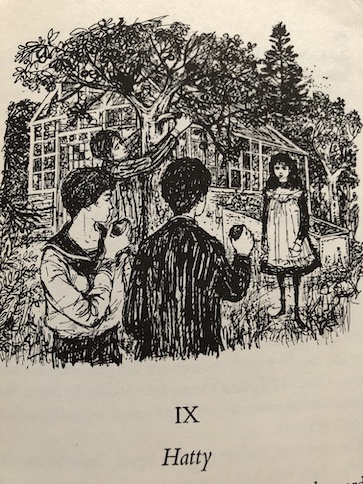
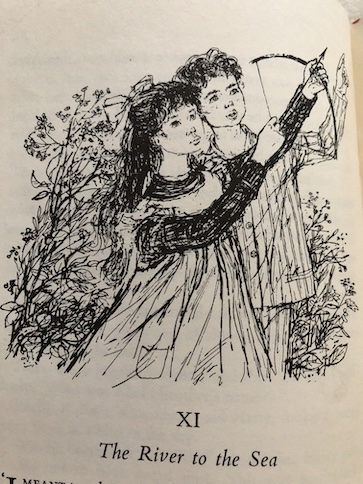
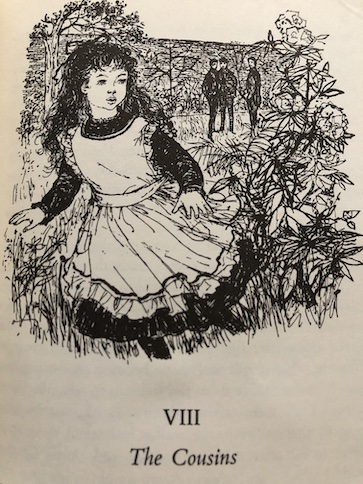
Tom also quickly realizes that he seems to have little substance when he’s in the garden. He can climb trees in the garden, but he can’t open doors by himself, for some reason. If he concentrates hard, he can walk through doors like a ghost, which is both frightening and fascinating. Also, most of the people he encounters can’t see him. Animals react to his presence, but people tend to look through him or past him and don’t seen to hear anything he says. There are three brothers who spend time in the garden, and Tom thinks that he’d like to be friends with the middle boy, James, but James never sees or hears him. The boys have a younger cousin, Hatty, who follows them around. They’re not very nice to her and often ignore her or exclude her from their activities, but Tom discovers, to his surprise, that Hatty can both see and hear him. Hatty becomes Tom’s friend, and they begin talking to each other, playing, and exploring the garden together.
Hatty is a sad and lonely girl who often plays imaginary games by herself in the garden. She tells Tom that she’s a captive princess, that the cruel woman who claims to be her aunt isn’t really her aunt, and that the mean boys aren’t her real cousins. The truth is that Hatty is an orphan and that her aunt resents her being her responsibility. Hatty’s aunt and cousins have money and servants, but Hatty is emotionally neglected. She has no one to be close to and share secrets with except for Tom.
Tom is so captivated by his shared time in the garden with Hatty that he tells his aunt that he’d like to stay longer. His uncle is mystified that Tom is really that interested in staying with them because he knows their apartment is boring, but his aunt is enthusiastic about him spending an extra week beyond his quarantine so she can show him some of the sights of the city. Then, Tom catches a cold that requires him to stay in bed for longer, but he is still able to visit the garden at night.
By this time, Tom has figured out that the garden once existed in the history of the house and that Hatty was someone who lived in the house at some point in the past, but he doesn’t really understand how or why he is able to visit her in the no-longer-existing garden at night. He still thinks that Hatty might be a ghost and even the garden might be some kind of ghost that haunts the house. However, Hatty tells Tom that she thinks he’s the ghost. Tom denies it, knowing that he’s not dead in his own time, but it’s true that, whenever he’s in the garden with Hatty, he is somewhat non-corporeal, unable to affect physical objects but able to walk through solid objects when he tries, and he is invisible to most people. Tom says that the only reason why he can walk through closed doors is that the garden itself, and every physical thing in it, is a ghost – he’s not passing through them so much as they’re passing through him because he’s solid, and they’re not really. Tom and Hatty argue about who’s a ghost and who’s not because, from each of their perspectives, they’re both real and alive, but yet, the entire situation is unreal. Tom sees pieces of the past changing and disappearing, and he knows what’s real in his time. However, Hatty can also say the same – she knows what’s real in her time, and Tom has a definite ghostly quality when he’s in her garden. What is the truth, and how long can the two of them continue meeting like this?
The book is available to borrow and read for free online through Internet Archive (multiple copies, including one in Chinese). It’s been made into tv versions (parts sometimes appear on YouTube) and a movie in 1999. The movie is also available online through Internet Archive.
If you’re interested in other time slip stories, see my list of Time Travel books.
My Reaction and Spoilers
Things to Do
First of all, I just have to get it out of my system: Tom’s family is not a creative bunch. I know the aunt and uncle took Tom in on short notice, but I’m just saying that with a little imagination, they could find more things for Tom to do during his quarantine. Two weeks is not that long if you have things to do and think about. There were always art supplies at my house when I was a kid, and even if you don’t have them on hand, paper and colored pencils or crayons aren’t very expensive. The cooking is a good activity, and maybe the aunt could teach Tom some new recipes that he could make by himself. With as much as the aunt is cooking, she’s also probably using things that come in boxes and cans, and boxes and cans can be made into things. Also, they could get the kid a book on something more interesting he can learn and use, like magic tricks he can practice or secret codes. They wouldn’t have to buy him books for just a couple of week, either. They could just go to the local library and ask the children’s librarian for some recommendations. They could teach him how to fold different kinds of paper airplanes or carve things out of soap (save the shavings in an old nylon stocking – it’s almost like soap on a rope you can use in the shower) or make a kite he can fly in the park when his quarantine ends. Heck, if he had a deck of cards, he could at least learn different types of solitaire games. There are over one hundred variations, and the kid just has to be entertained for a couple of weeks, 14 days. The activities don’t have to be very impressive if you can think of enough of them to have a different one each day for him to try to break up the monotony of the the more usual stand-bys, like reading and puzzles. Just to prove that it’s possible, I made a list:
Drawing – I mentioned before that paper and crayons or colored pencils aren’t too expensive, and he doesn’t need to be any good at it. It’s just a challenge and would give him something creative to do, maybe while listening to music on the radio or something. Bonus points if you know enough about art to tell him about different styles of art and suggest that he try some different styles, like cubism or surrealism. He could also use art supplies to map out things, like a plan of the tree house he and Peter want to build. After he’s done that, he could draw a creative map of an imaginary castle or mansion or a haunted house or an entire amusement park or an elaborate clubhouse he would build if there were no restrictions on space or money. It doesn’t have to be possible or even drawn particularly well as long as it’s entertaining.
Paper airplanes or origami – You can make some fun things out of folded paper, and if you know how to make different styles of paper airplanes or can find a book about it, you can conduct tests to determine which styles fly the best. Yes, you then have a lot of paper airplanes laying around, but if your goal is to pass the time, cleaning up also takes up time.
Card games – I covered that. There are a lot of things you can do with a deck of cards, even if you’re just playing solitaire. He could try to build a house of a cards. He could also learn card tricks and the order of poker hands. (I know that not every family would be okay with a kid learning the rules to a gambling game, but my parents never minded as long as we didn’t gamble with money, and it’s the sort of mildly daring activity that appeals to kids. Besides, this kid has nobody else to play with right now, except for his aunt and uncle.)
Magic tricks – I covered this one. There are (and were back then) books of magic tricks that a boy could study, many of which use ordinary objects that a person could find around the house. He could practice a new trick each day or spend an entire day with one book, trying anything that looks interesting.
Secret codes – Again, they had books about this even back then, and once you know a few principles, you can start making your own codes. When I was a kid, I liked to experiment with basic alphabet shifts, and secret codes often formed the basis of treasure hunts that I had with my brother. Tom can’t have a treasure hunt for his brother yet, but he could be encouraged to plan one. Give him a notebook where he can practice his codes and make notes of possible hiding places. He can also write coded messages to send to his brother and challenge him to read them.
Current events – Kids don’t often read the newspaper, but his aunt and uncle could introduce him to features of the newspaper and what’s happening in the world. A new newspaper arrives every day, and it’s a source of reading material. At least, he could look at the comics or the sports pages, if he likes sports.
Model town or castle – As I said, there are probably cardboard boxes and cans being thrown out of this house, and they could be appropriated for some kind of craft project, ideally one that would take awhile for Tom to build and that he could add to each day. One of the best things to make out of random junk would be a town or a castle. Tin cans are towers and turrets, and cardboard boxes are the main buildings. Cover the outsides of the cans and boxes with plain paper and draw on them for decoration. Make people out of paper and cardboard. It could turn out amazing if he’s willing to put the time into making it as detailed as possible, but if it doesn’t turn out amazing, it’s okay because it was just junk anyway.
Plan for the future – This quarantine will end. Tom can mark off days on the calendar until he’s in the clear. Give Tom a guidebook to the city and tell him to make a list of places he wants to go and things he wants to do when the quarantine is over. It could be amusing for at least an afternoon. He’ll learn about the sights and landmarks of the city and be mildly entertained thinking of fun things to do in the near future. It will give him something to look forward to. It’s also an incentive for Tom to behave himself because his aunt and uncle can tell him that they’ll take him places he wants to go if he’s good about abiding by the rules of the quarantine until it’s over. Admittedly, Ely is one of the smallest cities in England, so there wouldn’t be as many sights to see as in London, and Tom already knows about the Cathedral, but there are shops, restaurants, and museums there. Some of them were founded after the 1950s, but there were some in Tom’s time, too. He visits at least one museum with his aunt at the end of the quarantine and goes to the movies with her. If they can’t find enough to do just in Ely when Tom’s quarantine is over, they could also spend a day visiting surrounding towns.
Discover or develop your mental powers – The amusement potential with this one depends on whether the kid has reached that phase where kids get fascinated by things like psychic abilities. Many kids go through a phase like that, and since Tom seems to like the idea of being in a haunted house, he’s probably the right age. If you can get him a book about psychic powers or telekinesis, he’d probably find it a fascinating read. The aunt and uncle could talk to him about whether or not such things actually exist, and he could try to test himself to see if he has any such powers. I had an English teacher in middle school who actually did that with us. There was only one test I really did well. Most people don’t do those types of tests well at all, but it’s amusing for at least an hour or two to try or talk about. If he happens to do better than average on anything, he could brag about it to his brother and his friends, telling them that he discovered and honed his psychic powers in a spooky old house during his vacation.
Write a story or poem – All you need is paper, a pencil, and some imagination. Writing a long story and trying to do it well could cover the entire quarantine period by itself, it would give him something to think about, and he’d have something to show for his relative isolation. Of course, the real goal is to be entertained and pass the time, so the story or poem doesn’t have to be great. It can be as crazy as Tom wants to make it, as long as he’s amused.
Start learning a language – Two weeks isn’t enough to really learn to speak a language, but it’s enough to learn a few words and phrases. If his aunt or uncle has an old textbook lying around from their student days, they could use that, or they could pick up a used one cheaply or get one from the local library. It might make Tom groan because it’s a little like school, but it would be a challenge to practice using words from another language. Of course, that depends on which words and phrases the kid learns. There can be a lot of amusement potential in learning to insult people in other languages, although that lesson should also come with the warning that you never know which languages other people might know.
Board games – A classic! If they’re not into card games, Tom can spend evenings playing board games with his aunt and uncle. Most people have chess and checkers sets (his uncle does offer to teach him chess later in his visit), and Monopoly and Clue (or Cluedo) were common back then. Monopoly games are notorious for taking a long time to finish.
Invent a game – There are a lot of things you can do if you have paper and pencils, and one of them is to design your own board game. It can be about anything, and the rules can be anything you want. When you think you’ve got it the way you want, try playing it and see if there are any adjustments you need to make. Tom can also make his own jigsaw puzzles by cutting up a picture he’s drawn or gluing a magazine picture to a piece of cardboard and cutting it up. The cardboard can come from an empty cardboard box or he can remove the cardboard back of a drawing pad, if he no longer needs it.
Jokes – Get Tom a joke book and have him mail his brother a new joke every day. When he’s done reading the book, they could challenge him to try to make up some jokes of his own. Sending and receiving mail is an activity by itself, and Tom does write to Peter during the story.
Learn to dance – This is assuming that the aunt and uncle also know how to dance, but I think it was pretty common back then for people to know at least a couple of basic dances. Tom could practice with his aunt in their living room (if they have to rearrange the furniture to do it, that’s another time-consuming activity), and it would give him something to do for some mild exercise. Even if a boy might be embarrassed to dance with his aunt, nobody’s going to see them while he’s in quarantine, he doesn’t have to tell people who taught him, and if he’s willing to learn, it could help him later at school dances.
See? If you think about it, there are plenty of things to do for just a couple of weeks. There are even more if you’re willing to invest in buying things like craft kits or model kits or other things necessary to start a new hobby, but I was trying to be as basic as possible, mostly relying on inexpensive books and paper and pencils. However, the plot of the book requires Tom to be bored and lonely, so they can’t do those things, and that brings us back to the story.
Measles
How readers receive the beginning premise of the story, that Tom was sent away from home because his brother has the measles, depends partly on their generation. I have never actually seen a live case of the measles in my entire life, as of this posting. I was born in the early 1980s, and growing up, everyone I knew who had the measles was an older person who had it as a child in the 1950s or earlier, before the time that this story was written. Vaccines against measles have been available in the United States since the early 1960s, too late for my parents but well before I was born.
I know that this disease still exists, and it’s been the subject of recent controversy because there’s been a recent outbreak in the American Southwest among unvaccinated people (2025), but I grew up in a community where measles vaccines were required for going to public schools. Because all of the kids I knew when I was young went to the same school with the same requirement, everybody I knew in my own generation was vaccinated, and none of us ever got measles.
I’m pointing this out because the first generation of children to read this story would have found the situation familiar, but it’s not something that happened to me or anybody else I knew as a kid. When I was a kid, I used to think of measles as an old-timey old people’s disease, one of the diseases that your characters could get in the Oregon Trail computer game that could either delay or kill your characters, but not something that I ever expected to encounter in the real, modern world. When I read books like this as a child, that was kind of how I thought about it. For me, it marked the time period of the story as “old.”
The closest equivalent from my youth was chicken pox because that was a spot-causing disease that I knew people had to be quarantined for, and it was unavoidable because there was no vaccine available in my earliest years. I did have chicken pox as a small child, which is why I have a scar on my face now, and I was isolated from other children when it became obvious that I had it. However, my younger cousins were vaccinated for chicken pox when that vaccine became available in the 1990s, so they’ve never experienced the disease that afflicted me. For the next generation, I get to be the older person who has a story about an old-timey disease because life moves on. It’s just part of the cycle of time and history. But, just as background for my mindset as a child reader, when I was a kid, I pictured measles as a kind of old-fashioned but more serious chicken pox. That’s not medically true because they’re separate diseases, but I just never saw or experienced actual measles, and that was the closest equivalent I could imagine at that age.
For younger generations, the covid pandemic of the 2020s might be what they picture when someone talks about quarantines.
The Truth About Hatty (Spoilers)
So, what is the truth about Hatty and the midnight garden? This is a time slip story, not a ghost story, although sometimes the two of those go together in books. In this case, the time slip is not based around ghosts but around memory. When Tom is seeing the garden as it was in the past, he is seeing it as it existed in Hatty’s memories. He is somewhat correct in saying that he is non-corporeal there because the garden itself is non-corporeal – it’s a memory. Hatty is still alive in Tom’s time, and Tom is able to enter the garden when she revisits it in her memories and when she remembers him.
The twist in the book (spoiler) is that Hatty is Mrs. Bartholomew, the current owner of the house and the landlady of the flats. When Tom is trying to figure out whether Hatty’s a ghost, he briefly considers asking Mrs. Bartholomew about the history of the house, but he rejects the idea because his aunt and uncle told him that Mrs. Bartholomew only moved to this house fairly recently, after the death of her husband, so Tom assumes that she has no connection with or knowledge of Hatty and her family.
I liked the part where Tom tries to do some research and figure out what time period child Hatty lives in based on the types of clothes people wear in her time. He has some difficulty finding a good source with details about the variations in clothing styles over the years. He does realize that Hatty was a child in the Victorian era, between the 1830s and the early 1900s, but he ends up guessing earlier in the Victorian era than she actually lived, which is why he thinks she’s definitely dead and a ghost instead of an elderly lady in the 1950s.
As Tom continues his time travels into the past, Hatty gradually ages because Mrs. Bartholomew is remembering different times in her life. Eventually, Tom sees Hatty fall in love with a young man she calls “Barty.” Tom is hurt because, when she falls in love with Barty, Hatty seems to forget about him and is suddenly unable to see him any more. It’s because Mrs. Bartholomew’s focus is shifting in her memories, focusing more on remembering Barty than remembering Tom. The last time when Tom tries to go back in time, the garden is suddenly not there, and he crashes into the dust bins outside. His aunt and uncle think he was walking in his sleep, and Tom is depressed that Hatty seems like she’s gone forever. He learns the truth when Mrs. Bartholomew insists that he come upstairs and apologize for waking her by knocking over the dust bins.
Mrs. Bartholomew thought for years that Tom was some kind of ghost who became harder and harder to see as she got older, probably because, as she got older and started thinking about other things, like Barty, she wasn’t concentrating so much on Tom. The night when the garden didn’t appear, Mrs. Bartholomew was dreaming about her wedding, so she wasn’t thinking about the garden. When Tom crashed into the dust bins, he called out her name, and she woke up and recognized his voice. Tom is happy that Hatty remembered him all these years, that she didn’t deliberately forget him, and that she’s not dead or a ghost. Mrs. Bartholomew tells him about what happened in her life after to marriage to John Bartholomew/Barty. Hatty and her husband moved away from the house, and they had two sons, who both later died during World War I. She and her husband continued living together for many years, until his death, when she returned to the house where she’d grown up.
The Time Traveling
So, now you know who Hatty is, but what does the clock and its thirteen chimes have to do with her memories and Tom’s time traveling? The mechanics of the time traveling in time slip stories are rarely fully explained, but the characters in this book do consider and discuss the possibilities. Part of it seems to involve the Biblical reference engraved on the clock about “Time no longer” from Rev. 10 1:6. I thought it was an interesting approach, bringing religious references into the story. When Tom tries to talk to his uncle about how time works, his uncle goes into scientific theories of time and gets annoyed with him when he tries to talk about the angel in the Bible. After talking to his aunt, Tom gets a sense that his uncle believes in a different version of “Truth”, and that makes it difficult to talk to him. Most of what his uncle says about more philosophical and scientific explanations of time goes over Tom’s head.
What Tom eventually figures out from bits and pieces of his uncle’s explanation and his own reflection about his time-traveling experiences, is that perspective matters in relation to time. He has his perspective of how time moves – he’s been traveling back to the garden every night for a few weeks during the summer. However, Hatty has her own perspective of time – Tom has appeared to her in the garden roughly every few months over a period of about ten years of her life. When Tom considers the situation from Hatty’s point of view, he decides that people’s individual experiences of time are just pieces of the much larger experience of time and history. This is the point when Tom realizes that neither he nor Hatty are ghosts, just two people whose experiences of time have crossed. When Tom enters into Hatty’s time, she perceives it as the present and him as a ghost because he’s outside of his natural time period and not fully a part of her present. Similarly, the maid appeared ghost-like to Tom at first because she had somewhat entered into Tom’s present before fading back to her present, appearing to vanish like a ghost. Time in the garden appears to jump around because Tom is entering into different sections of Hatty’s time. That’s why he sees the tree in the garden standing, then struck by lightning and fallen, and then standing again, and it’s also why he sees Hatty as being around his age, then younger, and then getting older. All of those things he sees are just sections of Hatty’s timeline that Tom experiences in isolation from each other, a different one every night.
Toward the end of the book, Tom tries to take advantage of the way time seems to stand still in his own time while he’s in the garden, so he can stay longer with Hatty. He thinks maybe he’ll stay for days or even forever, safe in the knowledge that time back home is standing still, and he can return there whenever he wants, enjoying carefree days of playing in the garden forever. However, he has not fully reckoned that time is still passing for Hatty even when it seems to pause for him while he’s in her time. Hatty has gradually grown up, and is moving forward with her life. She can’t stay a little girl, playing in the garden forever.
When Tom talks to the elderly Mrs. Bartholomew later, she observes that “nothing stands still, except in our memory.” When she was younger, she had always thought that the garden would stay the same forever, but it didn’t. She realized that when she saw the tree in the garden get struck by lightning. Everything changes, sometimes gradually, and sometimes suddenly, but time always moves forward. The property was eventually split up by her cousin James when he was having trouble with his business and needed money. He sold off pieces of land at a time, so parts of the garden were built over by new houses. Eventually, all that was left was the main house and part of the old yard. When James decided to sell off what was left and move to another country to start over, Hatty and Barty bought the old house and some of Hatty’s favorite things, including the grandfather clock. Hatty admits to Tom that she used to intentionally misunderstand what time it was chiming on the clock and often got up extra early in the morning to go play in the garden. This is apparently the source of the clock’s weird chimes that don’t match the real hour. The clock is now connected to Hatty’s memories of the house and the garden, and Hatty’s memories are what controls what time it is in the garden when Tom makes his nightly visits.
Old Hatty was controlling the timing of Tom’s visits through her memories, although young Hatty was unaware of it. However, Tom realizes that even old Hatty wasn’t completely in control, either. Old Hatty comments that this summer, she’s thought of the garden far more than she ever had before and how much she wanted someone to play with when she was little. Tom realizes that old Hatty is describing his desires. When he first came to his aunt and uncle, he was bored and lonely and just wanted to play with someone, like he would have with his brother in their garden. It seems like Tom’s mood influenced Mrs. Bartholomew’s memories and dreams of the past, and their shared wish for friendship produced the midnight garden, so they could play there again.
In the end, Tom decides that “Time no longer” means that both the past and the present are both real and connected, not separate from each other, just as he and Hatty were always both real and connected to each other through their sharing of the same time. They were not separated by time but joined each other in it.
According to Wikipedia, the theory of how time works in this story is based on a book called An Experiment with Time by J. W. Dunne. When he was young during the late 19th century, Dunne had dreams that seemed to be visions of the future, seeing himself flying in a sort of airplane before airplanes had even been invented. He eventually became an airplane designer, and he also theorized about the nature of time. Dunne’s theory of time, called serialism, postulates that human beings are only conscious of traveling along a base timeline, where we experience the past, present, and future of our physical lives, but that there is also a higher level of time that can be experienced by a higher level of the mind or human spirit. Part of his theory states that, while people eventually die a physical death in the lower timeline, their spirit or consciousness lives on in the higher timeline for eternity. This is partly the conclusion Tom comes to when he starts seeing his time and Hatty’s as being part of some bigger timeline, and it’s referenced by the phrases “time no longer” and “exchanged time for eternity.”
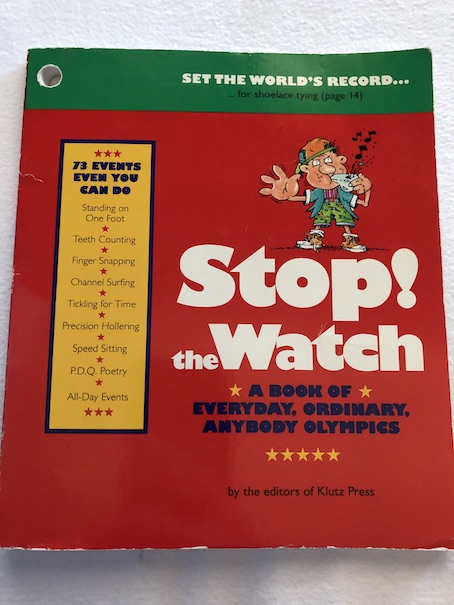
Stop! the Watch by the Editors of Klutz Press, 1993.
This book is part of the classic children’s hobby and activity series from Klutz Press. Originally, this book came with a working stopwatch in bright colors, which was attached to the book at the hole in the upper left corner. Unfortunately, I broke my stopwatch years ago, but I liked the book, and I got a new stopwatch to use with it.
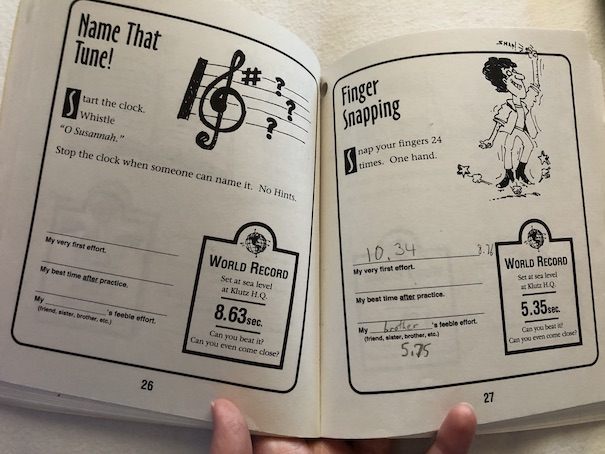
The book begins with instructions for using the stopwatch and then offers various timed activities and goals for kids to reach while using the stopwatch. Most of the activities involved kids performing various simple stunts and trying to do them as fast as possible, like counting to 126 by 7s, writing a verse from The Song of Hiawatha, tying shoelaces, singing “Happy Birthday” to Rumpelstiltskin, walking up a flight of stairs with a book balanced on the head, and drawing a picture of a gorilla. There are places in the book to record your efforts and your own time records and the records of your friends. (You can see in my copy where I made notes.)
There are also activities that participants are supposed to perform for a very specific amount of time, trying to keep as close to the allotted time as possible without actually watching the watch. For example, one of the events is hollering the word “Eeeeellllllskin” for exactly 17 seconds.
There are also some events that are meant to be completed by two people acting as a team, like leapfrogging, carrying your partner ten steps, singing “Jingle Bells” while alternating words between partners, and throwing something weird back and forth.
The original edition of this book included time records set by the author and others at Klutz HQ. Readers could compete against these records and try to beat them, and later editions of the book were printed with new records set by readers who reported their results.
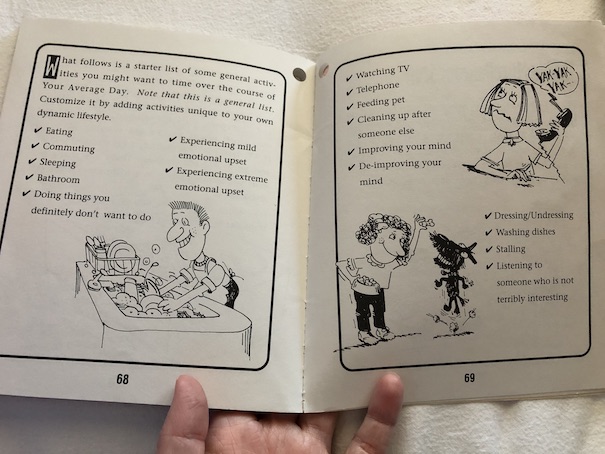
In the back of the book, there is a section explaining how to time daily events and predict about how much time you will spend doing those things throughout your life, like how much time you spend in the bathroom. Some of these things can be enlightening, like how much time you spend watching tv (Is it too much?), being emotionally upset (Have you been stressing too much?), or stalling when you’re supposed to be doing something else. There are also some educational ways of using time. The book explains how to tell how fast the car you’re traveling in is driving without looking at the spedometer by timing the distance between mile markers. It also explains how to tell how high you’ve tossed a ball by timing how long it takes to hit the ground.
The book is available to borrow and read online through Internet Archive.
The Court of the Stone Children by Eleanor Cameron, 1973.
Nina and her parents have recently moved to San Francisco from Nevada. Nina doesn’t like living in the city, but the move was necessary because her father has been ill and in need of a job. Still, Nina misses her friends, and her parents don’t understand how difficult Nina has found it to make friends in their new home.
One of the most popular girls, Marion Charles, nicknamed Marnychuck, and her friends like to tease Nina at every opportunity. Nina doesn’t think that she even wants to try to be friends with them because hanging out at Marnychuck’s house would mean always having to be on her guard about every little thing she says, knowing that they would twist every innocent comment she makes into some sort of joke so they could laugh at her. They could never be friends because there would be no way that Nina could ever open up to them about anything. (Sadly, I know the type all too well.) For example, one day, while the girls are walking home from school, they start talking about things they want to be when they grow up. Nina says that she wants to be “something in a museum,” momentarily forgetting the word “curator”, until a boy nearby helpfully supplies the word. Of course, Marnychuck and her friends ignore the helpful word and just laugh about “something in a museum” as they walk away.
However, the boy who was listening turns out to be genuinely curious about why Nina wants to work in a museum, saying that it sounds like an unusual ambition. Nina tells him that, until she had come to San Francisco, she’d never been in a big museum before, and she describes how the one in the park impressed her. She used to work in a small one in her home town. The boy understands the way she feels and shares her love of the past. He tells her about Mam’zelle Henry, a local woman who owns a private museum called the French Museum.
Nina visits the French Museum and loves the rooms with old-fashioned furniture. They give her a strange feeling of timelessness, and before she knows it, she finds herself in a room with another young girl who says, “I knew you’d come.” Nina isn’t sure who this mysterious girl is, but she asks her to come back another time.
When Nina returns to the museum the next day to return an umbrella that she borrowed from Mrs. Staynes, the registrar at the museum, she speaks to the girl again in the museum courtyard. The courtyard is full of stone statues of children, and the girl tells Nina that when she was young, she used to wish that they would come to life. The girl’s name is Dominique, although she says that people usually call her Domi. The two girls begin talking about their lives, although Domi oddly talks about her past in the present tense. Domi tells Nina about her emotionally-distant grandmother and her loving father, who was imprisoned and shot. The news of Domi’s father being shot comes as a shock to Nina. Domi tells Nina that, after her father was (“is”) imprisoned and shot, she had a dream about Nina in which her father said that Nina would help them. Domi also says that the rooms at the museum are from her home in France, which was taken apart to be “modernized”and some of the pieces were sent to the museum. Nina finds Domi’s story confusing, but Domi says that they will talk more later.
Nina meets up with the boy who introduced her to the museum, whose name is Gil, at the cottage of Auguste, who lives on the museum property. As she talks with the two of them and Mrs. Staynes, Mrs. Staynes brings up the subject of the ring that Nina saw Domi wearing and which also appears in a painting in the museum. Earlier, Mrs. Staynes had told Nina that she couldn’t possibly have seen anyone wearing that ring, and Mrs. Staynes now explains that the reason why is that she owns the ring herself. At first, Nina thinks that she must own a ring which is similar to Domi’s, since the two of them couldn’t have the same ring,but then, it turns out that the cat that Domi said was hers also belongs to Auguste.
The answer, as Nina discovers the next time she meets Dominique, is that Domi is a ghost. Mrs. Staynes does own Domi’s ring now because Domi died a long time ago. Nina faints when Domi’s hand goes right through hers. When Nina recovers, Domi is gone, and Mam’zelle Henry gives her a ride home. The two of them bond as they discuss Nina’s ambition to become a curator.
Mam’zelle lets Nina borrow a journal that she found in the garden that belonged to Odile Chrysostome in 1802. Odile was one of the names of the stone statues in the courtyard, according to Dominique, and Nina learns that the others are also named after members of the Chrysostome family. The people at the museum say that they don’t know which of the statues is supposed to have which name, but thanks to Dominique, Nina does.
Gil becomes Nina’s first friend her own age, and he’s been working on a project involving time. Someday, he wants to write a book about the concept of time. Time is important because Domi needs Nina’s help to resolve problems that occurred in the past.
Domi was young during the time of Napoleon. Her mother had died in childbirth along with Domi’s younger sibling. After her mother died, her grandmother moved into the house to oversee things and help care for Domi. However, Domi’s father had protested some of Napoleon’s policies of conquest, and it led to his downfall. One day, Domi discovered her father’s valet,Maurice, murdered in her father’s bedroom. She had thought that her father was there the night before, having returned from being away for a time, but he was nowhere to be found. A short time later, her father was charged with conspiring against Napoleon and executed. Domi knows that her father was innocent of the charges, and she suspects that Maurice was killed because he knew something important, but she needs Nina’s help to find the missing pieces. Domi knows that Mrs. Staynes is working on a book about her father’s life, and she doesn’t want the false accusations against him to be printed.
This book is available to borrow and read for free online through Internet Archive.
My Reaction and Spoilers
I thought that the book started out a little slowly. It takes quite a while before Nina discovers that the boy’s name is Gil or learns anything about him, and it’s about halfway through the book before Nina learns that Domi is a ghost, although there are hints before it. I knew that Domi was from the past, although I thought at first that she might be a time traveler of some kind. Even after Nina learns that Domi is a ghost, it takes a while before Domi tells Nina her full story and what she really needs her to do. The first part of the book dragged a little for me, and I was a little confused at first about why Odile’s diary was so important, but it turns out to contain the vital clues that Domi needs. Domi’s father was with the Chrysostome family at the time that he supposedly murdered his valet and was conspiring against Napoleon. There is a piece of physical evidence that proves it, and finding it convinces Mrs. Staynes to change her book.
One of Nina’s strengths is her power of imagination, and she helps Mrs. Staynes not only to see the truth about Domi’s father but to see him as a living, breathing person. Before, Mrs. Staynes’ book was mostly facts with little sense of the feelings of the living people behind it, but Nina’s discoveries and imagination help breathe life into the work. At the end of the book, the past remains unchanged (Domi’s life and that of her father are what they were before), but having the truth known gives Domi peace. Nina also makes peace with her new life in San Francisco, having discovered new opportunities and friends there as well as a nicer apartment for her family to live in.



















 Jestress's Forgotten Books and Stories