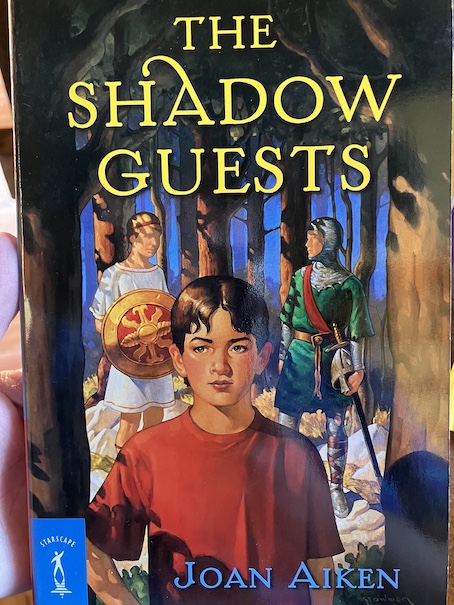
The Shadow Guests

When Cosmo’s mother and brother mysteriously disappear, Cosmo’s father sends him to live with eccentric cousin Eunice in England, who is a mathematician educated at Cambridge and who now lives in Oxford. Cosmo’s father plans he will join Cosmo in England later, after he’s finished wrapping up the family’s business in Australia.

After Eunice picks up Cosmo at the airport, she tells him that she’s arranged for him to attend a small boarding school. Cosmo has never been to any kind of school before because his family lived too far outside of town. He and his brother always had their lessons together at home. Cosmo isn’t sure he’s going to like living with all these strangers at school, but Eunice says that she arranged for him to be a boarder rather than a day pupil so he would make friends faster. Eunice lives at the old Curtoys mill house, and Cosmo joins her there on weekends.

However, most of the other students at school don’t seem particularly friendly, and one of the teachers seems oddly confrontational about Cosmo’s father. He knows that Cosmo’s father, Richard Curtoys, was once a well-known cancer researcher in London, and he doesn’t know why he gave it all up and moved his family to the middle of nowhere in the Australian Bush. Cosmo doesn’t know what to say because he was very young when his family moved to Australia, and he doesn’t really know why they moved.

On his next weekend with Cousin Eunice, he asks her about it and whether or not the family’s sudden move to England had anything to do with what happened to his mother and brother. Eunice admits that it did. Cosmo’s father hadn’t wanted to explain and had left it up to Eunice to decide how much to tell Cosmo, but Eunice believes that it’s better for people to know everything than not know anything. Eunice reveals to Cosmo that their family has been under a curse for generations.

The curse apparently started with the Roman invasion of Britain. Their family seems to have Roman roots, and one of their ancestors was apparently a Roman soldier. When the Romans took over Britain, they wanted to convert the inhabitants to the Roman religion, which was still pagan at that time. According to the legend passed down in their family, their ancestor was one of a group of soldiers who were ordered to destroy a pagan British temple. The son of one of the priestesses at the temple tried to resist them, and Cosmo’s ancestor killed him. The boy’s mother then killed herself out of grief. The boy’s grandmother, who was also a priestess, placed a curse on Cosmo’s family: in every generation, the eldest son of the family would die in battle, and his mother would die of grief.

Since then, Eunice says, the curse seems to have come true. She can list generations of their family where the eldest son has died in battle, including Cosmo’s father’s generation. Cosmo’s father was the youngest son of his family, and his elder brother, Frank, died young in battle. After Frank’s death, when Richard was only 10 years old, his mother died of grief, just like in the curse. Richard claimed that the curse was all nonsense when he was an adult, and he refused to tell his wife about it when they got married. However, Eunice had been friends with his wife before she met Richard, and she didn’t think it was fair to keep the secret from her, now that they had two sons of their own. Eunice admits that she told Cosmo’s mother everything, and that the story seriously upset her. It was Cosmo’s mother who insisted on moving to Australia, hoping to get as far away from the curse and any potential war as possible.

When Eunice explains this, some of the things about Cosmo’s family begin to make sense to him. Eunice admits that it seems like the elder brothers of the family resent the younger ones, who are safe from the curse, and Cosmo realizes that he sensed that his brother seemed to be hard on him or resent him, indicating that he probably had some sense that he had an ordeal or possible early death to face that Cosmo would be spared. Yet, younger brothers in the family are not entirely spared from the curse. It’s true that they live to carry on the family line, but each of them is also destined to lose their first son, and shortly afterward, to lose their wife to grief at their son’s death. Cosmo considers that maybe, when he’s grown up, he’ll just adopt a child to get around the problem.

He somewhat compares the family curse to a form of cancer. Some families are more genetically prone to particular types of cancers than others, and the way that members of those families survive is if, somehow, a genetic mutation is introduced to the family line, something that makes those individuals different from the ones before. It’s an indication that, maybe, this curse might not afflict their family forever. If someone, like Cosmo, can figure out how to be different from earlier generations of his family, and not pass on the cursed element to the next generation, there might be an end to the curse. Figuring out how to do that is going to be difficult, though.

Eunice says that his mother tried to evade the curse by running away, but apparently, it didn’t work. Nobody knows exactly what happened to Cosmo’s mother and brother, only that their car was found abandoned, and that they appeared to go off into the Australian desert on foot. Searchers have found no sign of them since, and because it’s such a harsh environment, people don’t think it’s likely that they’re still alive. Nobody knows why they went off into the desert, except maybe either the curse drew them there or they were trying to escape from it. Eunice’s housekeeper, who also knows about the curse, talks about it with Cosmo, and Cosmo asks her whether she thinks it’s possible to break the curse. Like Cosmo, she thinks it might be a case of gradual changes, members of the family doing things differently from earlier generations. Unlike Eunice, she thinks that maybe what Cosmo’s mother and brother did was one such change, and it’s difficult to tell what effect it has had yet.

Cosmo remembers a strange old man who visited them once in Australia. He thinks the man was probably a sorcerer or something because he told them things about their futures. He’s not sure what the man said to his mother, except that it seemed to upset her, and she was never the same afterward. Eunice suspects that the man may have told her that it’s impossible to run away from heredity and destiny. The man told his brother something about there being many different types of battles, which might indicate that staying away from wars would not be sufficient to save him from his destiny. The old man didn’t clarify that statement, but it’s true that people also fight internal and emotional battles every day, no matter where they are. Was this the battle Cosmo’s brother lost or could lose, and has it actually claimed his life already?

Cosmo had always thought his brother and mother were braver than he was, but now, he comes to question that. They had tried to run from their apparent destinies, and maybe the running caused them to go missing, and maybe even to die. When Cosmo’s father writes to him about the family curse, he explains that he has come to believe that the curse is a self-fulling prophecy, that it only comes true because people expect it to. Perhaps Cosmo’s mother and brother would have been fine if they hadn’t tried so hard to outrun their curse, putting themselves into a dangerous situation.

Of course, Cosmo realizes that it’s easier for Cosmo and his father to put aside their fear than it was for Cosmo’s mother and brother. Being the direct subject of an existential curse is certainly much more terrifying than just being part of a family that has a curse that may kill people around you. These thoughts cause Cosmo to consider the nature of fear and how people can be afraid of many different things and how the nature of a person’s fears make a difference in how they are affected by them. What one person can face with courage may be the undoing of another.

Meanwhile, the other kids at school have become deliberately hostile to Cosmo. They accuse him of being stuck up and lying to them about Australia, and they start saying that Cosmo has probably never even been to Australia. Cosmo knows that all of the things that they say about him are untrue and unfair, but there isn’t much he can say to refute it. It seems to be a form of hazing at the school. He thinks about how petty and childish the other kids are and how they have no concept about the serious issues that are hanging over Cosmo. In a way, though, Cosmo discovers that he’s actually more comfortable brooding over the curse than he is thinking about the obnoxious kids at school. There is a kind of comfort in knowing your life fits a pattern, even if it’s a disturbing and unpleasant one. He also thinks about what the old man told him, that one day, he would have three friends. Because of the way kids at school act, Cosmo can’t image having any friends there at all, but that prediction comes true as well.

Cosmo gradually discovers that the mill house where his aunt lives is haunted. Eunice tells him about a phantom coach and horses that are supposed to appear at night, and Cosmo begins seeing a boy who calls himself Con. Con first appears to him as a little boy, about 4 years old, but each time Cosmo sees him, he gets a little older. He also eats Cosmo’s candy bars from his room. Eventually, Con speaks to Cosmo as a young man. He admits that he took the candy because eating someone else’s food forms a relationship between the two of them. Con explains to Cosmo that his father was a free Roman soldier, but his mother is a slave woman, so Con himself is a slave. The only way he can win his freedom is to play in the gladiatorial games, and he needs Cosmo’s help to practice. At night, Cosmo practices Roman style fighting with Con, but it is gradually revealed that Con does not expect to survive his upcoming fight. When Con speaks to Cosmo more about his family, it is revealed that Con is a member of Cosmo’s family from the distant past. He is the eldest son in his generation, and he knows about the family curse. Because of the curse, he expects to die fighting. Cosmo tries to explain to Con that he doesn’t need to believe in the curse.

Whether that helps Con or not isn’t apparent because Cosmo has to spend the next weekend at school and doesn’t see Con again. The next ghost he sees is a boy called Sim. Sim has been living at a monastery in the Middle Ages, getting an education, but his father has pledged him to his uncle to go fight in the Crusades. Sim is worried because he doesn’t know anything about fighting and thinks that he’ll be killed. He asks Cosmo if he can help him learn to fight. Again, Cosmo doesn’t know much about fighting, but he tries his best to help Sim. He doesn’t really see why Sim has to be obligated to go to war if he’s no good at it and doesn’t want to go, but he does notice that Sim’s eyesight is poor, and what he really needs are glasses.

Then, some of the hauntings at the mill house turn frightening. Cosmo is almost killed in multiple, inexplicable accidents. It seems like a poltergeist is out to get him. One of the boys who’s been giving Cosmo a hard time at school is also visiting the mill house and witnesses some of these accidents one weekend because his father works with Eunice. Not only do the boys learn to get along better after getting to know each other, but Cosmo starts realizes that the boy, Moley, actually has some problems of his own. He has an unhappy home life because of his stepmother. Moley also has a weak heart that keeps him from participating in certain school activities. Knowing this makes Cosmo feel more sympathetic toward him. Moley also comes to realize that something mysterious and threatening is happening to Cosmo, and he witnesses a ghost that Cosmo doesn’t see: a stern old woman in black. Moley has the sense that this old woman is responsible for the accidents happening to Cosmo, although he doesn’t seem to recognize that she is a ghost at first. It seems like Cosmo has now become the target of his family’s curse, which shouldn’t happen because he isn’t the eldest son. Has Cosmo become the target of the curse or some other supernatural force that now sees him as a threat?

I enjoyed the story, although I feel a little conflicted about the ending. The story is somewhat open-ended. We know that Cosmo survives his ordeals. Part of me wonders if the curse may have actually saved his life, after a fashion. If his bother was fated to die and Cosmo was fated to survive, then the forces trying to kill Cosmo were destined to fail. But, that’s just conjecture. These questions are never really answered. In the end, Cosmo doesn’t know if anything he’s done has changed the nature of the curse or if it actually can be changed. He still doesn’t know what might be in store for his future wife and children or if he will actually have a future wife and children. The only way to know is to live his life as best he can and deal with whatever comes along the way.

There are two things that I can see that he gains from his ordeals: closure about his mother and brother and a glimpse at what various other relatives have done in the past to change their fate (or if they did anything). I think there are some indications, based on Cosmo’s encounters with family ghosts, that what his father believes about the curse is probably true, but the story leaves that up to the imaginations of the readers. If you like speculative books, you might enjoy this one.

Although Eunice is a mathematician, she’s also interested in metaphysics. She and Cosmo have discussions about the nature of time and reality and the possibility of other dimensions or other realities, which have a bearing on whether or not we interpret the ghosts that Cosmo sees as ghosts or not. In some ways they seem like ghosts, but in others, they might be people who have not yet died but who have crossed over in time.

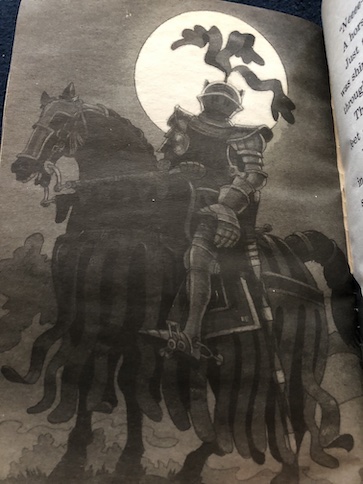
This isn’t confirmed, though, and during Cosmo’s ghost experiences, someone from the past is attempting to kill him. (Spoilers) At first, I thought that the old woman attempting to kill Cosmo was the old priestess who originally put the curse on his family and who was trying to stop Cosmo from helping the ghosts who came to him to survive and thwart the curse. That isn’t the case, though. What Cosmo discovers is that various ancestors have tried different ways of thwarting the curse themselves. So far, none of them have been successful (and I’ll have more to say about that), but Cosmo discovers that one ancestress and her son actually became evil sorcerers themselves. The old lady is a sorceress, and she believes a prophecy that her son will die in a fight with Cosmo, so both she and her son are traveling through time and actively trying to kill Cosmo to save the son from the family curse.

During his struggles with this unholy duo, Cosmo is very close to being killed, and he has a near-death experience. He sees a beautiful, peaceful place, with Con and Sim and his mother and brother. He wants to join them all there, but they tell him that it’s not his time, and they will wait for him there until it is. This seems to represent a vision of Heaven and to confirm the supernatural nature of the story and that Cosmo’s mother and brother are also both dead.

I already said that, in the end, we don’t know if anything that Cosmo has seen, done, or experienced has broken the curse or changed his future or his family’s future. What we do see through Cosmo’s experiences are two things: that different generations of the family have tried to thwart the curse in different ways and that (although the story doesn’t explicitly spell this out) there may have been reasons other than the curse itself for what happened to the sons who died, including what Cosmo’s father said about belief in the curse itself causing it to come true.

Con tried to practice his fighting skills in an effort to win his battle, but unlike Cosmo, he never seemed to seriously consider that maybe he didn’t need to fight that battle at all. We’re not sure exactly how many generations removed he was from the original curse (maybe one or two, possibly more?), but it seems that enough time has gone by to convince him that the curse is real and that he should believe in it. Did his belief that he was going to his destiny and going to die in the upcoming fight cause him to actually seek out that fight and also to lose it?

When Sim comes to Cosmo, Cosmo tries to talk to him about just choosing not to fight, but Sim explains that isn’t an option for him. His father arranged it with his uncle, and Sim has no power to refuse to go. The choice not to fight isn’t open to Sim, but Cosmo also realizes that, beyond simply not being a skilled fighter, Sim is also at a disadvantage because he has bad eyesight. So, was Sim’s death almost arranged by his family because they had already concluded that it was his fate to die in battle, never teaching him to actually fight and overlooking his eyesight? If they had left Sim in the monastery, where he was studying, maybe nothing bad would have happened to him.

After Cosmo recovers from his near death at the hands of the sorceress and her son, who was an 18th century member of the Hellfire Club, he learns their fate from Eunice. Both the evil mother and her son died at the same time in the river where they nearly drowned Cosmo, indicating that they accidentally got themselves killed in their attempt to kill him. The prophecy that said the son would die while fighting Cosmo was actually a self-fulfilling prophecy. If they simply hadn’t believed it and had ignored Cosmo, he would have never met them at all, living in a completely different time and having no way to magically travel through time on his own. It’s only because they sought him out and actually started the fight that both of them died, which lends credence to what Cosmo’s father says about believing in the curse causes it to happen.

Before the end of the story, Cosmo’s father tells him that searchers have finally found his mother’s and brother’s bodies in the desert, confirming his vision of them in Heaven. We still don’t know exactly why they went off into the desert to die. Were they trying to flee the curse in a panic, so they weren’t thinking about how this decision could lead to their deaths? If they had simply chosen not to believe in the curse and had continued living in London instead of trying to wildly flee, losing the battle with their own emotions, perhaps they would have both lived normal lives and not died early … maybe.

There’s no real way to prove exactly what happened to Cosmo’s mother and brother. We never hear what happened to them from their point of view, and what decisions they made because of it. Both Cosmo’s father and Eunice says that they shouldn’t blame them for how they attempted to deal with something beyond themselves because they did the best they knew how at the time, even if no one else understands. This leads me to consider that maybe the real curse of the family is: bad decisions. Whenever the curse seems to arise again, each generation has to decide how they will handle it: run or fight, believe or not believe, etc. Each time, they’ve made the wrong choice for their circumstances.

In a way, Eunice bears some responsibility for what happened to Cosmo’s mother and brother, although no one blames her for her role in the situation. Cosmo’s father, having concluded that belief in the curse causes it to come true, had decided not to tell his wife or kids about the curse, so they would never have to grapple with whether they believed it or not. But, apparently, he never explained that logic to Eunice because she spoiled it by telling Cosmo’s mother and shocking her into taking a course of action that led to her and her elder son dying. Would the situation have been different if she had said nothing or if she had said something but said it at a different time from the one she actually chose? Eunice says that she thought Cosmo’s father should have explained the situation before he got married. Maybe that would have changed things or maybe it wouldn’t, but if she felt that strongly that this was the right thing to do, she could have brought up the subject earlier. Maybe she should have talked to both of Cosmo’s parents before their marriage to either get everything out in the open or at least understand why she should keep the secret. Either Eunice didn’t do that or she weakened in her resolve to keep the secret, and she inadvertently set the curse cycle in motion again.

The supernatural nature of this story and its ghosts suggests that the curse is probably real on some level and not just a series of bad luck incidents and unfortunate mistakes that the family makes. The hopeful outlook, the one that Eunice’s housekeeper believes, is that, little by little, with each passing generation, the family changes. Each generation is a little different from the last. Cosmo’s brother was apparently the first not to die in a conventional battle or a physical fight. He died trying to avoid fighting. With him, it seems to have been some kind of internal battle. This may be true of later generations, or maybe this is the first step in shattering the pattern of the curse. Possibly, all that Cosmo has seen will grant him the ability to make better choices, teach this children how to break old patterns, or do something drastically different that nobody else has done before. It’s hard to say, but realizing that it’s hard to say what might happen or what could have happened is a major part of the story.

Thinking about the curse and all of the ways the family could break it and all of the ways they’ve failed to break it so far shows the unpredictable nature of the choices people make in life. Each generation apparently did something they thought was for the best, whether they were embracing fate, fighting fate, or running from fate. The story leaves open the possibility that fate (or the curse) will always find them in some form, no matter what they do. If they don’t actively go to war, they may face their battles in another way, like internal or emotional battles. Who’s to say whether a different sort of internal battle might have taken Cosmo’s brother in London, even if the family said nothing about the curse to him or his mother? As a teenager, he might have had a battle with drugs or depression and lost. He might have gotten a disease and lost that battle. Life has a lot of maybes, and none of us can foresee every possible struggle or disaster.

Another maybe is that maybe the important point isn’t whether or not the curse exists or whether or not they can save all the potential victims but what each of them chooses to do with the life they have while they have it. Cosmo and his father will keep on living. His father will return to his important cancer research, and Cosmo will have decisions to make about his own life. He may or may not decide to have kids, he may or may not tell his future wife or fiance about the curse, and he may or may not try to adopt a child rather than have a biological one. In fact, unless the curse guarantees that sons will be born in the family, we don’t know for sure whether Cosmo might have all daughters. Really, anything is possible. What his future children’s struggles might be or what the real risks to them could be are a distant unknown right now in Cosmo’s life. In the end, he will have to trust them to a certain extent to make the right choices or at least the best choices that they know how when their battles come to them, in whatever form they take. We all have battles of our own to face and risks we take, no matter who we are, and nothing in life is guaranteed for any of us.

There is one last thing that did surprise me. In all of the ways it seems people in Cosmo’s family tried to end or thwart the curse, did nobody think of maybe some form of apology or atonement? The curse stems from an ancient offense someone in their family committed. Perhaps, if they found a way to say they were sorry, it would do something to end the vengeance against them, but it seems like nobody even suggests it. Heck, the evil sorceress lady and her son acquired the ability to use magic and travel through time, but because they were evil and stupid, they went after Cosmo, who was probably their greatest ally, instead of looking further back in time for the real source of their problems. Couldn’t they have gone and faced the priestess lady and either stopped her from creating her curse or stopped their ancestor from killing her grandson? There are a lot of maybes to this whole situation, but I’m honestly surprised that they didn’t think of that one.

Some of the school experiences in the story may have been based on the author’s own education. Joan Aiken was home schooled until she was 12 years old, and then, she was sent to the Wychwood School in Oxford, a boarding and day school. It’s possible that she also encountered difficulties adjusting to being at school with other children and the hazing and bullying that can occur in that type of environment. In the story, Eunice sees value in learning how to get along with other people, although Cosmo questions the value of learning to get along with people as awful as the kids at his school.

He gradually begins to learn more about the relationships of kids at school by observing them as an outsider. Some of the awful ways of treating him are considered some kind of hazing or initiation, and he’s expected to undergo it with some degree of grace before they will grant him acceptance. It’s all pretty idiotic and immature. Cosmo realizes it, although he knows he can’t show much reaction, or it will make things much worse. It’s the sort of thing I hated when I was a student myself. I admit that I was shy and socially awkward, and I didn’t get along well with many other kids because I just couldn’t stand this sort of thing.

Over 30 years later, I haven’t really changed my mind about that. I get that being around other people can open your eyes to human nature and how to deal with your fellow flawed human beings, but I see the same problem in this story as I do in real life: allowing this system of hazing encourages the personal entitlement of particular students, and it also is detrimental to the mental health of people who struggle to deal with them. I think schools do better at this now than they did when I was a kid, when it seemed like almost 100% of the personal development, learning, and personal responsibility was put on the shoulders of everyone else who has to deal with this type of person. I think I have much, much less patience for this kind of thing now than I used to due to overexposure early in life, which does call into question whether what I learned from that experience was really beneficial or not. On the whole, I actually do think that I benefited from exposure to other people, in spite of all the stresses and mental health issues along the way. Part of the issue is, when you’re part of a group of people, you have to put up with the worst parts of that group to spend time with the better parts of the group. If you avoid society too much, you don’t meet the better parts. Learning social skills and human understanding also requires time and practice, which is what Cosmo learns in the story.

People who bully and cause problems can be considered in the learning phase of developing social skills themselves. It’s just that there do have to be rules about how much of their bad behavior can be allowed while they learn. They can’t be allowed to sabotage other people’s social development for the sake of their own because that only leads to their personal entitlement at someone else’s expense. If they are spared consequences for their actions, they never learn anything, either, never improving or showing signs of development, just putting more needless stress on other people and never seeming to understand or care why. I’ve seen far too many examples of this in real life.

I actually enjoyed the way the school in the book handled some of these conflicts. The headmaster is a psychologist, and although some of the things he does seem a little unfair, he actually discusses his reasons for doing this with Cosmo. He understands how his students think and feel, and he knows how to give consequences for actions that not only enforce the school’s rules and better treatment for bullied children but also which affect their relationships with each other more positively.

At first, Cosmo is angry when he’s punished along with some of the other kids who have been bullying him for a prank he tried to discourage them from committing. However, the headmaster apologizes to him for that, saying that he knows those other kids have been giving him a hard time, treating him like he thinks he’s better than they are. One of the other teachers says that Cosmo has been targeted because he’s one of the bright students, and some of the members of his family have a more prestigious reputation than Cosmo realizes. By giving Cosmo the same punishment as the other boys, while the other boys are made to acknowledge that it’s unjust and that Cosmo doesn’t deserve it as much as they do, the headmaster is showing the other boys that they don’t have reason to think that Cosmo is being treated better than they are, ending some of their resentment against him. He also knows that the boys can now accept Cosmo as being one of them, united in resentment against the headmaster for being harsh and unfair. The headmaster is willing to take their resentment against him because, as an adult faculty member, he doesn’t need to be one of “them”, as in one of the students or their “friend” or “pal.” He’s apart from them anyway in terms of age and status, and part of his role is guiding their actions and relationships with each other. In a way, Cosmo admires the logic and the tactic, even though it means enduring the punishment, and it does improve the way the the other boys treat him.

Emma in Winter

This is the second book in the Aviary Hall Trilogy. Each of the books in the series could be read independently of each other, but this book in particular makes more sense if you have read both the first book, which is The Summer Birds, and the third book, Charlotte Sometimes before reading this one. People in this book directly reference events in The Summer Birds, something with Charlotte Sometimes does not. Although Charlotte Sometimes was written and published after this book, it actually takes place during the autumn before this story and it does inadvertently contain a spoiler for Charlotte Sometimes because Charlotte appears at the beginning of the book. It’s just my own preference that it’s better to read this book after Charlotte Sometimes because it makes Charlotte Sometimes more suspenseful. Like Charlotte Sometimes, this book also involves time travel, and the characters do some research on the subject of time and how it works.

At the beginning of the story, Emma Makepeace is upset because her older sister, Charlotte, will be leaving early for the new term at her boarding school after Christmas. At this point, Charlotte has already had her first term at boarding school (which is where and when Charlotte Sometimes takes place, although there are no references to the events of that story here), and she has been invited to visit one of her new friends from boarding school before they return to the school together. All through Charlotte’s first term at boarding school, Emma has been lonely without her and has been finding life at their home, Aviary Hall, increasingly difficult. 

The girls are orphans (although the books never explain what happened to their parents) who live with their grandfather and his housekeeper. Between the two of them, Charlotte is the more serious and responsible and Emma is the more mischievous and thoughtless. Up to this point in their lives, Charlotte has acted the part of the caring older sister, trying to teach Emma to behave herself and covering for her when she doesn’t. Charlotte has realized that their grandfather has little patience for misbehaving children and that Emma pushes the limits, so she has frequently intervened and smoothed things over when Emma tries his patience. 

Emma has often thought of Charlotte as a kind of spoilsport for trying to act grown-up and mature, but during Charlotte’s absence at boarding school during the previous term, Emma has suddenly come to see how much Charlotte has been helping her and saving her from the consequences of her own actions and the realities of their home life. Without Charlotte there to be the motherly big sister, providing some warmth and affection and acting as a buffer between Emma and the adults, the grandfather has become more impatient with Emma’s immaturity. Both he and the housekeeper have been more direct with Emma about her behavior and bad habits, and there’s no one there to shield Emma from it. Emma is lonely for Charlotte’s company and feels picked on by the adults, so when Charlotte cuts her time with Emma short after her first visit home to go visit one of her school friends, Emma is angry and resentful. Charlotte is tempted to back out of her friend’s invitation for Emma’s sake, but she feels like she can’t, and their grandfather tells her that she must go ahead with the visit.

Emma is in a state of emotional turmoil through most of the story, adjusting to Charlotte’s absence, the new expectations of the adults in her life for her to mature and improve her behavior, and her own resentment about these things. While all this is happening, something else strange happens. Emma begins having strange dreams about flying. They remind her of the children’s flying adventures from two years previously, as described in The Summer Birds. It has been so long since she last flew that she struggles to remember how in her dreams, and when she wakes up, her muscles feel sore from the effort. However, at first, she can’t remember what happened in her dreams.

At school, when the new term begins, Emma is made head girl because she is the eldest girl in the class. A boy called Bobby Fumpkins is made head boy because he is the eldest boy. Emma is embarrassed and uncomfortable about being the head of the class in partnership with Bobby. She hates Bobby because he is fat, awkward, and spoiled. Before his mother gave birth to Bobby’s younger sister, who is still a baby, she babied Bobby more than she really should have at this age. Their family also has their own tv set, something most of the other children’s families don’t have at this time, and which Bobby bragged about when they got it. For these reasons, most of the other children in the class don’t like Bobby, either, and they’ve teased him mercilessly for years. They think he’s a sissy and a baby because of his mother’s attention and because he’s milder-mannered than they are and never stands up to them. Because of his awkwardness, they like to call him Jemima Puddle-Duck after a character from a children’s book by Beatrix Potter. Bobby tells himself that his classmates mean all this teasing good-naturedly, but they don’t really. Emma is particularly adamant within herself that she genuinely hates Bobby.

However, like it or not, Emma’s life has become intertwined with Bobby’s. Their teacher expects the two of them to work together at school during the day, and at night, she gradually begins to realize that he is sharing in her same dream of flying. Other children at school tease Emma about being friends with Bobby, particularly one girl who really wants to cause trouble for Emma because, as the next eldest, she would be next in line for the head girl position herself. Emma denies being Bobby’s friend, partly because he still gets on her nerves and partly because she’s still lonely without Charlotte and is worried by being shunned by the other children at school. However, she gradually begins to feel guilty about the way she and others have been treating Bobby, and she begins to feel the impulse to try to be nicer to him. 

As her relationship with Bobby improves, Emma begins remembering more of their shared dream, and the two of them talk about the dream together. Bobby was one of the children at school who shared in their flying adventures two years before, and the two of them discuss their past adventures with each other and how they compare to the dream they’re now having. There are a few things that they begin to notice that are different from their past flying adventures. One is that they both have the feeling that someone is watching them. It seems to be a stern or hostile presence, a pair of eyes that belong to some unknown person, but they don’t know who it is. They also begin to notice that it looks like plants are growing backward as they fly over the countryside. That is, grown plants seem to be returning to small plants and seeds. They gradually notice that the land seems to be going back in time. Eventually, they start seeing dinosaurs in their dreams, and it looks like they might be going back to the beginning of the world. What will happen to Emma and Bobby in their dream when they eventually reach the beginning of everything?

The book is available to borrow and read for free online through Internet Archive.

I’ve already explained my reasoning about the reading order of the books. The Summer Birds is the first book in the trilogy, and you really have to read it before you read this book because the characters directly reference events from that story. Actually, I thought that was a really interesting choice, to have Emma and Bobby talking openly with each other about the summer when they learned to fly. They just accept that event as a common event in their lives that they shared and that everyone who shared it with them openly acknowledges. Sometimes, in children’s fantasy stories, the characters later downplay magical events, feeling like they were dreams they had or games of pretend they played because they seem too strange to have really happened, but no, in this book, the characters all know what happened to them and just accept it as a part of their lives. I thought it was interesting that this book acts as a bridge between the theme of flying and the themed of time travel in Charlotte Sometimes, although I still think that Charlotte Sometimes keeps more of its suspense if you don’t know that Charlotte safely returns to her own time before you read it. 

I still think that Charlotte Sometimes is the best book in the trilogy. It is the best known, and unlike this book, it can be read independently of the others in the trilogy. It doesn’t reference either of the other two books at all. There are no references to Charlotte having participated in any previous magical adventures in that story. That may be partly because she is among strangers at her new boarding school who wouldn’t know anything about her flying adventures, but even her private thoughts don’t give any hint to that. What I think that The Summer Birds and Emma in Winter add to Charlotte Sometimes are some further insights into Charlotte and Emma’s personalities and the relationship between them. I still think that Charlotte Sometimes is the best book in the trilogy. It is the best known, and unlike this book, it can be read independently of the others in the trilogy. It doesn’t reference either of the other two books at all. There are no references to Charlotte having participated in any previous magical adventures in that story. That may be partly because she is among strangers at her new boarding school who wouldn’t know anything about her flying adventures, but even her private thoughts don’t give any hint to that earlier adventure. What I think that The Summer Birds and Emma in Winter add to Charlotte Sometimes are some further insights into Charlotte and Emma’s personalities and the relationship between them. Emma in Winter also adds some thoughts about the nature of time and time travel, which add some further insights into Charlotte’s time travel experiences.

Emma and Bobby do some research about time in her grandfather’s study, a room where Emma is usually forbidden to go. One of the theories they find is that time moves in a coiled pattern, like a spring, and that the coils of the spring can be pushed together so different points on the coils can touch each other. This theory really relates better to Charlotte Sometimes than to Emma in Winter, but what is more relevant to this story is the idea that human thought can be the force that pushes the coils together and makes them touch. This is also a part of Charlotte Sometimes, and I explain in my review of that story about how Charlotte and Clare having many similarities and being in a similar state of mind as well as sharing the same physical space at different times allowed them to switch places with each other. However, the emphasis in Emma in Winter is Emma and Bobby realizing that their own thoughts and feelings influence their dreams and, therefore, their time travel.

This story is rather metaphysical and a little difficult to follow during the dream phases. I noticed that some other reviewers seemed confused about the point of the time traveling. I found it a little confusing, too, but it seems like this is a coming-of-age story, like the other books in the trilogy. The Summer Birds focused on Charlotte and how her more mature outlook helped the other children make an important decision that would alter their lives forever. Charlotte Sometimes raises the question about what defines a person’s identity and how a person’s identity can be tied to someone else’s even when they’re separate people. Emma in Winter focuses on emotional understanding.

Both Emma and Bobby are going through major changes in their lives, particularly ones that require them to become more mature than they once were. Bobby has been somewhat spoiled and coddled by his mother, but he’s no longer the center of attention at home, now that he has a little sister. At first, Bobby finds it hard to cope with his mother no longer giving him the attention she used to give him, but it does give him the opportunity to become more independent and mature. Emma despises Bobby for being babyish because he was spoiled and overprotected by his mother when he was younger, but the truth is that Emma is also babyish. She’s not accustomed to being accountable for her own behavior and bad habits because Charlotte usually takes responsibility for her and shields her from some of the reactions of the adults and other people. 

When Charlotte goes away to boarding school, Emma is left on her own for the first time to deal with the consequences of her actions and other people’s reactions to them. It’s a bit of a shock for her at first, and she realizes that she hasn’t fully appreciated what Charlotte was doing for her for the whole time. She also comes to the disquieting realization that, even thought she feels like the adults are picking on her over her behavior, she doesn’t like the way she behaves, either. She comes to feel guilty about the way she treats Bobby, and when she draws some nasty pictures of her teacher, she is startled to realize how much she has hurt her teacher’s feelings and how badly she feels about doing that. For the first time in her life, Emma has to face her own behavior and see how her behavior truly affects other people. She is shocked and troubled when she realizes that she doesn’t like what she sees and it’s her own fault. Only Emma can decide how nice or how mean she is and who she really wants to be.

The children’s time traveling adventures that they have while dreaming lead them to explore their relationship with each other. Emma realizes that she has to be nice to Bobby and learn to get along with him for them to be able to function with each other in the dream. Their final dream together is confusing and rather surreal, but it also involves the two of them confronting aspects of themselves, their lives with other people, and their own behavior. 

When they move all the way back in time as far as they can go, they’re confronted by a vision of their teacher, not as she actually is, but as Emma drew her in a mean drawing. Emma has to remind herself and tell the figure that it’s only a drawing she made; it’s not reality. They also see visions of other people in their lives and even of themselves at their worst and most frightening, but they have to hold on to the reality of themselves, as they are now, the people they’re becoming, not who they used to be or how other people see them. I took it to mean that neither of them can go backward in their lives anymore, to their old habits and who they were or how they were as younger children, but they have to accept the changes taking place in their lives and in themselves to return to the real world, their own time, and the lives they have ahead of them. They discover that the key to traveling through time is thinking, so they have to think themselves out of their time travel dreams, focusing on their real selves and the real lives, accepting and even loving themselves as they are. Change has been coming for both of them, but they have to make the decision to face it and embrace it and to let go of their past selves to move on in time and in their lives.

Moondial

Araminta Kane, called Minty, has always had the ability to sense things that others can’t. For as long as she can remember, she has had the ability to sense and even see spirits. She doesn’t talk about it much because this happens to her routinely. When she does mention it, her mother assumes that it’s imagination or a trick of the light. Minty becomes more aware of her ability after her father dies, and she is still able to hear his voice from time to time.

She has been learning to cope with her father’s death and the changes to her life since it happened. She and her mother have been getting along pretty well, but her mother has to work long hours. It’s bad enough that Minty has to be alone so much on weekends, but her mother wonders what she will do during her school holidays. Minty’s mother decides to send Minty to stay with her godmother, Mrs. Bowyer, in the village of Belton, for the summer. Mrs. Bowyer is an elderly lady who lives in an old, stone cottage, which is near the old manor known as Belton House. Belton House once belonged to Lord Brownlow, but it is now owned by the National Trust (UK organization that focuses on preservation and protection of historic sites) and operates as a tourist attraction, open to the public. Mrs. Bowyer used to work for the Brownlow family as a domestic servant, and now, she sometimes helps out in the gift shop at Belton House.

Minty is happy about spending the summer with Mrs. Bowyer, who they call Aunt Mary, because she has heard about Belton House, and she would like to see it. She knows that there is a hidden tunnel on the property, and the idea of exploring it sounds intriguing. However, she wonders if that will be enough to keep her occupied all summer, and she does worry about whether her mother will be all right without her. She knows that her mother is still mourning her father and that she sometimes cries at night. Minty’s mother reassures her that she will be fine and that they’ll be too busy working to be sad and lonely. She also reassures Minty that she won’t be bored while she’s in Belton. When she stayed with Aunt Mary as a child, she always had the feeling that Belton was unusual somehow, that unseen things were happening beneath the surface. Minty asks her if she means ghosts, that the village is haunted. Her mother isn’t quite sure because she never actually saw any ghosts or anything of the kind.

Aunt Mary is happy to have Minty stay with her, and she says that Minty can help her in the shop at Belton House. She says that things at Belton House aren’t like they were in the old days, when the Brownlows lived there, and she remarks that they would turn over in their graves if they saw all the tourists and school groups tramping through their house and grounds. Before her mother leaves Belton, they explore the nearby churchyard together. Even though it’s July, Minty feels a strange gust of cold air. She senses that there is something strange about it, she plans to return later and examine the area more closely.

Minty has a strange sense that time doesn’t work in quite the same way in Aunt Mary’s village that it does elsewhere. She thinks it makes sense that time would stand still in the old graveyard because everyone there is dead, but Aunt Mary herself seems to move as if she’s in a different time as well. Aunt Mary is puzzled even about basic pieces of modern technology, not understanding even what Minty’s headphones are for.

While Minty is with Aunt Mary, she gets word that her mother has been in a car accident and is in the hospital. Minty is terrified of losing her mother as well as her father. A nice man named John Benson from her mother’s office is helping to arrange things, and Aunt Mary urges Minty to try not to think about it or worry too much, but Minty can’t help it. When Minty feels like she needs to get out of the house and go for a walk, Aunt Mary suggests that she go explore Belton House and meet Mr. World, the groundskeeper, who likes children.

When Minty meets World, he asks her if she’s there to meet the children. At first, Minty doesn’t know who he’s talking about, since she just saw a tour group of other children leaving the grounds. She asks if there are any children currently living in the old house, but World isn’t talking about living children. World tells her that there are children who haunt the place. He says that they’re trapped and need someone to free them, and he thinks that Minty will be “the one to turn the key” and set them free. This isn’t exactly reassuring talk for Minty’s current situation, but she has the feeling that what World says is true and that she’s just been given a kind of invitation that she can’t refuse.

In the gardens of the manor, Minty finds a mysterious sundial that has the power to take her back in time. The very first time she encounters it, it gives her a strange feeling, and for some reason, she keeps thinking of it as a “moondial” instead of sundial. Suddenly, Minty finds herself back in the Victorian era with a boy named Tom. Tom is an orphan from London who works at the manor house, and the adults there abuse him. Minty tries to intervene, but none of the adults can see or hear her, and she suddenly finds herself back in her own time, uncertain of what made her travel through time and what brought her back to the present.

Later, when Minty visits the old house again, she has another encounter with the sundial/moondial and finds herself visiting the grounds of the manor at night. This time, she meets a girl from the past called Sarah. Sarah sings little rhymes (old, traditional ones – Poor Mary (sometimes called Poor Jenny or Poor Sally, and sometimes she’s weeping for a lost sweetheart and sometimes for a playmate) and Girls and Boys Come Out to Play (listen on YouTube). Minty watches as a frightening adult dressed in black hurries her back into the house, calling her a “little devil.”

When Minty visits Tom’s time again, she learns that Tom has also seen Sarah. He seems to also have the ability to travel through time, and when he sees Sarah, it’s also at night. Tom still thinks that both Minty and Sarah are ghosts. Minty doesn’t know why this is happening, but she senses that she needs to help Tom and Sarah.

When Minty visits the hospital, she isn’t sure what to say to her mother, who is still in a coma, so she decides that she will make recorded tapes about her time-traveling adventures that she can play for her mother, along with some music. The doctor approves of Minty make tapes for her mother to listen to, but Minty tells him that what she has to say is private, and she makes him promise that he and the nurses won’t listen to them while they’re playing. The doctor promises that there won’t be anyone in the room, and they won’t listen to the tapes themselves.

Then, Aunt Mary has a visit from a strange woman called Miss Raven, who says that she’s an author investigating the ghosts at the manor house. Aunt Mary even accepts Miss Raven as a lodger at her house. However, Minty has a strange feeling that Miss Raven is not to be trusted. Miss Raven tries to get Minty to admit that she has seen ghosts. She watches Minty closely and tries to get Aunt Mary to limit Minty’s freedom to go places by herself. World also shares Minty’s suspicions of Miss Raven. He tells her that Miss Raven is probably after the children, and it’s up to Minty to save them. She doesn’t know how to do that, but she’s determined to try.

The book is available to borrow and read for free online through Internet Archive. There is also a BBC miniseries based on the book. It’s available on DVD through Amazon, and you can sometimes see it or clips of it on YouTube. There is also a similar (although not identical) story by the same author called Stonestruck, which involves child evacuees from London during WWII.

I read Stonestruck first, and I read Moondial specifically because another reviewer mentioned the similarities between the two stories. It seems like the author wanted to revisit the themes of Moondial in a somewhat different setting and with some twists when she wrote Stonestruck. The two stories aren’t identical, but there are similar themes of captive children or children’s spirits trapped across time. The time travel in this book centers around the mysterious sundial/moondial, while Stonestruck has ghostly children playing a game, and capturing other children.

There are features of both books that I like, so it’s difficult to choose a favorite between the two of them. I like the features of the child evacuee and the ghostly game from Stonestruck. This one has a truly haunting ending with a frightening scene on a Halloween night in the past. The ending of Stonestruck is a little more open-ended than the ending of Moondial. You can read my review of Stonestruck for more about how that ends, but it’s less definite what happens to the captive children or captive children’s spirits in that book. In this one, we do find out what happens to them. There are hints of Tom’s fate all the way through the story, but Minty doesn’t recognize it immediately, partly because “Tom” is actually a nickname rather than his real name. He later explains to her that kitchen boys are always called “Tom” no matter what their real names are.

Time is important to the story, and Minty realizes that the key to the time travel is that the supposed “sundial” is actually a “moondial.” Sarah refers to it as a “moondial” when they see her because Sarah typically only comes out at night because her face is disfigured by a birthmark and people think it’s a sign of the devil. Since Sarah almost never sees the sundial when the sun is out, it’s a “moondial” to her. The superstition about birthmarks is historical. However, I though that what the characters say about measuring time was interesting.

At one point, World gives Minty a book about sundials to study, and he explains that “clock time is mean time. Sundial time is what they call apparent time …” and the only exact time is star time. Minty takes that to mean that the moondial measures true time. You can measure time by the stars, using Polaris and the Big Dipper, and measuring time that way is based on a 24-hour clock rather than standard 12-hour clocks. Measuring time based on the Earth’s rotation, relative to fixed stars, is called sidereal time. What World says about clocks being based on “mean time”, meaning the “the sun’s average (mean) rate for the year” is true. Sundials measure “how the sun travels across the sky“, but the movement isn’t completely regular, which is why our clocks use the average movement rate. Because of the variations in the sun’s movement from the average or mean calculations, you can’t accurately set a clock or watch by a sundial, unless you know how to calculate for the variations. That’s what World means about sundials showing apparent time. Measuring time by the positions of the stars in the sky creates a “day” that is just slightly shorter than the standard 24-hour day that we measure on clocks. However, star time isn’t the only true way of measuring time. Stars appear to move with the rotation of the Earth, which is pretty accurate, but we now also have the concept of atomic clocks. Even those aren’t 100% accurate, though. There doesn’t seem to be a 100% infallible accurate way of measuring time, but atomic clocks are only off by about 1 second every 100 million years. They’re about as close to full accuracy as we are able to get. The book doesn’t go into all of the scientific details of measuring time because it’s a fantasy story, but I thought that working some real concepts of measuring time into the story was fascinating.

The book also works in the concept of the mottos that are traditionally carved on sundials, like the ones that say they only count the sunny hours. However, some sundials have deeper inscriptions, and the concept of inscriptions on sundials explaining time travel appears in some other fantasy books, like The Time Garden. In this book, Minty considers inscriptions like, “For the Night Cometh – cutting off all Power of Passing of Time” and “Light and Shadow by turns, but always Love.” Both of these inscriptions give her clues to how the moondial works and what she needs to do to help the distressed spirits of the past children, who are trapped in time. Tom and Sarah are both lonely and unloved children where and when they are. When Minty reunites them with the spirit of Tom’s sister, Dorrie, who he is separated from in life, the three spirits are able to be the love and company they each need. There are two carved figures on the sundial, Chronos and Eros – Chronos representing time and Eros representing love. Love transcends time.

Miss Raven is the villain of the story, even though we don’t really meet her until later in the book. Miss Raven may possibly be a witch, and she uses cats to spy on Minty. The details about how and why Miss Raven became a witch are never clarified. She also seems to have originated from Sarah’s time and was once her governess, although that isn’t really clarified, either. Did she turn evil because of her resentment of Sarah, or was she always like that? We also don’t really know why she’s after the children or the children’s souls. At the end, she seems to have vanished, perhaps banished by something Minty did on a fateful Halloween of the past in her final travel through time, although Aunt Mary thinks that she has departed in a normal way. There are things that aren’t fully explained by the end of the story, although we do learn what happened to Tom, and Minty knows that Tom’s spirit is now free and happy with the spirit of his sister and another lonely girl who badly needed friends.

The Halloween scene in the final time travel is really chilling, and it’s especially spooky in the miniseries version of the book.

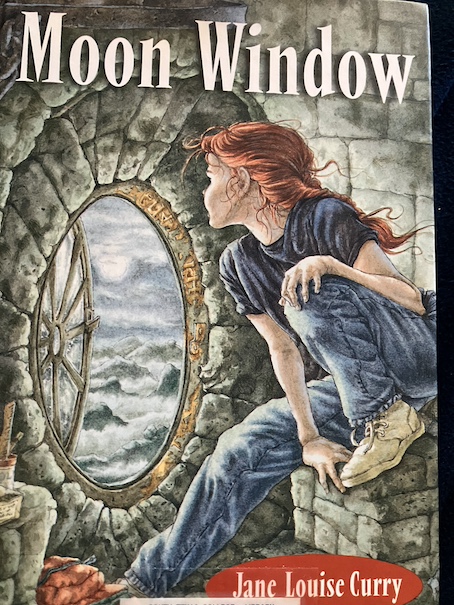
Moon Window

Joanna Ellen Briggs (usually called JoEllen or Jo) lost her father five years ago, when he died in a car accident. Since then, it’s just been her and her mother. Jo has adjusted to the loss, and she and her mother have been happy together. At least, that’s what Jo keeps telling herself. Now, her mother is getting remarried, and Jo feels like her life has been completely turned upside down. Her new stepfather, George, is a nice man, but Jo can’t stand the idea of her life changing. George is a law professor, and Jo’s other relatives like him, but Jo is afraid of what this marriage will mean for her. She and her mother will be moving to George’s house in Boston, and she is afraid that nothing will ever be the same again.

At the heart of her worries is the fear of losing her mother, just as she lost her father. The truth is that Jo has never fully adjusted to her father’s death. She participates in a wide range of classes and activities, but it’s not because she really loves any of these subjects or activities. Her gymnastics, choir practice, piano lessons, and the host of other classes and hobbies that she pursues with so much energy and perfectionism are to keep her mind occupied so she won’t have to think about her father or her worries about what might happen to her if something happens to her mother. Ever since her father died, there has always been the lingering fear of something happening to her mother, and that’s why Jo fears change in her life. She has settled into a routine that makes her feel relatively safe and keeps her from thinking too much about what might happen in the future. George’s entry into their lives has broken the routine, will bring even more changes, and has caused Jo’s tightly-controlled feelings to creep to the surface.

Even during the wedding, Jo privately hopes something will happen that will stop the ceremony and keep all of these frightening changes from happening, but nothing does. However, Jo’s grandmother has noticed how upset Jo is, even though Jo tries to keep a blank face and hide her feelings. Her grandmother realizes that Jo is bottling up her emotions, and she sees the moment when Jo finally lets loose, just as her mother and George leave on their honeymoon. Instead of throwing birdseed after the car, like everyone else, she turns and throws her little bag of birdseed at one of George’s young nephews, hitting him in the eye.

Originally, the plan had been for Jo to stay with George’s brother and his family while her mother and George are on their honeymoon. However, because of her bad behavior toward George’s nephews, the boys’ mother refuses to have her as a guest. Jo’s grandparents hurriedly consider other arrangements for Jo. They would take her themselves, but they will soon be traveling to a conference they are attending. Jo’s grandmother laments about Jo’s behavior and moods, and that reminds her of Witch Ellen, an ancestor in an old painting at Winterbloom, the old house where her frail great-aunt lives. Granty Nell, as they call her, is actually a distant cousin and is over 100 years old, but she loves children. Jo’s grandmother remembers that one of Jo’s cousins recently visited Granty Nell at Winterbloom and had a wonderful time. Winterbloom is a strange old house near Walpole, New Hampshire, but Jo’s grandmother has fond memories of the place, and Granty Nell has live-in help, so she won’t be dealing with Jo alone.

Granty Nell accepts Jo as a visitor, but Jo is stunned that she has so suddenly been dumped with a relative she doesn’t even know, in an old stone house in the middle of the woods. At first, Jo plans to run away and go back to the apartment where she and her mother have been living and stay there until her mother comes to get her so her mother will regret leaving her and think twice about ever leaving her again. However, Winterbloom is no ordinary place, and leaving is much more difficult than Jo realizes.

Granty is unexpectedly sharp in spite of her age, and she can read Jo like a book, noting her thinness and chewed fingernails. She speaks openly to Jo about her feelings about her new stepfather on her first day at Winterbloom. Granty lets her speak and doesn’t criticize her feelings. Instead, she tells Jo a little about the house and their ancestors, and she offers to let her explore the house and choose one of the guest bedrooms for herself. When she decides which room she wants, she can tell the housekeeper, Mrs. Craig. Mrs. Craig’s husband Thomas and son Tom take care of the grounds and garden of Winterbloom. The three of them live in a little cottage nearby, so only Granty and Jo will be living in the big house.

As Jo explores the old house alone, she notices that the furnishings are rich but old and shabby. She wonders why Granty hasn’t replaced them because she is supposedly wealthy. Each of the bedrooms has a fireplace that has an iron Franklin stove fitted inside and wardrobes instead of closets. The furnishings are all old-fashioned and a little shabby, but there is something in every room that catches Jo’s attention, like an interesting painting or an embroidered stool. In spite of herself, Jo finds herself liking things or becoming intrigued by them, although she is still determined to run away. Then, while exploring the attic, she finds an old turret room with a round window, the kind that her mother likes to call a “moon window.” Jo tries to open the window, but she discovers that someone has painted it shut. She manages to pry it open anyway, using a knife that she finds in Granty’s desk drawer. Outside the window, there is a large tree, good for climbing. Jo realizes that, with her gymnastics skills, it would be easy for her to climb down the tree and escape when it’s time for her to run away.

Thinking that she’ll probably only stay for one night before running away, Jo chooses the yellow bedroom, the one with a high bed with yellow brocade curtains that has a step stool for climbing into it. Granty tells her that is the room where her grandmother stayed when she came to visit Winterbloom when she was young. Winterbloom is undeniably charming, in spite of its shabbiness, and Jo can’t help but think that the dining room, with its tapestries and long, candlelit table looks like it’s set for a fairy tale feast.

To Jo’s surprise, Granty tells her a little of her own history at dinner. Like many of the women in their family, Granty’s first name is Ellen, although the younger generations think of her as Granty Nell. Jo had assumed that Granty had grown up at Winterbloom, but actually, she originally lived in New York. Like other young girls in the family, she also came to visit Winterbloom as a child when the woman that she once called Granty lived there. When Granty Nell was 17 years old and having one of her visits to Winterboom, both of her parents died in a flu epidemic. (I thought at first that she was referring to the 1918-1919 Influenza Epidemic, but later events in the story show that the dates don’t line up. Her parents must have died earlier.) As an orphan, she continued living at Winterbloom with her Granty until the following September, when she went away to college. She was a schoolteacher for a time until her Granty died, leaving her Winterbloom and all of her money, on the condition that she change her last name to Macallan, which is the family’s maternal surname. Granty Nell wasn’t originally happy about having to change her name, but she did it anyway because she loved Winterbloom. Jo wishes that someone would give her a house to live in so she wouldn’t have to live with George. George’s house in Boston is very modern and definitely not charming. Granty Nell tells her to be careful about what she wishes for because, since she returned to Winterbloom, she hasn’t traveled very far from it, and there are many interesting places she has never seen. Clinging too much to one particular place can keep a person from moving on to other, more exciting places.

Although someone (possibly Mrs. Craig or Granty) has tried to make the yellow room more cozy for Jo by moving all the things that she admired in the other rooms into that room, Jo is still determined to run away. She almost resents how comfortable Winterbloom is for her, making it difficult for her to leave. Early in the morning, Jo slips out through the moon window in the attic and climbs down the tree from the house. She originally planned to ride her bike the two miles from Winterbloom into town because her grandparents left her bike there for her to use, but she can’t find the bike when she reaches the ground. She assumes that the Craigs must have moved it and that she’ll have to walk to town to catch the bus.

However, during her early morning walk to town, it slowly begins to dawn on her that something isn’t right. She overhears some children talking about a cannon, which is strange. Then, she has an encounter with a man on horseback, who talks like he’s a local doctor who’s been out to see patients. Since when do doctors ride around on horses to see their patients? Jo becomes more uneasy, and when she reaches the town, she realizes why. The town doesn’t look the way it did when she passed through it with her grandparents. Suddenly, there is no Interstate highway, and there is a covered wooden bridge that isn’t there anymore in Jo’s time. Somehow, it looks like going through the window has sent Jo back in time, although she’s not sure when or if that’s really what is happening. Disoriented and terrified, Jo returns to Winterbloom and climbs back up to the moon window, leaving her knapsack hidden in some bushes to retrieve later.

The next day, Jo tries to tell herself that what happened early that morning was only a dream, but there are hints that it wasn’t. Not only is her bike exactly where she left it, like it never moved, but the bush where she left her knapsack isn’t there anymore, and there’s no sign of the knapsack. Jo searches the area to check if she was just mistaken about where she left the knapsack, but it really isn’t there. When Granty suggests that they go into town for lunch, Jo sees that the gate to Winterbloom isn’t the same in the present as it was in the past, and the road to town is paved while the road she walked along in the early morning wasn’t. Yet, there are aspects of the countryside that are eerily familiar, which indicates that what she experienced wasn’t just a dream. She might have been able to dream about the road and town as they were in the past, but she shouldn’t have been able to accurately dream about features of the area that she hadn’t seen before and that have been there for a long time.

Their trip to town is cut short because Granty becomes ill. Young Tom, who is driving them, says that Granty suffers from agoraphobia, which is why she gets ill or panics when she gets too far from Winterbloom. This is part of the reason why she has not traveled very far since she inherited the house. Granty later says that this isn’t entirely the case, but through many years of living at Winterbloom, it has become more and more difficult for her to leave it.

Jo still plans to run away, and she realizes that she left her flashlight in her knapsack, wherever that is now. She decides to search the attic for something she can use instead. In spite of herself, she finds the old clothes in the trunks in the attic charming and decides to try wearing some of them. Then, at the bottom of one of the trunks, she finds her knapsack! The knapsack isn’t the way it was when she last saw it, though. It has clearly aged, and so have the things inside. The flashlight no longer works, the clothes are yellowed with age, and the leather and rubber on her hiking boots has hardened and cracked. It’s like they’ve been stored in the attic for more than 100 years! The boots are wrapped in a newspaper, now deteriorated, but when Jo examines it, she finds the date of July 1809 and references to some of the people and things she encountered during her early morning excursion. Now, Jo is really scared.

Jo races to the turret room and looks out the moon window, but what she sees frightens her more. Although it’s afternoon in Winterbloom, it’s dark outside the moon window. More than that, there’s no tree outside the window, and the countryside that she sees isn’t the woods that surround Winterbloom. Jo recognizes what she sees as the same scene in a painting in her room at Winterbloom. The moon window is no ordinary window. It looks out on different times and places.

Once she gets over her fear, Jo is intrigued at this “window of time” and wants to know more about how it works. She even thinks that, if she can learn to control it, she might be able to go back in time to just the right moment to keep her mother from getting married again, which she thinks will solve all of her problems. However, the next time she tries the window, she finds herself meeting a young Granty Nell in 1897, when she was just a girl about her age called Nell, which is short for Ellen. Nell catches her sneaking around in a dress that looks very much like her dress. (Really, it’s the same dress, just aged about 90 years because Jo found it stored in the attic and tried it on.) Jo attempts to explain to her who she is and how she got there, taking Nell to the turret room in the attic and showing her the moon window. Jo is curious where the moon window will lead if they go through it in the past, wondering if it will take them to the future, but it ends up leading them further into the past. Jo and Nell end up in 1764, when the house was first being built. They are both caught sneaking around by a young Indian (Native American) and the stonemason who is building the house for Ellen Hawke. Ellen is a common name for women in their family, and this Ellen was the one who created Winterbloom and the one for whom all the other Ellens were named, including JoEllen. She is also considered a “wise woman”, and she is the Witch Ellen who appears in a painting at Winterbloom. Jo recognizes the stonemason’s last name as her grandmother’s maiden name, making her wonder if they are also somehow related. She wonders if maybe the stonemason will marry Ellen Hawke, making him her distant ancestor.

As Jo begins to consider people’s complex relationships across time, it occurs to her that, if she and Nell aren’t careful, they might accidentally change something in the past that will endanger their own existence. For the first time, she also begins to wonder what might happen if she successfully changes things so her mother never meets or marries George. Is it possible that she would be preventing the potential birth of a half-sibling, and if so, is that what she really wants to do?

Back in the present day, Granty Nell begins remembering an incident from her youth that she always thought of as a dream with a girl named Joanna and a trip back in time, and she begins connecting it with some strange questions Jo has been asking her. Years ago, Granty Nell had removed the furnishings from the turret room (the ones which Jo had delighted in and are now her the Yellow Bedroom that she is using) and scattered them through the house. She had the moon window painted shut and kept the door to the turret room locked, sensing that the moon window was magical and dangerous. Now, in spite of Nell’s precautions, things are coming full circle, and Jo is doing what Nell realizes she has done before.

Although Granty Nell loves having Jo at Winterbloom, she begins to realize that she must get Jo away from the place as soon as possible, before Jo becomes trapped in the same web that has kept Nell herself tied so tightly to Winterbloom all these years. Solving the mysteries of Winterbloom and the spell it has on the other Ellens in the family means exploring the past of the first Ellen, Witch Ellen.

The book is available to borrow and read for free online through Internet Archive.

I enjoyed this story and its atmosphere! I think fans of Cottagecore would enjoy Winterbloom, with its old-fashioned, comfortable shabbiness and rooms with quaint, magical touches. This is also one of those books that mentions what the characters eat. I’m not much of a foodie, but there were a couple of things that interested me about their meals at Winterbloom. I find it interesting when books mention unusual dishes or foods that they call by unfamiliar names. At one point, they have what Granty calls “Indian cake” for lunch. It’s described as a type of corn bread, so I think it’s named for Native Americans rather than Indians from India. (I ask that question almost every time I see “Indian” in writing, unless it’s specified.) I’d never heard of that before, so I tried looking it up, and from the description, I think it might be similar to this recipe for a corn bread pound cake from 1827. I’m not 100% sure it’s the same thing, but it seems reasonable because it’s described as both a corn bread and a cake. As charming as Winterbloom is, though, it also has a dark side that Jo must confront.

Jo’s immediate problem is obvious from the beginning of the story. There have been many other children’s books about children adjusting to changes in their lives, including the remarriage of a parent. It’s understandable that children who are accustomed to having only one parent might cling to that parent and be afraid of changes that might cause them to lose that parent or experience less of that parent’s attention and affection. Although adults might say that coming to love someone else doesn’t mean loving other people less, but Jo already knows that, when her mother spends more time with George, she spends less time with Jo. Her mother still loves her, but Jo feels neglected and forgotten, fearful of what this will mean for her future and her relationship with the only parent she has left. Even before her mother married George, there were times when her mother was so preoccupied, thinking about George, that she forgot to get breakfast for Jo or buy groceries, as she normally did, making Jo nervous about her mother still providing for her through this relationship with George. I’m sure that her mother doesn’t mean to give Jo this feeling. It’s just part of the awkwardness of making a major change in their lives and adjusting to a new normal. I’ve reviewed others on this theme before, including The Haunting at Cliff House, which also features time travel.

There are a couple of things that make this story different from others that I’ve read. One that surprised me at first is that Granty Nell knows about the magic of the window. In many books for kids that involve magic and time travel, the adults don’t know what’s going on and never learn. The magic or time travel is meant to give the children in the stories perspective on their lives and problems and teach them lessons, not to do anything for the adults. Typically, the adults either don’t know what’s going on, while the children learn about the magic or face their problems on their own, or the adults don’t find out what’s been happening until after the child has resolved the situation, like Rose in The Root Cellar, which is about an orphan adjusting to a new life with her relatives. In this story, Granty Nell has known about the magic of the moon window since she was young, when she first met Jo on one of her time travel excursions. At first, Nell thought that Jo was a dream, but through her years with the house, she came to understand the dangers of the window and the hold that the house can have on people, particularly on young girls named Ellen, who are coping with the loss of a home or a parent.

It isn’t obvious right away, but this is also a story about generational trauma, but with a magical/supernatural twist. Like other Ellens in the family, the first Ellen, Ellen Hawke (maiden name Ellen MacAlpin, also called Ellen MacAllan or Witch Ellen) also suffered the lost of her father and home early in life. The family’s ancestral home, Castle MacAlpin in Scotland, was destroyed by fire, and her father died in the fire. Ellen wanted to save him, but she couldn’t. The MacAlpins were unusual people, who possessed real magic, and Nell thinks that they might actually be descended from elves. After her father died, Ellen married, and later in life, after her husband died, she went to New Hamsphire to start over. People were always nervous about her and her magical abilities, so whenever it looked like people might be about to put her on trail for being a witch, she would move and start over.

Like Granty Nell, Witch Ellen has also lived an unnaturally long life, and (spoiler) she is still living secretly in Winterbloom. At least some of the other Ellens in the family were also her, pretending to be one of her own descendants. When she came to New Hampshire, she built a new version of the home that she had lost, which is Winterbloom. The shabby, old-fashioned belongings in the house are actually a clue to the house’s true problem. Granty can’t change things too much, even when she wants to, because Witch Ellen won’t let her. The house is a monument to her old life, and she can’t let go of it. However, Ellen eventually discovered that Winterbloom was a poor substitute for her lost home. It’s undeniably a charming house, but it’s not the original castle, so it just couldn’t be the same and would never feel the same to Ellen.

When Jo finally speaks to Witch Ellen directly, she admits that, rather than bringing her solace, Winterbloom haunts her because it can’t be what she wants it to be. Witch Ellen tells Jo that, for a long time, she has been waiting for a descendant of hers to undo a terrible mistake that she made years before, which has kept her bound to the house. That is, assuming that Witch Ellen is telling the truth.

For most of the book, readers don’t know what’s behind the magic of the house or if the witch in the family is in control of what’s happening. I expected at first that Witch Ellen would be a sympathetic character who would help Jo to understand the magic and maybe teach her something to help her cope with her situation, but that isn’t the case. Jo must confront the question of whether the mission that Ellen gives her would really break the spell of Winterbloom or if the curse of Winterbloom was always Ellen’s inability to accept life as it came and to try to control the outcomes. Ellen was always a controlling person, and her own children left her and Winterbloom years ago because she frightened them. Witch Ellen was never satisfied with her life, even the parts that were really good, because she couldn’t let go of the old home that she lost. Her new home, the men she married, and even her own children were never good enough for her because she was clinging to her memories of her old life and her plan to get it back. It was an obsession with her, and it has guided everything she has done. When Ellen became Nell’s guardian as her “Granty”, she began controlling her, keeping her bound to Winterbloom all these years to accomplish what she wanted. When Nell wouldn’t do it, Ellen began searching for another descendant who would, which is why she keeps inviting other young descendants to visit Winterbloom.

Jo is capable of doing what Ellen asks, but she has begun to see Ellen’s selfishness for what it really is. Ellen is prepared to sacrifice the lives and futures of her descendants to change the past, without regard for what that would mean for anyone else. Jo is different because she can see the bigger picture, and she does care about other people. She worries about her future, and that’s why she is afraid of the changes brought by her mother’s remarriage, but she has come to see that there are limits to what she’s prepared to do about that because of her concern for the welfare of other people. Jo realizes that she doesn’t want to be trapped at Winterbloom forever or to endanger her very existence and the existence of other people in her family to accomplish Ellen’s mission.

In many books about children coming to accept stepparents, the children come to suddenly love the stepparents at the end of the book, or at least find something about them to appreciate or an ability to see things as the adults around them do. That isn’t the case with this book. Maybe Jo will come to appreciate George once she becomes more accustomed to him and her new life, but for now, she has come to see that trying to control other people’s lives can be truly damaging, not just to them but also to other people around them and even to herself, and that it isn’t healthy to remain stuck in the past. Although accepting change can be difficult and can sometimes mean accepting bad outcomes along the way, Jo comes to see that she would rather keep moving forward in life and letting others move forward.

If something bad hadn’t happened in their family centuries before, maybe none of them would even exist now. Maybe accepting her mother’s marriage to George will one day mean accepting a younger half-sibling and having to share her mother with George and that sibling, but Jo recognizes that this half-sibling has the right to exist as much as she does. The half-sibling is only a potential idea at this point, not a firm reality, but the knowledge that there could potentially be one someday causes Jo to think about the effect that her decisions can have on people, including possible future generations. Letting her mother, George, and the potential half-sibling have their lives will mean having to make some changes to her own life, but Jo sees that it also allow her room to consider new possibilities for her own life in the future and to keep moving forward. The contrast between having the ability to move forward and being stuck in the past is enough to convince Jo to stop fighting her mother’s marriage and to focus on moving forward and seeing what life holds.

This is one of those children’s books that also references other children’s books. Because generations of children have visited Winterbloom, Jo finds old children’s books on the shelves there, like The Five Children and It by E. Nesbit and a Nancy Drew book from the 1930s. When Jo reads The Five Children and It, she reads a part about how people can make themselves wake up at a particular time without an alarm clock by really focusing on the time they want to wake up before they go to bed. I haven’t read this book yet, but I have done that before, made myself wake up at a particular time because I had it in my mind that was when I wanted to get up. It does seem to work at least sometimes, although The Five Children and It says that it only works if you really, really want to wake up at that particular time. If you don’t really want to get up, it won’t work. When Jo reads the Nancy Drew book, she tells Granty that she’s surprised that Nancy Drew is that old, and Granty tells her how the Nancy Drew books are periodically rewritten to update them with the current time and habits, changing language and technology to be current. This is true, and I’ve talked about that on this site before. As this story notes, in the original books, people were driving roadsters and using typewriters, and in the updated versions, they have sports cars and computers.

Thanksgiving on Thursday

Magic Tree House

There is a letter to the readers at the beginning of the book, where the author briefly describes the history of the Thanksgiving holiday and how it started as a three-day harvest festival and didn’t become a regularly-celebrated holiday until President Lincoln declared it as a national holiday of thanksgiving to be celebrated annually on the last Thursday in November in 1863. The separate prologue to the book explains that Jack and Annie have started learning magic, and they’ve been going on a series of missions to find different types of magic.

It’s Thanksgiving, and the children know that they will be leaving for their grandmother’s house soon, but they can’t resist going to the tree house to see if there’s another message from Morgan. There is a message that tells the children that they are about to find a new kind of magic. A book in the tree house takes the children back in time to the first Thanksgiving in the American colonies.

They read about the Pilgrims and the voyage of the Mayflower, and they realize that they are now in 17th century Plymouth. Annie remembers how her class at school put on a play about Thanksgiving, and she gets excited, thinking about how they’re about to meet some of the people they studied in school. She dashes off, eager to get a look at them, although Jack thinks they should pause and work out a plan before they approach anyone. Unfortunately, Jack gets caught in a hunting snare.

A group of people, Pilgrims and Native Americans, come to see what got caught in the snare, and they find Jack and Annie. When they question the children, Jack isn’t sure exactly what to say, so he tells them that they came from “a village up north” and that they’re here to learn how to grow corn. Remembering something else from the book, he claims that his parents sailed to the colonies with Captain John Smith when he and Annie were babies. Captain Standish says that Squanto knew Captain John Smith and that he might remember them. To the children’s surprise, when Governor Bradford asks Squanto if he remembers two babies called Jack and Annie who sailed with Captain John Smith, he says he does. Jack wonders if he’s mistaking them for two other children from the past.

The children witness the arrival of Chief Massasoit and his men. Priscilla tells the children that they were invited to join the harvest festival (something that historians debate), but they weren’t expecting such a large group, and they wonder if they’re going to be able to feed everyone. The Wampanoag say that they will go hunting to provide more food, but the Pilgrims say that they will also gather more food.

Jack and Annie are invited to join the food-gathering efforts, although it’s difficult for them because they’re not used to hunting and fishing, like 17th century children would be. Annie thinks it won’t be so bad because they’ve helped their parents prepare for Thanksgiving before, but the types of food at this harvest festival are very different from the “traditional” Thanksgiving food the children would have expected, and the methods of preparing them are old-fashioned. Jack and Annie find themselves trying to catch eels and find clams and trying to tend things cooking over an open fire. The children’s efforts don’t go well, and at first, they’re afraid that they’ve ruined the feast, but the magic they came to seek saves everything.

The magic that the children find is called the “magic of community.” Even though Jack and Annie think that they haven’t contributed much, and they burnt the turkey they were trying to cook, their mishaps haven’t ruined the feast because the entire community was helping all the time. Because everyone contributed something, there is enough for everyone. Besides learning how the first Thanksgiving was different from the holiday they know, Jack and Annie learn about cooperation, how people share and support each other.

At one point, Jack asks Squanto why he says that he remembered them. Squanto seems to realize that Jack and Annie aren’t quite what they said they were, but he says it wasn’t really them that he was remembering. He explains a little about his own past and what it felt like to be an outsider in a strange place, reminding the children to remember that feeling and to be kind to others in the same situation.

I liked the author’s noted about the history of the Thanksgiving holiday. For another book that explains the first Thanksgiving feast from the point of view of both the Pilgrims and their Wampanoag guests, I recommend Giving Thanks by Kate Waters.

Mummies in the Morning

Magic Tree House

This time, Jack and Annie use a book in the magic tree house to travel back in time to Ancient Egypt. Jack has a fascination for mummies and pyramids, and Annie can’t wait to see them up close. When the children arrive, they witness what appears to be a royal funeral procession, but the people seem to vanish awfully quickly. Annie wonders if they could have been ghosts, although Jack thinks that’s nonsense. He thinks it was probably just a mirage, although he has reason to rethink that later.

The children follow a mysterious black cat into a pyramid. Annie is eager to see a mummy, but the children are startled when they see what appears to be a walking mummy that drops a scepter. Jack realizes that what they saw wasn’t a real mummy but probably a tomb robber in disguise. He reads in their book about Ancient Egypt about the problem of tomb robbers.

Then, the children encounter a real ghost! She is see-through, and objects pass through her. Fortunately, the ghost is nice instead of scary, and she explains to the children that she needs their help. She is the ghost of an Ancient Egyptian queen, and she has been unable to progress to the afterlife because she cannot find her copy of the Book of the Dead, which is supposed to guide her through the obstacles on the way to the afterlife. She knows that her brother, who designed her tomb, hid the book to protect it from tomb robbers and left clues for her in the symbols carved on the walls of her tomb. However, her brother apparently forgot that her vision was always bad, and she can’t read the symbols. (Apparently, poor vision doesn’t improve after death.) Jack would be willing to loan her his glasses, but since she’s incorporeal (not a word used in the book, but basically, she no longer has a physical presence and can’t use physical objects), the glasses wouldn’t stay on her face.

Instead, she asks the children to describe the symbols on the wall to her so she can interpret them. Together, the children and the ghost use the clues to find the scroll containing the Book of the Dead. After that, Jack and Annie have one more task: escaping the maze-like tomb!

The ghost in the story is a non-scary ghost, but there’s enough mild creepiness and mystery to satisfy kids who enjoy a little creepiness in their stories. Toward the end, they have to put the scroll in the sarcophagus with the queen’s mummy, which both grosses out and fascinates the children.

The historical information was good, although translating Egyptian hieroglyphics is much more complicated than the book indicates. In the book, the symbols are meant to literally depict specific objects, which some hieroglyphics can, but others are used to represent sounds to spell out words or names. I think the story just kept things simple for kids.

I liked the part where the kids get lost in the pyramid because pyramids were build with false hallways and dead ends to confuse tomb robbers. Everything work out fine in the end!

The Time of the Ghost

The Time of the Ghost cover

The Time of the Ghost by Diana Wynne Jones, 1981.

This isn’t a very long book, but it packs a lot in! This is both a time travel story and a supernatural ghost story, but with the odd twist that we don’t initially know who the “ghost” is, and she isn’t really dead. She’s trying to save her own life.

In the beginning, although this book is from the first person perspective, we don’t know quite who the narrator is. Even the narrator isn’t quite sure who she is or what has happened. Her last memory is that there was some sort of accident, and her mind doesn’t seem to be working right. Now, she seems to be walking through the countryside, but she can’t remember what happened earlier that day or even what she had for lunch. When she looks down to see what she’s wearing that day, she realizes in a panic that she can’t see herself. She has become a ghost!

It takes her some time to get her panicked thoughts together, but she gradually begins to recognize the countryside. She is surprised that she can look over a hedge, thinking that it was something she had always wanted to do before, and she must have grown. There is a small hut nearby, and she recalls that there is an old rag doll called Monigan inside. Exploring further, she finds herself at a school and locates a classroom she recognizes. To her surprise, she discovers that it’s a Latin class full of boys, and although she has no body, she is sure that she’s a girl, so this can’t be her class. However, she does recognize the teacher as someone familiar but also intimidating.

Leaving the classroom, she continues exploring the school, and she finds people she is sure are her family. She remembers that the woman is called Phyllis, and Phyllis is her mother. There are also girls called Imogen, Fenella, and Charlotte. The ghost thinks that these are her sisters and that her name is Sally because Phyllis seems to call her Sally, although nobody really seems to see her. Sometimes, people just seem to have a sense that someone is there, and the dog, Oliver, seems to know she’s there. Pieces of information click in the ghost’s mind. This family’s last name is Melford. The teacher in the Latin class is her father. Sally is short for Selina. Charlotte is called Cart as a nickname.

The ghost finds herself angry and hating her family. She wonders if she could have died in the accident she vaguely remembers and if she came back to get some sort of revenge on her family, but the idea horrifies her, and she’s sure that she wouldn’t have thought of it in other circumstances.

The ghost watches as Fenella goes to the little hut and pretends to worship the doll Monigan and call her forth, like the doll is some kind of oracle. The ghost remembers that Cart was the one who started this game a year before and that she always thought that it was a boring game. Cart started the game because the four sisters had been fighting over the doll or playing with it too roughly one day, and they had each grabbed an arm or leg and pulled the doll apart. Cart had felt guilty about that, so she sewed the doll back together (badly, because she’s bad at sewing), and she turned the doll into a kind of oracle that the girls would worship to make it up to the doll that she had been ruined. Now, the doll is moldy and mildewy from being left in the little hut for a year. Only little Fenella still plays this game, although the doll has never actually done anything magical when they’ve called on her.

Gradually, the ghost begins putting the pieces of her memories together. Her parents manage a boarding school for boys. The girls help out with chores at the school, but they’re mostly expected to stay out of the way. Although they attend a different school themselves, it feels like they never get a break from school because they live at one. They never even get summers off because there are summer courses for disabled children at the boarding school.

Sally the ghost listens to her sisters complaining about her in her absence. They resent her for being overly sweet and a perfectionist and for defending their parents when the other girls criticize them. Sally is angry with them for the things they say behind her back and for their constant bickering and drama. Imogen gets melodramatic and picks at her sisters because she’s worried about not achieving the music career she really wants. Cart keeps trying to shut Imogen down because she feels overwhelmed by sentiment and emotions, and admittedly, Imogen’s emotions are frequently overwhelming. This dynamic between Imogen trying to express her overwhelming emotions and Cart trying to shut her down is a large part of the quarreling between the girls. Fenella, the youngest of the sisters, is just being a silly little girl, and she is rather fed up with her older sisters. At one point, Sally finds a poem that Fenella wrote that explains her relationship with her sisters:

“I have three ugly sisters
They really should be misters
They shout and scream and play the piano
I can never do anything I want.”

It’s a pretty accurate description of what goes on in their house. All of the girls are loud and argumentative, and a large part of the tension in their house comes from the inability of any of them to do what they want to do. Sally notices some pictures on the walls and remembers their father (whom the girls only refer to as “Himself”, never as “father” or “dad”) yelling at them and calling them “bitches” for stealing art supplies from the school for drawing and painting. Imogen’s drama about her music career is because she’s not allowed to use the music room at the school for practicing, and she thinks that she’ll never get a chance to develop her abilities. The parents pay more attention to the students at the school than they do to their own daughters, even forgetting to leave the girls any supper sometimes. The girls’ home life is not happy, and that’s why they’re not happy with each other. The two oldest girls especially are not happy with their parents because of their neglect.

As Sally listens to her sisters talking about her, Cart and Imogen admit that they’re both jealous of Sally because she gets to be somewhere else that will be important to her future career. Sally wishes that they would say where she’s supposed to be because she can’t remember. She finds a few unfinished rough drafts of letters that she wrote to her parents, trying to tell them that life at the school didn’t have much to offer her and that she was going away, but Sally can’t imagine where she would have gone. One of the letters even says that her life is in danger, but from what?

There is a bright spot in the girls’ lives, and that’s a secret friendship they’ve developed with some of the boys at school. The boys visit them in the kitchen after dinner, and they have coffee together. As ghostly Sally watches one of these visits, the boys ask the girls what happened to Sally, which ghostly Sally is (literally) dying to hear. Sally’s sisters explain that Sally’s disappearance is part of a Plan the girls have.

It’s obvious that the girls’ parents neglect them. While Sally has always been defending their parents to the other girls, the other girls want to prove to her that their parents would never notice if something awful happened to one of them. A lot of the strange things that Sally has witnessed them doing that day are part of this Plan. Fenella has been going around the entire day with big knots tied in her hair, and their parents haven’t noticed. Fenella says that if they continue to not notice, she’ll act like she’s fallen seriously ill. Sally’s sisters say that Sally has gone to stay with a friend named Audrey Chambers, but their parents don’t know and still haven’t noticed that she’s even gone.

The sisters and the boys decide to try holding a seance for fun, and ghostly Sally uses this as an opportunity to communicate with them. Although she has some difficulty and misspells her message, she manages to convince Imogen that she’s the one communicating and that she’s dead. Imogen gets hysterical, but the others calm her down by phoning her friend’s house and confirming that Sally is there and that she’s fine. Ghostly Sally can’t understand it. She’s sure that she’s really Sally, but how can that be if Sally is definitely at her friend’s house?

Ghostly Sally seeks out living Sally, and to her surprise, she finds her, although she feels disconnected from this girl. She also learns that this Sally has been secretly doing things with a boy from the school, Julian, performing nighttime rituals with the doll, Monigan. Although ghostly Sally remembers having been friends with Julian, seeing him from outside herself makes her realize that Julian is actually sinister and disturbed. In her spirit form, she also realizes that their rituals with Monigan have stirred up something genuinely supernatural, apart from herself.

As things become more clear to her, the ghost begins to think that she was wrong about being Sally. She is still sure that she is one of the four sisters, neglected at her parents’ school, but she doesn’t think that she’s Sally after all, and that’s why she had no knowledge of Sally’s secret rituals with Julian and couldn’t remember where Sally was or what she was thinking. She also realizes that everything she has seen happened when she was younger. Somehow, after her accident, her spirit went back into the past, seeing things that she and her sisters used to do.

As the “ghost” wakes up in the hospital in the present day, she also realizes that she is not actually dead. She’s been having an out-of-body experience. Worse, her “accident” wasn’t really an accident. Someone tried to kill her. Julian, also older now in the present day, shoved her out of his car while they were driving somewhere. He was deliberately trying to kill her! Something that happened during that time in the past, during the time with the Monigan rituals and the girls’ Plan to confront their parents over their neglect led up to this attempted murder.

The “ghost” still can’t remember everything that happened in the seven years since then, leading up to the attempted murder, and she’s still confused about who she really is. She only senses that Monigan tried to kill her through Julian. Although the girls once thought that Monigan was just a game, Monigan is actually a real, evil spirit. Seven years ago, Monigan told them that it would claim a life, and now, Monigan is trying to do so. Can the “ghost” regain her memories and figure out what to do in time to save her life before the next attempt?

The book is available to borrow and read for free online through Internet Archive (multiple copies).

My Reaction

Earlier, I covered The Headless Cupid, in which children play at being witches and doing magical rituals that are clearly nonsense, but this book has children who are coerced by some ancient supernatural spirit into doing “real” occult rituals. The children’s rituals involve blood and cruelty to animals, which I didn’t like when I was reading the story. We don’t fully get to know what Monigan actually is, although there are indications that Monigan might be some kind of ancient goddess that craves sacrifices, especially human sacrifices. Monigan seems to remember receiving sacrifices before, in the distant past. Although Cart thinks that she invented Monigan, that Monigan is just a doll they tore, and that all of their rituals are just playacting, the “ghost” realizes that they were all being manipulated by the spirit called Monigan into thinking that. Monigan took advantage of the neglected children and their mentally ill friend for its own purposes. I think Monigan was based on Morrigan from Irish mythology. We are told in the story that this British boarding school is built on a site that has been inhabited from ancient times, and the girls’ father is obsessed with the archaeology of the area, which may also be responsible for stirring up this ancient spirit.

The intriguing part of this story is first that the readers aren’t sure whether or not the “ghost” is actually dead, and then, the readers as well as the ghost have to determine the ghost’s true identity. At first, the “ghost” thinks that she knows who she is, but then, she thinks that she was wrong. (Or was she?) Even when she is awake in the present day, her mind is still confused, and even two of her sisters, while they know that Julian’s attempt to kill her was part of Monigan’s curse, find it difficult to remember everything that happened when all of this started. The “ghost” has to go through the events of the past, with Monigan working against her all the time, to figure out what set off this threat against her before she runs out of time. She knows that Monigan plans to kill her before the day is over, and she doesn’t have much time left to break this curse or prevent it from happening in the first place. The “ghost” isn’t sure at first that she can change the past, but she gradually manages to get through to the other children and figure out a solution with the help of her sisters.

I found the parents in the story not just neglectful but actually cruel and infuriating. The father keeps calling his daughters “bitches” when he gets angry at them. When the girls appeal to their mother about how they’re not being fed and have to keep begging food from the school’s kitchen, the mother shuts her eyes and tells them to stop bothering the cook. The cook is also revealed to be stealing food from the kitchen herself, which may be the reason why both the girls and the students have little to eat, but when the girls tell their mother about it, their mother doesn’t want to hear about it. She just doesn’t want to go to the bother of finding another cook. I’m amazed that the girls haven’t actually died at some point before this or that social services hasn’t gotten involved. The girls do attend a different school from the one their parents manage, so they would have the opportunity to get help and attention from an outside source.

At one point, Fenella openly tells her mother that she’s neglecting them while she only pays attention to the boys at the school, and her mother says that girls can look after themselves while boys can’t. It’s like her mother looks at the girls like some people look at pet cats when they just let them roam and hunt for their own food. I don’t even approve of people neglecting their cats, like they don’t even have pets so much as a nodding acquaintance with feral animals. Even in the present day, when our “ghost” lies in a hospital bed after a murder attempt, their mother doesn’t come to see her because she’s too busy helping the boys at the school to pack their trunks. The father is openly hostile to his daughters, and the mother doesn’t seem to have any feeling or concern for them at all.

The concept of the book was interesting, but it’s not one that I would care to read again because I found it dark and frustrating, although it does end well. Things do improve for the girls in the past after their father discovers their weird rituals and sends them off to their grandmother’s house, angrily declaring that he never wants to see any of them again. The father’s rejection of them is actually a blessing. At their grandmother’s house, they get regular food and the attention that they desperately need. The mother partly redeems herself at the end of the book by coming to see her daughter after all, saying that she felt obligated to get the boys all packed but now that’s done, so she is free to stay with her daughter until she’s fully recovered. The girl does recover, and she begins reconciling herself to her past traumas, both the supernatural ones and the ones resulting from her parents’ neglect and her tumultuous relationship with her sisters.

One thing that the “ghost” accomplishes is that she gets a look at her past and herself as they really are, viewing herself and everything that happened from a neutral position as the “ghost.” Seeing herself from the position of a third person, she discovers that she doesn’t like the things she’s done or the person she’s been during these last several years. That’s why she has felt so disconnected from herself and her memories and why she couldn’t even recognize herself or the things she did in the past. The “ghost” is so upset with herself and ashamed of her life choices that she wonders if she’s really worth saving from Monigan. Fortunately, her sisters truly love her and know that she’s worth saving. Their bad choices and poor behavior to each other have been largely the result of their parents’ neglect, a trauma they all share and understand. Although the ghost doesn’t remember everything at first, the other sisters know that, after they went to live with their grandmother and received the attention and care they really needed, they all improved and their relationships with each other improved. They’ve been trying to move on from their past ever since, and they need to settle the matter about Monigan once and for all to truly be free to go forward in their lives. One of the sisters knows exactly what kind of sacrifice will finally appease Monigan and save her sister’s life.

Monigan wants something perfect as a sacrifice, but our “ghost” isn’t a perfect person. Nobody is perfect, and our “ghost” has become truly aware of her flaws and the nature of her troubled past through her out-of-body experiences. However, things can be perfect in someone’s imagination, and one of the sisters has a more powerful imagination than the others. Someone has a dream that is perfect, at least in her mind. When she gives Monigan that dream, she not only frees her sister from Monigan but herself from something that her future self has realized that she doesn’t really want. Both she and her sister have been clinging to things that were harmful to both of them, making them into the kind of people neither of them really wanted to be. It was their insecurity from their parents’ neglect that made them cling to things that they thought would make them special and distinct. Once they are free from these harmful influences, not only does Monigan stop trying to take their lives, but they are truly free for the first time to become something better. Monigan does claim one life at the end of the story, but in that case, it’s only justice.

Revolutionary War on Wednesday

Magic Tree House

Revolutionary War on Wednesday by Mary Pope Osborne, 2000.

The story begins with a prologue that explains things that have happened in the series up to this point, saying that Jack and Annie are currently undertaking a series of missions to four special types of writing for the library at Camelot. These missions cover books #21-24 in the series, and in this book, Jack and Annie need to find a piece of writing that represents “something to send.” To find this piece of writing, they’re off to the time of the American Revolutionary War!

When they arrive, it’s winter, and they find a camp of soldiers nearby. At first, they’re not sure which side the soldiers are on, so they sneak up to the camp to get a look at them. The soldiers catch them spying on the camp, but it’s okay because they’re Patriots, not British Redcoats. The soldiers tell the children that they had better go home, thinking that they’re just ordinary children from their time.

After Jack reads a little further in their book about the Revolutionary War, he realizes that this is December 25, 1776, and that they are about to witness the famous crossing of the Delaware River in Pennsylvania. This was a mission carried out in secret by George Washington and his men. The children listen while George Washington delivers an inspirational speech to the soldiers (“These are the times that try men’s souls.”), but a captain tells them that they had better leave because they don’t want children getting in the way of the mission. However, he asks them to do one favor before they leave. He asks them to take a letter to his family back in Frog Creek. He says that it’s a farewell letter, and they should only deliver it if they hear that the mission has failed and many soldiers were lost. Jack accepts the letter, realizing that this letter represents “something to send.”

Since the children know from their book that the mission will be successful, they can safely keep the letter. Jack thinks that their mission is over, but Annie has other thoughts. She climbs into one of the soldiers’ boats because she wants to spend more time with George Washington. George Washington tries to send the children back, but when the snow gets worse and he considers canceling the mission, the children have to persuade him to continue.

At first, the soldiers think that the children might be enemy spies because they seem to know too much about their mission, and one of them saw Jack writing something down earlier. However, Jack convinces them otherwise when he shows that he copied George Washington’s inspirational speech. He reminds George Washington about what he told his men about perseverance. Jack’s words inspire George Washington to take his own advice.

There is a section in the back of the book with more information about the Revolutionary War and places and people mentioned in the story.

The book is available to borrow and read for free online through Internet Archive.

My Reaction

I didn’t often read prologues to books when I was a kid, and I remember skipping over sections that explained the story background and past events in series that I followed regularly, but in this case, I was glad that the prologue explained the children’s mission. I’ve read books in this series out of order, although I don’t really recommend doing that. The books in the Magic Tree House series are very linear, and there are story arcs that extend over multiple books. If you skip around too much, it can spoil some surprises or disrupt the thread of the story.

I liked how this book introduced children both to the historical event of Washington crossing the Delaware and to the famous speech that he made. The lesson about perseverance was good.

The Knight at Dawn

The Magic Tree House

The Knight at Dawn by Mary Pope Osborne, 1993.

After the previous adventure that Jack and his sister Annie had in the Magic Tree House, Jack is still puzzled about how the tree house travels though time and who owns it and the books inside. He also wonders about the gold medallion with the letter ‘M’ on it. Both Jack and Annie are having trouble sleeping because they’re wondering about these things, so Annie suggests that they go to the tree house early in the morning to see if they can catch the owner there.

However, when the kids get there, nobody is there, and the books are still where they left them. Annie points out a book about knights and castles that she likes. Although Jack tries to warn her to be careful, Annie wishes that they could see the knight, and the tree house takes them back in time to the Middle Ages. They see a large castle outside the tree house and a knight on a black horse.

Jack thinks that they should use the book about their home town to go home immediately and make some plans before they do anything else in the past, but Annie wants to stay and look around before they leave. She climbs out of the tree house, and Jack has no choice but to follow her.

They discover that there is a feast at the castle, and Annie wants to see the feast for herself. As the children spy on the feast, a servant spots them and demands to know who they are. Jack and Annie run away and hide in the armory, but they are found by guards, who take them to the dungeon. Annie startles the guards with her flashlight, and they are able to escape.

They find their way out of the castle through a secret passage and encounter the knight on the black horse. But, is he a friend or an enemy?

My Reaction

The Magic Tree House series is meant to be educational as well as fun fantasy stories, and I enjoyed the pieces of Medieval trivia throughout the story. As the kids explore this new time period, Jack reads the book about knights and castles to learn more about where they are and what’s happening there.

However, not all the facts in the book are true. The part where Jack was reading about how heavy a knight’s armor was isn’t right. His book says that a knight’s helmet could weigh forty pounds by itself. Jack remembers that he weighed forty pounds when he was five years old, so he thinks wearing a knight’s helmet could be like having a five-year-old on someone’s head. However, according to The Metropolitan Museum of Art, entire suits of armor weighed roughly 45 to 55 pounds, with the helmet weighing about 4 to 8 pounds. That’s still a heavy amount for someone to carry on their head, but far more reasonable than 40 pounds.

Jessamy

Jessamy by Barbara Sleigh, 1967.

I couldn’t find a copy with its dust jacket intact.

Jessamy is a British orphan who is being raised by her two aunts, Millicent and Maggie. The two aunts aren’t really raising her together, though. Jessamy lives with Aunt Millicent during the school year, and she goes to stay with Aunt Maggie during school holidays. Truth be told, Aunt Millicent (her mother’s sister) and Aunt Maggie (her father’s sister) don’t really like each other, and they have different priorities and goals for Jessamy’s future. Aunt Millicent is doing her best to help Jessamy be pretty and popular, making sure that she wears a retainer to straighten her teeth and only allowing her to associate with “nice” children (apparently meaning ones from “good” families in the sense of social connections, who mostly don’t like Jessamy – Jessamy is usually not allowed to play with the children she actually likes and who like her). On the other hand, Aunt Maggie doesn’t care about beauty or popularity and just wants Jessamy to be well-behaved. Jessamy is confident that she is disappointing both of her aunts in all of these qualities. Her aunts are fond of her, but they are also occupied with their own lives. Aunt Millicent has her work, and Aunt Maggie has two children of her own, so Jessamy really has only half of their attention at any particular time.

However, Jessamy’s usual bouncing between her aunts is interrupted one summer when Aunt Maggie’s children, Jessamy’s older cousins Muriel and Edgar, catch whooping cough. Jessamy hasn’t had whooping cough herself, so she wouldn’t have any immunity. Rather than bring Jessamy into the household and have her end up sick, too, Aunt Maggie realizes that she has to find another place for her to stay until the other children are better. Jessamy can’t go back to Aunt Millicent because Aunt Millicent is leaving on a business trip, so Aunt Maggie arranges for Jessamy to stay with Miss Brindle, who is the caretaker of a large old house known to locals as Posset Place.

Miss Brindle is an older woman and is not used to spending time with children. Although Jessamy doesn’t really get along with her cousins, she isn’t sure if she’s going to like staying with Miss Brindle. However, Miss Brindle isn’t bad. She isn’t fond of Muriel or Edgar, either, and she says right up front that she’s glad that Jessamy seems different from her cousins. She also says that she’s going to treat Jessamy like an adult because she doesn’t know much about children, which suits Jessamy fine.

Miss Brindle tells Jessamy a little about the history of the old house. Posset Place was built in 1885 by a man named Nathaniel Parkinson, who made his money from producing a cough syrup called Parkinson’s Expectorant Posset. The house is largely empty now, except for the housekeeper’s quarters, where Miss Brindle now lives. Miss Brindle spends her time making sure the rooms are kept clean and well-aired.

Miss Brindle lets Jessamy explore the house a little before supper, and in particular, Jessamy is fascinated by the empty nursery. She finds herself imagining the children who used to live there and the toys and books the nursery once held. Then, she notices markings on the wall where the children’s heights were recorded, and she sees that one of the children was also named Jessamy. She tries to ask Miss Brindle about it, but Miss Brindle isn’t aware that there were any names written on the nursery wall.

During the night, Jessamy wakes up, still thinking about seeing her own name written on the wall of the nursery. She could have been mistaken, but it bothers her to the point where she feels like she has to go look at it again. Taking her flashlight, she goes upstairs again to look at the names. However, this time, the nursery is not empty, like it was before. There are clothes hanging on the wooden pegs on the wall and a line of shoes on the floor. When she checks the old measuring marks, she sees that there are fewer marks than she remembered before, but one of the names is definitely Jessamy, and the year next to that name is 1914. Jessamy lives in 1966 (contemporary with when the book was written), but the day in 1914 is the same day that she came to stay with Miss Brindle – July 23rd.

Then, to Jessamy’s surprise, she suddenly realizes that she is holding a lit candle instead of her flashlight. At first, Jessamy thinks that she must be dreaming, but then, an angry young woman comes and tells her that she should be in bed because she’s ill, not running around with a candle. The woman threatens to tell her aunt about this. When the woman lights her lamp, Jessamy sees that the nursery is now fully furnished.

It seems that Jessamy has gone back in time to 1914 and has been mistaken for the Jessamy who lived in the house in the past. The woman, who is Miss Matchett, the parlor maid, says that the other children named in the height markings – Marcus, Fanny, and Kitto – are all asleep and that it’s nearly midnight. The Jessamy of the past is the niece of the cook-housekeeper, which is why she is allowed to be with the children of the house. Jessamy’s head hurts, and she realizes that there is suddenly a bandage around it. Miss Matchett says that she fell out of a mulberry tree.

Jessamy realizes that the housemaid is only awake at this late hour and fully dressed because she had just returned from slipping out of the house secretly. When she points it out, Miss Matchett admits that she sneaked out to see her gentleman friend, and she says that if Jessamy doesn’t tell on her for doing that, she won’t tell her aunt that she was out of bed. Jessamy agrees, and Miss Matchett leads her back to her bed in the housekeeper’s quarters.

When Jessamy wakes up in the morning, she expects to find that everything that happened in the nursery during the night was a dream, but it isn’t. The room is the same one Miss Brindle gave her in the housekeeper’s quarters, but the bed and furnishings of the room are different. Jessamy is woken by a woman she’s never met before, not Miss Brindle.

This woman is the past Jessamy’s aunt, who tells her that she has had approval to stay on as the cook-housekeeper for the Parkinson family with Jessamy living with her. Not every household would accept a housekeeper with a young niece to raise, but as Nathaniel Parkinson himself says, the Parkinsons are not an ordinary family. Nathaniel Parkinson is a self-made man, from a humble background in spite of his current fortune, so he doesn’t put on airs, like other men of his current class. His granddaughter, Miss Cecily, at first disapproves of Jessamy, thinking that she might be too “common” (like the friends Jessamy’s Aunt Millicent disapproves of) and that she might not be a good influence on the children of the house, her younger siblings, who she is helping to raise. However, past Jessamy’s aunt defends her, and Nathaniel Parkinson says that she might actually be good for other children. He thinks Fanny has been acting too fine, and Kit could use the company of another child his age.

Jessamy is happy when she learns that past Jessamy has made friends with the Parkinson children and has really become part of the household. She is told that Fanny still thinks of her as being just the niece of a servant, but Kit (aka Kitto) is her special friend. Jessamy also likes this 1914 aunt better than her 1966 aunts because she seems nicer and more her kind of person. The realization that this is not a dream but that she has really traveled back in time is worrying, but Jessamy tells herself that she will somehow find her way back to her own time and that she should enjoy 1914 as much as she can while she can.

From the housemaid, Sarah, Jessamy learns that the Parkinson children live with their grandfather because their parents were killed in a carriage accident. Miss Cecily, the oldest girl in the family, takes care of her younger siblings and tries to manage the household while her oldest brother is away at Oxford. Miss Cecily is still learning about the running of a household, so past Jessamy’s aunt, Mrs. Rumbold, has to help her.

Jessamy also learns that she fell out of a tree house that she and Kit built together and that Fanny, who was also in the tree house at the time, was particularly upset by her accident. Fanny confesses to Jessamy that the reason she fell was because she pushed her. She hadn’t meant to push her out of the tree house or for her to fall, but the two of them were having an argument at the time. Fanny felt guilty about her getting hurt, but she’s still angry that Jessamy will be staying on at the house. She thinks that her grandfather and older sister decided to let her and her aunt stay partly because they felt badly about her getting hurt. Although Fanny is grateful that Jessamy didn’t tell on her for causing her accident, she still isn’t happy that Jessamy will be living with them. Fanny does put on airs, but she openly admits that she does it because everyone seems to be against her. Girls at school teasingly cough around her all the time because her grandfather made his money with his cough syrup, and since Jesssamy came, she feels like her brothers always side with Jessamy instead of her. Fanny has been in trouble before for bad behavior, and her brothers know that their grandfather has said if she does it again, he’ll send her to boarding school. Jessamy thinks that the idea of boarding school sounds exciting, but her brothers say that Fanny would hate it.

In spite of the drama with Fanny, Jessamy enjoys her time in 1914 and the other people there. She has the feeling that something important happened in 1914, and she remembers what it was when Nathaniel Parkinson and Kit talk about the possibility of war with Germany. Jessamy realizes that the coming war is going to be World War I and that it is going to start soon. Harry, the oldest boy in the Parkinson family, is back from Oxford, and he talks about how exciting it would be to be a soldier if there is a war, but Nathaniel Parkinson isn’t excited, understanding more about the nature of war than his grandchildren. Harry’s grandfather wants him to finish college, but Harry is in debt and wants to take his future into his own hands. Harry runs away, and at the same time, a valuable antique book belonging to his grandfather disappears. Jessamy doesn’t like to think that the pleasant young man stole his grandfather’s book, but what other explanation is there?

Just when Jessamy is getting caught up in the events in the Parkinson household and is concerned about the future of the past Jessamy and her aunt, Jessamy finds herself once again in 1966. Is it still possible for her to return to 1914 or learn what happened to the people she’s grown so fond of? Jessamy also begins to wonder who is the current owner of this old house and Mrs. Brindle’s employer? Learning the answers to those questions also explains a few things about Jessamy’s own family and past and gives her the one thing she really wants most.

The book is available to borrow and read for free online through Internet Archive (multiple copies).

My Reaction and Spoilers

This story is a combination of fantasy and mystery, a combination that I always like. In some ways, this story reminds me of Charlotte Sometimes because the time switching takes place between similar eras, but there are some notable differences between the two books. Charlotte Sometimes took place at a boarding school, and Charlotte went back in time to the end of WWI, not the beginning. There was also no mystery plot in Charlotte Sometimes beyond Charlotte trying to figure out how and why she is switching places with a girl in the past. Also, in Charlotte Sometimes, it isn’t clear whether Charlotte influenced or changed anything in the past, but Jessamy definitely does. The modern Jessamy had to be the one to solve the mystery because she has access to information that the past Jessamy didn’t have.

In the past, Jessamy begins investigating the mysterious theft of the valuable book. Although she knows that Harry isn’t the type to steal from his grandfather, it takes a second visit back in time for her to discover who the real thief is and to clear Harry’s name. Unfortunately, she is unable to actually find the stolen book in the past to return it to its first owner. It is through a new friend that she makes in 1966 that she learns what really happened to the book and is able to return it to the current owner of the house … an old friend of hers from 1914.

Along the way, Jessamy also learns a few things about the history of her own family. She realizes at the beginning of the story that Jessamy is an unusual name, which is why she is surprised that the girl in the past is also called Jessamy. It turns out that Jessamy is a name that is passed down through her family. She is not a direct descendant of the past Jessamy, as I first suspected, but the past Jessamy is a relative of hers. She also comes to understand that her family used to be more grand, but during the past, they fell on hard times. This is also important to the story because class differences figure into the plot.

Everyone in 1914 is concerned about class differences, but in different ways. Nathaniel Parkinson is actually the least concerned with class because he has actually shifted to a higher class during his lifetime, making him aware that people from different classes are really just people, only in different circumstances. His granddaughters are more class conscious, although both of them also soften on that after getting to know Jessamy better. Even the servants are also class conscious, with some of the servants putting on airs because they’re above other types of servants.

Something that surprised me in the story is the realization, toward the end of the book, that class differences are partly the reason why Aunt Millicent and Aunt Maggie don’t get along. Aunt Millicent’s efforts to make Jessamy more pretty and popular and have her be friends with certain people are social-climbing efforts, partly because Aunt Millicent is aware of their family’s past and wants the family to climb up from their humbled circumstances. Aunt Maggie’s disapproval of Aunt Millicent seems to come somewhat from her disapproval of Millicent’s efforts at social-climbing or trying to act like she’s more grand than she actually is. It isn’t stated explicitly, but it is heavily implied. We don’t meet Millicent in the book, but from her description, I suspect that she disapproves of Aunt Maggie because she thinks of her as being too “common.” From the characters’ descriptions of Maggie’s children, it seems like people who don’t like them think of them as being “common” or uncreative, indicating that this branch of Jessamy’s family is rather prosaic, being typical in a rather dull way.

The objective reality is probably that Jessamy’s two aunts are not very far apart in their social status, but they have different attitudes toward their social status. Aunt Maggie doesn’t care much about it. She fits in well where she is, she doesn’t care about moving up in society, and she just focuses on the children behaving well within their social status. Aunt Millicent, however, has a high opinion of who she is and where the family ought to be in society, and she is focused on moving up. Jessamy doesn’t really fit with either of her aunts’ philosophies of life. What she really wants is the chance to make real friends and fit in somewhere with people who like her and who like the sort of things she likes. She gets the opportunity at the end of the story when the current owner of the old house becomes her benefactor and arranges for her to attend boarding school, which she has said is something that she’s always wanted to do. At boarding school, Jessamy will be out from under the direct supervision of both of her aunts and will have the opportunity to develop independently and make new friends who suit her, rather than her aunts.

Even Fanny finds boarding school beneficial. We don’t know exactly how her life ended up in the 1960s, but when Fanny realizes that she’s caused problems for the past Jessamy in more ways than one and that she needs to admit the truth to her grandfather and older sister, her character develops for the better. She begins to develop empathy and compassion for the past Jessamy, looking beyond feeling sorry for herself to feeling something for another person she has directly harmed, and she reforms her character. She accepts the consequences for her actions, even though she was afraid to do so before, and it leads her to better things because the consequences are not as bad as she thought and actually help her. Although she was initially afraid of being sent away from her family, when her grandfather decides that she needs the discipline and sends her to boarding school, she discovers that she actually likes it. Going to boarding school allows her to get away from the girls who were bullying her at her local school and make new friends, and she develops some self-confidence from the experience, turning into a young lady who helps her older sister in her volunteer work for the war effort.

One final thought I had is that every time I’ve ever read a book with a sickness like whooping cough in it, I feel like it really dates the book. I know this book does have a specific date by design, and I know people still catch whooping cough in the 21st century if they haven’t been vaccinated (get your tetanus shot – in the US, the tetanus shot includes the whooping cough vaccine), but to me, this type of illness feels like a time travel back to my parents’ youths by itself. My parents and their siblings had whooping cough when they were young, but I’m almost 40 years old and have never seen a case of it myself.