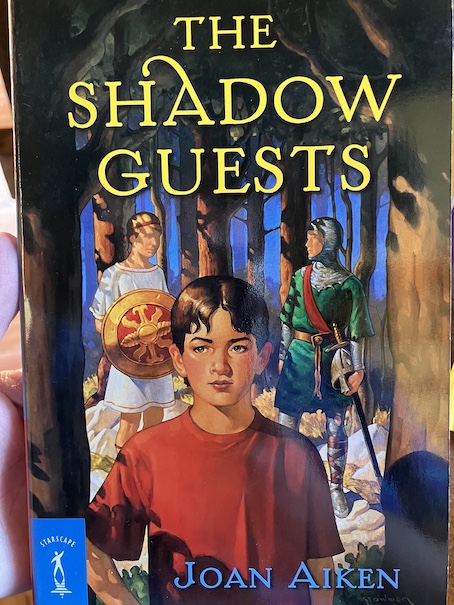
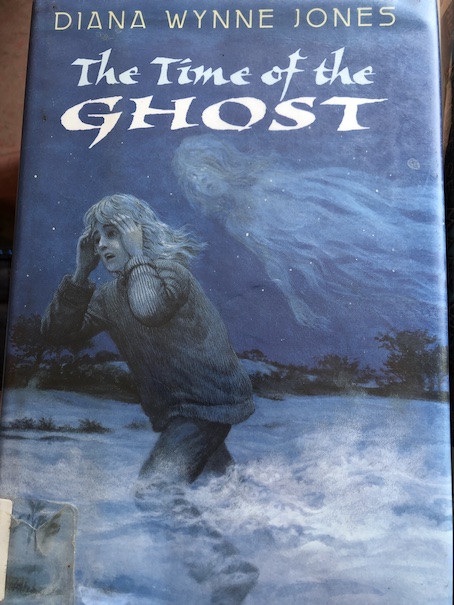
Lucy Beware! by Pamela Sykes, 1983.
This book is the sequel to Come Back, Lucy (Mirror of Danger). Come Back, Lucy was the original title of the first book, when it was published in Britain, and Mirror of Danger is the US title. Because copies of Lucy Beware are very difficult to find these days, I’ve made this review especially detailed and included detailed spoilers at the end for the sake of people who want to know how this story goes and what happens to the characters but just can’t find a copy to read.
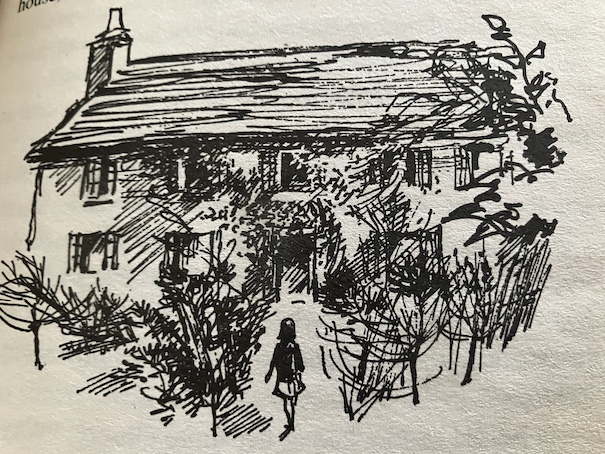
The story is set two years after the events of the first book. Orphaned Lucy has settled in nicely with her cousins since that first frightening Christmas when she lost her elderly Aunt Olive, who raised her, and she connected with Alice, the malevolent girl ghost who haunts the old Victorian house where Lucy and her cousins now live. In the previous book, Alice used Lucy’s feelings of sadness and loneliness after Aunt Olive’s death and the difficulties she had fitting in with her cousins to try to trap her in the past with her. Lucy was finally able to free herself from Alice by passing the 100th anniversary of the end of Alice’s time in the house and by finally telling her relatives the truth about Alice and how Alice manipulated her.
Since that time, Lucy hasn’t seen Alice, but the family has been secretly uneasy about her. When Aunt Gwen, her cousins’ mother and Lucy’s new mother figure, falls ill, Lucy becomes distressed. It brings back her memories and feelings from losing Aunt Olive and makes her worry about the future again. Although people keep assuring her that Aunt Gwen will be fine and that she just needs to go to the hospital for some tests, Lucy secretly worries about what will happen if Aunt Gwen also dies. Her cousins can see that she’s uneasy, and they wonder if they should talk to her about it.
Rachel reminds her brothers that leaving Lucy too much alone with her own feelings was what allowed Alice to get hold of her last time, but her older brother, Patrick, says that’s all nonsense. He still believes that Alice was a figment of Lucy’s troubled imagination because she was dealing with her grief and all of the sudden changes in her life. Bill, the youngest, saw Alice himself, and it was a disturbing experience, although he now expresses doubt about what he actually saw. Deep down, he knows that he saw a ghost, but he tries to convince himself and others that maybe he was wrong because he’s afraid to admit the truth, even to himself.
The time when Aunt Gwen has to stay in the hospital for some tests coincidentally happens at the same time as parent/teacher conferences at the children’s school. Since Gwen is ill, Uncle Pete goes to the meetings himself, and when he comes home, he has bad reports to deliver to each of the children. Patrick has failed his exams, Rachel is struggling in math, and Bill’s teachers say that he’s not even really trying because all he cares about is football.
When it’s Lucy’s turn to receive her report, Uncle Pete says that her teachers say that she’s putting in effort, but she’s still behind in some subjects because, until she came to live with her cousins, Aunt Olive didn’t send her to school but tutored her at home according to her own standards rather than the curriculum used in modern schools. Lucy has been trying to catch up in her studies over the last couple of years, but one of her teachers is unhappy because Lucy hasn’t been working on an important report about home life in the late Victorian era. Lucy still has a love of Victorian homes, partly because, in her early life, Aunt Olive brought her up in an old Victorian era house as if she were a Victorian girl herself and partly because the house where she now lives with her cousins is from that period. When Uncle Peter speaks to her about her report, Lucy finds her mind traveling back to her previous connections with the Victorian era, what she loves about it, … and what now makes her uneasy about it. Then, she hears a familiar voice from the back of her mind. Alice is trying to connect with her again! Lucy finds Alice putting words into her mouth again, asking for Uncle Peter’s help with her report because he’s an architect who understands old houses, but Lucy can now distinguish between her own voice and Alice’s.
When Lucy is alone in her room, she sees Alice again, but although the connection between them hasn’t been severed as much as she thought, she also realizes that she has come to a deeper understanding of it, of Alice, and of herself since their last encounter. Lucy can see, just from looking at Alice, that Alice has been crying. Both of them are in a similar emotional state in their lives right now, which they each acknowledge has called each to the other’s mind again and reactivated their connection. The reason why they were each able to connect with each other before was because they were both extremely lonely, and now, they’re also each troubled about something in their lives and education. However, Lucy reminds Alice that she now understands what kind of a friendship they had before. Alice tries to brush her concerns and the real seriousness of the previous situation aside, but Lucy reminds her, without Alice actually allowing her to use the words “kill” and “death” out loud, that she knows that Alice tried to kill her, more than once, so she would be trapped in the past with her as a ghost.
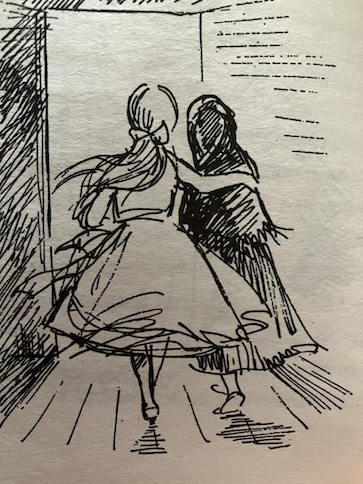
Alice is still sly and manipulative, and Lucy knows how to read her, letting her know that she’s on to her tricks. Alice tries to forcibly pull Lucy into the past once again, but Lucy not only resists but demonstrates that she can now forcibly pull Alice into the present! Lucy makes it clear that Alice won’t be dictating terms this time because they are more equals now than they used to be. In fact, in some ways, Lucy has matured much more in the last two years than spoiled Alice. Lucy knows that she could walk away from Alice now, if she really wanted to … yet, she does feel a kind of bond with Alice. Alice is correct that both of them are trouble, and Lucy also realizes that Alice is in a unique position to help her with her report on Victorian home life, since she is actually living it herself. Lucy finds herself wondering if she could be able to get Alice’s help without getting too badly used by Alice or endangered in return.
Lucy tells Alice that she’s willing to hear her out about her troubles, and Alice says that she’s worried about her future. Alice is aware enough of Lucy’s time to realize that women have more options in their lives than they did during the Victorian era, and she tells Lucy that she’s been inspired by Florence Nightingale to become a famous nurse. Lucy is surprised by that ambition because she knows that being a nurse requires someone to be caring and willing to work hard and under conditions that can be rather rough. Nothing about that sounds like anything that would appeal to Alice.
Lucy knows that Alice is selfish, shallow, and spoiled. She is not accustomed to working particularly hard at anything, and her chief interests in life seem to be parties and clothes. Lucy says that she thought Alice would be more likely to want to marry a handsome man than work at building a career. Alice says that’s just what she wants to do, but she says that she doesn’t want to marry just anyone. She has her eye on marrying royalty and becoming a princess! Her interest in Florence Nightingale and nursing comes from the fact that the queen is interested in Florence Nightingale, so Alice thinks that becoming a famous nurse could be a path to getting the attention of the right people. Lucy thinks this is a hopeless plan because most nurses don’t get that kind of fame, and she also doubts whether Alice has it in her to become any kind of nurse, let alone a famous one. Alice says maybe she could if Lucy could give her some advanced knowledge from her time, things that other young women of the Victorian era wouldn’t know, so Alice will stand a chance of outshining others with her advanced knowledge. Basically, Alice is only interested in chasing fame rather than knowledge and achievement, and she has realized that Lucy is in a position to help her cheat on the knowledge part to get ahead of other people in the field.
Lucy makes it clear to Alice that she thinks her plan is ridiculous. She doesn’t think Alice has what it takes to be a nurse. Even if she manages to get into the field, it’s unlikely that she would become famous in it, at least not famous enough to get the attention of royalty. However, she is willing to help Alice find out more about nursing in exchange for Alice helping her with her school project on the Victorian era. Alice isn’t thrilled at the idea of helping Lucy with anything, but Lucy makes it clear that they’re going to deal on equal terms in this situation or not at all, so Alice reluctantly agrees. Alice admits that the Victorian home life project was actually her idea, and that she had subtly suggested it to Lucy because she wanted to reestablish her connection with her. She can only do that when Lucy thinks about her, so she needed something to remind Lucy about her. Alice has a way of getting into people’s minds and giving them suggestions.
Lucy is uneasy about the deal she’s made with Alice. She reminds herself that Alice is a ghost and a dangerous one at that. It’s only because she is so worried about her school project and because she feels like nobody else can help her that she is willing to try working with Alice. Everyone else in their family seems caught up in their own problems with school and with Aunt Gwen’s health. With the risks in mind, Lucy takes some steps to protect herself from Alice, if necessary, like always carrying a small pocket mirror with her, knowing that reflective objects are key to traveling through time and meeting Alice. Last time, Alice tried to trap her in the past by removing mirrors from around the house, so it’s important for Lucy to have something small and reflective with her all the time.
Something that makes this time with Alice different is that Alice no longer seems interested in trapping Lucy in the past. In fact, it’s only with great reluctance that she agrees to meeting Lucy in her own time at all. Part of what makes the difference is that there’s a young man named Eric Summers who is romantically interested in Alice. They’ve known each other for a long time because their mothers are friends. Lucy asks why Alice doesn’t just marry Eric if she likes him so much and forget all this nonsense about nursing, but Alice is ambitious and still has a dream of marrying royalty. Eric is fond of her, but he doesn’t have a title of any kind.
To fulfill her part of the bargain with Alice and to help finish her own report for school, Lucy borrows some old books about nursing in the Victorian era from their family doctor. Doctor Brown was an important character in the first book, and he has always been aware of Lucy’s troubles fitting in with her relatives after Aunt Olive’s death and the fact that she’s behind in her schooling, so he’s happy to help her. However, although Lucy gives Alice information from those books and is willing to let her look at them when she comes to Lucy’s time, Alice steals the books and takes them to the past with her! It’s a real problem because Lucy knows that the books are old, collector’s items, not easily replaceable, and Doctor Brown says that he will need them back for some lectures he’s planning.
To retrieve the books (and to get some final, first-hand information for her school project), Lucy makes a daring trip back into the past to confront Alice one last time.
My Reaction and Spoilers
I was thrilled to get hold of a copy of this book through an interlibrary loan! It’s very difficult to find these days, much more difficult than Come Back, Lucy (Mirror of Danger). In fact, I’ve repeatedly checked all the major book-selling sites, and I have yet to see even one copy for sale, and some appear to having waiting lists for people looking for a copy. According to other reviews, Lucy Beware isn’t as popular as the first book in this two-part series. Other people who have read the book have said that they really like the first book better.
The end of the first book did seem like it pretty well settled the issue of Alice. At the end of the first book, Lucy survives past the 100th anniversary of Alice’s last day in the house before leaving to go to a house in the country with her parents and with Lucy establishing a new bond with her relatives. When Lucy bonds with her relatives, she no longer feels the need for Alice as a toxic friend or to connect with the past because she can now look to the future without being afraid. With things being pretty settled at the end of the first book, a sequel might not be necessary, although there were a few unanswered questions from the first book that was I wondering if the sequel might answer. For example, we never learn in the first book how Alice died or what made her into the lonely ghost that she became in the house. What was it that made her cling to the house and try to trap Lucy there with her?
Personally, I was surprised in this book that, not only does Alice make a reappearance, but that she isn’t dead yet. Originally, I had expected that Alice became a ghost because she had died on her way to the new house in the country that her parents bought, which was why she left the house where Lucy now lives with her relatives. My original theory about why she was so lonely and haunting the house where she used to live was that she died before she could get to her new home and rejoin her parents. However, this book reveals that not only didn’t that happen but that she is anticipating a longer future to plan for. I was disappointed that this book doesn’t explain the circumstances of Alice’s death or a offer an explanation of her apparently ghostly powers.
I was also a little disappointed that this book changes the dates of Alice’s life and Lucy’s previous experiences with her to accommodate Alice’s interest in Florence Nightingale. Originally, in the first book, the date when Alice moved from her old house to the house in the country was given as 1873. In this book, which is supposed to take place after both Lucy and Alice have aged a couple of years, it’s the mid-1860s because Florence Nightingale gained her reputation for nursing during the Crimean War in the 1850s, and when Lucy makes a reference to Alice’s Adventures in Wonderland, which was published in 1865, Alice calls it a “new” book in her time. Changing the dates feels like cheating, although I suppose a lot of readers who didn’t know the when Florence Nightingale was famous or when Alice’s Adventures in Wonderland was published might overlook that. However, for me, it makes this sequel feel more artificial than a naturally-following progression of the story from the first book.
Alice’s character as a lying, manipulative, dangerous girl hasn’t altered, but although Lucy still thinks of Alice as a ghost, the story is presented more as a time traveling story rather than a haunting. The first book also involved time travel, but it was much more definitely a haunting. Alice’s ability to travel through time or to pull Lucy back into the past in the first book were pretty obviously based around her being a ghost. When she appeared in house in the present time, she was either invisible to people other than Lucy (because Gwen saw doors open and close by themselves when Alice was searching for Lucy) or gave the person who saw her an eerie feeling (like she did when Bill saw her).
There is also one thing that Alice can do that Lucy can’t, which might be due to her status as a ghost – she has a way of putting ideas into other people’s heads without them being aware that she’s doing it, almost a form of possession. In this story, she admits that the reason why Lucy chose home life in the Victorian era as the subject of her school project was that she suggested the idea to her to make Lucy start thinking about her again so she could reestablish her connection with Lucy. That kind of supernatural ability or possession only really makes sense if she’s a ghost instead of just a time traveler. We are never given any other explanation for it.
While Alice still has the ability to manipulate Lucy’s mind and put thoughts into her head or words into her mouth in this story, the supernatural aspects of the time travel seem to be altered or suspended in this book because Lucy has figured out how to use her mental state and connection to Alice to do her own time traveling or summoning Alice. Also, Alice apparently didn’t die in the year she left her old home or soon after that, so the original issue of why she was haunting her old house at that particular time is unresolved. In the original story, she said that she’d been waiting a long time for someone to come and play with her, indicating that she hadn’t been anywhere but her own house since her death and hadn’t moved on from being a lonely child in the years since her death, but this story contradicts that idea, showing Alice moving forward both in age and emotionally. In spite of that, Lucy still thinks of Alice as being a ghost in her time, and she considers that it would make her a kind of ghost from the future when she’s in Alice’s time.
Because this book is extremely difficult to find outside of a library these days, I’m going to offer some detailed spoilers for it for the benefit of people who can’t find a copy.
Spoilers!
Far from Alice dying at any point in the story or revealing her eventual cause of death, Alice seems headed for marriage at the end of the story! Lucy witnesses Eric speaking to Alice, and it seems like he’s about to propose to her! I felt a little sorry for Eric at this point because, although he’s apparently known Alice for years, he may not be fully aware that she’s a narcissistic, manipulative liar who has traveled through time as a ghost and tried to kill another child while she was still a child herself. However, Eric seems like a bit of a snob, so they might be more alike than I’m giving him credit for.
When Lucy confronts Alice about the books and demands them back, Alice seems a little conflicted about returning them. Alice has soured on the idea of nursing after seeing some of the things that nurses have to do in those books. She’s definitely more the dressing up and giving dinner parties socialite type. Besides, she can tell that she has a definite prospect for marriage with Eric, and he’s promised to keep her in the lifestyle that she’s accustomed to. Even if she never gets a title, she can still live like a spoiled princess, and that might be good enough for her. Still, Alice has trouble giving up anything she’s set her mind and hands on, and she has admitted to Lucy that she plans to get her governess, Mademoiselle, fired by framing her for theft!
To get one last revenge on Lucy and to keep her from foiling that rotten plan against Mademoiselle, Alice tricks Lucy into hiding in a shed on their property (they call it an “outhouse”, but it’s really more of a gardening shed or outbuilding than a privy) and locking her in, telling her parents, who have just returned home, that she has trapped a burglar. Because Lucy can travel through time and space by looking at her reflection, she manages to make her escape before the police can apprehend her, and she gets away with Doctor Brown’s books and a few useful but inconsequential items from the past that she can use for her project. Before making her final escape back to her own time, Lucy hears some conversations between Alice and her parents that clear up a few lose ends.
Mademoiselle does get fired, but it’s for something she actually did herself – she shirked her duties to watch Alice while her parents were away so she could spend time with her secret boyfriend. (That’s something she did in the first book, too.) However, that’s fine, as far as Mademoiselle is concerned, because she and her boyfriend are going to get married and move to France. Before she leaves, she tells Alice’s parents exactly what she thinks of them for never spending time with their daughter and never knowing what she’s up to. Alice’s mother is offended at the impertinence, and she tells Alice that she’s decided that Alice is too old for another governess. Instead, they are going to arrange for her to have a Coming Out party and for her to be Presented at court, which meant for a wealthy girl of her time, that she was being acknowledged as being of marriageable age, so she would be able to accept Eric’s proposal. Basically, she’s becoming a debutante.
Alice is excited by the glamor of that, and she completely gives up the idea of being a nurse because all she ever wanted that for was a way to impress someone important so she could make a good marriage. Now that she has her love interest and will soon be the belle of the ball, she doesn’t have any use for that plan anymore. Surprisingly, though, Lucy herself realizes that she finds the idea of nursing appealing, and for the first time, Lucy finds a life ambition of her own. Part of her worry about the future in the previous book was that people expected her to think of the future and have life ambitions, but Aunt Olive had never raised her to think that way or have any ideas about a career. Now, she has a goal for her future that appeals to her and gives her a focus for her studies. She confides her interest in Doctor Brown, her family’s physician, and he promises to help her and lend her more books.
At the end of the story, Lucy confides everything about her latest adventures with Alice to her family and Doctor Brown, and they all believe her. It’s kind of hard for them not to because, when she returns to the present from her latest journey into the past, she is disheveled and dirty from her experiences. They’re all worried about her, but Lucy sees this as a maturing experience. Alice might be headed for marriage, but Lucy realizes that, inside, Alice is still the same immature, self-serving brat she always was. Lucy acknowledges that she isn’t entirely grown up herself, but she is getting there, and she’s much further along than she was before. She realizes that she and Alice are now headed in very different directions with their lives. The story leaves it open for another possible interaction between Lucy and Alice again, but if they ever do meet again, it will probably be for the last time. Lucy is far more confident in herself and the direction she’s chosen for her life, and she sees the beginning of divides in their lives and attitudes that will further separate her from Alice in the future.
Oddly, Rachel realizes toward the end of the book that Patrick has become particularly attached to Lucy, like he might have a crush on her. That might sound weird because they’re cousins, but as I recall from the first book, the relationship is actually a little more distant than that. When the cousins are first introduced, they are referred to as “distant” cousins. (The original description was, “Distant ones, but definitely related.”) Lucy calls Pete and Gwen her aunt and uncle, and other people call them Lucy’s aunt and uncle as well, but the relationship might not be literally that one of them was a sibling of one of Lucy’s parents.
My impression from the first book was that either Pete or Gwen is a distant cousin to Lucy, but because they are old enough to be her parents, people just call them her aunt and uncle. We were told in the first book that they were unaware of Lucy’s existence before Aunt Olive’s death, which I don’t think would have been the case if either was a direct sibling to one of her parents. Neither of the books ever clarifies exactly how distant they are as cousins, and in fact, I don’t think they even explain which of the two of them is actually related to Lucy by blood and which by marriage. (I think, because Gwen and Lucy are more attached to each other and Gwen was the first family member to contact Lucy through a letter after Aunt Olive died, it’s implied that Gwen is her blood relation, and her children are related to Lucy through her, but that’s never clarified.) Somehow, one or the other of them was related to Lucy through some connection to Aunt Olive, who I think was actually a great-aunt to Lucy, given her age, old enough to be her grandmother. However, if it helps, it means that Lucy and Patrick are likely not first cousins. They’re probably more like nth cousins once or more removed from each other in the family tree. It could be third cousins or fourth cousins or third or fourth cousins once or twice removed. I don’t know exactly because the books are vague about that.
It’s still a little odd for Patrick to get a crush on Lucy since they’re living together as cousins now. What Rachel notices is that Patrick has become increasingly protective of Lucy. Now that he and other family members fully believe in Alice and the threat she poses to Lucy, Patrick has expressed a desire to get his hands on her and make her pay for what she’s done or almost done to Lucy. Lucy confidently says that he won’t have that opportunity, but Patrick seems a little grimmer about it. Rachel notices that Lucy doesn’t seem fully aware of the depth of Patrick’s feelings or what that might imply. Lucy is light-hearted at the end of the story, confident that she and Alice are growing out of each other because their lives are diverging and neither one is really interested in seeing the other again. However, the book’s ending leaves the possibility open for one more encounter because Alice’s ultimate fate isn’t settled. Alice is apparently still considered a “ghost”, but she’s oddly not dead yet in her time and is showing every sign of being able to grow up and get married.
One of the other reviewers on Goodreads said that she could imagine what might happen if there was a third book in the series, but there isn’t one. It’s possible that the author left that possibility open on purpose, but this is only a two-book series. I could see that there’s room left for one more chapter in the story, a truly final encounter between Alice and Lucy. If that happened, I would expect that the story would have to end with something that would make it truly impossible for Alice to come back, which for me, would mean that we would have to finally have an answer to why there seems to be this bond between Lucy and Alice, and we would have to know when and how Alice eventually died.
For me, the first book was stronger because it seemed to imply that Alice died young and that she knew that she would never rejoin her family at their new home or have the opportunity to have a friendship or attachment outside of the memories of her lonely life in the past. In the first book, she seemed to need Lucy to die in order to join her in her past or at least the memories of her past, making them both ghosts with each other for company. (I did wonder whether Lucy actually went to the real past in the first book or just Alice’s memories of it.) When Lucy survived Alice’s final attempt on her life and passed the 100th anniversary of Alice leaving her house, I thought it was implied that Alice died on her way to her new home in the country, severing her link with her old house and, by extension, her last hold on Lucy. However, this second book, which shows Alice living past that point in her own time, treats the connection between Lucy and Alice more as a sympathy of feeling, similar to the connection between the girls who switched time periods in Charlotte Sometimes. Lucy thinks that the time traveling is over because both of them have experienced changes of feeling and are headed in different directions in their lives, so that might truly be the end of their story, although part of me thinks, as others do, that there’s room for one more story. Since there are no more books, any continuation would only be in the reader’s imagination!
My Own Fanfiction Rewrite
Since I was disappointed that this story was more time travel than haunting and that Alice isn’t being treated as the ghost she was in the original story, I started writing my fanfiction version of this book in my head. I really wanted the story to be more of a ghost story rather than just time travel and to explain more about Alice’s background and why she’s a ghost. If you’re not interested in my imagined version, you can skip this because it’s pretty long.
In my imagined version of the story, I’d keep the parts about Lucy and her cousins struggling in school and Aunt Gwen getting sick because those are important sources of Lucy’s inner turmoil. However, I decided to add an extra character, another distant cousin who has been living in the United States and has only recently returned to England. This new character, who I’m calling Margaret, is now a middle-aged woman, but (because these stories are set in the 1970s), was sent away from England as a child evacuee during WWII. I thought of her as a character because she’s someone who can reveal some hidden parts of Lucy’s family’s past, including some things she’s rediscovering herself upon her return to England. There were many children sent from England to the US by ship in the summer of 1940, although that stopped in September of that year when a ship carrying child evacuees sank. Many of the children from that torpedoed ship were killed although some were rescued, an incident of real-life children never arriving at their destination that could help foreshadow Alice’s demise on her way to her “new life in the country” as she called it in the first book.
The way I see it, Margaret has decided to move back to England, partly out of a restlessness she was already feeling about her life in the United States and partly because, since Aunt Olive’s death, she realizes that she is losing her last connections with her own past and the few remaining members of her biological family. She explains that the reason why there are so few members of their family left (aside from Aunt Olive, it is established in the books that Lucy has no other biological relatives other that the cousins she’s living with now) is that many of them were killed during WWII, including Margaret’s parents. Her parents died during the bombing of London known as the Blitz, and the house where she once lived was completely destroyed. If Aunt Olive hadn’t persuaded Margaret’s parents to send her to the US as a very small child because she had a friend who was helping to organize the evacuation effort and arranged for Margaret to be fostered by an old school friend of hers who was married and living in the United States, Margaret would also have been killed. Because she was living in the US with a foster family when her parents died and had no way of returning to England due to the war, her American foster family adopted and raised her. She probably would have forgotten all about her English relations except that Aunt Olive stayed in touch with the school friend who adopted Margaret and wrote to Margaret and explained everything to her years later.
When Aunt Olive died, Margaret didn’t hear about it right away because Aunt Gwen and Aunt Olive’s friends didn’t know much about Margaret, but after not hearing from her for some time, Margaret started making inquiries and reconnected with Aunt Gwen. She wrote to Aunt Gwen and talked with Uncle Peter about how she was considering returning to England, and when Aunt Gwen gets sick, she comes for a visit, staying with the family and helping with the house and the children while further considering whether or not she wants to move back permanently.
In some ways, Margaret’s presence can be helpful for Lucy because both of them have the experience of being orphaned and having to move forward in their lives in a new home with a foster family and a somewhat tenuous connection to their own pasts. In other ways, Margaret could unintentionally reawaken Lucy’s interest in the past and her uneasiness, reminding her strongly of Aunt Olive. Margaret has been Americanized and is much more modern than Aunt Olive was, but she could still resemble a younger version of Aunt Olive (about 30 or 40 years younger than Aunt Olive was) and have some household skills that are similar to Aunt Olive’s, like her cooking. Margaret might take over most of the household cooking in an effort to help the children focus on their studies, which might also unintentionally remove a source of relaxation for Lucy, who likes cooking, forcing her to focus more on things she doesn’t really want to think about.
I see Margaret as having worked as a librarian in both school and public libraries, which would also make her similar to Aunt Olive, who used to be a teacher at a private school for girls. Because she is an academic person, she helps to tutor Lucy and her cousins through the problems they’ve been having with school, something else that reminds Lucy of Aunt Olive, who used to tutor her at home. Margaret approves of Lucy’s proposed project about Victorian homes, saying it’s perfect because she has many of the resources that she’ll need already, living in a renovated Victorian home and with Uncle Peter’s books on architecture and interior decorating. She takes the children on trips to their local library and helps them find further resources for their various projects, but I’m adding another twist to the story here with a special project for Patrick.
Let’s say that Patrick also has to do a project for history, and Margaret asks if he’d also like to do one about the Victorian era because he and Lucy could share resources and work together. However, Patrick, who is a Young Socialist and deep into the idea of Socialism (as established in the first book of the series) had actually wanted to do a report about that instead. He’s upset because his teacher won’t allow him to do the report that he wanted to do originally, and he thinks it’s discrimination because his teacher doesn’t approve of Socialism. Actually, it’s because Socialism is all Patrick ever talks about. It is what he’s most motivated to learn about, but his teacher wants him to learn about and talk about something else for a change. Because of that, his teacher assigned him the topic of WWII, and Patrick hates the idea of doing a report about war. Margaret asks him what about WWII, specifically, he’s required to talk about, and Patrick shrugs and just says the teacher didn’t say, only that the project needs to be about WWII.
Margaret points out that WWII was a world-wide war that took place in many different countries and also involved the Home Front, civilian volunteers who helped the war effort and government-run programs that helped to protect and feed civilians during the war. Those programs, including the child evacuation programs that saved the lives of children like Margaret were social programs, so doing a report about the Home Front of WWII and child evacuees would fulfill the teacher’s requirements and also be an example of successful social programs, which would please Patrick. Since Margaret herself was an evacuee, he could interview her for the project, and she would even be willing to come speak to the class about her experiences when Patrick has to do his presentation to the class. She was very young when she was evacuated, but there are some things that she still remembers sharply about the experience and others that she’s come to appreciate more in the years since. Patrick is interested, and even Rachel, Bill, and Lucy get pulled into the topic when Margaret starts telling stories about it because it has a connection to their own family.
During moments of worry and melancholy about Aunt Gwen’s illness and when Lucy has to work on her own Victorian project alone rather than share in Patrick’s one about WWII evacuees, Lucy starts to feel the tug of Alice’s time again. She finds Alice’s old scrapbook again, the one where she said that she was leaving to start a new life in the country, hidden among Uncle Peter’s architecture books, and after reading in a book about Victorian Christmas celebrations (something she witnessed in Alice’s time), she looks up and into her bedroom mirror, finding herself in Alice’s time again! Lucy’s bedroom was once the old school room of Alice’s house, and Lucy finds herself face-to-face with ghostly Alice. But, to her surprise … Alice hasn’t changed in the two years since Lucy last saw her. Alice hasn’t aged at all. Also, it’s Christmas again!
It didn’t seem as weird to Lucy the last time she experienced Alice’s Christmas because it was also Christmas for Lucy in her cousins’ household. It’s extra weird now, though, because it’s October in Lucy’s own time. In fact, as Lucy looks around and hears Mademoiselle talking about Alice’s upcoming birthday, she discovers that it’s the exact same Christmas that she experienced before in Alice’s house, the last one she experienced there before her family decided to move to the country. Alice remembers Lucy from before and dodges Lucy’s questions about why it’s the same Christmas. Lucy wonders if she might accidentally run into her past self in this house, since she’s been to this exact place and time before, but Alice makes a cryptic comment about nobody else having done so the other times. Lucy tries to ask what she means about other people and “other times”, but Alice tries again to persuade Lucy to stay with her because she must have returned for a reason. Lucy escapes from Alice using a mirror, because she now knows how to do that, but she’s troubled and confused.
At the end of the first book in the series, Lucy had planned to do some research about Alice to find out about her as a person so she wouldn’t have to be so scared, thinking of her as a ghost, but she put it off. Now that she’s doing this report about the Victorian era, she realizes that she has the perfect excuse to learn more about what happened to Alice and how she became a ghost, stuck in one particular Christmas. Because Margaret knows about records and research from her career as a librarian, Lucy shows her Alice’s old scrapbook and asks her if she can help her find out more about who Alice Becket was and what happened to her. Margaret finds the idea intriguing and helps Lucy track down Alice’s records. They learn that Alice died in an accident on the same day she left the house to travel and meet her parents in the country and is currently buried in a churchyard not far from the house. Margaret even takes Lucy to see the grave and is surprised at how affected Lucy is at Alice’s grave and the idea of Alice’s death.
This leads to a heart-to-heart talk between Lucy and Margaret on the subject of loss. Lucy confides her worries about losing Aunt Gwen, like she lost Aunt Olive. Margaret reassures Lucy that she knows a little more about Aunt Gwen’s condition than Lucy does, and without going into specifics (because, from something Aunt Gwen said in this story, I think she’s having some women’s troubles), she says that Aunt Gwen is going to need some treatment but that she’s going to be all right. They talk a little more about Aunt Olive, revealing a little more of Aunt Olive’s backstory as a professional teacher who never married because the young man she loved died in WWI, something Lucy never knew before because Aunt Olive never talked about it with her. (I invented this part. It’s not something addressed in the author’s original stories.) Margaret says that, perhaps, Aunt Olive thought Lucy was too young to understand how she felt before she died, but also, it was probably something very painful for her talk about. Margaret herself heard the story from Aunt Olive’s old friend, who adopted her, rather than from Aunt Olive herself.
Lucy and Margaret talk about how difficult it can be to talk about emotionally painful things, something Margaret understands from her own past and something that Lucy experienced in the first book. Lucy asks Margaret if her discussions with Patrick about her past as an orphaned evacuee are painful to her, and if it will be difficult for her to talk to Patrick’s class about her past. Margaret says it’s not as painful to her now as it once was because so many years have passed since the war and her parents’ deaths. Since then, she’s come to terms with what happened and has built a new life and identity for herself. She has realized that life also comes in phases and is full of changes. She senses that her life is changing once again, and she’s feeling something pulling at her to return to England and her relatives there again because she feels like the time is right somehow. The idea of returning to London would have once frightened her because the London she remembered as a young child was a sad and scary place, but it has done her good to visit with her young cousins and see that London is now a happy, busy, living place filled with young people and is very different from what she remembers. Revisiting her past has helped her to make peace with it, even more so than she had before.
However, Lucy realizes that visiting Alice’s grave hasn’t brought her the peace that she had hoped for because there’s something very wrong with Alice’s death and the way she keeps returning as a ghost. Lucy no longer looks at Alice as being a “friend” as she did when they first met. Alice is spoiled, selfish, and dangerous, and Lucy knows she can’t trust her. Yet, she also finds Alice a tragic figure, and she doesn’t know what to do about it. That night, she reflects on everything that everything Margaret said and accidentally looks at herself in the mirror. Suddenly, she finds herself in the old schoolroom again, and she thinks that she’s returned to Alice’s time, but to her surprise, the room is different from both the way it looks as her modern bedroom or Alice’s Victorian schoolroom. It’s something in between. It has the old Victorian wallpaper, a little worn and shabbier than it was in Alice’s time, but there are now two small beds in the room because it’s being used as a bedroom. Lucy turns around and is shocked to see two girls with red hair and freckles staring at her, also in shock.
After that first shocked moment, the girls introduce themselves to each other. The two girls are a pair of sisters: Janet and Alice Becket. Lucy is surprised that there’s a second Alice Becket, and Janet explains that it’s a family name. Every generation of their family has an Alice, ever since the first Alice Becket died tragically young. Lucy explains to them about meeting Alice, and the girls are eager to hear what she has to say. They’ve met Alice, too, since they arrived at this house. Janet and Alice the younger don’t normally live here. It’s the summer of 1940, and their lives have changed since the war started. Their father is away, in the army, and their mother is involved in war work. The girls are staying with their aunt and uncle in this old house, preparing to leave soon on a ship that will take them to stay with other relatives in the United States. Right now, they feel neglected and abandoned by their parents and fearful about the journey ahead of them. Young Alice is frightened that they might not make it to the US because their boat might sink. Janet is less afraid of sinking than she is that they might not be able to come back to England again or that their parents might not want them back. Victorian Alice has gotten hold of these younger relatives of hers, pulling them back into the charming Victorian Christmas, where everything is peaceful, no war, and Alice is surrounded by luxury, servants, and pretty dresses.
Seeing these other girls falling into Alice’s trap, with Alice trying to persuade both of them to join her forever in the past, Lucy warns them about what Alice is really like and that Alice herself seems to be a prisoner of her own past. She reminds them of Alice’s tragic fate and that, if they join her, they will have to share that fate, too. That reminder that Alice died young helps to ground Janet and Young Alice in their own time and reality, giving them something to use to fight against Alice. At the same time, though, the girls admit that all three of them feel an attachment to Alice and that they want to do something to help her. Young Alice, fearing that maybe she and her sister will die at sea anyway, on their journey, still finds herself tempted to share in Alice’s past. If she has to die young and be a ghost, she thinks she’d rather haunt a familiar house and live in a charming Victorian Christmas forever.
I have in mind that there would be a series of time jumps where Janet and Lucy have to follow Young Alice into Victorian Alice’s past, seeing again Victorian Alice singing Christmas carols and having her birthday party, just as Lucy did before, only with Young Alice in the place Lucy previous occupied. Alice lies to people, as she always does, and she calls Young Alice “Abigail” because she can’t explain to others why there are two Alice Beckets. (This is also a callback to the first book, where Alice lies about Lucy’s name, for no apparent reason other than Alice is a pathological liar.) Young Alice confides to Janet and Lucy again about her fears of dying at sea and admits that she’s long had a fear of dying young because she was named after Alice, who died young. Janet admits that there was another Alice in the family before her who also died young, and there is some speculation about whether Victorian Alice may have had a hand in that, in another of her failed attempts to trap a companion in the past with her, or if that was just a coincidence.
It occurs to Lucy that, if the three of them can somehow save Victorian Alice’s life, they can stop this time loop from occurring. Alice would no longer be a ghost because she could finally go forward into the new life she always wanted, and other generations of children in the family and others who occupy this house will be safe from her. However, there are complications. First, they have to learn exactly how Alice died and figure out what, if anything, they can do to prevent it. Second, Lucy’s cousin Margaret, without knowing about the hauntings yet, raises the question of how tampering with the past can change the present.
While they’re considering whether and how they can save Alice, Lucy considers whether or not she can use her presence in 1940 or get Janet and Young Alice to do something to save Margaret’s parents from being killed. She asks Margaret for a few more details about her parents and what their address was. Margaret says that she no longer remembers the address of her old home, and then, she tells Lucy that it was a very unhappy place for her. Even if it still existed, she wouldn’t want to visit again. Lucy is surprised and asks her why. Margaret says that, when she said that London was a sad and scary place for her, she wasn’t talking about the bombings, which hadn’t started before she left. The bombing of London started in September 1940, and she left for the US that summer.
The period from the official entry of Britain into WWII in September 1939 to May 1940, when Germany invaded France was called “The Phoney War” because the general public didn’t feel the effects of the war too much and wasn’t taking it seriously, feeling like it was basically a non-event. Some people in London who had sent their children away as evacuees before London was actually bombed in September 1940 had brought them back home again, thinking that the whole thing was a false alarm, and Margaret explains, sadly, some of those children were injured or killed because they came home too early. This brings up the topic of how people, even when they’re trying to be safe, don’t have a complete guarantee of safety. If Margaret had left England later, on the boat that was carrying child evacuees that sank, she could have been killed anyway, like many of them were. Those children were trying to leave one dangerous situation only to be killed by another. Lucy finds that idea terrifying, understanding why Janet and, especially Young Alice, are afraid. Margaret gently tells her that life can be frightening and unpredictable. We all do the best we can and make the best decisions we know how to make, but unfortunate things can happen to anyone. There is no complete cure for that but to continue to do the best you can and to love and appreciate the people and place where you are while you’re there and while you’re with them.
The full truth about Margaret is that Aunt Olive arranging for her to be evacuated was to save Margaret from her own parents as much as to save her from the war. Margaret’s parents’ marriage wasn’t a happy one. According to both her adoptive mother and Aunt Olive, her parents were very immature people who probably got married too young. They liked to party when they were young, and the idea of marriage sounded romantic to them, but the truth was that neither of them understood the realities of maintaining a mature relationship, running a household, or raising a child. There was a nanny called Sally who was the only person who really took care of little Margaret. Her mother was a vain woman who still wanted to go out dancing and to parties all the time, and her father was a man of violent temper who drank too much and would hit or slap his wife or young daughter when he was angry. Margaret’s few memories of her parents include her father screaming at her and slapping her and her mother brushing her hair and ignoring her while she was crying. Other times, she remembers hiding from her parents or hearing them fighting with each other in the middle of the night. If Margaret had been old enough, Aunt Olive would have arranged for her to attend the boarding school where she was teaching, but Margaret was still too young to be admitted. The evacuation effort gave Aunt Olive another way to rescue Margaret. Sending Margaret away saved her life twice, first from her parents’ bad treatment and then from sharing her parents’ sad fate.
Lucy is shocked at this story of Margaret’s original, unhappy home life, and Margaret reassures her that her adoptive family was much happier. They were kinder, more patient people, and her older, adoptive siblings sometimes spoiled her. Even the journey by ship to the US, while frightening at first, was a delight. In fact, Margaret describes how she made friends with a couple of girls on the ship who were older than she was and how they looked after her and reassured her during the voyage. She had forgotten their last name, but she now realizes why Alice Becket’s name seemed so familiar to her while they were researching her. The other girls were Janet and Alice Becket. Margaret starts to ponder whether or not there’s a connection there, but before she can continue the thought, Lucy asks her what happened to Janet and Alice. Margaret says that they went to live with some relatives near the place where she lived in the US, and she would continue to see them sometimes while they lived there. She lost touch with them after the war, when they returned to England to rejoin their parents. This news cheers Lucy, who realizes that she can now tell Janet and Young Alice, with confidence, that they will be fine during their voyage to the US and they will return to see their parents again. She leaves Margaret musing about her old friends and wondering if she can trace them and see how they are now.
Janet and Young Alice are reassured by what Lucy tells them about their future. Janet promises to keep an eye out for little Margaret when they board the ship and that they’ll be her friends, and Young Alice is relieved by their promises that the journey will be safe for her, too. Lucy decides there’s no point in attempting to warn Margaret’s parents about what’s coming. The bombings haven’t started happening yet, and if any of them tried to tell them that they’re going to be killed by something that hasn’t started happening yet, they would think their warnings were “phoney.” As with others, they will have to be left to make the best decisions they know how to make to protect themselves, which Lucy uncomfortably knows will ultimately fail.
Although it’s sad to think about it, Lucy realizes that their loss was best for Margaret in the long term, and she also has to face another uncomfortable thought that she’s been trying to ignore: Aunt Olive’s loss, occurring when it did, was also best for Lucy. Lucy still misses Aunt Olive because Aunt Olive was kind and truly loved her, but Lucy has come to realize that Aunt Olive wasn’t teaching her everything she really needed to know to succeed in school and life. Her vision of life has expanded since she came to live with her cousins, and although school is sometimes a struggle, it’s ultimately the best thing to prepare her for her future. Aunt Olive lived a full life, and it was her time to go. Even though Lucy couldn’t see it at the time, it was also time for her to move on from her old, sheltered life. This realization allows Lucy to let go some of lingering sense of loss for Aunt Olive, although she knows she will always love her, and of her desire to return to that part of her life. She begins to understand what Margaret was talking about, how life moves in phases and there are times when you’re ready to move on to the next.
This brings the children back to Victorian Alice, who wasn’t ready to leave her life just as she was promised a new life in the country and who hasn’t been able to move on ever since. Maybe not all tragedies are unforeseen and unpreventable, and sometimes, someone has to intervene before someone can move on. I decided that, since Alice and her governess left the house to journey to the countryside on December 21, the shortest day of the year, Alice’s death was caused by a carriage accident because they left too late and tried to travel further in the dark, partly at Alice’s impatient insistence and partly because the governess feared Alice’s parents’ reaction if they didn’t arrive on the promised day. I envision that Lucy recruits her cousins, who have noticed that things are starting to happen with her and Victorian Alice again, and her new friends from 1940 to help her intervene to save Alice’s life. Lucy is worried about what else they might change by doing so, but Alice is clearly a suffering child who is terrorizing other generations, and it must be stopped. I decided that they find the location where they accident occurred and find a way to stop the carriage together and convince the governess and their driver to break the journey and rent a room at a nearby inn for the night. Alice, recognizing them and realizing that they’re there to help, persuades the governess that she also doesn’t want to continue the journey until morning.
When the children all return to their own times, they’re not immediately certain that the cycle has been broken, but they know that Alice at least survived December 21. When Lucy gives her presentation to her class about the Victorian era and describes the scene at a Victorian Christmas, just like the caroling and party she experienced with Alice, she worries at first that she’s going to suddenly find herself transported there again and shuts her eyes while she describes the scene so she won’t accidentally see anything reflective. When she opens her eyes, she’s still in her classroom, and her classmates applaud her presentation. Her teacher praises her detailed descriptions, which make them all feel almost as if they were there themselves.
Lucy thanks her and modestly says that her distant cousin, Margaret Emerson, helped her with the research for her presentation so people won’t get too suspicious about how she knows so much about this topic. Suddenly, Lucy’s teacher, Mrs. Morrison, looks at her intensely and asks her the name again. Lucy repeats Margaret’s name and explains how Margaret has come to stay with them and right now, she’s in Patrick’s class, helping with his presentation about WWII evacuees because she was an evacuee herself. To everyone’s surprise, Mrs. Morrison rushes out of the room and runs down the hall. Some of the students look out into the hallway to see what’s going on, and they see Mrs. Morrison hugging Margaret in the hallway and crying. After a few words, the teacher returns to her room with Margaret, wiping her eyes, and explaining that she and Margaret are old friends. They were child evacuees together, and they haven’t seen each other for years. Mrs. Morrison was Janet Becket, who is now grown up and married. After Mrs. Morrison introduces Margaret to the class, they promise to get together for lunch on Saturday to catch up, and Margaret says that she would be happy to join her in talking to her class in the spring, when they cover WWII.
When Mrs. Morrison comes to visit Margaret at the cousins’ house after Aunt Gwen recovers and returns home from the hospital, she is surprised (or claims she is) that their house is the same one that used to belong to her uncle years ago. It was in their family for generations, and some cousins of hers lived in it after her aunt and uncle died, but her relatives have all moved on to other places, while is why the house was eventually sold. She recounts the story of how she and her sister, Susan, stayed there for awhile before being evacuated to the US. She emphasizes the name Susan while looking at both Lucy and Margaret. Margaret is a little confused at the name, like she still remembers the sister being “Alice”, and Janet quickly explains that there used to be a tradition in their family of naming girls after other relatives but her parents changed that. Her mother originally wanted to name her sister “Alice” after an earlier relative, but her father was against it because that earlier Alice was such a scandalous person, so he insisted on giving Susan a completely different name. Janet also emphasizes that having an original name probably helped Susan to become more confident in life, indicating that it changed her fears of dying young, like the first Alice. Lucy looks around and realizes that her cousins, who met both Alices in the past when they helped to save the first Alice’s life, have also noticed the name change and recognized its significance. Janet’s comments about the “scandalous” (rather than “tragic”) first Alice have proved that their efforts to save her were successful.
Yet, Lucy wonders why it is that she and other people can still remember the old past, with the ghostly Alice and the other Alice’s original name if they successfully changed everything. Later, Margaret has a private talk with Lucy, where she says that Janet has told her everything about the ghost and what they did to save her. Margaret praises her for her compassion and bravery, although she says she wishes that Lucy had told her about it all before. Lucy says that she didn’t know how to explain and still doesn’t know whether or not saving Alice was the right thing to do. In some ways, she feels like Alice the child no longer haunts her, but she’s not so sure whether Alice lived to be an adult or what she did as an adult, since Janet calls her “scandalous.” She also says she doesn’t understand why they can all remember the past that existed when Alice died or her haunting if they really saved her life. Margaret says that, even when the past is the past, pieces of it last and can come back to haunt you. Alice, both living and dead, had an effect on other people’s lives, and when you affect other people that profoundly, the effects will last, even after the other person or the situation has changed in some way. When they think about it, if Alice hadn’t been a ghost and a particularly insistent and malevolent one, none of them would have known about her death or been moved to save her life, so her “ghost” phase was oddly necessary and is what enabled her to finally move on in the way she wanted.
Margaret and Janet have visited the churchyard together and confirmed that Alice isn’t buried there, as she was before. Janet says that the family story is that Alice, being Alice, grew up vain and selfish. She remained a liar and schemer throughout her life, and it became more obvious as she grew up. I envision that she married for money, multiple times, and was a thrill-seeker, losing large amounts of money gambling on horses and at card games and having a string of scandalous relationships and a few possible crimes to her name.
Since Alice’s childhood was the 1870s and into the 1880s, she was an adult during the 1890s, known as the “Gay ’90s” (“gay” as in “happy”, not homosexual) in the US or the “Naughty Nineties” in the UK. It was a period when society was becoming a bit more liberal, and some members of high society were particularly decadent in their lifestyles and behavior. I could see Alice being one of the scandalous set of that period, keeping company with a few big-name theatrical types like Oscar Wilde while it was fashionable to do so or even the young Edward VII (who was known as Albert or Bertie before becoming king in 1901, after his mother, Queen Victoria’s death). Edward VII was a scandalous figure himself, in his youth, known for gambling and keeping mistresses. I could see social-climbing and excitement-chasing Alice meeting him at a horse race and becoming one of his lesser-known lady friends and perhaps receiving a few gifts of jewelry from him (I wouldn’t go into too much detail on that for a kids’ book). At some point, Alice may have even stolen some money or jewelry that she claimed was a “gift”, and her family had to help her settle the matters as quietly as they could so Alice wouldn’t be turned into a spectacle in court. She may have also blackmailed some of her other scandalous friends for money. Because Alice was a manipulative and terrifying ghost child without empathy for others, I picture that she would probably be just as manipulative and almost as terrifying as an adult.
I haven’t fully decided how Alice eventually died because she couldn’t possibly be alive in Lucy’s time, but I imagine something colorful, dramatic, and suitably scandalous. Maybe she sank on the Titanic in 1912, when she would be in her early 50s. At least, she was believed to have been killed in the sinking. She might not have actually died then but allowed people to think that she died so she could escape from her scandalous life along with some ill-gotten gains because her schemes had been exposed, her latest wealthy husband left her, and her family had grown tired of bailing her out of her escapades. That would leave Alice’s final fate a bit of a mystery, which seems fitting. It sounds dark, but Alice herself has always had a dark personality.
That Alice, as an adult, left a trail of scandal, chaos, and maybe a crime or two in her wake as she made her way through life, could leave the option open for her to reappear again as a different type of ghost or for some more time travel so the kids can unravel another problem or two caused by Alice’s survival because they feel responsible for saving her life and unleashing her on the world. Then again, as Margaret pointed out, you can’t know everything that might occur in life, and sometimes, you have to let people try to sort themselves out as best they can, dealing with problems as they arise. Alice isn’t accustomed to accepting responsibility and consequences for her actions, but there may come a time when she’ll have to in order to survive.
Epilogue: Mrs. Janet Morrison tells Margaret that the librarian at the kids’ school will be retiring at the end of this school year, so Margaret applies for the job and gets it, having impressed the school’s headmaster with her help on the students’ historical projects and her talks about her life and experiences as a child evacuee. Margaret returns to the US for a while to quit her old job and prepare for the move back to England. Lucy asks her about her adoptive American family and if she’ll miss them when she moves. Margaret says she plans to return sometimes to visit them, and they’ll keep in touch. Right now, her adoptive siblings and nieces and nephews are busy with their own lives, and so is Margaret. They’ll all get together again when the time is right for them to do so. Until then, she’s satisfied that returning to England and spending time with her relatives there is the right thing to do. There are also hints that a relationship might be developing between her and Patrick’s history teacher. The kids are surprised because both of them are older than they would think for romance, but then again, Lucy has come to see that some things happen when it’s the right time for them to happen. Although the past has left its mark on all of them, they’re all now moving forward, even Alice (in her unique and frightening way).
Anyway, that’s my really long and detailed summary of the type of sequel I envisioned but which doesn’t actually exist outside of my imagination and this summary I wrote. Bringing in the new, previously-unknown relative from the US with her WWII info might seem like a departure from the Victorian vs. modern thing, but I thought that the addition of a third time period might allow the characters to view the situation from another perspective that’s somewhat in between the other two. The addition of the other relative, Margaret, is also an opportunity to show someone who was orphaned at a young age and raised by an adoptive family and now has an adult perspective on the situation. She can also help explain aspects of the family’s past, including some of the sad and difficult parts. Above all, I think it’s important to preserve Alice as the little horror we all know, love, and dread.
Imaginary Third Book
I don’t have an entire plot worked out for a third book, if there was one, but I was intrigued about what the other reviewer said about imagining how a third book would go, if there was one. In my imagination, the third book would deal with the fallout of saving Alice’s life and might take Lucy (and possibly her cousins) to another time period in the past, where they have to intervene to save someone else from an adult, living Alice because Alice is no longer a child ghost. This third book might deal with the possible/impending death of another child in Alice’s family who was named after Alice.
Alice is still immature, selfish, and dangerous, and before the book is over, the characters would discover how and when adult Alice died, to put an end to her entirely. To make sure that Alice cannot come back to haunt anyone else as a ghost, they decide that, because she was always an immature spirit, she needs a companion spirit to act as kind of an eternal governess. Lucy wonders what happened to Alice’s Mademoiselle, but Margaret (to work in the character I added for my imaginary second book) suggests Aunt Olive instead. Mademoiselle wasn’t really the best governess for neglected young Alice, often sneaking off to see boyfriends, even in the first book, when Alice needed someone more loving and attentive. Aunt Olive spent years as a teacher at a girls’ boarding school and would know how to handle wayward girls.
Lucy has never tried to travel to the past to see Aunt Olive as a ghost, even though she spent the first book half living in memories of her past, but at Margaret’s insistence, she summons up Aunt Olive by revisiting her strongest memories of her. For the first time, Lucy’s cousins get to meet Aunt Olive, who they’ve heard stories about, and this is the first time that any of them have seen an adult ghost. Aunt Olive greets Margaret and Lucy and lets them know that she is aware that she is a ghost and that their lives are continuing. To give Lucy some final closure about Aunt Olive’s death, Aunt Olive lets her know that she is glad that she is living with relatives who love her and care for her. Aunt Olive herself is at peace, not a restless ghost, because she lived a full life and has reunited with the man she once loved and all of the relatives she has lost over the years, including Lucy’s parents. Lucy has been curious about them during the course of this story, and with some help from Margaret and Aunt Gwen, has learned more about who they were and what happened to them because she was too young when they died to have memories of them herself. Aunt Olive tells Lucy not to dwell on them or grieve for them because they are also at peace. They are happy and proud that Lucy is living her life and becoming her own person. Lucy doesn’t need to worry about them or following in their footsteps because they are proud of her and love her, no matter what she decides to do with her life. (This theme might play into some of the characters they meet during their trip back into the past, but I haven’t sorted out how yet.)
Margaret explains to Aunt Olive about Alice, although she says that, if Aunt Olive is at peace now, perhaps they shouldn’t have disturbed her to deal with Alice. Aunt Olive says that’s nonsense. Time means nothing to her now, she always loves and cares about Lucy and wants to help her when she needs it, and this Alice herself also needs help. Aunt Olive knows exactly how to deal with her. There would be a final confrontation scene between Aunt Olive and Alice’s adult ghost form. Alice has seen glimpses of Aunt Olive before, through Lucy’s memories, and she demands to know what Aunt Olive is doing here. As the two of them argue, Lucy and her cousins see their spirits change form. Elderly Aunt Olive’s spirit becomes younger, taking more of the form of the age she was when she used to be a teacher, and immature adult Alice begins turning back to the child she was when Lucy first met her, because that’s who she really has been all along, on the inside. When Alice fully shows herself as the spoiled, immature child she’s always been, Aunt Olive the teacher gently but firmly takes her in hand and marches her through a wall mirror, where they vanish. After that, none of the cousins sees either of them again. Presumably, Alice will now be supervised by Aunt Olive and other relatives (Lucy’s and her own) and given the loving discipline she never had when she was alive. She won’t be lonely anymore, and she definitely won’t be left to her own devices.
The wrap-up for the story would be that Lucy is done with ghosts. She never saw her parents’ spirits because she has no memories of them that she can use to summon them, and what Aunt Olive’s spirit said about them has convinced her that she doesn’t need to see them. She now knows who they were and that they’ve always loved her, and she is free to live the rest of her life, knowing that the people she’s loved and who love her are always with her and proud of her, no matter what she does.
This final book would be where Lucy settles on her first career ambition, possibly deciding to become a nurse, like she did in the real second book. I think the subplot for the story could be that Lucy is now her in early teens, and with her older cousin, Patrick, approaching graduation and considering what he’s going to do for college and career, Lucy begins to worry that she has no plans and ambitions. It’s already established that Aunt Olive didn’t raise her to have any, bringing her up in the old-fashioned style with the idea that she would probably marry eventually and run a household. It seems to Lucy like everyone else knows what they want out of life, but she doesn’t. Throughout the book, Lucy considers different ideas and asks Uncle Pete, Aunt Gwen, and Margaret about their careers. None of them really excite her, so she asks them if they know what her parents did. This gets her delving into who her parents were and what they were like. However, in this case, revisiting the past helps Lucy move forward in her future. She finds out that her mother was a nurse, something she hadn’t known before, and she becomes interested in that as a career. She knows that she doesn’t have to do that as a job to follow in her mother’s footsteps, and she has the freedom to change her mind if she wants, but there are things about nursing that actually interest her, and it gives her a direction for her life.