The Travels of Ching

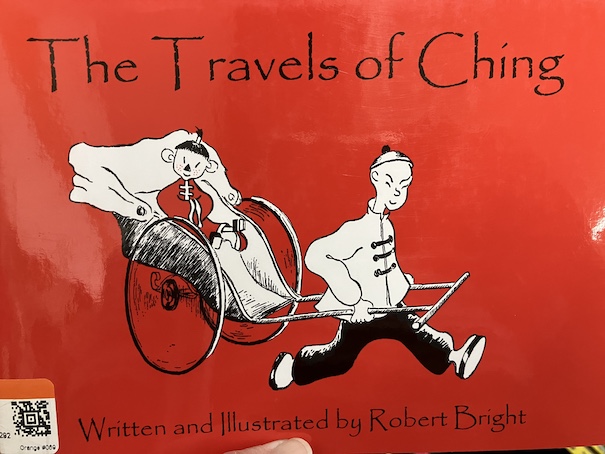
A dollmaker in China makes a little doll named Ching. Ching is a high-quality, handmade doll, and the dollmaker sells him to a toy shop.
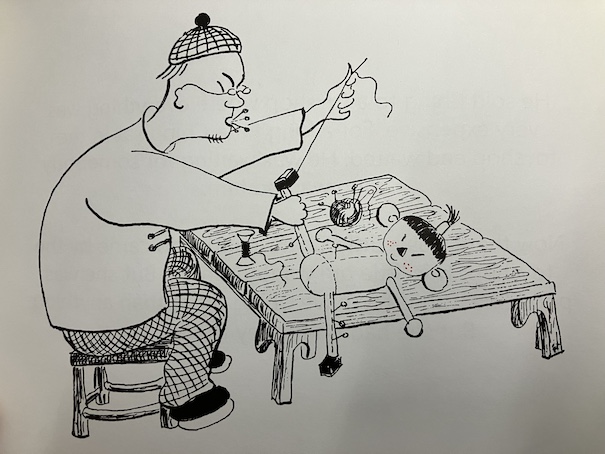
Ching sits in the window of the toy shop for a long time, waiting for someone who wants him. There is a little girl who sees him in the shop, and she wants him badly, but all the toys in the shop are expensive, and she can’t afford him.
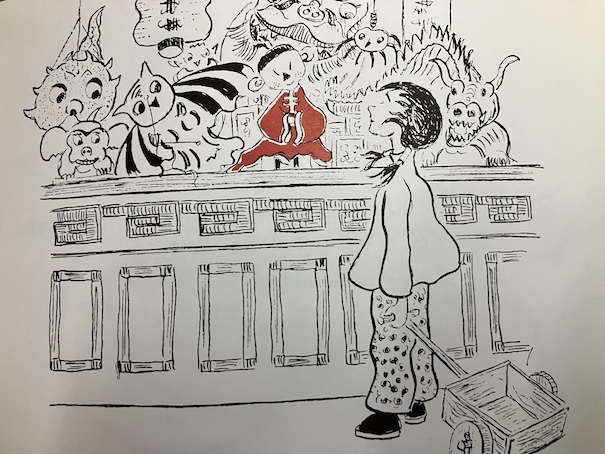
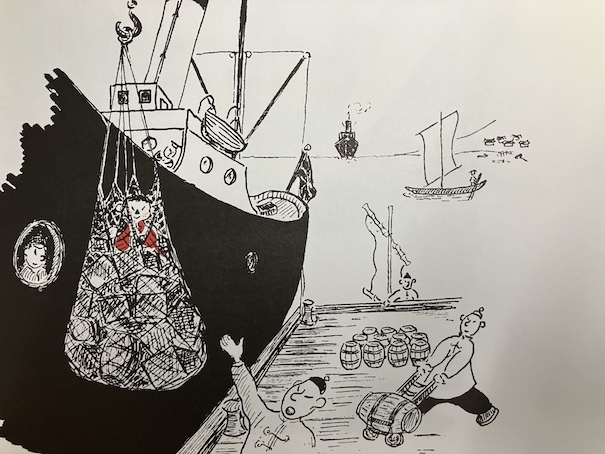
One day, a wealthy tea merchant buys Ching, but he doesn’t want Ching himself. He plans to send Ching to someone else overseas. Ching begins a long journey by donkey, boat, and steamship to America. When he gets to America, he travels even further by train, eventually arriving at the apartment of a wealthy girl.
However, the wealthy girl doesn’t really want Ching. She already has many dolls, and she doesn’t find Ching interesting. She is careless with him, and one day, he falls off the balcony of the apartment and lies outside, forgotten.
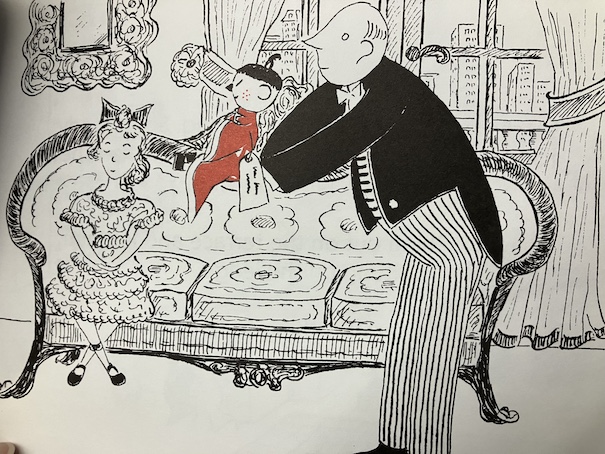
One day, an old man finds Ching and brings him inside, but he doesn’t really want Ching, either. He gives Ching to his cook, but she doesn’t really want him, so she throws him in the trash, and Ching ends up in a junk yard.
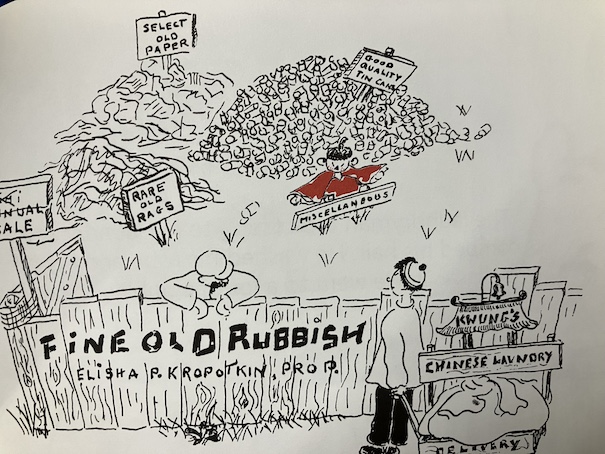
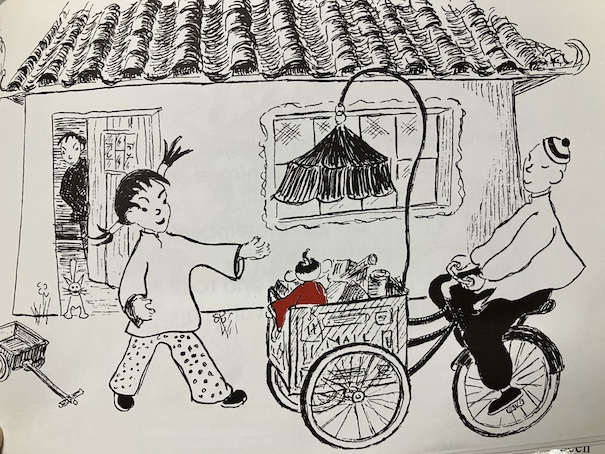
Fortunately, Ching’s story doesn’t end there. A man who works for a Chinese laundry happens to pass the junk yard and spots Ching. Although Ching is dirty from his time outside, the Chinese man recognizes Ching’s quality and is pleased that the junk yard owner is selling him cheaply. The man buys Ching and cleans him up because he knows someone who will really appreciate him.

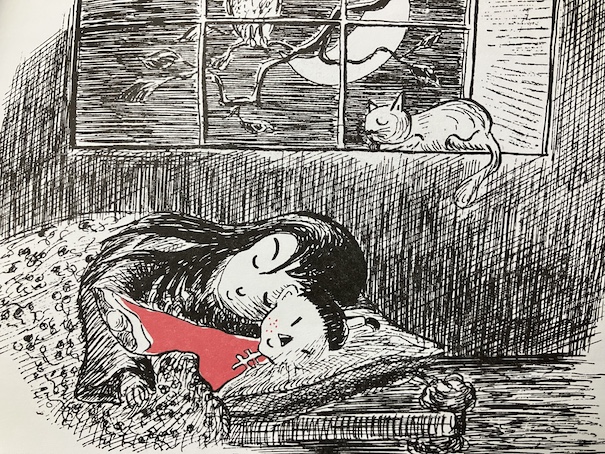
Thus, Ching is sent on another long journey … back to the person who always wanted him the most.
The book is available to borrow and read for free online through Internet Archive.

This is a vintage children’s book, and the illustrations of the Chinese people have the slits for eyes that are considered stereotypical now. However, there doesn’t seem to be any disrespect meant by the story. The basic theme of the story can be summed up by the saying, “One person’s trash is another person’s treasure.”

Ching travels a great distance from China to the United States, passing through the hands of various people along the way, and at times, he’s actually given or thrown away because the people who have him don’t really want him. There’s nothing wrong with Ching. He was always a high-quality doll, which is how he survived his time outside in the elements. It’s just that the people who have him don’t really appreciate him. Fortunately, there are people who recognize his quality, and there is one person who definitely wants him. It’s a happy ending when Ching finds his way back to her. All he really needed was for someone to want him, and in the end, he is happy to be with the person who does want him.
Josephine’s Toy Shop

JosephineToyShop

Josephine’s Toy Shop illustrated by Roger Nannini, 1991.

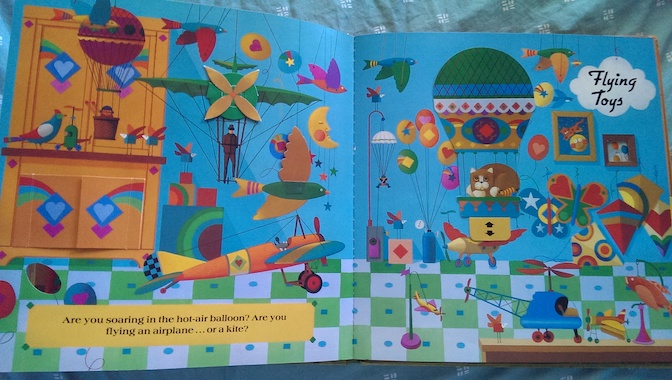
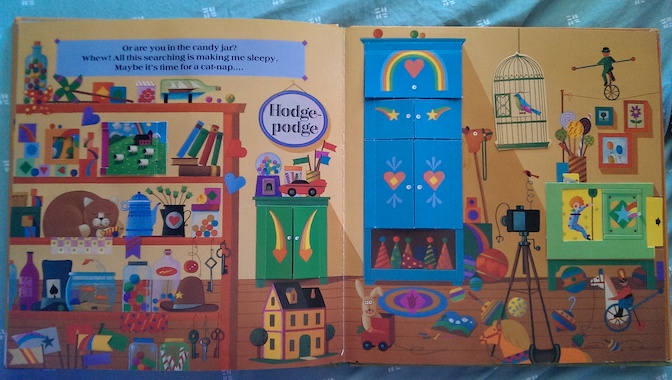
Josephine the Cat lives in a toy shop that bears her name.  The toy shop is full of all kinds of wonderful toys, but Josephine’s favorite toy is Toy Mouse.  There is also a real mouse in the shop, and Josephine is looking for it.

JosephineToyShopFlying

Readers follow Josephine and Toy Mouse through the shop, spotting them and the real mouse, hiding in the busy, colorful pictures.  This is also a lift-the-flap book so kids can look behind doors and pull tabs to move objects.

JosephineToyShopNap

In the back of the book, there is a fold-out model of the toy shop that readers can put together with the front of the book forming the front of the shop.

JosephineToyShopBack

The Castle in the Attic

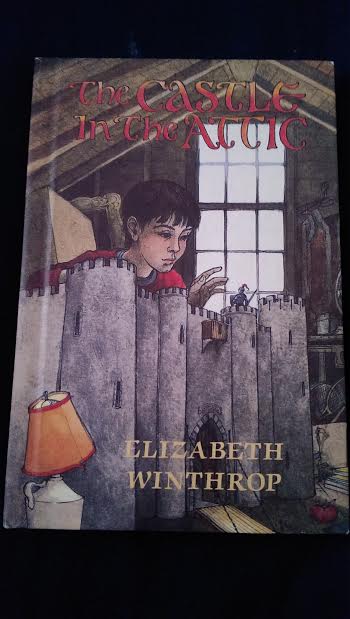
CastleAtticThe Castle in the Attic by Elizabeth Winthrop, 1985.

Ten-year-old William’s life is being turned upside down.  Mrs. Phillips, his nanny, is leaving for good!  Mrs. Phillips has lived with William’s family and helped to take care of William ever since he was born. Both of his parents work, so William spends most of his time with Mrs. Phillips after school. She fixes him his snacks, takes him to his gymnastics lessons, spots for him as he practices his routine, and reads stories about King Arthur with him. However, now that William is ten years old, Mrs. Phillips thinks that she would like to go live with her brother in England, which is where she is from. William is upset because he can’t imagine life without Mrs. Phillips. Mrs. Phillips tells him that he will be fine without her and that his parents will start spending more time with him after she leaves. William tries everything he can think of to get her to stay, but she is determined that it’s time for her to go.

As a leaving present, Mrs. Phillips gives him a toy castle that has been in her family for generations, along with a little lead figure known as the Silver Knight. Still, William is determined to find a way to keep Mrs. Phillips from leaving.  Then, he discovers that the toy castle is magic! When the little knight comes to life and gives him a magic token that can make people small, William thinks he’s found the way he’s been looking for. With Mrs. Phillip’s impending departure and his fears of losing her, William suddenly realizes that he can use the magic coin to keep Mrs. Phillips with him.  Before she can leave, he shrinks her and puts her in the castle with the knight.

Of course, turning his nanny small and keeping her inside the toy castle was unethical, as Mrs. Phillips and the knight point out, but William’s mistake proves to be only the beginning of a fantastic journey that will fulfill a legend, free the knight’s kingdom from the reign of an evil wizard, and give William the confidence he’s been looking for.

Over the drawbridge of the castle is a poem about the beginning of a quest. Mrs. Phillips had said that there was a legend about the little knight, and when he comes alive, he tells William that his name is Sir Simon and that he was turned to lead by an evil wizard who has taken over his kingdom. The poem is the key to defeating the wizard, and the little token is really only half of one that the wizard was wearing around his neck. When William turns Mrs. Phillips small, he cannot reverse the spell because he lacks the other half of the amulet. To get it, he must become small himself and fulfill the poem by crossing the drawbridge as Sir Simon’s squire.  The two of them set out together to defeat the wizard and retrieve the other half of the token. Along the way, they become separated, and William must continue on to the wizard’s castle and finish the quest by himself. William has an inner strength that he doesn’t fully appreciate at first, and he can use it to defeat the evil wizard!

There is a sequel to this book called The Battle for the Castle.

My Reaction

I liked this story when I was a kid, and it’s a good coming-of-age story.  The sequel is also a coming-of-age story, but in a different way.  This book is about William coming to a better understanding of what kind of person he is and what he’s really capable of doing.  He can do more and handle more than he thinks he can.  In the end, although William is still a little sad at saying goodbye to Mrs. Philips when she leaves, he feels a little better about her going because he knows that he can take care of himself now, thanks to his magical adventures. Mrs. Phillips tells him that he always had what he needed inside himself but that he just didn’t believe it before.

The next book focuses on what it really means to be a man instead of a boy.  As William and his best friend grow up and are under social pressure from other boys to do a certain stunt in order to prove that they’re really grown-up, William and his friend set out on a magical adventure that teaches them that there are more ways of becoming a man than one.