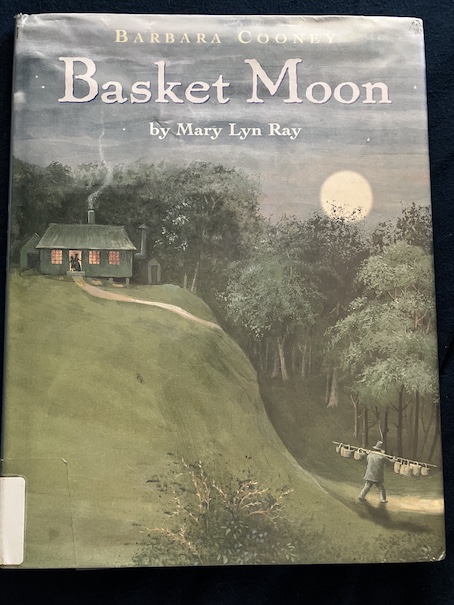
Basket Moon

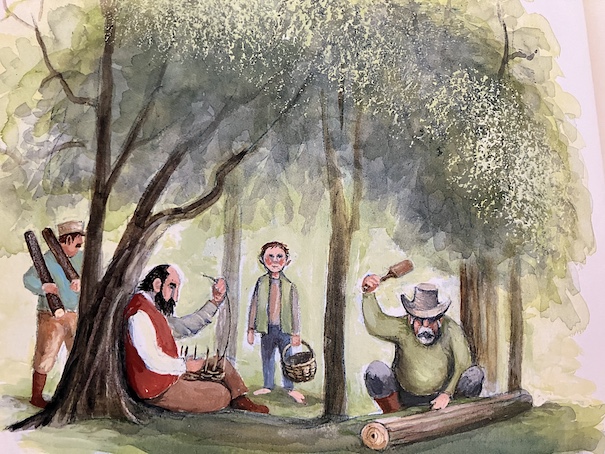
An eight-year-old boy lives in the countryside with his parents, and his father makes baskets to sell in the town of Hudson in New York. The boy has never been to town before, and he wants to go, but his father always says he’s too young.
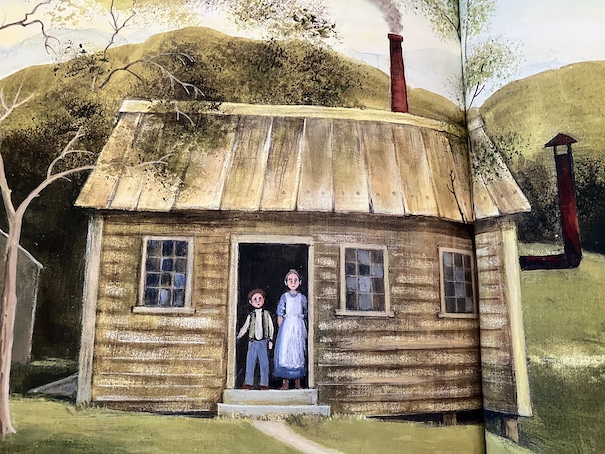
His father has taught him which trees are best for wood to make baskets, and he watches his father and the other men who live in the area gathering it. He’s also watched his father weaving baskets, and he starts to weave baskets of his own. When he turns nine years old, his father decides that he’s old enough to go to town with him to sell the baskets.
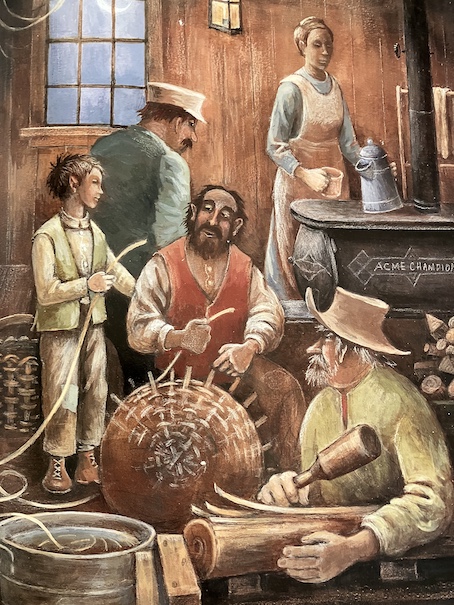
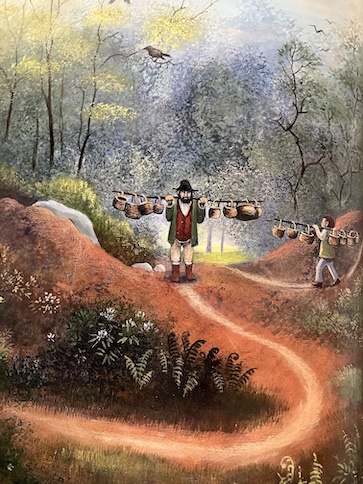
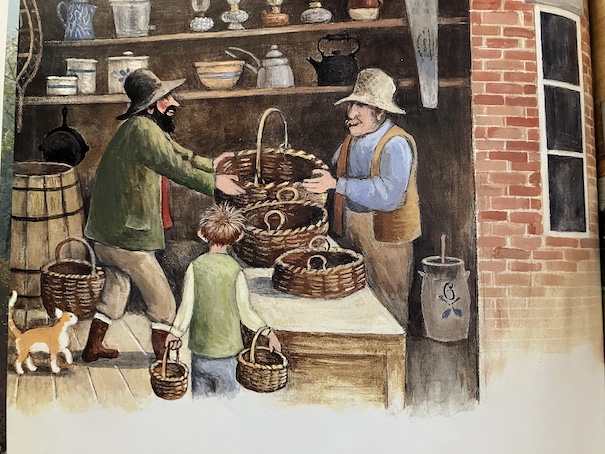
They sell their baskets to a hardware store, and they buy some supplies their family needs. The boy marvels at all the new sights around him. However, as he and his father are heading home, a man teases them about being hillbillies who only know how to make baskets. The boy’s father ignores them, but the boy is bothered by what the man said.
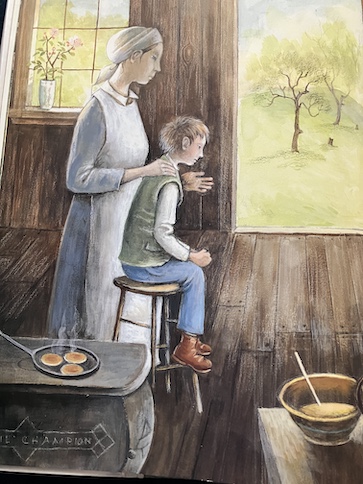
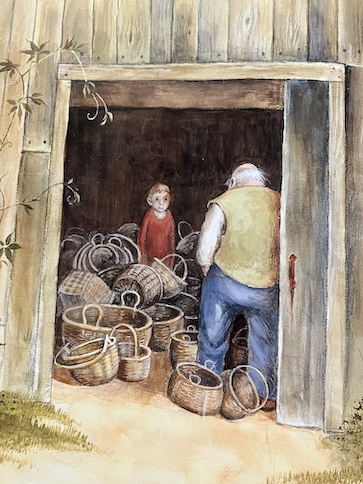
For a time, the boy no longer wants to make baskets, thinking that it’s something that only hillbillies do, like the man in town said. However, when the boy kicks over stacks of his father’s baskets in anger, they don’t break when they fall, and he sees that his father makes strong, high quality baskets. His mother and one of the other men who works with the boy’s father talk to him about how they learned the art of basket making from the trees and the wind. The trees and the wind never seemed to talk to the boy before, but when he really listens, he begins to understand what the men mean.

The book is available to borrow and read for free online through Internet Archive.
I like books about traditional crafts and lesser-known pieces of history. In the back of this book, there’s an author’s note about the history of making baskets among the country people around Hudson, New York. Sometimes, these country people came into town to sell their baskets, but the townspeople were also somewhat leery of them. The wooded countryside around the town was spooky to the townspeople, and there were a lot of stories about frightening things that lurked there. The author points out that this is the area where the stories of Rip Van Winkle and The Legend of Sleepy Hollow were set. The time period of the story is indefinite although it looks like it might be set around the late 1800s or early 1900s. The author’s note says that the art of making baskets in the area started dying out in the mid-20th century because people were using different types of containers, such as paper bags, plastic containers, and cardboard boxes. However, the traditional baskets were made very study, and surviving examples of this functional folk art still exist in collections and museums.

One of the themes of book is being in touch with nature, which is what the adults in the story really mean when they talk about hearing the wind and the trees speak to them. In the end, the boy thinks he literally hears the wind calling to him, but I think it’s supposed to be a metaphor for him getting in touch with nature and with his craft. His family and the others around them are country-dwelling people, and some of the townspeople look down on them for living out in the countryside, away from the society, amenities, and business of the town, but the country-dwelling adults are comfortable with themselves and with their lives. They realize that they know things about nature and about their craft that the townspeople don’t know.

It did occur to me that the townspeople probably wouldn’t know how to make their own baskets if they had to do it themselves. We don’t think that much about baskets today, although we still use them sometimes, frequently as a form of decoration. In those days, though, the baskets were functional home necessities for carrying and storing food and other items. The townspeople in the story buy their baskets from these makers in the countryside because they are the ones who have necessary skills and knowledge to make strong, high-quality baskets that the people in the town need, whether or not the townspeople truly appreciate the work and skill that went into them. Part of what the author’s note points out is that the baskets were of such high quality that some of them have long out-lived their original makers and users. Things of quality last.

The Whispering Cloth

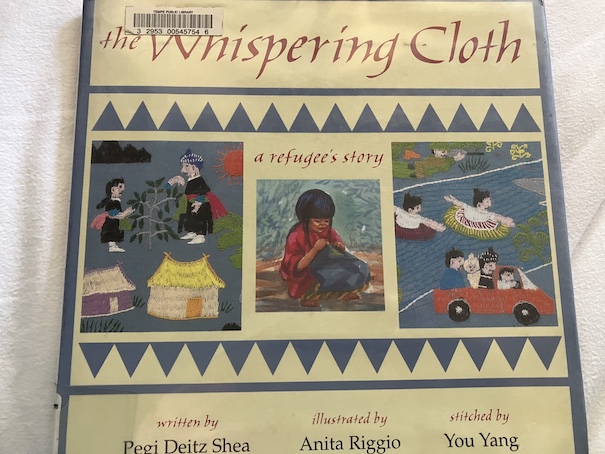
Mai and her family are Hmong refugees from Laos, living in the refugee camp of Ban Vinai in Thailand. Some of her relatives have gone to the United States, but Mai and her grandmother are still waiting in the refugee camp. Mai’s parents are dead, and Mai doesn’t really remember her family’s life in Laos. Almost as far back as she can remember, she’s always lived in the refugee camp. She only has vague memories of her parents’ deaths and how she and her grandmother fled to the refugee camp.

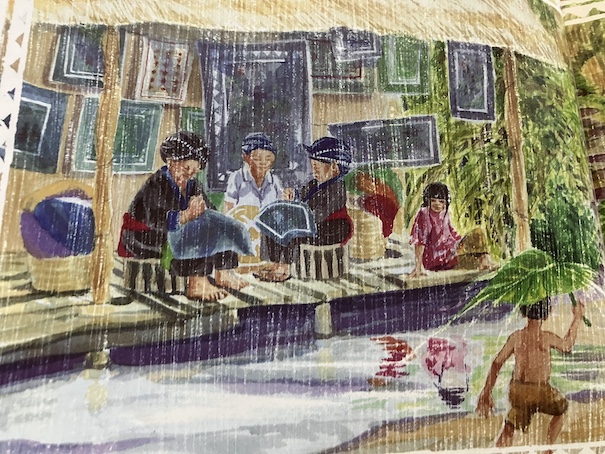
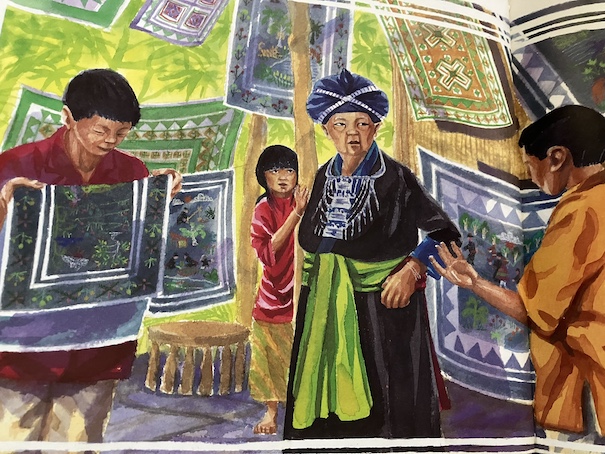
Mai’s grandmother teaches her how to do embroidery, and she begins helping her grandmother make pa’ndau, a kind of tapestry that tells a story. Together, she and her grandmother pa’ndau to sell to traders for money. They hope to use the money to get out of the refugee camp and join their relatives in the United States.

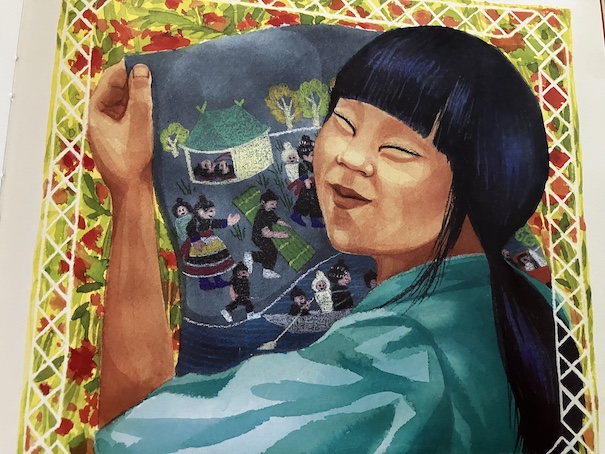
Their pa’ndau tapestries have beautiful floral borders and images that tell a story. Mai asks her grandmother if she can do one all by herself and if he grandmother will tell her a story she could use. Her grandmother says that she’ll be ready to do a pa’ndau of her own when she has a story of her own to tell.

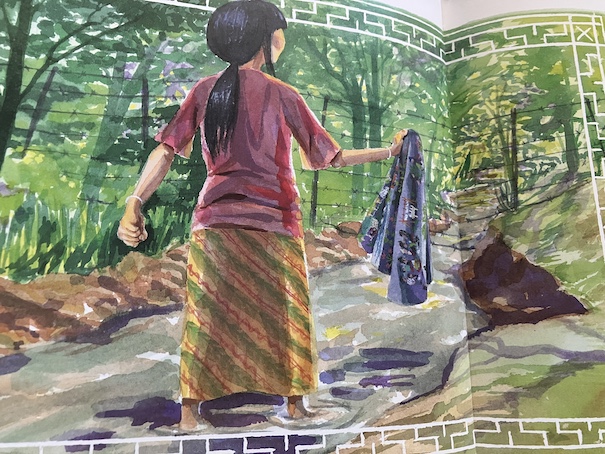
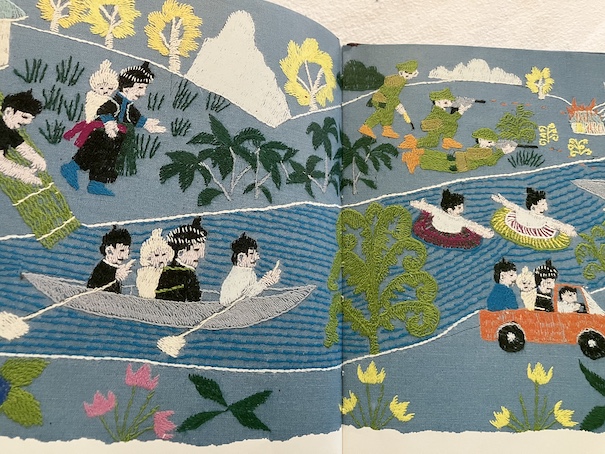
As Mai thinks about how much she misses her parents, she realizes that she does have a story to tell in her own pa’ndau. She begins embroidering a pa’ndau that tells the story of her parents’ deaths and how her grandmother carried her away in a basket, fleeing as soldiers shot at them. She embroiders their arrival at the refugee camp, and the people and things she sees there.

When she asks her grandmother how much money they can get for her pa’ndau, she says that they cannot sell it because it isn’t finished yet. At first, Mai thinks that there isn’t anything more to tell because they’re still living in the camp, and she hasn’t experienced life beyond it. Then, she realizes that she can embroider the life she hopes to have when they finally join her cousins, based on the things they’ve told her in their letters.

The book is available to borrow and read for free online through Internet Archive.
The foreword to the story explains that the Hmong people of Laos were driven out by the Lao Communist government, and many of them were killed before they had a chance to leave. The government drove them out because they sided with the Americans fighting in Laos and Vietnam. Many people, like Mai’s family, found refuge in refugee camps like Ban Vinai, waiting until they could find another country willing to take them on a permanent basis. However, at the time this story was published in 1995, the Ban Vinai camp was set to close. The refugees there were set to be either transferred to different refugee camps or sent back to Laos, to face whatever the government there had in store for them. Understandably, many of them didn’t want to be sent back to the country they had escaped from. This article explains more about the generation of children who, like Mai, grew up in the refugee camp, disconnected from the lives their parents knew in Laos, and with ambitions to go to other places, like the United States, to start new lives.

Although this is a picture book, there are violent themes of war in the story, so I wouldn’t recommend it for very young children. The pictures in the book are beautiful, an unusual combination of paintings and actual embroidery. The artist who did the embroidery, bringing Mai’s tapestry to life, was also a refugee in camps in Thailand before coming to the United States in 1992.

I thought this was an interesting way to introduce readers to part of the history of the Hmong people and the fallout of the Vietnam War through a traditional Hmong artform/craft that tells stories in a unique way.

Yetsa’s Sweater

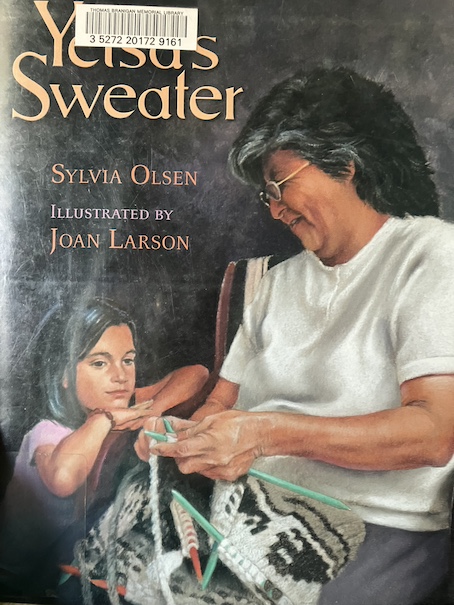
Yetsa and her mother go to her grandmother’s house to help her prepare wool for making a sweater. Yetsa is getting too big for the sweater she’s wearing, but she still loves it because her grandmother knitted designs in it that have personal significance to her and her family.

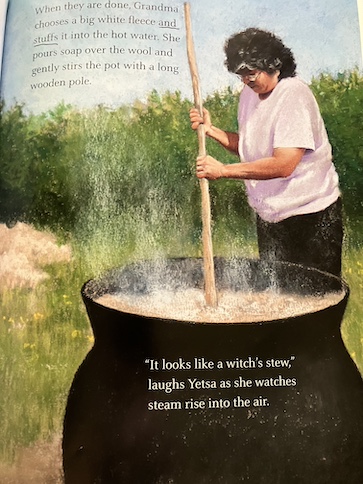
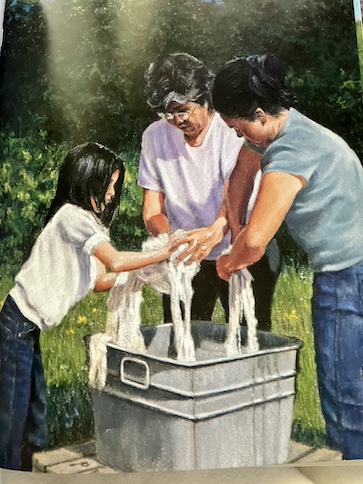
Yetsa’s grandmother builds a fire and brings a large pot for the wool. They have to sort through the fleeces they received from Farmer McNutt and remove any little twigs or hay or anything that doesn’t belong. Yetsa yells when she finds some sheep poop stuck in the fleece. After they’ve removed the debris as best they can, they wash the fleece in hot water over the fire. Then, they rinse it in cool water and wring it out.

While the wool dries on the clothesline, they take a break and have some bread and blackberry jam.

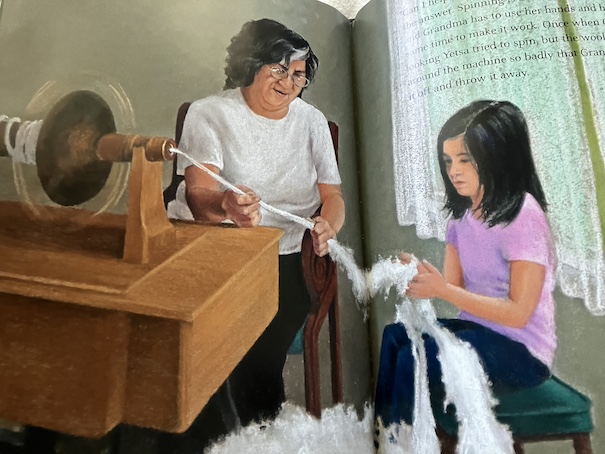
The following week, they begin pulling apart the fibers of the wool, making it fluffier, a process called “teasing.” Then, Yetsa’s grandmother runs the wool through a carding machine, and they begin spinning it into yarn with a spinning machine.

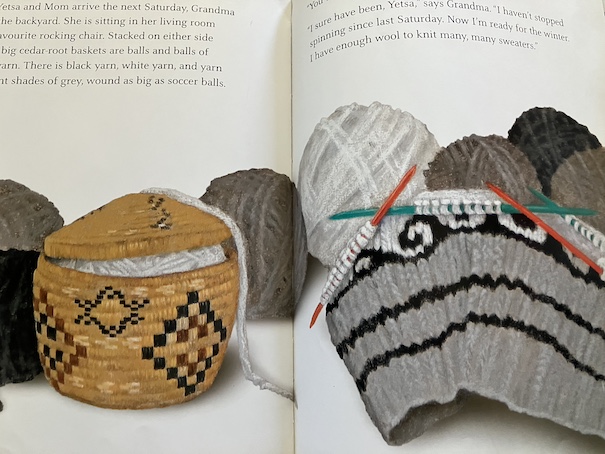
When the spinning is finished, Yetsa’s grandmother has enough wool to make many sweaters.

In the back of the book, the author explains that Yetsa is her own granddaughter and that knitting is a traditional skill for Coast Salish women. They learned knitting from Scottish settlers who came to British Columbia, and the sweaters they made came to be called Cowichan sweaters, after the largest tribe in the region. Children like Yetsa begin learning how to prepare wool and knit at a fairly young age.

The book is available to borrow and read for free online through Internet Archive.

I love books that show people making traditional crafts, and I enjoying following this one from beginning to end! Readers get to see each step in the process of making the sweater, starting with the wool and ending with the finished sweater. I’ve been knitting from a young age, but I’ve never tried spinning my own wool, and I liked seeing the intricate patterns of the sweater.

When I was a kid, I often ignored authors’ explanations because my focus was on the story, but as an adult, I like the added details of author’s explanations. This is a family story because Yetsa in the story is based on the author’s own granddaughter.

The Cuckoo Clock

CuckooClockStolz

The Cuckoo Clock by Mary Stolz, 1987.

Erich was a foundling, taken in by the Goddhart family as a baby after he was found on their doorstep. Frau Goddhart has a reputation for kindness, but sadly, that reputation is really all she has. She is outwardly kind, participating in local charities, only to enhance her reputation. At home, she is selfish and cruel, ruling the house with an iron fist and having tantrums when things don’t go her way. She sees Erich as an unwanted responsibility, only grudgingly raising him along with her own children because if she refused, it would ruin her reputation. Her husband is kind to Erich, but Frau Goddhart treats him more like a servant.

Erich only comes to know real love when he becomes Ula’s assistant. Ula is the town clockmaker, a master in his craft. Ula teaches Erich his craft and how to play the violin.


When Ula dies, leaving Erich his carving tools and his violin, the selfish Frau Goddhart tries to take them away, thinking that such things are too good for a mere foundling, a charity case. Before she can get these precious things, Erich runs away to seek his fortune elsewhere, but he leaves behind something that convinces the town that, although he may be the ungrateful wretch that Frau Goddhart says that he is, he has a talent that will lead him on to greater things.


One of the fascinating things about this book is the pictures, which are charming pencil drawings in a realistic style.  There is also a note in the back about the unusual typeface of the book.

CuckooClockStolzType

The Little Indian Basket Maker

BasketMaker

The Little Indian Basket Maker by Ann Nolan Clark and illustrated by Harrison Begay, 1957.

By “Indian,” the author means Native American.  This book specifically focuses on the  Papago (Tohono O’odam) who live in the Southwestern United States, specifically Arizona.  The story is about a young girl who is starting to learn the traditional art of basket-making, and the book goes into the process involved in making baskets, step by step.   Although the use of “Indian” instead of Native American is somewhat antiquated, and Tohono O’odam is really the proper name for the Papago people, the book has something of an interesting history and the picture it provides of the practice of traditional crafts is fascinating. There is a section at the beginning of the book which explains a little about the history of the Papago (Tohono O’odam) people and where they live.

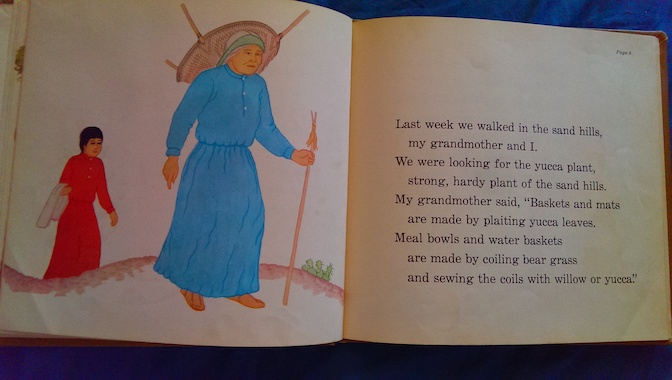
BasketMakerGrandmother

A young girl explains how her grandmother teaches her the traditional craft of making baskets.  They start by gathering the types of plants that they are going to use.

BasketMakerPlants.jpg

They also need special plants for the dye they will need in order to decorate the baskets.  The girl’s grandmother explains about the different types of decorations they traditionally use.

BasketMakerDesigns

Making baskets is a long process that includes cleaning the plants and tearing them into long strips, bleaching them, soaking them to soften them, dyeing strips used in the design, and weaving them together.

BasketMakerSoftening

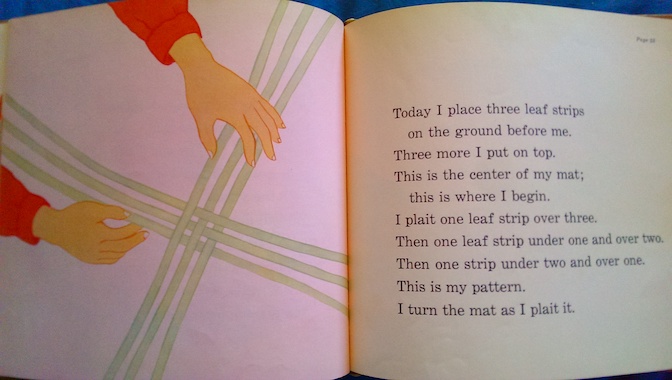
The girl weaves a mat that takes days to finish.  It is the first one that she’s made herself.

BasketMakerWeaving

She is very proud of herself when the mat is finished, and she is pleased with the quality of her work.

BasketMakerFinishing

I’ve owned this book since I was a young child, and it was my introduction to traditional crafts.  Later, I found a related book at a thrift store, The Little Indian Pottery Maker.  Until then, I hadn’t realized then just how old the books were and that there were more of them by the same author.

The book, which was written in the 1950s, was one of a group of stories (not exactly a series because they didn’t have a specific set of characters in common and the themes varied somewhat) written by a woman who was a teacher with the United States Indian Service.  The other books that she wrote, including The Little Indian Pottery Maker, focus on members of different Native American tribes.  She was not Native American herself, and the modern view of Indian schools is not favorable (for good reasons), so one might be a little suspicious of a book written about Native Americans by an Indian school teacher. However, these books interest me because of their explanation of traditional crafts. There are no white people in the stories at all, and they have a timeless quality to them.  Reading them, it’s hard to get a sense of exactly when the stories take place because it’s never mentioned, and there aren’t many clues (no mentions of modern technology, it’s all about the crafts).  I haven’t found any of the other books that the author wrote, but these two are very respectful in their tone, and they begin with explanations of the history of the tribes involved in the stories.  According to Andie Peterson in A Second Look: Native Americans in Children’s Books, the author was deliberately trying to write books that her Native American students could relate to.

The art style of the books vary because they had different illustrators.  The illustrator for this particular book was a Navajo painter.

The book is available to read for free online through Internet Archive.

The Little Indian Pottery Maker

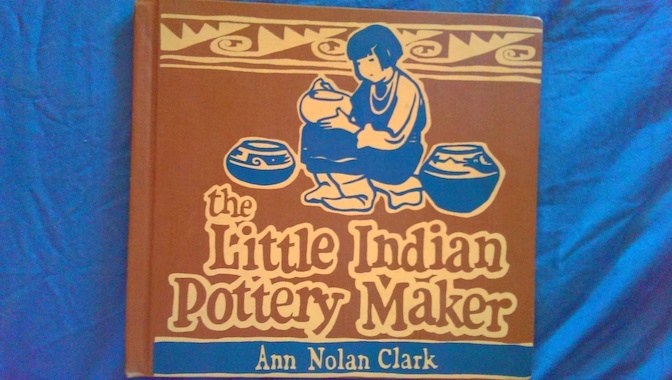
PotteryMaker

The Little Indian Pottery Maker by Ann Nolan Clark and illustrated by Don Perceval, 1955.

By “Indian,” the author means Native American.  This book specifically focuses on the Pueblo Indians who live in the Southwestern United States, specifically New Mexico and Arizona.  The story is about a young girl who is starting to learn the traditional art of pottery-making, and the book goes into the process involved in making pottery, step by step.   Although the use of “Indian” instead of Native American is somewhat anitquated, the book has something of an interesting history and the picture it provides of the practice of traditional crafts is fascinating. The beginning of the book explains a little about Pueblo Indians, their history, and where they live.

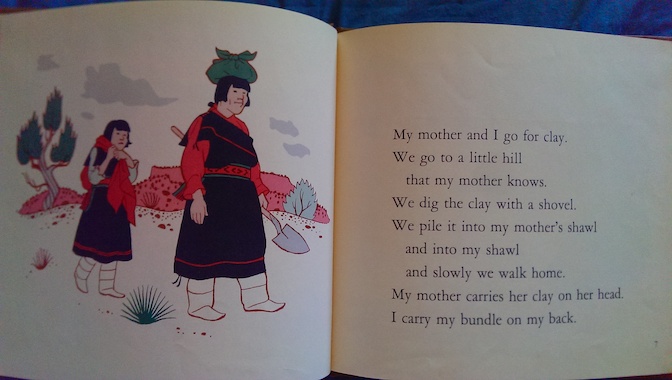
PotteryMakerGettingClay

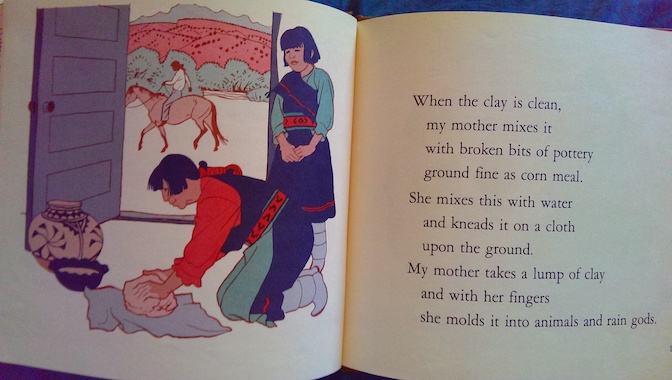
The young girl tells the story of how her mother introduces her to the traditional craft of making pottery and teaches her how to make her first pot.  She describes every step in the process, from when they collect the clay themselves from a hillside until the pot is finally complete.

PotteryMakerMixingClay

The girl’s mother explains about the different methods used to make pots, and pictures show how pots are shaped.

PotteryMakerRollingClay
PotteryMakerMakingPots

Making pottery is a long process that takes days to complete, including shaping, scraping and smoothing the sides, drying, decorating, and finally firing the pottery.  The girl is proud of the first pot she has ever made.

PotteryMakerFiringPots

I found this book at a thrift store a number of years ago and recognized it because I already owned a related book, The Little Indian Basket Maker, that I liked when I was a young child.  I hadn’t realized then just how old the books were and that there were more of them by the same author.

The book, which was written in the mid-1950s, was one of a group of stories (not exactly a series because they didn’t have a specific set of characters in common and the themes varied somewhat) written by a woman who was a teacher with the United States Indian Service.  The other books that she wrote, including The Little Indian Basket Maker, focus on members of different Native American tribes.  She was not Native American herself, and the modern view of Indian schools is not favorable (for good reasons), so one might be a little suspicious of a book written about Native Americans by an Indian school teacher. However, these books interest me because of their explanation of traditional crafts. There are no white people in the stories at all, and they have a timeless quality to them.  Reading them, it’s hard to get a sense of exactly when the stories take place because it’s never mentioned, and there aren’t many clues (no mentions of modern technology, it’s all about the crafts).  I haven’t found any of the other books that the author wrote, but these two are very respectful in their tone, and they begin with explanations of the history of the tribes involved in the stories.  According to Andie Peterson in A Second Look: Native Americans in Children’s Books, the author was deliberately trying to write books that her Native American students could relate to.

The art style of the books vary because they had different illustrators.  The illustrator for this particular book was not Native American (unlike some of the illustrators of other books), but he was adopted into a Hopi tribe, apparently as an adult because of his accomplishments in representing Hopi culture in art.