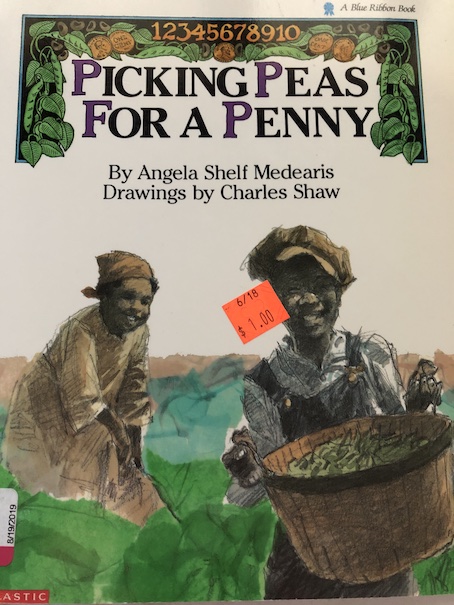
Picking Peas for a Penny by Angela Shelf Medearis, drawings by Charles Shaw, 1990.
This picture book is based on stories from the author’s family and is told from the point of view of her mother, when she was a child in Oklahoma in the 1930s. The story is told in rhyme with a kind of sing-song counting from one to ten as they pick peas and put them in their baskets.

The 1930s was the time of the Great Depression. Many people were out of work, but this African American family has a farm and makes money by growing and harvesting crops. It doesn’t pay much, and everyone needs to help, but because times are hard, they are glad that they are able to do the work and earn the money.


It’s hard work that takes all day in the hot sun, but the girl telling the story says that she and her brother have a little fun while they’re doing it, too. Their grandmother tells them not to goof off because they work to finish. The grandfather of the family offers the children a penny for every pound of peas they pick and says that he’ll take them into town to spend it, so the children start a pea-picking race with each other.


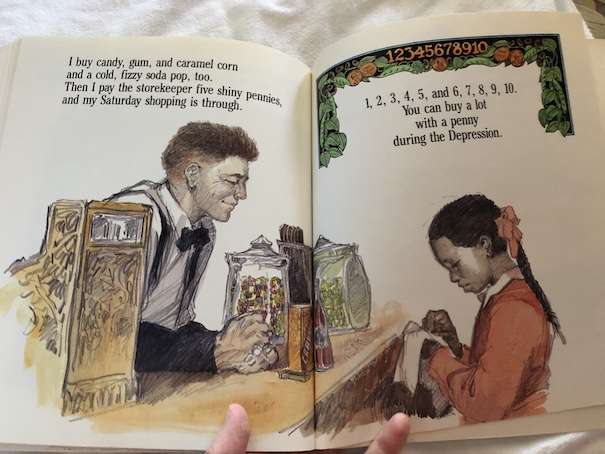
After the work is done, they visit the general store in town, and the children have the opportunity to buy treats for themselves. They only have pennies, but it’s enough to buy some penny candy and soda pop. After the hard work they’ve done, it feels like a rich reward.
In the back of the book, there’s a picture of the author’s family. Although the story itself doesn’t mention it, the name of the girl in the story is Angeline.
The book is available to borrow and read for free online through Internet Archive.


 Jestress's Forgotten Books and Stories