Isabel’s House of Butterflies

The story begins by explaining that the forests of Michoacan, Mexico are a sanctuary for monarch butterflies, but that sanctuary is in danger because of logging activities. The large-scale industry is a major threat, but sometimes poor people living in the area also chop down trees because they need to sell the wood. The author notes that there have been efforts to preserve these trees, but it’s difficult to enforce laws protecting them, and no one is sure what will happen to the monarch butterflies if the trees disappear.

Isabel is an eight-year-old girl living with her family on a small farm, and the tree outside their house attracts butterflies on their migration route. She calls it, “La casa de las mariposas,” which means “The House of Butterflies.” Her family is poor, but they can’t bring themselves to chop down their special butterfly tree, like other families in the area have done. They love it that the butterflies appear there every autumn, and they think it’s a beautiful miracle to see them return every year. Sometimes, tourists come to the area to see the butterflies, and that brings the family a little extra money.
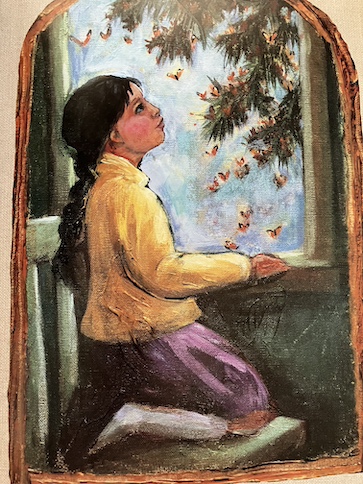
However, one year, there is very little rain, and they have a very bad harvest. The family sells their pigs and continues on as best they can, but their money is running low. They don’t have many resources left for money, and Isabel’s father is reluctantly considering cutting down their butterfly tree. He doesn’t want to do it, but he doesn’t know what else to do.

Isabel is distressed at the loss of the tree and the butterflies, so she suggests another plan to her parents. She often helps her mother to make tortillas, so she tells her mother that maybe they can set up a stand selling tortillas to the tourists who come to see the butterflies. The family decides to give Isabel’s plan a try.

The book is available to borrow and read for free online through Internet Archive.

The story ends on a somewhat hopeful note, but it bothered me a little because it’s not definite that Isabel’s plan is going to work. Isabel is hoping that they’ll be able to make enough money that they won’t need to cut down the tree, but we only see them getting set up, so we don’t know if they’re successful or not. I would have preferred to see them succeeding so we would know that things are going to get better, but the story just ends at that point, and it’s left up to the minds of the readers whether they were successful or not.

I think that hopeful but slightly worrying note at the end of the story is meant to reflect how people trying to preserve natural resources often feel – they have ideas and plans to help preserve natural areas and resources, but nobody knows for sure what will work or how well their plans will work. It’s realistic, if a little bit of a let-down. However, while nothing is guaranteed to be successful and life has its uncertainties, there is hope in the people who are willing to try different approaches to problems rather than simply giving up. The book does speak to the concerns that modern people, even children, have about the environment and the search for systems that work better than the ones that we already have.
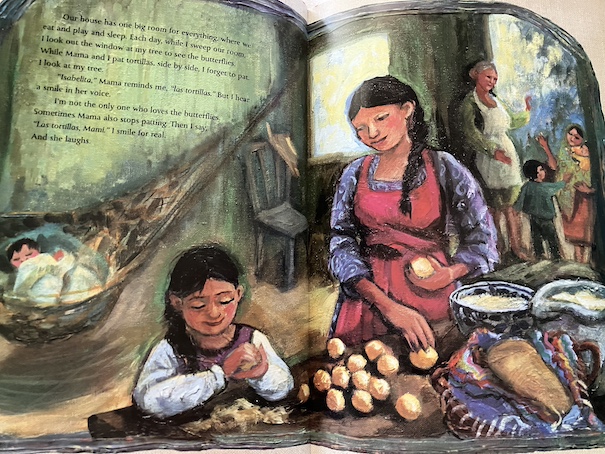
The pictures in this book are soft, colorful, and lovely. Although the family is poor, they appreciate the small pleasures in their lives, like making the tortillas and the yearly appearance of the beautiful butterflies. I did also feel a little sorry for the butterflies the pigs ate, but the story doesn’t dwell on that part too much.

This book was published by Sierra Club Books for Children, and there is a small note with the publishing information about the origins of the Sierra Club, which is dedicated to protecting scenic and ecological resources.

The Little Fir Tree

A little fir tree feels lonely among the large trees in the forest, but something happens that changes his life forever – he is chosen to be a living Christmas tree for a little boy!

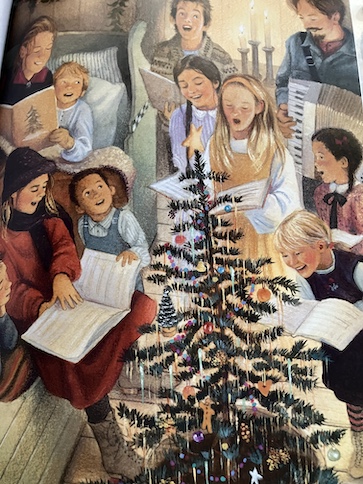
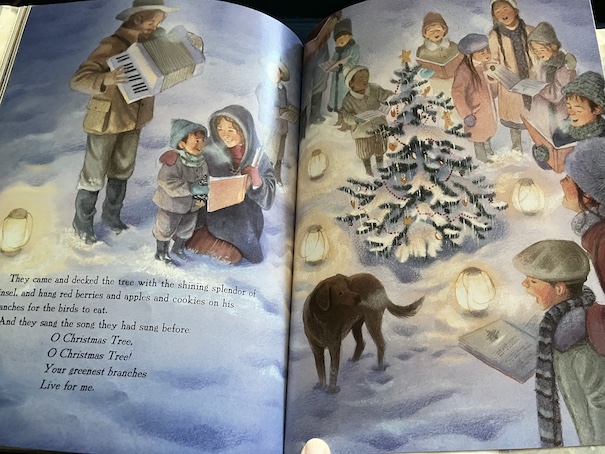
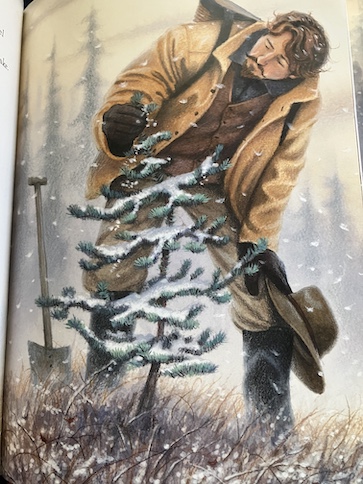
One winter, the boy’s father carefully digs up the tree and brings it home to his young son, who cannot walk because of a lame leg. The boy has been wanting to see the trees in the forest, but since he can’t go to the forest himself, his father has brought a free to him. The little fir tree loves being decorated, and the next evening, guests come and gather around him, singing Christmas carols.

In the springtime, the boy’s father takes the tree back to the forest, where he found it, and he plants the tree again so it will continue to grow. However, the following winter, the boy’s father returns to dig up the tree again and take it back to the boy for Christmas.

The little fir tree loves this ritual of visiting the boy and his family and being their Christmas tree every winter, but the next winter after that, the man doesn’t come to dig him up. The little tree is disappointed and lonely, but he is in for a surprise. This winter, the boy and his family come to see him in the forest!

The book is available to borrow and read for free online through Internet Archive, although that copy has different illustrations.

I mainly know Margaret Wise Brown for Goodnight Moon and The Runaway Bunny, but I found this Christmas story charming. I don’t like Christmas stories from the point of view of trees that are cut down, like the Hans Christian Andersen story, The Fir-Tree, which has a really depressing ending. I like it that this family in this book keeps the tree alive, returning it to the forest every year to continue growing. Things change for both the boy and the tree over the years, as they both continue to grow, but they change for the better, and they continue to be fond of each other and a source of inspiration for each other.

When I was a kid, our elementary school had a large tree on a hill on the kindergarten playground, and the story behind it was that it was once a living Christmas tree from the very first kindergarten class at the school. That tree is still there and alive today, about 50 years after it was first planted there and more than 30 years after I used to play under it. I like to imagine that it will be true of the little fir tree, too, that it will continue growing over the years.

Earlier versions of this book had different illustrations, but personally, I love the illustrations in this printing because they’re detailed and realistic. The version on Internet Archive has illustrations by Barbara Cooney, who is known for Roxaboxen and Miss Rumphius. Cooney’s illustrations are also good, but not as realistic as Larmarche’s, and they’re in a limited color range.

One other difference between versions of the book is that the earlier version also included the musical notes for the carols that the children sing and additional songs that aren’t included in the later version of the book. I enjoy books that include actual music and lyrics, like books that include recipes, because they are fun extras and add an extra dimension to the story by providing an accompanying activity. Although I like the more detailed and realistic illustrations of newer edition of this book, I do prefer the actual music and wider range of songs from the older version.

Apple Tree Christmas

Apple Tree Christmas book cover

Apple Tree Christmas by Trinka Hakes Noble, 1984.

A farm family in 1881 lives in their barn because they haven’t built a separate house yet. Outside the barn, there is an old apple tree that the family loves.

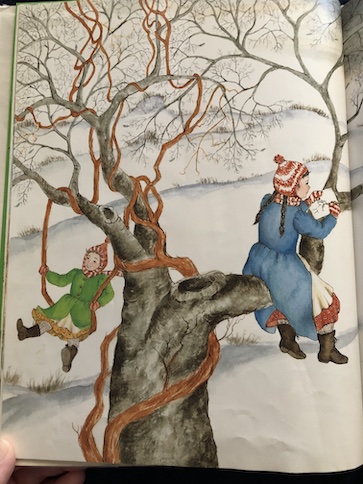
They like to pick the apples from the tree, and use them for cider and applesauce. The two girls in the family like to climb the tree. Josie, the younger girl, likes to swing on the vines that hang from the tree’s branches. Katrina, the older girl, likes to draw in the tree with her paper resting against a crooked branch. She thinks of that special limb as her “studio.”

Then, a terrible winter storm ruins the apple tree before Christmas. The whole family is sad at the loss of the tree, but Katrina is particularly devastated at the loss of her studio. Will she even be able to draw again if she can’t craw in her special place?

The family uses most of the ruined tree as firewood, and they use apples they’ve saved from the tree as decorations on their Christmas tree. However, because of the loss of the apple tree, it doesn’t really feel like Christmas to Katrina. Then, their father shows them that he has saved their favorite parts of the tree and turned them into special Christmas presents.

The book is available to borrow and read for free online through Internet Archive.

My Reaction

I thought this was a charming Christmas story! When I first saw the title, I guessed that the family would use an apple tree as a Christmas tree, but that’s not it at all. It’s just about the family feeling sad about the loss of their apple tree and how the remains of the tree made it a memorable Christmas. Because the father of the family saved their favorite parts of the tree when he was cutting up the rest for firewood, they will still be able to enjoy the things they loved about the tree, particularly Katrina, who receives a special drawing table made out her favorite branch of the tree.

The author dedicated the book to her own father because he made a special drawing board for her. On the inside dust jacket of the book, the explains that the inspiration for the apple tree and vine swing came from her own childhood in rural Michigan.

I love the artwork in this book! The pictures are realistic and detailed, and they have an old-fashioned charm that fits well with the modern Cottagecore aesthetic. I love the family’s home in the barn, with the girls sleeping in the loft and being wrapped in colorful patchwork quilts! The first book that I read by this author was The Day Jimmy’s Boa Ate the Wash, but she wasn’t the illustrator for that book. I didn’t know the she did illustrations, but seeing the illustrations in this book makes me want to see more by her!

Owl Babies

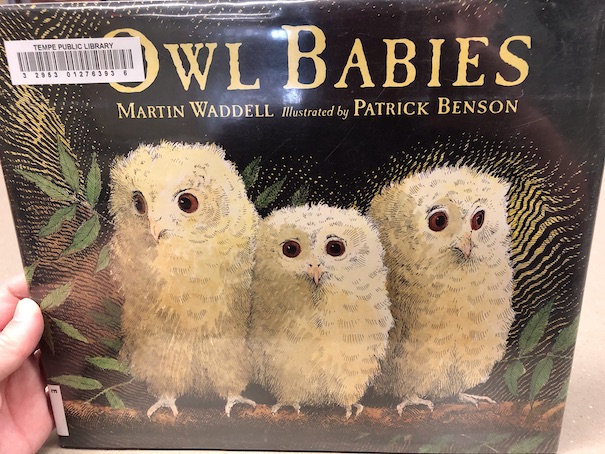
Owl Babies by Martin Waddell, illustrated by Patrick Benson, 1992.

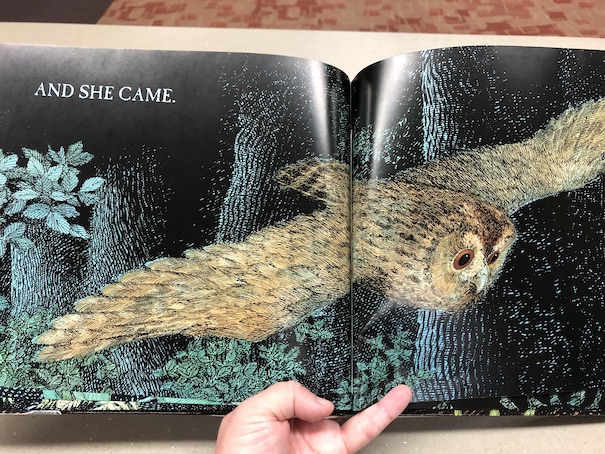
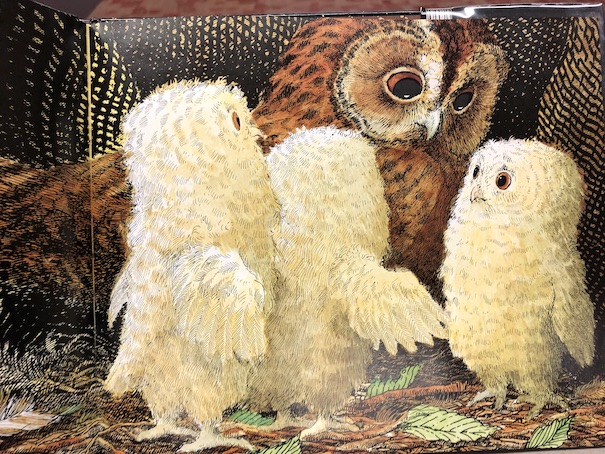
Sarah, Percy, and Bill are three owl babies who live in a tree with their mother. One night, they wake up and can’t find their mother. They think it over, and they decide that she has probably gone out to get food for them.

They wait for her and try to be brave, but they get worried that she isn’t coming back. Then, suddenly, their mother does come home!

The little owls are happy to see their mother, and their mother reminds them, “You knew I’d come back.”

It’s common for children to worry when their parents go away without them, wondering if they will ever come back. The story reminds young children that, even when mommy has to go away for a while, she will still come back home.

The book is available to borrow for free online through Internet Archive.

Chicka Chicka Boom Boom

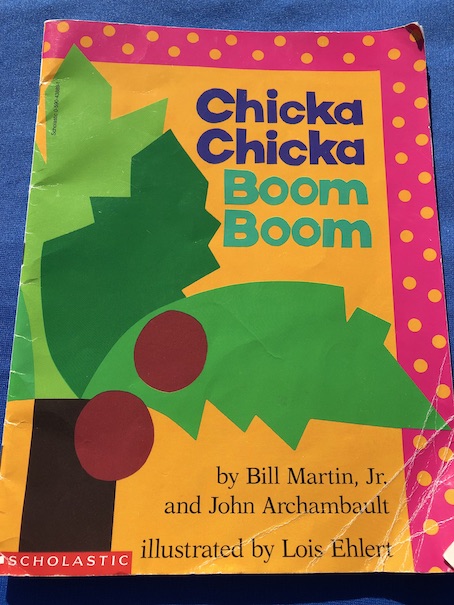
Chicka Chicka Boom Boom by Bill Martin, Jr. and John Archambault, illustrated by Lois Ehlert, 1989.

This is an alphabet book for young children, but it’s not like most alphabet books.  Most alphabet books try to tie letters of the alphabet to words that young children know, to emphasize the sounds that the letters make, like in A, My Name is Alice or the letter-themed tongue twisters in Animalia.

In Chicka Chicka Boom Boom, the letters of the alphabet decide to climb to the top of a coconut tree.  (Why not?)  They go up the tree in alphabetical order.

But, by the time they reach the end of the alphabet, there are too many letters in the tree, and they all fall out.

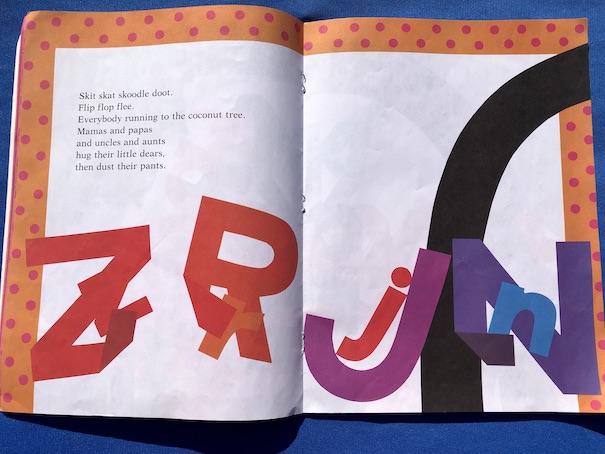
The uppercase versions of the letters are the adults of the story, like parents and aunts and uncles, and they comfort the lowercase letters who fell out of the tree.

At the end of the book, the letter ‘a’ tries to convince the others to climb the tree again.

As I said, this book struck me as unusual for an alphabet book because it doesn’t try to tie any of the letters to associated words.  Mostly, it just emphasizes the order of the letters, first in the order that they go up the tree, and then in the order that they recover from falling out.

The story is told in rhyme, and the “Chicka Chicka Boom Boom” part is just sounds that fill out the story/rhyme, like it’s part of a song. At the end of the book, there’s a page with all of the letters of the alphabet, both upper and lowercase.

The book is currently available online through Internet Archive.

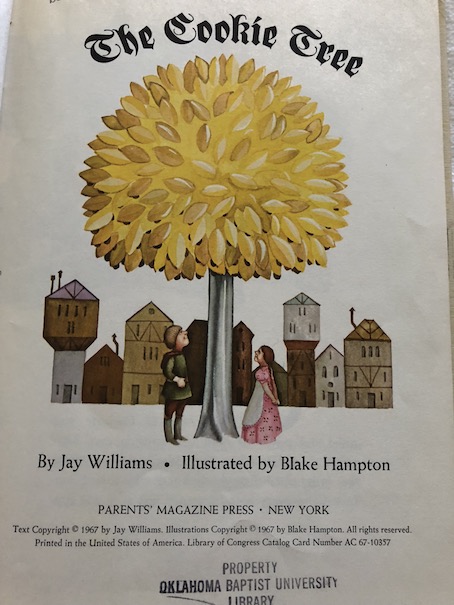
The Cookie Tree

CookieTree

The Cookie Tree by Jay Williams, 1967.

Owlgate is a very orderly little village.  Everything has a purpose and a place, and nothing unexpected happens . . . until the day the cookie tree appears in the middle of town.  The tree is silver and gold and has chocolate cookies.

CookieTreeOwlgate

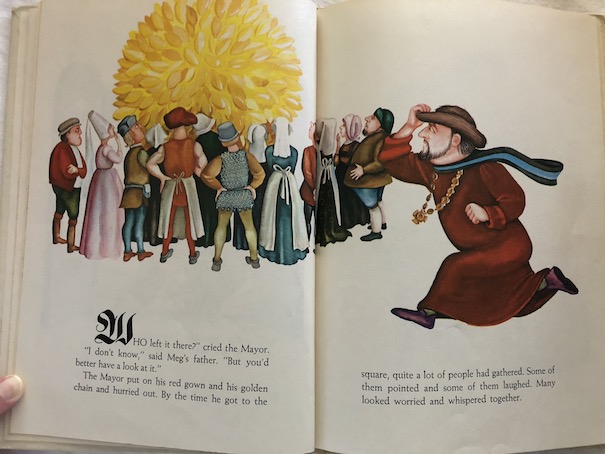
A girl named Meg notices it first, but her parents refuse to allow her to pick a cookie from the tree because they’re worried about where it came from. For all they know, the cookies could be poisonous!  Meg’s father gets the mayor to come look at the tree.

CookieTreeTownspeople

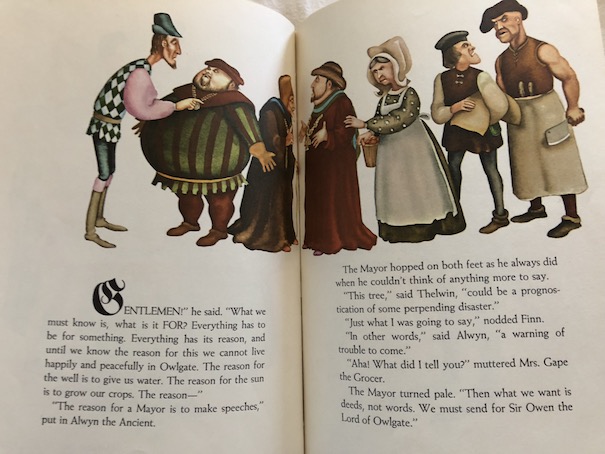
Eventually, everyone in town comes out to see the tree.  The miller thinks that the whole thing is probably a big joke, but most of the other adults are worried because it’s weird.  Some of them think maybe it’s some kind of bad omen.  Little Meg’s theory is that a magician sent it as a present for the village, just to give them cookies.  However, the adults reject that explanation, saying that it doesn’t make sense and they don’t any reason see why a magician would send them a cookie tree.

The mayor consults with the Village Councillors, but they don’t accomplish much other than to establish that there are indeed chocolate cookies growing on the tree when one of them samples a cookie.  The adults argue back and forth about what to do about the tree, but by the time they come up with a plan, the tree has vanished!

CookieTreeDebate

While the adults’ backs were turned, the children of the village ate all the cookies, and once the cookies were gone, the tree disappeared.  Apparently, Meg’s theory about the magician sending the tree just to give them cookies was correct.

One of the things that people sometimes praise children for doing is seeing things for what they are. Adults have a tendency to over-analyze things, looking for hidden meanings that may or may not exist. Sometimes, things really are just what they appear to be, and over-analyzing just confuses the issue. It can be like that with children’s books. Adults worry about every little thing in stories and possible messages being sent to children, but when people start over-analyzing stories, they can find themselves making up hidden messages and reading things into stories that aren’t really there.  Sometimes, stories and other things are just for fun, and you might as well simply enjoy them for what they are!

The book is currently available online through Internet Archive.

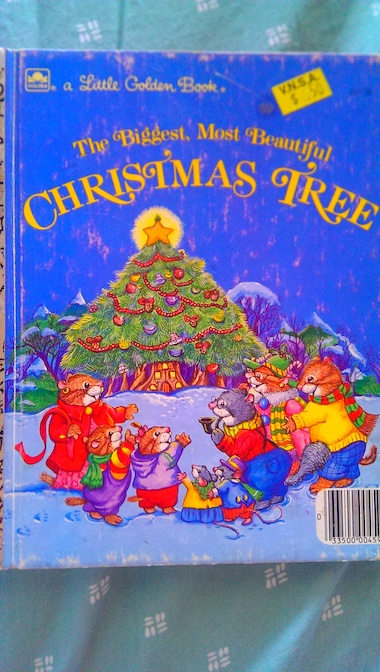
The Biggest, Most Beautiful Christmas Tree

BiggestChristmasTree

The Biggest, Most Beautiful Christmas Tree by Amye Rosenberg, 1985.

This is a Little Golden Book.

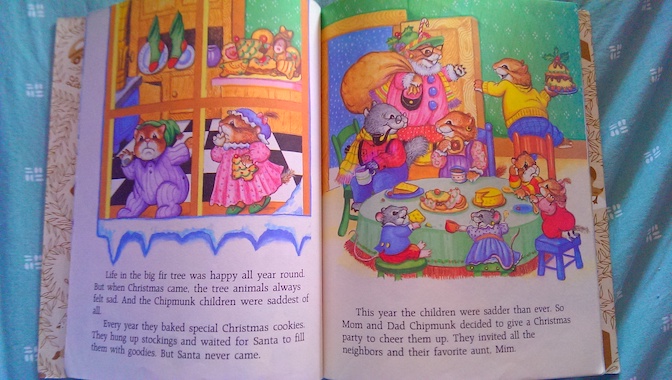
Every year at Christmas, the Chipmunk children, Nina and Nutley, are disappointed because Santa doesn’t visit their home in a large fir tree in the forest.  They always hang up their stockings and put out cookies, but for some reason, Santa never comes.

BiggestChristmasTreeDisappointment

However, this year, their Aunt Mim has figured out the reason why Santa passes them by and what to do about it.  Aunt Mim has realized that Santa can’t find their tree because it looks like every other tree in the forest.  What they have to do is to decorate their tree so that Santa can find it among all the others.

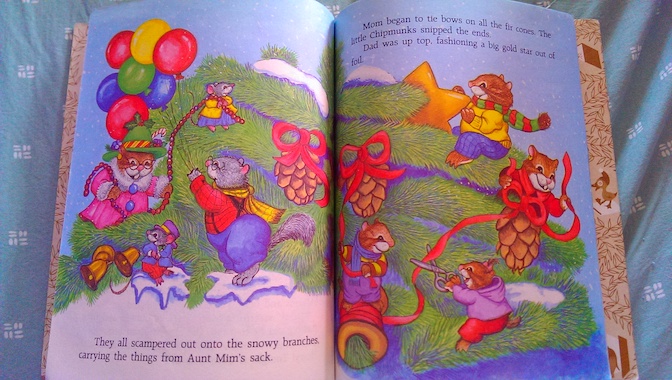
Aunt Mim brings lots of things they can use as decoration, and all of the other animals who live in the tree help with the decorating.  They tie bows on the pine cones, hang strings of berries, and paint balloons to look like large Christmas tree ornaments.

BiggestChristmasTreeDecoration1
BiggestChristmasTreeDecoration2

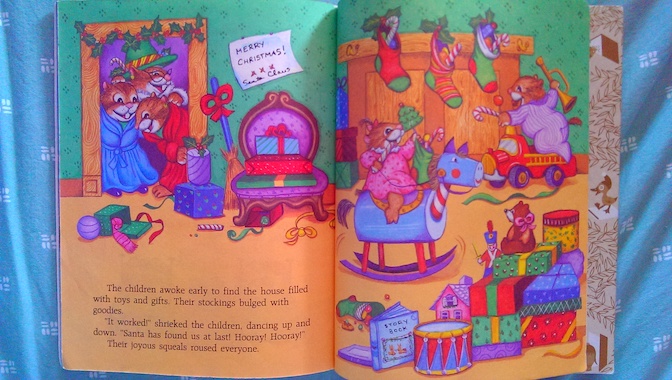
Sure enough, once Santa knows how to find the Chipmunk children, they get the kind of Christmas they’ve been waiting for!

BiggestChristmasTreePresents

This is just a cute picture book that I liked when I was young.  It is available to borrow and read for free online through Internet Archive.

The View From the Cherry Tree

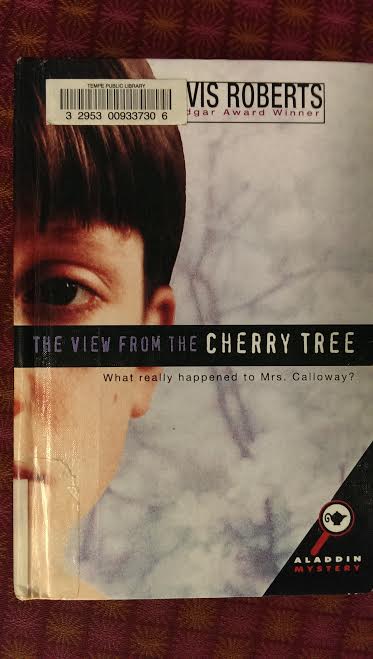
viewcherrytreeThe View From the Cherry Tree by Willo Davis Roberts, 1964.

Things have been difficult around Rob Mallory’s house since preparations for his sister’s wedding began, but things are about to get a whole lot worse. While his mother and sisters are rushing around, making last minute arrangements for the wedding guests and finding a replacement for a sick bride’s maid, Rob’s father is trying to help Uncle Ray stay out of jail after he stole some money from his boss. To make matters worse, old Mrs. Calloway, their unpleasant, eccentric next door neighbor, has been causing trouble again, spying on people with her binoculars and provoking arguments with everyone in the neighborhood.

The only peaceful place Rob can find to escape all the chaos at his house is the cherry tree that stands between his house and Mrs. Calloway’s. While he is up in the tree, Rob witnesses an argument between Mrs. Calloway and a man Rob can’t see inside her house. Then, Rob sees the man shove Mrs. Calloway out of her window. Her binoculars get tangled on a tree branch, and she is strangled to death. Rob runs to his house to get help, and the authorities come and take Mrs. Calloway’s body away. However, no one believes Rob when he says that Mrs. Calloway was pushed. Everyone thinks that her death was an accident. Then, a series of strange “accidents” happen that seem to threaten Rob’s life.

Rob’s family is too caught up in the wedding plans and family troubles to realize what is happening, but Rob is convinced that Mrs. Calloway’s murderer is trying to silence him forever.  Can he outwit the murderer and learn his identity?  More importantly, can he survive until the evening when his father is supposed to return home and can help him convince the police that he’s in real danger?

I have to say that I really hated the mother in this story.  She struck me as being a very silly and shallow woman, obsessed (and that is not too strong a word) with the trappings of her daughter’s wedding.  She speaks of the wedding as an “opportunity” that she doesn’t want spoiled, a word that seriously bothers me in this context.  “Opportunity” implies some kind of expected benefit, not just a momentous “event” in their lives or a rare “celebration.”  I kept wondering, and still wonder what kind of gains she was anticipating from her daughter’s marriage and why.  The only thing I can think of is a selfish desire to be at the center of attention, or as close to it as she can get.  As a married woman, she can no longer be the beautiful, blushing bride on her special day, but she might get a vicarious thrill from being the mother of the beautiful, blushing bride, reliving her own glory “day” from the past.

Maybe I’m getting a little too psychological with her, but that was the vibe I got, a grown-up mother-of-the-bride-zilla who can’t see past the champagne and pretty dresses to anything more important, whether it’s her own brother’s serious brushes with the law or the attempts on her young son’s life.  When Rob tries to tell his mother what’s happening, she almost slaps him because she’s so “overwhelmed” by everything that she has to do, but I’m not buying it because it seems like everyone else is really taking care of pretty much everything for her.  She has plenty of people around her and plenty of support if she wanted to recruit more.  She freaks out about any problems that happen, no matter how big or small, and wants to sweep every bad thing under the rug as much as she can because, apparently, weddings should be perfect at all costs and she wants nothing to invade that lovely bubble in her mind.  I didn’t like her when I read this story as a kid, and I’ve discovered that I hate her even more now.  Her motives have become less understandable and her personality less sympathetic now that I’ve grown older instead of more so, and that’s not a good sign.  As an adult, I would have urged her prospective son-in-law to reconsider marrying into this family on the basis of the mother’s behavior, although the bride’s offer to call off the wedding until her brother is found when he goes into hiding shows that she might have her priorities more straight than her mother’s in the end.

The book is currently available online through Internet Archive.