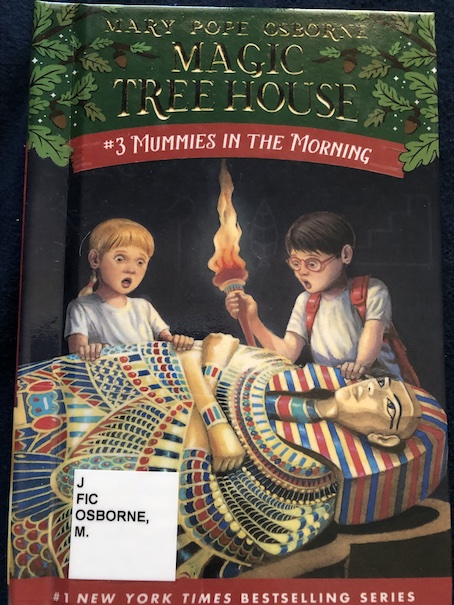
Magic Tree House

Thanksgiving on Thursday by Mary Pope Osborne, 2002.
There is a letter to the readers at the beginning of the book, where the author briefly describes the history of the Thanksgiving holiday and how it started as a three-day harvest festival and didn’t become a regularly-celebrated holiday until President Lincoln declared it as a national holiday of thanksgiving to be celebrated annually on the last Thursday in November in 1863. The separate prologue to the book explains that Jack and Annie have started learning magic, and they’ve been going on a series of missions to find different types of magic.
It’s Thanksgiving, and the children know that they will be leaving for their grandmother’s house soon, but they can’t resist going to the tree house to see if there’s another message from Morgan. There is a message that tells the children that they are about to find a new kind of magic. A book in the tree house takes the children back in time to the first Thanksgiving in the American colonies.
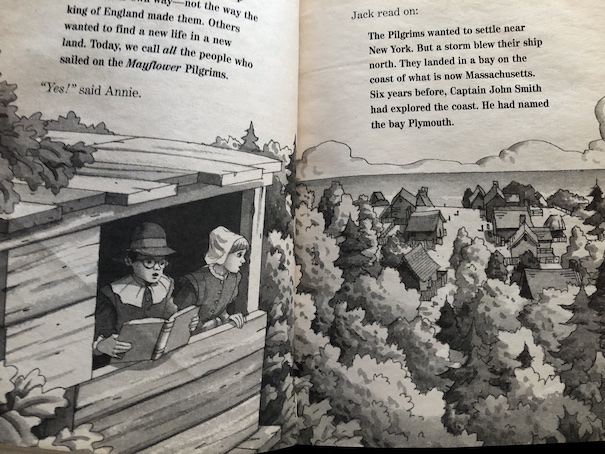
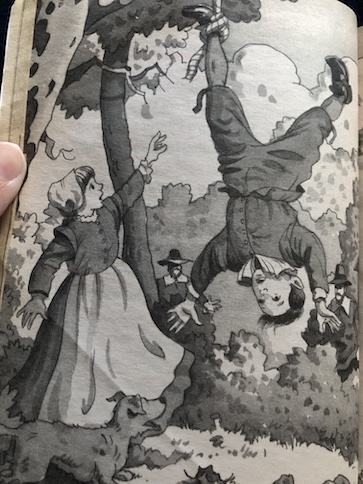
They read about the Pilgrims and the voyage of the Mayflower, and they realize that they are now in 17th century Plymouth. Annie remembers how her class at school put on a play about Thanksgiving, and she gets excited, thinking about how they’re about to meet some of the people they studied in school. She dashes off, eager to get a look at them, although Jack thinks they should pause and work out a plan before they approach anyone. Unfortunately, Jack gets caught in a hunting snare.
A group of people, Pilgrims and Native Americans, come to see what got caught in the snare, and they find Jack and Annie. When they question the children, Jack isn’t sure exactly what to say, so he tells them that they came from “a village up north” and that they’re here to learn how to grow corn. Remembering something else from the book, he claims that his parents sailed to the colonies with Captain John Smith when he and Annie were babies. Captain Standish says that Squanto knew Captain John Smith and that he might remember them. To the children’s surprise, when Governor Bradford asks Squanto if he remembers two babies called Jack and Annie who sailed with Captain John Smith, he says he does. Jack wonders if he’s mistaking them for two other children from the past.

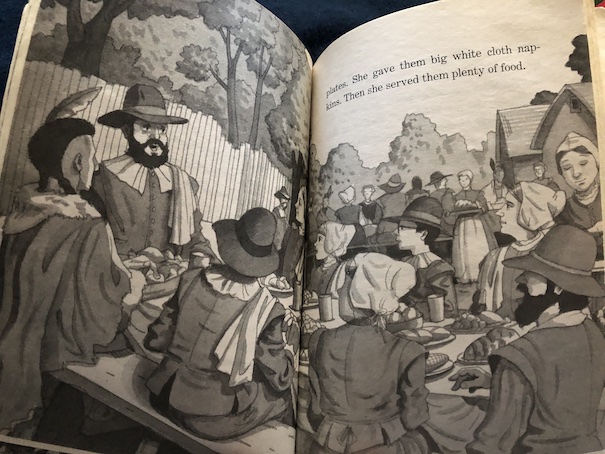
The children witness the arrival of Chief Massasoit and his men. Priscilla tells the children that they were invited to join the harvest festival (something that historians debate), but they weren’t expecting such a large group, and they wonder if they’re going to be able to feed everyone. The Wampanoag say that they will go hunting to provide more food, but the Pilgrims say that they will also gather more food.
Jack and Annie are invited to join the food-gathering efforts, although it’s difficult for them because they’re not used to hunting and fishing, like 17th century children would be. Annie thinks it won’t be so bad because they’ve helped their parents prepare for Thanksgiving before, but the types of food at this harvest festival are very different from the “traditional” Thanksgiving food the children would have expected, and the methods of preparing them are old-fashioned. Jack and Annie find themselves trying to catch eels and find clams and trying to tend things cooking over an open fire. The children’s efforts don’t go well, and at first, they’re afraid that they’ve ruined the feast, but the magic they came to seek saves everything.
My Reaction and Spoilers
The magic that the children find is called the “magic of community.” Even though Jack and Annie think that they haven’t contributed much, and they burnt the turkey they were trying to cook, their mishaps haven’t ruined the feast because the entire community was helping all the time. Because everyone contributed something, there is enough for everyone. Besides learning how the first Thanksgiving was different from the holiday they know, Jack and Annie learn about cooperation, how people share and support each other.
At one point, Jack asks Squanto why he says that he remembered them. Squanto seems to realize that Jack and Annie aren’t quite what they said they were, but he says it wasn’t really them that he was remembering. He explains a little about his own past and what it felt like to be an outsider in a strange place, reminding the children to remember that feeling and to be kind to others in the same situation.
I liked the author’s noted about the history of the Thanksgiving holiday. For another book that explains the first Thanksgiving feast from the point of view of both the Pilgrims and their Wampanoag guests, I recommend Giving Thanks by Kate Waters.








 Jestress's Forgotten Books and Stories