Meet Molly

Molly, An American Girl

MeetMolly

Meet Molly by Valerie Tripp, 1986.

MeetMollyThreatMolly McIntire misses her father, who is a doctor stationed in England during World War II.  Things haven’t been the same in her family since he left.  Treats are more rare because of the sugar rationing, and she now has to eat yucky vegetables from her family’s victory garden all the time, under the watchful eyes of the family’s housekeeper.  Her mother, while generally understanding, is frequently occupied with her work with the Red Cross.  Molly’s older sister, Jill, tries to act grown-up, and Molly thinks that her brothers are pests, especially Ricky, who is fond of teasing.  However, when Molly and her friends tease Ricky about his crush on a friend of Jill’s, it touches off a war of practical jokes in their house.

MeetMollyHalloweenTrickHalloween is coming, and she wants to come up with great costume ideas for herself and her two best friends, Linda and Susan.  Her first thought is that she’d like to be Cinderella, but her friends are understandably reluctant to be the “ugly” stepsisters, and Molly has to admit that she wouldn’t really like that role, either.  Also, Molly doesn’t have a fancy dress, and her mother is too busy to make one and also doesn’t think that they should waste rationed cloth on costumes.  Instead, she suggests that the girls make grass skirts out of paper and go as hula dancers.  The girls like the idea, but Halloween doesn’t go as planned.

Everyone loves the girls’ costumes, and they collect a good number of treats in spite of the war rationing, but Ricky takes his revenge for their earlier teasing by spraying them with water and ruining their costumes and all of their treats.  When the girls get home, and Mrs. McIntire finds out what happened, she punishes Ricky by making him give the girls the treats that he’s collected, except for one, which she allows him to keep.  However, to the girls, this seems like light punishment, and they’re offended that he got off so lightly.
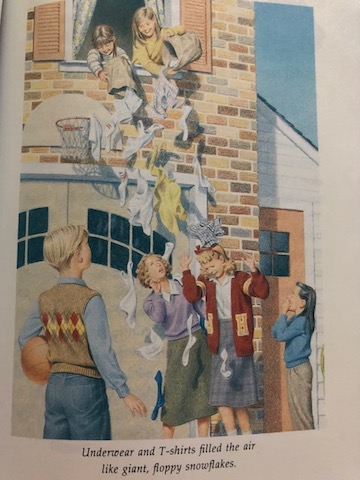
MeetMollyRevengeBecause he laughed at the girls, saying that he could see their underwear after he sprayed them with water and ruined their skirts, the girls decide to play a trick that will give Ricky his just desserts.  The next time that Jill’s friend comes to visit, the girls arrange to have Jill and her friend standing underneath Ricky’s bedroom window when they start throwing all of his underwear out the window, right in front of Ricky.  Ricky screams at the girls that “this is war!” just as their mother arrives home.

Their mother makes it clear that war is a serious thing, not a joke.  There is a real war on, and their childish pranks are wasting time and resources (like the food that Ricky ruined on Halloween – sugar is rationed, and some of their neighbors had gone to a lot of trouble to save their rations to give the kids a few treats).  She also points out that this is how real wars start, with “meanness, anger, and revenge.”  Faced with the reality of what they were doing, Molly and Ricky apologize to each other and clean up the messes that they each made under their mother’s direction.

In the back of the book, there is a section of historical information about what life was like for civilians in America during World War II.  People with relatives overseas worried about them, but people in service had to be careful about what they said in letters home, in case those letters were intercepted by enemy forces.  Some of the luxury goods that people were accustomed to having became more scarce, although the rationing wasn’t as bad in the United States as it was in Europe (this is covered more in a later book in the series) because certain types of materials had to be saved for the war effort (like the metals used to make cans for food, which is why victory gardens were important) and because factories that ordinarily made civilian goods were converted to make equipment for the armed forces.  For example, they mention that car factories were making things like tanks and airplanes and clothing factories were making tents and uniforms.  People referred to the efforts that civilians were making to save needed materials for the war as “fighting on the home front,” reminding themselves and others that the small sacrifices that they made each day, like driving their cars less to save gas or raising food for their families, helped to make a big difference for a larger cause.

The book is currently available online through Internet Archive.
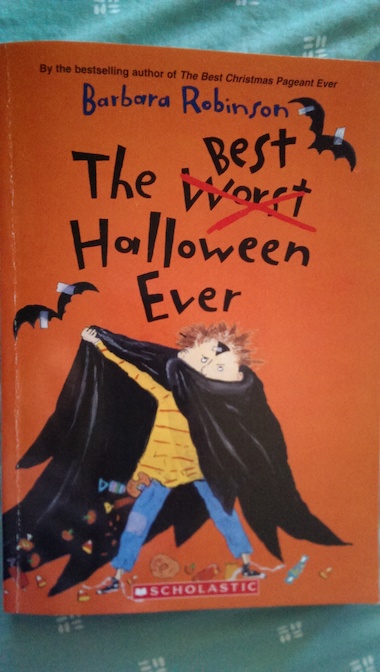
The Best Halloween Ever

BestHalloweenEverThe Best Halloween Ever by Barbara Robinson, 2004.
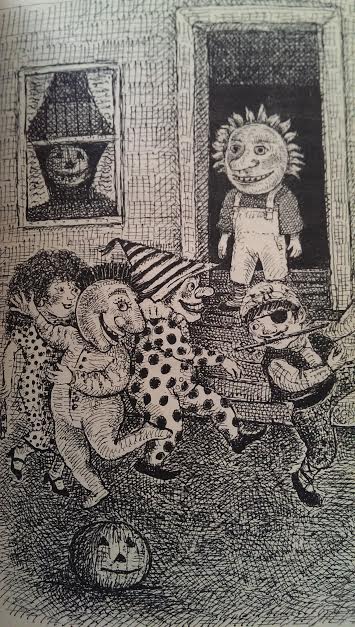
Every year on Halloween, the Herdmans, who are the wildest, most awful kids in town, run amuck, vandalizing things, stealing, and bullying other kids out of their Halloween candy.  This year, the mayor has decided that he’s had enough of the chaos they cause, so he’s just going to cancel Halloween all together.  Although he doesn’t specifically name the Herdmans as the source of all the Halloween destruction, everyone in town knows that they are.  So, to the shock and dismay of all the other kids, there will be no trick-or-treating this year.

Instead, there will a safe, well-supervised (boring), school Halloween party.  The principal, who always hated Halloween anyway, isn’t happy about it, but admits that it would be better to have a party for the kids at school, with their parents present and helping out, than having them run wild in the streets with the Herdmans on the loose.  But, as every kid knows, running wild in the streets is really the heart of Halloween.  They long for the freedom of roaming the streets without adult supervision, for collecting candy to sort and trade (and, admittedly, lose to the Herdmans eventually), for staying up late, and for the surprises and magic of a real Halloween.

There isn’t going to be anything surprising or magical or even really scary about Halloween at the school.  All the kids already know that the monsters are just their parents and teachers in costume.  The only real benefit that they see to the event is that the Herdmans won’t be there because they say it sounds too boring.  But, with the Herdmans, nothing is ever what anyone would expect, and they not only show up but find a way to turn the event into something that brings back some of the surprises and real Halloween spirit that were missing from a party that was too well-organized and predictable.

Although the Herdmans are a large part of the reason why Halloween is difficult for everyone and the adults try so hard to control it, they manage to redeem themselves a little in the eyes of the other children by taking the events of the night out of the adults’ hands.  Before the other kids know it, strange things start happening at the party with a cat on the loose, worms in the witches’ brew, and children starting to disappear.  As the kids puzzle about these things and wonder where some of the other kids went, things start getting scarier (like they should on Halloween), and they find themselves following mysterious figures through the school in the middle of a black-out with a special surprise waiting for them . . .

I don’t think that this book was quite as good as the others in the series, but it was still fun.  Beth, the narrator, is correct in saying that the well-supervised Halloween party was really more for the adults than the kids.  To the adults, Halloween is kind of a bother, and sometimes, they act like all the kids, not just the Herdmans, get in their way even as they plan the school Halloween party.  At one point, Beth’s mother reminds Alice’s mother that the whole idea of the party is to do something for the children, not the adults.

The adults are so worried about keeping things orderly, safe, and convenient that they become too controlling.  Even on normal Halloweens, some of them have a tendency to overrule the kids on what they want to wear as costumes, with parents often insisting on costumes that are the least amount of bother for them to help with.  Louella’s mother insists that Louella be a pilgrim year after year just because she won a free costume once, even though Louella hates it. Really, what most of the kids like about Halloween is that it is usually a night for them, not the adults.  The kids chafe as the adults insist that they go to their orderly Halloween party and like it.  In real life, most adults know that forced fun isn’t really fun at all.

In the end, the Herdmans return all the candy that they had taken from the other kids over the last Halloweens.  Although the other kids find the Herdmans’ secret candy stash a treasure trove, much of the candy is stale.  They can eat some of it (which grosses me out, considering how old it probably is), and they have fun sorting and counting the rest.  But, the best treat for the kids was adding a sense of unpredictability and suspense to the night to bring back the real Halloween feeling.

The book is currently available online through Internet Archive.

Halloween Treats

HalloweenTreats

Halloween Treats by Carolyn Haywood, 1981.

This is a collection of short stories with the usual Haywood characters as they celebrate Halloween.  These stories have a tone that’s more like Halloween of the 1950s than the 1980s, when they were written.  In this neighborhood, everyone seems to know each other, and parents are unafraid to let even young children go out on Halloween without an adult along.  It isn’t even a problem when older children invite young trick-or-treaters into their Halloween party on a whim to participate in bobbing for apples.

The book is currently available online through Internet Archive.

Stories in the Book:

HalloweenTreatsPic1The Witch and the Balloon

Katie and Mark, a set of twins, believe that the old woman who lives next door is a witch.  She has a black cat and just seems odd, banging on the wall whenever she thinks the twins are being too noisy.  But, one Halloween, when they hear banging on the wall in the middle of the night, they realize that she needs help.

Anna Patricia’s Costume

Anna Patricia loves Halloween, and she especially loves planning new costumes.  By the time Halloween actually comes, she’s changed her mind about her costume many times over.  However, there is still one change more because a surprise invitation to a Halloween party while trick-or-treating causes her to change costumes once more.

The Two Halloween Bears

Penny (a boy) and Patsy (a girl) are best friends, and they have identical teddy bears.  On Halloween, the two of them think it would be fun to wear identical bear costumes to look like their teddy bears, but they’re so much alike, even their mother have trouble telling them apart.

HalloweenTreatsPic2Monkey Business

After Eddie buys an old grind organ at a second hand shop, he realizes that he has the basis for a great Halloween costume: he’ll be an organ grinder with a dancing monkey.  He manages to persuade the girl next door to dress up as his monkey, but the long tail on her costume causes them problems.

Trick or Treat

Eddie likes old Mr. Timkin, a retired sailor, but when Mr. Timkin forgets that it’s Halloween and has no treats for the kids, they feel obligated to play a prank on him. Eddie only hopes that Mr. Timkin won’t be too mad.

Billy’s Halloween Party

When Billy holds a Halloween party only for kids in his grade at school, the younger children in the neighborhood feel left out.  Eddie recruits Betsy’s younger sister and her friend to help him play a prank on the older kids that makes the party more memorable for everyone.

HalloweenTreatsPic3Jonathan and the Jack-o’-Lantern

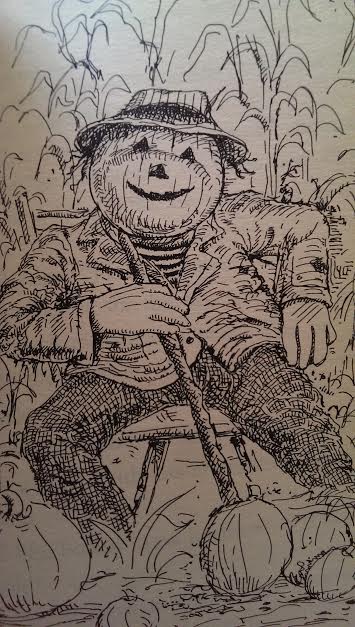
Jonathan’s family has moved from the city to the country, and he’s excited that he can see all the pumpkins growing before Halloween.  Then, some dummies with jack-o’-lantern heads give him the idea for the best costume to wear for the Halloween parade.

Who Scared Who?

Donald and Ronald, another young set of twins, are fascinated by the scary Halloween masks in the stores.  Even though the masks scare them, they think it would be funny if they could buy some really ugly masks to scare the neighborhood policemen.  However, the policemen also think it would be fun to give some of the neighborhood kids a fright.

Pennies for UNICEF

There is a contest for children collecting pennies for UNICEF.  The child who collects the most will win a trip to New York to visit the UN.  As an avid coin collector, Eddie is eager to win the contest, and he makes a special discovery among the coins that he collected on Halloween night.

Scary, Scary Halloween

ScaryHalloween

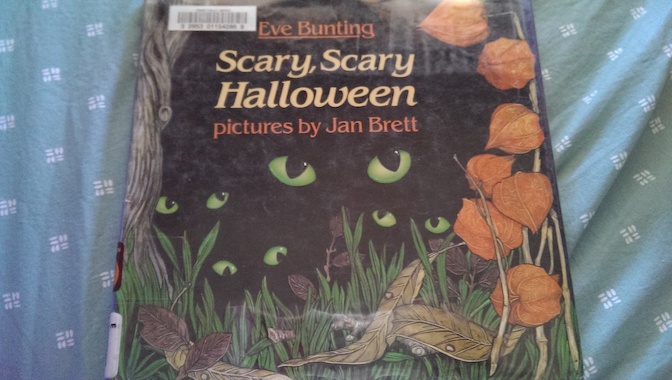
Scary, Scary Halloween by Eve Bunting, pictures by Jan Brett, 1986.

I love the pictures in this book and enjoy the rhyming text of the story.  It’s a cute concept for Halloween, and young children will enjoy the repetition in the story.

ScaryHalloweenSkeleton

One Halloween night, unseen watchers observe children in costume trick-or-treating.  The mother cautions her children to remain hidden because of all the strange creatures that are out and about on Halloween.

ScaryHalloweenEyes

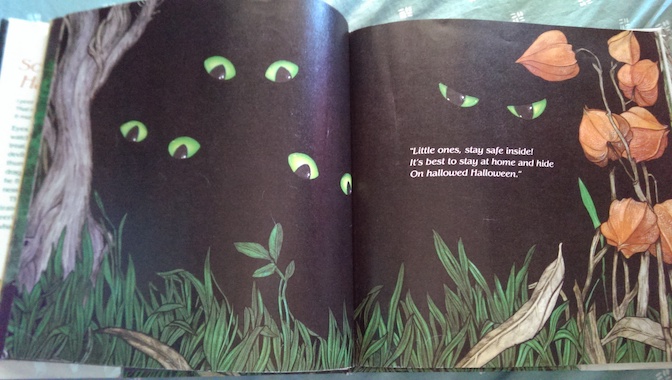
Readers will know that the monsters are simply children in costume, but the watchers do not because they are cats, which is only revealed at the end of the story.  Throughout most of the book, they only appear as green eyes as they hide under the porch of a house.

ScaryHalloweenPorch

When all the trick-or-treaters are gone, the mother cat and her kittens are free to roam the night themselves.

ScaryHalloweenCats

I thought that it was cute how the mysterious tone of the book was due to the cats’ understanding of Halloween.  At first, it may seem very mysterious to young children as well, but completely understandable as it becomes more and more obvious that all the monsters are only trick-or-treaters and the little family hiding from them are cats, who think of themselves as being pretty fierce in their own right.

The book is available to borrow and read for free online through Internet Archive.

The Blue-Nosed Witch

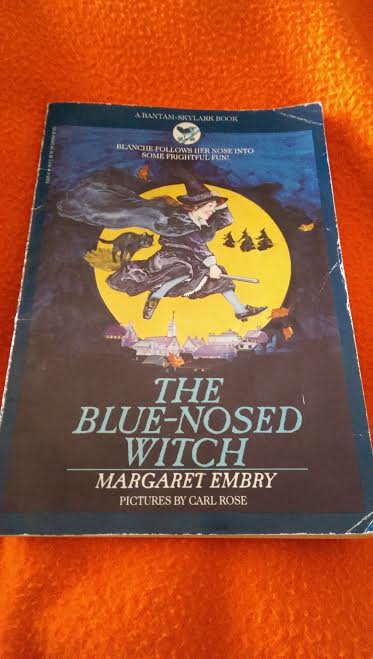
BlueNosedWitchThe Blue-Nosed Witch by Margaret Embry, 1956.
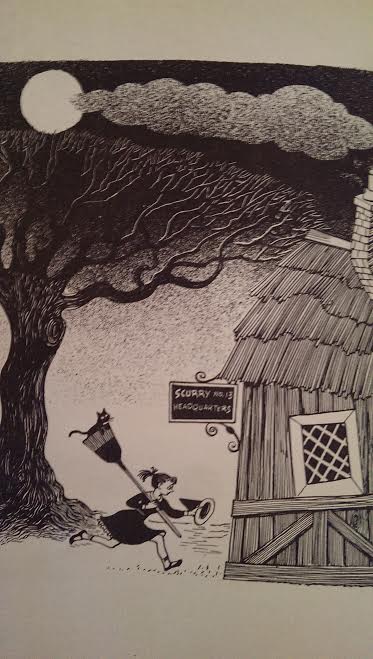
Blanche is still a very young witch, but because of her magnificent blue nose (which she can make glow at will), she’s allowed to join a group of adult witches, Scurry No. 13.  Their specialty is beautiful flight formations on their broomsticks, and they’re planning a special one for midnight on Halloween.

But, Blanche has a bad habit of being late to everything.  Some of the other witches have started complaining about her, saying that she’s too young and irresponsible to be part of Scurry No. 13.  If she’s late for the flight on Halloween, they might decide to send her back to Scurry No. 2 1/2 with the other young witches, where she’d only be allowed to ride a whisk broom.

To make sure that Blanche will be on time for Halloween, her friend Josephine sets her alarm ahead a couple of hours to give her extra time to get ready.  Unfortunately, Blanche doesn’t know that Josephine did that, so she sets her alarm ahead herself.  When she wakes up on Halloween night, it’s still early evening, instead of late at night.

BlueNosedWitchPic1Blanche looks for her fellow witches but ends up joining a group of trick-or-treaters by mistake.  They love her blue nose and introduce her to the idea of trick-or-treating.  Thinking that even the grumpiest man in town would be impressed by Blanche’s amazing nose, they stop at his house, too.  The old man isn’t impressed by anything and plays a mean trick on the kids.  However, Blanche is a real witch, and she and her cat Brockett give the old man a real Halloween scare.

Blanche is having fun on Halloween, but will she keep track of time well enough to join the other witches in their flight?

Even though this wasn’t written to be an historical novel, in a way, it kind of is now.  One of the interesting things about this book is that you can tell from the way the kids are trick-or-treating that it’s the 1950s.  Kids today don’t get jelly donuts or apples while trick-or-treating, and in this day of giving out only prepackaged treats for safety reasons, the kids would probably have to throw them away if they did (sigh).  Also, there is still the implied threat of Halloween tricks when the kids go asking for treats, something less common today.  Instead of saying “Trick or treat!”, the kids say “Candy or cake or your windows we’ll break!” (although the kids later promise the adults that they’re not going to soap any windows).  My mother said that the popular saying when she was young was, “We are the beggars of the street.  Do we soap, or do we eat?”

The book is available to borrow and read for free online through Internet Archive.

BlueNosedWitchPic2