 Mystery Behind Dark Windows by Mary C. Jane, 1962.
Recent years have brought misfortune to the formerly wealthy Pride family. First, Tony and Ellie’s father was killed while on a business trip on behalf of the family’s mill. Then, the workers in the mill went on strike, and the children’s grandfather died. Their Aunt Rachel blames the strikers for putting stress on her father while he was still grieving for his son, thereby causing his death. Because of that and because she doesn’t believe that she can handle the running of the mill herself, she has closed down the mill, putting all of the workers out of a job.
The townspeople of Darkwater Falls struggle to get by without the mill and are angry with the remaining members of the Pride family for the lay-offs, but Aunt Rachel thinks that their suffering is earned and so does nothing to help. If Aunt Rachel would be willing to sell the mill to someone who would put it back into good use and employ people, the community’s problems would be solved, but Aunt Rachel can’t bring herself to do that, in spite of the offers she’s received and the urging of the family lawyer, Mr. Ralph Joslin. She has high hopes that Tony might revive the mill one day when he’s grown up, and in the meantime, she wants to punish the strikers with unemployment and underemployment. However, Aunt Rachel, absorbed in her personal pride and bad feelings, is ignoring some serious issues. The taxes on the disused mill are costing the family dearly, the equipment is rusting, and Tony isn’t even sure that he wants to go into the family business. Tony and Ellie are unhappy with their family’s situation, their aunt’s bitterness, and the way many of the townspeople now look at them, but they’re not sure what to do about it.
 Then, one night, Ellie goes out to look for her aunt’s missing cat and hears someone in the old, supposedly empty mill. When she tries to tell Tony, he doesn’t take her seriously, but Ellie knows what she heard. Ellie later goes back to the mill to take another look at the place, and she sees Jeff, a boy from Tony’s high school, hanging around. Later, she confides what she’s heard and seen in Hank, an old friend who lives on the other side of the river, and Violet, another girl from her class whose family has suffered since the closure of the mill. The two of them start helping Ellie to investigate.
Some people in town have become concerned about children in the area getting into trouble, and they think that maybe some of the local youths have formed a gang. Ellie worries about Tony, who has started sneaking out of the house at night to hang out with friends. Is he now part of a gang? Are he and his friends the ones who were sneaking around the old mill? Or could it be some of the disgruntled townsfolk, bitter about the mill remaining empty and not providing much-needed jobs?
While the kids have a look inside the mill, they discover that someone has been using the place as a hideout. A fire at the mill reveals a number of secrets and sheds light on a town and a family caught in a cycle of bitter feelings and revenge. Aunt Rachel is stunned when some of the townspeople accuse her of setting the fire herself in order to get insurance money for the mill. The fire was clearly arson, and since Aunt Rachel has gone out of her way to make life difficult for people in town, many of them would be ready to believe just about anything of her. It’s up to the young people to put the pieces together and reveal the true arsonist before the mill, the town, and the Pride family are completely destroyed.
Many of Aunt Rachel’s decisions are guided by a mixture of grief and anger, but she is also stubborn and prideful. The Pride family was aptly named. Although they have suffered misfortune, their privileged position as the (former) main employer of the community has given Aunt Rachel the sense that she and others in her family could do no wrong. Aunt Rachel is absorbed in herself, her own feelings (which she places above others), and the past to the point where she feels justified in deliberately causing harm to her community and the people in it, failing to see the consequences of her actions, even the effects that her attitude has on the orphaned young niece and nephew in her charge. Ellie feels like they don’t have a real family because her aunt’s bitter feelings prevent her and her brother from getting close to their aunt. Her aunt’s actions have also made it difficult for her and Tony to get along well with other members of the community, further isolating them from comfort in their own grief.
In a way, the fire brings Aunt Rachel back to reality, forcing her to see the consequences of her actions (and inaction). It comes as something of a shock to her that, while she felt fully justified in her bad feelings for the town, they are also fully justified in feeling badly about her. Somehow, it never occurred to her how someone, doing the things she’s been doing and saying the things she’s been saying, would look to the people she deliberately set out to hurt. For most of the story, the only feelings that were real to Aunt Rachel were her own. Even when she thought about how people hated her, she didn’t think that what they thought would matter until she began to see how it was affecting Ellie and Tony as well as the other children in town. Ellie can see that many things would have been resolved sooner if both her aunt and her brother could open up and discuss things honestly, both within the family and with other people. Although neither of them set the fire, their secretiveness and self-absorption at first create the impression that they did. Ellie’s eventual outburst at her aunt and the real guilty person force both of them to acknowledge the reality of their actions and motives.
I was somewhat fascinated by the motives of the arsonist, who understands the effects that Aunt Rachel’s bitterness and revenge have been having on the young people in town, even her own nephew, better than she does. This person was wrong in the path he tried to take to fix the situation, but he does correctly see that unemployed men not only lack the money they need to properly take care of their families but may also set a bad example for boys and young men, either through the habits and attitudes that they let themselves fall into or by becoming too absorbed in their difficulties to see what’s happening to their own children. I also agree with his assertion that those responsible for putting people out of their jobs bear some responsibility for the results of their actions, something which resonates in today’s economy, where many people are still unemployed or underemployed. The Pride family’s previous high standing in the community was directly because of their ability to employ people and improve the lives of others. When they began making life hard for others and refused to use their ability to help people, they lost that standing. Aunt Rachel was just the last to realize it, which was part of the reason why she was surprised to discover just how badly the town thought of her. She didn’t have a good reputation because she had done nothing to earn one, no matter what her family used to do. She was no longer using their powers for good, so she turned herself into a villain. However, it’s important to point out that the arsonist isn’t really in the right himself because, as Ellie points out, the spirit behind his actions isn’t much different from her aunt’s.
Ellie is correct in pointing out that both her aunt and the arsonist were wrong, not just because of what they did, but because of the feelings and motives behind it. In their own way, each of them set out to deliberately hurt others because they had each been hurt. Which of them was hurt first or hurt worse ultimately doesn’t matter. Their mutual desire for vengeance against each other not only hurt the people around them but kept each of them from doing what they needed to do in order to heal their own wounds. That is also a message that resonates today, in these times of political division, with two large parts of society trying to one-up each other and even actively harm one another, largely because they can’t stand the idea of someone wanting something or believing something that they don’t. Whatever the circumstances, when people focus on winning on their own terms, no matter what the cost, everyone loses in the end.
Toward the end of the story, as Aunt Rachel and the arsonist begin making grudging apologies to one another and reluctant steps to fix things, Ellie decides that grudging and reluctant aren’t good enough and finally gets up the nerve to tell them what she really thinks, what they most need to hear:
“Just selling the mill won’t make things better . . . It’s the way [they] feel about it that’s wrong. That’s what made them act the way they did in the first place. They just wanted to get even with people, and hurt people, because they’d been hurt themselves. And they feel the same way still. You can see they do.”
How much can people help what they feel? It partly depends on what people choose to do about their feelings. Actions guide feelings, and feelings guide actions. Aunt Rachel and the arsonist indulged their bad feelings, nursing them, amplifying them, and making them their first priorities, the guiding force of their actions. As long as they keep doing that, Ellie knows that the problems aren’t really over, and everyone will remain trapped in this bad cycle. Ellie’s honest outburst finally breaks through to both of them, showing them what they really look like to others and making them reconsider their feelings and priorities.
One of my favorite characters in this story was Mr. Joslin, the lawyer. Although he looks a little suspicious himself for a time, he is actually a good man, who looks after the family’s interests and genuinely cares about them as well as about the town. He is the one who convinces Tony to be honest with his aunt about the friends he hangs out with and helps persuade Aunt Rachel to see things from others’ point of view. He loves Aunt Rachel, in spite of her faults, and is honest with her about those faults, telling her what she needs to hear. Of all the characters, with the exception of Ellie, he seems to have the most insight into other people’s feelings and situations. He supports what Ellie says, quoting Lord Bacon, “A man who studieth revenge keeps his own wounds green, which otherwise would heal and do well.”


 The Headless Cupid by Zilpha Keatley Snyder, 1971.
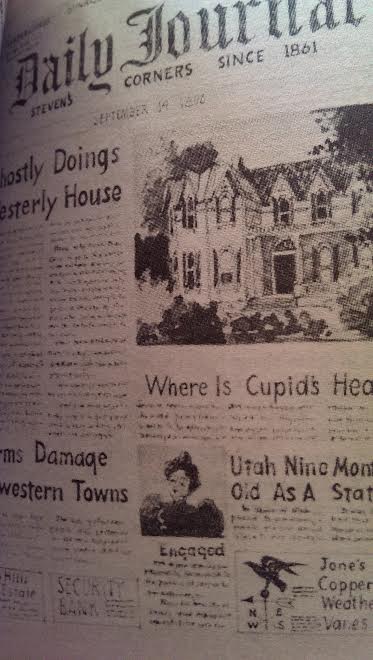 With their family suddenly much larger, David’s father bought a new house for them to live in. Actually, it’s a very old house just outside of a small town. People call it the Westerly house after the former owners. Not long after the family moves in, they find out that people used to say that the Westerly house was haunted. Mr. and Mrs. Westerly used to travel around the world with their two daughters because Mr. Westerly worked for the government, but after they settled down to a quieter life in this small town in the late 1800s, strange things started happening in their house. Rocks would fly around the house, seemingly thrown by invisible hands, and someone (or something) cut the head off the carved cupid on the fancy staircase banister. The head was never found. These incidents were reported in the local paper, and people believed that the Westerly family was haunted by a
  Amanda is fascinated by stories of the poltergeist. A friend of hers where she used to live (one her mother didn’t approve of) was teaching her about the occult and how to do magic spells. When David tells Amanda that he thought that his mother was psychic, Amanda is surprised, and she offers to teach David and the other kids about magic over the summer. David eagerly accepts the offer because he finds the subject fascinating and because it’s the only thing that Amanda really seems interested in. The other kids are also fascinated at the idea, even the littlest ones, which takes Amanda by surprise. She had expected them to be scared.
 Just as with the Westerly family years ago, rocks are thrown around the house or found just laying around. Things are broken in the middle of the night. Have Amanda’s rituals somehow awoken the poltergeist once more? David has his doubts, suspecting that it’s part of Amanda’s playacting, but she is accounted for when some of these strange things happen. The younger kids are still more fascinated than frightened by these strange happenings, but their stepmother finds them particularly unnerving.
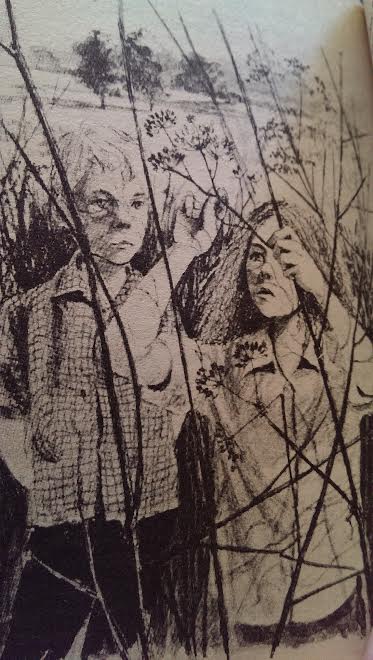 There are some elements of the happenings, particularly the reappearance of the cupid’s head, that are never fully explained, although David ends up knowing more than Amanda by the end. Some aspects of the situation are hinted at. There may be a real supernatural event at the end of the story. Blair appears to have inherited psychic abilities from his mother, and there is a distinct possibility that the Westerly sisters who once lived in the house were just as unhappy with their parents for the changes in their lives as Amanda was with her mother. Although the “poltergeist” as it first appears doesn’t exist, it may be that the “poltergeist” of the past remembers what it was like to be young and unhappy and that she wanted to make amends for past wrongs and to help another troubled young girl to make peace with her life and family. But, if you don’t like that explanation, there is a more conventional, non-supernatural explanation that David considers, which equally possible. Personally, I think it’s a combination of the two, but it’s not completely clear. I think the author left it open-ended like that to make readers wonder and to preserve the air of mystery after the other mysteries have been cleared up.
 Jestress's Forgotten Books and Stories