The Mystery of Castle Croome by Hilda Boden, 1966.
Molly Stewart, an American college student attending Oxford, is an orphan who is barely scraping by when she suddenly receives word that she has inherited an ancient castle in Scotland from her great-uncle, who has recently died. Molly’s friends, a pair of twins called Pat and Penny Roderick (short for Patricia and Penelope), go with her to have a look at the place, but right from the beginning, it seems like nobody wants her there.
Although the lawyer, Mr. Harding, is aware that Molly has been attending Oxford, he also knows that she is planning to return to the United States when she finishes her degree. He also knows that her great-uncle, Sir Malcolm, disapproved when her father married an American and moved to the United States himself, so he was surprised when Sir Malcolm’s will left his estate to his nephew or his nephew’s heirs. Mr. Harding had expected that Sir Malcolm would leave the estate to Jamie Campbell instead because Jamie has been the caretaker for years. The estate doesn’t come with much of an income, and the farms attached to it don’t have tenants, so they’re not bringing in rent money. It would take a lot of work to restore the estate. Since Mr. Harding would rather deal with Jamie Campbell anyway, he thinks that Molly would find it a better deal to just sell the castle to Jamie and use the money to finish her degree and go back to the United States. Molly asks why Jamie Campbell would want to buy the castle if it’s not worth much and needs so much work to restore. Mr. Harding says he might buy it out of sentiment, but Molly wants to have a look at the castle before agreeing to sell it. After seeing it, she might decide that it isn’t the kind of place where she could live, but she won’t know for sure until she sees it herself. Mr. Harding agrees and says that he will tell Jamie Campbell that she’s coming.
When Molly arrives with Pat and Penny, they see that the castle is isolated and rather eerie. Inside, it is run down, and living conditions are primitive. Jamie Campbell, an elderly man, isn’t happy that they’re there. There is no other staff, and while Jamie was happy to serve the old laird and nurse him through his final years, he has no intention of serving this young American grand-niece. Although there is an electrical generator at the castle, Jamie says that it hasn’t worked in years, and he and the old laird used oil lamps and candles. If Molly and her friends think he’s going to go to special efforts for their comfort, they can think again. Molly refuses to be intimidated by his disrespect, and she tells him that, because this castle has been his home for years, he is welcome to continue staying there, although Jamie Campbell thinks that she’s only extending that invitation to get a free caretaker.
Molly is studying engineering at college, and her friends think that she could probably fix the generator, but Molly tells them that she would like to wait to look at it. She hasn’t had much practical experience yet, so she wants to take time to study the situation before she does anything. She also tells her friends not to mention to Jamie Campbell that she has any engineering knowledge. She doesn’t trust Jamie, and she thinks it might be better for him to think that they’re more helpless than they actually are.
Molly sees definite signs that Jamie Campbell hasn’t been honest with them about the real condition of the castle and about even the contents of the castle at the time that her uncle died, and she can tell that he’s deliberately trying to make life harder for them to drive them away from the castle. After Jamie Campbell tells them that there is no running water at the castle, the girls notice that soap next to a sink is still wet, indicating that Jamie has very recently washed his hands there. The girls think that he probably shut off the water right before they got there, and they also think there is probably nothing wrong with the generator, that Jamie probably just turned it off. He tries to keep them from even looking at it, and he’s reluctant to hand over the keys to the castle to Molly. Many pictures are missing from the walls of the castle, and Jamie says Molly’s uncle sold them for money, but another painting disappears during their stay, showing the girls that Jamie is the one looting artwork from the castle. Molly realizes that nobody seems to know exactly what was in the castle at the time her uncle died, making it difficult to prove that Jamie is stealing things. When Molly tries to search her uncle’s desk, she finds that it’s been completely cleared of even routine papers, and Jamie admits in a cagey way that he may have tidied up a little.
Things improve for Molly and her friends when they set out to buy some food and make contact with other people outside the castle. Jamie refuses to even feed them, saying that he barely has enough for himself. He says that he might have been able to provide something for Molly if she was alone, but he can’t be expected to feed her friends, too. Fortunately, the girls have some provisions with them that get them through their first night at the castle. When they set out in the morning to buy more food, they can’t take their care because there’s a large nail in one of the tires. They can’t prove that Jamie sabotaged the car, but they all suspect he did. They decide to set out on foot to find somewhere with a telephone or somewhere they can buy some food. They meet up with a scout troop camping nearby, and they save the girls from stumbling into a bog. They share a meal with the girls, and the girls tell them what’s been happening at the castle.
The scout leaders don’t like the sound of Jamie and the things happening at the castle, and they tell the girls that they will send a mobile shop to the castle to sell them food. There’s a van that travels among the farms in the area, selling groceries, sort of like a food truck, and it carries a surprising variety of goods. The scouts also tell the girls how they forage for wild foods, and they offer their services for changing the car’s tire and other things they might need.
That night, Molly has a frightening encounter with a ghostly white figure, although she believes that it’s just Jamie, trying to frighten her away from the castle. The next day, Molly and her friends confront Jamie about the missing painting, and he tells Molly that her great-uncle sold that painting years ago. He tries to convince her that the only reason why she thought she saw it is that she has “second sight.” He says that it was a favorite painting of her great-uncle’s and that she only saw it because she’s a member of his family and has psychically sensed the memory of the picture. Molly knows that can’t be true because her friends also saw the picture. Molly also asks Jamie about a strange roaring noise that she heard at night that sounded like machinery of some kind, and Jamie tells her that it’s the “Roar of the Stewarts.” He says it’s a bad omen, and that Stewarts hear it before something bad happens. Although none of the girls admits to having seen a “ghost” the night before, Jamie also tells them about the “Specter of the Castle”, and he insists that all of these bad omens are signs that Molly and her friends should leave the castle because it’s dangerous for them.
Molly and her friends know that Jamie badly wants to frighten them away from the castle, and part of that might be that he’s been looting objects from it since Molly’s great-uncle died, but what is the real cause of the machine noises in the night? Then, suddenly, Jamie welcomes a pair of unexpected guests into the castle as paying guests. Mr. and Mrs. Smith claim that they’re traveling tourists who think it would be exciting to stay in a real castle. Molly tries to discourage them from staying by charging them more than anyone might expect from staying in a run-down castle with primitive living conditions, but the Smiths insist that they would enjoy an authentic experience. Molly and her friends are immediately suspicious, especially when they realize that the Smiths don’t seem to have a car, and there’s no obvious way they could have even reached this out-of-the-way castle. Who are they really? Are they confederates of Jamie’s? What has Jamie really been doing at the castle, and what is he so afraid that Molly and her friends will discover if they stay?
The book is available to borrow and read for free online through Internet Archive (multiple copies).
My Reaction
I found this book recently at a used book sale, but I recognized the title because I tried to find this book when I was a kid. I wanted it because it was on a list of suggested books in the back of another mystery book I read and liked as a kid. Actually, I think I enjoyed it more as an adult than I would have has as a kid. As a kid, I would have liked the notion of a girl inheriting a spooky old castle that might be haunted, but in this story, it’s pretty obvious right away that Jamie is behind all the mysterious things happening.
This story is not like other mysteries where you have to wonder who among the suspects could be responsible for the mysterious happenings because Jamie is the only suspect from the beginning. The real mystery, for both the characters and the readers is why he’s doing it. It’s a “whydunnit” more than a “whodunnit.” Although it would have been fun and atmospheric if Molly and her friends believed that the castle was haunted and were scared, I have to admit that I loved how unimpressed the girls were when Jamie awkwardly makes up his spooky stories and excuses about “second sight”, the “Roar of the Stewarts”, and the “Specter of the Castle.” They know that he’s just making it all up. They just don’t kick him out of the castle immediately because he’s an old man who’s been there for years, and they also want to know that he’s up to.
It turns out that part of what he’s up to is obvious and part actually resembles the mystery book that had this listed as a recommended book. Readers can figure out the more obvious part themselves, but there’s a revelation later that Jamie is also involved in another crime that he can’t explain away as any misunderstanding. There’s a suspenseful part of the story where the girls are trapped in the castle with Jamie and his confederates and need to figure out how to escape or summon help. I thought that the ending part wrapped up a little quickly, but overall, I liked the story. I think I enjoyed the book more now than I would have if I’d found it when I was a kid.
The Case of the Tricky Trickster by Laura Lee Hope (Stratemeyer Syndicate), 1992.
Before I begin, I’d like to acknowledge Sean Hagins, for supplying me with photos of this book! Usually, I take pictures of books myself, but I just couldn’t find a physical copy of this one. Sean is a big fan of the Bobbsey Twins, particularly the New Bobbsey Twins mysteries, and you can see some of his video reviews as well as videos about his photography work on his YouTube channel, SJHFoto. Thanks, Sean!
The PTAs at the schools the Bobbsey Twins attend, elementary and middle school, are holding a variety show to raise money, with students showing off their talents. A boy in Freddie and Flossie’s class, Brian, is going to put on a juggling act, but Freddie and Flossie are going to help another friend, Teddy, with his magic act. Nan and Bert have a rock band with some friends called the Aliens, and they’re going to be performing, too. Danny Rugg, the school bully, even has an act where he’s going to play the accordion.
However, things soon start going wrong with the show. During the rehearsal, someone turns on the Aliens’ amplifier, making a loud sound that startles everyone. Then, a pole falls and almost hits a student while she’s singing. Then, Brian slips on some floor wax. Freddie and Flossie suspect Danny of playing pranks on everyone because he was near the places where the pranks occurred, and it seems like the kind of thing he might do, but there are other suspects.
Some of the other students seem nervous about performing their acts or think that the show won’t really be that good. Could someone be trying to sabotage the show to get out of performing? Then again, there seems to be some kind of rivalry between the music teacher who is directing the show and Mr. Horton, the fifth grade teacher. Mr. Horton seems resentful that he wasn’t given the chance to direct the show, and he keeps trying to prove that the music teacher is doing things wrong and that he could do them better. Just how far would he go to prove that he would be the better director?
The book is available to borrow and read for free online through Internet Archive.
My Reaction and Spoilers
I thought that the mystery was good, although I also thought that the culprit was obvious about halfway through the story. It might take kids longer to figure out who it is, but there is one person who gets more than their share of the sabotage, and some of the tricks are ones that a person could only play on themselves. There is a student who is trying to get out of having to perform, but once the Bobbsey Twins figure out why, they manage to work things out so that the student is able to go ahead with their act.
The story reminded me a little of The Tap Dance Mystery in the Eagle-Eye Ernie series, although the mysteries aren’t the same. What reminds me of the other book is that both stories involve family expectations. Performing in front of classmates is enough to make anyone nervous, but having family with high expectations present puts a great deal of pressure on a child performer. There is a bit more than that because there are reasons why the student doesn’t think they can live up to everyone’s expectations, but fortunately, a little help from a friend can go a long way!
The Case of the Crazy Collections by Laura Lee Hope (Stratemeyer Syndicate), 1991.
Before I begin, I’d like to acknowledge Sean Hagins, for supplying me with photos of this book! Usually, I take pictures of books myself, but I just couldn’t find a physical copy of this one. Sean is a big fan of the Bobbsey Twins, particularly the New Bobbsey Twins mysteries, and you can see some of his video reviews as well as videos about his photography work on his YouTube channel, SJHFoto. Thanks, Sean!
The Bobbsey twins’ neighborhood is having their annual block party, and the Bobbsey twins and their parents are helping to set up for it. As part of the party, the neighborhood has rented a tent, where kids from the neighborhood are displaying their collections. The neighborhood kids collect all kinds of things, like baseball cards, comic books, soda cans, autographs, and coins. One boy, Kevin, has an autographed baseball that his grandfather gave to him. The neighbors are charging people money to see the exhibit of collections, and the money will be used for a pizza party later.
Later, Kevin’s autographed baseball disappears. Could the baseball thief be Mr. Sher, a visitor staying with their neighbor, Mr. Andersen? Mr. Sher tried to buy the baseball from Kevin earlier, but Kevin turned him down. Then again, Kevin’s cousin, Steve, was jealous that Kevin has the baseball. Steve turned down the offer of some of his grandfather’s old collectible items in favor of a savings bond, which he has already cashed in and spend on video games. Steve tried to borrow more money from Kevin earlier, but Kevin turned him down because Steve hasn’t yet repaid him for money Kevin loaned to him before. Danny, the neighborhood bully, was also mad at Kevin earlier. He’s a friend of Steve’s and didn’t want to have to pay to see the collections. Then again, another local girl, Jennifer, collects autographs, and they see her at a collectors’ shop. Would she know the value of an autographed baseball, and was she trying to sell it? With so many people coming and going from the tent where the collections were on display, it’s hard to say who might have taken something. The thief may have even been the Bobbseys’ own dog, Chief, who has developed a habit of collecting and hoarding baseballs.
Then, another boy realizes that his prized hologram sticker is missing. Could the thief have taken that, too? Their clues are an unexplained slit in the back of the tent, some footprints, and a pin with Greek letters on it. Can the Bobbsey Twins find the valuable baseball and return it to Kevin?
The book is available to borrow and read for free online through Internet Archive.
My Reaction
Something I thought was interesting about this story was that it brings up the concept of collecting things for fun or sentimental value vs. collecting things because of their monetary value. Most of the kids in the neighborhood collect things just for fun. At first, Kevin doesn’t seem to fully realize the value of the autographed baseball. His attachment to the baseball is because he got it from his grandfather. When he had the offer to sell it to Mr. Sher, he refused because the baseball reminds him of his grandfather.
I had a strong suspicion about the identity of the baseball thief early in the story, and my guess turned out to be right, but I liked it that there were plenty of other suspects to consider. There are child suspects, adult suspects, and even the Bobbseys’ own dog. Any of these could be plausible. When they realize that the hologram sticker is missing, it raises the question of whether the person who took the baseball also took the sticker, if the sticker was taken by someone else, or if the missing sticker is just a red herring. Overall, I enjoyed the mystery, and I liked the abundance of suspects.
The Mysterious Benedict Society by Trenton Lee Stewart, 2007.
A boy named Reynie (short for Reynard) is taking a series of tests to apply to an unusual school. Reynie lives in an orphanage in Stone Town, and he is highly intelligent. He is often laughed at by the other children for being smart and using big words. He has finished all of the lessons the orphanage has to offer and has been studying with a private tutor, but he is running out of things to do with the tutor. He and his tutor like to read the newspaper together, and they see an advertisement for gifted children looking for new opportunities. His tutor encourages him to look into the advertisement, which is how he comes to take a series of tests to qualify.
The tests have strange instructions. The first part of the tests asks some brain teaser questions and a few personal questions, such as whether Reynie likes to watch tv or listen to the radio (he doesn’t really like either) and whether he thinks of himself as brave. Only a few children qualify to take the next part of the test, which will be given at another building with students only allowed to bring a single pencil and eraser. The instructions say that if they bring anything else with them, they will be disqualified. Reynie would have asked more questions, but the person giving the first test leaves by a window to avoid having to deal with parents who are angry that their child didn’t pass the first test.
When Reynie arrives at the second building, there are two girls there, one of them with green hair. The green-haired girl accidentally drops her only pencil down a storm drain. Since she is only allowed to have one pencil and the others don’t have a spare one to lend her, it looks like she won’t be able to take the test. The other girl seems relieved that there will now be less competition, but Reynie solves the problem of the missing pencil by snapping his own pencil in half and giving the other half to the green-haired girl, who is named Rhonda. She is so grateful that she offers to help him on the test, saying that she already knows the answers. Reynie doesn’t understand how she can know the answers when they’ve only just arrived, but he turns down the offer because he doesn’t want to cheat. It’s just as well because the person administering this test tells them that cheaters will be “executed.” Then, she tells the shocked children that she means “escorted”, as in they will be escorted out of the building. She tells the children that they must follow the test instructions exactly, and although the test looks fiendishly difficult, Reynie does his best.
It turns out that the test is actually a puzzle and that the answers to all the questions are found within the test itself. Following the instructions shows Reynie how to find the answers. Reynie passes the test and is told to go on to the third part. Reynie wants to talk to his tutor, and the woman who administered the test says that she’s already spoken to her. She leaves Reynie to wait with another boy, who has a bald head. The bald boy, called Sticky as a nickname because things he reads stick in his head, says that, like Reynie, he was the only person in his group who passed the second test. When the boys compare their experiences, they realize that Rhonda was a part of the test. Each of them met a girl who lost their pencil and who offered to let them cheat off her.
The boys are soon joined by a girl named Kate, who is carrying a bucket full of random things, which she says are all useful. As an example, she describes how she met a girl earlier who lost her pencil in a storm drain and how she managed to get it back by using things from her bucket. The boys realize that she also met Rhonda and that she also passed the second test, including the Rhonda portion. Actually, Kate tells them that she failed the test, along with the other kids, but she was allowed to stick around for the next test anyway because she helped out the test administrator when she was cornered by angry parents.
The other tests that the children take are similarly puzzles and brain teasers. They all pass by using lateral thinking and unorthodox approaches that highlight their unusual personalities and unique abilities. When they are informed that they’ve passed the tests, they are joined by a fourth test-taker, who has also passed, weirdly by refusing to try to pass the tests. Instead, the fourth test-taker, a girl called Constance Contraire, passed the tests by questioning everything, including the very nature of the tests and trying to go contrary to every rule. The others can’t understand why she passed the tests when the did the opposite of everything she was told to do, but these tests aren’t like the types of tests students usually take.
After they are told that they passed the tests, the test administrators introduce the four children to the man behind the tests, the mysterious and narcoleptic Mr. Benedict. Mr. Benedict says that he has been trying for years to assemble a team of children with unique abilities to undertake a dangerous but important mission. It hasn’t been easy because he’s had a difficult time finding children who can pass his tests, and until now, too few children passed the tests at once to form the team. The test administrators are actually the first children who passed his tests years ago, but they’re too old to really be considered children now. They’re young adults. Now, with four passing children at the same time, Mr. Benedict thinks they finally have the children they need for the team.
Each of the children has demonstrated their thinking skills and unusual approaches to problems. Each of them is also alone, in one way or another, not accountable to any adults, so they can make their own decision to join the team without asking for adult permission. Mr. Benedict says that joining the team will be dangerous, and normally, he would never want to put children at risk, but the situation is serious, and harm may come to them and other people if they don’t solve the problem at hand. Each of the children considers the situation and decides to accept the offer to join the team. (Constance only joins after Mr. Benedict makes it clear to her that she would be joining not because she was told to join, but because she wants to and that her obedience to the group’s rules would also be because she chose it. Constance never does anything just because someone tells her to, which is part of the reason why Mr. Benedict recruited her.)
The kids are given rooms in Mr. Benedict’s book-filled house, which can only be entered through a complicated maze. They are under the guidance and protection of Mr. Benedict’s three assistants:
Rhonda – She was originally from Zambia and was one of the first children to pass Mr. Benedict’s tests several years earlier. Mr. Benedict adopted her.
Number Two – She is also one of Mr. Benedict’s adopted daughters, but she refuses to tell the children what her real name is, preferring to go by her code name. She always wears yellow and rarely ever sleeps.
Milligan – He is an amnesiac who knows nothing about his early life. He’s not even sure that his real name is Milligan, but it’s the only name he could remember. His earliest memory is about escaping from some people who were interrogating him, and he thinks his amnesia is due to a head injury.
When the children are told that they are being protected at Mr. Benedict’s houses, they want to know who or what they’re being protected from. Mr. Benedict explains that he has discovered that someone is sending subliminal messages to the general public through radio, tv, cell phones, and other forms of electronic media. These subliminal messages are being delivered in children’s voices, which Mr. Benedict thinks is part of the sender’s plan. Adults often disregard things that children say, which makes it easier for the messages to go into the adults’ subconscious brains. Some people, like the children and Mr. Benedict and his assistants, are less susceptible to these messages than other people. Mr. Benedict plays the messages for the children so they can hear what they sound like. The things they say are confusing and annoying, but they don’t sound immediately dangerous. Mr. Benedict says that these same messages are being transmitted in different languages all over the world, and he thinks that they’re merely the precursors to something more dangerous. However, Mr. Benedict things that the messages are merely a prelude to something more sinister. Constance asks why Mr. Benedict hasn’t gone to the authorities with what he knows, and he says that he has tried. He used to be a consultant for law and government agencies, but they no longer believe what he has to say. They think that he’s a crackpot. People who would have believed him and been his allies have mysteriously disappeared, and he is sure that’s also part of the sender’s plot, removing anybody who stands in his way.
The children become fully aware of the danger when some men try to kidnap them from Mr. Benedict’s house. Mr. Benedict’s assistants subdue the kidnappers with tranquilizer darts and remove them from the house. Mr. Benedict explains that, if they had successfully kidnapped the children, they would have likely taken them to the Learning Institute for the Very Enlightened (the acronym isn’t bad, but the reverse acronym is), which is a mysterious boarding school on an island that teaches orphans and runaways and other children who, like the children in Mr. Benedict’s house, are alone and unsupervised by outside adults. Sometimes, the school also kidnaps vulnerable children to use for its sinister purpose.
Mr. Benedict believes that the mysterious messages are being transmitted from this school by a group of its top students. The dangerous mission that Mr. Benedict has in mind for the team of children is for them to infiltrate the school as students and join this elite group so they can learn the truth about what’s happening and how to stop it.
The children spend some time preparing for their mission at Mr. Benedict’s house while Mr. Benedict and his assistants work on forging papers and getting the children admitted to the school as students. The kids practice learning Morse code and other helpful skills. They also learn a little more about each other and start figuring out how they can work together as a team.
Reynie was orphaned as a baby and has no memory of his parents or his life before coming to the orphanage. Nobody really seems to understand him or care about him except for his tutor, Miss Perumal.
Kate also used to live in an orphanage because her mother died when she was small, and she was apparently abandoned by her father. She can’t remember her mother at all, and she only has one memory of her father from a time when he took her swimming. She remembers him as a nice man, but she thinks maybe she was wrong about that, since he abandoned her. She lived in the orphanage for several years before she ran away to join the circus. Because of her circus life, she’s very strong and athletic, and she’s also surprisingly good at estimating sizes and distances with just her eyes.
Sticky isn’t an orphan but a runaway. He thought that he had a happy life with his parents until they discovered his amazing memory. From then on, they insisted on entering him in contests and quiz shows to earn money. As Sticky won these contests, his parents became more and more money-grubbing, entering him in more and bigger contests. They stopped letting him play with friends and made him constantly study so he would know all the answers to everything. Sticky became stressed out and wanted to quit, but they wouldn’t let him. Eventually, he pretended to run away and hid nearby to see what his parents would do. At first, they were worried and tried to find him, but then, people began donating money to them to help in the search. His parents kept up the search in a nominal way, so people would continue to donate, but they weren’t really interested in finding him. They said to each other that they were getting more money for him not being there, so they were better off with him gone. Sticky was shocked at their lack of love and concern for him, so he left for real. The reason why he’s bald is that he used hair remover to disguise himself from anybody who might still be looking for him.
These three children get along well with each other, but Constance is different. She doesn’t tell the others much about herself or her background. She’s a contrarian who rarely shows any consideration for her teammates. She even refuses to stop calling Sticky “George Washington”, which is Sticky’s real name, but he hates it. Kate wonders why she’s on the team when she’s not a team player and doesn’t seem to have any special abilities. She is much smaller than the other kids and has a generally cranky disposition. Reynie talks to Mr. Benedict about it, and Mr. Benedict assures him and the others that he has a reason for wanting Constance for the team. She has traits that will be of help to them later. Constance is the one who names the team The Mysterious Benedict Society when the others have trouble thinking up a good name for themselves.
When the children arrive at the school, they are told that the top students there become “Messengers” and get special, secret privileges, so they have to try to gain those positions themselves. The school also gives them many weird, mixed messages, which sound a lot like the secret messages being broadcast from the school. The kids are told that there are very few rules at the school, but there are so many exceptions to the “no rules” rule that the school effectively has a lot of rules. The Messenger showing the kids around the school doesn’t understand what they mean when they point it out the inconsistency. The kids are encouraged to always leave their television sets on, and they are always watched by well-dressed people known as the Executives.
The Executives are former students, particularly former Messengers, who now act as teachers at the school. The lessons at the school are as contradictory and annoying as the secret messages being sent over radio and tv. The kids are just made to memorize and repeat these contradictory phrases, like “Work longer hours to have more free time” and “War is necessary to have peace.” None of the other students seem to notice how these phrases don’t make sense. They’re all just memorizing the messages to get good grades and competing to be given Messenger status. Nobody knows what the extra privileges are that Messengers have, but everybody wants them. Messengers also fear new students becoming Messengers because there can only be a set number of Messengers at a time, and the current Messengers can lose their status if other students pass them in their classes.
Most of the chores at the school are done by people called Helpers, who are not allowed to be speak unless someone asks them a question. They’re not even supposed to made eye contact with the students. Students are periodically called to a place called “the waiting room”, which seems to involve some kind of punishment. The other students seem terrified about it.
The kids are told that the school was founded by a wealthy man, Mr. Curtain, and that tuition is free for everyone. The messengers say that Mr. Curtain works very hard and never leaves the school. When the kids see Mr. Curtain at the welcoming assembly, they are shocked that he looks exactly like Mr. Benedict! They wonder if he could actually be Mr. Benedict and if they’ve been tricked. However, Mr. Curtain seems to have exactly the opposite character of Mr. Benedict. It seems that Mr. Benedict has an evil twin! The kids of the Mysterious Benedict Society have to figure out who they can really trust and if they’re now trapped at this very weird school with people who are truly dangerous.
I couldn’t find a copy of this book available online, but it’s still in print and easily available. It’s the first book of a series. It’s also been made into a tv series.
My Reaction and Spoilers
Riddles and Brain Teasers
One of the things I loved about this book is that it is full of riddles, brain teasers, and wordplay. The name of the island where the school is located is Nomansan Island, or “No Man’s An Island.” Ha, ha.
Some of the characters’ names are also clues to their characters and identities. I understood the significance of Milligan’s name way before he and Kate did because I was already starting to look for word games and clues.
The messages that the kids and Mr. Benedict and his assistants send to each other take the form of riddles, just in case someone intercepts them. This makes some of Mr. Benedict’s instructions a little difficult for the kids to interpret, but it does add extra challenge for the readers as well.
Emotional Manipulation (Spoilers)
Mental and emotional manipulation are major themes in the book. Mr. Curtain is actually a deeply insecure person who craves control over others. He understands enough about his own personal fears to understand how fear has a strong effect on other people, and he uses that as his weapon. Through his machine called the Whisperer, Mr. Curtain can dispense both fear and reassurance as he tries to steer the entire population in the direction he wants: putting himself in charge.
The strange messages being transmitted are meant to plant fearful and contradictory images in people’s minds, making them feel like everything is out of control. Then, he can present himself as the man with all the answers, soothing the fears that he intentionally created. He wants to be be put in a position of being in control of everyone and everything because that’s what he feels like he needs to feel safe and reassured.
The contradictory lessons and rules at the school are part of the images that he wants to place in people’s minds. The rules that there are no rules except when there are gives people a false sense of freedom when he’s in control. They no just longer notice the control because he’s told them to feel free, and they do. This goes along with the school’s teachings that there is no need for regulation of businesses except when there is. This leads up to government is good, except when it’s bad, and it’s always bad … because Mr. Curtain isn’t in charge. He wants everyone to distrust and disregard the forces that might oppose him and trust only him: the guy who says what everyone is apparently thinking and tells them things that make them feel good. (This all sounds scarily familiar.)
At one point in the story, Mr. Curtain explains to Reynie that the messages he transmits with the Whisper are simple ones with hidden layers of meaning and complexity because people who are scared, which is what Mr. Curtain wants them to be, crave simple answers to complicated questions to soothe their minds. Mr. Benedict says that one of the gifts that the children share is a love of truth, which allows them to resist the messaging, but I would argue the children also have a love for complexity. The puzzles and brain teasers bring out their complex thinking, and the kids like to think about things and examine them from different angles. They’re creative and unconventional, not just doing what other people might tell them is the “smart” thing to do. They’re not looking for just the easy answers and the warm fuzzies or what gets them ahead of other people today but the bigger pictures. Some people are scared to confront complexity and things they don’t understand, but other people thrive on it. They’re not scared by mere ideas or trying to avoid thinking because it’s difficult or unpleasant. In the end, it’s partly the children’s ability to confront some of the things that they’re truly afraid of, whether it’s doubts about themselves or their own cravings for comfort and belonging, that help them overcome Mr. Curtain and his machine. Fear is powerful, but facing up to it with honesty does more in the long run than trying to hide from it.
Memories and Hidden Pasts (Spoilers)
Many people in the story have repressed memories an hidden pasts. When some of these are revealed, t’she story also raises the question of how sorry we should feel for the villains. We learn that Mr. Benedict and Mr. Curtain are identical twins who were separated as babies when their parents will killed in a lab accident. They were raised by different people, but they both had hard childhoods. They are very much alike, but they are different in the ways they were raised and also in the ways that they responded to adversity in their lives. Mr. Benedict coped with his lack of family by surrounding himself with good friends, who became his new family. Mr. Curtain has gone a different route, seeking to control and manipulate other people.
Mr. Curtains evil plan, which he calls the “Improvement” is based on his hard childhood and his need for control over other people as an adult. We can feel badly that his youth was terrible, but he is doing truly evil things that harm people. The kids discover that many of the children at the school were actually kidnapped. When the children first arrive at the school after being kidnapped, they’re terrified, but they later become happy and obedient because Mr. Curtain has developed a method of wiping people’s memories (more accurate, hiding people’s memories from themselves), so he can make the people’s he’s kidnapped forget that they were kidnapped and scared. He targets orphans and runaways for his school because they won’t have parents or anyone else looking for them, and many of the kids cling to the school and try to excel there, becoming Messengers and Executives, because it gives them the feeling of belonging that they’ve always craved. Yes, Mr. Curtain had a bad childhood, but he’s using his adulthood to do horrible things to vulnerable kids who are very much like he was at their age.
When the kids realize that many of the people who are now Executives were once lonely, kidnapped children, they wonder if they should feel sorry for them. They think it over and decide that they don’t really feel sorry for them and that they still hate them. They feel that way because the Executives have become like Mr. Curtain. They have no empathy toward children who are very much like they were once, they knowingly do things to these vulnerable children that once terrified and hurt them, and they do it all for their own personal promotion and the good feelings they get from doing Mr. Curtain’s bidding. The machine Mr. Curtain uses for the children to transmit his messages to the world gives the children good feelings when they use it, feelings of comfort and having their worries wiped away, which is why the Messengers cling so hard to the “privilege” of using it. They all have sad pasts and a craving for belonging and achievement, but there are acceptable and unacceptable ways to deal with those types of feelings. Everything the Executives do, from assisting in the kidnapping other kids and punishing them in horrible ways at Mr. Curtain’s direction, is terrible. The kids know that the Executives have had their minds and emotions manipulated by Mr. Curtain, but even knowing that doesn’t help them relate much to the Executives because the Executives are still their enemies and still doing horrible things. Trying to sympathize with them won’t change that because the Executives only care about pleasing Mr. Curtain and get their comfort from his machine and sense of power and authority he gives them over the kids. They are not open to sympathy or bonding with others. Their only chance at redemption is getting their memories back and seeing Mr. Curtain and his manipulation of them for what it is.
The kids also realize that the missing agents and allies that Mr. Benedict talked about are the Helpers at the school. Mr. Benedict wiped their memories more thoroughly than he did the children’s because they were adults and had established lives, duties, and families outside of the school. He gave them mental reconditioning to turn them into the grunt workers at the school and to keep them from prying into the memories they have of their lives which periodically resurface. Unfortunately, he can do little about the depression that hangs over them constantly because, on some level, they know that they’re missing parts of themselves and their past lives. The kids realize that’s what happened to Milligan. He had his memory wiped by Mr. Curtain, but he escaped before he was reconditioned, which is why he’s more aware than the Helpers are. People whose memories were apparently wiped haven’t actually lost them, but they need reminders of things and people who were important to them in their past lives to bring their memories to the surface again.
I was pretty sure that I knew Milligan’s real identity and the fate of Kate’s father early in the book when Milligan said that “Milligan” was all that he could remember as his name. The entire book makes use of puzzles, and I realized that “Milligan” isn’t really a real name but a dim memory of the last thing that Kate and her father talked about doing. Later in the book, the kids find out that what triggers memories in the Helpers is someone mentioning people who were important to them or unfulfilled obligations. When Kate last saw her father, she wanted to go to the mill pond again, and they never did because her father disappeared, and everyone assumed that he had abandoned her instead of that he’d gone missing. This was partly the fault of Mr. Curtain because one of the secret messages he’s been transmitting is that “the missing are not missing, merely departed”, discouraging anyone from trying too hard to find all of the people he’s kidnapping. Therefore, it never occurred to anyone that Kate’s father was a missing person, only that he’d left. Kate is not only glad to have her father back but relieved to understand that the father she’d loved was abducted instead of abandoning her.
At the end of the book, it’s also revealed that Sticky’s parents were similarly victims of Mr. Curtain’s messaging. When their son disappeared, they knew only that he’d left, and they were stuck in the mode of not trying too hard to look for a missing person. I felt like the matter of Sticky’s parents was a little too easily resolved when Mr. Benedict reveals that they had not been saying that they were better off without Sticky but they felt like Sticky might be better off without them because he was much smarter than they were, and they felt like they’d failed as parents. They were charmed by living the high life for a while, but before the end of the book, they regretted not trying harder to find Sticky and blew all of their money in a real search. Mr. Benedict says that he believes that they’re sincere in wanting Sticky back because they really do love him, enough to throw off the last of the influence Mr. Curtain’s messages had on their minds.
Earlier in the story, Mr. Benedict told Reynie that, as a child, he used to wish for a family, but not anymore. Reynie asks him if he grew out of wanting a family, but Mr. Benedict says no, it’s just that he’s been able to build one of his own as an adult. He has his friends and associates and his adopted daughters. He also adopts Constance. Reynie is adopted by his beloved tutor, so he also gains a family, along with his new friends.
Fritz (real name Richard) and Helen Price are twins, and their mother runs a seaside guesthouse. Their younger cousin Jonathan, called Tubs (a nickname that annoys him), comes to visit during the summer, although the twins find him annoying. It isn’t really Tubs’s fault; it’s just that he’s three years younger than they are, and they find him childish. Then, one day, Tubs tells them that Uncle Grigorian is coming to visit.
Fritz and Helen say that they’ve never heard of Uncle Grigorian before, and they ask their mother about him. She says that Uncle Grigorian hasn’t come to see them since the twins’ father died in a car crash, and Uncle Grigorian came to the funeral. The twins’ father originally came from Poland as “more or less an orphan”, and his family was split apart during “the war.” Even he wasn’t sure exactly how many brothers he had, and he never heard from the rest of his family after he arrived in Britain.
(The implication is that he was probably one of the children brought to Britain by the Kindertransport, which transported refugee children from Nazi Germany and Germany-occupied territories, including Poland, to Britain between 1938 and 1940 and placed them with foster families or in temporary homes. The Kindertransport prioritized particularly vulnerable children, especially Jewish children whose parents were already in concentration camps or who were homeless, living in poverty, or were already orphans. The hope was that many of these children would be reunited with their parents after the war, but many of them never saw their families again and continued living with their foster families because their parents were likely killed during the Holocaust. The father in this story was likely very young at this time or even an infant and so didn’t understand his family’s full situation, didn’t have many memories of them, and never learned their ultimate fate. None of this is stated explicitly in the story, but it fits with the father’s apparent age, the time period, and Poland during “the war.”)
Uncle Grigorian was living in Germany at the time the father died about 10 years earlier, but he said that he happened to be on a business trip in England at the time the father died and saw the notice in the newspaper, so he came to pay his respects and check on the family. Now, Uncle Grigorian has bought a farm in Wales, and since he will be living in Britain, he would like to spend more time with the children and get to know them better. Although Tubs is related to the twins on their mother’s side rather than their fathers and isn’t a blood relation to Uncle Grigorian, Uncle Grigorian invites all three children to visit him on his farm. The children’s mother admits that the guesthouse is very busy at this time of year, and a family has shown up with more children than they originally said they would bring, so it would be helpful if the children went on a visit, and the children are excited about seeing the farm.
At first, this seems like just a fun farm visit. Uncle Grigorian is indulgent with the children, letting them eat as many chocolate cookies as they want, teaching the boys how to drive a tractor, and letting Helen play with the lambs. A man named Mr. Rhys manages the farm, and Mrs. Rhys is his cook and housekeeper, making them all a big, traditional, full English breakfast. Things get complicated when Tubs asks Uncle Grigorian what he does while Mr. Rhys manages the farm.
Uncle Grigorian shows the children his office in the farmhouse. At first, it just seems like an ordinary office. Then, Uncle Grigorian opens the filing cabinet, which contains dials and switches instead of files. The room changes so the ceiling and walls become transparent, and the children have a view of Earth from space. Tubs says that it looks like they’re on the moon. Fritz thinks that it’s just a trick with projectors, but Uncle Grigorian says that Tubs is actually correct, and they are on the moon. At first, Fritz doesn’t believe him, so Uncle Grigorian changes their location again, taking them to Trafalgar Square in London. Since they’re on Earth now, he invites Fritz to step outside and check their location. He does, and to his astonishment, they really are in Trafalgar Square. He buys a newspaper, and it has the current date on it.
Uncle Grigorian explains to the astonished children that the office actually contains his spaceship, which is about the same size as the room itself. He can travel through space easily, but traveling around Earth is more tricky because he can’t risk colliding with other objects. He has to know the exact coordinates for where to land, so it’s best for him to go to rooms that he has already rented as office space, where he will know the exact coordinates and knows that the room will be the right size for the spaceship.
At this point, Fritz begins to suspect that Uncle Grigorian, whose oddly-positioned thumbs were already a source of curiosity for them, might not actually be human. Tubs had earlier joked about those thumbs meaning that he’s from outer space, and once again, Tubs is more right than anyone else suspected. Uncle Grigorian admits to the children that they’re not actually related at all. Uncle Grigorian is a kind of sociologist from a planet called Klipst, and he’s also a kind of secret agent for the Galactic Empire. He studies societies on different planets and keeps an eye on planets that are just starting to discover space travel. He latched onto the children’s family as a cover for his identity and activities, specifically because their father had been a war orphan who didn’t know much about his family or what happened to them. Most people would be suspicious about an unknown relative suddenly turning up, but with their family, it would be entirely plausible for them to have an uncle they knew nothing about. He says that Earth is getting close to discovering hyperdrive travel, and when it does, the Galactic Empire will need to decide whether or not to admit Earth to the community of planets.
The reason why Uncle Grigorian is telling them all of this is that he needs the children’s help. There is a dispute that needs to be settled between planets, and he asks the children to be arbiters in the dispute. The planets involved specifically want the arbiters to come from outside the Empire, and they don’t want politicians, who would probably be motivated by biases and self-interest. They have decided that they want child arbiters to hear the dispute because children have a great sense of fairness, and adults are often hardened to the unfairness of life in general. Children would be completely unbiased in this situation and not have a jaded point of view. Uncle Grigorian tells the children that it’s up to them whether they would be willing to accept this mission or not. Tubs is eager to accept and go to outer space, but the twins are more hesitant. They’re not sure if they know enough or would be able to be arbiters in an intergalactic dispute. Uncle Grigorian tells them that, if they accept the mission, he will give them something that will change that, and they decide to accept.
Uncle Grigorian says that he will give them “the Powers”, which is a special mental weapon that’s only been recently developed. It works a little different for everyone, but it enhances people’s mental abilities. Anything that a person has as talent will be enhanced so they become a natural expert in it. To gain these powers, the children have to sleep for the night in Uncle Grigorian’s spaceship while wearing special earpieces.
In the morning, he checks on them and asks them if they notice anything different about themselves. Helen can tell right away that Fritz isn’t telling the truth when he says no because she has acquired the ability to read people’s emotions and body-language like an expert. Uncle Grigorian calls her a Reader because of her ability to read people. Further, Helen can tell that the reason why he denied noticing anything was because he wanted to hear what the others would say first. Fritz admits that this is true. He says that what he has noticed is that he went to sleep trying to figure out how the ship can travel such long distances so quickly, and when he woke up, the answers just came to him. Uncle Grigorian calls him a Synthesist, someone who can put together pieces of information quickly, seeing how things relate to each other and how they work.
At first, Tubs can’t figure out if anything about him has changed or not, but Uncle Grigorian tries giving him a small, round, fuzzy creature called a Petball. (Sort of like one of the Tribbles from Star Trek.) Tubs loves it immediately. It also seems to like him, and Tubs gives it the name Glob. Uncle Gregorian says that his attachment to the creature is a sign that he’s a Maverick. Petballs are strange creatures, and they don’t like everyone, but they do like Mavericks. Maverick Powers are difficult to understand because people who have them have an odd way of saying or doing unusual things that turn out to be the right decision or reaching conclusions that turn out to be unexpectedly correct. It’s hard to say exactly when or how Tubs will use his Power, other than getting along well with Glob, but Uncle Gregorian says that it will be there at the right time for him to use it.
Tubs’s Power begins to show after they arrive at Palassan, the capital of the Galactic Empire. A strange girl comes up to them soon after their arrival and tries to offer a flower to Helen. Without him being able to explain exactly why, Tubs automatically reaches out and knocks the flower to the ground. When it hits the ground, it breaks, and they realize that is it really an electronic device that was supposed to transmit a subliminal message to Helen. Someone is already trying to influence the children as arbiters in the dispute. Soon after that, Fritz begins to notice how closely they’re being guarded, but are the guards there for their safety or because they’re now prisoners?
When the kids begin hearing about the dispute, they are told that a new planet has been discovered in a place where there has not been any planet before. It is not near any star, and there doesn’t seem to be any explanation of how it got there. An expedition to the planet discovered that what looks like “clouds” is actually some kind of vegetation that emits light, and there are worm-like creatures living on the surface. The problem is that these large Worms spin a substance called Unilon, which is very valuable. Since the Worm World was discovered, people have flocked to the planet to harvest it for selling. Some of them have captured Worms and forced them to spin continually until they die. The League of Life says that it is concerned about the welfare of these creatures, and the Unilon Harvesters Association says that it’s concerned about jobs. With her Power, Helen can tell that neither side in this dispute is telling the truth. Fritz does some research and uncovers some ulterior motives and hidden sides to both sides of the dispute. He decides that finding a solution means going to the Worm World itself, but learning the secrets of the mysterious world will put them all in danger.
The book is available to borrow and read for free online through Internet Archive.
My Reaction and Spoilers
I thought that the premise of this story was interesting, a mysterious “uncle” who is actually an alien in disguise who gives the kids a mission in space and special powers. The secret of the Worm World is also intriguing. It turns out (spoiler) that the world itself is alive, and they have to find a way to communicate with it. It’s a plot that sounds a little like some of the early Star Trek episodes or maybe inspired by them.
Most of the emphasis of the story is on the twins, even though there are three kids involved. Tubs helps in the story, but I was expecting that he would be more central to the solution of the problem or that the solution would be more of a cooperative effort than it was. I was a little disappointed at how quickly the story ended.
One thing I’d like to point out that, even with their enhanced “Powers”, the kids aren’t perfect at them. Fritz puts information together pretty easily, but he still has to do research and observe things directly to get the information he needs. Even when he has it, he doesn’t necessarily understand its full significance right away. His comment about how it looks like they’re being held prisoner rather than being simply guarded for their protection turns out to be more accurate than I thought it might be at first, but he doesn’t seem to have fully realized the reason why or who they can’t trust. Even Helen, with her ability to read people’s emotions and body-language doesn’t realize at first that their guard isn’t trustworthy. She could tell that he was uneasy, but she attributed his uneasiness to the wrong reason.
Actually, I think the part about Helen not being perfect at reading people is a good callback to the argument between the children about Tubs’ nickname at the beginning of the story. Helen argues that Tubs shouldn’t mind his nickname because Fritz never complains about his, but Helen hasn’t accurately read even her own twin’s feelings about his nickname. The truth is that Fritz doesn’t like his nickname any more than Tubs likes his, but the book says that he’s old enough to have figured out that, if he makes a fuss about not liking it, people will use it even more. I know that people can be like that, but being even older than Fritz is, I’m old to have figured out that this rule only holds true as long as the people involved decide it does. This isn’t something everyone does naturally or all the time; it’s a thing that some people do habitually because they’re pushy and like provoking reactions from people. When they get a negative reaction from someone, they just push harder to get more reactions rather than realize that they’re getting on that person’s nerves and cutting it out. What I’m saying is that Fritz seems to have correctly realized that Helen is that type of pushy person, which is why he doesn’t complain to her about how much he hates his nickname, while Helen has totally missed both Fritz’s real feelings and the fact that he’s figured her out. We’re supposed to accept that Helen already had a natural ability to read people even before getting her enhanced “Powers”, but the whole nickname incident had me rolling my eyes about Helen’s ability to read even her own family members and wishing that she would get a clue.
I expected that the characters would eventually revisit this situation with Tubs’ nickname before the end of the book and that Tubs would do something to help the situation that would earn his cousins’ respect. However, neither of those things happened. Fritz is the one who mainly solves the problem, and he does so rather quickly toward the end of the book. I was surprised at how quickly the book ended. Because the kids all keep their powers and Tubs is able to keep Glob at the end of the story, I wondered if maybe the book was originally intended to be the first in a series, with further adventures and more character development in later books, but if that was the case, I can’t seem to find anything about it.
I found the issue of language in the story interesting. People in the Galactic Empire speak a common language that Uncle Gregorian describes as being sort of like Esperanto, no matter what planet they come from. The treatment that gave the children their powers also gave them the ability to speak and understand this language, even when they’re not fully aware that they’re doing it. I liked the idea of a common language that’s a kind of conglomerate of other languages with Esperanto as the inspiration. Because the characters aren’t fully aware of that they’re hearing or speaking this language, we don’t have any hints of what it would be like, but I just thought the concept was interesting.
Double Trouble by Barthe DeClements and Christopher Greimes, 1987.
Faith and Phillip are twins and the only members of their immediate family who are alive. Their parents and their older sister were killed in a car accident. Faith was taken in by their aunt, but their aunt didn’t think that she could manage to care for two children, so Phillip was sent to a foster home. The story is written in the form of letters to each other (this is called epistolary style) after their separation.
Separating is cruel, especially when they’re orphans, but there is something about Faith and Phillip that other people don’t know. They have psychic powers, and they have the ability to communicate their feelings to each other with their minds. They have to communicate specific information to each other in writing because their psychic abilities only communicate their general mood and circumstances, but their psychic link to each other makes them feel less alone when they’re apart. Apart from dealing with their grief over the loss of their parents and the changes to their lives, each of them is also in a troubling situation.
In her first letter to Phillip, Faith tells him about a disturbing encounter with a teacher at her new school. Faith was selling candy with another classmate, Sue Ellen, to support the school band. Sue Ellen gets the idea of going by Mr. Gessert’s apartment. Mr. Gessert is their social studies teacher and is considered one of the cool teachers in school. Faith can tell that Sue Ellen has a bit of a crush on him. He buys one of their candy bars, and Sue Ellen asks to use his bathroom. When Sue Ellen seems to be taking awhile, the teacher goes to see if everything is okay, and he catches Sue Ellen snooping around. He gets especially angry when Faith is about to touch his cane near the door. He grabs both girls by the arm and throws them out of the apartment. Although snooping in someone’s private rooms is rude, the girls are startled by how angry Mr. Gessert is. Faith asks Sue Ellen what she saw in his apartment, and Sue Ellen says that she didn’t see anything. She had just started to open the door to a room when he found her. The next day, Sue Ellen brags to other kids at school about having been in the teacher’s apartment, but Faith is still concerned about how angry Mr. Gessert was.
When Phillip replies, he says that he can understand why the teacher would be annoyed at someone snooping through his stuff, and he tells Faith about his new foster parents, the Wangsleys, Howard and Cynthia. He’s now living in Seattle, about 50 miles from where Faith is living. Phillip also got picked on at school by a bully, but a girl named Roxanne spoke up for him. He thinks Roxanne is pretty, and he describes her aura as being indigo. (The twins also have the ability to see people’s auras and use them to learn things about other people.) His new foster parents don’t take his vegetarianism seriously, trying to convince him to eat meat. They say that God put animals on Earth for people to eat and that he has to eat like they do. Their house is shabby, and Howard keeps Cynthia on a tight budget. That surprises Phillip because he thinks Howard must be making decent money at the shipyards. He wonders how Howard spends his money, if it’s not on his wife or home. He knows that Howard and Cynthia belong to some kind of religious group and that, whenever they return from one of their meetings, they act strangely, and their auras are weird. He’s still grieving their parents and sister, and with all the stresses of his new home, the only time he feels better is when he’s using astral projection, to get away from it all.
The twins learned their psychic skills from their sister Madalyn and Madalyn’s friend, Roger, who is an archaeologist. Faith doesn’t quite have Phillip’s ability with astral projection, but she can sometimes get visions of other people and what they’re doing. She uses this ability to try to learn more about Mr. Gessert, and she sees that his cane is actually a gun. She watches him loading it. Why would a teacher have a cane with a hidden gun?
Faith is still angry that her aunt didn’t take Phillip, too. She also hesitates to ask her aunt for things she needs because she doesn’t want to seem like a charity case. She has a part-time job taking care of her neighbors’ dogs while the neighbor is on vacation, and she uses the money to buy a pair of second-hand boots. When Aunt Linda finds out that Faith bought second-hand shoes, she says that Faith should have told her that she needed shoes because she doesn’t want people thinking that she isn’t taking care of her niece. Still, after she cleans them up, they don’t look bad, and she gets compliments on them at school.
The next time she sees Mr. Gessert in class, he seems normal at first. He gives the class a lesson on the Donner Party of pioneers, who were trapped by a snowstorm and resorted to cannibalism to stay alive. (This is actually described in gruesome detail in the book. Some kids like a good gross-out, but I never did.) After Mr. Gessert describes all the gory details in class, one of Faith’s other classmates comments that Mr. Gessert seems crazy. Faith knows that he was telling them the truth about what happened, but she finds it disturbing how much he seemed to enjoy recounting all the grossest parts, and other classmates agree. Phillip is concerned about Faith’s description of the teacher, so he uses astral projection to spy on him, and he agrees that Mr. Gessert gives off weird vibes.
Both Faith and Phillip connect with other kids at their schools who have an interest in psychic abilities. Faith meets a boy named Jake, who is intrigued because his father has been reading a book about remote viewing, which is what Faith does. As Phillip becomes friends with Roxanne, who is interested in the topic of astral projection. When Phillip confides in her about his astral projection abilities, she asks him to teach her how to do it.
One day, when Phillip and Roxanne are at the library, they see Mr. Gessert there. Mr. Gessert has an interest in Spanish treasure, and there is a special exhibit at the library with some very valuable pieces. Soon after that, the Spanish treasure is stolen from the library. It doesn’t take a psychic to see that Mr. Gessert, who has already been established as creepy and suspicious, might have a motive to steal it, but he’s not the only suspect. Working separately, with the help of their friends, Phillip and Faith use their special mental abilities to get to the bottom of Mr. Gessert’s secrets.
The book is available to borrow and read for free online through Internet Archive.
My Reaction and Spoilers
Themes and Spoilers
There are a lot of metaphysical themes to this story with the kids exploring their psychic abilities. It is revealed that their old family friend, Roger, is a kind of archaeologist/treasure hunter, but he is regarded as unorthodox by his colleagues because he uses his psychic abilities to guide his discoveries. Roger is the one who taught the twins and their older sister how to use their abilities.
In the story, the people who are open to developing their psychic/spiritual/metaphysical sides are the heroes, and they thrive when they connect to other, like-minded people and share what they know with each other, helping each other to develop. However, there are unhealthy forms of spiritual development in the story. Phillip is unnerved about the Wangsleys and their religious group from the beginning because the Wangsleys always act strangely after one of their meetings. Initially, I was concerned that this group might be doing drugs or something like that, but that’s not the case. It’s a little vague exactly what group the Wangsleys are part of, but it seems to be a very conservative Christian group with a cult-like devotion to their leader, and the the Wangsleys have an unhealthy relationship with it.
I don’t think it’s an unhealthy group for being Christian, but it seems like devotion to this particular group encourages overly harsh discipline and emotional manipulation and that Howard and Cynthia’s relationship with each other is troubled because of disagreements about their level of devotion to the group’s standards. I sometimes think that people who don’t have a religion imagine that all Christian groups are like that, but I’ve been to various Christian churches throughout my life, and most are not like this. There are some extreme groups like this, but this is definitely an extreme group. It seems to be an isolated group that isn’t part of a larger denomination. It seems to have just one charismatic leader. I think it’s implied, although not directly stated, that the reason why Howard isn’t spending more money on keeping up his house is that he’s contributing a large portion of his income to this religious group. I’m a little suspicious about the money issue and the long periods that the group’s leader seems to spend in Hawaii, ostensibly on religious business. While it isn’t stated explicitly, and I could be wrong, I think there are some implications about the Hawaii trips and the money of this group that make them seem suspicious.
Besides the metaphysical elements, there are themes of children adjusting to loss and trauma and major life changes with the deaths of the twins’ parents and their adjustments to their new homes. Initially, Faith doesn’t have a very good relationship with her aunt. She’s angry that her aunt didn’t accept her twin brother and sent him into the foster system, and she finds her aunt’s manners cold. She doesn’t trust her aunt enough to ask for the things she needs, even basic clothing, and her aunt gets upset about that. Things improve between them when they learn to communicate more openly with each other. Aunt Linda does care about Faith, but she’s also dealing with her own feelings and uncertainties about raising her niece. She has never married or had children, and while she does want Faith living with her, becoming a single parent is a major adjustment for her.
The Wangsleys are completely unsuitable as guardians for Phillip. They don’t accept his vegetarianism and complain about having to make special things for him. They keep trying to convert him, both to eating meat and to their religious group. I feel like their religious affiliation should have been disclosed from the beginning and that there should have been some discussion between them, Phillip, and Phillip’s caseworker about the differences between their lifestyle and the lifestyle that Phillip is accustomed to living, so they could all reach an understanding about what living together would mean for them before he actually went to life in their house. Phillip does describe some meetings with the Wangsleys and his caseworker during his time with the Wangsleys, where the caseworker tries to mediate circumstances between them and offer suggestions, such as ways they can deal with Phillip’s vegetarianism. Cynthia does make some efforts to accommodate Phillip’s eating habits, but they’re kind of half-hearted, and the Wangsleys absolutely cannot accept that Phillip doesn’t want to join their religious group. They heavily pressure him to convert, and when they discover Phillip’s astral projection activities, they’re convinced that he’s having visions given to him by the devil and demons. They tell Phillip’s caseworker that they want to adopt him, but Phillip finally speaks out about what life with them is really like. In the end, Roger decides that he will take Phillip, and the Wangsleys are forced to relinquish him to his caseworker.
From now on, Phillip will be living with a family friend who understands him and shares his lifestyle, and there are even hints of a possible romance between Roger and Aunt Linda. The hints of romance with Roger and Aunt Linda feel awkward, partly because the kids know that Aunt Linda is about 10 years older than Roger, a significant although not insurmountable age gap. Mostly, it just feels awkward to me because it seemed like there had been a romance relationship between Roger and the twins’ deceased elder sister. Switching attention from the niece to the aunt, even if the niece is now dead, just feels odd. Although, it’s not definite that their relationship will really be romantic. It might just end up being friendly.
The authors, Barthe DeClements and Christopher Greimes, are a mother and son team, and the inspiration for this story came from their own shared interests in psychic phenomena and “nontraditional methods of expanding awareness.”
My Psychic Experiment Story
I remember reading this book when I was a kid, and I was fascinated with the idea of communicating psychically with other people or being able to do astral projection. I don’t really believe in all of the metaphysical ideas that the book presents, but I think most children go through a phase where they’re interested in things like ESP and try to test themselves to see if they can do it. I actually had an English teacher in middle school who tested the whole class for ESP after we read some science fiction or fantasy story, just for fun. I can’t remember which story that was now, although I don’t think it was this one. I think it might have been a story about a typewriter that predicts the future, although I can’t remember the name of that one. I didn’t do very well on most of the tests, although there was one in particular where I did pretty well. After thinking it over for about 30 years, I’ve decided that it wasn’t because I had any significant psychic ability. The one test I did well involved predicting another person’s actions, and I think anybody could do that fairly well if you know something about the other person’s personality. The teacher did say that people do this activity much better if they do it with close friends, implying that friends have a special connection to each other, but I think it’s more the case that friends understand each other’s thinking better.
I can’t remember whether I read this particular book before or after I was tested for ESP, but I think it was after. I still had an interest in the subject, and I remember, one night, I tried my own experiment in astral projection. When I did it, I had a vision of space aliens. It was probably because I was dozing off in bed at night, and I was going through a sci-fi phase at the time, but I got spooked. You see, the punchline to this story is that I grew up in Arizona, and the night of my experiment happened to be the night of the Phoenix Lights. I was so creeped out the next day, when people were talking about UFOs that I stopped the astral projection experiments. Although I’m sure that it was all a coincidence, just a dream brought on by my own fascination with science fiction and space aliens, I decided that, while I was curious about how such things worked, I didn’t really want them to work for me. I might have been a cowardly child with a habit of spooking herself, but I was also a cowardly child who decided that there was no point in continuing to do things that she knew would spook her. I had my fun with that phase, and then it was time to move on to my next obsession.
Fourteen-year-old twins Ryan and Chris Taylor are on a ski trip in Colorado with their parents, their eight-year old sister Lucy, and their friend, Billy Maguire. Although Billy is a friend of both of the twins, he’s really closer to Chris because the two of them are interested in sports. Ryan is more of an intellectual than either of them, and they tease him about not being as good at sports as they are. When the three of them get together, Ryan often feels left out, although he argues with them that he can do decently well at physical activities; he just cares more about other things.
The ski resort where they will be staying is called Moosehead Lodge. It used to be a very exclusive resort, but it’s fallen on hard times in recent years. The reason why they’re going there is that the current owner is an old friend of Mr. Taylor’s from college, and he’s asked Mr. Taylor to write a travel article about the lodge for a magazine to attract new customers.
It turns out that Dede and Wendy, two girls who attend the same school as the boys, will also be staying there over winter break. The twins have crushes on the girls, but they’re also at the age where they still think girls are weird or likely to spoil their fun, so they have mixed feelings about the girls joining them on the ski trip. The boys consider trying to avoid the girls for the entire trip and make them wonder what happened to them, but Ryan thinks that sounds like something a little kid would do. Billy says that, if the twins are going to hang around with girls, he wants a girl for himself, too.
When they arrive at the lodge, the girls greet them right away, so the hiding scheme definitely won’t work. The girls are enthusiastic that there will be a lot of fun things for them all to do. The lodge includes several stores for the guests to shop in, which the girls and Mr. and Mrs. Taylor find intriguing. However, the boys think that the lodge looks haunted. With all the old-fashioned furniture and paintings, it reminds them of something from a movie.
At their first ski lesson, Chris brags that he doesn’t really even need lessons because he’s such an athlete. However, skiing doesn’t come as naturally to him as soccer does. In spite of his bragging, he is clumsy at his first attempts. He apologizes to the instructor, saying that he’s just eager to get going because he knows that they’ll only be staying there a short time. The instructor says that he understands but that the instructions he’s giving them are important for keeping them safe while they have fun.
When the boys return to the lodge, Mrs. Taylor is very upset because a pearl necklace that’s a family heirloom is missing! When Mr. Taylor and the boys go to the manager to report the loss of the necklace, they find out that other pieces of jewelry have been stolen from other guests. The manager has hesitated to contact the police about it because he’s been hoping that the jewelry was merely misplaced and would turn up. The lodge is suffering financially, and if they have a bad season, they might have to close down. Mr. Taylor likes the lodge and wants to help his old friend, but the thefts have to be cleared up for the lodge to continue functioning. The twins decide that they’re going to be the ones to find their mother’s necklace, bring the thief to justice, and save the ski lodge!
The book is available to borrow and read for free online through Internet Archive.
My Reaction
I liked this book better than the last book I read in the series. It’s more of a mystery than the last one, although there’s still plenty of excitement and adventure. Unlike the other book I read, where the boys know right away who the villains are, in this story, the boys have no idea who the thief is for much of the book. They have to investigate different suspects, and their first suspects turn out to be completely wrong. The boys undertake a deliberate investigation into their suspects, moving from person to person. There are enough potential suspects with apparent odd behavior to keep readers guessing along with the amateur detectives. A skiing accident and a blizzard and avalanche add excitement and adventure to the story.
When the girls argue with the boys about one of their subjects, the boys say that girls would be more likely to fall in love with a jewel thief than to either be a jewel thief or catch one themselves. The kids turn their investigation into a contest, boys against girls, to see which of them can solve the mystery first. The competition between boys and girls gets carried over to the adults, and it even influenced some of my theories about the identity of the jewel thief. Part of what I suspected turned out to be true, but saying what it was would be a spoiler.
The boys do solve the mystery before the girls, although the solution does disprove some of what the boys said earlier. Considering some of what they said, I would have liked to see more acknowledgement about that, but the book ends a little abruptly after the final solution is revealed. Overall, I liked the story, but I could see some room for improvement in the ending. Although I understand that part of the premise of this series is that the twins can sense each other’s thoughts, that doesn’t really enter into the story, either, which was also a disappointment.
Thirteen-year-old twins Ryan and Chris Taylor are visiting Kansas State University during homecoming week because their parents used to attend the university, and the boys are looking forward to getting their first look at life on a college campus. They’re also looking forward to the big football game. At least, Chris is looking forward to the game. Ryan isn’t as athletic and doesn’t see the appeal of sports as much as Chris does. Ryan is more studious. However, both of the boys are hoping to meet Trent Dasher, the star quarterback on the Kansas State football team. Chris wants to ask him for sports advice, and Ryan is hoping to get some pictures of him for their school’s newspaper. Meanwhile, their parents are looking forward to reliving their college years. They met in college, and they spent their honeymoon at the same hotel where they are now staying with the boys.
The twins go in search of Trent Dasher. They contacted him before arriving, so he should be expecting them, but they discover that he is missing. When they go to his dorm room, his roommate doesn’t know where he is. Then, the boys overhear a conversation between Coach Butler and Dean Murray in the athletic offices, in which the coach says that Trent has been behaving oddly recently, and now, he can’t find him. The twins ask Trent’s roommate, Danny, for more information about Trent and if he knows anything about where he might be. Danny says that he and Trent don’t really confide in each other. Even though they’re sharing a dorm room, they’re both pretty busy with their own activities. Danny has noticed that Trent has been unusually nervous recently and that he’s missed some classes, which is out of character for him. Danny suggests that they look for Trent at the Wildcats’ Lair, a snack bar in the University Union where Trent likes to hang out.
Before they leave Trent’s dorm room, the boys sneak a look at Trent’s belongings, and they learn a few things about him. Trent has a girlfriend named Jeannie who lives in their town and has written letters to him. He’s also in danger of failing his chemistry class if he doesn’t get some extra help, and if he fails chemistry, he could lose his scholarship. The boys figured that his problems with his classwork and the threat of losing his scholarship are probably what was worrying him so much.
When the boys go to check out the Wildcats’ Lair, they meet a girl who says that she’s Trent’s girlfriend. Unfortunately, she isn’t Jeannie. When the boys address her as Jeannie, assuming that she’s the one who wrote the letters, she says that’s not her and gets angry. The twins are embarrassing, thinking that they might have just accidentally created a new problem for Trent by complicating his love life.
The boys finally locate Trent talking to a tutor called Wilson about getting help to pass his chemistry exam. It seems like the mystery of the missing athlete is over, but then, Wilson tells Trent that the way he “helps” students is by selling them the test answers. Trent gets angry and refuses to cheat. The boys try approaching Trent, but he doesn’t want to talk to them because he has too much on his mind.
The twins are a little offended at being brushed off by Trent since he knew they were coming and had agreed to meet them, but they can also see that Trent is in trouble and could use some help. They decide to go after him, and they hear him talking to someone on the phone about a special “deal.” Since they just heard him turn down an opportunity to cheat by purchasing test answers, what kind of “deal” is he looking into to solve his problems?
The boys follow Trent and see him meeting with Coach Hatfield from Flint Hills University, Kansas State’s rival. It seems that Coach Hatfield has made Trent an offer to come play for their team, or at least, that’s how Trent interpreted his offer. With his scholarship to Kansas State in danger, Trent is considering the possibility of switching schools. However, it turns out that Coach Hatfield wants something very different. He wants to bribe Trent to throw the upcoming homecoming game and make sure his team loses! He says that he’ll make sure that Trent has enough money for his tuition if he does. Trent is appalled and refuses.
The twins continue to follow Trent as he goes to talk to his girlfriend, Cindi, who is the girl they met earlier. She asks him about Jeannie, but Jeannie is just a high school girl from his home town who has an unrequited crush on him. He’s really serious about Cindi. Trent tells Cindi everything about the troubles he’s been having and the unethical offers he’s had. She asks him why he hasn’t gotten help from the legitimate tutors or from his professor, but he says that the chemistry tutor quit and hasn’t been replaced yet and that his professor seems to have a prejudice against athletes. Trent is thinking that maybe he should just quit college and get a construction job so that he and Cindi can get married, but Cindi doesn’t think that’s a good idea.
Even if Cindi can help Trent find a solution to his problems in chemistry, Trent’s football problems are just beginning. He turned down Coach Hatfield’s proposition, but the Flint Hills football team isn’t going to take no for an answer. They’re prepared to use violence to make sure that the upcoming football game goes their way. Chris and Ryan witness some of them kidnapping Trent! They’ve got to get help and prove that Trent is in trouble to save him!
The book is available to borrow and read for free online through Internet Archive.
My Reaction
There wasn’t really much mystery to the story, which was a disappointment to me. The boys figure out where Trent is and directly witness his kidnapping, so there’s nothing really for them to figure out. It’s more about how they manage to rescue him. It’s more of an adventure story than a mystery. Part of the premise of this series is also that the twins have a kind of psychic connection and can sense each other’s thoughts, but that didn’t really enter into this particular story. The resolution of the situation didn’t depend on them having this ability, and for most of the story, the twins just talk to each other openly about everything without a need to communicate anything silently.
Things turn out okay in the end because Trent is able to make it to the football game and help his team win. The book doesn’t mention any of them going to the police about the coach and football team participating in an actual kidnapping, which made me feel a little weird. It’s great that the boys were able to rescue Trent and that he was able to win the football game honestly. Trent never compromises his values, in spite of the pressure he’s experiencing from all sides, and in the end, there’s an honest solution to his problems with his grades, but still, kidnapping is a serious crime, and I thought that there should have been serious consequences to go with it.
As for Trent’s troubles with chemistry, it turns out that his chemistry professor is actually an old friend of the boys’ parents, and he isn’t really against athletes. The only reason why he hasn’t noticed Trent failing and helped him to get the extra tutoring he needs is that, at a large university, classes are made up of hundreds of students, and professors rely on graduate assistants to help manage the grading. The professor doesn’t know that much about how individual students are doing. They mainly help when students approach them for help, which Trent hasn’t done. When the twins explains Trent’s problems to the professor, the professor talks to Trent, telling him that he should have come to him earlier and that he will help him improve his grades, not because he’s a star athlete but because he’s a student in need of help to complete his degree.
Although I wasn’t thrilled by the mystery itself because it wasn’t much of a mystery, there are some interesting points in this story about both prejudices people have about athletes and the system of success/failure at universities. First, the prejudice part is an obvious one. Many people assume that people are either smart and good at studying or that they’re not smart and that’s why they’re mainly good at sports – like life’s options are brain vs. brawn, with no in-between. The twins themselves represent this notion because Ryan is the studious one and Chris is the athletic one. This seems to be how other people think of them and how they think of themselves.
Ryan in particular has this view. He’s good in school subjects, better than his brother, but not that good at sports and has no interest in sports. Chris is offended that his brother seems to think that his athletic prowess also makes him the dumber twin and that Ryan is often telling him that he needs to read more and study more or he’s not going to make it in college. Chris argues with Ryan and tells him that just because he’s into sports and not as good at studying as Ryan is doesn’t mean that he can’t manage. Ryan is correct that a student athlete can’t just be all about sports and neglect his school work, as Trent’s situation indicates, but he does underrate the athletes’ abilities to manage and think their way through problems. The boys also have some prejudices against girls, with Ryan particularly thinking of cheerleaders as being brainless, but Cindi, who is also a college cheerleader, comes through for them and helps to rescue her boyfriend. I didn’t like the way the boys talked about girls in the story, but Cindi’s role helps to highlight that theme of underestimating people and their abilities.
Success and failure are major themes in the story. Trent is a successful athlete, and generally, a pretty good student, apparently. However, the failure of one single class could endanger his scholarship and end his entire university career. As the chemistry professor points out later, it’s not just a matter of Trent losing his scholarship because of failing that class; this is a class that is required to complete his degree. We don’t actually know what Trent’s major is, but he apparently needs to understand at least some chemistry for it. Failure of this particular class is just not an option. A student whose scholarship was assured or who had other resources for paying for their education could simply retake a failed class and try to pass the next time, but there’s pressure for Trent because he really relies on his scholarship. Without it, there won’t be a next time for him. What the story points out is that it’s not just Trent’s failure but also the system’s failure. Professors with hundreds of students, and also the pressure of having to do their own researching, writing, and publishing on the side, just can’t keep up with every individual student and give them all the support they need. They rely on graduate assistants and tutors to fill in the gaps and provide that support. Trent falls through the cracks because the chemistry tutor left and hasn’t been replaced yet, and he was reluctant to talk to his professor about it. His lesson is one about how the university system functions and his need to go to his professor about his problems to get the help he needs.
It turns out that Trent isn’t the only one whose future hangs by a thread because of one possible failure. The reason why Coach Hatfield and his players are so desperate to win this upcoming football game is that Coach Hatfield will be fired if they don’t. The Flint Hills football players are desperate to save their coach. They see it as loyalty and as avoiding having to get a new coach that they won’t like as well, but that doesn’t justify engaging in a serious crime to accomplish their goals. In real life, they would be endangering their own futures by pulling this kidnapping stunt. The fact that the coach is willing to go along with such a thing may be a sign of why his career has reached this desperate point in the first place. It might not be just that he’s been unable to deliver the football victories that his university wants but that he also engages in reckless, irresponsible, and unethical behavior. At the very least, we know that he is likely to lose his job because his team lost the football game, but I still think that there are serious legal consequences for his actions.
#5 The Case of the Close Encounter by Laura Lee Hope (Stratemeyer Syndicate), 1988.
Before I begin, I’d like to acknowledge Sean Hagins, for supplying me with photos of this book! Usually, I take pictures of books myself, but I just couldn’t find a physical copy of this one. Sean is a big fan of the Bobbsey Twins, particularly the New Bobbsey Twins mysteries, and you can see some of his video reviews as well as videos about his photography work on his YouTube channel, SJHFoto. Thanks, Sean!
When Nan gets sick, her twin brother Bert, agrees to take over her babysitting job, looking after a 5-year-old boy named Artie. Artie has a reputation for being a troublemaker, but since he’s had experience looking after the younger set of twins in the Bobbsey family, Bert figures that he can handle Artie. Of course, Artie turns out to be a handful. Artie tries to paint his cat’s whiskers and juggle eggs, and he generally makes a mess. Then, he suddenly declares that they’re playing hide-and-seek and runs outside. When Bert goes out to look for him, he sees a bright light from the sky, and when he looks up, he sees what looks like a flying saucer!
Artie doesn’t see the flying saucer and thinks that Bert is making it up. Everyone is in bed when Bert gets home, so he phones the police and reports the UFO. He tells the rest of his family about it the next morning. He speaks to the police and a reporter from the newspaper where his mother works, but they all say the same thing: without more witnesses to the event or more information, there’s not much they can do. Since nobody seems to believe him, Bert decides that they only thing to do is to investigate the phenomenon himself.
Bert and his siblings go to the area where Bert saw the UFO to look for clues about what it could have been. Artie tags along, although he’s more of a distraction than a help to them. In a clearing, they find large patches of grass that have been flattened and burnt. They look almost like footprints made by some kind of fiery dinosaur. The kids aren’t sure what to think of them. Then, while walking along the road, they’re almost hit by an angry man on a motor scooter. When they get back to Artie’s house, Artie’s father identifies the man as Felix Usher, who is renting a cottage nearby. There are stories that the house he’s renting used to be used by smugglers and gangsters and that they might have left some kind of treasure behind, but Artie’s father doesn’t really believe that.
On the way home, the Bobbsey twins stop off at a diner called the Flying Saucer Diner. While they’re talking with the owner, they learn that he bought the place from Mr. Stockton, the same man who used to own the house that Felix Usher is renting. When Mr. Stockton owned it, he called it the Cup ‘n’ Saucer Diner, which is the name on an old coffee cup that Artie found in the field with the burn marks. The kids wonder if there could be some kind of connection between the diner and the UFO Bert saw. Then, they find a tape cassette on Bert’s bike seat with a threatening voice on it, telling him that he saw nothing and he should say nothing, or else!
It seems like someone wants Bert to forget what he saw and stop trying to figure out what it was, but that’s just more confirmation that Bert really saw something and that what he saw was significant. What did Bert really see in the sky? Was it really a flying saucer, and were the burn marks really caused by aliens? Or is something else happening in their town?
The book is available to borrow and read for free online through Internet Archive.
My Reaction
I liked the premise of this mystery immediately! Unlike many mysteries, it isn’t immediately obvious that a crime has been committed. It falls more under the category of what I call Strange Happenings, where the characters know that something weird is going on, but they’re not entirely sure what it is or why it’s happening.
If I read this one as a kid, I didn’t remember the story, but I had a theory from the beginning about what Bert could have seen because I’ve seen the episode from the old Hardy Boys/Nancy Drew tv series The Creatures that Came on Sunday (older than this book) and an episode of Psych (newer than this book) with a similar premise, that someone had seen an alien spaceship or UFO. I guessed right on the type of flying object Bert saw, but I wasn’t sure what made the burn marks on the ground or how the situation could be related to the old house that might have treasure in it. There is also a woman who comes to see Bert and interview him about what he saw for a book she’s writing, but Bert has the feeling that she isn’t really an author, and she dodges questions that he asks her about her other research into UFOs and the encounters other people have had. There is some doubt from the beginning whether or not Bert’s UFO was an alien spaceship, but the book provides enough doubt and suspects to keep the story interesting as readers speculate about who is playing what roles in the mystery.
This book is from the late 1980s, and there are a couple of dated references to technology and pop culture, although it’s not too bad. It’s enough nostalgia that people who were kids in the 1980s would identify with it, but not too distracting for modern kids to enjoy the story. The kids use a very basic modem to connect to their local newspaper’s archives to do some research. It’s not how the modern World Wide Web works, but Internet use wasn’t popular yet at this time. This is still the early days of civilians having remote access to archives and databases through their computers. There wasn’t much to see, and there weren’t as many people who had the ability to see it yet. There is one instance of someone who seems to be talking to themselves in the story, and then, the kids realize that this person is actually using a radio. The modern equivalent is realizing that someone is actually talking on their cell phone, but cell phones were a relatively new invention around this time. They were expensive, brick-like, and heavy, and very few people had them. A radio or walkie-talkie would have been a more practical choice for this time period. There is also a point where the neighborhood bully and his friend tease Bert about seeing a UFO, and they make some references to popular sci-fi movies, like ET and Planet of the Apes.
The Mystery of the Missing Mummy by Laura Lee Hope (Stratemeyer Syndicate), 1989.
Before I begin, I’d like to acknowledge Sean Hagins, for supplying me with photos of this book! Usually, I take pictures of books myself, but I just couldn’t find a physical copy of this one. Sean is a big fan of the Bobbsey Twins, particularly the New Bobbsey Twins mysteries, and you can see some of his video reviews as well as videos about his photography work on his YouTube channel, SJHFoto. Thanks, Sean!
It’s only two days before Halloween, and the Bobbsey Twins are getting their costumes ready. Flossie is going to be a black cat, Bert is dressing as Frankenstein (the monster, not the scientist, for purists), and Nan is a traditional witch in a pointed hat. Only Freddie isn’t sure what he’s going to be yet. He could just put a sheet over his head and go trick-or-treating as a ghost, but that doesn’t seem exciting enough. He wants to be something really scary, but he doesn’t have much time left to decide.
The children’s mother offers Freddie some inspiration when she tells them that she will be writing a story about a new museum exhibit for the local newspaper. The new exhibit is an ancient Egyptian mummy. She asks the kids if they want to go to the museum with her to see the mummy, and they eagerly accept. Freddie thinks that a mummy would make a great costume idea, so he will be a mummy for Halloween.
The museum curator, Mr. Foxworth, gives the Bobbseys a special tour of the exhibit after hours, when there are no other visitors. The Bobbsey Twins are fascinated with the exhibit, and they talk about Egyptian hieroglyphics and the reasons why ancient Egyptians wanted their bodies preserved as mummies for the afterlife. Mr. Foxworth says that the mummy belongs to a wealthy woman named Mrs. Truesdale, who is also there to see the exhibit with her fifteen-year-old nephew, Lex.
The kids notice that Lex seems nervous, and he tells them that there’s a legend about the mummy coming to life. He even says that he’s heard strange noises coming from the mummy case. Mrs. Truesdale thinks that’s nonsense. The mummy has belonged to their family for 60 years. However, when the case is opened, Flossie is certain that she hears the mummy sigh. Then, when Freddie takes a closer look after the others leave the room, he sees the mummy breathing, and it tries to grab him!
Freddie and Flossie try to tell everyone what they saw, but everyone assumes that it was just their imagination. The kids go to the library to do some research about mummies, and they learn that Lex was telling them the truth about the legends surrounding this particular mummy. Nan doesn’t believe that the legends are real, but when the kids walk home from the library, they see the mummy walking in the park!
The kids run home and tell their parents what they saw. Their parents remind them that it’s almost Halloween, and it could have been somebody in costume, on their way home from a Halloween party. It sounds like a reasonable explanation, but the next morning, they hear a news report on the radio that someone broke into the museum and stole the mummy from the exhibit! The kids wonder if the mummy could have really come to life and broke out of the museum itself rather than being stolen.
The Bobbsey Twins decide to report their mummy sighting in the park to the police. At they police station, they see the security guard from the museum. The security guard tells them that the mummy did come to life and that it knocked him unconscious before leaving the museum, but nobody believes him because it sounds too crazy. The kids believe the security guard, but it also occurs to them that their parents might be right, that it could have been someone dressed as the mummy rather than the mummy itself. But, why would someone want to dress up like the mummy to pull a stunt like that, and if that’s what happened, where is the real mummy now?
The book is available to borrow and read for free online through Internet Archive.
My Reaction
I was pretty sure I knew right away who one or two of the culprits was because I figured that a theft and stunt like this would have to involve more than one person. However, I figured that there had to be another confederate involved because my favorite suspects were accounted for the first time the mummy moved. It turned out that I was way off base because there were suspects I hadn’t considered. The motive behind everything was different from the one that even the kids believed. I was pleasantly surprised by the twists in the story. There is a clue later in the book that more than one person dresses up as the mummy at different times when the kids realize that the mummy looked thin one time and fat the next time they saw him.
I liked the pieces of historical information about mummies included in the story, although the part about tanna leaves bringing mummies to life and attracting them is fictional, a concept created for a movie called The Mummy’s Hand from 1940. That’s why it’s important that one of the books Freddie finds at the library is about mummies in movies. At one point, Freddie and Flossie use what they’ve learned to build their own trap for the mummy.
I also noticed that the mummy’s legend comes with curse that rhymes when it’s translated into English, sort of like how the clues on the old Spanish map rhyme in English in The Goonies. In real life, things translated from one language to another don’t maintain their rhyme scheme. That went over my head when I was a kid, but I hadn’t studied other languages at that point, so the idea didn’t occur to me.
At one point in the story, the kids receive a message from the “mummy” that is clearly written on modern paper that someone tried to make look old, and the kids notice right away. They realize that it’s modern computer paper that someone yellowed with a candle, and they see where the holes at the sides were torn off. Modern kids might not understand what they mean about holes being torn off at the sides of the paper, but this was a familiar feature of computer paper at the time the book was written in the 1980s. Modern computer paper doesn’t have holes at the sides, but when I was a kid in the 1980s, there were perforated sections on both sides of the dot matrix printer computer paper with a series of little holes in them. The holes were where the printer would grab the paper and feed it through the machine. They later became unnecessary when printer designs changed, which is why you don’t see paper like that any more. When I was a kid, we would tear off those perforated sections with the little holes after printing. We would also have to break the individual sheets apart at perforated points because the sheets of paper were all joined together to feed continuously through the printer. That’s the type of printer paper that the kids in the story have. I don’t know if everyone did this, but I’d sometimes use those edging strips with the holes for little craft projects, or make them into little chains or bracelets.


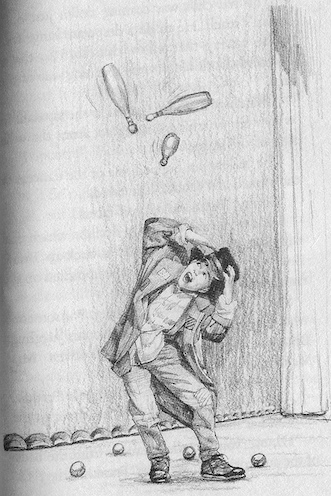
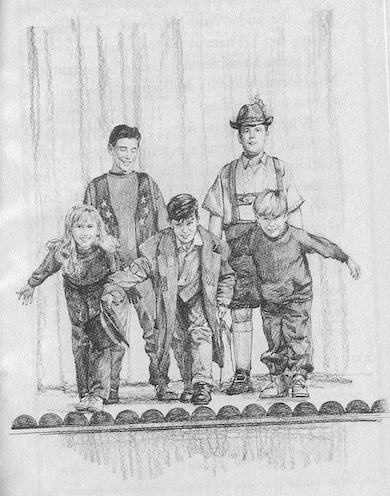
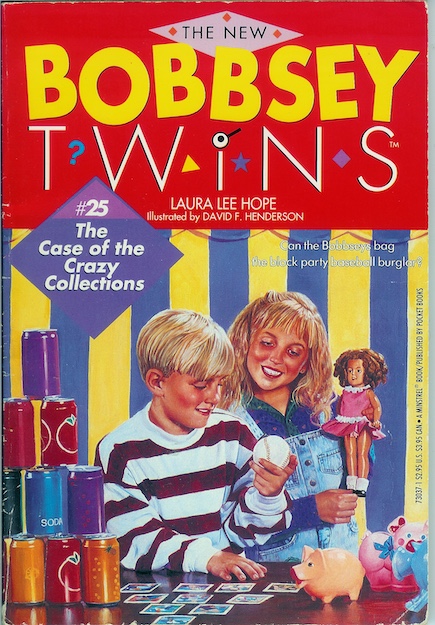


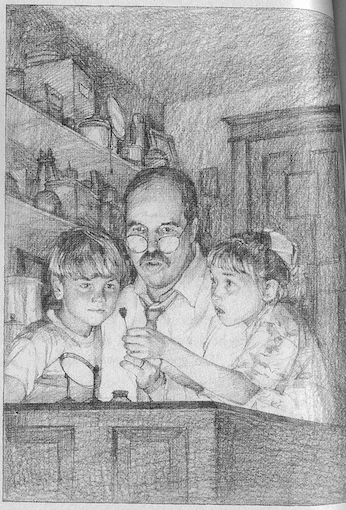
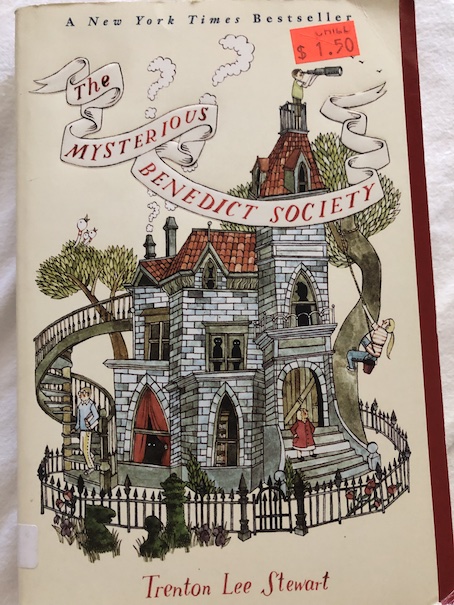


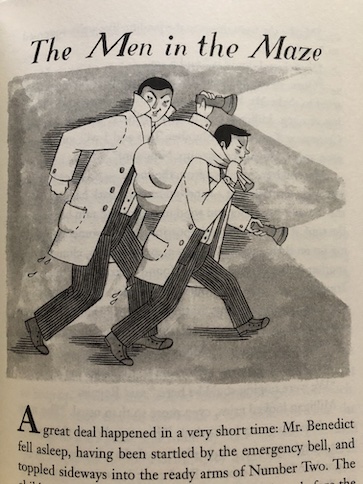


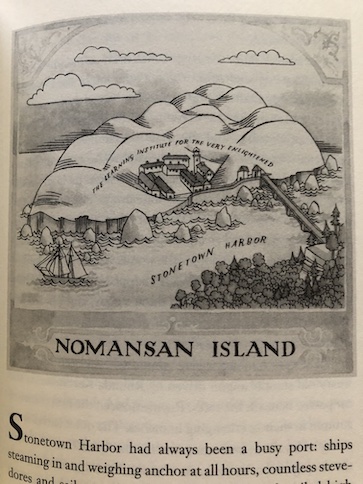
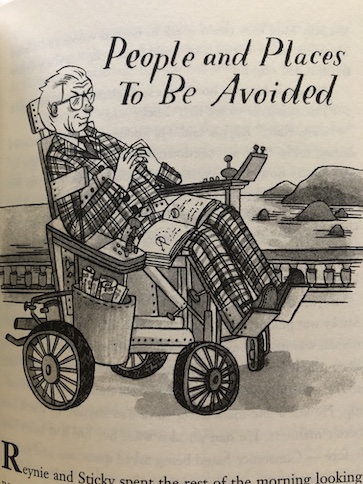

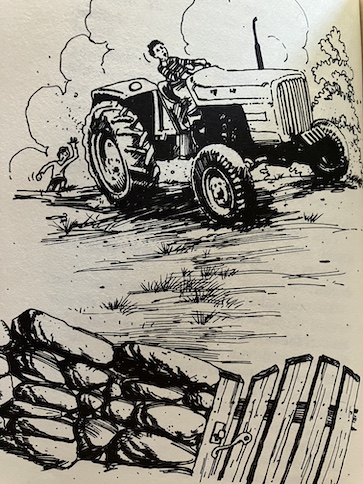


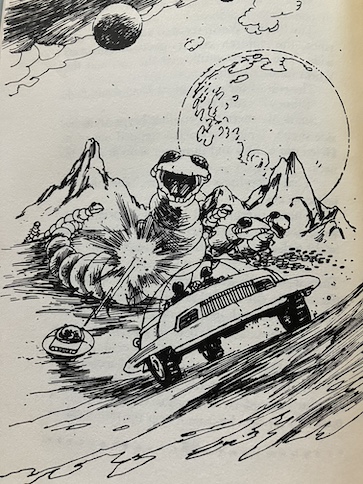
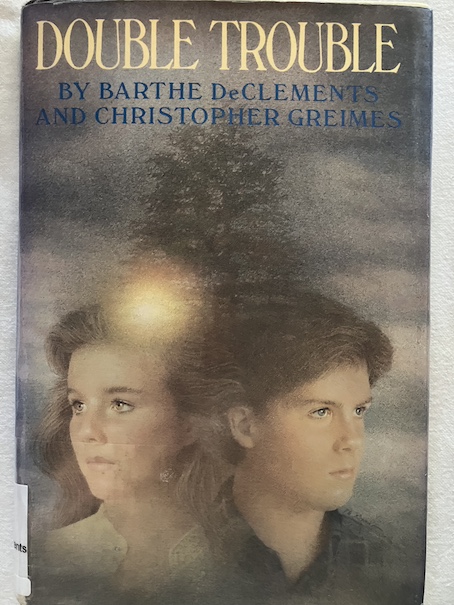






 Jestress's Forgotten Books and Stories