Uncle Jed’s Barbershop by Margaree King Mitchell, illustrated by James Ransome, 1993.
Sarah-Jean remembers her grandfather’s brother, Uncle Jed, and how he would travel to people’s houses to cut their hair during the 1920s and 1930s. He’s the only black barber in their area, so he cuts everybody’s hair in the black community. What he really wants is to own his own barbershop, with proper barbers’ chairs and equipment, but times are tough, and helping out his family means delaying his dream shop.
Everybody is poor in their town, so many people think Uncle Jed will never be able to get enough money to open a shop. However, even though things are tough and money is tight, Uncle Jed is willing to help out when he can. When little Sarah Jane develops a serious illness and needs an operation, Uncle Jed gives her father the money they need for her operation, saving her life.
Later, Uncle Jed loses his savings when the bank fails during the Great Depression, so he has to start saving all over again. Even though he has it hard during the Great Depression, Uncle Jed still helps other people, sometimes cutting hair for customers who can’t afford to pay him because they’re even worse off. He takes payment in whatever form they can offer, like garden vegetables or eggs.
Eventually, things improve, and Uncle Jed is able to afford his barbershop, and everybody comes to the opening. He acquired his shop toward the end of his life, so he doesn’t have it for long before his death, but he was still happy because he accomplished his goal and did something people didn’t think he’d be able to accomplish.
The book received the Coretta Scott King Award.
My Reaction
I thought it was a nice story. The ending seemed a little sad, that Uncle Jed didn’t live very long after finally acquiring his shop, but the book has an optimistic tone. Although Uncle Jed accomplished his life goal toward the end of his life, he did get to accomplish it and enjoy it before he died. It’s less important how long he got to enjoy it than the fact that he did enjoy it.
It took a long time for Uncle Jed to accomplish his goal of having his own barbershop, but I think it’s important to note that he had a pretty good life along the way. Even though he lost his savings in a bank failure, he had steady work through the Great Depression, and he was also able to help friends and relatives when they needed it. He had good relationships with his family and neighbors because of his helpfulness and generosity, and everybody shows up to congratulate him when he finally opens his shop.
This story takes place in the South during times of segregation, which enters the story when Sarah Jane is ill and needs to go to the hospital. Although her condition is serious, not only is her family sent to a segregated waiting room, they also have to wait until all the white patients are tended to before the doctor will even see them. The doctor also insists upon payment before performing the operation she desperately needs, the implication being that the doctor will let her die if he doesn’t get paid up front to save her. Before anybody think that this is an exaggeration, that a doctor would refuse to treat a sick child or save her life because of her race, even during the Jim Crow era South, no, it’s not an exaggeration at all. It was routine:
“It’s absolutely incredible how little organized resistance there was,” says Theodore Marmor, emeritus professor of public policy at Yale University and a key health policy adviser during the Johnson administration.
Before the passage of Medicare and Medicaid, Smith says, the healthcare system was tightly segregated. Hospitals in the South complied with Jim Crow laws, excluding blacks from hospitals reserved for whites or providing basement accommodations for them.
“There were a lot of black communities in the South that had basically no access to hospitals,” says Smith. “Most of the black births in Mississippi were at home. The infant and maternal mortality rates were hugely different for blacks and whites because of that.”
The surgeon who developed the practice of blood storage and blood transfusions, Charles Drew, was also an African American who lived in the early to mid-20th century. He died relatively young of serious injuries from a car accident in North Carolina. There was a popular rumor, which was repeated on an episode of the tv show MASH, that he would have survived if he hadn’t been refused treatment at the hospital because he was African American. The reality is that doctors did try to save him, but his injuries were simply too serious for him to be saved. However, the rumor developed and persisted because the reality also is that hospitals of this time were known to turn away black patients. They had done it to others, so it was completely credible that they could have also done that to Dr. Charles Drew, even if they didn’t do it in this particular case. The fact that this rumor was completely believable and consistent with the practices of Jim Crow hospitals is an indication of their general behavior and conditions. With that in mind, it is also believable and credible that the doctor in the story would have refused to see a seriously ill black child until all white patients were seen and also that he would have refused her life-saving treatment until being paid.
However, rather than lamenting about the prejudices and inequities of this time period, the story focuses on Uncle Jed as one of the good people. The doctor and hospital in the story are not only prejudiced, but their behavior also contrasts with Uncle Jed, who is willing to put off payment or accept lesser or alternate forms of payment for people who need his services but are too poor to pay. The emphasis of the story isn’t on how bad other people or circumstances were so much as how Uncle Jed made things better for everyone as best he could. It meant some sacrifices on his part, putting off his own goals and dreams, but Uncle Jed enjoyed a good life and good relationships with other people along the way and accomplished his goals in the end.
I also enjoyed the pictures in this story, showing the old-fashioned country and small town life in the early 20th century. The illustrator also did the illustrations for Aunt Flossie’s Hats (And Crab Cakes Later).
This story is told as a flashback, so we know that things get better for the main character, but she is still haunted by her past experiences.
Twelve-year-old Maggie is an orphan who has been bounced around between foster homes and boarding schools because of her bad behavior. Her bad behavior is because she feels neglected and unloved. She eventually comes to live with her great aunts and an uncle in an old house that used to be a boarding school. Maggie has memories of the house where she once lived with her parents before they died, but no place she’s been since has seemed home-like.
When she first arrives, her eccentric Uncle Morris picks her up at the station. Uncle Morris has a sense of humor, which is both charming and also gets on Maggie’s nerves. When she gets a look at the institutional-looking old house where her great aunts and uncle live, she is physically ill. She has lived in various boarding schools and is horrified at the idea of living in another. Her last boarding school expelled her, and the headmistress called her a “disgrace.” Maggie had hoped that, for once, living with relatives might mean living in a real home.
Her two aunts, Harriet and Lillian, remind her of the headmistresses at boarding schools, although their rules are different from most headmistresses. They lecture her about health and nutrition and worry about her being undernourished. They give her old-fashioned, hand-me-down clothes to wear that Maggie assumes are the uniforms of this old school. One of her aunts gives her a baby doll, but Maggie tells her that she doesn’t like dolls and doesn’t play with them. She doesn’t have any dolls, and if she ever had any before in her life, she doesn’t remember. Her aunt thinks her rejection of this gift is horrible. Her aunts don’t seem to understand much about children, and they are both horrified when Maggie dumps out her glass of milk because they gave her warm milk instead of cold. However, her Uncle Morris is amused and tells her that she might be the “right one” after all. Maggie isn’t sure what he means by that.
After her aunt leaves her alone in her new room, Maggie plays with the doll a little, imagining that she’s explaining it to a group of girls who have never seen a doll. A game that Maggie often plays with herself is to mentally explain common things to a group of imaginary girls who don’t know what any of them are. Then, she goes exploring the rest of the old house. Because this building is so obviously an old school, she keeps expecting that she will eventually encounter other students, but there are no students. Maggie is the only child in the old house.
Maggie finds her aunts’ rooms and tries on their curlers, a necklace, and a fancy pair of shoes. She gets in trouble with her aunts for doing that, and that’s the moment when Maggie understands that there really are no other children around to see her get in trouble. At first, her aunts think that maybe agreeing to accept Maggie was a mistake and that they can’t handle her. However, they decide to keep her, at least for the present.
They explain to Maggie that the building where they live did use to be a boarding school for girls. It was founded by some ancestors of their, whose portraits hang in the parlor. Maggie is amazed at the idea of ancestors because she barely even remembers having parents and has little concept of her extended family. The old school closed after some kind of disaster, and it reopened in a new location down the road. Now, the new school is a private day school for both boys and girls, catering mostly to wealthy families, who can afford the fees. Maggie is horrified when she finds out that she will be attending this school because she knows that a poor orphan like her in her shabby, hand-me-down clothes is going to be an oddity among the wealthy private school students.
On her first day at the school, Maggie has a panic attack while imagining going through the routine of her teacher telling the whole class about her unfortunate history and the tragic deaths of her parents in a car accident when she was little and asking the other students to be patient and charitable to her. She’s experienced this before, and she knows that, while the other students start off treating her charitably, they soon get tired of being charitable and start picking on her. Maggie tries to run away from the class, and that earns her a reputation as a weirdo right off the bat. The other kids immediately start treating her like a weirdo and calling her the usual nasty names, and Maggie’s only relief is that, this time, they didn’t go through the false kindness phase first.
Uncle Morris doesn’t live at the old school with the aunts, but he lives nearby and sometimes comes to visit. He continues to spout his witty nonsense and plays weird practical jokes that make no sense. Maggie starts to understand that her uncle’s form of teasing isn’t meant to be mean, unlike the kids at school, but none of it really makes any sense to her. His jokes are pointless, and he doesn’t respond to anything, even Maggie’s emotions, in a normal way, turning everything into some kind of bizarre joke.
Then, Maggie starts to hear voices in the house. She can’t tell where the voices are coming from, but she knows they’re not her aunts, and her aunts never seem to hear them. They talk about random things, like tea, roses, a lost umbrella, and a dog. Maggie asks her aunts who’s talking, but her aunts say no one is. They think that it’s just Maggie’s imagination because she’s highly strung, but Maggie knows that she’s not imagining it. Her Uncle Morris also seems to hear the voices because he reacts to them at one point, but when Maggie tries to ask him about it, he dodges the question and makes another of his nonsense jokes.
One day, while her aunts are out of the house, the voices call to Maggie and ask her to join them. Maggie searches for the source of the voices, and behind the wall in the attic, she discovers a small room with a pair of mysterious dolls who are alive. They walk and talk. At first, Maggie thinks this must be some kind of trick, but it isn’t. She tries to ask the dolls what they are, but they speak in nonsense jokes in response to serious questions, like Uncle Morris.
Maggie is unnerved by the dolls at first, and she throws a fit about how stupid their pretend tea party is, kicking the dolls aside in fear because she can’t understand them and is afraid of what they might do to her. The dolls simply conclude that they must have been wrong and that Maggie isn’t the right one and stop talking to her. Maggie tells them that she doesn’t care and doesn’t want to be the right one, but actually, she can’t stop thinking about the dolls. She wonders what they mean about the “right one” and what kind of person would be the right one. She also feels guilty about damaging the dolls when she kicked them, so she returns to the attic to fix them. When she starts to fix them, the dolls begin speaking to her again.
The dolls become Maggie’s friends, giving her the love she so desperately needs. Maggie also feels needed by someone else for the first time in her life, enjoying the feeling of taking care of the dolls, sort of the way she took care of the girls in her imagination. However, the dolls have a spooky origin, and when Maggie realizes the truth about the dolls, it changes her life forever.
The book is available to borrow and read for free online through Internet Archive (multiple copies).
My Reaction and Spoilers
About Maggie
I wasn’t sure if I was going to like this one or not because, while I like sort of atmospheric spooky themes, I have limits on how many scary and sad themes I can take. It did help that the book is divided into sections, each with a prologue about Maggie in the present day as she looks back on this strange period in her life. The prologues explain how Maggie is now in a happier home with people she has come to think of as her parents and younger children that she has also come to love as little sisters. The other kids are fascinated by the stories that she tells about her time with her aunts at the old boarding school, and Maggie enjoys explaining things to them, like she used to do to the imaginary girls, only she speaks more politely to the real girls. Since her time with her aunts, she has learned to get along better with people, and this ghost story is about how she learned how to build connections with people.
The book makes it clear that Maggie’s bad behavior is because she has been lonely, neglected, and mistreated since her parents’ deaths. She has been in various foster homes and boarding schools, but the people who were her caretakers didn’t really love her or have any patience with her. The other children in her boarding schools used her as a target for teasing and bullying, causing Maggie to look at everyone new she meets with suspicion, waiting for them to turn on her, even if they acted nice at first. The adults don’t really build a relationship with Maggie and just expect Maggie to be perfectly behaved, regardless of her provocation. Maggie remembers having spoken to psychologists before, who had her draw pictures of her feelings and family, but they never really solve anything for Maggie. Maggie still feels neglected and unloved, and when the adults at each place she’s been get tired of her, they just ship her off to somewhere else, where the process continues. Maggie’s bad behavior is like shooting herself in the foot, sabotaging possible friendships and relationships, but it becomes more understanding when you realize that this is the only pattern of relationships she knows. Children and adults have both mistreated her, so she doesn’t have any knowledge of healthy and loving relationships to draw on to know how people are supposed to treat each other.
That’s been Maggie’s life for as long as she remembers. The only clothes she has are old, worn pieces of various school uniforms from the various boarding schools where she’s been, and she has no toys or personal possessions except for a pack of cards that she uses to play solitaire, a game that one of her former boarding school roommates taught her. It’s the only game Maggie knows how to play other than imaginary games.
Maggie’s aunts and even her Uncle Morris aren’t particularly good for her. Her aunts have no patience or understanding for her. The aunts do care about Maggie. Maggie does become better fed and healthier because the aunts are concerned about her health, but they don’t understand how to take care of her emotional health. They also have some selfish motives in their care of Maggie, wanting to show off her improvement to their health society because they want to prove their health theories. Uncle Morris is quietly supportive of Maggie, but I found him rather trying because, when Maggie tries to speak to him seriously and sincerely, he just makes jokes and never really addresses her feelings or the realities of her situation. Admittedly, it’s partly because he knows the truth about the dolls but can’t admit it. Still, constant jokes aren’t what Maggie really needs, and his jokes and nonsense wear on her. The dolls also speak nonsense, but they give Maggie the opportunity to learn valuable lessons about how to get long with others and build relationships with them.
How to Build Relationships
One of the first lessons that Maggie learns is that, while other people have done things to hurt her, she also does things that hurt other people’s feelings. Before she can begin to develop relationships, she has to learn to control herself, to not treat other people in hurtful ways, and to apologize and do things to repair damage she’s done. She can’t begin to build a relationship with the dolls until she repairs the damage she did the first time she met them. Maggie is actually amazed that she was able to do it because she has never fixed anything in her life. She is unaccustomed to the idea that she can make things better when things have gone wrong or when she’s done something wrong. Most of her past problems have just ended in failure and with her being sent away.
Maggie also learns that building relationships with other people means caring about their needs, and Maggie likes the feeling of being needed by someone. Acting out the tea parties with an empty tea pot and wooden pieces of bread and watering the fake roses on the wallpaper is still ridiculous, but she does it all anyway because the dolls need her to do it. She gives them presents, too, the first presents that she’s ever given anybody. One of the girls at Maggie’s school, Barbara, sees Maggie making a present for one of the dolls and gives Maggie a little paper umbrella for a doll. Maggie learns that it’s possible for people to bond over shared interests.
What Are the Dolls Really?
However, there is a dark side to this story. There are hints all along about what the dolls really are. The man doll, Timothy John, is always reading a torn scrap of a newspaper about a fire, but he can never finish the story because most of it is missing. Every day is Wednesday for them, and they say that is the day they arrived in that room. When they show Maggie their best Sunday clothes, which they never wear because every day is Wednesday to them, Maggie is surprise to see that the clothes are burned. The dolls also speak of a third person who is supposed to join their doll household at some point, but they say that it can’t be Maggie because she’s supposed to be their visitor.
The truth is that the dolls are the ghosts of her ancestors, the ones who founded the school. They were killed in a fire in the 1800s, along with their dog, who is now a little china dog in their attic room. The story in the little newspaper scrap is about them, and the fire is the reason why the school had to be moved to another building. Maggie doesn’t realize the truth until she runs away after an argument with her aunts because she didn’t come to the party of their society and finds their grave stones. It’s the anniversary of their deaths, and she meets Uncle Morris at their graves. The only time Uncle Morris doesn’t make jokes is when he explains to Maggie how they died.
After the aunts catch her in the attic with the dolls and Maggie finds out who and what they are, the dolls stop moving and talking to her. Maggie tries moving them herself, acting out their tea party, and talking for them. Maggie is afraid that the dolls have now died forever, but there is the third person the doll spoke of to consider. The third person is Uncle Morris. It occurred to me that the story leaves it a little ambiguous about whether the dolls were really the ghosts of the ancestors or if Maggie’s own lonely imagination, inspired by Uncle Morris’s nonsense and bits of family history made her feel like they did. However, the ending of the story indicates that Maggie didn’t imagine any of it because her Uncle Morris dies of a heart attack and becomes a doll in the attic with the other dolls. When Uncle Morris joins the other dolls, the other dolls come to life again. However, it could still be the imaginings of a lonely and grieving child.
Maggie’s aunts decide that they simply can’t handle Maggie, so they are the ones who arrange for her to go to her new family. It was the best thing that they could have done for Maggie. The new family is the family that Maggie really needs, and they want to keep her permanently. She never tells her new sisters the truth about the dolls. Maggie misses being with the dolls, who are also her family, but the idea that they are still alive and that Uncle Morris is keeping the other two in the attic company so they won’t be lonely without her makes her feel better. It’s a bittersweet story.
One of the things that bothers me about ghost stories is that it’s sad to think about how the people got killed. I like stories that are kind of mysterious, but behind the ghost story, there is real tragedy. I feel really bad for Maggie’s ancestors and their poor dog, although they don’t seem to mind their condition too much. On the other hand, maybe some of their nonsense talk is to cover up the sad parts, so they can forget the tragedy and pretend like they’re still living their normal lives and make it so they don’t have to answer Maggie’s uncomfortable questions. Maybe that’s even where Uncle Morris learned that trick.
There are times when the dolls seem to have some memory of the past and what happened to them, but they’re kind of caught in a sense of timeless, so it’s hard to tell how much they really remember. If they really are ghost dolls and not just dolls who are alive in Maggie’s imagination, there’s no explanation about why they are dolls. Did they have dolls made of themselves while they were alive that they came to inhabit after death? Is it because they’re now playing at a life they’re no longer living? The story doesn’t say. Uncle Morris seems to know more than he tells, and he may have known somehow that he would also become a doll after his death. If he met the dolls himself when he was young, he may have made a conscious decision that he would join them one day. However, we don’t know for sure how much he knows or how or why the other dolls know to expect him after his death. Poor Maggie’s life has been about loss since the death of her parents. She lost them and her first home and every home she’s had since then. The idea that people she loves stay alive in the dolls could still be her imagination. The story indicates it’s all really happening, but readers can still decide for themselves.
Although this is not the first book in The Chronicles of Narnia, it takes place earlier in time than the other books and explains much of what happens in the later books. It starts in London in the late 1800s. No exact date is given, but the story says that it’s when Sherlock Holmes was still living in Baker Street and the Bastable Children were hunting for treasure (a reference to a Victorian children’s book by E. Nesbit). In fact, the characters make many other references to popular literature of the period throughout the story.
A girl named Polly Plummer is living in London when a boy called Digory Kirke comes to live with his aunt and uncle in the house next door. Digory is very unhappy because he used to live in the countryside and have his own pony, and he doesn’t like the city. The reason why he has to live with his aunt and uncle is that his father needs to go to India, and his mother is very ill and may die, something that has Digory very worried. He also tells Polly that his aunt and uncle are very strange, and it makes him nervous. His uncle spends most of his time in his study at the top of the house, a room where Digory is forbidden to go, and Digory thinks that there might be some terrible secret there. He once heard what sounded like a scream from that room. There are times when his uncle starts to talk about something while they’re eating together, but Digory’s aunt (his uncle’s sister, not his wife) keeps interrupting him and stopping the conversation before it even starts. The children speculate that Digory’s uncle’s secret might be that he’s keeping a mad wife in the attic (like in Jane Eyre) or maybe he’s involved with pirates, like in Treasure Island. Polly thinks all this secrecy and mysteriousness sounds exciting, but Diory says she might not think so if she had to live in a house like that. His uncle is a sinister person, and Digory thinks he might be mad. After a fashion, Digory is correct.
Digory and Polly become friends and play together over the summer. The weather is frequently rainy, so they spend most of their time inside, exploring their own houses. Their houses are part of a row of adjoined houses, and Polly discovers an attic crawl space that links all of the houses together. The children realize that they can use this crawl space to access other houses in the block. They don’t want to trespass into an occupied house, but there’s an empty house beyond the one where Digory’s aunt and uncle live that’s been empty for years. The children are curious about that house and think maybe it’s haunted, so they decide to use the crawl space to access the empty house. Unfortunately, the children accidentally come out of the crawl space in Digory’s uncle’s secret study.
When Digory’s Uncle Andrew catches the children in his study, he locks them in, saying that children are exactly what he needs for his experiment, and this time, his sister can’t interfere. The children are frightened and ask to leave, but Uncle Andrew offers Polly one of the yellow rings he has on a table. Polly can’t resist touching one of the yellow rings, and she suddenly vanishes from the room. Digory angrily demands to know where Polly went, and Uncle Andrew explains that this is his experiment.
Uncle Andrew calls himself a scholar, but he’s also a magician, and he’s been experimenting with dangerous magic. When he was young, he had a godmother named Mrs. Le Fay. Mrs. Le Fay was a somewhat disreputable person who had been to prison (for things that Uncle Andrew doesn’t want to explain), but she was always nice to Andrew because they shared common interests. Their interests were magic and esoteric knowledge. Mrs. Le Fay was one of the few living humans who had some fairy blood in her, so she was Andrew’s “fairy godmother.” Before she died, she gave Andrew a strange box and told him to destroy it using a magical ritual after her death. Of course, Andrew broke his promise and kept the box to study it. Uncle Andrew thinks of himself as a great scholar and researcher, and things like promises and ethics and even the welfare of other human beings are not going to stand in the way of his pursuit of arcane knowledge.
After spending considerable time studying the box, he realizes that it was made in the ancient land of Atlantis, but more than that, the contents, a set of yellow and green rings, came from another dimension, another world in another universe. Uncle Andrew realized that the rings would allow a person to access that other dimension. The yellow rings would send people to the other dimension, and the green ones (he’s pretty sure) allow them to return from that dimension. Naturally, he thought of himself as too important to risk in the experiment, so he needed to send someone else instead. He tried it at first with guinea pigs, but he couldn’t tell the guinea pigs what to do to come back, so he realized that he needed to send humans. Now that he has tricked Polly into going, he says that the only way Polly can come back is if Digory goes, too, and brings her one of the green rings that she can use to return. Digory is angry at his uncle for trapping them in this way, but since he knows his uncle won’t rescue Polly, he agrees to go find her.
After using one of the yellow rings himself, Digory finds himself coming out of a pool in a strange forest. Polly is there, but something about this forest muddles their minds so they have trouble remembering who they are, where they’re from, and what they’re supposed to do. After talking to each other awhile, they remember. They’re about to return to their own world by putting on their green rings and stepping into the pool they both came from when Digory realizes that there are other pools around them that could lead them to other worlds. Digory is excited and wants to explore these other worlds, but Polly sensibility insists that they carefully mark the pool that will take them home and test it to make sure that it will allow them to return before they try going to a different world. They change rings before they are fully in their own world again, so they won’t immediately return to Uncle Andrew before they’ve fully understood what these other places are and what they’re about.
When the children try entering a different world, they find the ruins of an ancient palace and city. There is no one around, and it looks like it’s been dead or abandoned for ages. Exploring the palace, they find a collection of statues in royal clothes and crowns. Some of the statues seem to have kind and wise faces, while others are cruel and distressed. Then, the children see a little bell and a hammer with a warning on the bell in a strange language that the children are somehow able to understand. Polly thinks that they should leave the bell alone, but Digory feels a strong urge to strike the bell and see what happens. Digory grabs Polly’s arm to stop her from leaving this ruined world and strikes the bell. Almost immediately, the children realize that this was a terrible choice.
The bell wakes one of the statues, a tall and beautiful but cruel woman who says that she is Jadis, the last queen of this world. Digory finds her impressive at first, but that feeling turns to horror as she tells them her story. Jadis says that she and her sister were fighting for the throne, and her sister’s forces were winning. As she stood on the brink of defeat, Jadis used a terrible spell that immediately killed everyone in their world except herself, including her sister, her forces, and all of the citizens. Jadis says that the citizens served no other purpose than to serve her anyway, since she is rightful queen, and she blames her sister for not simply giving her the crown when she demanded it. After everyone was dead in her world, Jadis put herself into a magical sleep until someone came to wake her up. When she has finished telling the story, Jadis commands the children to take her to their world so she can rule them instead.
Polly and Digory try to use their magic rings to escape from this terrible queen, but Jadis grabs hold of them and is brought to Earth anyway. Although Jadis’s magical powers don’t seem to work on Earth as they did in her world, she is still unnaturally strong and formidable. She is as cruel, selfish, and vain as Uncle Andrew, but she could easily wipe the floor with him, if she wanted to. Uncle Andrew’s initial joy at his experiment being an unqualified success that actually bought someone from another world into his world turns to panic when he realizes that Jadis is more than he can control and regards him as no more important than one of his guinea pigs was to him. Digory apologizes to Polly for ignoring her warnings and waking Jadis, and the children try to figure out how they can get rid of her before she can take over their world.
My Reaction and Spoilers
I didn’t read this book when I was a kid, but I’m glad I did as an adult because I enjoyed it, and I appreciated the explanations behind some of the things that happen or exist in the other stories. Digory Kirke is actually the old professor the Pevensie children go to stay with in the country when they are evacuated from London during WWII in the first book in the series, The Lion, the Witch, and the Wardrobe. We also learn that he and Polly actually witness the creation of Narnia when they try to get Jadis back to her own, crumbling world. Jadis was inadvertently responsible for the lamppost that the Pevensie children find in the woods when they first visit Narnia. Jadis also becomes the White Witch who tries to make herself Queen of Narnia. At the end of the book, we also learn the origins of the magic wardrobe and what makes it so special.
There are Biblical themes throughout the story, but especially around the creation of Narnia and the mission that Aslan gives Digory to make up for accidentally bringing Jadis to Narnia. Narnia’s creation isn’t quite like the Biblical creation story. In this book, Aslan the Lion sings Narnia into existence. However, there is a pairing up of animals that almost mimics the pairs of animals being chosen for the Ark in the Noah story.
After Digory admits that he is the one who brought Jadis to this new world, Aslan sends him to fetch an apple from a distant garden, from which Aslan says he will plant a tree that will protect Narnia for years. The apple and the garden mimic the story of the Garden of Eden. The garden has a fence around it with a warning about trespassing and stealing fruit for selfish purposes. Digory retrieves the apple that Aslan asks for, and he is tempted to take one himself, but before he can go much further with that thought, he catches Jadis in the garden, stealing an apple for herself. When Jadis eats the apple, it turns her into the pale witch she becomes. Jadis says that she will now live forever and never age. She tries to convince Digory to eat the apple he has picked or give it to his ill mother, but Digory successfully resists the temptation. Aslan tells Digory that it is good that he resisted the temptation because, while the fruit would grant eternal life to whoever eats it, it comes with a heavy price if the fruit is obtained through dishonest means. Jadis/the White Witch is granted unnaturally long life, but she is never the same again. Aslan does give Digory the means to heal his mother before he returns home.
I really liked the children’s hideout in the crawl space that spans the houses. They use the crawl space and its relationship to the houses to explain how there can be parallel worlds that can be connected, but I like the setting so much that I would have liked to see a children’s mystery or adventure story in a similar setting. I found myself wondering what would have happened if the children had managed to reach the empty house they wanted to enter and explore. They never did because they got into Uncle Andrew’s study by mistake, but I think it’s fun to imagine what they would have done if they had. Maybe they would have turned it into a secret hideout, or maybe they would have encountered criminals who had already turned it into their hideout. Maybe someone would eventually buy the house and move in. The whole setup offers possibilities.
This book starts with the four Pevensie children from the previous book in the series heading to their boarding schools by train. The girls are going to one school, and the boys are going to another. As they’re waiting for their trains at the station, they suddenly feel themselves being pulled and dragged by some unseen force. They feel like it’s magic of some kind, and they all join hands to stay together. The next thing they know, they’re in a forest. They wonder if they might have returned to Narnia.
They explore the area and realize that they are on an island. When they search for food, they find an abandoned apple orchard and the ruins of a castle. Something about the ruins seems strangely familiar to the children. When Susan finds a golden chess piece, they realize that the castle is the ruins of Cair Paravel, the castle where they used to live as kings and queens during their previous time in Narnia. The children are sad that the castle is now ruins. They’re also puzzled at how it can be ruins when they last saw it intact, and when they lived there, the castle was on a peninsula, not an island. Even though their previous adventures only took place a year before for them, it looks like many years, maybe centuries, have passed in Narnia.
They find their way into their old treasure room and discover that it is undisturbed. They leave the jewels and riches there, but they find the special presents that they were given during their last adventure and take them because they may be helpful during this adventure. The one thing they can’t find is Susan’s magic horn, which can be used to summon help in desperate times. Susan realizes that she had it with her during the stag hunt right before they returned to their own world from Narnia, and it was probably lost in the woods.
When they rescue a dwarf from some men holding him captive, the dwarf thanks them. He says that they were planning to drown him as a criminal, but he doesn’t fully explain. Instead, he offers to catch some fish for them all to have breakfast because all the children have are apples. When the children mention that there is firewood at the castle, he is amazed. He’s heard stories about an old castle there, but he wasn’t sure that it was real. The rumors are that the forest around the castle ruins is haunted.
After they eat, the dwarf explains that he is a messenger for Caspian, the king of Narnia. He then qualifies that by explaining that Caspian should be the king. The old Narnians recognize him as the rightful king, although he is considered one of the new Narnians himself. Prince Caspian was an orphan raised in the castle of his Uncle Miraz. He was mostly raised by his nurse and wasn’t very close to his aunt and uncle, but his uncle acknowledged him as his heir because he had no children.
According to the dwarf’s story, Prince Caspian has a fascination for the old days of Narnia from his nurse’s tales, when there were fauns and talking animals in Narnia, but his uncle says those are just fairy tale stories for little kids. The Pevensie children realize that the legends that Prince Caspian was told as a young child were about them and their adventures. People still tell stories about them, but not everyone believes them.
Miraz forbids Caspian from believing in those stories or talking about them again and sends away Caspian’s nurse. Instead, he hires a tutor for Caspian called Doctor Cornelius. Caspian misses his nurse, but he enjoys his lessons with Doctor Cornelius. From Doctor Cornelius, he learns that his ancestors and other humans came to Narnia from another land and conquered it. However, Doctor Cornelius is reluctant to explain exactly whom his ancestors conquered. Doctor Cornelius quietly admits that Miraz forbids anyone from talking about Old Narnia because it’s supposed to be a secret. Over time, Doctor Cornelius lets Caspian know the secrets of Old Narnia, which confirm to him that his nurse’s stories were true.
Caspian’s ancestors were the ones who silenced the taking animals and drove away or killed other races who inhabited Narnia. The reason why Miraz won’t let anybody talk about the history of Old Narnia and denies that other species once lived there is to cover up that his ancestors stole Narnia from its rightful inhabitants and that most of the humans are merely transplants to this land, not its rightful heirs. Doctor Cornelius reveals himself to be a dwarf, one of those few who still live in Narnia in secret. He is also part human, which is how he is able to pass for a human. He says that there are others there in disguise. Caspian feels like he should apologize to Doctor Cornelius, although he knows that what his ancestors did to the dwarves was not his fault. Doctor Cornelius says that apologies are not necessary, but he knows that Caspian will one day be king and can help the remaining Old Narnians who still live there, hiding from Miraz.
The stories about the woods around Cair Paravel being haunted were invented by Caspian’s ancestors to hide Narnia’s past and also because they want the forest to separate them from the sea. Caspian’s people fear the sea because, although they deny that Aslan exists, the legends all say that Aslan will return from across the sea. They fear the wrath that Aslan may visit on them for what they did to Narnia and its peoples. However, not all humans have this fear of Aslan and Old Narnia. Others, like Caspian, are fascinated and would like to see Narnia become more like its past self, with magic and talking animals and dwarves and fauns. As Caspian gets older, he realizes that many people in Narnia are unhappy with Miraz and the way he rules Narnia. He is a cruel king.
One night, while Caspian’s aunt is very ill, Doctor Cornelius wakes him and prepares him for a journey. He tells Caspian that he is not just the prince but the true king of Narnia. His father was the true king, and after Caspian’s parents were dead, Miraz took the throne for himself. Miraz murdered or exiled Caspian’s father’s old friends and supporters. Caspian was too small at the time to understand or have any memory of this, but now, Miraz is planning to murder Caspian. His aunt’s “illness” was actually childbirth, and now that she has given birth to a son, Miraz is planning to eliminate Caspian so his own son can be his heir with no opposition from the true heir. Doctor Cornelius says that Caspian has no other choice but to flee to another, friendly kingdom. To help him on his way, Doctor Cornelius gives him some food, a purse of gold, and Susan’s magic horn, an Old Narnian artifact found after she and her siblings disappeared from Narnia.
While Caspian is fleeing, he has an accident and is knocked unconscious. He is found by a dwarf and talking animals. They almost kill him as one of their enemies, but Caspian explains who he is and why Miraz wants to kill him. The dwarf still wants to kill him, but the badger realizes that Caspian is a hopeful sign. The golden age of Narnia was when human children ruled, and young Caspian’s belief in the Old Narnian stories and assertion that he has longed to meet Old Narnians like them are signs that he could be a true high king like King Peter. The badger says that he would be willing to follow King Caspian if he remains true to Old Narnia and its people.
Caspian is allowed to stay among the Old Narnians in hiding. He gradually makes friends with different species, and they begin to form a rebellion against Miraz. Doctor Cornelius finds Caspian and warns him that his uncle is searching for him. Caspian’s supporters convinced him that it was time to blow Susan’s horn to summon help, and that was how the Pevensie children were summoned back to Narnia.
The dwarf explaining all this to the Pevensie children is the same doubting dwarf who almost killed Caspian and ended up joining his supporters. The men trying to kill him were Miraz’s people. Trumpkin, the doubting dwarf, now doubts that the Pevensie children are the help they were hoping for. They are children again, not the great kings and queens they were when they left Narnia. The children aren’t too troubled by his doubts because they know who they are and the victories they have already achieved in Narnia. They have not lost all the skills they gained in Narnia before, and the more time they spend in Narnia, the more they become like the kings and queens they once were and still are. They outfit themselves from their old treasury and prepare to once again battle again evil in Narnia in support of Aslan.
The book is available to borrow and read for free online through Internet Archive (multiple copies, including some in different languages).
My Reaction
The books in The Chronicles of Narnia are famously Christian allegories, and Christian themes continue through this book. There are people who are doubters, but those who remain faithful believers in Aslan (who represents Jesus in this series) are the ones who prevail in the end. Like Jesus, Aslan wants his followers to do what they can on their own but is often near to offer them strength, support, and hints about the right thing to do. However, some people are more perceptive to his guidance than others, especially Lucy, and there is a theme that runs through the story about belief in things from people who have not seen them directly and are relying on other people’s experiences. As Lucy has a greater capacity for perceiving Aslan, some other people have a greater capacity for general belief. Edmund has learned his lessons from the previous book. Feeling badly about his earlier doubting of Lucy and how he had once belittled her, he becomes her biggest supporter during times when she can see Aslan and others can’t, urging his older siblings to listen to her. Some people, including Peter and Susan, doubt whether Lucy has actually seen Aslan when they haven’t seen him himself. Trumpkin, the doubting dwarf, is the classic Doubting Thomas of the story. He doubts everything, every step of the way, from Caspian’s intentions to the existence of the Pevensies and Aslan, but he keep son going until he sees the Pevensies himself and has the opportunity to see their abilities in action. Among Caspian’s followers, there are some, like the badgers, who have always believed in Aslan and always will, and there are others who are won over when they see for themselves.
There are also themes in the story that can apply equally to religious issues and political ones. Miraz struggles from the beginning to control the narrative of how his family came to rule Narnia and how he himself became the king when his brother’s son was actually the true heir. There are people who know the truth about both of these issues, but he’s not above censoring people, exiling them, and even killing them to prevent people from talking about the truth openly. Miraz is not a good king and has his self-interest in mind more than his subjects’, but he’s sharp enough to know that nobody really likes him or wants him to be king except he has convinced them that he has the authority to be king and that their self-interest lies with him. If people came to see him and his family for who and what they truly are and what they’ve actually done, he would lose all of that, and he knows it. Authoritarian rule is like that. It relies on maintaining the sort of image that, realistically, they can’t maintain if people know what the individuals involved are really like. Authoritarians try to make themselves look stronger and better than normal humans to cover up for their flaws, but the image collapses when they can’t or won’t deliver what they promise, and people see them for the flawed humans they really are, often more flawed than the people they tried to convince were weaker.
Aslan eventually reveals that Caspian and his people are not just from a foreign country in the world of Narnia, but their distant ancestor were actually pirates from our world. They had conquered and looted an island in the South Seas, murdered many of the inhabitants, and taken the women for their own. Then, they had argued and fought among themselves. Some of the pirates took their women and tried to hide in a cave from the others, but it was a gateway to the world of Narnia, and that was how they got there to later conquer Narnia. When Caspian hears this, he says that he wishes that he had come from a more noble lineage than murdering pirates, and Aslan tells him that, further back than the pirates, he is also a son of Adam and Eve, just like the Pevensies, and that lineage is noble enough. I liked this explanation because, in modern times, people have struggled with the concept of having slave-owning ancestors, fearing criticism, punishment, or some form of reparations for it. I’ve heard some people saying that they don’t want to be ashamed of themselves or their ancestors. They are hung up on one part of their family’s history, a history that, when you think about it, goes back as far as humans go, and they fear blame and shame for that. I don’t think I’ve heard many consider that their family didn’t always own slaves. They were something other than slave-owners before that, even if some of them can’t quite remember what that was. I’m not big on ancestor veneration and imitation, but everyone’s ancestry goes back too far to remember every generation. Even if some generations weren’t good examples, they’re not the only past generations, if you see what I mean. Maybe, instead of looking at what their family used to be and lost and might be blamed for even having, they should consider that what they’ve become since then might just be a return to what they were before that period in their family’s history, which might just be better and noble enough.
Earlier in the story, when the Old Narnians talk about whether to support Caspian or continue to support him, there are some who waiver in their support or withhold it, also out of self-interest. While nobody really likes Miraz, Narnian history and legends influence the way that the Old Narnians feel about Aslan and his supporters. Most of the Old Narnians remember the White Witch from the previous book as a wicked ruler, but the dwarves and wolves fared better under her than other species. Their descendants forget that their relatively better treatment came from their collaboration with the witch and their participation in her wickedness, and even then, the relatively better treatment still wasn’t that great. (Plus, some of the wolves are actually werewolves, not just talking animals, like the others.) They just vaguely remember that there was a time when a ruler put them in a better position relative to other species, which they are not now. In fact, they feel like they are now treated worse and given fewer supplies than the other groups. The other groups say that’s not true, but it feels like it is to them because they are no longer better off than the others. They miss that and want it back. When they become impatient with Caspian and feel like he won’t give them the treatment they want, they rebel, and some of them are killed. Prince Caspian and the others feel badly about that because the might not have rebelled and been killed in the struggle if circumstances were different and they had felt more satisfied, but they had no choice but to defend themselves from their attack.
The book also looks at the type of people who support authoritarian rulers. Much of their support also has to do with self-interest or apparent self-interest. Miraz does have supporters among the human nobility who helped him accomplish his rise to power and who helped do his dirty work in getting rid of his brothers old allies. Since then, some of them have become disillusioned with Miraz. Miraz has not followed through on what he promised them before in exchange for their loyalty and support, furthering his own self-interest instead of theirs, and that’s the one thing they can’t accept. The thing about supporting someone who is selfish and is willing to throw former supporters to the wolves or even kill relatives in pursuit of power … is that you end up being one of those former supporters who may be thrown to the wolves or killed when your leader pursues self-interest and power. Some people never think anything through. They may have assumed that they would be a special exception to the leader because of their support, but nobody is special to Miraz but himself. Everyone else is just a tool to be used until he can’t find a use for them or they seem to be a hindrance.
When Aslan reveals the true history of Caspian’s people to them, many of them are afraid that Aslan is going to kill them all for what they’ve been and what they’ve done, which is another factor in their support of Miraz and his narrative. Even some of those who knew the truth before were too scared to say anything or do anything about it because they feared the blame, guilt, and consequences that might follow acknowledging the truth. A major reason for their fear is that they and their ancestors have not been merciful to anybody, so it never occurs to them that someone else might have better intentions for them.
At the end of their adventure, when it’s time for the Pevensies to go home, Aslan tells them that Peter and Susan will not be returning to Narnia next time because they are getting too old, but Edmund and Lucy will return someday. It’s a common theme in children’s fantasy books that only children can experience certain types of magic, and when they get older, they can no longer experience it or believe in it. It’s a trope that is meant to explain why grownups don’t experience this type of magic in the real world and why the adults in stories think that the children are just imagining things when they experience magic, but to me, it doesn’t logically follow in this story. We already know that at least one adult the Pevensie children have met believes in Narnia and magic because he has also experienced them, and we know that the ancestors of Caspian’s people arrived in the world of Narnia as adults. The Chronicles of Narnia don’t seem to have a consistent principle about who can visit the world of Narnia or believe in it, not in age or even in moral character because Caspian’s ancestors were murdering pirates. I think, in the case of Caspian’s ancestors, it might have something to do with explaining how even flawed and immoral people can rise to power or even seemingly have God’s favor, when it seems like they’re the last ones who should. It seems to be a combination of random chance (happening to wander into the right cave, in this case), their own choices (conquering other people), and possibly, part of a much longer game on Aslan/God’s part (eventually producing Caspian, who is the kind of ruler Narnia needs, even though it involved a lot of evil along the way – the evil being the humans’ choice, not a requirement). That’s some speculation and interpretation on my part, but I think the story kind of sets that up. Aslan seems completely aware of what’s going on and what has been happening but hasn’t tried to interfere until the critical moment in this story when Prince Caspian needs his help to fulfill his destiny.
Eleven-year-old Portia and her six-year-old brother Foster are traveling alone by train to visit their aunt and uncle and twelve-year-old cousin Julian in the country for the summer while their parents are on a trip. Portia likes spending time with Julian because Julian is an amateur naturalist and tells her things about animals and birds. When Portia and Foster arrive, their aunt, uncle, and cousin tell them that their dog has had puppies. Portia is allowed to name them, and if her parents agree, she and Foster will even be able to keep one!
While Portia is out exploring the countryside with Julian one day, they find some garnets in a rock. They start chipping some out to take to Julian’s mother, and they find a carved inscription in Latin on the rock with the date July 15, 1891. They’re not sure what the Latin words mean. They figure out that part of the inscription refers to the Philosopher’s Stone, which was supposed to turn different substances to gold. Portia asks if this stone could be the real Philosopher’s Stone, but Julian says that’s impossible because they’ve been using knives to pry out the garnets, and they haven’t turned to gold. They continue to wonder what the inscription really means and why someone put it there.
They explore the countryside further, getting lost. They aren’t too worried because they don’t need to be back soon. They follow a brook and find themselves in a swampy area. Strangely, they stumble over an old rowboat. Then, they spot a row of old, abandoned houses. The houses are in bad condition, but the kids can see that they were built in elaborate Victorian styles. The children wonder why those houses are there on the edge of swamp. Portia finds it a little creepy, but Julian wants to get a better look.
Then, the children hear a voice. Strangely, the voice is repeating an advertisement for medicine for indigestion. The children think it’s funny because no ghost would say something like that. Taking a closer look at the houses, they notice that one seems to be in better condition than the others that it has animals and a garden, so someone must be living there. Thinking about it more, Julian says that the swamp was probably once a pond or a lake, and that’s why it had houses and a rowboat. He hasn’t heard of a lake in the area, but he and his parents haven’t lived in the area for long. The children wonder who lives in the house and decide to find out.
They find an old woman in old-fashioned clothing, listening to a radio. The old lady is surprised to see them but welcomes them, saying that it’s been a long time since she has seen children. She invites them to come inside her house, and the children find themselves in a cluttered and chaotic parlor with each wall covered in a different kind of wall paper. The woman introduces herself as Minehaha Cheever.
The children explain how they ended up there by coming through the swamp, and Mrs. Cheever says that they shouldn’t go through the swamp because there is a dangerous sinkhole there that they call the Gulper. She says that when it’s time for the children to go home, she’ll have her brother show them a better and safer way. Mrs. Cheever says that there used to be a lake there, and that her family and about a dozen others had summer houses there, but the lake largely dried up when a new dam was built. After that, the summer houses were abandoned, and many of them were vandalized. However, her father and another woman locked up their houses with the furniture inside, thinking that they would come back and move them, but they never did. The large and fancy old Villa Caprice is still untouched, but Mrs. Cheever says that she supposes that much of the contents is probably deteriorated. She says that the Villa Caprice gives her the creeps.
The children ask Mrs. Cheever why she’s there, and she says that she used to live somewhere else. After her husband died, she didn’t have much money, and she remembered that the house at the former lake was still there. Her brother, Pindar, also wanted to retire somewhere quiet, so they decided to go live in their family’s old summer house. There was enough furniture and old clothes left there for the two of them, and it suits them. They keep animals. Pindar still has their old car, so he can sometimes go into town for things they need. “Pindar” was one of the words in the inscription on the rock.
Pindar explains that he and his best friend when he was a kid, Tarquin (another of the words on the rock), were the ones responsible for the inscription on the rock. Tarquin was three years older than Pindar, but they were still close friends. However, they had a temporary falling out when Tarquin was 13 years old. Tarquin had gone away to boarding school for the first time, and the next time they met at their summer homes, Tarquin had brought a friend from his new school with him, Edward. Tarquin and Edward were putting on airs and showing off how sophisticated they were because they were 13 years old and knew so much more now that they had been to boarding school. Pindar felt bad about his old friend shunning him and treating him like a little kid, so he started hanging out with his other best friend, Barney. Then, Pindar had the idea of showing Barney the big rock with garnets stuck in it where he and Tarquin used to meet and hang out together.
When Pindar and Barney got to the rock, they discovered that Tarquin and Edward were already there, and the older boys said that they had claimed the rock for themselves. They called the rock the philosopher’s stone and wrote the inscription labeling it as the philosopher’s stone in Latin, which they had learned at their boarding school. The older boys said that the younger ones were too little to be philosophers, like the two of them. Pindar’s feelings were hurt all over again, and he told his father about the situation. Pindar’s father was amused by the older boys and their sophisticated philosopher talk. He said that there was no age limit on who could be a philosopher and explained to Pindar what a philosopher’s stone was supposed to be and how it was supposed to turn things to gold. Then, he suggested a prank that Pindar and Barney could play on the older boys, convincing them that the stone really did have the power to turn things to gold. The older boys were temporarily fooled by the trick. At first, Tarquin was angry about being tricked, but then, he had to acknowledge that he had provoked Pindar and that the trick was a clever one. Tarquin made up with both Pindar and Barney, and he added Pindar’s name and his own to the inscription on the rock. Pindar still considers Tarquin and Barney to be his best friends, and they still write letters to each other in their old age.
Julian and Portia are fascinated by the stories that Pindar tells about the childhood summers he and his siblings and friends spent at this now-vanished lake. Mrs. Cheever said that she loves having children around the place again, and she suggests that Julian and Portia could use one of the old houses that is still in reasonably good condition as a kind of clubhouse. Julian and Portia love the idea, and Pindar and Mrs. Cheever suggest that they use the old house where Tarquin and his family used to stay. It’s in disrepair, but it’s much better than some of the other houses. There is plenty of furniture in the attic that the children can use, too. The children decide to invite some other kids to join them, and they call their club the Philosopher’s Club, after Pindar and Tarquin’s old group of friends.
Julian and Portia invite some other local children to join the Philosopher’s Club and spent a magical summer exploring this abandoned community, picking blackberries, learning about local plants and their uses, and scavenging things from old houses and trying on the clothes from Pindar and Mrs. Cheever’s youth. The boys help Pindar build a bridge over the large sinkhole they call “the Gulper” after Foster falls into it and has to be rescued. When Julian and Portia’s parents meet Uncle Pin and Aunt Min (as they come to call Pindar and Mrs. Cheever) and come to see Gone-Away Lake, the adults also experience the magical, dream-like qualities of this place, and Portia’s parents consider plans that may make the children’s future summers magical.
The book is available to borrow and read for free online through Internet Archive (multiple copies – including a couple of copies of the sequel, Return to Gone-Away).
My Reaction
I remember a teacher reading this book or part of it to us when I was in elementary school, but I couldn’t remember much about the story except for the lake that had gone away and caused the town to be largely deserted. For some reason, I had thought this story was a mystery story, but it’s not.
In many ways, I think this is the perfect nostalgia book because a large part this story is about the nostalgia that the elderly brother and sister in the story have for the place where they used to have their childhood summer adventures, even though the place isn’t what it used to be. Through the stories that they tell the children and the children’s own adventures and explorations of this largely abandoned summer community, they begin building their own attachments to the place and their own nostalgic summer memories.
Because the story takes place in such a unique location, I think it would make a fun kids’ movie with a vibe of nostalgic summer adventure. Although, because the story is largely low-key slice-of-life and the flashbacks of Uncle Pin and Aunt Min to incidents in their youth, I can see that the story might have to be changed a bit to fit the usual movie format, focusing on one definite problem or a particular adventure to give the story its climax. I picture the kids and their Philosopher’s Club making it their mission to preserve this vanishing community, which fits with the way the original story goes, although the kids in the book enjoy the old community for the magic of its dilapidated state rather than wanting to fix it up and restore it to its former glory. I think they could lean into promoting the preservation of nature and the ecosystem of the area, with Julian in particular pointing out what makes this environment unique and how it has become home to animals and insects since the lake changed to a swamp and most of the people left. The Philosopher’s Club might connect with a local naturalist society, and they could build the bridge in the story together to make the swamp safer to traverse for nature lovers and bird watchers. Uncle Pin and Aunt Min could remain on the site as its caretakers. Perhaps, the kids might even find some old notes and drawings in one of the old houses that show some interesting aspects of how the environment has changed and some of the unique animals that make their home there. That didn’t happen in the book, but it would be a sort of environmentally-connected treasure the children could find.
#1 Ruth Fielding of the Red Mill or Jasper Parloe’s Secret, by Alice B. Emerson (The Stratemeyer Syndicate), 1913.
In the first book of the Ruth Fielding mysteries, one of the older series produced by the Stratemeyer Syndicate, young Ruth Fielding has recently lost her parents and is traveling by train to New York state to live with her Great Uncle Jabez. She has never met him before, but she knows that he lives in a red mill outside of a small town. She meets the town doctor on the train when he notices how sad she looks and explains to him why she’s traveling to her great uncle’s home. Her old home was in a poor area, and although she would have liked to stay with her friends there after her father’s death, no one would have been able to keep her. Then, the train unexpectedly stops when the engineer sees what looks like a warning light.
It turns out that the light is a red lamp tied to a large mastiff, who seems very upset. Ruth, who is good with dogs, is the only person who is able to calm the dog enough to get a look at the dog’s tag. It turns out that the dog belongs to Tom Cameron, who doesn’t live too far from where her Great Uncle lives. Tom Cameron comes from a wealthy family, and he has a reputation for being a wild boy. The lamp tied to the dog appears to come from his motorcycle, and there is a note tied to the dog that appears to be written in blood and only says, “Help.” Ruth is very upset, thinking that the dog’s owner must be badly hurt somewhere. The adults around her aren’t so sure because they think Tom could be playing a prank, but they take the dog aboard the train. The town doctor says that it’s possible that Tom could have had an accident on his motorcycle, and when they get to town, the town doctor, some of the other men, and Ruth set out to see if the dog will lead them to where Tom is. Ruth needs to come because the dog behaves better for her than for the men.
When they find Tom, he really is hurt, having had a motorcycle accident. He is barely conscious and muttering, “It was J. Potter. He did it!” They don’t know what it means, although it sounds like he’s accusing Ruth’s great uncle of causing his accident. By the time they get Tom to safety, it is late, and it turns out that Ruth’s uncle visited the train station at the wrong time, before the train even arrived and not seeing Ruth, assumed that she wasn’t on the train and left. Because her uncle lives outside of town and it’s rather late, the station master, Mr. Curtis takes Ruth to stay the night at his house with his family. Mrs. Curtis is very nice, but Mercy is a young invalid. She doesn’t like other children because they stare at her because of her disability, and she can’t play the games other children play.
The next day, Helen Cameron, Tom Cameron’s twin sister, comes to the Curtis house to give Ruth a ride to her great uncle’s house. Ruth likes Helen, but Helen tells her that her great uncle is a good miller but has a reputation as a miser, and she’s surprised that he decided to take her in. That worries Ruth, but Helen assures her that there will be others in town who would be willing to have her if she can’t stand living with her great uncle. In fact, Helen’s father even told her that he would be interested in having Ruth come to stay with them because she would be a good companion for Helen. Tom and Helen’s mother died when they were babies, and Helen would appreciate having another girl in the house. It’s a generous offer, but first, Ruth needs to meet her great uncle and see what he’s like.
Great Uncle Jabez is very much like Helen described. He is a hard worker but an impatient, hard-hearted, and self-centered man who doesn’t do much of anything without analyzing what he can get out of it for himself. He makes it clear that if Ruth wants to stay with him, he’ll expect her to work and make herself useful to the household. There is only one other person who lives with Uncle Jabez, the housekeeper, who likes to be called Aunt Alvira, although she is no relation to either Jabez or Ruth. Aunt Alvira tells Ruth that her uncle is a good man for giving her the position of housekeeper when she had nowhere else to live and no family of her own. She is more warm and affectionate than Ruth’s great uncle, making Ruth feel more at home. Ruth sees that she can be helpful to Aunt Alvira by assisting her with household chores. Aunt Alvira is getting older and has aches and pains that cause her to often exclaim, “Oh, my back, and oh, my bones!” She appreciates having a strong young person to help her. Uncle Jabez becomes appreciative when he sees that Ruth knows how to do chores and make herself useful, and Aunt Alvira’s affection makes Ruth’s new home bearable for her.
One day, when Tom is feeling better, he and Helen come to see if Ruth wants to take a ride with them. Aunt Alvira says it’s okay for her to go, and while they’re out in the Camerons’ car, they witness the breaking of the mill’s dam. The young people realize that they need to warn others who are in danger. They drive around, shouting warnings for people to get out of the way, and they finally take refuge at the red mill, which is soon cut off like an island. The mill’s office is partially destroyed in the flood, but the mill itself is undamaged. Uncle Jabez makes it safely back to the mill, although he has to drive his mules hard to make it through the waters. Unfortunately, there are two major losses: Ruth’s trunk, which Jabez was bringing to the mill from the train station and was lost out the back of his cart in the water, and Uncle Jabez’s money box, which was in the mill office and contained his life’s savings, all of the cash he had in the world. Uncle Jabez hasn’t trusted banks since the last time he lost money when the town’s bank failed. Everyone thinks that the money box was swept away when the office was partly destroyed by the flood, but Uncle Jabez has other suspicions when he learns that Jasper Parloe, a disreputable man, was near the mill office around the time when it was destroyed.
The book is now public domain and available to read for free online in several formats through Project Gutenberg. There is also an audio book version on Internet Archive.
My Reaction
As one of the earlier Stratemeyer Syndicate books, there are elements of adventure and general fiction as well as mystery. In fact, there is more of these elements than there is of mystery. There are the disasters that Ruth and her friends must confront, the motorcycle accident and the flood caused by the breaking of the dam, but they don’t really seem to try to investigate any further into these for much of the book. They also don’t really try to investigate the disappearance of Uncle Jabez’s money box, thinking that it just washed away in the flood, even though Jasper Parloe suspiciously ran to where he knew it was and then ran away immediately after. I don’t think it’s even that much of a spoiler to tell you that Jasper Parloe did indeed take Uncle Jabez’s money box. The fact that he has a “secret” is right in the title of the book, there are no other suggested secrets about him, he was right on the scene to take it at the time it disappeared, and there are absolutely no other suspects other than the flood.
Ruth has legitimate complaints about her uncle. Insisting that Ruth help out around the house isn’t bad, but at first, he resists the idea of sending Ruth to school, asking basically, “What’s in it for me?” Uncle Jabez never does anything for anybody without seeing what’s in it for him. Even though Aunt Alvira credits Uncle Jabez with giving her a home, Jabez got a free servant out of it, so it’s not like he was really doing Alvira a favor as a Good Samaritan. In fact, in places where slavery and indentured servitude are illegal, most people would pay a live-in housekeeper a salary as well as providing them with a place to live as part of the job. Jabez isn’t even doing that. His “favor” gets him free services most people would pay for.
I don’t fault him too much with not trying to immediately get Ruth some new clothes after he lost her trunk in the flood. While he should replace the clothes as soon as possible, his money was missing, so he might not have had the funds. Still, he is not the least bit sympathetic to Ruth about her loss and even seems to take some pleasure in telling her that he lost her trunk, which is awful. Uncle Jabez does get better, though, especially after he gets his money back.
A fun, expected part of the story is the fondness that unexpectedly develops between Uncle Jabez and Mercy Curtis. From the beginning of the book, Mercy is bitter about her physical condition and the fact that she has to use a wheelchair. The book makes it clear that Mercy’s bitterness is poisoning her chances of making friends in her community. She thinks that other people are mocking her or looking down on her for her disability. A major part of that exists only in Mercy’s own mind because she herself is upset about being disabled, so she exaggerates what she thinks other people are thinking about her or saying about her behind her back, and she’s often wrong. One thing that she’s not wrong about is that people pity her, and even if they’re not being mocking of her, they are sometimes overly sweet or pitying in their tone. She takes that as mockery, although it’s really meant to be a kind of sympathy. Mercy ends up liking Ruth because Ruth doesn’t do that around her. Ruth feels pity for Mercy, both because of her physical problem and because of her bitter attitude that’s making her more unhappy, but she purposely doesn’t show it because she knows that would only annoy Mercy more. Instead, she just speaks calmly and nicely to Mercy about things that she’s experiencing and finds pleasant, and that draws Mercy out of her shell. When Ruth describes her life at the mill while visiting Mercy, Mercy admits that she’s often admired the red mill and the grounds around it from a distance, the first time she really admits to liking anything. Most of the time, Mercy has a sharp tongue and is full of criticism. However, she expresses an interest in seeing the red mill up close and meeting Uncle Jabez. Uncle Jabez fascinates Mercy because he is ugly. Because Mercy is physically imperfect, she is drawn to other people who are also physically imperfect, and the fact that Uncle Jabez is blunt and biting in his speech also fits well with Mercy’s personality. She knows that Uncle Jabez won’t talk to her with any of the pitying sweetness that she can’t stand. In return, Uncle Jabez is pleasantly surprised that Mercy honestly likes him for being the crotchety old coot he is and enjoys letting her come for a visit at the mill. The twins take her to the mill in their car, which is a treat for Mercy, and the visit with other people who accept her for who she is does her good.
Stories about invalids getting better through improving their attitude and outlook on life were a common trope in children’s literature in the late 19th and early 20th centuries. The Secret Garden was only published two years prior to this book. However, I was pleased that they chose to make it clear that Mercy has a genuine physical disability, not one that’s all in her head and vanishes as soon as she starts thinking pleasant thoughts. It makes the book more grounded in reality. Mercy did have a real problem that would be genuinely upsetting to have, and while making new friends and getting a new perspective on life did help her feel better, it takes real medical intervention to bring about improvement in her physical condition. Before the end of the book, the local doctor brings a specialist surgeon to see Mercy, and Mercy gets an operation that restores some of the use of her legs, giving her improvement that she can genuinely feel glad about. She doesn’t get completely better, which also is true to life with serious physical conditions. She still has to walk with crutches, so it’s not like they gave her an unrealistic, magical cure. However, Mercy accepts the marked improvement in her condition for the blessing it is. No longer being dependent on a wheelchair means that she can do more things than she was previous able to do, and in the next book in the series, she is even able to attend boarding school with Ruth and Helen.
When the story begins, in 1912, the four Linnet children are in a bad situation. With their father on his way to serve in the army in India with a stop in Egypt, they have been left behind to stay with their grandmother, who is not an indulgent, “grandmotherly” sort of grandmother. First, she’s planning to give away the children’s dog because she doesn’t like dogs. Then, she’s planning to send the two eldest children, Robert and Nan (short for Anna), to boarding school, while keeping the younger children, Betsy and Timothy, to be tutored at home. Worse, she locks the children up by themselves, sometimes in the dark, leaving them to scream.
Admittedly, the reason why they were locked up was because their grandmother had arranged a tea party to show them off to her friends, and the children, not liking parties, had barricaded themselves in a hen house, fighting off the gardener and their grandmother’s companion with rhubarb stalks until they were finally caught. They were locked away from the party guests until they were ready to apologize, which none of them want to do. (Bad strategy on the part of the adults. Some things are their own punishment. Rather than locking the children up, which is cruel, they should have let the children suffer the consequences of their own bad choice. Don’t get them out of the hen house; insist that they stay out there, not being allowed any of the goodies at the party or even being allowed back into the house until they first clean themselves up in the yard. The kids aren’t very good at planning, and I’m sure they don’t have food stores in the hen house. Everyone gets hungry eventually, and it should be clear to the children that it’s their personal choice how long they want to stay that way. But, the grandmother also shouldn’t give away the children’s dog without their consent, so it’s hard to feel too sympathetic here.) Realistically, it is acknowledged that their grandmother could be quite kind with children who were gentle, quiet, and well-behaved, but also realistically, this is not the case with her grandchildren. Frankly, the children are wild and have no inclination to compromise with their grandmother. With all of these things combined, it is clear that life with their grandmother is going to be impossible, and Robert decides that there’s only one thing to do: escape.
Robert manages to break out of the room where he’s been locked up, and he frees his siblings and their dog, Absolom. The four children set off with their dog, intending to walk to the mountains (just some mountains, somewhere to the west – nowhere specific and no real plan involved) and make their living there because Robert imagines that would be a good idea. As they pass an inn, they spot a pony and cart tied up outside, and they decide to appropriate them for some transportation. Besides, Robert has always wanted a pony. Nan is concerned that they’re stealing, but Robert says that they’re just “borrowing.”
The Linnet children have much more in common with their Uncle Ambrose than with their grandmother or other relatives. Uncle Ambrose is similarly unsociable and impatient. Uncle Ambrose was once a teacher, but now that he’s retired, he has no desire to spend time with children again. He also doesn’t like dogs. But, it turns out that the pony they “borrowed” belongs to him and takes them to his house. When Uncle Ambrose realizes who the children are, he takes them into his house and keeps them over night, although he doesn’t introduce himself to them immediately. The children feel much more at home with Uncle Ambrose, even when they don’t know who he is, because his house is a bit shabby and untidy, and he has a pet owl and a cat with kittens. Also, in spite of his gruff manner and assertion that he’s not happy about having children around, Nan has the sense that he actually likes them. The children decide that they’re going to try to behave themselves in this house because they like being there and want to stay.
In the morning, Uncle Ambrose goes to town to get the groceries that his peg-legged gardener, Ezra, neglected to get the other day when the children stole the pony and cart in town. When he returns, he also has the children’s luggage with him. Uncle Ambrose went to see his mother about the children, and when he suggested that he could keep them at his house, the children’s grandmother eagerly took him up on the offer. The children are all intensely relieved that they won’t be sent back to their strict grandmother and her overly-tidy house and can stay with their eccentric uncle, the peg-legged gardener who comes home singing in the middle of the night when he gets drunk, and the wonderfully untidy garden outside, where they can play.
Uncle Ambrose confesses to the children that he has actually missed his students since he retired from teaching. He isn’t particularly fond of children by themselves, but he is fond of teaching them. As a condition of the children staying with him, Uncle Ambrose insists that they allow him to educate them. The children agree to this because one of their reasons for running away was so they would not be split up when Robert and Nan were sent to boarding school. The children just want to stay together with their dog. Uncle Ambrose agrees to this, saying that he doesn’t approve of sending young girls to boarding school at all, although he insists that girls be properly educated as well as boys. He says that he wouldn’t even consider sending Robert to boarding school until he’s had a better grounding because he’s not satisfied with the reports he’s had of Robert’s academic abilities. The children aren’t thrilled at the idea of studying, but they agree to it because staying together and studying with Uncle Ambrose sounds better than being split up or the other alternative, being sent to stay with their Uncle Edgar in Birmingham. Also, Uncle Ambrose is willing to give the children some time each day to themselves, to play or do what they want. He won’t even insist that they show up for meals, but if they miss them, they’ll just have to go hungry. (See? I told you it was a better strategy than fighting to get them out of the hen house.) As much as the kids don’t like the idea of studying, they love the idea of having some freedom. Freedom means that adventures could happen.
Now, the story at this point could have been a complete story by itself – a group of wild, undisciplined kids are left with their strict grandmother, and after a battle of wills between the children and the grandmother and some overly-harsh punishment, the children run away, finding a gruff but kindly bachelor uncle who rediscovers the pleasure of having children around and also happens to have once been a teacher and can tutor the children while their father is away, managing to inspire the children to behave a little better and learn to make some better decisions by granting them a little freedom to make some of their own choices instead of being too controlling. That’s all very nice as a single story. However, in this case, all of that is just the background for the story to come. We’re still in just the first part of the book.
Segue to the Magic
After it’s settled that the children will stay with Uncle Ambrose, they decided to go into town for their first free excursion. They stop at the little store in town to buy some sweets and a picture postcard to send to their grandmother because Nan has been thinking over their time with her and has realized that they were badly behaved and feels guilty about it. The store is managed by Emma Cobley, an old woman in an old-fashioned dress and cap and a red shawl who owns a black cat named Frederick. Emma is a little creepy and she warns the children to stay away from Lion Tor because it’s a dangerous place. (A “tor” is “a high, craggy hill.”)
When the children return to the house, Ezra insists upon introducing them to the bees. The children think that this is a very odd thing to do, but Ezra says that it’s important, and he asks the bees to look after the children. Timothy asks if it’s possible for bees to look out for people, and Ezra says that they once saved his life when he fell into an old tin mine and showed the vicar (the children’s uncle, after he retired from teaching – they’re all living at the vicarage now) where to find him. When Ezra hears that they’ve been to Emma Cobley’s shop, he tells them not to go there anymore. The most Uncle Ambrose buys there is stamps, but neither of them ever buys anything else from her, and Ezra is reluctant to tell the children why. There is something a bit creepy about Emma and some suspicious things in her shop, like the overly-appealing candy and the one postcard that she refuses to allow the children to buy or even look at for long.
As the children start having lessons with Uncle Ambrose, Robert asks him if he will be giving them pocket money. Uncle Ambrose says that he doesn’t give pocket money, but there are opportunities for earning some. He gives them a list of chores that they can do and what he’s willing to pay for doing them. He also points out to Robert that, as the oldest boy, he can’t expect to wriggle out of the tougher chores or leave them to the girls, but if he’s willing to tackle the tougher chores, he will pay him well for it. Uncle Ambrose has somewhat chivalrous sensibilities about what girls can handle, and he also reminds the boys that there are consequences for misbehavior, lying, or stealing. He says that he would never use corporal punishment on a girl, but he has caned boys before and could do the same to his nephews if they give him reason. He tells the children that, from this point on, they cannot interrupt their lesson time with any subjects that aren’t related to the lesson. (He never does hit any of the children and does make reasonable exceptions to this rule later in the story.) It isn’t just the threat of punishment that keeps the children in line, though. It turns out that Uncle Ambrose is an excellent story-teller, and when he starts describing other countries or historical events, the children are captivated. In many ways, Uncle Ambrose makes learning fun because he really loves his subjects and knows how to share what’s fascinating about them with other people. There are parts of the learning that seem like drudgery, but they are balanced out by the parts that are truly fascinating.
The children also gradually begin learning more about the other people who live nearby. There is a black man (called a “Negro” in the story) called Moses Glory Glory Alleluja. (That’s apparently his real name in the story and not just a nickname, to which I say, “God help us all!”) When the children first see him, they’re startled and afraid of him because he’s carrying a curved knife and looks like “a coal-black giant.” They stop and stare at him because they’re afraid, and Ezra tells them not to hurt the poor man’s feelings because he’s a gentle man. As he gets closer to the children, they realize that he’s not as fearsome as they had first thought from a distance. He’s actually very pleasant, and the knife he’s carrying is just a scythe for clearing plants.
Moses works for Lady Alicia (a sort of man-of-all work – cook, gardener, butler, etc.), and Lady Alicia also has a monkey called Abednego. When the kids go with Ezra to pick up a couple of extra beds that Uncle Ambrose is borrowing from Lady Alicia for the children, Abednego takes Betsy’s doll, and she has to chase after him to get it back. In the process, Betsy meets Lady Alicia, an elderly lady in very worn fancy clothes and wearing jewelry. The two of them introduce themselves to each other and explain a little about who they are. Lady Alicia once lived there with her husband and son, but she says that her son, Francis, was “lost” years ago on Lion Tor at the age of eight. She doesn’t explain at this point how that happened or even if her son died or simply disappeared. Her husband also disappeared a few years later overseas because he was a traveler and explorer. She doesn’t seem to expect to see either of them again. This is really where the main plot of the book is introduced.
The Magic
So, now we know that there’s a creepy old lady who owns a shop that isn’t quite what it seems to be and a mysterious and sad old lady whose husband and son have disappeared, and it’s all connected to Lion Tor. The children’s first encounter with Lion Tor happens when Betsy’s siblings realize that she’s missing at Lady Alicia’s house. Not knowing that she’s with Lady Alicia, they assume that she’s wandered off into the woods to pick flowers and go searching for her. Nan finds her way to Lion Tor, where she discovers a cave that is filled with paintings. She knows they weren’t done by cave people ages ago because people in the drawings are wearing modern hats. The artist turns out to be a bearded man in ragged clothes who seems unable to speak.
Nan learns that this man is called Daft Davie, but Nan doesn’t think that’s fair because he seems intelligent and artistically talented, even though he isn’t able to speak. Ezra explains to her that Davie used to work for a blacksmith in another village nearby but some boys kept teasing him and tormenting him because he couldn’t speak, so he eventually went to live by himself at Lion Tor.
The boys eventually find Betsy with Lady Alicia. To their surprise, Lady Alicia seems to be enjoying Betsy’s company, even though she doesn’t normally like visitors. She invites the children to return again with Nan, making an odd comment about how the Linnet family seems “inevitable” but might do her some good.
Uncle Ambrose allows Nan to use the parlor of his house as her private room, where she can do her sewing and darning or just have time to herself. He says that he hasn’t done much with the parlor himself, other than putting furniture in it, because the parlor is usually for the lady of the house, and he’s unmarried. Now that Nan is there, she counts as the lady of the house as the oldest girl, and Uncle Ambrose can tell that she’s a reflective kind of person who can use some quiet time to herself, away from the other children. Nan is appreciative, and she’s also surprised when Uncle Ambrose tells her that the previous lady of the house was Lady Alicia. Before her marriage to the local lord, she was the daughter of the previous vicar, and he found some of her old books in a hidden cabinet in the room.
Uncle Ambrose removed the books from the hidden cabinet and put them on the bookshelf in the room, but out of curiosity, Nan investigates the hidden cabinet and finds that it still contains a notebook. However, the notebook belonged to a young Emma Cobley, not Lady Alicia. The notebook contains what looks like evil witchcraft spells. Nan is alarmed, although later, she’s confused because she sees Emma Cobley at church. She isn’t sure what to think because she can’t imagine that a real, evil witch would go to church. Nan considers that perhaps Emma used to practice witchcraft in her youth but repented later and changed her ways. However, if that’s true, why does Ezra disapprove of her, and how can they explain Emma’s creepy black cat? When Nan studies the spells in the book, seeing spells that can prevent a person from speaking, cause a person to lose his memory, and cause a person to forget affection for another, Emma’s true character and some of the mysterious events of the past begin coming a little more clear.
When Nan talks to Ezra later, he says that Emma Cobley’s father was a black-hearted warlock who taught her evil spells. Ezra says that his own mother practiced white magic and that his family is descended from ancient peoples who were called fairies or gods. Nan had thought that there was something gnome-like in his appearance and isn’t surprised that he’s a bit magical. Ezra further describes the day that Lady Alicia’s son disappeared at Lion Tor. They’d been on a picnic with the boy’s nurse, and the nurse and the boy had been playing hide-and-seek. A mist came up, and they were unable to find the boy. They feared that he might have drowned in the marsh because his cap was nearby, but they were never able to establish that. Some other people thought he might have been kidnapped by gypsies, but there was no evidence of that, either.
In the cemetery of the churchyard, there is a memorial to Lady Alicia’s husband, Hugo Francis Valerian, and his son who was named after him, but the husband’s death date is unknown. The children argue about what that really means. Robert says that the Valerians are dead, but they’re just not buried at the site of the memorial because they were lost and nobody knows exactly when they died and where the bodies are. However, Betsy has the feeling that they’re not dead, and Nan agrees that disappearing isn’t the same as dying. But, is that really true? Are the Valerians alive or dead, and if they are alive, where are they?
Pieces of the past continue falling into place. Betsy and Nan accidentally find old love letters that Emma Cobley wrote to the elder Hugo Valerian … love letters that also contain angry threats when the love wasn’t returned. Pictures that Davie painted on the walls of his cave resemble ones from Lady Alicia’s tapestry. Uncle Ambrose doesn’t believe in the power of witches and thinks that what Ezra has been saying about magic and spells is just superstition, but Ezra knows a few things that Uncle Ambrose doesn’t. He’s the one who knows how to undo Emma Cobley’s wicked spells.
The book is available to borrow and read for free online through Internet Archive. Sometimes, this book also appears under the title The Runaways.
My Reaction and Spoilers
A Few Concerns
I didn’t like the parts with the harsh punishments or threats of it for the children. Locking children up or caning them would be considered child abuse by modern standards, although my feelings about that are somewhat offset because they kids are pretty wild and the book makes it clear that they are badly behaved in the beginning and provoked the punishment they received. I’m willing to let it go partly because nobody actually gets caned and because of the fairy-tale atmosphere of the story. In fairy tales, there is often a cruel relative, and in this case, it’s more like an overly-provoked one at her wit’s end. In either case, the children’s situation with their grandmother in the beginning establishes the reason why they go to live with their eccentric uncle and have magical adventures.
Some people might not care for the different standards for boys and girls in the story. It’s old-fashioned, out of date even for the time when the book was first published, but the setting is also old-fashioned, so I think it’s meant to establish the time and place. It’s common in older children’s books and stories that imitate them for boys to be given more freedom than girls but also for boys to be subjected to harsher, more physical punishments when they get out of line. Uncle Ambrose seems to have similar feelings in that direction, although he does give the boys and girls the same lessons because he feels that girls’ minds also need to be educated, and he allows all of the children to have equal free time and ability to play and explore the area together.
As another reviewer of this book observed, it seems a little strange that the children would be so frightened of Moses when they first meet him because they used to live in India, and you would think that they would be accustomed to the idea that there are people of different races in the world. This can’t be the first time that they’ve seen people who look different, although I suppose they could be a little intimidated by him being especially tall and carrying a scythe. That might be something that would be a little startling to see very suddenly until you look again and realize it’s just a really tall guy with a farm implement because we’re living in the countryside now. I liked the warning from Ezra to the children to behave themselves and not hurt Moses’s feelings. I thought it was good to emphasize that other people’s feelings are important, and that comment helped to humanize Moses because, even if he looks a little strange or intimidating at first, he’s still a human being with feelings.
However, there is another part of the story not too long after that, when they’re looking for Betsy and Robert, who has a habit of play-acting, pretends like he’s a Roman emperor giving a command to a “coal-black Nubian standard-bearer”, saying, “Slave, lead on.” There seems to be some self-awareness in the story that this wasn’t a good thing for Robert to say to Moses (who is a servant, not a slave, although Ezra later says that there is a rumor that Lady Alicia’s husband may have bought him in a slave market overseas when he was young), and Timothy is concerned that Robert might have offended him. The story says that Moses isn’t the kind of person who takes offense or holds grudges, and he seems to understand that Robert is play-acting, but I felt like this somewhat undermined the message of considering other people’s feelings by suggesting that the best way to be is not to have any particular feelings to consider. That’s not something anybody can count on in real life or insist that others provide for them. Real human beings are not like stuffed teddy bears, who can take endless abuse or respond to any comment with a constant smile and still be lovable and want to snuggle afterward, like none of it matters. Real humans have both feelings and limits, and this is one instance where I felt like someone should have thrown a little cold water on Robert’s play-acting. The whole story has an air of unreality about it, which is part of the charm, but I think even fantasy stories should be real about human behavior.
The Fantasy
The fantasy in the story is really very light, compared to most fantasy books. Although it becomes well-established by the end of the book that Emma Cobley is definitely a witch who cast evil spells which caused Lady Alicia to lose both her son and her husband, the spells and their undoing were done in such a way that Uncle Ambrose never seems to realize that it was all magic. Basically, the children and Ezra find the little figures with pins in them that Emma made, and Ezra recites a magical rhyme that allows them to remove the pins, thus breaking the spells. Then, they burn the figures and Emma’s old spell book, destroying her magic forever. After that, Lady Alicia’s son and husband both come back, Emma actually becomes a much nicer person, and everybody lives happily ever after.
The pace of the story is fairly slow, which is actually part of its atmospheric charm. For a book dealing with an evil witch, black magic spells, and unhappy people, it’s really pretty relaxing. I think part of that effect is because of its gradual pace and also because there are never very serious consequences for anybody in the story. It’s sad that Lady Alicia, her husband, and her son were all parted from each other for a period of years, but when the spells are broken, they are pretty quickly very happy again. Emma Cobley does try to prevent the children from learning her secrets and breaking the spells, but really, nothing bad happens to the children at all. There is one semi-frightening part where the boys and their dog are up a tree with Emma and her friends below it, but then Uncle Ambrose comes and takes the children home, and everything is fine. Emma tries to cast spells on the children at once point, but the children don’t even notice until they find the figures of themselves later. Ezra tells them that the witch’s spells were ineffective against them because he made his own figures of the children first and put them in the church, so they are protected. Emma herself faces no consequences in the end, either. They don’t have to destroy the witch to destroy her magic, and once her magic is gone, she is so changed and everyone is so happy that there’s no retribution, only forgiveness.
On the one hand, the lack of consequences in the story for things the children do make the story feel like the stakes are low. There is a sense of sadness around characters in the story, but is no particular sense of urgency. They are not racing the clock to break the spells, and the villains are pretty ineffectual at putting up obstacles to their success. On the other hand, it seems like most of the story focuses on atmosphere over action. This little village is an enchanting place to be. It’s charming, and the lack of consequences for the children, whether it’s for being racially insensitive or facing down a witch or even just staying out late, make the story feel like a very safe kind of adventure. Uncle Ambrose, Ezra, and their bees won’t let anything serious befall the children, and the worst punishment they have for misbehavior is being sent to bed with gruel (a kind of thin porridge) instead of a proper supper. Uncle Ambrose told them that if they missed meals, it would be their fault, and they’d have to go without. However, he never lets children go to bed hungry, and he even allows them sugar on their gruel. Again, very low stakes, but charmingly so. This story is not stressful, which is good, but it’s not for people looking for excitement.
I was a little impatient with the children for not making the connection between the spells in the book and Daft Davie even after seeing the figurines, including the one with the pin in its tongue. This spell is supposed to prevent people from talking, and who else do they know who can’t talk? There aren’t that many people in the area, and there’s only one person in the story whose main characteristic is an inability to speak. Even as they’re breaking the spells, they don’t know who they’re breaking them for, like they can’t even guess, and Nan is surprised when Davie can suddenly talk afterward. I think this is one of those stories that wants to make readers feel clever for figuring it out before the characters, but that can also feel a little frustrating. If there’s one thing I would change about this story (other than the racial bits), I would want the children to realize the truth about the spells faster and break them more deliberately.
I don’t really mind that Uncle Ambrose never believes in the magic. The book leaves the situation a little open for the characters, and possibly even the readers, to believe that there are other explanations for what happens. Maybe “Davie” lost his memory and ability to speak through an illness. The children in the story know that’s not it, but it’s not important for anybody else to know. Although, perhaps Uncle Ambrose knows more about magic than he lets on because, for reasons that are never explained, his pony never grows old, and his pet owl seems immortal. But, maybe that’s for the readers to decide.
This is a retelling of a traditional folktale, sometimes called Button Soup and sometimes Stone Soup. The basic story is the same, but sometimes, it uses a stone and sometimes a button. All of the characters in this particular version of the story are represented by Disney characters.
Scrooge McDuck’s niece, Daisy, is coming to visit him. The Sheriff welcomes her when her stagecoach comes into town, but seeing how tired and hungry she is, he warns her that she’s not going to find much comfort at her uncle’s house because Scrooge is stingy. However, Daisy says that she is sure she can handle Uncle Scrooge.
When she gets to Scrooge’s house, he’s not happy to see what he has unexpected company and tries to deny that he has any food to share. Daisy knows that Scrooge isn’t really that poor, so she takes out a big pot and begins making soup. Scrooge asks her what she’s planning to cook without food, and Daisy claims that she can make a whole pot of soup with just one button.
Scrooge is curious to see what Daisy’s button soup is like, so when she asks him for a little salt and pepper, he gives it to her. Then, she says that she once made the soup with an old soup bone, and Scrooge gives her a soup bone, too.
Each time that Daisy suggests another ingredient, Scrooge rushes to get it for her, eager to see what Daisy will do with the soup, which smells better and better as they go. (The pictures also show just how much food Scrooge is hiding. In reality, most of that would spoil before he could use it all, since he’s only feeding himself.)
When the soup is ready, Daisy points out that there is more than they’ll ever eat, so they should invite some other people to share it. Scrooge wants to save the soup in jars instead, but Daisy points out that it’s easy to make more because they did it with just one button.
They end up inviting the whole town to share the soup, and Scrooge is pleased that he has such a clever niece.
This book is available to borrow and read for free online through Internet Archive along with other versions of the story.
Press and Bobby have followed Saint Dane to the territory of Cloral, a world completely covered by water and occupied by peaceful people who live in floating cities. Of course, with Saint Dane on the loose, things aren’t going to stay peaceful for long. An entire city of people are killed when they eat poisoned food, and it looks like Cloral’s entire food supply may be in danger.
Saint Dane is commanding a group of pirates raiding cities for their food supplies. Among the dead is Cloral’s last Traveler, and his successor is his son, Spader, who has no idea what the Travelers are or what kind of dangerous mission awaits him. Spader takes his father’s dead very hard and vows revenge upon Saint Dane. As Bobby, Press, and Loor, who Bobby introduces to Spader in order to help explain who Travelers are, acquaint Spader with his new duties as the Traveler of Cloral, they try to convince him that preserving the peace of Cloral is more important than seeking revenge. Spader is hot tempered, and they try to teach him to use peaceful means to combat Saint Dane, who has superior strength, anyway.
Before he died, Spader’s father left behind one clue to the solution of their problems: a reference to the lost city of Faar, apparently the last city on dry land on Cloral. According to legend, it sank many years ago, but its advanced civilization may not have been completely destroyed. Centuries ago, the water level of Cloral rose, and the people of Faar realized that their city would soon be underwater. They built a dome to protect their city, and they have been secretly helping the people in the floating cities by tending to their underwater farms and sharing technology with them. However, they have been afraid to openly reveal themselves to the rest of Cloral because they were worried about their culture becoming contaminated.
When Press, Bobby, and Spader tell them that Saint Dane knows where they are and is on his way to destroy them, most of the people flee the city. The dome is broken, and it looks as though they will be unable to retrieve the equipment that the people of Faar were going to give them to save Cloral’s food supply. However, the one person who remained in Faar and was killed was talking about making Faar “transpire.” Bobby, wanting to fulfill the dead man’s mission, activates the machinery to make it happen. It turns out that the people of Faar have made it possible for their city to detach from the ground and float to the surface, like the other cities of Cloral. Faar and its people have now rejoined the rest of Cloral, and they are able to retrieve the machinery they need. Sadly, Spader tries to chase down Saint Dane as he escapes through the flume, and Press is killed saving him. Spader volunteers to accompany Bobby on his mission to stop Saint Dane.
Throughout the books, Bobby, like Spader, has to come to terms with the fact that his life and his entire identity are not what he has always thought they were. Other Travelers also go through the same process as they learn about what it means to be a Traveler and to accept the mission of the Travelers. All through the series, there are other revelations about the nature of the Travelers themselves and how they came to be.
The book is available to borrow for free online through Internet Archive.
Bobby Pendragon is a normal fourteen-year-old boy, or at least he thought he was. One day, his mysterious Uncle Press shows up at his house right before he’s supposed to leave for an important basketball game at school and tells him that he needs his help and that Bobby must come with him right away.
Although Bobby doesn’t know what is going on, he goes with his uncle and begins a terrifying journey to another world. His uncle reveals to him that they are both Travelers, members of a select group of people who can use gateways called flumes to travel across time and space to other worlds. Worlds everywhere are in chaos, and an evil Traveler called Saint Dane is manipulating events to cause more chaos and destruction. On the world of Denduron, the decadent Bedoowan society is oppressing the Milago miners, and thanks to Saint Dane, their world is about to erupt in warfare unless Bobby and his uncle can stop it.
Bobby and his uncle are separated for a while when some Bedoowans capture Uncle Press, and Bobby meets up with fellow travelers Osa, Loor, and Alder. Osa, the most experienced Traveler, is killed trying to protect Bobby, and Bobby makes some mistakes that make the situation worse, including having his friends back home send him some items that are advanced technology to the people of Denduron.
The Milago have discovered an explosive mineral called Tak, and they are using it to build a super weapon to wipe out the Bedoowan. Saint Dane is trying to increase tensions between the two groups of people so that they will use this weapon, which will lead to the destruction of their world … unless Bobby and his friends can stop it.
This series reminds me a little of old movie serials, like Flash Gordon, where the good guys must defeat an evil overlord, free people from oppression, and bring peace to warring groups. However, like with Flash Gordon’s evil nemesis, Ming the Merciless, Saint Dane has a way of escaping even when our heroes have put a stop to his plans. By the time matters are straightened out with the Bedoowans and the Milago, Saint Dane has escaped to another world, and Bobby and his companions must find him and stop him from causing further destruction.
The book is available to borrow for free online through Internet Archive.
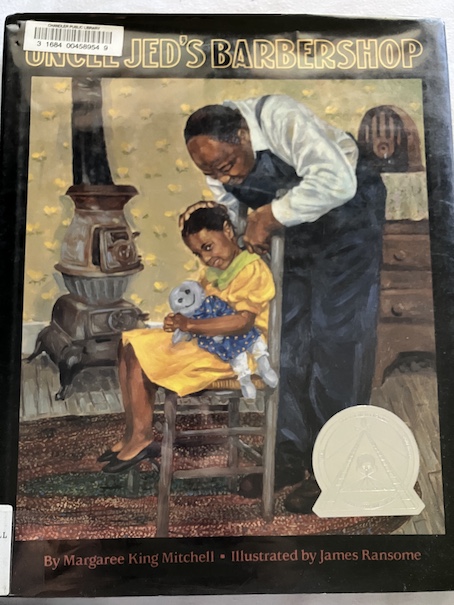
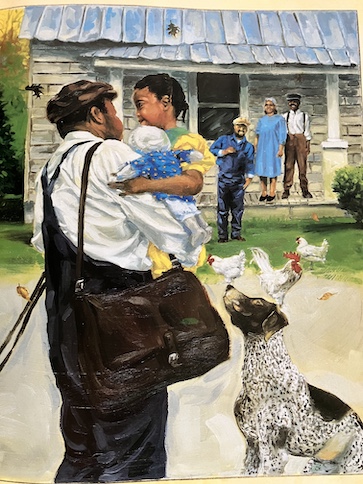
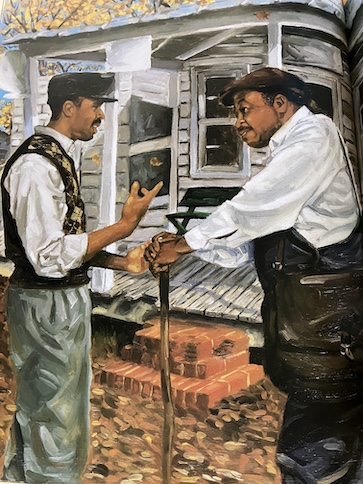
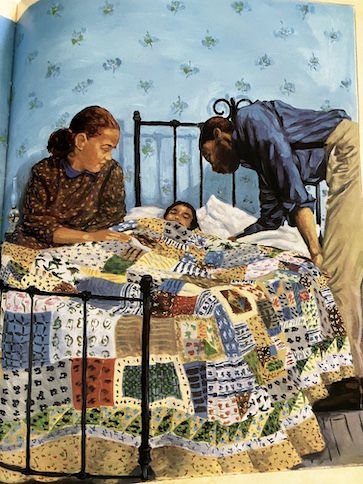
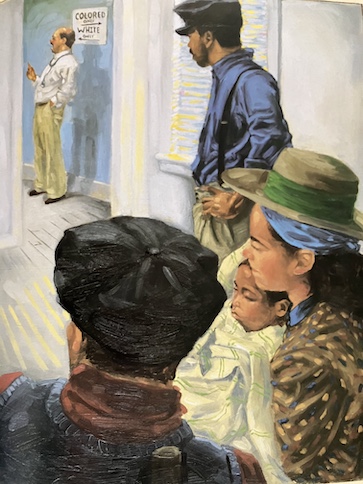
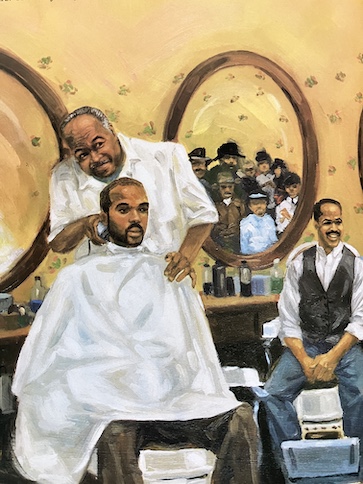
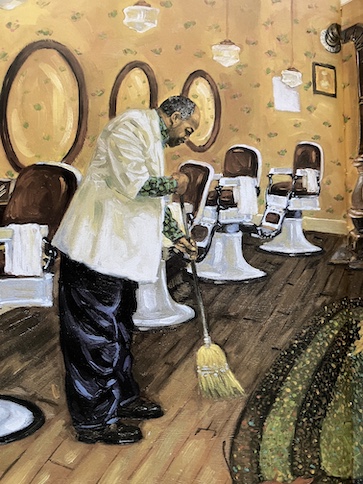
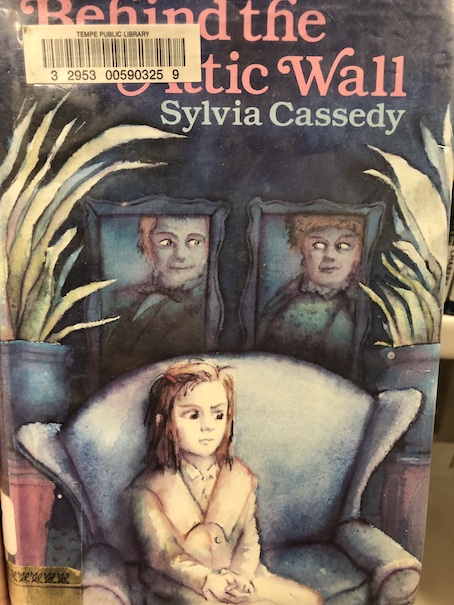


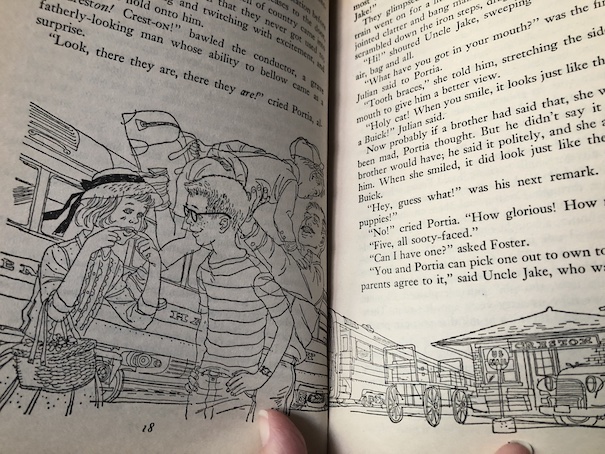
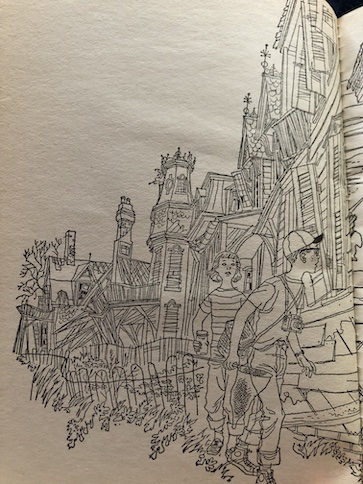


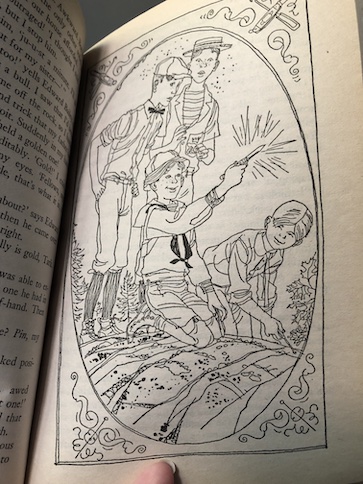

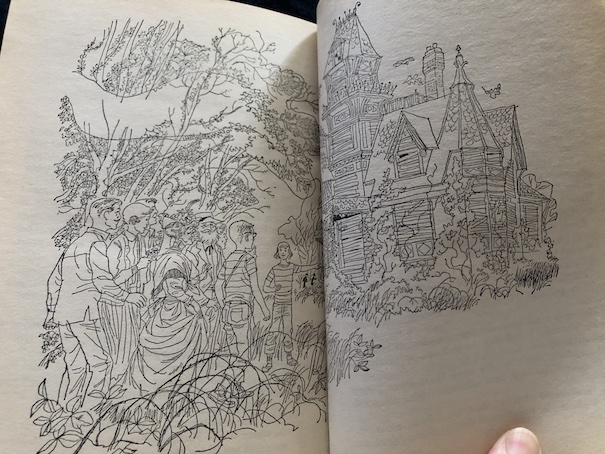
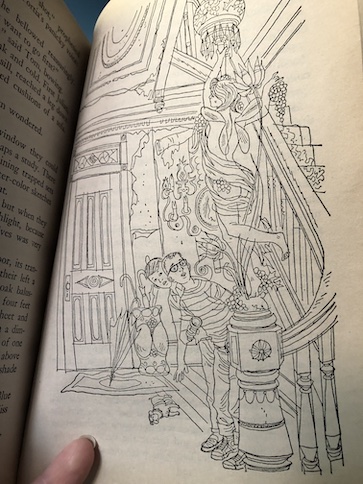

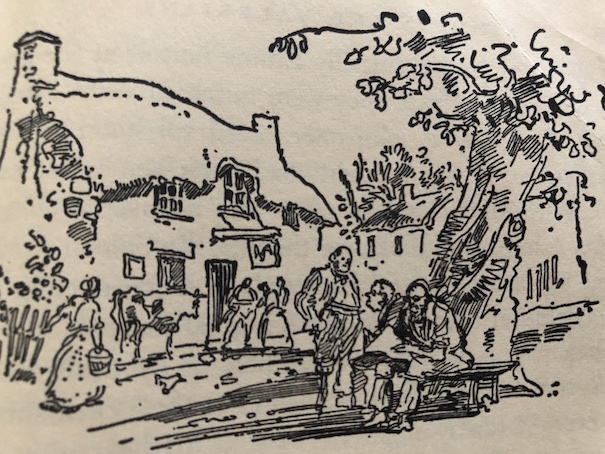
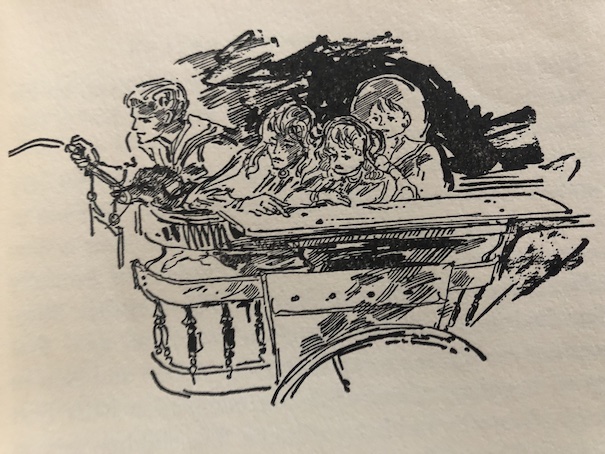

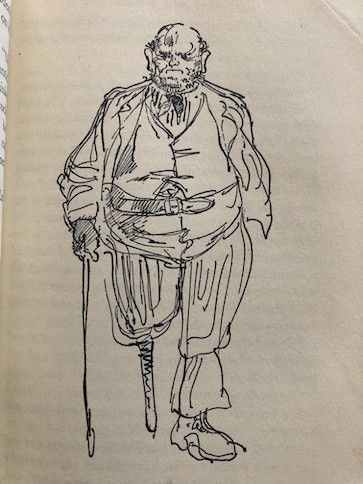





 Jestress's Forgotten Books and Stories