Young Lucy and Glory Wolcott are orphans in London during the Victorian era, 1848. Their parents died during a disease epidemic, and the penniless girls now live in a work house for orphans. They’ve been living there for 5 years, doing sewing for their support, although they are kept in terrible conditions there, with bad food. Then, another girl who lives in the work house dies of an illness, and people worry about the disease infecting others, as it did during the epidemic. Soon, other girls in the work house get sick. Lucy worries about her little sister, who is only 6 years old and already too thin from the bad food, will get sick and die, too. People begin saying that it may be safer living on the streets than being cooped up with the sickness.
The only comfort that Lucy and Glory have in their lives is each other and the story that Lucy tells Glory of her memories of Christmas with their parents. Glory was too young when their parents died to remember their parents or what life was like when their parents were alive, when they had someone to take care of them and actually had proper food. Glory loves the story that Lucy tells about the doll named Morning Glory that their mother gave her for Christmas but which was left behind when the girls were sent to the alms house and then to the work house when their parents died. Glory dreams that, someday, they’ll find that doll again. Lucy tells Glory that, when she finds her doll again, she’ll recognize her.
As more children at the work house die, Lucy increasingly fears that her sister will get sick and die. She thinks about running away from the work house with her sister, but she’s afraid of what they would do on their own. They don’t receive much food or care in the work house, and they’re subject to beatings and abuse, but what would they do on the streets, and how would they survive?
When Glory develops a cough, Lucy is sent to the sick ward at the work house, and Lucy is terrified that she will never come back. Both Lucy and Glory know that none of the girls who are sent to the sick ward with this cough have come back. Terrified, Lucy thinks that the only way to save Glory is to rescue her from the sick ward and get her out of the work house.
The two girls successfully run away, but once they’re on the streets, they have nowhere to go and don’t know what to do. They have nowhere to stay, and they have to sleep in the cold. Without food or money, Lucy trades a small pair of scissors that she brought from the work house for a couple of crumpets from a muffin seller, although a boy later tells her that the scissors were worth much more than that and that the seller took advantage of her. Lucy worries that they have no way to survive on their own because they don’t know what to do and have nothing else that they can sell or trade.
A kind washerwoman suggests to the girls that they go down to the river to join the mudlarks, who spend their days hunting for things to scavenge and sell in the mud at the river’s edge. Sometimes, she say, they find truly amazing things. With nothing else to do, the girls try it. The mud is smelly and disgusting, and at first, all they find are some old bones and bent nails. They’re about to give up when they find something that is truly amazing – a doll!
The doll is worn out, but its head is still good, and immediately, Glory declares that this is Morning Glory, the lost doll that has come back to them, just like the stories that Lucy has told her. With a heavy heart, Lucy realizes that they’re not going to be able to keep the doll. They have nothing else they can sell for money, and if they don’t sell the doll, they will have nothing to buy food and shelter.
At the suggestion of a rag and bone dealer, who is kind enough to let little Glory sleep by her fire for a time, Lucy takes the doll to a dollmaker. She hates having to do it and knows that it will break little Glory’s heart, but they are starving, and their lives are at stake. The doll is in such bad condition that only the head is worth something, and the dollmaker is prepared to offer Lucy a penny for it. That’s not much, but it’s more than Lucy was expecting. Then, something happens that changes everything for the better for Lucy and Glory.
The dollmaker notices the little morning glory flower embroidered on the apron Lucy is wearing. It’s actually Glory’s apron, and Lucy embroidered the flower for her because Glory was named after the morning glory flowers, just like her doll. The dollmaker asks Lucy who did the embroidery, and Lucy timidly admits that she did. At first, she worries that she shouldn’t confess that because she used thread from the work house to do it, and she would surely be punished for stealing if anybody knew. However, the dollmaker is impressed with Lucy’s sewing skills.
Then, before Lucy can leave the shop, the dollmaker gets word that Mary, the girl who sews the hearts on the dolls has been taken seriously ill and isn’t expected to survive. The disease that afflicted the girls in the work house is everywhere. The dollmaker worries because this particular doll shop is known for the signature hearts that are sewn onto their dolls, and the tradition is that only a girl can sew them, not an adult. Losing the girl who sews the hearts isn’t just sad but also serious for the doll shop because it’s only two weeks to Christmas, and they have a lot of orders to fill. If they can’t find another girl who can sew or break the tradition of the doll hearts, they won’t be able to complete their orders and will lose their shop’s reputation. Of course, it doesn’t take the the dollmaker long to realize that the solution to the problem is literally standing right in front of them.
Lucy is stunned when the dollmaker, Miss Thimbleby offers her the job of sewing the hearts on the dolls. It would only be through Christmas, but it would be regular work, something Lucy definitely needs. However, Lucy worries about what she will do with Glory. There doesn’t seem to be a place for her in the shop. Miss Thimbleby will let Lucy stay overnight in the shop to tend the fire, but Lucy isn’t supposed to let anyone else in after the shop is closed. Could she persuade Miss Thimbleby to let Glory in with her, or could Lucy find a place for Glory to be?
When Lucy returns to the rag and bone shop to talk to Glory, she discovers that the husband of the kind lady is much less charitable and has turned Glory out into the streets. In a panic, Lucy searches for her, losing their only penny out of her pocket. Eventually, she finds Glory with the boy who had told her that she was cheated over the matter of the scissors, Nick. Glory has told him about their escape from the work house, and Lucy sadly confesses her sale of the doll to Glory. Fortunately, Nick sees how Lucy’s new job at the doll shop can help them all.
Since the job requires Lucy to spend every night in the doll shop, tending the fire and keeping warm, Nick points out that Lucy can sneak him and Glory in after hours. In return for being allowed to sleep in the warm doll shop with the girls, Nick says that he will look after Glory during the day and that she can help him to make a little money that will help support them all. Nick is also a homeless orphan, and he get money catching rats and doing acrobatics on the streets. Glory doesn’t like the idea of the rats much, but Nick has her passing the hat while he performs on the streets. Her pitiful cough will help them get more charity.
It’s not an ideal situation, but Lucy agrees that this is the best way to manage things. Lucy continues to worry about her little sister, running around in the cold with Nick during the day, although they do have a warm place to sleep now. At night, Lucy lets Glory hold the doll Morning Glory, although she reminds Glory that the doll now belongs to the shop.
While working at the shop, Lucy notices that Miss Thimbleby also has a favorite doll, one that is never for sale. She calls this doll Charlotte and talks to it when she thinks nobody can hear here. The other women who work in the doll shop explain to Lucy that Charlotte, the real Charlotte, was Miss Thimbleby’s little sister. The sisters were orphans, like Lucy and Glory. Charlotte was much younger than Miss Thimbleby, and Miss Thimbleby raised her. Charlotte was the original hearts girl of the shop, the one who always sewed the signature hearts on the dolls and started the tradition. Sadly, Charlotte died young of an illness. The doll Charlotte was the very last one that the girl Charlotte gave a heart to before she died, and that’s why Miss Thimbleby refuses to sell it and sometimes talks to it, like she’s talking to her sister.
As Christmas approaches and Glory’s illness becomes worse, Lucy increasingly fears for her life. Glory’s illness is particularly bad on Christmas Eve. Miss Thimbleby has promised Lucy that, as part of the tradition of the hearts girl, Lucy may choose any unsold doll in the shop for herself on Christmas Eve. Lucy has her sights set on Morning Glory so she can return her to Glory, but a series of unexpected events and a generous, good-hearted decision from Glory lead to marvelous changes for the girls.
The book is available to borrow and read for free online through Internet Archive (multiple copies).
My Reaction and Some Spoilers
This story, set in a Dickensian London in the mid-19th century is touching and sometimes a bit tear-jerky, but it’s full of old-fashioned Christmas spirit! The book doesn’t minimize the risks to the children’s lives. The lives of poor people in this period were harsh, and children were vulnerable to being orphaned or even dying young of disease. The story even talks about children being taken advantage of by unscrupulous and uncaring adults, whether it’s being cheated out in a trade for food or the talk of children on the streets being kidnapped and forced into servitude as chimney sweeps. Parentless children on the streets wouldn’t know which adults to trust, and those realities are shown in the story. The children’s worries and hardships make the happy ending of the story touching.
Some readers might guess at the likely, most happy ending for the girls because there is one adult in the story who would have sympathy for a pair of orphaned sisters. The eventual fate of Morning Glory and whether her loss or gain would help Glory hangs in the balance for most of the story. The role Morning Glory plays in the ending of the story is important, and it’s Glory’s decision about Morning Glory that helps determine the girls’ fate and also touches two other lives. Don’t worry about the doll, though. The story works out well for the doll, being with someone who truly needs and appreciates her. The lives of all three children are changed for the better in the end, too.
This classic children’s book from the mid-19th century is famous as the story that popularized the concept of British children’s boarding school stories, although many people in the 21st century haven’t read it themselves.
Young Tom Brown was brought up in a very close family, although they are often given to quarrels and drama among each other. He is the eldest of his parents’ children and spends his early young life in the vale where he was born, raised by his family and his nursemaid, Charity. Tom’s mother has a talent for training young servants. She is kind and patient with servants in training, treating them almost like older children of the family. Charity is rather clumsy and not too bright, and she has her hands full with young Tom. He is a strong and rebellious little boy. Charity’s relatives have a farm nearby, and she takes him there to pick up supplies for the Brown household. The people on the farm are kind to Tom, and they also help raise him. Because Tom resists training and supervision from women, the Brown family eventually hires an older servant, Benjy, to take care of Tom from about age four. Benjy takes little Tom fishing and tells him stories about the history of the Brown family. Generally, Tom’s early childhood is pleasant and easy.
As Benjy gets older, he is troubled more by arthritis and finds it harder to keep up with young Tom. Tom gets a governess at home, and when Tom begins lessons at the local school, he begins to calm down at home because he spends his energy at school and playing with the local boys in the village. Being friends with other boys his own age is good for Tom because they share the same interests and levels of energy. They play games and wrestle with each other for fun. Then, when Tom is nine years old, his family sends him away to boarding school. There are some sad goodbyes from the local boys in the village, and the other boys give him some little toys as going-away presents. This is the first time that Tom has ever been away from home, and this is where the story of Tom’s education really starts.
First Boarding School Experience
Tom spends about a year at a private school before going on to a public school. The author pauses here to explain the differences between British private schools and public schools. Unlike in the United States, “public” schools are still schools that require school fees, but private and public schools differ in who is accepted as a student and how the students are treated in their time outside of class. In the author’s time and young Tom’s time, students at private schools are more closely supervised in their off hours, with the idea that molding the students into good citizens (which is considered a higher goal in their education than the subjects taught in the classroom) cannot be adequately accomplished in classroom time only and that most of it takes place outside of the classroom. At public schools, the author says, the boys have more freedom and less supervision outside of class.
The boys at the private boarding school Tom attends are supposed to be supervised by school ushers, who monitor their behavior, resolve quarrels, and set a good example for them. Unfortunately, the ushers at Tom’s school aren’t very well educated or good at their job, and they have little interest in doing their job properly. As a consequence, the older students bully the younger ones, students are encouraged to tattle on each other, and physical punishments are used to keep the students in line. In spite of this and some homesickness, Tom actually has a pretty good time at school with his new friends at school. They have some adventures (some of which involves cruelty to animals they find, and the author makes it clear that he doesn’t endorse this and thinks that the bee stings they get are earned) and delight in scaring each other with ghost stories at night. However, this school isn’t really the best treatment or education Tom can get, so it’s just as well that he is sent to a public school after this.
Tom’s change in school comes when there’s an outbreak of disease in the area, and the schoolmaster of the private school is one of the people to become ill. All of the boys are sent home to their families. Since Tom has already told his father that he would rather attend a public school and since school at the private school is canceled for the rest of the term, Tom’s father decides to send him to Rugby. When Tom goes to Rugby, his father talks to him about his school experiences. Tom’s father says that he is going to Rugby at a younger age than he had planned to send him, and if schools are still like they were when he was young, he’s going to see people doing many cruel things and will hear bad talk from other people. He urges Tom, whatever happens at school, to be brave, kind, and truthful and, no matter what other people say, to not say anything he wouldn’t be willing to have his mother or sister hear him say. If he does these things, he won’t have to feel ashamed to see his family when he comes home from school, and they won’t be ashamed of him. This talk and the thoughts of his mother make Tom a little emotional, although he tries not to show it too much.
Tom’s father privately reflects on the reasons why Tom is going away to school. Partly, Tom is going to school because Tom really wants to go and have that experience. The fact is that Tom’s father doesn’t really care too much about Tom learning subjects like Latin, and his mother doesn’t care too much about academics, either. Tom’s parents aren’t too concerned about what kind of scholar Tom is. What Tom’s father really wants for Tom is what he has already told him to be. He wants his son to be brave and truthful, and he wants Tom to be a good and helpful English gentleman and a Christian. Basically, he’s more concerned with his son’s character and life choices than with his son’s grades. He thinks about whether or not he should warn Tom about various temptations he might experience at school, but he decides not to because Tom is still just a boy, and he thinks he wouldn’t understand.
Going to Rugby
Tom takes a stage coach by himself to school, nervous about what the school will be like but excited about the the experiences he is about to have. When Tom arrives at Rugby, a more experienced student, Harry East, helps Tom get settled and acts as a mentor to Tom about school life. East’s aunt is an acquaintance of Tom’s family, and she knew Tom would be coming to Rugby, so she asked East to hemp Tom. He explains the school grounds and uniform pieces to Tom, describes student activities and sports to him, and answers his questions.
Tom loves sports and is eager to play Rugby football, but East tells him that he won’t be able to play until he learns the game. Football is different at Rugby, and it’s a much rougher game than other schools play. East says players often get hurt and break bones. There is a match that day, and Tom finds it exciting to watch, especially since their house wins! After the match, East says that he doesn’t have any allowance money right now, so Tom buys some food they can have for tea, and they share some of it with some of the other boys from their school house. Tom starts making friends with the other boys, and they all talk about the match together.
After tea, East says that it’s time to join their house for singing. Tom is surprised, but East says that group singing among the students is a regular school activity. There are also speeches from other students at the school singing. Today’s speech is about their house’s victory at the football match. One of the students speaking, Brook, praises the players and congratulates them for their victory on behalf of the house, with all the other boys cheering. He says that their house won the match because their house has the best house spirit and team spirit, and they know they can depend on each other. However, he also issues a warning to the students about bullying in the house. Some of the older students have been picking on the younger ones. He doesn’t want to encourage tattling among the students, and he says that learning to deal with bullies is a valuable skill that makes a boy tougher, but at the same time, bullies are cowards, they encourage cowardly behavior among others, and they break up house spirit and bonds of teamwork among the students. He cautions everyone that too much bullying and allowing bullying to continue will destroy the house spirit that helped them win today, so if they want to continue winning and enjoying house victories, they’d better cut it out. Some of the younger students look at the older students have been doing the bullying, especially a boy called Flashman.
Brook also cautions the other students against drinking in the local pubs and talks to them about their new headmaster. Some of the students haven’t been happy with him because he’s changing some of the school customs. Students have been grumbling and would like to see the new headmaster gone, but Brook points out that Brook isn’t going anywhere and that the “customs” he’s been changing have been destructive pranks and other habits that were also causing problems. The new headmaster hasn’t touched some of the customs that really matter to the students, like their sports, and in fact, the headmaster was also watching the match today. There are mixed feelings among the boys at this part of the speech because they like the idea that the headmaster, who they call “the doctor”, was watching the match, but at the same time, the boys don’t really know him or trust him yet.
The author notes that the new headmaster found the school in a state of disorder and mismanagement when he took his position, and the changes he’s been making are about restoring order to the school. The boys, not knowing the difference between a more orderly and well-managed school and the one they got to know when they first arrived, don’t appreciate the doctor’s wisdom of kindness yet. Tom first encounters the doctor when he leads the students in prayers.
Before bed, Tom and the other younger boys meet with some bullying from Flashman and Flashman’s cronies. Some of the other boys are terrified, but Tom and East allow themselves to endure the bullying, being “tossed” by the older boys so the other boys will be spared. The other boys are grateful to them for this, so they start to hold Tom in high regard.
Getting Into Trouble
This eventful first day is a good introduction for Tom about what life at Rugby School will be like for him. Sports, bullying, pranks, fighting, camaraderie among the other students, singing, speeches, and the new headmaster are going to be major themes for him in his education. Like other younger students, Tom has to act as a servant and do chores for older students, part of a tradition called “fagging” (more about that below in my reaction). Tom does well in his classes at school because he has already had a good grounding in his subjects, and he is generally positive about his life at school, in spite of the bullying. He loves participating in the school sports and physical games, like Hare and Hounds.
However, things do get harder for Tom at school. Because he is doing so well at his grade level, he is quickly promoted to the next. When he gets there, with some of his new friends, like East, Tom becomes less studious and more unruly, like the others. Also, the older boys who were trying to set a good example for the others and protect the younger students from the bullies graduate from the school, leaving bullies and less conscientious students as the senior students. The bullying gets worse, and as Brooks had predicted, it breaks the spirit of teamwork in Tom’s house. The students in the house start dividing into factions of bullies and bullied, the younger students against the older.
The younger students get increasingly resentful of the ill treatment and bullying of the older students and start getting rebellious against the system of “fagging” at the school, with Tom and the others declaring that they simply won’t serve the older students anymore. When students like Flashman the bully call for them, they just pretend they don’t hear and refuse to answer them. Flashman and the others try to physically break into Tom and East’s room when they refuse to come, but Tom and East barricade themselves inside. Their success against the older students encourages other students to rebel. Tom considers going to the headmaster about it, but the others discourage the idea. None of the students want to go to the schoolmasters unless absolutely necessary because the students think that the right thing to do is to work out their own problems with each other.
Diggs, one of the older students who is nicer tells the others that, when he and Flashman were younger students, the students in their grade also rebelled against the older students to teach them not to bully them, but Flashman didn’t rebel with the others. Instead, he ingratiated himself to the older students, continuing to serve them and bribing them with treats he got from home. He has evaded discipline and consequences for his behavior by making himself into a useful toady for the students with more authority. Now, Flashman and his cronies increasingly bully the younger students and use physical hurt to subdue them. The younger students retaliate against them with pranks. Tom and East become Flashman’s particular enemies because they live close together in their house and because Tom and East started the rebellion and have been open and accurate in their criticism of his cowardice, refusing to be subdued by the beatings he gives them.
Matters with Flashman come to a head over a lottery, when Flashman pressures other students to turn over their tickets to him. Tom refuses to part with his, and Flashman and his cronies beat him and burn him, hurting him so badly that Diggs intervenes, worrying that they might kill Tom. Diggs shows Flashman to be a coward when he confronts him over the incident and hits Flashman, but Flashman doesn’t fight back because he’s afraid of getting hurt himself. This doesn’t end Flashman’s aggression against the younger boys, and when he starts getting worse again with Tom and East, Diggs urges the two boys to gang up on Flashman. For them to fight him singly wouldn’t be a fair fight because Flashman is several years older than they are and bigger, but Diggs considers it fair for both of them to stand up to Flashman at once. To Flashman’s shock, the two boys do gang up on him. He’s much bigger than they are but not as good at fighting and pretty cowardly about fights where he doesn’t have some obvious, overwhelming advantage. Tom and East win the fight, giving Flashman a cut on his head that bleeds. At first, Tom and East are worried about whether they’ve hurt Flashman badly, but Diggs has a look at the wound and tells Flashman off for being dramatic about how hurt he is. Flashman has only skinned his head a little, and he’s done much worse to the younger boys. Flashman never physically fights the boys again. He eventually leaves the school, being sent away by the headmaster after he becomes disgracefully drunk at a nearby pub one evening. The headmaster was already displeased with Flashman, and this was the last straw. The younger boys are glad to see the bully gone, although some of the older students bear some resentment against the younger ones for their rebellion and their triumph over someone from their level.
Tom and East are emboldened by their victory and for moving up at school, and they become regular rule breakers. They never consider the justice or reasons behind school rules, taking them more as challenges. They get into trouble for trespassing on someone else’s land to go fishing, and the land owner’s gamekeeper brings Tom before the headmaster. Later, Tom and East climb onto the roof of the school and carve their names on the minute hand of the school clock. They are caught because they accidentally change the time on the clock, and when someone investigates why the clock is wrong, finds their names.
Later, they sneak into town against the headmaster’s orders and get caught. They are both taken before the headmaster for this, and they receive floggings for their stunts. The headmaster also gives them a lecture about the dangerous nature of some of their stunts, pointing out that they could have fallen and broken bones from the clock stunt. He points out that they never think about the reasons why rules exist, thinking of them only as whims of the schoolmasters, which isn’t the case. The rules exist for good reasons, and they apply to everyone at the school, including Tom and East. The headmaster says he doesn’t want to keep giving them floggings for their stunts, and if they can’t gain some maturity and reform their behavior, he’ll send them both away from the school. Tom and East are shocked because they never thought that they might have gone far enough to risk their positions at the school. They love their lives at the school and don’t want to be sent home in disgrace. The headmaster tells them to think about their futures at the school seriously when they go home for a term break.
The Headmaster’s Solution
Privately, the headmaster has a word about the boys with one of the other schoolmasters. The headmaster is concerned that, if they continue their irresponsibility and recklessness, they will fail their studies, get into some really serious trouble, and possibly turn into thoughtless bullies of the younger children as they get older. The other schoolmaster acknowledges that they are not the best students and they are a problem, but he thinks that they’re not really bad boys and could still be turned into decent young men. He says to the headmaster that what these boys need is something to give them a sense of responsibility and suggests making each of them responsible for a younger boy at school. Protecting a new boy from the older bullies could settle them and make them more serious and responsible and prevent.
When Tom returns to school for the next term, he expects that he and East will be allowed to share a room and study, which is something that they’ve hoped for. They’ve been making plans for all the ways they can have fun and goof off in their own space. Instead, the school matron introduces Tom to a new boy who will be sharing his room and who will be Tom’s responsibility. George Arthur is a pale, timid, skinny boy, and Tom can see that he’s just the sort of boy who would be picked on by the others. Tom is annoyed at having his plans with East spoiled, but the matron stirs his sense of sympathy by telling him that George Arthur’s father is dead and that he has no brothers. Tom can see that young Arthur will probably be made miserable at school by bullies unless someone stands up for him and teaches him how to handle life at school, so he agrees to take responsibility for him.
The schoolmaster is correct that looking after little George Arthur changes the way that Tom looks at himself, his fellow students, and his education. The change starts when Arthur says his prayers openly at night, getting him a teasing from the other boys, who take any sign of weakness or sentiment as an opportunity for teasing. Tom defends Arthur from them. He also feels a twinge of shame because he remembers, for the first time in a long time, that he had once promised his own mother that he would always say his prayers at night, and he has become neglectful about this, specifically because he wanted to avoid the teasing or bad opinion of the other students. It shames Tom a little to think it, but he realizes that, although Arthur may be physically weaker than he is, he has displayed more moral courage than Tom has simply by saying his prayers, regardless of what the other students think.
Looking after Arthur gives Tom a sense of responsibility, as the schoolmaster hoped, and Tom appreciates feeling like he has a purpose. He enjoys seeing timid Arthur beginning to develop as a student and start to make a new friend on his own. However, Arthur also has things to teach Tom. Tom’s friendship with Arthur helps his own personal development and causes him to consider sides of himself he hasn’t thought about much. As Arthur opens up more to Tom, he explains that he is serious about religion because his late father was a clergyman. When he was alive, his father used to read the Bible with him. Inspired by Arthur’s example, Tom becomes more serious and starts exploring his religious side, although he takes some teasing and criticism from the other students over this budding sentimentality and defense of little Arthur. Tom and East start participating in Bible readings and study with Arthur, considering some of the deeper questions of life and religion that they’ve never considered before. They begin to think even more deeply about life and death when a disease spreads through the school. Arthur becomes ill and another boy dies. Tom is relieved when Arthur recovers, but his near death and the other boy’s death cause Tom to really consider life and death seriously for the first time.
As Tom develops a deeper understanding of life and religion, he finds himself a little at odds with East, who still doesn’t take life seriously. Fortunately, the two of them respect each other enough as friends to talk about their views seriously with each other. Tom doesn’t consider himself as knowledgeable about the subject or as good as explaining it to others as Arthur, but through their conversation, East realizes that he does actually care about the subject and goes to talk to the headmaster about his feelings and about confirmation. The headmaster’s kind understanding and reassurance is an inspiration to the boys, and they come to respect him, although Tom doesn’t fully understand the headmaster and what he’s done for the boys until he is a young man.
At the end of the story, Tom is with some college friends when he hears that the old headmaster has died, and he feel compelled to visit Rugby School again to pay his respects and reflect on his old headmaster.
Although it was not the first book set at an English boarding school, this 19th century book is famous for being the book that popularized the trend of British boarding school stories, which has continued for over 150 years since! There are also references to this specific story in other books, and I have to admit that it gave me a giggle to recognize the scene that Terry Pratchett parodied in his novel Pyramids. The story is semi-autobiographical, based on the experiences the author, Thomas Hughes, had when he attended Rugby School as a boy during the 1830s. There is now a statue of Thomas Hughes outside the Rugby School Library.
The headmaster in the story is only called “the doctor” for most of the story, until the very end, when Tom learns of his death and his last name is given as “Arnold.” Tom’s headmaster is based on Thomas Arnold, who was the real, historical headmaster of Rugby when the author of the book was a student there himself. The real Thomas Arnold did die suddenly of a heart attack at age 46 in 1842, and this book is an homage to his memory as well as the recollections and thoughts of the author on the subject of education. The real life Thomas Arnold did reform the habits and organization of Rugby School, like the headmaster in the story, focusing on the religious and character development of students and creating a system of prefects called “praepostors” as student monitors, something that is referred to in the story. Other British boarding schools copied and built on his ideas and practices. (Added fun fact: Thomas Arnold was the great-grandfather of the author Aldous Huxley, known for Brave New World.)
The book requires some patience for modern because the author spends some time setting the scene and explaining the background of Tom’s family and early childhood before really getting into the story. Part of the reason for that is that the author, Thomas Hughes, based the story on his own childhood and youth, and he spends some time comparing the childhood and conditions of life in young Tom’s time with life at the time he wrote the story.
Hughes admits that he doesn’t like the direction the social situation has been heading in his time, and he feels that his time period is at a changing point. He sees many of the old ways of life falling aside, and he partly blames the new upper classes, who take advantage of the working class, using them to enrich themselves (“buying cheap and selling dear”). He’s describing an increasingly industrialized and urbanized society with a significant wealth gap between the wealthiest members of society and the working class, which was characteristic of Victorian society. Hughes notes that some members of the upper classes profess to be trying to reform the lower classes, but the author says they don’t really understand the working classes at all. There is part of the story, early in the book, after he describes young Tom’s experiences at a local fair, where he delivers a lecture to the younger members of these rising upper classes on the subject. Hughes was a social reformer in the Victorian era, so he has many thoughts about how to improve society and a pretty accurate understanding of social conditions during his lifetime, and he works them into the story of Tom’s education.
A Victorian Boarding School
It’s interesting to see Thomas Hughes’s descriptions of Rugby School and boarding school life and education in the 1830s. I’ve never been to a boarding school before, and neither have most of the other readers who enjoy boarding school stories. It’s getting to see a type of school that most of us will never attend that makes stories of this kind fascinating. Seeing them as they looked in the past is especially fascinating. I’ve read other books and seen documentaries about boarding schools in Britain, and it was interesting to note the aspects of school life that are the same or different from what someone might encounter in a modern school. From what I’ve learned about British boarding schools, extracurricular activities, like sports and singing, are still major features of British boarding schools that have stood the test of time. However, modern schools have cracked down on bullying and abuse from older, higher level students.
A couple of words that appears in the story, “fags” and “fagging” sound like derogatory terms from modern times, but it has nothing to do with homosexuality in this context. “Fagging” was a tradition at British public schools of this time and earlier, where senior students used younger students as servants, giving them menial chores to do. The “fags” described in the story are younger students, who are described as performing various tasks, like fetching things for the older students, cleaning, carrying messages, or arranging furniture for singing. The problem with the tradition of fagging was that it often led to bullying and abuse of younger boys at the hands of the older students, and this is something that’s addressed in the story. The bullying and abuse associated with this tradition is what led to the end of the tradition in modern times.
There are also other student habits which would seem odd by modern standards, including some which would definitely not be allowed for boys of this age. The students at the school are about 11 to 19 at the oldest, but they routinely drink beer, even the younger boys, although I think it’s probably a weak version. The ways the students are treated with regard to money and how they spend their money are also odd by modern standards. Their allowances may be withheld from them as a punishment. There are times in the story when students in need of money auction off some of their own belongings, a subject that appears in A Sweet Girl Graduate, although the boys don’t get in trouble for this as the girls in A Sweet Girl Graduate did. The older boys also impound the allowances of the younger boys for a lottery at one point, using the funds to purchase sweepstakes tickets on a horse race. The younger boys are not consulted about their participation in the gambling, and the only problem that arises from it is when Flashman tries to bully them out of their tickets to get ones he thinks are likely to win.
Education and Manhood
As the author reflects on his time at school, his experiences with friends and classmates, and the inspiration of his old headmaster, he also offers advice to other boys and his thoughts on what it means to be a man and to take charge of ones own development. I don’t think modern parents and teachers would agree on all of his advice, but he makes it clear what experiences from his school days have led him to believe what he does about how boys and men should conduct themselves.
At one point, he says that he has no problem with the idea of boys fighting with each other because he sees fighting and struggling as just part of the role of men in life. He says his only concern is whether or not they’ve chosen the right side to fight on. Flashman serves of an example of how bad people can actually be quite popular, at least among their cultivated cronies, and are often supported by the social system or know how to use the system to their advantage. The author warns other boys not to see another person’s popularity or social position as a sign that they are good people or that they are in the right in a situation because the opposite is very often true. What is good and right is independent of popularity, power, and money and is determined by other factors. He admits, through the character of Tom, that he has developed a soft spot for underdogs and says, even if you think the underdog is wrong in his beliefs, he shouldn’t be scorned but respected for his willingness to fight for what he believes, even knowing that he doesn’t have popular support.
At the end of the story, when the headmaster dies, the character Tom despairs because, although he has moved on from Rugby School, and he realizes that many of the boys who are there now don’t know who he is and wouldn’t recognize him as one of them, the headmaster was a guiding light in his life and spiritual development. He still feels ties to his old school and headmaster because his time there and the headmaster’s influence set him on the course for his life and development. The author reflects that Tom the character was still someone self-centered at this age, and in the first shock of hearing about the headmaster’s sudden death, he thinks of the loss of the headmaster as a personal loss that no one else would understand. However, when he returns to Rugby and thinks about it further, he realizes that he is not the only one whose life was touched by the man, remembering that he left behind a wife and children and that the headmaster cared about all of his students and influenced them all in different ways. Tom the character sheds some of his self-centeredness and realizes that it’s time to move on in his life. The author also says that there is a flaw in looking to mortal men, even the kindest and greatest among them, as the ultimate source of guidance because no mortal man lives forever. Tom the character will tend to his own spiritual development from this point forward and look to God Himself for guidance. In this way, it seems that young Tom the character has developed into the kind of young man his father wanted him to be in the beginning, making his education successful.
Before Tom learns of the headmaster’s death, he discusses his future ambitions with an old schoolmaster, saying that he wants to make a difference in the world as well as earn a good living. The schoolmaster cautions him to be certain of his priorities and know which of those two goals is more important. There are many people who spend their lives making money but do nothing of lasting importance for the world and other people, and there are many people who do good in the world without making much money. If Tom focuses too much on making money, he may sacrifice the goal of doing good in the world, so he needs to remember what he really wants to accomplish in his life and what he wants to prioritize.
Thomas Hughes went to Oxford after his time at Rugby School, like his character, and he became a lawyer, social reformer, and member of Parliament as well as a writer. Among his books are books about religion and the nature of manliness. The themes of Tom Brown’s School Days really were the themes of his life, and he genuinely means the advice that he offers to young men in the story.
The Secret Garden Cookbook: Recipes Inspired by Frances Hodgson Burnett’s The Secret Garden by Amy Cotler, illustrations by Prudence See, 1999.
This book is a cookbook with recipes based on the types of foods eaten by characters in The Secret Garden by Frances Hodgson Burnett. Food is important in the story because Mary and Collin didn’t have any appetites when they were unhappy and unhealthy, but their appetites improve when they begin working in the garden and getting more fresh air and exercise. Most of the recipes are types of foods that are specifically named during the course of the story, but others are ones that the characters would have been likely to eat for the time and places where they lived. Because the original story focused on gardening, there is also an emphasis on using foods that would be grown in kitchen gardens
Most of the illustrations in the book are simple green and white drawings of different types of foods that accompany the recipes.
The recipes in the book are sorted into different categories, and each section has historical information about different meals and types of food. Individual recipes also have historical information, trivia, and quotes from The Secret Garden related to the dishes. Some traditional English foods need to be explained to Americans. For example, the word “pudding” refers to a specific type of dairy dessert in the US, but in England, it’s a more general word that can refer to any type of dessert.
I liked the selection of recipes, and I really liked the historical information provided with them!
The sections of the cookbook are:
Yorkshire Breakfasts
These are breakfast foods that the characters in the story ate or might have eaten during the Victorian era.
Porridge
Coddled eggs – Eggs cooked in a cup
Cheese muffins
Little sausage cakes
Cocoa
A Manor Lunch
This section explain the types of things that people of different classes ate as their mid-day meal in the Victorian era.
Yorkshire pudding – These are popovers with meat drippings.
Roasted fowl with bread sauce
Potato snow
Welsh rabbit – This is melted cheese on toast.
Cabinet pudding – This is a molded custard dessert with fruit.
Jam roly poly
An English Tea
This section explains things that Victorian people ate at afternoon tea.
A proper pot of tea
Cucumber tea sandwiches
Scones
Fruit tea loaf
Lemon curd tartlettes
Brandy snap baskets with whipped cream
The Kitchen Garden
This section is about things people would make from fruits and vegetables that they would grow in their kitchen gardens.
Fresh spring peas with mint
Glazed carrots
Summer pudding – This is a molded dessert made with bread and different kinds of berries.
Two fools – “Fools” are old-fashioned fruit-based desserts.
Raspberry jam
Raspberry vinegar
Molded spiced pears
Strawberries and cream
Dickon’s Cottage Food
Poor people, like Dickon’s family, would have eaten different things from the wealthier people in Victorian society.
Tattie broth – A potato soup.
Pease pudding
Yorkshire oatcakes
Cottage loaf – This is a basic bread recipe.
Dough-cakes with brown sugar – A basic dessert made with bread dough.
Parkin – A kind of oatmeal gingerbread.
A Taste of India
These are the types of foods that Mary might have eaten during the time she lived in India.
Fruit lassi – This is a kind of fruit shake made with yogurt.
Sooji – A hot breakfast cereal similar to cream of wheat.
Little bacon and coriander pancakes
Fresh mango chutney
Mulligatawny soup – This soup was invented in India for the British colonists. It’s curry coconut soup whose name means “pepper water.”
Florence Nightingale’s kedgeree – Florence Nightingale has nothing to do with the dish, but the Victorians named it after her because she was famous. It’s a rice and fish dish that was often made from leftovers and served for breakfast or lunch.
Garden Picnics
These are foods that can be prepared outside or are easy to pack for a picnic.
Roasted potatoes and eggs
Currant buns
Crumpets
Cornish pasties – These are savory pies or turnovers with meat and veggies, meant to be eaten with the hands. They’re sort of like larger, better-tasting Hot Pockets.
Chocolate picnic biscuits
The book is available to borrow and read for free online through Internet Archive.
The Richleighs of Tantamount by Barbara Willard, illustrated by C. Walter Hodges, 1966.
The Richleighs are a wealthy Victorian family in England, their enormous wealth the product of generations of marriages between wealthy families. There are four children in the family (from oldest to youngest): Edwin, Angeline, Sebastian, and Maud. The four Richleigh children are accustomed to their family’s wealthy and luxurious lifestyle, brought up by their fond parents and the governesses and tutors they hire to oversee the children’s education. Overall, the children are happy and appreciate their privileged lifestyle, but there is one thing that bothers all of them. It has bothered them for a long time. They don’t understand why their parents won’t take them to see their family’s ancestral home, Tantamount.
The wealthy Richleigh family owns several grand houses (including one in Scotland and one in Italy), but Tantamount is a mystery to the children. They know it exists because their family has a painting of it, and their grandfather talked about it once. A distant ancestor built this castle-like mansion in Cornwall, on a cliff overlooking the ocean and in a mixture of styles from around the world, and it’s supposed to contain some amazing things. Yet, the children’s father says he has never been there himself. The children’s parents don’t even like to talk about the place, and they’ve never taken the children there. The children know that something mysterious must have happened there at some point, but they have no idea what it is. They just know that they would love to see the place and find out what all the mystery is about! They often speculate about what the place is like, what once happened there, and why they’ve never been allowed to see it.
One day, Sebastian, who is the one who usually asks the most questions, decides to press their mother for answers about Tantamount. She tells him that his great-great-great grandfather, who built the place, was an eccentric and that the mansion is just too big, too inconvenient, and too remote to be of any comfort or use. This inconvenience is one of the reasons why most of the Richleigh family just cannot be bothered to go there. Also, his mother admits that the Richleighs are actually a little ashamed of the house because it is so hideously, overly elaborate and vulgar, even by the luxurious standards of the Richleighs. Sebastian says that he would still like to go there for an adventure, but his mother sees no point to it. She tells him that he can’t always have everything he wants, that he’s already a very indulged boy, and that he should just be happy with what he has. However, the children’s burning desire to see Tantamount and experience what they imagine as its mysteries isn’t really about the physical ownership of the house or the fantastic things that are supposedly kept there but about the spirit of mystery and adventure. As wonderful as everything the Richleigh family has, the children are chasing something else: excitement!
The children’s parents are actually the ones who don’t seem to understand the emotional attachment that people can have to physical belongings. Twice a year, they have their children donated old toys of theirs to the poor, which is a good thing, but poor Maud is traumatized when her parents tell her that she must give up her old rocking horse, Peggy, and that they will replace it with a brand new one. It’s not because Maud has outgrown rocking horses, but Peggy is looking a little shabby from use, and they want the children’s toys to all be in the best condition. They don’t consider the emotional attachment that Maud has to Peggy from her hours of playing with her or that Peggy’s shabbiness is a sign of Maud’s love for her. When they tell Maud that old toys are dangerous for children to play with, Maud asks why they aren’t dangerous for poor children to play with, her mother just tells her not to answer back. (Meaning that she doesn’t have a good answer, and she knows it.) Sebastian says maybe it would be better to just buy the poor children a new rocking horse instead of sending them Peggy, but his father tells him not to be impertinent, showing that this ritual about giving toys to the poor isn’t really about doing something nice for the poor so much as updating the children’s toys for the newest and “best” when that isn’t really what the children themselves want.
Soon after the children’s father gives away Peggy, he falls seriously ill, apparently from something he caught from the family he gave Peggy to. The children worry about what his illness will mean for their family, especially if he dies. Their first thoughts seem fairly petty. They first think that maybe this wouldn’t have happened if he hadn’t decided to give away Peggy. Then, they realize that, with their father ill, they won’t be able to travel to Italy this summer, as the family planned. Then, they think that, if their father dies, they will all have to wear gloomy black, and either Edwin will become head of the family at age 16 or that their uncle will look after the family. Their uncle is a more dour man than their father, so that’s also a gloomy prospect.
Fortunately, the children’s father recovers, and the children are relieved. His doctors advise him to take a sea voyage to recover. The parents will be traveling without the children, and they won’t be going to Italy, but the children say that they understand that this is important to their father’s health. However, this does leave the question of what the children will do while their parents are traveling. The parents ask the children for their opinions about what they would like to do this summer because they want the children to have a pleasant time together while they are gone. There is only one thing that all of the children want, and this time, the children’s parents agree: the children will spend the summer at Tantamount.
The parents make arrangements with Mr. Devine, the agent who manages the property on behalf of the family, for the children to go there for the summer. The children will be chaperoned by their governess, Miss Venus, and Edwin’s tutor, Mr. Gaunt. Before they leave, the children’s father tells Edwin that, since he is 16, he’s no longer just a child, and if any situation should arise which requires him to take charge, he should, as the heir to Tantamount. If anything serious happens, and they need help, they can also send word to Mr. Devine. The children’s mother tells them that there will also be a housekeeper at Tantamount who has a daughter of her own, who will also be helping out.
From the moment their parents leave for their voyage and the children make their final preparations to leave on their trip, they feel like everything is changing. Although they were always aware that they were privileged, they never really noticed much about the details of their lives or home or thought very much about the people who served them. Alone for the first time with Miss Venus and Mr. Gaunt, Angeline is struck with the thought that she never really noticed much about Miss Venus as a person, even what she truly looked like. Before, she was always just the governess, just another part of the steady routine of the children’s lives, but now, dressed for travel and just as excited as the children, she really seems to be a real person. Even Mr. Gaunt is excited and not so much his usual somber self. The children quickly realize that, without their parents there to insist on proper behavior, stiff manners, and a certain appearance, the governess and tutor are relaxing and become more themselves. Mr. Gaunt tells the children stories about his past travels across Europe, and they’re much more fun to hear about than his usual dull lessons. As they step outside of their usual rigid routine, it seems like everything has magically come to life for the children.
When they first arrive at Tantamount, it’s dark, and the place seems sinister. However, they receive an enthusiastic welcome from the housekeeper, Mrs. Pengelly. In the morning, the children see how grand the place truly is. The rooms are big and elaborately decorated, and there are amazing views of the sea.
Even more exciting than that, the children also quickly realize that life at Tantamount offers them the opportunity for more freedom than they’ve ever had in their lives. Without their usual nurses to pick up after them or fuss over what they’re wearing, they are free to make these simple choices for themselves. The idea of looking after themselves for a change and doing things as they want to do them is exciting by itself. Some parts of looking after themselves seem a little daunting at first, but Angeline realizes that it’s also good for them. Young Maud worries about what “they” will say about things the children are doing, but the older children point out that there is no “they” to worry about. Their parents and nurses aren’t there, and everyone who is there technically works for them.
Eagerly, the children begin to explore Tantamount. It is filled with strange and wonderful things, but most of it is in shabby and neglected condition. There are magnificent statues that are crumbling and a beautiful chandelier lies smashed where it fell on the floor of the ballroom. Angeline first thinks that their father will blame Mr. Devine and Mrs. Pengelly for the condition of the house, but Edwin points out that the house has been neglected for generations by the Richleighs themselves. Who knows how many years ago the chandelier fell when nobody in their family even cared whether it was still hanging or not? Edwin himself says that if their ancestral home was neglected to the point where it started falling apart, their own family was to blame. The children discuss which is more of a “folly”, as Mr. Gaunt put it, to build such a grand place in such a remote location or to forget forget about it and let it fall apart. The word “folly” can refer to an unnecessary building like this, and Edwin says that Tantamount is a “folly” in the sense that the family has done well enough without it for years. Edwin says that their ancestor probably had fun building it and that men like that build grand things for travelers to marvel at, but apart from that, they have little use. Since then, most family members have barely even thought about Tantamount. The children begin to feel sorry for the mansion, almost like it’s a neglected animal with a personality of its own. The place starts to feel sad to them.
Edwin also points out that Tantamount is actually dangerous in its crumbling condition. He even saves Maud from stepping onto a section of floor that would have crumbled underneath her. The children realize that they will have to be very careful of everything they do in Tantamount.
Tantamount is a sad and scary place, but still exciting because the children’s adventure is only just beginning. When Miss Venus and Mr. Gaunt see the condition of Tantamount, they decide that they and the children cannot possibly stay there for the summer. However, the children have only just had their first look at the place and have only just begun to delve into its secrets and consider what might be done with the crumbling old mansion. Even more importantly, they have had their first real taste of the freedom and responsibility that Tantamount has offered them, and they won’t give it up so soon. Edwin asserts himself as the de facto head of the Richleigh family and tells the governess and tutor that they may leave if they find it too uncomfortable, but he and his siblings will be staying because they are family and this is their home.
At first, the children are nervous at sending the adults away, but Edwin has thought it out. He has noticed that Miss Venus and Mr. Gaunt are fond of each other, and he suspects that they might take this opportunity to run away and get married. The other children wonder if they will tell their parents that they are at Tantamount alone, but Edwin doubts it. It would take awhile for any message to reach their parents, and the tutor and governess also wouldn’t be too quick to admit that they had abandoned the children, even if the children did request it themselves. The children have also begun to suspect that Tantamount might not be all that it seems. Although their family neglected the place badly themselves, what exactly has Mr. Devine been doing as the steward?
The Richleigh children befriend Nancy and Dick, two sailor’s children who live by themselves nearby. Nancy and Dick are a little afraid of the Richleigh children at first, partly because Edwin attacks them when they first meet, thinking that they’re trespassers, and partly because they know more about the dark history of the Richleighs and Tantamount than the Richleigh children do. However, the children all become friends, and Nancy and Dick teach the Richleighs many things that they need to know to survive on their own at Tantamount. The Richleigh children are happy to get help from Nancy and Dick, and they’re especially happy that, for one in their lives, they’ve made friends on their own instead of just associating with the people their parents have picked out for them to meet. Nancy and Dick are far less fortunate than the Richleighs, and they open the children’s eyes to what poverty really means. Nancy and Dick are also on their own because their mother is dead and their father hasn’t yet returned from the sea.
The Richleighs are impressed with the things that Nancy and Dick know and can teach them, and they also enjoy the carefree summer that they spend with Nancy and Dick. While they’re happy to accept help from them, the last thing the Richleighs want is any adult finding out that they’re living alone at Tantamount. There are still mysteries there for the children to solve, and the last thing they want is to give up the first real freedom that they’ve ever experienced!
The book is available to borrow and read for free online through Internet Archive.
My Reaction and Spoilers
The Richleighs are practically the personification of a privileged Victorian family. Readers are told that the Richleigh children are accustomed to luxury, although the book is also quick to say that they aren’t spoiled because readers might find them insufferable if they were. However, in the first few chapters, readers might also realize that the Richleigh children are living a rather repressed and highly controlled life. They have all kinds of toys to play with but no control over whether or not they get to keep their favorite old toys. Their parents get rid of anything that they personally think is getting too shabby without regard for sentimentality. Peggy wasn’t just a toy to Maud; she was like an old friend, and she and her siblings are sure that her new owner won’t appreciate her as much or might do something horrible, like sell her for drinking money or turn her into firewood. The parents are unconcerned about Maud’s feelings. They and the children’s nurses are always telling children not only what they should do but how they should feel. When Angeline expresses an opinion, her nurses tell her that “Ladies don’t have opinions – they’re nasty things to have.” When Sebastian tries to make his mother understand how much it would mean to him and his siblings to see Tantamount, he talks about “adventure”, but the book hints that he may have also been thinking of “escape” – escape from the luxurious monotony of their lives, from the constant supervision and control of the adults, and from constantly being told who they are, what they should do, and how they should think and feel. The two oldest children, Edwin and Angeline, realize that their parents are prepared to give them anything they want, but only provided that the children want the things their parents think they should want, like the new rocking horse.
When the children are left to the own devices at Tantamount, they have to take responsibility for themselves and manage everything by themselves for the very first time in their lives. Rather than finding it frightening, however, the Richleigh children find it exciting. Young Maud is the one who’s the most worried because there has never been a time in their lives when the children haven’t had someone taking care of them and telling them what to do. Angeline thinks that learning to do things for themselves will be good for them, and she delights in making simple choices, even deciding what to wear without someone to tell them. However, Maud doesn’t even know how to dress herself without help, and she worries about what “they” would say. Sebastian points out that there is no “they” to say anything. The children themselves are in charge, and Sebastian is looking forward to them doing what they want to do. Maud doesn’t know how they’ll even begin to know what to do without someone telling them, but Edwin reassures her that they’ll figure it out.
Since Edwin is the oldest boy and he already has their father’s permission to act as the heir to Tantamount, the children immediately decide that he’s in charge. It fits the general pattern of Victorian society that they’re all accustomed to, and it makes Maud feel a little better that someone’s in charge. However, because Edwin now gets to run things the way he wants, he doesn’t just want to give his siblings orders. He establishes the group as a family council so they can discuss things and make decisions together. Although he maintains his position as the head of the family council, he cares about how the others feel, and over the course of the summer, he particularly comes to value the thoughts and advice of Angeline, who proves herself to be a sensible and practical young lady.
It isn’t long before the children discover the dark secret of Tantamount that they always suspected was there: it is being used as a hideout for smugglers and has been for some time. The reason why Mr. Devine hasn’t tried to maintain the house or a staff there is that he doesn’t want anybody snooping around and learning the truth about what he’s been doing there. When the children figure it out, they also realize that no one else is aware of their discovery yet. The locals might have their suspicions, but so far, nobody knows that the Richleigh children have made this discovery and that the children are staying at Tantamount all by themselves. However, this situation can’t last. Eventually, the smugglers will come back or Mr. Devine is bound to check on them, and the children will have to decide what they will do when that happens.
The children also must confront the knowledge that their own ancestors must have been the ones who started the smuggling and wrecking business and were responsible for the deaths of many sailors. There was a hint to the dark history of Tantamount in the painting the children have admired for years, but the children just didn’t understand the meaning of it before. The children’s parents don’t seem to be aware of any of this, or they would never have allowed the children to go to Tantamount at all. The children realize that the reason why Tantamount was abandoned by the family was that, at some point, some of the Richleighs decided that they didn’t want any part of this nefarious business anymore, so they got as far away from Tantamount as they could, created new lives and homes for themselves, and tried to prevent the younger generations of the family from finding out what happened there. This is the dark side of privileged families. Although much of the Richleighs’ wealth has come from wealthy marriages, not all of it has, and some has come from some dark sources.
The children still love Tantamount, even for its darkness, and they wish they could do something to cleanse it of all the bad things that happened there. Tantamount has changed them and allowed them their first tastes of freedom, independence, and self-discovery. The oldest children realize that their time there can’t last because their parents will come for them at the end of the summer, and there is still the matter of the smugglers. They try to think of a way to preserve some of the feelings of this transformative summer even when it’s time for them to go home.
In the end, the real villain eventually brings about his own end while trying to destroy Tantamount and hide its secrets forever, and the children pledge to themselves that they will rebuild it someday, but in their own way and for much better purposes. This is a secret that they keep from their own parents, just between the four of them, because this is something that they want and will pursue independently at some point in the future.
There are sad parts to the story as the children reflect on the abandoned and neglected nature of Tantamount and the evil that has happened there. However, there is also adventure and mystery and the kind of magic that comes from a carefree summer spent in a fantastic place!
The American Boy’s Handy Book by Daniel Beard, 1882.
This is a Victorian activity book for boys, focusing particularly on outdoor seasonal activities. It was not the first book of its kind during the Victorian era, but the author explains in the preface that he wanted to create a book of sports, games, and activities that would be better than the ones that he knew from his own youth, with instructions that were well-written, complete, and easy to follow, particularly written for American boys, without some of the foreign phrases found in other books or tips that would be impossible for them to use, like recommendations for shops in London that sell equipment for the various activities and pastimes.
The book is now public domain and available to read for free online through Internet Archive.
Historical Background
Daniel Beard wasn’t just an author who had an interest in providing useful guides to fun activities for American boys; he was also a social reformer who was one of the founding members of the Boy Scouts of America. Before the Boy Scouts of America was founded in 1910, there were other, smaller scouting organizations throughout the United States, and Daniel Beard had founded one of these groups in 1905, which he called the Sons of Daniel Boone. This group later went through a couple of name changes before Beard joined the Boy Scouts of America and merged his group with theirs.
The Beard family in general believed in the benefits of exercise, appreciation of the natural world, and healthy outdoor activities for youth people, both male and female. Daniel’s sisters, Lina and Adelia, would later be founding members of the Camp Fire Girls, the first major scouting organization for girls in America, during the 1910s, a cause which Beard also supported. (Camp Fire Girls was founded before the founding of the Girl Scouts. It had the opportunity to merge with the Girl Scouts at one point but didn’t. Today, it is now a co-ed scouting organization simply called Camp Fire.) A few years after the publication of The American Boy’s Handy Book, Lina and Adelia published their own book of activities specifically for American girls called The American Girl’s Handy Book, which had somewhat of an outdoor focus but not as much as The American Boy’s Handy Book or some of the other books that they would later write. These were not the only books that the Beards published, and they would later go on to write more books about activities and wilderness skills for boys and girls.
Contents of the Book
The activities in this book are organized by season, which makes sense because of the largely outdoor focus of the activities. Within each section, there are more specialized sections, focusing on particular pastimes in each season. The American Girl’s Handy Book follows the same seasonal organization, but The American Boy’s Handy Book doesn’t mention holidays as much as The American Girl’s Handy Book. There is only one holiday section in this entire book, and the holiday is the Fourth of July. Later editions of the book also have some extra notes and projects in the back.
My copy of the book has a foreword written in modern times, part of which notes that some of the activities in the book are not really recommended for modern children because they are not suitable for kids living in urban or suburban environments and because some of them are outright dangerous and involve fire. At least, children should not attempt these activities without close supervision and help. Some 19th century people managed to play with fire and not hurt themselves, partly because more of them lived in the countryside, away from houses that could be set on fire, and like the author of this book, also lived in places in the Midwest and East Coast that see a lot of rain, keeping plants and fields from drying out and becoming more flammable, and could also be near lakes, ponds, and rivers. However, not everyone lives in those types of places these days. (If you want an indication of what could possibly go wrong with trying some of the more flammable activities in the book, consider what’s happened with some of the more flammable or explosive gender reveal parties in modern times. Consider your environment before deciding whether these activities are feasible.) Also, not everyone from the 19th century or 20th century pulled off these activities unscathed, and it’s the ones who did get hurt or caused serious damage that make the concern. The writer of the foreword describes how a 19th century boy lost a leg attempting the fire balloon activity with his friends years before this book was published. (The fire got out of control, and his leg was badly burned when he tried to put the fire out.) That being said, there are many interesting activities in this book that are perfectly harmless and fire-free and that kids from any era can try, even those who don’t live in the countryside.
Spring
The spring section is mainly about making and flying kites and going fishing. The kites section explains how to make different types of kites in different shapes, like people, frogs, butterflies, fish, turtles, and dragons. One of these designs, called The Moving Star, involves attaching a lit lantern to the tail of a long kite. This kite is meant to be flown at night, so the light will bob in the air. It’s an interesting concept, although the instructions mention that certain types of lanterns are likely to just set fire to the kite. (I think I know how the author knows this.) The book provides instructions for making a custom lantern that will work better. This custom lantern featured a candle that is stuck between nails that are supposed to hold it in place, and it is supposed to be covered with red tissue paper (which is also sure to catch fire if that candle gets loose and falls over while it’s flying around). I’ll admit that the effect is probably neat, if you can pull it off without setting fire to something, but setting something on fire seems to be a likely outcome. This is one of the activities which wouldn’t work well for modern kids, especially if they live in places with highly flammable brush or dead grass and weeds or in the middle of areas with a lot of houses or apartments that would be set on fire if the flying lantern gets out of control (which is, apparently, a distinct possibility). Of course, thanks to modern technology, a battery-operated light could be an option.
There is also a section about war kites, which can be used for kite fighting.
The rest of the spring section is about different methods of fishing, how to make fishing tackle, and how to keep aquariums.
Summer
The summer section has more variety, although many of the activities are ones that modern boys can’t do if they live in an urban or suburban environment. There is more information about fishing in this section and how to make and sail different types of boats. I thought that the water telescope, which can be used to look at things under water, was really interesting. The book provides two sets of instructions for making a water telescope, one wooden and one metal.
There is also information about different types of knots and how to tie them, blowing soap bubbles with a clay bubble pipe, and how to camp outside without a tent. The section about soap bubbles mentions “an aged negro down in Kentucky” whom the author knew as a child called “Old Uncle Cassius.” Uncle Cassius used to smoke a corn cob pipe, and he liked to amuse the children by blowing soap bubbles. The reason why the author brings up the subject of Uncle Cassius is that he had a particular trick where he would blow smoke-filled bubbles by filling his mouth from smoke from his own pipe before blowing some through the bubble pipe. The term “negro” is a bit archaic now, and I wouldn’t recommend smoking in general, but the author’s memories of Uncle Cassius seem to be fond ones, which is nice. The book doesn’t say whether or not Cassius was a slave, but the author was born in 1850, so my guess is that Cassius was either a slave or had been one earlier in life.
The section about soap bubbles also describes how children can use the gas from the gas lighting in their homes to blow bubbles, another activity that modern children can’t do.
As I mentioned before, fire is important to certain activities in this book. For Fourth of July, there are instructions for making a special kind of balloon that rises with heat produced by fire. They’re sort of like sky lanterns, made of paper. However, instead of having a place to set a small candle, these balloons have a “wick-ball”, which is a ball of rolled-up wick string, the kind used in an oil lamp, which is then soaked with alcohol and set on fire. The author notes that other people who make this type of balloon use small sponges instead, but he doesn’t think they’re as good because they don’t burn long, and as they burn out, the balloon comes back down, near where it started. He prefers to make a wick-ball so that it will continue burning and float out of sight. (I can’t help but notice that the sponge balloons, not burning for long and coming down nearby would also probably be easier to control and monitor for fire risk than the wick-ball balloons, which will float off to God-only-knows-where and get caught on who-knows-what before fully burning out.) The author says that he used to experiment with these as a child and has notes about which shapes are unsafe. Generally, it’s best to make them large and round, without a long neck at the opening. (As I said, the modern foreword in my copy notes that these types of balloons are actually dangerous and that kids have been injured trying to use them. This is why you don’t tend to see this type of activity suggested in modern children’s hobby books. Try it only at your own risk and remember that you’re responsible for any fires you start in the process. If you live in an urban setting or an area with a high risk of wildfires, don’t do it at all.)
There is quite a lot of information about activities involving real birds, like collecting bird nests and raising wild birds. (The modern view is that wild animals should be left wild and not kept as pets.)
There are also instructions for different types of hunting and how to make hunting weapons, including blow guns. In Meet Samantha from the Samantha, An American Girl series, she mentions that she read the instructions for how to make a boomerang in The American Boy’s Handy Book and that she wants to make and sell boomerangs to raise money to buy a new doll until her grandmother talks her out of it because that isn’t a proper activity for young girls. This is the part of the book where the boomerang instructions are, p. 190. Meet Samantha doesn’t say why Samantha was reading The American Boy’s Handy Book instead of The American Girl’s Handy Book in 1904, but that passage is mainly there to show the difference between what were considered acceptable activities for girls vs. acceptable activities for boys.
Autumn
The autumn section is much shorter than the previous two sections. It has information about trapping animals and practicing taxidermy. There is also a section about how to keep and train a pet dog. (Remember, that’s a commitment for life, not just for autumn.)
The part that I liked the best was the section about how to be a “decorative artist.” It teaches boys about photographic paper, how to make shadow pictures, and how to enlarge and reduce images.
Winter
The winter section has both indoor and outdoor activities, and the outdoor activities are designed for places with snow. (The author was born in the Midwest and lived on the East Coast of the United States, so these are the environments he considers for his outdoor activities.) He describes snowball fights, snow forts and houses, snow statuary, different types of sleds and sleighs, snow-shoes, and how to fish in winter.
For the indoor activities, there are instructions for making puppets and a script for a puppet show version of Puss-in-Boots. There are also tips for making costumes for people, so children could perform their own theatricals.
I particularly liked the sections about how to make and use magic lanterns and how to make different types of whirligig toys. The magic lantern was a kind of early slide projector. The whirligigs were homemade toys that would spin.
This is an early Victorian era book for girls (first published shortly before the beginning of the Victorian era in 1837 and reprinted during the era), giving instructions for games, activities, and handicrafts. I bought my copy, a reproduction of the original, at a historical museum in Indiana while I was visiting relatives, but it’s also available through Amazon (including a Kindle edition) and for free online through Internet Archive (multiple copies). Different editions of the book have slightly different arrangements of the content.
Usually, I put the information about where to find the book at the end of the end of the review, and I give historical details after the plot summary in order to cut down on spoilers. However, in this case, I’m going to do it the other way around because it will help you to understand more about what this book is and what it’s not. I know you’re interested in the activities in the book, but first, you’re going to get a brief history lesson.
To really understand the goals of this book, it helps to understand who the author was.
About the Author
The author, Lydia Maria Child has a fascinating history. She was an American author, teacher, and journalist from Massachusetts. She was also an abolitionist and an advocate for women’s rights and the rights of Native Americans, disapproving of the concept of white supremacy and the United States’ policy of westward expansion. She wanted to expand the rights of women, but she believed that the end of slavery would have to come first, and her husband supported these beliefs as well. Child said that she didn’t believe in all-female societies. She believed that men and women should work together in equal partnership. Her beliefs about both women’s rights and slavery caused controversy in her time, but she was also a popular author, writing both fiction and nonfiction during the 1820s through the 1850s. Oddly, the one piece of her writing which is most familiar to modern people is a Thanksgiving poem which was later made into a song: Over the River and Through the Wood (1844, originally titled The New-England Boy’s Song about Thanksgiving Day). (Note: In the song, they’re going to grandmother’s house, but in the original poem, it said they were going to grandfather’s house. Now you know!)
The Girl’s Own vs. The Boy’s Own
As you might have guessed, there was a Boy’s Own before there was a Girl’s Own. Actually both of these phrases, or variations on them, have been used for different types of publications, particularly during the 19th century. However, I want to explain that The Girl’s Own Book and the earlier The Boy’s Own Book: A Complete Encyclopedia of all the Diversions, Athletic, Scientific, and Recreative, of Boyhood and Youth by William Clarke (published in England in 1828 and in the US in 1829) were both older and not connected to later children’s magazines with similar titles like Boy’s Own Magazine (19855 to 1890), The Boy’s Own Paper (1879 to 1967). Both The Girl’s Own Book and The Boy’s Own Book were reprinted during the 19th century and helped to inspire later books and magazines for children with similar themes. (Later, I’m going to be covering some of the children’s activity books and how-to guides that came after these books for some comparison. I’m not going into much detail on The Boy’s Own Book yet because I haven’t gotten hold of a copy to do it.)
The full title of The Boy’s Own Book: A Complete Encyclopedia of all the Diversions, Athletic, Scientific, and Recreative, of Boyhood and Youth explains basically what the book was about. It was a guide to boys’ sports, games, and activities to provide boys with wholesome fun and entertainment and some useful skills. The Girl’s Own Book basically does the same thing for girls. As the title suggests, it has more of a feminine focus than The Boy’s Own Book, but remember that the author believed in the equality of men and women and the expansion of women’s rights and education. What I’m trying to explain is that, even though this book was first published just before the beginning of the Victorian era and read and reprinted during the era, it’s not all about tea parties, proper dress and manners, and sewing stitches or the stuffy parts of Victorian society that modern people often think of. (Although there are sewing stitches in this book. That was pretty much a given.)
The author believed in exercise and healthy outdoor activities as well as practical indoor activities. There are quiet indoor activities, which would be necessary, given that the author lived in a place where it snows in the winter, and everyone would need to find ways to entertain themselves and keep busy indoors, but the book is not confined solely to that. In the preface to the book, Lydia Child describes how she tried to include a wide variety of activities and notes that, by trying to provide a selection that would appeal to a wide audience, she knows that she will not please everyone, but she explains her goals in doing so:
“Some will say there is too large a proportion of games; others will smile at the directions for sewing and knitting; some may complain that the frequent recommendation of active exercises will tend to make their children rude and disorderly; others will think too much is said about gracefulness and elegance; some will call the conundrums old, others will say they are silly, and others, that they should have been entirely excluded. I knew I could not avoid numerous criticisms, and therefore, I did not write with the fear of them before my eyes. In this land of precarious fortunes, every girl should know how to be useful; amid the universal dissemination of knowledge, every mind should seek to improve itself to the utmost; and in this land of equality, as much time should be devoted to elegant accomplishments, refined taste, and gracefulness of manner, as can possibly be spared from holier and more important duties. In this country, it is peculiarly necessary that daughters should be so educated as to enable them to fulfill the duties of a humble station, or to dignify and adorn the highest. This is the reason why I have mingled a little of every thing in the Girl’s Own Book.”
In other words, people often have different priorities about they want to spend their time and what they think is best for children. It was as true back then as it is today. Lydia Child tried to provide a variety of activities for a well-balanced approach (which I think sounds like a good idea), but she knew that there was always the chance that people would disapprove of at least some of what she recommended because of their own tastes and priorities. It also says something about Lydia Child’s priorities that, even while wanting greater equality for women, she still prizes gracefulness and elegance and wants to girls to maintain good manners, finer feelings, and a sense of femininity in their activities. However, she is not so narrow in her views of grace and femininity that she would excluded outdoor games and exercises for girls. Again, she tries to maintain a balance, although her balance isn’t quite the same as the modern view because tastes have changed over time.
As you read through the book, it becomes obvious that Lydia Child had city girls in mind as well as girls who lived in the countryside. During the 19th century, because of increasing industrialization, more people were moving to towns and cities for new employment opportunities. With these growing urban environments, parents were concerned that their children engage in wholesome pastimes and healthy exercise, learn useful skills, and have some knowledge of outdoor skills and nature, no matter where they lived. These concerns are reflected in this book and would continue to be reflected in later children’s activity books of the 19th century and into the 20th century. Although, some of the health and exercise advice is overly cautious compared to today’s standards.
So what about modern children? Would any of these activities appeal to modern girls and their families? In some cases, I think so. I think that the section that would be the most interesting to children, is the very first section, which is about games. There are many Victorian parlor games that are still played today, although some of them are played in different variations. Actually, I’ve been surprised at how many Victorian talking games or guessing games have become popular games to play on long car trips.
Other parts of the book contain outdated information and would probably be more of interest to adults who are interested in historical attitudes and habits of the Victorian era. In spite of Mrs. Child’s apparent egalitarian attitudes and anti-slavery attitude, there are a couple of parts of this book that are racially problematic, and I’ve made notes regarding them. I wouldn’t call them shocking, but I would say that some there is a short story near the end of the book that I found particularly distasteful and inappropriate for modern children.
I think that probably the best use of this book with children would be to select certain games or exercises for them to try and use some of the information in the book to explain what it was like to grow up in the 19th century.
Contents of the Book
The table of contents for my copy of the book (as in others I’ve seen) is organized more like an index than a table of contents. I mean that the activities are sorted alphabetically, not in the order in which they actually appear in the book, although the page numbers are given, so you can find them. However, as you read through the book, the contents are actually organized into sections which are not mentioned in the table of contents. Oddly, there are occasional bits and pieces inside different sections or between them that don’t seem to belong, probably because the author just couldn’t find a better place to put them. Some sections end with a poem related to the subject of the section. There are some illustrations, but they are small, and I wish that there were more of them to better explain some of the concepts in the book.
It would take too long to describe everything in this book in detail, so I’m just going to give some examples of the contents of each section. The lists below are not complete lists, just examples of what you’ll find in each section.
Games
This section in my book begins immediately after two songs are provided – Hot Cross Buns and Little Nancy. Some of the online copies I’ve seen go straight to the games without the songs. Again, this isn’t the complete list of games because there are just too many to describe, but these are some examples. This is a very long section, and there are many other games besides what I describe here. There are both outdoor games and indoor games.
The Butterfly and the Flowers – A short play to perform.
How Do You Like It? When Do You Like It? And Where Will You Put It? – A guessing game. I covered a variation of this game on my Historical Games site, in the Victorian section. (Yes, I know this is a game that could easily have a lot of innuendo because of the phrasing, depending on the mentality of the players, but this is intended to be a completely innocent game for children. How you play is up to you.)
Mr. Red-Cap – This game is basically the same as Who, Sir? Me, Sir?, except that version uses numbers in place of the names of the players, and in Mr. Red-Cap, all of the players call themselves by color of cap, like Mr. Red-Cap, Mr. Blue-Cap, etc.
Cries of Paris – The players pretend to be street peddlers in Paris, crying out their wares to sell. The author suggests that this can be used to practice French lessons for children learning the language. One player calls out to the peddlers, asking each in turn for something related to their wares (like a type of fruit from a fruit seller, a type of flower from a flower seller, or a type of fish from a fish seller). When a peddler’s name is called, they have to give the appropriate cry for their wares, then tell the first player that they don’t have whatever the player requested, and then name another player for that person to ask. If anyone forgets to cry their wares or if the asking player gets confused and asks someone for something that isn’t related to their profession or repeats the same request twice, that player has to perform a forfeit (a common feature of Victorian parlor games, something like the dares from a game of Truth or Dare).
The Musical Oracle, or Magic Music – One person leaves the room, and the other players decide on something that player should do when she comes back in. When the player comes back into the room, one of the other players begins playing some music on the piano, as the absent player tries to guess what the other players want her to do, the piano player tries to give the absent player hints by playing faster or louder when the person is close to guessing what to do and more softly when they’re guessing wrong.
Buz! – Now a classic car game for modern children. The players take turns counting up from one, but they have to replace every seven and every number that is a multiple of seven with “buz!”
Thus Says the Grand Mufti! – Similar to Simon Says.
I Spy! – This game is not the same as the modern I Spy car game, where you have to spot something that starts with a certain letter. The rules for 19th century I Spy are basically the same as modern Hide-and-Seek.
Hide and Go Seek! – Nope, this isn’t the same as I Spy or modern Hide-and-Seek. It’s actually more like Hunt the Thimble. One person leaves the room while the others hide some small object, like a thimble or handkerchief. Then, the player who left the room comes back in and starts looking for the object, while the others use a system of “hot” and “cold” to give hints to where it is.
Blind Man’s Buff – As the book notes, this game really is ancient. It’s been played for literally thousands of years, in one form or another. The rules are simple. One person is blindfolded and tries to grab hold of the other players, who dodge around the blindfolded person. If the blindfolded person grabs someone, she has to guess who she’s caught. If she guesses correctly, that person and the blindfolded person change places. If she guesses wrong, she has to let the person go and try again.
Shadow Buff – I included this one partly so I could include the following quote from the instructions: “This is the best kind to play in winter’s evenings. It is so quiet and safe that it disturbs no one: and good little girls will never play noisy games, without first ascertaining whether it will be pleasant to parents and friends. Thinking of the wishes and feelings of others, even in the most trifling things constitutes true politeness; and those who are habitually polite at home, will be so when they are abroad without any effort.” I think I can hear some snide remarks and snickers from modern people off in the distance. I don’t really mind this sentiment (except for the misplaced commas, which I copied as they appeared in the book). Personally, I think a lot of life’s stupidest problems and pettiest arguments could be avoided entirely by a little forethought for others’ feelings and a little direct communication (like actually asking somebody if they’re okay with something instead of just guessing or assuming they are), and these things do become habit the more you do them.
But, getting back to the actual game, all you need to play it is a white cloth (like a curtain, sheet, or table cloth) and a light source. Hang the white cloth up like a screen and have one person sit facing it. The light source is behind this person, and so are the other players (although I’ve heard of other versions where you can arrange this differently.) The other players have to walk between the seated person and the light source so that their shadows are cast on the white cloth. The seated person, without turning around to look at the other players, has to guess whose shadow is being cast on the cloth. The other players can make this harder by putting on hats or shawls or making cloth turbans for themselves or walking in strange ways in order to confuse the guesser.
French and English – This is basically tug-of-war without the rope. Divide the players in half and have the leaders of each team hold hands in the middle, over a line marked on the ground. The object is to pull the opposing team over the line. Games of London Bridge or Oranges and Lemons often end with a similar tug-of-war.
Lydia Child says, “This game being merely a trial of strength, may be thought unsuitable to little girls; but I know that families of brothers and sisters are very fond of it.”
Instructive Games
These are specifically games that are meant to teach something.
Geographical Game – This basically describes a map-based jigsaw puzzle, although the book doesn’t use that term. They paste a map onto wood and then cut it into pieces. This section also offers variations on the concept, like making little holes in the map boards in which you can put pegs with the names of cities in order to help children learn the locations of important cities.
The rest of this section describes games with different educational themes in which the movement of counters is controlled by a numbered teetotum (spinning top). From the description, I think that these are themed board games like the Game of Goose (which did exist), but I wish that there were pictures in this section to help explain.
Games of Memory
These are not meant to be educational games. In fact, Lydia Child goes on a rant about how memorizing words without understanding the sense behind them means nothing. Remember that Mrs. Child was also a teacher. She states, “I have known little girls who could remember anything you gave them to learn; but who in fact knew nothing. I have seen scholars who knew every word of their lessons, but did not know what the words meant.” I have to admit that I remember from my own student days that some students would just memorize things for the tests and promptly forget them afterward because they never really understood any of it and didn’t really care; it was just a required class, not one that they actually wanted to take. Lydia Child isn’t wrong.
As for the memory games here, most are about repeating phrases that are just nonsense or a rhyme that are part of the game, like The House That Jack Built. There are also some tongue twisters. Interestingly, she also includes similar games in French, which could be used to practice French lessons.
Forfeits
As I explained, this is a common feature of 19th century games, where someone has to perform a funny stunt, kind of like the dares in Truth or Dare, if they lose or make a mistake during a game. This section gives some particular examples of forfeits, similar to the ones I have listed on my Historical Games site.
Active Exercises
Lydia Child believed in healthy exercise for girls, but with some reservations. People back then were more cautious and protective of girls in terms of physical exercise. Again, I can’t list everything under this section because it would be too long, so this is a sample.
Swinging – This is one of the sections which sounds overly cautious by today’s standards. Making sure that the ropes are strong and that the seat is secured well is good advice when setting up a swing, but there is also a warning against racing on the swings, trying to swing higher than other girls (“a very foolish ambition”). I can see the sense that kids might fall off when swinging too high, but the warnings that I got as a child were against jumping off the swings in mid-air, which this book doesn’t even consider.
Jumping Rope – Mrs. Child believes that jumping rope is healthy as long as it is not carried to excess. She says that she has known girls to burst blood vessels after jumping an excessively high number of times (in the hundreds) because they challenged each other and kept gong even though they were really too tired. I’ve never seen that happen myself, but I suppose it’s possible. I came from a generation that was more likely to go inside and collapse in front of the tv when we got tired, but people could do many strange things when that wasn’t an option. In general, I would say, if you’re getting really tired while doing anything, and you can tell that you’re reaching your limits, it’s time to stop. Don’t just keep going to see what happens.
La Grace – This is an activity that I’ve often seen girls doing at living history museums. They use pairs of sticks to toss and catch a small hoop decorated with ribbons. As the book notes, this game is also called The Graces or The Flying Circle.
Snow-Balling – Lydia Child doesn’t really describe this activity very much, so I suppose it’s pretty self-explanatory: making snow balls. Mrs. Child says, “I like this exercise, because it is played in the open air. Endurance of cold is a very good thing: it makes the constitution hardy. But, rudeness and violence must never be allowed in this, or any other game: little girls should never forget that they are miniature ladies.”
Bow and Arrow – Mrs. Child says that archery is popular in England and that she hopes that more Americans adopt the hobby. “Of all things in the world, health is the most important. I fear our little girls do not take sufficient exercise in the open air.”
Calisthenics – “This hard name is given to a gentler sort of gymnastics suited to girls. The exercises have been very generally introduced into the schools in England, and are getting into favour in this country. Many people think them dangerous, because they confound them with the ruder and more daring gymnastics of boys …” These are simple exercises, like arm circles and toe touches. There are also a number of exercises to be done with a baton and instructions for using a horizontal bar (swinging from it by the hands and even letting go and catching it again) and a triangle (a bar suspended by strings attached to each end).
Dancing – “Many people object to dancing, because they consider it a waste of time; but I believe it is only wrong when too much time is given to it, to the neglect of more important duties. Children must have exercise; and dancing is healthy, innocent, and elegant.”
Baskets
This is exactly what it sounds like, how to make different types of baskets. The baskets are made with a variety of materials besides the typical straw baskets, including beads strung on wire, moss and, in a kind of odd science experiment, alum crystals coating a basket made of wire or willow.
Tacked on at the end of the basket-making section is a short section called “Witchcraft with Cards.” This has nothing to do with the occult or with baskets in any way. It’s more of a prank or magic trick, demonstrating how to arrange all of the cards in a deck of 52 cards so that you can memorize the order of all of them by using a mnemonic phrase and amaze your friends.
Ornaments
How to make decorative objects and how to decorate ordinary objects, like how to make regular glass tumblers look more like decorative china, how to make fancy paper or cardboard fans, how to cut paper in lace patterns, and how to decorate scrap boxes (boxes pasted with cut out pictures, like the one that Samantha makes in the American Girls book Samantha’s Surprise).
Puzzles, Riddles, Charades
This section contains riddles, both in English and French, and puzzles like rebuses, logogriphs, and anagrams and explains how to solve them. The answers to them are provided in a different section.
I had a moment of worry when I noticed that a couple of riddles mentioned Jews because I was afraid that they might turn out to be anti-Semitic jokes, but when I checked the answers, they just turned out to be really corny puns. (Ex. “Why is Mr. Bradford’s brewery like a Jewish tavern?” “Hebrews drink there. (He brews.)” Ha, ha.) Not great, but nothing really insulting or demeaning.
Automata
This section, in the form of a conversation between a girl and her aunt, explains different types of mechanical automata (which is the correct plural of automaton, as it carefully points out) that have been made in countries all over the world.
Needle-Work
This section gives tips for basic sewing and mending (Mrs. Child has some definite criticism for girls who don’t know how to properly assemble a garment and who resist learning) and also explains different types of needle crafts, like embroidery and knitting. There are several suggested beginning sewing projects, like different types of bags and pin cushions. I was amused by the notes on some of the projects, noting which ones Mrs. Child considers too much trouble to be worth the result. In fact, the section about embroidery says, “This is nearly out of fashion; and I am glad it is: for it is a sad waste of time. I call it a waste, because things so much more beautiful can be produced with so much less trouble than used to be bestowed upon tent-stitch, print-stitch, &c.” However, she does go on to discuss a type of embroidery that she does recommend and gives tips for working embroidery.
I think that the entire needlework section would have benefited from more detailed instructions and more pictures, but I also had the feeling that Mrs. Child assumed that the girls reading this would have been familiar with at least the basics of the concepts involved and/or would have their mothers to help guide them through any projects they decided to try. Therefore, much of this section is devoted to providing inspiration and advice for choosing projects to undertake and admonitions against bad working habits.
Bees
This section gives information about bees, describing how they live in colonies with a queen, except for certain types of solitary bees, and what their hives are like. It also describes what the stings of bees look like under a microscope, how bees do not sting unless threatened and die after stinging, and how to treat a bee sting. There is no activity associated with this section. It’s just interesting information.
Silk Worms
Like the section about bees, this section provides factual information. It describes the lives of silk worms and how people in China harvest the silk. I don’t know enough about it myself to know how accurate the information is, but the section ends with a commentary about Chinese children working in the silk trade: “The Chinese children are much employed in the manufactories (sic) of silk. Indeed, they are brought up always to be busy about something or other. A gentleman just returned from Canton, told me he never saw the children at play there; that they all look like little old men and women, whose minds were mighty full of business. I should like to send them a book of games — shouldn’t you? I think ‘all work and no play, makes Jack a dull boy.'”
This passage reminds me of Mrs. Mortimer’s Countries of the World Described series, which is full of the hearsay of travelers, a bit gossipy but with less of a condescending tone than Mrs. Mortimer. I don’t doubt the existence of child labor in China at this point in history, although sending a book of games is a rather simplistic approach to the problem, sounding rather naive. The US was using child labor at this time, too, and in the later photography of Lewis Hine (who was born 40 years after this book was written), which explored and exposed the conditions of working children, it does appear that child labor prematurely ages children. There were laws restricting the use of child labor in the US during the 1830s, when this book was written, but these laws didn’t stop the practice entirely, and they were not always enforced, partly because public opinion actually supported child labor, especially for children from poor families. Rural children regularly worked on their families’ farms, so rural families saw nothing wrong with children in other communities also working (although under very different conditions), and poor families did depend on the help of their children to make ends meet. This situation would continue to exist in the US for decades after this book was written, but it’s worth noting that some people were already becoming concerned about the problem.
On Keeping Animals
Mrs. Child advises only keeping domesticated animals, such as dogs and cats as pets. Children of this time sometimes tried to trap and keep small wild animals, like birds and squirrels, as pets (and I’ve read other guides which give advice for doing this), but Mrs. Child recommends against this, saying that wild animals are unhappy as pets. Mrs. Child tells girls who have wild pets to set them free because they will be happier and thrive better in their natural environment. She also recommends consulting an experienced person about how to properly feed animals because animals can die from eating the wrong foods.
Gardening
Mrs. Child recommends gardening as a good, healthy hobby and advises girls to do all or most of the work of their garden themselves so that they can truly call it their own. She says that girls should know the names of all of the plants in their garden and offers tips for caring for flowers.
May Morning
This section explains the history of the May Day holiday and gives tips for celebrating. This holiday used to be more popular in the US during the 19th century and early 20th century, and it was celebrated in schools. Mrs. Child remembers receiving flowers and verses of poetry from students on May Day, which she enjoyed. I’ve also seen old photographs of schools in my home town with students gathered around a May pole. Some US communities still hold May Day celebrations, but the celebrations are not as wide spread, and in other areas, it’s largely forgotten.
Miscellaneous
This section has short pieces if fiction, included two very short moral tales that were translated from Spanish to English, a poem about a kitten, a longer story about the adventures of an orphan girl called Mary Howard, and a fairy tale style story.
The Mary Howard story is one of those stories that features island “savages.” In spite of Mrs. Child’s otherwise progressive views for her time, this story has uncomfortable racial attitudes. Young Mary Howard’s wicked uncle tries to pay a sailor to drown her so that he can steal her money, but the sailor finds that he can’t bring himself to do it and instead takes care of her for a few years in New Zealand, where they live among “savages”, who treat her kindly, but the sailor worries about her future and the chief’s desire to marry Mary, even though she is still a young child. (Racist stories are often very concerned with dark-skinned “savages” wanting to marry blue-eyed white girls of varying ages.) Eventually, the sailor manages to help Mary connect to people who really love her in England, and she grows up to be a beautiful and accomplished young lady, unlearning the “rude habits” that she had acquired among the “savages.” I’m kind of surprised at finding this story in the book because it doesn’t seem like it would fit well with Mrs. Child’s otherwise progressive views for her time, but then again, maybe her views weren’t fully progressive in all areas or she simply thought that this would be something that would appeal to her audience because these elements were common features of popular literature of the time. It’s hard to say, but I thought modern readers should know about this story, so they can skip it or be prepared to encounter it or talk about it with their children.
I wasn’t entirely happy with the fairy tale, either. It’s called The Palace of Beauty. There are two princesses, Rose and Marion. Rose is beautiful, well-behaved, and praised by everyone. Marion is ugly (“dwarfish, dark-skinned, and deformed”) and bitter about all the praise that Rose receives. Her bitterness and jealousy cause her to misbehave and treat Rose badly. However, one day, she hears that Rose wandered into a magical fairy castle as a very young child and that the fairy queen dipped her in a special fountain, and that’s the secret of Rose’s beauty. Desperate to improve her situation, Marion seeks out the fairy castle herself. When Marion finds the fairy queen, she asks her for help to become as beautiful as Rose. The queen agrees, provided that Marion performs certain tasks. First, Marion must speak kindly to her sister for a week. Then, she must treat her sister as she would want to be treated herself (The Golden Rule) for a month. Then, Marion must refrain from entertaining wicked or envious thoughts for three months. The tasks are not easy for Marion, but she perseveres, growing pleased at the improved relationship between herself and her sister and pleased at finally receiving praise from others for her behavior as the note the changes she makes. When Marion has trouble maintaining good thoughts, she asks Rose for advice, and Rose says that reading the Bible and praying helps her, so Marion does that. The final test is for Marion to be good for an entire year just for the sake of being good, not in anticipation of the reward she expects to receive from doing it. This is the hardest task of all because Marion has wanted to be beautiful for so long, but finally, she succeeds. The reward is to realize that she no longer needs the magical fountain at all because her good character has made her into the beautiful person she really wanted to be.
I appreciate the moral of the story, which is that a good character and kind behavior can make a person a truly beautiful person. I’ve already reviewed a 20th century story, The Plain Princess, with similar themes. However, between the two, I prefer The Plain Princess because it was more clear in that story that the princess’s apparent “plainness” was based solely on her spoiled demeanor and uncaring behavior, and in this story, it’s not as obvious. The Plain Princess was merely a bit plain and frowning, not described as “dwarfish, dark-skinned, and deformed”, as Marion is. I don’t think that a person can become actually “deformed” due to a bitter personality, and the more I think about it, the more I’d like to see some accountability and lessons learned for the people around Rose and Marion for slighting Marion due to her “deformity” and “dark skin.” They’re really part of the problem. I think anybody would be a little bitter if they’d spent their whole lives being treated like a second-class citizen for just not being as pretty as someone else, and Rose has really had it easy her entire life for always being the favored one. Remember that Rose had help from the fairy queen when she was very small and has been heaped with admiration and praise her entire life, so she hasn’t really gone through the same trials of circumstance and character that Marion has. Rose is treated like a superior person who already has all the answers, but she hasn’t lived Marion’s life or endured the same struggles with self-identity; she’s just very privileged and had it easy from the beginning. The Plain Princess had a different tone. Nobody in that story was really ugly, and none of the changes in the princess herself were so unbelievably radical as a person suddenly becoming not deformed. Equating beauty and goodness is always a bit problematic because those qualities really don’t relate to one another in real life, and there are many examples of beautiful people with terrible characters and cruel, unethical behavior, partly because these beautiful people have acquired a sense of entitlement, thanks in part to the early favoritism they have experienced because of their looks. (Check out some of the people involved in the college cheating scandal and listen to the way some reporters described the clothes that some of these people wore to court to answer their fraud charges and then tell me that you don’t see the connection. Should guilt be determined or sentencing influenced on what was worn and who wore it better, and does any of that change or make up for what these people actually did?) The only time that I think this comparison can really work is if the conditions of “beauty” in the story are specifically named as being qualities associated with good behavior, like a kind smile and a nose that points down instead of up at the world, like in The Plain Princess. A story that tries to make skin color and/or unfortunate physical deformity into a moral issue just doesn’t do it for me.
Maxims for Health and Gracefulness
Mrs. Child is all about health and developing good, healthy habits. This section has tips and advice for maintaining good health, like getting up early, washing your face, brushing teeth twice a day, maintaining good posture, and keeping hair neat. She recommends giving children clothing that allows them to move easily, and says:
“Walking and other out-of-door exercises, cannot be too much recommended to young people. Even skating, driving hoop, and other boyish sports, maybe practised to great advantage by little girls, provided they can be pursued within the inclosure (sic) of a garden, or court; in the street, they would of course be highly improper. It is true, such games are rather violent, and sometimes noisy; but they tend to form a vigorous constitution; and girls who are habitually lady-like, will never allow themselves to be rude and vulgar, even in play.”
Mrs. Child is still somewhat progressive in her views of what types of athletics are appropriate for girls, but still within certain limits considered lady-like and appropriate for the time.
The oddest advice in this section is to keep children’s hair shorter until they are about nine or ten years old, and the reasoning seems to be based on an old wives’ tale, although Mrs. Child oddly tries to debunk a different old wives’ tale at the same time: “Physicians have agreed that it is better to keep the hair cut until the child is nine or ten years old. An abundance of hair at an early age, is apt to produce weak eyes, paleness, and head-ache; besides, the idea that hair is made coarse by frequent cutting in childhood, is entirely unfounded.”
The moral maxims at the end of the book have a particularly Christian and Biblical focus, and Mrs. Child ends by praising the German customs of even children giving presents at Christmas because it is an opportunity to encourage children to use their ingenuity to make presents to pleasantly surprise others.
This book is a companion book to the Samantha, An American Girl series, focusing on Samantha’s best friend, Nellie. Personally, I don’t like the companion books to the main American Girls books as well as the original books, but this book does follow up on the events to the main series. At the end of Samantha’s series, Samantha’s aunt and uncle took in Nellie and her sisters, Bridget and Jenny, after their parents died. Nellie and her sisters were from a poor family and had to start working from a young age before their parents died. After their parents died, their disreputable uncle abandoned them, and they were sent to an orphanage before Samantha discovered where they were. Samantha’s aunt and uncle are wealthy, and the girls’ lives have improved considerably.
Nellie’s happiness is threatened by the sudden reappearance of her Uncle Mike. Uncle Mike sees Nellie walking down the street in her nice new clothes and wants to know what rich family the girls are living with. Nellie runs away from him, but he threatens to find out where she’s living and to take her and her sisters back, saying that it’s his right as her uncle. He says that he means to put the girls to work earning money for him. Nellie is afraid that he might be able to reclaim them from Uncle Gard and Aunt Cornelia because he is a blood relative.
At first, Nellie is afraid to tell anyone that she’s seen her uncle and that he threatened to take her and her sisters back. Before her parents died, her mother made her promise to look after her younger sisters, so Nellie makes up her mind that’s what she’s going to do.
Nellie worries about the future for her and her sisters. She feels like she doesn’t fit in with the wealthy girls at Samantha’s school, who have had very different lives from hers, and the lessons they learn are the type of lessons for fine young ladies who will marry rich men and spend most of their time raising families, overseeing a house with servants, and entertaining friends and their husbands’ business associates, not preparing for practical professions outside the home. Nellie thinks that it’s important that she have some kind of job skills because the future can be very uncertain, and she wants to know that she can provide for her sisters, no matter what happens.
Samantha senses that Nellie is unhappy, and she asks her if she likes living with Uncle Gard and Aunt Cornelia. Nellie tells her that she does, but she hesitates to explain what’s really worrying her. Instead, she lets Samantha think that she just wants to feel like she’s doing something useful for the family. Before her parents died, Nellie used to get sewing lessons at a settlement house (a place where immigrant families could go to learn English, new job skills, and other skills they would need in their new lives in the United States) run by Miss Brennan. Aunt Cornelia is involved with many good causes, and she wants to visit a settlement house and get an introduction to Miss Brennan. Because Nellie knows Miss Brennan, she can help arrange that. It’s in a rough part of town, but Nellie is more accustomed to navigating rough neighborhoods than Samantha or her aunt. It also occurs to Nellie that she could ask Miss Brennan what to do about Uncle Mike.
Miss Brennan is glad to see Nellie, and she lets her show Aunt Cornelia and Samantha around the settlement house. They have many different types of classes for children as well as adults. Nellie says that she likes the practical classes that she used to have there, and even the types of dances that they do seem more practical than the more purely artistic ones that they do at the school she now attends with Samantha. Aunt Cornelia is pleased with the classes that they offer for women, and because she is interested in women’s education, decides that she wants to help out at the settlement house. However, the visit to the settlement house leaves Samantha irritated for reasons that Nellie doesn’t fully understand.
As Nellie begins spending more time with Aunt Cornelia at the settlement house, Samantha begins spending more time with Bridget and Jenny, and Nellie becomes jealous of how Samantha seems more like their older sister than she is. However, the others still don’t know about Uncle Mike’s reappearance, and Nellie is still fearful of what he might do and what will happen to her and her sisters if Uncle Mike tries to take them away. She feels like her only option is to try to prepare herself for a better job than that of factory worker.
When Nellie finally gets the courage to tell Miss Brennan about her worries, Miss Brennan tells her that she needs to discuss the situation with Uncle Gard. Uncle Gard is a good man, but he’s also a lawyer, and he will know how to legally stop Uncle Mike from trying to take custody of the girls. However, Miss Brennan adds that, whatever else happens, Nellie will still need to make some decisions about her future and what she wants to do with her life and education. The more Nellie thinks about it, the more certain she is about what she wants to do. She wants to become a teacher, like Miss Brennan.
Nellie provokes more drama by applying to the boarding school in Boston where Miss Brennan said that she trained to be a teacher without talking to Aunt Cornelia, Uncle Gard, or Samantha about her decision or about her uncle. However, when the truth comes out about Uncle Mike, everyone understands that she was trying to hide and protect her sisters from him. It turns out that Uncle Gard has actually been looking for Uncle Mike because he already has the documents that he needs to legally adopt Nellie, Bridget, and Jenny, and he just needs Uncle Mike to legally release them into his custody. At first, Uncle Mike tries to extort money from Uncle Gard for the girls, but Nellie gets up the courage to tell him off, promising that if he doesn’t sign the papers and leave, she’ll tell everyone about how he stole all of their money and abandoned them to freeze the last time they were in his custody. The book ends happily, with Aunt Cornelia and Uncle Gard adopting the girls and understanding Nellie’s ambition to be a teacher. They enroll Nellie in a school in New York that teaches the skills she really wants so that she can continue living with them and not go to Boston. It also turns out that Samantha was mostly uncomfortable at the settlement house because she felt so sorry for the young children there and that spending time taking care of Bridget and Jenny was part of her way of trying to help Nellie by leaving her more free to do some of the things that she felt like she had to do. With everything out in the open, Nellie and her sisters are able to more fully become part of the family.
In the back of the book, there is a section with historical information about orphans and adoption in the early 1900s. There were not many laws and regulations governing care of orphans. Usually, orphans would be taken in by relatives, like Samantha was when her parents died. If a child didn’t have any relatives who were willing and able to take them, the child might be sent to an orphanage and possibly sent west on an orphan train as Nellie almost was at the end of the Samantha series. Families didn’t usually adopt children from different levels of society.
Settlement houses were important resources for poor immigrant families, and the education they received allowed immigrants to enter higher professions than servant or factory worker, which had been the primary source of income for many of them. It was common for settlement houses to help train young women to become teachers. There are still similar institutions and organizations in operation in 21st century America.
The book is available to borrow for free online through Internet Archive.
My Reaction and Further Historical Information
Part of the reason why I don’t like the companion books as much as the original American Girls series is that they tend to get more dramatic than the original books, and sometimes, I feel like the attitudes of the characters are less realistic for their time periods than they were in the original books. I think what made the original books more realistic was the restraint of the stories – they had their share of excitement and sometimes drama, but they never went overboard. The return of Nellie’s disreputable uncle struck me as both unlikely and unnecessary to Nellie’s and Samantha’s larger stories.
The historical details in this book are good. What they say about orphans of the time is basically true, although they note in the historical information section in the back of the book that Nellie’s experience of being adopted by a wealthier family was not typical of the time, and I think that’s part of what bothers me. Adoptions in general during the early 1900s were less formal than they are in modern times, and the idea of Uncle Gard hiring a private detective to find Uncle Mike and get him to sign legal documents doesn’t seem entirely realistic. I think it would have been more realistic to me the way that the last Samantha book ended, with Uncle Mike leaving and the assumption that none of the characters would see him again.
The reason why Nellie and her sisters were sent to the orphanage and why the orphanage was considering sending Nellie west on the orphan train was that no one expected that Uncle Mike would ever want to see the girls again. He’d already taken everything he could from them and left with them with no concern for what would happen to them. In the time that has passed since then, I would have expected that Uncle Mike would already have gotten into trouble that would keep him busy and out of their lives, maybe ended up in prison for being drunk and disorderly or hopping from job to job or begging for money as their little money ran out. Even if Uncle Mike had some thought of finding the girls, I don’t think it’s likely that he would have succeeded or even gotten close on his own because he is not that bright and he is not the kind of person who makes friends in places where he’s been before. I doubt that his former neighbor who took his nieces to the orphanage would have told him much if he had shown up again, looking for them. She knew that he was a drunk who abandoned the girls, and she made it clear that she didn’t like him. The people at the orphanage would have probably sent him away with no information because they would probably view the situation as closed since the girls are already placed out and Mike may not even have any proof of his identity and relationship to the girls. There is no such thing as a driver’s license during this period and many people did not even have birth certificates, so it’s possible that the people at the orphanage could simply choose to disbelieve this disreputable character and send him away. When I was watching a documentary about the orphan trains, former orphan train riders said that the orphanages that sent them west deliberately took notes from them that had their living parents’ addresses and otherwise cut off contact with living parents because they wanted the children to sever their ties to their difficult pasts and devote their attention to their new families, not maintain contact with the parents who were unable to care for them financially, so I wouldn’t expect that anyone at the orphanage in these books would go out of their way to reunite the orphaned girls with a rather shady uncle when they knew that the girls were already placed with a wealthy family and no longer their responsibility. Without help, which would be unlikely to be forthcoming, it doesn’t seem likely that Uncle Mike would be able to stumble on the girls by accident. As mentioned in Changes for Samantha, New York is a big city, people can be difficult to find if you don’t have a hint of where to look, and the wealthier part of the city where Nellie and her sisters live now is not a part of town where a guy like Uncle Mike would be likely to hang out. They could all easily live in New York City for years without meeting each other.
I feel like the situations in the story were a little contrived. By now, I would have thought that Nellie would know that Uncle Gard is a lawyer and would be the best person to ask about the laws. I don’t recall the earlier books saying what Uncle Gard did for a living, but Nellie lives with him now, and I would think that someone would have mentioned Uncle Gard’s profession by now. In the book, it oddly seems like as much of a surprise to Nellie as it is to the readers. I could believe that Nellie would go to the settlement house and do volunteer work there with Aunt Cornelia because it was already established in the previous books that Aunt Cornelia supports good causes, and although women of her level of society didn’t usually work for living, supporting good causes and charitable works would have been acceptable. Nellie’s level of knowledge seems a little odd, considering that she needed extra tutoring in basic subjects, like reading, in Samantha Learns a Lesson. In that book, Nellie never mentioned settlement house lessons, which she would have done if it hadn’t been a sudden decision to insert that this in book. Here, Nellie talks about classes that she had at the settlement house, where I would have expected to have more lessons to improve her reading, and it seems like she learned more there than she seemed to know before, even knowing a few words of foreign languages. In Samantha Learns a Lesson, one of Nellie’s skills was her ability to do math quickly handle money because she used to do the shopping for her mother, and in this book, she mentions that she helped to teach immigrants about American money, which she never mentioned before. These things are necessarily contradictory, but it all just seems a little off because they don’t quite fit into Nellie’s established character and history, and it implies that Nellie has had more education and training than she seemed to have before. It’s not necessarily impossible for a girl of Nellie’s time to know some of these things, but it’s the departure from what was already established about Nellie and her situation in life than kind of grates on me.
I think it could be reasonable for Nellie to develop the ambition to be a teacher. Even Samantha has previously some interest in that direction, having helped to tutor Nellie before. Not all women of this time went on to higher education, but those who did might attend a normal school, which is basically a college that focuses on training teachers. By contrast, the daughters of wealthy, high society families would be more likely attend a finishing school that emphasized social skills and entertaining more than academics. Both Samantha and Nellie are about twelve years old during this story and would be a little young for either of these options, but Samantha’s school seems to be more inclined toward preparing the girls for a finishing school. Given Aunt Cornelia’s interest in education and social causes and Uncle Gard’s support of it, I would expect that Samantha would be more likely to attend a women’s liberal arts college when she gets older, preparing her to marry a well-educated and culturally aware man as well as a wealthy one and probably engage in some form of social work and/or the arts in her spare time, but that’s just a guess. (I discussed some of this already in my review of Happy Birthday, Samantha. See also the book Daddy-Long-Legs for a description of what that might have been like for a girl of Samantha’s and Nellie’s time. The book was written a little later in than the time period of this book, but it’s set at about the right time for Samantha and Nellie to be old enough for college and includes characters of approximately their social backgrounds.) This book doesn’t really go into the subject, but if that’s the case, Samantha’s future might not be as different from Nellie’s as it first seems, and there might be a kind of middle path that both of them could choose. The Finch College in Manhattan, which was a fairly new preparatory school in Samantha’s and Nellie’s time, seems like it would have been a good option for both Samantha and Nellie, catering to upper-class girls while focusing on a more practical liberal arts education than the less academic finishing schools. Its founder, Jessica Finch, was a women’s rights activist and may have moved in similar circles to Aunt Cornelia. Her attempts to balance theoretical and practical knowledge sound like they would have appealed to the characters in the story. I’m not an expert on the Finch College, only having heard a little about it, but I think a school like that would present an intriguing possibility for the girls’ futures.
Kate Greenaway’s Book of Games by Kate Greenaway, 1889.
A book about children’s games with rules and general pastimes. The book doesn’t distinguish between the two, but I do because, to me, games have specific rules whereas more general pastimes and toys do not.
Many of the games and pastimes would be familiar to people in modern times and are still popular. Some games are like playground games (some of them are even still played on playgrounds today) that require running and motions, and others are more talking games (some of those have become classic road trip games, played in the car). Pastimes include making soap bubbles, flying kites, and using swings.
The book includes games like I Love my Love with an “A”, Blind Man’s Buff, Frog in the Middle, Russian Scandal (This is an old name for the Game of Telephone, before the invention of the telephone became really popular. I’ve also heard it as Russian Gossip, although I don’t know why it’s specifically “Russian.”), French and English (which is basically Capture the Flag), Oranges and Lemons (which is played like London Bridge is Falling Down, only with a different rhyme), and Twenty Questions. Some of the less familiar ones, especially to young Americans today, might be Puss in the Corner (a game that involves players running and changing places with each other and the person who is left without a place being “it” or the “puss”), Mary’s Gone A-Milking (a chase game with a song), What Is My Thought Like? (a talking/guessing game that involves creativity), and The Old Soldier and Judge and Jury (which are both talking games with words that are forbidden to say).
One of the interesting things about this book, besides noticing which games are still played and which are more obscure now, is that the children in the pictures are actually wearing clothes that are from an earlier part of the 19th century from when the book was written. This is a classic feature of Kate Greenaway’s illustrations, also seen in her other books. Modern people who are less familiar with the evolution of 19th century clothing might not notice that detail.
This book is still in print in modern times. It also available to borrow for free online through Internet Archive (multiple copies).
For more information about Victorian games in general, see the Victorian Games section of my Historical Games site. History and games are both hobbies of mine.
Daily Life in a Victorian House by Laura Wilson, 1993.
The book begins by giving some background on the Victorian era, which lasted from 1838, when Victoria became Queen of England, to Queen Victoria’s death in 1901. It was a time of expansion and colonization for the British Empire. Society was becoming increasingly industrialized and urban, although there was still great inequality about who had voting rights, and there were great gaps between rich and poor people.
To explain what a typical day might be like for people living in the Victorian era, the book introduces a fictional upper middle class family, the Smiths. It explains some of the background of the Smith family and the members of the Smith household. Mr. George Smith, the head of the household, is a lawyer. His wife, Florence, does not need to work, so she spends her time overseeing the household servants, managing the household accounts (how much money is needed for household expenses such as food, clothes, and supplies), visiting friends, and shopping. Mr. Smith’s income is good enough to afford for the family to have a cook, two maids, and a nurse to look after the youngest children in the family.
The Smiths have three living children. One of their daughters died in infancy, which was sadly common for that era. The eldest boy in the family, Albert, spends most of his time away at boarding school. The two youngest children, Alice and John, are cared for by their nurse. When John is old enough, he will go away to boarding school, like Albert, but Alice will probably be tutored at home. Their parents spend surprisingly little time with them, even in the general course of a day.
There is a map of the Smiths’ house, and then the book begins explaining what each of the members of the house do at different times of the day. Each day, the servants are the first to get up because they need to light the fires to heat the house and start cleaning and making breakfast, which would be a large meal.
Something that I thought was interesting was that the cook typically purchased food from tradesmen who sold their goods door-to-door. This was also important to the maids, who are in their teens, because they worked such long hours that they really wouldn’t have had time to get away and met young men in any other way. Their suitors would likely be the young tradesmen. Of course, the young tradesmen would have met many young female servants at all of the households they visited during their daily rounds.
The maids would have spent their days cleaning, tasks that would have been more time-consuming without more modern inventions. Vacuum cleaners were invented toward the end of the era, in 1899. Cooking was also a time-consuming job, although the book does explain some innovations for the Victorian kitchen. Because Mrs. Smith had servants to do all of her cooking and cleaning for her, she never even went into her own kitchen at all. It was considered improper for a lady with servants to handle menial tasks herself, and the servants wouldn’t have welcomed her interference in their work.
I liked the sections of the book that explained about the lives of children in the Victorian era the best, although I was surprised at how little time children from well-off families would have spent with their parents. Generally, young children would see their parents in the morning for prayers and spend about an hour with their mother in the late afternoon. Other than that, they would spend most of their time in the nursery with their nurse, who would take care of them and didn’t welcome much parental interference any more than the cook would welcome the lady of the house supervising her work.
I also liked the sections about toys and games and entertainment as well as the description of what young Albert’s life would have been like at boarding school. The book also explains what life and childhood were like for less fortunate people during the Victorian era.
Overall, I really liked this book. It’s a good introduction to Victorian history and life, and it does one of the things that I really wish adult books would do more often: have pictures. Pictures really are worth a thousand words, and actually showing the objects that people of this time would have used in their daily lives is far more effective than pages of lengthy descriptions of them in words only.
The book is currently available online through Internet Archive.
Ten-year-old Kat is going to be living with her Aunt Jessie for the next year. Her parents are botanists, and they are spending a year in South America, studying rain forest plants. Aunt Jessie lives in a house in the same town as Kat and her parents so, by staying with her, Kat can continue going to the same school and see her friends.
Like Kat’s parents, Aunt Jessie is also a scientist and teaches physics at the same college where her parents teach when they’re not doing research abroad. She inherited her house from their Great-Uncle Malcolm, who was an inventor. Malcolm never invented anything that made much money or got much attention, but Jessie has been going through his things and discovered something interesting among his unfinished projects: a time machine. The time machine seems to be nearly complete, although Jessie isn’t quite sure how to operate it or what should power it. There is a drawing of a strange medallion in Malcolm’s notes, and Jessie found one with the same markings among Malcolm’s belongings, but it’s unclear whether this medallion is supposed to play any role in the time machine’s function or if it’s completely unrelated.
Then, Kat discovers another medallion in Malcolm’s old room, one with identical markings but made out of a different type of metal. There is a space on the time machine for each of the medallions to fit. When Kat experiments with how the medallions can fit into the machine, she activates it, transporting herself and Jessie back in time to England in 1851.
They find themselves on a train with other travelers heading to The Great Exhibition in London where people from around the world will be displaying new developments in industry and technology. No one notices Jessie and Kat’s sudden arrival because the train is packed with people and the time machine has somehow altered their clothing and other small objects in their possession to ones that are appropriate to the period. They also seem to be able to understand people speaking other languages neither of them knew before. The time machine itself is packed into an ordinary-looking bag. The two of them decide that they can’t use the time machine on the train where everyone will see them, and besides, they are both curious about the time they find themselves in. After a temporary mix-up where they are separated at the train station, they find each other again and manage to locate a woman who will rent a room to them for a couple of days.
Unfortunately, when they start unpacking in their room, they discover that their bag was accidentally switched at the station for an identical one. They no longer have the time machine and can’t get home! Inside the bag they have, they find articles of men’s clothing, a small spring of some kind, an incomplete sketch of some kind of invention, a ticket to the Exhibition, and a letter written to someone named Edward from his brother Sidney about the Exhibition and the invention they plan to demonstrate there. The brothers are very concerned about the success of their demonstration and are depending on results to make some money and save their family’s estate. With those clues, Jessie and Kat must track down these inventors and find their time machine, saving not only themselves from being stuck in the past but the future of the two brothers!
There is an educational section in the back that explains about the Victorian Era and the Great Exposition. It also discusses Victorian manners and tea parties. There are tips for making little sandwiches of the kind people would eat at tea parties.

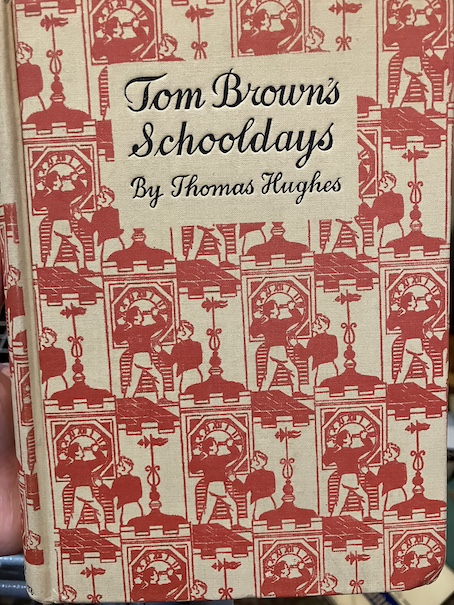


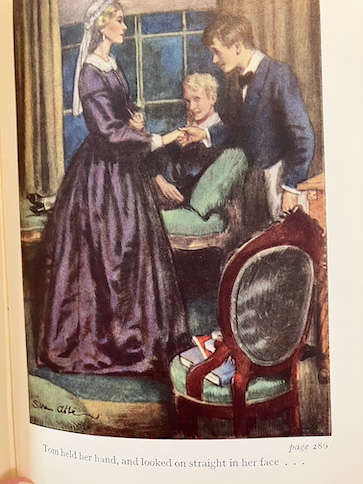

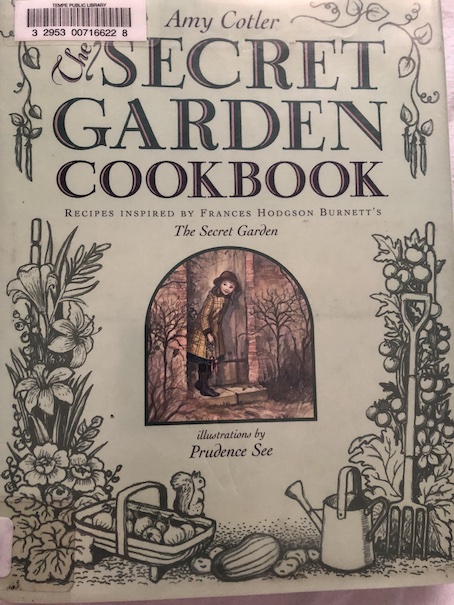


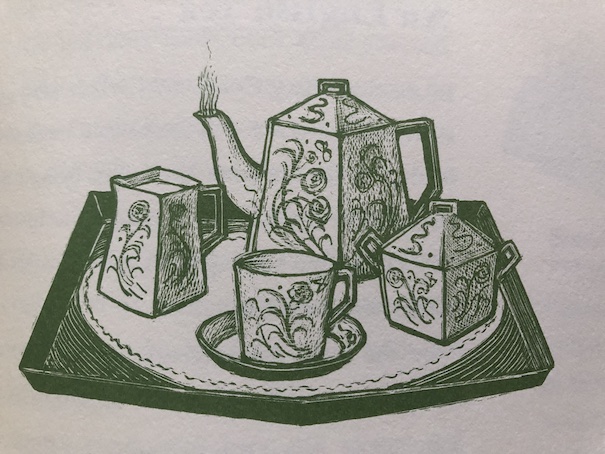
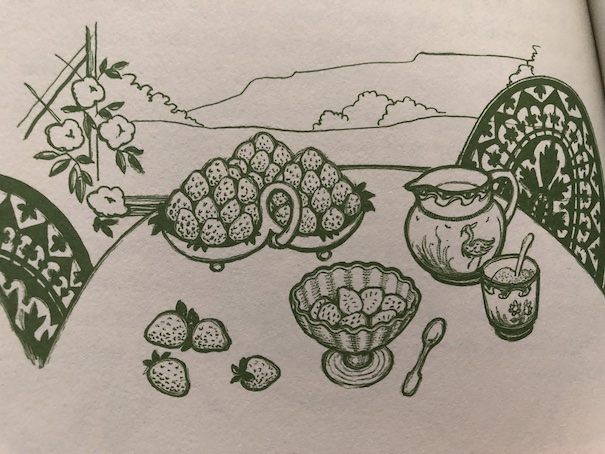

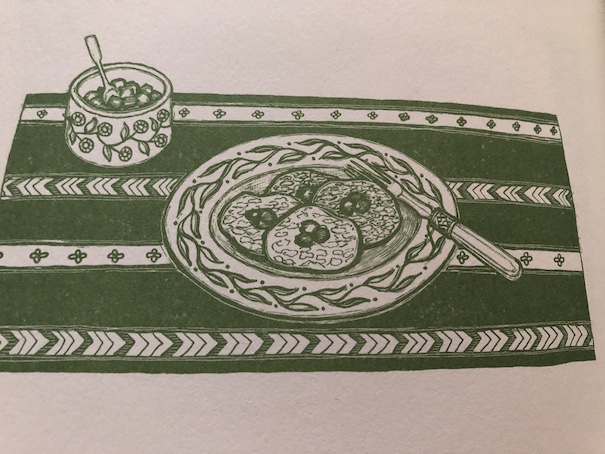
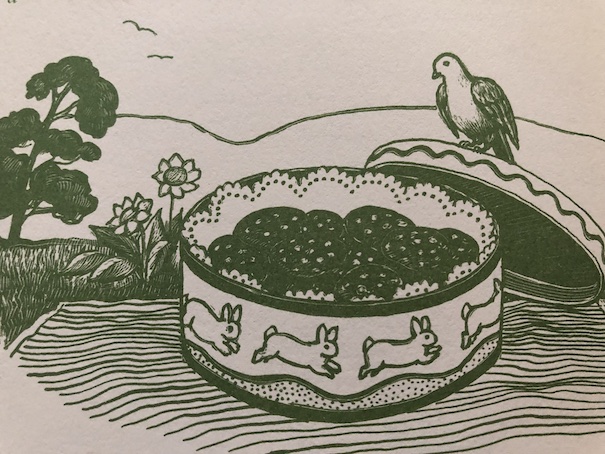

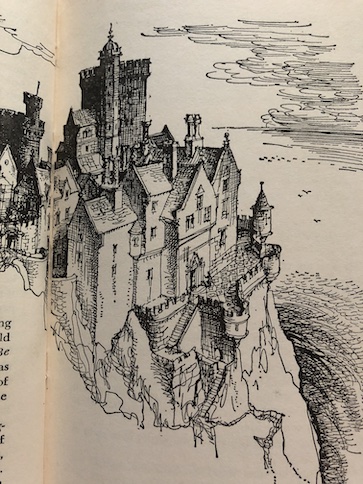
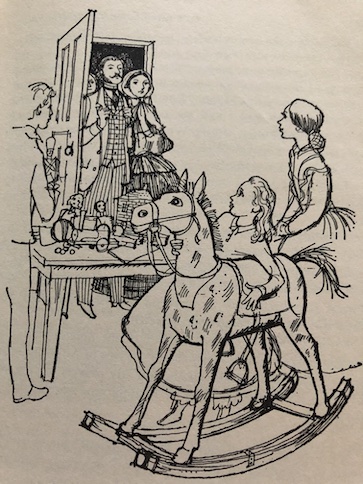
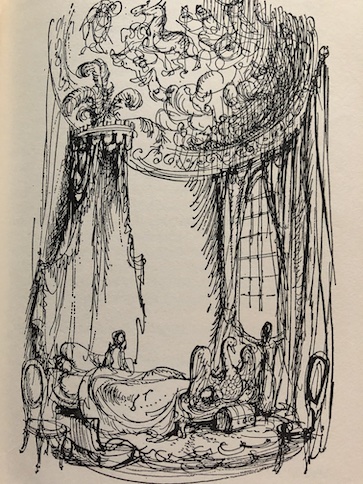


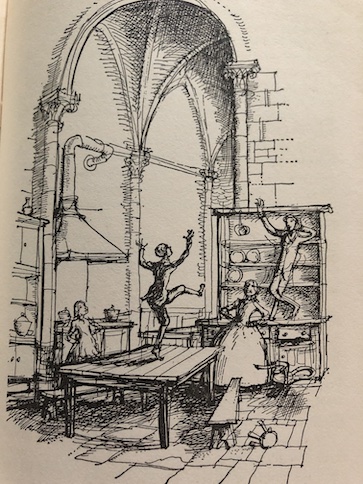


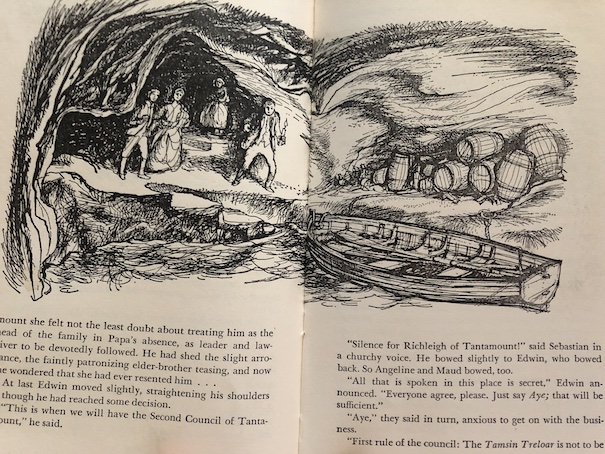
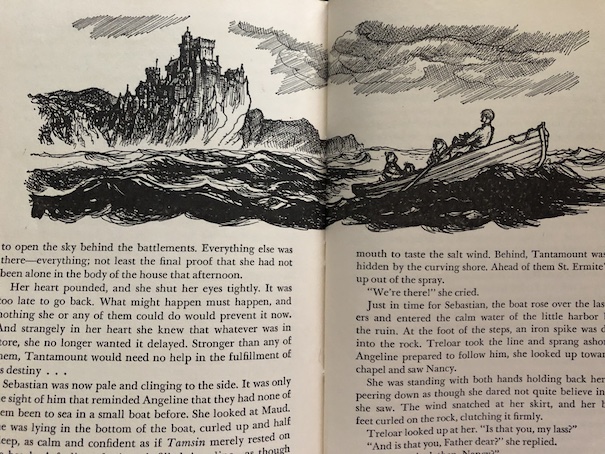


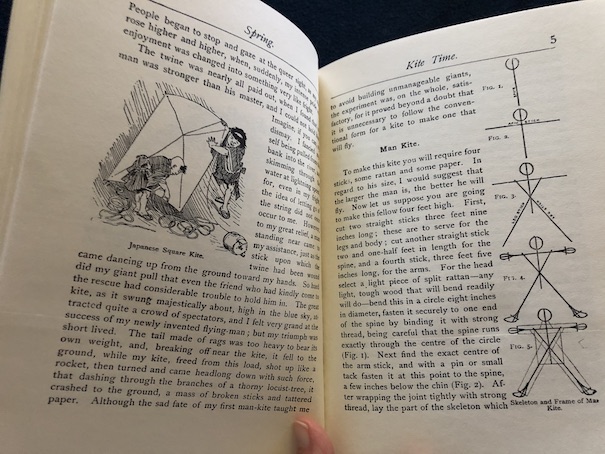
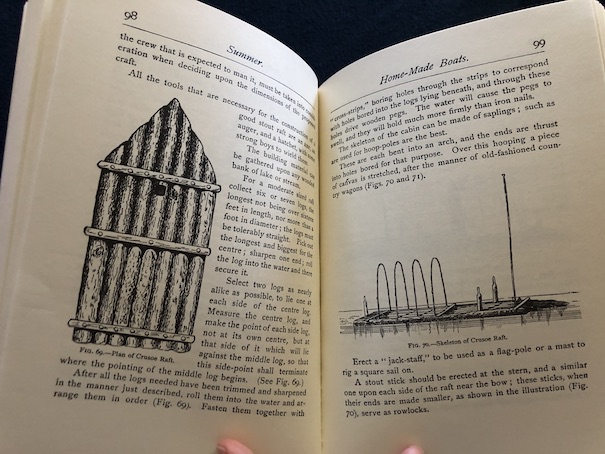
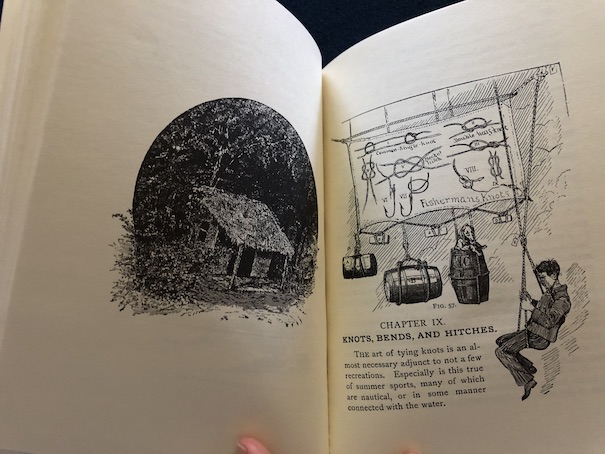


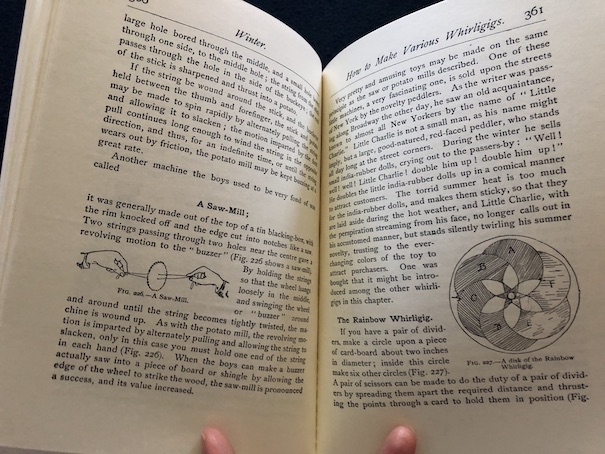
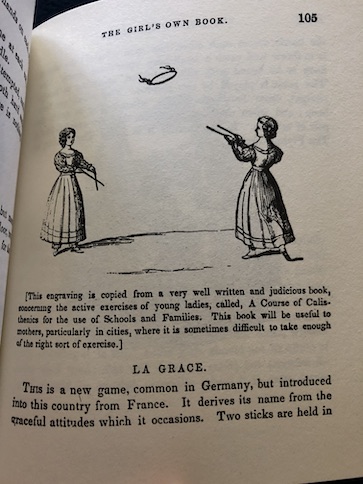
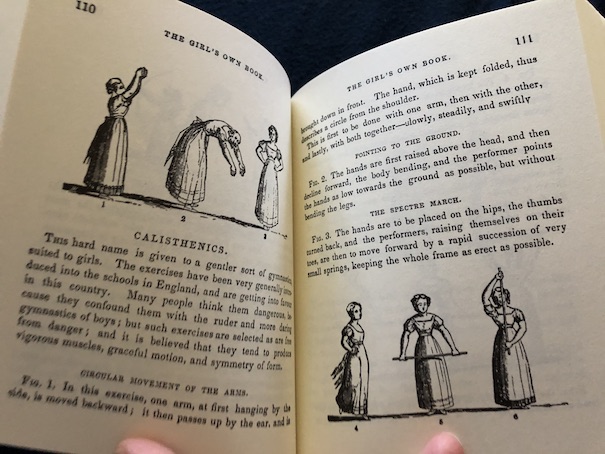

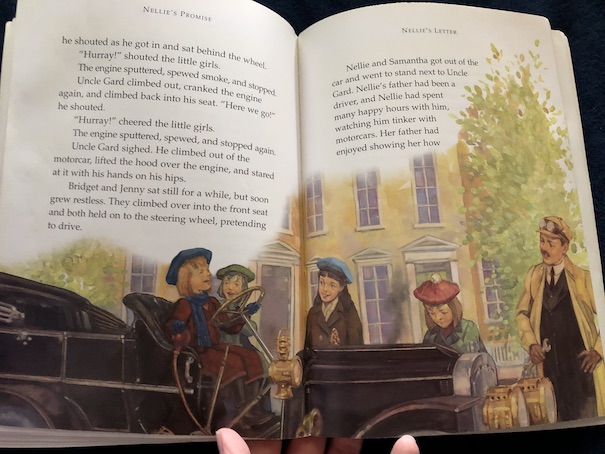

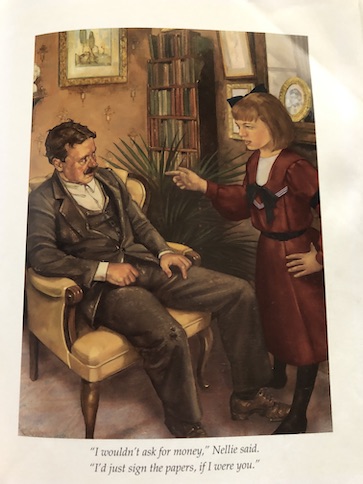
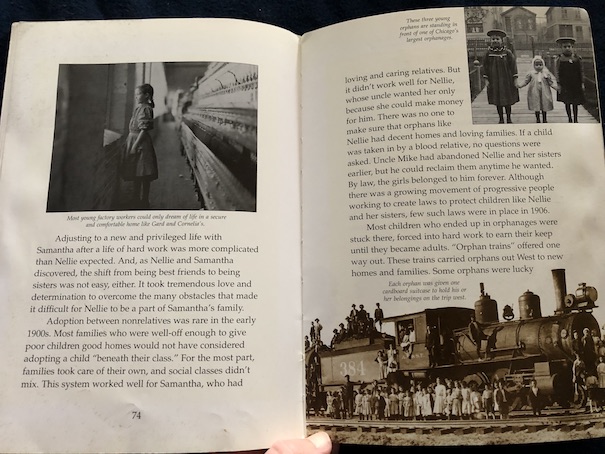


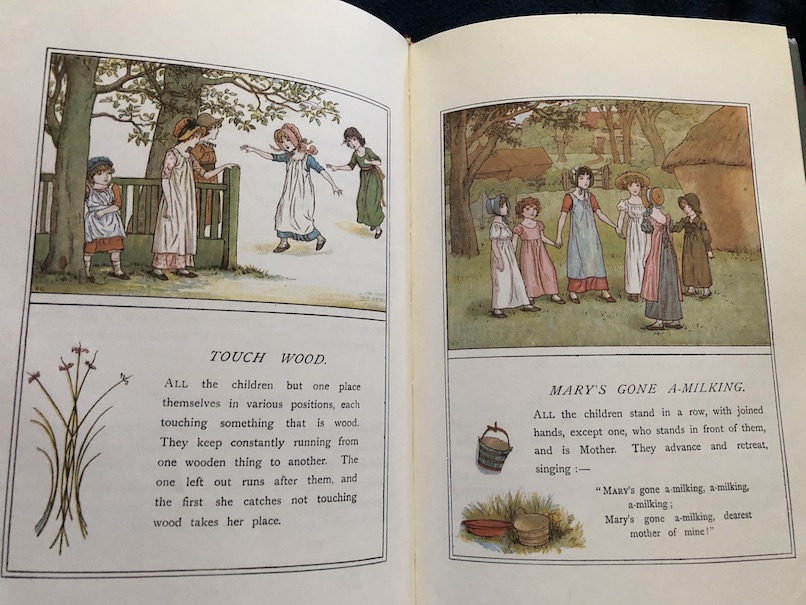


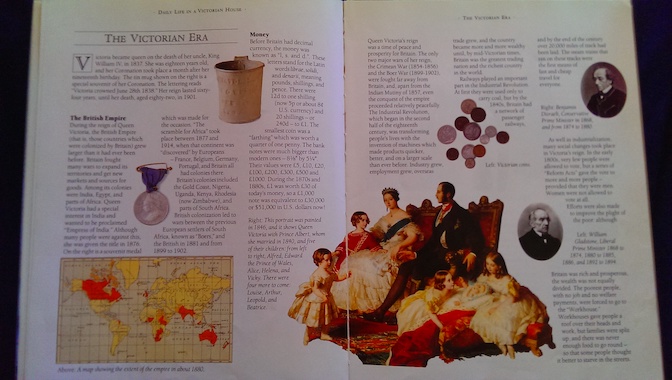
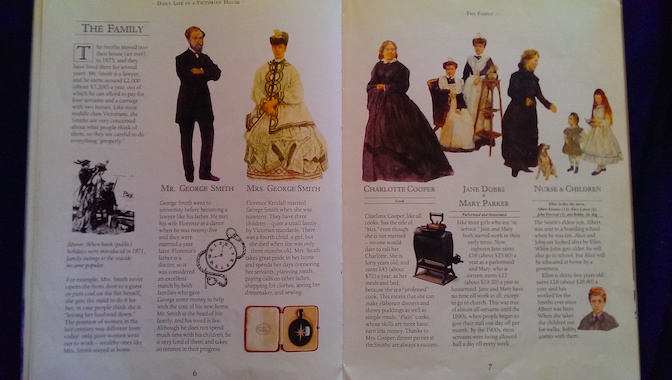
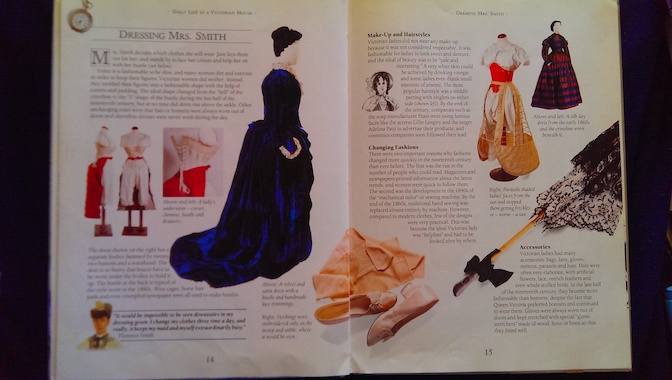


 Ten-year-old Kat is going to be living with her Aunt Jessie for the next year. Her parents are botanists, and they are spending a year in South America, studying rain forest plants. Aunt Jessie lives in a house in the same town as Kat and her parents so, by staying with her, Kat can continue going to the same school and see her friends.

 Jestress's Forgotten Books and Stories