Charmed Life

This is the first book in the Chrestomanci series.  There are many different dimensions with duplicate worlds, and in each of those duplicate worlds, there is a copy of every person.  People’s lives can differ dramatically between the different worlds, but there is one person in each generation who has no duplicates in any of the other dimensions or worlds.  This person is called the Chrestomanci.  All of the talents, abilities, and lives that would have been spread among the duplicates across the other worlds are now centered on that one person, giving that person, literally, nine lives.  Very often, the Chrestomanci doesn’t realize that he’s a Chrestomanci until he actually dies . . . and fails to die because he uses up one of his spare lives and continues living with the others.

When young Eric Chant’s older sister Gwendolyn gives him the nickname Cat at a young age, saying that he has nine lives, he doesn’t understand that it’s literally true.  Then, he and Gwendolyn are unexpectedly orphaned during a boat accident.  Their parents drown.  Gwendolyn doesn’t because she’s a witch, and the water rejected her.  Cat thought that he was saved because he grabbed hold of Gwendolyn.  Gwendolyn knows differently.

After their parents’ deaths, Cat and Gwendolyn live with their downstairs neighbor for a time, receiving support from the town. Their neighbor, Mrs. Sharp, is also a witch, and she recognizes Gwendolyn’s talent. When she goes through the children’s parents’ things, she finds three letters from someone called Chrestomanci, and she recognizes immediately that they are important. Cat doesn’t fully understand who Chrestomanci is, but everyone regards him as an important person, so much so that they even hesitate to say his name out loud. His signature is valuable, and Mrs. Sharp offers the letters as payment for witchcraft lessons for Gwendolyn from the best tutor in the area, Mr. Nostrum. Gwendolyn breezes through the early lessons easily, and everyone in the neighborhood recognizes her talents. They are sure that Gwendolyn is destined for great things, and they are all eager to ingratiate themselves with her. A local fortune-teller even says that Gwendolyn will be famous and may be able to rule the world if she goes about it in the right way. The fortune-teller also tells Cat’s fortune, but his fortune is a warning that he is in danger from two sides. Cat is frightened and unsure what to think of it.

However, there is still the question about how the children’s parents knew Chrestomanci and what their father argued about with him in their letters to each other. Mr. Nostrum is particularly curious to know what the children know about Chrestomanci, having apparently tried to learn things about him through his signature and failing, but neither of the children can tell him much. Cat still isn’t sure exactly who Chrestomanci is, so he suggests that Mr. Nostrum just write to Chrestomanci himself to ask. It’s such a straightforward approach that it never occurred to either Mr. Nostrum or Gwendolyn to do that before. Gwendolyn ends up writing the letter to Chrestomanci herself, exaggerating her plight as an orphan to gain sympathy, and implying that Cat also drowned in the boat accident. When Chrestomanci arrives to see Gwendolyn, he is initially surprised to see Cat.

Although their relationship to Chrestomanci isn’t explained at first, Chrestomanci takes custody of the children and brings them to live at his castle with his own wife and children, Julia and Roger. Everyone tells the children how lucky they are because living with someone as important as Chrestomanci means hob-nobbing with other important people. Cat realizes that the reason why Gwendolyn wants to go to Chrestomanci is that she is serious about becoming famous and ruling the world. She sees life with Chrestomanci as the first step. Cat is more intimidated and homesick.

Life in Chrestomanci’s castle is quite different from what Gwendolyn expected, though. There is some kind of enchantment over the castle that muffles Gwendolyn’s powers, and that drives her crazy. Gwendolyn is contemptuous of Julia and Roger for being plain and fat, but both of them turn out to be better at magic than she is and are fully capable of standing up to her magical tricks and bullying. Worst of all, nobody seems impressed by Gwendolyn or thinks that she’s special, and Gwendolyn is accustomed to people thinking that she’s special and impressive.

Chrestomanci makes it clear that none of the children are supposed to be practicing magic unless they are under the supervision of their tutor, Michael Saunders. When Gwendolyn and Cat begin having lessons with Michael Saunders along with Julia and Roger, it becomes apparent that Gwendolyn is far behind in her normal subjects, like math and history, even behind Cat, who is younger. Gwendolyn airily tells the tutor that she never paid attention to such things at their old school because she was concentrating more on learning witchcraft. Michael Saunders tells her that she won’t have any more magical lessons until she catches up in her normal studies, and Chrestomanci backs up the tutor. Gwendolyn is infuriated because, not only is nobody treating her like she’s special and impressive, for the first time in her life, they are treating her like what she really is: a spoiled and naughty child.

Gwendolyn’s parents didn’t fully have the ability to impose consequences on Gwendolyn when they were alive, although they were a restraining influence. After they died, nobody tried to restrain Gwendolyn, only trying to ingratiate themselves so she would help them or they could use her for their own purposes. Although Cat has idolized his older sister, there are dark sides to her personality that he has never realized before, and he soon discovers that she has sinister intentions that involve him.

One day, Gwendolyn vanishes and is replaced by one of her duplicates from another world, where magic doesn’t exist.  This other version of Gwendolyn, who is called Janet, has no idea where she is or how she got there.  It is from her that Cat learns that there is no duplicate of himself in her world.  While Cat struggles to figure out what is happening, he helps the new girl to pretend that she is the usual Gwendolyn, although she actually has a very different, much nicer, personality. The more Cat tells Janet about Gwendolyn, the less Janet likes her or the idea of being her, which makes Cat nervous.

When Cat and the new Gwendolyn realize what Cat’s Gwendolyn intends to do, they will need the Chrestomanci’s help to stop her and for Cat to claim his true destiny, the one that Gwendolyn has been attempting to conceal from him all along.

The book is available to borrow and read for free online through Internet Archive (multiple copies).

One of the best parts of the book for me was the setting at Chrestomanci Castle. The idea of living in a castle with magical playmates who can make toy soldiers move on their own is exciting! Cat and Gwendolyn’s rooms in the castle sound like the kind of bedrooms that any kid might imagine having. Even though the castle is strange and sinister things are happening, there is also a kind of coziness to the atmosphere. The children have hot cocoa every morning in the nursery. (I’m not sure why Cat, Gwendolyn, and Janet don’t like hot cocoa. Having hot chocolate for breakfast every morning would have made me happy as a kid, although I admit that, if Chrestomanci and Millie are concerned about their children’s weight issues enough to limit their marmalade intake, that’s not really the best morning drink they could have. I would have suggested tea instead. While we’re on the subject, I didn’t like the way they kept going on about the kids’ weight issues.) They have their own old-fashioned schoolroom in the castle with their own private tutor. When they get allowance money, they can walk to the charming, old-fashioned town nearby and buy candy and other small items. Millie is a doting magical mother, and even though Chrestomanci can be a little intimidating and fussy about appearances, he seems to genuinely care about the children and isn’t above sticking his well-dressed head into the nursery to say good morning and check on them.

During his time at Chrestomanci Castle, Cat learns things about his parents and his sister that he never knew before. His parents were actually cousins, and marriages between cousins in magical families are frequently dangerous, especially when they have children. Chrestomanci is also their parents’ cousin, and the argument he had with their father through their letters was about preventing the couple from having children any children with magical abilities, a suggestion that insulted and angered their father. Their father later came to regret that when young Gwendolyn first started using her powers, and even her parents started to see that she was dangerous. They weren’t quite sure how she was using Cat, but they had the sense that she was using him to do her magic somehow. Nobody thought to take Cat’s nickname seriously until Janet started questioning the reason why Gwendolyn started calling him that.

The truth is that Cat is a nine-lived enchanter. Gwendolyn realized this when he died at birth but didn’t actually die, and even though she was young herself, she found a way to hijack his powers. From the time when he was a baby, she’s been using his powers as if they were her own. That is how Gwendolyn appears to be unusually powerful for her age, even though she’s never really had the patience to go through any of her lessons by the numbers, just glossing over the beginning parts. Cat has been unable to use his own magical abilities because Gwendolyn has been keeping them all for herself, so for a long time, he assumes that he doesn’t have any magic at all. Since Gwendolyn has been doing this for his whole life, Cat has grown accustomed to how it feels and doesn’t notice it until Janet puts together the clues and realizes what’s been happening. When Gwendolyn does particularly powerful magic, she even sacrifices one of Cat’s extra lives, which she placed in a little matchbook for easy use.

Cat is appalled when he finds out about it, and he doesn’t want to believe it at first. However, when he tries to light one of the matches and instantly catches fire, he is convinced. What is even worse is that Gwendolyn and her magic tutor are planning to use him as a human sacrifice to open the gateway to other worlds so that they and the other evil magicians can use their powers to control these other worlds. Gwendolyn is a malevolent narcissist and always has been. Cat is devastated when he learns how little Gwendolyn cares about him, but he manages to finally summon enough anger to stand up to Gwendolyn and take his powers back from her. Like other victims of narcissists, he has always been the stronger and more powerful of the two of them, but he needed some help to see it.

Unlike Gwendolyn, Janet is not a narcissist and is capable of feeling empathy and caring for others. She’s even capable of selfless acts and personal sacrifices for the sake of others when necessary. When Gwendolyn escapes and permanently seals herself in another world where she is a queen, Janet is stuck in Cat’s world, unable to return to her own. It’s a terrible blow for her to be separated from her parents, who are alive in her world. However, when Chrestomanci asks her if she will be okay and if she wants him to try to return her to her own world, she refuses the offer because she has discovered that the double who replaced her in her world is an orphan who badly needs a family. While Gwendolyn was even going to volunteer Janet, one of her other selves as a sacrifice if Cat wouldn’t do, Janet is willing to sacrifice her former life in her world for the sake of one of her other selves. Janet is really the kind of sister that Cat has needed all along. She says that she was supposed to have a younger brother in her world but that he died at birth, and she is fascinated to find Eric/Cat alive in this new world and get to know the brother she lost. Janet learns to love her new brother and to get along with Julia and Roger, becoming the kind of girl Gwendolyn really should have been to her family. She doesn’t have any magical abilities, but she discovers that she can help help her new family because life in her usual world (which is supposed to be our world) has given her a different perspective from theirs. She is the one who suggests to Chrestomanci that he stop using silverware made of actual silver, which impedes his powers, and use stainless steel instead. When Gwendolyn played magical tricks at dinner, Chrestomanci always had trouble dealing with it because he was holding silver, but if he uses stainless steel, he won’t have that problem again. Chrestomanci and Millie admit that they never thought of that because stainless steel cutlery isn’t common in their world.

I remember finding this story fascinating the first time I read it as a kid. There are some dark themes with Gwendolyn’s narcissism, the threats to the children’s lives, and even Cat losing a few more lives. Cat’s growth is central to the story. Once Gwendolyn’s toxic influence is removed from his life, he begins to see the truth about himself and how Gwendolyn has treated him. Cat had always looked to her for comfort as his sister and his last living relative (so he thought), but all along, she was the one who was most dangerous to him, and that’s a terrible betrayal. Once Cat starts to understand the situation, he begins to see his own potential, and he also has some new people in his life who show him better treatment. The castle is charming, the world is fascinating, and the story is thought-provoking about the different ways a person’s life can go in different circumstances. Other books in the series go into more detail about how the different worlds in this universe function and how they split off from each other in different series, based on the outcomes of important events.

The Lost City of Faar

Pendragon

The Lost City of Faar by D.J. MacHale, 2003.

Press and Bobby have followed Saint Dane to the territory of Cloral, a world completely covered by water and occupied by peaceful people who live in floating cities.  Of course, with Saint Dane on the loose, things aren’t going to stay peaceful for long.  An entire city of people are killed when they eat poisoned food, and it looks like Cloral’s entire food supply may be in danger. 

Saint Dane is commanding a group of pirates raiding cities for their food supplies.  Among the dead is Cloral’s last Traveler, and his successor is his son, Spader, who has no idea what the Travelers are or what kind of dangerous mission awaits him.  Spader takes his father’s dead very hard and vows revenge upon Saint Dane.  As Bobby, Press, and Loor, who Bobby introduces to Spader in order to help explain who Travelers are, acquaint Spader with his new duties as the Traveler of Cloral, they try to convince him that preserving the peace of Cloral is more important than seeking revenge.  Spader is hot tempered, and they try to teach him to use peaceful means to combat Saint Dane, who has superior strength, anyway. 

Before he died, Spader’s father left behind one clue to the solution of their problems: a reference to the lost city of Faar, apparently the last city on dry land on Cloral. According to legend, it sank many years ago, but its advanced civilization may not have been completely destroyed. Centuries ago, the water level of Cloral rose, and the people of Faar realized that their city would soon be underwater.  They built a dome to protect their city, and they have been secretly helping the people in the floating cities by tending to their underwater farms and sharing technology with them.  However, they have been afraid to openly reveal themselves to the rest of Cloral because they were worried about their culture becoming contaminated. 

When Press, Bobby, and Spader tell them that Saint Dane knows where they are and is on his way to destroy them, most of the people flee the city.  The dome is broken, and it looks as though they will be unable to retrieve the equipment that the people of Faar were going to give them to save Cloral’s food supply.  However, the one person who remained in Faar and was killed was talking about making Faar “transpire.” Bobby, wanting to fulfill the dead man’s mission, activates the machinery to make it happen.  It turns out that the people of Faar have made it possible for their city to detach from the ground and float to the surface, like the other cities of Cloral.  Faar and its people have now rejoined the rest of Cloral, and they are able to retrieve the machinery they need.  Sadly, Spader tries to chase down Saint Dane as he escapes through the flume, and Press is killed saving him.  Spader volunteers to accompany Bobby on his mission to stop Saint Dane.

Throughout the books, Bobby, like Spader, has to come to terms with the fact that his life and his entire identity are not what he has always thought they were. Other Travelers also go through the same process as they learn about what it means to be a Traveler and to accept the mission of the Travelers. All through the series, there are other revelations about the nature of the Travelers themselves and how they came to be.

The book is available to borrow for free online through Internet Archive.

The Merchant of Death

Pendragon

The Merchant of Death by D.J. MacHale, 2002.

Bobby Pendragon is a normal fourteen-year-old boy, or at least he thought he was.  One day, his mysterious Uncle Press shows up at his house right before he’s supposed to leave for an important basketball game at school and tells him that he needs his help and that Bobby must come with him right away. 

Although Bobby doesn’t know what is going on, he goes with his uncle and begins a terrifying journey to another world.  His uncle reveals to him that they are both Travelers, members of a select group of people who can use gateways called flumes to travel across time and space to other worlds.  Worlds everywhere are in chaos, and an evil Traveler called Saint Dane is manipulating events to cause more chaos and destruction.  On the world of Denduron, the decadent Bedoowan society is oppressing the Milago miners, and thanks to Saint Dane, their world is about to erupt in warfare unless Bobby and his uncle can stop it.

Bobby and his uncle are separated for a while when some Bedoowans capture Uncle Press, and Bobby meets up with fellow travelers Osa, Loor, and Alder.  Osa, the most experienced Traveler, is killed trying to protect Bobby, and Bobby makes some mistakes that make the situation worse, including having his friends back home send him some items that are advanced technology to the people of Denduron. 

The Milago have discovered an explosive mineral called Tak, and they are using it to build a super weapon to wipe out the Bedoowan.  Saint Dane is trying to increase tensions between the two groups of people so that they will use this weapon, which will lead to the destruction of their world … unless Bobby and his friends can stop it.

This series reminds me a little of old movie serials, like Flash Gordon, where the good guys must defeat an evil overlord, free people from oppression, and bring peace to warring groups.  However, like with Flash Gordon’s evil nemesis, Ming the Merciless, Saint Dane has a way of escaping even when our heroes have put a stop to his plans. By the time matters are straightened out with the Bedoowans and the Milago, Saint Dane has escaped to another world, and Bobby and his companions must find him and stop him from causing further destruction.

The book is available to borrow for free online through Internet Archive.

Mystery of the Witches Bridge

Mystery of the Witches’ Bridge by Barbee Oliver Carleton, 1967.

Thirteen-year-old Dan Pride is an orphan. His father was an international correspondent, and during his early years, Dan lived in different European countries, as his parents traveled around to his father’s assignments. However, three years ago, his parents died in a plane crash. Since then, Dan has been living in a British boarding school. Now, he has returned to the United States to live with his father’s brother, Uncle Julian. Dan doesn’t know what to think about his new town because it’s very different from everything that he’s known before, but he likes the idea of belonging to a family once again because he has been lonely since his parents died.

The Pride family lives in a New England seacoast town. They were one of the founding families of the town in Puritan times, but Dan discovers that the local people aren’t particularly friendly with the Pride family. Billy Ben Corey, a man who works for his Uncle Julian, explains that the Pride family has been rather stand-offish with the townspeople, and there are also rumors and stories about witches that go back to Puritan times. Billy Ben says that most of the modern locals don’t really know all the details of the witch incidents, but the vague rumors that have circulated about the Pride family have caused the townspeople to treat them with suspicion.

This sounds like a somewhat sinister beginning to Dan’s life in York, Massachusetts as he comes to understand how much of life there is governed by the past relationships between the oldest families of the area. Billy Ben tells him that the Coreys have worked for the Prides for generations, but relations between the Prides and the Bishop family haven’t been good and that Dan should avoid them.

Dan presses Billy Ben for more information, and Billy Ben tells him the story of how one of his ancestors, Samuel Pride, was accused of witchcraft back in Puritan times. Some unfortunate happenings at the time, which were probably just the result of bad luck and bad weather, were blamed on him because he was kind of an odd, temperamental person. He was known for playing the fiddle extremely well, and people said that he used it to summon up the devil in the form of a black dog out of the marsh. The person who made the accusation and who led the group that came to arrest Samuel Pride was an ancestor of the Bishop family. Samuel came out to meet the group that came to apprehend them on the old stone bridge that leads to the island in the marsh where the Pride family has their house and farm, Pride’s Point. The story goes that when Samuel met the mob on the bridge, he placed a curse on them, that doom would come for them out of the night, out of the fog, and out of the marsh. Samuel and his wife were executed for witchcraft, and not only after, there was a terrible fog and a sickness that killed many people in town. People said that it was the result of Samuel’s curse. That’s why the Prides and the Bishops have a bad relationship even though they’re neighbors, why the townspeople are still a little suspicious of the Prides, why the Prides are somewhat standoffish of the townspeople (When you think about it, who really wants to be outgoing and friendly with people whose ancestors not only killed yours but who are not welcoming or friendly themselves because they have continually looked at you and your family with suspicion for generations, like you’re the weird ones? The townspeople basically created this situation and have been perpetuating it ever since, yet they act like the problem is with the Pride family instead of themselves. Gaslighting is a relatively new term from the 20th century, but the concept has been around forever, used even by people who don’t know what it is and that it’s what they’re really doing.), and why people in the area are afraid of the stone bridge that they call the Witches’ Bridge, the place where the curse was supposedly delivered. Even into modern times, people in the area see strange lights in the marsh and hear mysterious fiddle music or dog howls that they think might be Samuel’s ghost.

There is still more to come because the mysterious misfortunes of the Pride family have continued even into modern times. Dan is named for his grandfather, Daniel Pride, who died suddenly under very mysterious circumstances, something that still haunts his Uncle Julian. Young Dan learns the story from Mrs. Corey, a relative of Billy Ben’s, who is Uncle Julian’s housekeeper. Daniel Pride had been working to change the family’s image in the eyes of the local people, debunk all the old ghost and witch stories, and lay past quarrels to rest. To try to make peace with the Bishop family and restore the Pride family’s former fortunes, Daniel had been trying to arrange to buy the shipyards that the Bishop family owned, which had formerly been owned by the Pride family. The Bishop family initially agreed to the sale, and one foggy night, Daniel went to see the Bishops to finalize the sale. What happened after that is still a mystery. Daniel was found dead the next day near the old chapel with a look of terror on his face. It’s known that he had a heart condition, so he apparently had a heart attack, but from the marks on the ground, it also appears that he had been running before he collapsed, possibly deliberately frightened to death. Also, there were marks on the ground nearby where his briefcase fell, but the briefcase containing the sale papers was never found. The superstitious people in the area think that Daniel’s death was another symptom of the family’s curse, but it might also have been deliberate murder and theft. The Bishop family insist that they never finalized the sale of the shipyard with Daniel before his death, but Uncle Julian believes that the sale was finalized and that the Bishops are lying to take advantage of his father’s sudden death, just like their ancestors arranged the execution of Samuel for their own advantage. Uncle Julian remains suspicious and bitter about what has happened, just as the townspeople continue to look at the Prides suspiciously.

All of this makes York seem like it’s not the best place to raise a sensitive young orphan, and that’s basically what Uncle Julian says to Dan when Dan arrives at Pride’s Point. Uncle Julian seems elderly and physically frail, and Dan senses that he is a deeply troubled man. Uncle Julian tells Dan that the family and the old family home have a troubled history. That’s why Dan’s father decided to go away and live his life traveling to different places, and that’s why Uncle Julian delayed sending for Dan for so long after his parents’ deaths. Uncle Julian doesn’t seem to think that Pride’s Point is a very healthy place, and he hints at buried secrets. However, he does say that, now that Dan is there, there are going to have to be some changes.

Dan doesn’t think this sounds too hopeful, and he’s lonely and disappointed that he hasn’t found the happy family and home he was hoping for and that he doesn’t even seem particularly welcome there. He can’t even really enjoy playing his violin because of the connection people there seem to have between “fiddle” music, witchcraft, and his supposedly sinister ancestor. As Dan is looking around his new bedroom that night, he suddenly spots a mysterious flashing light from his window, outside in the marsh. It’s creepy because it not only supports all the ghost and witch stories that Dan has just heard but because he recognizes the patterns in the flashes of light as Morse Code … and the message being sent is his own name: D-A-N P-R-I-D-E.

Dan doesn’t believe that any supernatural force was using Morse Code to flash his name at night. It was obviously some human person, but who would do that and why? What is the truth about his grandfather’s death? Is Uncle Julian right that the Bishops caused Daniel Pride to die and then lied about the sale of the shipyard to cheat the Pride family? Or is someone else responsible?

The book is available to borrow and read for free online through Internet Archive.

My Reaction

I stand by my earlier statement that there is basically inter-generational gaslighting of the Pride family going on. It’s gone on for so long that the townspeople have trouble recognizing what they’re doing or stopping themselves from doing it, even though some of them seem to have the feeling that it isn’t right. At one point, some of the townspeople who come out to Pride’s Point to help fight a fire make jokes about the Pride curse. I could sense tension in them, and I think it was an attempt to lighten the mood, but under the circumstances, it wasn’t really appropriate for them to joke around, especially not about something that’s been a sensitive topic for the Prides, something that has literally caused members of their family to die and others to be persecuted for generations. Keep your audience in mind, and learn how to read a room, people of York!

Uncle Julian hates the stories and rumors that have circulated about his family since before he was born, but he doesn’t know what to do to stop it, and he sometimes wonders if it wouldn’t be better for the family to simply leave their old family home and start up again somewhere else. Mrs. Corey tells Dan that every single time anything bad happens in the area, people either look at the Prides suspiciously or find a way to blame them, even though they didn’t have anything to do with whatever it was. Dan can tell that Uncle Julian is so accustomed to having people blame him and his family for things and repeat scary stories about them that he halfway believes the stories in spite of himself, and he’s overly sensitive anytime it looks like the townspeople might be trying to blame the Prides for something yet again. That’s what makes this situation gaslighting, because the community’s constant untrue stories have warped even the Prides’ sense of reality and views of themselves. The community of York as a whole has created a situation that makes it difficult for the Prides to make friends with other people and get reality checks, and the most dangerous part of it is that among the few people that the Prides are in the habit of trusting is someone who turns out to be the person they should fear the most.

I couldn’t help but notice that there was someone in the story that Dan trusted too much in the beginning. It’s partly because Dan is young and in a situation where he is just getting to know the circumstances and people involved, but even when this person says things that are untrue, contradictory, or just plain mean, he doesn’t call him on it or seem to question within himself why this person is talking like that, at least not until about the middle of the book. Gaslighters will do this to a person, playing mind games, lying, alternately being friendly and praising their victim and then putting down their victim and/or trying to blacken their name to other people, discouraging them from getting close to people who care about them and might actually help them, acting like normal things that the victim does or feels are somehow weird or abnormal, trying to keep their victims in a constant state of confusion, unsure of what the reality of the situation really is. Although I found myself angry with the people of York in a general way for perpetuating something awful that their ancestors did for generations and for being apparently oblivious to what they’re doing in modern times, there is a definite villain in the story who is both deliberately and concretely evil.

There is a parallel drawn in the story between Uncle Julian’s big, black dog, Caliban, who is disfigured from an old injury and the Pride family themselves. Dan is afraid of the big dog, and Billy Ben tells him that it attacked him once, but Uncle Julian says that Caliban is just distrustful because he was badly abused and injured in his earlier life. People are like that, too. I understand that because I used to volunteer at an animal shelter, and that’s where I got my dog, Betty. (If you look at my About page, you’ll see a picture of Betty.)

I’ll never know Betty’s complete history because she was found wandering alone without a collar before she was brought to the shelter. However, I’m pretty good at reading between the lines, and I can read at least part of the story from her behavior. Betty is afraid of anyone, even me, walking behind her, and I’ve noticed since her shelter days that sometimes, her back end looks a little off-center when she runs. Her tail has an odd, permanent bend at the very tip that we didn’t discover until we had the hair on it trimmed. I think she’s been kicked hard from behind before, hard enough to leave permanent injury. She’s not as scared of things as she used to be after having lived with my family for a few years, but she used to be terrified of newspapers or anybody standing over her with anything in their hands, so I think she’s been hit with things before. Betty also gets scared when people laugh. She’s not as scared as she used to be because she’s gotten used to us laughing at something funny on tv, but there are times when she’s cringed and slunk away with her tail between her legs from people when they laugh and she can’t figure out why they’re laughing. Betty’s fear of laughter actually disturbs me because I think I know why it scares her. Based on her reaction, I’ve think that it’s likely that whoever hurt Betty before laughed when they did it. I think Betty has an association between laughter and pain, and that’s why she takes laughter as a bad sign, reacting fearfully to it when she thinks it might be directed at her. Laughing while inflicting pain is a sick thing to do, the product of a sick mind. There are stories in Betty’s reactions, and I’m disturbed by the mental picture I have of the person who had Betty before.

I have to admit that my own history has also both colored/given me insight into Betty’s behavior. If it isn’t obvious from comments in my previous reviews, I don’t see teasing as a positive thing. I’ve reacted to it in the past much like Betty does to sudden, unexplained laughter, which is why I understand the feeling behind it. Some people say that they like to tease their friends and people they like, but I just don’t like it, and I’ve learned to be more open and honest about how I never will like it. I do not have good feelings about people who tease others for fun, and I deeply resent being told that I have to like it because the people doing it are “just having fun.” It’s not a bonding activity, not with me, no matter who says it is. I absolutely refuse to “bond” with anyone who does it. Anyone telling me that I have to change myself to like people who tease is 100% guaranteed to get on my bad side. I have a bad history with teasing and bullying, I have a bad history with the people who do it, and I just don’t want to be around it. Teasing involves getting a laugh at someone else’s expense, benefiting from their discomfort, and getting a good feeling from making someone else feel bad. I don’t think any of that is right, and it doesn’t take much for it to get way out of hand, especially when people have the impulse press harder to get the reaction they want to their “jokes”, like the other person just didn’t get it, instead of cutting it out when their “jokes” just aren’t funny. It’s always awkward when it comes from people who don’t know the sore spots that they shouldn’t poke at and try to act like they’re special friends who should be cut some slack when the reality is that we don’t really know each other that well, we’re not really close friends, and no such special relationship actually exists between us. Real friends understand and demonstrate respect for each others’ feelings, and they don’t intentionally poke at a friend’s sore spots, like the people of York did to Uncle Julian with their jokes in this story.

What ties all of this together is that Betty’s reaction to laughter is like Uncle Julian’s reaction to the townspeople and their jokes and comments; it’s a conditioned response from long-term negative association. The townspeople are uneasy because Uncle Julian doesn’t laugh with them, but Uncle Julian doesn’t laugh with the townspeople because none of it was actually funny. By perpetuating these witch stories, even in the form of “jokes”, they’re constantly feeding the myths and ghost stories and making the situation worse, and they don’t seem to care about how he or his family feels or how it affects their lives. You can tell who respects you and who doesn’t by seeing who tries to treat you the way you want to be treated. The people of York were making jokes to soothe their own feelings, sharing in-jokes that they’ve had with each other at the Prides’ expense, and they got really uncomfortable when suddenly confronted with Uncle Julian’s, feelings that they helped to provoke and didn’t want to deal with.

Don’t worry about Betty. It’s sad that she’s been afraid of things and it’s kept her from being more outgoing and friendly, but we’re working through it. In non-pandemic times, I take her to places where I know she’s welcome, and she has acquired a fan club of people who like to see her and say hi whenever we visit. Anytime she seems uneasy because we’re laughing about something, I sit next to her, pet her, and praise her for being a Good Girl so she knows that nobody is trying to be mean to her and that we value her. When someone has been programmed through negative reinforcement, positive reinforcement is needed for balance. I’m trying to build more positive associations for her. It’s working, and she’s improving. She behaves very well and is very happy little dog when she’s treated well. Don’t worry about me, either. I’ve had some bad experiences, but I’m not the only one who’s had to deal with this stuff. There are lots of different kinds of people in the world, and I’ve learned some things about finding the kind of people I want to be around and making it clear how I want to be treated. I just gripe and vent now and then because I don’t like mean behavior or seeing others in these situations, and I’m all out of patience for it. I’ve learned what to do to help remedy such problems, but that doesn’t stop me from resenting the people who create problems that need to be solved.

The way both people and animals behave offers clues about what’s been happening with them. Sometimes, they offer warning signs of people to avoid, and sometimes, they are signs that the person or animal is in distress and needs some outside help and support. Caliban’s behavior in the story is more defensive than aggressive. That is, Caliban is reacting, not instigating … and if I saw what Dan saw in the story, I would know immediately to be very suspicious of the person Caliban hates the most because it explains where the source of harm in his life is. In a similar way, the Pride family is mostly reacting, not instigating. They have been harmed, both physically and psychologically, for an extended period of time, and while they seem to have the sense that’s the case, they’ve been too close to the problem for too long to see what the source of the greatest harm really is. But, about halfway through the book, Dan does learn to correctly read the people around him and comes to realize who is really his friend and how isn’t, based not on how others talk about them but by how they each actually treat him. When you pay attention and think about people’s actions in context, you can see who really has your best interests at heart and who doesn’t.

Dan spends much of the story, particularly at the beginning, feeling like he is unwanted, both in York and at Pride’s Point. At first, he thinks that his Uncle Julian doesn’t want him, but he gradually realizes that’s not it. There is someone else who doesn’t want Dan there, for reasons of their own. As I was reading, I noted times when this person said and did things that manipulated Dan’s feelings, even actively trying to make Dan feel bad while carefully seeming “honest” or “helpful” so Dan would continue to listen. I felt so much better when Dan finally realized the truth about this person. I have to say that I was really angry with Uncle Julian when I discovered that he was fully aware of who hurt his dog and that he still trusted this person. For me, the first hint of that would have caused me to permanently sever the relationship because it’s sick behavior and a sign of a disturbed mind, but I can only suppose that he felt unable to because he had been dependent on this person for too long, largely shunned by the wider community, who could have given him a reality check if they’d had a firmer grasp on reality themselves.

Dan, who had never heard of the Bishops before arriving in York, finds himself becoming angry and resentful of them, hating them for what they’ve done to his family for generations. His uncle even warns him not to get involved with the family, but that’s exactly what the real villain wants. When Dan makes friends with a boy named Pip Cole and his twin sister, Gilly, he confides his anger at the Bishops and how he blames them for this whole mess and for perpetuating it for generations, but Pip knows more about the situation than Dan suspects, and he has seen a different side of the problem. Pip tells Dan his family would have less problems if they would just forgive the Bishops, but Dan doesn’t believe it at first because, the way he sees it, the Bishops are the villains, who have actively profited from their villainy all along. I appreciate Dan’s situation. Pip doesn’t fully appreciate that, for Dan and his uncle, it’s not just about the past because they’re still actively suffering from the townspeople’s stories, rumors, and suspicions about them. It’s hard and maybe impossible to forgive something that’s ongoing from people who see no problem with the situation and aren’t particularly sorry. On the other hand, the resolution of this situation requires at least one of the parties involved to make the first move. Dan’s grandfather was trying, but his mysterious death prevented his mission from being completed. Even Uncle Julian reveals that he had been prepared to forgive the Bishops and marry their daughter, but some of the circumstances of his father’s death led him to believe that his fiance actually had a hand in it, and that apparent betrayal is what has left him such a haunted man all of these years.

The stories that Dan has heard about his family are not the complete story. Dan eventually comes to realize that the Prides and the Bishops each have only half of the real story, and because of their reluctance to associate with each other, the Bishops partly out of continued superstition and guilt, not knowing how to deal with the Prides’ anger, and the Prides, because they are both justifiably angry and accustomed to unfair treatment and being shunned by the community. However, it’s important that they do talk to each other because it’s the only way for each of them to get the complete picture of what’s really been happening and learn the real villain’s true motives.

The key to establishing the truth is in the missing briefcase, and both Dan and his enemy are searching for it. Dan needs to make peace with his family’s past, and he finds some help from a mysterious hermit called Lamie, who lives alone in the marsh. Lamie is another outcast of the York community. People avoid him because he has a reputation for being weird. People in this community in general may be “normal” in the sense that their behavior is fairly uniform, but uniformity by itself isn’t a virtue. When you’ve got an entire community doing something they shouldn’t, being the odd one out can be a good thing. Lamie helps Dan when he needs it, and Dan discovers that Lamie is actually a very kind and understanding person. Lamie’s solitary lifestyle is rather unorthodox, but he’s actually happy in his solitude because he knows who he is, he takes care of himself, he’s comfortable with himself, and he’s living the kind of life he likes, in touch with the natural world. When Dan talks to Lamie, he realizes that Lamie is comfortable with his own identity and at peace in his own mind in a way that his uncle isn’t. Even more importantly, Lamie sees things from a different perspective because he isn’t part of the groupthink of this community.

Lamie was friends with Dan’s grandfather, and he tells Dan about a hidden chamber built by the Prides’ ancestors, where Dan’s grandfather kept important family papers. However, Lamie tells Dan that he isn’t sure that he should look for it if his only motive is revenge. Dan does have a desire for revenge after all of the stories of injustice toward his family that he’s heard and what he’s suffered himself since he arrived in this area. Lamie helps to calm Dan’s desire for revenge by quoting from St. Francis of Assisi, emphasizing the importance of forgiveness instead of revenge. The part about truth speaks to Dan, and he comes to realize that what he really wants, more than revenge, is to know the truth about what happened to his grandfather. Lamie tells him that he saw some of what happened the night his grandfather died, from a distance. Because of the fog, he couldn’t see everything, but he knows that the Bishops were telling the truth that Dan’s grandfather didn’t make it to their place that night to complete their deal, defusing Dan’s anger at them for their supposed lies. Lamie’s memories also give him clues about the true identity of his grandfather’s attacker and the location of the secret hiding place. However, to find it and to evade his enemy, Dan will need the help of the very people his uncle has forbidden him to associate with.

I found the parts about the gaslighting of the Pride family and the poisonous duality of their true enemy frustrating and anger-inducing, but once Dan speaks to Lamie (really, my favorite charcter in the story) and begins to sort out who he can trust and who he can’t, I felt a lot better. The story is very atmospheric, with a grand old house and property, surrounded by a foggy marsh, and even when the characters know who their enemy really is, they are kind of trapped with him in a dangerous cat-and-mouse situation as they both race to find what they’re really looking for. By the end of the book, all of the old mysteries are wrapped up, including the source of the the mysterious “fiddler” music.

Mazemaker

Mazemaker by Catherine Dexter, 1989.

Twelve-year-old Winnie Brown loves mazes, and she is very surprised when one shows up among all the other graffiti on the schoolyard.  The maze is painted on the ground in silver and is big enough for a person to walk through.  Winnie and her friend, Harry, try to walk the maze, but it makes them dizzy at first.  Then, a cat they’ve befriended finds its way to the center of the maze and disappears right before their eyes!

When Winnie tries to tell her mother about it, her mother doesn’t really pay attention.  Although Winnie and Harry try to explain it away as an optical illusion of some kind, Winnie is still convinced that there is something strange about the maze.  She feels drawn to it, and she tries to walk it one more time, even though Harry is afraid. 

The next thing Winnie knows is that she’s in a hedge maze.  She faints, and when she wakes up, she finds that she is being cared for by members of the Taylor family, who owned a large house in the area about a hundred years ago.

Somehow, Winnie must find the path through the maze again in order to go back home.  According to the Taylors’ creepy housekeeper, Violet Minot, the only person who really knows the maze is the mazemaker, a distant cousin of hers who disappeared many years ago.  Winnie wants very badly to return to her own time, but she fears that Mrs. Minot may have diabolical plans of her own for the mazemaker.

The book is available to borrow for free online through Internet Archive.

Themes and Spoilers

Winnie learns that a couple hundred years before the time of the Taylors and Mrs. Minot, a cousin of Mrs. Minot’s family came to live with them.  He was an orphan, and the father of the family liked him better than his sons because he was a good worker, and they were trouble-makers.  The cousin, William Sparrow, was afraid of his cousins because he knew they were jealous of him.  His grandmother was a witch, and she had taught him a little magic about mazes, like the one that was made near the village in England where he grew up.  William built the maze and used its magic to escape from his cousins, who were about to kill him.  He came to the Taylors’ time, when the maze had been built into a hedge maze and found work as the Taylors’ groundskeeper. 

However, even though William was not murdered by his cousins, they were blamed for his disappearance and looked at with suspicion for the rest of their lives. The locals, having noted their hostility toward their cousin, believed that they probably murdered William and hid his body somewhere. In the end, they were silently judged for the crime that they wanted to commit but didn’t actually commit because they never had the chance to do it. In a way, it’s a kind of justice, although Violet Minot doesn’t see it that way.

Violet Minot, one of their descendants, has been searching for years for the secret to the maze.  She believed that if her ancestors hadn’t been blamed for William’s disappearance, her family might have owned the big house and the estate around it.  She recognized William when he appeared in her time and threatened to tell everyone in the village who he was if he didn’t share the secrets of the maze with her.  To escape her, William went through the maze again and ended up in Winnie’s time.  He painted the maze on the ground where it was supposed to be, although it had been covered up by concrete for the schoolyard.  Then, William was picked up by the police for defacing public property.  His cat roamed the area and made friends with Winnie and Harry.

When Winnie goes back in time through the maze, Violet tries to use her to learn the secrets of the maze.  Winnie eventually figures out how to get home because Violet’s great-aunt tells her that there should be an extra turn in the maze, one that isn’t marked, which she made by accident before. Can Winnie and William both outwit Violet and get back to the times where they both belong? Where does William even belong? If he can’t go back to where he came from, where should he go?

The story ends happily and something that Winnie knows from her time settles the matter of where William should live the rest of his life. There is one person in time who loves him and never stopped looking for him when he disappeared from her time. William’s time quandary and the existence of his magic maze have accidentally trapped other people in time, and when he resolves his problem and decides where he really belongs, he is able to free the others who were trapped and put an end to the magic.

The Secrets of the Pirate Inn

The Secrets of the Pirate Inn by Wylly Folk St. John, 1968.

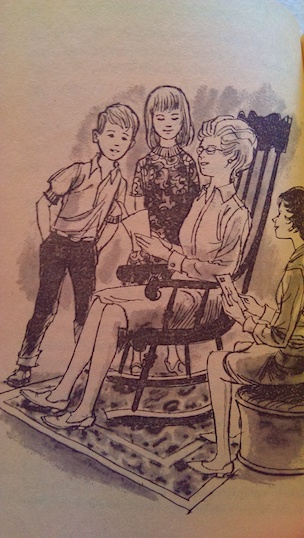
One day, Jack, Amy, and Sally’s mother receives some surprising mail for her deceased father.  The children never met their grandfather, who died before they were born, but the letters concern their grandfather’s Uncle Will.  Uncle Will is an 88-year-old man, and one of the letters is from Miss Dibble from the Welfare Department in Port Oglethorpe, Georgia, the seaside town where Uncle Will is living.  Miss Dibble is concerned that Uncle Will is no longer in his right mind and not capable of taking care of himself, and she is hoping that his family will persuade him to go live in a retirement home. 

The children’s mother says that Uncle Will was an adventurer and a wild character even in his younger years, always playing games and doing eccentric things, so the situation may not be as bad as Miss Dibble thinks it is.  The mother has never met Uncle Will, either, because her grandmother disapproved of him and discouraged him from hanging around the rest of the family years ago.  She knows that her father always thought of him as being a fun uncle and that he used to own some land in North Georgia, where he found a priceless diamond.

The second letter comes from Uncle Will himself.  It contains a strange rhyme and a letter to his deceased nephew, saying that he sold his land and that the money from that sale and his diamond will go to him upon his death.  Uncle Will says that Miss Dibble is pressuring him to turn over his money to the state and to go live in the old folks’ home.  He’s been resisting her efforts, but he admits that he has gotten absent-minded and has forgotten where he hid his money and diamond.  He knows that the rhyme he wrote down is a clue that he made to remind himself of the hiding place, but now he’s confused, and he’s hoping that his nephew can help him figure it out because it’s based on a game they used to play years ago.  Because it’s been so long since he last spoke to the family, he has no idea that his nephew has died.  Uncle Will also says that he is currently living in an old pirate’s inn near Port Oglethorpe that has its own secret passage where pirates used to shanghai sailors.

The children think that Uncle Will and his pirate’s inn sound exciting, and they’d like to go meet him.  Their mother says that she’ll have to talk to their father about it, but she thinks that it might be a good idea for them to go and check up on Uncle Will and talk to Miss Dibble.  She makes up her mind when Miss Dibble sends an urgent telegram in which she says that Uncle Will is under the delusion that someone is now hiding in his house and trying to kill him for his money. The mother and the children decide to go see Uncle Will, although the father of the family can’t go because he has a business trip.

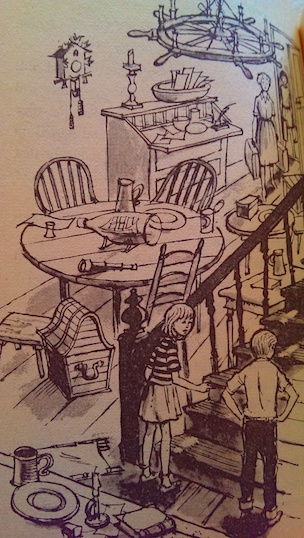
Of course, Uncle Will isn’t delusional, and there is someone after his hidden money. The old inn where Uncle Will lives is called The Bucket of Blood. When the children and their mother arrive, Uncle Will pretends to be an old pirate parrot, calling out “Pieces of eight! Pieces of eight!” (Yes, he’s definitely an eccentric, and it’s a little more understandable why Miss Dibble thinks he might not have all of his faculties.) They introduce themselves to Uncle Will, and Uncle Will is sorry to hear that his nephew is dead, but he is pleased to meet his nephew’s daughter and her children. The children tell him that they want to help him to solve the rhyme and find his money.

The inn is full of fascinating things, although it’s lacking in modern conveniences. The mother asks Uncle Will if they can stay there, saying that they’ve brought sleeping bags with them. Uncle Will tells them that they can use the bedrooms upstairs but warns them that he’s worried that someone might be hiding somewhere upstairs (as Miss Dibble had said earlier). Uncle Will rarely goes upstairs these days because he finds it difficult to climb up there. However, the children realize that Uncle Will is not deluded when they notice footprints in the dust on the stairs, meaning that someone has been there recently. However, the footprints seem to be only going up, not down. When the search upstairs, they don’t find anyone. Where the footprints left by a ghost? Was someone really hiding in the inn, and if so, how did they leave?

There is a live action made-for-tv Disney movie based on this book. You can see the entire movie online at Internet Archive. The movie is different from the book in a number of ways. In the movie, there are three children, but it’s two boys and a girl (a brother and sister and the brother’s friend) instead of two girls and a boy (all siblings), and none of them are related to the old Irish sea captain living in the old inn. (Note: The child characters in the movie, Scott, Tippy, and Catfish, also appeared in another made-for-tv Disney movie called The Strange Monster of Strawberry Cove, which was also based on a book for children, The Mad Scientists’ Club, but that book was written by a different author, and none of those children actually appeared in either this book or that one.) The old captain in the movie has recently inherited the inn from his brother. The location was moved to Louisiana instead of Georgia, and the treasure they’re looking for was hidden by the pirate Jean Lafitte. There are rhyming clues to the treasure’s location, but they’re not the same as the rhymes in the book. The money and the diamond are also hidden in separate locations in the book. In fact, although the bulk of the money is in one place, some of it is hidden in other places.

In the book, there are also extra characters, a man named Miles who is staying with Uncle Will while he’s working on writing a book and a young runaway nicknamed Hop who is afraid that he will be sent to another foster home like the one he ran away from if Miss Dibble catches him. At first, I suspected one of these characters of being the villain of the story, trying to steal Uncle Will’s money. However, the real villain is someone we don’t really know until the end, although he has connections to other people in the story. This is different from the movie, where the villain is a suspect we meet and see often before his guilt is established. Because of this, I think that the movie was playing more fair with the readers about the mystery.

Near the beginning of this book, the characters reference The Joyous Season by Patrick Dennis (also the author of Auntie Mame), which was published only a few years before this book was. Sally thought that the book was hilarious, but Jack thought that it was boring because the boy in the story, who was his age, “didn’t have a thing to do every day but listen to grownups talking.” I think this is meant to be a sign that the children’s parents are pretty modern and progressive, letting their children read a book about divorce and mixed-up family life in the 1960s. At one point, the mother tells Jack not to use euphemistic swear words like “Cripes!” just because characters in books to it. It gets on the mother’s nerves because she thinks that “They sound even worse than the words they’re being used to avoid.” She actually tells Jack, “When you’re old enough to swear by any words you like, I hope you’ll manage without euphemisms.” I mentioned in my page of 1960s children’s books that the 1960s were a turning point both in society and children’s literature, and this is an example of people’s changing attitudes. Sally, the oldest of the children, is allowed to wear lipstick, and Amy, who is twelve, is also allowed to wear it, although she thinks of it as being too much trouble to bother most of the time. (I can relate. I still sometimes throw out old make-up that I just plain forgot that I had because I’m too busy and preoccupied most of the time to think about it.)

Basil in the Wild West

BasilWestBasil in the Wild West by Eve Titus, 1990.

This book picks up right after the previous book in the Basil of Baker Street Series, Basil in Mexico.

After leaving Mexico, Basil and his best friend Dr. Dawson journey north into the western territories of the United States.  There, some friends of their ask them to investigate a smuggling operation.  Mice have been illegally bringing Mexican antiquities across the border.

Basil realizes that the smugglers have been smuggling the antiquities in the open, pretending that they are ordinary replicas, the kind that tourists often buy.  Because the border guards aren’t experts in antiquities, they haven’t been able to tell the difference between harmless souvenir replicas and the real thing.

When they catch one of these smugglers, they learn that the mastermind behind the scheme is a mouse called J.J. in a town called Moriarty in New Mexico (the name of the town irritates Basil).  They go to the town with the help of some friendly horses and confront J.J..  At first, they think it won’t be too difficult because, although J.J.’s house is well-guarded, he is confined to a wheel chair because of an accident.  However, the wheel chair is an act, and J.J. is no ordinary mouse.

BasilWestPic2Although J.J. escapes, Basil and Dr. Dawson decide that the smuggling ring has been defeated and it’s alright to continue their sight-seeing.  However, their adventures are not over!
Basil and Dawson want to see the Grand Canyon, but it turns out that the hotel where they are staying is being terrorized by a weird, glowing Thing.  Nobody knows what it is, but guests think it could be some kind of ghost or monster, and many of them are too afraid to stay.  The owners of the hotel ask Basil to discover what the Thing is and stop whoever may be behind it before their hotel is ruined!

This book is really two stories in one, and neither has any direct bearing on the other.  In that way, it’s kind of disjointed.

The book is currently available online through Internet Archive.

Cousins in the Castle

cousinscastleCousins in the Castle by Barbara Brooks Wallace, 1996.
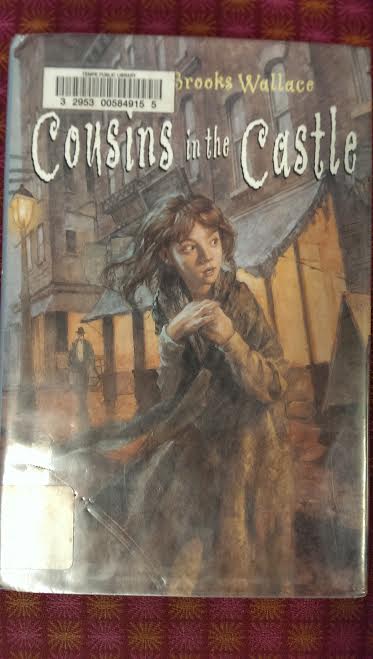
Young Amelia Fairwick is living a happy life in London with her father and her father’s fiancée, Felicia, when her father leaves on a business trip and word reaches her that he has been killed in a hotel fire. Now, the poor orphaned girl must go live with her deceased mother’s cousins in New York. Amelia leaves behind everything that is familiar to her when she accompanies her stern and gloomy Cousin Charlotte on the ship to New York.

On the ship, she makes only one friend, a young actress and singer named Primrose Lagoon, whom Cousin Charlotte forbids her to see. Although the future looks gloomy for Amelia, there are far stranger and more sinister events in store for her. As soon as they reach New York, Cousin Charlotte abandons Amelia on the docks. A kind woman named Nanny Dobbins and her son offer help her, only to steal her luggage and make her a prisoner in a small cellar in a bad part of town.

When her jailer, the drunken Mrs. Shrike, falls asleep, leaving the door open, Amelia escapes and attempts to find Primrose, her only friend in the city. Throughout Amelia’s adventures, she doesn’t know who to trust, and every step she takes seems to bring her closer to the mysterious Cousin Basil, who is supposed to be her guardian, and his castle-like home.

The time period for this story is never exactly defined, but it appears to take place during the 1800s because of the gaslights in use.  Like many of Wallace’s books, things and people are not what they seem, but in spite of the villain’s sinister intentions, it all ends happily.

Ghosts in the Gallery

ghostsgalleryGhosts in the Gallery by Barbara Brooks Wallace, 2000.

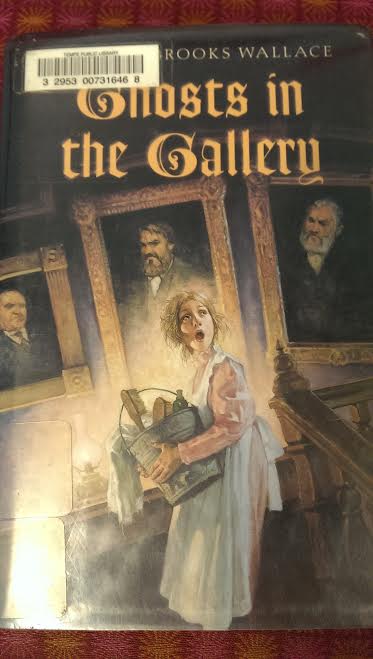
Eleven-year-old Jenny was raised in China by her mother and stepfather, who ran a dance studio. She has no memory of her real father, who died when she was a baby. When her stepfather dies and her mother becomes deathly ill, her mother writes a letter to her real father’s father, a grandfather that Jenny never even knew existed before. In the letter, her mother explains that she is dying and that she will be sending Jenny to live with her grandfather. Then, Jenny starts the long journey from China to the East coast of the United States alone.

Leaving her dying mother to head to a strange country to live with her previously unknown relations is frightening enough, but there is still worse to come. When Jenny arrives at her wealthy grandfather’s home, no one is expecting her or knows who she is. Her uncle, Winston Graymark, insists that her mother’s letter never arrived. Worse still, he believes that Jenny is an imposter, and that her mother merely made up the story about his long-lost brother being her father.

At first, he angrily threatens to send Jenny back to China, but Madame Dupray, a servant who cares for Jenny’s ill grandfather, suggests that she be taken on as a household servant. Jenny is given a dreary little room in the cellar and embarks on the drudgery of household chores. Could the Graymarks really be her relatives? If so, what happened to the letter that Jenny’s mother sent? Something sinister is happening in Graymark House, and Jenny will have to face suspicious servants and attempted murder before she finds the truth.

The “ghosts” in the title are the portraits of Jenny’s ancestors, which hang in the gallery. They appear grim and frightening at first, but when Jenny begins to recognize them as her relatives, they no longer frighten her.  Like many of Wallace’s books, this book contains sinister characters with hidden motives, but ends happily.  The story takes place at some point during the Victorian era.

Peppermints in the Parlor

peppermintsparlorPeppermints in the Parlor by Barbara Brooks Wallace, 1980.

Newly orphaned Emily Luccock journeys to the home of her Aunt and Uncle Twice in San Francisco. She has not seen her aunt and uncle in years, but they are the only family she has now, and she hopes that she will soon feel at home in their lovely mansion, Sugar Hill Hall.

Upon arriving in San Francisco, however, she is met by her Aunt Twice, who seems to be a pale shadow of the woman she once was. Sugar Hill Hall is now owned by the sinister Mrs. Meeching, and Aunt Twice is forced to work as a cook and housekeeper. Aunt Twice seems very frightened of something, but she refuses to say exactly what she fears, and Uncle Twice is nowhere to be found.

Aunt Twice tells Emily that her wealthy parents lost all their money before they died, and she is now poor, too. Emily is quickly put to work as a housemaid alongside Tilly, another orphan girl. Her only real friend is Kipper, a fishmonger’s son who is paid to do chores around the mansion sometimes. The house is being run as a home for elderly people, but the elderly people are treated badly, fed rotten food, and punished severely for even so much as taking a single peppermint from the bowl in the parlor. Emily tries to do little things to make the old people happier, but all the time, she is right at the center of all the sinister events surrounding Sugar Hill Hall.

The book is available online through Internet Archive.