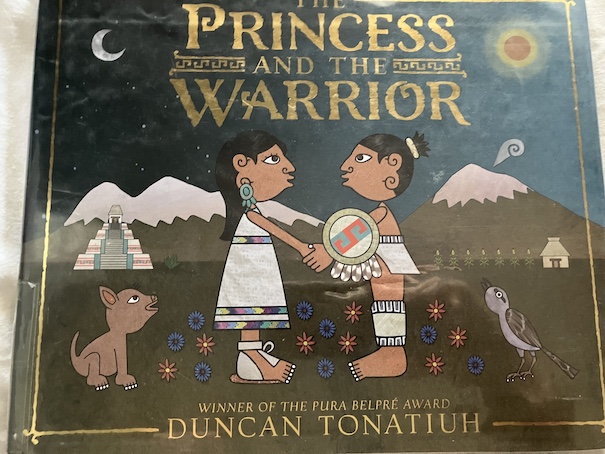
The Princess and the Warrior by Duncan Tonatiuh, 2016.
This story is a folktale about the origins of a pair of volcanoes near modern Mexico City.
The Aztec emperor had a beautiful daughter, Princess Izta, and there were many men who wanted to marry her. They gave her many wonderful gifts, but Princess Izta wasn’t impressed by any of them.
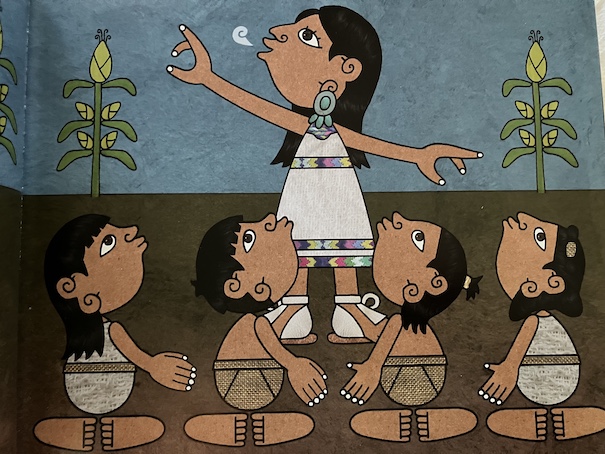
The man she loved was a warrior called Popoca. Unlike her other suitors, he really loved her for the person she was. The emperor disapproved of Princess Izta marrying a warrior who wasn’t from a wealthy, influential, or royal family, but he also knew that Popoca was brave and a good warrior. Their kingdom was at war with a neighboring kingdom, led by Jaguar Claw, so the emperor promised Popoca that, if he could defeat Jaguar Claw, he would allow him to marry Princss Izta.
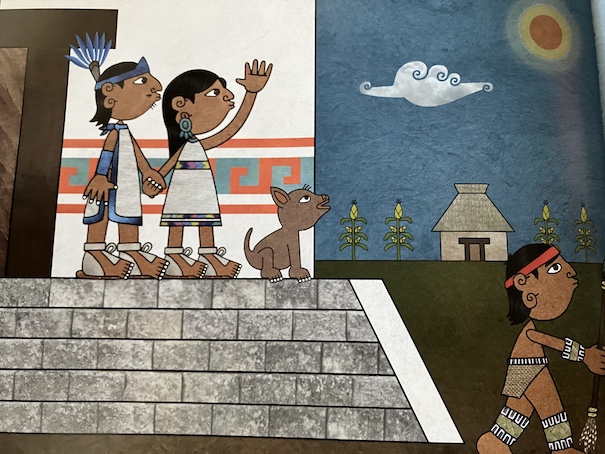
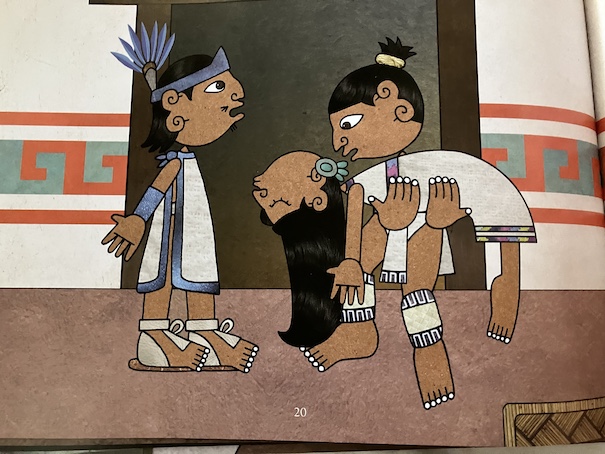
There were hard battles against Jaguar Claw, but Jaguar Claw gradually realized that he would lose the war. As a final act of revenge before defeat, he sent a messenger to tell Princess Izta that Popoca was dead. Worse still, the messenger gave Princess Izta a potion that would supposedly help her with her shock but which put her into a deep sleep.
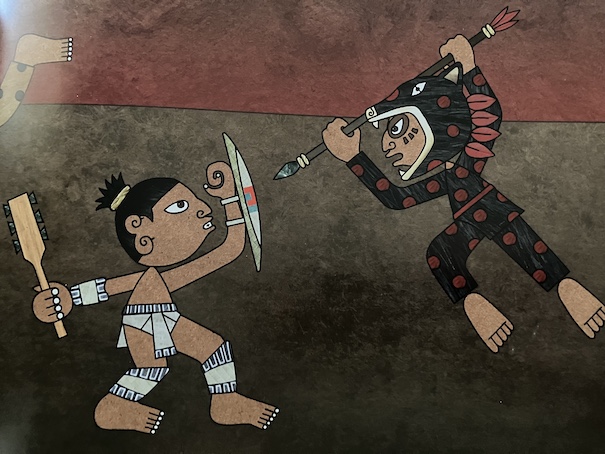
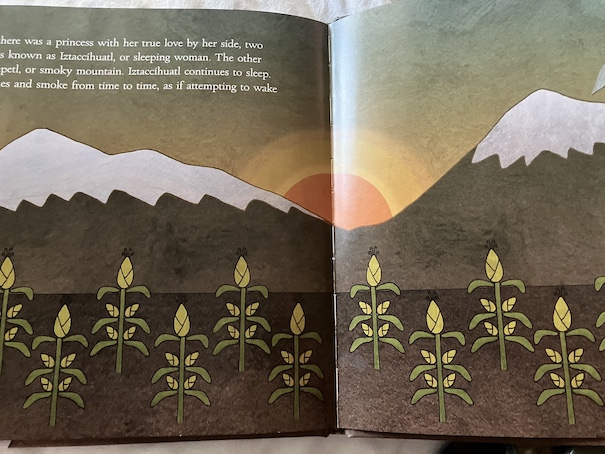
When Popoca finally returned victorious, he was shocked and grieved to find Princess Itza in a deep sleep, from which nobody seemed able to wake her. He sat by her side, waiting for her to wake up. The story is based around the two volcanoes, one which looks like a sleeping woman and is dormant, and the other which looks like it’s sitting upright and shows signs of activity.
There’s an author’s note in the back of the book about the origins of the legend and how this version of it differs from other versions and about the volcanoes that inspired the story, Iztaccihuatl and Popocatepetl. There’s also a glossary of Nahuatl words used in the story.
My Reaction
I hadn’t heard this story before, but I enjoy folktales from around the world! The art style is fascinating, incorporating aspects of traditional Aztec art, such as showing things in a very two-dimensional style and human beings in profile. Even though there is fighting depicted in the story, it isn’t too graphic for children
When I was a kid, I would never read author’s notes, but I appreciate them as an adult, especially in cases like this, where they provide more information about the background of legends. This picture book is meant for children, but it can also be fascinating for adults, especially with the addition of the background information.
 Jestress's Forgotten Books and Stories