
Sarah, Plain and Tall by Patricia MacLachlan, 1985.
This is a popular book to read in schools in the United States, the first in a series. It’s a Newbery Award winner, and it shows aspects of farm life during the early 20th century and the concept of mail-order brides, a practice from American frontier days where men living in the West or Midwest, where there were not many available women in the population, would write to agencies or advertise for a bride from the East. The process for arranging these marriages could vary, but it typically started with written correspondence before the man and woman would meet in person. In this book, the man looking for a bride, Jacob Witting, is a widower with two children who has a farm on the Great Plains. The story is narrated by his older child, Anna. The book isn’t very long, and it’s a pretty quick read, but it’s filled with colorful imagery and emotion.
Anna has had to help take care of her little brother, Caleb, since he was born. Their mother died shortly after giving birth to him, and Caleb frequently asks Anna questions about what their mother was like. Anna’s memories of their mother are fading because she was still very young when she died, but she really misses her.
Then, Jacob tells the children that he has advertised for a bride from the East, the way a neighbor of theirs did. The children like their neighbor’s new wife and wouldn’t mind having a mother like her. The father has received a reply to his advertisement from a woman in Maine, Sarah Wheaton. Sarah has never been married, and now that her brother is getting married, she feels the need for a change in her life. She loves living by the sea in Maine, but she is willing to move to start a new life. She says that she would like to know more about Jacob and his children.
Jacob and the children write letters to Sarah, getting to know her better. They come to like each other, but the children worry about whether Sarah will change her mind about coming to see them or whether she’ll like them or their farm when or if she comes. When Sarah tells them that she’s coming during the spring, she says that they will know her because she will be wearing a yellow bonnet and describes herself as being plain and tall (the title of the book).
Sarah will stay with the family for a time while they decide if they can be a family together and if she will marry Jacob that summer. There are adjustments that they will all have to make. Life on the prairie is very different from what Sarah is used to, and the children still worry that she won’t want to stay. Sarah brings seashells from Maine to show them, and they teach her about the local wildflowers. One of my favorite scenes was where Sarah cuts Caleb’s hair, and they put the hair clippings out for birds to use in their nests. Caleb was particularly concerned about whether Sarah would sing like their mother used to, and Sarah does.
Through it all, the children can tell that Sarah really misses the sea. Sarah does say that the land around the farm kind of rolls, a little like the sea, and they play in a haystack, like it was a dune by the sea. When they visit their neighbors, Sarah talks with Maggie, the mail-order bride who came from Tennessee. Maggie understands Sarah feels, missing her home in Maine, and it upsets Anna to hear them talk about missing their old homes. However, Sarah says that things were changing at home, and Maggie comments that, “There are always things to miss, no matter where you are.” What the women realize is that, although they miss their old homes, they have grown to love the new people in their lives and would miss them if they tried to go back to where they came from.
At one point, Sarah goes to town alone, and the children worry that she won’t come back, but she does. She just went to town to buy colored pencils in her favorite sea colors. Sarah does stay and marry Jacob, setting up the rest of the series.
The book is available to borrow and read for free on Internet Archive (multiple copies).
My Reaction

There is a movie version of this book, which follows the story pretty well. The book wasn’t specific about the time period, although it seems to take place during the early 1900s. The movie and its sequels are set during the 1910s, which makes sense for the rest of the series. The book also didn’t say exactly where the farm was, but the movie clarifies that it’s in Kansas. The movie also emphasizes how much the whole family, particularly Jacob and Anna, misses the mother who died. In the movie, Jacob forbids the children to use any of his dead wife’s things and doesn’t want to talk about her. However, when Sarah realizes that trying to avoid his wife’s memory is hurting Anna, she brings out some of the dead wife’s belongs to use, helping the family to make peace with the past and prepare for the future.
In the movie, Jacob’s pain over his wife’s death is partly about guilt as well as grief. The book doesn’t really talk about why Anna’s mother died after childbirth, but in the movie, Jacob has a painful discussion with Sarah about how he blames himself for his wife’s death because the doctor had warned them that they shouldn’t have any more children after Anna. Apparently, Anna’s birth had been difficult and caused complications because his wife was so young, and the doctor had said that having another child would be dangerous. However, after a few years went by, they decided to try for a son to help run the farm, thinking that enough time had gone by for it to be safe. When his wife died giving birth to Caleb, Jacob felt terrible, thinking that he should have taken the doctor’s warning more seriously and not tried to have another child. Confessing all of this to Sarah helps Jacob to make his own peace with what happened. However, none of this discussion appears in the book.
In both the book and the movie, Jacob also has to adjust to Sarah’s different personality. Sarah is more stubborn and independent than his first wife, with her own way of doing things. Living with her is different from living the mother of his children. However, Jacob comes to love Sarah for the person that she is.
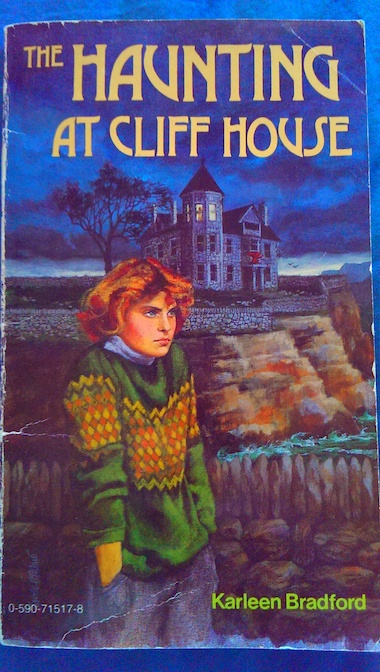 The Haunting at Cliff House by Karleen Bradford, 1985.
 Jestress's Forgotten Books and Stories