 Mary Geddy’s Day: A Colonial Girl in Williamsburg by Kate Waters, 1999.
This book is part of a series of historical picture books about Colonial America.
Mary Geddy was a real girl living in Williamsburg in 1776. In this book, she is reenacted by Emily Smith, a young interpreter at the Colonial Williamsburg living history museum. The story follows her through a single day in her life as it would have been typically experienced by girls around the beginning of the American Revolution (lessons, chores, shopping, and visiting with her friend) up until the moment when the vote for independence at the Fifth Virginia Convention was announced.
Mary Geddy’s father was a silversmith, which put them in the middle class for the times. They had a comfortable house with a shop next door where Mr. Geddy sold his silver work. The Geddy family also had slaves to take care of household chores.
At the beginning of the story, Mary knows that the Fifth Virginia Convention is voting on the subject of independence from Great Britain. Mary is concerned about the prospect of war, and she knows that if the vote is for independence, she will probably lose her best friend, Anne. Anne’s family are loyalists, and her family plans to return to England if the colonies decide to break away.
All through the day, people are speculating and worrying about what is going to happen as they go through the typical routines of their day. Mary explains the clothing that colonial girls would wear as she gets dressed in the morning. Then, her mother sends her out to buy eggs at the market. Although she can see Anne there and hear some of the talk about what’s happening, Mary is kept at home for most of the rest of the day, practicing her sewing, learning to bake a pie with her mother, helping in the garden, and having her music lessons. She is learning to play the spinet. She envies her brothers, who are allowed to help their father in his shop and therefore able to hear more of the talk than she is.
I particularly liked how they showed the coins that Mary uses when she goes shopping. Even though Mary’s family lives in an English colony, she’s using pieces of eight, which is Spanish money. The book doesn’t explain what currency she’s using or why, but that’s why the coins are those little triangular shapes, like little pieces of pie. Let me explain.
First, the American colonies had a currency problem. They actually had a shortage of English currency because England didn’t want wealth to leave the English economy and go out to the colonies. One of the measures they took to prevent wealth from leaving England was to make it illegal to export higher-value pieces of currency to the colonies. People in the colonies needed something to replace the pieces of currency that they didn’t have or had in too short supply, so they resorted to other methods of exchange such as barter, IOUs recorded in ledgers, and currency from other countries. They had some standard units of exchange for converting different currencies into British money because that was the way people in British colonies thought about money. One of the most popular coins in use was the old Spanish dollar or piece of eight, which was worth eight reales (unit of Spanish currency). However, sometimes, people wanted to use a smaller piece of currency for small purchases and transactions (like buying eggs), so they physically cut one coin into eight pie-shaped pieces (hence, “pieces of eight”), each worth only one real. They had to do the coin cutting very carefully because the value of this type of money was based on the amount of silver in the coins themselves, and if they cut a coin unevenly, it would impact the value of the sections. Each section of a piece of eight was called a “bit“, and two bits would be worth one-quarter of the value of the original coin, which is why some people in the US refer to a US quarter as “two bits.” That’s what Mary is holding in her hand in the picture. For more information, see the YouTube video from Townsends about The History of Money in America.
When they discover that the Convention voted for independence, there is celebrating in the streets, and Mary goes with her parents and brothers to see everything. Her little sister is afraid of the noise and stays at home with the slaves. Everyone is excited, but Mary is worried because she knows that her friend will leave and nothing will be the same again.
Throughout the book, you can see that the slaves are always a part of the family’s activities. They do chores together, and when the family is not doing housework, the slaves are still working in the background. Having slaves didn’t mean that the family never had to do any chores themselves, but they had to do less of them, giving them more time for other things, like music lessons and visiting with friends. When the celebrating starts, the boy slave, Christopher, who is about the age of the Geddy children, wants to go and see what is happening himself, but he has to stay and help look after the younger girl in the family. Although the slaves live as part of the household and seem to be on friendly terms with the Geddys (Mary speaks of them fondly, wishing that Christopher could join in the celebration and is happy that Grace, the slave who mainly works in the kitchen as the cook, seems proud of her for learning to make a pie), they have no say in making decisions and are expected to follow the orders they are given, even when they don’t want to or larger events are taking place.
In the back, there is more historical information about the period and the Geddy family. There are also instructions for making a lavender sachet like the kind Mary and her friend Anne make and a recipe for apple pie that was used in Colonial Williamsburg, like the one that Mary learns to make in the story.
The book is currently available online through Internet Archive.

 This is part of the Felicity, An American Girl series.
 At Miss Manderly’s the girls start having dancing lessons, and Felicity wishes for a new gown, like the one on the elegant doll at the milliner’s shop. Since Felicity is usually not very interested in clothes, her mother decides to grant her wish.

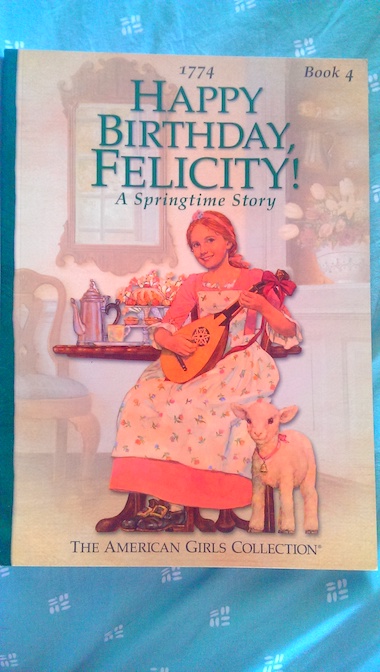
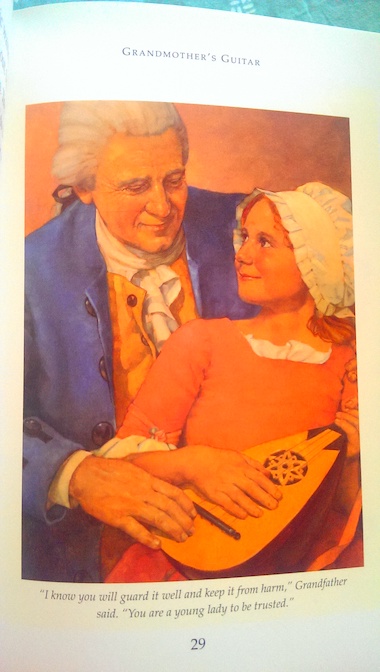 This is part of the
 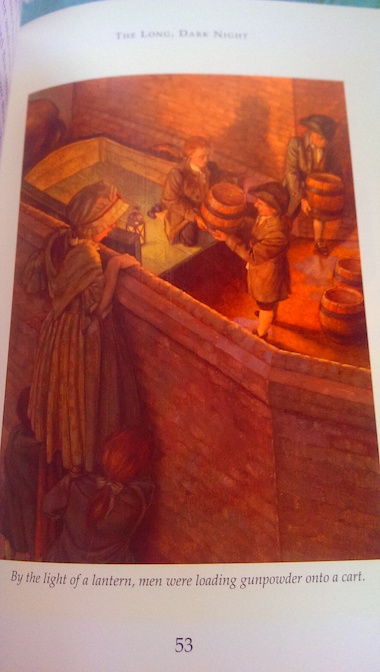 However, on the way home, something frightening happens. Felicity sees Elizabeth’s father, a known Loyalist, talking to a British soldier. She ducks into a bush so they won’t see her, and she hears them talking about the governor removing the gunpowder from the Williamsburg arsenal so the colonists can’t use it in the rebellion that has been threatening to come for some time.
 This is the second book in the
 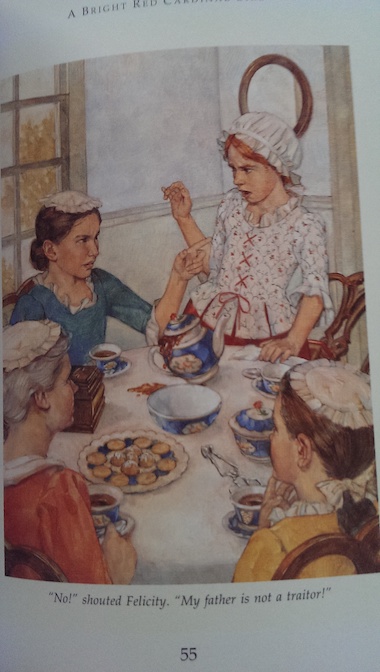 Then, Felicity’s father declares that because of the tax on tea, he will no longer carry it in his shop. It leaves Felicity feeling conflicted about Miss Manderly’s lessons, which include the proper way to serve tea. She has started enjoying the lessons and doesn’t want to lose Elizabeth’s friendship, but she wants to support her father, too. Then, Annabelle criticizes Felicity for what her father said at one of the lessons, prompting Felicity to storm out angrily. She is doubly angry and hurt that Elizabeth didn’t try to defend her, making her doubt Elizabeth’s friendship.


 This is the first book in the
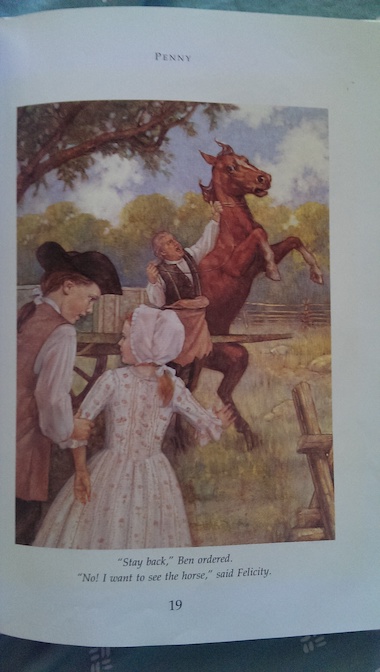
  Every morning for about a month, Felicity sneaks out of the house early, dressed in a pair of breeches that she borrowed from Ben without his permission. She goes to visit Penny and gradually gains her trust. When Penny finally allows her to ride her, Felicity thinks that she has won ownership of her, but Jiggy Nye accuses her of theft and takes back the horse. He denies that he ever promised to give her to anyone who could ride her, although Felicity’s younger siblings agree that they heard him say so.


 Jestress's Forgotten Books and Stories