The Persian Cinderella by Shirley Climo, art by Robert Florczak, 1999.
This is a Persian version of the classic Cinderella story.
There is a lovely girl named Settareh, a name that means “star” because she has a star-shaped birthmark. Her mother died shortly after she was born, so she has grown up with a stepmother, two stepsisters and some aunts and cousins. Her father leaves her to the women of the family to raise, but she is often ignored and neglected by them. Her stepsisters are jealous that she is pretty and are mean to her.
Then, one day, her father visits the women and gives them each some money to buy cloth for new clothes because the princes is inviting everyone to his palace to celebrate the New Year. However, in the market, Settareh spends her money on other things and has none left to buy cloth. She spends part of her money for something to eat because she’s hungry, and then, she gives some to a poor beggar woman as an act of kindness. Finally, she finds herself compelled to buy a strange blue jug. Her stepsisters tell her that she was a fool for buying the jug, which has an obvious crack in it and for wasting the money that she was supposed to spend on cloth, but Settareh still loves the little blue jug.
Then, Settareh discovers that the jug has a fairy inside and has the ability to grant wishes! Although her relatives think that Settareh won’t be able to attend the festival at the palace because she doesn’t have anything appropriate to wear, Settareh secretly asks the jug for a special gown and comes to the festival anyway. People at the festival don’t recognize her and think that she’s a visiting princess, and she catches the eye of the prince. However, she leaves the party quickly so she can return home before her family, accidentally losing a diamond anklet as she runs away. One of the prince’s servants finds it and gives it to the prince, who begins to search for the girl who wore it.
When the prince finds Settareh, he proposes to her, but Settareh’s jealous stepsisters scheme to get rid of her and take the magic jug for themselves! Settareh will need the prince’s help to escape!
There is an Author’s Note in the back, explaining more about this version of the story, which comes from The Arabian Nights, and some background information to the story, including a little about the New Year festival of No Ruz in the story, which is still celebrated in Iran. There is also an Artist’s Note about the style of the artwork.
The book is available to borrow and read for free online through Internet Archive.
My Reaction and Spoilers
I enjoyed this Persian version of the Cinderella story! I like Shirley Climo’s picture book series showing different versions of Cinderella stories from around the world, including The Egyptian Cinderella and The Korean Cinderella. One of the parts of this story I found the most interesting is that the story doesn’t end when the prince finds the girl who attended his party, as so many other versions of the story do. There is one last obstacle for the couple to overcome, when Settareh’s mean stepsisters use the magic of the jug to turn Settareh into a bird, until she flies to the prince, and he changes her back. I don’t now whether adding one more obstacle to the story enhances it that much, but I appreciated it as an interesting twist. It also resolves the matter of the jug because, while it grants the stepsisters’ evil wish, their wish also destroys the jug, so the wishing is over.
The artwork in the book is beautiful. The artist tried to make the art style as authentically Persian as possible, using models for the characters who were ethnically Persian (Iranian). The artist used a combination of water-based markers, colored pencils, and ink, and pictures are lively and full of color.
Two brothers and two sisters spend most of their time at boarding schools. The boys go to a school for boys, and the girls go to schools for girls, so the only times when they are together are when they are home for school holidays or visiting at the house of a kind, single lady who lives near to their schools. Although the children’s parents are grateful for their single friend for hosting the children as guests from time to time, the children find it difficult to play at her house because everything is so neat and proper, and they don’t feel quite at home. Then, during one school break, one of the sisters, the one who makes it home first, comes down with measles. With their sister sick, the other siblings can’t go home, which is a great disappointment, and their parents have to make other arrangements for them. When the children tell their parents that they don’t want to visit the single lady for the entire school holiday, the parents arrange for the boys, Gerald and James (called Jerry and Jimmy), to board at their sister Kathleen’s school. It will be fine for them to be there because Kathleen (called Cathy) is the only student remaining at the school during the holiday, and there will only be one teacher there to supervise them, the school’s French teacher.
This arrangement suits them better than going to the single lady’s house, although they think that they ought to find something special to do during the school holiday. Kathleen suggests that they write a book, but the boys aren’t thrilled by the idea. They would rather do something outdoors, like playing bandits. However, they are a little concerned about the French teacher’s supervision. Fortunately, Gerald is good at charming grownups, when he wants to. Through a combination of flattery and small, thoughtful favors to the teacher, he gets on her good side, and he manages to convince her that he and his siblings would like to have some time to themselves to play and explore outside, maybe in the woods. The French teacher understands that what they really want is some freedom from supervision, but she agrees to give them some time to themselves.
The children don’t actually know if there are any woods in the area, but they decide to do some exploring and see if they can find an adventure of some kind. They end up getting lost during their exploring, but they find it exciting. When they sit down to rest, they find a cave and decide to explore it. The cave turns out to be a tunnel that leads them to a beautiful garden with a lake with a decorative waterfall and swans. The children imagine that it’s the garden of a magical castle. Going a little further, they find a thimble with a crown on it and a thread tied to it. It looks like the kind of thimble that might belong to a princess.
Meeting the “Princess”
When they follow the thread, they find a young girl in a beautiful dress who looks like she might be a princess. She looks like she’s asleep, so she looks like an enchanted princess or Sleeping Beauty. Jimmy doesn’t really believe that she’s a princess, but the others aren’t so sure, and anyway, it makes a fun game to pretend that she is. Since Jerry is the eldest of the children, Cathy thinks that Jerry should kiss her to wake her up. Jerry refuses, so Cathy says Jimmy should do it. Although Jimmy is sure that she’s really just an ordinary girl dressed like a princess, he says he’ll kiss her to prove he’s braver than Jerry and that he should be the leader for the rest of the day.
When Jimmy kisses the girl’s cheek, she opens her eyes and says that she has been asleep for 100 years. She insists that she’s a real princess and asks them how they got past the dragons. Jimmy still doubts that, even though she shows them a mark where she pricked herself on a spindle, just like in the Sleeping Beauty story. She invites them to come back to the castle and see her beautiful things. The children say that they are hungry, so they go with her go get something to eat.
When they get to the “castle”, the princess brings them bread and cheese to eat with some water. This seem depressingly ordinary, and the princess apologizes, saying that was all she could find. However, she claims that the food in the castle is magical, so it can be whatever they want. The children imagine that it’s roast chicken and roast beef, but all they get is bread and cheese. Cathy doesn’t want to admit at first that it’s just bread and cheese because (like with the Emperor’s New Clothes), there is an implication that there is something wrong with her if the magic doesn’t work for her. Jimmy isn’t discouraged by that, so he asks the princess if it’s a game, but the princess denies it, insisting that the food is magical.
Then, the princess takes the children to a hidden door behind a tapestry. The room inside has paneled walls and blue ceiling with stars painted on it. The princess calls it her “treasure chamber”, but the room is completely empty. The princess acts surprised when the children say that they can’t see any treasure, and they refuse to believe it’s because they’re magical or invisible. The princess has the children close their eyes while she says some magic words. When they open their eyes, suddenly, there are shelves with jeweled objects on them. The children have no idea how the princess accomplished this trick, so they start to believe that maybe she can do magic.
The Invisibility Ring
The princess suggests that they all put on some of the jewels and be princes and princesses, too. It’s amusing for a while, but the boys start getting tired of dressing up, and they’re still a little skeptical about who the princess is. They suggest that they go play outside, but the princess insists that she’s actually grown up and doesn’t play children’s games, and she has the others help her put all the treasures back in their proper places. She tells the children that various pieces of jewelry have magical property. Jimmy asks her if that’s really true or if she’s kidding, but the princess insists that it’s true. Jimmy asks her to demonstrate how the magic works. The princess says that she will try on the magic ring that makes her invisible, but only if everyone closes their eyes and counts first.
When the children open their eyes, all of the shelves of jewels are gone and so is the princess. Jimmy says that it’s obvious that the princess just went out the door of the room. When they close their eyes and count again, Jimmy keeps his eyes open and sees the princess hiding behind a secret panel. When he tells the others, the princess says that he cheated. The weird thing is, even though they hear the princess say that he cheated, they still don’t see her. They tell her to stop hiding and come out, but she says that she already has. She says that if they want to pretend like they can’t see her, that’s fine, but the children seriously can’t see her. When the princess realizes that they’re serious that she’s actually invisible, the princess suddenly gets scared. She tries to shake the boys and get them to say that she’s not invisible, and Jerry catches hold of her, still unable to see her. She tells them that it’s time for them to go because she’s tired of playing with them.
Jerry makes the princess look in a mirror to prove that she’s invisible, and the princess gets very upset. Cathy sensibly tells her to just take the ring off, but the princess says it’s stuck. She admits that the whole thing, up to this point, was just a game of pretend. She says that the treasure shelves were hidden behind some paneling, and she just moved it with a hidden spring. She never expected that any of it was actually magical. The truth is that the girl’s aunt works at the house as a housekeeper and that her name is Mabel. She was just playing at being an enchanted princess because the rest of the household is away at the fair, and she happened to hear the other children coming through the hedge maze, so she roped them into her game.
Since one of the objects that Mabel claimed was magical was a buckle that would undo magical spells, Cathy suggests that she try the buckle. Mabel says that’s no good because she only made up that it was magical, but Cathy points out that she also made up the part about the ring being magical, and it turned out to be true, so she might as well try the buckle. Mabel would, but they accidentally locked the key inside the room and can’t get in now.
The children sit down to think about the situation. Since they can’t think what to do, the other children think maybe they should leave and go get their tea, but Mabel insists that they can’t just leave her invisible like this. Instead, she suggests that she go with them to tea and leave her her aunt a note. While they have tea, maybe they can think of something else to help Mabel. In her note, Mabel says that she’s been adopted by a lady in a motorcar and is going away to sea. The others say that’s lying, but Mabel says that it’s fancy instead of lying and that her aunt wouldn’t believe her if she said that she was invisible.
When they return to Kathleen’s school, they have tea and supper. They let Mabel have one of the three plates laid out for them, and Jerry and Cathy share one between them. Fortunately, the French teacher isn’t eating with them and doesn’t see an invisible person eating, but the children don’t know how they’re going to handle breakfast the next morning. They say that Mabel can stay the night with them, sharing Cathy’s bed and borrowing a nightgown. Mabel says that she can get some of her own clothes from the house tomorrow because no one will be able to see her and that she’s starting to see some possibilities for being invisible.
In the morning, the maid who comes to wake Kathleen sees Mabel’s discarded princess dress on the floor and asks Kathleen where it came from. Kathleen makes an excuse that it’s for playacting, which means that she and her brothers will have to figure out some kind of play to put on with it. Mabel thinks that acting sounds exciting, but Kathleen reminds her that she’s still invisible, so no one can see her perform anything.
The children feel bad about Mabel’s lies in the note to her aunt, and they insist that they should go and tell her the truth. Mabel doesn’t think this is a good idea because her aunt won’t believe her, but she reluctantly agrees. When they try to talk to her, the aunt doesn’t really want to listen to them, thinking that it’s just another one of Mabel’s pranks. She says that maybe Mabel was changed at birth and that her rich relatives have finally claimed her. They try to tell her that Mabel is with them, only invisible, and the aunt tells them not to lie to her. They ask about Mabel’s parents, and the aunt says that she’s an orphan. The children think that Mabel’s aunt is crazy because she doesn’t seem concerned about her and doesn’t want to hear anything they have to say, but Mabel says that she thought that her aunt might act that way because she spends so much time reading novels and can imagine anything.
In the meantime, Mabel has had some thoughts about what she can do. She says that she might be able to continue living in the house where her aunt works because the place is supposed to be haunted, so she can play ghost herself. However, the others think that she should stay with them. They just need a way to get some money to buy extra food for her.
Sine the fair is still going on, Mabel suggests that Jerry put on a magic show at the fair to get some money. The others say that Jerry doesn’t know any magic tricks, but Mable points out that it doesn’t matter when he has an invisible friend who can move things around, unseen, and make things disappear. Jerry dresses up as a conjurer from India (in a way that would be considered equal parts cheesy and offensive by modern standards because it involves black face), and he puts on the magic show with Mabel’s help. It’s incredibly successful, and toward the end of it, Mabel feels the ring coming loose. She takes it off and gives it to Jerry, who ends the act by vanishing himself.
Jerry’s and Eliza’s Invisibility
Now, Mabel is visible again, and it seems like they’ve solved their problem, but now, they have a new one. The ring is now stuck on Jerry’s finger, and he is the one who’s stuck being invisible. Although Mabel can now go home, she insists on staying with the other children and taking part in their next invisible adventure.
Jimmy says that, if he was invisible, he would turn burglar. The girls point out that would be unethical, so Jerry decides that he will be a detective. There are advantages to a detective being invisible. Then, Mabel remembers that the treasure room is still locked from the inside, and they have to do something about it. Jerry says that, as an invisible person, he can sneak in easily enough through a window. When he does this, he ends up foiling a robbery by actual burglars, although he also ends up letting them escape from the police because he knows that conditions in prisons are horrible and can’t bring himself to send anyone there.
After his adventure, the ring comes loose from his finger while he’s in bed, and the maid at the school, Eliza, finds it and decides to “borrow” it for an outing with her fiance. When her fiance can hear Eliza’s voice but not see her, he thinks that he’s taken some kind of strange turn or fit, possibly because he’s been in the sun too long. The children convince him to go home and lie down while they deal with Eliza. They take Eliza on a little adventure of her own because they’re beginning to see that the ring doesn’t come off someone’s finger until its purpose is fulfilled. Afterward, they manage to convince Eliza that it was all a strange dream that she had because she felt guilty about taking the ring without permission. The children also think that the ring’s power might be diminishing and could be completely spent because it seems like its effect has been lasting shorter and shorter amounts of time every time it’s used. However, this is really just the beginning of the ring’s magic, and it can do much more than they think it can.
The Living Dummies
At this point, they feel a little guilty that they haven’t spent much time with the French teacher, who is supposed to be looking after them, so the buy her some flowers. She is pleased with the gift, and they have a little party with Mabel as their guest. They find out that the French teacher has artistic abilities, although she rarely has time to draw these days because she’s so busy teaching. Mabel also tells them more about the man who owns the house where her aunt works. Although the house is grand, the man who owns it doesn’t really have enough money to support it and live there full time with a full staff because his uncle wrote him out of his will for falling in love with a girl he didn’t approve of. It’s sad because he also never married the girl because she was sent away to a convent, and although he did try to find her, he never did. Mabel, whose knowledge of convents comes from the scandalous gothic novels that she and her aunt read (much like the kind the main character reads in Jane Austen’s Northanger Abbey), speculates that the girl might be bricked up in a wall by now because that’s the kind of wicked thing that happens in books. The French teacher tells her that real convents aren’t like that and that the women who live there are good and take care of girls without parents, although they can also be strict, and the girls aren’t allowed to leave. She says it in a way that implies that she was one of those girls raised in a convent.
Since the children had claimed earlier that they were going to put on a show of some kind with the princess outfit, they decide to go ahead and perform for the French teacher and Eliza. To fill out the audience for their performance, they make a bunch of stuffed dummies, which the French teacher finds amusing. The children use the ring as a prop in their play, although none of them put it on, and Kathleen wishes that the dummies were alive so they could have better applause from the audience. To the children’s amazement and the French teacher’s and Eliza’s terror, the dummies (which the children think of as “Ugly-Wugglies”) do come to life and start clapping. In a panic, the children debate what to do. Jerry realizes that the ring is actually a wishing ring and is responding to the children’s wishes, so he wishes on the ring that the dummies were not alive, to undo Kathleen’s wish, but it doesn’t work.
To Jerry’s surprise, the dummies begin speaking to him, although their speech isn’t clear because they don’t really have proper mouths. They ask him for a recommendation to a good hotel or suitable lodgings. The dummies don’t seem to know what they are, and they are behaving like respectable, aristocratic people. Jerry tells them that he can show them to some lodgings, if they will wait for him a little. He makes some excuses to give himself time to reassure the French teacher and Eliza that the effect with the dummies was just a trick pulled by the children with string, and he recruits Mabel to help him find a place for the dummies. He does this in an insulting and condescending way, and Mabel tells him off for that, but she agrees to help him. They decide to hide the dummies somewhere on the grounds of the big house where Mabel and her aunt live, thinking that the magic will wear off eventually and that the dummies will turn into dummies again by morning. The dummies turn nasty when Jerry and Mabel try to shut them away, and they are helped by a strange man.
The strange man demands an explanation from the children about the angry people they’ve shut away, but the children don’t want to explain. The man says, if they won’t tell him what’s going on, he’ll simply have to let the people out and ask them, but the children are afraid of what the dummies will do if they’re released. The man assumes that the imprisoned people are other children and this is all some children’s game, so Jerry and Mabel decide that they have to tell him the truth, even though they know it all sounds crazy. They can tell that the man doesn’t really believe him. The man thinks maybe Jerry has a fever or something, and he says that he’ll see the children home. Jerry can tell that the man plans to open the door after the children are gone, and he warns him not to do that. He insists that the man wait until tomorrow to open that door and to wait for them to meet him to see it opened because, by then, they’re sure that the dummies will just be dummies again. The man reluctantly agrees.
When the children arrive the next day, they discover that the man didn’t wait for them to open the door, and he is now lying unconscious and injured, apparently attacked by the dummies. The dummies are gone except for the most respectable dummy, who seems concerned about the unfortunate man on the ground. Mabel runs for smelling salts to revive the unconscious man, and Jerry looks around to see where the other dummies are. They find that the other dummies have turned back into piles of old clothes, and only the one living dummy is left. He seems to be becoming far more real. The children revive the unconscious man, who turns out to be the new bailiff. The bailiff assumes that the strange visions he had were because he was injured accidentally. After the children are sure that he’s all right and send him on his way, they try to figure out what to do with the remaining living dummy.
The remaining dummy seems to have developed a life of his own and is quite a wealthy man, although the children aren’t sure that this will last because the ring’s magic never seems to last very long. Jimmy says that he wishes he was wealthy, and the other children are horrified to see him age quickly, turning into an elderly, wealthy man. Jimmy doesn’t seem to remember who they are, and he refuses to turn the ring over to them when they ask for it, trying to stop his wish. He acts like the dummy is an old acquaintance of his, and he just wants to go to the nearest railway station with his dummy acquaintance.
Jerry sends the girls home to make some excuses for his and Jimmy’s absence, and he follows the now-elderly and wealthy Jimmy on the train to London. There, he learns that Jimmy and the living dummy have somehow acquired business offices, staff, and backstories. Other people seem to have somehow known the two of them for years (a warping of reality that makes Jerry’s head swim because neither of them existed in their current state before) and say that they are business rivals. Jerry pumps a boy who works at one of the offices for information, claiming that he’s a detective and is trying to reunite the elderly Jimmy with grieving relatives. The boy’s advice is that it will be difficult to get through to elderly Jimmy but that he might use the living dummy’s rivalry with elderly Jimmy to arrange things. The living dummy (now known as U. W. Ugli) helps Jerry to get control of the ring, and he wishes himself and Jimmy back to the house where Mabel lives.
The Ring’s True Power
Jimmy is restored to his younger self, and the children debate about what to do with the ring. They can see that it has some dangers. Mabel says that she ought to put it back in the treasure room, where she found it. However, while they’re in the treasure room, they begin to wonder if any of the other pieces of jewelry are magical, since the ring became an invisibility ring after Mabel pretended it was. Mabel can’t remember exactly what she said any of the other pieces of jewelry did because, at the time, she was just playing pretend and making things up. Then, something occurs to Mabel. She realizes that the ring only became an invisibility ring because she said it was one, and it turned into a wishing ring when they started calling it that. She says that proves that the ring does whatever they tell it to do, changing its powers to match whatever they say. To prove the point, she declares that the ring will now make people tall, and when she puts it on her finger, she is suddenly unnaturally tall.
Mabel’s experiment did prove the point, but they now have to hide Mabel until the effects wear off. The children get a picnic from Mabel’s aunt and go to hide out in the woods overnight. However, Mabel complicates things when she turns the ring into a wishing ring, and then, she accidentally turns herself into a statue. The children have a nighttime adventure with some living statues, learning that all statues apparently have the ability to come to life at night. They can also swim, so they have a nice swim and a feast. The statue of Hermes tells the children that “‘The ring is the heart of the magic … Ask at the moonrise on the fourteenth day, and you shall know all.'”
Then, the children learn that Lord Yalding, the man who owns the big house, is planning to come, and that he is thinking of renting the house to a wealthy American. Mabel’s aunt is busy, getting the house ready for Lord Yalding and the American. However, it turns out that the children have already met Lord Yalding without realizing it, and with the ring and the treasures in the hidden treasure room, they have the power to secure his future and reunite him with his lost love … if only they can figure out how to manage the ring’s power without causing any more chaos.
The book is now public domain and available to borrow and read for free online through Project Gutenberg and Internet Archive (multiple copies), including an audio recording from Librivox. The story was made into a BBC television miniseries in 1979, but it’s difficult to find a copy these days. As of this writing (April 2024), the only dvd release was in Australia in 2013. Sometimes, clips of it appear on YouTube.
My Reaction and Some Spoilers
For the first part of the book, it isn’t obvious that there will be any real magic in the story. At first, the children are all just playing pretend with each other, and even when Mabel turns invisible, it’s possible to believe that the children might still be playing pretend and letting their imaginations run away with them. Because the adults don’t seem that concerned about Mabel, I thought that they might have been humoring the children in their game, but the children later realize that the ring has the effect of muting people’s concerns for the one wearing it, even if they’re doing something bizarre or dangerous. That ends when the person takes off the ring, and people become more concerned about them and where they’ve been. The magic in the story is real, and as the story continues it involves too many other people, even adults and various bystanders, for it to just be a game.
Throughout the book, various adults experience the effects of the magic ring and witness things that the children do with it. They come up with various explanations for what they’ve witnessed, so they can disregard it, but they unquestionably experience magical events along with the children and have some consequences from the children’s adventures. While Jerry retrieves Jimmy from London when he accidentally turns himself old and wealthy, they never do retrieve the living dummy, so U. W. Ugli remains doing business there until his magic finally wears off. His employees don’t seem to know what he is and have memories of having worked for him for years, so they report him missing when he finally disappears, and the notice appears in the newspaper.
There’s a lot of humor in the story as the children experiment with the magic, deal with the consequences of their adventures, and try to invent excuses to explain away the inexplicable. There are times when they do try to tell adults the truth about what they’ve been doing and what’s happening, but most of the time, the adults don’t believe them. Sometimes, they feel a little bad about lying to adults and making up stories, but they have to resort to that because nobody really believes the incredible truth.
When the children start telling Lord Yalding the stories of their magical adventures and about the treasures they’ve found in the house, they are unable to prove what they say at first. Lord Yalding gets a chance to experience the magic himself, he thinks that he’s going crazy. At the proper time, the ring’s magic reveals itself to Lord Yalding, his love, and the children so they can all see the true magic and learn the ring’s history, which is a story of magic and tragic love. Lord Yalding comes to understand that he is not crazy and that the magic is real. His lover makes one final wish that turns the wishing ring into a wedding ring. The magic ends, and the castle and grounds are changed because of it, becoming less grand and more ordinary, but Lord Yalding and his bride are able to have their happy-ever-after.
I thought it was interesting that the author provided a backstory for the magic ring, explaining where it came from and its effect on the house and its grounds. I didn’t think there were many clues to that backstory provided along the way, and some buildup to the explanation would have been nice. However, I recognize that the author didn’t have to provide any explanation for the magic at all. Many other fantasy stories don’t offer explanations for magical objects, leaving that up to readers’ imaginations, because the focus is more on the effects of the magic rather than its origins.
As far as we know, the children’s other sister, the one who was sick with measles in the beginning, never finds out what her siblings have been doing during this particular school break. The children remain close to Lord Yalding and his wife, and they host them at their house during school breaks afterward. In fact, it sounds like they spend more time with Lord and Lady Yalding than they do with their parents.
Overall, I enjoyed the story. E. Nesbit’s fantasy stories are children’s classics, and they have influenced other children’s fantasy books that came after them, especially Edward Eager’s Tales of Magic series.
Problem Points
Although the original story is now public domain, there are different versions of this book because there are simplified forms of the story for younger children, and some newer editions have removed some of the problematic parts of the story. Some of E. Nesbit’s books contain problematic racial language or stereotypes or have children doing things that would be unacceptable by modern standards. In this book, such incidents are relatively mild, and their absence wouldn’t materially change the character of the story.
For example, when Jerry dresses up an conjurer from India, he uses black face as part of his costume. In the 21st century, use of black face is considered derogatory toward people with dark skin. In a way, Jerry’s costume is played for comedy because it’s made from pieces of his school uniform, and someone points out that he’s left out spots in his skin makeup. Nobody believes that he’s a real conjurer from India, although they are impressed by his act because they can’t figure out how he accomplishes his tricks.
There is also some anti-Catholic sentiment, although the children seem to say certain things because they’ve gleaned them from sensational novels or things other people have said, and the author does correct for it. The first instance of this comes from Mabel’s concept of the dark deeds done in convents, which she has apparently learned by reading gothic novels. I’ve read some old gothic novels myself, and the idea that sinister things happen in secrecy in convents and abbeys was a popular concept from 18th and 19th century literature. It’s partly due to anti-Catholic sentiment and, probably, because the idea of a closed society that isn’t open to the general public makes for a compelling setting for dark secrets, somewhat like the way secret societies and boarding schools have become the setting for sinister happenings and dark deeds in Dark Academia literature. However, the other does have the character of the French teacher contradict this view of convents with a more benevolent and realistic one, that the people in them are caring but strict. There is one other comment that Jimmy makes in the story when he’s arguing with Mabel, when he seems to be implying something about Jesuits, a branch of Catholic priesthood:
“If you’d been a man,” said Jimmy witheringly, “you’d have been a beastly Jesuit, and hid up chimneys.”
I wasn’t entirely sure what this comment meant, although I think it might be a reference to the ways Catholics hid priests in priest holes, little hidden rooms, when they were at risk for arrest, torture, and even execution in Elizabethan England. Some of these little hiding places were in fireplaces, which I think is what the reference to hiding in chimneys means. At the time, the children were arguing about bravery, so I think Jimmy is implying that Mabel is the type to run and hide in the face of danger. (That might actually be the best option when there’s real danger. Just saying.) If I’ve understood his meaning, that makes Jimmy’s comment more of a slur against Mabel’s bravery than against Jesuits, although he does still call the Jesuits “beastly”, and he’s implying that’s a bad thing to be.
When you read public domain versions of the story online, they will have these elements in the story because they were part of the original book. However, if you find a physical copy in a library, it may or may not have these elements, depending on the printing. If it was printed during the late 20th century or any time during the 21st century, there is a good chance (although not completely guaranteed) that it’s a revised version and may have these parts written out or at least toned down.
The Year of the Perfect Christmas Tree by Gloria Houston, pictures by Barbara Cooney, 1988.
Ruthie is a little girl living on a farm in Pine Grove in the Appalachian Mountains during World War I. (The story calls it The Great War because that was its name before WWII.) During the spring, Ruthie’s father selected a tree for the village church’s Christmas celebration. The local families take turns providing the tree, and it’s their family’s turn. Ruthie goes with him to pick out the right tree and mark it with a red ribbon.
However, during the summer, Ruthie’s father has to go away to be a soldier overseas. Ruthie and her mother tend the farm while her father is away, but money is tight. Ruthie thinks ahead to Christmas and prays for her father to come home and for a special Christmas present for herself – a pretty doll with a cream-colored dress with ribbons and lace.
In the fall of that year (1918), Ruthie’s father writes a letter, saying that the Armistice has been signed, meaning that the war is over, so he’s sure he’ll be home for Christmas. Ruthie and her mother keep waiting for him to arrive any day, but he doesn’t seem to come, and they don’t know exactly when to expect him.
At school, Ruthie is told that she will have the role of the heavenly angel in the Christmas play and that they are still expecting Ruthie’s father to supply the Christmas tree. Ruthie is looking forward to it, but Ruthie and her mother don’t have enough money for a new dress for the angel costume, and there is still the worry about when her father will return home, and if he will make it in time to cut the Christmas tree and take it to the church.
The local preacher tells them that the person who is due to provide a Christmas tree next year is willing to do it this year instead, if Ruthie’s father can’t get home in time, but Ruthie’s mother is still sure that their family can manage the tree. Ruthie’s mother decides that she and Ruthie will go get the tree themselves. It isn’t easy, but they manage it, and Ruthie’s mother also finds a way to make a dress for Ruthie’s angel costume.
However, there are two more things that would make this Christmas perfect for Ruthie – if her father returns home in time for Christmas and if she somehow receives the doll of her dreams.
The book is available to borrow and read for free online through Internet Archive (multiple copies).
My Reaction
This is a sweet, old-fashioned Christmas story about wishes coming true. Wishes coming true at Christmas is a popular theme in Christmas stories, and in this book, they come true because Ruthie’s mother and Ruthie do what they need to do to make everything work out the way they want it to. They could have let someone else provide the Christmas tree, and no one would have thought less of them for doing it because the father of the family was still away, but they were determined to see their family’s promise to provide the Christmas tree through. The mother also uses her old wedding dress for the material for Ruthie’s angel costume, and it’s implied that she also made the angel doll for the top of the Christmas tree that becomes Ruthie’s special Christmas present.
The pictures are charming, and they fit well with the Cottagecore aesthetic that’s been popular in recent years.
This book starts up after the events in the previous book in the series, Magic or Not?, but one of the interesting features of this book is that each of the characters takes a turn in telling the story from the first person. As with the previous story, it’s ambiguous about whether or not there’s any magic involved, although the story implies that there is. In the previous book, the characters came to believe that an old well on the Martins’ property was a magic wishing well, leading them and their friends on a series of adventures over the summer. At the end of the summer, they were still uncertain about whether the well was really magic or if their adventures were just coincidence and maybe some playacting on the part of the adults around them. In this book, they investigate the well more, starting the process of making wishes again, partly because they’re bored and need some excitement, but also to find out whether the well really is magical or not.
When I give my opinion of this story, I’m going to do much o it within the summary itself because there are things that I really need to address within each section of the story. In particular, there are some historical circumstances that I need to explain.
The book is available to borrow and read for free online through Internet Archive (multiple copies).
The Story
James Martin begins the story in this book, starting by saying that he and his twin sister Laura normally can’t stand books told from the first person because they often contain characters lamenting “If only I had known …” or “If only I had” done this or that, and they think that the characters sound dumb for not thinking ahead more, realizing the significance of things happening when the reader can, and not taking appropriate actions like a real person would. However, they’ve decided that it’s okay to tell their story in the first person because they do realize the significance of things as they happened to them, and it’s Laura’s idea that each of their friends should tell their part of the story themselves because they all experienced what happened in a different way.
James Begins
James explains that he and his sister are in the same class at school, the one for more advanced students, along with their friends Kip and Lydia. Their other friend, Gordy, is in a different class at the same school because he’s a slower learner. It wasn’t easy for them to start being friends with Gordy in the previous book, but since then, they’ve tried to be especially nice to him … to varying degrees. (They don’t seem very nice to me.) Sometimes, they say that they still have to be firm with him on some things. In the previous book, he was a bit of a troublemaker because he is often thoughtless about his actions and has some rough tendencies. He comes from a wealthy family, and his mother is a fussy queen bee type, which has caused some awkwardness hanging out with him, which continues into this book.
In the previous book, James and Lydia moved to a smaller town from New York City, and they discovered that their new house has an old well on the property that the girl living nearby, Lydia, told them was a magic wishing well. James never believed that it was, but Laura did, and even James had to admit that the “wishing well” did give them and others things that they were wishing for. Or, at least, they got what they wanted in meaningful ways. It’s still questionable whether it was because of the well or not.
Since their previous adventures, the kids have settled back into ordinary life. They’re all getting used to their new school, and Kip and James try out for the football team. However, the kids soon start to feel that life is getting dull. The four main friends who are all in the same class start getting in the habit of leaving Gordy out of some of their activities, partly because he’s in a different class and partly because it gives them an element of secrecy that they feel like they’ve lacked since their previous adventures. They still do some things with Gordy and let him join them when he comes looking for him. Gordy isn’t the kind of guy to hold grudges, and that makes the others feel guilty about the times when they leave him out, which perversely makes them leave him out more because having him around reminds them that they feel guilty for excluding him earlier. James acknowledges that none of this is right or fair but says that it’s just a part of human nature and can’t be helped. He also says that they all genuinely like Gordy, but he often seems a bit childish, and there’s “something about him that makes people want to pick on him.”
(I genuinely hate people who have this attitude about taking advantage of others just because there’s “something” about them that just makes them want to, like it’s not self-entitled to feel and act that way. Besides, I know exactly what this “something” is, and that’s Gordy’s niceness. Other people might yell or complain at someone who’s being mean to them and tell them right to their face that they’re being a jerk, which can help put a quick end to their jerkiness or at least cause them to dump it on some other poor person instead. Unfortunately, the buck tends to stop with Gordy because he doesn’t lose his temper, doesn’t complain, and doesn’t tell others off when he should, and they’re the type who won’t change until someone does tell them off. They take advantage of Gordy’s niceness because he doesn’t stop them from taking advantage, and deep down, they know that’s what’s happening. That’s why they feel guilty, but not enough to stop what they’re doing. This really annoys me because it seems like they’re almost blaming Gordy for not stopping them from being mean to him, but yet, they totally know what they’re doing and could just stop it themselves. If you don’t like or respect what you’re doing, whose fault is that? You could just decide to do something different anytime you want. I found them annoying when they acted like this in the last book, and I thought that they’d learned something by the end of that story, but I guess not. It’s annoying when characters don’t seem to learn anything, especially when they’ve just been mocking characters in other books for being slow on the uptake. I also don’t like it when this type of character is one of the main characters in a story because, as readers, we’re expected to identify and sympathize with the main characters of a story, and in this case, I don’t want to do either. They’re just getting on my nerves at this point, and we’re not very far into the story. Fortunately, this does get better.)
One day, when the kids are sitting around on the porch of the cottage that they use as their clubhouse without Gordy, talking about how Halloween is coming but nothing feels exciting since their adventures with the wishing well, they start to consider wishing on the well again. They’ve thought of doing this before, but they hesitate to do it because they’re afraid of using up the “magic” (even though James claims he doesn’t really believe in it) or cause the well to become angry with them for making frivolous wishes. They decide to swear an oath to each other in blood not to wish on the well until the well gives them a sign that it’s time, although they don’t know what kind of sign they’re expecting. However, Gordy does not swear the oath because they left him out.
When Gordy comes along, he’s giving a piggyback ride to Deborah, James and Laura’s younger sister. Gordy is always nice to little Deborah and enjoys indulging her in small ways. Gordy’s niceness and the way Deborah gushes about it make the rest of them feel uncomfortable. (Enough to change your behavior and quit being such jerks about this? Hmm?) Then, Deborah happily tells the older kids that Gordy has “fixed the well” so it will give them “magic wishes all the time.” Laura, who is particularly protective of the well, demands to know how he “fixed” it, and Deborah says that he put a wish down the well, writing it down on her spelling paper, which had a gold star on it. When they ask Gordy what his wish said, he says that he wrote, “Get going, or else. This means you.” (That doesn’t sound like a “wish” so much as a threat. Admittedly, this heavy-handedness about Gordy is off-putting. I wouldn’t have blamed the others as much for avoiding him sometimes if that was their main motivation, but it’s not, so I still blame them.)
Laura is angry about that tasteless threat, feeling like it’s going to ruin everything. However, James reminds her that Gordy didn’t know about the oath that they’d just taken together and that he only did it to please Deborah. Besides, they’ve all also been more rude to the well in the past than Gordy was. However, Laura completely loses her temper, saying that the well and the magic belongs to them and not to Gordy. She tells him right to his face that he’s a pest, they never wanted him around, and he should just go home. James and Kip redeem themselves to me at this point by standing up for Gordy against Laura. The boys acknowledge that, although they’ve fought before, sometimes physically, Gordy isn’t a bad guy and doesn’t deserve this treatment. Gordy apologizes, saying he’s sorry if he’s caused trouble, but he felt like someone should do something, Deborah wanted him to, and nobody else seemed willing to do it.
(I liked the part where James says, “Stick and stones may break your bones, but names and plain truths and meanness can go much deeper and cut you to the quick.” I like that because I never approved of the usual saying that words can’t hurt you. Yes, they do. They’re often meant to. That’s the whole reason why people say mean things in the first place, to hurt or embarrass someone else in order to relieve their own feelings or settle a score which may or may not really exist outside of their own minds, and it’s just gaslighting to pretend otherwise. It’s just something that teachers and parents say when they want to ignore a situation instead of dealing with it or confronting someone else’s uncomfortable emotions directly.)
Laura goes into the clubhouse, upset, but Gordy and the others follow her inside. Gordy simply and directly tells her that he’s sorry, and if he did something wrong, it’s because he didn’t know better. James can tell that Laura really feels worse about her own behavior than about Gordy’s. She also apologizes, saying that the “magic” can’t be good if it makes her say mean things like that, and she doesn’t really mean what she said. (Nothing “made” you be mean but you, Laura. That’s just honest. It came from you, and that’s why you’re angry with yourself. Deep down, you know it. Now, learn to help it, so I can stop feeling like I need to explain it. Nobody can change your behavior but you. I do appreciate that the kids are now speaking more honestly and trying to work things out, though.)
James clarifies the situation for Gordy, who isn’t into reading fantasy stories like the other kids are. In fantasy stories, magic always operates by certain rules. If you break the rules, something bad might happen, and if it does, it would be his fault. To her credit, Laura says that if something bad does happen, they’ll all be in it together, but if the adventure goes well, Gordy should be the one in charge of it because he’s the one who started it. It pains Laura to admit that because the truth is that she had really wanted to be the one to make the wish herself, and that’s what’s really behind her temper tantrum. Gordy offers Laura the opportunity to be in charge, if she wants, but everyone agrees that it should be Gordy because it’s only right and in keeping with the “magic.” Gordy isn’t quite sure what being in charge means in this type of adventure, but the others say that they’ll be with him through the whole thing.
At that moment, somebody knocks on the door of their clubhouse, which never usually happens. The kids take that as a sign that the wishing well’s magic is starting, and they tell Gordy that he’d better answer the door as the leader of this adventure. The perspective of the story shifts to Gordy at this point.
Gordy’s Story
I actually enjoyed hearing Gordy’s perspective more than James’s. I hadn’t expected that at first because Gordy can be kind of rough and thoughtless, but he’s deeper than he lets on. Part of his difficulty is that he’s actually a very shy and nervous person, and that’s why he sometimes says dumb and awkward things; he just blurts things out from time to time because he’s nervous. Yeah, I’ve been there, too, kid. He’s worried about his friends seeing how scared he often is inside because he thinks that they won’t like him if they knew. His loud and rough manners are a cover for his shyness and nervousness. It pains him sometimes that he says or does things he shouldn’t, but he’s fully aware of what he’s doing and why. Like the others when they’re rude or mean to him, he can’t seem to stop himself. (There’s a lot of that going around.) He’s brighter than he pretends, and he knows that Laura lied to him earlier about having a dentist appointment so that the others could hang out without him. Even though he hasn’t confronted the others about that, he is hurt that they do these things and make him feel left out, and that’s part of what inspired him to make the wish on the wishing well. Even though they aren’t always as nice to him as they should be, he thinks they’re fun to be with, and he admires them for knowing what to do in different circumstances.
Gordy is nervous when he goes to answer the door of the clubhouse, not knowing who or what to expect. When Deborah sees who’s at the door, she screams, “Witches!” It’s a little old lady in a black cloak. She has gnarled hands and straggly white hair, and she does look kind of like a witch. For some reason, she’s also holding a bunch of branches and plant stalks. Gordy says the only thing he can think of, which is, “How do you do?”
It turns out that the old lady wants directions to Hopeful Hill. Gordy takes that as a bad sign because Hopeful Hill is a mental hospital. As Gordy describes it, it’s “a place where unhappy people come for the experts to make them hopeful again.” People from this mental hospital often walk up and down the road nearby for exercise, and mean kids from the area sometimes yell insults at them, calling them “loonies.” Gordy privately admits that he used to do that, too, when he was younger, but he’s ashamed of it now, and he hopes that his friends never find out about that, either.
Since Gordy knows that the wishing well magic is supposed to be based around doing good deeds, and he’s supposed to be the leader on this, he offers to show the little old lady the way to Hopeful Hill. As he walks with the lady, the others follow a little way behind them, which makes Gordy feel better. All the way, the woman creepily mumbles strange words to herself. Gordy isn’t sure whether she’s speaking in a different language that he doesn’t recognize, whether she’s a witch who’s casting spells, or whether she’s just a crazy person who’s mumbling gibberish. However, as he calms down a little, he starts to recognize what the woman is saying as the names of different plants. Relieved, Gordy starts talking to her about plants, and he starts liking her. Feeling a little bad that the lady would have mental problems, he politely asks her if she’d like to talk about her problems. However, the lady laughs and tells him that she’s not a patient. She’s one of psychologists. She’s also an amateur naturalist, and she likes to teach her patients about plants and birds. Gordy actually likes bird watching, but he doesn’t like to talk about it to other kids because he’s been teased about it before.
By the time they’ve arrived at Hopeful Hill, Gordy and the psychologist have become friends, bonding over their love of birds and nature. Before they part ways, the psychologist mentions that she has a patient named Sylvia who could use some help and maybe Gordy could be the person to help her. Sylvia is a little girl who recently lost both of her parents in an accident and has been having difficulty coping with the shock of it. Gordy understands, remembering how he felt when his father died. The psychologist thinks that maybe Sylvia needs other children to talk to, and she asks Gordy if he would be willing to talk to Sylvia. Gordy is often nervous talking to people, but he agrees to try.
There is an interlude in Gordy’s story where Laura explains how she and the others are still following behind Gordy and the old lady, still worrying about the old lady being a witch and what she’s going to do with Gordy. When he goes into the asylum with her, they’re still able to see them through a window, and they watch as the old lady introduces him to a pretty girl with blonde hair. Because they don’t know who Sylvia is and why Gordy is there, they think maybe the girl is under a spell.
Meanwhile, Gordy is surprised at what the asylum looks like on the inside. It sort of reminds him of a hotel. He meets Sylvia’s aunt, who is now her guardian and is an unsympathetic person. The psychologist, whose name is Doctor Emma Lovely, introduces Gordy to Sylvia. Sylvia is younger than Gordy (a sixth-grader) but older than Deborah (a first-grader). Gordy estimates that she would be in the third grade. At first, Gordy doesn’t know what to say to Sylvia, so he tells a dumb joke. He knows it’s a dumb joke, but it always makes him laugh, and it makes Sylvia laugh, too. The aunt is worried that Sylvia is becoming too excited, but Doctor Lovely says to let the children talk. Gordy later finds out that, up to this point, Sylvia had not spoken aloud for weeks, but she can’t resist asking him what “the third” at the end of his name means. Gordy explains that he was named after his father and grandfather, which is why he’s the third person to have that name. He tells her that his father is dead, too. He isn’t sure if he should say that, but he thinks it might be good for her to know that she’s not the only person who lose a parent. Then, he tells her a little more about his life, how he lives down the road, and what his friends are like. When it’s time for Gordy to go home, Sylvia doesn’t want him to leave, but Gordy says he has to go but maybe he can come back. Doctor Lovely says that she’d like him to come back.
It seems like their first good deed has gone well, and the kids go back to Gordy’s house for supper and to talk about what they should do next. However, while they’re talking, Sylvia suddenly shows up. She slipped away from the asylum and came to see Gordy because he mentioned to her where he lives. The kids invite her inside, although they’re concerned about what to do with her because she’s a runaway. Lydia’s impulse is to keep her, but James realizes that they’d have to make some special arrangements to do that. They consider keeping her at one of their houses, but they either don’t have the room or don’t think that their parents would let them. Gordy and his mother have the most money and space, and he’d like to have Sylvia stay there, but his mother is absorbed in all of her social activities and committees, and he doesn’t think that she’d have time or interest in Sylvia. (They also have a cottage that they use as a clubhouse, and I expected that they would consider keeping her there, but they don’t.) They end up calling Doctor Lovely and letting her take Sylvia back to Hopeful Hill, but Gordy doesn’t feel good about it because he doesn’t think Sylvia can really get better there.
The next day at school, Gordy is distracted, worrying about Sylvia, and does poorly in class. His teacher, Miss Wilson, keeps him after school to ask him why he’s been so distracted all day, so he explains the entire situation to her. Miss Wilson is moved by Sylvia’s story, so she gives Gordy a ride to Hopeful Hill, stopping by her house on the way to pick something up. When they get to the asylum, Miss Wilson gives Sylvia the box she got from her house, which contains a beautiful doll that Miss Wilson used to play with when she was young. Sylvia loves the present, and Miss Wilson invites her to come see her other dolls and dollhouses sometime.
While Sylvia plays with the doll, Gordy listens to Miss Wilson talking to Doctor Lovely, offering to take Sylvia. Miss Wilson has been teaching for many years and loves children. She’s wanted a child of her own, although she’s never had one, and she has the time to care for Sylvia because she works at a school, and her working hours would mean that she would only work when Sylvia herself is in class. Doctor Lovely says that could be arranged, if Sylvia is willing, and Sylvia agrees that she would like to stay with Miss Wilson for awhile and see if she likes it with her. (Sylvia’s aunt isn’t really discussed much, but since she doesn’t seem to want to be responsible for Sylvia, it seems that she’s willing to let someone else adopt her.)
Gordy is pleased because it seems like this little adventure is wrapping up nicely, and Miss Wilson even tells Gordy that she’s thinking of transferring him from her class to his friends’ class at school. His friends’ class is the more advanced one at school, and Gordy is a little more academically slow than they are, but Miss Wilson thinks that he can handle it and that being with his friends might motivate him to work a little harder and learn better. Gordy likes the idea, but he’s also starting to like Miss Wilson a little better now, so he says that he’d like to finish the semester with her before deciding. He hurries to meet his friends and tell them what happened with Sylvia, and Laura takes the story from there.
Laura’s Story
When Laura and the others hear Gordy’s story about Miss Wilson taking Sylvia, they’re a little disappointed because they had been planning to break her out of the asylum, and living with a teacher doesn’t seem like much fun, but Gordy says that Miss Wilson is really nice. Lydia is also dissatisfied because it seems like everyone was skipped over in this adventure but Gordy. Laura says that might be because she was so mean about it when they first found out about Gordy’s wish.
For a few days, things are pretty calm. They continue to visit Sylvia and are happy to see that she’s getting along well with Miss Wilson. Then, one day, James is reading a local paper, and he spots a letter to the editor that gets their attention. The letter wishes good luck to the new railroad station, and it’s signed “A Well-Wisher.” The kids are confused because they haven’t heard anything about a new railroad station in the area, and they wonder if it could be some kind of code. Then, they start thinking about the word “well-wisher.” It occurs to them that they are also well-wishers, both because they have a “magic” wishing well and because they wish everyone well.
The kids start wondering if anyone else in the area also has a magic wishing well, and if that’s what the “Well-Wisher” means. They start asking other people in the area who have wells if their wells are wishing wells, and they get a variety of responses, but nobody who sincerely says that their well is a wishing well. Since that doesn’t seem to lead anywhere, they decide to go down to the town’s railroad station and see what the letter means by “new railroad station.” They don’t learn anything there, either.
The kids stop to buy apples from a man selling them from a nearby orchard, and the man tells them that the orchard has been condemned, and this is his last crop. The town is forcing him to sell his property to the town so they can use the land for the new railroad station. The farmer is upset about having to move and seeing his beloved trees cut down.
At first, the kids think that their next wishing well mission is to prevent the new additions to the railroad station and save the orchard, but Kip points out that many commuters, like his father, rely on that railroad station, and the station has been getting more crowded and has insufficient parking. Just like the school the community decided to build in the last book, there is a community need for this expansion of the railroad station. Then, the kids wonder if there is a way to help the farmer keep his orchard even though he has to move it from its present site.
Fortunately, there is someone else who has an orchard and who could use an experienced farmer to help her manage it, and there might even be some romance in it!
Lydia’s Story
Dicky LeBaron has always been a rotten bully at school, particularly liking to pick on Gordy, although Lydia has had some bad experiences with him, too. The whole group has had a couple of run-ins with him just during the course of this book, and when it’s Lydia’s turn for a good deed, the first thing she thinks of is taking care of Dicky. Laura doesn’t think that the wishing well should be used for revenge, but Dicky keeps following them around, spying on them, and spreading mean rumors about what they do in their clubhouse. Lydia decides that she’s had enough of Dicky and is going to do something about him.
Lydia tells Dicky that what she and the others really do in the clubhouse is talk to ghosts, and she invites him to come see for himself. Dicky accepts the invitation, and Lydia feels a little guilty because she’s actually planning a trick on him. However, because Dicky has been so mean, she decides to go through with the trick anyway. There’s a hole in the floor of the clubhouse where an old furnace used to be. Normally, the kids keep the hole covered by an old chest so nobody falls into the basement, but Lydia moves the chest and covers it with a rug instead. Her idea is to trick Dicky into stepping on the rug and falling onto a pile of pillows in the basement. Then, while he’s trapped in the basement, she plans to scare him with spooky ghost noises, and then, when the rest of her friends come, they can all tell off Dicky for all the mean stuff he’s done to them and tell him that they won’t let him out of the haunted basement until he promises to behave better.
Of course, none of this goes according to plan. Instead, Lydia accidentally falls into her own trap, and when she falls into the basement, she hurts her ankle. When Dicky comes, she still puts on a ghost act, calling out from the basement in a ghostly voice and making a horrible face when Dicky looks down the hole. At first, Dicky really is scared, but then his older friends, who are even meaner, come along, realize that it’s a trick, and show him that it’s just Lydia in the basement. Dicky is mad at Lydia for tricking him, and he and the mean older boys talk about what they’re going to do to get even. However, when the older boys talk about doing something to little Deborah, Dicky draws the line because Deborah’s just a little kid. He and the other boys argue about it, and the older boys shove Dicky down the hole with Lydia.
Trapped in the basement together, Lydia and Dicky have a few honest words about what they’ve each done. Lydia apologizes for the trick, and Dicky reveals that he’s only been doing the stuff he’s been doing and sneaking around because he felt left out. Lydia asks him why he didn’t just ask to join in and be friends instead of acting like a creep, but Dicky cuts the discussion short while he figures out how to get out of the basement.
Dicky manages to climb out of the basement through a chimney, and when his “friends” try to stop him, they accidentally disturb a hornets’ nest, which drives them off. Dicky gets out and frees Lydia. Then, they go and rescue Gordy and Deborah from where the big boys had them tied up. Dicky gets a few hits from Gordy and from James and Kip when they come along because they all think he was one of the boys who attacked Deborah. Fortunately, they get the whole situation straightened out, and Deborah isn’t traumatized from the experience.
James admits that Dicky turned out better than he though under the circumstances, but he’s not sure he really wants him around because of the way he’s been acting toward them for a long time (a valid concern) and because he dresses like a juvenile delinquent (kind of shallow). Lydia tells James off for being a snob and not giving people a chance when they try to improve themselves (also a valid criticism). They all sit down with Dicky and explain to him what their group is really about, telling him about the wishing well and the good deeds and letting him decide for himself whether or not he’s interested in joining them. Even though Dicky is a bit superstitious, he thinks the wishing well sounds kind of childish and turns down the offer to join them. However, he thanks them for offering to let him join and seems to be fond of Deborah, and Laura thinks that he might help them out at some later point, if they need him.
Kip’s Story
Kip’s story in particular requires explanation because it’s topical for the time period when the book was written.
James and Laura’s family misses church next Sunday because they oversleep, but Kip is there, and he hears the minister giving the congregation a stern talk about a local issue. Apparently, there is a new family moving to the area, and some of the current residents disapprove and have been putting together a petition against the family. The minister tells the congregation that he disapproves of the petition and has written a letter of welcome to the new family, inviting members of the congregation to sign it as well.
The minister doesn’t say why people are against this new family, and this is the first that Kip has heard of it, but his parents are among those who sign the welcome letter. After church, Kip overhears some women talking about the minister, saying that he shouldn’t have brought up this issue in church and he “doesn’t know his place.” A couple of men are also talking, saying, “Once one gets in they’ll all come. We have to draw the line.” As far as lines go, I’m pretty good at reading between them, and I know that this book was published in 1960.
Even though nobody has openly said it, I knew at this point in the story that these people are talking about a black family moving to the area. The situation is like that of the Myers family in Levittown, Pennsylvania in 1957. I wouldn’t show the video I linked to kids because of some of the language involved, but the woman about 6 to 10:30 minutes into that video pretty much sums up her entire issue with having new neighbors who are black. She just “could never” accept them socially, like the snobbiest mean girl at the cool kids’ table in the middle school cafeteria, who thinks it’s weird and wrong that “uncool” kids want to be treated like human beings, too. She speaks like these people outside the church. I don’t know who the woman in the video is/was, but if she felt like she wasn’t being heard, I think that the way the characters talk in this book from 1960 show that people definitely heard her and others like her and noticed how they felt and what they said. Just because people don’t agree with you or even like you as a person doesn’t mean that they didn’t listen, hear, and understand. Understanding does not equal approval. It’s completely possible to understand someone else’s position yet not identify with it or approve of it, just like I felt irritated by the main characters in this story when they were being jerks to Gordy at the beginning, even though, as a reader, I was seeing the situation through their eyes. Seeing it through their eyes didn’t make me like it better. Sometimes, what you come to understand about a person is that they’re in the wrong or just being a jerk and you don’t want any part of their issues. That might sound harsh, but it’s true. It’s the risk we all take when expressing opinions, that when we get someone else’s attention, it won’t be the kind of attention we wanted but the kind that other people think we deserve.
In the story, Lydia’s grandmother calls the people against the new family “Philistines.” The kids don’t know exactly what that means although Kip vaguely remembers that the Philistines had “the jawbones of an ass”, which he thinks sounds like the situation here. (Actually, Samson killed Philistines with the jawbone of an ass, but I like Kip’s explanation because of the imagery.) Kip’s mother tells him that she doesn’t want to talk about the issue because it makes her “too angry”, so he talks it over with his friends instead. They still don’t openly say what the issue is with the new family because little Deborah is with them, and the older kids are careful about what they say around her, but Kip implies that he’s figured it out. They just refer to the disapproving townspeople as “snobbish”, which is true, although adults will recognize that it’s a particular kind of snobbishness.
I’d like to say here that I found it interesting that they never actually refer to the new family as black at any point in the story. I kept expecting that they would, but they never did. It’s all implied, and if you’re old enough to understand what’s going on, you get it. Deborah doesn’t get it at first, although she does when she actually sees the new family in person for the first time. They are never actually described, but the fact that their appearance makes Deborah immediately see the issue settles the matter.
The kids think that this issue with the new family in town might be their next mission and that Kip should be in charge of it, but Kip questions whether there’s anything for them to do because the minister has already been taking steps to deal with the situation. They consider signing the minister’s letter, if he’ll accept signatures from children, but they also wonder whether magic and their wishing well would go well with a church activity. They decide to go to the minster and ask him about it and if there’s anything they can do.
The minister is pleased that the children care and want to help, and he’s not overly concerned if they’re motivated by “wishing well” magic to do so. From the way he says it, it sounds like he regards the “wishing well” as a harmless children’s game or the product of overactive imaginations, which it might be, since the story never firmly settles it. The minister just appreciates that the children’s hearts are in the right place and uses the reference to fountains in Proverbs 5:16 as proof that a wishing well’s help is acceptable here. (Although, that verse is actually a metaphor for marriage and adultery, which completely goes over the heads of the children. He’s just humoring them here. Personally, I would have picked a reference to the story of Jesus and the Samaritan woman at Jacob’s well because that has an actual well in it and “living water”, but it’s not a detail that’s really important to the story. The important point is the minister is happy to accept whatever help these imaginative children are willing to offer.) He says that, since the new family also includes children, it would be fitting if they could collect a page of children’s signatures to add to the letter. The kids are all happy to sign the children’s page and say that they can get some other signatures as well. They also get more signatures from other adults, not just children.
When the children go back to James and Laura’s house, Kip’s parents are talking to James and Laura’s parents. The adults are worried about the children hearing about the problem, although James’s father says that they might as well know that the world isn’t a perfect place and has its problems. The kids walk into the room and tell them that they know what’s happening already. James’s father says that he’s not really worried about whether can get enough people to sign the welcome letter. He’s pretty sure that the majority of the people in the community will be willing to accept the new family into the community. What worries him is that the people who are unhappy about the new family might escalate their behavior into some kind of demonstration if they don’t get their way. The kids say that they’ve wished on the wishing well, and they’re sure that will take care of it. Their parents know what the kids think about the wishing well, but they urge them to be careful here because this is a situation that makes people emotional, and it could get out of hand. Still, the kids have faith in the wishing well and in the friends they’ve made through their various adventures.
I found it interesting how the kids describe the way other children at school have heard about the issue from their parents. If their parents haven’t all talked to them directly about it, they’ve at least talked about it in front of them. The kids at school generally side with whatever their parents say about the issue, and the ones that are against the new family are described as being “stuffy, hopeless, purseproud ones” (“purse proud” people are people who are especially proud of their wealth because they have little else to be proud of, basing their self-esteem on monetary wealth) or “feckless goons who’ll do anything for a little excitement.” They also mention that there are “mindless ones who never have any opinion of their own and have to borrow other people’s,” and those people are up for grabs for either side, so they manage to sway a few of them. At one point, a bully tries to take their paper and tear it up, but Dicky stops him. Dicky orders the bully and some of the other kids to sign the paper, too, so he’s finally using his powers for good. Gordy’s mother is very influential in the community, and the “intolerant ones” (as the book describes them) try to recruit her to join their cause, but she turns them down. She doesn’t sign the welcome letter either, though, because she considers the entire situation tasteless and undignified and doesn’t want to get involved in any way.
It’s a little worrying when they hear that the “intolerant ones” are planning some kind of demonstration, but Kip comes up with a good idea for a demonstration of welcome: they recruit a bunch of friends to do a nice garden for the new family. People bring all kinds of plants for the garden, and many children help. The presence of the children gets the demonstrators to back out of their demonstration. The new family loves the new garden, and it turns into a big community celebration.
Before Kip’s story ends, he gets curious about who originally owned the new family’s house. After some research, he finds out that the original owner was an escaped slave who traveled through the Underground Railroad. Not only does it seem right that a black family should move to the property, but the original owner had a reputation for growing herbs in her garden that she used for magical cures, which seems to fit with the magic of the wishing well.
Deborah’s Story
I partly expected the story of the new family in town to be the climax of the book, but it’s not. They’ve safely moved in, but now, they’re going to have to live in the community, and there are still people who have bad feelings about that. This is where little Deborah gets a story in the book. The others hadn’t expected Deborah to get an adventure from the wishing well because she’s just a little sister of a couple of the main characters, but she’s in a unique position to do some good for the new family. Because Deborah is still only in the first grade, she dictates her story to another character, who doesn’t identify himself at first but who plays an important role in her adventure.
The three children in the new family are younger than most of the characters in the book so far, but the oldest, a boy named Hannibal, is six years old and in Deborah’s first grade class. Hannibal’s first day at school does not go well. He’s surly to his teacher and the other kids, making it clear that he doesn’t want to be there, and he doesn’t want to play with them. Hannibal’s behavior seems to confirm to the children whose parents didn’t want his family to move there in the first place that they were right not to want them, and some of the kids start teasing Hannibal on the playground at recess, making fun of his unusual name.
Dicky’s teacher has recently made him a playground monitor for the younger children in order to teach him some responsibility. Dicky (the other narrator who shares Deborah’s story and writes it down for her) knows that’s why he was given the job of playground monitor, but he finds that he actually doesn’t mind the job. When the other kids start teasing Hannibal and Deborah can see that he’s getting more upset, she runs to get Dicky. The mean kids are intimidated by Dicky and run away when he comes. At first, Dicky admits that he doesn’t quite understand the situation. Thinking that the other kids didn’t want to play with Hannibal, he calls one of his younger brothers over and tells him to play with Hannibal instead.
However, Hannibal says that he doesn’t want to play with anybody. He tells Dicky flat out that he doesn’t want to be there at this school and that the other kids don’t really want him. Dicky says that people do want him here, and that’s why they fixed up the garden and had that welcoming party. Hannibal is pretty sharp for his age, though, and he says that he knows that there are people here who didn’t want him or his family and the flowers in the garden aren’t going to fix that. He says he also knows that even people who do nice things often do them for their own sake, so they feel good, not because they really like or want to help someone else. Hannibal is also homesick for where they used to live in New York, and he wants to go back there.
Dicky can’t deny that a lot of what Hannibal said is true, but he also recognizes the emotional state that Hannibal is in. Dicky’s family has had a lot of problems, and even he realizes that’s why he’s often acted the way that he has. His family is poor, he has a lot of brothers, and social workers who have come to visit his family are often unhelpful because they don’t really understand the family or their situation. In the past, Dicky has often taken out his frustrations through vandalism and being mean to other kids, especially kids like Gordy, who have more than his family does. However, Dicky is now old enough to understand that breaking things and being mean don’t help anything and often make problems worse. He explains to Hannibal that making friends requires some effort from him as well as the other kids because they can’t be his friends if he won’t let them be, and even though he wishes he were back where he used to live, he lives here now, and he might as well make the most of it. Hannibal is too upset to listen, though, and when Dicky tells him to play with the other kids, he just starts shoving people around, pretending that he’s playing tag. Hannibal is so angry and surly all day that he really gets on everyone’s nerves, and when school’s out, he runs away from the other kids, some of whom are planning to get back at him for how he’s been treating them.
Deborah is worried about Hannibal, so she persuades Dicky to give her a ride on his bike while they go looking for him. Dicky is sympathetic and agrees. Deborah thinks that Hannibal is her mission from the wishing well, and even though Dicky doesn’t believe in it and thinks all the wishing well stuff is corny, he lets Deborah talk him into doing a ritual by the well where they wish that Hannibal would behave better and get along with others. Dicky does the ritual with Deborah to make her happy, although he worries that someone else might see them, and it will ruin his cool, tough guy reputation.
The person who sees them doing the ritual is Hannibal, who is hiding nearby. He is fascinated by the ritual that the others are doing and by Deborah’s “magic” wishing well. When Deborah tells him that they were wishing about him, Dicky expects that Hannibal will get mad again, but he doesn’t. Instead, Hannibal wants to make a wish of his own, wishing that he could be just like other kids.
Dicky tells Hannibal that he should learn to like himself and appreciate himself for being different because everyone is a unique person, and there will never be another person just like him again. Hannibal says that he likes himself just fine, but other people don’t, and that’s why it’s a problem. Dicky says that he can make the other kids behave themselves and play with him, but Deborah realizes that what Hannibal needs is someone to be nice to him for his own sake, because they want to, not because they have to.
Deborah invites Hannibal to come inside for some water, and when Hannibal notices that he’s ripped his clothes and worries about what his mother will say, Deborah suggests that her mother might be able to fix the rip. Seeing that someone is genuinely trying to be nice to him and that people will take care of him here softens Hannibal. The first grade teacher tells the other students to be nice to Hannibal on his second day because his first day was just really hard for him and that’s why he was behaving badly. The second day goes better, and Hannibal starts playing with the other kids and settling in.
The adventure does seem to do Dicky some good, too. He somewhat comes to believe in the magic of the wishing well, although he doesn’t like to admit it openly, and helping another troubled kid who reminds him a little of himself helps him to settle some of his own problems, teaching him the leadership and responsibility that his teacher hoped he would learn. He starts becoming more friendly with the other kids and hanging out with them more, although he also spends time with other friends or just by himself because he still likes being a kind of lone wolf. His personality grows and changes, but he also realizes that he can still be himself and his own man.
James’s Story
By this point, everyone has had an adventure of some kind except for James. Part of the reason why James is last is because he both believes in the magic of the wishing well and doesn’t. He likes fantasy stories and magic as much as Laura, but he also notices that everything that they’ve accomplished so far could also just be accomplished through kindness and thoughtfulness and that there doesn’t really need to be any magic. James likes facts and being sure of how things work, so for the last wish of the wishing well, he asks the well to give him some kind of evidence of whether or not there really is any magic.
One Saturday, the kids go on a long bike ride to just explore the area, finding a sign post that points to a place called Journey’s End Road. Curious about who would live on a road with such a strange name, they decide to check it out. At first, they’re expecting that they’ll find little cottages with elderly people in them, people who are at the end of life’s “journey”, so to speak. Instead, they find a mansion that looks like a castle.
While they’re admiring this castle-like mansion, a blonde girl in a blue dress steps out onto a balcony and calls to James for help, saying that she’s locked in and needs to get down. Laura thinks this is wonderfully romantic, rescuing a princess from a tower, and even James thinks that it seems pretty magical and romantic. Laura asks the girl if she’s being held prisoner by a wicked ogre, and she says yes. James doesn’t really believe that, but he’s more than willing to help. The girl tells him where to find a ladder, and he helps her to climb down from the balcony.
Once the girl is on the ground, she asks them to take her into town so she can get some important papers to the police and stop some international spies. James is still happy to help her, even though it’s weird that she’s now talking about spies. Gordy recognizes the girl as an older, teenage girl named Muriel who he’s seen at dance classes. Muriel tells them that her name is not her real name because she was stolen by the spies as a baby.
Her story gets weirder and more unbelievable, but James is enchanted by her because she’s pretty and gives her a ride on the handlebars of his bike, even leaving the others behind because she’s eager to get back to town quickly. She says that she needs to get to the town hall with the “papers”, but then, she says that they’re being followed, so they have to duck into a movie theater.
Of course, it turns out that she actually wants to meet another boy at the theater. She had a date with him to see the movie, but her father didn’t approve, and that’s why she was locked in her room. James is offended that she lied to him, let him pay for the tickets, and even referred to him as a “little boy.” Angry and humiliated, James hangs around in the theater’s lounge, afraid to face his friends and feeling let down by the “magic.” Then, he smells a gas leak in the lounge and warns the ticket seller. Seeing it as his opportunity to rescue Muriel from something that’s actually dangerous, James also goes back into the theater and makes Muriel leave with him.
Muriel is angry with James for interrupting her date, and then, he’s confronted by Muriel’s angry father, who mistakes him for Muriel’s date. Fortunately, James’s sister and friends come and explain all of Muriel’s lies to her father. Then, the movie theater is evacuated, and the ticket-seller and police praise James in front of Muriel’s father for saving everyone, pointing out that he personally saved Muriel and calling him a hero. Muriel’s father admits that he made a mistake thinking that James was the hoodlum that he didn’t want his daughter to date and says that they can see each other any time they want. James isn’t interested in seeing Muriel again, but he’s pleased at being a hero. He and his friends get their picture in the local paper.
James’s conclusion is that the wishing well proved that there is magic. His reasoning is that, if all he was supposed to do was to find the gas leak and be a hero, there were other ways he could have done it. He thinks that the wishing well directed him to Muriel so he could have the experience and excitement of rescuing a “princess” (or as close an approximation as they could get).
However, James does feel a little disillusioned, thinking about what “princess” Muriel is actually like, and he sees the need to grow up and see people and things for what they are. On the bright side, James has started to see the appeal of girls, and he’s learned to recognize that there are better girls than Muriel. He starts seeing a girl named Florence, and he sees his relationship with her as a kind of magic, so he’s satisfied, even though he now doesn’t have as much time for secret meetings with his friends and the “magic” wishing well.
The End
The book ends around Thanksgiving, with some final comments from everyone about how their adventures affected them and what they’re thankful for after their experiences.
Christmas is going to be different this year for Samantha and her family. Uncle Gard is bringing his girlfriend, Cornelia, to spend the holidays with them. Christmas had started out so hopeful for Samantha, with an invitation to a friend’s Christmas party, elaborate plans for building a gingerbread house, and the secret presents that Samantha has been making for everyone. Cornelia’s visit changes Samantha’s plans.
For Samantha, Cornelia’s visit makes Christmas more difficult. At first, she says that she will help make Cornelia feel welcome and thinks to herself that she will have to get a present for Cornelia that is as elegant as she is. However, when Samantha tries to put up the usual homemade decorations that she made herself, the maid angrily takes them down, calling them “dustcatchers.” The house must be perfect for Cornelia’s visit, and Samantha is insulted that people see her decorations as an eyesore or inconvenience. The cook, who was going to help Samantha with her gingerbread house, says that there probably won’t be time for it now because her grandmother has asked her to make extra, special foods for Cornelia’s visit. Grandmary even tells Samantha that it would be better for Samantha to “stay out of the way” of their Christmas preparations.
With Cornelia coming, no one seems to notice or care about Samantha. Samantha finds out that she won’t be able to attend her friend’s party because it is the night that Cornelia is arriving. It doesn’t seem likely that her grandmother will care about her secret Christmas wish for the beautiful Nutcracker doll in the toy store window. Samantha has been without a doll since she gave her own beloved doll, Lydia, to Nellie, who had never owned a doll before. Cornelia is an extra person Samantha needs to supply a present for, but she can’t summon up any enthusiasm for giving a present for someone who is making things so difficult for her.
Throughout the book, Samantha considers different presents that she could give to Cornelia, beginning with the most basic, convenient token gifts that she could give and then forget about, unlike her homemade, heart-felt gifts for everyone else. However, Samantha’s attitudes toward Cornelia change as she gets to know her better during the holidays and comes to see her as a source of fun and support.
When Cornelia actually arrives and begins participating in the usual Christmas activities, Samantha sees that she is far less fussy than the people who were preparing for her arrival. Unlike most other grown-ups, Cornelia is not too dignified to have fun while sledding or get messy while making gingerbread houses. Cornelia even suggests sledding, to Grandmary’s surprise. Cornelia always mentions how nice it would be to decorate a gingerbread house, like she did when she was a girl, Samantha says that she would like that too, but the cook is too busy to help this year. Cornelia says that is no problem because she and Samantha can make the gingerbread house themselves. Cornelia even makes sure that some of the decorations that Samantha made are prominently displayed on the Christmas tree.
By the end of the book, Samantha changes her mind about Cornelia completely. While everyone else seemed to be ignoring Samantha and going out of their way to make Cornelia feel welcome, Cornelia was paying more attention to Samantha and really thinking about what would make Samantha happy at Christmas. Cornelia is the one who correctly guesses what Samantha would really like for Christmas, and in return, Samantha decides to give her best present to Cornelia.
The story ends with Uncle Gard officially engaged to Cornelia.
In the back of the book, there is a section with historical information about how people would celebrate Christmas during the early 1900s.
The book is currently available to borrow for free online through Internet Archive.
In a way, this story is a collection of shorter stories, but they are all tied together. In the beginning, Tomorrow’s Wizard (that’s actually his name, he’s also called Tomorrow) has just been given an apprentice wizard named Murdoch. Their job is to listen for important wishes to grant. Each of the shorter stories in the book involves a different wish and how Tomorrow and Murdoch grant it.
The First Important Wish – Rozelle is a pretty girl but wild and given to fits of temper. Her parents had her later in life and never disciplined her, so she has never had a reason to learn to control herself. However, her tantrums drive everyone else crazy. Rozelle’s father, acknowledging how difficult it is to deal with Rozelle, wishes that he could find a man who was willing to marry her. Tomorrow hears the wish and sends a variety of suitors to meet Rozelle, but she doesn’t like them, and none of them really like her, either. Then, another possibility occurs to the wizards: the villagers have been complaining that they are afraid of a nearby giant. Tomorrow knows that he giant is really harmless and gentle, just lonely. Could it be possible that Rozelle is the company that he needs?
Three-D – Miller Few and his wife, Mona, are nasty people, two of a kind. Because he’s the only miller in town, Miller Few (known to his neighbors as Three-D for Dreadful Dastardly Demon) freely cheats his customers. He and his wife have no friends because they’re so awful. Then, one day, Three-D saves Murdoch’s life. To reward the miller, Murdoch agrees to grant him a wish. The miller and his wife decide that they want a nice, sweet child who would do their work for them. The child Murdoch grants them is indeed sweet. A little too sweet. Not only does little Primrose look pretty and do the housework, but she helpfully reminds the miller about his debts and the other things her parents do wrong. The miller and his wife become more careful and agreeable and gain new friends because of Primrose, but they aren’t very happy. They aren’t really being themselves, and they’re tired of being on their best behavior all the time. But, perhaps there is one thing that can stop Primrose from being overly sweet: the miller’s old cat, Clifford.
The Comely Lady and the Clay Nose – Geneva is a very beautiful young woman and has many admirers, but she knows that they are more in love with the way she looks than with who she is. It worries her, and she wishes for someone who would love her for the person she is. To help solve her problem, Tomorrow makes an ugly clay nose for Geneva to wear, telling her that it will help her to find the person she is looking for. When she puts it on, her former admirers flee, and for awhile, Geneva is very lonely, but she perseveres and ends up finding the love that she is looking for.
The Perfect Fiddle – Bliss, the fiddle-maker, is ironically an unhappy man. The reason is that, no matter how good his fiddles are, he can never make one that’s completely perfect. After Bliss tries several crazy schemes to capture perfection in his fiddles, Tomorrow goes to visit Bliss’s wife, Maude. Like Tomorrow, Maude has seen the problem with Bliss’s approach to his fiddles and finally asks Bliss the question that makes him reconsider whether perfection should be his goal.
The Last Important Wish – Although Tomorrow is impatient with his apprentice, Murdoch, he does like having him live with him, and he has also grown attached to the horse that lives with them both. However, he has come to see that the life of a wizard isn’t the one that Murdoch is really suited for. More than anything, Murdoch wants the experience of being born and living among humans. The horse, too, wishes for a kind master and a family. Tomorrow sees that it’s time to grant both of their wishes, giving the horse and Murdoch (as a baby) to a kind farmer with a wife and other children.
The book is currently available online through Internet Archive.
John and Susan are brother and sister, living in a perfectly ordinary town in Connecticut. They are tall, good-looking, and good in school and at sports, so they are generally popular and are often chosen for positions like class president. However, their home life is unusual because they are orphans who live with their grandmother, who sometimes requires them to look after her as much as she looks after them. Their grandmother isn’t very strong, but she is spirited and is sometimes tempted to do things that she probably shouldn’t do at her age, like climbing trees. Because John and Susan feel like they have to look after their grandmother, it’s sometimes difficult for them to get out and do some of the things that other children their age are doing, like going to parties. They’re glad when Barnaby and his sisters move to a house nearby because they make life more exciting.
Barnaby and his sisters, Abigail (called Abbie) and Fredericka, become friends with John and Susan. Their father is a singer in advertisements, and their mother is a realtor. Because their parents work a lot to make ends meet, the children are often left to their own devices. Barnaby is opinionated, stubborn, and sometimes hot-tempered, which causes him to get into fights at school, but John likes him because he’s imaginative and full of interesting ideas.
Barnaby wants to be a writer. He’s secretly writing a story of his own, and he encourages the others to read more. Before meeting Barnaby, John hardly read anything at all, and Susan was mostly into the Sue Barton books, about a young woman who becomes a nurse (a real series that was popular in the mid-20th century, realistic fiction). Barnaby introduces them to a whole new world of fantasy stories, full of adventure. One day, while visiting the library together, the children talk about the kinds of stories that they like and wish that they could find a really good book full of magic and kids that are like themselves. Their wish comes true in a peculiar way.
On impulse, Susan checks out a rather worn-looking book with a red cover, not really knowing what it’s about but thinking that it just looked kind of interesting. The librarian seems a little uneasy when she takes it and warns her that she can only keep that particular book for seven days, which is surprising because that’s the limit usually imposed on new books, not old ones.
On the way home, the children show each other what they got and read parts of their books aloud to each other. When Susan opens the red book, they are all startled to find out that the book is about them. It starts out just like the real life book and tells about their lives and backgrounds and has their conversation about books they like, word-for-word. The children can tell that this is a magic book, but even while the idea is thrilling, it makes them uneasy. There is nothing written beyond their conversation about books, and the book won’t let them turn pages to see what might come next or how their story will end.
As much as the children like the idea of being the stars of their own magical book, it’s worrying. They don’t know what they’re in store for, and they even worry briefly that maybe their entire lives are fictional, that they might just exist in someone’s imagination, although they don’t really believe that because they can remember their lives before the story began. Barnaby points out that the book specifically mentions that he and his sisters recently moved to the area, but he remembers having lived elsewhere before that.
The children carefully consider everything they had originally wished for in a book: that children, just like themselves, would be walking home from somewhere and a magical adventure would start before they even realized that it was happening and that they would have to figure out the rules of the magic in order to use it for their own purposes. Since the first part of their wish has literally (very literally) come true, they decide that they’re going to have to figure out what the rules of this magic are before they decide what to do next. Since looking ahead in the book seems to be against the rules, they decide that they will have to be very careful about anything they wish for next because their wishes seem to be what writes the story, and they need to discuss it first and come to an agreement about it.
Unfortunately, little Fredericka (the youngest of the children) is too impatient for discussion and immediately wishes for an adventure with wizards, witches, and magic, and she wants it to start right away so that they’ll know that the magic is really working. A minute later, a dragon suddenly appears and scoops up Fredericka, flying away with her!
The others try to figure out where the dragon came from, and it turns out that a stage magician who lives nearby was practicing his act at the time that Fredericka made her wish. When she wished for a magical adventure, the rabbit that the magician was supposed to pull out of his hat turned out to be a dragon. The magician, The Great Oswaldo, is mystified, but he’s destined to play the part of Fredericka’s requested wizard. The children ask him to help them, and he says he’ll try, although he’s not sure how.
As Oswaldo tries various tricks in his magic supplies, they don’t work in the way they usually do. Finally, he is able to make his landlady’s house fly after the dragon, much to the landlady’s horror (she’s cast in the role of the witch in Fredericka’s story). In the magical land where the dragon lives, the peasants inform them that the dragon is always carrying off girls and young women to eat them, and they have to think of something fast before Fredericka becomes his next meal!
This is where the children discover that the contents of the magical book change depending on who reads it. When the magician reads it, it’s full of magic spells. When the landlady, Mrs. Funkhouser, takes it from him, it has household hints. For the dragon, it’s all about dragons. Surprisingly, it’s Mrs. Funkhouser’s household hints that save the day, although it’s Oswaldo who gets most of the credit because one of his pet cats eats the dragon after Mrs. Funkhouser shrinks it.
Oswaldo and Mrs. Funkhouser decide to stay in the magic land (which the children think might actually be Oz, in its early days), where they are hailed as heroes, sending the children home by themselves with the help of Mrs. Funkhouser’s vanishing cream. As expected, this adventure is now written in the magic book when the children have another look at it (although Fredericka argues that the illustrations don’t really do her justice).
Susan, as the borrower of the book, says that she wants their next adventure to be calmer, the kind of everyday magic that just creeps up on you. This is the part of the story where it crosses over with the events in Half Magic (another book in the same series as this one). In these children’s world, Half Magic is a fictional book that they’ve read and liked. Susan’s requested adventure picks up where Half Magic left off, explaining what happened after the other four children (Jane, Mark, Katharine, and Martha) left their magic coin to be discovered by a new owner. Susan and her friends delight in explaining to the young girl who found the coin what it does. The girl says that she had thought that the coin might be magic, but was confused because she didn’t get her wish to go into the future and meet some other children. Because the coin only grants wishes by halves (interpreting that pretty liberally), Susan and her friends (who live in the future), came to meet her instead.
Once again (as is common in this series), it leaves the matter of what is fiction and what is reality open to question. Was it the girl’s wish that brought the other children to her, or their wish that took them into her story? Or Both? Was that fantasy story secretly real, or are Susan and her friends more fictional than they like to think? The author likes posing questions like this, but of course, you never completely know the answers, and in some ways, it hardly matters because the adventure doesn’t require anyone’s understanding for them to take place, which is something that, ironically, it has in common with real life – things frequently happen regardless of whether or not you understand the reasons why. Sometimes, figuring out how things work and to deal with them is about all you can do, never getting the complete “why” behind everything. That’s pretty much how all the stories in this series go.
After the children explain to the girl what the coin is and how it’s supposed to work, she makes a more careful, doubled wish to go to the future with the other children. Unfortunately, when they get there, she panics when she realizes that she forgot to bring her one-year-old baby brother with her and makes a hurried half-wish for him to be there, too. Because she didn’t wish right, what she gets is her brother at the age he would be in the other children’s time (about age 37) but still mentally the baby he was back in 1924 (the girl’s time). The “baby” is amazed when he realizes that suddenly he can walk and talk much better than he could before and that he’s suddenly much bigger and stronger than he used to be. He gets hold of the coin and refuses to give it back, telling his little “big” sister that he can do what he wants now, not what she tells him to do. Noting that he can even pick her up and carry her around now, he does that, with the others chasing after him to get the charm and bring him under control. (A somewhat similar incident, where a baby grows up too fast and is dangerously immature, happens in E. Nesbit’s Five Children and It – another instance of Edward Eager playing off her books.)
It’s chaos for awhile because a 37-year-old man who acts like a 1-year-old can’t help but attract attention, especially when he gets it into his head that he wants to drive a train. Eventually, they get the “baby” back under control and to his proper age, allowing his sister to take him back to their own time and plan her future adventures with the coin.
Then, Susan and John’s grandmother gets hold of the book, and it takes her and her grandchildren back in time, to when the grandmother was a young woman working as a prairie schoolteacher. Susan makes a wish for the other children to join them, and they help their grandmother and her students to survive a sudden blizzard. They come to appreciate their grandmother’s youthful personality and formidable spirit even more from the experience. They even get to meet their grandfather, who died before they were born, seeing him rescue their grandmother and her students when he was a young man.
Then, Abbie decides that she wants to try to help her father’s singing career. He typically has to work long hours and never makes very much money, just being part of the chorus on advertisements. She thinks things will be so much better if they can help him to be discovered as a great talent. The others are kind of doubtful about her plan because the book seems to send them on rather “bookish” adventures, related to other stories they’ve read or people’s memories, like in their grandmother’s case because her early life actually did somewhat resemble things from the Little House on the Prairie series (a series which the grandmother enjoys reading for that reason). The other children just don’t know what would happen if Abbie tries to use the book for something more modern and everyday, like their father’s career. She tries it anyway, with some unpredictable results.
During a recording at a television studio (which the children are present to witness), the magic makes their father sing wonderfully but he also does his singing part out of sync with the other singers. He’s sure that he is singing his part at the right time, but for some reason, the other members of the chorus are silent when he sings. The director gets mad at him for singing out of sync and messing up the performance, and the singer who was supposed to be the star gets mad about being upstaged, but the reviewers end up loving the performance. So, while at first it looks like the father is going to be fired, he ends up with more singing parts because of the episode. The only problem is that all the singing parts are silly jingles, like the typical advertising jingles he gets. While he’d welcome more money, he always dreamed of being able to get better parts. However, the magic isn’t quite done, yet. When Abbie meets a playwright who is looking for a new talent to sing in his play, it turns out that he has seen Abbie’s father on tv and likes his voice.
Abbie’s wish is so great and does so much for their family that the kids start thinking that it might be the end of the magic. The seven days are really up, and the book has to go back to the library the next day. However, John and Barnaby haven’t had their chance to wish yet, and each of them wants to have a turn before the book goes back. Barnaby even suggests that perhaps they can keep the book an extra day, turning it in late. Surely a little late fee isn’t too much to ask for an extra day of magic, is it? Abbie is afraid, though, that keeping the book overdue would be breaking the rules and that the magic might go all wrong. She’s right.
Even with the idea of keeping the book for extra time, John and Barnaby argue over which of them will get to go first. The book’s magic, angry about not being returned to the library, turns sour on them, causing them to fight. John angrily tells Barnaby that just because he’s usually the group’s idea man doesn’t mean that he’s the only one who’s allowed to have ideas. (Which, in a way, is something that Barnaby needs to hear because that’s part of the reason why he often gets into fights – he always thinks he knows best.) John and Barnaby fight over the book, and the book gets torn. John ends up with a few pages, and Barnaby gets most of the book, which he uses to make a wish that he refuses to tell to the others. Barnaby disappears, and the others realize that the pages that Barnaby is holding are the last few pages from the end of the book, still blank. Without them, the book can’t end, and Barnaby could end up stuck in the book forever! Can the others find him and get him (and the book) back before it’s too late?
Before the end of the book, John does prove that, although he might not be as quick to come up with ideas as Barnaby is, he does get good ones. After he and the others find Barnaby, John uses his wish to get them back home and to return the book to the library in a most unusual way. (Actually two unusual ways because he couldn’t quite make up his mind about which was best. Both of them are homages to incidents in E. Nesbit’s books.)
The book is currently available online through Internet Archive.
Laura and her twin brother, James, are practical children who are fond of useful facts, but still have imaginations and appreciate fantasy stories. In this part of the Tales of Magic series, all of the previous books in the series are fictional books that the characters have read and enjoyed, and real magic may or may not exist, as the title suggests. All throughout their coming adventures, the children are never quite sure how much of what happens is magic and how much isn’t, but they’re bound for an amazing summer.
Laura and James’s family has recently bought a house in the country, and the story begins with the twins taking the train to their new town while their parents follow in the car with their luggage and their baby sister, Deborah. Laura and James haven’t seen the new house yet, but they know that it’s pretty old, and they speculate if it could be haunted or maybe even magical, like something from a fantasy story. James doesn’t think so. He thinks that magic, if it existed, is a thing of the past. Then, a strange girl on the train tells them that magic does exist. She insists that her grandmother is a witch and makes a comment about how they should “drop a wish in the wishing well, and wait and see!”
Laura and James don’t know what she means, but it turns out that there is an old well on the property of their new house. James ignores it, but Laura can’t resist giving the wishing thing a try. After struggling to come up with something appropriate to wish for, she finally writes a note that says, “I wish I had a kitten” and tosses it into the well. The next day, when they meet the boy next door, Kip (short for Christopher), they find a basket with two kittens in it sitting on the edge of the well. Kip figures that Lydia found the note that Laura wrote in the well bucket and decided to make her wish come true by leaving a couple of stray kittens for her.
It turns out that the girl from the train is Lydia Green. Kip says that she lives nearby with her grandmother. Lydia’s grandmother is an artist, and both of them are eccentrics. Lydia is kind of a wild child who likes to spend her time riding around on her black horse. She’s something of an outcast in the community, and she knows it. When the other children go to see her to ask about the kittens, Lydia seems prepared for them not to like her and for her not to like them, either. However, when she finds out that Laura’s names for the kittens were inspired by the book The Midnight Folk, she warms up to them because she also likes fantasy stories, and Laura offers to share the magic of the well with her.
James is more skeptical about Lydia and insists that she prove that there’s magic around, if her grandmother is really a witch. Lydia is reluctant at first, but then she shows the other children her grandmother’s garden. She insists that one of the plants in the messy garden (which does look like it might belong to a witch) can bring visions when it’s burned and maybe even a visitor from another world. (Sounds trippy.) The others want to see it work, so they decide to burn some. Nothing happens, and when James demands to know how long they have to wait, Lydia gives a vague answer that it might not be the right time or that maybe she just made the whole thing up. James believes the second explanation, but Laura is willing to give Lydia (and magic) more of a chance.
The two girls bond over their shared love of fantasy stories, and Laura invites Lydia to come to their house the next day. The boys admit to Laura that they kind of like Lydia, although she’d be easier to get along with if she didn’t have such a chip on her shoulder. Kip says that she’s always like that, and that’s why kids at school don’t get along with her either. Even so, Lydia is an interesting person.
When Kip gets home, he finds more of the strange plant that Lydia burned growing around his house, and his mother tells him that it’s an ordinary wildflower. Still, the next day, something happens which makes it seem like Lydia’s notion that it “makes unseen things appear and seen things disappear” has come true – the old lawnmower that came with the house is now missing, and there’s a young tree on the property that wasn’t there before. Coincidence? Maybe, but Lydia had also said that it could “transform people so they’re unrecognizable overnight”, and suddenly little Deborah has a new, weird haircut. When Deborah happily announces that she’s been transformed by magic, James realizes that it’s a trick and that Kip arranged everything. Lydia is angry that Kip was playing a joke, but he says that it isn’t really a joke, that he just wanted to keep the game going. Lydia says that it isn’t really a game to her, although she finally admits that she left the kittens.
Laura turns on the boys and says that it’s obvious that Lydia only did those things because she wanted to make friends. Lydia tries to deny it at first, but then admits that it’s true, but that she is never able to make friends and that she doesn’t know how. Laura says that she is Lydia’s friend, and the boys are, too. James agrees, saying that he just likes “to get the facts straight,” but now that the facts are known, he hopes that they can all start over again. The children each apologize to one another for the awkwardness, and Laura says that she is a little disappointed that there isn’t any real magic.
This part could be a story all by itself, but, not so fast! Just as the children are making amends with each other, a strange woman comes up to them in a horse-drawn carriage, looking like a visitor from another world in strange, old-fashioned clothing. They ask her if she came because they wished for her, and she says it’s difficult to say, but wonders why they would think so. The children say that they were playing a game and wished for a visitor from another world. The woman says that, in a way, she is from another world. She says that when she lived in this same valley, when she was young, life was very different, so it’s like she has come from the past to the present. The woman, Isabella King, lives in a house by the old silver mine. She invites the children to come and visit her sometime to have some of her silver cake and see the old mine. After she leaves, the children debate whether Isabella was brought to them by magic, but James says that it doesn’t matter because it looks like they’re going to have an adventure, magical or not.
Isabella King really does like to live in the past, maintaining her house and the old, disused silver mine that her father left her in the way that she’s sure he would want them to be maintained. However, her house and mine are threatened when the bank announces that it will foreclose on the mortgage. The children badly want to help Miss King, so they decide to go see the banker, Hiram Bundy, about it and try to persuade him to give her some leniency. Before they go to see him, Laura decides to make another wish on the wishing well because, in spite of Lydia’s earlier confession, she thinks that the well still might be magic.
Hiram Bundy agrees to talk to the children partly because he enjoys Lydia’s grandmother’s paintings, but he tells them that money isn’t the only concern about Miss King. Her family has a reputation for getting “peculiar” as they get older, and people have voiced concerns to him that Miss King is no longer capable of handling her own affairs and that she might be better off living in a nursing home. The children angrily deny that Miss King is mentally incompetent, giving him some of the cake that Miss King had baked for them as proof that she is still capable of doing things. Miss King is an excellent baker, and Mr. Bundy admits that he is impressed. Lydia also finally speaks up about the way the people in town, including Mr. Bundy himself, look at her and other people who are eccentrics. Lydia’s grandmother is allowed to be eccentric because she’s a talented artist and people make allowances for her, but those same people look at Lydia as if she’s terrible just because she likes to spend time by herself, riding her horse around. Adults in town are always saying that she’s a disgrace and that “somebody ought to do something” about her just because she doesn’t like things that other people like and wants to live her own life, doing her own thing. It’s not that there’s really anything wrong with either Lydia or Miss King so much as some of the people in town simply don’t like them and the way they do things. Because they aren’t the town’s little darlings, they are unfairly characterized as being worse than they really are and ostracized. Mr. Bundy admits the hypocrisy, which he is also guilty of, and assures her that he will take responsibility and straighten things out with Miss King.
When the children later see Mr. Bundy having cake and talking with Miss King at her house, Laura remembers that part of her wish at the well had been that Miss King would have Mr. Bundy eating out of her hand, and once again, the wish seems to have come true, literally. Although it still isn’t positive proof that Mr. Bundy’s change of heart was due to the well’s magic, the children think it might have been. They start considering that perhaps the well came through for them because they were doing a good deed, and perhaps they ought to try to do the same for others, thrilling in the apparent power they have to change people’s lives.
Testing out their theory proves difficult at first because they have trouble finding another person with a problem for them to solve. At first, the only person who seems to want their help is the woman downtown who asks them to help with setting up for a local art show to encourage amateur artists. The art show is open to anyone in town, and the kids think that maybe they should enter it, too. However, the only art supplies that they can afford are paper and crayons, and only Lydia manages to draw something that’s any good. Lydia doesn’t particularly like her drawing, saying it’s just a doodle, but Laura stops her from throwing it away. Then, the clerk at the store asks them if the small boy in the store is their little brother. It appears that the little boy is lost, so they decide that their good deed for the day will be helping him to get home.
They do find the boy’s home, and he turns out to be the child of a wealthy family who wandered off while his nurse was talking to a friend in town and ignoring him. The nurse at first blames the children for kidnapping the boy when they come to return him. The boy’s father doesn’t believe that, but he does reprimand the children for taking all day to return him because they had wanted to find his house themselves with the help of the wishing well instead of the police and allowed themselves to be sidetracked with something else they had also wanted to do. In the end, the children question how much they really helped the “lost heir”, as they think of him, because he might have been found sooner without their interference. However, one good thing does come out of their adventures: Lydia wins a prize in the art contest because Laura entered her picture on her behalf.
Lydia (as Laura had expected) is at first angry that Laura entered her in the contest without her permission, but Laura explains to her that she’s realized something about Lydia: Lydia prefers to think that no one cares about her or will ever appreciate her because she fears their rejection too much to risk trying to do anything that might earn their approval. Laura points out that their interest in her art proves that people really do appreciate her. Lydia’s grandmother even apologizes for not realizing before that Lydia has artistic talent. Lydia is amazed because she never really thought of her doodles as being anything special before. Kids at school had always made fun of her “crazy pictures,” and her teacher had always insisted that she “paint from nature” instead of drawing what she really wanted to draw.
But, the children aren’t done with the wishing well yet. Mrs. Witherspoon, the head of the local garden club and self-appointed arbiter of all that’s right and what everyone should think and do, has set herself against the new school that is planned for the area. She doesn’t like the idea of more traffic, more kids running around, and the possible risk to property values. However, many families with children live in the area, and they really want the school for their kids. Mrs. Witherspoon has set herself against them because she’s accustomed to people simply agreeing with what she wants (often just out of habit). She’s one of the big voices that enforces conformity in their town. She’s so awful that the kids consider making a voodoo doll of her, but then, it occurs to them that she might be much worse if she were actually in pain instead of just busy being one. They decide maybe she really needs people to be extra nice to her in order to make her more agreeable, but she refuses to accept any of their gestures of kindness because she thinks that they just want money from her, and she calls them juvenile delinquents. Can the power of the wishing well do anything to change her mind? Or, do they really need it?
A surprising friendship with Mrs. Witherspoon’s son, Gordy, leads the children on one last adventure that may (or may not) involve a ghost from the past and answer the question of whether or not the wishing well is really magic (unless there’s another explanation).
All through the book, there are other explanations besides magic for everything that happens. In fact, the wishing well may not do anything aside from acting as a source of inspiration for the children. Mr. Bundy might have been influenced by the children’s arguments even without the well, but the well is what influenced them to become friends with Isabella King and try to help her in the first place. Similarly, Lydia was always talented in art; it was just that no one recognized it until Laura was inspired to enter her drawing in the art show. The strangest episode takes place at the end of the book, when the children supposedly meet the ghost of the woman who may have made the well magic in the first place, but even then, the children realize that the “ghost” may have been the work of someone else, perhaps part of a conspiracy on the part of the people they’ve been helping all summer. However, it’s never established one way or the other, so it’s up to the readers’ imaginations to decide.
Much of the story is about fitting in and finding friends. In the beginning, Lydia was the main outcast in the community, but it turns out that many others, including Gordy, in spite of his mother’s social status, don’t quite fit in, either. In fact, it seems that perhaps more people in town would have liked Lydia more and encouraged her in her art if she had ever felt confident enough before to let people really get to know her. However, here I have to say that it was really the townspeople’s fault for driving her away in the first place. For a long time, Lydia had lost confidence in other people and in her ability to make friends because of the way people treated her. That was why Lydia sometimes purposely acted strange and didn’t try to get people to like her; she was already pretty firmly convinced that they didn’t and never would. It was just the message that everyone seemed to be sending her, and it kind of turned into a vicious cycle that was pushing Lydia further and further away from other people. Lydia really needed intervention from a third party to end the cycle. When Laura accepts Lydia and convinces the others to accept her as well, it opens up new sides of Lydia’s character and new possibilities for her.
The drive that some people have to assert control over others, enforce conformity within a group, and maintain an “us vs. them” mentality with non-conformists is responsible for many social problems and behavioral issues. Mrs. Witherspoon is an example of this, although it turns out that even our heroes are somewhat guilty in the way that they view Mrs. Witherspoon’s son Gordy at first.
This book taught me a new vocabulary word, purse-proud, which is used to describe Mrs. Witherspoon and her friends. Basically, it means pride in having money, especially if the person lacks other sources of pride. Mrs. Witherspoon and her friends are all wealthier members of the community, which is why they feel that they’re entitled to dictate to others what they should do and how things should be. They think that because they have more, they know best. (I’ve seen this before, but now I have a new word to describe it.) Initially, Mrs. Witherspoon is unconcerned with how local children are educated because she’s wealthy enough to send her son to private schools. Other people’s needs are of no concern and possibly a source of inconvenience for her. Gordy is the one who changes her mind when he realizes that he has a chance at making real friends with the neighborhood kids if he goes to public school, like they do, and convinces his mother that it’s what he really wants. Although his family is pretty privileged, Gordy never really made any friends at the private schools that he has attended and has actually been rather lonely. In a way, Gordy receives the final wish of the wishing well (for this book, anyway) in getting the new friends that he has needed and learning that there are other, more imaginative ways to have fun than what he’s been doing.
Gordy is a nice surprise as a character. At first, he seems to be a kind of clueless trouble-maker, but his friendship with the other kids brings out better qualities in him. Perhaps a better way to put it is that the others’ acceptance of him encourages him to show more of what he’s truly capable of. When James and Laura are introduced to Gordy, he doesn’t seem very bright, and he does things he shouldn’t, like swimming in the reservoir instead of the river and throwing rocks at windows to break them just because he can. In some ways, the other kids are right, that Gordy is thoughtless and doesn’t behave well. However, when they end up agreeing to hang out with Gordy one afternoon after failing to win over Mrs. Witherspoon with kindness, they realize that part of the reason that Gordy acts the way he does is that no one ever suggests to him that he do anything different. Gordy lacks somewhat for positive influences in his life. His mother thinks that she knows best in everything but isn’t always aware of what her son thinks and feels. Other people try to avoid talking to Gordy because they see him as an annoyance or source of trouble, so no one explains to him how his behavior is keeping him from making friends. However, Gordy does have good points. Unlike Lydia, Gordy doesn’t seem to hold any grudges in spite of experiencing similar problems with fitting in and making friends. Even when the other kids are less than enthusiastic about hanging out with him at first, he still keeps trying to be friendly and is quick to forgive their earlier coldness. Gordy knows that he really wants friends and that part of the key to getting them is to remain open to the possibility of being friends, even when those friends aren’t perfect. In the end, he is really good at showing the acceptance of others that is part of the theme of this story. Acceptance of others and willingness to be friendly improves things for everyone.
Another thing that I really liked about this book is the children’s attitudes toward people’s conventional views of art and literature. Many people are eager to tell others what art or writing should be and how it should be done. Lydia said that people had criticized her drawings before for being “crazy” or not from real life. They couldn’t see the imagination and talent that it took to make them because they weren’t what people expected. Even Lydia’s grandmother complains about always having to paint scenes with maple trees in them because that’s what grows where they live. She’d rather paint something else, but people expect maples trees, so that’s what she paints. Kip says that he kind of understands because his teachers always tell him to “write what he knows”, but really, he thinks that the things he doesn’t know well are much more interesting. They all want the freedom to explore new ideas, and that type of exploration is what makes fantasy stories so interesting. There may be magic, and maybe not, but considering the possibilities is half the fun!
The book is currently available online through Internet Archive.
Jane, Mark, Katharine, and Martha are finally going to spend the summer at a lake with their mother and their new stepfather! The children were never able to do that before because their widowed mother always had to work during the summer. When they arrive at the cottage by the lake that their stepfather, Mr. Smith, has rented, there is a sign that says, “Magic by the Lake.” The children think that it could just be the name of the cottage because sometimes cottages are giving interesting or amusing names, but having had experience with magic before (this being the second book in the series), they consider the idea that they could be headed for more adventures. Of course, they are correct, but it turns out to be the lake that’s really magical, not the cottage.
The children are playing by the lake when they wish for more magic, and a talking turtle comes up to tell them that, because of their wish, the entire lake is magic. That sounds amazing, but too much magic all at once can be overwhelming. Fortunately, the turtle is also magical, and he has some ability to influence magic in the lake. The children make a deal with him that he can arrange for them to have adventures with magic in the lake, but only one at a time, because that’s what they feel that they can handle. Also, the adventures won’t happen every day, so they can have a chance to rest in between. The grown-ups around them won’t notice any of the magical happenings, and little Martha insists that nothing truly scary will happen to them. Jane protests at that request because she thinks that it will make their adventures as boring as overly-tame children’s books, but the turtle says not to worry because what he thinks of as “not scary” isn’t necessarily what Martha would think of as “not scary.” The turtle tells the children that when they’re ready for adventure, they should think about what they wish for and then touch the lake, and if the time is right for it to happen, it will.
That sounds simple enough, but what they consider the right time and what the lake considers the right time aren’t always the same thing, and just as before, their wishes and adventures don’t go quite as planned. In their first adventure, a mermaid takes them to an island of pirates, the stuff of high adventure. The children are delighted when they discover that the pirates, being adults, can’t really see them, as per their earlier wish for adults not to see their magical activities. It opens the potential for playing dirty tricks on rotten pirates, who seem to perceive them as some sort of ghosts. It’s all fun and games until the pirate captain decides to see if he can make ghosts walk the plank. Their turtle friend saves them by turning them into turtles, which, while magical, makes the rest of the day rather difficult for them because they have to go home and on errands with their mother. Walking on land can be difficult for turtles, and their mother has no idea that they’ve changed at all, still seeing them as children. Whatever magic the children get during the day seems to last until the sun sets, even when they wish it would end sooner.
Then, while watching their mother and Mr. Smith at a dance, Jane and Katharine wish that they were old enough to join in, about age sixteen. Suddenly, the two of them are teenagers in evening dresses, getting attention from some teenage boys. The girls seem to enjoy the romance of it, but Mark and Martha follow them around, trying to convince the boys that the girls are really younger than they seem to be and dreading the moment when they will inevitably change back to themselves.
The children discover that they don’t even need to be at the lake in order to make the magic happen as long as they’re touching water from the lake. On a rainy date, when the roof of their cottage is leaking, the children realize that the rain water is also lake water. By making a wish on that, they end up at the South Pole in time to save a lost explorer and help him make an important discovery.
The children enjoy their adventures, but they become worried about Mr. Smith, who has been making the commute back and forth from the lake to his bookshop, and it seems that business hasn’t been good at his bookshop this summer. They consider the idea of using the magic of the lake to solve Mr. Smith’s problems, perhaps by going back to the island where they saw the pirates bury a treasure chest. They figure that if they could bring Mr. Smith an entire chest of pirate treasure, he wouldn’t have to worry about money anymore.
But, of course, that idea doesn’t go as planned. When Martha argues with the others and goes to the island by herself to get the treasure, she breaks all the rules associated with the magic. Because the rules that previous protected her and her siblings are gone, there is nothing to prevent her from being captured by the cannibals that live on the island. When her brother and sisters try to save her, they are also captured. It’s only the sudden appearance of Martha’s future children and Katharine’s future daughter (although they don’t know it yet), who are on a magical adventure of their own, in a cross-over from another book in the series, The Time Garden.
The children make one more attempt to get treasure for Mr. Smith in a kind of Arabian Knights adventure, but that doesn’t work, either. However, although the children seem to have used up their wishes on the lake, they have the feeling that the magic might allow them one last opportunity to get what Mr. Smith needs. It does in a way that may or might not be magical, although the buried treasure that they find and get Mr. Smith to dig up may be a representation of the pirates’ treasure and not of the old miser (now deceased) who was said to have lived at the old, abandoned cottage by the lake that the children decide to explore. It does seem like quite a coincidence that the old miser’s initials would match those of the pirate captain, and they are carved on the stone over the buried treasure, just like the marker the pirate captain left.
In the scene with the cannibals on the island, the cannibals are stereotypical “savage natives” (or “native savages”, or something generic of that sort, since the terms are used pretty interchangeably in the story). You find things like this pretty commonly in old children’s books, especially prior to the 1960s. But, what made this more palatable for me was that the entire scene is written as a joke on the usual stereotypical books that children of the era would have read. The cannibals speak kind of like American Indians in cheesy old Westerns, using words like “heap” for “very” and randomly adding “-um” to end of words. You know that it’s not really how anybody, even cannibals living on some remote island in an indeterminate ocean, would talk, but it might be how children raised on adventure stories and movies from the 1920s might imagine they would (adding to my earlier theory from the last book that at least some of the children’s adventures might actually take place in their own minds, not in their “real world”). It may also be a reference to things in tv shows from the 1950s, the time period when the story was written. The best part for me is when the children try to remember what shipwrecked explorers do when confronted with cannibals in some of the stories they’ve read. They start throwing out random words that are meant to sound impressive combined with some gobbledy-gook in an effort to communicate/impress the cannibals. Then, Mark tries to convince them that he’s a powerful god with the ability to control fire. The cannibal chief is unimpressed, telling him that he recognizes what Mark has as an ordinary safety match, which he blows out. So much for the old adventure stories.
The book is currently available online through Internet Archive.
Jane, Mark, Katharine, and Martha are siblings living in the 1920s. Their father is dead, and their mother works for a newspaper. While their mother is at work, Miss Bick takes care of the house and the children, although she isn’t really good with children. The children are often free to amuse themselves on their own during the summer, and they like to pick out books from the library for entertainment. They particularly enjoy the fantasy books by E. Nesbit (a real author, and they reference her real books during the story), and they wish that exciting, magical things like the ones that happen in her stories would happen to them.
They get their wish (and a great many others) when Jane finds a strange coin on the sidewalk that they mistake for a nickel at first. By accident, they discover that this coin grants wishes, but it has a peculiar habit of only granting half of what a person wishes for (and the coin seems to interpret the idea of “half” pretty liberally, depending on the type of wish, so results can be pretty unpredictable).
Jane is so bored after she finds the coin that she wishes that there would be a fire for some excitement. Suddenly, the children hear a fire engine and discover that a child’s playhouse had caught fire. It could have been coincidence, except that their mother borrows some change from Jane, getting the magical coin by accident. While she is visiting the children’s aunt and uncle and finds their conversation boring, she wishes that she were at home, but finds herself unexpectedly by the side of the road halfway home. She is confused but thinks that she must just be very tired or something and forgot that she was walking home. She ends up accepting a ride from a very nice man who happened to be passing her on the road and thought that she looked lost and confused.
These early experiences and a series of odd wishes Mark makes when he doesn’t realize that he has the coin demonstrate to the children not only that the coin is magical but that they have to be extremely careful what they wish for when they have it. They have to word their requests very carefully, asking for twice as much of anything they want in order to counteract the half magic of the coin. Even so, they can’t help but make mistakes and get themselves into trouble.
When Katharine uses her turn with the coin to take them back to the days of King Arthur, she ends up causing trouble and disrupting history by defeating Lancelot in a tournament. Fortunately, Merlin realizes what the children have done and forces them to explain themselves and show him the magic coin. After inspecting it, Merlin gives the children a stern lecture about interfering with the natural course of history. He uses the coin’s magic to undo what the children have done and further uses it to restrict the children’s wishes to affecting only their own time period. He warns them to be more careful about what they wish for, keeping their wishes smaller and more personal, adding that the coin’s magic will eventually be exhausted, so they should save their wishes for what is important.
There is one more disastrous experience when the children go to the movies (a silent film because this is 1920s), and Martha accidentally wishes that she wasn’t there while touching Jane’s purse, which holds the coin. Martha, of course, ends up being only halfway “not there,” almost like a living ghost, which terrifies onlookers. Straightening out that mess brings them into contact with Mr. Smith, the nice man who gave their mother a ride home. He owns a bookstore, and he enjoys fantasy stories as much as the children do. He becomes the only adult who knows that the children have been using magic, and he’s fascinated by it, enjoying witnessing their adventures.
When the children’s mother comes to pick them up, Mr. Smith is pleased to meet her again and invites the family to join him for dinner. Mr. Smith is obviously fond of the children’s mother, and most of the children like him, too. However, Jane is uneasy. It’s partly that she worries that Mr. Smith will interfere with their use of the magic coin and partly that she worries about his new relationship with their mother. Of the four children, only Jane, as the oldest, really remembers their father, and she can’t stand the thought that Mr. Smith might become their stepfather and take his place.
When Jane argues with the other children about Mr. Smith and rashly wishes that she belonged to another family, the other children call upon Mr. Smith to help them rescue Jane from her foolish wish, her unsuitable new family, and from herself.
In the end, Mr. Smith does marry the children’s mother, and even Jane is happy with the arrangement, having come to appreciate Mr. Smith much better. Once their mother and Mr. Smith each have what they wished for most — each other and a happy family with the children — they forget about the magic coin. Although none of the children realize it, the coin also grants Jane one final half-wish in which her father comes to her in a dream-like form, letting her know that he approves of her mother’s remarriage and the children’s new stepfather because he wants them all to be happy. This gives Jane the reassurance she needs to fully accept Mr. Smith. The children, deciding that the coin has given them all the wishes it’s going to, leave it in a convenient place for a new owner to find.
You don’t find out what happens with the coin’s new owner apart from when the children see a young girl pick it up and realize that it’s magic when she makes her first wish. However, there is a cross-over scene in another book in the series, Seven-Day Magic, which explains a little more about what happens next. Books in this series frequently reference and sometimes parody other children’s books that were popular at the time they written, and individual books in the series even sometimes reference each other, even when the main characters have changed.
Speaking of literary references and parodies in this series, sometimes it’s a little difficult to tell for certain which scenes are really meant as parodies and which aren’t. Knowing a bit about vintage children’s fiction helps, but there may be some scenes in the stories which can make modern readers a little uneasy. One scene in the book that bothered me was near the beginning, when Mark wishes to be on a desert island. This was before the children fully realize that the coin only grants half of a wish, so the children just end up in a desert, but not on an island. The part that bothers me is that they are briefly kidnapped by a kind of wandering Arab man who seems to be planning to ransom or sell them. This scene is like an old stereotype out of the sort of silent movies that the children would have been watching, and because of that, it was a little painful to read. The man’s name is Achmed (still in keeping with the stereotype), and they keep referring to him as “Achmed the Arab,” in case you need reminding that that’s what he is. They get out of their predicament with him by wishing for something that would make him really happy so that he’ll forget about them. By then, they realize that they need to double their request in order to make the coin work properly, so their wish works. The coin ends up giving Achmed a beautiful wife and “six plump Arab children” (in case you forgot that Achmed’s children would be Arab as well) and generally improves what Achmed owns, so Achmed becomes a happy family man and gives up his earlier, shady ways. It’s eye-rollingly stereotypical and cliche, so I think it’s worth telling potential readers that this scene is there.
The cliches and stereotypes (not to mention the constant, unnecessary repetition of the word “Arab” just to remind you that that’s what everyone is, in case you were confused) in that scene were annoying, but unfortunately, things like that crop up pretty regularly in children’s literature from the 1950s and earlier when there are scenes that take place just about anywhere outside of the United States, Canada, or Europe. That being said, there are a couple of things that make this scene easier to bear. One is that Mark, realizing that the magic coin can get them out of this situation and that they have the power to put Achmed at their mercy, decides not to do it because it occurs to him that Achmed is probably a desperate man because he is poor. Mark decides that Achmed would be a better person if he had whatever would make him feel the most fulfilled in life, so he wishes for that for him. It’s nice that Mark sees him as being a person whose well-being needs to be considered, not just an enemy to be defeated. Also, it occurs to me that it’s not completely certain that the desert they’re in is a real-life one, even in the children’s fictional world. I think the assumption is that it is, like we’re supposed to assume that the world of Camelot that they visit is a real part of history, but it may not be. In fact, the children in different books in this series in general sometimes get philosophical about their magical adventures, wondering about how their magical adventures fit into the real world around them or if they really do, and they never fully get all the answers. Perhaps the coin took the children to their idea of what a desert or what Camelot would be like, not to those real places. In 1921, there was a famous silent movie called The Sheik in which Rudolph Valentino played an Arab sheik named Ahmed (Achmed’s name could be a joke on that). It’s not a movie for children, but it was very popular in the 1920s, and it inspired other movies with Arabian themes, at least a couple of songs, and probably a number of the stereotypes about Arabs of the time. So, if the kids in the story were imagining an Arabian desert, it would probably be something resembling what they’d seen in movies like that. This little adventure may have only taken place in the imaginary world, even from the children’s perspective, and the author may be poking fun at the notions children get from popular culture. Even in the end, the children admit that there are many things they don’t understand about the coin and how it works, like where the other half of Martha went when she was only half there. In a world where magic works, pretty much anything is possible. Then again, since the entire book is fictional, it may be best not to worry too much about it. Still, I just plain didn’t like this scene. The rest of the book wasn’t so bad.
Overall, it’s a fun story. Part of the fun for book lovers is in spotting the various literary references in the story because the children talk about the books they like and read and compare their adventures to ones they’ve read about. The concept of the half-wishes also makes you think. It’s worth pointing out that, although the children enjoy the general adventure of the coin, most of the children’s wishes, no matter how carefully they word them, don’t turn out the way that they expected, even when they get exactly what they asked for. Mr. Smith marrying their mother is actually the best wish that comes true in the whole book.
The book is currently available online through Internet Archive (multiple copies).

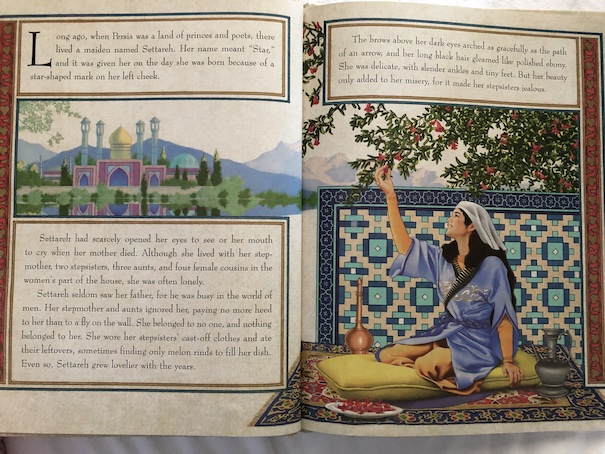
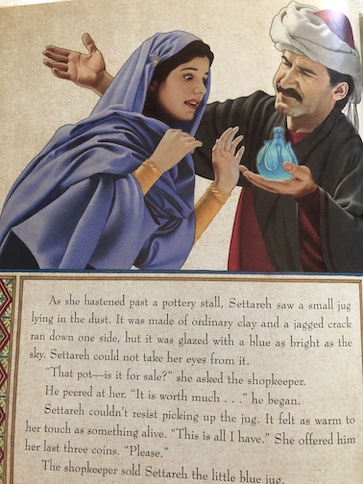

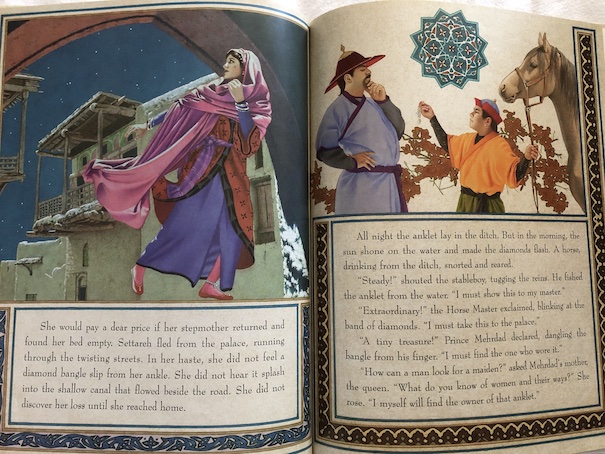

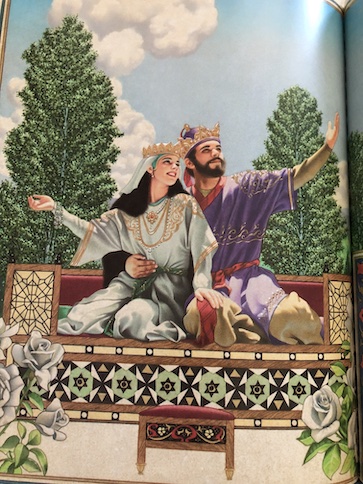



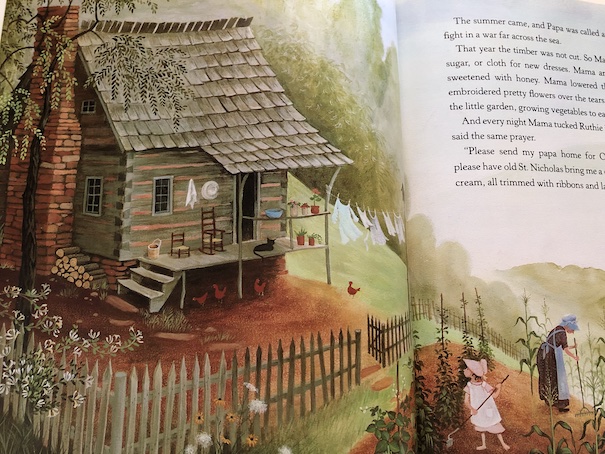
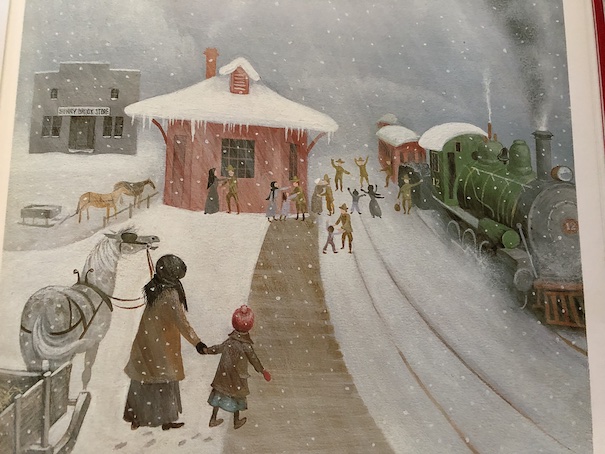
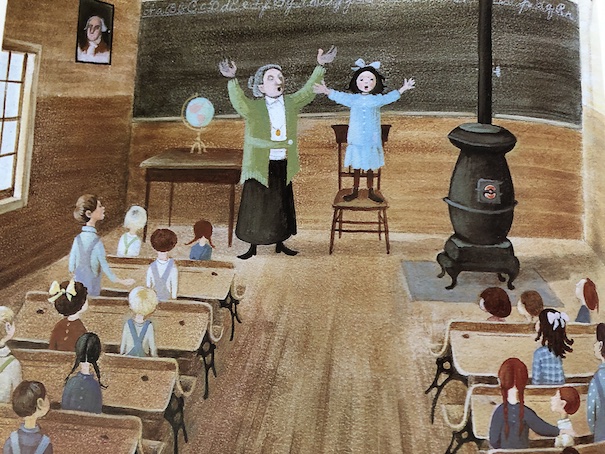
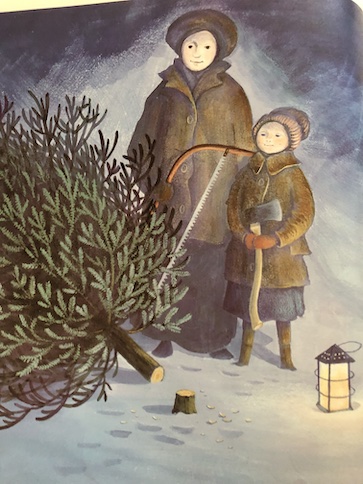


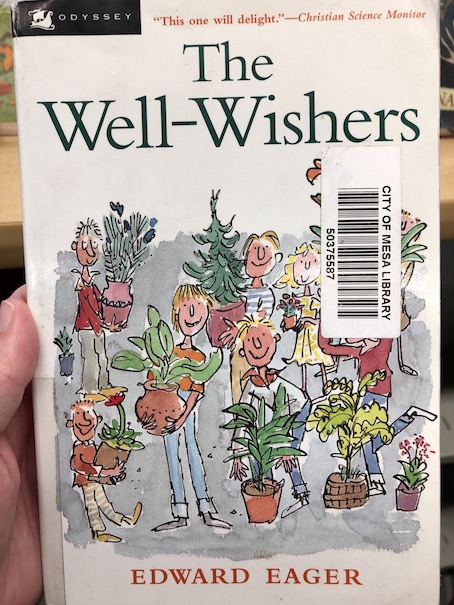
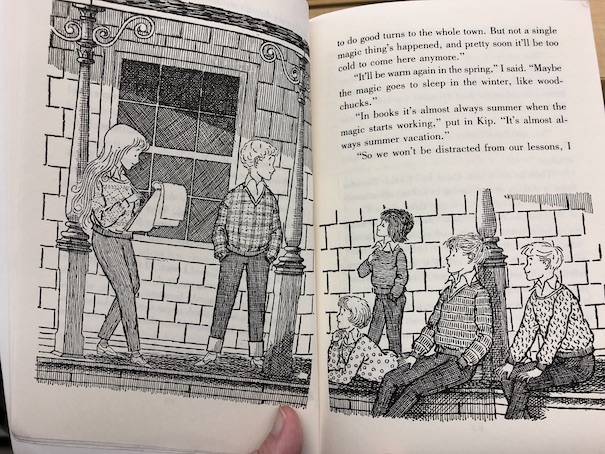


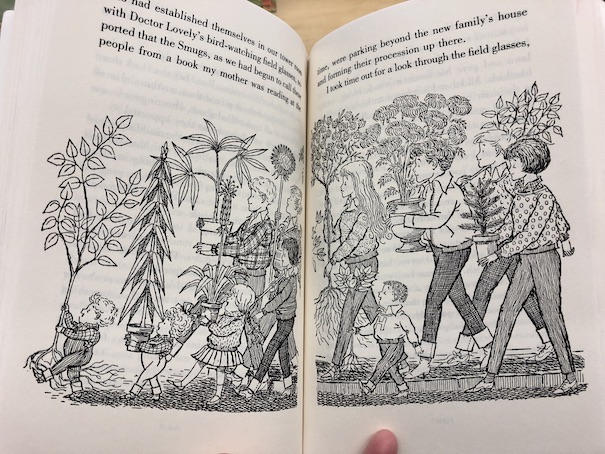




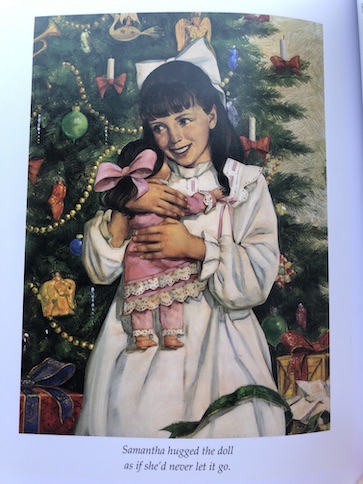
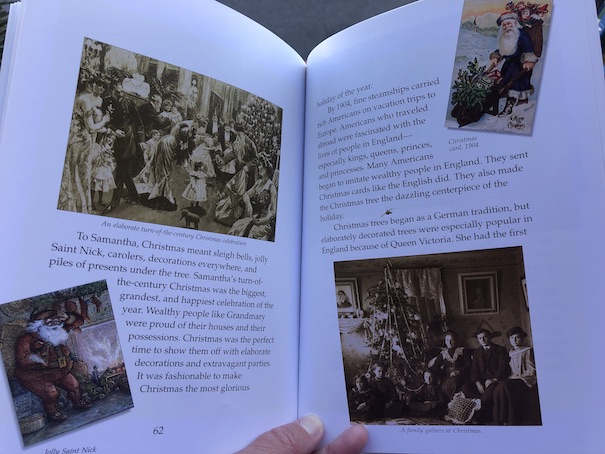
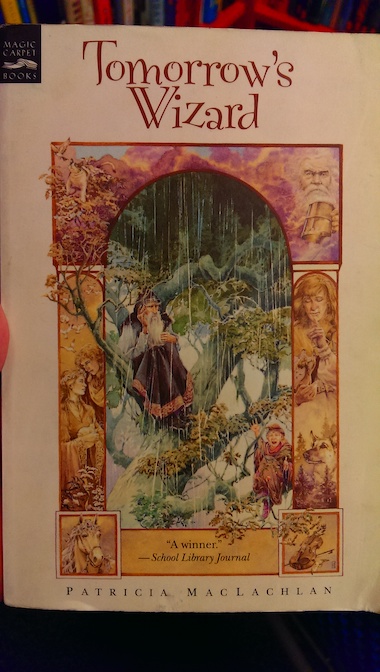 Tomorrow’s Wizard by Patricia MacLachlan, 1982.


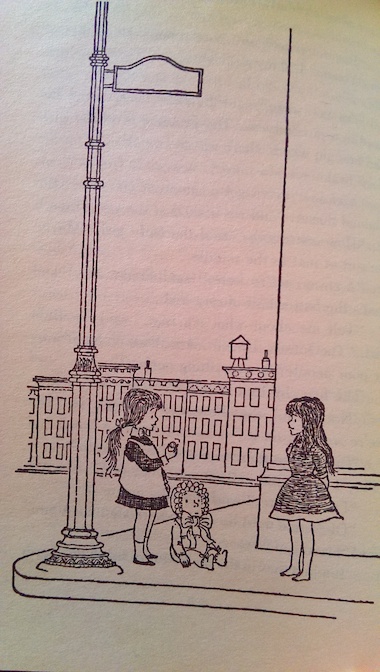


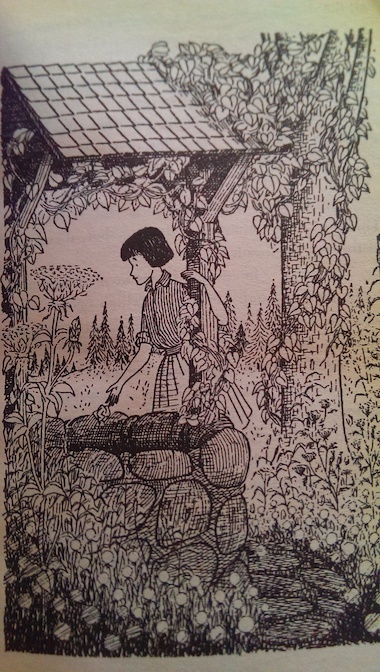
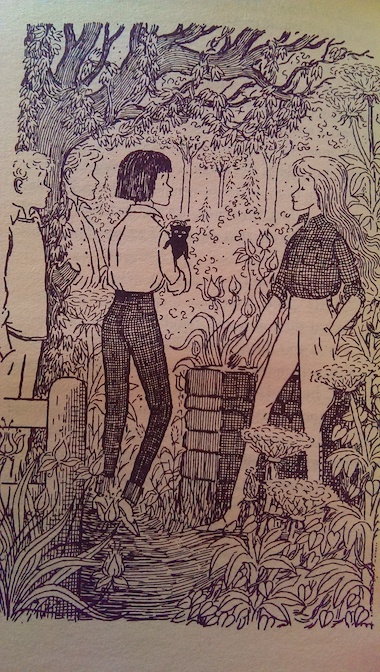

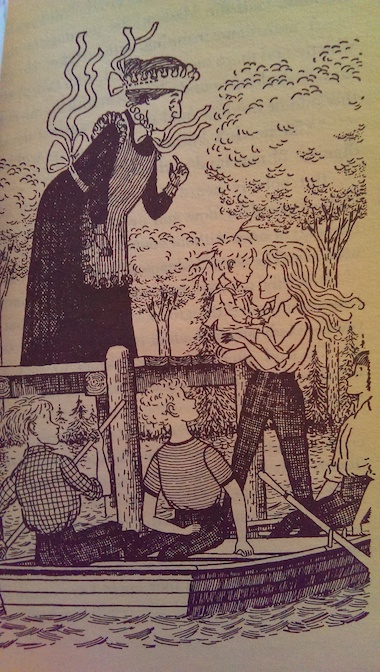
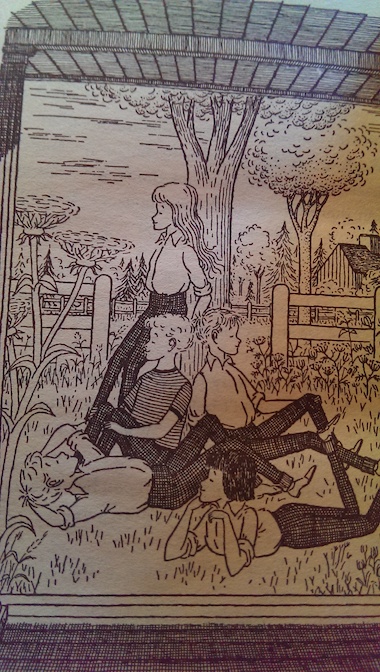


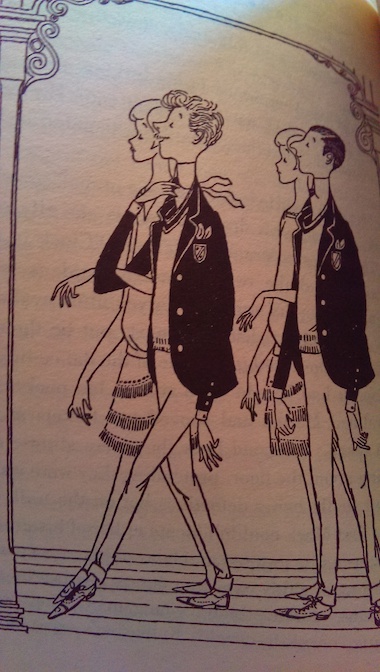
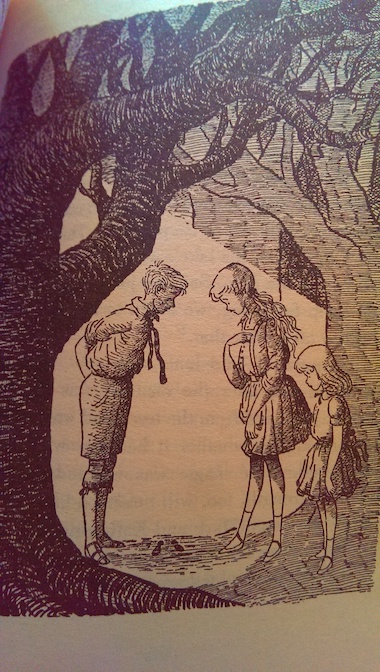
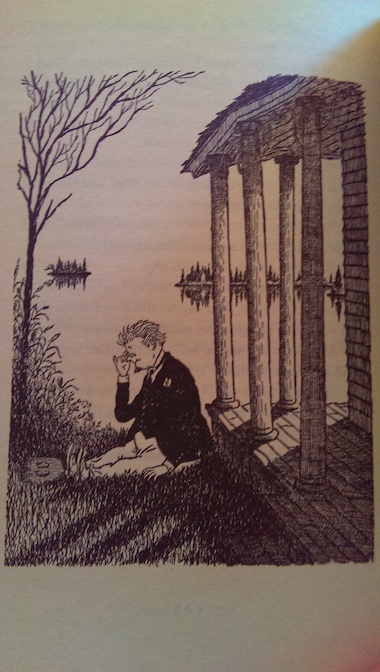
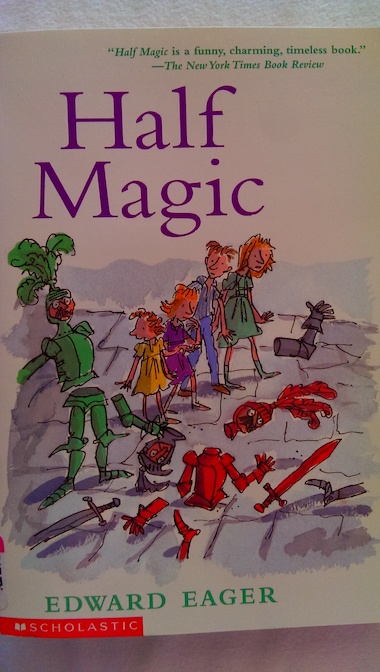 Half Magic by Edward Eager, 1954, 1982.
 These early experiences and a series of odd wishes Mark makes when he doesn’t realize that he has the coin demonstrate to the children not only that the coin is magical but that they have to be extremely careful what they wish for when they have it. They have to word their requests very carefully, asking for twice as much of anything they want in order to counteract the half magic of the coin. Even so, they can’t help but make mistakes and get themselves into trouble.
 There is one more disastrous experience when the children go to the movies (a silent film because this is 1920s), and Martha accidentally wishes that she wasn’t there while touching Jane’s purse, which holds the coin. Martha, of course, ends up being only halfway “not there,” almost like a living ghost, which terrifies onlookers. Straightening out that mess brings them into contact with Mr. Smith, the nice man who gave their mother a ride home. He owns a bookstore, and he enjoys fantasy stories as much as the children do. He becomes the only adult who knows that the children have been using magic, and he’s fascinated by it, enjoying witnessing their adventures.
 When Jane argues with the other children about Mr. Smith and rashly wishes that she belonged to another family, the other children call upon Mr. Smith to help them rescue Jane from her foolish wish, her unsuitable new family, and from herself.
 Jestress's Forgotten Books and Stories