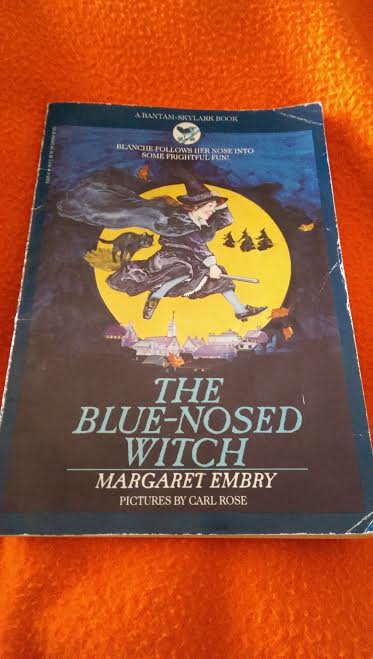
 The Blue-Nosed Witch by Margaret Embry, 1956.
Blanche is still a very young witch, but because of her magnificent blue nose (which she can make glow at will), she’s allowed to join a group of adult witches, Scurry No. 13. Their specialty is beautiful flight formations on their broomsticks, and they’re planning a special one for midnight on Halloween.
But, Blanche has a bad habit of being late to everything. Some of the other witches have started complaining about her, saying that she’s too young and irresponsible to be part of Scurry No. 13. If she’s late for the flight on Halloween, they might decide to send her back to Scurry No. 2 1/2 with the other young witches, where she’d only be allowed to ride a whisk broom.
To make sure that Blanche will be on time for Halloween, her friend Josephine sets her alarm ahead a couple of hours to give her extra time to get ready. Unfortunately, Blanche doesn’t know that Josephine did that, so she sets her alarm ahead herself. When she wakes up on Halloween night, it’s still early evening, instead of late at night.
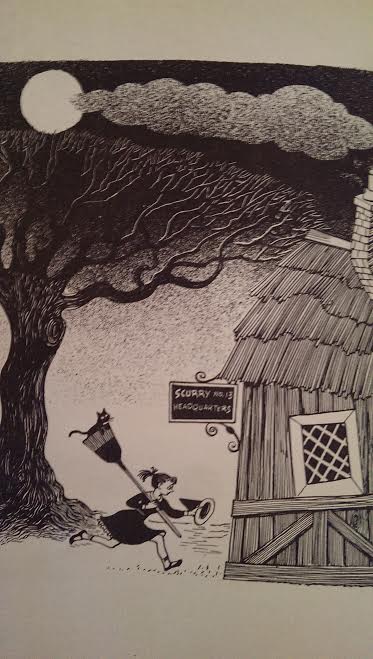 Blanche looks for her fellow witches but ends up joining a group of trick-or-treaters by mistake. They love her blue nose and introduce her to the idea of trick-or-treating. Thinking that even the grumpiest man in town would be impressed by Blanche’s amazing nose, they stop at his house, too. The old man isn’t impressed by anything and plays a mean trick on the kids. However, Blanche is a real witch, and she and her cat Brockett give the old man a real Halloween scare.
Blanche is having fun on Halloween, but will she keep track of time well enough to join the other witches in their flight?
Even though this wasn’t written to be an historical novel, in a way, it kind of is now. One of the interesting things about this book is that you can tell from the way the kids are trick-or-treating that it’s the 1950s. Kids today don’t get jelly donuts or apples while trick-or-treating, and in this day of giving out only prepackaged treats for safety reasons, the kids would probably have to throw them away if they did (sigh). Also, there is still the implied threat of Halloween tricks when the kids go asking for treats, something less common today. Instead of saying “Trick or treat!”, the kids say “Candy or cake or your windows we’ll break!” (although the kids later promise the adults that they’re not going to soap any windows). My mother said that the popular saying when she was young was, “We are the beggars of the street. Do we soap, or do we eat?”
The book is available to borrow and read for free online through Internet Archive.




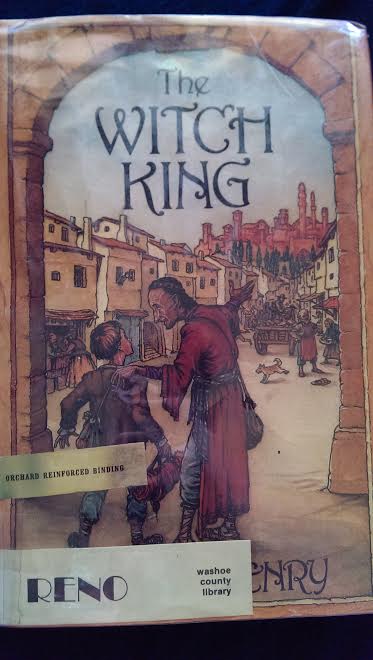 The Witch King by Maeve Henry, 1987.
 Jestress's Forgotten Books and Stories