Charmed Life

This is the first book in the Chrestomanci series.  There are many different dimensions with duplicate worlds, and in each of those duplicate worlds, there is a copy of every person.  People’s lives can differ dramatically between the different worlds, but there is one person in each generation who has no duplicates in any of the other dimensions or worlds.  This person is called the Chrestomanci.  All of the talents, abilities, and lives that would have been spread among the duplicates across the other worlds are now centered on that one person, giving that person, literally, nine lives.  Very often, the Chrestomanci doesn’t realize that he’s a Chrestomanci until he actually dies . . . and fails to die because he uses up one of his spare lives and continues living with the others.

When young Eric Chant’s older sister Gwendolyn gives him the nickname Cat at a young age, saying that he has nine lives, he doesn’t understand that it’s literally true.  Then, he and Gwendolyn are unexpectedly orphaned during a boat accident.  Their parents drown.  Gwendolyn doesn’t because she’s a witch, and the water rejected her.  Cat thought that he was saved because he grabbed hold of Gwendolyn.  Gwendolyn knows differently.

After their parents’ deaths, Cat and Gwendolyn live with their downstairs neighbor for a time, receiving support from the town. Their neighbor, Mrs. Sharp, is also a witch, and she recognizes Gwendolyn’s talent. When she goes through the children’s parents’ things, she finds three letters from someone called Chrestomanci, and she recognizes immediately that they are important. Cat doesn’t fully understand who Chrestomanci is, but everyone regards him as an important person, so much so that they even hesitate to say his name out loud. His signature is valuable, and Mrs. Sharp offers the letters as payment for witchcraft lessons for Gwendolyn from the best tutor in the area, Mr. Nostrum. Gwendolyn breezes through the early lessons easily, and everyone in the neighborhood recognizes her talents. They are sure that Gwendolyn is destined for great things, and they are all eager to ingratiate themselves with her. A local fortune-teller even says that Gwendolyn will be famous and may be able to rule the world if she goes about it in the right way. The fortune-teller also tells Cat’s fortune, but his fortune is a warning that he is in danger from two sides. Cat is frightened and unsure what to think of it.

However, there is still the question about how the children’s parents knew Chrestomanci and what their father argued about with him in their letters to each other. Mr. Nostrum is particularly curious to know what the children know about Chrestomanci, having apparently tried to learn things about him through his signature and failing, but neither of the children can tell him much. Cat still isn’t sure exactly who Chrestomanci is, so he suggests that Mr. Nostrum just write to Chrestomanci himself to ask. It’s such a straightforward approach that it never occurred to either Mr. Nostrum or Gwendolyn to do that before. Gwendolyn ends up writing the letter to Chrestomanci herself, exaggerating her plight as an orphan to gain sympathy, and implying that Cat also drowned in the boat accident. When Chrestomanci arrives to see Gwendolyn, he is initially surprised to see Cat.

Although their relationship to Chrestomanci isn’t explained at first, Chrestomanci takes custody of the children and brings them to live at his castle with his own wife and children, Julia and Roger. Everyone tells the children how lucky they are because living with someone as important as Chrestomanci means hob-nobbing with other important people. Cat realizes that the reason why Gwendolyn wants to go to Chrestomanci is that she is serious about becoming famous and ruling the world. She sees life with Chrestomanci as the first step. Cat is more intimidated and homesick.

Life in Chrestomanci’s castle is quite different from what Gwendolyn expected, though. There is some kind of enchantment over the castle that muffles Gwendolyn’s powers, and that drives her crazy. Gwendolyn is contemptuous of Julia and Roger for being plain and fat, but both of them turn out to be better at magic than she is and are fully capable of standing up to her magical tricks and bullying. Worst of all, nobody seems impressed by Gwendolyn or thinks that she’s special, and Gwendolyn is accustomed to people thinking that she’s special and impressive.

Chrestomanci makes it clear that none of the children are supposed to be practicing magic unless they are under the supervision of their tutor, Michael Saunders. When Gwendolyn and Cat begin having lessons with Michael Saunders along with Julia and Roger, it becomes apparent that Gwendolyn is far behind in her normal subjects, like math and history, even behind Cat, who is younger. Gwendolyn airily tells the tutor that she never paid attention to such things at their old school because she was concentrating more on learning witchcraft. Michael Saunders tells her that she won’t have any more magical lessons until she catches up in her normal studies, and Chrestomanci backs up the tutor. Gwendolyn is infuriated because, not only is nobody treating her like she’s special and impressive, for the first time in her life, they are treating her like what she really is: a spoiled and naughty child.

Gwendolyn’s parents didn’t fully have the ability to impose consequences on Gwendolyn when they were alive, although they were a restraining influence. After they died, nobody tried to restrain Gwendolyn, only trying to ingratiate themselves so she would help them or they could use her for their own purposes. Although Cat has idolized his older sister, there are dark sides to her personality that he has never realized before, and he soon discovers that she has sinister intentions that involve him.

One day, Gwendolyn vanishes and is replaced by one of her duplicates from another world, where magic doesn’t exist.  This other version of Gwendolyn, who is called Janet, has no idea where she is or how she got there.  It is from her that Cat learns that there is no duplicate of himself in her world.  While Cat struggles to figure out what is happening, he helps the new girl to pretend that she is the usual Gwendolyn, although she actually has a very different, much nicer, personality. The more Cat tells Janet about Gwendolyn, the less Janet likes her or the idea of being her, which makes Cat nervous.

When Cat and the new Gwendolyn realize what Cat’s Gwendolyn intends to do, they will need the Chrestomanci’s help to stop her and for Cat to claim his true destiny, the one that Gwendolyn has been attempting to conceal from him all along.

The book is available to borrow and read for free online through Internet Archive (multiple copies).

One of the best parts of the book for me was the setting at Chrestomanci Castle. The idea of living in a castle with magical playmates who can make toy soldiers move on their own is exciting! Cat and Gwendolyn’s rooms in the castle sound like the kind of bedrooms that any kid might imagine having. Even though the castle is strange and sinister things are happening, there is also a kind of coziness to the atmosphere. The children have hot cocoa every morning in the nursery. (I’m not sure why Cat, Gwendolyn, and Janet don’t like hot cocoa. Having hot chocolate for breakfast every morning would have made me happy as a kid, although I admit that, if Chrestomanci and Millie are concerned about their children’s weight issues enough to limit their marmalade intake, that’s not really the best morning drink they could have. I would have suggested tea instead. While we’re on the subject, I didn’t like the way they kept going on about the kids’ weight issues.) They have their own old-fashioned schoolroom in the castle with their own private tutor. When they get allowance money, they can walk to the charming, old-fashioned town nearby and buy candy and other small items. Millie is a doting magical mother, and even though Chrestomanci can be a little intimidating and fussy about appearances, he seems to genuinely care about the children and isn’t above sticking his well-dressed head into the nursery to say good morning and check on them.

During his time at Chrestomanci Castle, Cat learns things about his parents and his sister that he never knew before. His parents were actually cousins, and marriages between cousins in magical families are frequently dangerous, especially when they have children. Chrestomanci is also their parents’ cousin, and the argument he had with their father through their letters was about preventing the couple from having children any children with magical abilities, a suggestion that insulted and angered their father. Their father later came to regret that when young Gwendolyn first started using her powers, and even her parents started to see that she was dangerous. They weren’t quite sure how she was using Cat, but they had the sense that she was using him to do her magic somehow. Nobody thought to take Cat’s nickname seriously until Janet started questioning the reason why Gwendolyn started calling him that.

The truth is that Cat is a nine-lived enchanter. Gwendolyn realized this when he died at birth but didn’t actually die, and even though she was young herself, she found a way to hijack his powers. From the time when he was a baby, she’s been using his powers as if they were her own. That is how Gwendolyn appears to be unusually powerful for her age, even though she’s never really had the patience to go through any of her lessons by the numbers, just glossing over the beginning parts. Cat has been unable to use his own magical abilities because Gwendolyn has been keeping them all for herself, so for a long time, he assumes that he doesn’t have any magic at all. Since Gwendolyn has been doing this for his whole life, Cat has grown accustomed to how it feels and doesn’t notice it until Janet puts together the clues and realizes what’s been happening. When Gwendolyn does particularly powerful magic, she even sacrifices one of Cat’s extra lives, which she placed in a little matchbook for easy use.

Cat is appalled when he finds out about it, and he doesn’t want to believe it at first. However, when he tries to light one of the matches and instantly catches fire, he is convinced. What is even worse is that Gwendolyn and her magic tutor are planning to use him as a human sacrifice to open the gateway to other worlds so that they and the other evil magicians can use their powers to control these other worlds. Gwendolyn is a malevolent narcissist and always has been. Cat is devastated when he learns how little Gwendolyn cares about him, but he manages to finally summon enough anger to stand up to Gwendolyn and take his powers back from her. Like other victims of narcissists, he has always been the stronger and more powerful of the two of them, but he needed some help to see it.

Unlike Gwendolyn, Janet is not a narcissist and is capable of feeling empathy and caring for others. She’s even capable of selfless acts and personal sacrifices for the sake of others when necessary. When Gwendolyn escapes and permanently seals herself in another world where she is a queen, Janet is stuck in Cat’s world, unable to return to her own. It’s a terrible blow for her to be separated from her parents, who are alive in her world. However, when Chrestomanci asks her if she will be okay and if she wants him to try to return her to her own world, she refuses the offer because she has discovered that the double who replaced her in her world is an orphan who badly needs a family. While Gwendolyn was even going to volunteer Janet, one of her other selves as a sacrifice if Cat wouldn’t do, Janet is willing to sacrifice her former life in her world for the sake of one of her other selves. Janet is really the kind of sister that Cat has needed all along. She says that she was supposed to have a younger brother in her world but that he died at birth, and she is fascinated to find Eric/Cat alive in this new world and get to know the brother she lost. Janet learns to love her new brother and to get along with Julia and Roger, becoming the kind of girl Gwendolyn really should have been to her family. She doesn’t have any magical abilities, but she discovers that she can help help her new family because life in her usual world (which is supposed to be our world) has given her a different perspective from theirs. She is the one who suggests to Chrestomanci that he stop using silverware made of actual silver, which impedes his powers, and use stainless steel instead. When Gwendolyn played magical tricks at dinner, Chrestomanci always had trouble dealing with it because he was holding silver, but if he uses stainless steel, he won’t have that problem again. Chrestomanci and Millie admit that they never thought of that because stainless steel cutlery isn’t common in their world.

I remember finding this story fascinating the first time I read it as a kid. There are some dark themes with Gwendolyn’s narcissism, the threats to the children’s lives, and even Cat losing a few more lives. Cat’s growth is central to the story. Once Gwendolyn’s toxic influence is removed from his life, he begins to see the truth about himself and how Gwendolyn has treated him. Cat had always looked to her for comfort as his sister and his last living relative (so he thought), but all along, she was the one who was most dangerous to him, and that’s a terrible betrayal. Once Cat starts to understand the situation, he begins to see his own potential, and he also has some new people in his life who show him better treatment. The castle is charming, the world is fascinating, and the story is thought-provoking about the different ways a person’s life can go in different circumstances. Other books in the series go into more detail about how the different worlds in this universe function and how they split off from each other in different series, based on the outcomes of important events.
Howl’s Moving Castle

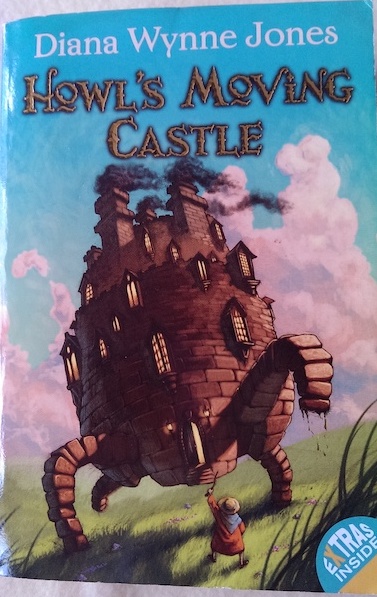
Howl’s Moving Castle by Diana Wynne Jones, 1986.

The kingdom of Ingary is the land of fairy tales. There is magic, and in a family of three children, it’s always expected that the youngest of the three will be most successful. Sophie Hatter, as the oldest of three, is disappointed when she first realizes that, but she reconciles herself to her rather dull fate. She is devoted to her younger sister and half-sister, and she does her best to look after them and help prepare them for their futures.

When Sophie Hatter’s father dies, her stepmother Fanny has to decide what arrangements to make for the family’s hat shop and the three girls in the family: Sophie, her younger sister Lettie, and her half-sister Martha.  Because Martha is very bright and expected to one day seek her fortune in the world, as third children generally do, Fanny arranges for her to become an apprentice to a respected witch.  Lettie becomes an apprentice in a pastry shop, where she will learn a good trade and possibly meet a nice young man to marry.  Sophie, as she had always expected, continues to work in the hat shop.  None of the three girls are particularly excited about the arrangements, but they make the most of it.  Sophie does have a talent for hat-making.  In fact, she has a very unusual talent because, as she talks to the hats while she makes them, the things she predicts for the buyers come true. People become increasingly attracted to the hat shop because it seems like good things happen to people who buy hats there.

Sophie is good at working in the hat shop, but she has to admit that her life there is dull. She doesn’t really know what else she would want instead, but she feels isolated, hearing gossip from other people but not really talking to anybody herself. A visit to her sister Lettie on May Day puts Sophie’s life in perspective and calls the things that are expected of older and younger siblings into question. Sophie learns that her sisters, dissatisfied with the arrangements Fanny made for them and having ambitions other than the ones that are expected of them, have secretly switched places with each other. Lettie craves learning and adventure, so she has taken Martha’s place as the witch’s apprentice to learn magic. Martha doesn’t actually care about going out to seek her fortune at all. She doesn’t want adventure or riches. What she really wants, although she’s never admitted it before, is to marry, settle down, and have ten children. Working in the pastry shop, she has already attracted quite a following of young men, and she’s sure that she’ll find one who will love her and make her happy. Neither of them cares about fitting the tradition mold of three siblings, and they’re both concerned about Sophie’s future. Sophie has never had any particular ambitions of her own, but her sisters know that being shut up in the hat shop all the time isn’t good for her. They think Fanny is taking advantage of her because it’s Sophie’s work that’s attracting all the customers these days, and Fanny isn’t even paying her an apprentice’s wage! Apprentices like Lettie and Martha get wages at other businesses, but Sophie’s been working for free while Fanny takes all the profits. It gives Sophie a lot to think about, and she becomes convinced that she’s being exploited when she asks Fanny about wages, and Fanny puts her off. Sophie is so angry that she thinks maybe she should run away to seek her fortune, but she can’t shake the idea that eldest children can’t do that. Soon, circumstances intervene to force Sophie to be the one to go out and seek her fortune anyway.

Dangerous and mysterious things are happening in the kingdom. Rumor has it that the evil Witch of the Waste has threatened the king’s daughter and that the king’s personal wizard, Suliman, has vanished after going to deal with her. People think that the Witch of the Waste probably killed him. The king’ brother, Prince Justin, also went in search of Suliman and disappeared.

One day, the Witch of the Waste pays a visit to Sophie’s hat shop.  Mistaking Sophie for one of her sisters, the witch curses Sophie, turning her into an old woman.  Unable to explain to anyone what has happened (which is part of the curse), Sophie makes the decision to leave the hat shop, finding a new job as housekeeper to the mysterious wizard Howl, a sinister figure himself.  Little is known about Howl, although he is known to live in a strange castle that moves from place to place, apparently of its own accord, and he has a reputation for breaking women’s hearts.

Howl is even stranger although somewhat less sinister when Sophie gets to know him.  He allows Sophie to stay in his castle, not so much by requesting her to stay but by not telling her to leave, much like he did with his apprentice Michael, an orphan who came to live with him and gradually became his apprentice when Howl decided not to send him away.  Howl is vain (using makeup and hair dye to make himself more handsome), immature, and somewhat cowardly, but he is still a powerful wizard and can accomplish great things when he makes up his mind that he wants to (or finds himself unable to refuse).  He doesn’t real steal girl’s souls, as some of the rumors about him say, but he is definitely a flirt and a womanizer, who drops girls as soon as they fall in love with him because he likes pursuing them but is afraid of commitment. In fact, he even has Michael spread scandalous rumors about him in the towns where they do business so people will be more reluctant to try to get him to commit to anything or anybody.

Howl has other problems aside from his immaturity and fear of commitment.  Calcifer, the mysterious fire demon that powers the moving castle, hints as much to Sophie.  He hopes that Sophie will be able to help, although he, too, is unable to explain the reason why for magical reasons.  Howl is not an ordinary person, but a traveler from another dimension, from a strange country called Wales, the same place where the king’s wizard, Suliman, was from. In Suliman’s absence and against Howl’s will, the king recruits Howl to be the new royal wizard, to find the missing Suliman and Prince Justin, and to deal with the Witch of the Waste.

Sophie struggles to convince/cajole/force/help Howl to save the kingdom and to learn the secret curse that Howl himself is living under even while suffering from her own curse.  Surprisingly, it seems that Sophie is the key to breaking not only Howl’s curse but her own.

The book is available to borrow and read for free online through Internet Archive (multiple copies). It’s the first book in a loose series. Many people these days are familiar with the story because it was made into a Miyazaki movie, although the movie was very different from the book in a number of ways.

My Reaction and Spoilers

I first read this book when I was in high school, years before the movie version was made. In a way, the book is party mystery or puzzle as well as fantasy. Calcifer and Howl have a problem that they can’t talk about because of the magic around it. Only one rumor about Howl is true: Howl is literally heartless. But, Calcifer has a heart. It takes a long time for Sophie to make the connection and to realize what Calcifer actually is and what Howl did. Howl made a sacrifice years before that has left both Howl and Calcifer in a precarious position. The clues to Howl’s past and the arrangement between him and Calcifer are in a poem by John Donne that turns out to be part of Howl’s nephew’s school assignment. The Witch of the Waste, who turns out to be one of Howl’s former, discarded conquests, knows Howl’s secret and is trying to use it to get revenge on Howl.

Although the movie version is very good, and I enjoyed watching it, it is very different from the original book. The beginning part of the movie, where Sophie is working in the hat shop and cursed by the Witch of the Waste before going to work for Howl is very similar to the original book. However, the major problem of the war in the movie never happened in the book. War is a common theme in Miyazaki movies, but there’s nothing in the book about wizards making themselves into weapons of war. Instead, the main problems of the book are about lifting Sophie’s curse, figuring out what the secret contract between Howl and Calcifer is, evading the wrath of the Witch of the Waste, and finding the missing Suliman and Price Justin. The movie addresses the arrangement between Howl and Calicifer, but it doesn’t fully cover any of the rest of it. There are some characters and plot lines from the book which were combined or reduced in the movie in favor of the war plot, which I found less interesting because it has less intrigue. In the movie, the Witch of the Waste is tamed and redeemed as a character, but in the book, she really is evil and is never redeemed.

There’s also nothing in the movie about Howl being from Wales in our world and the land where he lives being a different dimension, but that’s a major part of Howl’s character in the book. In the book, Sophie even visits Wales with Howl and meets his family. His sister thinks that Howl, known as Howell Jenkins in his native Wales, is a wastrel, who hasn’t made anything of himself in spite of his college education. She’s only partly right. What she doesn’t know is that Howl started learning about magic at university, which is how he found out how to travel to other dimensions and make himself into a wizard. In spite of his immaturity and attempts to avoid certain types of service, he is actually very skilled and powerful. Howl can’t tell his sister the truth, so he just lets her think that he’s a wastrel.

Sophie finds Wales strange and mysterious. She is terrified when Howl takes her and Michael for a ride in his car. One of my favorite parts is when Howl needs to talk to his nephew about the poem he was assigned at school, but he doesn’t want to talk to Howl because he’s playing a computer game with a friend. Sophie and Michael don’t understand computers or that the boys are playing a game, so when the friend says that he can’t stop to talk or he’ll lose his life, they think that the boy’s life is really in danger. They almost panic when Howl pulls the plug on the computer to get his nephew’s attention, totally unworried about his nephew possibly dying. That’s one of the reasons why I prefer the book to the movie. Many of the humorous little moments like this are lost in the movie, although the movie did keep the episode where Howl has a temper tantrum and fills the house with green slime.

There are also intricacies of the plot that aren’t explained in the movie. The one I mind the most is that the movie doesn’t fully explain how the curse on Sophie works or how it gets broken, either. The book provided more information, which helps Sophie fully appreciate who she really is. As Calcifer realized soon after meeting Sophie, removing the curse on Sophie is complicated because it has two layers. Howl even admits later that he’s been quietly trying to remove Sophie’s curse himself, but he was never successful because Sophie was actually maintaining the curse herself. The first layer was what the Witch of the Waste did to her, but Sophie herself has magical powers that she has been unconsciously using throughout the book. The reason why good things kept happening to the people who bought her hats was that she was unconsciously casting spells on the hats when she talked to them while making them. The second layer of the spell on Sophie herself was her unconsciously reinforcing her sense of being old through all of the negative things she’d been telling herself about being the eldest child in her family. Sophie’s power typically manifests in the things she tells to people and things, and she’s been telling herself all the wrong things.

Because of all of the tales about how the youngest children are the ones who successfully go out to seek their fortune, Sophie has felt relegated to just being the eldest, helping other people, and not really thinking about what she wants for herself. Even as a young woman, she acted and felt old before her time because she didn’t have any confidence in herself or anything to look forward to in her future. Her sisters even worried about her for not having enough self-respect, no ambitions or dreams of her own, or ability to stand up for herself. Because she never expected to do much of anything with her life or any belief that she might have talents of her own, she and everyone else completely overlooked all of the magic that she’s been instinctively doing. When Sophie discovers that her sisters have switched places and learns about their real life ambitions, she is stunned to realize that she has badly misunderstood both of them for most of their lives, also making assumptions about them based on their birth order. She has also misjudged or underestimated other people, but the person she’s misjudged and underestimated is herself. Howl is the one who tells her that there’s nothing wrong with her being the eldest sister; the times when she gets things wrong have been when she acts without fully thinking things through. Part of the key to breaking her curse is to get rid of the negative feelings she’s had about herself and her ability and to see herself for who she really is: a person with powerful talents and a right to want things and achieve things for herself and her future. Once she sheds her doubts about herself and her abilities and stops thinking of herself as just the eldest and doomed to fail, she realizes how she can use her powers to save Calcifer and Howl, and Calcifer lifts the rest of her curse.

The Trouble with Magic

The Trouble with Magic by Ruth Chew, 1976.

Barbara and Rick Benton have an old woman, Mrs. Cunningham, taking care of them while their parents are away on a trip. They don’t mind Mrs. Cunningham, but she has a habit of cooking cabbage, which makes the house smell bad. One day, they decide to buy a can of air freshener to make the house smell better, but they don’t have much money. After looking over the selection at the store, they realize that they only have enough money to buy a really cheap bottle with a damaged label. They’re not even sure what scent it’s supposed to have, but they decide that it’s better than nothing and take it.

However, the bottle isn’t air freshener at all. When they get it home and open it, a man with an umbrella pops out of the bottle. He introduces himself as a wizard named Harrison Peabody, saying that he was accidentally trapped in the bottle. When they tell him why they got the bottle, he offers to fix the smell for them, producing real roses by magic in Barbara’s bedroom.

It’s pretty impressive, but Barbara soon learns that magic has inconveniences. The roses get in the way when she tries to do her homework, they have thorns that prick her fingers, and she’s worried that it will get messy if she has to water them. She asks Harrison Peabody if he can take them away, but he says that undoing magic is more difficult than doing it. It’s even more inconvenient when he produces a pine forest in Rick’s room because he wanted his room to smell like pine.

The kids let Harrison Peabody, who they call Harry, stay in their attic because there’s an extra mattress there, but they’re careful to hide him from Mrs. Cunningham. Barbara uses Harry’s magical umbrella to get rid of the roses and pine trees while he’s in the bathroom.

It seems like Harry’s magic works sometimes but not always. In the morning, he’s able to use it to remake the attic into a comfortable living space and provide a lavish breakfast, but later in the day, he needs the kids to bring him food. Harry is reluctant to explain, but he finally admits that he’s not a very powerful wizard. All of his magic depends on his umbrella, and the umbrella only does magic when it’s raining. Even then, it will only work its magic if you ask it politely.

The kids take Harry to Prospect Park for a picnic, and in the lake, they spot a sea serpent. It turns out that the sea serpent can talk. His name is George, and he actually knows Harry. George gives Harry and the kids a ride around the lake, and they use the umbrella’s magic to clean the lake and make it suitable for swimming. Unfortunately, they accidentally lose the umbrella in the lake.

The next day, the kids go back to the park to look for the umbrella while Harry stays at home with a cold. George finds the umbrella for them, warning them to remember that it’s Harry’s umbrella and that things often go wrong, even when Harry tries to use it. Ignoring that, Rick impulsively wishes for the umbrella to take him and his sister to the zoo, and when they get there, he also impulsively wishes that all of the animals were free. Then, it stops raining, so he has no chance to take it back.

Chaos ensues, with all of the zoo animals roaming around free and the zookeepers struggling to round them all up again. Then, to the children’s horror, some of the zookeepers catch George, thinking that he’s another escapee. The zookeepers quickly realize that they’ve never seen any animal like George before. They don’t know what he is, but they decide that they can’t let him roam around free. They put him in an aquarium at Coney Island, and it’s up to the children to rescue him!

The book is available to borrow and read for free online through Internet Archive (multiple copies).

My Reaction and Spoilers

This book is odd because it gave me so many feelings of the story being incomplete. It seems like it was written as a fantasy adventure story for fairly young kids because all of the problems are pretty easily solved, but there are so many questions left unanswered that I almost feel like it used to be a longer story but was cut down for some reason. Actually, it’s probably that it could have been a longer story but the author chose not to make it longer.

First, we never get any explanation of Harrison Peabody’s background, how he came to be a wizard, and how or where he got that magical umbrella. When the children ask him how he got into the bottle, he says that it was an accident, that he just went in for a little bit and someone capped up the bottle so he couldn’t get out. But why? Was someone trying to get rid of Harry, like those stories where someone tries to get rid of an evil genie by tricking him into going back into the bottle he came from? But, Harry’s not a genie and not a bad guy.

There is also no explanation of how he came to meet George the sea serpent. The closest we get to George’s background is that George says that he was one of the sea serpents that John Van Nyse saw at Steinbokkery Pond, which was once on the site of the Lefferts House, referencing an old story from New York. I liked the reference to a piece of local folklore, and it does help to date Harry a little because, when Harry encounters George in the park, George has to explain to him that the Steinbokkery Pond was drained to build the Lefferts House. Since Harry didn’t know that and has memories of what the area used to be like, Harry must have been in the bottle since before the house was constructed, around 1783. But, again, the story never explains that.

The end of the book is also abrupt. When the kids retrieve the lost umbrella from George, Rick’s sudden wishes to go to the zoo and free the animals seem, well, pretty sudden. He didn’t mention anything about wanting to go the zoo before, and it seems like the kids would have been in a hurry to get the umbrella back to Harry. It feels like that incident was just thrown in to have something zany happen that would add some excitement to the story.

Rescuing George isn’t too hard with the magic umbrella. George decides that he wants to return to the ocean instead of going back to the lake in the park, so the kids wish him to be where he wants to go. Then, after they return to Harry and point out to him that their parents will return soon and will surely notice that he’s been living in the attic, he uses the umbrella to return the attic to its former state. Then, he whispers something to the umbrella, and they both abruptly vanish. There is no indication of where Harry is going; he’s just gone. I think it’s meant to be mysterious, but to me, it just felt odd and incomplete. I had been expecting that there would be some kind of resolution of the chaos that the magic umbrella causes. Maybe Harry would decide that magic has caused too much trouble and he’ll put the umbrella away, saving it only for emergencies. I even thought that there might be some romance with Mrs. Cunningham, who I assumed was a widow, and maybe they would go on to be caretakers for other children, like they were for Barbara and Rick, with the implication that their magical adventures would continue. Instead, Harry just disappears, and the story is over with no further explanation.

The Wizard’s Apprentice

WizardsApprentice

The Wizard’s Apprentice by S.P. Somtow, 1993.

WizardsApprenticePic1Sixteen-year-old Aaron Maguire thinks of himself as a typical teenager, even though his family is far from typical.  His mother is a buyer for a fashion boutique, and his father does special effects for monster movies in Hollywood.  They’re also officially “separated” and preparing for a divorce, even though they’re still living in the same house.  So far, they’ve just kind of divided the house in two in order to have their own space.  Aaron goes back and forth between the two halves of the same house as his parents share him.  It’s a little weird (and, to Aaron, also a little depressing), but there’s weirder to come.

An old man approaches Aaron and tells him that he’s destined to be a wizard and that he will teach Aaron what he needs to know.  At first, Aaron thinks this man is nuts and probably homeless, but what he says is true.  The old man is the wizard Anaxagoras.  Anaxagoras demonstrates to Aaron how the skateboarding maneuver he had just pulled off defies the laws of physics and tells Aaron things about his personal life that no one should know (how angry he is with his parents about their separation and about his crush on Penelope Karpovsky, a girl he knows from biology class).  He also changes the dollar Aaron had offered him into a $100 bill and shows him that they can travel to magical lands and even through time.  Although Aaron still has trouble believing what he sees (his father does special effects for a living, after all), he becomes Anaxagoras’s apprentice.

Partly because Aaron still has doubts and needs something physical to convince him of the wizard’s powers and trustworthiness, Anaxagoras gives him a mirror.  It looks basically like an ordinary pocket mirror with a neon pink frame, but Anaxagoras invites him to ponder it and figure out what it does, telling him that what he does with it is important.

WizardsApprenticePic2However, when Aaron meets the divine Penelope for pizza and she asks to borrow a mirror to check her hair, Aaron lets her borrow Anaxagoras’s mirror.  He instantly regrets it because the mirror suddenly changes in Penelope’s hands.  Now, it has a tortoiseshell frame and is shaped like a heart.  Penelope, who has low self-esteem in spite of her prettiness, is suddenly really happy when she looks in the mirror and refuses to give it back, insisting that she wants to borrow it for a few days.  Because Aaron is in love with Penelope, he finally agrees to let her keep it for awhile.

When Aaron tries to tell Anaxagoras about Penelope borrowing the mirror, he doesn’t seem concerned.  He just hurries Aaron on to his next lesson, which involves a plumbing problem.  Anaxagoras’s lessons are pretty weird, although Aaron finds himself learning that there is more magic in the everyday world than he ever suspected.

Aaron later attempts his own feat of magical plumbing at the studio where his dad is working and encounters a creature of darkness.  The mirror gets out of his hands, and he enchants a car in order to chase it down.  Finally, a dare from some classmates causes him to unleash a dragon on the unsuspecting city, one that only Aaron can understand and defeat, once he realizes the true nature of his magical mirror.

Aaron has a distinctive voice as a California teenager, and his first experiments with magic lead him to some surprising discoveries about himself which help him to understand and reconcile his feelings about his parents’ divorce.

Alissa, Princess of Arcadia

AlissaAlissa, Princess of Arcadia by Jillian Ross, 1997.

Alissa, the only child of King Edmund of Arcadia, feels like her life has taken a turn for the worse since she turned ten years old.  Before, she lived a basically care-free life, but now, her family has become more serious about her education and training as the future Queen of Arcadia.  Her great-aunts are mainly in charge of her education now, and they find Alissa to be ill-mannered, impatient, and stubborn.  In some ways, she is.  Alissa is bored with her lessons in the standard school subjects and hates her “deportment” lessons, where she learns etiquette suited to the royal court.  More than anything, she wants adventure and excitement.

To Alissa’s surprise, she meets a strange old man one evening while walking in the garden who promises her the adventure that she’s looking for.  At first, Alissa doesn’t know what to think about this strange old man, Balin, who seems to know everything about her, even what she’s been thinking.  He sets Alissa a “quest”, to solve a riddle to determine where to find him.  After pondering it for awhile, Alissa realizes that the riddle says that Balin lives in the oldest tower of the castle, where no one ever goes anymore.

AlissaBalinIt turns out that Balin is a wizard.  He’s lived in the tower for centuries and hardly ever leaves, so most people have forgotten that he’s there.  He offers Alissa lessons in magic and the kind of quests that she’s been craving.  He once taught Alissa’s father similar lessons, although he thinks that King Edmund has also forgotten that he exists.  Alissa eager accepts the offer of magic lessons.

At first, the only other person who knows about Alissa’s lessons with Balin is Lia, a servant of one of Alissa’s great-aunts.  Lia had been about to run away from her position as servant because she didn’t think that she was very good at her job, but Alissa caught her the night when she was going to find Balin in his tower.  The two of them became friends, and Alissa makes Lia her lady-in-waiting. Alissa enjoys having someone her age to share her secrets and adventures.  Her great-aunts disapprove of her choice of lady-in-waiting, but Alissa’s father appreciates Lia because she sees the better side of Alissa, her bravery and kindness, and somewhat helps Alissa’s impatience because Lia is a more patient, cautious person.

AlissaKingWhen Alissa first begins her lessons with Balin, she thinks that studying magic is turning out to be as boring as her other lessons.  Balin makes her do little chores, like dusting things in his tower, and he has her read books and memorize words.  Alissa is impatient to get on with the exciting magic, but Balin impresses on her that she needs to start out slowly and to recognize that magic is not the solution to all things.

Meanwhile, Alissa’s father is preparing to hold a banquet to celebrate a new alliance with a neighboring kingdom.  Now that Alissa is old enough to participate in such banquets, she learns that she must not only attend the banquet but be the dinner partner of the invited king, who she has heard is a stern man who is a stickler for proper manners.  Alissa is terrified that she will make a mistake during the banquet, anger the king, and ruin everything.

Her fears grow worse when Balin tells her that he has seen impending disaster in his crystal ball and a threat to the alliance.  Alissa begs him to tell her more, but he says that something is preventing his magic from seeing more.  All he has to offer Alissa are a few vague hints which take the form of another riddle.

Balin believes that Alissa is the only one who can solve the riddle, stop the danger, and save the alliance, but Alissa doubts herself.  She’s still afraid that she isn’t up to the task and will ruin everything, and she wishes that Balin would give her some magic spell to prevent her from doing anything wrong.  However, the best weapons Alissa has are the ones she already possesses: her wits, her desire to work hard for what she wants to achieve, and the new patience that she is just starting to learn.

One of the things that I liked about the story was that the visiting king, for all of his sternness and demanding nature with others, is surprisingly understanding with Alissa.  Some adults still remember what it was like to be young and awkward and impatient to grow up.

This book does not have extra information or activities in the back, as other books in the Stardust Classics series do.  It is currently available online through Internet Archive.

The Mysterious Queen of Magic

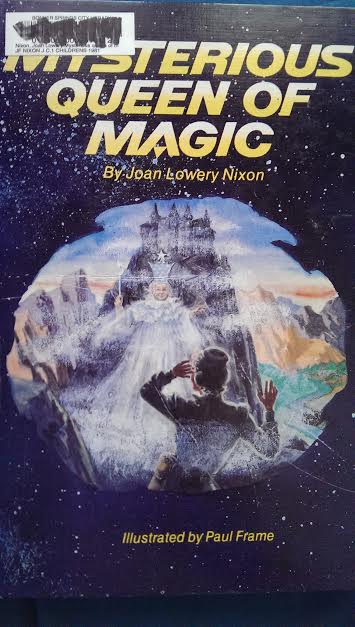
KleepQueenMagicThe Mysterious Queen of Magic by Joan Lowery Nixon, 1981.

This is part of the Kleep: Space Detective series.

Kleep and Till meet a strange young man who is looking for Kleep’s grandfather, Arko.  The young man, Mikkel, tells them a wild story, that an evil wizard is after him.  He is controlling Mikkel’s people on the planet Durth, putting them under a spell and forcing them to become his slaves. Mikkel believes that Arko may have the key to getting rid of him because an old wise man told him to ask Arko how to find Queen Stellara.  Queen Stellara was a legendary queen who could do magic, and Arko has some old write-rolls, scrolls of the kind people used to use before people began using computers alone for learning, that talk about her and her kingdom.  However, Arko doesn’t believe in wizards or magic spells or anything of the kind.

Kleep remembers Arko telling her the old stories from the write-rolls when she was little, and unlike her grandfather, she believes that wizards and magic may be real and wants to try to help Mikkel.  When Arko says that he doesn’t believe in magic and can’t help Mikkel, Kleep and her friend Till decide to use the scrolls to try to help Mikkel find Queen Stellara.  Taking Kleep’s robot, Zibbit, with them, they journey to the planet Loctar, where Queen Stellara was supposed to live.

Although this series is mostly sci-fi with a bit of mystery thrown in, this book is more fantasy.  When Kleep and her friends arrive on the planet Loctar, they discover that they must face a series of challenges to reach the legendary queen’s palace, like heros in a fairy tale.  Magic is real, and they must prove themselves worthy in order to meet the queen and ask her for the solution to the problem of the evil wizard.  But, their ordeal doesn’t quite end there because, while Queen Stellara provides them with the means to fight the wizard, they must face him themselves!

A little corny, but fun, although it’s not my favorite book in the series.  The others were more sci-fi, and this is more fantasy.  Also, for a “detective” series, there isn’t much mystery, more adventure.  It sort of reminds me of the original Star Trek episode Catspaw, except that the magical beings in this one are apparently really magical and not just aliens.  Like the other books in this series, I like the pictures, too.

KleepQueenMagicPic3

The Witch King

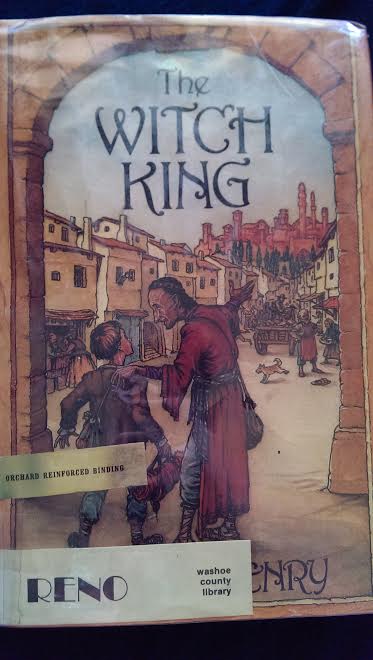
WitchKingThe Witch King by Maeve Henry, 1987.

Robert is the son of a fisherman in a small village by the sea. All his life, he’s grown up hearing stories of a mysterious City to the south that was fashioned ages ago from a silver tree. Wondrous things are said to happen there. People from the City used to visit the Witch Women in Robert’s village for advice, but no one has come there from the City in a long time, and people now doubt whether the City really exists. People have even stopped believing in the Witch Women. However, Robert believes in the old stories, and he wants desperately to see the City for himself.

The stories say that someday the Witch King will come to the City and plant a seed so that a new tree will grow. Robert wants to see this story come true, and Granny Fishbone, a strange old woman who tells Robert the old stories, says that the time of the Witch King is close. She gives him a pendant in the shape of a fish and tells him that it came from the City and that it is time for Robert to take it back there.

With some misgivings, Robert’s family lets him set off on his seemingly crazy quest of finding the City. To Robert’s surprise, he is met on the road by the Royal Wizard of the City. As Granny Fishbone said, the time of the Witch King is near, and there is trouble in the City. The Spell that controls the City is failing, and the King has been seeking a remedy for the problem.

The City has become corrupt because a usurper murdered the rightful king years ago and took over the City. He had his wizards cast a spell on the City that let him control everything in it, and he manipulated historical accounts to make it seem as though he was the founder of the City himself. Robert knows differently because Granny Fishbone is really one of the Witch Women, and she told him the true story about the miraculous tree and the founding of the City. The king’s grandson, David, is also corrupt and wants to learn to control the spell over the City for his own power. He believes that he is the prophesied Witch King, and he tries to convince Robert of it so that he will help him.

When Robert learns that David’s plans for controlling the spell may mean sacrificing his own sister, Princess Sophie, who Robert loves, Robert does his best to thwart his plans by telling the king and the Royal Wizard.  Although David at first seems to have the upper hand, he is not the true Witch King. Granny Fishbone was correct that the time of the true Witch King has come, and Robert has a much bigger role to play in the story than he thinks.  As the ancient prophesy says, the City will have to be destroyed in order to be saved.