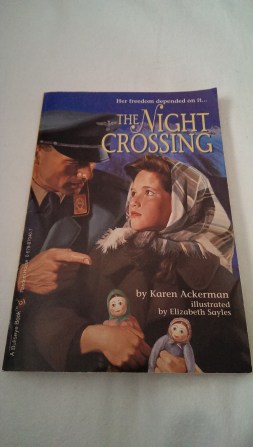
 The Night Crossing by Karen Ackerman, 1994.
It’s 1938 in Austria, and Clara’s parents have decided that their family needs to leave before things get worse. Already, Jewish families like theirs are being rounded up by the Nazis, and Clara and her sister Marta were chased through the streets by other children, shouting insults.
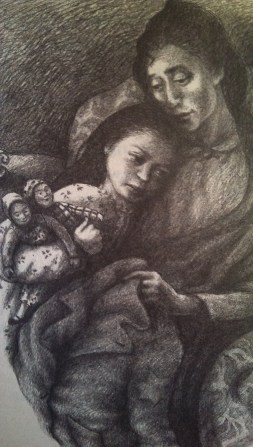
Their family has been through things like this before. Clara’s grandmother tells her about when she had to flee Russia as a little girl to escape the pogroms. She brought her dolls Gittel and Lotte with her as her family hiked through the Carpathian Mountains. Now, Clara will carry them with her as their family leaves Austria for Switzerland.
It’s a hard journey with lots of walking and little food. The family can carry very little with them, and some of what they have they are forced to trade for food, a place to rest, and for not being turned over to the Nazis. Finally, at the border crossing, Clara’s parents are afraid that they will have to get rid of the candlesticks that have been in their family for generations because they might be discovered by the border guards. Then, Clara comes up with a plan to hide them in her dolls. Will it work?
 This is a pretty short chapter book. Although the subject matter is serious, and parts might be frightening to young children (the part where Clara and Marta are chased and perhaps some of the parts where the family is hiding), there are only vague references to more dark subjects like concentration camps (people who already know what they are and what happened there would understand, but children who haven’t heard about them wouldn’t get the full picture from the brief mentions). The book would be a good, short introduction to the topic of the Holocaust by putting it in terms of the way it changed the lives of ordinary people who had to flee from it. Actually, it wouldn’t be a bad way to start a discussion of the Syrian refugees in Europe by putting it into the context of ordinary people fleeing the violence of war.
This book is currently available online through Internet Archive.
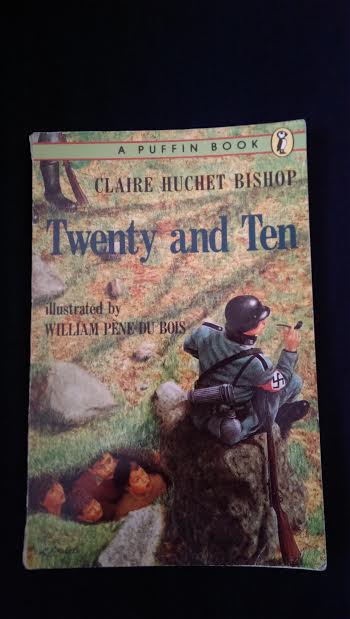 Twenty and Ten by Claire Bishop, 1952.
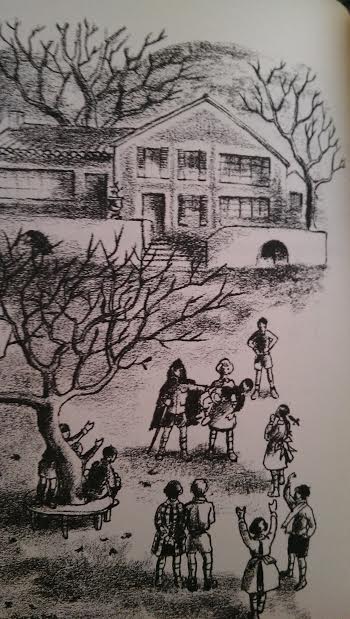 The two groups of children soon make friends, and one of the Jewish children, Arthur, shares something special with his new friend, Henry: a small piece of chocolate. With the rationing, none of them have seen chocolate in a long time. Henry decides to share a little with Janet because he likes her, and they decide to hide the rest and save it for later. When Denise spies them with the chocolate and wants to have a little herself, she steals the piece of chocolate from where Henry has hidden it. The others chase after her to get the chocolate back, and they end up accidentally discovering a cave that none of them knew was there.
 Jestress's Forgotten Books and Stories