
Secret of the Samurai Sword by Phyllis A. Whitney, 1958.
Before I explain the plot of this book, I’d like to point out some of the aspects of the book that make it interesting. The story takes place in Japan following World War II. The book wasn’t just written in the 1950s but set during that time (no exact year given, but the characters refer to the war as being “more than ten years ago”, putting it contemporary to the time when the book was written and published), and the war and its aftermath are important to the plot of the story. Although the main characters are American tourists, readers also get to hear the thoughts and feelings of people living in Japan after the war. The author, Phyllis A. Whitney actually born in Japan in 1903 because her father worked for an export business in Yokohama, and she spent much of her early life living in and traveling through Asia. Her parents gave her the middle name of Ayame, which means “Iris” in Japanese, although she had no Japanese ancestry. Her parents were originally from the United States, but the family did not return to the United States until Phyllis was 15 years old, following her father’s death in 1918. That means that Phyllis Whitney was very familiar with what Japan was like before both of the World Wars as well as after. She lived a very long life, passing away at age 104 in 2008, and she saw many major world events and changes through her life. I was interested in hearing how she viewed the effect of the World Wars, especially WWII, on Japan and its culture in this book. In the back of this book, there is a section where the author explains some of the background of her life and this story and her inspiration for writing it.
Celia and Stephen Bronson are American teenagers who are spending the summer in Japan with their grandmother, who is a travel writer, not long after the end of World War II. Celia and Stephen are really just getting to know their grandmother, whom they have not seen since they were very young (they don’t explain much about why, except that she travels a great deal) and don’t really remember, and she is getting to know them. Stephen’s passion in life is photography, and Celia likes to draw, although she doesn’t consider herself to be very good. Stephen is the older sibling, and he’s lively and outgoing, often doing the talking for Celia as well as himself because she’s quieter and less confident. Celia often hesitates to voice her opinions in Stephen’s presence because he jumps on her for things she says and shuts her down when she speaks. (Yeah, I’ve been there before, kiddo.) Stephen is often brash and insensitive, bluntly referring to his sister as “beautiful but dumb” right to her face and in public when she accidentally leaves one of their bags with some of his camera equipment behind at the hotel where they were staying in Tokyo. Celia is embarrassed at her mistake because she knows that sometimes her mind wanders and she doesn’t focus properly. Celia is a daydreamer. She feels bad that she does silly things sometimes, but she had hoped that this trip to Japan might help her and Stephen to be closer, more like they used to be when they were younger, before Stephen started getting so impatient and disapproving with her. However, Stephen’s about to get a little disapproval of his own. (And more from me later.) Stephen gets a rebuke from his grandmother for using the word “Japs” in the conversation because they are guests in Japan, and she won’t have him using “discourteous terms” for the people there. The kids’ grandmother says she’ll just write a note to the hotel, telling them where to forward the forgotten bag, and it’s not a big deal.
The kids and their grandmother, whom they call Gran, are not staying in Tokyo but renting a house in Kyoto. Gran knows her way around because she has been to Japan before, multiple times, and she can speak a little Japanese. Everything is new to Celia and Stephen, even the train trip to Kyoto, where their grandmother introduces them to the bento boxed lunches they can buy at the train station, which come beautifully wrapped with included chopsticks, and little clay teapots with green tea. (I love stories that include little pieces of cultural information like this. When they finish with their lunch boxes and pots of tea, they wrap them up and put them under the train seats to be collected by staff later.)
While they’re having lunch on the train, the kids’ grandmother tells them a little about the house she’s rented. It’s a very old house, and a Japanese family used to live there, but after WWII, the Occupation Army used it for a time and updated some parts of the house, so it’s an odd mixture of Japanese and Western style now. (Gran says that the house now includes a “real bathroom.” Here, I think what she’s really talking about are the toilets, not the baths. Americans don’t make a distinction between rooms for baths and rooms for toilets because our houses usually have both in the same room. In Japan, like in Britain, that’s not always the case. What I’m not sure about is whether she’s saying that the house didn’t originally have indoor plumbing because it was really old or if she’s just saying that the army changed the traditional squat toilets for western style ones. Either way, I think she’s trying to say that they can expect western style toilets, similar to what they have at home.) She also tells her grandchildren that the house is supposed to be haunted by a ghost in the garden. She thinks the prospect of a ghost sounds exciting and will make a nice addition to the book she’s writing. However, Stephen says that he doesn’t believe in ghosts. Celia hesitates to voice much of an opinion because she doesn’t want Stephen to jump all over her verbally again. Gran tells Stephen that people in Japan look at things like ghosts and spirits differently from people in the United States hints that he should keep more of an open mind.
The three of them discuss the bombings of Japan during WWII, and Gran explains that Kyoto wasn’t bombed, like Tokyo and Yokohama were. It’s a very historic city because it used to be the capital of Japan, and Gran is happy that the historic shrines and temples of the city survived the war. Celia admires the beautiful countryside and thinks about drawing it later. Although she said earlier that she would be happier if someone else saw the ghost instead of her, Celia thinks that an elegant Japanese lady ghost pining for a lost love in her garden would make a very romantic image. However, the ghost isn’t an elegant lady. It’s the ghost of a samurai, pierced with arrows, and he’s looking for his lost sword.
When they finally reach Kyoto, Celia is surprised by how modern it looks and how many people are wearing American style clothes instead of kimonos. Finding the house is a bit tricky because the houses don’t always have house numbers and not all of the streets have names. (This is true, although there is a system behind the lack of names and irregular numbering.) People stare at the Bronsons because they’re blond and stand out from everyone else as foreigners. At the house, they meet the maid, Tani, and the cook, Setsuko. Gran explains to the kids how they need to change their shoes when they enter the house and how the bedding in the bedrooms is folded and put away during the day. (Again, I really like the little pieces of information about daily life and culture.) Celia admires the garden of the house, but she notices a strange lump of concrete that seems oddly out of place. It turns out to be a bomb shelter, left over from the war. The door to the shelter is locked, so for much of the book, the characters are unable to look inside.
Then, Celia spots a Japanese girl from a nearby house watching her. She tries to say hello, but an elderly man discourages the girl from talking to Celia. However, a boy named Hiro stops by because he’s been studying English in school and would like to practice by talking to them. Hiro isn’t bad, but his pronunciation is off, partly because of the r/l sound that’s practically cliche in fiction. (The r/l confusion in Asians who speak English is based in reality, not just fiction. Many Asian languages, including Japanese have a sound that’s about halfway between ‘r’ and ‘l’, which causes confusion to English speakers, who are accustomed to those sounds being completely separate from each other. This is one of those books that spells things people say how they’re pronounced in order to convey accent, which I tend to find annoying. The way Hiro’s speech is conveyed seems to be pretty accurate for a beginning speaker of English who is accustomed to Japanese, including his mispronunciation of “baseball” as “beso-boru.” I’m not really fond of books that over-emphasize accents in writing because there are a lot of really corny jokes in old movies based on the r/l sound confusion, and they tend to overdo it and try to carry the jokes too far, but I’ll go easier on this particular book because it’s important to the story that Hiro is learning English pronunciation. I also appreciate that there are some Japanese words and phrases and their translations in the book, which is educational.) Stephen, always the rude one, picks on Hiro’s pronunciation while he’s visiting, and when he leaves, he calls him an “oddball.” Gran disapproves of Stephen’s attitude and tells him that Hiro might teach him “a few things.” Stephen does become friends with Hiro and some of Hiro’s friends, and Celia admires Stephen’s ability to make friends easily, but it occurs to me that might not be entirely due to Stephen’s friend-making abilities because his new friends also need the ability to tolerate him. (Mean people can be sociable and attract others because they’re self-confident, but rudeness is also trying, especially when you’re around it for long periods. Also, I’m pretty sure that Hiro doesn’t know what Stephen said about him behind his back.)
Celia tries to ask Tani about the ghost in the garden, but all Tani will tell her is that only her cat sees the ghost. Later that night, Celia wakes up and hears the sound of someone wearing wooden clogs walking around outside and music being played on a stringed instrument. Celia is too comfortable and too tired to get up, so she doesn’t see the ghost that night, but she believes that’s what she heard.
When Celia and Stephen are allowed to do some exploring on their own, Celia meets the Japanese girl she saw before and learns that she’s actually American, too. Sumiko Sato’s parents were born in Japan, but she was born in San Francisco and only arrived in Japan the month before to stay with her grandfather. Sumiko doesn’t think of herself as being Japanese, although she speaks the language. Her grandfather, Gentaro Sato, is a famous artist, but he is also an old-fashioned man who doesn’t like Americans, partly because of the destruction from the war. Sumiko is Hiro’s cousin, and Sumiko is a little angry that her grandfather allowed Hiro to go talk to the Americans the other day to practice his English but wouldn’t allow her to go when she’s really an American who speaks fluent English. She says that it’s part of her grandfather’s old-fashioned attitudes and because Hiro is a boy. Apparently, boys are allowed more freedom than girls in Japan. Since she and her mother came to Japan after her father died, Gentaro has been trying to teach his granddaughter to be a proper Japanese girl, but Sumiko is used to living as an American and hates it that her grandfather wants to mold her into being something else. She also says that the other girls in the area don’t accept her because they know that she’s an American who doesn’t fit in. Sumiko doesn’t even care for her grandfather’s traditional style of art, which only has nature themes and no people. She likes the pictures Celia draws with people in them. She wishes that they’d stayed in San Francisco because she really wants to go to the university in Berkeley, where Celia and her brother live, but her mother missed Japan, and Sumiko is only 14, the same age as Celia, too young to stay in the US by herself. Celia sympathizes with how Sumiko seems caught between two cultures, but she’s grateful that Sumiko is there because she could really use a friend this summer. Really, both of them could use a friend who speaks their language, in more ways than one. Celia asks Sumiko if she knows anything about the ghost that’s supposed to haunt their house. Sumiko says that her grandfather has seen it, but she refuses to believe in it until she sees it herself.
Celia’s first knowledge of the lore of the samurai who is supposed to haunt their garden comes when she and her grandmother are looking at prints of Gentaro Sato’s work in a shop. The shop owner also has a painting by Gentaro Sato that he did in his youth, when he did paint pictures of humans. The picture is of an ancestor of the Sato family, a samurai who died bravely in battle. It’s a frightening image but a powerful one. Later, when they see Sumiko at a shopping center with her younger cousins, and they ask her about the samurai painting. Sumiko says that people in her family talk about the painting, but she’s never actually seen it herself because her grandfather gave it away years ago, although the family wishes that he hadn’t. Gentaro said that he just couldn’t bear to have it in the house anymore. After the war ended badly for Japan and his eldest son (Hiro’s father, not Sumiko’s) died, Gentaro was greatly depressed. It turns out that Hiro’s father didn’t just die but committed suicide along with his commanding officer at the end of the war because they felt like the defeat of Japan was a personal dishonor for them as soldiers. At least, Hiro’s father’s captain felt that way, and Hiro’s father killed himself out of loyalty to him. (Japanese soldiers in real were known to have killed themselves in various ways at the end of the war. Some committed suicide as individuals and some in large groups, and some in last-ditch battles. Even civilians killed themselves and even family members for fear of how they might be treated by an occupying American army. The war’s deaths didn’t end with the war itself.) That means that Hiro’s father’s death was a direct result of the defeat of Japan. The Sato family said that, after that, Gentaro sat and stared at the samurai painting for days until, one day, he couldn’t stand to see it anymore. Now, he doesn’t even like talking about it. During an English language practice session with the Bronson family, Hiro further explains that, while Gentaro hadn’t wanted Japan to enter the war in the first place, he was even more shocked when Japan lost because he always thought that the gods favored Japan and wouldn’t allow the country to be defeated. The defeat shook his confidence in everything he thought he knew and believed in.
Even though it’s been more than ten years since the war ended, the memory of the losses and destruction of the war is still strong, and Gentaro still struggles with his feelings about it. He gave up drawing and painting people and samurai for his nature drawings because he wanted to get as far from the themes of war as possible. All of this ties directly with the house the Bronsons have rented because the Sato family originally owned the house. They were forced to sell it to the Occupation Army because they badly needed money after the war, and they moved to a smaller house nearby, just another loss from the war for Gentaro to mourn. When Celia and Sumiko take doll-making lessons together, their teacher, Mrs. Nomura, who has known the Sato family for a long time, tells them things that even Sumiko hasn’t heard from her family. Apparently, before Hiro’s father killed himself, he hid the sword that his samurai ancestors kept for generations because he didn’t want the occupation forces to find it. (It was a valid concern. Although Sumiko points out that American soldiers wouldn’t take the sword to use against Japan as her grandfather initially feared because most Americans, even soldiers, don’t know how to fight with swords, some US soldiers were known to take weapons and other objects they found as “souvenirs” or war booty.) Gentaro originally told his son to destroy the sword to keep it out of enemy hands, but no one knows whether he did or not. However, metal swords are very difficult to destroy, so people think he might have just hidden it somewhere.
The ghost that haunts the house and garden is the samurai from Gentaro’s painting, even including the arrows piercing his body. Celia does eventually see him, even noting that he doesn’t have his sword with him, like he did in the painting. Strangely, Gentaro actually seems happy whenever he sees the ghost. He thinks the ghost is trying to tell him something, although he worries because he can’t figure out what the ghost wants and thinks that he might not be able to provide it. Why does the ghost appear in the garden at night? Or, perhaps a better question, why would someone want to make it seem like a ghostly samurai is haunting the garden? Is someone really trying to send a message to Gentaro? And, what did Hiro’s father really do with the sword years ago?
My Reaction
The Mystery
I’ve read other books by this same author, so I know that she wrote mysteries, not ghost stories. I knew from the beginning that the ghost wasn’t really a ghost. I was pretty sure, for about half the book that I knew who the “ghost” was going to be because there was one really obvious place for the “ghost” to get his costume, but I wasn’t completely sure, and I also couldn’t figure out the motive. The missing sword is at the center of the mystery, but I wasn’t sure why someone would play ghost to find it. I mean, the ghost act does allow someone to enter the garden without permission without being recognized, but when Celia and Stephen see the ghost, the ghost doesn’t really seem to be actively searching for anything. The “ghost” seemed to be meant to be seen by other people, but I couldn’t figure out why or what that was supposed to accomplish.
As it turns out, I was only partially right with my first theory. I was right about where the costume came from, but not who was wearing it. I had rejected one of the characters as a possibility because this person was accounted for during one of the ghost sightings, but this person had a little help to establish an alibi. The ghost stunt wasn’t meant to upset Gentaro but to help him to let go of the past by staging a conclusion to a family tragedy in order to help Gentaro to regard the situation as resolved. The “ghost” had a final act to the drama in mind when Celia’s investigation interfered, but it all turns out for the best because Celia realizes where the missing sword must be. In the end, they don’t tell Gentaro the whole truth because the “ghost” deception would upset him, but when they return the sword to him, he is able to believe that the spirit of the samurai is now at rest. The sword was not destroyed, but Hiro’s father did manage to break the blade in half in order to render it unusable to anyone who might find it. Gentaro regards the broken blade as a fitting metaphor for the end of the war and, hopefully, the beginning of a more peaceful future.
The mystery is good, and the nighttime sightings of the ghost are fun and creepy, but much of the emphasis in this story is on the characters, their relationships with each other, and the history and culture of Japan.
Japanese Culture
I’m not an expert on Japanese culture, although I know a little about Japanese history. The author of this book actually lived in Japan during her youth, and she later returned to visit, so this is a subject near and dear to her heart. The book is full of explanations of daily life and culture in Japan, more than I even mentioned above. The characters visit some famous landmarks and collect stamps in their stamp books to mark places they’ve been. I also enjoyed the scene where Celia watches Gentaro as he pays his respects to a local shrine. The rituals Gentaro observes at the shrine resemble the ones described in this video for the benefit of tourists visiting Japan. The kids also visit a Japanese movie studio with their friends because Hiro and Sumiko’s uncle is an actor, and Hiro gets a part as an extra in a movie. The book ends around the time of some Japanese festivals that honor the dead, which is fitting.
The books seems pretty accurate on history and culture, but I can’t vouch for everything the author says, both because I haven’t lived in Japan myself and because the book takes place more than 60 years ago, so some things may have changed since then. Sumiko makes some comments about Japanese family life and family dynamics during the course of the story, and I don’t know if all of them still apply or if some of them even really applied to families other than Sumiko’s. There’s probably at least some basis for what she says about how girls are treated differently from boys and how discipline of young children works, but I’m just not sure to what extent Sumiko’s experiences reflect real life because family dynamics can be personal among families. There may be some general trends in these areas, but actual results may vary or change with time.
If you’d like to see some street scenes of Tokyo during the 1910s, when the author lived in Japan as a girl, for an idea of how Japan looked to her at the time, I recommend this video (colorized and with ambient sound added because it was originally silent). There are also videos that show Japan in the 1950s (with added music) and part of a documentary about family life in Japan during the early 1960s (which discusses how Japanese culture and clothing became more Westernized after the war) to give you an idea of what the author might have seen on her return visit to Japan and how Japan might have looked to the characters in the book. Again, these are just brief glimpses, and actual results may vary in real life, but I did like that the 1960s documentary shows what a Japanese house of the era looks like because that’s important to this story. It also shows scenes from a children’s art class, which is also appropriate to the story. This video from 1962 shows scenes in Kyoto and Nara which include a print shop and a temple, which are also places the characters in the story visit. For a look at modern 21st century life in Japan, I recommend the YouTube channels Life Where I’m From and japan-guide.com, which are in English and designed to be educational for visitors to Japan. In particular, the Life Where I’m From channel includes this video, which shows and explains old townhouses in Kyoto, which can help you further understand the types of homes in the story.
The War
Since the book takes place during the 1950s, the focus is on the end of World War II and what happened immediately after. If you want to know more about how the war started (a lot of it had to do with resources as well as the state of international affairs following WWI), how Japan entered the war, what led up to the attack on Pearl Harbor, and how the US became involved, I can suggest the videos I’ve linked in this sentence for some brief explanations with historical footage. I particularly like the ending to the CrashCourse video that briefly explains WWII, where the host talks about the aftermath of the war and the development of nuclear weapons, explaining that, “the opportunity of studying history is the opportunity to experience empathy. Now, of course, we’re never going to know what it’s like to be someone else, to have your life saved or taken by decisions made by the Allied command. Studying history and making genuine attempts at empathy helps us to grapple with the complexity of the world, not as we wish it were, but as we find it.” I think this fictional mystery story captures some of that sentiment. What happened at the end of the war wasn’t happy. It was good that the war was over, but Japan was in a bad state, and its people were in a bad situation. The characters in this story have to acknowledge that and come to terms with it, and empathy is one of the tools they use to do it.
It helps to remember that the original audience for this book was American children about the age of the child characters in the story, who were probably too young to remember the war themselves and were dependent on their elders to tell them what happened. The book was meant to explain some of the Japanese perspective and encourage empathy. The author notes in the back of the book that she consulted with some Japanese friends about the aspects of Japanese culture included in the book. It’s worth pointing out that Americans and Japanese have different memories of the war because, while both countries experienced trauma from it, the parts that caused each country the worst trauma were different. For Americans of the time, the beginning of the war and Pearl Harbor were the most traumatic parts, and for the Japanese, the end of the war, the atomic bombs, and the suffering that came immediately after the end of the war were the most traumatic. All of those events were part of the war, and they were all bad, but some parts were worse for some people than others, and that influenced how they all felt afterward. It’s worth keeping that in mind because it explains how different characters in the story feel and how they approach the subject and also what the author is trying to point out to the American children reading the book.
Because this book was intended for a young audience, probably kids in their tweens (pre-teens) or early teens, it doesn’t go into gory detail about all of the horrors of war, but there’s enough here to give a realistic impression of genuine suffering. For example, we know that Hiro’s father committed suicide with his commanding officer after the war, but the book doesn’t explain the method he used to do that. It’s left to the imagination. (Hiro’s father didn’t use his family’s sword for that or it would have been found with his body, but that’s all we really know.) Readers are invited to empathize with the characters about what they’ve endured as well as what they’re continuing to go through. Celia empathizes with Gentaro when she learns what he and his family suffered because of the war, although she still thinks that it’s a little unreasonable for him to still hate all Americans because he now has a granddaughter who counts as an American by birth and upbringing and Celia’s family wants to be friends. Celia follows her grandmother’s attitude that the war ended more than ten years ago, and it’s time to move on and build a new future. Of course, that’s easier to say when you’re not the one whose life was shattered and completely changed by the war. Gentaro has had some time to work through some of his feelings about what’s happened, but the damage done to his family is serious and lasting, and the truth is that nothing will ever be the same for them again. The characters have to acknowledge and accept some of the grim realities of the past before they can move on.
I was surprised that the book never mentioned Japanese internment camps in the US during WWII because I would have expected that to have an effect on Sumiko and her attitudes about being an American, but I suppose we’re meant to assume that her family wasn’t among those sent to the camps. Of course, this is more than ten years after the war, and since Sumiko is fourteen, she was probably very young during the war and wouldn’t have much of a memory of that time.
I’ve talked somewhat about how Sato’s family was affected by the war and their thoughts about it, but there’s much more detail about that in the book. The book doesn’t shy away from talking about the atomic bombs dropped on Japan. The characters in the story don’t visit Hiroshima in the book, but at one point, the subject comes up when Celia and Hiro have an honest talk about what the missing sword means to the Sato family. Hiro describes the museum and monument at Hiroshima to explain how his family feels about the nature of war. The sword is no longer a symbol of war to them but his family’s connection to the past and their ancestors. Gentaro wants it back because he thinks the ghost is his samurai ancestor, searching for the sword because it’s lost, and he gets upset because he can’t return the sword to this spirit. (That’s not what’s happening, but that’s what Gentaro thinks at first.) Celia is moved to tears at what Hiro tells her about Hiroshima and how both Americans and Japanese go there to mourn and pay their respects and there is “no resentment left against those who had dropped the bomb.” (I’m not sure that there is “no resentment” at all because people like Gentaro are still struggling with their feelings, and that’s completely understandable, but the story is focusing on how people were coming to terms with what happened in a form of sad acceptance.) Hiro quotes the words on the monument, “Sleep undisturbed, for we shall not repeat this error,”, adding “Japan makes error. America makes error. But these words do not mean to apologize for wrong. By ‘we’ monument means mankind. It is man who must never make error again.” It’s a broad statement against war itself, and this is the sort of sentiment the author is encouraging the readers to have, reflecting on what war does to people, even just ordinary families, letting them feel for others, and consider what they really want for the future.
The bright side is that, although there were dark times in the recent past and everything has changed for the Sato family, not every change has to be a bad one. With the help of the young people in the story, Gentaro begins to see that there is new life and hope for the future. Even though they don’t speak the same language and have to communicate through a translator, Gentaro bonds with Celia over their shared love of art and the beauty of nature. Celia is quiet, shy, and observant, very unlike the loud and rough Americans Gentaro has seen before (including her brother). Gentaro begins to realize that not all Americans are alike, and some can be kindred spirits. Similarly, not all Japanese girls are really alike, and Sumiko is just a different kind of Japanese girl. Gentaro realizes that he has to take people as he finds them, even his own complex and seemingly incongruous granddaughter. Sumiko has some soul-searching of her own to do before she and her grandfather finally have a heart-to-heart talk, but their interactions with the American family put their relationship into a new light. Gentaro’s life isn’t what he once thought it would be, but this is the life he has now, and not all of it is bad. Sumiko isn’t the granddaughter he would have expected, but she’s also one he has, and she’s not bad, either. Gentaro also realizes that Celia has some good qualities that she could use to be a good influence on his granddaughter, especially her ability to see the beauty in things around her and communicate it to other people. Celia is very perceptive, and Gentaro recognizes it. Although Sumiko has been resisting traditional Japanese culture because it’s unfamiliar and uncomfortable to her and she thinks that even the people in her own family don’t like her, she begins to appreciate the beauty of traditional Japanese arts through Celia’s appreciation for them. Celia also helps her to see a different side of her family. Because Celia can bond with Gentaro over their shared love of art, Sumiko realizes that she also values her grandfather and admires his art and begins to bond with him by learning how to show her interest and appreciation. When Gentaro draws a picture for Celia, Sumiko tells her that he’s never drawn a picture for her, so Celia tells Sumiko to ask her grandfather for a picture so he’ll know that she wants one and will value what he gives her. Gentaro’s appreciation for Celia also helps her to resolve some problems in her own life.
The story works on a small scale, focusing on one American family and their interactions with a Japanese family and seeing how they can help each other and find some common ground. However, you might be wondering what was going on in the bigger picture at this time. As the author explains in the section in the back where she talks about her own travels in Japan, there were American tourists going to Japan and seeing and doing things very much like what the characters in the book do. Americans could safely visit Japan in the 1950s and receive hospitality, although the war was still in everyone’s mind, and there were lingering feelings about it. The fact that, when the book takes place, more than ten years have passed since the end of the war helps. The children in the story were either very young when it was still happening or weren’t born at all, so they don’t remember the war themselves the way their parents and grandparents do. Also, there are two other factors that are worth addressing here although they aren’t fully addressed in the book.
The first is that, in the face of the devastation of the war and the hardships that came after, many people developed a kind of stoicism, a sense that that situation simply “couldn’t be helped” because it was all just a part of the nature of war and that the best thing to do was to try to go on with life as best they could afterward, rebuilding their cities and their lives. They didn’t like what happened (to put it mildly), but they accepted circumstances for what they were. There was still plenty to justifiably complain about, but the focus shifted to doing something about building the future, which is empowering. This mindset also helped people in Japan to shift the blame for the results of the war away from the soldiers who engaged in it and onto the concept of war itself, a sentiment that is reflected in the story. As Hiro puts it when he’s describing the monument at Hiroshima to Celia, “But no more enemy. Only war is enemy. Enemy of all people.”
The second factor is that the US learned something from the end of WWI. Part of the reason why WWII happened was that Germany was left in a bad state with a crippled economy after the end of WWI and a lot of resentment for those who had left it in that condition, those who blamed Germany for the entire war. As WWII came to an end, the US didn’t want to leave Japan in a similar condition, setting up further suffering and resentment that might erupt in revenge later, and they also hoped to shift the cultural focus of Japan away from some of the imperialistic and nationalistic feelings that helped fuel Japan’s involvement in the war. (Gentaro and his son’s despair at Japan’s loss of the war was partly based on what they had always believed about their government and leadership and what victory and loss would mean, and that’s an example of the sort of thinking that the US wanted to discourage during the rebuilding process, to redirect attention from the war and defeat mindsets. In real life, there were more complicated and controversial factors, of course, relating to political and economic structures, but this is the sort of reference to mindsets that enters this particular story. They’re pointing out that the defeat of Japan in the war doesn’t really mean what Gentaro and his son originally thought it meant for Japan’s future and even the future of the Sato family.) So the US government made it their business to contribute to the rebuilding of Japan, starting almost immediately after the end of the war. Being an occupied country after a war is never a great thing, and there was an admitted element of self-interest in the efforts the US made (fighting Japan once was a horrible nightmare, so they were ready to do things that would make that less likely to occur a second time, plus Japan also proved helpful in providing bases for US troops as the Korean War started) and perhaps a lingering sense of guilt over the use of atomic weapons, but the ability and willingness to take some responsibility and back it up with both work and money is worth something.
The book takes a rather optimistic view of the US occupation of Japan after the war, probably more than it really deserves. For example, Gran and Stephen both discount the possibility that US soldiers would take anything that didn’t belong to them as souvenirs, but they were known to do that in real life. They don’t even touch on some of the darker the subjects, like rape and prostitution, because this is a book for kids, but those were realities as well. In real life, post-war recovery was a long, hard effort with a lot of problems and mistrust along the way, but as time went on, the efforts helped because the people involved were willing to continue putting in the work even though it was difficult, people didn’t do everything right, and things weren’t always working well. So, the US did cause immense destruction to Japan but the fact that they stayed to become rebuilders after the war probably made a big difference in the long term relationship between the two countries. The US couldn’t bring back the dead, but in the end, they did do something to help the living. By the time the American Occupation ended in 1952, just seven years after the end of the war, Japan was on a much better footing, economically sound enough to begin operating independently again, albeit with some continuing military restrictions.
Tourists to Japan helped bring in additional sources of business and revenue, and when tourists were genuinely interested in the history and culture of Japan, as the characters in the story are, they made pleasant visitors. Probably, these positive interactions helped smooth over some of the bad and bitter feelings from the war and dissolve some prejudices on both sides. Real life is complex and messy, but the book emphasizes these types of positive interactions and the feelings of understanding they can produce. The author showed her young readers that not all Japanese are scary soldiers, like the ones who attacked Pearl Harbor; some are artists who create beautiful things and love nature, like Gentaro, and some are kids, like Sumiko and Hiro, who are much like the kids who originally read this book and can be friends. Also, if Americans can go to places like Hiroshima and face the past, showing real feelings like sorrow and remorse, and they can also appreciate the good parts of Japanese culture with respect and genuine interest, maybe they’re not so bad and scary, either. This is the way the author wants her readers to behave and to look at other people.
Gradually, the US and Japan developed a sense of mutual respect, which improved over time. It can’t be said that it’s a completely perfect relationship because nothing on Earth ever is completely perfect, but it’s a very good relationship in modern times, especially considering what it started from. (Actually, way before WWII and the atomic bombs, the first interactions that the US had with Japan in the 19th century were also pretty rocky, such as when Matthew Perry sailed there in 1853 and told isolationist Japan that they had better open up for trade or he would open fire. That’s one way to make a first impression.) The improvement came largely because the people involved cared enough to work for the improvement. The way things happened wasn’t always good, and sometimes, it was about as bad as it could get, but people took what they had and made it better, and that’s what makes a relationship worth something.
Theme of Respect
Speaking of relationships that are based on mutual respect (and even more about those that aren’t), I found the character of Stephen in the story really annoying, and if you’ve read other reviews of mine where I complain about characters like him, you can probably guess why. He is rude and inconsiderate and occasionally downright nasty. One of Stephen’s functions in the story is to be an example of ways not to behave, and that means that readers have to watch him do things that are annoying and cringe-inducing. The other way he functions is to provide a reason for Celia to want to prove her intelligence in spite of his criticism that she’s “dumb.” He’s kind of a negative force, moving the situation forward, not because he does much to help it, but because Celia wants to prove that she’s not as dumb as he thinks she is and earn his respect. I understand the points the author wants to make with Stephen, but putting up with him along the way isn’t fun. What I have to say about Stephen largely about the issue of respect, which is a theme that runs through the book.
To begin with, although Stephen is outgoing, and that helps him to make friends with some of the Japanese boys, including Hiro, but Stephen really isn’t a very respectful visitor in Japan. He starts off the trip using the word “Japs” freely on the train until his grandmother stops him. He laughs at Hiro and calls him an “oddball” behind his back for the way he speaks when Hiro knows more English than Stephen does Japanese. When they visit a temple, Stephen openly laughs at one of the worshipers because he thinks something the man does looks silly. Stephen is the kind of American tourist who gives other tourists a bad name, embarrassing us all. Perhaps I might feel differently if he was ten or twelve or younger, but he’s fifteen years old. That’s one year away from driving and three years away from college and registering for the draft, even back then. The older someone is, the worse it is when they act that way, like they don’t have a clue. When you’re in high school, you’re old enough not to behave like a little kid who doesn’t know that he’s supposed to sit still and not to use potty words in church. When they first start talking about going to the temple, Stephen gives Celia a funny look like he’s thinking, “that if he took her along she’d do something foolish so that he’d be sorry she was there,” but Stephen is the one who does offensive things. He’s worse than Celia’s occasional accidental clumsiness because he’s mean. I partly blame his parents and grandmother for that. He’s got this entitlement attitude, like everyone else has to think of him first and like he can do anything he wants while he jumps all over his sister for every little thing, and I think it’s because his parents issue corrections to Celia that they just don’t with him, no matter what he does. He thinks that he’s great and can do no wrong.
Stephen’s grandmother does correct him sometimes. When he laughs at the man at the temple, she says, “Don’t forget that the things we do seem every bit as funny to the Japanese, but they are at least polite enough not to laugh in our faces.” That’s a large part of Stephen’s problem – his sneering contempt for other people that he thinks is funny and his complete inability to figure out how others feel even when they actively tell him. Basically, Stephen is an arrogant brat. He doesn’t know how to have genuine respect for others and appreciate things they do, or at least, he’s quick to show disrespect because he thinks it’s cool and funny. His behavior forces other people to exercise more self control because he won’t control himself. Worse, while the grandmother has an honest talk with both Celia and Sumiko about their problems, she seems to have a “boys will be boys” attitude about Stephen and doesn’t tell him much. From what Celia says, it sounds like her parents are the same way. Yeah, I’m sure that boys are boys, but that’s only to the point where they’re legally men. While we’re at it, adults are adults, and I’d like to see a bit more adulting going on here from the people who are supposed to raising Stephen. Gran lets the kids roam around town and famous sites by themselves, and I wouldn’t feel comfortable doing that if I didn’t have confidence that they could be trusted to behave themselves unsupervised. If I were in charge of these kids, and I knew that I had a boy like Stephen, I’d prime him for certain situations, telling him ahead of time, in no uncertain terms, what I expect and what’s going to happen if he doesn’t follow through, but if Gran ever has a serious talk with Stephen beyond a mild rebuke a couple of times, we don’t see it. No preemptive talks or warnings like the kind I would have gotten as a kid. I also wish the grandmother had had an honest talk with Stephen about the way he treats his sister.
Celia’s feelings about her brother are a major part of her character and the conflicts she feels in the story. When she was little, she admired her older brother because it seemed like he knew so much and could do everything so well, and she felt like she wasn’t as good. She still admires him, but having respect for Stephen hasn’t caused Stephen to have any respect for her in return. This is the source of the problems between them. As the story continues, Celia still wants his respect, but she gets more and more fed up with her brother’s attitude and disrespect for her, picking at every little thing she does or likes or thinks or says and insisting on calling her “beautiful but dumb,” even when things that happen aren’t her fault and she apologizes anyway to placate him. Her self-esteem is a little low because of the way he picks at her and repeatedly calls her dumb, but at the same she realizes that she isn’t really dumb and that there are things that she actually understands certain things better than he does. He belittles painting as a skill to his sister, knowing that it’s something she likes to do, because photographs are more accurate at capturing what a subject really looks like, not appreciating the talent that it takes to make a painting and convey a feeling through it. Stephen doesn’t have a clue about anyone’s feelings. When Celia gets fed up with him for his rudeness to her when a picture she was trying to take for him is messed up because she was accidentally startled by a car horn, he can’t understand why Celia is irritated with his rudeness because, as far as he’s concerned, he’s the only one who’s entitled to have feelings. “Why should you be mad? You’re the one who spoiled the picture for me.” Yeah, and you’re the one who spoiled the day for her because you’re rude, self-centered, and inconsiderate, Stephen, and you’ve been that way for this whole trip. Maybe look in the mirror once in awhile and listen to yourself talk.
Gran sees Stephen’s arrogance, negativity, and disrespect. At one point, she suggests that the children take a class in something and learn a skill in Japan that they wouldn’t be able to learn at home. Stephen becomes interested in learning judo, and Gran suggests that Celia learn to make a doll after they admire some in a shop. When she sees Stephen shaking his head over the doll-making, Gran tells him, “Never mind. We’ll be polite and not tell you what we girls think of judo.” It’s a reminder that Stephen doesn’t have to like everything, but he should be polite enough to allow others to like what they like and not ruin things for them just to make himself feel bigger and better. Gran characterizes Stephen more as being thoughtless and teasing than intentionally mean toward his sister, but I don’t think that’s quite accurate. Calling someone “dumb” repeatedly, even when you can tell it’s making them mad, isn’t affectionate teasing; that’s just a direct insult. I’m not fond of any kind of teasing in general, but thoughtless but affectionate teasing would be more like someone joking around and giving someone a cutesy but embarrassing nickname, like calling a short person “munchkin” or something. When you’re just nitpicking someone to death and calling them dumb, you’re just nitpicking them to death and calling them dumb. It’s much more straightforward. Actually, I’m personally creeped out by the “beautiful but dumb” comments Stephen keeps making. Referencing his sister’s attractiveness while simultaneously telling her that she isn’t worth anything is a really weird thing for a brother to do. It’s not only really harmful to her self esteem, because Celia semi-believes what Stephen keeps telling her (and Gran openly acknowledges that), but it’s also pretty gross when you begin to think about what he’s really saying, implying that she’s a girl who’s “only good for one thing” and doesn’t need to be respected. I doubt that Stephen really means it that way, but I think he’s such a dang arrogant idiot that he hasn’t got a clue what he really means about anything. He has contempt for other people, so I have contempt for him.
Gran sees all of this as a phase that Stephen will get over someday. She says that he’s not thinking about Celia’s feelings because he’s too busy thinking about other things right now, but deep down, he really realizes that she’s a good sister. I don’t see it that way. I don’t think people just magically grow out of anything and that they need to have things spelled out for them because most people aren’t good at guessing why something they’re doing is bothering someone. I wish that Gran had told Celia that she can turn down things that Stephen asks her to do if he’s not appreciative of her efforts. Trying to help him is a thankless chore that exposes her to ridicule, and I don’t think anyone should be obligated to put up with that. Tell him, “If you want something done right, do it yourself!” Then, stand back and watch Stephen take some responsibility for himself. When someone’s taking you for granted, one of the best ways to stop it is to say “no” to them once in a while, and that’s a life skill that can help Celia in other ways as well. Respect is a taught skill, and Stephen’s not being taught. His grandmother speaks up when he says something culturally offensive but never tries to put a stop to his disrespectful treatment of his sister, even when he does it right in front of his grandmother. Gran is completely and totally aware of the situation, and she does nothing because Stephen is a boy and he’s at that “teasing” age, and that really bothers me. At the end of the story, when Stephen finally tells Celia that she’s smart for figuring out the mystery and Celia is surprised that he gave her any credit for what she did, Gran just says, “What a funny one you are. Don’t you know that he has always thought you were plenty smart? But he’d feel foolish showing it. Boys are like that.” Why no, Celia didn’t realize that Stephen had anything nice to say because he usually doesn’t, and if it’s so embarrassing for him to say that Celia is “smart”, he could just say nothing at all or at least cut out the creepy “beautiful but dumb” stuff. Celia isn’t “funny”; Stephen is weird and inappropriate. That’s not okay, Gran. It’s not okay at all, and I have a song for you. Someone should point out to Stephen how he sounds to other people and enforce some behavior standards. Gran also needs to have a second think or three because I don’t like the lessons she’s teaching Celia. I don’t care if Stephen is happy about getting some discipline or not because, when you’re responsible for a child, you have to do what’s best and teach them what they need to know. You can’t always be the boys’ best friend, and Gran also has a responsibility to Celia and needs to make sure that she knows how to speak up for the respect she deserves and not let someone put her down and push her around. We all teach other people how to treat us, and Stephen needs fewer allowances and more very direct lessons about respect of the sort that Gran gives to Sumiko.
I thought it was interesting that each of the grandparents in the story helps the other’s granddaughter. Gentaro helps Celia by pointing out her strengths – her eye for detail as an artist and perceptiveness of feelings, which she uses in solving the mystery and improving her self-esteem. Gran helps Sumiko by pointing out that some of her problems are rooted in her own behavior. Sumiko explains that she really envies Celia because she’s blonde and pretty and nobody would ever question whether she was a “real” American or not. Sumiko is under a terrible pressure because she is caught between cultures. Stephen refers to her as “neither fish nor fowl“, indicating a person who doesn’t seem to belong anywhere or in any particular category, and Gran tells him that’s not right – Sumiko is both American and Japanese at once, equally part of two groups at the same time, and that’s more difficult. Sumiko says that people might chuckle a little when Celia and the other Americans make a mistake, but it’s a tolerant kind of amusement because they’re obvious foreigners who aren’t expected to know better. It’s different with Sumiko because of her Japanese ancestry and family. She looks Japanese, so people expect her to already know all of the cultural rules in Japan, but she doesn’t because she didn’t live there until recently, and there are things no one has told her yet. People get impatient with Sumiko and expect her to know things that no one has explained to her, like teachers who test on material that wasn’t covered in class. (I told you that preemptive warnings are a good idea. They clear up a lot of misunderstandings.) People can be condescending when Sumiko doesn’t know the answers and does the wrong thing. This attitude isn’t endearing Sumiko to life and people in Japan. From her perspective, it’s like she’s expected to constantly please people who are both impossible to please and who don’t seem to appreciate her efforts or care about her feelings. Sumiko wants to give up trying and just go back to America. It’s a situation that somewhat mirrors Celia’s situation with Stephen, trying to please someone who apparently won’t be pleased, but while the brother and sister issues are based in Stephen’s thoughtlessness and disrespect and Celia’s lack of self-confidence, Sumiko feels more like her troubles are an inherent problem with who she is because of who her family is and where she was born and raised. Gran understands the awkwardness and tells Sumiko that there’s nothing wrong with who she is, but there is something wrong with her behavior – the same thing that I wish she had said to Stephen.
Gran points out to Sumiko that her own attitude is part of the problem. She hasn’t really been trying to bond with her Japanese relatives, and she actually shows them some of the condescension that she says they show her. When Sumiko begins ridiculing her grandfather for being superstitious during the Bon Festival (which seems somewhat like Dia de Los Muertos, where people pay respects to the dead and families believe that deceased loved ones return for a visit), talking to his dead sons as if they had really returned, Gran points out that Americans actually have a similar belief that those who love us never really leave us. Gran herself still speaks to her deceased husband about things that are happening in her life and sometimes feels like he answers her because she knew him so well that she can imagine what he would say to her. What Gentaro is doing isn’t really so different, and Gran can understand that because she is in a similar phase of her life as a grandparent and has similar feelings. Sumiko feels like she can’t talk to or connect with her family because they don’t understand her. Only her father seemed to, and he’s gone. However, Gran tells her that she can still talk to her father, and if she’s honest with herself, she can probably imagine what he would tell her in return.
Gran also tells Sumiko that she has known other Japanese people who were born in the United States (“nisei” as they call them), and being born in American doesn’t mean that she can’t also be Japanese. The difference between her and the other nisei that Gran has known is that Sumiko is fighting against the very things that would lead to her acceptance. From the beginning, Sumiko has thought that everyone is judging her harshly because of where she was born and how American she is, and she says that everyone thinks that she’s really stuck up, but Gran points out to her that it’s partly because she behaves that way. Sumiko was so sure that everyone would reject her that she’s been trying hard to reject every piece of Japanese culture and family heritage that her family has been trying to share with her. She ridicules things they tell her as silly or “superstitious.” When she goes to buy some flowers and accidentally buys the type that people put on graves because she doesn’t know better, her family has her start to take flower arranging lessons so she can learn something about it, but she hates the hates the lessons. Sumiko won’t accept anything from her family, yet she complains that they won’t accept her. Gran says that she has the ability to change that by changing her attitude. If she wants other people to drop their prejudices, she’s going to have to drop some of hers, too. Gran also references the Civil Rights Movement, which had started by the time this story takes place, and how American society is trying to rid itself of some past prejudices, so learning some tolerance and acceptance is a very American thing for Sumiko to do. Sumiko admits that she never thought of the situation like that. Sumiko takes Gran’s advice to heart, and she has a talk with her grandfather about how she really feels. Sumiko is surprised that he listens to her when she talks to him, but Gentaro really does love his granddaughter and cares about how she feels. The two of them come to an understanding, and Sumiko decides that she can do some things to try to meet her grandfather halfway. Although she still prefers Western-style clothes, Sumiko decides that she can wear kimonos now and then to please her grandfather and try to learn what he has to teach her about her family and culture. It’s about respect, and when Sumiko and her grandfather show that they respect each other and each other’s feelings, their relationship improves. So, why is it that Stephen is so special that he can’t be told that because he’s a boy being a boy?

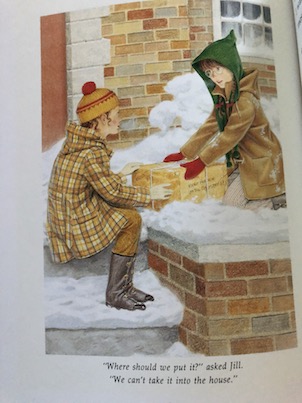
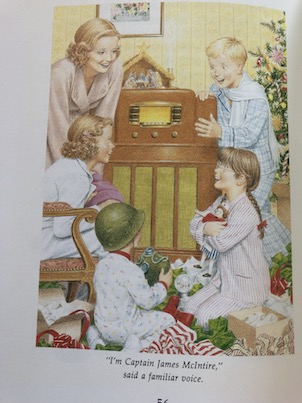
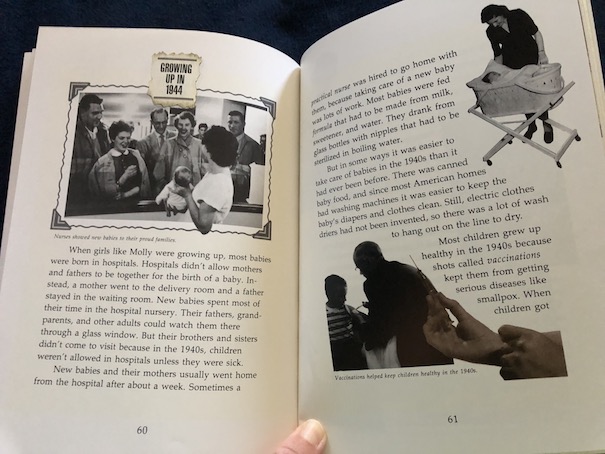
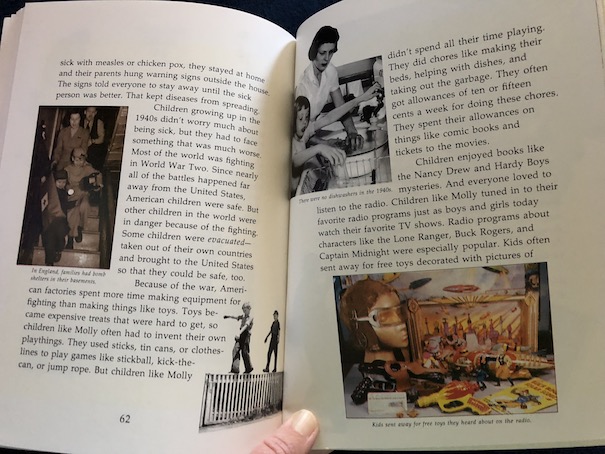
 Molly’s family has wonderful news! Molly’s father is coming home from the war to take charge of a veterans’ hospital right in their home town! Everyone in the McIntire is happy, but
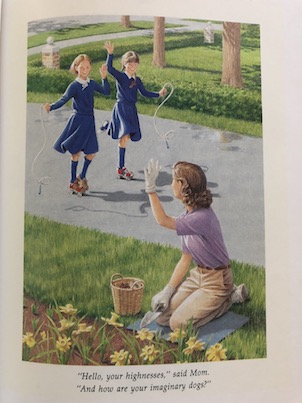
  Her friends try to help her by buying a box of hair permanent and offering to help her use it, but it soon becomes obvious that they really don’t know what they’re doing. Fortunately, Molly’s older sister, Jill, catches them before their experiment goes too far and talks them out of it. Molly’s older sister likes to trade hair tips with her friend, Dolores, and she’s more experienced with doing hair. She says that if curls are important to Molly, she’ll help her to set her hair in




 Silver Days by Sonia Levitin, 1989.
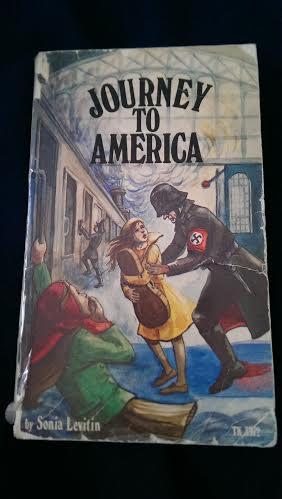 Journey to America by Sonia Levitin, 1970.
 But, getting on the train out of Germany is only the first step of their long journey. Lisa and her mother and sisters live as refugees in Switzerland, waiting for her father to help arrange for their passage to America. Often, they have too little to eat because they don’t have much money. There are some people who help them, and they make some new friends, but the long wait is difficult. Meanwhile, they must face the frightening events taking shape around them, around the people they left behind, and their own uncertain future.
 Number the Stars by Lois Lowry, 1989.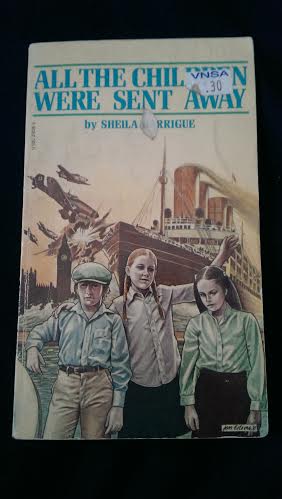
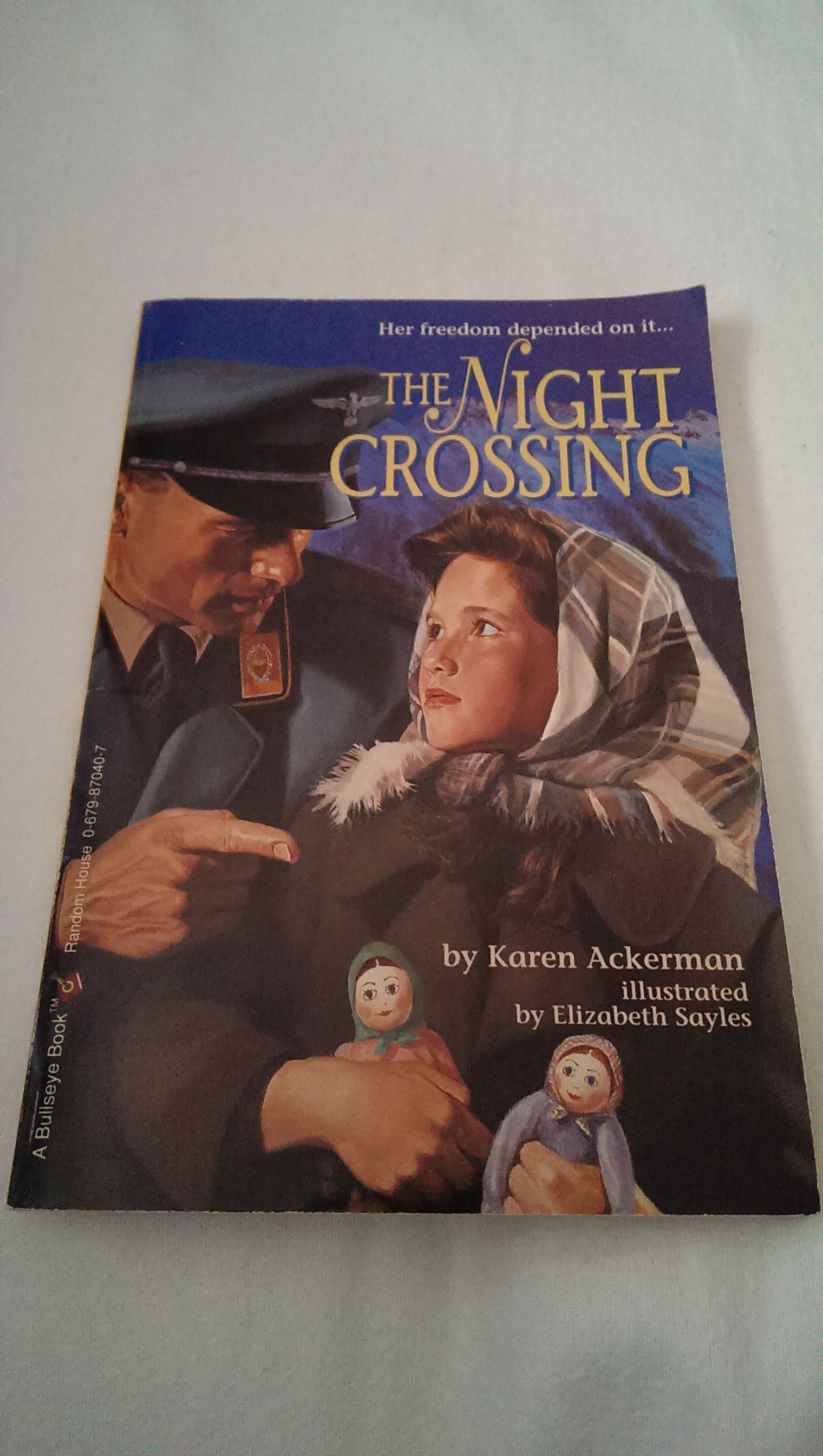 The Night Crossing by Karen Ackerman, 1994.
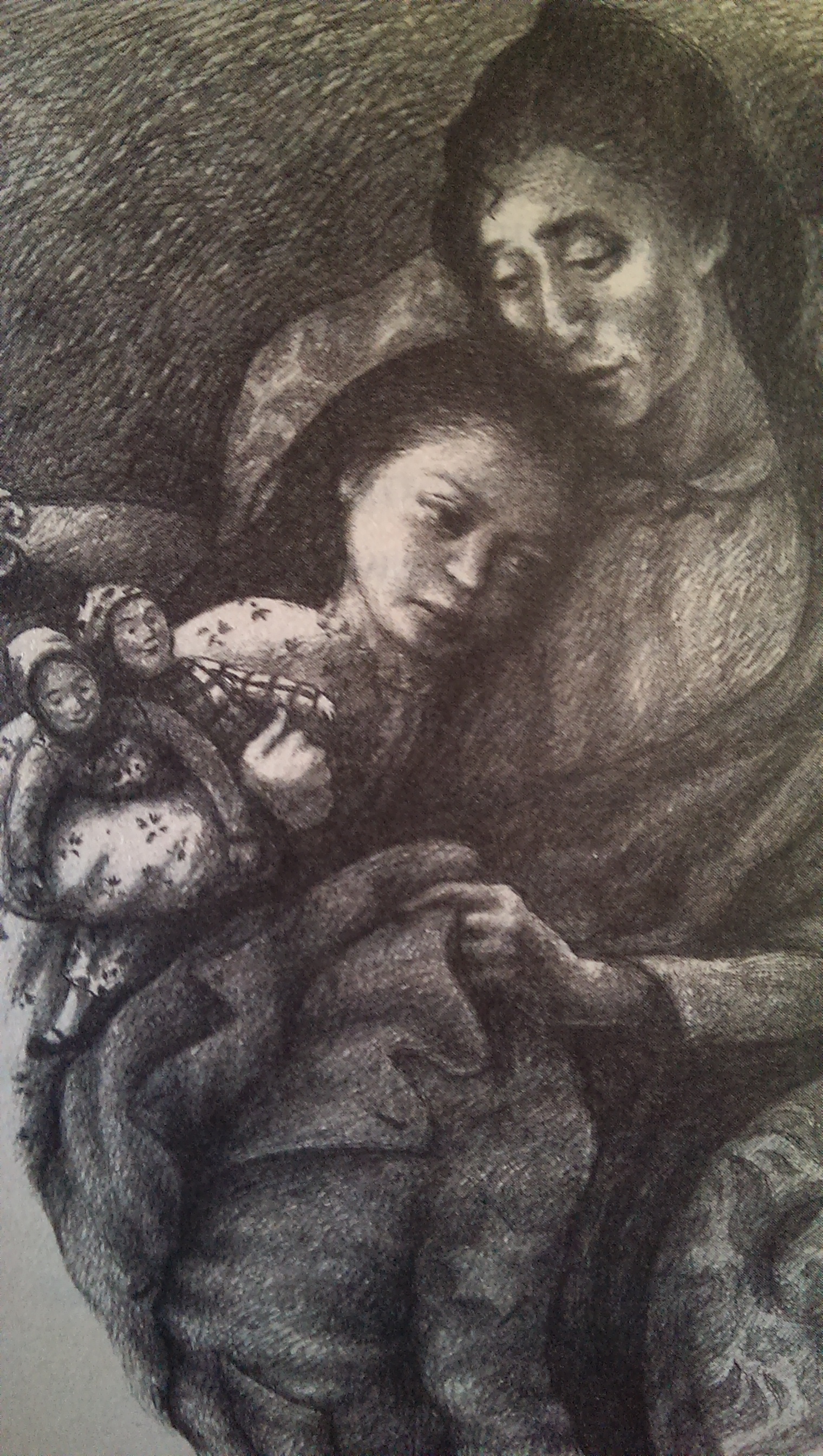 This is a pretty short chapter book. Although the subject matter is serious, and parts might be frightening to young children (the part where Clara and Marta are chased and perhaps some of the parts where the family is hiding), there are only vague references to more dark subjects like concentration camps (people who already know what they are and what happened there would understand, but children who haven’t heard about them wouldn’t get the full picture from the brief mentions). The book would be a good, short introduction to the topic of the Holocaust by putting it in terms of the way it changed the lives of ordinary people who had to flee from it. Actually, it wouldn’t be a bad way to start a discussion of the Syrian refugees in Europe by putting it into the context of ordinary people fleeing the violence of war.
 Twenty and Ten by Claire Bishop, 1952.
 The two groups of children soon make friends, and one of the Jewish children, Arthur, shares something special with his new friend, Henry: a small piece of chocolate. With the rationing, none of them have seen chocolate in a long time. Henry decides to share a little with Janet because he likes her, and they decide to hide the rest and save it for later. When Denise spies them with the chocolate and wants to have a little herself, she steals the piece of chocolate from where Henry has hidden it. The others chase after her to get the chocolate back, and they end up accidentally discovering a cave that none of them knew was there.
