
Giving Thanks by Kate Waters, 2001.
This book describes the feast of 1621 that we think of as “the first Thanksgiving” from the point of view of two boys: Resolved White (a six-year-old English colonist) and Dancing Moccasins (a fourteen-year-old Wampanoag). The book explains that the reality of this feast is somewhat different from the way many people think of it. For one thing, the exact date is unknown, and it wasn’t really a single meal but a kind of harvest celebration that took place over several days. The events of that celebration were re-created using reenactors from the Plimoth Plantation living history museum.
In the beginning of the book, Dancing Moccasins explains that his family has been harvesting their crops and preparing to move to the place where they live in the winter. Wampanoag lived in different places depending on the time of year, moving between them when the seasons changed. At their winter home, they would continue hunting and fishing, returning to the place where they planted their crops at the end of winter.

Similarly, Resolved’s family has finished harvesting their crops and have stored up food for the winter. Now that most of the hard work is over, they have time to relax and celebrate. The community is planning a feast. Resolved and his friend, Bartle, follow some of the men, who are going out hunting and target-shooting.
The colonists meet up with some of the Wampanoag, which is how Dancing Moccasins and Resolved first see each other. Dancing Moccasins returns home and tells his father what he has seen. Then, a messenger arrives from their chief, Massasoit, saying that he will be visiting the colonists soon, and Dancing Moccasins’s father is invited to come.
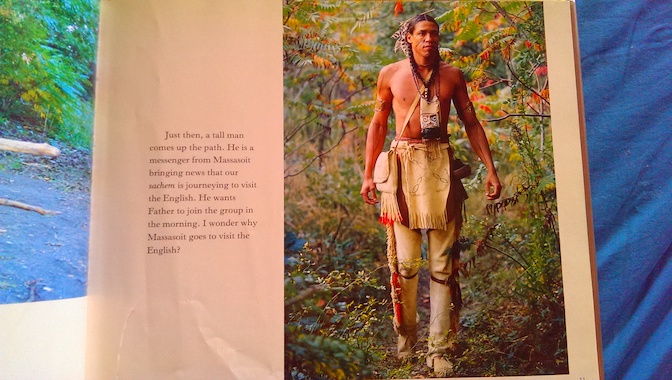
Just as Dancing Moccasins is wondering about the purpose of this visit, Resolved is wondering the same thing because word has reached the colonists that they will soon be visited by the chief and representatives of the tribe. (The book explains in the back that the exact reasons for the Wampanoag visit to the colonists are unknown today, only that it happened at the same time that the colonists were planning their harvest feast.) The two boys meet again when Dancing Moccasins accompanies his father on the visit to the colonists’ village.

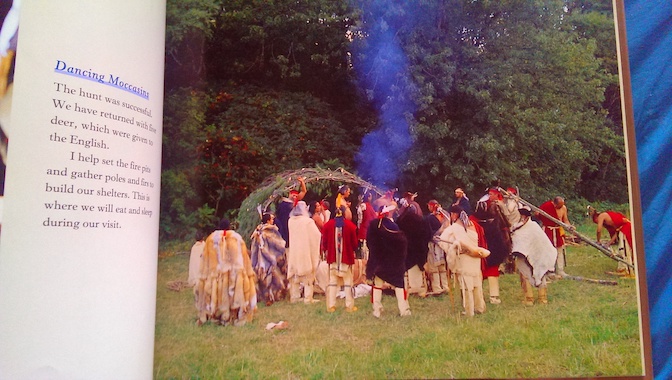
When the Wampanoag arrive at the village, they are treated as honored guests, and some of the Wampanoag go deer-hunting to provide a present for their hosts. The chief dines with the governor of the colonists. The Wampanoag build shelters for themselves, where they will stay during their visit.
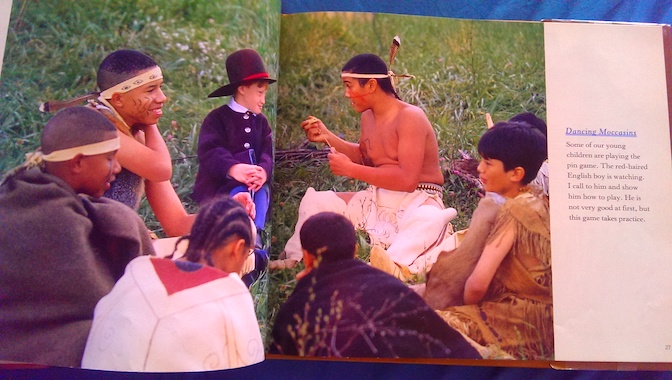
Eventually, Dancing Moccassins invites Resolved to play a game with him and some other Wampanoag boys when he sees him watching them. Some of the Wampanoag men also join in the games that the English men play, like competing to see who can throw a log the farthest.
At the end of the day, Dancing Moccassins and Resolved each eat with their own families, but there is plenty for everyone.
There is a section in the back with historical information about the harvest feast, traditions about giving thanks among both the colonists and the Wampanoag, and how Thanksgiving eventually became a national holiday in the United States. There is also information about food and clothing in the time of the story and a recipe for samp (a kind of corn pottage eaten by the Wampanoag and later adopted by the English colonists). The book also has some information about the Plimoth Plantation living history museum and the reeanctors. It is part of a series of books by the same author about the lives of children in Colonial America.
The book is available to borrow and read for free online through Internet Archive.
 Jestress's Forgotten Books and Stories
One thought on “Giving Thanks”