
The Blind Men and the Elephant retold by Lillian Quigley, 1959.
This story is based on an old folktale from India.
Six blind men, who all live together, realize that although they have heard a lot of people talk about elephants, none of them has ever seen one and that they don’t really know what elephants are like. They have heard that the Rajah, whose palace they live near, has many elephants, so they decide to go to the palace to learn more about them.

When they reach the palace, where a friend of theirs works, there is an elephant in the courtyard, so the blind men start feeling it with their hands. Because the elephant is large, each of the men ends up feeling a different part of the elephant and coming to different conclusions about what the elephant is like.

As they stop to take a rest, they begin arguing about their conclusions because their experiences of the elephant were very different from each other’s. When the Rajah hears them arguing, he explains to them that the problem is that each of them is only talking about one part of a very large animal and that if they really want to know what elephants are like, they must consider all the pieces together. Recognizing the wisdom of what the Rajah says, the men sit down and discuss what they’ve learned more calmly.
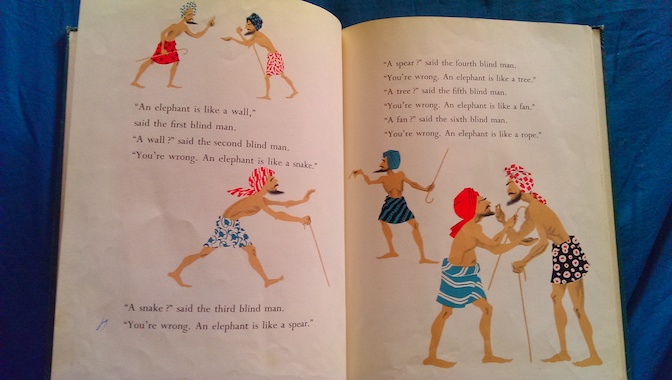
The book doesn’t explain the background of the story, but the folktale is famous and is often used to describe situations where people each understand only part of a larger truth or where people stubbornly argue about very complicated issues from very limited viewpoints without considering all sides.

 Jestress's Forgotten Books and Stories