
Medieval People by Sarah Howarth, 1991, 1992.
This book looks at Medieval history in terms of the different types of people in Medieval society and what their lives were like. It has examples from different countries focusing mainly on western Europe.
The book is available to borrow and read for free online through Internet Archive. There is also a companion book to this one about Medieval Places. The author has also written other books about people and places in different time periods.
The types people included in the book are:
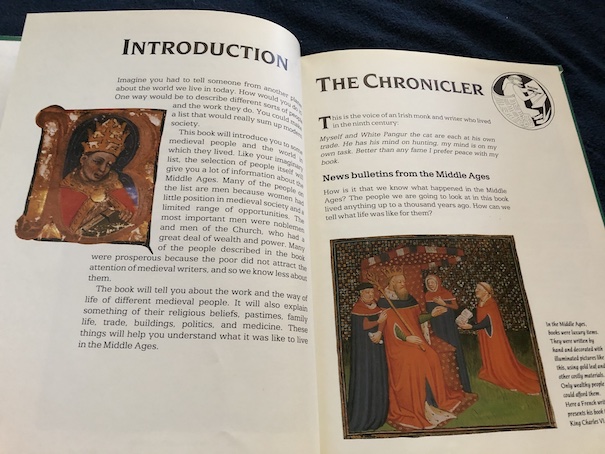
The Chronicler
This is an important chapter because it explains how we know many of the things we know about the Middle Ages. Some people kept chronicles of events that happened in their time. Most of the chroniclers were monks because they were usually the ones who had both the education and the time to keep written chronicles. That’s part of the reason why many chronicles have religious overtones. People who wrote chronicles not only recorded events but also considered why certain important events may have happened, and they interpreted events through their religious beliefs.
The King
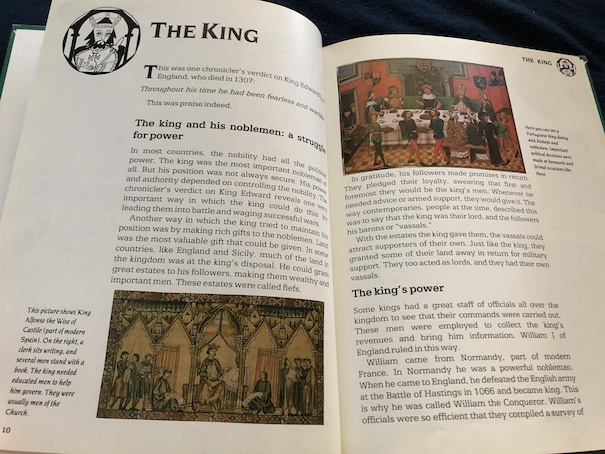
Medieval society was structured in levels, and the king was the person who held the most power and authority. However, he also depended on the nobles who supported him, so he had make sure that they were satisfied with his rule and rewarded for their loyalty. A successful king had to be a successful military leader, and he rewarded the nobles who served him with gifts of land. In turn, the nobles had to serve the king militarily and successfully manage their estates, and they could attract other people to serve them by granting them some of the land that they received from the king.
The Pope
The pope is the highest leader in the Catholic Church, and during the Middle Ages, Catholicism was the major Christian denomination in western Europe. (The Greek Orthodox Church was the major Christian group in eastern Europe, and Protestantism wasn’t an option until the Reformation.) Medieval popes were different from modern ones because they were political leaders as well as spiritual ones, and they clashed with secular kings about whose authority was greater.

The Bishop
Bishops were below the pope and the archbishops in authority, but they oversaw the lower religious officials within their territory or diocese. A bishop would make sure that church buildings in his diocese were being built and properly maintained and that the clergy were doing their jobs correctly and teaching and leading their parishioners properly. He would also oversee the training of new priests. In some ways, his position would be somewhat like that of a noble within the church, answerable to people higher than himself and in charge of people below him, but aside from his position in the church, a bishop would also have obligations to the king, owing services to him. Kings often used bishops as ambassadors and advisers and even as military leaders because they were among the most educated people available. However, this sometimes put bishops in an awkward position when their kings’ demands conflicted with their orders from the pope.
The Knight
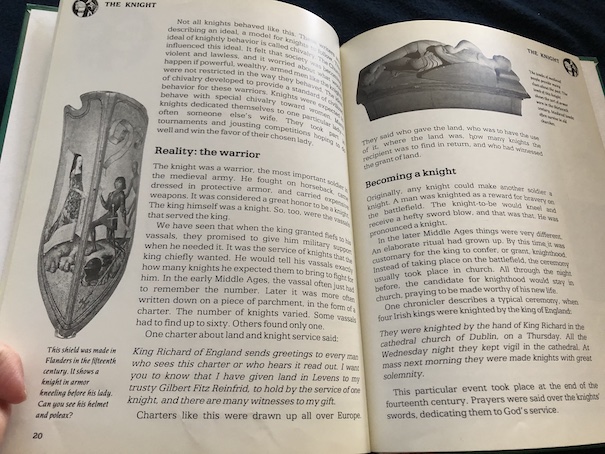
A knight was a warrior who fought on horseback. Part of the service that nobles owed to their king in exchange for grants of land was supplying him with knights when he needed them. In the early Middle Ages, the status knighthood was a reward for excellent performance as a soldier, but later, there were rituals associated with knighthood, including that knighthood could only be granted by a king.
The Pilgrim
Pilgrims were travelers going to religious shrines. Some shrines were fairly close to the places where they lived, and some were far away, in major cities like Rome and Jerusalem. Pilgrims hoped to spiritually connect with the saints associated with the shrines they visited in order to ask for their help with some special purpose, such as recovery from an illness or the forgiveness of their sins.
The Lady
Women in Medieval society were subject to the authority of their fathers up until their marriage, and then, they were under the authority of their husbands. Money was a consideration when marriages were arranged, and marriages could be arranged for wealthy heiresses when they were very young. Married women had the task of managing their husband’s household and accounts, supervising the servants, and making cloth and clothing for her household. Women who did not marry might become nuns. Some liked the religious and scholarly life of a nun, but others simply became nuns because they had no other options and their families didn’t know what else to do with them.

The Herald
Knights always wore full armor when they fought, including a visor that covered the face. In order to know who was who, knights had special crests or coats of arms, which included identifying symbols and colors. Knights could wear their coat of arms on a tunic over their armor, have it displayed on a banner, and on coats on their horses. The herald was the person who kept track of everyone’s coat of arms, ensuring that they were all unique and settling disputes between knights who tried to claim the same combination of colors and symbols.
The Monk
Monks and nuns devoted their lives to prayer and meditation. Their days were organized around prayer, but they also performed manual labor, producing food for the monastery where they lived. Other tasks involved copying the Bible or prayer books and making clothing or medicine for the poor.
The Doctor
There were many dangers from illness during the Middle Ages, particularly the Black Death in the 14th century, when about a third of the population of Europe died. Doctors often didn’t understand the causes of illness, and not all doctors and healers even had any formal training. Wealthy people could afford doctors with more training. Cures often included combinations of herbs and various experimental substances, like crushed bugs or even gold and pearls. They had reasons for choosing the substances they did to put in medicine, but because they were lacking knowledge of the true nature of disease, their choices were often flawed.

The Heretic
Although the Catholic Church was the major form of Christianity in western Europe and widely regarded as the “true” Christian religion, religious beliefs were not completely uniform in the population. People whose beliefs seriously conflicted with the Church would be labeled as “heretics.” Because the Church believed that heretics’ souls were in danger, they could use severe punishments and even execution or the threat of it to force them to change or to stop spreading their messages to other people, thus endangering their souls.
The Mason
Masons were responsible for the great building projects of the Middle Ages, like castles and cathedrals. Some of these great buildings kept a staff on site to handle repairs, but some masons were itinerant, moving from site to site as necessary.
The Merchant
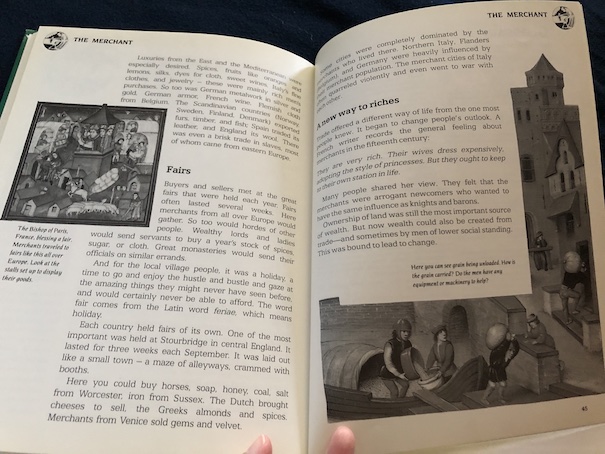
Merchants had to travel frequently to obtain and trade goods, some of them even from other countries. Towns would hold fairs at regular intervals where merchants would gather to sell their goods. Merchants with highly desirable goods could become very wealthy, and some people thought that they often got above their station in society, living like nobility.
 Jestress's Forgotten Books and Stories
One thought on “Medieval People”