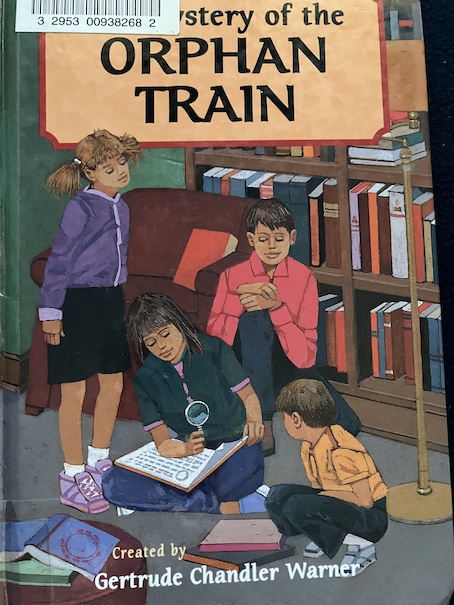
The Mystery of the Orphan Train

Boxcar Children

Grandfather Alden is going on a business trip to Kansas, and he’s taking his grandchildren with him. They’re going to be staying at an old Victorian house that a friend of grandfather’s, Kate, has turned into a bed and breakfast. The house has been in their family for years, and one of its claims to fame is that a famous photographer, Ethan Cape, once stayed there and photographed her grandmother, Sally Crawford. Ethan Cape was known for his photographs of famous people, like royalty and movie stars, and nobody knew why he made it a point to visit this house in Kansas and photograph a woman he supposedly never met before, who wasn’t famous at all. People have offered to buy the photograph from Kate, but she refuses to sell it.

The Aldens find the old Victorian house charming, but Kate also tells them that there’s a mystery surrounding her grandmother. Not only does nobody know why Ethan Cape came to see her and photograph her, but Sally said before she died that she had a secret to share with her family. Unfortunately, she passed away before she could tell them what it was. It might have been the reason why she knew Ethan Cape and why he came to see her, but Kate thinks they’ll probably never find out.

A woman who’s staying at the bed and breakfast at the same time as the Aldens is fascinated by the bluebird necklace that Kate wears. The necklace used to belong to Sally, although nobody knows exactly how or when she got it or how old it really is. The woman recognizes it as an antique and tries to pressure Kate to sell it to her, but Kate refuses. Even a professor who is also staying at the bed and breakfast suggests to Kate that she might want to sell something for some extra money.

Far from wanting to sell anything, Kate has been trying to find some old family antiques that were sold years before when her grandfather needed money, repurchase them, and use them to furniture the bed and breakfast. She shows the Aldens one of the pieces that she’s managed to track down and buy, an old desk. It’s a bit of a mess, so the Aldens offer to help clean it up. While they’re cleaning, Henry finds a hidden compartment in the desk with a strange message for Sally signed “Thane Pace.”

When they show the note to Kate, she’s astonished, but she recognizes the name. Thane Pace was a boy who saved Sally’s life when she was a young child. Sally had been skating one day when she fell through the ice, and Thane Pace saved her. Thane Pace himself is a bit of mystery because he didn’t live in Sally’s town. He told everyone that he had come in search of his missing sister. They had both been sent out west on the orphan train as young children, but they were adopted by different families. However, nobody knows what happened to Thane Pace because, even though he saved Sally’s life, Sally’s father soon chased him away, accusing him of theft!

Was Thane really a thief? What does his message to Sally really mean? When Kate’s bluebird necklace suddenly disappears, the Boxcar Children investigate the mysteries of Sally’s past and consider if they’re related to the mystery of the missing necklace.

I loved this story, and it’s a new favorite of mine in this series! I love how the children have to look into the past and solve a kind of treasure hunt to learn the secrets of a pair of orphans from the past and the real identity of the famous photographer who once visited the house and his connection to it. Part of the mystery might seem obvious to adults and older readers who enjoy word games, even from my description, but I enjoyed the treasure hunt and riddles that lead the Aldens to the full story of what happened all those years ago.

I enjoy books with historical references, and the story explains a little about the history of the orphan trains, which ran from the mid-1800s to the 1920s. It was an early form of organized foster care in the United States, carrying orphans, homeless/abandoned children, or children whose parents were unable to care for them away from crowded orphanages in cities on the east coast of the United States to communities in the Midwest, where children were in demand as extra helpers on farms or in houses or just as family members for people who were unable to have children of their own. The orphan trains were later replaced with more modern forms of foster care, and there are rules now regarding the transporting, placement, or adoption of foster children across state borders. These rules exist to provide greater oversight for the protection of the children, the suitability of their new placements, and their continued welfare.

One of the criticisms of the orphan trains was that they provided too little oversight over the quality of the foster parents and their treatment of the children. The way the trains worked was that they had scheduled stops, and interested members of the communities could come to view the children from the train and select one or more to take home with them. There was little other qualification for a potential foster parent to take a child than for them to simply show up and little follow-up on the treatment of the children once they were placed with a new family, especially with the early orphan trains. They were known for placing most of their trust in “the kindness of strangers” will little verification. The result was that some orphans were lucky and were raised by families who loved them, treated them well, and educated them, while others were used as little more than slave labor.

Orphan trains were also known for their disregard for the relationships between siblings. They were focused on getting the children placed in homes as quickly and efficiently as possible, and if that meant splitting up siblings because a potential foster family only wanted one child, they would do that, which is the basis for the history behind this story. Potential foster families often had in mind the age of the child they wanted before they ever met any of the children, and they were eager to get exactly the type of child they had in mind. Some families specifically wanted boys who were old enough to help with farm work immediately, and they weren’t interested in infants, who would need extra care before they would be old enough to be useful. Other families specifically wanted infants so they could raise them as members of their own families without the influence of the children’s birth families, their memories of the past, or any bad habits they may have acquired hanging over them. These differing priorities among the foster parents are the reasons why siblings like Thane and his sister were separated from each other. However, Thane never forgot his sister, and he wanted to make sure that she knew the truth about their past in the end.

The disappearance of the necklace isn’t directly related to the secrets of the past, but the necklace is important as a family heirloom and the shared connection between Thane and his sister. It’s a separate puzzle from the treasure hunt to learn the truth about Thane, but it’s still fun and interesting.

The Copycat Mystery

Boxcar Children

Aunt Jane invites the Alden Children to come visit her while her husband is out of town on a business trip, cryptically promising them “a trip back in time.” The Alden children wonder what that means, but it turns out that Aunt Jane is taking them to visit a Victorian farmhouse that’s been turned into a museum. Tour guides dress up in Victorian costumes and explain what life what like in the past.

The farmhouse museum has only opened recently, but it’s gotten off to a rocky start, and odd things are happening, and it makes the owner, Carl Mason, and the manager, Gwen, worry. When the Aldens arrive, the sign for the farmhouse is missing, and Benny finds it hidden by the old barn. Nobody seems to know who removed the sign and hid it, but Mr. Mason is angry because potential visitors would be unable to find the museum.

There also seems to be some hard feelings and tension among the people working at the museum and other members of the community. The groundskeeper, Draper Mills, who takes care of the farm doesn’t like the idea of the farmhouse being turned into a museum because he thinks visitors are going to trample the ground. Miss Penning, who lives nearby, is upset because Mr. Mason removed her great-great-grandfather’s portrait from the farmhouse. Her great-great-grandfather, Horace Wagner, used to own the farm, but Mr. Mason doesn’t want anybody to talk about him because Horace had a reputation as a practical joker. Miss Penning thinks it’s disrespectful not to acknowledge Horace’s role in the house’s past, but Mr. Mason doesn’t like the idea of practical jokes. He wants the museum to be more dignified and focused on educating people about life in the past. He think if they talk about Horace on the tours, it will make the house and museum seem more like a joke. Mr. Mason even removed Horace’s picture from the farmhouse so no one would see it. Meanwhile, Gwen is worried because the museum is short-handed over the summer. Gwen’s younger sister, Sharon, is helping out, but even so, they could use more help. Sharon seems to be quarreling with Gwen, too, although the Aldens aren’t sure why at first.

The Aldens like getting involved in projects, so they volunteer to help with the museum themselves. Dressing in Victorian clothes and leading tours sounds like fun! However, more odd things begin happening. An antique birdcage disappears and is found in an odd place with a live canary inside, and someone turns all the pictures in the house around and shortens the legs on Henry and Benny’s costumes. Odder still, Miss Penning says that each of the pranks is a copy of something that Horace did when he was alive. It’s like someone is duplicating all of Horace’s old practical jokes. The only difference is that Horace’s pranks were always in a good cause, like surprising someone with a special gift, helping someone feel better, or just being mildly silly and amusing. It seems like these copycat pranks are meant to disrupt the museum and cause trouble.

Miss Penning thinks that it’s the ghost of Horace doing these pranks, reminding people that he’s still a part of the house and that he wants acknowledgement. However, the Aldens think that it’s more likely to be a living person. Perhaps Miss Penning is doing these pranks herself to call attention to Horace’s memory. On the other hand, it could be Jake, the student reporter who is doing a story about the museum and who thinks the place seems too dull. Could he be trying to liven up his story? The Aldens also learn that Gwen has been Sharon’s guardian since their parents died, but the sisters have been quarreling because teenage Sharon wants to take part in a fashion show, and Gwen doesn’t approve. Could Sharon be staging the pranks to get even with Gwen? Mr. Mason is getting upset about all of these pranks, and if someone doesn’t put a stop to them soon, he might fire Gwen for not managing the museum well.

The book is available to borrow and read for free online through Internet Archive.

One of the themes of this story is about the differences between people’s perceptions of the past and the reality. People often think that people in the Victorian era were always “prim and proper” and joyless, but Horace Wagner was exactly the opposite. He had a quirky sense of humor and liked to display it.

Violet explains that people get the idea that Victorians were always stern and serious because they aren’t shown smiling in most old photographs, but that’s only because photographs in the Victorian era required everyone to sit perfectly still, and the subjects had to be extra careful not to move. When Horace had his picture taken, he also sat still and unsmiling, but he put the flower from his buttonhole behind his ear for the photo. Horace could never be completely serious, which is why Mr. Mason doesn’t think he fits in the Victorian museum, even though that museum was Horace’s old home. It’s ironic because the more serious view of the past that Mr. Mason likes to convey is actually a departure from the reality of the situation. Miss Penning is correct that removing Horace from the museum and never mentioning him is actually doing a disservice to the past, essentially hiding someone important to his time and the location because he didn’t fit the expected mold. The Aldens also realize that the stories about Horace are endearing to visitors and add an interesting dimension to the museum.

The solution to the mystery causes everyone to rethink a few things and to resolve conflicts they have with each other. Besides recognizing the difference between the perceptions of the past and the reality, some of the characters admit that they’ve been narrow-minded in their approaches and interpretations of other things. Gwen and Sharon reconcile when Gwen decides to allow Sharon to participate in the fashion shows. More importantly, Mr. Mason realizes that his approach to the museum was wrong and that Horace does belong in the story of the house and that it’s okay to present the less serious side of the past along with the more serious side.

I enjoyed this light-hearted mystery. I’m not a big fan of pranks in real life because they can easily go too far, and I don’t like practical jokes that seriously embarrass people or might hurt them. However, Horace was a more altruistic practical joker. His practical jokes were often meant to help people rather then hurt them. For example, when he was young, Horace’s brother was small for his age and worried that he would never grow, so Horace started shortening his brother’s pants secretly at night to make him think that he was growing, so he wouldn’t feel so bad. As the characters describe it, Horace’s pranks were generally pleasant. Only one, which he played on a local club that excluded a friend of his, was meant to cause some embarrassment to make a point about what it feels like to be excluded. Although the club members were embarrassed, his joke was pretty mild and served a higher purpose. As a character who drives the story without actually being present, I liked Horace. He was silly but basically good-hearted with his humor. By contrast, the modern practical joker copying his pranks is more self-centered and thoughtless about the consequences, although revealing this person does cause other people to consider the ways in which they’ve been thoughtless and make changes for the better.

The book ends with the characters enjoying “April Fool Pie”, which is a mock apple pie. They don’t provide an exact recipe, but they explain the ingredients.

The Sherwood Ring

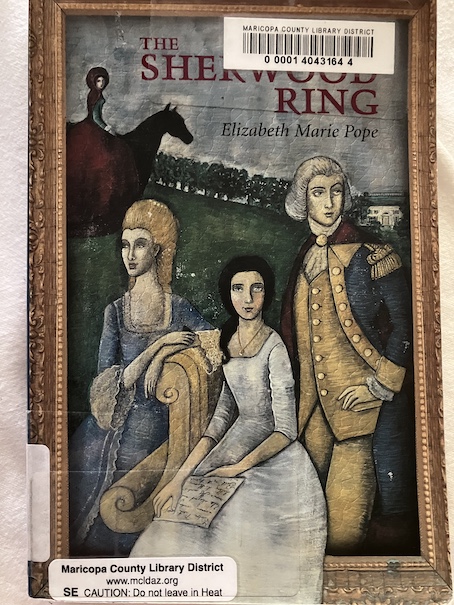
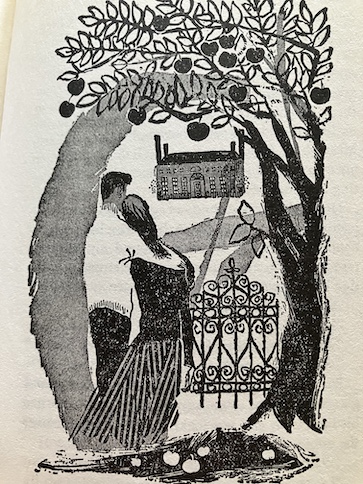
When Peggy Grahame’s father dies, she goes to live with her Uncle Enos in upstate New York, at their ancestral home, which goes by the whimsical name Rest-and-Be-Thankful. The family has lived there since the family arrived in America, fleeing their old home in Scotland after their support for Bonnie Prince Charlie failed. Uncle Enos loves history and tends to live in the past of their old home. Peggy’s father has sarcastically
said that Uncle Enos keeps “a pack of ghosts” at the old home and dedicates his life to making them feel comfortable by never changing anything there. Although, before he dies, he admits that the place is actually haunted, after a fashion, although neither he nor Enos has ever seen the ghosts themselves. Knowing that he is about to die, he sends word to Enos that Peggy is coming, and he says that Peggy will understand what
he means about the ghosts when she gets there. He also says that Peggy will largely be looking after herself at the house because Enos is too preoccupied with studying history to take much notice of her.

After the reaches New York, Peggy has to ask for additional directions to her uncle’s house. She meets a young man from England, Pat Thorne, who’s in the United States on a scholarship, doing some historical research. Strangely, when he came in pursuit of the papers he had hoped to find, his cousin Mildred denies their existence, although he’s sure that they actually do exist. He suspects that Mildred is covering it up for some reason because a picture that he remembers his cousin had is mysteriously missing. He has now come to the region where Uncle Enos lives in search of additional historical material, and he is hoping to see Uncle Enos himself because he’s the local authority on the region’s history. He has heard that Uncle Enos welcomes young scholars, but he’s been having trouble getting in touch with him. He gives Peggy a ride to Rest-and-Be-
Thankful, although they have car trouble on the way.

However, when they arrive at Rest-and-Be-Thankful, Uncle Enos is strangely angry that Pat Thorne is there. He says that he has nothing to say to Pat and that he doesn’t want Peggy associating with him. Both Peggy and Pat insist that Uncle Enos explain why he’s so angry, but he refuses to explain anything. He only wants Pat to leave the house. Pat replies to Uncle Enos that he will leave but that he will also be seeing Peggy again,
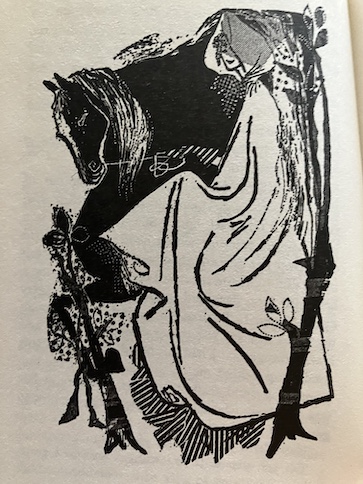
no matter what Enos says. Peggy can tell that Enos is distressed at the idea of Pat hanging around, but there’s a second shock for Peggy as she begins settling into the house. She sees a picture of one of her ancestors, a girl called Barbara, and she realizes that this girl looks exactly like a girl on a horse who she met before she met Pat and who directed her to talk to him. Peggy wonders if she’s seen her first ghost.

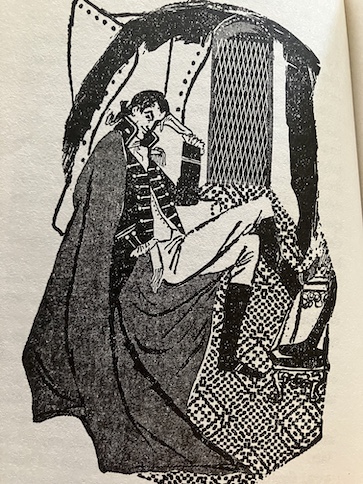
It’s some time before Peggy hears from Pat again, and she meets her second ghost one day when she’s fuming about Pat not coming to speak to her or get in touch with her and saying that she’ll “show him.” A young man in a continental army uniform is suddenly sitting in an armchair near her, and Peggy recognizes him from his portrait as Richard, the brother of Barbara. Richard tells Peggy about his life during the American Revolution and how personal pride got him into an embarrassing and dangerous situation.

He had been given a special mission by George Washington to apprehend a man called Peaceable Sherwood, who was leading a gang of people who were sabotaging the Revolutionaries’ war efforts. To his surprise, Richard received a letter from Peaceable Sherwood himself while he was staying with some neighbors. The letter was sealed with a seal from Sherwood’s signet ring, and it told Richard that he was aware that Richard was looking for him, promising that Sherwood and his men would make things interesting for him. Sherwood proved an elusive person to find. Eventually, Richard discovered evidence that pointed to a place where Sherwood would be waiting to meet some of his gang. He admits that he should have gone for reinforcements, but he was so eager to prove himself by capturing Sherwood as quickly as possible, so he confronted Sherwood alone. There was a fight in which he was almost killed, and he had to admit his humiliating mistake to the young woman he loved.

Ghostly Richard says that he’s telling this story to Peggy as a warning to her about hot-headed pride. He doesn’t know the young man Peggy was talking about, but he says that hot-headed pride also kept him and the girl he loved, Eleanor Shipley, from admitting their real feelings for each other for some time, until his humiliation at the hands of Sherwood caused them both to drop their pride. Peggy is touched by the story,
and she asks Richard what eventually happened with Sherwood, if he ever caught him. Richard refuses to answer and disappears. Later, when Peggy begins delving more into her family’s past and her uncle’s collection of heirlooms, Eleanor Shipley appears to her and continues the story of Richard and
Sherwood.

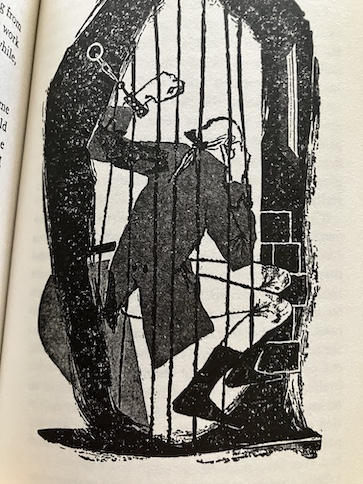
As Peggy tries to settle in to life at Rest-and-Be-Thankful with Uncle Enos and to learn what it is he has against Pat Thorne, ghosts of the past continue to appear to her, all connected to the events of the American Revolution. Eleanor explains her budding relationship with Richard, and Barbara appears again to tell her how she and Richard were both captured by Sherwood and his men at Rest-and-Be-Thankful but managed to escape and Sherwood. Sherwood was going to be executed, but while Peggy is given the dull task of serving punch at her uncle’s Fourth of July ball, the ghost of Peaceable Sherwood himself shows up to tell the story of his escape and how he decided that the only woman he could marry was Barbara. Even though they were on opposite sides of the war, he’d never known a girl as clever and resourceful as she was. Even though Barbara initially says that she has no intention of marrying Sherwood, she also appreciates his cleverness, and she had tried to intervene to prevent him from being executed when he was in prison and can’t bring herself to turn him in when he escapes. Sherwood tells Barbara that the men in his family are known for their stubbornness and that it’s actually the motto on their family crest that they always get what they want, so he’s already making plans for their future wedding.

Not long after the Fourth of July ball, Uncle Enos falls seriously ill. The doctor says that it’s a virus, but he can tell that there’s something wrong with him because the treatments he’s giving Uncle Enos aren’t working as well as they should. Uncle Enos has made himself ill before by bottling up his emotions, and everyone who knows him can tell that there’s something on his mind that’s seriously troubling him, something he doesn’t want to say. However, Uncle Enos cannot get better until he finally admits what’s troubling him and deals with it. It’s his stubborn personal pride that’s getting in the way. Peggy is sure that the problem is about the conflict between him and Pat Thorne. It also possibly has to do with the story of Sherwood and the events that took place at Rest-and-Be-Thankful during the Revolutionary War.

When Barbara appears to Peggy one more time to finish the story of Sherwood and Peggy calls Pat to come to Rest-and-Be-Thankful, many things are cleared up. Sometimes, ghosts call on the living to right the wrongs of the past, but sometimes, ghosts of the past are concerned about loved ones who are still alive and help them to right the wrongs of the present.

The book is available to borrow and read for free online through Internet Archive.

I was curious about this book for some time because it has ghosts and visions of the past. It has similar themes to other books I’ve read, and I enjoyed The Perilous Gard, which is by the same author.

Partway through, I was a little hesitant to finish the book because I liked the characters of the past, and I didn’t want to see anything horrible happen to them. Because they are all dead and because of Uncle Enos’s animosity over something that happened in the past, I was bracing myself for something tragic to happen to one or more of the characters in the story. I thought, at first, that maybe Sherwood actually killed Richard at some point, maybe before he could marry Eleanor. Then, I thought maybe Barbara and Sherwood turned into a kind of Romeo and Juliet romantic tragedy because they’re on opposite sides. Fortunately, none of that happened in the story.

The best part of this, for me, is that the people from past (spoilers) all survived the Revolutionary War, and they apparently lived normal lives after that. Richard and Eleanor are married during the course of the story of past events, and Barbara tells Peggy that she did marry Sherwood after the war, when there was no more conflict of interest between them. Unlike many other ghost stories, the ghosts of the past in this story aren’t there to ask their living relatives to make things right for them. They don’t have any unresolved problems themselves; they are there to provide comfort and support to Peggy. They know that Peggy hasn’t had much attention or affection from her relatives. Her father didn’t pay much attention to her, and her uncle is too wrapped up in his historical research to pay much attention to her. Peggy needs some attention and information from her family to figure out what’s going on with Uncle Enos and how to help him as well as herself. The ghosts say that they cannot give her all the answers, but what the ghosts tell her gives her the clues she needs to work out the rest herself. Peggy also comes to see that some of her ancestors can relate to things that have happened to her, from the deaths of parents to dealing with disagreeable relatives to falling for someone that her family might not approve of. It helps her to see that she’s not alone, and her experiences help her to understand some of theirs.

I didn’t expect to hear any part of the Revolutionary War story from Peaceable Sherwood’s perspective, but when he showed up as a ghost to tell his part of the story, it helped me see that the story might have a happy ending after all, with no tragedies left for the historical characters. Although Sherwood is an antagonist to the other characters for much of the story, he reveals that what he’s doing isn’t entirely of his will. In some ways, he is a “poor little rich boy” – someone who comes from wealth but hasn’t had much affection or close relationships in his life and is stuck in some unfortunate circumstances. He comes from a wealthy family in England, but he was orphaned at a young age and put under the guardianship of an uncle who didn’t like him. It was his uncle who got him a commission in the army, and he did that mainly to get rid of him rather than for Sherwood’s personal advancement in life. Sherwood’s been doing the best he can with the position he’s given, and he and Richard both understand and accept that their respective roles put themselves at opposition to each other. They have to alternately fight each other and defend themselves from each other, but they also respect each other because they are somewhat similar to each other and pretty equal in their skills and intelligence. There are times when either of them could have killed the other, but they don’t because they are gentlemen and behave honorably, and they also have some fondness for each other. When Barbara starts to get to know Sherwood and his history more, she also begins to feel some fondness for Sherwood and finds him charming. Personally, I would have been put off by a grown man saying that he always gets what he wants because that sounds so bratty, but Barbara later explains that Sherwood usually gets what he wants because of his cleverness and determination in pursuing what means the most to him, not just pure entitlement.

When I first started reading the book, I had some suspicions about how Pat Thorne is connected to the Grahames and to Peaceable Sherwood, but the answer and type of problem that he represents to Uncle Enos were a little unexpected. The connection was somewhat what I expected, but it goes deeper than that, and the problem between them is very much a modern one, made by the living members of the family, not one left over from a past tragedy. It’s not an insurmountable problem, either. It’s not a family feud but a kind of misunderstanding that got out of hand, leaving Enos torn about how to handle it. He did something he probably shouldn’t have because someone else did something that she really shouldn’t have. Enos apparently was acting in good faith, but admitting the facts of the matter would mean giving up something that has meaning for him and historical significance. Now, he’s torn between wanting to deny what he did and what he’s got and wanting to make things right. Once Peggy and Pat compare notes, the matter becomes clear. Things work out very well between Pat and Peggy at the end, and they seem to understand each other very well, partly because of Peggy’s knowledge of the past and partly because Pat himself is very perceptive about what Peggy’s life has been like. He knows that things have been hard for Peggy because of how her father and uncle have been. She hasn’t had much attention or affection, but he’s determined to provide that for her. Pat completes the story of Peaceable Sherwood and brings it full circle. Pat doesn’t hold back about his own circumstances and the kind of life he expects to live with his future wife, but both he and Peggy are sure thinks will work out for them. Even though his family doesn’t have the money they once did, they still have a tendency to get what they set their hearts on.

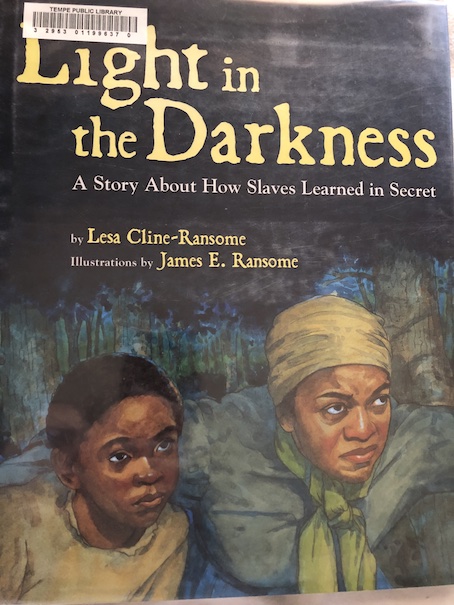
Light in the Darkness

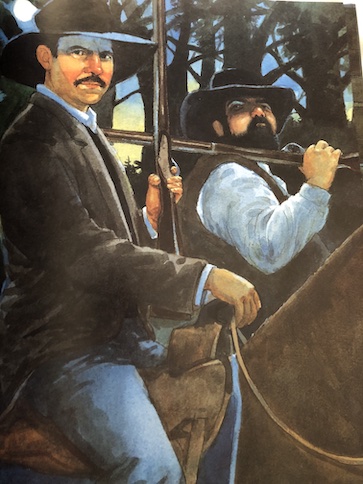
As the subtitle of the book says, this is “A Story About How Slaves Learned in Secret.” During the history of slavery in the United States, slaves were often forbidden to learn to read, and there were punishments for people who taught slaves to read. These anti-literacy laws were the norm for most people prior to the Civil War. However, there were some slaves who managed to acquire some basic reading and writing skills in secret, in spite of the anti-literacy laws, and that is what this story is about.

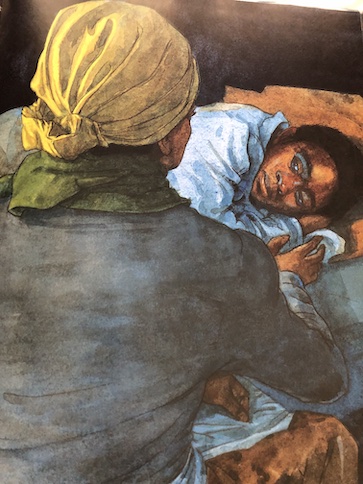
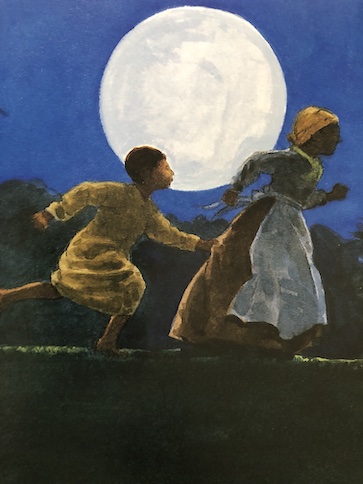
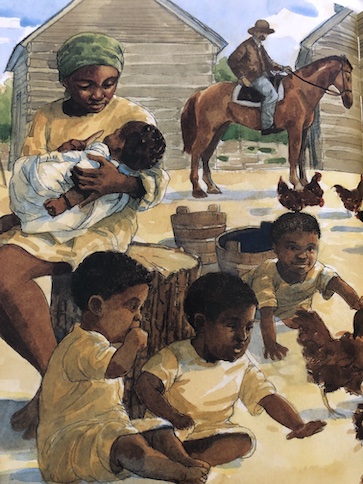
The story is told from the point of view of a young slave, Rosa. Rosa’s mother wakes her in the middle of the night, and they sneak out to go to the secret reading and writing lessons. They have to be careful because there are patrollers out, looking for runaways and slaves who are doing what they’re doing.

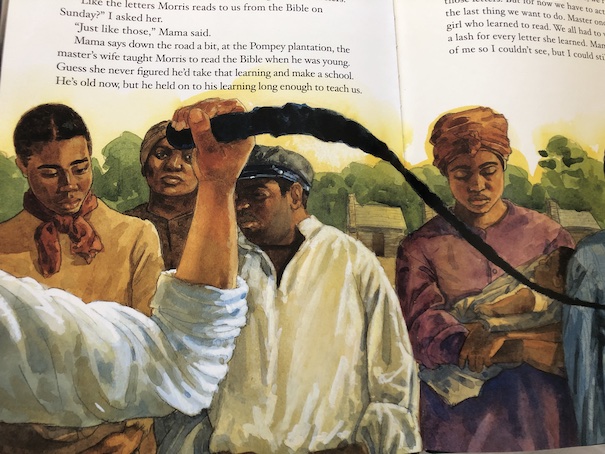
The risks are serious because slaves are whipped for learning how to read. Rosa and the other slaves were once forced to watch a girl being given a lash for each letter she learned. The slaves who go to this secret school know that the same thing will happen to them if the patrollers catch them and turn them in to their master.

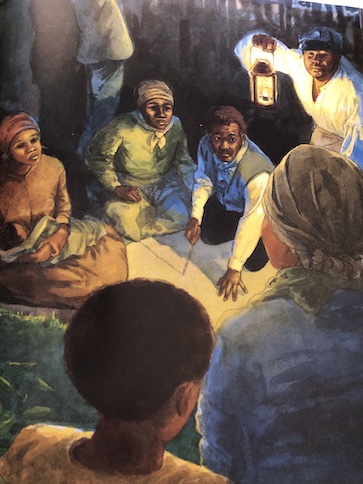
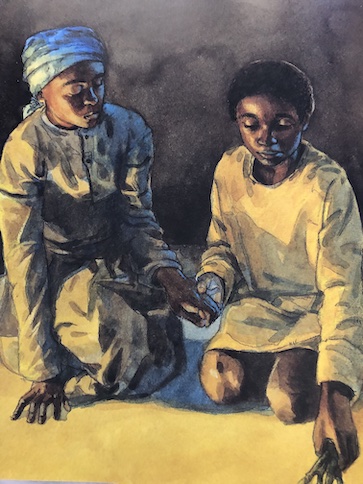
The man teaching the secret school, Morris, was taught to read Bible stories by his master’s wife when he was young, although nobody expected him to teach other slaves. Morris’s “school” is an improvised pit hut, a pit dug in the ground and covered over with branches. He uses sticks to show his students the shapes of the letters by the light of a lantern.

During the day, the slaves who go to this secret school have to proceed with their usual chores and pretend like they don’t know anything about reading and writing at all. By night, they help each other learn their letters. It’s a slow process, and sometimes, they can’t hold the school because they know that patrollers are traveling the area, and it’s too dangerous. However, they keep coming back when they can because this is important to them. They are doing something that their masters don’t think they’re bright enough to do, and they know that this secret knowledge will be an important tool in their eventual quest for freedom.

I thought that this was a good book, focusing on a particular area of history that isn’t always explored in detail in other sources. I’ve read other books that refer to slaves, both real and fictional, as having found ways to read in secret, but this book focuses solely on that process, how they managed it, how they organized others to participate, what the risks were, and what it meant to them. There is an Author’s Note in the back of the book, which explains that the author was doing research for a book about Frederick Douglass when she found a reference to “pit schools”, like the one in the story, where slaves would meet in secret for lessons from each other. I had never heard about pit schools before, and I found the concept fascinating.

The subject of education and literature is a particular sore point for me when it comes to the Confederacy, and I’m sure I’ve mentioned it before. Slavery apologists sometimes talked about how slave owners treated slaves like “family” and taught them to read and gave them Bible lessons, etc. These claims have been made since the 19th century, and you can see it in plantation or “anti-Tom” literature, including some 19th century and early 20th century books for children. (I discussed this earlier in my list of Books from the 1850s, the decade when Uncle Tom’s Cabin was published. “Anti-Tom” literature was a direct response to that book.) However, such lessons were actually forbidden by law in most slave-owning areas. There were exceptions to this rule, like Phillis Wheatley in the 18th century and Frederick Douglass in the 19th century, but the reason why these people became famous was because they were the relatively rare exceptions. Only a small percentage of slaves ever achieved any level of literacy, and of those who did, few received any help from their masters or their masters’ family because the practice was discouraged more than encouraged, with laws and punishments in place against it. In real life, Frederick Douglass received some basic lessons in reading and letter recognition from the wife of one of his masters, but that ended when his master found out about it and made his wife stop.

I never believe those stories about slaves and masters being just one big, happy family or the assertion that it was common for masters to benevolently educate their slaves to better their lives because I already know that was not at all the case for the vast majority, by design, with intention, and enforced by law. The “history” books produced by the United Daughters of the Confederacy particularly try to create this impression of slavery as a benevolent institution, but actual benevolent institutions do not have laws that specifically restrict both the personal development and freedom of movement of the people they serve with harsh physical punishments for violations. I resent the mere existence of these history books and the organization that produced them because I resent anyone who lies to me (whether directly or indirectly or even by omission or implication) about anything important, and it is personally insulting to me that they would think I would ever be dumb enough buy that bunk. I’m sure they didn’t mean it as a personal insult to me because they’ve been doing it since long before I was born. I’m sure they have no idea who I am and couldn’t care less about me as a person, but at the same time, the fact that they did it at all carries an implied insult to anyone who may potentially believe them or is pressured to read and believe them. They must either think very little of other people’s intelligence or simply never think about other people outside of their own family lineage at all except as resources to be used or manipulated for social aggrandizement. I don’t blame people for merely having ancestors who owned slaves, but when someone works hard to make me believe that slavery wasn’t bad, that their ancestors weren’t bad for doing things they admittedly did, that I don’t really know the things I actually do know about that, and that I should not only be respectful but reverent toward these people and their institutions, I blame them a lot, specifically for that. When I was young and found out about censorship, propaganda, and book burnings, I daydreamed about writing something that would personally offend this type of person as much as they offended me, and it seems like the best way to do that is just by telling the truth about history.

Although some people like to think of people in the past, especially their own ancestors and family, as being above average, most people are average, by definition. It’s not that it never happened, because I know that it did in rare cases, but most people are simply not rare exceptions. If they were, the average would have looked very different indeed, and those anti-literacy laws would not have existed in the first place, but that’s just not the reality. The reality is that those laws did exist, and most people both followed and enforced them because they both agreed with them and feared the consequences of disobedience. Most people, by definition, are basically average, and this is just what the basic average was. The average slave-holder was harsh, punitive, anti-education, and far more interested in what they could get out of their slaves than in the slaves themselves because that was the entire reason for having them in the first place.

Plantations were not non-profit organizations, and they were not run like non-profits as tools for the welfare and social betterment of clients. Non-profits serve others. Slave owners forced other people to serve them, and that’s seriously all there is to it. Slave owners were takers, not givers, although I’m sure that they engaged in occasional public philanthropy for the social cred because one of their primary goals was climbing that all-important social ladder and maintaining their place on it. Plantations were family businesses for the wealth and social betterment of the families who owned them, designed to maximize profits, and the profits were meant entirely for the owners and no one else.

In the story, Morris becomes a teacher for the other slaves because he is the rare exception among them, having had lessons from his master’s wife when he was young. Most were not given any lessons at all, and both the slaves and their potential teachers could face serious consequences if they were caught. Everyone knows that, if Morris is caught teaching the others, he will be punished much worse than the rest of them. They’re all taking a serious risk, but Morris is in the most danger if they are discovered.

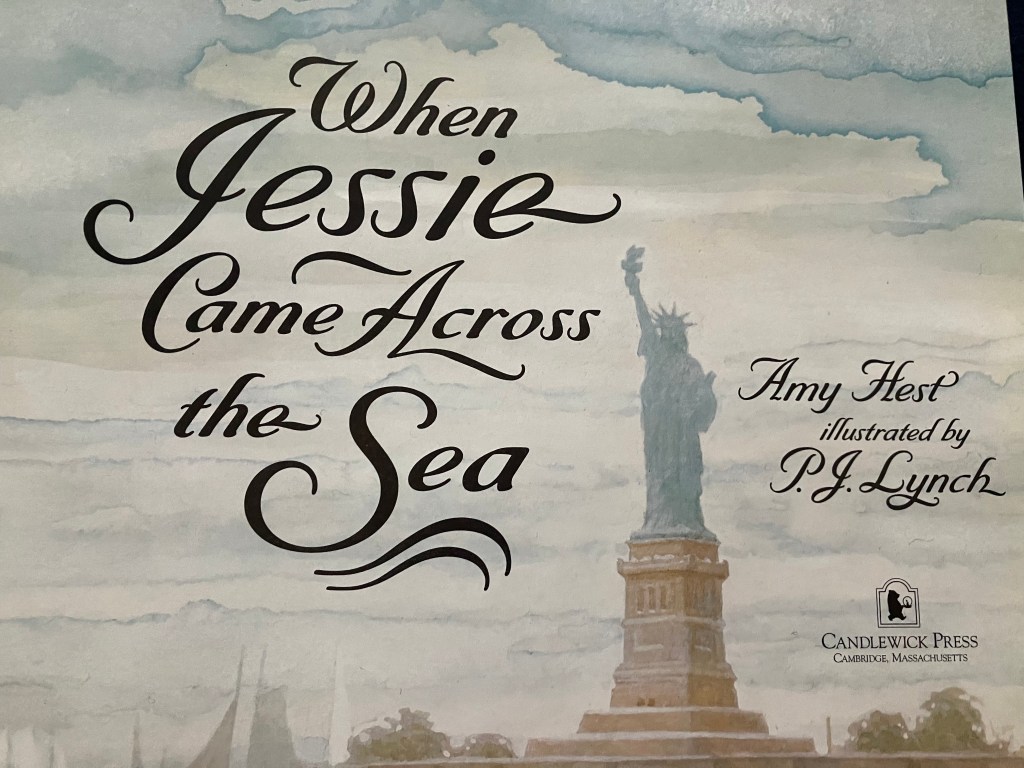
When Jessie Came Across the Sea

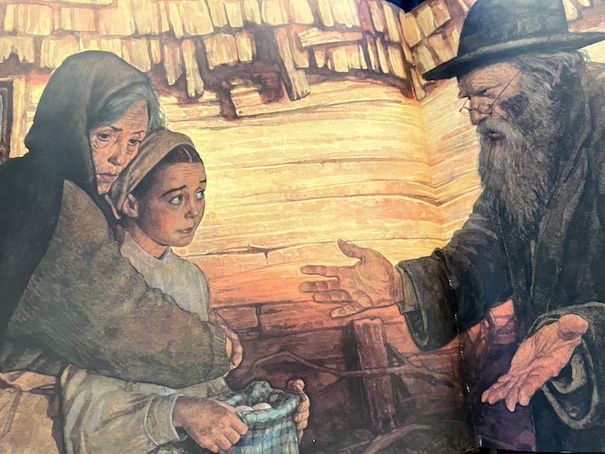
Jessie and her grandmother live in a small, thatched cottage in a small village. The little village is poor, and so are Jessie and her grandmother. Jessie’s parents died when she was a baby. Jessie’s grandmother raised her, and she insists that Jessie have lessons with the village rabbi, like the boys in the village. Jessie can read and write, and she also tries to teach her grandmother. Her grandmother makes a little money by sewing lace, and she teaches Jessie how to sew. Although they don’t have much, they are basically content with their lives.

Then, one evening, the rabbi makes an important announcement. His brother, who was living in America, has died. Before his death, he sent a ticket for a ship traveling to America to the rabbi, asking him to join him in America. Now that his brother is dead, there is no need for the rabbi to go to America, and he would rather stay in the village with his congregation. However, he thinks that someone else should use the ticket his brother sent.

Various villagers ask rabbi if they can use the ticket, offering reasons why each of them would be the best person to go. They brag up their best qualities, boasting about how strong, smart, and brave they are. The rabbi knows that they’re boasting, so he just tells them that he will pray about it and let them know his decision tomorrow.

The next day, he goes to see Jessie and her grandmother and tells them that Jessie should be the one to go to America. His reasoning is that his brother’s widow owns a dress shop in New York City. Jessie can work there, and she would be a comfort to a lonely widow. Jessie doesn’t really want to leave her grandmother, and her grandmother fears to send her, but her grandmother can see the rabbi’s logic. She knows that this is an important opportunity for Jessie.

So, Jessie leaves her village and sets sail on a crowded ship for America. On the ship, Jessie is scared, lonely, and seasick. As Jessie spends time with the other passengers, she makes a few friends, and she sews a few small items for them. A boy named Lou, who is a shoemaker’s son, makes a pair of small shoes for a baby, and he and Jessie also become friends.

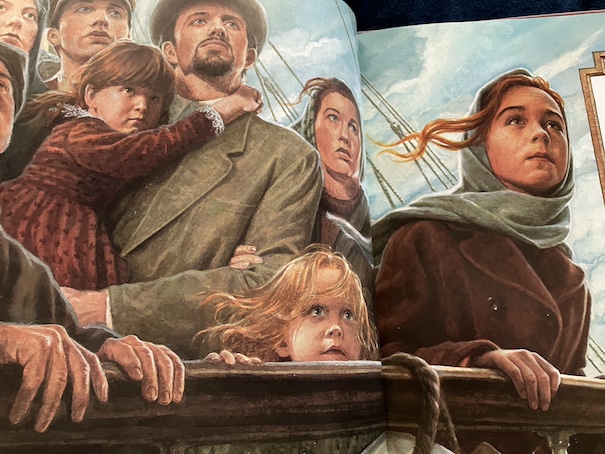
Finally, their ship arrives at New York. Everyone crowds around the rails of the ship to see the Statue of Liberty and their first glimpse of America. The ship docks at Ellis Island, and the passengers disembark to be inspected and questioned by immigration officials.

The rabbi’s brother’s widow comes to meet Jessie. She is a friendly woman, and she asks Jessie to call her Cousin Kay. Cousin Kay shows Jessie around the city. It’s a crowded, confusing place with fascinating sights, although the streets aren’t paved with gold, as Jessie has heard. Cousin Kay runs the dress shop out of her home, and she pays Jessie to sew for her. Jessie likes watching the busy street outside while she sews, and she saves the money she earns in a jar.

When Jessie puts some lace on a plain white dress, turning it into a lovely bridal gown, the shop becomes popular with young women who are getting married and looking for similar gowns.

Cousin Kay also insists that Jessie go to school and learn English. It isn’t easy, but Jessie learns. She likes walking around the city and going to the local library. Gradually, Jessie begins feeling more at home in New York, and she builds a new life for herself there. One day, she runs into Lou again in the park, and they begin meeting there regularly. Lou proposes to Jessie, and Jessie uses the money she has saved to buy a ticket so her grandmother can come to America for their wedding.

The book is available to borrow and read for free online through Internet Archive.

I remember reading this book when I was young! I was really older than the target audience when it was first published, but I enjoyed the story. It’s one of those books that I think takes on more significance when you’re older and understand more of the history behind the story. We don’t know exactly where Jessie is from because the book never says, but her journey resembles the kind of journey that many people made during this same period of history. We don’t know the year, either, but it appears to be set in the late 19th century or early 20th century.

Although coming to a strange country, alone and unable to speak the language, is a scary experience, Jessie is fortunate because there is a friendly and caring person waiting there for her, and she has a job lined up that suits her skills. In real life, not everyone was so fortunate, and it was more of a struggle for them to get established in their new home. Jessie still has to struggle with homesickness and missing her grandmother, but her life changes for the better because she took the chance to go to a new country and start a new life. Readers can emphasize with Jessie’s fears and uncertainty as she starts out on her journey and celebrate with her when things work out for the best.

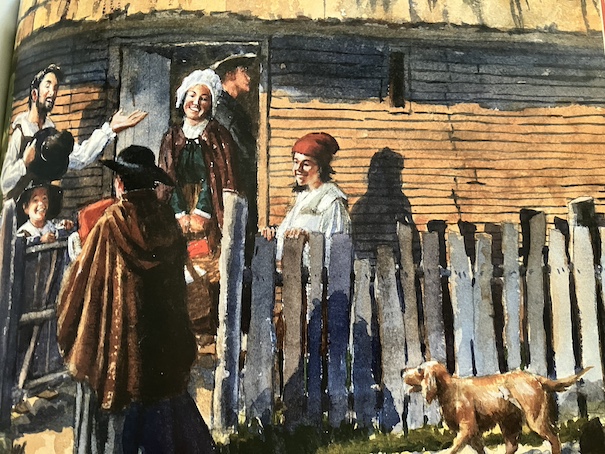
The pictures in the book are beautiful! Readers really get the sense that they’re seeing another time, with Jessie’s tiny village, the crowded ship in the rain, and busy New York City, more than 100 years ago. Even when the environment and circumstances are harsh, the pictures are charming.

There is a note in the beginning of the book for parents and teachers about how they can use this book to spark discussion with children. They can use the opportunity to invite children to learn how their own families arrived in America, because this book was originally intended for an audience of young American readers, and most people who live in the United States (with the exception of Native Americans) are descended from people who came from somewhere else. It’s an opportunity for children to learn their family’s history and to see how it compares with that of other people, whose families also made a decision to come here and start over, going through their own struggles along the way. There is also some general advice about sharing books with children, and making a point of surrounding children with books and reading aloud to them.

William’s House

It’s 1637 in Colonial New England, and a man named William is building a house for himself and his family. He wants a house that’s like his father’s house in England. The story describes all the steps he and his family go through to build the new house.

The descriptions include interesting historical details about homes from the Colonial era. When the family wants to put a window in their house, they don’t have any glass, so William uses a very thin piece of animal horn instead. It lets in light, but the window opening is still covered. William also uses stones and clay from a nearby creek when he builds a fireplace for the house.

William and his family also need furniture for the house. William uses boards from a wooden packing crate to make a table, and he stuffs bags with corn husks to make beds. When the house is finished, and the family is living in it, the book describes aspects of their daily lives. It describes how the family eats together.

The family has to change some of their habits and make additions to their house and the area around it because conditions are different in New England. The weather is hotter than they’re accustomed to from their lives in England, and their food spoils faster, so William digs a cellar for storing food. Before ice boxes and refrigeration, people would store their food underground in root cellars because it was cooler underground. When the thatch on their roof dries out and becomes a fire risk, William replaces the thatch with singles.

Then, when winter comes and it snows, they realize that the snow is too heavy for the roof, so William replaces the whole roof with one that has a steeper slope, so the snow will slide off. Then, he has to make the fireplace bigger because the house is so cold.

When spring comes, William’s cousin Samuel arrives from England with his wife, and he asks William about the design of his house. Originally, William wanted a house like the one he grew up in, but because he’s living in a different place and under different conditions, he’s had to make many changes to the house. Still, it’s his family’s new house, and it’s exactly what they need it to be.

The book is available to borrow and read for free online through Internet Archive.

I love stories about life in the past, and I liked all of the little details of daily life in this story. The main focus of the story is about the building of a new home, and at first, William wants a house like the one where he grew up in England. However, when the family experiences what life is like in New England, they realize that they have to make some changes to their home and the way they live. I like the way the book points out that the style of a person’s home depends on where they live and the circumstances of their life. The family doesn’t fully understand at first what their new lives will be like and what they really need, but they learn to adjust, and they make changes to their new house along the way.

When William’s cousin arrives, he doesn’t understand the design of their house at first. He hasn’t been living in New England yet, but readers know that he’s about to find out some of the reasons why people’s houses in New England are different from those in England at the same time period. At the end of the book, the characters are building a new house near William’s house, so it seems that his cousin and his wife will be living there, and they will benefit from what William has learned about building a house suitable for that environment.

When Clay Sings

This children’s picture book is a salute to the ancient makers of Native American pottery, dedicated to these makers and the museums that preserve their work. It’s written as free form poetry with images of the American Southwest and designs from Native American pottery.

The story sets the scene on a desert hillside, where pieces of ancient pottery are buried. Sometimes, Indian (Native American) children dig up pieces of old pottery, and their parents remind them to be respectful of what they find because they are pieces of the past and of lives that went before. Sometimes, they’re lucky enough to find pieces that fit together or even a bowl that isn’t broken.

They reflect on the time and skill that went into making the pottery and how strong the pottery would have to be to last well beyond the lives of the people who made it. They think about the people who painted the beautiful designs on the pots and what their lives were like. Could their own children have requested favorite pictures painted on their bowls?

Some designs show animals or bugs or hunters, but others show bizarre creatures that might be monsters or spirits. Others show a medicine man trying to cure a child, ceremonies, dancers in masks and costumes, or the traditional flute player. People can reflect on the lives of those long-ago people and how they compare to the lives of people today.

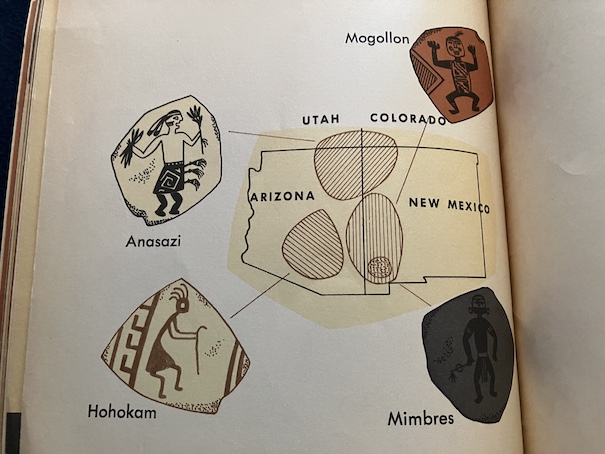
There is a map in the back of the book which shows the areas of the American Southwest (Arizona, New Mexico, Utah, and Colorado) where the pottery designs the book uses originated from and the tribes that used them.

This is a Caldecott Honor Book. It is available to borrow and read for free online through Internet Archive (multiple copies).

I grew up in Arizona, and I remember our school librarian reading books by Byrd Baylor to us in elementary school during the late 1980s or early 1990s. She wanted to introduce us to this author because she wrote about the area of the United States where we lived. In fact, this book about pottery was fitting because, when they were building our school in the 1970s, they found some ancient pottery. They used to have it on display in the school library. Even to this day, it’s common for people creating buildings in this area to have the site surveyed by archaeologists. Finds are fairly common, and the usual procedure is to thoroughly document everything that gets uncovered before burying it again in the same location and constructing the building over it. One of the reason why they usually rebury finds is that, in this dry, desert climate, putting them back into the ground will actually preserve them very well. It’s possible that later generations will find them again (especially with the location documented) when the building is gone or no longer necessary, but they may have better instruments or techniques for analyzing them.

I’m a little divided on how much I like this book, though. On the one hand, I like books about folklore and traditional crafts, and this book focuses on a geographical area that’s very familiar to me. On the other hand, the free verse poetry that reflects on the feelings of people about the pottery doesn’t appeal to me quite as much as books which show the process of making it, like The Little Indian Pottery Maker. I like to see the process and learn more of the known background legends of some of the designs than just try to imagine what things might have been going through the minds of the designers. Toward the end of the book, they show the legendary humpbacked flute player, but they don’t tell you that this figure is called Kokopelli and that there are legends about him. It’s a nice book, but I just felt like there was potential to include more background information.

This book uses the word “Indian” for “Native American” or “America Indian”, which is common in older children’s books.

Mystery of the Strange Traveler

This book was originally published under the title The Island of Dark Woods.

Laurie Kane and her older sister, Celia, are traveling by train without their parents to visit their Aunt Serena in New York. Aunt Serena has invited the girls to come stay with her while their parents are traveling in Asia for one of their father’s newspaper assignments. In her letter to the family, Aunt Serena hints at exciting things that are happening. She used to be a schoolteacher, but she says that she’s starting a new business, and the girls can help her with it, although she won’t say what it is until they arrive. Also, Aunt Serena has recently moved to a new house. When their father sees where she’s living now, he’s intrigued because it’s the location of their “ancestral mystery.” He would tell the girls the story himself, but Aunt Serena says in her letter that she would like to be the one to tell them about it. There father says that Aunt Serena loves being tantalizing and mysterious. Laurie, who loves mystery stories, wonders about it all the way to New York.

Aunt Serena lives in a wooded area on Staten Island, near Clove Lakes Park. She has a small red brick house with another outbuilding on her property that she says used to be an old cobbler’s shop. Her new business idea is to turn it into a small bookshop. Laurie loves it immediately because she loves books. She wants to be an author herself, and Aunt Serena says that she might even get a chance to meet her favorite author, Katherine Parsons, because she lives in the area. Celia is the practical one, and she asks Aunt Serena all the practical questions about how she plans to get people to come to her little shop when there are no other stores around them to draw customers in. Aunt Serena says that she’s not expecting her shop to turn into a big business. It’s more of a small hobby business to bring in a little extra money and also be a fun activity.

Laurie and Celia begin unpacking some of the books that Aunt Serena will sell in her small shop, and Laurie is pleased to see a collection of books by Katherine Parsons. On the back of one of the books, there’s a picture of the author and a short biography. Laurie is pleased to note that Katherine Parsons is left-handed, like herself. There are times when Laurie has difficult with things because she’s left-handed, and she feels a kinship toward the author because she shares that trait.

Meanwhile, Celia has noticed that there is a boy next door, moving the lawn. Laurie is more interested in books than boys, so she doesn’t find this exciting news. Celia tries to get the boy’s attention, but he seems to be ignoring her. When he does seem to notice the girls, he turns away quickly, like he wants to avoid them. Celia points out to Laurie how the house where the boy is looks very different from the rest of the houses around it – big, old-fashioned, dark, and creepy. Laurie comments that it looks haunted, and their Aunt Serena surprises them by saying it is.

The boy, Norman, lives with his grandfather, Mr. Bennett, in the old house. Mr. Bennett is a difficult man, and Aunt Serena admits that she got on his bad side when she first moved to the area by asking him if she could buy his house. Aunt Serena admits that she didn’t actually want to buy Mr. Bennett’s house; she was only using her inquiry as an excuse to talk to him and maybe get a look inside the house. However, Mr. Bennett took offense at the inquiry.

There is another boy in the neighborhood called Russ Sperry, and he’s friendlier. His mother sends him to bring a cake to Aunt Serena, and Aunt Serena says that she hopes he will be friends with the girls and show them around. Russ stays awhile to have some cake and chat, and he mentions that Norman Bennett’s father is in South America because he has a job there, which is why he’s staying with his grandfather. Aunt Serena says that Norman’s mother is dead and that his father rarely comes home. She doesn’t approve of the lonely way Norman’s grandfather seems to be raising him because it seems like Norman doesn’t have any friends. Laurie thinks that Norman’s loneliness is at least partly his own fault because he seems to avoid contact with people when she and Celia try to approach him. Celia decides that Russ is cute, but Laurie finds herself intrigued by Norman, not because she wants to flirt with him but because there’s an element of mystery about him.

The girls try to ask Aunt Serena more about what she means when she says that the Bennett house is haunted, but she says that she would rather talk about that later. She gets the girls busy unpacking their belongings, arranging things in her shop, and talking to Russ about the area. Russ helps to explain the geography of Staten Island, and Aunt Serena tells the girls more about the history of the area. Aunt Serena mentions that there are dances in the park on Wednesday nights, which sounds exciting to Celia. When Laurie spots Norman passing by, wearing riding clothes, Russ explains that there are a couple of stables in the area, where people can rent horses. There are plenty of things for the girls to do in the area, and Aunt Serena begins planning an opening party for her bookshop, with Katherine Parsons there as a special guest to sign her books.

Laurie is excited about the party and the opportunity to meet Katherine Parsons, but she continues to think about the mystery of why Norman seems so unfriendly. Soon, other strange things start happening. One night, she sees a light in Aunt Serena’s bookshop, as if someone were sneaking around in there. However, when Laurie goes to wake Aunt Serena to show her, the light is gone, and the next day, there aren’t any obvious signs that anything in the shop was disturbed.

When Laurie has a chance encounter with Mr. Bennett, where she asks him if he’s ever seen the ghost that haunts his house, he says, no he hasn’t seen it. The ghost is supposedly a phantom stagecoach, but Mr. Bennett doesn’t believe it exists. Once Laurie knows that there’s supposed to be a phantom stagecoach, she tries to press Aunt Serena for more details, but Aunt Serena refuses to tell them the rest of the story until she can tell them on a gray, stormy day, when the atmosphere is right.

When a stormy day comes and Aunt Serena agrees to tell the story, she allows Celia and Laurie to invite Russ and Norman over to hear it, too. Norman comes to hear the story without his grandfather’s permission because he’s always known there was some story about the house, but his grandfather hasn’t wanted to talk to him about it. When Aunt Serena tells the ghost story, the connections between the Kane family and the Bennett family become clear.

About 100 years before, there was a stagecoach route that ran through this area. One stormy day, a stagecoach was passing through the area, and one of the passengers, a woman with an infant daughter, was seriously ill and had become delirious. The stagecoach driver sought help at the Bennett house. The Bennetts brought the sick woman inside the house, along with the infant daughter. The stagecoach driver sent a doctor to tend to the woman, but she died in the Bennett house. They had no idea who the woman was and were unable to trace her origins or family. If the woman had a husband or the infant girl had a living father, the man never showed up to inquire after his wife or to claim the baby. All the Bennetts had do go on were the meager possessions the woman was carrying with her, and the little girl herself, whose last name was unknown but the mother had called “Serena.”

At this point, Serena explains that this Serena was the ancestor of the Kane family, the great-grandmother of Celia and Laurie. Since nobody was able to discover where she and her mother came from or locate any relative, the Bennetts adopted the first Serena and raised her until she grew up, got married, and moved away from the island. However, local people still tell stories about the terrible day when the first Serena and her ill mother were brought to the area, claiming to have seen a ghostly stagecoach pull up to the Bennett house and a ghostly woman get out.

Laurie is intrigued by the mystery surrounding her family’s origins. Aunt Serena shows them some of the belongings that the first Serena’s mother had when she died, which have been passed down as heirlooms. There was a doll with doll clothes, a woman’s dress with bonnet and gloves, a sewing kit, a fan, an old novel the woman must have been reading at the time, and a purse containing a very old coin. The old coin is another oddity about this strange situation because it dates from before the Revolutionary War and would have been long obsolete by the time the woman died during the 19th century. Is it still possible to solve a mystery that’s about 100 years old? Will Laurie and her family ever learn who their ancestors really were? Why does Mr. Bennett not want them to visit his house or talk about the old mystery or the ghost story? Does he know more about them than he wants to admit?

The book is available to borrow and read for free online through Internet Archive.

The mystery in the story unfolds slowly, which might make people who are used to faster-paced modern stories a little impatient. Aunt Serena takes quite a while from the time when she first mentions that the house next door is haunted until she actually explains what the ghost is supposed to be and what the mystery surrounding their family is. However, Aunt Serena values atmosphere, so the story could appeal to people who don’t mind a slower-paced mystery as long as it has a good atmosphere.

When the mystery does begin, some parts are resolved quickly and others are more of a puzzle. The idea of an orphan with an unknown identity and a hidden past is always intriguing. The light in the bookshop at night, on the other hand, turns out to be less of a mystery, and Mr. Bennett’s reluctance to discuss the ghost story and the old mystery turns out to be nothing sinister. Mr. Bennett doesn’t really have any hidden knowledge about the orphaned child or her dead mother. It’s just that he’s a very reclusive person who craves peace and quiet so he can work on his private projects. He also has some resentment toward the Kane family because, while they used to be very close, Laurie’s grandfather was the one who inspired Mr. Bennett’s son to take a job in another country, which is why Mr. Bennett and Norman rarely see him. By the end of the story, though, things get patched up between them.

Every time the matter of the mysterious orphan and the question of whether or not the house is haunted by her mother is raised, Mr. Bennett has had to deal with a bunch of people and reporters stopping by his house, harassing him with questions and asking for tours of the place, and he’s sick of it. He doesn’t want Aunt Serena or the kids raising the issue again because he doesn’t want to deal with everybody’s questions anymore, and he has no more information to give anyone. As far as he’s concerned, the mystery is unsolvable because he thinks whatever trail there might have been has long since grown cold, and if it were ever possible to learn the dead woman’s identity or the real origins of the child, someone else would have figured it out a long time ago. However, Laurie tells Mr. Bennett that she thinks that there’s still a chance to figure it out, and that plays into one of the major themes of the story.

The atmosphere of the story is pleasant, with Aunt Serena’s cheery little house decorated with bowls of wildflowers and her little bookshop. Aunt Serena greatly believes in establishing atmosphere, creating scene, and setting a mood. On the stormy day when Aunt Serena finally tells the girls the local ghost story, she makes it a point to set the atmosphere for the story by making popcorn and lighting candles.

Like other books by Phyllis Whitney, this story is set in a real location and uses some of the history of that location. The original title of this book came from the original Native American name for Staten Island, Monocknong, which the fictional author in the story, Katherine Parsons says means “The Island of Dark Woods.” Mr. Bennett disagrees, though, saying that it actually might mean, “The Place of the Bad Woods,” and they debate about different possible translations and meanings of the phrase. The history of the Staten Island plays directly into the story because it turns out that Laurie’s ancestors were involved with the historical events of the area, particularly Santa Ana’s stay on Staten Island after the Battle of the Alamo in Texas that was part of the Texas Revolution against Mexico.

A couple of other points I’d like to make regarding history are about race in the story. Toward the end of the book, Mr. Bennett hires “a young colored woman” as a housekeeper. “Colored” is a dated term in the 21st century, but this book was written in the 1950s, when that was considered one of the more polite ways to refer to black people. The popular terms we use now (“black” as the informal generic term and “African American” as the formal term specific to black people of African descent who live in the United States) came into use after the Civil Rights Movement as people tried to distance themselves from older terms as a way to shed the emotional baggage associated with them. The housekeeper, Anna, becomes friendly with Laurie, and she offers her a new perspective and some helpful advice about a different approach to tracing her family’s roots. Anna enters the story late, so she doesn’t appear much, but she is helpful, and I didn’t notice anything particularly stereotypical about her, although I suppose the idea of a black person in domestic service might be kind of cliche.

The other thing I wanted to mention is that American Indians are referred to multiple times in the story when the characters discuss the island’s history. The characters always refer to them as just “Indians” instead of “American Indians” or “Native Americans”, which is typical of the 1950s. At one point, Celia and Laurie are discussing their role in the island’s history. Celia talks about how she was glad that she wasn’t around then because there were massacres and “the Dutch kept buying the island from the Indians and the Indians kept taking it back.” However, Laurie says that was “because the white men cheated them.” I appreciated that Laurie acknowledged that, and I think that this exchange not only highlights some of the stereotypical views people had in the 1950s about Native Americans and history, but also differences between the ways Celia and Laurie look at other people. I have more to say about that below, but Celia tends to cling toward accepted views and the general social rules of society while Laurie has a talent for empathy and looking at situations from another person’s perspective. I’ve noticed that the author, Phyllis Whitney, has used this technique in other books of hers to subtly challenge stereotypes, pointing out that different groups of people have their own perspective and their own side of the story.

This book is fun for book lovers. Laurie’s favorite author, Katherine Parsons, is fictional, but the story captures the spirit of book lovers. It turns out that Norman is a book lover, too, and Laurie is able to draw him out and bond with him over their shared love of books. Aunt Serena also praises Laurie for her ability feel empathy for other people, a quality that she believes comes partly from Laurie being a book lover. After all, readers are accustomed to the idea of seeing circumstances through the eyes of someone else and experiencing their thought processes when they read a story. Aunt Serena believes that one of the benefits of reading it that it helps to cultivate a person’s skills in using empathy to understand other people and that readers carry that technique over into the real world.

I will say, though, that Laurie’s story took an unexpected turn. Laurie is a book lover, but through her association with Katherine Parsons, she unexpectedly realizes that, while she’s always dreamed of writing stories and being published, she doesn’t actually like the writing process. She enjoys the stories other people have written, and she has a knack for understanding characters, whether real or on the page, but she’s surprised to realize that the routine of writing doesn’t appeal to her. She feels a little sad at the realization because it means giving up an old dream but also a little relief because her life is now open to more possibilities that she might like better.

I also enjoyed the relationship between the two sisters in the story. They get on each other’s nerves and fight with each other sometimes, but they also care about each other and make up with each other after fighting. Celia, as the older sister, is more interested in boys than Laurie is, and she has all kinds of social rules about how to talk to boys and how to get their attention. Laurie knows that Celia and her friends talk about these things a lot, but Laurie doesn’t really understand all of their little rules and thinks a lot of them sound silly, like the idea that girls can’t invite boys to things but have to wait for the boys to ask them or that they should pretend like they’re not too interested in a boy so the boy will approach them first. This book was written in the 1950s, so a lot of Celia’s social expectations about how girls and boys should act around each other sound dated, but I enjoyed Laurie questioning Celia’s rules.

Laurie thinks it more important to know about what specific people like and how to appeal to them as individuals than to adhere to more general social rules. This is especially apparent when the girls try to get Mr. Bennett to let them in his house and talk to him. When the sisters compete to ingratiate themselves to Mr. Bennett so they can get access to the house and talk to him about the mystery, their different approaches play on their concepts of social rules and human empathy. Celia tries a very conventional approach, trying to appeal to Mr. Bennett in a general way, but Laurie decides that “Mr. Bennett was too much of an individual to be governed by rules that worked for most people” and tailors her approach to him as an eccentric individual.

Celia’s idea is to make some homemade cupcakes and take them to Mr. Bennett as a gift because she believes in the old axiom that the way to a man’s heart is through his stomach. As Laurie suspects, though, this approach falls flat because Mr. Bennett isn’t interested in baked goods. Laurie has a better idea of what Mr. Bennett really likes because she has talked to Norman about him, and she decides that the way to get his attention is to demonstrate a shared interest in something he likes. Knowing that he likes nature more than anything else, she starts putting together a collection of interesting leaves and asks Mr. Bennett if he can help identify them. Mr. Bennett isn’t really impressed by her collection because she didn’t mount the collection properly, most of her collection is very common leaves that he thinks she should be able to identify if she knew anything about trees, and she also included a sample of poison ivy, which she should have known better than to touch. However, he is sufficiently amused by her efforts and her mistake to talk to her for a few minutes.

One of the major themes of the story is that “No man is an island”, meaning that people do need other people. Aunt Serena is concerned that Mr. Bennett’s obsession with solitude is hurting his grandson because he’s making it difficult for Norman to make friends. Mr. Bennett has forbidden Norman to bring any other kids to the house because he doesn’t want to deal with the noise and disturbance. Because she’s been a teacher, Aunt Serena knows that Norman needs more opportunities to socialize with his peers. Mr. Bennett doesn’t even seem to pay much attention to Norman himself because he’s too absorbed in his own work.

What Laurie points out to Mr. Bennett when Mr. Bennett tries to tell the kids that the old mystery is unsolvable is that a group of people working together can accomplish more than any one person, working alone. They don’t have many clues to the past, but just because they don’t all make sense to any one of them doesn’t mean that parts of them wouldn’t make sense to different people. By pooling their knowledge and consulting other people, they could still put together the pieces of the past.

Along the way, Laurie also makes Mr. Bennett realize that there are many things he doesn’t know about Norman. Even though he and Norman have been living alone together for a long time, Mr. Bennett hasn’t paid much attention to Norman or things Norman has been doing. Norman has felt lonely and neglected, although he hasn’t wanted to admit how much. When Mr. Bennett realizes that Norman is an artist and has been developing his skills to an impressive degree without him even seeing any of Norman’s projects, he realizes that he has been too absorbed in his own concerns and starts to make an effort to learn more about what’s happening in the lives of the people around him. This is a similar situation to a grandmother in another of the author’s books, Mystery of the Angry Idol.

Look Up!

This picture book is about the life of Henrietta Leavitt, a “Pioneering Woman Astronomer” during the late 19th century and early 20th century.

The story says that Henrietta had a fascination with the night sky from a young age, often wondering just how high the sky was. When she got older, she formally studied astronomy, although most of the other students were men, and it was an uncommon profession for women.

After she graduated, she found a job with an observatory, although she rarely worked on the telescope. She was part of a team of other women who acted as human “computers”, doing basic calculations by hand and compiling information for others to use. Women like Henrietta were not expected to use this information themselves or draw conclusions from their own calculations, but Henrietta had her natural sense of curiosity and confidence in her ability to use her own mind.

She continued studying in her spare time, and while examining photographs of stars and doing her calculations, she began to notice some patterns that made her wonder about the explanations behind them. She studied an effect where stars seemed to become brighter and then dimmer, a kind of “blinking” effect.

She not only discovered that the existence of some of these stars had not been recorded yet, but she also found herself wondering about the pattern of this twinkling effect. Some stars appeared brighter and seemed to “blink” more slowly between bright and dim than other stars that weren’t as bright. By examining the relative brightness of the stars and the patterns of blink rate, she realized that it was possible to calculate the true brightness of the stars and use that to figure out how far away each star is from Earth. When she presented her findings to the head astronomer at the observatory, he was impressed. By using the chart Henrietta compiled, it was possible to calculate the distances of stars even beyond our galaxy. People of Henrietta’s time initially thought our galaxy might be the entire universe, but Henrietta’s finding shows that it was not and also that our galaxy is much larger than people thought.

The book ends with sections of historical information about Henrietta Leavitt and her discoveries and other female astronomers. There is also a glossary, some quotes about stars, and a list of websites for readers to visit.

I enjoy books about historical figures, especially lesser-known ones, and overall, I liked this picture book. The pictures are soft and lovely.

The only criticisms I have are that the book is a little slow and repetitious in places, and the subject matter is a little complex for a young audience. Some repetition is expected in picture books for young children, but how appealing that can be depends on what is being repeated. Henrietta’s work involves a lot of looking at pictures and figures and studying, so the text gives the feeling of long hours studying and “looking,” and many of the pictures are of her looking at books and examining photographs of stars through a magnifying lens. I found the story and pictures charming and in keeping with the Academic aesthetics, but I’m just not sure how much it would appeal to young children.

The story explains some of the concepts that Henrietta Leavitt developed and discovered, and it does so in fairly simple language. However, I still have the feeling that it would mean a little more to a little older child, who already knows something about astronomy, or to an adult like myself, who just enjoys the charming format of the story.

Part of me thinks that this story could have been made into a little longer book, perhaps a beginning chapter book, which would have allowed for a little more complexity. One of the issues with making the story of Henrietta Leavitt into a longer book is that, as the section of historical information says, “not a great deal is known about her life.” There just might not be enough known details about Henrietta’s life to put together a longer book.

Still, I really did enjoy the book, and I liked the presentation of 19th century astronomers and astronomical concepts. I especially enjoyed the way the story portrayed the concept of “human computers.” This type of profession no longer exists because we have electronic computers and computer programs that perform mathematical calculations faster than human beings can, but before that technology existed, humans had to do it themselves. “Human computers” had to work in groups to get through massive amounts of data and calculations, and it was long and tedious work, but their work was largely hidden from the public eye. As the story says, they were expected to do mathematical calculations and compile data, but they were compiling it for someone else’s use. Someone else would use their data to draw conclusions, and that person usually got the credit for whatever they discovered, ignoring all the people who did the grunt work that made it possible. Since women like Henrietta were more likely to be among the “human computers”, working in the background, they often didn’t get much credit for their work. The male astronomers were more likely to be the ones analyzing data and taking credit for the conclusions they drew, although they didn’t do the background calculations themselves. What made Henrietta different was that she stepped beyond the role of simply compiling information but also took on the role of studying patterns and drawing conclusions from the data she was compiling. She did all of it, from compiling data and making calculations to interpreting the data and laying out conclusions and discoveries from it.

Women once worked in similar positions as “human computers” at NASA. The 2016 movie Hidden Figures was about women working as “human computers” at NASA in the 1960s.

Five Secrets in a Box

This story is about Virginia Galilei (1600-1634), the eldest child of Galileo Galilei, and her perception of his work and equipment as a young child. The book has sections of historical information about Galileo and Virginia in the front and the back inside cover, although the story itself is just about Virginia exploring Galileo’s study.

Virginia, as a young child, knows that her father stays up late at night, studying the night sky, while she is asleep. During the day, she must be quiet to let him sleep. She is not really supposed to touch his scientific instruments, but she can’t resist the temptation to take a look. In her father’s study, she finds a box with five mysterious objects in it, and she investigates what they do.

One of them is a lens that makes small things look bigger. Another is a lens that makes things that are far away look closer. There is another lens that makes everything look blue and another that makes everything look red. Then, there is also a plain, white feather.

Virginia wonders what the purpose of the feather is, and she asks her father about it. He tells her that it is important to his work.

The book is available to borrow and read for free online through Internet Archive.

According to the historical information provided, little Virginia’s mother left Galileo and married someone else while Virginia was still young. Virginia remained living with Galileo and was close to her father. When she was 12 years old, her father sent her to a convent, which was a fairly common way for upper-class girls at that time to get an education. However, Galileo probably intended for his daughters to join the Church as nuns rather than marrying when their education was complete. The book doesn’t explain this, but Virginia and her younger brother and sister were born out of wedlock. Because they were illegitimate (born outside of a legally-recognized marriage – the word “illegitimate” literally refers to someone born outside of the law and legal standing with implications about both the legal status of their parents’ union and the child’s possible future inheritance, depending on the laws of that particular society), their social status was compromised from birth. Galileo believed that it would be difficult for his daughters to find husbands, so joining a convent and becoming nuns would provide the girls with stable lives and careers as well as an education, which is what both of them did. Virginia remained at the convent as a nun, taking the name of Sister Maria Celeste, and unfortunately, died relatively young at the age of 34. The book doesn’t say why, but it was because she contracted dysentery, which is caused by consuming tainted water or food.

The story itself doesn’t really explain the purpose of the five special objects that Virginia examines in her father’s study. Some of them are obvious because readers will recognize what they are and the way they work. The purpose of the feather is left a little mysterious at the end, but readers get the full explanation by reading the section of historical information. Galileo was studying gravity, and apparently, he dropped objects off of the leading tower of Pisa to study how long it took them to fall. A feather will take longer to reach the ground than a stone, but that’s because of air resistance. One of Galileo’s premises was that, if there were no air to produce that air resistance, the stone and the feather would fall at the same rate of time due to gravity. I think I would have preferred to have Galileo explain some of this to his daughter when she asks him about the feather, but the story ends kind of abruptly at that point, with Virginia just playing with the feather. I felt like the ending isn’t exactly an ending without that explanation.
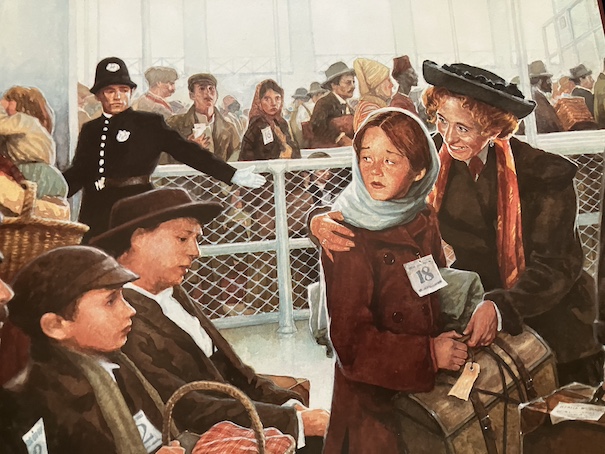
The pictures are the main reason why I really liked this book. They are colorful and realistic, and I thought they did a great job of showing the scientific instruments of the past. I also liked some of the little details of the house included in the backgrounds of the pictures. There is a crucifix hanging on the wall behind the telescope in Galileo’s study because this is a religious household, even though some of Galileo’s assertions about the way the world works clashed with Church teachings and got him placed under house arrest. (The book says that he was “sent to prison”, but he was actually placed under house arrest rather than being sent to a prison because he was elderly and in bad health by that point in his life.)

The book doesn’t go into detail about Galileo’s arrest because that happened later in his life, but he was basically considered a heretic for his belief in Copernicus‘s theory that the sun is the center of the solar system instead of the Earth. That sounds like a rather petty charge, and you might wonder why it matters or what different it could make to religion. It wasn’t a new idea because others had reached that conclusion long before him. Copernicus was never arrested for his ideas, partly because he didn’t live very long after he published them, but his book was placed on the restricted list by the Inquisition.

The reason why the relative positions of the sun and the Earth mattered depend on whether particular Biblical passages are meant to be interpreted literally or figuratively. Under a strict literal interpretation, which was the interpretation approved by the Church at that time, the conclusion was that the Earth was the center of the solar system, so saying otherwise would be to go against the Bible and Church teaching, making it a heresy. It wasn’t so much that the relative positions of the sun and the Earth were that important by themselves so much as the act of apparently contradicting the Bible. The Renaissance era was also the era of the Reformation, where Protestants were breaking away from the Catholic Church, partly because of the questions of literal interpretation of the Bible and Church doctrine. The Catholic Church’s response to that during this period was to become more strict in enforcing moral and doctrinal standards in the Counter-Reformation, so anything that seemed to challenge these aspects of the faith was taken far more seriously during this period. This stance would shift again later in history.

The background and aftermath to this story is far more complex than the story itself, although I think part of the charm of the story is it’s simplicity. This is one particular day and a small incident, seen through the eyes of a child, even though adult readers know that there are bigger events surrounding it.