
The Lettering Book by Noelene Morris, 1984.
I remember buying this book at a Scholastic book fair back in the early 1990s, and for a while afterward, I went through a phase where I kept trying to invent different types of decorative writing. I kept them in a notebook, and most look a bit silly, like the one where the letters were made of ice cream cones and the one where the letters were weird sheep with little feet, but I had fun!
The book is about types of lettering, but it’s really much more than that. The main focus is on designing a poster. The first part of the book goes into detail about planning your poster to convey your message to other people. It recommends making an outline of your information before beginning the project and deciding what visual elements you need to include, like diagrams and pictures. There are some useful tips about research and writing, if the presentation is part of a research project.

Then the book provides examples of how to design a page, showing different possible layouts for organizing page headings, text, and images. Although this book was planned around the idea of a printed poster, I think the layout suggestions and concepts could also be used for electronic media, such as web design or PowerPoint presentations.
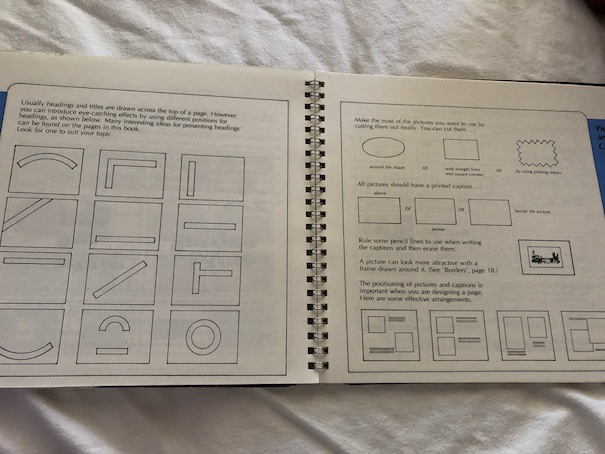
There are also examples for the shapes of headings and pictures and the positioning of image captions.

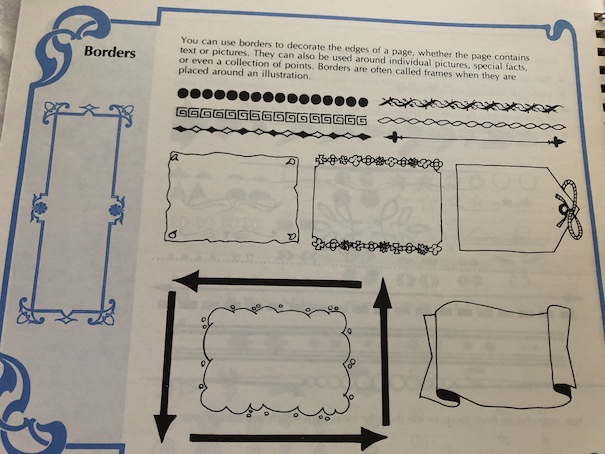
The book recommends using decorative markers, borders, and horizontal rules to add visual interest to the information, separate sections of a page, and make projects look more finished.
When it comes to making the lettering of the poster or page, it explains the elements that define a print style – height and width of letters, slope, line variations, pattern, color, 3D effect, and separation and spacing of letters or overlapping of letters.

A large part of the book shows examples of letters of the alphabet and numerals in different fonts. Some of them are recognizable as fonts that still used in word processing software and on the Internet.


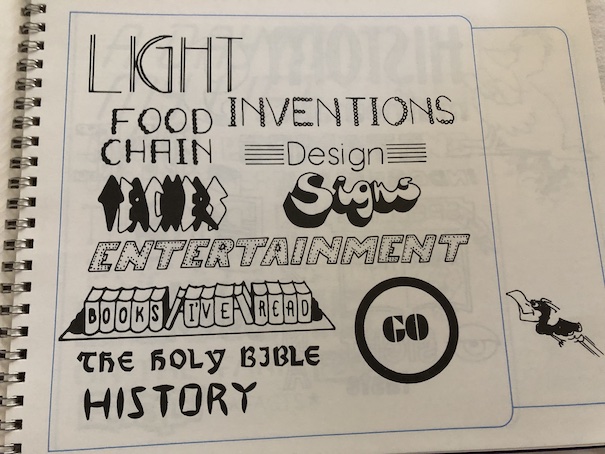
There are also pages with examples, showing how certain styles of lettering can convey a mood or idea in headings and sample phrases.
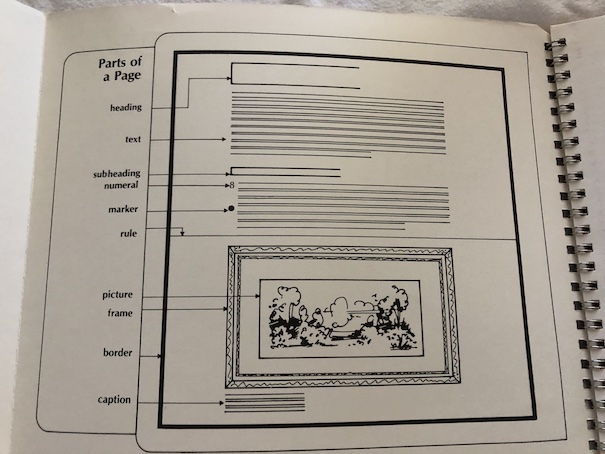
The front and back flaps of the book fold out, and there is a chart of the parts of a page, a couple of grids like those used for planning lettering styles, and a glossary of terms used in the book.
I couldn’t find this particular book online, but a couple of related books by the same author are available to borrow and read for free online through Internet Archive. I think I also used to own The Lettering Book of Alphabets, probably purchased at the same time as this book, and that inspired my alphabet lettering phase. The Lettering Book Companion is a companion book to The Lettering Book, and it particularly focuses on decorative borders.
 Jestress's Forgotten Books and Stories