Eyewitness Books

Eyewitness Train by John Coiley, 1992, 2009.
I love Eyewitness Books for their collections of pictures! I always say that nonfiction books for adults need more pictures because pictures are worth a thousand words, and I love how this particular book uses pictures to explain the details of different kinds of train cars and how railroads work.

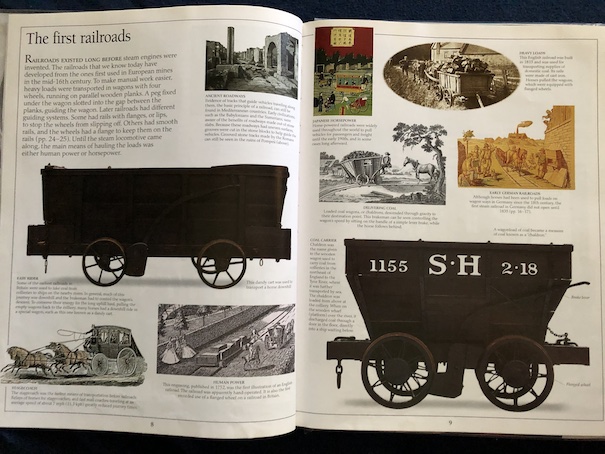
It begins with an explanation of what trains are and the history of the first railroads. Trains, which are series of linked wheeled vehicles, are older than the first steam engines and developed from chains of wagons used in European mines during the 1500s. Steam engines were developed in the 1700s, although it wasn’t until the 1800s that railroads as we know them developed and became popular modes of transporting people and goods.

The book explains how steam engines work, using pictures of model train engines with cutaway designs. Then, it explains about railroads around the world and how railways are built.


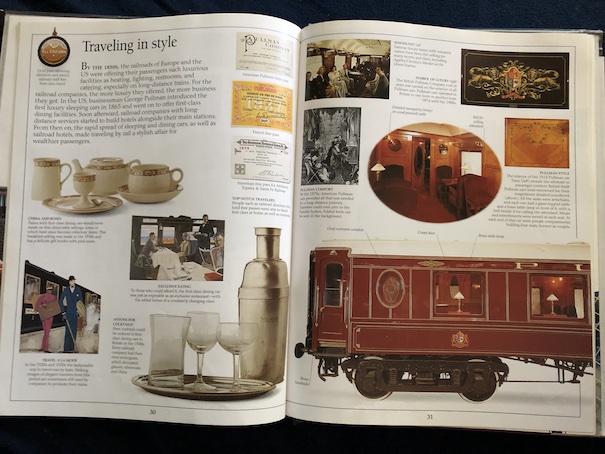
From there, the book explains about both freight trains and passenger trains. The part about mail trains reminds me of the kids’ book Mailing May. When it discusses passenger trains, it explains the differences between first, second, and third class sections on historic passenger trains. There is also a page about George Pullman, who developed luxury sleeping and dining cars catering to wealthy travelers. The level of luxury on trains could be quite impressive, and the book mentions that this is the level of luxury the passengers experienced in Agatha Christie’s Murder on the Orient Express, a classic mystery story that many people think of when they hear about luxury train travel.
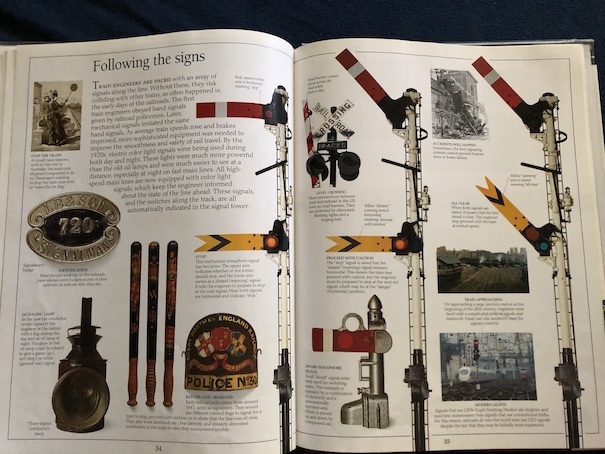
When I was a kid, the sections about passenger trains and sleeper cars would have appealed to me the most because that is the stuff of stories, and I’ve always been a big mystery fan. However, I also find the parts about how railroads function interesting. They explain about the purpose of the signal tower and how train signal and track controls have changed since the 1800s. Earlier, I covered a different train book that showed the old, manual signals they would use, but this book covers modern methods of signaling and controlling trains as well. It also explains the evolution of train stations.

The book covers the differences between steam, electric, and diesel trains, and there are also sections about elevated trains and underground trains. There is also a section about new technology for trains and what the future of trains might be.

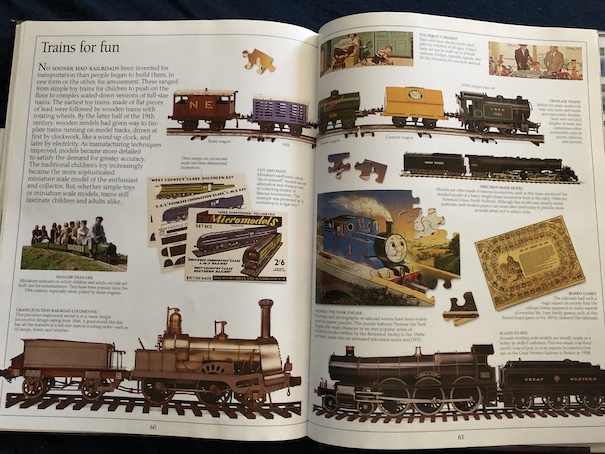
I also enjoyed the section about toy trains and model railroads!
The book ends with a map showing famous railways around the world, a timeline of the development of trains, a glossary of terms, and a section with sources of additional information, a list of railway museums, and recommendations for movies that include trains, including the movie versions of Harry Potter, The Polar Express, and The Railway Children.

My copy of this book included a poster about trains and a CD with train clip-art, but not all copies of this book might include the same extra items, especially if you buy a used copy. I lucked out with mine. The book is available to borrow and read for free online through Internet Archive.
 Jestress's Forgotten Books and Stories