Kirsten, An American Girl

Kirsten’s Cookbook by Terri Braun, Jodi Evert, and Jeanne Thieme, 1994.
This cook book is one of the activity books that was written to accompany the Kirsten series that is part of the American Girls franchise. The American Girls books were written to help teach American history (as well as sell the accompanying dolls and accessories), so this book has recipes of the type that people would have eaten on the American frontier during the mid-1800s, when the character of Kirsten lived, and some historical information.
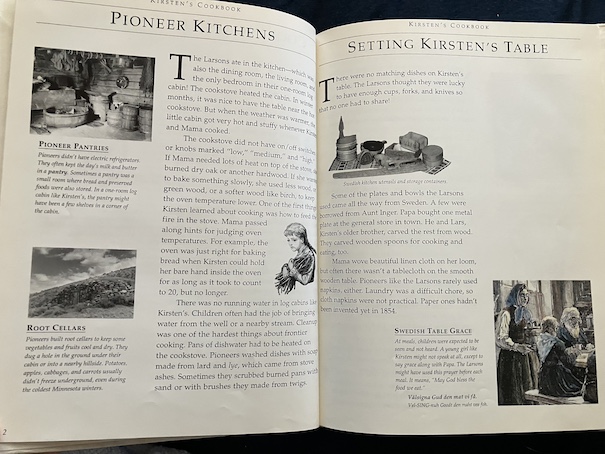
The book begins with some historical information about cooking on the frontier. Pioneer families like Kirsten’s family ate what they grew themselves and things they could gather from the woods around them. They ate certain foods only in the season when they could get them, and it was hard work to produce food and process it before using it in recipes. There were certain types of food that they had often because the ingredients were simple and often available, like potatoes and bread, and they rarely had time to prepare special or elaborate meals. However, they would take the time to make some special treats for holidays.
There are special sections that describe what pioneer kitchens were like and the dishes and table settings they would use. Pioneer families like Kirsten’s lived in one-room cabins, so her family cooked, ate, and slept all in that one room. They had a wood-burning cookstove, but stoves like that did not come with temperature settings. (This is why you don’t see temperatures specified in old recipes from the 19th century, although this book does include that information for modern readers.) People learned to judge roughly whether the temperature was right to bake bread or cook other recipes by feel, and could regulate the approximate temperature through the type or amount of wood they burned.
There is also a section of cooking tips and kitchen safety tips for modern child readers. Then, the recipes are organized by type of meal with a section of Kirsten’s favorite recipes. Each section and recipe is accompanied with additional historical information and trivia.
Breakfast
- Pork sausage patties
- Hard-boiled eggs
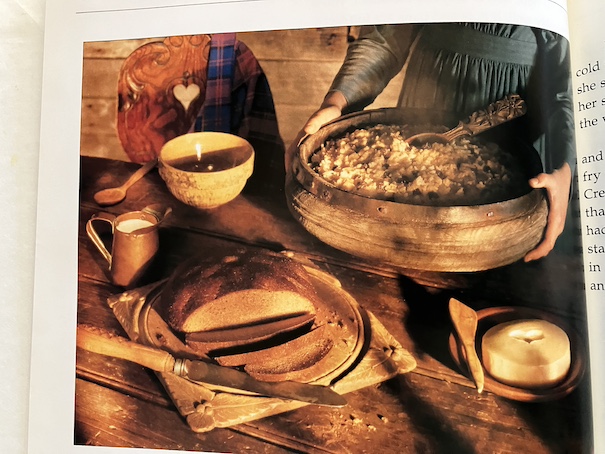
- Swedish rice porridge
- Round rye bread
- Homemade butter
- Ginger cookies – Although cookies seem like an odd thing to see at breakfast, a pioneer family might have them and save some for a snack in the mid-morning, before lunch, or as they called it, dinner.
Dinner
“Dinner” is usually the biggest meal of the day, but depending on when and where you live, that might be either the midday meal or the evening meal. In modern times, it tends to be the evening meal, after a family or individuals are home from work or school and have more time for a large meal. Modern people sometimes use the terms “dinner” and “supper” (the evening meal) interchangeably for that reason. In Kirsten’s time and, sometimes, in rural areas even in modern times, the biggest meal is the midday meal, what most of us would call “lunch.”
- Baked ham slice
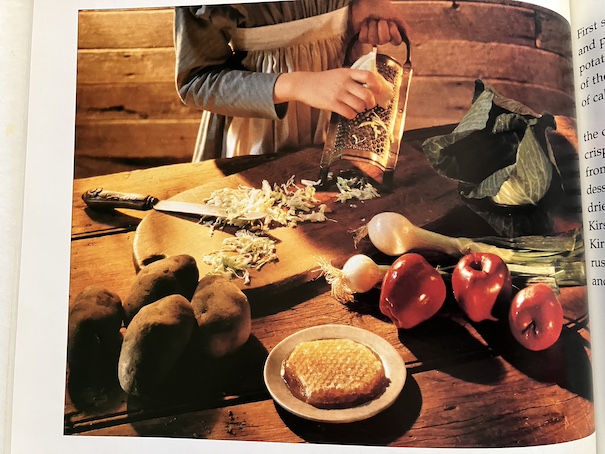
- Swedish potatoes
- Cabbage and apple salad
- Fruit Soup
- Swedish Almond Rusks – Swedish rusks are crunchy sweet breads, a little like biscotti.

Favorite Foods
This section just has an assortment of recipes for Kirsten’s favorite foods. Some of them are traditional Swedish foods, and others are more American. There is a mention in this section that pioneers learned how to make maple syrup from “Indians”, meaning Native Americans.
- Potato soup – Soup with bread and cheese was a popular supper meal for farming families in the 19th century.
- Swedish meatballs
- Fresh applesauce
- Swedish pancakes – These thin pancakes are rolled and filled with jam.
- St. Lucia buns – These special buns are topped with raisins, and it’s a tradition in Sweden and other Scandinavian countries to serve them on St. Lucia Day, December 13.
- Pepparkakor cookies – These are thin, spicy cookies that are cut into shapes and served at Christmas.
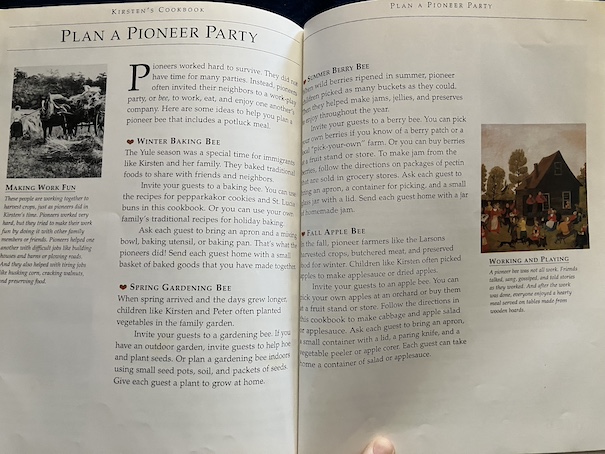
The book ends with a section of tips for having a pioneer-themed party. When real pioneers had parties, they were often organized around chores they had to do or tasks to accomplish. They called these work-play parties “bees”. Besides accomplishing a task, friends and neighbors would also bring food and share a meal, talk, and have fun. The suggestions in this section are organized seasonally. A Winter Baking Bee could involve everyone getting together to bake holiday treats, like the ones included in this book for St. Lucia Day and Christmas, or whatever the guests want to bake. At a Spring Gardening Bee, guests can get together to plant a garden or potted plants, with plants for guests to take home themselves. For a Summer Berry Bee, guests can pick berries (if they grow locally or at a “pick-your-own” farm) or make jam, with some for everyone to take home. For a Fall Apple Bee, guests can pick apples and make recipes with apples, like applesauce.
The book is available to borrow and read for free online through Internet Archive.
 Jestress's Forgotten Books and Stories
Love your blog! My daughter had a Kirsten doll growing up (she’s 37 now)! We had all the books, but not the cookbook. Thanks for the link! 🙂
LikeLike
Thanks! I always wanted a doll but never got one. The cookbooks are great. I like all the historical American Girl cookbooks. If you haven’t used Internet Archive, you have to sign up for an account to borrow books and read them in your browser, but the account doesn’t cost anything. It’s just to keep track of what you borrow.
LikeLike