Winter Cottage

The Vincents own a summer cottage in Wisconsin. It was once an old farmhouse, so it is well-insulated and can be heated during the winter, but the Vincents only use it for about 2 or 3 months in the summer. The rest of the time it is empty and used by animals, like mice and woodchucks. However, that’s about to change.

The year is 1930, the Great Depression has started, and many people are out of work and desperate to provide for their families. One such family, a father with his two daughters, happens to be passing near the Vincents’ empty summer house in the middle of October, when the Vincents have already long left the house, when their car suddenly breaks down. They were originally on their way to an aunt’s house to stay with her, but with their car broken down, they’re unable to continue their journey. Mr. Sparkes is a pleasant and easy-going man but impractical and a failed plumber. His eldest daughter, Minty, tends to deal with the practical aspects of things. Minty’s younger sister, Eglantine, called Eggs as a nickname, is the first to notice the empty summerhouse and suggests that, if they could get in, they could make some food. Needing a place to stay for the night and finding a window unlocked, they decide that they’ll go ahead and stay in the house. Although Minty has some reservations about staying in a house that belongs to someone else without their permission, she doesn’t have any better options, and she soon gets caught up in the excitement of exploring this unfamiliar house.

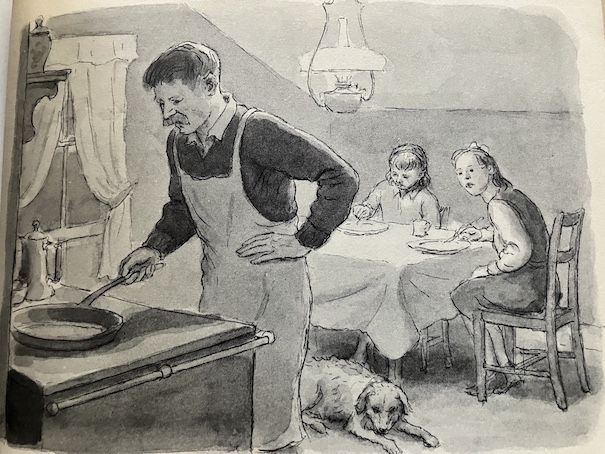
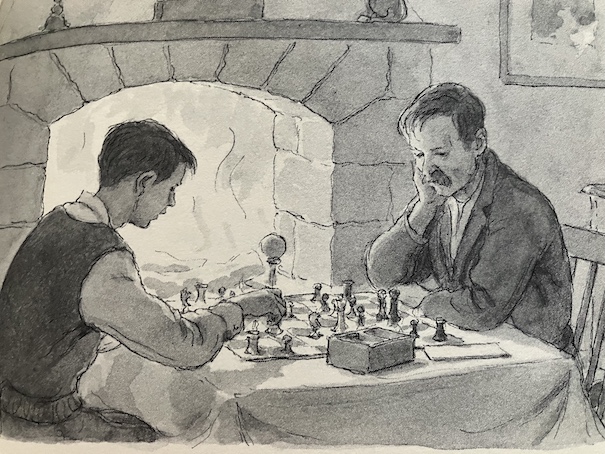
Mr. Sparkes feels like a failure because he’s been in and out of work, and typical jobs just don’t seem to suit him. Their Aunt Amy, the sister of the girls’ deceased mother, thinks that Mr. Sparkes is a failure and a silly, impractical man because he’s always quoting poetry, and his main talent seems to be making his special pancakes. There is some truth to what Aunt Amy says, and Mr. Sparkes acknowledges it. It seems like his only real talent is for making incredible pancakes, although his daughters reassure him that they love him and don’t see him as a failure. They were traveling to stay with Aunt Amy because they have no one else to stay with, but it’s clear from Aunt Amy’s letter that she isn’t looking forward to their arrival, and she also would not welcome their dog, Buster. Eggs says that she wishes they could just stay in this lovely cottage all winter, and Minty wishes the same thing, although she knows it isn’t really right for them to stay in this house without the owners’ permission. Mr. Sparkes likes the cottage, too, because it has a wonderful collection of books, including books of poetry.

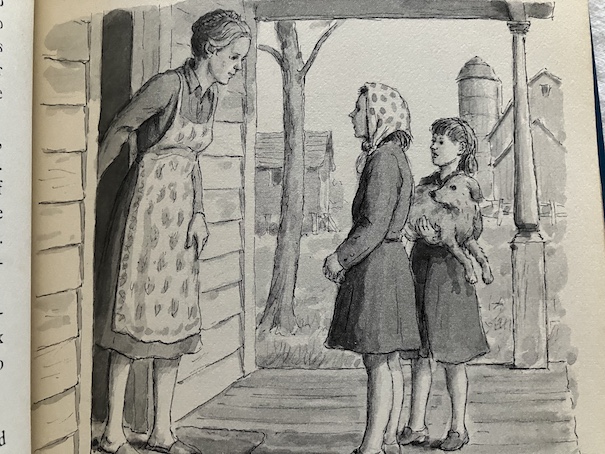
The next day, Mr. Sparkes tries to fix the car, but he’s a terrible mechanic. He takes the engine apart and doesn’t know how to put it back together. The girls go to a neighboring farmhouse and ask if anybody there knows anything about cars. Mrs. Gustafson sends her son Pete with the girls to look at the car, and he manages to put the engine back together again, but he isn’t skilled enough to figure out how to fix the original problem. He says that they had better call a mechanic in town to tend to it and that it would likely cost them about $10. The girls are worried because they know that’s about how much money they have left, and if they spend it all fixing the car, they won’t have enough left to buy more supplies and travel all the way to where Aunt Amy lives.

When they explain the situation to their father, Mr. Sparkes says that he thinks they should just stay in the cottage for the winter. Minty says that isn’t right because the house doesn’t belong to them, but their father says that it isn’t doing the owner any good to leave it empty all winter. To make it right, he suggests that they could rent it, so the owner would profit from their stay. The girls ask where he would get the money to rent the house, and their father says he doesn’t know, but he’ll have all winter to think of something. When they leave the cottage in the spring, he plans to leave the money in the cottage with a note, explaining why they stayed there. The girls are relieved that they don’t have to go to Aunt Amy’s house, but Minty is concerned that, by spring, her younger sister and impractical father will have forgotten all about the rent money for the cottage, and she makes up her mind that she will think of a way to get the money herself.

Eggs comes up with a possible way to make some money when she shows her father a contest magazine that she found at the last place where they camped. There are various contests in the magazine that offer prizes, like prizes for solving puzzles or adding the last line to a limerick. Mr. Sparkes is intrigued by the contests, and he says that they can pass the winter by trying them. He’s particularly interested in the contest to write a poem to advertise butter because he loves poetry and the prize is $1,000, which is an enormous sum to them.

Life in the cottage is idyllic. They have some groceries with them to get themselves started, and their father enjoys fishing in the nearby lake for more food. The girls find nuts and cranberries, and their father cuts wood for the stove in the cottage. Minty takes charge of the house, making sure that they keep it neat for the Vincents. The girls learn that the Vincents are the ones who own the house and that they have a daughter called Marcia when they find some of Marcia’s belongings. Sometimes, Minty and Eggs think of Marcia as a friend, and Minty sort of idealizes her in her imagination. Minty likes to imagine the comfortable life she thinks Marcia lives, wherever her family lives in the winter, and she is determined that they won’t let her down by not taking care of the cottage or finding a way to pay the rent.

Then, Mr. Sparkes gets sick, and the girls are frightened because they don’t have much medicine and don’t know what to do. They try to get help from Mrs. Gustafson, but she’s away from home. As Minty is leaving the Gustafson farm, she happens to meet a boy who’s been hunting partridges, and in her desperation, she begs him for help. At first, he is surly and suspicious with her, but when he begins to understand the situation, he agrees to come have a look at her father. The boy, whose name is Joe Boles, is carrying a professional-looking medical kit and seems to know what he’s doing as he attends to Mr. Sparkes. The girls are grateful for his help, and they invite him to spend the night in a spare room in the cottage.

It turns out that Joe is also down on his luck. His father was a doctor, and the medical kit Joe carries used to belong to him. He gets his basic knowledge of medicine from his father and from his grandmother’s home remedies. Joe also wants to be a doctor, but he’s alone now and doesn’t know how he’s going to manage to get the medical training he really wants. Although he’s initially reluctant to explain how he came to be alone, he explains that his father was killed in a car accident. His mother is still alive, but she remarried to a man Joe can’t stand. Eventually, Joe just couldn’t take living with him anymore, so he ran away from home. Joe tells the family that he’s been camping in the woods. Running away from home may not have been the best decision Joe could have made, but he’s determined not to go back, and the family can’t criticize him too much because they’re also sort of running away and hiding out right now.

Joe seems to know what to do to help prepare the cottage for winter, and Mr. Sparkes says that they could use his help around the place. However, Mr. Sparkes admits to Joe that he can’t do much more for Joe than just give him a place to say for the winter, and a borrowed place at that. Joe says that’s fine, and he would like to stay with them for the winter, and he would be willing to pay for his room and board with his labor. The Sparkes family is thrilled to have Joe stay with them and help them. The only point that Mr. Sparkes insists on is that Joe write a letter to his mother to tell her that he’s safe so she won’t worry about him. He says that Joe doesn’t have to be specific about where he’s staying right now, but he knows that Joe’s mother will feel better, knowing that he has somewhere to stay for the winter.

With Joe, Minty and her sister explore the area more and visit the nearby Indian (Native American) reservation. Eggs is a little nervous about the Indians (the term the book uses) at first, worrying about scalping, but Joe tells her not to worry and that the locals are just curious about them. Joe worries less about people recognizing him as a runaway in the reservation village than in the town nearby because it’s a little more remote, although they do accidentally meet the local sheriff in the reservation store, who recognizes Minty from an earlier shopping trip to town. Joe does his best to stay inconspicuous.

While they’re in the reservation store, they learn that the reason why the sheriff is there is that the storekeeper’s son is in trouble. The son, who is a young man in his 20s, got drunk, broke into somebody’s house, ate some of their food, and fell asleep in their bed. The young man’s father argues with the sheriff that the son didn’t actually steal anything from the house, but the sheriff says that what he did was trespassing and that it’s illegal to break into someone’s house, stay there, and use their things without permission. He says that, for that charge, the son will have to spend a week in jail. This incident is troubling to Minty because she knows that she and her family also don’t have permission to use the house where they’re staying, and they’ve been there longer than this young man was in the house where he trespassed. When the sheriff points out that the weather is getting bad and offers to take the kids home, Minty panics at the idea of him finding out where they’re staying and tells him that they plan to spend the night at the reservation.

Of course, the kids don’t really have a place to stay on the reservation, and the weather is bad for camping. They are rescued by the village priest, who says that Joe can stay with him, and the girls can stay with Sister Agnes, one of the nuns who runs the mission school on the reservation. (“Indian schools” like this have a rather scandalous reputation these days for reasons I can explain below.) Minty says that they don’t have any money to pay for a place to stay, but Sister Agnes says that doesn’t matter because “God is your host.” In other words, they’re offering the children a place to stay out of kindness and Christian charity and don’t expect payment. There are some Native American children who also board at the school, some because their houses are too far away for them to travel back and forth between home and the school daily and a couple of children who are orphans and live at the school full time.

There is a scene where some of the Indians are playing drums and dancing, but not the ones living at the school. One of the nuns says that the dancers are “heathen Indians” and that “our Christian Indians don’t dance,” although Minty can tell that the Indian students at the school are feeling the rhythm of the song and enjoying it. Joe takes Minty and Eggs to see the dancers, and they find it fascinating. I didn’t like the “heathen” talk (although I think it’s probably in keeping with the historical setting of the story), but I did appreciate an observation that Minty makes, “Indeed it seemed to be a not entirely un-Christian gathering, for here and there among the gaudy beads was the gleam of a cross on the neck of some forgetful dancer.” That observation contradicts the idea that the dancers aren’t Christians because at least some of them seem to be. That and Minty’s observation that the girls at the school were interested in the dancing and drumming but were being careful not to show it hints at more complex feelings and social dynamics in this village. The people who run the school have some strong opinions about how proper Christians should act, but the Native Americans are still maintaining some traditional practices, and some people are walking a fine line in what they practice and believe.

One of the Indian girls at the dance invites Eggs to join in, and she does. Minty finds that amusing, and Joe tells her to let Eggs have fun because she’s enjoying herself. Sister Agnes asks them later if they enjoyed the dance, and Eggs says she did. Eggs later says that it seems like they don’t have much to do on the reservation, with no “picture shows” (movies) to see and not many toys, so she thinks that the dancing is part of their entertainment. Sister Agnes says, “They are heathen, but God will forgive them.” Minty isn’t too concerned about whether or not the dance might be “heathen” or sinful, but what Sister Agnes says makes her think about what God must think of her family for living in someone else’s house. She hadn’t given it much thought before, but she knows God must know what they’re doing, even if nobody else does, so she prays that He will forgive them, too, and thanks Him for being their host. Before they leave the reservation the next day, a girl Eggs befriended gives them a basket of wild rice, and Eggs give the girl her doll in trade.

When the kids return to the Vincents’ cottage, Mrs. Gustafson is there, visiting with Mr. Sparkes. Mrs. Gustafson seems to accept the idea that they’re renting the house from the Vincent family, although Minty is nervous when she mentions that she writes to them sometimes. Mrs. Gustafson also warns them to beware of strangers because, sometimes, gangster and criminals hide out in the isolated cottages in the area when things get too hot for them in Chicago. Joe has heard stories about that, too.

When the family starts getting replies to their contest entries, the results are disappointing. Many of the contests have catches because they expect entrants to buy things or subscribe to things. There is another contest that they hear about on the radio from a flour company, offering a large cash prize for the best breakfast recipe. Minty thinks that sounds better than any of the other contest options because of her father’s wonderful secret pancake recipe, although her father has become disillusioned with contests. They don’t have much time left to enter that contest, and Mr. Sparkes is reluctant to share the secret recipe. The kids end up spying on Mr. Sparkes to learn his recipe so they can enter the contest on his behalf.

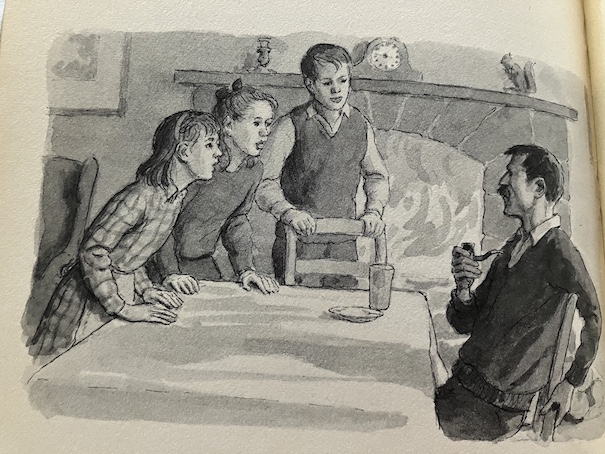
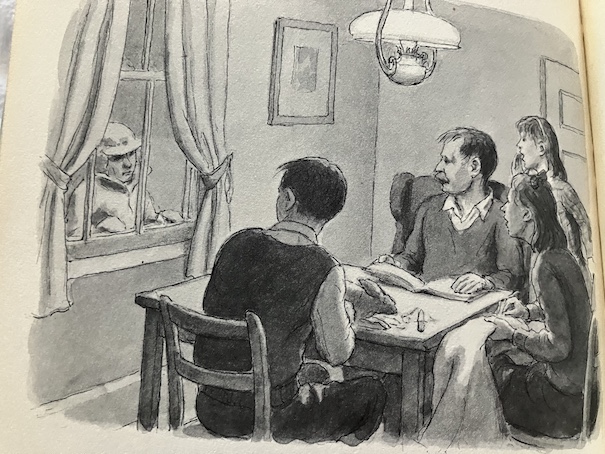
Then, one night, they see a man lurking outside the cottage in a blizzard. Minty warns her father not to let the man in, remembering Mrs. Gustafson’s warnings about criminals hiding out in the area and how they shouldn’t open the door for strangers. However, Mr. Sparkes worries about anyone who might be lost in the blizzard, and he has the children invite the man in. The man has a young girl with him, who is half-frozen and dressed as a boy, for some reason. When Minty realizes that the child is a girl and not a boy, the girl asks her not to tell anyone right away. Minty can tell that there’s something strange about this father and daughter pair, and it makes her uneasy. Then, Minty hears a report on the radio about a stolen car and a reward for information leading to the thieves. Is it possible that this man and his daughter are the ones who stole the car? Minty might consider turning them in for the reward money that her family badly needs, but with the blizzard, they’re now trapped in this cottage with this strange man and the girl. The girl, who goes by the name Topper, is fun and good at planning entertainment, but can she or her father really be trusted?

The book is available to borrow and read for free online through Internet Archive.

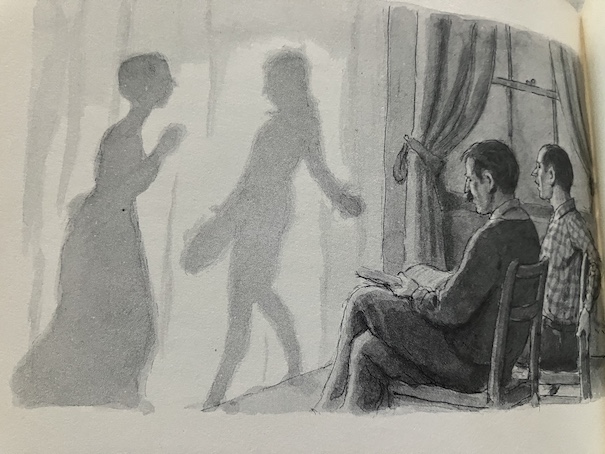
This book isn’t a Christmas story, although the title and some of the themes would have set it up well to be a Christmas story. It fits well with cottagecore themes, with the family, down on their luck, staying the winter in a cozy cottage and getting by as well as they can, enjoying simple pleasures. There’s a line in the story that I particularly liked, toward the end of the book, when the children put on a shadow play for their fathers:

“What a lot of fun you could have, Minty discovered, if you made unimportant things seem important and went about them with enthusiasm!”

I think that sentiment embodies the spirit of cottagecore. To really enjoy some of the simple pleasures of life, you do have to put yourself into the mindset that you’re going to enjoy them to the fullest! I read a book about Victorian parlor games that said something similar. A lot of old-fashioned entertainment and games are quite silly when you analyze them, but if you just throw yourself into them whole-heartedly, they can be great fun!

The family in the story is down on their luck and has their troubles, but their stay in the winter cottage is still an adventure, and they enjoy it. Their consciences do trouble them throughout the story because they’re aware that they’ve been using the cottage without permission of the owners. Minty in particular considers the morality of their actions and has a desire to make things right with the owners of the cottage. Fortunately, the story ends happily for the family, with their lives changed for the better. The people who own the cottage find out about them staying there, but they forgive them, and Minty finds a way to repay them for letting them stay.

The part of the story that I think is most likely to cause controversy for modern readers is the part where the children visit the reservation and the mission school. “Indian schools” have a sinister reputation in modern times because of their harsh treatment of their students and deliberate attempts to eliminate Native American culture. In the book, the nuns at the school make it clear that they don’t approve of traditional Native American practices, like the dance the children watch, because they don’t consider them to be Christian. They call such practices “heathen.” Their focus on discouraging their students from participating in traditional cultural practices is based on religious differences and a desire to convert people strictly to Christianity. However, I appreciated that Minty and the other children see both sides of the story and that Minty observes that some of the Native American dancers are wearing crosses, showing that the actual beliefs among the Native Americans are more nuanced than the nuns’ attitudes suggest.

This part of the story has some use of the word “squaw“, which is problematic because it has vulgar and derogatory connotations. The exact definition of the word varies in different Native American languages, but because it is considered vulgar and derogatory, modern people avoid it. At the time this story was first published, in the mid-20th century, many white people had the idea that “squaw” was sort of a generic word for women among Native Americans and didn’t realize the more vulgar side of the word, which is why it appears in some old children’s books, like this one. The word isn’t meant to be intentionally insulting here, although modern readers should understand that this word isn’t polite or appropriate. Apart from that, I appreciated how the main characters, especially Minty, see some of the prejudiced ways people, especially the nuns at the school, look at the Native Americans and their traditions and their realization that there are sides to their culture and practices that the adults have overlooked.

A Sweet Girl Graduate

Don’t let the cover of this book fool you! Yes, it’s a 19th century novel for young girls, and there’s a strong morality aspect to the story, which is common for Victorian novels, but the story is not nearly so sweet and flowery as the cover indicates. This book is Dark Academia over 100 years before the term “Dark Academia” was coined and the genre/aesthetic became what it is today.

The story begins on an autumn evening. Priscilla (often called Prissie as a nickname) lives in a small country cottage with her aunt and her younger sisters, and she is packing to go to a college for young ladies. Her aunt isn’t sure about this recent trend of girls getting an education, but she is still proud of her niece. They discuss some last-minute advice for Priscilla, and although her aunt doesn’t have much money, she promises her a little extra as an allowance while she’s away. Priscilla says that she’ll write to her aunt, although probably not very often because she will be busy studying.

Priscilla’s three younger sisters will be remaining at the cottage with their aunt while she is away. Aunt Rachel, called Aunt Raby, is very strict, and the girls aren’t allowed to have much fun, so Priscilla’s sisters will miss her while she is away. Priscilla says that she will be at college for three years, and that she will visit when she can, at least once a year. Then, when she graduates, she will look for a good job so she can make a home for herself and her sisters together.

The younger sisters don’t entirely know it yet, but the stakes are high in the success of Priscilla’s education. Their father died when Priscilla was only 12, and their mother died when she was 14, which is when they moved in with their aunt. That was four years ago because Priscilla is now 18. There was a bank failure before their parents’ death which wiped out their savings, so the sisters have been entirely dependent on their aunt and her farm for support. The aunt works hard and has provided for their basic needs, although the family has no luxuries, and there was never really any expectation that the girls would have any education at all. However, Priscilla loves to read and has a talent for learning, so she has been teaching her younger sisters as best she can. The local minister, noticing Priscilla’s talent for learning and feeling fatherly toward her, has given her some extra tutoring in the classics, and he is pleased at how well she has managed the material.

The problem is that the girls’ aunt is now ill. She will not die from her illness immediately, but there is no cure for what she has (which is never explicitly named), and she and Priscilla know that she will die from it eventually. Over a period of two or three years, she will gradually become weaker, and she is already showing signs of that weakness. The aunt’s farm is legally entailed for another relative, so Priscilla and her sisters will not inherit anything from her and will have to find some way of making their own living after their aunt is gone. Priscilla goes to the minister and explains the situation, saying that she will have to stop her lessons and begin seriously learning skills that will help her find a job and support her sisters. She regards learning as a luxury that she will now have to go without.

Her first thought is that she should improve her sewing and become a dressmaker, but the minister can see that she doesn’t have much talent in that direction. He tells her that, besides being a pleasure, learning can also be a means of making a living. He thinks that Priscilla has the talent to become a teacher because of her learning ability and her skill in teaching her sisters. However, to become a teacher, Priscilla will need to attend college and graduate. At first, Priscilla doesn’t see how she can afford college, but her aunt sells her watch and the little jewelry she has, and the minister helps her take out a loan to pay for her education. He also helps Priscilla to study to pass the entrance examinations at St. Benet’s College for Women. Priscilla will need to do well in college for her sake and for the sake of her sisters’ future. People are depending on her, and she doesn’t want their help and sacrifices for her to have this chance in life go unrewarded.

The rest of the book is about Priscilla’s first year at college. During that time, she suffers from homesickness and social awkwardness because she has not been schooled in the intricacies of social manners and social classes. She confronts prejudice from the other students because she is poor, and they pressure her to act like they do and spend money as recklessly as they do. Priscilla has to learn to resist these pressures and temptations. It isn’t too difficult for her because she finds many of the girls at college to be shallow and not serious about her studies, and she doesn’t really admire them. However, she is soon befriended by a girl named Maggie, who is outwardly charming but inwardly miserable and complex.

Maggie’s friendship is often toxic to other girls, and Priscilla can see that she isn’t always honest and that she is not as devoted to other people as they are to her. She uses people for attention and affection, but Priscilla becomes fascinated with Maggie because she comes to realize that Maggie has layers and some of them are genuinely noble. For reasons that Priscilla doesn’t fully understand, Maggie is deeply troubled by the death of another student who once lived in the room that Priscilla now has at their boarding house. It seems like everyone at the boarding house is haunted by memories of Annabel Lee, and Maggie was once Annabel’s best friend. Maggie is moody and fickle in her temperament, and she hasn’t been truly close to many people since Annabel died, although she can charm people into do giving her attention and doing things she wants them to do. Priscilla has to be careful not to let Maggie manipulate her into getting into trouble, but she also benefits from Maggie’s friendship and has a way of bringing out Maggie’s better side.

During the course of the story, Priscilla has to face girls who don’t really want her at the college and who try to sabotage her socially and pressure her to leave. She also has to remind herself of her goals and the reasons why she came to college. When Priscilla is accused of a theft, both she and Maggie receive help from some mutual friends to realize the truth of what happened and the identity of the real thief, and Maggie is forced to confront a painful incident from her past that is still haunting her and which is the major reason why she acts the way she does.

There’s a lot more to unpack here, and I want to cover the story in more detail. If you’d like to stop here and read it for yourself, you can skip the rest of this.

The book is now public domain. It is available to borrow and read for free online through Project Gutenberg and Internet Archive (multiple copies, including an audio version). Later versions of this book were published under the title Priscilla’s Promise.

When Priscilla gets to college, she settles into her boarding house, which called Heath Hall and is run by Miss Heath. It isn’t until she gets to the boarding house that Priscilla realizes just how nervous and homesick she is. Because of her nervousness and the strangeness of living in a new place, she doesn’t present herself very well to the other students at first.

When she clumsily drops a coin, another student, Maggie, picks it up for her, and this is their first introduction. Maggie can tell right away that Priscilla is nervous and frightened, and her immediately impulse is to take Priscilla under her wing. Nancy, Maggie’s best friend, cautions her about how she treats new students. There are other students Maggie has been friends with when they first arrive, but she treats them like novelties. She acts like a friend and mentor for a couple of weeks, winning the girls’ confidence and making it seem like the start of a lifelong friends, and then tires of them and simply drops them. Nancy doesn’t think it’s right for Maggie to do this to the new girls, although Maggie brushes off her concerns. Nancy likes Maggie because she can be very sweet and fun, but she also recognizes that Maggie can be trouble, and she is sure that Maggie is going to recklessly cause some problems before she is finished with her education.

Maggie and Nancy notice that there is someone moving into the bedroom next to Maggie’s in the boarding house, and Maggie is upset because that room belonged to Annabel Lee. Annabel Lee was another student at the boarding house who was very popular with the other girls, but she tragically died of an illness. Nancy is practical and says that they couldn’t very well expect that room to be simply left vacant now that Annabel is no longer there. It’s just natural that the boarding house would rent it out to someone else eventually. Maggie is more emotional and says that they ought to have left it as a shrine to Annabel and that she is sure that she will hate the person who lives there. Nancy sighs, and when Maggie goes into her room, Nancy decides to introduce herself to the person who now occupies Annabel’s room, who turns out to be Priscilla.

Priscilla is unaware of who Annabel was, and she is still struggling with her nervousness and homesickness. Because Priscilla is trying to cover up for how nervous and awkward she feels, her manner just strikes Nancy as being cold and awkward, which makes Nancy feel awkward while talking to her. Nancy briefly introduces herself but doesn’t stay to chat long, although Priscilla secretly wishes that she had.

Priscilla continues to make mistakes through her first evening at the school. When she goes down to dinner, she enters the dining hall through the door that is normally reserved for the dons (teachers), and she sits at a table where the higher level students normally sit instead of with the other freshmen. Other students in the dining hall start talking about the nerve of some freshmen, getting above themselves, but Priscilla nervously isn’t sure what they’re talking about. Fortunately, Maggie decides to step in and help Priscilla.

Maggie sits next to Priscilla and gently explains to her what she did wrong. Miss Heath gave Priscilla a list of rules when she moved into her new room, and there was nothing about any of this in those rules. Maggie explains that there are certain, unspoken rules and customs among the students. Even though the students are supposed to be modern, liberal, and democratic by the standards of their day as part of this new generation of women seeking a higher education, Maggie admits that, deep down, they are still very conservative. She says this classist side of themselves shows itself whenever someone breaks their unspoken rules and social customs or steps out of their proper place. Priscilla thinks that the students at this school are cruel if they expect someone new to know rules that aren’t written or spoken about and that she is starting to wish she hadn’t come. Maggie hurriedly soothes her, saying that they’re not really that bad, and she invites Priscilla to her room to talk later so she can explain some things to Priscilla that she will need to know.

Nancy also steps in and tells Priscilla that most of the students take their tea up to their rooms after the meal, asking her if she would like to do the same. Priscilla, still nervous, decides that she will skip the tea tonight. Nancy says that, since this is the first night, she will want to spend the rest of the evening unpacking and that other girls in the boarding house will come to call on her. Priscilla asks her why they’re going to do that. Having lived on a farm, in a family that wasn’t very socially active, Priscilla knows less about social manners than she does about anything else. She isn’t accustomed to informal visits from people. Visits for her are usually more formal occasions, and she particularly has no idea what she’s going to say to these strangers who will be coming to call on her. Nancy, seeing that Priscilla is nervous and doesn’t know how to cope with the social aspects of the school and life in the boarding house, tells her that these are simply informal visits so the other students can introduce themselves to the new person in the boarding house. Nancy offers that, if Priscilla would like, she can spend the evening with Priscilla and help facilitate these introductions. Priscilla nervously murmurs that she would like that.

The boarding house is more luxurious to Priscilla than anywhere that she has previous lived, but it also feels cold and un-homelike to her. The other girls are bright and chatty, and Priscilla finds them a little overwhelming. When the other girls come to visit Priscilla, they also comment about Annabel, who used to live there, and how the room looks more bare without her and her things. It seems like the other girls are there mostly to see the room and remember Annabel than to see Priscilla, and Priscilla is too shy to know what to say to any of them. One of the girls kindly says that the place will seem better once Priscilla has really moved in and has a chance to add her own decorations. Another girl says it will never be the same as when Annabel was there, but the kind girl suggests some shops where Priscilla can find some room decorations and offers to go shopping with her.

Then Nancy arrives and intervenes, seeing how overwhelmed Priscilla is and encouraging the other girls to leave. Nancy offers to help Priscilla unpack and goes to borrow some matches from Maggie because Priscilla doesn’t have any to light a fire. Priscilla accepts the matches but tersely declines the offer of help unpacking because she doesn’t want Nancy to see how meager her possessions are. Nancy awkwardly says that she will wait in Maggie’s room and that Priscilla can join them for cocoa later. It’s a custom of the boarding house for the girls to have cocoa in the evening, and they often invite friends in the boarding house to their rooms to share cocoa and chat before bed. Maggie later calls Priscilla to join them for cocoa but refuses to enter Priscilla’s room herself, still too affected by the memory of Annabel.

Priscilla goes to Maggie’s room, and the girls have cocoa together. Nancy isn’t there because she has gone back to her room to do some work, and Priscilla finds Maggie charming. Maggie has a way of putting people at ease, and Priscilla finds herself telling Maggie about herself and her reasons for wanting an education. Before she leaves, Priscilla asks Maggie about Annabel because of what the other students have been saying about her. To Priscilla’s shock and surprise, Maggie immediately becomes distressed and refuses to talk about Annabel, bursting into tears. Fortunately, Nancy arrives and reassures Priscilla that Maggie will be all right. As Nancy walks Priscilla back to her room, Priscilla asks her about Annabel. Nancy doesn’t really want to talk about Annabel, either, but she tells Priscilla that Annabel was a very popular girl at school who is now dead, and she says that it’s better if Priscilla doesn’t talk about her now.

All the same, the other students at the boarding house won’t stop talking about Annabel Lee. Although Priscilla doesn’t really believe in ghosts, it feels to her like Annabel still haunts the boarding house and her room in particular. Everyone seems to have memories of her, and Priscilla’s presence and her occupation of Annabel’s old room brings them out. Priscilla is often left with the awkward feeling that she has somehow usurped Annabel’s place, or at least, that other students feel like she has. She wishes that she had been given some other room in the boarding house. Even Annabel Lee’s name reminds her of the song by Poe, which is familiar to Priscilla and which is about a love that survives beyond death. (I think the author picked that name on purpose because of the song.)

Before that first evening is over, Priscilla realizes that she has misplaced her purse somewhere. This is serious because it has her key in it and the little money she has. She goes looking for it, and she overhears Maggie and Nancy talking about her. Maggie assures Nancy that Priscilla will not replace Nancy in her affections. Maggie calls Priscilla “queer” (in the sense of “strange”) and admits that she is nice to younger girls at college because she craves their affection. Maggie says that it gives her “kind of an aesthetic pleasure to be good to people.” She knows that she has an ability to inspire affection in other people, and she absolutely craves seeing the look of grateful affection she gets from the younger girls she helps at school. Nancy asks her if she ever returns the love that she receives from other people, and Maggie says that she does sometimes. She says that she is very fond of Nancy and kisses her.

(Note: This conversation isn’t necessarily proof that this is a lesbian relationship, which would have been not only shocking but actually illegal in England during the time period of this story. The book was published in 1891, and later in the 1890s, Oscar Wilde was tried and convicted for homosexual acts, although part of his conviction was also that he committed acts with underage boys, which would still get him a conviction by modern standards.

Certainly, lesbians did exist during this period of history, and it’s possible the author might know more about it than she could explicitly state and may be basing the characters’ feelings off of people she knew or met herself. However, modern readers might want to hold off firmly deciding what the real relationship between Maggie and Nancy is because there are other factors that are revealed later in the story. In particular, Maggie is a complicated character, who cultivates relationships for attention and to fill some dark emotional needs, and these relationships are not honest because there is not necessarily any real affection or romantic interest behind them. Maggie does have a male admirer, who we hear more about later, and we also eventually learn why her relationship with him is complicated.)

Priscilla, who is a sincere girl of strong morals and deep affection, is shocked at the way that Maggie and Nancy talk to each other and about her, and she quickly returns to her room without finding her lost purse. She is angry about what she’s heard because, although both Maggie and Nancy have been friendly to her and helpful that evening, Priscilla can see that neither of them really likes her or cares about her. Maggie was just pretending to be nice just to get attention, and Nancy is jealous of her for the attention that Maggie has given her. Although these types of feelings are completely alien to an inexperienced and unsophisticated girl like Priscilla, she has just had her first taste of toxic friendship, and she is about to learn more.

When Priscilla is unpacked, and her meager personal belongings begin to fill her room, she starts to feel a little more at home, and she even begins to enjoy some of the newness of the college experience. She has more freedom at college than she ever has before, although she realizes that there is still a routine to college life, and conscientious girls follow the routine and both the written and unwritten rules of college society.

The book explains that life at college is somewhat like life at school, but much less restrictive because the students are considered young ladies rather than little girls. The freshmen are about 18 years old and are expected to graduate at about age 21, so all of the students are expected to behave as young adults. They are not closely monitored, and no one hands out punishments to students for neglecting their studies or misbehaving in minor ways. (What happens when students misbehave in major ways is addressed later in the book.) Basically, as long as the students are not breaking any laws or explicit rules and are not causing anyone serious harm or seriously disrupting the life of the college, there is little intervention. The students are expected to manage their time at college and organize their social lives and relationships with others by themselves. They are also not restricted to the college or boarding house. They may leave the college at any time for shopping or social engagements, although it is considered polite to let Miss Heath know where they are going and when they will be back, and they must be back before lights out. Priscilla has never been to school before, and she finds the unwritten social rules and the personal machinations of the other girls the most difficult part of her education.

Every morning, the girls in Heath Hall get up and start the day with prayers in the chapel. Nobody makes them go to chapel, but they generally do anyway because it’s expected, and participation in the routine activities helps them get along better. Then, they go to breakfast, where they select the foods they want to eat because the meal is served in the style of an informal buffet. Then, the students look at the notice boards. There is one notice board for announcing the lectures for the day and another for student clubs and social activities. The students use these announcements to plan their day. The mornings are always for educational lectures. Sometimes, there are more lectures in the afternoon, but there are also sports, gymnastics, and social activities. Nobody checks attendance at any of the lectures or activities, and if someone chooses not to attend something, nobody checks up on them. They can have lunch whenever they like, between noon and two o’clock in the afternoon, and the students typically have their afternoon tea in their own rooms, sometimes privately and sometimes with guests. Students study privately in their rooms whenever they like, and there are club activities between tea time and dinner, for those who wish to participate.

Priscilla has difficulties with the other students because she refuses to participate in the social activities of the college or go shopping with the other girls when they invite her. She even turns down invitations from other girls to have cocoa with them in the evening and chat, like she did with Maggie that first night at the boarding house. Having learned more about what Maggie and Nancy are really like, she becomes cold and distant with them, discouraging their friendship, but she also turns down possible friendships with the other students.

One day, two of the students criticize her for being unfriendly and not participating in the social life of the college. Everyone has noticed that Priscilla hasn’t even put up pictures or decorative knickknacks in her room or even purchased comfortable easy chairs for visiting, like the other girls have. Nancy tries to defuse the building arguments and criticism by saying that they mustn’t criticize the “busy bees”, the serious, studious students at the college because they are the foundation the college was built on. However, the other girls complain that college is also for fun and socializing, and if Priscilla is smart, she’ll stop fighting it and start participating with the other students.

The other students are about to walk out on Priscilla during this argument, but Priscilla stops them and shows them what she really has in her room. She shows them her empty trunk and explains that she has no pictures or knickknacks to put up in her room. She also shows them the contents of her purse (which she did find after she lost it) and how little money she actually has. She hasn’t gone shopping with the other girls or bought things for her room because she simply can’t afford them. She is from a poor family, and she is serious about her studies because she has to be, and her future depends on it. She acts the way she does because this is the life she lives, and this is what is right for her and her situation. The other girls just don’t understand because most of the girls at college are from wealthier families, and they’re not in her position. Priscilla has realized that she’s different from the other girls, but she doesn’t admire the other girls because she has already seen that there are problems with their behavior and priorities. She openly lets them know that she isn’t intimidated by them and will not be pressured into acting like they do because she simply can’t. It wouldn’t help her with her life or goals. The other girls are embarrassed and a little ashamed of themselves for not realizing her situation and for their shallowness and frivolous privilege. They leave Priscilla without saying anything else.

Nancy reports this conversation to Maggie and says that she admires Priscilla for her bravery in standing up to the other girls. Nancy never liked those particular girls because they are shallow, but she never had the nerve that Priscilla had to tell them off in that matter-of-fact way. Maggie asks Nancy if she’s going to worship Priscilla now, and Nancy says no but that she still admires Priscilla’s bravery. Maggie says that she doesn’t want to hear more about it because she doesn’t like hearing things about “good” people and their virtues, something which bothers Nancy. Nancy tells her to stop pretending that she doesn’t like goodness and morality, but Maggie says she really doesn’t. Hearing about Priscilla especially bothers Maggie because, although Priscilla initially opened up to her, she has not shown that grateful admiration toward her since that first evening, when she overheard Maggie talking to Nancy.

Maggie also has an unhealthy attachment to the memory of Annabel, and it still seriously bothers her that Priscilla has Annabel’s old room. Maggie can’t bring herself to look into Priscilla’s room or be reminded about Annabel, for reasons readers still don’t fully understand. Everyone liked Annabel at school, and people are still haunted by her memory, but for some reason, it’s worse with Maggie than with anyone else. She privately thinks that she cannot really feel love since she lost Annabel. It seems like Maggie had a similar sort of unhealthy attachment to Annabel as Nancy now has to Maggie.

This is where we begin to learn what is really going on with Maggie and what makes her tick. Maggie is not a happy person on the inside. In fact, she thinks of herself as the most miserable student at the college. Inwardly, she doesn’t think of herself as being either a good or lovable person, in spite of her outward charm and ability to inspire people to love her. She doesn’t really love herself. That’s why she always craves expressions of love and devotion from others but doesn’t seem able to really form relationships with others and maintain them.

However, there is one thing that really makes Maggie come alive. She loves the intellectual life of college. She forgets her misery when she loses herself in reading and translating classical works. Even her joy of classical studies can’t entirely distract her from her worrying love life. It’s a somewhat open secret that Maggie has a male admirer who writes to her sometimes, and this is a source of jealousy for the other students, especially Nancy and Rosalind (another younger girl that Maggie has been cultivating as an admirer), who both view this young man as a rival for Maggie’s attention and affection.

Although Priscilla recognizes that Maggie is a false person who is mainly nice to other people for some selfish fulfillment, she can’t help but be fascinated by her charm and intelligence. Maggie tries harder to get Priscilla’s attention because she still craves attention and affection, and she views Priscilla’s reluctance to give her what she wants sort of like her playing hard-to-get. Priscilla’s attempts to ignore her just make her want to try harder to win the prize she craves.

Miss Heath, who doesn’t seem to understand some of the unhealthy admiration other students have for Maggie, encourages Priscilla to not burn out on her studies and to give herself time to make friends like Maggie and to enjoy the social aspects of school life. She says that she has seen other serious students take on too much, burn themselves out, and fail to finish their education before. Priscilla, who has never been to school before, takes Miss Heath’s advice seriously.

Maggie discovers that Priscilla loves flowers, and she uses them to appeal to Priscilla’s love of beauty. She uses aesthetics and intellectual discussion to appeal to Priscilla’s love of study and the pleasures of learning. Gradually, Priscilla finds herself become more of a friend to Maggie. She confronts Maggie about what she heard Maggie and Nancy say to each other on their first night in the boarding house, but Maggie brushes away Priscilla’s concerns. She claims that she only said those things to punish Priscilla for being naughty by eavesdropping. Soon, Maggie and Priscilla are doing many things together, from going to church services together to having cocoa in Maggie’s room in the evening and talking about their studies. It seems harmless enough, and some people are a little relieved because Maggie had given up doing many things that she used to do with Annabel, when she was alive, because they reminded her too much of Annabel. It seems like Priscilla has somehow inspired Maggie to do things that had become emotionally painful to her, and some people think it’s nice that Maggie has found a new best friend and is moving on.

However, as I said, not everyone understands Maggie’s toxic friendships, the unhealthy attachment some of the other students have had to both her and the deceased Annabel, and her manipulation of other people. The ones who do understand these things are some combination of jealous and troubled, and Priscilla, who is still relatively naive, hasn’t grasped the precariousness of her social situation. She has to learn to walk a delicate line between staying true to herself and her goals and between staying on good terms with her new friends. It’s fine for her to like other people, like Maggie, but not to be led astray by them. She has also attracted attention from some other students who resent her and feel threatened by her.

The two girls Priscilla told off earlier about their wanting her to participate in frivolous social activities and spending money are bitter about their embarrassment and how Priscilla made them them look shallow by demonstrating her poverty and virtue. They’ve been going around the school, telling everyone the story of what Priscilla said, but casting Priscilla in a bad light. They try to make Priscilla seem like a self-righteous prig who is trying to shame them for participating in normal social activities. Their fear is that, if other girls at college like Priscilla and decide to imitate her, austerity will become the fashion of the day. They think that they will either not be allowed to participate in their social activities and forced to keep their noses to the grindstone from now on or will be shamed for having nice things in their rooms while Priscilla doesn’t. They don’t want to be pressured to give up these things or forced to study as seriously as Priscilla does, so they do their best to ruin Priscilla’s social reputation, discourage other girls from being her friend, and try to get other students to gang up on her.

Their efforts are partly foiled because Maggie is popular, and Priscilla has become Maggie’s special friend. Nancy is also Priscilla’s supporter because she was present during their confrontation with Priscilla and stands up for her against the other students. Although Maggie and Nancy seem to have a toxic friendship with each other, and Maggie develops a series of toxic friendships with other students, Maggie and Nancy become Priscilla’s protection against even more toxic students. Miss Heath and the teachers at the college also appreciate Priscilla and her work at the college. However, unbeknownst to Priscilla, the more shallow girls still resent her and are plotting against her.

Rosalind knows of the unhealthy attachment other girls at college have to Maggie because she also shares it. Rosalind is one of the younger girls Maggie has cultivated as an admirer but has largely neglected since she became tired of her and more interested in Priscilla. Maggie and Annabel were once the college’s power couple/friendship duo, although Annabel was the more popular of the two. Other girls even save pictures and autographs of Maggie and Annabel as souvenirs, like they’re celebrities, and Rosalind herself has a picture of Maggie that she sometimes kisses.

Since Annabel’s death from a sudden illness, Maggie has been the undisputed social queen, although Maggie’s thrill at the attention she receives is somewhat dampened by her sense of loss because she was truly attached to Annabel herself. She craves attention and admiration and can’t help but pursue it, but she doesn’t feel like she really deserves it. Not all of the other students really admire Maggie. Some of them see her for the manipulative girl she really is, and they get sick of hearing the others rave about her or talk about poor, tragic Annabel.

However, Rosalind’s resentment of Maggie’s indifference to her after manipulating her affections has made her admiration of her turn to hate. She tells another girl that she’s thinking that she should tell Miss Heath about the unhealthy attachment other girls have to Maggie and get her to put a stop to this Maggie admiration cult. (I would have been in favor of this, but sadly, that’s not what Rosalind does.) Then, Rosalind and the girls who resent Priscilla get the idea of ruining Maggie’s friendship with Priscilla and bringing them both down this way.

Rosalind tries to find ways to embarrass Priscilla socially and drive a wedge between Priscilla and Maggie. One day, she convinces Priscilla to go into town with her to pay her dressmaker, insisting that the dressmaker needs her money for her sick mother and that she wants company on the errand. Nancy tries to discourage Priscilla from going because the weather is bad and Priscilla has a cough, but Priscilla says that Rosalind talked her into coming. Since she promised, she has to go. Rosalind makes Priscilla wait in the cold and drizzle while she goes inside to pay the dressmaker and then takes Priscilla on another errand to see a friend before they go back to the college.

When they get inside this friend’s house, Priscilla realizes that Rosalind has tricked her into attending a party instead of just paying a short visit to a friend. Priscilla is under-dressed for this party and damp from her time outside, which is embarrassing. To make matters worse, Rosalind simply abandons her in a corner. Priscilla can’t bring herself to leave the party without Rosalind because she would be in trouble for returning to the college without her when everyone knows that they left together, and she can’t bring herself to search the party for Rosalind and demand that they leave because she feels out of place in her shabby clothes. She hears the fancy, catty women at the party gossiping about other women and the frumpy “girl graduates” of the college. Fortunately, the hostess of the party realizes that Rosalind has been treating Priscilla shabbily and makes her comfortable with some tea.

Then, Geoffrey Hammond, the young man who has been writing to Maggie, recognizes Priscilla and comes to talk to her. Priscilla explains her predicament and how Rosalind tricked her. Not only has Rosalind deprived her of study time by getting her to come to town on her errand and to this party, but if they don’t leave the party soon, they won’t get back in time for dinner, which would break one of the written rules of the college. Taking pity on her, Hammond goes to find Rosalind and talk to her. When he returns, he says that Rosalind has told him that she already told the principal of their college that they would be late for dinner, so they are excused. Priscilla is angry that Rosalind did this without talking to her, and she starts to create a fuss, but Hammond quiets her down, realizing that she is making a scene. He knows that she was nastily tricked, but he says, since they can’t get back to the college in time for dinner now, it would be more socially graceful for her to enjoy this party as best she can and then have words with Rosalind when they get back to college.

The two of them spend the rest of the party discussing The Illiad and The Odyssey. Priscilla shines in intellectual discussions about the classics, so Rosalind is a little jealous when she sees how well Priscilla is doing. She tries to ruin the moment by pretending that Maggie gave Priscilla a letter to give to Hammond and that Priscilla has either lost it or is withholding it. However, Hammond knows that Priscilla didn’t even know she was coming to this party and doesn’t fall for Rosalind’s story, disapproving of her. On the way back to the college after the party, Priscilla lets Rosalind know exactly what she thinks of her mean trick.

Later, at a cocoa party at the college, Rosalind tells the other students about the party, emphasizing Priscilla’s awkwardness and disdain of the fun. Then, she accuses Priscilla of flirting with Geoffrey Hammond. Everyone knows that Geoffrey Hammond is Maggie’s young man. The other girls don’t think Maggie treats him well, and some of them think they would be better for him, but they know that he’s devoted to Maggie. Rosalind is trying to make Priscilla look like a boyfriend-stealer.

Meanwhile, one of the girls at the college, Polly, has gotten badly into debt. Although most of the girls at the college are pretty well-off, compared to Priscilla, even girls from wealthy families can get into trouble with money, if they’re not careful. Polly admits that her father told her not to spend above her allowance, but she is accustomed to spending freely. Now, she owes a considerable amount of money, and the only way she can think of to raise what she needs without telling her father what she has done is to sell some of the lovely things she’s bought to furnish and decorate her room and some of her fancy clothes. Her friends at the college, who all admire her nice things, are all eager to buy things from her. Their only concern is to remind her not to sell anything that would belong to the college, only her own belongings.

All of the girls at college, except for Priscilla, are invited to attend the auction. They exclude Priscilla because they know she doesn’t have money and they think “Miss Propriety” would snub the event and perhaps tell the principals about it. Really, the other students don’t think the principals of the college would approve of this auction, so they’re careful to keep the event secret from them. Originally, Maggie wasn’t planning to attend the auction, although she was invited, because she doesn’t know Polly and doesn’t care for this kind of auction. Then, Rosalind badgers her into going, saying that she has become too proper, self-righteous, and basically, no fun anymore. Maggie cares about her social reputation, so she decides to go to the auction, and to Priscilla’s surprise, she drags Priscilla with her. This turns out to be a bad thing for Rosalind because now Maggie is angry with her and determined to teach her a lesson.

Maggie doesn’t really want anything at the auction and resents being pushed into going, but because she is one of the richest girls at the college, she can afford to bid much higher for anything there than the other girls. She knows the things that Rosalind wants to buy for herself, so she purposely bids on the items that Rosalind wants. It’s bad enough when Maggie wins the bid for a sealskin jacket that Rosalind really wanted by bidding higher than Rosalind ever could, but it’s worse when Maggie intentionally ups the bid for some coral jewelry and then lets Rosalind win it at a price that’s higher than Rosalind can actually afford. Now, Rosalind owes money to Polly. Even worse, when Rosalind writes to her mother to ask for more money, her mother tells her to return the jewelry she bought and to send the money she’s already spent back to her. It was really more money than her mother could afford to give her, and she only lent it to Rosalind because Rosalind said that she could get a bargain on a sealskin coat, which is a valuable garment. The jewelry is more extravagance than Rosalind’s family can afford.

All of the girls who attended the auction get into trouble for being there because the activity wasn’t sanctioned by the college, and the heads of the boarding houses find out about it. That means that Priscilla is in trouble for attending, too, even though she didn’t buy anything. Nancy asks Maggie why she went when she knew it would probably be trouble, and Maggie says that Rosalind brings out her worst side.

Maggie hates herself partly because she knows that she has a good side and a bad side to her nature, and she finds it hard to manage or cover up her bad side. Sometimes, she just gets moody and temperamental. She doesn’t want to pretend to be good all the time, even though she knows she’s supposed to restrain her worst impulses to get along in society. That’s why she finds virtuous people so trying. She has a hard time struggling with her inner nature and doesn’t like herself. She can’t understand people who aren’t the same, who seem to find it easier and more pleasant to be good all the time and who aren’t subject to the same dark moods and temptations that she has. Even so, Maggie still considers good and proper Priscilla her friend because Priscilla is sincere in her friendship for Maggie and brings out more of her better side, and Nancy, who respects virtue, still loves Maggie, even knowing her complicated nature and how she feels about herself. So, while Maggie’s friendships with Nancy and Priscilla seemed toxic at first, when she was looking at it from the perspective of how she uses them to bolster her self-esteem, we start to see that there are positive sides to these relationships. Both Priscilla and Nancy care about Maggie, even when she struggles to care about herself or them, and they encourage Maggie to be a better version of herself.

The episode of the auction, while getting the girls into trouble is actually a turning point in Maggie’s character development. Polly, Maggie, Priscilla, and other girls from the auction are called before Miss Eccleston, the head of Polly’s boarding house, Katharine Hall, to explain themselves and the auction. Polly explains how she got into debt and couldn’t bring herself to ask her father for more money. Miss Eccleston lectures Polly about the need to manage her money better and avoid spending more than she can afford. Then, she questions Maggie about why she was at the auction because, as one of the senior students, she should know better. Maggie takes responsibility for her presence at the auction and also Priscilla’s, saying that Priscilla is only a new student at college and that she insisted that Priscilla come with her. Miss Eccleston asks Maggie what she bought at the auction and if she paid a fair price. Maggie admits that what she paid for the jacket was less than its true value. Maggie accepts responsibility for her actions and tries to shield Priscilla as much as possible from the fallout of the situation, not wanting her impulsive decisions to negatively affect her.

Miss Heath and Miss Eccleston lecture the girls about the importance of moral principles at the college, but Maggie stands up for herself and the other girls. She honestly admits that she is not proud of herself and her role in the situation. However, she points out that, although Polly’s debt was shameful and her abuse of the allowance from her father, her dishonesty about her spending to her father, and the secret auction were all improper, none of the students have actually broken any explicit rules of the college. Miss Heath and Miss Eccleston are concerned with disruptions to the the boarding houses and how the students’ behavior reflections on the college. Maggie’s argument is based on the fact that none of the students are children, and how they conduct their personal affairs isn’t the business of the college, even if they haven’t conducted themselves well here. Arguing with the heads of their boarding houses goes against their authority and is disrespectful, but Miss Heath and Miss Eccleston say that they understand Maggie’s point and will take it into consideration when they decide how they will proceed and what they will say to the college authorities.

The students themselves appreciate Maggie speaking up on their behalf, but they’re also divided in how they feel about the auction and even about Maggie’s defense of what they’ve done. Some of the students, who never took the auction seriously, think that Miss Heath and Miss Eccleston were making too much of the situation and that Maggie was right to tell them so. However, the more serious girls have realized that what they did was improper, and even though Maggie was trying to defend them from consequences, her defiance and disrespect of authority in the situation has broken one of the unspoken social rules of the college.

The social order that keeps everyone at college more or less in harmony has been shaken by the incident and by the students’ mixed feelings about the situation, and they’re not sure how to make it right. Some students think that the residents of Heath Hall should stand behind Miss Heath and Maggie and their position that, while the auction was inappropriate, the students have learned their lesson from the experience and should be treated leniently. Others think that it was all beyond the bounds of proper behavior, and they no longer wish to associate with Maggie because of her defiant attitude. The students who never attended the auction are irritated by the students who did because they think they are bringing scandal on the college, and by extension, on them. They don’t want to risk their families criticizing them or removing them from the school because they find out what happened and are scandalized by it. The students who weren’t at the auction didn’t do anything wrong, and they look down on the other girls for causing trouble. Everyone is unhappy that the harmony of the school has been shattered, and students are pressuring each other to take sides in the controversy.

Rosalind is even more vindictive toward Priscilla after the auction incident and tries again to blacken her name around the college. She tells the other students that Priscilla was the one who told the faculty about the auction and got them in trouble, even though Priscilla was there with them and is now in trouble, too. She also repeats the story of Priscilla flirting with Geoffrey Hammond at the party. Maggie knows that Priscilla said that Hammond was nice to her at the party, so she tries to ignore what Rosalind says, and Nancy makes it clear that she doesn’t want to hear Rosalind’s sour gossip.

The fallout of the auction incident causes some students to change their minds about their relationships with each other and some to change their behavior. Rosalind tries to ingratiate herself to Geoffrey Hammond because she likes him and tries to blacken Maggie’s name to him to ruin their relationship. Maggie’s affection for Priscilla sours when Priscilla insists on speaking privately with Geoffrey Hammond and that she doesn’t want Maggie to hear what she has to say. Maggie thinks that maybe Priscilla has designs on Geoffrey Hammond, but that isn’t the case. Really, Priscilla wants to have a frank talk with Hammond about both Rosalind and Maggie.

Priscilla likes Maggie, but having gotten to know her, she has a realistic sense of what Maggie is really like now, both her good side and bad side. She recognizes that Maggie is a flawed person, and this is what she doesn’t want Maggie to hear her say to Hammond. She tells Hammond that she finds Maggie fascinating because she has never before seen such a flawed person who also has such a sense of nobility. She doesn’t want Maggie to hear her speaking of her flaws, but like Nancy, Priscilla knows that Maggie has them and yet has likeable and honorable qualities, like the way she admitted her faults at the same time as she defended her fellow students to the heads of their boarding houses. Hammond understands what Priscilla means because he feels the same way about Maggie. Both of them also understand that Rosalind is dishonest, and Hammond believes Priscilla when she says that Rosalind is saying untrue things about Maggie to ruin her reputation.

Maggie’s behavior toward Priscilla becomes colder because of the suspicions that she harbors about what Priscilla said to Hammond. She continues to act as a friend, but she’s not as warm as she was becoming with Priscilla before. Hammond sees what’s happening between the girls, and he is critical with Maggie about the sealskin coat that she bought too cheaply from Polly. Maggie didn’t really want the coat originally, and she’s a little ashamed of having it, so she returns it to Polly. Polly says that she can’t afford to repay Maggie for it now because she really needs the money, but Maggie tells her not to worry about it. If she likes, she can consider the money a loan and repay her during the next school term, which pleases Polly. This is part of Maggie’s nobler side.

When Priscilla goes home for Christmas break and sees her aunt and sisters, they welcome her. Priscilla is astonished when she sees how rough and cramped the little cottage seems to her now that she has become accustomed to the beauty and comfort of the boarding house at college. When she notices how her aunt has become more sick, she feels guilty for her feelings. Her little sisters are upset about her returning to college, and one of them accuses her of forgetting about them and having fun in college rather than making any money. It’s true that Priscilla has been studying and not earning money yet, and she feels guilty that she hasn’t thought much about her aunt or sisters while she was away.

She confides all of this to the minister, and he says that he understands. He thought that she might have feelings like this because of all of the changes she’s been experiencing in her life and her new glimpse of the wider world and the possibilities of life that lay ahead of her. He says that what she is feeling is natural and that she’s over-analyzing it. Priscilla is just currently preoccupied by all the new experiences that she’s been having. She’s been adjusting to all the changes she’s experiencing, and her view of the world is wider now than the narrower one she had when she just lived on the farm.

Priscilla also tells him a little about her friendship with Maggie and how much influence Maggie can have over her, that sometimes she feels like she would do anything for her. The minister reminds her that she would also do anything for her aunt and sisters. This new relationship, like the new experiences she’s been having in college, is fascinating to her for its newness, but he doesn’t think that it has replaced her older and deeper affections. She may have temporarily found herself overwhelmed and preoccupied with everything that’s new to her, but what is deep and most important to her is what will last.

Priscilla worries whether it’s right for her to be away at college with her aunt so sick, but the minister insists that she go back to college and her studies because it’s still important to her future, and her aunt wants her to continue. Her aunt confirms this. She understands that Priscilla is bookish person, like her father. While she appreciates her niece’s care and devotion, she knows that her niece has a future ahead of her, and she wants her to build her future.

In spite of the now-strained friendship between Maggie and Priscilla and Rosalind’s resentment against them both, Priscilla must return to the college and finish her studies. Priscilla tells Maggie that she needs to give up the classical Greek studies that they both love and focus on modern languages instead. It pains her, but Priscilla knows that she has almost enough education for a teaching position, and she must focus on the most practical studies for getting a job as soon as possible for her sisters’ sake. For the first time, Priscilla fully explains to Maggie the true circumstances of her family. This revelation and their shared love of classical studies brings out Maggie’s better nature once again, and she is inspired to find a way to help Priscilla and her family.

However, Rosalind still has not returned the coral jewelry to Polly, has not paid Polly the money she still owes her, and has neither returned the money she borrowed from her mother nor obtained any more money from her. Rosalind is determined to keep the coral jewelry even though her mother has urged her to return it and get her money back, but she still can’t fully pay Polly for it. Polly has now gotten more money from her father during the Christmas break and wants her jewelry back, so she would be happy to buy it back from Rosalind for what Rosalind paid for it. It’s Rosalind’s pride and resentment that keeps her from returning the jewelry. When she has an opportunity to steal the money she needs to pay Polly what she owes from Maggie and frame Priscilla for it, she takes it, thinking that she can solve her money troubles and get revenge on the girls she hates.

Because Priscilla isn’t popular at college, many of the other students are inclined to believe the suspicions about Priscilla being a thief when the theft is discovered. Maggie initially worries that Priscilla might be the thief because she knows that Priscilla was in her room earlier and that Priscilla’s family badly needs money, but after observing Priscilla’s reactions and thinking it over, she regrets her suspicions. Nancy staunchly insists that she’s on Priscilla’s side. Even so, Priscilla is so embarrassed by the accusations that she wants to leave college, but Hammond persuades her to stay. He says that, if she leaves now, not only would she be depriving herself of her education, but running away would seem to confirm everyone’s suspicions. Hammond knows more about Priscilla than he has admitted because the minister who has been helping her is his uncle, and Maggie has told him things about Priscilla’s situation.

Maggie does some soul-searching and must confront her remaining feelings about Annabel’s death and about Geoffrey Hammond to resolve her feelings about Priscilla and herself. The truth is that Geoffrey Hammond was once a childhood friend of Annabel’s. Although Maggie is in love with him and everyone at college thinks of him as being her young man, she hasn’t felt free to express that love because, in her mind, she still thinks of him as being Annabel’s young man. Maggie is an orphan and an only child who is not close to her guardian, and before she met Annabel, she felt like she hadn’t truly known what love was. She just never had anyone to be close to before Annabel. Now that Annabel is gone, Maggie feels like she can’t truly love anyone else and has felt like it would be especially wrong to love Hammond, even though he expressed his love for Maggie before Annabel’s death. Maggie revealed to Annabel that Hammond had proposed to her shortly before Annabel’s death from typhus, and Maggie has felt guilty about it ever since, thinking that the shock of this revelation contributed to Annabel’s sudden death. This is a major root of Maggie’s self-loathing and rejection of budding relationships and real love. Maggie feels like she can’t accept Hammond and his love any more than she could originally accept Priscilla moving into Annabel’s old room. She almost wants to leave college herself because of it.

However, Maggie now can’t stand the idea of Priscilla giving up her classics studies, where she is sure she could shine as a scholar, and she tries to enlist Miss Heath in persuading Priscilla to continue. Meanwhile, Priscilla is not interested in Hammond for herself and tries to enlist Miss Heath in persuading Maggie to accept his marriage proposal because Hammond understands Maggie better than she thinks and genuinely loves her for it. Miss Heath says that she can’t make up the girls’ minds for them any more than the girls can make up each other’s minds. She knows that Priscilla has good reasons for focusing on practical subjects, and she doesn’t want to interfere with that, but she decides that she should talk to Maggie about Annabel. Fortunately, some of the other girls at the college are starting to suspect the truth about the theft of Maggie’s money, and an invitation to another party at the same house where Rosalind tried to embarrass Priscilla before reveals the truth to Maggie. Miss Heath’s final revelation about Annabel straightens out many things.

One of the reasons why I wanted to cover this book was because it’s an early example of Dark Academia from over 100 years before this genre/aesthetic gained a name and became popular in the 2020s. Although people think of Dark Academia as a modern genre/aesthetic, it was built on Victorian aesthetics and very old concepts that have previously appeared in literature:

  • The value of education (with the apparent conflict between learning for pleasure and learning for a profession and students who attend college for purposes other than education, like social activities)
  • Class differences among the students (a major reason for the differences in the students’ purposes for attending college and what’s behind many of the unspoken social rules of college life)
  • The nature of the friendships and relationships among the students.

Modern Dark Academia novels have all of these, but Mrs. L. T. Meade did it about 100 years earlier. Some aspects of human nature and education just haven’t changed much.

L. T. Meade was the pen name of Elizabeth Thomasina Meade Smith. She was born in Ireland and was the daughter of a Protestant minister. Later in life, she moved to London. She started writing at age 17, and she wrote more than 280 books in different genres. She was also a feminist and the founder and editor of Atalanta, a popular late Victorian literary magazine for girls. Although her writing was extensive, Meade is best known for her books for girls, especially school stories. Her school stories continued to influence school stories for girls after her death.

Modern readers of Dark Academia will appreciate all the literary references in A Sweet Girl Graduate, from classics like The Iliad and The Odyssey to Edgar Allan Poe and his poem Annabel Lee. Priscilla quotes the poem in the story, and I’m sure that the poem inspired the author to write about the memories of the dead student, which is why she gave the character that name.

In a modern Dark Academia book, a girl like Priscilla might be led astray by a girl like Maggie. However, in this book, Priscilla is not tainted by Maggie’s toxic friendship because she realizes that Maggie has toxic qualities, and she is determined to resist them. Early into her time at college, she makes it clear to the other girls that she won’t be pressured by them into changing herself, and that attitude is part of what keeps Priscilla from being too manipulated by Maggie. She does find Maggie’s charm harder to resist than the catty peer pressure of the other girls at college because it has more pleasant and helpful aspects. However, Priscilla has some very definite limits, and her knowledge that she has to be responsible and take her future seriously for her sisters’ sake as well as her own keeps her from doing anything too irresponsible.

Because Priscilla makes it clear that she won’t change herself to fit in for the sake of friendship or social cred, Maggie actually finds herself changing more to fit in with Priscilla. It isn’t harmful for Maggie to change because she is already unhappy with herself and truly needs to change the way she acts and the way she looks at life and love. She craves Priscilla’s attention and affection because it is harder to get than most people’s and also because, deep down, Maggie still craves a replacement for the love and support she had from her deceased best friend, Annabel, and someone who can help her redeem herself from the guilt she has felt ever since Annabel died.

Toward the end of the story, we learn that Maggie hates herself and cannot truly bring herself to feel affection for other people because she blames herself for Annabel’s death. Annabel died of a sudden but natural illness, but the day she fell ill was the day when Maggie told her that Hammond proposed marriage to her. Since Hammond was Annabel’s childhood friend, Maggie worried that maybe Annabel harbored feelings for him and that the shock of hearing that he really loved Maggie might have been too much for her in her weakened condition. So, although Maggie still craves love and affection, she has purposely shut herself off from returning affection to anyone, especially Hammond, since Annabel’s death.

By being her sincere self, Priscilla brings out Maggie’s better nature, reminds her that she has lovable qualities in spite of her imperfections, and shows her that not all relationships end in death or tragedy. Although Maggie starts out by being a toxic friend, Priscilla is the antidote to the toxicity, turning this story into one of redemption rather than corruption. Miss Heath completes Maggie’s self redemption and reconciliation with Annabel’s death by telling her that she spoke to Annabel shortly before she died. At that time, Maggie herself was sick, although she didn’t get as sick as Annabel did. Annabel told Miss Heath to tell Maggie that she was happy for her and Hammond. If Miss Heath had told Maggie what Annabel said immediately, it would have spared Maggie and the people around her a lot of pain. She just didn’t pass on the message because Maggie was sick at the time and because she didn’t fully understand what Annabel was talking about until Priscilla explained Maggie’s feelings to her.

When Maggie finds out that Rosalind was the thief, she confronts her and makes her apologize to Priscilla and leave the college. Maggie admits to Miss Heath that it was a bit high-handed of her to impose these consequences on Rosalind. Maggie may have overstepped her authority by sending her away from the college, but Miss Heath says that she approves of the way she handled the situation. If Rosalind had remained at the college instead of leaving quietly, Miss Heath would have had to take the matter to the college authorities, who would have publicly expelled Rosalind for her theft. A public expulsion would not only have embarrassed Rosalind and her family and brought legal consequences on Rosalind, but it would have also publicly embarrassed the college. It’s better for everyone if they can manage the situation quietly. Priscilla tells Rosalind that she forgives her before she leaves, and at the same time, because Victorian novels tend to deliver moral messages in strong terms, Priscilla also gives Rosalind a guilt trip about how “you have sunk so low, you have done such a dreadful thing, the kind of thing that the angels in heaven would grieve over” and reminds her of how her mother is going to feel when she finds out why Rosalind had to leave college. Rosalind says that she regrets not being Priscilla’s friend instead of her rival. She would be in a much better situation in the end if she had let Priscilla influence her for the better rather than becoming her worst to try to get the better of Priscilla.

I was left partly thinking that Maggie never really apologizes to Rosalind for the way she treated her. Maggie does feel guilty about what she did at the auction, driving up the prices so Rosalind would end up owing money. If she hadn’t done that, Rosalind might not have been motivated to steal the money. However, even before that, Maggie toying with Rosalind’s feelings, leading her on to get her attached to her and then dropping her, was messing with Rosalind’s mind. This was the sort of situation that Nancy feared and tried to warn Maggie about because Nancy understands even better than Maggie how strongly Maggie influences other people’s feelings. Maggie assumes that her temporary pets among the students will get over it when she leads them on, gets them somewhat emotionally dependent on he,r and then drops them, but some, like Rosalind, are damaged by the experience.

Nancy has a strong moral center, so even though there are times when she is too attached to Maggie and jealous about Maggie’s attention, she would never stoop to Rosalind’s kind of petty revenge. At first, Nancy’s relationship with Maggie seems more devoted than is healthy, but Nancy’s moral center is what keeps her from being corrupted by Maggie’s toxic friendship in the way that Priscilla’s knowledge of herself and her goals and situation save her from corrupting influences. Nancy loves Maggie, but even though she loves her, she’s not blind to Maggie’s flaws and not afraid to tell her when she thinks that she’s done something wrong or is taking a bad outlook. Victorian novels emphasize morality, and Nancy is one of the moral voices in the story. She sometimes acts as Maggie’s conscience and tries to help Maggie understand other people’s feelings, although Priscilla is the one who truly motivates Maggie to make changes to her life for the better. Nancy’s moral outlook and admiration for virtue also leave her open to admire other people besides Maggie, like Priscilla, and her admiration of Priscilla’s virtues is what soothes Nancy’s jealousy for her and makes her look at Priscilla as another friend instead of a rival.

The boarding house has a cozy, old-fashioned atmosphere, with fireplaces and stoves, tea and cocoa in the evening, and some charming room decorations. I thought it was interesting that the students all have beds that are meant to look like sofas, basically day beds. Priscilla is right that even the basic rooms are fairly luxurious. There are electric lights at the school, although the students also use fireplaces and candles.

However, Priscilla’s room also has that “haunted” quality because of the memories of the popular student who used to live there and died tragically young. When Priscilla first moves in, other students, especially Maggie, find it upsetting, and Priscilla gets the creeps because of the way the other students talk about Annabel and Annabel’s room. That haunted quality wears off as Priscilla makes the room more her own and asserts her own identity over it and her situation. Annabel’s haunting presence in the story ends when Maggie realizes that she did not contribute to Annabel’s death and that Annabel was her faithful friend to the end. She finally becomes reconciled to Annabel’s death and ready to move on with her life and accept the love of other people, including her new friends and the man she really loves and who has loved her all along. The story starts out Dark Academia but ends with Light Academia because the characters have learned important things about each other and themselves and are headed in better directions in life.

For part of the story, I had wondered if Maggie was going to go down the dark path in the story and if Geoffrey Hammond would turn his attentions to the equally intellectual but more virtuous Priscilla. However, I was relieved in the end that Maggie resolved her inner turmoil and that Hammond stayed faithful to her. Priscilla never tried to steal her friend’s boyfriend and was only concerned for their mutual welfare and happiness as her friends. I liked the happy ending and how the story ended with more cozy feelings than angst and regrets.

I don’t really think so. I can’t completely swear to it, but based on the time period, the habits of people at the time, and the ending of the story, I don’t really think that the author was trying to imply that. If they were lesbians or bisexual, there is nothing that states it explicitly, although modern readers could read that into the situation. I can’t 100% declare it’s impossible, but the original Victorian readers of this book probably wouldn’t have drawn that conclusion themselves because they were probably not inclined to think that way about people in general since that sort of thing would be a taboo subject that young Victorian women reading this story might not have fully understood.

The characters’ interactions can be open to that interpretation by modern readers, but there are factors of the time period and the characters themselves to take into account. It’s important to acknowledge that the ways people spoke to each other and interacted were different during this time period. For modern people, kisses between teenagers or adults who are not related to each other are almost always romantic, but this book shows that this is not necessarily the case. Many people kiss each other in platonic ways during the course of this book. It seems to be a general way for women in particular to greet each other or express affection. Many friends kiss each other, and there are even times when Miss Heath will give students a kiss, which college staff and faculty would never do in the 21st century because for fear of giving people the wrong impression. We don’t regard that kind of exchange as appropriate or professional in modern times.

Various characters are enamored of Maggie because Maggie is a charismatic character who knows how to attract attention and get people to admire her. However, in the end, Maggie accepts Hammond’s offer of marriage and admits that she really loved him all along. We don’t know whether Nancy, Priscilla or Rosalind end up with boyfriends/husbands or not. The story ends with Priscilla determined to finish her studies and support her sisters, and Rosalind leaves college in disgrace because of her theft.

What might look like romantic crushes between females in this book ultimately turn out to be extreme girl crushes or cult of personality/toxic friendships. It seems to me that Maggie’s charisma helped her build a kind of cult of personality among her fellow students, where she was almost hero-worshipped or treated as a kind of school celebrity. Some of her friends are jealous of rivals for her attention and possessive of Maggie, which could indicate something deeper, but it’s not definite. Many of the girls are inwardly insecure at this time of their lives and separated from family and other friends while they’re at college, and a major part of Maggie’s appeal is her ability to put people at their ease, soothe ruffled nerves, and get people to depend on her for a boost of self-confidence, affection, and reassurance. Maggie fulfills people’s emotional needs, when she isn’t too preoccupied with her own emotional turmoil, so the attachment the other students experience to Maggie may be a reflection of their need for that type of emotional support rather than romance.

I’m pretty sure this is the explanation for Rosalind because Rosalind is not particularly happy and confident by herself. She attaches herself to Maggie because she craves her support and possibly envies her for the money and social status. Rosalind gets in over her head at the auction because she’s trying to buy status symbols. She tries to embarrass Priscilla and blacken her reputation to make herself look better by comparison, but it ultimately fails because she goes too far and commits an actual crime. Even before then, not everyone liked her underhanded behavior and toxic gossip. I’m pretty sure that Rosalind was after Maggie’s friendship and was upset at being snubbed by her because she felt dependent on Maggie for her own popularity and insecure emotions.

Only three people in the story seem to see Maggie for what she is, both her good and bad sides, and love her for it. Those people are Nancy, Priscilla, and Hammond. Hammond’s interest is definitely romantic love. Priscilla is fascinated by Maggie’s complex and contradictory character, and she wants to see Maggie happy. Nancy might come the closest to romantic love, but even that’s not definite. It could still be devoted (and occasionally excessive) friendship. Like Priscilla, she seems to appreciate Maggie’s complex character, although she also tries to do a little damage control when she sees that Maggie is likely to leave some emotional messes behind her because of the way she handles her relationships.

If this book were made into a movie today (entirely possible because it’s public domain), it wouldn’t surprise me if at least some of the characters were interpreted as lesbians or bisexual. Personally, I just think that the author was trying to make more of a statement about charismatic personalities and emotional manipulation.
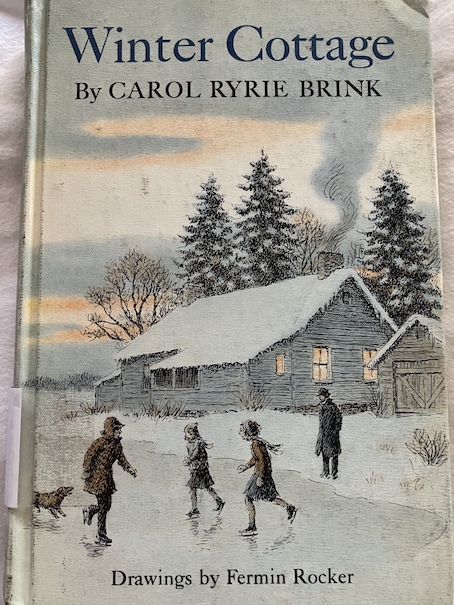
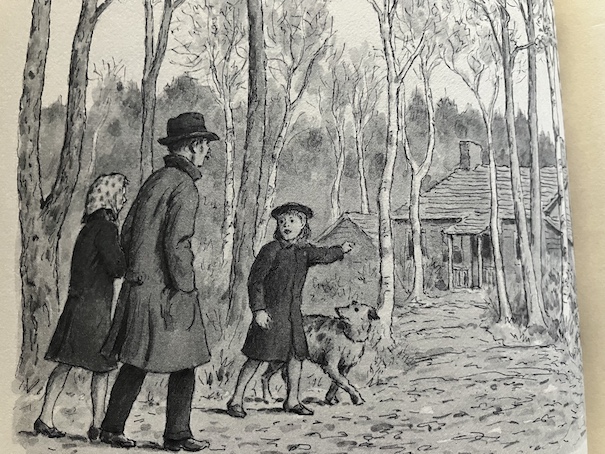
Tom Brown’s School Days

This classic children’s book from the mid-19th century is famous as the story that popularized the concept of British children’s boarding school stories, although many people in the 21st century haven’t read it themselves.

Young Tom Brown was brought up in a very close family, although they are often given to quarrels and drama among each other. He is the eldest of his parents’ children and spends his early young life in the vale where he was born, raised by his family and his nursemaid, Charity. Tom’s mother has a talent for training young servants. She is kind and patient with servants in training, treating them almost like older children of the family. Charity is rather clumsy and not too bright, and she has her hands full with young Tom. He is a strong and rebellious little boy. Charity’s relatives have a farm nearby, and she takes him there to pick up supplies for the Brown household. The people on the farm are kind to Tom, and they also help raise him. Because Tom resists training and supervision from women, the Brown family eventually hires an older servant, Benjy, to take care of Tom from about age four. Benjy takes little Tom fishing and tells him stories about the history of the Brown family. Generally, Tom’s early childhood is pleasant and easy.

As Benjy gets older, he is troubled more by arthritis and finds it harder to keep up with young Tom. Tom gets a governess at home, and when Tom begins lessons at the local school, he begins to calm down at home because he spends his energy at school and playing with the local boys in the village. Being friends with other boys his own age is good for Tom because they share the same interests and levels of energy. They play games and wrestle with each other for fun. Then, when Tom is nine years old, his family sends him away to boarding school. There are some sad goodbyes from the local boys in the village, and the other boys give him some little toys as going-away presents. This is the first time that Tom has ever been away from home, and this is where the story of Tom’s education really starts.

Tom spends about a year at a private school before going on to a public school. The author pauses here to explain the differences between British private schools and public schools. Unlike in the United States, “public” schools are still schools that require school fees, but private and public schools differ in who is accepted as a student and how the students are treated in their time outside of class. In the author’s time and young Tom’s time, students at private schools are more closely supervised in their off hours, with the idea that molding the students into good citizens (which is considered a higher goal in their education than the subjects taught in the classroom) cannot be adequately accomplished in classroom time only and that most of it takes place outside of the classroom. At public schools, the author says, the boys have more freedom and less supervision outside of class.

The boys at the private boarding school Tom attends are supposed to be supervised by school ushers, who monitor their behavior, resolve quarrels, and set a good example for them. Unfortunately, the ushers at Tom’s school aren’t very well educated or good at their job, and they have little interest in doing their job properly. As a consequence, the older students bully the younger ones, students are encouraged to tattle on each other, and physical punishments are used to keep the students in line. In spite of this and some homesickness, Tom actually has a pretty good time at school with his new friends at school. They have some adventures (some of which involves cruelty to animals they find, and the author makes it clear that he doesn’t endorse this and thinks that the bee stings they get are earned) and delight in scaring each other with ghost stories at night. However, this school isn’t really the best treatment or education Tom can get, so it’s just as well that he is sent to a public school after this.

Tom’s change in school comes when there’s an outbreak of disease in the area, and the schoolmaster of the private school is one of the people to become ill. All of the boys are sent home to their families. Since Tom has already told his father that he would rather attend a public school and since school at the private school is canceled for the rest of the term, Tom’s father decides to send him to Rugby. When Tom goes to Rugby, his father talks to him about his school experiences. Tom’s father says that he is going to Rugby at a younger age than he had planned to send him, and if schools are still like they were when he was young, he’s going to see people doing many cruel things and will hear bad talk from other people. He urges Tom, whatever happens at school, to be brave, kind, and truthful and, no matter what other people say, to not say anything he wouldn’t be willing to have his mother or sister hear him say. If he does these things, he won’t have to feel ashamed to see his family when he comes home from school, and they won’t be ashamed of him. This talk and the thoughts of his mother make Tom a little emotional, although he tries not to show it too much.

Tom’s father privately reflects on the reasons why Tom is going away to school. Partly, Tom is going to school because Tom really wants to go and have that experience. The fact is that Tom’s father doesn’t really care too much about Tom learning subjects like Latin, and his mother doesn’t care too much about academics, either. Tom’s parents aren’t too concerned about what kind of scholar Tom is. What Tom’s father really wants for Tom is what he has already told him to be. He wants his son to be brave and truthful, and he wants Tom to be a good and helpful English gentleman and a Christian. Basically, he’s more concerned with his son’s character and life choices than with his son’s grades. He thinks about whether or not he should warn Tom about various temptations he might experience at school, but he decides not to because Tom is still just a boy, and he thinks he wouldn’t understand.

Tom takes a stage coach by himself to school, nervous about what the school will be like but excited about the the experiences he is about to have. When Tom arrives at Rugby, a more experienced student, Harry East, helps Tom get settled and acts as a mentor to Tom about school life. East’s aunt is an acquaintance of Tom’s family, and she knew Tom would be coming to Rugby, so she asked East to hemp Tom. He explains the school grounds and uniform pieces to Tom, describes student activities and sports to him, and answers his questions.

Tom loves sports and is eager to play Rugby football, but East tells him that he won’t be able to play until he learns the game. Football is different at Rugby, and it’s a much rougher game than other schools play. East says players often get hurt and break bones. There is a match that day, and Tom finds it exciting to watch, especially since their house wins! After the match, East says that he doesn’t have any allowance money right now, so Tom buys some food they can have for tea, and they share some of it with some of the other boys from their school house. Tom starts making friends with the other boys, and they all talk about the match together.

After tea, East says that it’s time to join their house for singing. Tom is surprised, but East says that group singing among the students is a regular school activity. There are also speeches from other students at the school singing. Today’s speech is about their house’s victory at the football match. One of the students speaking, Brook, praises the players and congratulates them for their victory on behalf of the house, with all the other boys cheering. He says that their house won the match because their house has the best house spirit and team spirit, and they know they can depend on each other. However, he also issues a warning to the students about bullying in the house. Some of the older students have been picking on the younger ones. He doesn’t want to encourage tattling among the students, and he says that learning to deal with bullies is a valuable skill that makes a boy tougher, but at the same time, bullies are cowards, they encourage cowardly behavior among others, and they break up house spirit and bonds of teamwork among the students. He cautions everyone that too much bullying and allowing bullying to continue will destroy the house spirit that helped them win today, so if they want to continue winning and enjoying house victories, they’d better cut it out. Some of the younger students look at the older students have been doing the bullying, especially a boy called Flashman.

Brook also cautions the other students against drinking in the local pubs and talks to them about their new headmaster. Some of the students haven’t been happy with him because he’s changing some of the school customs. Students have been grumbling and would like to see the new headmaster gone, but Brook points out that Brook isn’t going anywhere and that the “customs” he’s been changing have been destructive pranks and other habits that were also causing problems. The new headmaster hasn’t touched some of the customs that really matter to the students, like their sports, and in fact, the headmaster was also watching the match today. There are mixed feelings among the boys at this part of the speech because they like the idea that the headmaster, who they call “the doctor”, was watching the match, but at the same time, the boys don’t really know him or trust him yet.

The author notes that the new headmaster found the school in a state of disorder and mismanagement when he took his position, and the changes he’s been making are about restoring order to the school. The boys, not knowing the difference between a more orderly and well-managed school and the one they got to know when they first arrived, don’t appreciate the doctor’s wisdom of kindness yet. Tom first encounters the doctor when he leads the students in prayers.

Before bed, Tom and the other younger boys meet with some bullying from Flashman and Flashman’s cronies. Some of the other boys are terrified, but Tom and East allow themselves to endure the bullying, being “tossed” by the older boys so the other boys will be spared. The other boys are grateful to them for this, so they start to hold Tom in high regard.

This eventful first day is a good introduction for Tom about what life at Rugby School will be like for him. Sports, bullying, pranks, fighting, camaraderie among the other students, singing, speeches, and the new headmaster are going to be major themes for him in his education. Like other younger students, Tom has to act as a servant and do chores for older students, part of a tradition called “fagging” (more about that below in my reaction). Tom does well in his classes at school because he has already had a good grounding in his subjects, and he is generally positive about his life at school, in spite of the bullying. He loves participating in the school sports and physical games, like Hare and Hounds.

However, things do get harder for Tom at school. Because he is doing so well at his grade level, he is quickly promoted to the next. When he gets there, with some of his new friends, like East, Tom becomes less studious and more unruly, like the others. Also, the older boys who were trying to set a good example for the others and protect the younger students from the bullies graduate from the school, leaving bullies and less conscientious students as the senior students. The bullying gets worse, and as Brooks had predicted, it breaks the spirit of teamwork in Tom’s house. The students in the house start dividing into factions of bullies and bullied, the younger students against the older.

The younger students get increasingly resentful of the ill treatment and bullying of the older students and start getting rebellious against the system of “fagging” at the school, with Tom and the others declaring that they simply won’t serve the older students anymore. When students like Flashman the bully call for them, they just pretend they don’t hear and refuse to answer them. Flashman and the others try to physically break into Tom and East’s room when they refuse to come, but Tom and East barricade themselves inside. Their success against the older students encourages other students to rebel. Tom considers going to the headmaster about it, but the others discourage the idea. None of the students want to go to the schoolmasters unless absolutely necessary because the students think that the right thing to do is to work out their own problems with each other.

Diggs, one of the older students who is nicer tells the others that, when he and Flashman were younger students, the students in their grade also rebelled against the older students to teach them not to bully them, but Flashman didn’t rebel with the others. Instead, he ingratiated himself to the older students, continuing to serve them and bribing them with treats he got from home. He has evaded discipline and consequences for his behavior by making himself into a useful toady for the students with more authority. Now, Flashman and his cronies increasingly bully the younger students and use physical hurt to subdue them. The younger students retaliate against them with pranks. Tom and East become Flashman’s particular enemies because they live close together in their house and because Tom and East started the rebellion and have been open and accurate in their criticism of his cowardice, refusing to be subdued by the beatings he gives them.

Matters with Flashman come to a head over a lottery, when Flashman pressures other students to turn over their tickets to him. Tom refuses to part with his, and Flashman and his cronies beat him and burn him, hurting him so badly that Diggs intervenes, worrying that they might kill Tom. Diggs shows Flashman to be a coward when he confronts him over the incident and hits Flashman, but Flashman doesn’t fight back because he’s afraid of getting hurt himself. This doesn’t end Flashman’s aggression against the younger boys, and when he starts getting worse again with Tom and East, Diggs urges the two boys to gang up on Flashman. For them to fight him singly wouldn’t be a fair fight because Flashman is several years older than they are and bigger, but Diggs considers it fair for both of them to stand up to Flashman at once. To Flashman’s shock, the two boys do gang up on him. He’s much bigger than they are but not as good at fighting and pretty cowardly about fights where he doesn’t have some obvious, overwhelming advantage. Tom and East win the fight, giving Flashman a cut on his head that bleeds. At first, Tom and East are worried about whether they’ve hurt Flashman badly, but Diggs has a look at the wound and tells Flashman off for being dramatic about how hurt he is. Flashman has only skinned his head a little, and he’s done much worse to the younger boys. Flashman never physically fights the boys again. He eventually leaves the school, being sent away by the headmaster after he becomes disgracefully drunk at a nearby pub one evening. The headmaster was already displeased with Flashman, and this was the last straw. The younger boys are glad to see the bully gone, although some of the older students bear some resentment against the younger ones for their rebellion and their triumph over someone from their level.

Tom and East are emboldened by their victory and for moving up at school, and they become regular rule breakers. They never consider the justice or reasons behind school rules, taking them more as challenges. They get into trouble for trespassing on someone else’s land to go fishing, and the land owner’s gamekeeper brings Tom before the headmaster. Later, Tom and East climb onto the roof of the school and carve their names on the minute hand of the school clock. They are caught because they accidentally change the time on the clock, and when someone investigates why the clock is wrong, finds their names.

Later, they sneak into town against the headmaster’s orders and get caught. They are both taken before the headmaster for this, and they receive floggings for their stunts. The headmaster also gives them a lecture about the dangerous nature of some of their stunts, pointing out that they could have fallen and broken bones from the clock stunt. He points out that they never think about the reasons why rules exist, thinking of them only as whims of the schoolmasters, which isn’t the case. The rules exist for good reasons, and they apply to everyone at the school, including Tom and East. The headmaster says he doesn’t want to keep giving them floggings for their stunts, and if they can’t gain some maturity and reform their behavior, he’ll send them both away from the school. Tom and East are shocked because they never thought that they might have gone far enough to risk their positions at the school. They love their lives at the school and don’t want to be sent home in disgrace. The headmaster tells them to think about their futures at the school seriously when they go home for a term break.

Privately, the headmaster has a word about the boys with one of the other schoolmasters. The headmaster is concerned that, if they continue their irresponsibility and recklessness, they will fail their studies, get into some really serious trouble, and possibly turn into thoughtless bullies of the younger children as they get older. The other schoolmaster acknowledges that they are not the best students and they are a problem, but he thinks that they’re not really bad boys and could still be turned into decent young men. He says to the headmaster that what these boys need is something to give them a sense of responsibility and suggests making each of them responsible for a younger boy at school. Protecting a new boy from the older bullies could settle them and make them more serious and responsible and prevent.

When Tom returns to school for the next term, he expects that he and East will be allowed to share a room and study, which is something that they’ve hoped for. They’ve been making plans for all the ways they can have fun and goof off in their own space. Instead, the school matron introduces Tom to a new boy who will be sharing his room and who will be Tom’s responsibility. George Arthur is a pale, timid, skinny boy, and Tom can see that he’s just the sort of boy who would be picked on by the others. Tom is annoyed at having his plans with East spoiled, but the matron stirs his sense of sympathy by telling him that George Arthur’s father is dead and that he has no brothers. Tom can see that young Arthur will probably be made miserable at school by bullies unless someone stands up for him and teaches him how to handle life at school, so he agrees to take responsibility for him.

The schoolmaster is correct that looking after little George Arthur changes the way that Tom looks at himself, his fellow students, and his education. The change starts when Arthur says his prayers openly at night, getting him a teasing from the other boys, who take any sign of weakness or sentiment as an opportunity for teasing. Tom defends Arthur from them. He also feels a twinge of shame because he remembers, for the first time in a long time, that he had once promised his own mother that he would always say his prayers at night, and he has become neglectful about this, specifically because he wanted to avoid the teasing or bad opinion of the other students. It shames Tom a little to think it, but he realizes that, although Arthur may be physically weaker than he is, he has displayed more moral courage than Tom has simply by saying his prayers, regardless of what the other students think.

Looking after Arthur gives Tom a sense of responsibility, as the schoolmaster hoped, and Tom appreciates feeling like he has a purpose. He enjoys seeing timid Arthur beginning to develop as a student and start to make a new friend on his own. However, Arthur also has things to teach Tom. Tom’s friendship with Arthur helps his own personal development and causes him to consider sides of himself he hasn’t thought about much. As Arthur opens up more to Tom, he explains that he is serious about religion because his late father was a clergyman. When he was alive, his father used to read the Bible with him. Inspired by Arthur’s example, Tom becomes more serious and starts exploring his religious side, although he takes some teasing and criticism from the other students over this budding sentimentality and defense of little Arthur. Tom and East start participating in Bible readings and study with Arthur, considering some of the deeper questions of life and religion that they’ve never considered before. They begin to think even more deeply about life and death when a disease spreads through the school. Arthur becomes ill and another boy dies. Tom is relieved when Arthur recovers, but his near death and the other boy’s death cause Tom to really consider life and death seriously for the first time.

As Tom develops a deeper understanding of life and religion, he finds himself a little at odds with East, who still doesn’t take life seriously. Fortunately, the two of them respect each other enough as friends to talk about their views seriously with each other. Tom doesn’t consider himself as knowledgeable about the subject or as good as explaining it to others as Arthur, but through their conversation, East realizes that he does actually care about the subject and goes to talk to the headmaster about his feelings and about confirmation. The headmaster’s kind understanding and reassurance is an inspiration to the boys, and they come to respect him, although Tom doesn’t fully understand the headmaster and what he’s done for the boys until he is a young man.

At the end of the story, Tom is with some college friends when he hears that the old headmaster has died, and he feel compelled to visit Rugby School again to pay his respects and reflect on his old headmaster.

The book is now in the public domain. It is available to read for free online through Project Gutenberg and Internet Archive (including an audiobook version). Tom Brown’s School Days has been made into movies and tv films and miniseries multiple times. There is also a sequel to this book called Tom Brown at Oxford, which focuses on Tom Brown’s university experiences.

Although it was not the first book set at an English boarding school, this 19th century book is famous for being the book that popularized the trend of British boarding school stories, which has continued for over 150 years since! There are also references to this specific story in other books, and I have to admit that it gave me a giggle to recognize the scene that Terry Pratchett parodied in his novel Pyramids. The story is semi-autobiographical, based on the experiences the author, Thomas Hughes, had when he attended Rugby School as a boy during the 1830s. There is now a statue of Thomas Hughes outside the Rugby School Library.

The headmaster in the story is only called “the doctor” for most of the story, until the very end, when Tom learns of his death and his last name is given as “Arnold.” Tom’s headmaster is based on Thomas Arnold, who was the real, historical headmaster of Rugby when the author of the book was a student there himself. The real Thomas Arnold did die suddenly of a heart attack at age 46 in 1842, and this book is an homage to his memory as well as the recollections and thoughts of the author on the subject of education. The real life Thomas Arnold did reform the habits and organization of Rugby School, like the headmaster in the story, focusing on the religious and character development of students and creating a system of prefects called “praepostors” as student monitors, something that is referred to in the story. Other British boarding schools copied and built on his ideas and practices. (Added fun fact: Thomas Arnold was the great-grandfather of the author Aldous Huxley, known for Brave New World.)

The book requires some patience for modern because the author spends some time setting the scene and explaining the background of Tom’s family and early childhood before really getting into the story. Part of the reason for that is that the author, Thomas Hughes, based the story on his own childhood and youth, and he spends some time comparing the childhood and conditions of life in young Tom’s time with life at the time he wrote the story.

Hughes admits that he doesn’t like the direction the social situation has been heading in his time, and he feels that his time period is at a changing point. He sees many of the old ways of life falling aside, and he partly blames the new upper classes, who take advantage of the working class, using them to enrich themselves (“buying cheap and selling dear”). He’s describing an increasingly industrialized and urbanized society with a significant wealth gap between the wealthiest members of society and the working class, which was characteristic of Victorian society. Hughes notes that some members of the upper classes profess to be trying to reform the lower classes, but the author says they don’t really understand the working classes at all. There is part of the story, early in the book, after he describes young Tom’s experiences at a local fair, where he delivers a lecture to the younger members of these rising upper classes on the subject. Hughes was a social reformer in the Victorian era, so he has many thoughts about how to improve society and a pretty accurate understanding of social conditions during his lifetime, and he works them into the story of Tom’s education.

It’s interesting to see Thomas Hughes’s descriptions of Rugby School and boarding school life and education in the 1830s. I’ve never been to a boarding school before, and neither have most of the other readers who enjoy boarding school stories. It’s getting to see a type of school that most of us will never attend that makes stories of this kind fascinating. Seeing them as they looked in the past is especially fascinating. I’ve read other books and seen documentaries about boarding schools in Britain, and it was interesting to note the aspects of school life that are the same or different from what someone might encounter in a modern school. From what I’ve learned about British boarding schools, extracurricular activities, like sports and singing, are still major features of British boarding schools that have stood the test of time. However, modern schools have cracked down on bullying and abuse from older, higher level students.

A couple of words that appears in the story, “fags” and “fagging” sound like derogatory terms from modern times, but it has nothing to do with homosexuality in this context. “Fagging” was a tradition at British public schools of this time and earlier, where senior students used younger students as servants, giving them menial chores to do. The “fags” described in the story are younger students, who are described as performing various tasks, like fetching things for the older students, cleaning, carrying messages, or arranging furniture for singing. The problem with the tradition of fagging was that it often led to bullying and abuse of younger boys at the hands of the older students, and this is something that’s addressed in the story. The bullying and abuse associated with this tradition is what led to the end of the tradition in modern times.

There are also other student habits which would seem odd by modern standards, including some which would definitely not be allowed for boys of this age. The students at the school are about 11 to 19 at the oldest, but they routinely drink beer, even the younger boys, although I think it’s probably a weak version. The ways the students are treated with regard to money and how they spend their money are also odd by modern standards. Their allowances may be withheld from them as a punishment. There are times in the story when students in need of money auction off some of their own belongings, a subject that appears in A Sweet Girl Graduate, although the boys don’t get in trouble for this as the girls in A Sweet Girl Graduate did. The older boys also impound the allowances of the younger boys for a lottery at one point, using the funds to purchase sweepstakes tickets on a horse race. The younger boys are not consulted about their participation in the gambling, and the only problem that arises from it is when Flashman tries to bully them out of their tickets to get ones he thinks are likely to win.

As the author reflects on his time at school, his experiences with friends and classmates, and the inspiration of his old headmaster, he also offers advice to other boys and his thoughts on what it means to be a man and to take charge of ones own development. I don’t think modern parents and teachers would agree on all of his advice, but he makes it clear what experiences from his school days have led him to believe what he does about how boys and men should conduct themselves.

At one point, he says that he has no problem with the idea of boys fighting with each other because he sees fighting and struggling as just part of the role of men in life. He says his only concern is whether or not they’ve chosen the right side to fight on. Flashman serves of an example of how bad people can actually be quite popular, at least among their cultivated cronies, and are often supported by the social system or know how to use the system to their advantage. The author warns other boys not to see another person’s popularity or social position as a sign that they are good people or that they are in the right in a situation because the opposite is very often true. What is good and right is independent of popularity, power, and money and is determined by other factors. He admits, through the character of Tom, that he has developed a soft spot for underdogs and says, even if you think the underdog is wrong in his beliefs, he shouldn’t be scorned but respected for his willingness to fight for what he believes, even knowing that he doesn’t have popular support.

At the end of the story, when the headmaster dies, the character Tom despairs because, although he has moved on from Rugby School, and he realizes that many of the boys who are there now don’t know who he is and wouldn’t recognize him as one of them, the headmaster was a guiding light in his life and spiritual development. He still feels ties to his old school and headmaster because his time there and the headmaster’s influence set him on the course for his life and development. The author reflects that Tom the character was still someone self-centered at this age, and in the first shock of hearing about the headmaster’s sudden death, he thinks of the loss of the headmaster as a personal loss that no one else would understand. However, when he returns to Rugby and thinks about it further, he realizes that he is not the only one whose life was touched by the man, remembering that he left behind a wife and children and that the headmaster cared about all of his students and influenced them all in different ways. Tom the character sheds some of his self-centeredness and realizes that it’s time to move on in his life. The author also says that there is a flaw in looking to mortal men, even the kindest and greatest among them, as the ultimate source of guidance because no mortal man lives forever. Tom the character will tend to his own spiritual development from this point forward and look to God Himself for guidance. In this way, it seems that young Tom the character has developed into the kind of young man his father wanted him to be in the beginning, making his education successful.

Before Tom learns of the headmaster’s death, he discusses his future ambitions with an old schoolmaster, saying that he wants to make a difference in the world as well as earn a good living. The schoolmaster cautions him to be certain of his priorities and know which of those two goals is more important. There are many people who spend their lives making money but do nothing of lasting importance for the world and other people, and there are many people who do good in the world without making much money. If Tom focuses too much on making money, he may sacrifice the goal of doing good in the world, so he needs to remember what he really wants to accomplish in his life and what he wants to prioritize.

Thomas Hughes went to Oxford after his time at Rugby School, like his character, and he became a lawyer, social reformer, and member of Parliament as well as a writer. Among his books are books about religion and the nature of manliness. The themes of Tom Brown’s School Days really were the themes of his life, and he genuinely means the advice that he offers to young men in the story.

Lucky Dog Days

Pee Wee Scouts

Mrs. Peters tells the scouts that it’s Help-a-Pet month. The kids start talking about the kinds of pets they have, and Mrs. Peters asks them if they would like to do something to help a pet. She suggests that they could walk dogs at an animal shelter or raise money for homeless pets.

Mrs. Peters takes the scouts to an animal shelter. The kids like seeing all the animals, although Tracy turns out to be allergic to them. The other kids walk the dogs around the shelter yard. This turns into chaos because Rachel decides to walk a dog that’s really too big for her to handle, a St. Bernard. (The adults should have stopped her, but they never do in this series when a kid is about to do something they shouldn’t. They take Rachel’s word for it that she can handle a St. Bernard because she has walked her uncle’s Great Dane. However, even dogs of the same size don’t have the same temperament, and I think a real shelter worker would know the individual animal’s temperament and not offer an oversized dog with a lot of energy to a six-year-old child.) When her dog starts running and dragging her, the other dogs get out of control, too. Fortunately, they’re all in a contained yard, so none of them gets away. The incident ends with Rachel crashing into a lily pond in the yard.

Mrs. Peters tells the children that they will have a rummage sale to raise money for the animals at the shelter. All of the scouts will donate things to sell and collect donations from others. Tracy tells Molly and Mary Beth that she will help them collect donations. Molly is annoyed that Tracy is coming with them because she thinks Tracy is bossy and that her sniffling is gross. However, it turns out to be a good thing that Tracy comes because she brings a wagon with her to collect donations, which the other girls hadn’t thought to do. Unfortunately, their wagon disappears when the girls try to visit one last house to ask for donations and leave it unattended.

It turns out that some of the other scouts, Roger, Sonny, and Tim, found their wagon and try to claim the donations as their own at the next scout meeting. The boys say it’s theirs because they just found it on the sidewalk, but the girls tell Mrs. Peters what happened. Mrs. Peters smooths things over, saying that it doesn’t matter because these items will be sold to help the animals. Molly doesn’t think it’s fair for the boys to get credit for the work the girls did gathering donations, though. (I think Mrs. Peters should also have had a word with the boys about not taking things if you don’t know who they belong to and don’t have permission to take them. The adults in this series never explain things enough.)

There is one particularly fancy necklace that looks like diamonds among the donations. Mrs. Peters says that, rather than putting a price on it, they will auction it off to the highest bidder. They also have some adoptable dogs at the sale to attract people who might adopt them. It was Molly’s idea to have adoptable dogs there to sell because a lady expressed interest in Mrs. Peters’s big, black dog, Tiny. To Molly’s surprise, the lady who eventually buys the fancy necklace and pays a thousand dollars for it is the woman who donated it. When they ask her about it, she explains that it is a real diamond necklace and that she donated it by a mistake. However, even though she paid a lot of money to get it back, it’s still only a fraction of its real value, and she’s happy to make a big donation to a worthy cause.

In the end, Mrs. Peters congratulates the scouts on how much money they raised and how many animals were adopted that day. There is just one puppy left from the animals who were at the sale. The kids are attached to the puppy and don’t want to send him back to the shelter, so Mrs. Peters decides to keep him as a mascot for the troop. They name him Lucky, and Mrs. Peters says that they can take turns keeping him at their houses. (Except for the kids with allergies, like Tracy.)

The name of the book comes partly because the month is August, and Mrs. Peters explains to the kids what the “dog days” of summer are, although she just describes what the weather is like rather than explain why they’re called “dog days.” The term comes from the period after the rising of the dog star Sirius, but then again, I suppose that could be difficult to explain to six-year-olds. Not all adults would necessarily know it, either. I had to look it up myself to get the explanation. Even so, the name is appropriate because the theme of the book is pets, and it is set during late summer.

I still think that the adults in the story could explain some things to the kids more. That’s often a part of books in this series, although that’s also where much of the excitement of the story comes from, things going wrong because the kids don’t entirely know what they’re doing. Any lessons learned are more implied than spelled out.

The kids also keep insulting each other, even though they’re also kind of friends in the stories. We don’t really know why Molly thinks Tracy is bossy because she doesn’t really explain that. It just seems to her that Tracy tends to tell other people what to do and get her way. Molly relents a little in this book, though, because it turns out that Tracy has some good ideas, and even when she thought Tracy screwed up because they lost the wagon, everything worked out for the best.

Camp Ghost-Away

Pee Wee Scouts

The Pee-Wee Scouts sell powered sugar donuts door-to-door in their neighborhood to raise money for their trip to camp, and there is a special badge for the scout who sells the most. The kids all brag about how much they’re going to sell, each claiming that they can sell the most. Rachel teases Sonny because his over-protective mother will probably go with him while he’s going door-to-door. She calls him a “mama’s boy”, and he calls her “stuck up.” (There is some truth to both of these insults, but they’re still nasty, and no adult comments on it.) Molly and Mary Beth decide to do their selling together because they’re best friends.

In the end, Rachel and Sonny are the biggest sellers, each of them selling more than 100 boxes, in spite of Rachel’s teasing about his mother’s involvement and Rachel’s mother’s objection that donuts aren’t very healthy. However, there are some objections about how fair that is when Rachel and Sonny reveal the secrets of their success. Sonny’s mother sold 80 of his boxes at her workplace, and some kids object that it isn’t fair because Sonny didn’t sell them himself. He gets more teasing about being a “baby” and having his mother do things for him, but Mrs. Peters, the scout leader, says that it’s fair for a mother to sell on their behalf because the most important thing is the money they raise for camp.

Similarly, Rachel explains that her family went to a family wedding, and she sold most of her boxes to her relatives. Her family seems to have money, and her aunt and grandmother each bought 20 boxes. Jealously, Molly says that her relatives will get fat if they eat that many donuts. Rachel says that they won’t because they plan to donate the donuts to hungry people. Again, Mrs. Peters doesn’t say anything about the insults the children trade, just saying that the money they raised is important because they will now be able to afford to go to camp.

The camp is called Camp Hide-Away, and Mrs. Peters gives the children information about the camp and what to pack. They will go to camp next weekend, and Lisa’s mother will come with them on the trip. Rachel brags about how she has two swimsuits to bring, while the other kids only have one each, and she also shows off her new gold bracelet.

When they get to camp and Rachel discovers that they will be sleeping in tents, she isn’t so sure she wants to go camping after all. She doesn’t like bugs, and she worries about bears. The other kids call her “sissy” and “scaredy cat.” Mrs. Peters assures them that it will all be fine, and she has her large dog with them.

That night, they hear a strange sound, which sounds like the moaning of a ghost. The kids debate about whether it’s a ghost or some kind of wild animal. Either prospect is terrifying. When it starts talking, they’re sure it’s a ghost, but Mrs. Peters’s dog saves the day!

I’ve commented before that the kids in this book series do a lot of name-calling. In a way, it’s realistic for young children, but it’s also really annoying. Sonny inevitably gets called “sissy”, “baby”, and/or “mama’s boy” in every book I’ve read. It also bothers me that no adult ever tells the kids not to talk like that. The kids in the story are only six years old, so this kind of name-calling could be considered realistic, but adults telling kids not to talk like that is also realistic. I feel bad for Sonny because he often gets picked on in these books, and I think it’s unfair. Maybe his mother is a little over-protective, compared to the other parents, but at the same time, these kids are only six years old. Things like having a mom who walks to a six-year-old to school and doesn’t want a six-year-old to go door-to-door, selling things to strangers all by himself, are not outrageous. Even Rachel admits that she heard her mother saying that the kids were rather young to be away from home overnight for an entire weekend, and I think that’s true. There is some trouble with homesickness in the story, and I’m not surprised.

Like other books in this series, there are also multiple parts to the story, almost like short stories put together. The first part of this book is about selling the donuts to raise money for camp, and the second part is about their camping trip, although that part also has some smaller episodes. The highlight of the book is the spooky noise that the kids hear at night and think is a ghost. It is pretty quickly revealed that it’s just a couple of the scouts playing a prank on the others. The prank gets foiled by Mrs. Peters’s dog and the pranksters crashing into things because they have sheets over their heads.

There’s also a third part of the story, where Molly has more trouble with camp activities than the other kids. She can’t swim or row as well as they can, and when they look for interesting things, like rocks and wild flowers, on their hike, all she finds is poison ivy. But, she isn’t the only one having problems. Rachel doesn’t like bugs and the camping food, and Sonny gets homesick. Sonny’s mother comes to pick him up because he’s so upset. The other kids tease him again, but the truth is that other kids are also homesick and cry at night. Even Lisa cries, even though her mother is there on the trip. Molly realizes that she is the only one who isn’t homesick. Although she doesn’t get the badges for the standard camp activities, Molly does get one for not being homesick and another for finding Mary Beth’s lost ring. I was surprised that Rachel’s bracelet wasn’t the thing that got lost since she made a big deal of introducing it, but it was Mary Beth’s ring that got lost instead.

Although I often think that the adults don’t explain much to the children in this series, Mrs. Peters does tell the children that homesickness is natural. I think she could have given them a little more advice about it and defended Sonny from the teasing more, though.

Cookies and Crutches

Pee Wee Scouts

This is the first book in the Pee Wee Scouts series. The children in Troop 23 meet after school on Tuesdays, and their leader is Mrs. Peters. One Tuesday, they meet at Mrs. Peters’s house to bake cookies. Mrs. Peters says that, to earn their cookie badge, they must each bake cookies at home without help and have their parents write a note that they have done it. She teaches the children an easy cookie recipe that they will use.

Roger White doesn’t want to bake cookies because he thinks that baking is for girls. Sonny Betz argues that it’s not just for girls, but many of the other children think that Sonny is a sissy because his mother still walks him to school. Sonny thinks that Roger is a creep. Mrs. Peters says that cooking is for everyone who eats. If boys can eat, they can also cook.

Mrs. Peters demonstrates making a recipe for chocolate chip cookies (and the book provides the recipe). Molly and Mary Beth ask if they can make their own batch of cookies for their badge together. They are not supposed to have adults helping them, but Mrs. Peters says that it is fine if they work with each other. In spite of their earlier argument, Roger agrees to make cookies with Sonny as a team.

However, when Molly and Mary Beth try to bake cookies by themselves, they don’t think the cookie batter looks right. It looks too pale, and when Mrs. Peters made her cookies, the batter was more brown. To fix the color problem, they decide to pour in some root beer, which is not part of the recipe. Then, they decide that the batter is too runny, so they add some gravy mix to thicken it. Because they added things they shouldn’t have, the cookies come out all wrong, and the girls worry that they won’t get their badge.

At their next meeting, though, they learn that nobody’s cookies look like they should. Mrs. Peters has the kids make cookies together while she supervises, although she doesn’t help them directly, so they can say that they did it themselves. This time, the cookies work out, although some of them are oddly-shaped. However, all of the kids get their cookie badges together.

The scout troop then organizes an ice skating party with the kids’ fathers. It’s a little awkward because not all of the kids have fathers living at home. Most of the kids without fathers bring an uncle or brother instead, but Sonny doesn’t have either, so his mom comes. The other kids tease him about it because they think he’s already too much of a mommy’s boy.

Some of the kids are also nervous because they don’t know how to skate, and they’re not even sure that their fathers know. Molly gets into trouble because Rachel makes a big deal about her fancy skates, which she owns so she doesn’t need to rent any, and about her dainty little feet. Molly rents a pair in the same size as Rachel’s, trying to prove that her feet aren’t too big, but they’re really too small for her. She has to take off her socks to put them on, and even then, it’s a hard squeeze. She ends up spraining her ankle badly because she’s wearing the wrong skates, and she has to use crutches. Molly doesn’t get her skating badge, but she does get one that’s almost as good as a consolation.

This is one of those children’s books/series where the kids in the story, although they are part of the same troop and seem to be friends for the most part, still say insulting things about each other, like when Roger called Sonny a sissy and Sonny called Roger a creep. I know that kids do things like this sometimes, but I don’t really like books that seem to promote or are permissive about that kind of talk. What bothered me is that, even though the boys were insulting each other in front of Mrs. Peters, she didn’t tell them to stop, which makes it seem like she tacitly thinks those insults are fine. I liked it that she contradicted Roger’s assertion that cooking and baking are only for girls, but I wish that she had said something about the way the kids were insulting each other.

I knew from the beginning of the story that the way Mrs. Peters was teaching these young children to make the cookies, just by watching her, and then expecting them to do it right completely on their own, with no adult supervision, was probably going to lead to a disaster of some kind. Of course, that’s because I’m reading this from an adult perspective. Nobody learns anything complex from only having seen it done by somebody else just one, especially if they just watched and didn’t actively participate. These kids are also young, just in the first grade of elementary school. They can read, but they don’t have advanced reading skills or much experience with cooking anything before. What I’m saying is that they really needed adult supervision, and I didn’t think that telling them that they had to do this completely by themselves wasn’t a great idea. Although, it’s possible that Mrs. Peters assumed that the kids would get more supervision than they actually got, even if the adults didn’t actively help. I think a lot of adults assumed that not helping meant no supervising and no advice or intervention when the kids were about to do something wrong. I have to admit, though, that there wouldn’t be much of a story if they did everything right, and this activity went as expected.

The story has two parts to it, which aren’t directly related. I thought, at first, that the kids would be serving cookies they baked to the dads, and that would be the tie-in between the cooking baking and the party with the fathers. They didn’t, though. The skating incident and Molly’s injury are unconnected to each other. The only connection I can see to the two incidents isn’t explicitly stated, but both of this incidents involve the kids doing something they’ve never done before and not really doing it right. They need to have experiences where things go wrong to start figuring out how to do things right. Although Rachel brags about her skating ability and her skates, after Molly is injured, Rachel admits that she fell down a lot when she was younger and was first learning. Molly feels a little better, realizing that nobody does things perfectly the first time. Although getting hurt isn’t great, learning to use crutches is also something new that Molly experiences that none of the other kids have experienced before.

Spiderweb for Two

Randy Melendy is feeling morose because the three older Melendy siblings (Mona, Rush, and their adopted brother Mark) have all gone away to school. Rather than attending the local school as they used to, Rush and Mark have gone away to boarding school for the first time this year, and Mona is attending a school in New York City, where they used to live. Since Mona has started acting professionally on the radio, she’s been commuting back and forth from the family’s house in the country to her acting job in the city. This year, her father decided that, rather than continuing to commute back and forth, it would be best for her to remain in the city and go to school there, staying with a family friend, the wealthy Mrs. Oliphant, who is fond of the children. That leaves only Randy and her younger brother, Oliver, at the big Melendy house in the country, known as the Four-Story Mistake.

Since Randy is accustomed to having her very active siblings around her, always doing something interesting, Randy thinks that life is going to be boring and lonely from now on. She recognizes that the older siblings going away to school is just the first step in growing up and moving away from the family. She knows the next likely steps for them are college and marriage, and they will likely never really live all together again, at least not all the time. The housekeeper, Cuffy, tries to reassure Randy that she still has Oliver for company, but Randy isn’t reassured. Oliver is a few years younger than she is, and she doesn’t think they have much in common or much that they would like to do together. However, the two of them are about to be involved in a special shared adventure.

Cuffy sends Randy and Oliver to get the mail, and they are surprised to find an envelope addressed to the both of them in handwriting they don’t recognize. Inside the envelope is a poem that seems to be some kind of puzzle or riddle – the first clue to a treasure hunt! The mysterious letter writer tells them to keep it a secret, and the clue seems to point to a place where the shadow of a tree falls.

It takes Randy and Oliver a little time to decide which tree is supposed to cast the shadow, and their treasure-hunting is delayed by rain. However, when they dig in the correct spot, they find a tin box. Inside the box, there is a little golden walnut box with another clue. This time, the clue indicates that the next clue is being held by someone who loves them, although they don’t know it. It takes some effort for Randy and Oliver to solve this one. At first, they think it’s probably Cuffy or Willy, and searching their pockets or getting them to reveal what’s in their pockets without the kids explaining why they need to know is tricky. Eventually, it turns out that the next clue is hidden on the collar of Isaac the dog.

The treasure hunt continues in this way for the whole rest of the school year. The clues are written as poems on blue paper and send them various places around their own house, the houses of people they know, and various other landmarks, including a grave yard! Randy and Oliver figure out that this treasure hunt must be something their older siblings have created to keep them busy and entertained during their absence. The treasure hunt breaks off periodically when their siblings are home from school for Christmas before resuming after Christmas with another letter.

In between solving the riddles of the treasure hunt, Randy and Oliver do get to spend some time with their siblings. Over Christmas, the family decides to go caroling and visiting friends. For Easter, the girls make Easter bonnets, and Rush makes a special one for their horse. Randy and Oliver never discuss the treasure hunt with their siblings, though, because secrecy is part of the game.

Sometimes, Randy and Oliver get into trouble following clues, and sometimes, they accidentally make the hunt tougher than it has to be because they misinterpret where they’re supposed to go next. Eventually, the hunt leads them to a special surprise from an old family friend, and everyone shares in the surprise!

I liked the treasure hunt in this book because I always like books with treasure hunts that have riddles to solve and clues to follow. I’ve read other reviews of this book online, and other people remember this book fondly for the treasure hunt, although it does have a different feel from the other books in the Melendy Quartet, for several reasons. It’s partly because only two of the Melendy siblings are present for most of the story, although the others do appear sometimes and make their presence felt, even when they’re away. Readers will probably figure out before Randy and Oliver that their absent siblings have set up this treasure hunt for them to keep them busy and give them something to think about so they won’t be too lonely without the others.

This is also the only book in the series that doesn’t make references to WWII because it’s the only book in the series written after the war ends. The war wasn’t a main part of the plot of the other books, but it was always present in the other stories, with the children taking part in activities to help the war effort. The war also affected the attitudes of the children, making them want to do their parts for their family as well as their country. This book never mentions it once, and the focus is on how the children are growing up.

Randy knows that seeing her siblings go away to school is just the first step to them all growing up and moving away. When the older siblings come home for Christmas, they’re already showing signs that they’ve been doing more growing up during the few months they’ve been away from home. When Mona comes home for Christmas, she has a new haircut and is wearing lipstick, and Rush’s voice is starting to change. Eventually, Randy and Oliver will do these things, too, but for now, they’re the ones left behind as kids at home. Through their shared adventures with each other without their siblings, they grow closer to each other than they were before. Oliver was too young to join Randy and the older siblings on some of their previous adventures, but he is growing up, too, and he’s now able to join Randy in shared activities. During the course of their treasure hunt, they have adventures in the countryside, like the siblings did in other books.

Like other books in this series, there are also stories within stories. Sometimes, the main story departs from Randy and Oliver when other people tell them stories about exciting or interesting episodes from their own lives. This books has stories about how Cuffy saved a boy from drowning when she was young, their father’s search for a lost dog, and Mrs. Bishop remembering when she first noticed the patterns of snowflakes.

There’s only one full page picture in the book. The other illustrations are smaller ink drawings at the beginnings of chapters.

Then There Were Five

It’s summer, and the four Melendy children have some big plans! They’ve already started building a dam to make the swimming area on the property of their new house bigger. Their father, who travels frequently, giving lectures, tells them that he’s going to be away for most of the summer. He has to work hard to provide for his big family, and he has also taken a government job that will help the war effort. Mr. Melendy isn’t going to be a soldier because he’s a little old for that and the father of four children. He says that he can’t tell the children about his job, but it will keep him away in Washington for long periods of time. While he’s away, the children will be in the care of the housekeeper, Cuffy, and the handyman, Willy. They will also largely be left to entertain themselves, which is something they definitely know how to do.

Aside from swimming and enjoying themselves this summer, the kids decide that they should also do something useful, to help the war effort. Because of the war, patriotism is running high, and the children feel like they should take on some serious responsibilities. They’ve held events to help the war effort and bought bonds before. This summer, Rush and Randy decide that they’re going to go door to door, collecting scrap metal. Their collecting efforts help them to further get to know their neighbors, and they make friends with the Addison children and a nice, older man named Mr. Titus, who likes to spend his time fishing and baking things and invites the kids to join him sometimes.

However, there is a nasty man called Orin who yells at the children and scares them away when they come to ask him for scrap metal. Soon after this unpleasant incident, Rush and Randy meet Mark, the nice boy who lives with Orin. Mark is an orphan, and he lives with Orin because he’s a distant cousin. Orin’s wife was a nice lady, and Mark liked her, but she died a couple of years before. Orin is mean to everybody, and he mainly sees Mark as a source of unpaid labor on his farm. The Addison children, who know Mark from school, confirm that all of this is true. Orin doesn’t even let Mark go to school very often because he wants to keep him working most of the time. Their teacher and the school superintendent both tried to go see Orin and insist that Mark go to school regularly, but Orin is a violent and frightening man. He chased them both away and sent his mean dogs after them. Nobody really knows what to do about Orin, and most people are afraid to try. He also locks Mark in his room to keep him from running away, although Mark has found a way out and sneaks out sometimes.

The Melendy children feel sorry for Mark, although they try not to be too pitying so they won’t make Mark feel too self-conscious. Rush and Randy start meeting with him secretly to go swimming and fishing and hunt for arrowheads left by the Iroquois who used to live in the area. Rush and Mark also play at being soldiers on a secret mission and go stargazing. Mark knows about the constellations, and the boys watch the Perseid meteor shower in August.

Then, Mark reveals to Rush that Orin and his few friends are making illegal alcohol in a still. They do it because it costs less than buying alcohol. Orin’s friends include a couple of brothers who live in the woods and hardly ever come to town and a man who’s been suspected of bank robbery and murder although nobody was ever able to prove it. The boys spy on Orin and his friends at their still one night, and they hear Orin talking about selling his farm and maybe getting one of the new defense jobs. His friends ask him what he’ll do with Mark if he moves out, and Orin says that he’ll probably just turn him over to the county. One of his friends say that giving Mark to the county might not be so easy because they’ll ask questions, but Orin says he’s thinking of changing his name. The suspected criminal says that he might take Mark because he has trouble keeping workers around his place. Mark tells Rush that he’d rather run away that go live with that criminal, and Rush says that Mark can come stay with his family. The men almost catch the boys listening because the boys are wearing citronella to keep the mosquitos away, but the boys manage to get away before the men catch them.

Rush tells Mark that he’ll talk to his father to see if Mark can stay with the Melendy family or if he knows what else Mark can do. Then, a series of events happen that change everything. First, Cuffy has to go away for awhile to take care of an injured relative, leaving the children even more to their own devices, with Willy and the older children in charge. Then, the in the middle of the night, Rush wakes up to realize that something is on fire. It turns out that Orin’s farm is burning! Rush wakes Randy, and the two of them hurry down to Orin’s farm to see if Mark is safe. They find Mark hurrying to get the animals out of the barn, and neighbors and firefighters are already working on the blaze, but it’s a loosing battle. They manage to save the animals, but both the house and barn are destroyed. Willy, who was also there to help fight the fire, take the Melendy children and Mark back to the Melendy house. Later, Willy informs them that they have discovered that Orin was still in the house and was killed in the fire. (A short flashback informer readers, although the characters in the story don’t know it, that Orin accidentally started the fire when he returned home from his still, drunk, and passed out in the kitchen with a lamp too close to a wall calendar.)

Mark was never fond of Orin because Orin treated him badly, but without Orin, Mark’s custody is in doubt. Mark doesn’t have any other relatives. He’s still only 13 and not old enough to live alone. Rush decides to call his father to ask if Mark can live with them. Mr. Melendy tells Rush to keep Mark at their house for now, and when he returns home from Washington, he’ll straighten things out.

The Melendy children make Mark welcome at their fascinating house, the Four-Story Mistake, and Mark begins to enjoy all the new experiences they give him. He gets to try their books, enjoying classics like Tom Sawyer, Robin Hood, Eight Cousins, and various fairy tales. Mark also likes listening to Rush playing music on his piano. Above all, Mark gets the new experience of living with a family that really cares for him. Mark becomes part of the Melendy family’s idyllic summer, but the children worry about whether or not their father will allow them to stay with them permanently.

This is the third book in The Melendy Family series. The book is available to borrow and read for free online through Internet Archive, as part of a collection.

This book is different from the earlier two books in the series because, while the other adventures were all just treated as fun adventures without anything truly tragic happening when things go wrong, this book actually contains some serious issues. Mark is an orphan living with a violent and abusive guardian who frightens all of the local adults who have tried to intervene on Mark’s behalf. Mark’s guardian is also involved with some seriously shady people and illegal activities. The sudden death of Mark’s guardian frees him from the abuse but also leaves his future in doubt. This is the darkest book in the Melendy series. The book doesn’t shy away from Mark’s feelings and the sadness of Orin’s death, even though he was an awful person. Fortunately, because the tone of this series is optimistic, things work out for the best.

Of course, Mr. Melendy agrees that Mark can stay with the family, but in a realistic touch, adopting him isn’t as simple for the family as taking in a stray dog. Some of the local farmers offer Mark a place working on their farms, including the disreputable man and possible criminal who was one of Orin’s friends. Social service agencies want to know about the home and family Mr. Melendy has to offer Mark before they decide whether or not to allow Mark to remain with them, and a social worker comes to interview him. The social worker sees a taste of the family’s boisterous children and eccentric hobbies (at one point, Mona enters the room, practicing the part of Ophelia from Hamlet), but she is charmed by them and sees that Mark loves being with them, and she decides that the Melendy family will be good for him. There is extra legal work for Mr. Melendy to officially adopt Mark after Mark is allowed to stay with them as a ward or foster child, and the local bank is also interested in Mark’s custody because Orin had a mortgage on his farm, and there are financial issues to be arranged.

In the end, the bank claims Orin’s property because of the mortgage, but Mark inherits the animals because he’s Orin’s only relative. Mark keeps a few animals that can live on the Melendy property, and the Melendys help him sell the others in an auction held on their property. They turn the livestock auction into a fair to raise money for the war effort. Some of them make baked goods to sell, Mona dresses up as a fortune teller, and they hold a talent show with other children from school.

The element of raising money for the war effort continues a theme from earlier books in the series and emphasizes the point that this book was set contemporary to the time when it was written, during WWII. I find books that were written during major events and that take those events into account interesting because it shows how people felt about those events and what they wanted children to understand about them. The kids sometimes make references to the war in casual conversation in a way that seems realistic for a child’s observations, such as when they describe someone as having “teeth like a Japanese general”, although I know that what they’re probably referencing is anti-Japanese propaganda cartoons at the time rather than actual pictures of them. That isn’t mentioned in the story, but I’ve seen those cartoons before, so I can envision what kind of teeth the kids in the story are probably picturing.

In spite of the dark parts of the story, the book still has qualities of idyllic life in a big house in the country and the outdoor fun the children have. Some of the images in the story would fit well with cottagecore themes today, such as Mona weaving a strawberry plant in her hair. Oliver collecting caterpillars and watching moths. On Oliver’s 8th birthday, the whole family, including Mark, goes on a picnic to a cave that Mark knows.

There is also a theme around cooking and baking in the story. Mona develops an interest in cooking and baking, and Mr. Titus teaches her recipes and helps her and Randy when they experiment with canning vegetables from the garden. Mona had told her brothers to leave her and Randy alone in the kitchen when they were canning because it was women’s work, and Rush thinks it’s funny that it’s Mr. Titus who rescues them when the job gets too much for them and it becomes obvious that the girls don’t know what they’re doing. Mr. Titus tells the kids at one point that, when he was younger, he was a little embarrassed about his interest in cooking because it didn’t seem like men’s work, but now, he doesn’t care anymore, and he just appreciates doing what he really loves to do.

Another fun note is that the Melendy children like to play a game they call the Comparison Game. One child leaves the room, and the others think of a person they all know or know about. When the other child returns to the room, the others say whether they thought of a male or female person, and the other child starts asking them what that person is like. The child who left the room earlier asks the others what color the person is like, what animal the person is like, what type of weather the person is like, etc., until the child can guess which person they’re talking about by the comparisons made about the person.

The Four-Story Mistake

The Melendy family is moving out of their brownstone in New York and going to live in a house in the country. The children aren’t happy about moving because they’ll miss their old home. They’re sure that no other house would ever be as good as their old one.

However, when they arrive at the house in the country known as the Four-Story Mistake (because it was originally supposed to have four stories but the original owner ran out of money and only could manage three floors and a cupola at the top), they are fascinated and charmed by its size and peculiarities. For the first time, each child in the family can have their own room instead of having to share, and there’s also a room that they can turn into an office (really a playroom), like the children had at their old house. Their father takes them up into the cupola and points out the different directions the windows face and how they resemble the outlooks of each of the children. He reminds Randy, the one who misses the old house the most, of the importance of looking ahead.

The children start to enjoy exploring their new house and the countryside around it. Seven-year-old Oliver finds a secret room in the cellar with some old things that belonged to past children who lived in the house. He keeps it to himself for a while, enjoying his secret, but he gradually lets the other children in on it. It takes Randy more time to learn how to ride her bicycle than the others, but she is thrilled when she finally masters it. However, the others are still doing better than she is. When she is separated from them on a bike ride and crashes in town, knocking herself unconscious and getting a cut on her head, she causes a stir. She is tended to by a traffic cop and his wife, who have a house full of plants and a pet alligator named Crusty, among other pets.

Gradually, the children settle in at the house and start feeling more at home there. They start making friends at the nearby school, and Rush builds a tree house with help from the family’s handyman, Willie. One day, when Rush is home with a sore throat and a fever, he gets restless and sneaks out of the house to hide in his tree house. He falls asleep and gets trapped there during a storm when the ladder falls, and he can’t get down. Eventually, his family realizes that he’s missing and rescues him, but he ends up with a case of bronchitis from the hours he spent in the tree house in the rain. Even that isn’t so bad, though, because they bring him food and let him read in bed until he gets better.

As winter starts, the kids play in the snow and use the sleds that Oliver found in the secret basement room. They also discover a hidden door behind some wall paper upstairs. It leads to a hidden room with blue wall paper that they had never noticed before even though they realize that they should have noticed that there were windows on the outside of the house that should have told them there was an extra room. The children decide to keep the hidden room secret from the adults until they can explore it themselves. Inside the room, they find a portrait of a girl labeled “Clarinda.” The kids secretly clean up the room and try to learn who Clarinda was. It takes some time before they learn what happened to Clarinda, but it’s a fascinating and inspirational story rather than a tragic one.

Meanwhile, WWII is still going on, and Mona comes up with a plan to help the war effort. She enlists the other kids to help collect scrap materials, learn to knit, and buy war bonds. They’re a little dubious about some of Mona’s plans, but they get more interested when she says that she wants to put on a play and charge admission to raise money. Mona is writing the play herself. It’s a fairy tale type story called The Princess and the Parsnip. Of course, Mona will also play the leading role as their resident actress. She almost quits the play when she accidentally gives herself a bad hairdo, but fortunately Cuffy helps her fix it. In fact, the play is such a success and Mona does so well that she gets her first real acting job – a role in a radio play.

Her father knows that she’s young, and he talks to her seriously about accepting the job. He makes sure that Mona understands that an acting career will involve hard work and some odd hours. He expects her to keep up with her school work and also take some time to be a real person and family member and not to put on airs. Mona acknowledges that and is really happy when she gets the part.

Rush becomes a little temperamental when Mona gets her job, and he admits to Randy that it’s because he feels bad that he isn’t making real money, like Mona is. The war has been on his mind, and he feels like he wants to do something serious and important and to also feel like he’s earning money for the family. The problem is that he can’t think of anything he can do. Out in the countryside, there aren’t as many job opportunities, so he feels useless. Then, Randy gives him a suggestion: he can teach piano lessons. Rush has always had a special talent for the piano, and they know that there hasn’t been a music teacher in town since the last one left to get married. Rush isn’t sure he likes the idea, but Randy says that if he isn’t interested in the job he could do best, maybe he wasn’t really serious about wanting a job at all. Thinking it over, Rush decides to give it a try, and he’s actually more successful at it than he expected. He almost quits after a particularly difficult student causes him to lose his temper and hit the other boy, but a talk with the boy’s father straights things out between them.

The book covers most of the children’s first year at their new house, with changing seasons and changes in the children’s lives. They have a Christmas with homemade Christmas presents and a few special surprises from their father and Mrs. Oliphant (a wealthy woman who’s an old family friend). There are adventures with ice skating, and in the spring, Randy finds a diamond at the brook. They acquire some new pets, including Crusty the alligator, who becomes another of their Christmas presents, having outgrown the bathtub where he was living with the policeman. Crusty later escapes and takes up residence in the brook before apparently migrating to Pennsylvania. Besides Mona and Rush finding their first jobs, the children begin showing other signs of growing up. Mona attends her first dance, although the children make a point that they’re not too grown-up yet. By the end of the book, the children are well-settled in their new home and are starting to become comfortable with the changes in their lives that come with moving and starting to grow up.

This is the second book in The Melendy Family series. The book is available to borrow and read for free online through Internet Archive, as part of a collection.

This story starts out as a story about kids adjusting to moving to a new house but also turns into a humorous story with Cottagecore elements. The house in the country known as the “Four-Story Mistake” is the stuff of many children’s dreams. It’s large enough for every kid to have their own room plus the room they call the “office”, which is a play room or activity room that all the kids in the family share. Their fabulous house has plenty of rooms to explore, including a cupola and a hidden room with a mysterious backstory.

One of the things I like about this book and others in the series is that there isn’t anything tragic or upsetting in the stories. They’re good books to relax with. When the kids hear the story of the secret, hidden room in their house, there’s an element of drama to the story (one of the stories-within-the story that often appear in this series), but nothing truly tragic. At first, I had thought maybe the original owner of that room had died young, and her family had sealed it up out of grief, but that’s not the case. It turns out that she had dreams of becoming a dancer, so she ran away to pursue her dreams. Her father disowned her and closed up her room after she left, but she actually did achieve her dream, so things worked out for her, and the Melendy kids find that inspiring.

There are woods and a stream nearby, so the kids have outdoor adventures. Even when something goes wrong and the kids have a hard time, like when Rush is sick and gets trapped in his tree house during a storm, it doesn’t end too disastrously, and the hardships are treated more as part of their exciting adventure. Even though Rush suffered during the incident, and Rush’s illness gets worse from being out in the storm, he kind of enjoys the fussing he gets afterward and the time when he’s allowed to stay in bed, reading, while he recovers.

The part where Rush lost his temper with a piano student and hit him surprised me, although how the student’s father reacted to it was even more of a surprise. I think most modern parents would be angry about Rush using physical violence against the other boy, no matter how he was provoked, but that’s not how the father in the story feels. The father knows his son very well, and he understands how he provoked Rush into losing his temper. He also knows why the son was being provoking. The boy wanted Rush to quit as his piano teacher because the boy doesn’t really want to take piano lessons at all. He’s only having piano lessons because his mother wants him to learn to play the piano. Rush handles his loss of temper as professionally as he can, admitting to the boy’s father what happened and offering to resign from the job, but the boy’s father, knowing his son and his son’s motives, refuses to accept that offer. If the father allowed his son to get away with provoking someone else to a fight and then rewarded him by giving the son what he wanted (the end to the piano lessons), the son would learn a bad lesson, that he could get what he wants by behaving badly and being too difficult to handle. It isn’t a good idea to give a kid the idea that acting out gets rewards because it provides an incentive for the kid to continue acting out to get his way.

Instead, the father acknowledges Rush’s professional authority as the piano teacher and says that the boy’s mother wants the piano lessons to continue. Because Rush is the professional authority here, he authorizes Rush to use whatever methods he deems necessary to deal with his student. The father says that he will have a word with his son about this. We never hear exactly what he says to his son, but the son at least grudgingly behaves himself from that point onward, so it seems that the father made it clear to him that bad behavior wouldn’t get him what he wants. It’s true that hitting people isn’t good, but neither is provoking people to a violent reaction, and I was glad that the father acknowledged the provocation and didn’t let it slide. Considering the context of the situation and the character and motives of the people involved, the father’s solution to the problem seems to have been an effective one.

There are coming-of-age elements in the book, partly because the kids are settling into a new home, but also because they’re generally growing up. Some children’s book series have characters who never age, but the Melendy children do age throughout their series. In this book, the two oldest Melendy children get their first jobs, and Mona attends her first dance. I did like it how, after Mona gets home from the dance, she and her siblings run outside to have fun because they want to make the point that they’re not too grown-up yet.

As in the first book in the series, WWII is happening in the background because the series is set contemporary to the time when it was written. The children undertake activities to support the war effort, and their knowledge that the war is happening does cause them to think a little more seriously about life, about doing their part, both for their country and their family. I thought it was an interesting choice for the author to write about children’s thoughts concerning the war while it was happening and the outcome of the war was still unknown. The author seems to be promoting children taking part in civilian activities to support the war, like raising funds, buying war bonds, and collecting useful scrap materials. I think that was probably the attitude of many adults in the 1940s, wanting children to make themselves useful and to show patriotism, and I can see those motives in the choice to let the war be part of the children’s reality. With the story’s other themes of moving, exploring the countryside, growing up, and finding fun and adventure in a new home, I can see how the author could have chosen to focus on those elements and left the time period of the story vague, but I appreciated how the author faced the reality of child readers, acknowledging the war and giving them suggestions for how they could handle their feelings through useful support activities. The countryside in the story isn’t a place where the children hide from the troubles of the world around them but where they can find their own way dealing with them creatively.

The Saturdays

The four Melendy children live in a brownstone townhouse in New York City during the early 1940s. Their mother is dead, but they get along well with their father, and their housekeeper, Cuffy, is a motherly woman and helps look after the children. Each of the children has their own responsibilities in the house and distinctive talents and ambitions in life. Mona is the eldest at age 13, and she wants to be an actress. Rush, age 12, wants to be a mechanical engineer and a pianist. Miranda, who is 10 years old and usually goes by the nickname “Randy”, loves dancing and painting. Oliver, the youngest at 6 years old, wants to be a train engineer.

The children have a room at the top of the house which is a sort of playroom, although they call it the “office.” It has the children’s toys and books and plenty of things that they’ve gathered for their various hobbies, activities, and experiments. However, one rainy Saturday, the kids are bored. It isn’t that they don’t have anything to do. It’s more that the day is so wet and miserable that they have trouble getting interested in anything. While they debate different things they could do or wish they could do and complain about the weather and the size of their allowance, Randy comes up with an interesting idea.

Each of the four children has something that they wish they could do, but they’ve never been able to afford to do it because it costs more than the allowance they receive. Randy suggests that they form a kind of Saturday club. Every week, they will pool their allowances, and one of them will use the collected money to do something they’ve always wanted to do. To make it worth the investment from the others, they all have to agree that they won’t just blow the money on something they could do any time, like buy a bunch of candy. Each child’s special Saturday should be something really exciting and worthwhile. All of the kids are interested and have ideas about what they could do if they had a lump sum equal to four allowances and one free Saturday to do whatever they want by themselves.

When they explain the plan to their father and Cuffy, they agree that the children can do what they like with their allowance money, including taking turns pooling it and sharing it with each other. They also agree that the children can go off by themselves for their adventures as long as they agree to some basic safety rules. Over the next several Saturdays, the children take turns having their own special days with their pooled allowance money.

Randy is the first one to have her turn. As an art lover, she goes to an art gallery. To her surprise, Randy also sees an elderly woman she knows, Mrs. Oliphant, who is an old friend of the Melendy family. Mrs. Oliphant is a kind woman, but the Melendy children never thought of her as much fun. Randy loves the art and the ways the paintings make her feel, almost as though she could step into them and experience what the people in the paintings are experiencing. There is one particular picture that interests her, a picture of a girl who looks like she’s the same age as Randy is now. Randy finds herself wishing that she could meet the girl in the painting, like the girl might be someone she could have been friends with.

Then, Mrs. Oliphant approaches Randy and asks her about whether or not she likes the painting. Randy is surprised when Mrs. Oliphant tells her that it was painted 60 years ago and that she was the girl in the picture. Randy’s artistic afternoon takes an unexpected turn when Mrs. Oliphant invites Randy to have a snack with her, and she tells Randy about her youth in Paris, when she was a lonely only child being raised by a strict father, elderly aunts, and a governess. The artist who painted her was a friend of her father’s, who thought that she looked like a little princess. It was at the inspiration of the artist that young Mrs. Oliphant snuck out of her house to visit her first carnival when her overprotective family wouldn’t let her go, and she was kidnapped for ransom by a gypsy fortune teller. Fortunately, she was found again by the artist at another carnival where the fortune teller was performing. The artist persuaded her father to let him paint her after the rescue. Randy loves that exciting story and is surprised at how romantic and fascinating Mrs. Oliphant really is. Mrs. Oliphant invites her to visit her sometime and see some of the fascinating things that she’s collected over the years, and she buys a little box of petite fours (fancy little cakes that the children have never had before) for Randy to take home to her siblings.

When it’s Rush’s turn for a special Saturday, he decides that he wants to go see an opera because he loves music. He goes to see Wagner’s opera Siegfried (part of a series of operas based on the Nibelungenlied epic poem that helped inspire Tolkien‘s The Lord of the Rings), about a hero and a magic ring made by dwarves and a fearsome dragon. On the way home, Rush rescue’s a stray dog and brings him home. He tries to clean up the dog before showing him to his father and Cuffy, but the dog gets loose before he’s done washing him. Fortunately, the dog manages to charm the rest of the family, so the family gains a pet.
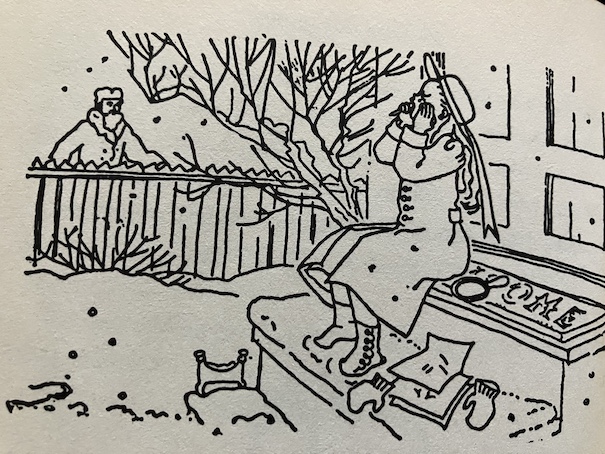
Mona’s turn is next. She really hates her long braids, so she decides to use her Saturday for her first trip to a beauty parlor and asks for a hair cut. She isn’t really sure that her father or Cuffy would approve of it, but nobody has told her not to (because she didn’t ask). At the beauty parlor, they ask her if she’s really sure that she wants a hair cut because her braids are almost down to her waist, but she insists. While she works on Mona’s hair, the stylist tells her a story about how she and her brother ran away to New York as children and how she got into the beauty business.

When she’s finished, Mona is impressed with how beautiful she looks, and she even lets the stylist paint her nails. However, the reception she gets at home is about as bad as Mona might have expected. Her father and Cuffy are pretty conservative on the subject of girls’ hair and makeup. They disapprove of her trying to be too grown up and not consulting them about her hair, and they want to get the nail polish off her fingers as soon as possible. Even her siblings think that she’s been too daring with her appearance.

When Cuffy sees how upset Mona is about their criticism and disapproval, she comforts her, and she admits that the hair cut is actually practical because it will be easier to wash and brush shorter hair than long hair. Mona’s father admits that he might also get used to the hairstyle and come to like it. He further admits that it can be hard for parents sometimes, when they see signs that their children are growing up. Randy also says that Mona really does look like a movie star.

The children continue taking turns with their special Saturdays. Oliver, being only 6 years old, can’t go out into the city alone, like the others can, so the others spend their Saturdays at home with him whenever it’s his turn. Then, on one of Oliver’s Saturdays, he disappears. Sneaking out of the house by himself, he takes the money that he’s saved and asks a policeman the way to the circus, which is at Madison Square Garden.
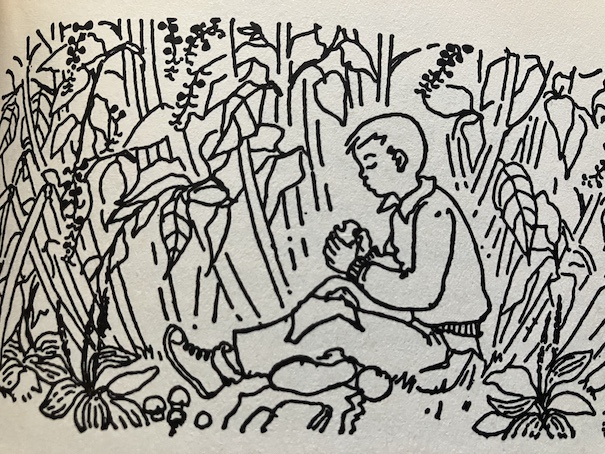
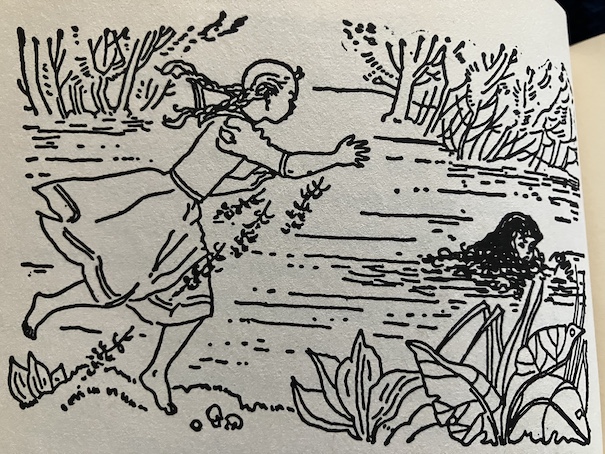
While his siblings panic when they realize that Oliver is missing, Oliver has a great time at the circus, watching all the animals perform and buying cotton candy and other treats. However, when it’s time to leave, Oliver gets lost on his way home, and he starts feeling sick from everything he’s eaten. He gets a ride home from a friendly policeman on a horse, and looking back on it, Oliver decides that was the best part of his day. He decides that maybe, instead of being a train engineer, he’ll become a policeman on a horse when he grows up.

After Oliver’s circus adventure, the siblings decide that they want to do a shared adventure, so they go on a picnic. Their new dog, Isaac, later saves them from a disaster caused by a careless mistake that could have killed them all at home. The children’s father decides on some home repairs, and the children realize that they won’t be able to go away for their usual summer trip and that they’ll have to economize on their Saturday adventures. Fortunately, Mrs. Oliphant has an idea for a summer adventure for the family. She owns a lighthouse, and she invites the Melendy family for a summer visit!

This is the first book in The Melendy Family series. The book is available to borrow and read for free online through Internet Archive, as part of a collection.

I like this series because it’s set contemporary to the time when it was written, in the early 1940s. This first book sets the time period with a comment about a mark on the floor left by one of the children trying out roller skates on Christmas 1939 and one of the children commenting that a stain on the wall looks a lot like Hitler because it looks like a man’s face with a mustache. (One of the other children comments that he’s going to turn the stain into a bearded man, like George Bernard Shaw, because he doesn’t want to see Hitler.) Toward the end of the book, the children talk about the war a little with Cuffy. The war has definitely been going on because they mention bombs and blackouts in London, and Randy asks Cuffy what it was like when the world was peaceful. Cuffy says that it seemed lovely, at least on the surface, but the peace didn’t last. There was another bad war before this one, and a peaceful time in between the two wars when people could travel freely. When Mona was a baby, their parents took a trip through Europe, and Cuffy was there to look after Mona. Because the children live in New York, they never see the war directly, but they’re aware that it’s happening, and they have feelings about it.

Apart from the historical war references, this book is just generally fun to read. It’s fun to see what each of the children does when they have a little money and the freedom to go where they want and do what they want in the city. The kids have minimal adult supervision on their adventures, and it’s the sort of thing that kids today might dream about doing. In general, kids love stories about other kids with the freedom to do what they want to do, although because this family likes the arts and culture, many of their chosen activities, like going to an art gallery or an opera, are things that many other children might not think to do. I was thinking that, probably, one adventure that many kids in my area could do or might do unsupervised might be to get their hair cut and/or nails done in some fancy way, like Mona did.

I was a little surprised that the father of the family reacted as strongly as he did to Mona having shorter hair because shorter hair for women and girls had become more acceptable by the 1940s. I think that regarding short hair as scandalous was more common when the style was new in the late 1910s and the 1920s (see the story Bernice Bobs Her Hair by F. Scott Fitzgerald from 1920). On the other hand, the real issue here seems to be that the father and Cuffy think that Mona is trying to act too old for her age (which is a way of saying too attractive or too sexy for a girl who is still too young to date). The father somewhat admits that it can be a shock to a parent to see how much his daughter is growing up. In that case, it’s not so much about short hair in general but now grown-up and attractive Mona looks in a more adult hairstyle.

Something else I’ve noticed about books in this series is that they frequently contain mini-stories told by other characters to the Melendy children. In this book, we get the story told by the hairdresser about how she and her brother ran away to the city when they were young and the story of Mrs. Oliphant’s adventures when she was kidnapped by a gypsy as a child. Children kidnapped by gypsies is a theme in vintage children’s books, although this is considered a stereotypical depiction in the 21st century. The stereotype of the child-stealing gypsy was probably based in prejudice, the use of community outsiders as scapegoats, and erroneous conclusions drawn from observing family members who do not physically resemble each other. (For example, I remember being told as a child that two blue-eyed parents would not produce a brown-eyed child because blues eyes are a recessive gene, yet it actually does happen, although it’s relatively rare. It’s just that human genetics are complex and produce more variations or throw-backs to earlier generations than some people might expect.) The main character in another book by a different author, The Girl in the Window, challenges the prejudices of adults in her community when they start to blame the disappearance of a local girl on a gypsy.