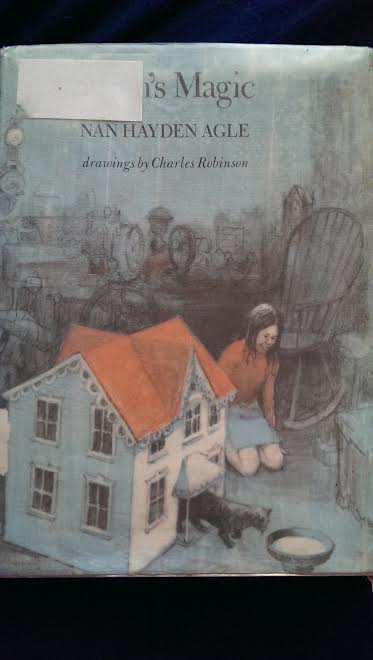
Susan’s Magic

SusansMagicSusan’s Magic by Nan Hayden Agle, 1973.

Susan Prescott believes in magic, although her mother tries to tell her that it’s all imagination.  Susan gets feelings about things and sometimes seems to have the ability to make things work the way she wants them to.  That’s part of the reason why she can believe that old Mrs. Gaffney is really a witch.  People say that Mrs. Gaffney used to be a fortune teller but had to stop when one of her predictions became frightening true and people got scared of her.  Now, Mrs. Gaffney runs an antique shop, living in a small apartment above it.  But, whether Mrs. Gaffney is really a witch or not, Susan’s life soon becomes entangled with hers through a series of unforeseen events.

Susan lives with her mother, who is a practical, down-to-earth woman, and her older brother Mike, who likes to play football.  Her parents are divorced, and her father lives in another state, only visiting occasionally, often at unpredictable times.  Susan’s father is known for not being very dependable, and he apparently left the family to be with another woman, although the story doesn’t provide many details.  Susan misses her father and is hurt by his absence, lack of dependability, and that he is more interested in being with someone else, somewhere else, instead of with her, her mother, and her brother.

The story begins when Susan sets out one day to buy a present for her mother’s birthday, and another girl she knows from school tells her to have a look at the flea market being held that day at a church.  Susan doesn’t have much money, and even most of the used items at the flea market are beyond her small savings.  Then, she foolishly spends what little money she has on cupcakes and lemonade.  Susan is angry with herself for her  foolishness, but her mistake leads her to greater adventures.
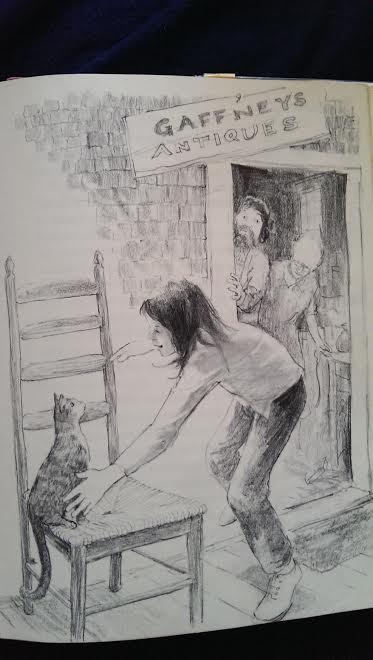
SusansMagicPic1One of the things at the sale which especially captures Susan’s attention is a small stuffed toy elephant.  The elephant is very worn, and Susan feels sorry for him, wanting to take him home and take care of him.  However, her money is gone, and she still has no present for her mother.  Then Mrs. Gaffney spots her looking sad and offers to lend her the 25 cents she would need to buy the elephant.  Although Susan has reservations about accepting such a loan, she does anyway, telling Mrs. Gaffney that she’ll pay her back.

Susan brings the elephant, which she names Trunko, home, and when her mother thinks that Susan meant to give it to her for her birthday, she doesn’t correct her although she has become very attached to him herself.  Her mother, sensing Susan’s attachment to the toy, says that they can share it and that Susan can sleep with it.  Susan thinks this is a good arrangement until someone calls the house to say that the toy elephant was donated by mistake and that the original owner is sad and wants it back.

At first, Susan can’t bear the thought of giving up Trunko. But when she learns that the real owner is Hugo, a member of her brother’s football team, that he has had the toy ever since he was small, and that he really misses it, she realizes that she has to let him have it back.  To thank Susan for giving him back Trunko (originally named Stanley), Hugo gives Susan a stray cat that had been living under his porch.  Susan loves the cat immediately and names her Sereena.

However, Susan’s mother says that they can’t keep the cat because the hill nearby is a bird sanctuary.  Susan tries to persuade her mother otherwise, but she says that they’ll just have to find another home for Sereena.  Susan tries to get an older girl from school to look after the cat for awhile while she tries to persuade her mother to let her keep her, but the other girl refuses.  Then, unexpectedly, the cat runs into Mrs. Gaffney’s shop as Susan is walking past it.

In Mrs. Gaffney’s shop, Susan accidentally breaks a teapot, increasing her debt to Mrs. Gaffney.  However, Mrs. Gaffney turns out to be a cat lover and agrees to look after Sereena for Susan.  This is the beginning of a new relationship between Susan and Mrs. Gaffney as Susan offers to work for her in order to pay off her debt.  Mrs. Gaffney could use some help in her shop because sales haven’t been good, and she’s worried about losing it.

Sereena herself turns out to be good for Mrs. Gaffney’s shop, attracting customers’ attention to the items for sale.  Susan feels jealous about how much Sereena likes Mrs. Gaffney and her shop, as if Sereena has abandoned her like her father and Trunko have.  But, when a beautiful dollhouse in Mrs. Gaffney’s shop catches her eye and it turns out to be even more valuable than Mrs. Gaffney believed it was at first, Susan has to decide whether she is willing to give it up to help Mrs. Gaffney earn enough money to fix up her shop or if she will hold Mrs. Gaffney to her earlier promise to sell it to her for much less.
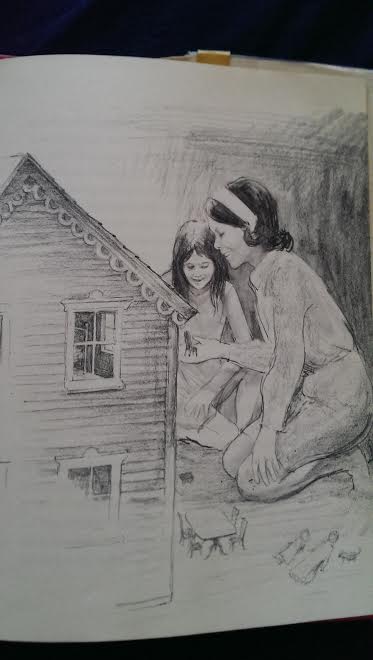
SusansMagicPic2In spite of the talk about magic and witches, this is not a fantasy story at all.  Susan’s concept of magic has more to do with a way of living, dealing with change, and solving life’s problems.  For the first part of the book, Susan’s “magic” focuses on getting what she wants for herself and getting things to work out the way she wants them to.  But, as the book goes on, Susan matures in the way she deals with the complications in her life.

Toward the end of the book, Susan thinks about reality and fantasy: “The magic part of living was how you fit yourself around real things, she guessed.  A magician was extra good at fitting. That’s why being one was important.”  What Susan really wants and the kind of person she wants to be change.  She comes to realize that, while she can’t get and keep everything she wants in life in the sense that it’s always with her all the time, caring about people and things is also a kind of ownership.  Giving up the toy elephant and sharing the cat with Mrs. Gaffney do not mean losing them completely because she still cares about them and the people connected with them.

Susan also realizes that, even if she doesn’t get exactly what she wants in the beginning, as long as things work out for the people she cares about, she can still be happy.  Although she has to make sacrifices at times for the people she cares about, she earns the love and respect of the people who mean the most to her.  Susan says, “Anyway, magicians don’t lose. They win. Dad, Trunko, and Sereena are mine still in a way.”  She will always be close to her mother and brother, even without her father’s presence, and Hugo, Mrs. Gaffney, and Sereena are all her friends.  Susan is a winner not because she gets what she wants for herself but because she knows how to make things work out in the best possible way for everyone she cares about, and that’s a kind of magic.

The book is currently available online through Internet Archive.

In some ways, this story reminds me a little of the Miyazki movie Whisper of the Heart, which also features a young girl who likes making up stories and who is led to an antique store by a friendly cat and meets an older person who helps her to learn about the person she wants to be and the kind of life she wants to live.  The two stories are not the same, though, and Whisper of the Heart was based on Japanese manga, not this book.  In some ways, however, both this book and Whisper of the Heart are the kind of stories that take on a new life when you read them as an adult because, at that point, you understand some of the feelings behind them better.

The Valentine Star

The Kids of the Polk Street School

valentinestar#6 The Valentine Star by Patricia Reilly Giff, 1985.

Emily Arrow and Sherri Dent have been fighting ever since Emily refused to play a game with Sherri at recess.  It wasn’t because Emily didn’t like Sherri.  She was just having too much fun running around with her toy unicorn, Uni.  But, Emily made the mistake of running up on top of that huge snow pile near the school fence, the one that the kids aren’t supposed to play on.  Then, Sherri told on her to Ms. Rooney.  After that, it becomes a game of tit-for-tat, each of the girls telling on the other for little things.  While Emily is acting as room monitor while Ms. Rooney is out of the room, Sherri gets out of her seat to get a book instead of doing her work, so Emily writes her name down and tells Ms. Rooney.  Sherri promises that she’ll get even.

Around the same time, Ms. Rooney’s room gets a new student teacher, Ms. Vincent.  Ms. Vincent is very pretty and nice, and Emily likes her immediately.  The kids are making rhyming Valentine’s Day cards for each other because Valentine’s Day is just a few days away, and Emily wants to give a special one to Ms. Vincent.

valentinestarpic1But then, Emily and “Beast” (Richard Best) make a serious mistake.  It was hot inside at lunch, and they couldn’t resist the urge to run outside in the snow for just a couple of minutes without their coats.  Then, they got locked out and had to get Beast’s sister to let them in a different door.  They thought no one saw them, but a neighbor did and contacted the school.  Now, Emily is afraid of what will happen if their teacher finds out that it was her and Beast.  Will the school be angry enough to hold them both back a grade or maybe worse?  Maybe Emily will be spending Valentine’s Day in the school office instead of at the party, watching Ms. Vincent enjoy her special valentine . . . especially if Sherri happens to know what they did.

Many of the The Kids of the Polk Street School books are about the little problems that kids get into but that seem big because they’re young and inexperienced.  Ms. Vincent’s kindness and understanding help Emily and Sherri to work out their differences, and a President’s Day lesson about the honesty of both Lincoln and Washington help Emily and Beast to realize that tattling on yourself makes you a better person than tattling on others.

The book is available to borrow and read for free online through Internet Archive (multiple copies).

Valentine Blues

valentinebluesValentine Blues by Jeanne Betancourt, 1990.

This book is part of the Aviva Granger Stories series.  (It’s the only one I have in the series right now.)

In the last book, Aviva’s best friend, Josh, came to live with her, her mother, and her step-father.  Josh was living in an orphanage before that, and since he and Aviva were close, her mother and stepfather thought that it would be natural to invite him to be part of the family.  At the time, Aviva thought that it was a good idea, but being friends with someone doesn’t mean that it will be easy living with them, and Aviva’s family life is already complicated!

Aviva’s parents are divorced, and both her mother and father are already in new relationships.  Her mother has remarried, and Aviva not only has a stepfather but a half-sister (college age) and half-brother (baby) living in the same house.  Aviva’s father has a girlfriend, Miriam, and Aviva doesn’t get along well with her.  Miriam would like it if she and Aviva’s father had a child of their own.

When Josh comes to live with Aviva’s mother and her family, Aviva realizes that sharing a family and house with him makes things even more complicated.  He takes too long in the bathroom and makes her late to school.  He’s one more person for her mother to pay attention to, so Aviva gets less attention.  Even her dog seems to like Josh better now!

Then, shortly after Valentine’s Day, Aviva overhears Josh and his friend Ronnie Cioffi talking about girls and giving them ratings based on their looks.  Out of 10 points, Cioffi rates Aviva as a 2, and Josh agrees.  Josh has a crush on Louise, a girl they know from school, and she has a much better figure.

It isn’t that Aviva is in love with Josh, who she sees more as a friend/brother, but it hurts that he seems to be taking her place in the family and doesn’t even really appreciate her, joining in with his friend in making fun of her body.  With her time divided between two households, two parents who hardly seem to have time for her these days, and Josh moving in and taking over, Aviva worries that maybe she doesn’t really belong anywhere or to anybody.

It takes a night when Aviva sleeps out in the barn without telling anyone where she is to make the people closest to her realize how much she needs them.  A sleepover at Louise’s house (where the girls candidly discuss their own ratings for the boys they know) and Aviva’s anonymous question in sex ed class also help to put the rating system into perspective for all the kids.

The book has some Christian themes because the children go to a Catholic school, although this book mostly focuses on family life and girls’ and boys’ perceptions of each other.  The kids are eighth graders, and there is also some talk about sex ed.

Soup

soupSoup by Robert Newton Peck, 1974.

This is the first book in a series about the author’s childhood best friend.  His friend’s real name was Luther Wesley Vison, but he always hated that name.  Because Luther refused to come home whenever his mother called his name for dinner, his mother took to just yelling, “Soup’s on!” when she wanted him to come home to eat.  After that, everyone else just started calling him “Soup”, which he liked a lot better than “Luther.”

Together, Soup and Robert had a reputation for getting into scrapes in their small town in Vermont.  The book is a series of short stories about the funny things they did as kids, like how they got revenge on the school nurse for asking embarrassing questions, how Soup got punished for breaking a window other than the one he’d actually broken, how Soup talked Rob into rolling down a hill in a barrel, and how Robert’s aunt let him tie her to a tree right before a lightning storm.

souppicSome of the stories are laugh-out-loud funny, and some of them have kind of a moral lesson to them, like the time when Rob realized that he didn’t have the heart to lie to his mother even if it would allow him to escape punishment for talking back to the school nurse, the time when Soup and Rob tried to cheat Mr. Diskin out of some money so they would have enough to go to the movies but ended up feeling guilty, and how the boys made themselves sick by attempting to smoke cornsilk.  Others are just stories of childhood events and friendship, like the story of how Rob and Soup played football and how Soup loaned Rob his new shoes when his were ruined.  Even though Soup often got Rob into trouble, he really was a good friend and went out of his way to make Rob feel better when he needed it the most.
Although it is a short chapter book that is easy to read, a couple of the stories might require some further explanations for young children reading them, like the one where the boys smoke cornsilk using homemade pipes and the one where Soup says that someone told him it was all right to cheat Mr. Diskin because he’s a Jew (a belief that they come to rethink when they feel guilty for cheating someone who was always fair with them and was kind to them even when he discovered the deception).  They deal with older practices and prejudices and can be the start of discussions about the lessons people learn by making mistakes. Other than that, these stories present a fascinating look at what it was like to grow up in the country during the 1920s.

The book is available to borrow and read for free online through Internet Archive.

December Secrets

The Kids of Polk Street School

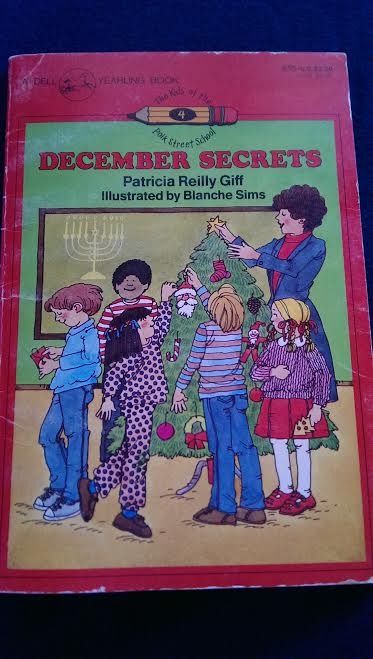
decembersecrets#4 December Secrets by Patricia Reilly Giff, 1984.
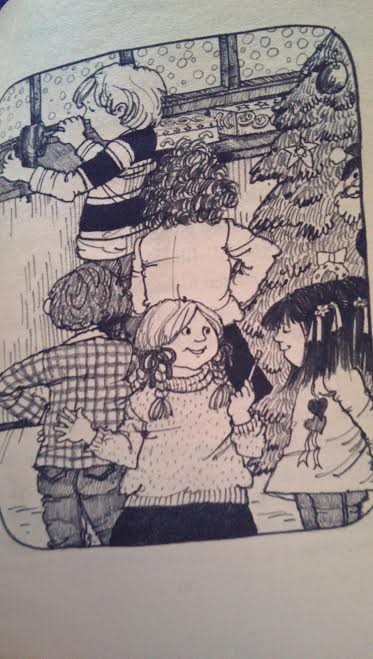
It’s December, and the kids in Ms. Rooney’s class at Polk Street School are learning about Christmas and Hanukkah.  To get everyone in the holiday spirit, Ms. Rooney has everyone choose someone else in class as their “Secret December Person,” kind of a Secret Santa-style activity.  The kids will give small presents and do nice things for the person they pick.

Emily would have picked her friend Dawn for her person, but they’ve been fighting since Emily wouldn’t let Dawn cut in front of her in line when the fire truck came to school and the kids who were first in line were allowed to actually get in the front seat.  Emily tries to pick someone else to be her Secret December Person, but her other favorite choices are taken.  When she asks Ms. Rooney who is still available, Ms. Rooney suggests Jill Simon.

decembersecretspicEmily doesn’t think much of Jill Simon because she’s fat and a crybaby.  Whenever the least little thing goes wrong, Jill tears up.  She hardly ever smiles.  But, although Emily isn’t thrilled at first to have Jill as her Secret December Person, she then thinks that she can use this as an opportunity to help Jill.  Maybe her presents will help Jill to become a happier, maybe even thinner person.

The book is available to borrow and read for free online through Internet Archive.

My Reaction

Although Emily wants to help Jill, her first attempts fall flat because she’s focusing too much on correcting Jill’s faults instead of thinking about what would really make Jill happy.  Jill becomes a happier person when Emily notices the good things about Jill and helps her to see them for herself.  The project helps Emily to become a more thoughtful person, and she also makes a surprising discovery about the Secret December Person who has been leaving thoughtful presents for her.

The reason why it has to be “Secret December Person” instead of “Secret Santa” is because there are both Christian and Jewish children in the class.  That’s why the kids learn about both Christmas and Hanukkah.  They don’t want anybody to feel left out.  The name “Secret December Person” is a little cumbersome next to “Secret Santa”, but the sentiment is nice.  I don’t recall doing anything like this as a class activity when I was in elementary school.  I remember that I was in first grade when a Jewish girl and her mother explained Hanukkah to the class.  They gave everyone small plastic dreidels to play with, and I spent the Christmas holidays that year playing dreidel with my brother for peanuts and M&Ms.  They were just little party favor dreidels, but I had a lot of fun with mine, and I still have it.  Sometimes, little presents do mean a lot.

MacDonald Hall Goes Hollywood

macdonaldhallhollywoodMacDonald Hall Goes Hollywood by Gordon Korman, 1991.

MacDonald Hall has been picked as a location for filming a movie about a boarding school, and people are going crazy (or crazier than normal)!  Bruno hopes that he’ll be discovered and become a movie star. His attempts to insinuate himself (not very subtly) into various scenes keep getting him into trouble.

The girls at Miss Scrimmage’s Finishing School for Young Ladies all have a crush on the teen star of the movie, Jordie Jones, further annoying Bruno.  Cathy and Diane, Bruno and Boots’s friends at Scrimmage’s, are especially getting on his nerves with their wild schemes to meet Jordie in person.

Meanwhile, poor Jordie wishes that he could live life out of the limelight for awhile.  His manager worries about him excessively and never lets him do anything fun.  In spite of his many admirers, Jordie is lonely because he spends all of his time with the movie people and doesn’t have many friends his own age.  Nobody has even remembered his birthday!

Bruno and Boots discover Jordie’s woes when Bruno tries to play a mean trick on Jordie, due to his jealousy of all the attention Jordie gets.  After Jordie opens up to the guys about his problems, Bruno feels more sympathetic toward him and decides to help.  The boys invite Jordie to play poker with them (after lights out and against school rules), take him to a dance at Miss Scrimmage’s (in disguise as a prince from a made-up country), and even get him to help with a hockey game as goalie (which earns Jordie a black eye).

Jordie has been having the time of his life, but the boys still have to conceal his activities as much as possible and deal with his over-protective manager, his rabid fans at Miss Scrimmage’s, and as always, The Fish.  Mr. Sturgeon (aka The Fish), is sympathetic to Jordie because he knows that activities like these are important to his growth as a person, but the movie people crack down on Jordie’s activities because the black eye interferes with his filming.

Although Jordie is supposed to keep quiet and let his eye heal, he runs away to join Bruno and Boots and several other boys on the school’s traditional wilderness survival trip (known to the students as “Die-in-the-Woods”).  It isn’t long before Jordie is discovered among them, but before the trip is over, the others are going to be glad that he’s there.

This book is part of the MacDonald Hall Series (or Bruno and Boots series).  It is currently available online through Internet Archive.

The Zucchini Warriors

zucchiniwarriorsThe Zucchini Warriors by Gordon Korman, 1988.
One of MacDonald Hall’s former students, Hank “the Tank” Carson, has made it big with his zucchini stick snack company.  As a former football player, he also wants to create a winning football team for his old school, funded by his zucchini fortune.

Mr. Sturgeon isn’t happy to see Hank again.  He was in Mr. Sturgeon’s math class, before Mr. Sturgeon became the school’s headmaster.  Hank was always a loud, obnoxious student, and against his morals, Mr. Sturgeon gave him a passing grade even though Hank actually failed the class.  He only did it because he couldn’t stand another year with Hank as his student, although he’s felt guilty about it ever since.

The boys aren’t thrilled about the new football stadium and team, either.  What they really wanted was a new rec hall.  But, when Bruno gets up the nerve to tell Hank about it, Hank makes the kids a deal: if they get a football team together and make a decent showing with it, he’ll fund a rec hall for them, too.  Bruno, as the one who wanted the rec hall the most, becomes the driving force behind the new football team, talking the other guys into playing and even eating Hank’s zucchini sticks even though everyone at school actually hates them.

The biggest stumbling block that the MacDonald Hall Zucchini Warriors faces is that they know nothing about the game.  In fact, the only one around who’s really into football is Cathy, one of the girls across the street at Miss Scrimmage’s Finishing School for Young Ladies.  But, football is a man’s game . . . right?

This book is part of the MacDonald Hall Series (or Bruno and Boots series). It is currently available online through Internet Archive.

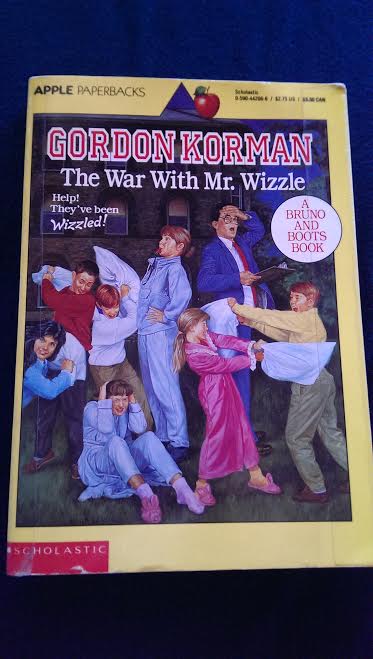
The War with Mr. Wizzle

warwizzleThe War with Mr. Wizzle by Gordon Korman, 1982.
MacDonald Hall hasn’t been the same since Mr. Wizzle came.  He’s obsessed with computers and analyzing and categorizing everyone and everything.  He uses his computers to analyze the boys’ personalities, making changes to their schedules and activities based on the results.  But, no computer could ever understand the wacky and complex personalities of the students at MacDonald Hall.

Mr. Wizzle thinks he can understand everything with his computer, but he doesn’t understand the boys at all.  The boys soon get sick of being tested and analyzed and ordered around and told that they should consider changing their last names because the length is too inconvenient for the computer.  Even Mr. Sturgeon and the other faculty members are getting fed up with Mr. Wizzle, but they can’t do anything about it because the school’s board of directors are still hoping that Mr. Wizzle will modernize the school.

Meanwhile, the boys’ friends across the street at Miss Scrimmage’s Finishing School for Young Ladies are having personnel problems of their own.  Miss Scrimmage’s new athletics teacher, Miss Peabody, used to be a U.S. Marine, and she’s trying to train the girls like they’ve signed up for boot camp.  Like the boys, they would do just about anything to get rid of this new nuisance!

What ensues is a series of hi-jinks in the usual spirit of McDonald Hall as the students at each school attempt to drive out the new faculty, but along the way, the kids are forced to acknowledge that they don’t really want anything bad to happen to these new people.  It’s not that they’re bad people, they’re just not right for the types of schools and the students they’re trying to teach.  Then, a thought occurs to them: Is it possible that Mr. Wizzle and Miss Peabody might be right for . . . each other?

This book is part of the MacDonald Hall Series (or Bruno and Boots series). It is currently available online through Internet Archive.

Beware the Fish!

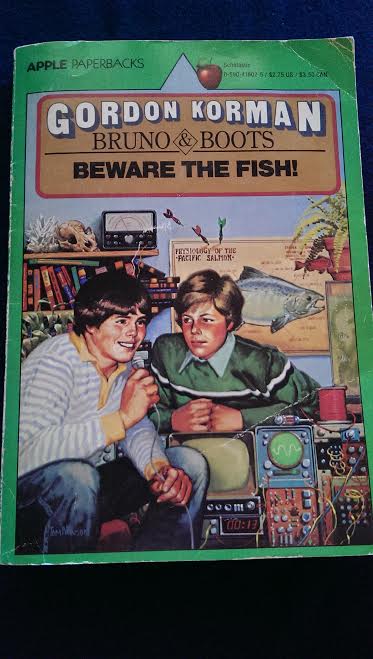
bewarefishBeware the Fish! by Gordon Korman, 1980.

In spite of MacDonald Hall’s prestigious reputation, it is continually plagued by money problems.  The students can’t help but notice all the budget cutbacks, and now, there are rumors that the school might even have to close permanently.  The last thing anyone wants is to leave MacDonald Hall.  Bruno, the school’s resident idea man and master prankster, decides to spearhead a movement to raise money and publicity for MacDonald Hall so they can save the school!

Bruno, his best friend Boots, and their other fellow students try everything they can think of to spread the word about what a great place MacDonald Hall is so that enrollment will go up and the school can earn enough money to stay open.  They enlist the help of the girls at the nearby finishing school to help them break a world record.  The school’s science whiz, Elmer, shows the boys some of his inventions in the hope that one of them will make the school famous.

Unfortunately, as usual, nothing turns out as planned.  World records are extremely difficult to break, and Elmer’s inventions backfire.  One of his inventions backfires in such a way that it comes to the attention of the local police, and even the government becomes convinced that a gang of terrorists may be operating somewhere in the vicinity of MacDonald Hall.

The boys try to keep their activities secret from their headmaster, Mr. Sturgeon (or, as the boys nickname him, “The Fish”), while government agents snoop around, looking for the head of the organization that’s been issuing cryptic messages over television signals, a shadowy figure known only as “The Fish.”

This book is part of the MacDonald Hall Series (or Bruno and Boots series).  It is currently available online through Internet Archive.

My Crazy Cousin Courtney Returns Again

CousinCourtneyReturnsMy Crazy Cousin Courtney Returns Again by Judi Miller, 1995.

Courtney is back in New York with her cousin Cathy and living her dream of becoming an actress!  Courtney has landed a part in a movie called The Laundry Bag Murder (see the first book in the series for that explanation).  With Courtney’s new professional responsibilities, Cathy hopes that this visit will be quieter than their last ones, but no such luck.  Excitement follows Courtney wherever she goes, and if things aren’t exciting enough to suit her, she knows how to stir them up!

When Cathy and Courtney go to the Central Park Zoo to try out Courtney’s new video camera, Courtney ends up turning the expedition into a vampire hunt that ends up catching a criminal.  When they go to see a friend’s rock band perform at a bar, Courtney turns a barroom brawl into a hug-in.

Courtney is also giving Cathy relationship advice.  Cathy and Frank are boyfriend and girlfriend now, but both of them are pretty shy.  Too shy to even go on a real date.  Courtney says that maybe Cathy should act a little helpless to bring out Frank’s protective instincts and to get his attention.  She says that Cathy should tell Frank that she thinks someone might be following her around (it’s not a lie if Cathy isn’t sure).  That way, Frank will want to spend more time with her to look after her.

With some reservations, Cathy does tell Frank someone may be following her, which does get Frank’s attention.  Then, to Cathy’s surprise, she actually does notice someone following her around.  At first, she suspects that Courtney got another actress to follow her for awhile to make her story to Frank true, but it turns out, that’s not the case at all.  Who is that mysterious woman in the sunglasses and what does she want?

There is another book in the series which I don’t have and haven’t read called My Crazy Cousin Courtney Gets Crazier.  Courtney ends up going to school in New York with Cathy because she lands a role in another movie which will be shooting there during the fall.