Summer Fun

SummerFunSummer Fun by Carolyn Haywood, 1986.

This is a cute book of short stories featuring favorite Haywood characters, including Betsy and Eddie.  The children spent their summer in different ways, having fun summer adventures.  None of the adventures is particularly scary.  Although a couple of the kids find themselves in semi-dangerous situations, everything is resolved pretty quickly, and the rest of the stories are more slice-of-life style stories about fun and funny things that the kids do or lessons they learn.

The stories are very easy to read and great for children beginning chapter books or for some light bedtime reading for younger kids.

The book is currently available online through Internet Archive.

The stories in this book are:

Bears and Blueberries

Peter is at summer camp, and when he goes on a hike and camp-out with his camp friends, they have encounters with wildlife.

SummerFunPic2The Watermelon Party

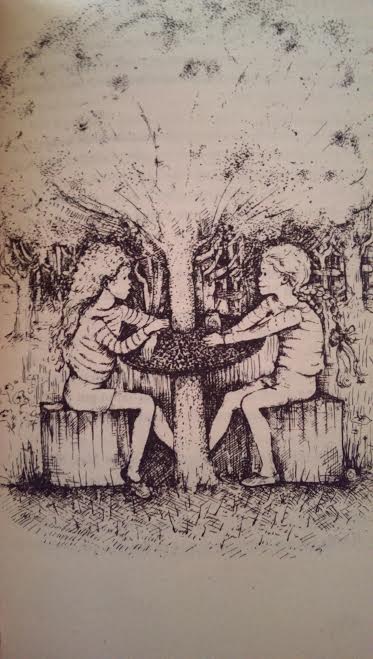
Betsy’s father tells her that he used to have watermelon parties with his friends when he was young, and that the person who had the most watermelon seeds at the end of the party would win a prize.  Betsy decides that she wants to have a party like that, but her friend Rodney learns why cheating takes all the fun out of a contest.

A Bell for Jim Dandy

Jim Dandy is a brand of ice cream that comes on a stick.  When the bell on the ice cream truck is broken, Billy gets a job trying to help the driver attract customers in exchange for free ice cream.  But, without a bell himself, how will he get people’s attention?

Betsy’s Property

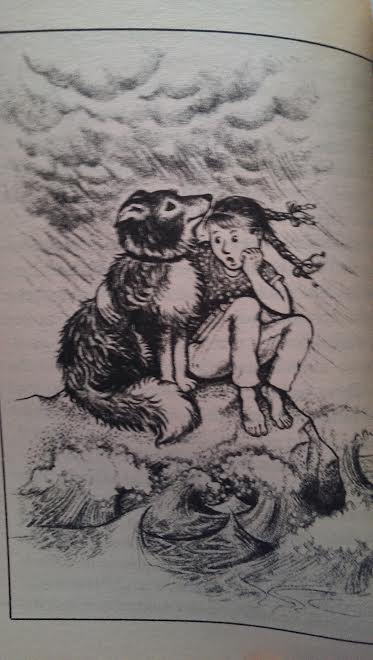
While Betsy is visiting her aunt and uncle at their summer home by the beach, she discovers a special rock a little ways out from the shore that she likes to think of as all her own.  She likes to sit out on the rock and read with her aunt’s dog, but what will she do when a sudden storm leaves her stranded?

SummerFunPic1Betsy’s Hammock Club

Betsy loves the hammock that her father bought for her, but so does every other kid in the neighborhood!

Eddie and His Hermit Crab

Anna Patricia buys a couple of hermit crabs at the beach as pets.  When she gives one to Eddie, he decides that his crab will win the hermit crab race at the beach!

Eddie and His Money Sheet

Eddie sets out to make some money with sand sculptures and ends up convincing Anna Patricia to adopt a stray cat.

The Picnic

Eddie and Anna Patricia find out that her new cat actually belongs to someone else.  But, they become friends with the cat’s owners, who take them out for a sailing trip and picnic.  When the kids’ parents are late arriving with food for the picnic, Anna Patricia tries to let the kids into the house and discovers how different the Goldilocks story would have been if the bears had a security alarm.

An Afternoon on the Farm

Teddy and Babs visit a farm with their parents and make friends with the grandchildren of the owners, Mark and Sarah.  While the children are playing at being explorers one day, they find a dead animal they’ve never seen before.  When they bring it back to show their parents, they learn why you shouldn’t mess with a skunk, even a dead one. (No mention of disease, just smell, although I’d think that would be a more serious issue.)

End of Summer

It’s time for Mark and Sarah to go home after visiting their grandparents.  With all of the things they have to remember to take with them and all of the things they forget, will they actually make it to the train on time?

Lauren’s New Address

Sleepover Friends

SFLaurenNewAddress#28 Lauren’s New Address by Susan Saunders, 1990.

Lauren is not happy when her father announces that their family is moving to a new house a couple of miles from their old neighborhood. Her father works in real estate and wants to have his own office in their home. Their old house wasn’t big enough, so he found a new house for them.

Lauren hates the new house because it’s old and looks like a haunted house on tv. Plus, she’s afraid that she won’t see her friends as much because she’ll be living farther away from them. Her friends try to cheer her up by pointing out that she’ll have a swimming pool in her backyard and will be living down the street from one of the cutest boys in school, but nothing seems to help.

Then, Lauren learns that one of her new neighbors may be a princess from another country.  The girls hear that a young princess, Marina, from the European country of Osterburg has lost her parents in a car accident and is coming to live in their town with her American aunt and uncle. The only picture they’ve seen of the princess is blurry, but it looks a little like the young girl, Maya, living next door to Lauren in her new neighborhood. Stephanie suggests to Lauren that she try to find out more about the girl because if she is really a princess it would make a great story for their school newspaper.  At first, Lauren is doubtful, but then she overhears something that makes her think otherwise.

Things in Lauren’s neighborhood might not be quite what they seem at first, but her friends find some creative ways to help her adjust to her new house and learn ways of dealing with change, like keeping busy.  In the end, although Lauren is still getting used to her new house, she is happy because there are some good points about it, and she knows that her friends will still be there for her.

Patti’s Luck

Sleepover Friends

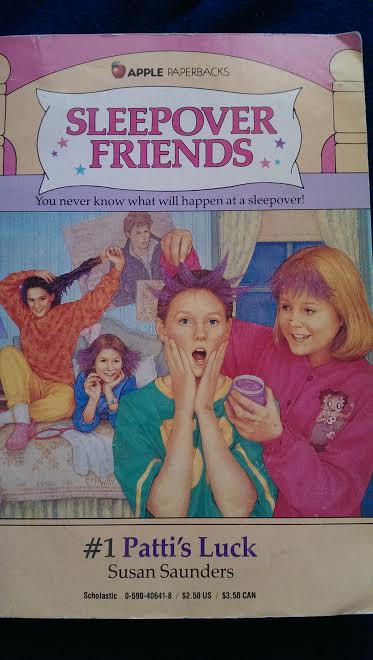
SFPattisLuck#1 Patti’s Luck by Susan Saunders, 1987.

Patti Jenkins has just moved from the big city to the smaller town of Riverhurst.  Recognizing her as a former classmate, Stephanie invites her to join the group of friends she has sleepovers with, Kate and Lauren.  The other girls like her, but almost immediately, bad things start happening.

At their first sleepover with Patti, the girls start watching a creepy old movie that spooks both Patti and Lauren. Patti accidentally knocks over a tray of snacks, and Kate jokes that it’s part of the curse, like in the movie.  Then, the water main breaks at Stephanie’s house, so the girls are unable to wash out the purple styling gel they just put in their hair.

From there, it just seems to get worse and worse.  Patti accidentally sets Lauren’s backpack on the back of a car that drives away, and the girls have to chase after it on their bikes.  Lauren eventually catches up with the car and gets her schoolwork back, but Patti gets lost and caught in a rain storm before she can find her way back to school.  Then, on a school field trip, she helps her classmates to find an elevator at the museum.  After Patti presses the button, the elevator doors close before their teacher gets on, and the elevator gets stuck for awhile with the lights off.

Is Patti bad luck?  She seems to think so, and Lauren, being the superstitious type, is pretty creeped out, thinking that Patti might really be under a curse.  Kate, of course, says that’s all nonsense.  When Stephanie is hurt after Patti accidentally lets Lauren’s brother’s huge dog out of the room whee he was supposed to stay, Patti starts avoiding the other girls because she’s worried about her bad luck curse. The others decide that they need to do something to help Patti out of her bad luck streak.

The book acknowledges that most of Patti’s “bad luck” is just a series of unfortunate accidents and coincidences and that it’s only Patti’s nervousness and superstitious attitude toward them that makes it seem like something more.  Kate devises a way to remove Patti’s bad luck that works partly because Patti feels the need for some kind of ceremony to help her get back to normal.  In the end, all of the girls realize that there’s nothing really supernatural or superstitious going on.

The book is currently available online through Internet Archive.

Lisa and Lottie

LisaLottieLisa and Lottie by Erich Kastner, 1969.

First, a note about the copyright: the date I give is for the edition I own, which is an English translation of the original German book.  The original copyright date for the story is 1949.  This is the story that was the basis for Disney’s The Parent Trap, both the version with Hayley Mills (1961) and the later Lindsey Lohan version (1998).  Neither movie completely follows the original story (although some of the dialog in the Hayley Mills version is almost word-for-word from the English version of the original story) because the settings are shifted to new locations, but both of them capture the concept of twins who were separated as infants by their divorced parents only to meet again years later by accident.  As in the book, each of the twins has been living a different kind of life with one of their parents, but they decide to switch places so that each of them can meet the parent they’ve never known.

Lottie Horn is a very serious little girl.  She can’t help it because she lives with her single mother, who spends much of her time working, and she relies on Lottie to take care of a number of household chores.  But, her mother feels badly that Lottie has been growing up so quiet and serious, so to help her relax and make more friends her own age, she decides to send Lottie to summer camp at Bohrlaken on Lake Bohren.

Shy Lottie thinks that her summer is going to be horrible when she meets up with boisterous Lisa Palfy, a girl who strangely looks exactly like her.  Lisa is shocked at the sight of this girl who looks so much like her, and after some teasing, joking, and staring from all the other girls, she loses her temper and kicks Lottie in the shin.  The camp leaders decide to give the two girls beds next to each other, saying that they’ll just have to get used to each other.  Lottie thinks that it’s going to be awful, but when Lisa sees how unhappy Lottie is, she apologizes and starts being nicer to her.

LisaLottiePic1

The two girls discuss their lives and their strange resemblance with each other, and some unsettling details are revealed.  First, they learn that they not only share a resemblance but the same birthday.  They also realize that they were both born in the same city, although Lottie now lives in Munich and Lisa lives in Vienna.  This strange coincidence is troubling enough, but then each girl reveals that she lives with only one parent: Lottie lives with her mother, and Lisa lives with her father.  Lottie has no memory of her father and no knowledge of what happened to him, where he might be, or even if he’s still alive.  Lisa also has no memory of her mother, but she did once see a picture of her, a picture which her father hid somewhere after he found her looking at it.  The girls start getting suspicious, so Lottie shows Lisa a picture of her mother, and Lisa confirms that it’s an identical copy of the picture of her mother she saw before.  Lisa and Lottie realize that they are long-lost sisters.

LisaLottiePic2Through the rest of the summer, the girls discuss their lives and parents in great detail and continue speculating about the reasons for their parents’ separation and why they were never told about each other’s existence.  They are somewhat angry at their parents for not telling them the truth, but they each also want to know more about the parent that they have never really known and perhaps to learn the truth behind their parents’ separation. They begin hatching a plot to switch places so that Lottie can go to Vienna to meet their father and Lisa can go to Munich to be with their mother.  They get little notebooks and fill them with as many details of their lives as they can think of so that each girl can seem to behave like the other, although they know it won’t be easy because they’ve lived very different lives.  They don’t like the same foods, and Lottie knows how to cook, but Lisa doesn’t.

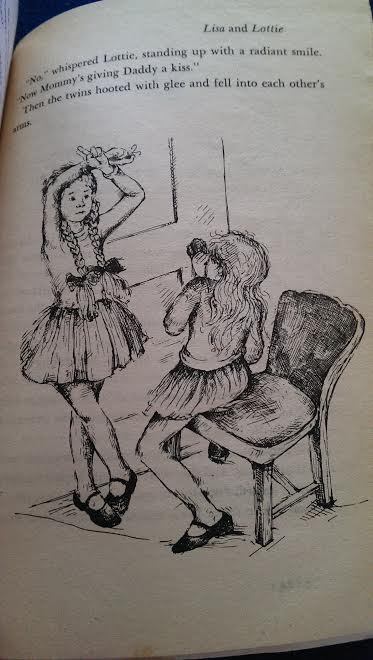
Still, the girls proceed with their plan.  When it is time to leave camp, the girls dress as each other.  Lisa puts her hair in braids as Lottie always does.  Lottie lets her curls hang loose, like Lisa usually does.  Then, each of them boards the train for the other’s city at the station.

LisaLottiePic3Lisa is overjoyed to finally meet her mother in Munich.  But, her mother has to work very hard as a photographic editor for a newspaper, and they don’t have much money.  Lisa isn’t as good at cooking or taking care of household chores as Lottie is, so she finds it difficult to help, although she learns quickly.

In Vienna, Lottie meets her handsome but somewhat reclusive father.  Her father is an opera conductor, but he’s also a composer who needs to spend much of his time alone in order to compose his music, which was the primary reason for the divorce.  He always wanted to devote his life to the arts, and he felt that marriage and family life got in the way, although he dearly loves his remaining daughter and dotes on her.

But, life in Vienna isn’t that great for either Lottie/Lisa or her father.  Rosa, the housekeeper who often looks after “Lisa” and takes care of their apartment only pretends to like her when her father is around and steals from the household funds.  Also, in spite of finally having plenty of time along for composing music (which is successful), her father is lonely and unhappy.  Although he doesn’t want to admit it at first, he misses the comforts of family life and the company of his wife.

Each girl, because of her different personality, manages to make changes in the life of the other and in their parents which are for the better, but the charade cannot continue forever.  Lottie finds out that their father is considering marriage to a woman who doesn’t like her.  Then, Lottie falls seriously ill.  More than ever, she needs her mother . . . and her twin.

The book is currently available online through Internet Archive (they have multiple copies).

My Reaction and Spoilers:

LisaLottiePic4The book is much less of a comedy than either of the two Disney movies, although there are some funny parts, like when Lottie (as Lisa) takes over the household accounts to stop Rosa’s stealing and ends up turning her into a much better housekeeper with her practicality.  Surprisingly, Rosa actually starts respecting her more and even liking her better because of it.

Much of the focus of the book is how divorce affects children as well as parents, although there is room for debate on how each side views the issue, and some modern families may disagree with some of the points characters in the story make.  The point of view of the story shifts between each of the girls and also between their parents and other characters to show different reactions to the situation.

The children are understandably upset at the entire issue and believe what their parents did was wrong.  The girls admit that they do not think of either of their parents as evil or cruel, but they view the separation and lies that were forced on them without their consent as cruel.  Lottie even has a nightmare which is a twisted version of Hansel and Gretel in which her father threatens to cut both her and her sister in half because it would only be fair for each parent to get half of each child.  At camp, the girls see one of their friends crying, having just found out that her parents are going to get a divorce.  Other girls at the camp call her parents mean for making the decision while she was away at camp and just springing it on her with no warning at all.  For the children in the story, the worst part about parents divorcing is when they give little or no thought to how the children will feel or be affected by the decision and don’t even talk about the situation with them.

Some of that sentiment is echoed by adults in the story, although the adults are a little more ambivalent on the issue, knowing that different people and different circumstances must be judged on an individual basis.  The adults try to do what they think is best for the children, but they make mistakes, partly because they are too absorbed in their own concerns to understand the entire situation, and they come to realize it.  The overall sentiment of the book seems to be that, while marriages are made up of only two people, families are made up of more, including the children.  When a couple divorces, it not only affects the marriage, but the whole family as well, and parents need to remember that.

Like the movies, the book also ends happily, and the father finds a way (with the help of Lottie) to balance his work life with his family life.

Susan’s Magic

SusansMagicSusan’s Magic by Nan Hayden Agle, 1973.

Susan Prescott believes in magic, although her mother tries to tell her that it’s all imagination.  Susan gets feelings about things and sometimes seems to have the ability to make things work the way she wants them to.  That’s part of the reason why she can believe that old Mrs. Gaffney is really a witch.  People say that Mrs. Gaffney used to be a fortune teller but had to stop when one of her predictions became frightening true and people got scared of her.  Now, Mrs. Gaffney runs an antique shop, living in a small apartment above it.  But, whether Mrs. Gaffney is really a witch or not, Susan’s life soon becomes entangled with hers through a series of unforeseen events.

Susan lives with her mother, who is a practical, down-to-earth woman, and her older brother Mike, who likes to play football.  Her parents are divorced, and her father lives in another state, only visiting occasionally, often at unpredictable times.  Susan’s father is known for not being very dependable, and he apparently left the family to be with another woman, although the story doesn’t provide many details.  Susan misses her father and is hurt by his absence, lack of dependability, and that he is more interested in being with someone else, somewhere else, instead of with her, her mother, and her brother.

The story begins when Susan sets out one day to buy a present for her mother’s birthday, and another girl she knows from school tells her to have a look at the flea market being held that day at a church.  Susan doesn’t have much money, and even most of the used items at the flea market are beyond her small savings.  Then, she foolishly spends what little money she has on cupcakes and lemonade.  Susan is angry with herself for her  foolishness, but her mistake leads her to greater adventures.
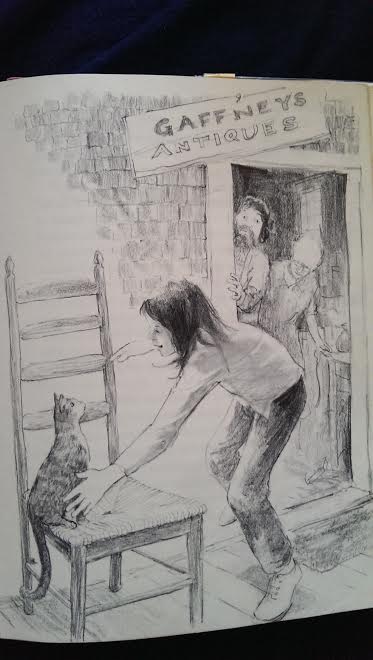
SusansMagicPic1One of the things at the sale which especially captures Susan’s attention is a small stuffed toy elephant.  The elephant is very worn, and Susan feels sorry for him, wanting to take him home and take care of him.  However, her money is gone, and she still has no present for her mother.  Then Mrs. Gaffney spots her looking sad and offers to lend her the 25 cents she would need to buy the elephant.  Although Susan has reservations about accepting such a loan, she does anyway, telling Mrs. Gaffney that she’ll pay her back.

Susan brings the elephant, which she names Trunko, home, and when her mother thinks that Susan meant to give it to her for her birthday, she doesn’t correct her although she has become very attached to him herself.  Her mother, sensing Susan’s attachment to the toy, says that they can share it and that Susan can sleep with it.  Susan thinks this is a good arrangement until someone calls the house to say that the toy elephant was donated by mistake and that the original owner is sad and wants it back.

At first, Susan can’t bear the thought of giving up Trunko. But when she learns that the real owner is Hugo, a member of her brother’s football team, that he has had the toy ever since he was small, and that he really misses it, she realizes that she has to let him have it back.  To thank Susan for giving him back Trunko (originally named Stanley), Hugo gives Susan a stray cat that had been living under his porch.  Susan loves the cat immediately and names her Sereena.

However, Susan’s mother says that they can’t keep the cat because the hill nearby is a bird sanctuary.  Susan tries to persuade her mother otherwise, but she says that they’ll just have to find another home for Sereena.  Susan tries to get an older girl from school to look after the cat for awhile while she tries to persuade her mother to let her keep her, but the other girl refuses.  Then, unexpectedly, the cat runs into Mrs. Gaffney’s shop as Susan is walking past it.

In Mrs. Gaffney’s shop, Susan accidentally breaks a teapot, increasing her debt to Mrs. Gaffney.  However, Mrs. Gaffney turns out to be a cat lover and agrees to look after Sereena for Susan.  This is the beginning of a new relationship between Susan and Mrs. Gaffney as Susan offers to work for her in order to pay off her debt.  Mrs. Gaffney could use some help in her shop because sales haven’t been good, and she’s worried about losing it.

Sereena herself turns out to be good for Mrs. Gaffney’s shop, attracting customers’ attention to the items for sale.  Susan feels jealous about how much Sereena likes Mrs. Gaffney and her shop, as if Sereena has abandoned her like her father and Trunko have.  But, when a beautiful dollhouse in Mrs. Gaffney’s shop catches her eye and it turns out to be even more valuable than Mrs. Gaffney believed it was at first, Susan has to decide whether she is willing to give it up to help Mrs. Gaffney earn enough money to fix up her shop or if she will hold Mrs. Gaffney to her earlier promise to sell it to her for much less.
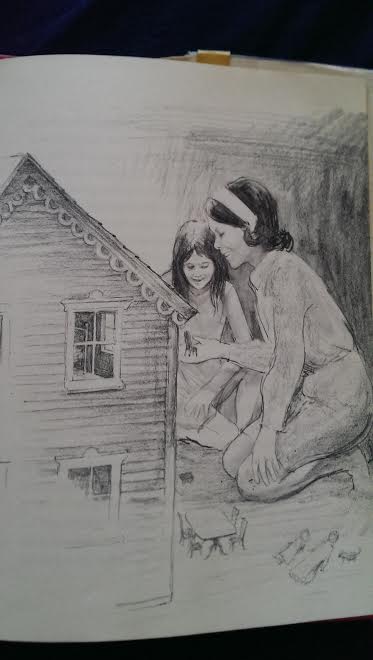
SusansMagicPic2In spite of the talk about magic and witches, this is not a fantasy story at all.  Susan’s concept of magic has more to do with a way of living, dealing with change, and solving life’s problems.  For the first part of the book, Susan’s “magic” focuses on getting what she wants for herself and getting things to work out the way she wants them to.  But, as the book goes on, Susan matures in the way she deals with the complications in her life.

Toward the end of the book, Susan thinks about reality and fantasy: “The magic part of living was how you fit yourself around real things, she guessed.  A magician was extra good at fitting. That’s why being one was important.”  What Susan really wants and the kind of person she wants to be change.  She comes to realize that, while she can’t get and keep everything she wants in life in the sense that it’s always with her all the time, caring about people and things is also a kind of ownership.  Giving up the toy elephant and sharing the cat with Mrs. Gaffney do not mean losing them completely because she still cares about them and the people connected with them.

Susan also realizes that, even if she doesn’t get exactly what she wants in the beginning, as long as things work out for the people she cares about, she can still be happy.  Although she has to make sacrifices at times for the people she cares about, she earns the love and respect of the people who mean the most to her.  Susan says, “Anyway, magicians don’t lose. They win. Dad, Trunko, and Sereena are mine still in a way.”  She will always be close to her mother and brother, even without her father’s presence, and Hugo, Mrs. Gaffney, and Sereena are all her friends.  Susan is a winner not because she gets what she wants for herself but because she knows how to make things work out in the best possible way for everyone she cares about, and that’s a kind of magic.

The book is currently available online through Internet Archive.

In some ways, this story reminds me a little of the Miyazki movie Whisper of the Heart, which also features a young girl who likes making up stories and who is led to an antique store by a friendly cat and meets an older person who helps her to learn about the person she wants to be and the kind of life she wants to live.  The two stories are not the same, though, and Whisper of the Heart was based on Japanese manga, not this book.  In some ways, however, both this book and Whisper of the Heart are the kind of stories that take on a new life when you read them as an adult because, at that point, you understand some of the feelings behind them better.

The Valentine Star

The Kids of the Polk Street School

valentinestar#6 The Valentine Star by Patricia Reilly Giff, 1985.

Emily Arrow and Sherri Dent have been fighting ever since Emily refused to play a game with Sherri at recess.  It wasn’t because Emily didn’t like Sherri.  She was just having too much fun running around with her toy unicorn, Uni.  But, Emily made the mistake of running up on top of that huge snow pile near the school fence, the one that the kids aren’t supposed to play on.  Then, Sherri told on her to Ms. Rooney.  After that, it becomes a game of tit-for-tat, each of the girls telling on the other for little things.  While Emily is acting as room monitor while Ms. Rooney is out of the room, Sherri gets out of her seat to get a book instead of doing her work, so Emily writes her name down and tells Ms. Rooney.  Sherri promises that she’ll get even.

Around the same time, Ms. Rooney’s room gets a new student teacher, Ms. Vincent.  Ms. Vincent is very pretty and nice, and Emily likes her immediately.  The kids are making rhyming Valentine’s Day cards for each other because Valentine’s Day is just a few days away, and Emily wants to give a special one to Ms. Vincent.

valentinestarpic1But then, Emily and “Beast” (Richard Best) make a serious mistake.  It was hot inside at lunch, and they couldn’t resist the urge to run outside in the snow for just a couple of minutes without their coats.  Then, they got locked out and had to get Beast’s sister to let them in a different door.  They thought no one saw them, but a neighbor did and contacted the school.  Now, Emily is afraid of what will happen if their teacher finds out that it was her and Beast.  Will the school be angry enough to hold them both back a grade or maybe worse?  Maybe Emily will be spending Valentine’s Day in the school office instead of at the party, watching Ms. Vincent enjoy her special valentine . . . especially if Sherri happens to know what they did.

Many of the The Kids of the Polk Street School books are about the little problems that kids get into but that seem big because they’re young and inexperienced.  Ms. Vincent’s kindness and understanding help Emily and Sherri to work out their differences, and a President’s Day lesson about the honesty of both Lincoln and Washington help Emily and Beast to realize that tattling on yourself makes you a better person than tattling on others.

The book is available to borrow and read for free online through Internet Archive (multiple copies).

Valentine Blues

valentinebluesValentine Blues by Jeanne Betancourt, 1990.

This book is part of the Aviva Granger Stories series.  (It’s the only one I have in the series right now.)

In the last book, Aviva’s best friend, Josh, came to live with her, her mother, and her step-father.  Josh was living in an orphanage before that, and since he and Aviva were close, her mother and stepfather thought that it would be natural to invite him to be part of the family.  At the time, Aviva thought that it was a good idea, but being friends with someone doesn’t mean that it will be easy living with them, and Aviva’s family life is already complicated!

Aviva’s parents are divorced, and both her mother and father are already in new relationships.  Her mother has remarried, and Aviva not only has a stepfather but a half-sister (college age) and half-brother (baby) living in the same house.  Aviva’s father has a girlfriend, Miriam, and Aviva doesn’t get along well with her.  Miriam would like it if she and Aviva’s father had a child of their own.

When Josh comes to live with Aviva’s mother and her family, Aviva realizes that sharing a family and house with him makes things even more complicated.  He takes too long in the bathroom and makes her late to school.  He’s one more person for her mother to pay attention to, so Aviva gets less attention.  Even her dog seems to like Josh better now!

Then, shortly after Valentine’s Day, Aviva overhears Josh and his friend Ronnie Cioffi talking about girls and giving them ratings based on their looks.  Out of 10 points, Cioffi rates Aviva as a 2, and Josh agrees.  Josh has a crush on Louise, a girl they know from school, and she has a much better figure.

It isn’t that Aviva is in love with Josh, who she sees more as a friend/brother, but it hurts that he seems to be taking her place in the family and doesn’t even really appreciate her, joining in with his friend in making fun of her body.  With her time divided between two households, two parents who hardly seem to have time for her these days, and Josh moving in and taking over, Aviva worries that maybe she doesn’t really belong anywhere or to anybody.

It takes a night when Aviva sleeps out in the barn without telling anyone where she is to make the people closest to her realize how much she needs them.  A sleepover at Louise’s house (where the girls candidly discuss their own ratings for the boys they know) and Aviva’s anonymous question in sex ed class also help to put the rating system into perspective for all the kids.

The book has some Christian themes because the children go to a Catholic school, although this book mostly focuses on family life and girls’ and boys’ perceptions of each other.  The kids are eighth graders, and there is also some talk about sex ed.

Soup

soupSoup by Robert Newton Peck, 1974.

This is the first book in a series about the author’s childhood best friend.  His friend’s real name was Luther Wesley Vison, but he always hated that name.  Because Luther refused to come home whenever his mother called his name for dinner, his mother took to just yelling, “Soup’s on!” when she wanted him to come home to eat.  After that, everyone else just started calling him “Soup”, which he liked a lot better than “Luther.”

Together, Soup and Robert had a reputation for getting into scrapes in their small town in Vermont.  The book is a series of short stories about the funny things they did as kids, like how they got revenge on the school nurse for asking embarrassing questions, how Soup got punished for breaking a window other than the one he’d actually broken, how Soup talked Rob into rolling down a hill in a barrel, and how Robert’s aunt let him tie her to a tree right before a lightning storm.

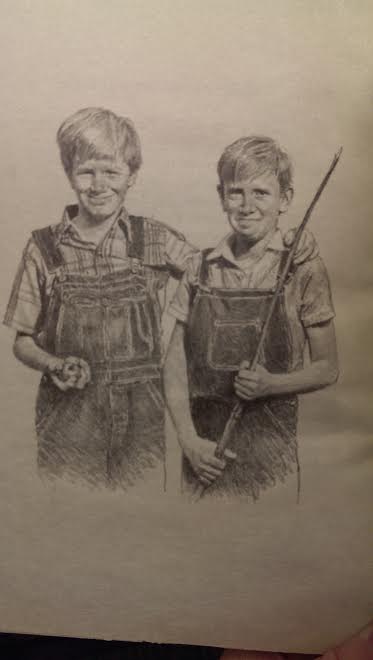
souppicSome of the stories are laugh-out-loud funny, and some of them have kind of a moral lesson to them, like the time when Rob realized that he didn’t have the heart to lie to his mother even if it would allow him to escape punishment for talking back to the school nurse, the time when Soup and Rob tried to cheat Mr. Diskin out of some money so they would have enough to go to the movies but ended up feeling guilty, and how the boys made themselves sick by attempting to smoke cornsilk.  Others are just stories of childhood events and friendship, like the story of how Rob and Soup played football and how Soup loaned Rob his new shoes when his were ruined.  Even though Soup often got Rob into trouble, he really was a good friend and went out of his way to make Rob feel better when he needed it the most.
Although it is a short chapter book that is easy to read, a couple of the stories might require some further explanations for young children reading them, like the one where the boys smoke cornsilk using homemade pipes and the one where Soup says that someone told him it was all right to cheat Mr. Diskin because he’s a Jew (a belief that they come to rethink when they feel guilty for cheating someone who was always fair with them and was kind to them even when he discovered the deception).  They deal with older practices and prejudices and can be the start of discussions about the lessons people learn by making mistakes. Other than that, these stories present a fascinating look at what it was like to grow up in the country during the 1920s.

The book is available to borrow and read for free online through Internet Archive.

December Secrets

The Kids of Polk Street School

decembersecrets#4 December Secrets by Patricia Reilly Giff, 1984.

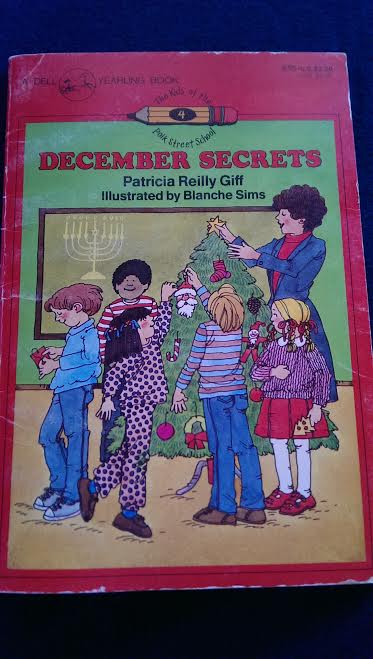
It’s December, and the kids in Ms. Rooney’s class at Polk Street School are learning about Christmas and Hanukkah.  To get everyone in the holiday spirit, Ms. Rooney has everyone choose someone else in class as their “Secret December Person,” kind of a Secret Santa-style activity.  The kids will give small presents and do nice things for the person they pick.

Emily would have picked her friend Dawn for her person, but they’ve been fighting since Emily wouldn’t let Dawn cut in front of her in line when the fire truck came to school and the kids who were first in line were allowed to actually get in the front seat.  Emily tries to pick someone else to be her Secret December Person, but her other favorite choices are taken.  When she asks Ms. Rooney who is still available, Ms. Rooney suggests Jill Simon.

decembersecretspicEmily doesn’t think much of Jill Simon because she’s fat and a crybaby.  Whenever the least little thing goes wrong, Jill tears up.  She hardly ever smiles.  But, although Emily isn’t thrilled at first to have Jill as her Secret December Person, she then thinks that she can use this as an opportunity to help Jill.  Maybe her presents will help Jill to become a happier, maybe even thinner person.

The book is available to borrow and read for free online through Internet Archive.

My Reaction

Although Emily wants to help Jill, her first attempts fall flat because she’s focusing too much on correcting Jill’s faults instead of thinking about what would really make Jill happy.  Jill becomes a happier person when Emily notices the good things about Jill and helps her to see them for herself.  The project helps Emily to become a more thoughtful person, and she also makes a surprising discovery about the Secret December Person who has been leaving thoughtful presents for her.

The reason why it has to be “Secret December Person” instead of “Secret Santa” is because there are both Christian and Jewish children in the class.  That’s why the kids learn about both Christmas and Hanukkah.  They don’t want anybody to feel left out.  The name “Secret December Person” is a little cumbersome next to “Secret Santa”, but the sentiment is nice.  I don’t recall doing anything like this as a class activity when I was in elementary school.  I remember that I was in first grade when a Jewish girl and her mother explained Hanukkah to the class.  They gave everyone small plastic dreidels to play with, and I spent the Christmas holidays that year playing dreidel with my brother for peanuts and M&Ms.  They were just little party favor dreidels, but I had a lot of fun with mine, and I still have it.  Sometimes, little presents do mean a lot.

MacDonald Hall Goes Hollywood

macdonaldhallhollywoodMacDonald Hall Goes Hollywood by Gordon Korman, 1991.

MacDonald Hall has been picked as a location for filming a movie about a boarding school, and people are going crazy (or crazier than normal)!  Bruno hopes that he’ll be discovered and become a movie star. His attempts to insinuate himself (not very subtly) into various scenes keep getting him into trouble.

The girls at Miss Scrimmage’s Finishing School for Young Ladies all have a crush on the teen star of the movie, Jordie Jones, further annoying Bruno.  Cathy and Diane, Bruno and Boots’s friends at Scrimmage’s, are especially getting on his nerves with their wild schemes to meet Jordie in person.

Meanwhile, poor Jordie wishes that he could live life out of the limelight for awhile.  His manager worries about him excessively and never lets him do anything fun.  In spite of his many admirers, Jordie is lonely because he spends all of his time with the movie people and doesn’t have many friends his own age.  Nobody has even remembered his birthday!

Bruno and Boots discover Jordie’s woes when Bruno tries to play a mean trick on Jordie, due to his jealousy of all the attention Jordie gets.  After Jordie opens up to the guys about his problems, Bruno feels more sympathetic toward him and decides to help.  The boys invite Jordie to play poker with them (after lights out and against school rules), take him to a dance at Miss Scrimmage’s (in disguise as a prince from a made-up country), and even get him to help with a hockey game as goalie (which earns Jordie a black eye).

Jordie has been having the time of his life, but the boys still have to conceal his activities as much as possible and deal with his over-protective manager, his rabid fans at Miss Scrimmage’s, and as always, The Fish.  Mr. Sturgeon (aka The Fish), is sympathetic to Jordie because he knows that activities like these are important to his growth as a person, but the movie people crack down on Jordie’s activities because the black eye interferes with his filming.

Although Jordie is supposed to keep quiet and let his eye heal, he runs away to join Bruno and Boots and several other boys on the school’s traditional wilderness survival trip (known to the students as “Die-in-the-Woods”).  It isn’t long before Jordie is discovered among them, but before the trip is over, the others are going to be glad that he’s there.

This book is part of the MacDonald Hall Series (or Bruno and Boots series).  It is currently available online through Internet Archive.