Sawdust in his Shoes by Eloise Jarvis McGraw, 1950, 1977.
Disclosure: I am using a newer edition of the book, published by Plough Publishing House. Plough sent a copy to me for review purposes, but the opinions in the review are my own.
At fifteen years old, Joe Lang is a rising star in the circus, a trick rider. Circus life is the only life he’s ever known because his father is a lion tamer. Many of the children whose parents work for the circus also work for the circus, competing for the spotlight and top billing, and Joe loves that type of life, even though it means hard training, an element of risk, and constantly moving.
Unfortunately, things change for Joe when his father is killed during an accident in one of his performances. (Mercifully, the accident is not described in the book. Joe does not witness his father’s death. In the story, he hears screams from the circus patrons and is shortly informed that his father has been killed.) Because Joe is still only fifteen, his father’s death raises the question of who will have custody of Joe. Joe’s mother is dead, and his stepmother, who did not grow up with the circus herself, was never fond of circus life or of Joe. After the death of Joe’s father, his stepmother leaves to go live with her sister, and Joe never hears from her again. Mo Shapely, an older man who works for the circus as a clown, wants to assume responsibility for Joe, and Joe would be happy with that because Mo is an old family friend who helped raise and train him. However, the local authorities are not convinced that Mo is a suitable guardian for the boy because of his age, his unsettled lifestyle, and lack of savings.
Mo waits in town with Joe while the authorities make up their minds, but they soon run short of money, and Mo is forced to catch up with the circus and return to his job. Since Joe’s guardianship is still unsettled, the authorities send him to the County Industrial School for Boys, where he will stay until Judge Reynolds has completed his inquiries into Mo’s background. The boarding school offers vocational training, but Joe finds the place dull and bleak and the people unfriendly. When the other boys find out that he used to be with the circus, they are envious and tease him, and even the teacher mocks him. Only one boy tries to be friendly with him, and Joe asks him if any boys ever escape from the school. The boy tells him that some have tried, but no one has succeeded. However, Joe realizes that he just can’t stand life at the school, and all he wants to do is run away and try to rejoin the circus.
When Joe runs away from the school, he cuts across some farmland, loses his way, and ends up getting caught on some barbed wire, where he is found by the Dawson family. The Dawsons treat his wound, and Joe despairs, realizing that he has gone the wrong way and that he has no chance to catch up with the circus before they move on. The Dawsons ask Joe what his name is and offer to help him get home, but Joe is reluctant to tell them the full truth because he doesn’t want to be sent back to the horrible school. Instead, he tells them that he has no home or parents but that he’s worked before, since he was young, and that he hopes to find a job when he’s recovered from his wounds and exhaustion. The Dawsons are concerned about Joe and curious about his mysterious past and vague answers, but Mr. Dawson decides to offer Joe a position as farm hand. Joe is surprised at the offer and a little suspicious, and he asks Mr. Dawson why he’s so willing to take in a perfect stranger. Mr. Dawson answers him in an equally vague way, saying that if Joe really feels like he needs to steal their silver, he must need it more than they do, and he’s welcome to it. Joe decides to accept Mr. Dawson’s offer of employment.
Joe isn’t used to farm work, but he’s strong from his work with the circus (Mr. Dawson had noticed his athletic build), and he is good with horses and other animals. Although Mrs. Dawson is concerned that they know so little about Joe or his background, Mr. Dawson tells his family to allow Joe to have his privacy and not question him too much about his past. Still, Joe can’t resist showing off and trying one of his old tricks on horseback one day, accidentally making his injury worse because it isn’t healed yet. He begins to worry that the injury might be bad enough that he’ll never be able to be a trick rider again. By the time he has fully recovered, he is also long out of practice.
Eventually, Joe’s secrets are exposed, and he must make some choices about his future. Although Joe had lived many different places when he traveled with the circus, living on the Dawsons’ farm provides him with new experiences and broadens his horizons in unexpected ways. He had never had much respect for non-circus people before (partly because of his bad experiences with his non-circus stepmother). He still dislikes some of the Dawsons’ neighbors for their unfriendliness and suspicious toward him, but the Dawsons themselves are very different from most of the people Joe has met before. Joe comes to realize that he has not forgotten everything that he learned from his old life and that he can apply his old skills in new ways. He even starts to consider that there are more ways of living than he had previously thought, and he begins to see the appeal of non-circus life. Still, the circus is what he always loved first, and he feels torn between what he’s always wanted and the people who have loved and supported him when he needed it the most.
Children today probably don’t look at the circus in the same way as past generations. Some of the larger, mainstay circuses, like Ringling Brothers and Barnum and Bailey, have closed. People make jokes about how scary clowns are, and animal acts aren’t considered humane to the animals. Circuses still exist in the early 21st century, but they’re not quite what they used to be, and they aren’t looked at in quite the same way. Even when I was a young child, in the 1980s and early 1990s, I wasn’t particularly wild about the circus. A large part of that is temperament. I’m not fond of loud noises or large crowds, and I tend to avoid places where there are both. I’m very different from my grandmother, who absolutely loved circuses and parades and excitement of all kinds, dragging her children with her, even when they didn’t always feel like going. In my grandmother’s youth (1910s and early 1920s), there were few things more exciting than a circus coming to town!
However, this story isn’t just about love of circuses or a look back on the forms of entertainment that people used to enjoy. There’s always some nostalgia of that type to vintage books, but this book is about more than that. This is about a person finding his way in life and facing an unpredictable future, who has to decide what’s really important to him. I’m sometimes fascinated by people who seem to know what they want to do in life from an early age. They are born to parents with a profession they want to follow or who have connections to a profession they want to follow, and they start training very early for something they truly love. At first, that seems to be Joe’s situation in life. He loves the circus, he was born into that kind of life, he gets that early training, and there’s nothing else he would rather do. Some people like that become early success stories, just being lucky enough to be born in the right place and with the right connections for the life they want to live, and it all looks like smooth sailing. Most people aren’t that lucky, though, and even for people who think they know what they want, life has a way of throwing a monkey-wrench into their plans. That is what this story is really about.
Joe’s life abruptly changes when his father dies and his guardianship remains in limbo. Things often happen in our lives that we can’t fully control, taking us down paths we never thought that we’d travel. There are times when many of us start to question what we really want out of life, whether our first choices were really the best ones, or if there’s something else that we really want. Sometimes, these unexpected detours make us feel like we’re headed for a dead end, like when Joe fears that he has lost his skill and he’ll never live the life he once dreamed he would. However, sometimes, these things are just a temporary bend in the road. In some ways, an adult who has been through this sort of process would understand it better, but even children know what it is to have a dream and not know whether or not it will become reality.
Children need time to discover and develop their talents, and, as they grow and step into the wider world, they routinely discover that they have to make other decisions that they knew nothing about before. Children also know what it’s like to be at the mercy of adults who can either help guide them on their way or who stand as an obstacle to their dreams and efforts, like the judge who takes so long to decide what he thinks is best for Joe that Joe feels he must take his fortune into his own hands. Right up until the very end, Joe’s ultimate choice remains uncertain as readers wonder what he’s really going to decide to do and what his destiny is going to be. At first, Joe seems like he’s in a bad situation, with limited options, but his experiences show him that his options in life are broader than he thinks. It seems like saying yes to one of the choices confronting him means saying no to something else he cares about, but even that isn’t as straight-forward as it seems. I think this is one of those timeless books that can appeal to all ages because what it’s really about is a person finding his way in life and discovering that a difficult, unpredictable path may be just the path he needs to take.
In the end, it’s not just about what Joe chooses or where he ends up; it’s about what he does along the way. When Joe runs away from the school, he is the one who is injured and in need of help, but he also has a positive impact on the people who were kind enough to help him when he needed it. In fact, there are some situations that would have turned out much worse for everyone if Joe hadn’t been there and been able to help. Joe’s unexpected detour in life changed everyone else’s lives as well, and it was well worth doing, in spite of the struggle.
This book is available to borrow for free online through Internet Archive, but it’s also back in print and available for purchase through Plough. If you borrow the book and like it, consider buying a copy of your own!
#1 Vampires Don’t Wear Polka Dots by Debbie Dadey and Marcia Thornton Jones, 1990.
The kids in the third grade class at Bailey Elementary School have been pretty hard on their teachers. Their last teacher resigned when she suffered a nervous breakdown due to their misbehavior and pranks. Now, the kids have a new teacher, Mrs. Jeepers.
Mrs. Jeepers has just moved to their city from Transylvania, and everyone in class agrees that she’s not a normal teacher. She seems to have a hypnotic power over people, and her mysterious green brooch seems to glow and have magic powers. Not only that, but she has moved into a creepy old house in the neighborhood with a long box that could contain a coffin. Could Mrs. Jeepers be a vampire? No one knows, but none of the kids want to risk making her angry, except maybe Eddie, the class trouble-maker.
Mrs. Jeepers lays down the class rules on the first day. The rules are basically that the students should treat her and each other nicely, talk only when appropriate, and walk instead of run. Eddie asks her what happens if they break the rules, and Mrs. Jeepers only replies, “I hope you never have to find out.” Most of the other students are nervous about creepy Mrs. Jeepers and do their best not to make her angry, but Eddie is annoyed by how good the others are being and tries to various antics to get Mrs. Jeepers angry and make the other kids goof off, like normal. Sometimes, Mrs. Jeepers stops these antics, apparently with the power of her mysterious brooch.
Mrs. Jeepers is strangely evasive about her past, although she mentions that her husband is dead. He is the one who gave her the bat charm bracelet that she wears. Eddie and Melody try sneaking into Mrs. Jeepers’ house one night to see if they can get a look at the long box that might be a coffin, but they are unable to actually open the box, which seems to be locked from the inside.
The question of whether Mrs. Jeepers is really a vampire is never settled. Unlike most mythological vampires, she seems to have no problem going outside during the daytime. When the kids test garlic on her, it makes her sneeze. She does seem to have a strange power to make the children behave themselves, but that is partly because they are afraid of making her angry. At the end, Eddie finally causes Mrs. Jeepers to lose her temper. She takes him out of the classroom for a moment to talk to him, and when they return, Eddie seems to have been badly frightened by something. He never tells the others exactly what Mrs. Jeepers said or did, but he says that she is not normal and that he’ll never do anything to make her angry again.
When the book ends, it says that the children got through the rest of the school year with Mrs. Jeepers without getting her angry or seeing her brooch glow again, making me think that the book wasn’t always intended to be part of a series. However, for the rest of the series, the kids are still in the third grade with Mrs. Jeepers as their teacher.
The fact that the kids can never really prove that Mrs. Jeepers is a vampire, although they continue to believe it throughout the series, sets up the pattern for the books that follow it. Throughout the series, the kids encounter other people (including some relatives of Mrs. Jeepers) who seem strange and may be creatures from mythology or folklore or other supernatural beings, but the books always leave some room for debate. Mrs. Jeepers is the only one of these strange people to remain with the kids throughout the entire series. Other characters come and go, although there are a few recurring characters.
I always like it when children’s books reference other children’s books. In the beginning of the book, after their first teacher leaves, the kids worry about who their new teacher will be, and they make a reference to Miss Viola Swamp from the Miss Nelson books.
The book is available to borrow for free online through Internet Archive.
Things have been rough for ten-year-old Kelly Towser since her parents decided to adopt a four-year-old boy named Stevie. For the first part of her life, Kelly was an only child, and now she misses that peaceful period of her life. Now, her parents don’t have as much time to spend with her. Everyone showers little Stevie with attention and presents. Although she doesn’t say so, Kelly worries that maybe her parents adopted Stevie because they were disappointed in her or secretly really wanted a boy instead.
To make
things worse, Stevie’s little-kid antics get on Kelly’s nerves. Stevie keeps making messes, throwing his toys
all over the place. Kelly’s parents tell
her that she used to make a lot of messes when she was little, too. Kelly doesn’t remember doing it, but her
parents say that she used to like to throw her clothes all over the place, even
hiding her underwear in random locations in the house. They used to joke about her “haunted
underwear,” mysteriously showing up in strange places.
Because Kelly complains that Stevie is getting all kinds of presents, and she isn’t, her parents agree to give her a special present to celebrate her getting a new brother. After thinking about it a little, Kelly decides that she wants a new puppy. The family already has a dog named Star, but Kelly thinks that the new puppy could be a friend for Star while she’s at school.
At the
pound, Kelly selects a cute brown puppy.
One of the workers tells her that the puppy was found abandoned at the side
of the road, dirty and hungry. Stevie is
excited about the new puppy and wants to play with him, but Kelly is determined
to keep the puppy for herself, something that she doesn’t have to share with
Stevie. When Stevie insists that the dog’s
name is Boscoe because he used to have a dog named Boscoe, Kelly insists that
the dog’s name is Jingle. Stevie gets
upset that she isn’t sharing the dog, but Kelly doesn’t think that Stevie would
be careful with the puppy because he has already pulled Star’s tail.
As older readers might guess, Kelly soon finds herself in a similar position with Jingle as her parents are with Stevie. Star gets jealous of the new puppy in the same way that Kelly is jealous of Stevie, feeling like she’s been replaced in her own house.
Kelly
does try to get her parents’ attention with some silly stunts, but when her clothes
and underwear mysteriously start appearing around the house, she has no
explanation. Her parents punish her,
thinking that this is just another attention-getting stunt, but Kelly knows it’s
not her. She starts thinking that the
real culprit is Stevie, trying to steal her parents’ attention and affection
more than he already has. However, there
is another explanation for the mysterious underwear ghost, and as Kelly
investigates, trying to catch Stevie with her underwear, she learns a number of
important things.
I figured out pretty early who was responsible for the underwear around the house, although it helped that I’ve had experience with dogs. Star, feeling neglected because of the new puppy, was trying to get Kelly’s attention in the same way that Kelly was trying to get her parents’ attention. Stevie does look guilty for a while because Kelly discovers that he is a sleepwalker and has been having nightmares. However, when she gets up in the night to catch Stevie sleepwalking with her underwear, she finds Star taking it instead. Understanding Star’s feelings help Kelly to better understand her own feelings, and she resolves to spend more time with Star so she’ll feel less neglected. When her parents discover the truth, they apologize to Kelly and reassure her that they didn’t adopt Stevie as a replacement for her and that they don’t love her any less.
Kelly’s mother also talks to Kelly about what she knows about Stevie’s history. Although they don’t know the names of Stevie’s birth parents, Kelly’s parents know that Stevie’s mother wasn’t married and had no money and gave up him for adoption in the hopes that he would be raised in a more stable home. Stevie has not seen her since he was two years old, two years ago. Stevie is troubled by nightmares because his young life has been very chaotic, and he has been moved from foster home to foster home, with people always giving him up. He deeply fears that his new family will also give him up and is terrified when they seem like they’re going to go somewhere, afraid of that they’ll never come back. That is what his nightmares are really about. Kelly comes to realize that his situation is very much like Jingle’s, that the fact that someone gave him up doesn’t mean that he’s bad and that all he needs is time, attention, and love to grow out of his problems.
Even though things work out okay, this is one of those books where I found myself getting impatient with the parents. I think that some of Kelly’s bad feelings might have been resolved much sooner or avoided altogether if Kelly’s parents had spoken more honestly with her in the beginning, preparing her to be patient with Stevie and to understand when he has problems. Apparently, they did tell her at least some of what they knew about Stevie’s past in the beginning, but they don’t seem to have spoken to her much about how that might influence his behavior and how he will need a lot of time and reassurance to get over his fears.
When I used to volunteer at an animal shelter, we used to tell people who were adopting dogs that they would have to expect that their new dog would destroy something that they owned, especially if it was an energetic young puppy. When you bring a new dog into your house, it doesn’t know the area, it doesn’t know you very well, and it doesn’t know the rules that go with you and your house. It’s almost certain that, soon after arriving, it will relieve itself in the wrong place or pick the wrong thing to use as a chew toy. Something is likely to get ruined or some mess will be made. The best you can do is to take some preemptive measures, like securing valuables, closing the doors to rooms with things that the dog shouldn’t get into, and taking the dog to the place where it should relieve itself immediately on arriving at the new home. These steps can help head off problems, but at the same time, something is still likely to go wrong because the dog needs time to learn what you find acceptable and unacceptable and will probably do something wrong while learning. We didn’t tell the new owners this to scare them off from adopting but to help manage their expectations so that they wouldn’t panic and try to return the new pet at the first sign of trouble. I think that Kelly needed a similar warning about her new brother to help manage her expectations.
Early in the story, Kelly says that when her parents first started talking about adoption, she thought that it would be great because she’s always wanted a little brother that she could teach to do fun things like roller-skating or flying a kite. Her attitude toward her new brother only soured when he seemed to be taking all of her parents’ attention and crying all the time and making messes. She thinks at one point that it’s hard to love someone who seems determined to get you in trouble, which is what she thought Stevie was doing with the underwear. My thought is that, if Kelly’s parents had explained more to her that Stevie might misbehave or be nervous in his new home and would need time to be taught how to live in their family, perhaps Kelly wouldn’t have been so upset and the parents would have been less quick to blame Kelly for the underwear issues. Knowing that there might be some problems that would be temporary would have been reassuring to Kelly that there were better things ahead for her and her new brother.
Also, even though the parents seemed to understand that Kelly was seeking their attention, they didn’t really do anything positive about it at first, just punishing her for leaving the underwear around. If they had told her, straight out, in plain English, that even though they’ve been very busy with Stevie that doesn’t mean that their feelings for her have changed and that she doesn’t need to pull stunts to get their attention because they would be spending some quality time with her soon, it might have helped to head off Kelly’s bad feelings. The closest they get to that at first is when they tell her that she’s old enough to know that there are better ways to get their attention than silly stunts. They don’t mention what the better ways are, and they don’t follow it up with much of an attempt to give her a little attention. What annoyed me most was that Kelly’s mother waited for Kelly to approach her to talk, but in her place, I think I would have taken the initiative, especially after Kelly’s stunts included some potentially dangerous bike stunts. I’m a great believer in direct communication. I tell people if there’s something I want them to know, and if I want to know what they’re thinking, I ask. Over the years, I’ve discovered that if you leave people guessing what you’re thinking or what you want, you discover that most people aren’t good at guessing. I won’t say that Kelly’s parents are the most clueless ones I’ve seen in children’s books because they made more of an attempt to tell Kelly things and talk to her than some other parents in books do. All the same, it always gets to me when problems in books could be avoided with just an extra conversation or two. There were a couple of times in the book when I wished that I could step into the scene, call “Time!”, and make the characters just stop and really talk to each other and take a real look at the situation.
The book is available to borrow for free online through Internet Archive.
Aunt Morbelia and the Screaming Skulls by Joan Carris, 1990.
Todd Fearing is worried because his Great-Aunt Morbelia is coming to live with his family. He has never met her before, but he has heard that she is rather strange, and he knows that his life will never be the same again. Aunt Morbelia is very superstitious, and she sees bad omens everywhere. When she first arrives at Todd’s house and sees that the family owns both a black dog and a black cat, she takes it as a sign that she should leave right away. It takes a lot persuading to get her to stay on a trial basis. By Joan Carris.
Having Aunt Morbelia at his house is sort of a mixed blessing. On one hand, Aunt Morbelia likes baking good things for him to eat and helps him with his homework. Todd is dyslexic and has extra assignments to help him improve his reading. Aunt Morbelia used to be a teacher, and Todd really appreciates the help she gives him. On the other hand, Todd doesn’t like scary stories, and Aunt Morbelia’s talk of ghosts and bad omens gives him nightmares. His friends like to hear her stories, particularly Rocky, a girl who typically doesn’t like feminine things. Rocky, whose real name is RosaLynn, constantly pesters him about when Aunt Morbelia will tell more stories.
Eventually, Todd gets tired of Rocky’s obsession with ghost stories and the way she encourages Aunt Morbelia to keep telling them, and he and his best friend, Jeff, decide to play a trick on her to cure her appetite for scary stuff. However, their trick backfires, and in their attempt to make it up to everyone, especially Aunt Morbelia, they end up making things worse.
Todd and Jeff succeed in scaring Rocky by dressing up as ghosts and showing up at her house in the middle of the night. They have so much fun with their trick that they decide to go to their friend Alan’s house to try it on him. Alan lives in the house right behind Todd’s, and that’s where they run into trouble. When they start their ghost act, they can’t get Alan to wake up and come to the window to see them. Jeff decides to throw a rock at Alan’s window to wake him up, but the rock breaks the window. To make matters worse, they startle Todd’s black cat, causing the cat to yowl. The boys run back to Jeff’s house, but Jeff’s father catches them. Todd has to go home and apologize to Aunt Morbelia, who was frightened very badly when the cat started howling.
The boys decide to take Aunt Morbelia on a tour of the historic places in town to make up for scaring her. Unfortunately, Jeff includes the funeral home that his father runs on the tour because it is in one of the oldest buildings in town. Although Todd tells her that she doesn’t have to go in if she doesn’t want to, Aunt Morbelia thinks that it would be rude to refuse. Unfortunately, Jeff’s father arrives with a dead body before their tour ends, and Aunt Morbelia faints when she sees it. Aunt Morbelia tells the boys that it isn’t their fault, but she says that she’s not sure she really belongs in their town. Even with all of Aunt Morbelia’s superstition craziness and spooky stories, Todd still doesn’t want her to leave. Is there still something he can do to convince her to stay?
When I first read this book, I was expecting a spooky mystery, but it’s really more about a boy adjusting to a relative coming to live with his family and dealing with his dyslexia. Although Todd initially has some reservations about Aunt Morbelia living with him and his parents and her spooky stories scare him, Todd and Aunt Morbelia gradually come to understand each other better, and Todd genuinely wants her to stay. To help Aunt Morbelia change her mind about leaving, Todd has all the people who have met Aunt Morbelia since she arrived come by the house and tell her how much they all want her to stay. After everyone has visited her, Todd himself tells her that he doesn’t want her to go. They talk about the scary stories and how Todd feels about them, and Aunt Morbelia tells Todd that if he doesn’t want to hear a scary story, he can be honest with her and tell her so. Now that the two of them understand each other better, Aunt Morbelia agrees to stay, and she accepts the invitation that one of Todd’s teachers makes to help tutor children at the learning center.
I didn’t like the part where the boys played the trick on Rocky and how awkward things were with her afterward. Jeff’s father says that part of that, with Rocky drifting away from her friendship with the boys, is because the kids are growing up. He says that, as they grow up, girls start changing before boys do and have different interests from boys and different ways of looking at things, including more tomboy girls, like Rocky. Toward the end of the story, Rocky does appear to need more friendships with other girls, and Todd decides that Jeff’s dad is probably right, that Rocky thinks and acts differently from his guy friends because she’s a girl, even if she’s usually not a particularly “girly” girl. Part of that may be true, but the boys’ trick was pretty mean. I think that the real issue is that real friends shouldn’t do that to each other, and Rocky might really be questioning what she’s looking for in a real friend. Although, to hear some of my male friends talk about their youths, boys (at least certain ones) might be more accepting and forgiving of that kind of rough humor from friends than girls would be, so perhaps boys vs. girls issues are partly at the heart of it.
I thought that the parts where Aunt Morbelia was helping Todd with his dyslexia were interesting. I don’t really have any experience with the condition myself, and I’m not quite sure what techniques teachers really use to help dyslexics. One of the tricks that Aunt Morbelia uses is to break down tasks into smaller pieces to make them more manageable. For example, Todd feels badly that he can’t keep the orders of months straight. When he tries to recite the months of the year in order, he mixes them up, which makes him feel bad because most kids his age should be able to do this easily. When I first read this, I wasn’t sure if this is a common issue among dyslexics, although I thought that I remembered reading something about dyslexics having trouble remembering the orders of certain things, like lists of instructions. I looked it up, and apparently, it is a common issue, along with memorizing things like days of the week. There are different techniques for handling it, some of which involve associating the things to be remembered with something else that sticks in the mind more easily, such as a rhyme or song. Aunt Morbelia does some association with Todd but she also breaks the months down into groups of three, representing the four seasons of the year, and giving him small bits of information to memorize. She calls the spring months, “the flower months” and the fall months “the leaf months” and so on. Todd finds that technique helpful, and Aunt Morbelia says that once Todd has mastered the seasons of the year, they will put the season of the year together so that he can recite the entire year. Todd also describes other ways that he is affected by his dyslexia and techniques that his teacher uses to help him.
The School at the Chalet by Elinor M. Brent-Dyer, 1925.
This is the first book in the Chalet School Series. This series is uncommon in the United States. People from Britain or countries with heavy British influence would be more familiar with this series. It’s considered classic!
When
the story begins, Madge and Dick Bettany, who are brother and sister, a set of
twins, are discussing their family’s situation.
Their parents are dead, and they have very little money and no family
members they can rely on. Madge and Dick
are grown and are ready to begin making their own way in the world, but their
younger sister, called Joey, is still a child, and her heath has been
poor. Dick has a job, but he really
can’t afford to support his sisters.
However, Madge has had an idea: she wants to start a school. Dick worries that they don’t have the capital
necessary to start a school, but Madge says that she could start one in
continental Europe instead of England, where they are from, because the costs
would be lower. She even has a specific
place in mind, a chalet near a lake, close to a town called Innsbruck in the
Tiernsee (Austria). Joey could live with
her at the school and continue her education in the company of the other
students, and Madge thinks that the climate there might even be better for her
than England. She has already written a
letter to find out if the chalet is available, and it is. If they sell most of what they own in
England, Madge thinks that they’ll have enough to buy what they need in
Europe. Madge says that she thinks she
could handle about a dozen girls, between the ages of twelve and fourteen or
fifteen. She knows someone who could
help her teach, Mademoiselle Lepattre, and between them, they are qualified to
teach French, German, sewing, and music.
Dick is still a little concerned about whether or not Madge can pull off
the school, but he agrees that she should go ahead with her plans (since she
likely will anyway) and says that if she runs into trouble, she should contact
him for help.
Madge
even knows who her first pupil at the boarding school will be: Grizel
Cochrane. Madge has already had her as a
student, and she is friends with her family.
She knows that Grizel has been unhappy at home since her father
remarried because she and her stepmother do not get along. Grizel’s stepmother has already been
pressuring her father to send her away to boarding school, but he loves her and
has been reluctant to part with her.
However, Grizel has been miserable, and her father decides would be more
willing to send her away with someone he already knows. Grizel is pleased at the idea of joining
Madge and Joey at a school in Europe, and the Madge gains her first student.
Dick
and Mademoiselle Lepattre go to the chalet first to take the larger trunks and
belongings and begin getting settled, while Madge, Joey, and Grizel follow
them. Along the way, they see some of
the sights of Paris. By the time they
arrive at the chalet, Mademoiselle Lepattre’s young cousin, Simone Lecoutier,
has arrived at the school to be a pupil, and Madge has arranged to accept an
American girl named Evadne Lannis, who will arrive later. These four girls, Joey, Grizel, Simone, and
Evadne, are the school’s first boarders.
The school soon acquires a few day pupils who live nearby: Gisela and
Maria Marani (a pair of sisters), Gertrud Steinbrucke, Bette Rincini, Bernhilda
and Frieda Mensch (also sisters). Maria
is much younger than the other girls, only nine, but her mother asked that she
be admitted along with her older sister. There are public schools for children
in Innsbruck, but the father of one of the new local pupils thinks that the
Chalet School might be healthier for his daughter because, while he doesn’t
think much of English educational standards (Grizel takes exception to that
comment), they shorten the school day (compared to the average school day of
Austria or Germany of the time) and encourage participation in sports and
games. The local girls are curious to see what things are going to be like at
an English style school, and if it will be like other English schools they’ve
heard about. The school also soon gains
more students and boarders:
Margia and Amy Stevens – ages 8 and 11, their father is a foreign correspondent from London who needs to travel for his work, and the girls’ parents wanted to find a stable place for the girls to stay.
Bette Rincini’s cousins, who have come to stay with her family
A pair of sisters from another town across the lake
Two more children from a nearby hotel
Friends of Gisela from Vienna
Rosalie and Mary, two girls Joey and Grizel know from England
As the school grows and the girls settle into life at the school, they make friends with each other, although it’s awkward in some cases. Madge notices that Simone is often by herself and she asks Joey if she and the other girls are being nice to her. Joey says that they try, but Simone often sneaks off alone, and she doesn’t know where Simone goes. Joey tries to ask Simone if she’s unhappy, and Simone tries to deny it. The truth is that Simone is really homesick. Joey finds her crying by herself later and comforts her, and Simone finally admits how much she misses her mother. Simone also says that she feels left out because everyone else at the school has someone to be close to. Other girls at the school share nationalities with at least some of the other students. Simone is the only French girl at the school. The Austrian girls are close to home, and Joey and Grizel already knew each other before they left England. Seeing the other girls being such close friends makes her feel more left out. Joey apologizes for making Simone feel left out and assures her that she will be her friend. Simone asks her to be her best friend because she really needs someone to confide in, and Joey agrees, although she finds Simone rather needy and clingy.
It turns
out to be a difficult promise because Simone gets very jealous when Joey makes
friends with other girls, and she tries to convince Joey to only be friends
with her. Simone is very dramatic, and she
even ends up cutting off her long braid in an effort to impress Joey and get
her attention when she learns about the other girls who will be coming from
England. Simone is so desperately lonely
and finds it so difficult to make new friends that she is terrified that Joey
will abandon her completely when she has other friends. Joey gets fed up with her behavior and tells
her that she’s being selfish. Joey knows that Simone would find it easier to
make more friends herself if she would stop moping and being sad and gloomy.
After Juliet Carrick, another English girl, joins the school, Gisela is made head girl, and other girls are made prefects. Bette is a sub-prefect, and one day, when she tells Grizel to put her shoes away, Grizel is rude to her, and Juliet laughs. Gisela and the prefects discuss the situation and agree that Grizel, who wasn’t causing problems before, is now acting up because Juliet thinks that it’s funny. When Gisela sends someone to bring Grizel to the prefects’ room to talk about it, Grizel refuses to come and see them, and she realizes that something needs to be done. If the head girl and prefects let a girl get away with disrespecting them or not following the rules, the prefect system and student government would fall apart. Grizel feels a kinship for Juliet because neither of them has a happy home life. Juliet has been raised to believe that the English are superior to everyone else, and she has no shame in showing it. Juliet encourages Grizel to adopt her prejudices, but at a school in Austria with students of varying nationalities, that can’t be allowed. Madge supports the prefects, and Grizel is punished for her behavior.
Juliet is still a bad influence, sometimes encouraging other girls to act up with her. When Madge refuses to allow the girls to pose by the lake for some film makers, Juliet convinces some of other girls to sneak away with her and volunteer to be filmed without Madge’s knowledge. However, the father of one of the local girls catches them. He explains to the film makers that it would be inappropriate to film the girls because they don’t have permission from either the girls’ parents or teachers, and he takes the girls back to the school. Grizel’s temper and excessive patriotism also get the girls into trouble when they encounter a German tourist who makes it plain that she is disgusted at the presence of the English girls. (This is after The Great War, World War I, so that may be the reason.) While the German woman was being deliberately rude and insulting to the girls, Joey points out that Grizel’s hot-headed reply to her has now caused them more trouble. Grizel does apologize for not using more restraint.
Juliet’s home life turns out to be even worse than the other girls know, but they learn the truth when Juliet’s father sends a letter to Madge saying that he and his wife relinquish their custody of Juliet to the school. The letter says that Madge can do whatever she likes with Juliet. If she wants to keep Juliet at the school and have her work for her future tuition, that will be fine, and she is also free to send Juliet to an orphanage. The point is that her parents have left the country, they consider Juliet a burden that they would rather not bring with them, and while they might one day feel able to reclaim her, chances of that are not looking good. When Juliet learns about the letter, she cries and says that she had been afraid that they would do something like this. Her parents tried to abandon her at a different school once before, but the school had insisted that they take her back. Madge now has no idea where Juliet’s parents are. However, she can’t bear to turn Juliet over to an orphanage, so she promises Juliet that she will keep her and that she can help to pay for her tuition by working with the younger children at the school. Although Juliet’s behavior hasn’t been very good up to this point, Juliet is grateful to Madge and does earnestly try to please her and to maintain her place at the school. Before the end of the book, Juliet’s parents die in an automobile accident, giving Madge and the school permanent custody of her. Most of the other students (except for Joey) do not know that Juliet’s parents tried to abandon her before they died.
Through the rest of the book, the girls have adventures together and forge the new traditions of their school. They celebrate Madge’s birthday, get stranded in a storm and have to spend the night in a cowshed, start a magazine for the school, and play pranks on each other. When Grizel’s pranks and disobedience go too far and she is punished harshly for it, she gets angry and runs away from the school, becoming stranded on a nearby mountain. Joey goes after her to save her, and both girls are ill after their experience.
The book ends with Madge and a few of the girls caught in a train accident. Fortunately, they escape the accident without serious injury, and they also manage to help the German woman who had insulted the girls earlier. A man named James Russell helps them. The book ends at this point, and the story continues in the next book in the series. James Russell is a significant continuing character.
The book is currently available to borrow for free online through Internet Archive.
Seventeen-year-old Jerusha Abbott has spent her entire life at the John Greer Home for orphans. She has no memory of her parents and no experience of life outside the orphanage. Usually, when an orphan has not been adopted and has finished his or her education at the basic level provided by the orphanage, which does not always include high school, the orphanage and its trustees arrange for the child to be placed in a job so he or she can begin earning a living. Jerusha Abbott has stayed longer than most. She is bright and finished her studies early, so she was allowed to attend the local high school, helping out with some of the younger children at the orphanage to help earn her keep. However, now that she is about to graduate from high school, the orphanage and trustees have been trying to decide what to do with her. After the most recent meeting of the trustees, the matron of the orphanage calls Jerusha into her office to tell her what they have decided.
Jerusha has done well in high school, and her teachers have given her excellent reports. In particular, Jerusha has excelled in English class. One of her essays for English class, entitled “Blue Wednesday,” is a humorous piece about the difficulties Jerusha has preparing the young orphans in her charge for the monthly visits of the trustees: getting them nicely dressed, combing their hair, wiping runny noses, and trying to make sure that they all behave nicely and politely to the trustees. Jerusha hadn’t expected the matron or the trustees to ever read it. The matron thought that the essay was too flippant and showed ingratitude toward the orphanage that raised her, but one of the trustees in particular appreciated the quality of writing and the humor of the piece. This particular trustee is one of the wealthiest, although he usually prefers to remain anonymous about his donations and uses the alias “John Smith.” “John Smith” has helped some of the boys leaving the orphanage by funding their college educations, but so far, he has not done the same for any of the girls, not apparently thinking much of girls or their continued education. Jerusha Abbott and her essay cause him to change his mind. He thinks that Jerusha Abbott could make a great writer, and he is willing to fund her college education. Although the matron thinks that he’s being overly generous with Jerusha, this benefactor has arranged to pay for her college tuition and boarding at an all-girls college and will even provide her with a regular allowance like the other students at college will have from their parents. In return, he still wants to remain anonymous and doesn’t want to be embarrassed with too much thanks, but he does insist that Jerusha write monthly letters to him, updating him about her progress in school and what is happening in her daily life. Not only is he interested in her progress, but he also thinks that the letters will provide her with good writing experience.
Most of the book, aside from the early part that explains about Jerusha’s past and how she is able to attend college, is in the form of Jerusha’s letters to her mysterious benefactor. (This is called epistolary style.) They cover her entire college education, from her arrival at the campus to her graduation and what happens after. The letters in the book are only Jerusha’s, with no replies from her benefactor shown because her benefactor does not write to her until almost the end, only sending money and an occasional present (like flowers, when she was sick).
In spite of the matron’s instructions to keep her letters basic and to show proper respect and gratitude, Jerusha’s lively personality comes through and is often a bit irreverent, just the style that her benefactor prefers. In her first letter, she describes her very first train ride to the college and how big and bewildering the college campus is to her. She also confides the matron’s final instructions to her about how she should behave for the whole rest of her life, including the part about being “Very Respectful.” She says that she finds it difficult to be Very Respectful to someone who goes by the alias of “John Smith.” It bothers her that it’s so impersonal. She’s been thinking a lot about who “John Smith” really is and what he’s really like. She has never had a family, and no one has ever taken any particular interest in her before, and now she feels like her benefactor is her family. She tells him that all she knows about him is that he is rich, that he is tall (from a brief glimpse she had of him as he was leaving the orphanage), and that he doesn’t like girls (from what the matron told her). Based on these qualities, she chooses the one that yields the best nickname, that he is tall and has long legs, and gives him the more personal nickname of “Daddy-Long-Legs.” All of her letters to him from this point forward are addressed with this nickname. At one point, she says that she hopes that the comments she makes about her previous life at the orphanage don’t offend him, but she knows that he has the advantage of being able to stop paying her tuition and allowance if he decides that she’s too impertinent. That knowledge doesn’t stop her from making occasional jokes or flippant comments about life at the orphanage.
Jerusha loves college and begins making new friends, particularly a girl who lives in the same dorm, Sallie McBride. Sallie is very friendly, and but her roommate, Julia Rutledge Pendleton, is more stuffy and standoffish. Julia comes from a very wealthy family, one of the oldest in New York. Julia doesn’t notice Jerusha right away. She is too wrapped up in her family’s prestige, and she seems to be bored by everything going on around her. By contrast, Jerusha is excited by everything because everything is a new experience to her. Sallie gets homesick, but Jerusha doesn’t because she doesn’t have a regular home to miss. For the first time, she gets new clothes, not hand-me-downs or not the standard gingham that the orphans wear. Jerusha also gets a room to herself, for the first time in her life. Jerusha realizes that she can be completely alone whenever she wants to and spend time getting to know herself without other people.
One of Jerusha’s first moves to get to know herself and establish her personal identity is to change her name to Judy. Jerusha was a foundling who came to the orphanage without a name and was named by the matron. Jerusha knows that the matron chooses children’s last names from the phone book, and she picked Abbott for her right off the first page. The first names that the matron gives are random, and she happened to notice the name “Jerusha” on a tombstone once. Jerusha has never liked her name, and she thinks that “Judy” sounds like a girl “without any cares,” which is the kind of girl she would like to be and wishes she was. She is also pleased and amazed when her teachers praise her creativity and originality because, at the orphanage, the 97 children who lived there were dressed and trained to behave as if they were 97 identical twins instead of 97 individuals. Creativity and nonconformity were not generally encouraged.
One of the most difficult and embarrassing parts of college for Jerusha/Judy is that the other girls there know many things that she does not because the orphanage never thought it was important to teach her those things. Most of them are cultural references, like who Michelangelo was or that Henry VIII was married multiple times. (That part actually surprises me. Jerusha did attend a public high school, and my high school covered these subjects. We also read some of the books that Jerusha says that she never read, and we are told that she did well in English class. It makes me wonder if, by “English,” they mean that the class focused only on writing the English language and did not study literature at all.) At the orphanage, Jerusha was never introduced to the childhood classics that the other girls know, like Mother Goose rhymes, fairy tales like Cinderella, or stories like Alice in Wonderland or Little Women. She has not read any of the popular novels or classics like those by Charles Dickens, Robert Louis Stevenson, or Rudyard Kipling. Before she came to college, she didn’t even know who Sherlock Holmes was. Sometimes, when the girls make jokes about certain things in popular culture, Judy doesn’t understand, and she can tell that people notice when she misses the point of the discussion or doesn’t get the joke. Sometimes, she feels like she’s visiting a foreign country where people speak a language she doesn’t understand. Some people may say that studying things like art, history, and literature are not important, but there are benefits to understanding history and a shared culture, and Jerusha feels the lack of that in her life.
Jerusha/Judy is afraid to tell the others that she grew up in an orphanage because she doesn’t want to seem too strange to them. Instead, she just says that her parents are dead and that a kind gentleman is helping her with her education. Later, when Julia begins to take an interest in her and to press her for details about her family, Judy makes up a name for her mother’s maiden name because she doesn’t want to have to explain her past to Julia while Julia brags about her own pedigree. One of the reasons why Judy doesn’t show much gratitude toward the people who raised her at the orphanage and its trustees is because she has been raised differently from other children. The orphanage fed, clothed, and educated her in a basic way, but their care for her was minimal. She wasn’t really loved there, and in some ways, they have not adequately prepared her for the outside world. Outside of the orphanage, she feels like something of an oddity and just wants to be like the other girls.
At one point, a local bishop visits the college and gives a speech, saying that the poor will always be with us and the reason that there will always be poor people is to encourage people to be charitable. Although Judy can’t say anything, she gets angry at the speech because it implies that poor girls like her are basically like “useful domestic animals,” that they exist for no other reason than to be of use to other people to improve their character by enabling them to be charitable to someone lesser than themselves. Judy wants to be thought of as her own person, someone who is deserving of the good things in life because she is a person, not just someone who serves a purpose for someone else to show off their largesse. The fact that she feels comfortable enough to let even her benefactor, who is giving her largesse, know how she feels about these things shows how deeply Judy feels these issues and how much she needs someone to understand her feelings. Since no one else knows about Judy’s background, she feels compelled to tell her benefactor what she can’t tell others. Judy is grateful for her benefactor’s help and generosity, enabling her to attend college, but her gratitude has limits. At no point does the money she receives change her personality, her personal feelings about poverty, or her feelings about her benefactor himself. Judy knows that the benefactor’s generosity will end with her graduation, and she is mindful that, from that point on, she will be expected to be her own person, make her own way, and manage her own life.
At various points in the book, Judy becomes philosophical and discusses serious issues and the way that she sees life, offering her views and remarks on topics like socialism, the vanity and burden of fashion (yet the need women have to consider it and how it can make a difference in a woman’s life and attitude), the concept of wealth and the narrower topic of personal finances and debts, family lineage and what it can mean for individuals, self-determination and personal freedom, education and culture, and toward the end of the story, romance and marriage. When Judy meets her benefactor (without knowing at first that he is her benefactor) and gets to know him, she finds that they have similar attitudes about many of these topics, although there are times when he tries to tell her what to do and she rejects his orders, acting on her own initiative. As I said before, Judy is aware, increasingly so throughout the book, that she is her own person, and while she is grateful for her benefactor’s help, she has limits on that gratitude, feeling that there are some things that her benefactor has no right to insist on. Her independence grows particularly toward the end of the book, when Judy must seriously consider her life after graduation, when she expects that her benefactor’s generosity will end. One of the purposes of a college education is to expose students to new ideas and experiences, opening new channels of thought and giving them the chance to establish their identities and views on particular subjects. For Judy, everything is a new experience, but she learns quickly and establishes definite views and her own strong personality.
Judy’s letters are full of humor and are often accompanied by little sketches of her activities. She discusses her classes and her joy at being accepted on the girls’ basketball team. (There were women’s and girls’ basketball teams back in the early 1900s and 1910s, when this book was written. These pictures show what their uniforms looked like.) She catches up on all the books that she has missed reading before, and she loves reading them. The more she reads, the more she understands what the other girls are talking about when they mention their childhood favorites or make jokes about the things they’ve read. When Judy reports what she’s studying in her classes, she often does so in a creative way, like when she describes Hannibal’s battle against the army of Ancient Rome as though she were a war correspondent. She does very well in English and gym classes, but fails her Latin and mathematics courses and needs tutoring.
Over Christmas, Judy stays at the school with a fellow student named Leonora. They treat themselves to a lobster dinner at a restaurant, Judy buys herself a few presents with the Christmas money sent by her benefactor, and they have a molasses candy pull (people used to make that kind of taffy candy at parties with other people) with some other students.
Gradually, Judy begins being more friendly with Julia, even though she still thinks that Julia is a snob, and she becomes friendly with Julia’s uncle, Jervis Pendleton, who comes to visit the college. Jervis is Julia’s father’s youngest brother, a handsome, wealthy, and good-natured man. He is very kind to Judy when they meet, and he later sends Julia, Sallie, and Judy some candy. His age is never given, but Judy comments in one of her letters that she imagines that he is much like her benefactor would have been 20 years earlier, believing her benefactor to be a much older man, although she has not been told his age.
When it’s time for her first summer holidays, Judy actually tells her benefactor that she cannot face going back to the John Grier Home and would rather die than go back for the summer, even though the matron has written to say that she will take her if she has nowhere else to go. Judy loves being free from the orphanage and can’t stand the idea of going back and being pressed into service to take care of the younger children again. Instead, her benefactor arranges for her to spend the summer at a farm owned by Mr. and Mrs. Semple in Connecticut. The Semples tell her that the farm used to belong to Jervis Pendleton and that Mrs. Semple was his nurse when he was a child. He gave the farm to her out of fondness for her. If you haven’t guessed already, this is an important clue to the identity of Judy’s mysterious benefactor.
Recounting all of Judy’s adventures during the rest of her college education would take too long, but she does become roommates with both Julia and Sallie during her sophomore year. This gives Judy more opportunities to see Julia’s Uncle Jervis. She visits Sallie’s family at Christmas, getting a taste of happy family life, and she meets her brother, Jimmie. Jimmie seems fond of Judy, but Judy’s mysterious benefactor doesn’t allow her to spend the summer with the McBride family, where she would be going to dances with him and his college friend. Instead, he insists that she go to the farm in Connecticut again, so she is there when Jervis Pendleton drops in for a visit. (Another important clue.) Judy does disobey her benefactor’s orders and gets a job and goes to see Jimmie the following summer instead of going on a trip to Europe that he had originally arranged for her.
Judy also furthers her writing ambitions, winning a writing contest and sending stories and poems that she writes to magazines, eventually selling some and writing a novel that will be published in volumes. She is a published author by the time she graduates from college.
At the end of the book, Judy’s benefactor reveals his true identity, which Judy had not guessed, only after Judy reveals her feelings regarding him in her letters. Initially, before she knows the identity of her benefactor, she turns down the offer of marriage he makes to her in person, but as she reveals in her letters to Daddy-Long-Legs, the reason is that she thinks that he knows nothing about her past, and she doubts that a wealthy man like him would marry a poor orphan if he knew. The book ends with Judy’s letter to her benefactor/fiance after she goes to meet him at his home and he tells her the truth. When she realizes that he does know all about her past and has loved her all along for the person she really is through her letters and his periodic visits, she agrees to marry him.
This book is available to borrow and read for free online through Internet Archive. The book has been adapted for stage and screen many times over and in different countries around the world. There is also a sequel called Dear Enemy, which focuses on Sallie McBride and what she does after graduating from college.
My Reaction and Spoilers:
I realized that I couldn’t give my full opinion about the book without revealing the identity of Judy’s benefactor, although probably most people would have guessed it already. Judy’s benefactor throughout the book is Jervis Pendleton, Julia’s uncle. I’ve read other reviews of the book where people find the romance between Judy and Jervis to be somewhat creepy, both because of the difference in their ages and because of the benefactor relationship between them. It is a relationships of two people who are not equals, and that can create some awkwardness, but I don’t think that it’s quite as bad as some reviewers suggest for several reasons.
As I said, Jervis’s age is never given in the book. Judy is in her late teens in the beginning of the story, and by the end of her college education, she is in her early 20s. Judy is old enough to get engaged and married by the end of the book, so it’s not a case of an adult taking advantage of a minor. From the descriptions of Jervis, the fact that he is older and more mature than Jimmie, and Judy’s estimate on meeting him for the first time that he is like how she imagines her benefactor might have been 20 years before (because she imagines her benefactor as a middle-aged or older man), my guess is that he is probably somewhere in his 30s. He could be as young as late 20s, a few years out of college, but I’m inclined to think that he’s older because he is very well-established in life and has apparently been making donations to the orphanage for at least several years. He could be as old as his 40s, but I’m thinking that he’s probably younger than that because he is supposed to be much younger than Julia’s father, and I think that Julia’s father is probably in his 40s, based on her age. It makes sense to me if Jervis is in his 30s, perhaps 10 to 15 years older than Judy. It’s a significant age gap, but not as creepy as a 50-year-old man being interested in a 20-year-old girl. From the descriptions given, Jervis is definitely older than Judy but not old enough to be her father.
Some people in other reviews wondered if Jervis was specifically grooming her to be his wife from the very beginning by funding her education, which would be creepy, but I don’t think that’s the case. Jervis is supposed to be something of an eccentric, which is why he doesn’t seem particularly close to the rest of his family, like Julia. He is given to acting on whims, and since the matron at the orphanage said that he’s never shown any particular interest in the female orphans before, I don’t think he’s the kind of man who is attracted to young girls in a creepy way. I think all that the story was trying to portray was that Jervis, as an eccentric, just really enjoyed Jerusha’s essay in the beginning, that it appealed to his odd sense of humor, and since he was there to bestow a donation on the orphanage anyway, decided to make Jerusha the beneficiary of his donation because the oddity of the situation appealed to him. People don’t usually fall in love on first acquaintance, so I doubt that he started thinking about that just by reading a funny school essay. More likely, that idea evolved later. My guess is that he thought that the whole thing was funny at first, paying her way through college while occasionally showing up as Julia’s uncle, maintaining his secret identity as “Daddy-Long-Legs.” It probably started out as a kind of game for a rich eccentric, but it turned into something more serious along the way, as he really got to know Judy. Judy’s letters are humorous, but they also have their serious side, and they discuss some very serious subjects. As I said, Judy and Jervis discover that they actually have some similar attitudes about a number of serious things in life, and that is one of the factors in a good, long-term relationship.
Because their relationship is one of unequals, particularly early in the story, there could be the concern that Judy might feel obligated to agree with Jervis and even love him out of gratitude, but Judy’s irreverent attitude and belief that gratitude has limits make that less of a concern. Jervis is older than Judy and definitely richer, but he doesn’t always call the shots in her life, even though he sometimes tries. Judy resents when he tries to keep her from associating with Jimmie (presumably, Jervis had started developing some romantic feelings toward her at that point and was trying to separate her from a rival), and she actively defies his orders when she refuses to go on a trip to Europe her benefactor had arranged and gets a job instead. Remember that Judy was not expecting her benefactor to support her after college. Getting a job and establishing friendships and romantic relationships in her life were perfectly natural steps for a person preparing herself for an independent life. Judy sees these things as being more practical to her future than a trip to Europe, which is actually reasonable. Jervis was disappointed, but I think that he probably had to acknowledge, partly through Judy’s explanations in her letters and some internal reflection that we don’t get to see because we never hear his thoughts in the story, that Judy is being reasonable, especially because at that point, she doesn’t know his real identity or how he is beginning to feel about her. I think Judy’s acts of defiance also help to make her more of an equal to Jervis by the end of the book, although not completely because he is still older and richer. What puts Judy on a better footing with Jervis is that she has come to realize the benefits of her education and that she is now her own person. She doesn’t have to marry Jervis because of his money because she is starting to establish her own life. She has become a published writer and has had independent employment experience, and there are young men who find her interesting. She could have chosen to pursue Jimmie instead, but at that point, she really didn’t want to. Choosing Jervis was a real choice for her because she did have other options, and when she made that choice, she was unaware of his status as her benefactor, making that not a factor in her choice.
One other thing that I’d like to mention is that, at no point in the story, does Judy ever discover her parents’ true identities. When I read a book that features an orphan with an unknown past, I often find myself wondering who her parents are and if that backstory will be revealed in the course of the story. In this book, it is not revealed, and Judy never expects that it will be. She has always lived at the orphanage, and at her age, she has no expectations that her parents will suddenly come looking for her. She feels the absence of family and relatives in her life because it makes her different from other people, and she wants someone close to her to confide in, but she has no expectations of meeting any blood relatives. She makes no attempt to find them and doesn’t spend much time speculating about who they are. Jervis has no more idea who Judy’s parents are than Judy does, and it doesn’t matter to him. In the end, the story isn’t about what Judy came from or who her family was but about the person that Judy becomes.
The
Sleepover Friends have volunteered to take part in an archaeological dig on the
site of an old mansion, which is also on land where a Native American tribe once
lived. Other students from their school
and a school in a nearby town will also be taking part. Stephanie isn’t sure that she’s going to like
being part of the dig because she doesn’t really like getting her hands dirty
and she thinks it would be gross if they uncovered the bones of dead people
during the dig. The others are more excited
about the dig, but at first, it doesn’t turn out as well as expected for
Lauren.
First, Lauren’s hair is weird on the day of the dig because the other girls tried to give her a perm at a sleepover and it didn’t go well. Then, she attracts some unexpected attention from Walter, a new neighbor of Stephanie’s. Walter is in the fourth grade, but only because he skipped a couple of grades to get there. He’s only eight years old, but he’s something of a child genius. He’s not really a bad kid, but when he starts following Lauren around and acts like he’s got a crush on her, Lauren is embarrassed because he’s so much younger than she is.
Then Lauren
makes an exciting discovery on the dig: a carved rabbit charm. The archaeologist in charge of the dig is
excited because its presence, along with some yellow paint, means that they’ve
found a Native American burial spot. She
takes the younger children off the dig and has her grad students continue
searching for the grave itself. Lauren
is pleased at being the one to make an exciting find, but the charm
mysteriously disappears at the dig.
The
archaeologist thinks that, most likely, the charm fell out of the tray Lauren was
using to collect things on the dig when everyone started pushing to get a look
at the spot where it was found. She says
that she and the grad students will keep an eye out for it as they continue the
dig. For Lauren, it just seems like
another piece of bad luck in her bad luck streak.
Walter
continues paying too much attention to Lauren at school, and later, writes an
anonymous note, asking her to meet him at a local pizza place. At first, Lauren thinks that the note was writing
by Jenny Carlin, a rival at school, because of a series of pranks they were playing
on each other earlier. When Jenny denies
being responsible for the note, Lauren goes to the pizza place and sees
Walter. Unfortunately, Jenny and her friend
Angela show up there, too, curious to see who was meeting Lauren, and they tease
her and Walter. Lauren is embarrassed at
having a kid so much younger than she is (genius or not) chasing after her, and
she hates the teasing that she gets at school about it, but she’s not quite sure
what to do about it, other than ignoring Walter as best she can. However, Walter is actually the key to
solving the mystery of what happened to the rabbit charm.
You
might guess at this point that Walter was the one who took the charm in the first
place. I thought it was pretty obvious
myself. Walter wasn’t trying to cause
trouble. He explains to Lauren that he
was trying to get her attention, and his first plan was to pretend that he
found the missing charm after a search so that he could look like a hero to
her. He just never got the chance to
give it back because he got interrupted, and then Lauren started avoiding him
because of the teasing. It all works out
for the best because Lauren gives the charm back to the archaeologist, who
doesn’t press her too closely about where she found it, and Walter gets a crush
on a different girl who is a little closer to his age.
Getting
a crush on someone who either doesn’t feel the same way or just isn’t available
is a normal part of life (if it wasn’t, it wouldn’t appear so often in tv
shows, movies, and books – people find this type of situation relatable), and
so is being the subject of a crush from someone you don’t love or find
unsuitable (again, that’s why this situation comes up often in fiction – it happens
often enough in real life that people understand the feeling). When it comes to getting boyfriends or girlfriends,
one of the people involved has to be the first to stick their neck out and say
that they’re interested, and there’s no guarantee that the feelings will be
returned. It’s not easy, but this is a
part of how relationships start. When
the feelings aren’t returned, which is bound to happen from time to time, there’s
always some awkwardness. The first
person is usually disappointed, and there might be a struggle for the other
person as they try to find a way to turn the other person down without hurting
their feelings. The situation in this
book is especially awkward because precocious young Walter is so young, and it’s
likely a first crush for him. Lauren has
also never had to deal with a situation like this before and isn’t quite sure
how do handle it.
In a way, having Walter simply lose interest in Lauren feels a little like a cop-out for the situation so neither of them really has to confront the situation directly, but there are a couple of things that Walter has come to realize by the end of the story that may be useful. One good point is that there are limits on the things people should be allowed to do to get someone’s attention and start a relationship with him. When Walter was just trying to strike up a conversation with Lauren or be helpful to her at the dig, it wasn’t bad. It didn’t get Lauren’s approval for him, but it wasn’t because his behavior was bad (more about this later because it’s important). The bad part came when he stole the charm to get her attention. When Walter’s mother later finds out about his theft of the charm, she grounds him and makes him give the charm back and confess to Lauren what he did. Learning that life has limits and that some behaviors don’t get you the kind of attention you’re really looking for is a good life lesson. Some people do come on too strongly when they’re seeking attention, and I’m not just talking about kids who aren’t experienced enough to know how to behave; even adults don’t always know the best way to approach romantic relationships or understand others’ limits and boundaries regarding them. I’m no relationship expert, but I think that the solution is partly developing a kind of situational awareness and an ability to empathize with other people and read their reactions.
Before the story is over, Walter learns more about reading other people’s reactions and understanding how his actions fit into the larger situation from someone else’s viewpoint. At first, Walter doesn’t seem to sense Lauren’s discomfort, and her friends criticize him for not taking a hint. Lauren felt a little awkward about his helpfulness at the dig not because it was a bad thing (he was really trying to be nice and there was nothing objectionable about what he said or did until he took the charm – I want you to understand that she wasn’t rejecting him for being a nice guy or anything like that) but because she had reservations about getting too involved with someone so much younger than herself, and she felt like his attention put her in an awkward position. Walter is a genius, but he is still physically and socially about three years behind the other kids in the story, and at first, he can’t see why that would create awkwardness in a romantic relationship, especially for kids who are only just starting to get old enough to be interested in romance. The difficulty for Lauren and the reason why she was so irritable with the situation was that she found it difficult to tell a younger kid who was being so nice to her that she didn’t welcome his attentions when he wasn’t doing anything really wrong and didn’t want to hurt his feelings. As I said, an awkward situation. Sometimes, even a person who is trying to be nice can unintentionally create awkwardness if they don’t understand the other person’s circumstances, and that’s something that adults do as well as children. This is basically what’s at the heart of a situation where “nice guys” get rejected or “friend-zoned.” It’s not about the “nice guy” doing anything wrong so much as a case of the wrong relationship at the wrong time with someone who isn’t quite as compatible with them as they thought.
In a romantic relationship, both of the people involved have to agree to it equally, one isn’t enough. When Jenny and her friend start teasing Lauren and Walter after the incident at the pizza place, Walter comes to see why a relationship with him would make things awkward for Lauren because of their age difference and the reactions of the other kids. If they were in their 20s or 30s, an age difference of two or three years wouldn’t mean anything, but for where they are in their lives now, as kids in elementary school, it means a lot. At the end of the story, Walter’s new love interest is a little closer to his age, making less of a problem, and he has developed enough social awareness to use his age difference to get a little revenge on Jenny for her teasing by publicly asking her about meeting him at the pizza place later, as if she were interested in dating him. Walter could have been hurt and insulted about being rejected and teased because of his age (and it would have been understandable), but he has realized that, under the circumstances, it would be better to move on and find someone who is more suitable for him and who might be more open to a relationship with him. In the end, he feels good enough about the situation to use his age for the joke on Jenny, and his other classmates approve of his humor and the well-deserved jab at Jenny’s teasing.
The one thing that I really wish they had added to the story would be for Lauren to learn how to gracefully turn down an offer of a relationship when she isn’t interested because I think that would be an important life lesson for her and for young readers. Socially awkward situations occur in life, but there are ways of handling them to minimize the embarrassment for everyone involved. In the story, Lauren’s main tactic is trying to ignore Walter and hope that he’ll take it as a hint until he finds someone else, and in real life, that’s not good enough. I’m not sure what she would have said if Jenny and her friend hadn’t interrupted her and Walter at the pizza place, but I would hope that it would have been something like, “I appreciate the help you gave me at the dig, Walter, and you seem pretty nice, but I just don’t think that we have enough in common. I think that there is too much of an age difference between us, and I’m not interested in that kind of relationship.” The rejection still might sting, but some simple honesty would at least be more respectful than ignoring him and hoping that he’ll take that as a hint.
I read this book years ago when I was a kid, although there was only one part that really stayed with me, and for a long time, I thought that I was remembering the incident from one of the Baby-Sitters’ Club books. The scene that stuck in my memory was from the sleepover at the beginning of the book. The girls were angry at Jenny for some mean comments that she made, so they requested a song on the radio called “You’re a Jerk” by the Lurkers and dedicated it to her. When they made the request, they told the radio station that they were “well-meaning friends” instead of giving their names, and the radio DJ made a joke about it when he played the song. It was this incident that started off the series of pranks that Jenny and the girls play on each other throughout the book. I think part of the reason this scene stuck with me was the “well-meaning friends” phrase and part of it was because I had always wondered if the song they requested was a real song. I don’t think it is because I can’t find it on the Internet. The Lurkers are a real band, but I can’t find anything about that song. If that song actually exists and someone can find a video of it, let me know, and I’ll link to it!
The book is currently available online through Internet Archive.
Kate’s family is spending the weekend at a cabin at Spirit Lake, and Kate is allowed to bring her Sleepover Friends with her. However, what promised to be a fun and exciting weekend soon comes with complications. First, Kate discovers that the Norwood family will be in a cabin nearby. Dr. Norwood is a colleague of her father’s, but his two sons, Sam and Dave, are pests who like to play practical jokes. When they arrive at the cabin, there is also no electricity (a problem that they fix the next day), and they learn that the reason the lake is called Spirit Lake is because there are some scary stories about the place. Kate’s father tells the girls a story before bed about an old fur trapper who murdered another fur trapper for his money. The ghost story is interrupted by Dr. Norwood, who comes over to see if everything is all right because there have been some break-ins in the area recently.
The
girls are spooked by the ghost story, but the next day, they also encounter the
Norwood boys and realize that they’re every bit as awful as Kate remembers
them. First, Sam and Dave trick a couple
of the girls into wading out into a deeper area of the lake so that they’ll
fall in and get wet. Then, when the
families meet for a barbecue, the boys give a couple of the girls worms in a
bun instead of sausages.
Because
of their bad experiences with the boys, the girls are allowed to go back to
their cabin while the others finish the barbecue. While the girls are at the cabin, they
accidentally find a secret hiding place in the fireplace with a pouch of old
coins inside! The girls wonder if that
could be the stolen money from the ghost story, but Stephanie, who has been
reading a book about ghost stories from the area, says that the dates on the
old coins are later than the story took place.
According to the book, a ghost child was once seen around their cabin,
but the girls can’t figure out why a child would have hidden so much money.
While
the girls wait for the adults to return from the barbecue, they fix dinner for
themselves and decide to hold a séance to contact the spirits. They don’t really believe that the séance will
work when they try it, but without any tv or radio, they don’t have anything
else to do, and they can’t get their minds off the ghost stories.
To the girls’ surprise, they actually hear strange knocks in reply to the questions that they ask the spirits. Then, a child’s giggle convinces them that it’s just the Norwood boys, spying on them and trying to scare them again. It’s the last straw, and the girl plot how to get even with the Norwood boys!
The book is currently available online through Internet Archive.
My Reaction and Spoilers
This is one of those stories that has a somewhat ambiguous ending. When the girls try to catch the Norwood boys playing ghost, they instead discover the identities of the people behind the recent break-ins at the cabins. Later, they learn that Sam and Dave actually have alibis for the time that they heard the ghost noises, leaving them wondering if the knocking and giggling could have actually been a ghost. The girls do manage to play a prank on the boys before the end of the story, but they never learn the story behind the old coins.
I liked the part where they never firmly establish whether or not there was a ghost because it’s fun to leave people wondering. People who like ghost stories can imagine that the girls did hear a ghost, but if you don’t like the scary explanation, you can imagine that there’s another explanation for the noises. However, I found the lack of resolution behind the presence of the coins a little disappointing. The owner of the cabin they were using lets each of the girls keep a single coin as a souvenir (and the coins really are valuable collectors’ items) and gives the others to a local museum. I think I would have liked the story better if the girls found an explanation for the presence of the coins at the museum, so at least part of the story would be resolved.
There are two main theories that I have behind the events in the story. One is that the thieves in the area hid some stolen coins in the cabin for some reason and they were the ones trying to scare the girls during their seance. The other is that the mystery of the coins ties in with the child ghost in some way, hinting at dark unknown deeds from the past. Alas, there is no confirmation about which of these theories, if any, is true.
Five Little Peppers and How They Grew by Margaret Sidney, 1881.
Mrs. Pepper is a widow who lives with her five children in a little brown house. Since her husband died when their youngest was a baby, she has supported the family by sewing. The children try to help, but they are still very young. The oldest, Ben, is eleven years old, and Polly, the next oldest is ten. Their mother worries about providing them with an education, but they are barely scraping by as it is.
The family manages to get by, helping each other through crises, such as the time when everyone was catching measles. Sometimes, they also get help from friends.
One day, when Phronsie (short for Sophronia), the youngest Pepper, about four years old, wanders off by herself, she is found by a boy named Jasper King and his dog, Prince. They look after her until her brother, Ben, comes to take her home. Jasper enjoys meeting the Pepper family. He doesn’t have any siblings himself, and he thinks that it must be fun to live in a family of five. Jasper and his father are spending the summer at a hotel in nearby Hingham, and Jasper thinks that it’s dull. The Pepper children invite him to come visit again, saying that they will teach him how to bake like Polly does.
Jasper isn’t able to return to their house right away because he gets a cold, and Jasper’s father has been ill. Phronsie thinks that it would be nice to make him a gingerbread man. Together, the children make up a little basket of goodies for Jasper and his father. The Kings are charmed by the gift, and Mr. King decides that he would also like to visit the Pepper family. Unfortunately, due to Mr. King’s poor health and some business he has in “the city”, their visit to the area is cut short. The Pepper children are sad that Jasper will be leaving so soon, but they invite him to return next summer.
Jasper continues to write letters to the family while he’s in the city, studying with the private tutor he shares with his cousins. He remembers the Pepper children telling him that they don’t really celebrate Thanksgiving or Christmas because they never have enough money to buy a feast or Christmas presents. However, he urges them to try to celebrate Christmas this year, even if it’s only in a small way. The Pepper children make small presents for each other, like paper dolls, doll clothes, toy windmills, and whistles, and put some greenery around for decoration. Jasper also sends the family some surprise presents.
However, Jasper’s father says that he doesn’t want to visit Hingham again because he doesn’t think that the climate there is good for him. Instead, Jasper persuades his family to let him invite Polly for a visit. It takes some persuasion for the Peppers to agree because Mrs. Pepper is hesitant to accept favors and Polly worries about homesickness, but they are persuaded when Jasper says that he has been unwell and that Polly’s visit would cheer him up. In the city, Polly gets her first taste of formal education, even having a music teacher. However, she does get homesick, so the King family sends for little Phronsie to cheer her up. The King family is charmed by both of the girls, and Mr. King gives Phronsie many dolls to play with.
One day, when Polly realizes that she has forgotten to write a letter to their mother because she was so busy with her lessons, Phronsie decides that she will write one herself and mail it. She doesn’t really know how to write, but she scribbles something as best she can and slips out of the house to find the post office. She is almost run over in the street, but fortunately, Mr. King finds her and brings her home. She isn’t hurt, but the incident worries Mr. King.
After some thought, Mr. King decides to invite the rest of the Pepper family for a visit. The day that the rest of the Peppers arrive, Phronsie surprises a pair of thieves in the house. The thieves get away, and the excitement from the incident makes the Peppers’ arrival less exciting than it should have been.
The Peppers fit so well into the household that Mr. King invites the family to live with them permanently. He offers Mrs. Pepper a job as housekeeper and says that he will help the children with their education. Mrs. Pepper accepts, and it leads to the surprising revelation that Mrs. Pepper and John Mason Whitney, the father of Jasper’s cousins, are actually cousins, making them all cousins of the King family as well.
This book is mentioned in the book Cheaper By the Dozen as a book that Mrs. Gilbreth liked to read to her children.
The book is currently available online through Internet Archive. It is part of a series.
Mother Carey’s Chickens by Kate Douglas Wiggin, 1911.
The book begins with a quote from an older children’s book, Water Babies:
“By and by there came along a flock of petrels, who are Mother Carey‘s own chickens…. They flitted along like a flock of swallows, hopping and skipping from wave to wave, lifting their little feet behind them so daintily that Tom fell in love with them at once.”
This book is very different from the story in Water Babies (which is actually a very dark book for children), but the quote is foretelling some of the events of this story, and the characters refer to the story now and then throughout the book. Mother Carey’s Chickens is the book that the Disney movie Summer Magic was based on. The basic premise of the story is the same between the book and the movie, but there are also many differences in details. For example, in the movie, the Carey family had only three children, and in the book there were four. The oldest children in the family also seem older in the movie than they were in the book, and their stuck-up cousin Julia was also much younger in the book.
When the book begins, Mrs. Carey is not yet a widow, but she has received news that her husband, a Navy captain, is ill with what appears to be typhoid. She has to go to him, leaving her four children Nancy, Gilbert, Kathleen, and Peter, at the house with their two servants. (Kathleen was the child who did not appear in the movie.) She gives them some instructions to call on their relatives if they need any further help and refers to them as her “chickens” in reference to the bit of seafaring folklore that the earlier quote mentioned. They explain that this nickname for the children was based on a joke made by their father’s Admiral back when Nancy turned ten years old.
Nancy is the eldest of the Carey children (played by Hayley Mills in the movie), and from the way that the book describes her, I suspect her to be something of a Mary Sue for the author. Nancy has a knack for making up and telling stories, and at one point, the book says, “… sometimes, of late, Mother Carey looked at her eldest chicken and wondered if after all she had hatched in her a bird of brighter plumage or rarer song than the rest, or a young eagle whose strong wings would bear her to a higher flight!” Nancy and her younger sister, Kathleen, are both pretty, but Nancy is definitely the center of attention and a much livelier personality. The book is complimentary to all of the children, however. Gilbert is described as a “fiery youth” and little Peter, the youngest, as “a consummate charmer and heart-breaker.” Although Peter is only four years old, the book says, “The usual elements that go to the making of a small boy were all there, but mixed with white magic. It is painful to think of the dozens of girl babies in long clothes who must have been feeling premonitory pangs when Peter was four, to think they couldn’t all marry him when they grew up!” So, the Carey children are generally idealized as children, something pretty common in older children’s literature, especially in stories that are meant to teach certain lessons or morals, as this one does.
While the children wait for their mother to return home, they are on their best behavior even more than usual, with Nancy and Kathleen having the following conversation:
“It is really just as easy to do right as wrong, Kathleen,” said Nancy when the girls were going to bed one night.
“Ye-es!” assented Kathleen with some reservations in her tone, for she was more judicial and logical than her sister. “But you have to keep your mind on it so, and never relax a single bit! Then it’s lots easier for a few weeks than it is for long stretches!”
“That’s true,” agreed Nancy; “it would be hard to keep it up forever. And you have to love somebody or something like fury every minute or you can’t do it at all. How do the people manage that can’t love like that, or haven’t anybody to love?”
“I don’t know.” said Kathleen sleepily. “I’m so worn out with being good, that every night I just say my prayers and tumble into bed exhausted. Last night I fell asleep praying, I honestly did!”
“Tell that to the marines!” remarked Nancy incredulously.
So, the kids are pretty good, but perhaps not perfect. Still, Mary Sue characters usually do have a flaw that’s not really considered much of a flaw, making them more endearing.
Even if you don’t know the story from the movie, you may have guessed that when the children’s mother returns home, it is with the news that their father has died. With the father’s death comes many changes for the Carey family, which is the point in the story where the movie begins. Without the father’s salary, and with all four children less than fifteen years old, the family has to cut expenses, letting the servants go.
Then, the family receives word that Captain Carey’s brother is in failing health and that his business partner, Mr. Manson, is seeking to place his daughter, Julia, with a relative. Mr. Manson has already spoken to a cousin of the family about Julia, but this cousin has refused to take her. The now-fatherless Carey family knows that taking on another relative will be an added burden on them, but Julia has no other family and nowhere else to go, so they see it as their duty to help her. Admittedly, none of them likes Julia very much. They remember her as a spoiled child who was always bragging about the wonderful things that her wealthier friend Gladys Ferguson had or did. Even now, the Ferguson family has invited Julia for a visit before she goes to live with her aunt and cousins, but unfortunately, they have no intention of adopting her or even trying to care for her until her father is well themselves. Nancy sees them as simply spoiling Julia and preparing her for a life that the Carey family can’t possibly support.
Then, Nancy has an idea that changes everything for the family. She reminds them all of a trip that they took to Maine years ago and a beautiful old house that they saw in a small town called Beulah. The memories of that happy time and idyllic house and small town call to them, and Nancy and her mother wonder what happened to the house. They decide to talk to a friend of Captain Carey’s who had a small law office in the area, sending Gilbert to Beulah to find him. In Beulah, Gilbert learns that the Yellow House (as people commonly call it, although it also has the name Garden Fore-and-Aft) belongs to the wealthy Hamilton family, who don’t live there but have used it as a kind of vacation home. The father of the family, Lemuel Hamilton, is in diplomatic service and lives overseas. During the last few years, the younger Hamiltons had used the house to host house parties of other young people they knew from school, but now the young people are living all over the world, and the house has been empty. Gilbert’s father’s friend, Colonel Wheeler, and a local store owner, Bill Harmon, describe the house’s current condition to Gilbert. Since the younger Hamiltons renovated the barn and put in a dance floor for their parties, it’s too fancy and no longer usable for its original purpose, which is why no farming families have been interested in the house themselves. The men say that they can rent the house to the Carey family on behalf the Hamilton family (who, after all, still have to pay taxes on the property and wouldn’t mind a little extra money to cover it) for a sum much less than the rent of their current house. The house could use a few minor repairs, and the barn is more fixed up for holding dances than keeping animals, but that’s no problem for the Carey family. Living there would save the family a lot of money until the children are grown and able to start earning their own livings. Even though Gilbert is only about fourteen, he is able to rent the house on his mother’s behalf.
The entire family is pleased, except for Julia, who is still a snob. The book explains that Julia had always been a very well-behaved little girl although neglected by her somewhat flighty mother. (The book doesn’t say exactly what happened to Julia’s mother, although she is no longer part of Julia’s life. She may be dead, or she may have run off a long time ago.) Because she was an only child and always seemed the “pink of perfection” (which provides the title of a song about Julia from the movie version of the book), always seeming to say and do the right thing, her father spoiled her from a young age, giving her every possible advantage he could. When Julia first arrives at the Yellow House in Beulah to stay with her relatives, she still prattles on about her wonderful friend Gladys and all the luxuries she has. The book says, “She seemed to have no instinct of adapting herself to the family life, standing just a little aloof and in an attitude of silent criticism.” So, if Nancy sounded a little too wonderful in her earlier description, understand that Nancy thinks that Julia is too sickeningly perfect and smug. Julia’s problem, as I see it, isn’t so much that she’s too perfect as she expects the rest of the world to be too perfect. Because she is so focused on perfection, she isn’t sympathetic enough to other people or accommodating to imperfect situations. As the book says, “She seldom did wrong, in her own opinion, because the moment she entertained an idea it at once became right, her vanity serving as a pair of blinders to keep her from seeing the truth.” Besides being spoiled, she is very naive and rigid in her thinking. She thinks that she knows what’s what and how things ought to be, and that’s all there is to it.
A major part of the story deals with Julia’s adjustment to family life and the realities of the family’s situation. At first, she thinks that Mrs. Carey should save up for college for Gilbert and a proper coming-out for each of the girls in the family to give them all the advantages that life has to offer. She’s sure that her father will get better and be able to help pay for everything when the time comes. However, Mrs. Carey doesn’t want to wait on that hope. She says that she’s sure that the children will be able to make something of themselves even without the advantages. Matters come to a head with Julia when Kathleen gets tired of Julia complaining about everything and everyone and says that if her father hadn’t lost so much of her parents’ money as well as his own, the whole family would be better off. Julia demands to know from Mrs. Carey if that is true, and Mrs. Carey says that she and her husband did invest in her father’s business, an investment which he may never pay back, due to his poor health. She also tells Julia:
“You are not a privileged guest, you are one of the family. If you are fatherless just now, my children are fatherless forever; yet you have not made one single burden lighter by joining our forces. You have been an outsider, instead of putting yourself loyally into the breach, and working with us heart to heart. I welcomed you with open arms and you have made my life harder, much harder, than it was before your coming. To protect you I have had to discipline my own children continually, and all the time you were putting their tempers to quite unnecessary tests! I am not extenuating Kathleen, but I merely say you have no right to behave as you do. You are thirteen years old, quite old enough to make up your mind whether you wish to be loved by anybody or not; at present you are not!”
It’s an awful thing to say to a child that she isn’t loved, but it is something of a wake-up call to Julia to realize that the way that she was behaving was making herself unlovable to the people who should have been closest to her. When she tells Mrs. Carey that Gladys loves her, Mrs. Carey says, “Then either Gladys has a remarkable gift of loving, or else you are a different Julia in her company.” Mrs. Carey tells her to consider what the Bible says about “the sin of causing your brother to offend.” It’s probably the first time that Julia was ever criticized for anything, breaking her perfect record of apparent perfection. Julia has greatly provoked the rest of her family and realizes that she has earned whatever bad feelings they have toward her. She has ignored their difficulties because she was too focused on what she wanted for herself and the way that she thought that life should be, not realizing how much harder she had made things for everyone. For the first time in her life, Julia admits that she is not perfect and asks for another chance to make things right, marking a real change in her character. Personally, though, I think that some of this drama could have been avoided if, knowing Julia and her behavior as she does, Mrs. Carey had spoken to her when she first came to live with the family, explaining the family circumstances in a straight-forward way and making it known that she expects certain standards of behavior from Julia when she’s in her house. Making the rules and enforcing them them from the beginning may have prevented a lot of stress and saved Kathleen from exploding emotionally.
A character that appears in the movie, Ossian “Osh” Popham, is also in the book, although instead of being the store owner, he’s a local handyman who helps the family get the house in order. His children, also characters in the movie, are in the book, too, although I didn’t like the way the book described his daughter, Lallie Joy. It says that “she was fairly good at any kind of housework not demanding brains” and that she “was in a perpetual state of coma,” in case you didn’t understand that she’s basically stupid. I always hate it when stories make a character intentionally stupid. I did appreciate her explanation of her name, though: “Lallie’s out of a book named Lallie Rook, an’ I was born on the Joy steamboat line going to Boston.” I had wondered where the name came from.
While the family continues fixing up the house to make it nicer to live in, Nancy writes a letter to the owner of the house, 50-year-old Lemuel Hamilton, who is an American consul in Germany, telling him about her family and their life at the house. Lemuel Hamilton finds her letter charming. Seeing the picture of her family that Nancy encloses with the letter makes Lemuel think of his own family, scattered to the four winds, the children grown or nearly grown, either away at school or starting their first business ventures in various parts of the world. He’s lonely for the comforts of having all of his family living together and surprised at how happy this much-poorer family looks in the old house in the small town that his ambitious, social-climbing wife always thought was beneath them. Then, it occurs to him that his sons are of an age when they’ll start thinking about marriage soon, and he wonders what wives they’ll choose and what their family lives will be like. On an impulse, Lemuel writes to the Carey family, telling them that they can live in the house rent-free as long as they continue with the household improvements, and he also forwards Nancy’s letter to his younger son, Thomas (tying the story back to the quote at the beginning of the book), who is living in Hong Kong and who was the one who always liked the Yellow House the most.
When Lemuel tells the Careys that they can stay in the house for as long as they like, unless his son Tom wants the house, Nancy begins thinking of Tom as a possible threat to her family’s happiness. (She thinks of him as “The Yellow Peril” in a reference for the old xenophobic term used by people who were afraid of immigrants from Asia, since he would be coming from China, and as a pun on the Yellow House that they might be competing for. This term is also mentioned in the Disney movie.) Of course, Tom turns out to be no threat. Tom has been lonely pursuing his tea business in China, and Nancy’s letter and happy family life call him home to a romance that will change the lives of the Careys as well. By the end of the book, Nancy is seventeen years old, old enough for romance and charmed by the romantic Tom.
The lessons that the story emphasizes are the importance of family relationships and togetherness over personal ambition and developing the ability to triumph over adversity instead of waiting for life advantages that may never come. Like other books from the early 20th century, the values of hard work and cheerfulness are emphasized, and there is the implication that important people will recognize and reward these qualities when they see them. Pretentiousness and snobbery are criticized. A settled, happy family life is the ultimate goal.
Overall, though, I really prefer the movie to the book. I think that cutting down some of the side plots improved the story. Besides removing the younger daughter, Kathleen, from the story, the movie also eliminated other side characters, like Cousin Ann and the Lord siblings, Cyril and Olive, who also live in Beulah and become friends of the family. Also, making Julia older than she was in the original book, closer to Nancy’s age than Kathleen’s, improves the sisterly relationship that the girls eventually have.
My copy of the book originally belonged to my grandmother, who was born the same year that this book was originally written.
The book is now public domain and available online through Project Gutenberg.
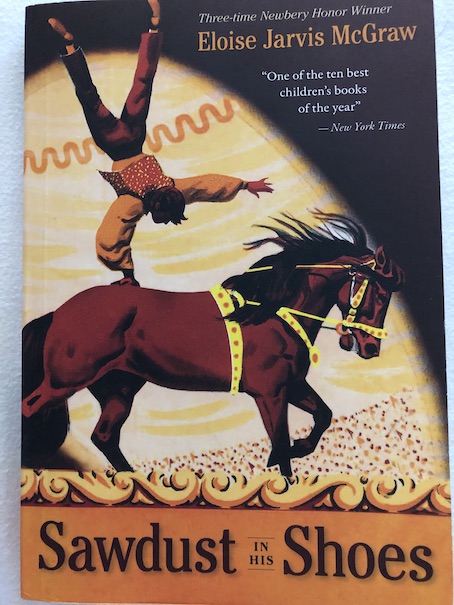

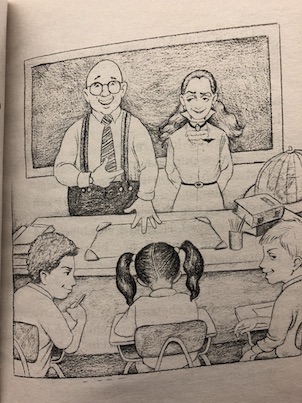

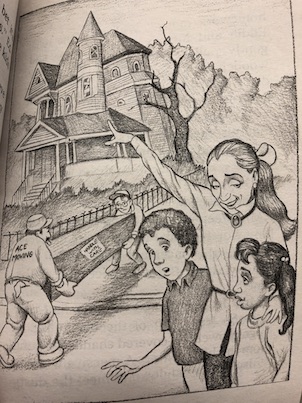

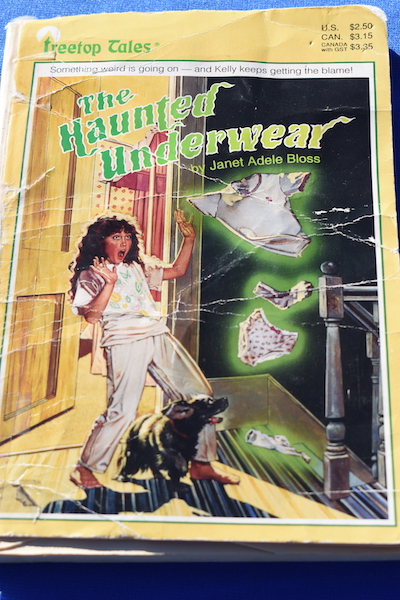
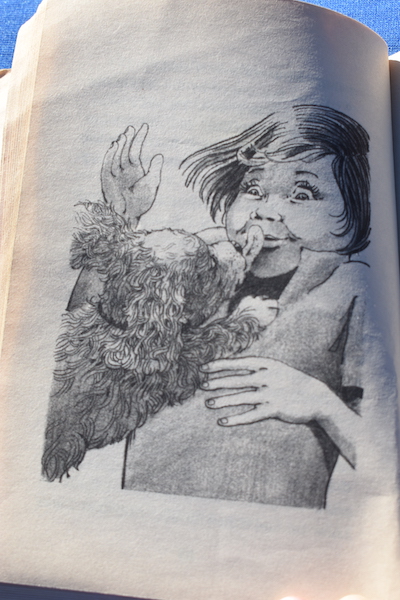


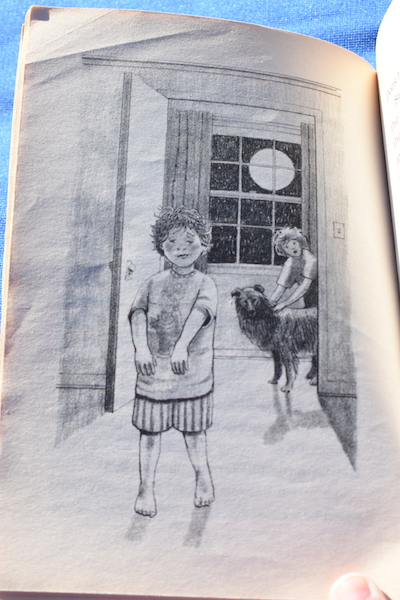
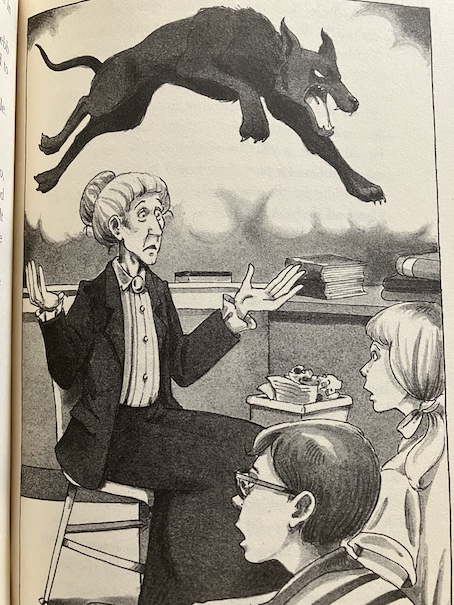
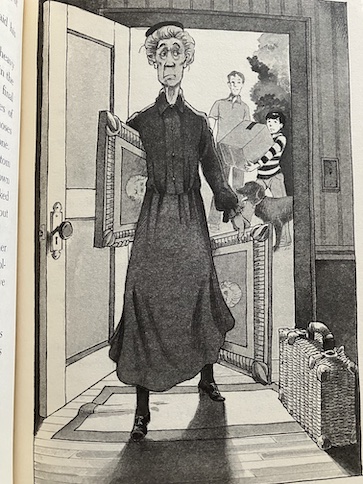
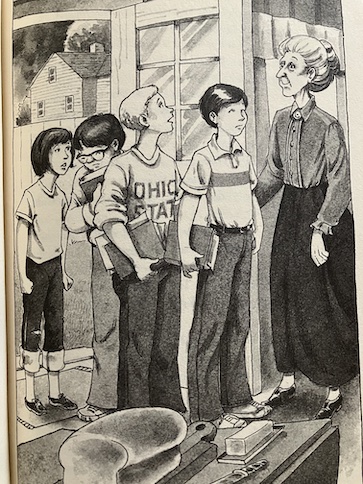
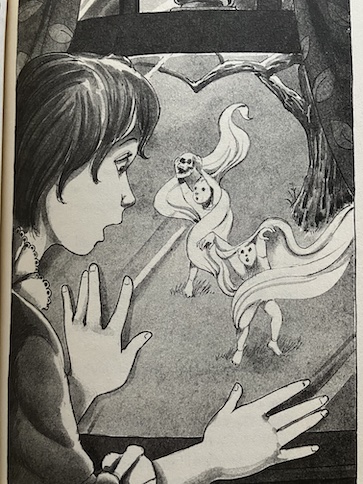
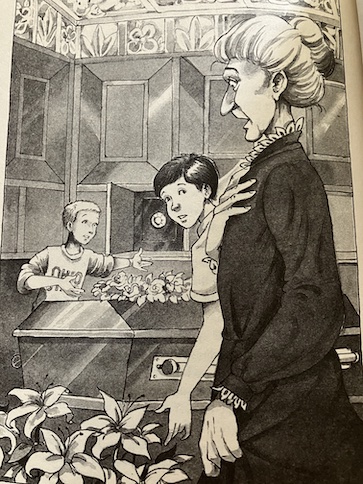

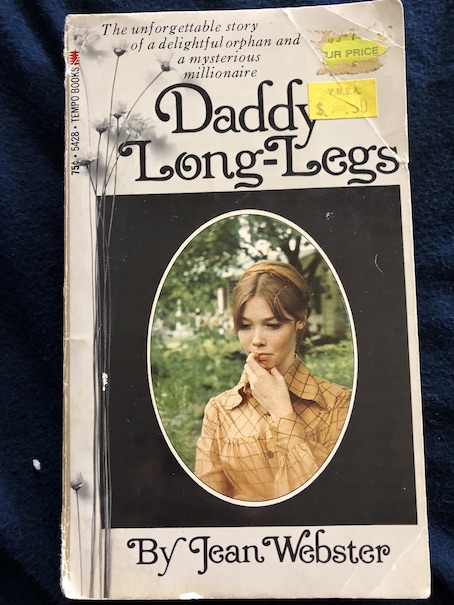
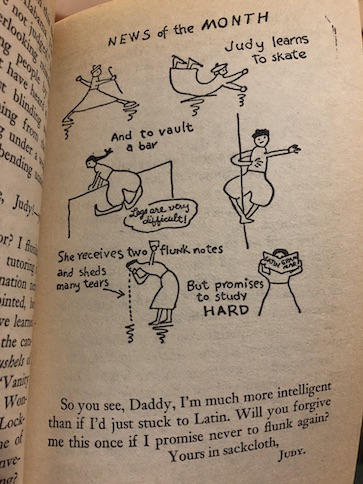


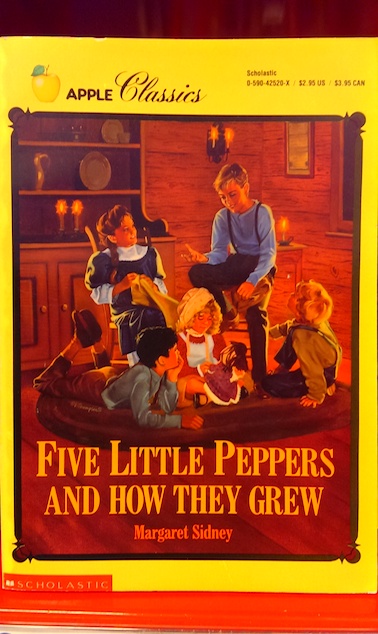
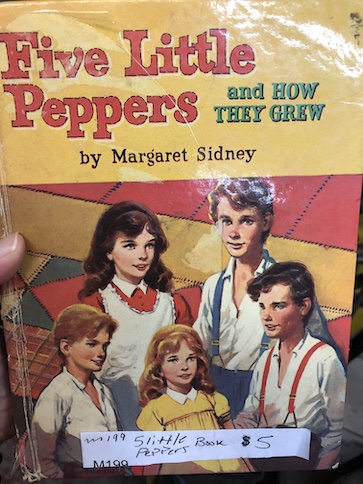
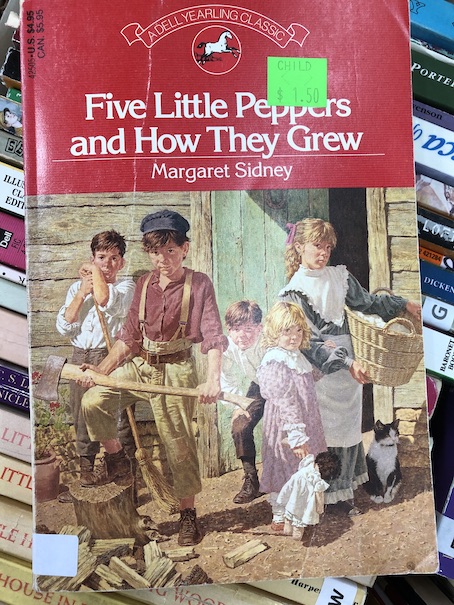

 Then, the family receives word that Captain Carey’s brother is in failing health and that his business partner, Mr. Manson, is seeking to place his daughter, Julia, with a relative. Mr. Manson has already spoken to a cousin of the family about Julia, but this cousin has refused to take her. The now-fatherless Carey family knows that taking on another relative will be an added burden on them, but Julia has no other family and nowhere else to go, so they see it as their duty to help her. Admittedly, none of them likes Julia very much. They remember her as a spoiled child who was always bragging about the wonderful things that her wealthier friend Gladys Ferguson had or did. Even now, the Ferguson family has invited Julia for a visit before she goes to live with her aunt and cousins, but unfortunately, they have no intention of adopting her or even trying to care for her until her father is well themselves. Nancy sees them as simply spoiling Julia and preparing her for a life that the Carey family can’t possibly support.
 A character that appears in the movie, Ossian “Osh” Popham, is also in the book, although instead of being the store owner, he’s a local handyman who helps the family get the house in order. His children, also characters in the movie, are in the book, too, although I didn’t like the way the book described his daughter, Lallie Joy. It says that “she was fairly good at any kind of housework not demanding brains” and that she “was in a perpetual state of coma,” in case you didn’t understand that she’s basically stupid. I always hate it when stories make a character intentionally stupid. I did appreciate her explanation of her name, though: “Lallie’s out of a book named Lallie Rook, an’ I was born on the Joy steamboat line going to Boston.” I had wondered where the name came from.
 When Lemuel tells the Careys that they can stay in the house for as long as they like, unless his son Tom wants the house, Nancy begins thinking of Tom as a possible threat to her family’s happiness. (She thinks of him as “
 Jestress's Forgotten Books and Stories