Patrick: Patron Saint of Ireland by Tomie dePaola, 1992.
This picture book is about the life and legends of St. Patrick, who is the patron saint of Ireland and the reason for St. Patrick’s Day, which is mainly celebrated in modern times by wearing the color green, and often, a shamrock or shamrock symbol. Some places also hold parades and other special celebrations.
The historical St. Patrick was born in Britain during the time when it was ruled by the Roman Empire. When he was young, he was abducted and sold into slavery in Ireland.
In Ireland, Patrick was forced to work as a shepherd for the man who bought him. Roman Britain was Christian, but Ireland was still pagan at this time. Patrick found it a strange and lonely place, and he prayed that he would be able to go back home.
Later, Patrick got his chance to return home aboard a ship that was carrying hunting hounds to be sold in France. Patrick tried to buy passage on the board, but the captain was reluctant to take him at first because he thought that Patrick was probably an escaping slave, and he didn’t want to get in trouble for taking him. However, the dogs on ship kept howling when Patrick was sent off, and the captain noticed that when Patrick was on the ship, the dogs were quiet, so he changed his mind.
When they reached France, the area where they landed was deserted because there had been a war. The men and dogs were hungry and couldn’t find anyone to help them. The captain said to Patrick that if his God was so powerful, why didn’t he pray and get God to help them? Patrick did, confident that God would help, and a herd of pigs appeared, providing them with food.
Patrick eventually returned home to Britain and rejoined his family, but he had dreams about Ireland in which a man called Victoricus appeared with letters from the Irish people, asking Patrick to return. Patrick felt that he was called to bring knowledge of God and Christianity to Ireland. He decided to become a missionary.
Patrick studied and worked his way up to become a bishop, and when he returned to Ireland, he brought others with him to help in his work. Upon his return to Ireland, he became friends with an Irish chieftain named Dichu, who also became a Christian. He gave Patrick a barn, which Patrick turned into the first church in Ireland.
Patrick and his followers suffered opposition in Ireland. At one point, a king tried to kill Patrick and ended up killing his chariot driver and friend, Odran, instead. In spite of that, Patrick persevered.
Patrick died on March 17, 461. After his death, he was declared a saint, the patron saint of Ireland, and the date of his death became his saint’s day. Many legends grew up around him, and the book explains the most popular stories.
Among the most popular stories about St. Patrick are that he drove all of the snakes out of Ireland, frightening them away by beating on a drum. Another story says that he used the shamrock to explain the concept of the Holy Trinity, which is why the shamrock is an important symbol of Ireland and St. Patrick’s Day.
The book is available to borrow for free online through Internet Archive.
The House of Dies Drear by Virginia Hamilton, 1968.
Thomas Small, a thirteen-year-old African American boy, is moving from North Carolina to Ohio with his family in order to live in an old house with an unusual history. His father is a history professor and has rented a house for them that was once owned by an abolitionist named Dies Drear. Dies Drear was part of the Underground Railroad that smuggled escaping slaves out of the South around the time of the Civil War, and his old house still has secret passages from that time. The local people believe that Dies Drear still haunts the house along with the ghosts of a couple of slaves who never made it to freedom.
The caretaker of this strange old house is a strange old man called Mr. Pluto. He lives on the property in a cave that he has made into a house. Mr. Pluto frightens Thomas, and Thomas is sure that he’s hiding something.
The Smalls’ new town is a close-knit community that doesn’t welcome outsiders. The people seem unfriendly and suspicious of the Smalls, especially the Darrow family. They know something about the secret passages at the house, but Thomas’s parents don’t want him poking around the passages anymore after he is briefly lost in them. However, that is where the real secret of the house lies.
Thomas comes to believe that someone is sneaking into the house at night, using the old secret passages. One night, this person leaves three small metal triangles at the bedroom doors. These mysterious triangles seem to fit together, but there also seems to be a missing piece. The Smalls have no idea what these pieces mean or who put them there. Mr. Pluto holds many of the answers, and he is going to need their help to protect the secret that he has kept safe for many years.
The book is currently available on Internet Archive (multiple copies). The book won the Edgar Award for Best Juvenile Mystery in 1969. There is also a made-for-tv movie version of the book. Sometimes, you can find it or clips of it on YouTube.
There is a sequel to this book called The Mystery of Drear House. There are only two books in this short series.
My Reaction and Spoilers
I love how the Smalls help Mr. Pluto deal with the Darrows in the end, using the ghost stories about the house to their advantage. There are hints that besting the Darrows, although it hurt their pride, may actually lead to a better relationship with them in the future.
Thomas and Pesty (a nickname for the young adopted daughter of the Darrow family, her real name is Sarah) are also memorable characters. Pesty is brave for learning the secret that her family has tried to learn but choosing to protect it instead of reveal it. Thomas is a thoughtful boy who, because of his earlier upbringing, actually feels more comfortable around older adults than around people his own age.
If you’re wondering about why the abolitionist had a strange name like “Dies Drear”, it isn’t exactly explained. At one point, the story says that he was from New England. A possible explanation that I found online is that Dies might actually be another form of the Germanic surname Diess, which may be related to the Biblical name Matthias. Perhaps Dies Drear might have some Germanic ancestry. Some people use the mother’s maiden name as a first or middle name for a child. But, that’s just a theory.
Some teachers use this book to introduce students to the concept of the Underground Railroad. While I was researching the book online, I also found this pdf of classroom worksheets related to the story. (I had a link to a different set of worksheets before, but those were removed, and I found a different set.) If you’re looking for additional lesson plans, I suggest looking at Teachers Pay Teachers, where teachers can buy lesson plans from other teachers. (I’m not sponsored by them, I just know about them from a friend who is a teacher and think it’s a useful resource.)
One final point that I would like to make is that there are no white characters in the story. Dies Drear was a white man, but he doesn’t actually appear in the book, having died over 100 years before. Every character who does appear in the book is black. The funny thing is that I can’t remember any point where the book explicitly describes the characters as black. It might be my memory playing tricks on me, but I seem to remember knowing that they were all black as I read the book, but I can’t think now why I knew it, and I don’t remember a point where the book actually described anyone’s appearance. I think I probably knew it partly from context, perhaps subtle hints in the story, but it might also be that I knew what the book was about before I read it because someone told me. I might even have seen the movie version at some point before reading the book, although I’m not sure now because it’s been years since I first read this story, and I can’t remember if I read the book or saw the movie first. The movie or clips of it sometimes appear on YouTube. It’s also available on dvd, although I haven’t seen many copies available.
This book is a companion book to the Samantha, An American Girl series, focusing on Samantha’s best friend, Nellie. Personally, I don’t like the companion books to the main American Girls books as well as the original books, but this book does follow up on the events to the main series. At the end of Samantha’s series, Samantha’s aunt and uncle took in Nellie and her sisters, Bridget and Jenny, after their parents died. Nellie and her sisters were from a poor family and had to start working from a young age before their parents died. After their parents died, their disreputable uncle abandoned them, and they were sent to an orphanage before Samantha discovered where they were. Samantha’s aunt and uncle are wealthy, and the girls’ lives have improved considerably.
Nellie’s happiness is threatened by the sudden reappearance of her Uncle Mike. Uncle Mike sees Nellie walking down the street in her nice new clothes and wants to know what rich family the girls are living with. Nellie runs away from him, but he threatens to find out where she’s living and to take her and her sisters back, saying that it’s his right as her uncle. He says that he means to put the girls to work earning money for him. Nellie is afraid that he might be able to reclaim them from Uncle Gard and Aunt Cornelia because he is a blood relative.
At first, Nellie is afraid to tell anyone that she’s seen her uncle and that he threatened to take her and her sisters back. Before her parents died, her mother made her promise to look after her younger sisters, so Nellie makes up her mind that’s what she’s going to do.
Nellie worries about the future for her and her sisters. She feels like she doesn’t fit in with the wealthy girls at Samantha’s school, who have had very different lives from hers, and the lessons they learn are the type of lessons for fine young ladies who will marry rich men and spend most of their time raising families, overseeing a house with servants, and entertaining friends and their husbands’ business associates, not preparing for practical professions outside the home. Nellie thinks that it’s important that she have some kind of job skills because the future can be very uncertain, and she wants to know that she can provide for her sisters, no matter what happens.
Samantha senses that Nellie is unhappy, and she asks her if she likes living with Uncle Gard and Aunt Cornelia. Nellie tells her that she does, but she hesitates to explain what’s really worrying her. Instead, she lets Samantha think that she just wants to feel like she’s doing something useful for the family. Before her parents died, Nellie used to get sewing lessons at a settlement house (a place where immigrant families could go to learn English, new job skills, and other skills they would need in their new lives in the United States) run by Miss Brennan. Aunt Cornelia is involved with many good causes, and she wants to visit a settlement house and get an introduction to Miss Brennan. Because Nellie knows Miss Brennan, she can help arrange that. It’s in a rough part of town, but Nellie is more accustomed to navigating rough neighborhoods than Samantha or her aunt. It also occurs to Nellie that she could ask Miss Brennan what to do about Uncle Mike.
Miss Brennan is glad to see Nellie, and she lets her show Aunt Cornelia and Samantha around the settlement house. They have many different types of classes for children as well as adults. Nellie says that she likes the practical classes that she used to have there, and even the types of dances that they do seem more practical than the more purely artistic ones that they do at the school she now attends with Samantha. Aunt Cornelia is pleased with the classes that they offer for women, and because she is interested in women’s education, decides that she wants to help out at the settlement house. However, the visit to the settlement house leaves Samantha irritated for reasons that Nellie doesn’t fully understand.
As Nellie begins spending more time with Aunt Cornelia at the settlement house, Samantha begins spending more time with Bridget and Jenny, and Nellie becomes jealous of how Samantha seems more like their older sister than she is. However, the others still don’t know about Uncle Mike’s reappearance, and Nellie is still fearful of what he might do and what will happen to her and her sisters if Uncle Mike tries to take them away. She feels like her only option is to try to prepare herself for a better job than that of factory worker.
When Nellie finally gets the courage to tell Miss Brennan about her worries, Miss Brennan tells her that she needs to discuss the situation with Uncle Gard. Uncle Gard is a good man, but he’s also a lawyer, and he will know how to legally stop Uncle Mike from trying to take custody of the girls. However, Miss Brennan adds that, whatever else happens, Nellie will still need to make some decisions about her future and what she wants to do with her life and education. The more Nellie thinks about it, the more certain she is about what she wants to do. She wants to become a teacher, like Miss Brennan.
Nellie provokes more drama by applying to the boarding school in Boston where Miss Brennan said that she trained to be a teacher without talking to Aunt Cornelia, Uncle Gard, or Samantha about her decision or about her uncle. However, when the truth comes out about Uncle Mike, everyone understands that she was trying to hide and protect her sisters from him. It turns out that Uncle Gard has actually been looking for Uncle Mike because he already has the documents that he needs to legally adopt Nellie, Bridget, and Jenny, and he just needs Uncle Mike to legally release them into his custody. At first, Uncle Mike tries to extort money from Uncle Gard for the girls, but Nellie gets up the courage to tell him off, promising that if he doesn’t sign the papers and leave, she’ll tell everyone about how he stole all of their money and abandoned them to freeze the last time they were in his custody. The book ends happily, with Aunt Cornelia and Uncle Gard adopting the girls and understanding Nellie’s ambition to be a teacher. They enroll Nellie in a school in New York that teaches the skills she really wants so that she can continue living with them and not go to Boston. It also turns out that Samantha was mostly uncomfortable at the settlement house because she felt so sorry for the young children there and that spending time taking care of Bridget and Jenny was part of her way of trying to help Nellie by leaving her more free to do some of the things that she felt like she had to do. With everything out in the open, Nellie and her sisters are able to more fully become part of the family.
In the back of the book, there is a section with historical information about orphans and adoption in the early 1900s. There were not many laws and regulations governing care of orphans. Usually, orphans would be taken in by relatives, like Samantha was when her parents died. If a child didn’t have any relatives who were willing and able to take them, the child might be sent to an orphanage and possibly sent west on an orphan train as Nellie almost was at the end of the Samantha series. Families didn’t usually adopt children from different levels of society.
Settlement houses were important resources for poor immigrant families, and the education they received allowed immigrants to enter higher professions than servant or factory worker, which had been the primary source of income for many of them. It was common for settlement houses to help train young women to become teachers. There are still similar institutions and organizations in operation in 21st century America.
The book is available to borrow for free online through Internet Archive.
My Reaction and Further Historical Information
Part of the reason why I don’t like the companion books as much as the original American Girls series is that they tend to get more dramatic than the original books, and sometimes, I feel like the attitudes of the characters are less realistic for their time periods than they were in the original books. I think what made the original books more realistic was the restraint of the stories – they had their share of excitement and sometimes drama, but they never went overboard. The return of Nellie’s disreputable uncle struck me as both unlikely and unnecessary to Nellie’s and Samantha’s larger stories.
The historical details in this book are good. What they say about orphans of the time is basically true, although they note in the historical information section in the back of the book that Nellie’s experience of being adopted by a wealthier family was not typical of the time, and I think that’s part of what bothers me. Adoptions in general during the early 1900s were less formal than they are in modern times, and the idea of Uncle Gard hiring a private detective to find Uncle Mike and get him to sign legal documents doesn’t seem entirely realistic. I think it would have been more realistic to me the way that the last Samantha book ended, with Uncle Mike leaving and the assumption that none of the characters would see him again.
The reason why Nellie and her sisters were sent to the orphanage and why the orphanage was considering sending Nellie west on the orphan train was that no one expected that Uncle Mike would ever want to see the girls again. He’d already taken everything he could from them and left with them with no concern for what would happen to them. In the time that has passed since then, I would have expected that Uncle Mike would already have gotten into trouble that would keep him busy and out of their lives, maybe ended up in prison for being drunk and disorderly or hopping from job to job or begging for money as their little money ran out. Even if Uncle Mike had some thought of finding the girls, I don’t think it’s likely that he would have succeeded or even gotten close on his own because he is not that bright and he is not the kind of person who makes friends in places where he’s been before. I doubt that his former neighbor who took his nieces to the orphanage would have told him much if he had shown up again, looking for them. She knew that he was a drunk who abandoned the girls, and she made it clear that she didn’t like him. The people at the orphanage would have probably sent him away with no information because they would probably view the situation as closed since the girls are already placed out and Mike may not even have any proof of his identity and relationship to the girls. There is no such thing as a driver’s license during this period and many people did not even have birth certificates, so it’s possible that the people at the orphanage could simply choose to disbelieve this disreputable character and send him away. When I was watching a documentary about the orphan trains, former orphan train riders said that the orphanages that sent them west deliberately took notes from them that had their living parents’ addresses and otherwise cut off contact with living parents because they wanted the children to sever their ties to their difficult pasts and devote their attention to their new families, not maintain contact with the parents who were unable to care for them financially, so I wouldn’t expect that anyone at the orphanage in these books would go out of their way to reunite the orphaned girls with a rather shady uncle when they knew that the girls were already placed with a wealthy family and no longer their responsibility. Without help, which would be unlikely to be forthcoming, it doesn’t seem likely that Uncle Mike would be able to stumble on the girls by accident. As mentioned in Changes for Samantha, New York is a big city, people can be difficult to find if you don’t have a hint of where to look, and the wealthier part of the city where Nellie and her sisters live now is not a part of town where a guy like Uncle Mike would be likely to hang out. They could all easily live in New York City for years without meeting each other.
I feel like the situations in the story were a little contrived. By now, I would have thought that Nellie would know that Uncle Gard is a lawyer and would be the best person to ask about the laws. I don’t recall the earlier books saying what Uncle Gard did for a living, but Nellie lives with him now, and I would think that someone would have mentioned Uncle Gard’s profession by now. In the book, it oddly seems like as much of a surprise to Nellie as it is to the readers. I could believe that Nellie would go to the settlement house and do volunteer work there with Aunt Cornelia because it was already established in the previous books that Aunt Cornelia supports good causes, and although women of her level of society didn’t usually work for living, supporting good causes and charitable works would have been acceptable. Nellie’s level of knowledge seems a little odd, considering that she needed extra tutoring in basic subjects, like reading, in Samantha Learns a Lesson. In that book, Nellie never mentioned settlement house lessons, which she would have done if it hadn’t been a sudden decision to insert that this in book. Here, Nellie talks about classes that she had at the settlement house, where I would have expected to have more lessons to improve her reading, and it seems like she learned more there than she seemed to know before, even knowing a few words of foreign languages. In Samantha Learns a Lesson, one of Nellie’s skills was her ability to do math quickly handle money because she used to do the shopping for her mother, and in this book, she mentions that she helped to teach immigrants about American money, which she never mentioned before. These things are necessarily contradictory, but it all just seems a little off because they don’t quite fit into Nellie’s established character and history, and it implies that Nellie has had more education and training than she seemed to have before. It’s not necessarily impossible for a girl of Nellie’s time to know some of these things, but it’s the departure from what was already established about Nellie and her situation in life than kind of grates on me.
I think it could be reasonable for Nellie to develop the ambition to be a teacher. Even Samantha has previously some interest in that direction, having helped to tutor Nellie before. Not all women of this time went on to higher education, but those who did might attend a normal school, which is basically a college that focuses on training teachers. By contrast, the daughters of wealthy, high society families would be more likely attend a finishing school that emphasized social skills and entertaining more than academics. Both Samantha and Nellie are about twelve years old during this story and would be a little young for either of these options, but Samantha’s school seems to be more inclined toward preparing the girls for a finishing school. Given Aunt Cornelia’s interest in education and social causes and Uncle Gard’s support of it, I would expect that Samantha would be more likely to attend a women’s liberal arts college when she gets older, preparing her to marry a well-educated and culturally aware man as well as a wealthy one and probably engage in some form of social work and/or the arts in her spare time, but that’s just a guess. (I discussed some of this already in my review of Happy Birthday, Samantha. See also the book Daddy-Long-Legs for a description of what that might have been like for a girl of Samantha’s and Nellie’s time. The book was written a little later in than the time period of this book, but it’s set at about the right time for Samantha and Nellie to be old enough for college and includes characters of approximately their social backgrounds.) This book doesn’t really go into the subject, but if that’s the case, Samantha’s future might not be as different from Nellie’s as it first seems, and there might be a kind of middle path that both of them could choose. The Finch College in Manhattan, which was a fairly new preparatory school in Samantha’s and Nellie’s time, seems like it would have been a good option for both Samantha and Nellie, catering to upper-class girls while focusing on a more practical liberal arts education than the less academic finishing schools. Its founder, Jessica Finch, was a women’s rights activist and may have moved in similar circles to Aunt Cornelia. Her attempts to balance theoretical and practical knowledge sound like they would have appealed to the characters in the story. I’m not an expert on the Finch College, only having heard a little about it, but I think a school like that would present an intriguing possibility for the girls’ futures.
Mary (or “Mairi,” they spell it both ways) Urquhart and her cousin Duncan had always loved each other. They were always close as children, feeling more like two parts of one person than separate people, and they always imagined that they would spend the rest of their lives together. Then, Duncan’s parents, Mary’s Uncle Davie and Aunt Jean, decided that they wanted to travel to Canada, while Mary and her parents stayed at home in the Scottish Highlands. Duncan hadn’t really wanted to go. He was only eleven, and he promised Mary that when he was older, he would work hard to earn enough money to come back. However, Duncan never came. He only sent Mary a brief letter about the dark forest where he now lives. Mary feels like the Duncan she knew is gone forever.
Four years later, in 1815, when Mary is fifteen, she has a strange feeling, like Duncan is calling to her from across the ocean. All of her life, Mary has had a strange gift for seeing into the future or reading others’ minds. The “gift of two sights,” people call it, but Mary doesn’t feel like it’s a gift. It makes her uneasy, and she can’t control it. She hears Duncan’s calls to her through her “gift,” but she is afraid because she doesn’t want to leave Scotland. She wants Duncan to come to her.
However, she is unable to resist Duncan’s calls. She asks her parents for help with money for her passage to Canada, but they tell her that she is wasting her time and that, even if they sold their family’s most precious heirloom to give her the money, there would not be enough for the return journey. A family friend gives her the money instead, and although Mary doesn’t really want to accept it and doesn’t really want to go, she can’t help herself.
The journey to Canada is miserable, and when she finally arrives at the place where her aunt and uncle live, alone and without money, she learns something which she thought she had sensed during the journey: Duncan is dead. Duncan committed suicide while Mary was still on the ship to Canada. Mary has arrived too late. To make matters worse, one of the family’s neighbors, Luke Anderson, tells her that her aunt and uncle gave up the idea of farming in Canada and have already begun the journey back to Scotland. Mary has no money to follow them, and they have no idea that she’s now in Canada, alone.
Luke takes Mary to Mrs. Colliver, who tells Mary a little about her family and their life in Canada and why they decided to leave. Mary is devastated by the loss of Duncan and tries to tell Mrs. Colliver about how she felt that Duncan had been calling out to her, but Mrs. Colliver tells her that she doesn’t believe in ghosts or things like that. Although Mary knows that her “gift” is real and so are spirits, she learns that others in the community share Mrs. Colliver’s no-nonsense, disbelieving attitude toward such things. Mary, in her despair, wants to rush straight back to Scotland, but Mrs. Colliver, with her practicality, points out that Mary can’t possibly get there without money. She tells Mary that she can stay with her family, that she will give her room and board in exchange for help with chores and that she can earn extra money for weaving and spinning. Mary is clumsy at household chores because she was always better with animals at home, but when Mrs. Colliver sees Mary’s skills with animals, she is appreciative.
Life is hard in the small farming community. Mrs. Anderson, Luke’s mother, explains to Mary that most of the people who live there are refugees. When they were young, their families moved there from the Thirteen Colonies that now make up the United States because they were Loyalists. When the Revolution came, they couldn’t stay, and so had gone north to Canada, where they struggled to establish a new community for themselves with their small homesteads. During her time there, Mary witnesses the death of a baby and the hardships of this strange place, seeing why Duncan didn’t like it there. They tell her that Duncan was a strange boy who would seem bright and happy one day, but black with depression the next, something Mary remembers in him even before he went to Canada.
The people are kind and welcoming to Mary, although they find her a bit strange. As Mary struggles to make a life for herself, hoping to earn enough money to return home, she slowly comes to appreciate Luke’s kindness and help. She learns healing arts and the use of herbs from another woman in the community, developing new skills. In helping others, she earns their appreciation and a place in their community. Luke Anderson becomes very fond of Mary, but she still mourns for her lost Duncan. In spite of his kindness, she doesn’t see how she can make this strange, hard, dark forest of Canada her home, where it doesn’t even seem like the spirits she believed in and that seemed to protect her when she lived in Scotland exist.
Mary is melancholy and feels like she doesn’t belong in Canada. It distresses her that she can no longer feel Duncan’s presence . . . although she can oddly hear him calling to her sometimes. Mary also unnerves people when she makes predictions that come true and speaks about ghosts and spirits. When she almost gives in to her homesickness and depression and kills herself, lured to the spot where Duncan drowned himself by his ghostly calls to her, she finally sees Duncan’s death for what it really was and finds the courage to refuse to follow him down the dark path that he chose for himself and to fight for the life she has been building, the one she really wants to live.
The book is available to borrow and read for free online through Internet Archive.
My Reaction
This book is part of a loose trilogy, involving ancestors and descendants of the Anderson and Morrisay families. All of the books take place in or near Hawthorn Bay in Canada, but at different time periods. Some of the characters are psychic, like Mary, or have the ability to travel through time, like Susan in The Root Cellar, who is apparently Mary’s granddaughter. The connection between Mary and Susan is never stated explicitly, but it’s implied by their last name, shared psychic abilities, and comments that a friend makes about Susan’s grandmother in The Root Cellar. In this series, the characters from each of the books generally don’t appear in any of the others (except, perhaps, for Phoebe, who appears briefly in this book and is the main character in the third story). Most of the time, you only know about the family connections by reading the books and taking note of the last names. The books go backward in time as the series progresses, and the connection between the Anderson and Morrisay families is only obvious in The Root Cellar.
With the deaths that occur in the book, discussions of suicide, and the influence of Duncan’s selfish, malevolent spirit, this is not a book for young kids. I’d say that readers should be middle school level or older. There is also some implied sex and pregnancy out of wedlock when one of Luke’s brothers gets one of Mary’s friends pregnant. Her friend doesn’t give the details of what happened, but from what she says, it’s implied that Luke’s disreputable brother forced himself on the girl and that she went along with it because she didn’t know what else to do. The description of that incident is minimal, but older readers will understand what happened. There is a scandal in the community because of it, and the disreputable brother leaves rather than face the consequences of his actions.
Themes and Spoilers
I enjoyed the book for its references to Scottish folklore, which Mary believes in and seems to be in touch with through her “gift” and for Mary’s growing confidence in her abilities and more mature understanding of what her cousin was really like and what her relationship with him really was. In some ways, I do feel sorry for Duncan because he seems to have been suffering from some kind of mental illness, possibly bipolar disorder or manic depression, which would explain how his moods could shift so abruptly and dramatically. However, Duncan was also a selfish and controlling person. Although Duncan’s death was sad, Mary realizes that his end was of his own making, and it’s not the future she wants for herself. There are some disturbing scenes in the story. Mary witnesses the deaths of others, including a baby, because it is a harsh environment, where people sometimes succumb to sickness or bad weather, although these deaths are not described in too much detail.
There are also some frightening moments, like when Duncan’s ghost almost convinces Mary to kill herself and when he similarly lures a young boy, Luke’s younger brother, to the spot where he drowned and almost kills the boy because Mary finds the little boy comforting and Duncan doesn’t want her to be comfortable and happy. In the beginning, readers see Duncan through Mary’s fondness for him, so the true darkness of his personality isn’t immediately apparent, although I had some misgivings about him from Mary’s first description of how they played together as children. I didn’t like the way she described how he would tease her until she became angry or hurt and then he would sulk until she comforted him. She says that wasn’t really fair, but to me, it was disturbing because I have seen that kind of selfish personality before, and it’s never a good sign. It shows right from the first that Duncan doesn’t really care about Mary’s feelings. He cares only about his own feelings, and he has no interest in changing his behavior out of consideration for her. In fact, the very idea that he should consider her feelings seems somehow insulting to him, even though he supposedly loves her. He just thinks that she needs to reassure him that everything he does is fine whether it is or not. In his view, Mary is obviously wrong to feel hurt even when he tries to hurt her because he has more right to his feelings than she has to hers and he should be able to behave any way he wants with no consequences. That’s what Mary’s first description of Duncan said to me. As soon as I saw that, even though some might consider it just the actions of an immature child, I had some suspicions about him.
My suspicions were somewhat confirmed before Mary left home. Her mother told her that she didn’t think Duncan was worth chasing after, calling him sulky and thoughtless, but the full truth of that doesn’t strike Mary until she confronts his spirit where he died. Because people in Canada don’t like to talk about Duncan much, when Mary first hears about his death, it isn’t immediately clear that he killed himself or how. At first, it’s just somewhat implied, but when Mary is almost lured to her death, she sees the full truth about Duncan.
Mary comes to realize that, although everyone, including Duncan and herself, felt like the two of them were two parts of the same person, they really weren’t. Mary sees that not only can she live without Duncan, she has been living without him for years. She lived without him for a time in Scotland, and she’s been living without him in Canada, and she can continue to live without him wherever she chooses to live the rest of her life. When she was younger, she had thought of Duncan as being the stronger of the two of them because he was not plagued by the same “gift” she was, but she realizes that she is actually the stronger of the two of them. Duncan’s “love” for her had also always been a selfish one. He couldn’t bring himself to work hard and return to Scotland for her sake, but he expected her to give up everything, even her own life, to join him in Canada and in death.
When Mary realizes all of this, Duncan’s spirit loses its hold over her, and she comes to see that the darkness in him was darker than the forests that had seemed so frightening to her before. Free from the shadow of Duncan’s death and his selfish spirit, Mary is able to see the beauty of Canada and to be more open to the good people around her, forging a new future with a better man.
Twelve-year-old Winnie Brown loves mazes, and she is very surprised when one shows up among all the other graffiti on the schoolyard. The maze is painted on the ground in silver and is big enough for a person to walk through. Winnie and her friend, Harry, try to walk the maze, but it makes them dizzy at first. Then, a cat they’ve befriended finds its way to the center of the maze and disappears right before their eyes!
When Winnie tries to tell her mother about it, her mother doesn’t really pay attention. Although Winnie and Harry try to explain it away as an optical illusion of some kind, Winnie is still convinced that there is something strange about the maze. She feels drawn to it, and she tries to walk it one more time, even though Harry is afraid.
The next thing Winnie knows is that she’s in a hedge maze. She faints, and when she wakes up, she finds that she is being cared for by members of the Taylor family, who owned a large house in the area about a hundred years ago.
Somehow, Winnie must find the path through the maze again in order to go back home. According to the Taylors’ creepy housekeeper, Violet Minot, the only person who really knows the maze is the mazemaker, a distant cousin of hers who disappeared many years ago. Winnie wants very badly to return to her own time, but she fears that Mrs. Minot may have diabolical plans of her own for the mazemaker.
The book is available to borrow for free online through Internet Archive.
Themes and Spoilers
Winnie learns that a couple hundred years before the time of the Taylors and Mrs. Minot, a cousin of Mrs. Minot’s family came to live with them. He was an orphan, and the father of the family liked him better than his sons because he was a good worker, and they were trouble-makers. The cousin, William Sparrow, was afraid of his cousins because he knew they were jealous of him. His grandmother was a witch, and she had taught him a little magic about mazes, like the one that was made near the village in England where he grew up. William built the maze and used its magic to escape from his cousins, who were about to kill him. He came to the Taylors’ time, when the maze had been built into a hedge maze and found work as the Taylors’ groundskeeper.
However, even though William was not murdered by his cousins, they were blamed for his disappearance and looked at with suspicion for the rest of their lives. The locals, having noted their hostility toward their cousin, believed that they probably murdered William and hid his body somewhere. In the end, they were silently judged for the crime that they wanted to commit but didn’t actually commit because they never had the chance to do it. In a way, it’s a kind of justice, although Violet Minot doesn’t see it that way.
Violet Minot, one of their descendants, has been searching for years for the secret to the maze. She believed that if her ancestors hadn’t been blamed for William’s disappearance, her family might have owned the big house and the estate around it. She recognized William when he appeared in her time and threatened to tell everyone in the village who he was if he didn’t share the secrets of the maze with her. To escape her, William went through the maze again and ended up in Winnie’s time. He painted the maze on the ground where it was supposed to be, although it had been covered up by concrete for the schoolyard. Then, William was picked up by the police for defacing public property. His cat roamed the area and made friends with Winnie and Harry.
When Winnie goes back in time through the maze, Violet tries to use her to learn the secrets of the maze. Winnie eventually figures out how to get home because Violet’s great-aunt tells her that there should be an extra turn in the maze, one that isn’t marked, which she made by accident before. Can Winnie and William both outwit Violet and get back to the times where they both belong? Where does William even belong? If he can’t go back to where he came from, where should he go?
The story ends happily and something that Winnie knows from her time settles the matter of where William should live the rest of his life. There is one person in time who loves him and never stopped looking for him when he disappeared from her time. William’s time quandary and the existence of his magic maze have accidentally trapped other people in time, and when he resolves his problem and decides where he really belongs, he is able to free the others who were trapped and put an end to the magic.
Charlotte Mary Makepeace is a new student at a boarding school in England. The school is big and confusing, and there are so many new people to meet that she immediately feels overwhelmed. Starting life at a new school can be intimidating for anyone, but things are about to get particularly strange for Charlotte.
An older girl, Sarah, helps Charlotte to find her room and choose a bed, recommending a bed by the window. Charlotte is a little puzzled at why Sarah singled her out and helped her, and the other girls are jealous that she got to the room first and got first choice of the beds. Still, Charlotte is grateful. She is exhausted, and she feels like she isn’t herself. When she wakes up in the morning, she really isn’t herself.
The room where Charlotte sleeps is called the “Cedar” room, and when she first enters the room, the name puzzles her because there are no cedars nearby. However, when Charlotte wakes up in the morning, there is suddenly a large cedar outside the window. The tree did not grow during the night. In Charlotte’s time, the cedar is gone, but Charlotte is now back in the past, when the cedar was still there. Things in the room are arranged differently, although Charlotte’s bed is still in the same place, and instead of seeing her roommates, Charlotte finds herself alone with a girl she has never seen before, who calls her “Clare.”
Charlotte is very confused. Earlier, she was feeling like she wasn’t herself, and now she has the sense that maybe she has really become someone else. Charlotte doesn’t notice any differences about herself in the mirror, but the other girl doesn’t seem to notice that she’s not Clare, whoever Clare is. The girl just keeps talking to Charlotte as if they already know each other. The other girl’s name is Emily, and it turns out that she is Clare’s younger sister. Charlotte finds herself feeling toward Emily the way that she feels toward her own sister, Emma.
Charlotte is forced to go through the rest of the day, her first at boarding school, as Clare. People keep talking about “the war,” and Charlotte doesn’t know what war they mean at first. When she went to bed, it was the 1960s. At the end of a very confusing day, she returns to bed in the Cedar room, where she finds a diary with the name “Clare Mary Moby” written on it and the date, September 14, 1918. The diary really makes Charlotte realize that she has spent the entire day in the past, and she further realizes that the war everyone was talking about is World War I. However, there is nothing else for Charlotte to do but go to bed. When she wakes up in the morning, she is once again Charlotte. Emily is gone, and Charlotte is back in her own time with her regular roommates. However, it quickly becomes clear that this was not just a dream, and this strange incident repeats itself each day, after Charlotte sleeps in the same bed.
Whenever Charlotte shifts to take Clare’s place in the past, she loses a day in her own time, which helps to convince her that she is not dreaming when she is Clare. Every other day, Charlotte switches places and times with Clare, and she sees the school as it was in the past, toward the end of World War I. Apparently, Clare is living Charlotte’s life whenever Charlotte is living hers, and nobody around them seems to have noticed the switch. Charlotte has no idea why this is happening, other than the fact that she and Clare happen to be sleeping in the same bed, in the same room.
Charlotte
is fascinated by her trips to the past, but they are disorienting. She now has two sets of names to learn, the
people in the past and the people in the present. There are different school rules in the past,
too, and she was still getting used to the rules in her own time. Charlotte and Clare also need to do some of
each other’s homework for classes, and there are some things they can’t
do. Charlotte can’t write an essay about
Clare’s holidays because she has no idea what Clare did on her school holidays,
and Clare is very bad at arithmetic, giving Charlotte bad grades.
The next time she makes the switch, Charlotte learns that Clare and Emily do not usually sleep in the Cedar room. Because of the Influenza Epidemic of 1918, girls have been shifted around as the sick ones are quarantined. Meanwhile, in the 1960s, Clare has created a new diary in an exercise book with Charlotte’s name on it. In the book, Clare has written a letter to Charlotte about their situation. She asks Charlotte to look after Emily when they’re together and to write messages back to her. Clare doesn’t think they should tell Emily about what’s happening. Clare worries that Emily will be confused and frightened.
However, Emily soon discovers the truth, and Charlotte comes to rely on her as the only person in the past who knows who she really is. Emily notices differences between the way Charlotte behaves and the way that Clare behaves, but they are uncanny in their resemblance and behavior in other ways. In many ways, Emily is bolder than both Charlotte and Clare, although her boldness is often to the point of being brash or callous. She is sometimes impatient with Charlotte and Clare’s softer natures, but their apparent softness is due to their greater sense of life’s consequences and their sense of responsibility for Emily. Emily finds talk of the war and bombings exciting, but Charlotte and Clare are both aware of the dangerous reality. As Emily gets to know Charlotte, she points out the ways that she and Clare are similar yet different, and she says that the more time Charlotte spends in 1918, the more like Clare she is becoming. Charlotte worries about the resemblance between her and Clare and how natural it is becoming for her to act like Clare.
In the present, Charlotte is initiated into the usual pranks of a British boarding school by her new roommates, and in the past, she sees soldiers in World War I uniforms. In 1918, students whisper about whether a classmate with a German father could actually be a German spy, and Charlotte is introduced to air-raid alarms. In the 1960s, Charlotte’s roommates wonder about her funny moods, her odd need to be alone, and her reluctance to be friends and join them in activities. In both time periods, Charlotte is constantly afraid of giving everything away by saying something that would be out of character for the person she’s supposed to be or asking questions that she should already be able to answer if she were living every day in one time period. The one element that seems constant throughout these shifts is the bed that she and Clare share in the Cedar room. However, Clare and Emily will soon be sent to board with a family in town, only returning to the school as day pupils. When the Cedar room is turned into another quarantine room for the sick, Charlotte is trapped in the past as Clare, and she worries that she may never return home again. What will happen to her, and will she lose her identity as Charlotte, becoming Clare forever?
This book is a modern classic in children’s literature! I decided that I had to read it because so many people have nostalgic memories of this book and have written positive reviews about it. The Cure even did a song and music video inspired by the book. The song even contains words from the book in the lyrics. This is the original music video that goes with the song. (It’s also on YouTube.)
The book is the third book in the The Aviary Hall trilogy. It is available to borrow for free online through Internet Archive (multiple copies). The other two books in the trilogy are also available on Internet Archive, but Charlotte Sometimes is often regarded as the best of the three and is the best known.
Note: Strangely, this book has three different ending, depending on the edition of the book. Older editions (the original and printings from the 1970s) contain the full text, and newer editions are cropped in two different places. The copies on Internet Archive are different editions and have different endings. This one contains the full text of the original. This one and this one have the endings that include Emily’s letter but not the final scene with Charlotte going home from school. The others don’t have the part with Emily’s letter at all. In order to learn the difference between these endings and the significance of Emily’s letter, you’ll have to read the part of my review that includes spoilers.
Further Thoughts
I was amused by the part where Emily laughs at the name Charlotte because she thinks that it’s kind of old-fashioned in 1918, yet Charlotte is from the future. Names often go in cycles of popularity, and certain classic names have comebacks at regular periods. Right now, in the early 21st century, the names Charlotte, Emma, Emily, and Clare (or Claire) are all pretty popular. In fact, Charlotte has seen a recent resurgence in popularity in the United States. Modern children reading this would actually find many of the names very familiar, thanks to a trend of reviving vintage and classic names. In fact, some of the 1918 names are more popular these days than some of the 1960s names, like Janet and Susannah. Don’t worry, they’ll have their turn again.
I also liked the part where Charlotte tries to consider whether she and Clare really look alike. Emily is a little vague about whether Charlotte and Clare really resemble each other, saying that she might have just seen “Clare” in her because Clare was who she expected to see and that she never really looked at her properly until she realized that she was actually Charlotte. Charlotte thinks about a time where she tried to draw herself by studying her own features in a mirror, but the longer she stared at herself, the more disconnected that she felt from the features she was seeing. This is actually a real phenomenon, and I’ve read other books where people have mentioned it. You can get some odd feelings by staring at yourself in a mirror for too long. I’ve tried it myself, and it can get a little eerie, especially if you look yourself right in the eyes and try not to blink. The longer you look, the more eerie it gets. That’s how that old sleepover trick, Bloody Mary, works. This is sometimes called the “strange-face illusion.” Although Charlotte is having a kind of identity crisis from switching places with Clare, this mirror phenomenon is something that anyone can experience.
Further Note: At the time that I first published this review, January 1, 2020, I hadn’t yet heard of the coronavirus, and I had no way of knowing that there was going to be an outbreak that would eventually turn into a pandemic. Now, in February 2020, I’d like to point out some things to anybody who is as creeped out as I am about this disease. (I had the images of the influenza in this story in my mind when I first started hearing about the coronavirus outbreak, and it didn’t do a lot for my peace of mind.)
Coronavirus and the 1918 influenza have some similarities and differences. Normal seasonal influenza has a death rate of approximately 0.1%. The influenza epidemic of 1918, colloquially called “Spanish Flu“, had a death rate of approximately 2.5%, and it was frightening because many of its victims had been young and apparently healthy before infection, and they died fairly quickly after becoming ill, in a matter of days. (I have more information about that down below.) It spread remarkably fast because of the mass movements of people between countries due to World War I and soldiers returning home toward the end of the war, to the point where it’s never been firmly established exactly where the virus originated.
The coronavirus (as of February 2020, estimates may change later) has a death rate of approximately 2.3%, and most of those deaths have been people who are very old and/or had underlying health problems. It’s bad, but oddly, also somewhat hopeful because, unlike the 1918 influenza, where it wasn’t always obvious who was the most as risk, we can tell ahead of time with the coronavirus who is most at risk, which is helpful for protecting people who are the most vulnerable. We know where the coronavirus started, and although it has spread to countries around the world, public health officials have been taking steps to quarantine people who have contracted the disease or who have been to regions with known infections. It has spread, but perhaps not as rapidly as the Spanish Flu because the 1918 public health officials didn’t understand what they were dealing with at first and didn’t take the steps that we are taking now. If there was any good side to the 1918 influenza epidemic, it was probably that it taught us a few things about how to handle pandemics, including what not to do when one is occurring. The two viruses aren’t precisely the same, but being aware of what we have learned from past experience may help us to stop the situation from becoming worse than it might be otherwise. I know that what is happening and what is probably about to happen is not going to be good because this is just not a good situation, and that can’t be helped, but what can be helped is how we respond to it and make use of what we already know. This current situation is not going to last, but what we do while the situation still exists is going to determine how well we come out of it.
This is not a good time for international travel, and if you can avoid traveling until this crisis is over, I would recommend doing that. If you are in a safe place, I recommend staying there until the crisis passes, and wherever you are, follow the instructions you are given by your public health officials. Before this is over, you may actually get the coronavirus. (I might, too, and I know that as I type this. I live in Arizona, and we’ve only had a few cases so far, but that’s so far.) Health officials are working on a vaccine, but that takes time, and it may not be widely available until next year. However, if you are not in one of the at-risk groups, you will likely survive the experience if you get it, and if you do what your health officials tell you to do, you can help yourself to recover from the disease and avoid spreading it to others. If you think you may be in one of the at-risk groups, follow the instructions that your doctor gives you and seek help (by telephone first) if you think that you may be ill. Try not to be too afraid because, although I know this all sounds scary, one of the first steps to handling difficult situations is believing that it is possible to handle them and taking the steps you know how to take. Take care of yourselves, and consider others as much as possible, too.
Further update: I am now fully vaccinated as of May 2021! I got the reaction that a lot of people got from the Pfizer vaccine; I felt like I had the flu for about a day after getting the second shot. But, after that, I was fine, and I recommend it to other people (provided that you aren’t allergic to anything in the shots – that seems to be the one real caveat to getting them). If you’re a conspiracy theorist, I have not experienced any weird mind control, and I don’t feel any different than I did before. I’m still reading and reviewing children’s books, making various random craft projects, listening to the same YouTube videos, and getting irritated with people I think are jerks, so my version of normal is still basically what it was before. I wouldn’t say that the pandemic is completely over yet because many people are still getting sick and haven’t had their shots, but having more people vaccinated is a good sign. My home state ended up being hit pretty hard during the worst of it, and we have seen some improvement since then because more people are being vaccinated. With vaccinations now open to people age 12 and over, I’m hopeful that there will be more improvement by the end of summer.
Themes and Spoilers
There is a lot more that I’d like to discuss about this book, but I wanted to save this discussion for the end because discussing this story and my opinion of it in depth reveals some major spoilers.
The 1918 Influenza Pandemic
First, I love stories with historical background! When I was in school, my teachers didn’t cover World War I and the 1918 Influenza Pandemic in detail. My high school history teacher, for example, was a major Civil War buff, and she spent so much time going over the major battles of the American Civil War and making us watch Gone with the Wind (which I had already seen and didn’t like because I never liked the character of Scarlett O’Hara) that she kind of rushed through the early 20th century with us, charging onward to World War II. If she said anything about the Influenza Pandemic, it wasn’t much, and it didn’t make much of an impression. In fact, I think that the first time I ever heard about the 1918 Influenza Pandemic (although I can’t remember exactly when I first became aware of it) was through fiction, even though one of my own family members died in that pandemic. However, this was an important, worldwide event that came right at the end of the First World War, and it was shocking because the people who were frequently hit the hardest by the disease were people who were normally young and strong, the people who would usually have been the ones most likely to survive under normal circumstances.
No one knows precisely where and how the pandemic began, although people have attempted to go back through the records and isolate the first cases. This is more difficult than it sounds because the earliest cases of the influenza were lighter, not fatal, and people didn’t think that much about them at first. Also, because of World War I, the mass movement of people across countries due to the war, and the masses of troops returning from the front, the disease was spread farther and faster than it might have been otherwise. Charlotte Sometimes shows some of that real-life pattern. Early in the story, when Charlotte first begins switching places with Clare, a member of the school’s faculty in the past talks about how Clare and Emily were shifted from their old room to the Cedar room because they needed a room for the sick children at the school. At this point in the story, people don’t seem to be panicking about the illness because this was the first phase of the epidemic, when people were getting the earlier, less serious form of the disease, but it’s foreshadowing later events. At one point, Charlotte in the past is blocked from entering the Cedar room and returning to her own time because the disease has spread further through the school and the Cedar Room is also turned into a sick room.
This is a major spoiler, but after Charlotte finally returns home to her own time to stay, she learns that Clare is not alive in her time because she also became ill with influenza, the more deadly form, and she died not long after the end of the war and the end of their time-traveling adventures. At the time of her death, Clare was about thirteen years old and apparently healthy otherwise, which is in keeping with the way this particular illness affected many of its victims. There were a couple of factors which made younger people more vulnerable:
Unprepared immune systems and the body’s overreaction – Young people may have had less exposure to less serious forms of the same disease from earlier years that would have primed their immune systems to respond appropriately when they encountered this influenza. The human body has certain natural defenses against diseases, like the way it can raise a fever to kill off invading germs with higher temperatures, but sometimes, a disease can strike so hard that the body overreacts to fight it (the technical name for this reaction is “cytokine storm“), causing more damage to itself. Sometimes, this can even happen to the point where the body’s own defenses damage the body itself so much that the person dies or develops a secondary problem, such as pneumonia, that could potentially lead to their death. This is an important factor to consider when evaluating why this form of influenza tended to kill otherwise healthy young people – their immune systems were the strongest and also less primed than older adults, so they were the most likely to overreact. This is where modern vaccines can help, providing the priming the body’s immunity system needs to properly cope with serious diseases it has never seen before.
Secondary infections – The people who died of the influenza tended to die of the pneumonia that set in as a secondary infection in their damaged lungs, possibly partly as a result of the body’s overreaction. This was before the development of antibiotics like penicillin, which we use to treat such infections now. This is also where vaccines come in handy because people who can avoid getting sick also avoid developing secondary problems from the illness. Unfortunately, there was no vaccine available in 1918. It wasn’t even obvious to the medical professionals of the time what they were really dealing with, and they lacked medicines that could have helped because they were developed later.
This is basically what happened to Clare, an otherwise healthy teenager, when she caught the influenza. Clare, of course, is a fictional character, but her life and fate were based on real people of the time. This was part of what made the pandemic so scary. People of the time noticed that even people who otherwise seemed young, strong, and healthy were dying of this disease, and it was happening fast. If you read grown-up Emily’s letter to Charlotte in the longer endings to the book, Clare died in a matter of a few days after becoming ill. (This still sometimes happens, but in this particular epidemic, it was happening on a massive scale.) It was happening all over the world, in small towns as well as big cities, and there was nowhere anyone could go to escape it.
Because of the shocking spread of the disease and the tragic youth of many of its victims, the event has found its way into fiction, even children’s literature. Before it was depicted on the television show, Downton Abbey, it was named as Edward Cullen‘s impending cause of death if he hadn’t been turned into a vampire in the Twilight young adult series (he was also a teenager, although older), and it was also described in one of the books of the Sarah, Plain and Tall series, set in the American Midwest. (None of the main characters die in that story, although Anna becomes a nurse and the others fear for her safety, and they witness the burial of a baby who died from the disease, as one of my grandmother’s younger brothers did in real life.)
I added a note above, discussing some of the ways the coronavirus and the 1918 influenza were similar and different. What I’ve described regarding the 1918 influenza’s effects on younger people does not seem to be the case with the current coronavirus (as of February 2020). There may be exceptions, just like more typical seasonal forms of influenza occasionally become serious even in cases of normally healthy young people (I’m not an expert, so I can’t say what the chances of that are, it seems that an overreaction of the immune system is still a primary concern with the coronavirus), but the pattern for the coronavirus so far is that it is most dangerous to the very old and those with underlying health problems. In this situation, we can do a lot to help them by protecting those we already know are most vulnerable.
World War I (or, The Great War)
There are many other historical nuggets in this book besides the influenza epidemic. As I mentioned before, Charlotte learns about life in British boarding schools in the past, finding the discipline harder and the food not as good (possibly due to war rationing).
Some of her 1918 classmates are suspicious of another classmate, Elsie, whose father is German, and they talk about how their parents think that Germans living in England should be interned in camps to isolate them from the rest of the population because some of them might be spies. Emily asks what kind of information a schoolgirl like Elsie could possibly find to pass on to harm the war effort, and one of the other girls says that if one of them comments about a letter they’ve received from their father, saying that he is with the troops in France, Elsie could pass that to her parents, and they could pass it along to Germany. Emily says that’s silly because everyone knows that there are British troops in various places in France, and even Charlotte knows that all British mail is read and censored during this time. In other words, nobody could say anything specific enough in a letter to their children that would be a risk if little Elsie happened to hear about it. Elsie is also plainly uncomfortable with the other girls’ suspicions. Modern adults would see Elsie for what she is: a little girl, very much like the others, born and raised in England, with little personal connection to the country where her father was born. She’s been caught up in the circumstances of the wider world against her will, suddenly finding herself labeled as an outsider in the only home she’s ever known. As a child, there’s not a lot that Elsie can do about this situation, and one wonders if the adults would do anything to help if they knew about it. This was the level of wartime paranoia, and the children were getting it from their parents. It’s difficult for children to learn to behave calmly and reasonably when the adults in their lives are not doing so themselves.
The war is always present in the lives of the 1918 children. Charlotte is also forced to take part in an air-raid alarm at school. When she and Emily board with the Chisel Brown family, they talk about Arthur, their son who was killed in the war, and at one point, they hold a seance to try to contact him. This is also based on real life. There was a rise in spiritualism and spiritualist practices because of the war, just like there was after the American Civil War. When society has been through something traumatic and lost loved ones, they sometimes turn to practices like this for comfort and the hope of reaching out to the people they’ve lost. When Charlotte and Emily witness the seance, they hear Clare’s voice calling to Emily. The girls are not able to communicate with Clare further than that, and there’s no real explanation for why this happened. It’s before Clare dies in her time, and we never hear from Clare’s perspective at any point in the book.
The family, especially Mr. Chisel Brown, have bitter feelings about the war because of Arthur’s death. The bitter feelings are reflected in the way they speak. At one point in the story, Mr. Chisel Brown says, “Damned peace-talk, damned conchies (conscientious objectors – people who refused to fight for moral reasons), hun-lovers (German sympathizers). Should all be hanged, I say.” This is about the strongest language in the book. The girls’ bedroom at the Chisel Brown house has a rather horrifying anti-German poster in it called “Mark of the German Beast,” and when Mr. Chisel Brown thinks that the girls aren’t behaving themselves, he says that they have “hunnish manners,” using references to Germans as derogatory terms.
Different Editions, Different Endings
Charlotte Sometimes, 1970s Cover This edition of the book has the full ending.
Another reason to explain about the fate of the characters is so I can explain how different editions of this book are different from each other. There are three possible endings to the book, depending on which edition you have. In all versions, the reader learns that Emily is Sarah’s mother, and that is the reason why Sarah singled out Charlotte and guided her to that particular bed at the beginning of the book, because her mother asked her to be nice to Charlotte and to help her, knowing what was going to happen with Charlotte and Clare.
Some of the more modern printings of the story omit sections at the end of the book that were part of the original story in which Charlotte hears from the adult Emily in modern times and where Charlotte heads home for Christmas at the end of the term. Even books that say they are unabridged (including the one that I have from Vintage Classics) sometimes include the letter and package from Emily but omit the part where Charlotte goes home on the bus with the other children, for some reason. I’ve seen all three ending formats, and each time one of these sections is cropped off the end of the book, it changes the tone of the ending and some of the subtle meaning of the story.
In books without the letter from Emily or the bus ride home, the ones with the shortest ending, the story ends with Charlotte finding Clare’s old diary hidden in the bedpost of their bed with her last message to Clare and no reply, and the book simply ends. It’s just kind of a sad reflection that Clare is now gone, and the adventures are over. Charlotte is just left with the memory of what happened with no further reflection on what’s it’s going to mean for her life in the future. I find this ending rather stark and unfulfilling, and I don’t know why this was done to the book.
In the first section of the book that is sometimes omitted, Emily writes a letter to Charlotte and sends her some toys that they were given as children in 1918: a bag of marbles, a solitaire board (the board game played with marbles as pieces), and some toy soldiers. Charlotte puts the marbles in a glass of water on her dresser (like Emily once did in the past because the marbles look bigger and shinier in water), the first personal touch that she’s given to her place in the dorm because she’s really only spent about half her time there, and she reflects on how her experiences as Clare have become part of her personal identity. She compares her experiences as Clare and the impact that it has had on her to the country’s experiences of the war and how it has changed life for all of them, far after the events were over. World War I changed the world and will remain part of history, just as Clare is now a part of Charlotte’s personal history. I thought it nicely summed up Charlotte’s feelings about how aspects of Clare have become part of her own personality, although there is one further point to be made about Charlotte’s future.
In the final section of the book, which is omitted the most often and is apparently only found in the oldest editions of the book, pre-1980s, Charlotte takes the bus home from school at the end of term after getting the letter and package from Emily. Charlotte is looking forward to Christmas, and she and other children chant a variation of the “No more pencils, no more books” rhyme. (Their variant doesn’t actually use that phrase, although it has the same format.) Charlotte reflects that the countryside doesn’t really look any different in modern times than it did in 1918 and remembers that this is Sarah’s last term at school, so she may never see her (and, consequently, may never hear from Emily) again. The ending that ends just after Charlotte receives the letter from Emily and displays the marbles leaves Charlotte considering how Clare and her experiences in 1918 will always be a part of her, but the bus ride ends with her feeling more comfortable that she is truly Charlotte again, even after these experiences, and will be heading back to her family and her life in the present day. She is changed, but she is now sure of who she is, without her earlier quandaries about her own identity.
Each time a little piece is left off the end of the story, it changes the tone of the ending, but I like the full ending that includes the bus ride the best because, while Clare and the past will always be a part of Charlotte, Charlotte has regained her sense of identity as herself. She is a changed person because of her experiences, but she is still her own person, and her life is going to continue in the present, not stuck in the past. I also think that the part with Emily’s letter is important for settling unanswered questions for both Charlotte and the reader about what happened after the time travel ended and Clare died. In older Emily’s letter to Charlotte, she says that she knows that Charlotte is the worrying type, like Clare was, and she wants her to know that there is no reason to worry about her or her younger self because of Clare’s death. Emily reassures Charlotte that, although she was upset at Clare’s death, her life has turned out well. After Clare died, Emily continued attending the school, staying with her aunt on school holidays. Her father rejoined her and her aunt later when he was finally discharged from the army. When she grew up, Emily got married and had four children, even though she had said as a child that she didn’t want children at all. Emily also tells Charlotte that she has decided to keep the doll among the toys they were given for herself because it reminds her of another that her family used to own, which is another change in her attitude. When she was a child, she pointedly preferred the toy soldiers to the doll.
I like the versions that included the letter from Emily because, otherwise, her story seems incomplete. I also liked the idea that Emily got married and had children even after saying that she wouldn’t. When she was young, Emily didn’t like the idea of having children because of the way she and Clare were bounced around to different homes and schools after the death of their mother. Young Emily didn’t think it was fair to have children and then die, leaving them alone and at the mercy of other people, but as adult, we can suppose that Emily came to realize that dying isn’t the expectation of most parents. Her mother’s death wasn’t something that her mother could have anticipated any more than Clare’s was, and people can’t live their lives based solely on what might happen. Presumably, Emily eventually met and fell in love with a nice, stable man who helped to convince her that they could manage to raise a family together. Emily doesn’t describe her husband to Charlotte in her letter or go into detail about what he’s like, but she says that attitudes change as people grow up and her life has been generally happy. Life often takes people in directions that they never predicted when they were young. Some people who want to get married and have children never do, for one reason or another (there is a teacher at the school whose fiance was killed in WWI in 1918, and she is still unmarried in the 1960s, having devoted her life to teaching), and some who never thought that they would do anyway. As long as a person can be satisfied with their life, even if it’s not the one they originally imagined when they were young, they’re doing pretty well. Knowing that Emily is satisfied with her life as it turned out gives the readers as well as Charlotte a sense of completion at the end of the story.
The Vintage Classics copy that I have also had an extra section in the back with a list of the characters in the book (helpful for the time jumps) and additional information about the author and World War I.
Magic or Psychic Phenomenon?
This brings us to the reason why Charlotte and Clare were switching places, another factor that is impossible to discuss without considering Clare’s ultimate fate. The book never gives an exact reason why it all happened in any version of the story, although the characters speculate about and draw a few conclusions. Their speculations appear in all of the books , even the ones with the shorter endings. Charlotte and Clare have some similarities in their names (they share the same initials and the same middle name) and lives (they are of similar age, their mothers are both dead, they each have a younger sister with similar-sounding names, and they just recently started going to the same boarding school in their respective times). They might possibly look alike since most people don’t seem to notice many differences between them. It’s possible that the physical resemblance might be a product of whatever magic or psychic phenomenon is causing them to switch places, but I don’t think so or at least not entirely because they are definitely physically switching places and not just transferring into each other’s bodies. We know that they are physically switching places with each other instead of moving into each other’s bodies because, in the final switch at the end, Charlotte accidentally goes to bed while wearing Clare’s bathrobe, and when she wakes up in her own time, she’s still wearing it, causing her to wonder what people will think in 1918 because Clare’s bathrobe has inexplicably disappeared. (This is not Freaky Friday, which was about a body swap.)
However, Clare and Charlotte never meet face-to-face and apparently never see pictures of each other, so Charlotte is entirely dependent on other people’s descriptions of how much she and Clare look alike. It seems that they look enough alike to fool people who aren’t really paying attention, but the people who know them the best and are the most observant can spot which of them is which, even if they can’t exactly articulate how. In real life, the author of this book was one of a set of twins, so some of this seems to be based on her own experiences with her twin and how one person’s identity can be tied to another. According to a blog the author kept, the school in the story is based on the boarding school that she and her twin sister attended in Kent. She does not identify this school by name, but she provides pictures, including one of the cedar tree on the campus that provided the inspiration for the cedar tree in the book, and the pictures are of The New School at West Heath, the school that Princess Diana also attended as a child but at a later date than the author. The school used to be called West Heath Girls’ School and is now called simply West Heath School (this page contains a virtual tour of the school that also shows the cedar tree by the playground – link repaired May 13, 2022). It now accepts both girls and boys and provides special help for children suffering from emotional disorders, learning difficulties, and other personal problems.
What I suspect is the final key to the switch, aside from their odd similarity, is that Charlotte and Clare also may have been in a similar state of mind at the time the switches began taking place that made them more vulnerable to losing their identities. This is speculation, but in the beginning, Charlotte was feeling out-of-place and not quite herself in her new school, and it’s possible that Clare was in a similar emotional state, putting them even more in sympathy with each other.
One of Charlotte’s 1960s roommates, Elizabeth, learns the truth of the girls switching places and comes to be friends with Clare, helping Clare in the present as Emily was helping Charlotte in the past. At the end of the book, Charlotte and Elizabeth become better friends and discuss what made the time switch possible. They discuss the similarities in Clare and Charlotte’s lives and the common dates when the switching began taking place, drawing a few conclusions about the switching and how it was able to happen. Part of what they conclude has to do with the similarities between Charlotte and Clare, but they also take into account the fact that Clare is dead in their time. Although they don’t use these exact words to describe it, it all seems to revolve around two souls that are kindred spirits, but also the idea that human souls cannot be duplicated or divided.
Personal identity is an important theme in the story. Charlotte often finds herself worrying about losing her identity as she is forced to pretend to be Clare and to keep up the pretense of being something like Clare even when she’s in her own time so that her personality won’t seem to shift too abruptly. She and Clare seem to have some similarities in their personalities, but Emily and Elizabeth, the only two people who ever know about the switching, both say that Charlotte and Clare aren’t exactly alike. When Charlotte worries that she’s losing her own identity, she tries hard to look for ways that she and Clare are different, which is difficult for her because, again, while Charlotte is living Clare’s life, she never actually meets Clare and has to rely on others’ descriptions of her personality. Even Emily and Elizabeth never see Charlotte and Clare side-by-side to compare. Charlotte is pleased whenever Emily comments that something she says or does isn’t exactly what Clare would have said or done in the same situation. Toward the end of the book, Charlotte tries to press Elizabeth more about the differences between herself and Clare, trying to clarify her own personality by what makes her different from Clare. Elizabeth tries to explain it by comparing the two of them to another pair of girls in their dorm at school. Those two girls are best friends and often like the same things and do similar things, but they are still very distinct people, like Charlotte and Clare are. It’s not an explicit answer, but it does show that Elizabeth can recognize Charlotte and Clare as different people, independent of each other, in spite of what happened and even though others didn’t notice the differences between them. Yet, the similarities between Charlotte and Clare, and perhaps their similar states of mind, seem to be central factors that allowed them to switch places with each other. Two very similar girls in sympathetic states of mind, happened to be occupying the same physical space (the bed at school) at the same time of year (the beginning of the school year), just years apart.
There is also the matter of Clare’s early death. Both Charlotte and Elizabeth are sad when they learn that Clare died back in 1918, but Elizabeth reasons it out, saying that it makes sense that Clare died and that Emily was Sarah’s mother all along. As Elizabeth explains, Charlotte couldn’t have remained in 1918 and grown up there to become Sarah’s mother (as Charlotte feared might be the truth) because, by the time she was an adult, she would also have been born into their time as Charlotte, and there would have been two Charlottes alive at the same time. If Clare had lived to adulthood and become a mother, there would also be two Clares alive at the same time when the girls started switching places. Both of those situations would have been a logical impossibility because no single person can be two different ages, child and adult, in the same period of time. Even if they were in two different bodies, it would be the same soul because it would be the same person, and there could not be duplicates of a unique, individual soul or personality.
I like it that the book takes the fascinating premise that, even if human souls can swap places with each other or be accidentally confused for one another, they are still unique, individual, and whole, separate from each other, indivisible, and impossible to duplicate. As Elizabeth puts it, Clare was the only one who even could have made the journey through time to swap with Charlotte (or anyone else occupying that bed) because there was no living Clare in the 1960s to create a paradox, just as there was no Charlotte in past because she hadn’t been born yet. If Clare was not already fated to die young, the time journey would have been completely impossible. This is also the reason why nobody else switched places while sleeping in that particular bed. Not only did they not happen to have a similar counterpart occupying the same space at a different point in time, as Clare and Charlotte did, but everyone else who slept in that bed survived and was present in both the past and the future. Elizabeth says that it’s like Clare was a kind of ghost, although she was very solid and alive throughout the switching and her death from influenza took place after it was over. The idea bothers Charlotte because that would have made her a kind of ghost when she traveled back in time, too. Is it possible for someone to be a ghost before they’ve died?
There is no complete answer to that. Part of what makes the book fascinating is the possibilities it raises and allows the reader to consider. There are no magic spells in the book. There is a seance scene, as I mentioned in the section about WWI information, during which Emily and Charlotte hear Clare’s voice instead of the young soldier killed in the war that the family was attempting to contact. However, the main phenomenon of the story doesn’t seem to rely on magic so much as some kind of psychic phenomena – kindred spirits who happened to be sharing a particular space and ended up sharing each other’s lives across time.
Three children, Heidi, Chad, and Luke, are traveling from their home in California to spend a couple of weeks in New York during the summer because their father has to do some work for his advertising firm there. Heidi, the oldest child, didn’t want to go on the trip. She would rather have stayed at home with her best friend, but her parents insisted that she go because she borrowed her mother’s car without permission and took it out driving without an adult in the car even though she only had a learner’s permit, not a real driver’s license, and barely even knew where the car’s controls were (she took her younger brothers along just so they could tell her about the controls, which shows her level of driving skill). The resulting accident she had took out a flower bed. Although her parents didn’t find out about the accident, she decided that perhaps it would be a good idea to get out of town for awhile while the whole incident blows over.
Chad is the narrator of the story, and he explains that his father’s company has rented a house for them to live in while they’re in New York, or rather, part of an old house. It’s a very old house, and it’s five stories tall. There is an old cage elevator that has been repurposed as a telephone nook. It’s a nice place, but there’s something strange about it. Even before they arrive in New York, both Chad and Luke begin dreaming about snow. Then, on their first night in the house in New York, Chad hears voices in the house after midnight. It sounds like a man and a woman. They are trapped somewhere, and they are cold. Even the family’s dog, Victoria Alexandrina (Al for short) is frightened in the house.
Luke loves old houses and places with history, and he seems to have an odd ability to sense the past, even being able to describe what places looked like in the past without doing any research to find out. Luke tries to tell Chad that he has the same ability to get in touch with the past, but Chad doesn’t believe it at first. Luke thinks that they have a special mission in New York, to resolve some kind of unfinished business, although he’s not sure what.
Then, Luke admits to Chad that he’s been hearing the voices in the house, too. The two of them sneak up to the upper floors of the house, the part that they haven’t rented, and they see that the rooms are all empty and in bad repair. When they look out of the windows, they see the landscape as it was years ago, with buildings being constructed that are already old in modern times. Heidi finds them up there and becomes fascinated by a dress that they find in an old trunk.
The boys’ abilities to see the past keep getting stronger, and more strange things happen in the house. A bouquet of flowers suddenly appears in Heidi’s room with a message from a mysterious admirer, and then almost as suddenly, the flowers wilt and the card with the message fades, as if they had aged suddenly. The boys keep seeing people and things from the past all over town as they explore New York City.
At night, Chad and Luke find themselves going back in time in the house’s history. Chad is frightened, but Luke knows that they’re looking for an event in the house’s history, something that must be changed.
Back in the late 1800s, the Dunlap family lived in the house, with two teenage children, Emily and her older brother, Tyler. Their family is fairly well-off, but not as wealthy as the family of the girl Tyler has a crush on. One night, Chad and Luke witness a conversation between Emily and her mother about Tyler’s marriage prospects. Emily thinks that Tyler is making the wrong choice, pursuing the wrong girl in his romantic life. It doesn’t seem like an earth-shattering tragedy, but events are moving closer to an even greater tragedy. It is Emily and Tyler’s voices that the boys have been hearing after midnight in the house.
Chad finds their trips into the past unnerving and he fears that he and Luke might accidentally become stuck in the past. He wants to stop, but Luke insists that they keep going. The situation becomes more urgent because Heidi has also found her way into the past and is falling in love with Tyler! When Chad and Luke go into the past, they are invisible to the people there, but Tyler not only sees Heidi but dances with her at a New Year’s ball. From then on, Heidi is also involved in the adventure. Like Luke, she has a sense that there is something that they need to do in that house, in the past.
Something bad is going to happen to Emily and Tyler. Somehow, they are going to die. Cold. Trapped. During the Great Blizzard of 1888. The kids are not sure quite what exactly is going to happen until almost the end, but they can feel it coming. It has already happened in the distant past, but they need to find the right moment in time to stop it from happening again!
All three of the children, Chad, Heidi, and Luke, have psychic abilities and are able to see and travel through time, although Chad and Heidi have mostly worked to ignore it in their lives, trying to just be normal kids. When they succeed in saving Tyler and Emily Dunlap, they not only change the past but the present, eventually meeting some of Tyler’s descendants (who he marries is a bit of a surprise, although it’s not either of the girls that Emily had expected it to be). There is a kind of odd time loop, though. At the end of the story, they learn about their own, special, previously unknown connection to the Dunlap family and the possible reason why they are gifted with their time-traveling abilities. In saving Tyler and Emily, they are also saving themselves, which oddly, begs the question of how real they were before . . . but, maybe they were always fated to succeed. In the end, the house in New York is still “haunted”, but the final joke (unknown to the current owners) is that Heidi becomes the beautiful but mysterious “ghost” who appeared at the right time and then suddenly disappeared and whose story has been passed down through the generations.
The book is available to borrow for free online through Internet Archive.
Anna, Grandpa, and the Big Storm by Carla Stevens, 1982.
The story takes place during the Great Blizzard of 1888. Anna’s Grandpa is visiting her family in New York City, but he thinks the city is boring. He says that there isn’t much there for him to do. One day, Anna is worried about getting to school because it is starting to snow heavily. Anna’s mother says that she can stay home, but Anna is supposed to be in a spelling bee, and she doesn’t want to miss out. Grandpa volunteers to take Anna to school on the elevated train.
As the two set out, Anna begins to get scared because the storm is getting worse. Grandpa urges her on, and the two make it onto the train. Before they can go very far, the tracks freeze over, and the train gets stuck. Anna and her Grandpa are trapped in the train with a bunch of strangers, waiting for rescue.
Anna and Grandpa make friends with the other people on the train, finding ways to keep themselves moving and warm while they wait for help to arrive, like playing “Simon Says.” Even though Anna doesn’t make it to school for the spelling bee, their adventures turn out to be good for the people they are able to help and the new friends they make. Grandpa sees a different side of life in the city and decides to stay for awhile longer so he can spend time with some new friends.
The story is based upon actual accounts of the famous blizzard when many other people were trapped on the elevated trains around the city. The book is available to borrow and read for free online through Internet Archive.
This book is part of the Samantha, An American Girl series. This is the last book in the original series of Samantha’s stories and explains the changes in the lives of Samantha and her friends, especially Nellie. When Samantha met Nellie in the first book in the series, Nellie was a poor girl working as a servant girl in a neighboring house. Later, Nellie and her family moved to Samantha’s town, Mount Bedford, and Nellie and her sisters were able to attend school for the first time.
Now, Samantha has moved to New York City to live with her Uncle Gard and his new wife, Aunt Cornelia. Samantha likes living with them, although their housekeeper, Gertrude, is strict and often makes her feel like she’s doing things wrong. Samantha’s grandmother, a widow, has remarried to her long-time friend, the Admiral. Samantha’s life has changed considerably since the first book. Since her move to New York City, Samantha hasn’t seen Nellie or her sisters, but their lives have also changed, and not for the better.
When the book begins, Samantha and Aunt Cornelia are making Valentines to give to friends and family. Samantha receives a letter from Nellie that says that her parents have died of the flu and their employer, Mrs. Van Sicklen, is sending her and her sisters to New York City to live with her Uncle Mike. Nellie says that she’ll try to visit Samantha in New York City soon. Samantha is upset to hear that Nellie’s parents are dead, but Uncle Gard and Aunt Cornelia reassure her that Nellie’s uncle will take care of her and that she’ll soon be living much closer to Samantha.
After some time goes by and Samantha doesn’t hear any more from Nellie, she begins to worry about her. Uncle Gard decides to call Mrs. Van Sicklen and find out Nellie’s new address, but she doesn’t know where Nellie’s uncle, Mike O’Malley, lives. All Mrs. Van Sicklen knows is that he lives on 17th or 18th Street, but New York City is so big, that doesn’t help much. Uncle Gard and Aunt Cornelia say that maybe Nellie has had to get a job or look after her sisters and that she’s just been too busy to visit, but Samantha is still worried that something is very wrong.
Samantha decides to start asking around 17th and 18th Streets to see if she can locate Mike O’Malley, and she finds a chestnut seller who knows Mike O’Malley. However, he warns Samatha not to get involved with him because Mike O’Malley is a “hooligan.” Samantha worries about that, but it’s just another reason for her to want to check on Nellie. When she reaches the apartment where Mike O’Malley last lived, he isn’t there anymore. His neighbor explains that Mike O’Malley was a drunk who simply abandoned his nieces in his old apartment. The neighbor took the girls in for a while, but she is a poor woman with children of her own to raise, so she had to turn Nellie and her sisters over to an orphanage, the Coldrock House for Homeless Girls.
Samantha tells her aunt and uncle what she’s learned, and they’re upset that she went to such a dangerous part of the city alone. However, Aunt Cornelia agrees to take Samantha to the orphanage to see Nellie. The directoress, Miss Frouchy, is a stern and sneaky woman, but she agrees to let Samantha see Nellie, even though it isn’t a visitors’ day. It is difficult for the girls to speak candidly with Miss Frouchy watching them and monitoring everything that Nellie says. When Aunt Cornelia asks if Nellie and her sisters need anything, Miss Frouchy interrupts and says that they don’t. However, Samantha notes how thin Nellie looks and suspects that there is more going on than Nellie is being allowed to say, and Miss Frouchy even confiscates the cookies meant for Nellie and her sisters right in front of Aunt Cornelia and Samantha.
Aunt Cornelia asks Miss Frouchy for a tour of the orphanage so that Nellie and Samantha can be alone, and so the girls are able to speak openly. Nellie confirms that things are hard at the orphanage and her sister, Bridget, isn’t strong. Miss Frouchy thinks that Bridget is lazy and doesn’t want to work, so Nellie tries to cover Bridget’s chores as best she can. Samantha says that Nellie could come and stay with her and her aunt and uncle, but Nellie says that they probably don’t need any more maids. Samantha offers to hide Nellie and her sisters, but Nellie thinks that plan is too risky. More than anything, Nellie wants to keep her sisters together. She says with a little more training, she could find a job as a maid and support them.
Samantha returns to the orphanage again with her aunt and uncle to visit all three girls, and she and Nellie arrange to meet secretly at the time when Nellie is supposed to take the fireplace ashes out to the alley for disposal. At their next meeting, Samantha finds out that Miss Frouchy took the gloves that they had given Nellie and even punished her for having them because she said that she must have stolen the gloves. However, there is worse to come. Soon, Nellie tells Samantha that she has been chosen to be sent out west on the Orphan Train, but because her sisters are too young to go, they’ll be left in New York alone. With the sisters about to be split up, Samantha’s plan to help the girls run away and hide is looking better.
Together, Nellie and Samantha help to sneak the younger girls out of the orphanage, and Samantha hides the three of them in an upstairs room in the aunt and uncle’s house that isn’t being used. She sneaks food and toys upstairs to them, and Nellie sneaks out during the day to go looking for work. However, Gertrude soon gets suspicious about how much food Samantha seems to be eating and how she seems to be sneaking around with it. When the girls are finally caught, Samantha owes her aunt and uncle some explanations, but admitting the truth of what has happened changes things for the better for all of the girls.
In the movie version of the Samantha series, which combined all the stories from the Samantha books into one, the story ends at Christmas, but in the book, it’s Valentine’s Day. The Christmas ending is nice, but Valentine’s Day does make for a nice difference, and love is appropriate to the theme of the story. Uncle Gard and Aunt Cornelia end up adopting Nellie and her sisters, so they officially become part of Samantha’s family. Unlike other characters in the story, who see the orphans as either an inconvenience or a source of cheap labor, Uncle Gard and Aunt Cornelia genuinely love them and want to raise them.
Something that struck me about the book was that both Nellie and Samantha are orphans, but their lives were very different at the beginning of the story because Samantha is from a wealthy family with an uncle who loves her and Nellie is a poor girl with an irresponsible uncle. If Samantha had been poor, she might have been destined for an orphanage or the orphan train herself. Because she wasn’t and because her family looks after children well and is willing to share what they have with others, Samantha has a secure future, and Nellie and her sisters become part of their family.
The book ends with a section of historical information about all the changes taking place in Samantha’s time, from technological changes, such as the first airplanes and new cars, to the increasing sizes of cities and new immigrants arriving in the United States.
As girls like Samantha grew up, society continued to change. In earlier books, Samantha’s grandmother talked about how young ladies aren’t supposed to work but learn how to be ladies and take care of a household. By the time Samantha was an adult, in the 1910s and 1920s, it was becoming more common for women to hold others jobs, although they would often stop working when they got married so they could focus on raising their children. The profession of social work evolved to help care for children like Nellie and her sisters. Some social workers also helped immigrants to learn English and train for new jobs when the came to the United States. The book specifically mentions Jane Addams, who founded the settlement house, Hull House.
Change is a major theme of all of the American Girl books, and a girl like Samantha would have seen some drastic changes in the ways that people lived as she got older. Over time, fewer immigrants looked for jobs as domestic servants, and newer forms of household technology, like washing machines, made it easier for housewives to do more of their domestic chores themselves. The section of historical information ends with examples of the changes in styles of women’s clothing through the 1920s, explaining how the changes in clothing styles were part of the changes in the types of lives the women wearing them were leading.
Although the book doesn’t go into these details, I would just like to point out how old Samantha would have been at various points in the 20th century. She was born in 1894, and ten years old in 1904, so that means that she would have been:
23 years old when the US entered World War I in 1917
26 years old when the 19th Amendment granted women’s suffrage in the United States in 1920
30 years old in 1924 (Jazz age and Prohibition)
35 years old when the stock market crashed in 1929, the beginning of the Great Depression
47 years old in 1941, when the attack on Pearl Harbor occurred, and the US entered World War II, and 50 years old in 1944, when the Molly, An American Girl series takes place.
In her 50s during the early days of the Cold War. She would have to live to be 95 to see the end of it.
In her 60s through her early 70s during the Civil Rights Movement.
I like to think about these things because it puts history in perspective, and it gives us some sense of what Samantha’s future life might have been like. When she was a young woman, she may have joined the women’s suffrage movement with her Aunt Cornelia. She probably knew young men her age who went to fight in World War I. (Eddie, the annoying boy who lived next door to Samantha’s grandmother, would have been old enough to fight and may have been a WWI soldier himself.) Perhaps, Samantha’s future husband was a soldier. When she was older, Samantha could have either joined the temperance movement behind Prohibition or visited a speakeasy or at least knew people who did. It’s difficult to say what happened to Samantha’s family during the Great Depression. Depending on their professions and what they may have invested their money in, they may have lost their fortunes in the stock market crash, or they may have ridden out the whole thing in relative comfort. By World War II, Samantha may have had a son who was old enough to fight. One of the things I find interesting about historical novels with children is imagining what their future lives may have been like, and Samantha was born at a time when she would have witnessed many major events throughout her future life. The book shows how women’s fashions changed as Samantha grew up, but I’m fascinated by the events in Samantha’s life that I know must be coming, just because of when she was born. By the end of her life, the world would be a very different place from what she knew when she was young.
The book is available to borrow for free online through Internet Archive.
Christmas is going to be different this year for Samantha and her family. Uncle Gard is bringing his girlfriend, Cornelia, to spend the holidays with them. Christmas had started out so hopeful for Samantha, with an invitation to a friend’s Christmas party, elaborate plans for building a gingerbread house, and the secret presents that Samantha has been making for everyone. Cornelia’s visit changes Samantha’s plans.
For Samantha, Cornelia’s visit makes Christmas more difficult. At first, she says that she will help make Cornelia feel welcome and thinks to herself that she will have to get a present for Cornelia that is as elegant as she is. However, when Samantha tries to put up the usual homemade decorations that she made herself, the maid angrily takes them down, calling them “dustcatchers.” The house must be perfect for Cornelia’s visit, and Samantha is insulted that people see her decorations as an eyesore or inconvenience. The cook, who was going to help Samantha with her gingerbread house, says that there probably won’t be time for it now because her grandmother has asked her to make extra, special foods for Cornelia’s visit. Grandmary even tells Samantha that it would be better for Samantha to “stay out of the way” of their Christmas preparations.
With Cornelia coming, no one seems to notice or care about Samantha. Samantha finds out that she won’t be able to attend her friend’s party because it is the night that Cornelia is arriving. It doesn’t seem likely that her grandmother will care about her secret Christmas wish for the beautiful Nutcracker doll in the toy store window. Samantha has been without a doll since she gave her own beloved doll, Lydia, to Nellie, who had never owned a doll before. Cornelia is an extra person Samantha needs to supply a present for, but she can’t summon up any enthusiasm for giving a present for someone who is making things so difficult for her.
Throughout the book, Samantha considers different presents that she could give to Cornelia, beginning with the most basic, convenient token gifts that she could give and then forget about, unlike her homemade, heart-felt gifts for everyone else. However, Samantha’s attitudes toward Cornelia change as she gets to know her better during the holidays and comes to see her as a source of fun and support.
When Cornelia actually arrives and begins participating in the usual Christmas activities, Samantha sees that she is far less fussy than the people who were preparing for her arrival. Unlike most other grown-ups, Cornelia is not too dignified to have fun while sledding or get messy while making gingerbread houses. Cornelia even suggests sledding, to Grandmary’s surprise. Cornelia always mentions how nice it would be to decorate a gingerbread house, like she did when she was a girl, Samantha says that she would like that too, but the cook is too busy to help this year. Cornelia says that is no problem because she and Samantha can make the gingerbread house themselves. Cornelia even makes sure that some of the decorations that Samantha made are prominently displayed on the Christmas tree.
By the end of the book, Samantha changes her mind about Cornelia completely. While everyone else seemed to be ignoring Samantha and going out of their way to make Cornelia feel welcome, Cornelia was paying more attention to Samantha and really thinking about what would make Samantha happy at Christmas. Cornelia is the one who correctly guesses what Samantha would really like for Christmas, and in return, Samantha decides to give her best present to Cornelia.
The story ends with Uncle Gard officially engaged to Cornelia.
In the back of the book, there is a section with historical information about how people would celebrate Christmas during the early 1900s.
The book is currently available to borrow for free online through Internet Archive.


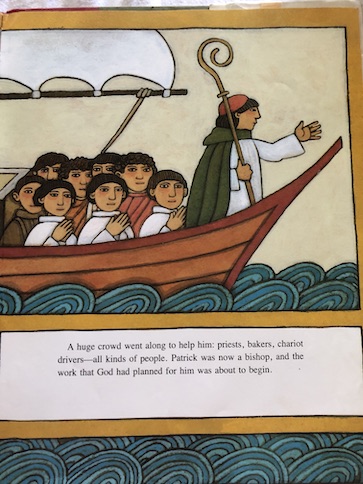
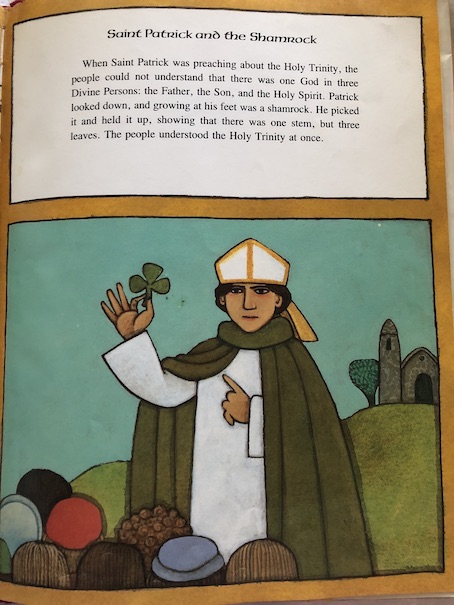

 The House of Dies Drear by Virginia Hamilton, 1968.
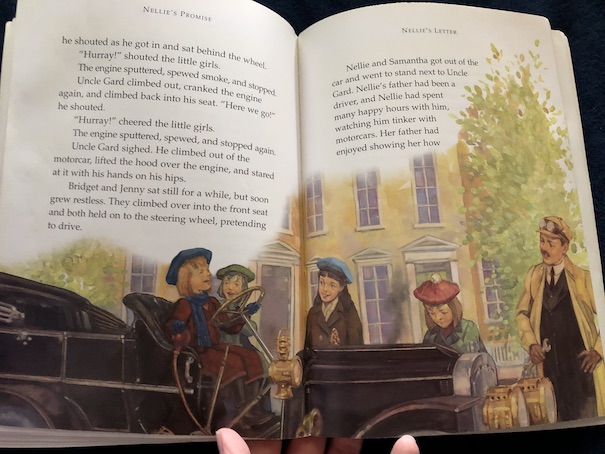

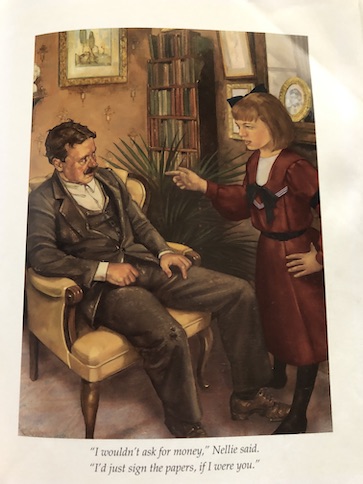
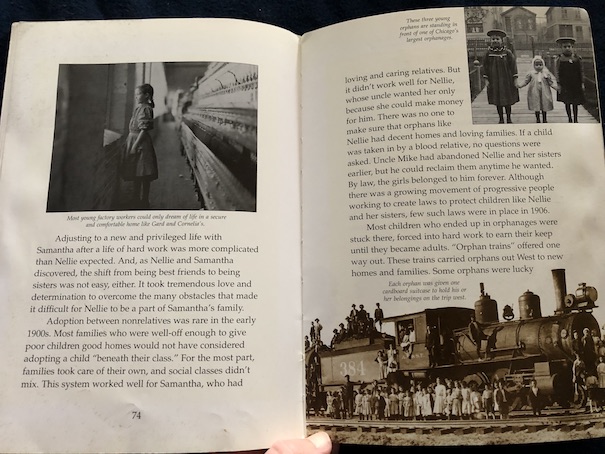


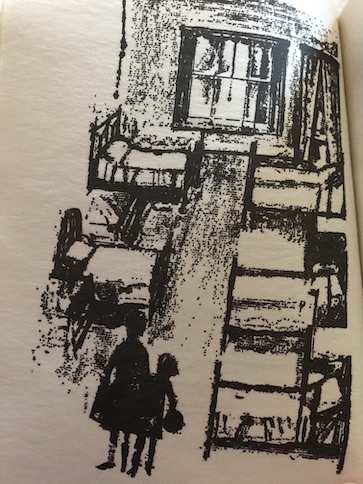
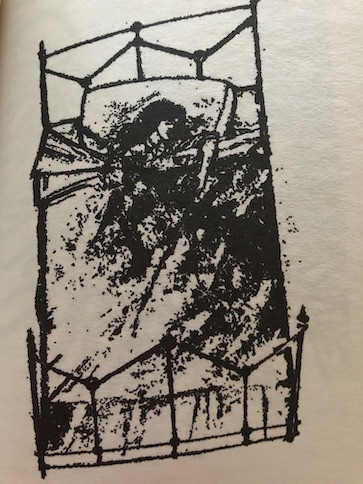


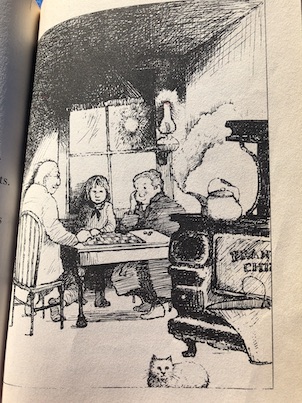
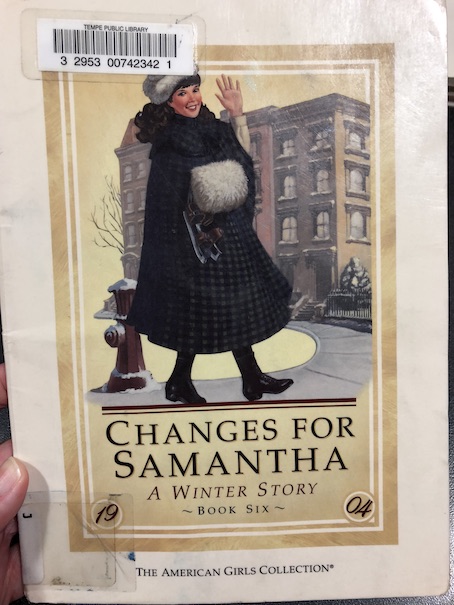


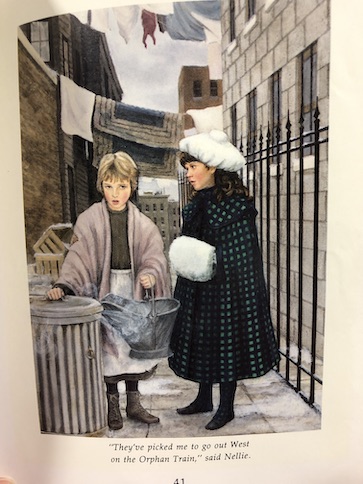
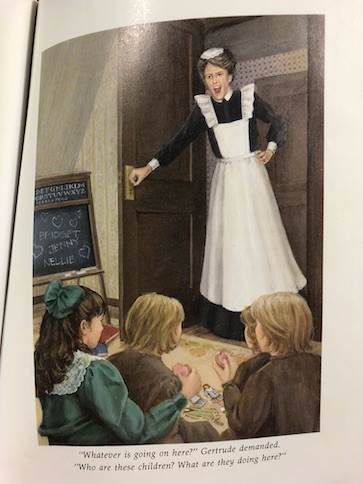


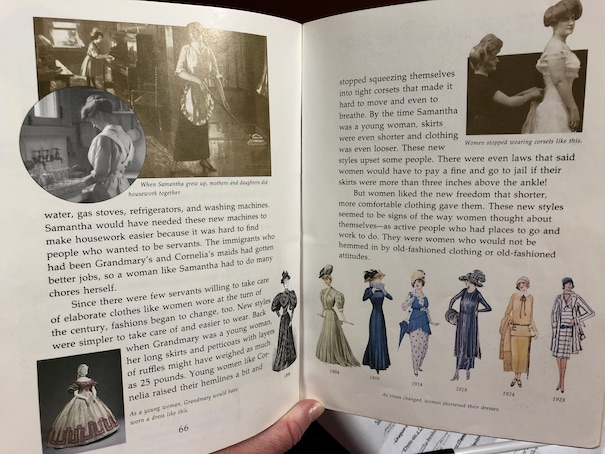
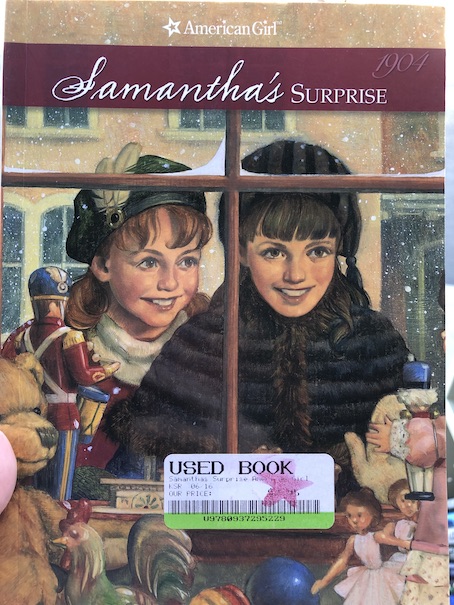


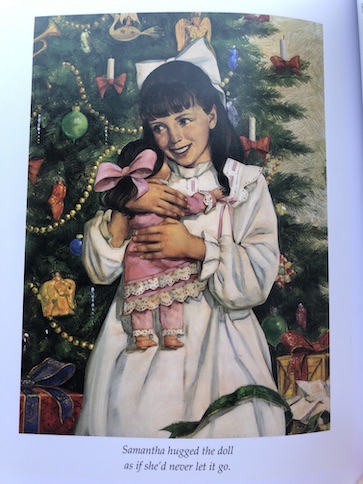
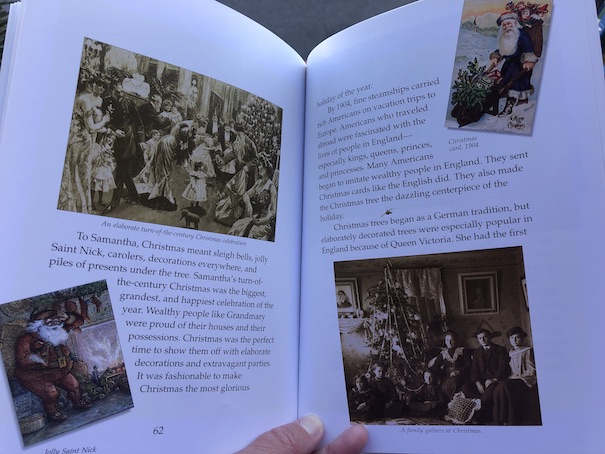
 Jestress's Forgotten Books and Stories