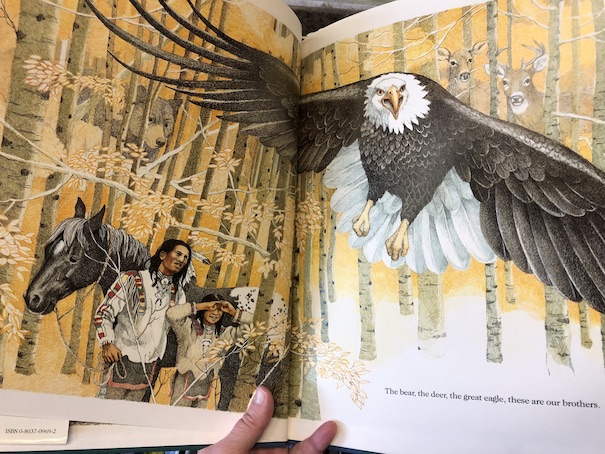
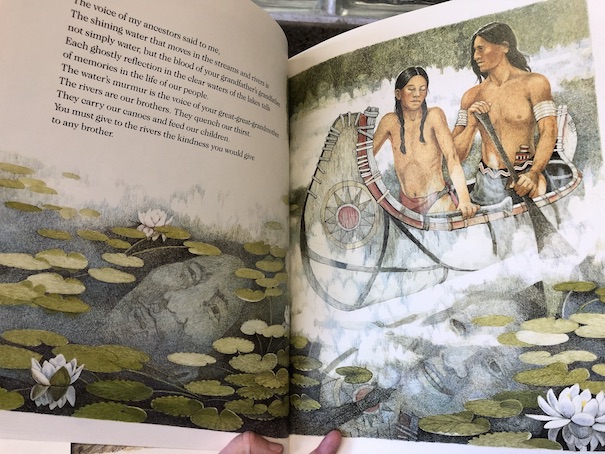
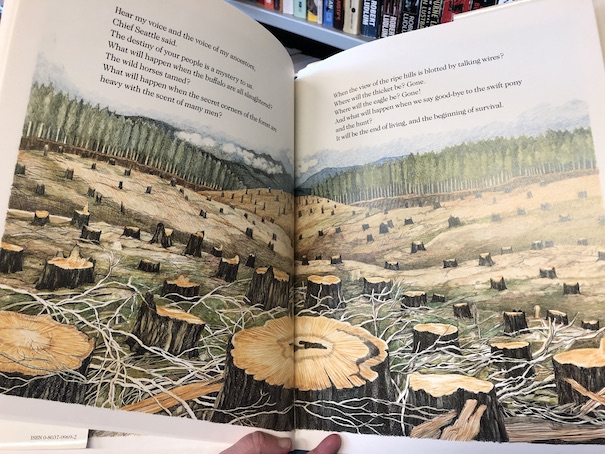
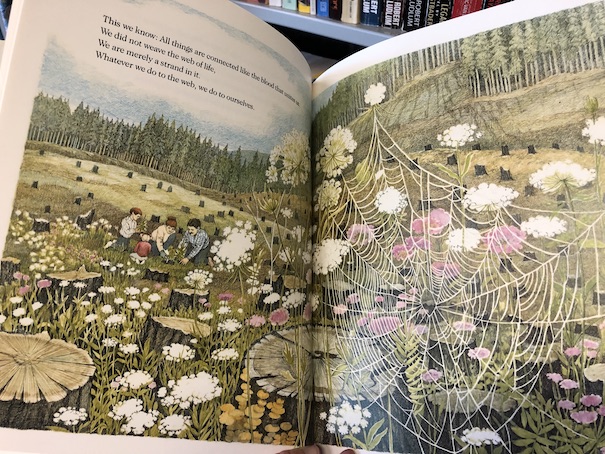
Brother Eagle, Sister Sky: A Message from Chief Seattle with paintings by Susan Jeffers, 1991.
This is a picture book, but not one for very young children because of the serious subject matter. It’s a profound book with beautiful pictures, but before presenting it to children, adults should be sure that the children are old enough to understand the background of the book.
The book begins with some information about its background. It describes the variety of “Indian” (Native American) tribes that have lived in the Americas for thousands of years and how, after white settlers arrived from Europe, they were killed and pushed off their ancestral lands by the new arrivals. It’s historically true, but also dark subject matter, which is why it’s important for the children reading the book to be old enough to understand it. Most of the book is the text of a speech made by Chief Seattle (who lived c. 1786 to 1866) to the Commission of Indian Affairs for the Territory and other government employees when the US government wanted to buy land from his tribe. The historical details concerning this speech from the mid-1850s are complicated, and accounts of it might not be completely accurate, and there is a note in the back of the book that addresses that. I consider the spirit of this speech something worth preserving, so I won’t get too hung up on that right now. I just mention it for the sake of people interested in going deeper into the history.
Susan Jeffers particularly wants readers to consider the environmental message of the speech and how relevant the message is today for a society that has endangered itself by placing a higher priority on the acquisition of land, resources, and wealth than on preserving the land and environment that makes life itself possible. This book was written in the early 1990s, and having been a child at that time myself, I know that these themes were increasingly becoming topics in schools and in children’s entertainment during that time. I’d like to point out that I, and others who are younger than me, have heard similar messages about environmental concerns from an early age. This has given us different priorities from earlier generations who did not, although it’s also worth pointing out that many of us came to care more about the environment as children because of the influence of adults who already did.
Chief Seattle questioned the concept of buying land because of the absurdity of buying aspects of nature, like the sky or rain. Land and nature had sacred spiritual meaning for Chief Seattle’s people.
Chief Seattle’s speech was full of poetic imagery, as he explained how his people felt like they were part of the land and it was part of them. He said that they looked on animals like they were brothers.
The land also connected them to their ancestors and the memories of their people.
Chief Seattle questioned what would happen in the future, when the land was filled with people and all of the animals either killed or tamed, painting a bleak picture of a land deprived of life.
The speech ended with the thought that people didn’t “weave the web of life, we are merely a strand in it.” Chief Seattle called on the people wanting to buy the land to love it, care for it, and preserve it because “Whatever we do to the web, we do to ourselves.”
The environmental themes of the message are poignant for modern times because people have become increasingly aware of the consequences of environment pollution and careless use of natural resources.
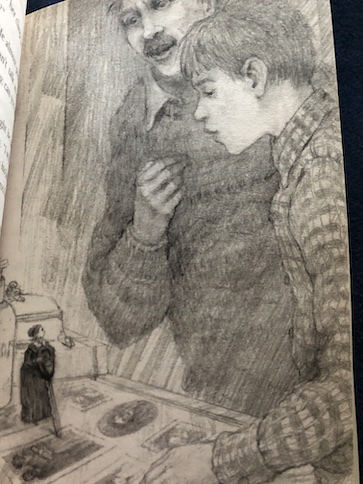
This is the final book in the Indian in the Cupboard series. At the end of the previous book, Omri’s father learned the secret of Omri’s special cupboard and key, that it brings small plastic figures to life.
At the beginning of this book, Omri’s father suddenly announces to his family that he wants to take them on a camping trip. It seems like an impulsive decision because this isn’t something that the family usually does, and Omri figures that it must have something to do with the secret that the father and son now share concerning their small friends from the past.
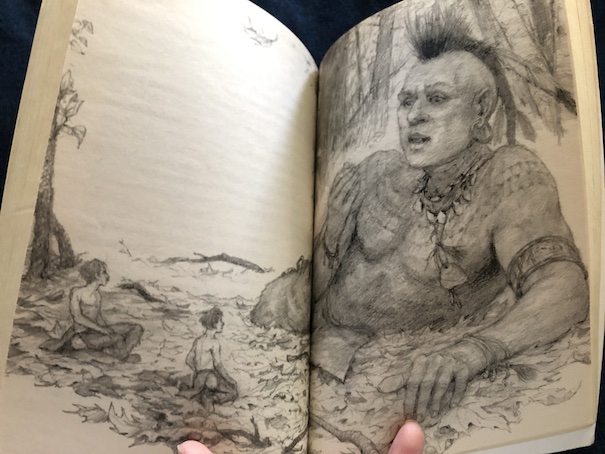
After Omri’s father discovered his secret, the two of them had a serious talk, and Omri explained to him all about his past adventures and the very real consequences that they’ve had, both in the present and in the past. They need to consider carefully what they’re going to do because Little Bear has asked them for help with some trouble that his tribe in the past is having with the British. Knowing the history of the interactions between Europeans and Native Americans, both Omri and his father know that something serious is about to happen to Little Bear and his people, but how can they help? Omri explains to his father that they have the ability to go back into the past themselves, but in order to do that, they need to find something big enough to hold both of them, and someone else would have to turn the key for them to send them and bring them back.
Omri’s father later admits to him privately that he thought up the camping trip as a way for the two of them to disappear for a couple of days without anyone asking questions. Although he proposed the camping trip, he plans to arrange for him and Omri to have a private trip by themselves, discouraging the others from going along. Omri’s father also thinks that he’s figured out what they can use to send themselves back in time – the family car. It’s big enough to hold both of them, it locks with a key, and there’s even an LB in the license plate number, which they take as a hopeful sign. But then, Omri realizes that there’s a problem with that scheme. Even though the car locks with a key, it’s not the kind of lock that an old-fashioned skeleton key could open. They need a key with a different shape, something flatter. They decide that they need the help of Jessica Charlotte, who made the last key. Fortunately, Omri has a way to talk to her because he has the plastic figure of Jessica Charlotte.
When Omri brings Jessica Charlotte back, he finds that she has attempted to drown herself in a river (an event hinted at in the last book) because of her guilt at accidentally causing her sister’s husband’s death. Omri brings back a WWII Matron who has helped them before to treat Jessica Charlotte. When Jessica Charlotte recovers, she thinks at first that she must have died and that Omri is part of her afterlife. Omri assures her that it’s not the case, that she’s still alive. She is still lamenting over having caused Matt’s death and ruined her sister and niece’s lives, but Omri explains to her that he’s Lottie’s grandson. Jessica Charlotte feels better, hearing that Lottie grew up, married, and had children, so her life wasn’t completely ruined. Omri can’t bring himself to explain how Lottie was killed in a bombing during WWII, but he asks for her help to create a new key. Aunt Jessie, as she asks to be called, agrees to help Omri, and he and his father give her their car key to duplicate.
However, when Aunt Jessie returns with the key, they realize that they’ve miscalculated. When a person comes from the past with anything they make or bring with them, it’s always small, like the miniature people themselves. Aunt Jessie’s key is a duplicate of the key they gave her, but it’s small, too small to use in the car. Omri and his father aren’t sure how to get around this problem, so they decide to go on the camping trip with Omri’s brother Gillon, just camping like normal, while they think it over.
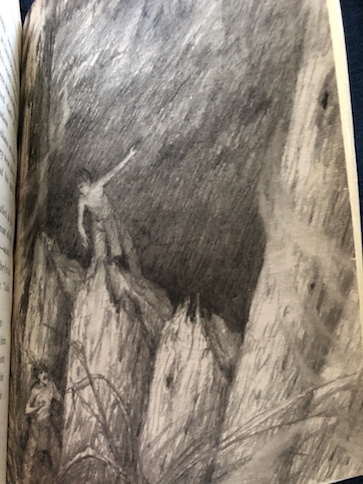
It turns out that something magic happened to the car key while it was in the past with Aunt Jessie. When Omri’s father turns the key in the car, Omri suddenly finds himself in the past, but not the past he was hoping to visit. Because they brought some things that belonged to his Great-Grandfather Matt with them on the camping trip, Omri suddenly finds himself in India, during the time that Matt was living there. Omri is inside a puppet in a marketplace, and his great-grandfather buys him. Also, to Omri’s shock, Gillon is also inside a puppet that his grandfather has.
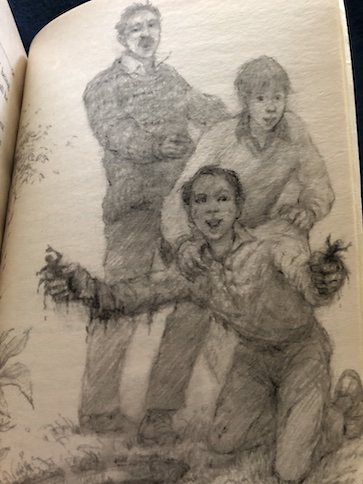
Their mother eventually rescues them by opening the car and turning the key. She was alarmed because it seemed like her husband and sons all passed out in the car. Omri and his father don’t have a real explanation for her, not wanting to explain that the car key is now magic. (She decides that there must have been an exhaust leak, and they were all overcome by fumes.) Gillon was knocked unconscious when his puppet was dropped on its head, and his mother takes him to the hospital, using her spare car key. (When Gillon recovers, he thinks it was just a weird dream he had because of the car fumes.) Meanwhile, Omri and his father talk about the situation, and Omri’s father reveals that, while the boys were taken to India, he ended up in Little Bear’s time because he was carrying some wampum belonging to Little Bear.
So, know they know that it’s possible for them to use their car key to go back in time, but if they try it a second time, who will turn the key for them to bring them back at the appropriate time? The only other person who can come with them on their “camping trip” who knows their secret and can be trusted to help them is Omri’s friend, Patrick. However, Patrick isn’t happy that he’s only there to help Omri and his father go back in time and that he won’t be going himself. He does agree to help them, but unfortunately, he has plans of his own while Omri and his father are occupied elsewhere.
The book is available to borrow and read for free online through Internet Archive (multiple copies).
My Reaction:
Although Omri’s father wonders at first whether it’s a good idea to try to help Little Bear because of the risk of changing the past and affecting the future, Omri has learned that it’s not quite as simple as that. During his previous adventures, he has felt an irresistible pull to use the cupboard and the key, even when he wasn’t always sure it was a good idea, and there are indications that Omri’s interactions with people in other time periods seem fated to happen. He did save Jessica Charlotte’s life when she tried to drown herself, and other things Omri has done seem to fit with wider events.
When Omri and his father are figuring out how to help Little Bear with his problems with the British in his time, they do some research about Little Bear’s time and talk about the ways that 18th century British people treated Native Americans. Knowing what Little Bear is likely to face, they feel like they have a responsibility to help him as best they can. When Little Bear explains in more detail what his people have been suffering at the hands of the British and other settlers, Omri feels guilty, knowing that he’s also British, while at the same time knowing that he was not responsible for things that happened before he was born. This is something that people still struggle with today, hearing about difficult periods of history and knowing that their ancestors (or at least other members of their society, if not literally their direct ancestors) played a role in making life difficult for others, setting up situations where real people suffered or were killed. The best Omri can do is to help Little Bear make the best possible decisions to ensure the survival of his people. Of course, being able to help with that much is part of the time traveling fantasy of this story. Real people can’t actually go back in time and intervene to influence others and change the course of history.
The books in this series aren’t for young children, and as the series progresses, they get more serious in subject matter. There is discussion of suicide, not just with Jessica Charlotte’s attempt to drown herself but when Little Bear explains that his first wife killed herself after being raped by white men. There is violence in the story when the Native American village is attacked and people are shot. Overall, the story is pretty straight-forward in the way in confronts the dark sides of history. Omri and his father advise Little Bear to take his clan to a place where they know that they will be relatively safe and among other Iroquois, but they know and admit to Little Bear that even that won’t solve all of their problems and that there will be other hardships in the future. It’s an imperfect solution to a massive problem, but Omri senses that it is best choice that they could make and that Little Bear and his family will live the safest possible life because of the decision they made, and their descendants will survive.
Omri and his father struggle with knowing that things are going to be hard for Little Bear’s people no matter what choices they make. There is no magical solution to everyone’s problems in the story, and the book doesn’t offer a firm moral or solution to Omri’s guilty feelings when he sees firsthand how badly Native Americans were treated (a form of “white guilt“, although the book doesn’t use that term). Overall, I would say that the book confronts the dark parts of history and human guilt on a very individual level. Omri and his father can’t solve the large issues completely because they can’t control them. They can’t control the past, and they can’t control other people, not even the people who come through the cupboard as miniature ones, like living toys. Everyone is an individual with their own choices to make, and every choice, even the wrong ones, changes the course of history.
After Omri saves Jessica Charlotte’s life, she realizes that what she thought was a dream before she stole her sister’s earrings was real, that she saw and spoke to Omri, and that he could have warned her about what would happen if she went through with her theft, how Matt would have died and how everyone’s lives would be changed for the worse. However, Omri did choose not to warn her because not everything was changed for the worse. After Lottie’s father died and her family lost their money, Lottie still grew up, fell in love, got married, and had a daughter. It’s true that she did die young in World War II, while her daughter was still an infant, and changing the theft of the earrings might have changed that in some way, but not without changing other things. Omri has discovered that changing things about the past, even seemingly small things, can change larger parts of history, and his psychic gift seems to guide him toward making only choices that help the flow of history instead of working against it. If he had prevented the theft of the earrings, his great-grandfather might have lived longer and so might Lottie, but if that happened, would Lottie have ever met the man she eventually married and had Omri’s mother? Omri’s father wouldn’t be happy without his wife and sons, and if Omri never existed, would some of the other things he did that impacted history have happened? Also, if Lottie hadn’t died in the bombing during WWII, would someone else have been where she happened to be and died in her place? The bomb that killed her would have fallen anyway because that was part of someone else’s choices, a person who never enters this story and whose decisions can’t be controlled. Time and history and the ripple effects caused by individual choices are complex. Omri has his psychic gift to guide him, and even his father, who admits that he never used to believe anything he couldn’t see for himself, comes to trust it.
People without this sort of magical gift have only themselves to rely on to make the best choices they can to make the world as good as possible, even in the face of others’ bad decisions. I think that a large part of the choices that Omri makes in the story and dealing with “white guilt” in real life come down to the combination of frustration and the acceptance of choices made by other people who can’t be controlled. Modern people might hate what happened in the past and feel badly if people related to them were part of it, but we don’t have the option to change things that have already happened. There comes a point where you have to accept the knowledge that you can’t control others, no matter how much you might want to make better choices on their behalf. The only person you can control is yourself.
I’m a white person, descended from colonial settlers in America, and I don’t actually see “white guilt” as a negative thing. I see it as a human thing. If you can feel real emotion at someone else’s plight, a wish that bad things didn’t really happen, or a feeling that what happened shouldn’t have happened and an honest desire to change even the unchangeable past for the better, it means that you’re a real, thinking, feeling human being with a sense of right and wrong, and there’s nothing bad about that at all. Feelings are just tools, to give us hints of what we need to do or how we need to behave in our lives. Feelings aren’t always completely accurate, but sometimes, they give us hints of things that need to be fixed or clues that whatever we did before didn’t really work, that we made the wrong choice or did the wrong thing. I think what upsets and confuses other white people about “white guilt” is the conflict between loving ancestors and wanting to be proud of them and admitting that some of them had a real dark side and did some pretty awful things. Some people have trouble dealing with that, thinking that it’s impossible to feel two things at once, loving someone and being angry with them for things that they’ve done, but it really is possible. Two things can be true at once, and you can have mixed feelings about many things.
Feelings are complex, as complex as people are, and I think it’s as possible for a person to both like and hate another person for the things they’ve done as it is to both like a sweater for the way it looks but not want to wear it because it’s itchy and uncomfortable. I think that’s about the best advice that I can actually offer to other white people trying to make sense of that feeling. Sure, that sweater looks pretty impressive. It has a nice color and a cheerful pattern, and you might think it would look impressive on you if you wore it, but honestly, it’s better if you just leave it on the mannequin. It’s overpriced, out of style, and won’t look at all impressive when it makes you constantly want to scratch all of the places where it itches. Let it go.
“God, grant me the serenity to accept the things I cannot change, courage to change the things I can, and wisdom to know the difference.”
The frustrating thing about feelings about the past and about other people’s lives is that we can’t fix those particular things. In real life, we can’t go back in time, and we can’t even “fix” other people in our own time because that’s something they have to do themselves, if they’re going to do it. You can suggest things to other people, but there’s always a point where they have to make the decisions themselves. But, the good news is that, if you can’t control other people, nobody can completely control you! The way I see it, the most useful thing about this “white guilt” is remembering that this is something we don’t want. Maybe there’s something charming about the rosy, nostalgic view of the past, but honestly, you wouldn’t be happy living there, and if you actually had to live with your ancestors, you’d probably discover that you wouldn’t see eye-to-eye on a lot of things and maybe wouldn’t even get along at all. So, why would you want to try to carry their old baggage with you into your life and spend your life and your precious time constantly trying to explain or excuse their bad choices? You’ve got your own to life.
Give credit where credit is due for both the good and the bad things, and let our ancestors’ records speak for themselves. You won’t accomplish anything for twisting your feelings into knots for trying to protect the feelings of the dead and justify their actions. They don’t even feel anything anymore. They are dead. Let them rest. We don’t want to add to bad things that have been done in the past and to keep having things in our lives to feel guilty about, and that’s okay because there are new choices to be made every single day. Put your focus there. You have a present to live and a future to plan. Knowing about the past is interesting and informative, but the past isn’t where we really live. Admire it like a nice sweater on a mannequin, take note of the price tag, and move on. We don’t have to make the same old choices that have made people, including ourselves, unhappy just because that’s the way things have been before or because we feel like we have something to prove about our ancestors. They had their chance to make the choices in their time, for good or bad (and frequently, some of each, but you can’t help that), and now, it’s our turn to make the choices because this is our time.
Speaking of bad decisions, Patrick almost gets Boone and Ruby killed because of his recklessness when he brings them back while Omri and his father were with Little Bear, which he did just because he was bored and felt left out of their magical adventure, which wasn’t really pleasant and fun for them anyway. Boone and Ruby both make it clear how they feel about that, and Omri also makes it clear that this is the end of the magic for him and Patrick. Boone and Little Bear have their own lives to live, and Omri’s gift tells him that it’s time to let them get on with living their lives without interference. Omri still has the cupboard and the key, but he no longer feels the pull he felt before to use them because he has played his part in history and in the lives of his little friends, and there is nothing more he needs to do. He doesn’t feel the need to lock these things away as he did before because he already knows that he will never feel the urge to use them again. When something’s over and the moment has passed, you just know.
Before the end of the story, Omri’s mother admits to him that she knows all about the little figures and that the cupboard brought them to life, although she never actually saw any of them herself. She has also inherited the family gift and is aware of what the cupboard does, even though she has not used it herself. All along, she’s been pretending that she didn’t know what was going on, although she really did. She’s a little sorry that she didn’t see the little people herself, but she knew that not interfering was the right thing to do. She thinks that letting the magic go and not using the cupboard again are the right decisions, and she doesn’t want Omri or his father to tell Omri’s bothers about the magic because, if they do, it will never end, and it’s really time for it to all end. This really is the final book in the series.
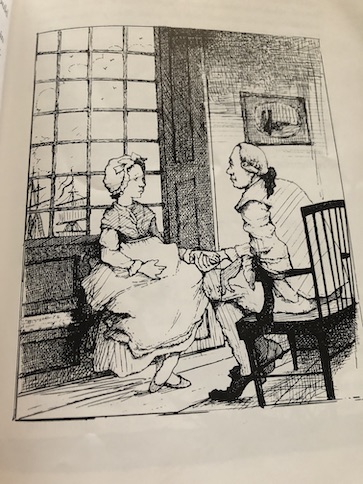
Phoebe the Spy by Judith Berry Griffin, illustrated by Margot Tomes, 1977.
Phoebe Fraunces is a thirteen-year-old girl living in New York in 1776. The Fraunces family is black, but unlike most black people in the American colonies at the time, they have never been slaves. (There were some free black families who had never been slaves during this period of history, but they were uncommon.) Phoebe’s father, Samuel Fraunces owns a tavern called The Queen’s Head. It’s a popular place for people to meet, and Samuel Fraunces allows some prominent Patriots to meet there in secret and discuss their plans. Being party to such meetings could come with consequences as the colonies are on the brink of war.
One day, in April 1776, Samuel confides in his daughter that he has overheard something disturbing. He believes that George Washington’s life is in danger, that there are soldiers who are willing to kill their general for money. Samuel is worried about what he heard, but he isn’t sure what the plot against George Washington actually is and has no proof of what he heard. He’s afraid that if he tells Washington about what he heard too soon, without proof, the conspirators will just wait for a safer time to strike, so he asks Phoebe to help him uncover the truth. Samuel knows that George Washington will be coming to New York soon, and he has asked Samuel to help him find a housekeeper for the house where he will be staying. Samuel wants Phoebe to take the housekeeper position and to keep her eyes open for signs of danger.
Phoebe doesn’t know if she can do what her father wants her to do. She isn’t sure what she’s supposed to be watching for, and she doesn’t know how she could stop the plot if there is one. Her father tells her that she should look out for a man who is part of George Washington’s bodyguard and whose name starts with the letter ‘T’. This is all that Samuel was able to tell about the conspirator from the conversation that he overheard. He tells Phoebe to be careful, not to trust anyone, and to meet with him regularly in the market to tell him what she has learned. The two of them also discuss how odd it is that a man like George Washington, who owns slaves, would be at the center of a fight for freedom. Phoebe hopes that he will free his slaves after the war is over, although her father doubts that will happen. Still, the Fraunces family supports the cause of the Patriots, and Phoebe agrees to help her father find the conspirators and save George Washington’s life.
Phoebe is young to be a housekeeper, but she is accepted into Washington’s household. There, she meets Mary the cook and her son Pompey. Pompey also performs chores for the family, like carrying firewood. The work isn’t too hard for Phoebe because much of it is what she is accustomed to doing for her family’s tavern, like making beds, cleaning the silver, and making sure that meals are served on time. George Washington doesn’t say much when he’s around Phoebe, but she carefully observes the people around him. Every day, she goes to the market to buy food and see her father.
At first, Phoebe has nothing to report to her father. Everyone around George Washington seems to be nice or at least behaving normally, and nobody’s last name begins with the letter ‘T’. Mr. Green, a member of George Washington’s bodyguard, seems a bit unfriendly, but a younger man, Mr. Hickey, seems rather nice and sometimes gives Phoebe little presents.
However, there is a traitor among the household, and although it pains Phoebe when she learns who it is, she must do her duty and protect the life of the person she has promised to protect.
Some of the pictures in the book are black-and-white drawings, and some are in muted colors.
The original title of this book was Phoebe and the General. It is available to borrow and read for free online through Internet Archive.
Historical Background
The story is based on the real Fraunces family of New York. Samuel Fraunces really did own a tavern called the Queen’s Head and allowed Patriots to meet there. A note in the back of the book explains that after the war ended, he was given a reward by Congress, and he changed the name of the Queen’s Head to Fraunces Tavern. Fraunces Tavern still exists today, and it is still a restaurant, although part of it has been converted into a museum.
The racial identity of Samuel Fraunces has been in dispute for some time. No one is completely sure what he actually looked like. There is a portrait of a white man that has been reputed to be Samuel Fraunces, but the true identity of that portrait is in dispute. Samuel Fraunces is known to have had the nickname of “Black Sam”, but different sources describe the family differently. All that is known of Samuel Fraunces’s background is that he was born around 1722 and was originally from the West Indies. It’s possible that the Fraunces family may have been mixed race because some sources refer to Samuel Fraunces as “mulatto” (an old term for someone born to a white parent and a black parent, not considered a polite term now), which might explain the other, differing accounts of the family’s race.
The story of Phoebe Fraunces saving George Washington’s life is legend, but the facts regarding that incident are also in dispute. The legend might be based on a misunderstanding, and Samuel Frances’s real daughter, Elizabeth, does not seem to have been old enough at the time to have taken part in this adventure. The story has had a tendency to appear and reappear around patriotic milestones in the United States, first around the centennial in 1876 and then around the bicentennial in 1976, when this book was written.
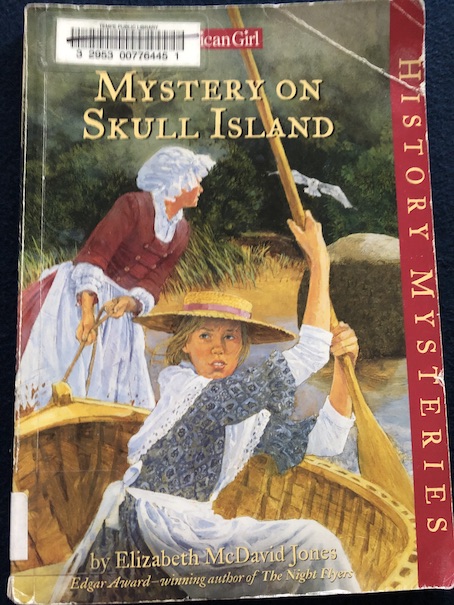
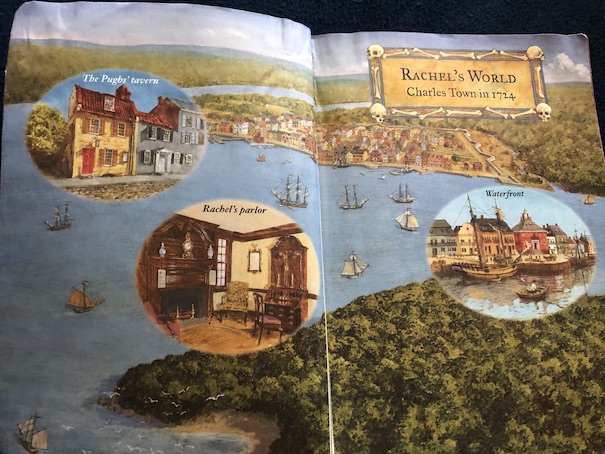
It’s 1724, and twelve-year-old Rachel Howell is traveling to where her father lives in Charles Town, South Carolina. Rachel has been living with her grandparents in New York since her mother died seven years earlier. Her father also used to live in New York, but after his wife’s death, he decided to move to South Carolina, hoping to start a new life. Now, her father has established himself in South Carolina and wants Rachel to come and live with him. Rachel has wanted to live with her father for some time, but she’s nervous because she doesn’t know what life in South Carolina will be like.
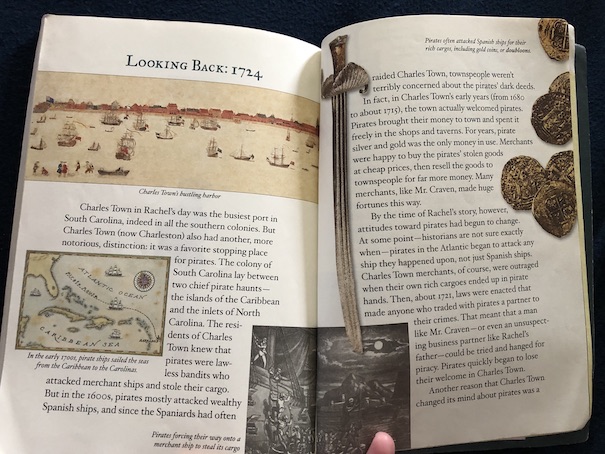
Rachel’s new life has a terrifying beginning when the ship that is taking her to Charles Town is attacked by pirates. The pirates force the passengers on board to hand over jewelry and other expensive items. They even take Rachel’s pendant, which belonged to her deceased mother. Fortunately, the pirates don’t hurt or kill anyone and let the ship go once they’ve taken everything of interest to them.
When Rachel arrives in Charles Town, she and her father have difficulty recognizing each other at first, but they are happy to finally be together. Rachel’s father is appalled when he hears about the pirates stealing Rachel’s mother’s necklace, but he is relieved that Rachel is all right. He explains that piracy has been a serious problem to shipping in the area. The local government has tried to combat the problem with harsh punishments, hanging many offenders. However, the pirates have money, and so local businesses still tolerate their presence.
The talk of pirates is shocking, but Rachel is soon in for another shock when her father tells her that he has become engaged and that Rachel will soon have a new mother. Rachel had been looking forward to having some time alone with her father to get to know him again, so she is not pleased at the news, but the engagement is the main reason why her father has sent for her. He wants Rachel to have a mother to care for her and for them to live as a complete family again. He tells Rachel that his fiance, Miranda LeBoyer, is from Philadelphia. She will be arriving in Charles Town soon with her aunt.
Rachel’s father is often busy with his work in the shipping industry, but he grants Rachel more freedom than she had with her grandparents, so she is able to explore her new town and make some new friends. The first friends she makes are the Pugh family, especially the daughter, Sally, who is about Rachel’s age. The Pughs own a local tavern, and Rachel often goes to visit them, sometimes helping with chores and learning to cook. She tells Sally about her worries about her new stepmother, but Sally says that she might not be so bad.
Like her life in South Carolina, Rachel’s first encounter with the woman her father plans to marry takes a disturbing turn. First, Miranda seems to disapprove of Sally and her brother, and Rachel fears that she will interfere with their friendship. Then, her father’s new business partner, Mr. Craven, stops by, and Rachel notices that Miranda seems to both recognize and dislike Mr. Craven. She overhears a conversation between the two of them in which Miranda calls Mr. Craven a “scoundrel” and refers to some kind of illegal dealings in his past. Yet, when Rachel’s father tries to ask Miranda what they’re talking about, Miranda lies and says that they’re discussing the weather and hurricanes that occur in Charles Town. Rachel worries about why Miranda would lie to her father and what kind of dishonest business Mr. Craven might be doing. What are the secrets that people in this town are hiding, and is Miranda really what she seems to be? With the help of her new friends, will Rachel find out the truth before it’s too late?
There is a section in the back of the book with historical information about piracy and life in South Carolina during the 18th century.
The book is available to borrow and read for free online through Internet Archive.
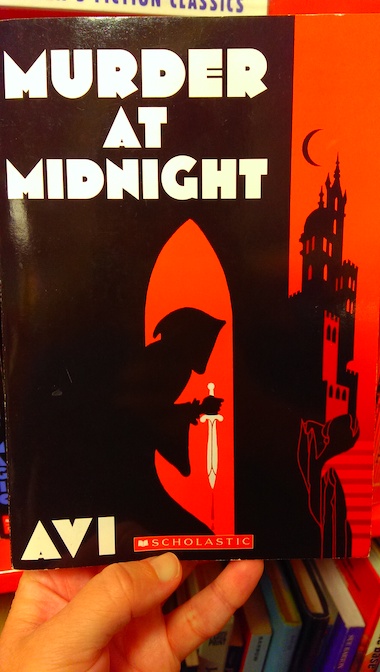
Fabrizio was an orphan living on the streets of the medieval city of Pergamontio before he was taken in as a servant by Mangus and his wife, Sophia. It was really Sophia’s idea that Mangus needed a personal servant. Mangus says that he is able to take care of himself, and he is impatient with Fabrizio because Fabrizio is ignorant and uneducated.
When Sophia goes to visit her sister, Fabrizio tries extra hard to please Mangus so that Mangus will continue to let him live in his house. Mangus is primarily a scholar, but he supplements his income by performing magic tricks at a local tavern. That evening, a black-robed figure appears at the magic show, warning of danger coming to Mangus. The next day, the magistrate, DeLaBina, accuses Mangus of spreading papers with treasonous messages about the king around the city. During this time, all writing is by hand, and no one can understand how these papers can all look so identical unless they were produced by magic.
At first, DeLaBina offers to let Mangus go if Mangus gets rid of the papers and reveals the identity of the traitor. When Mangus protests that he cannot do real magic and that he knows nothing about the papers, he is arrested. Shortly afterward, DeLaBina is murdered. Fabrizio’s only hope of saving his master, and himself, is to find the real traitor.
The book is available to borrow and read for free online through Internet Archive.
My Reaction and Spoilers
I didn’t like this book as well as I liked the original Midnight Magic. Partly, the problem was that I feel like some of the events of this story should have changed people and events in the other book, and they don’t because this book, which is supposed to take place earlier than the other story, was actually written after the other story. It all just seems out of order, and I didn’t like the addition of Prince Cosimo to the royal family. In this book, Prince Cosimo is the crown prince of Pergamontio, not Prince Lorenzo from the previous book. Prince Cosimo did not appear in Midnight Magic (although his absence is explained by the end of this book) and was never even referred to in that book (which is the part that really bothers be me everyone in that book would have known all about him and what happened to him, and I feel like Fabrizio should have at least thought about him in passing, it’s just weird when characters suddenly exist in a series that you know didn’t exist before).
Basically, there is a plot (although not by the person who did the plotting in the other book) to overthrow the king, who is wildly superstitious. The printing press is a relatively new invention in this time period, and Pergamontio has never had one before, which is why no one can understand why the writing on the papers is so strangely uniform. This is the other thing that bothers me about this book. Pergamontio is supposed to be somewhat backward in comparison to other kingdoms, partly because the king is so superstitious, but it just seems like going a bit far for people to suspect that oddly-uniform writing would be a sign of witchcraft because people of that time would already be aware of the existence of signet rings and official seals which were used as stamps in wax to mark documents, like a kind of signature. Like a printing press, those would also produce an identical image, time after time of use. Basically, they’re all just complex forms of stamps. Superstitious or not, I think that people of that time who were capable of reading probably would have been able to tell that a stamp of some kind was being used, even though they might not have seen one as complex as a printing press before.
In the story, a family has recently brought a printing press to the city, and printing the treasonous papers was the first job they were hired to do. Shortly afterward, Maria, the daughter of the family, was arrested while passing out the papers. Her parents are taken into custody by Count Scarazoni, who is a sinister character in his own right but is actually in opposition to the real traitor in this book.
Scarazoni was the figure in the black robe who tried to warn Mangus. Fabrizio is arrested when he tries to gather up more of the papers for Mangus so they can learn where they came from. He is nearly executed for treason, but he is saved by Scarazoni because Scarazoni realizes that the real traitor wanted him dead because he feared that Fabrizio might know too much. At the prison, Fabrizio meets Maria and helps her to escape as well. Maria explains to him the true origins of the papers, and they find DeLaBina’s body. This is the murder referenced in the title of the book, and they must solve it to uncover the identity of the real traitor!
As in the other book in this series, Fabrizio and Mangus use a magic trick at Mangus’s trial to shock the traitor into revealing himself. Although, at the end of the story, the king still believes that Mangus is a real magician, Scarazoni points out that without Mangus’s “magic” the real traitor might not have been discovered. The king tells Mangus that he will let him go provided that he confine himself to his own home and no longer practice magic, setting events up for the beginning of the other story.
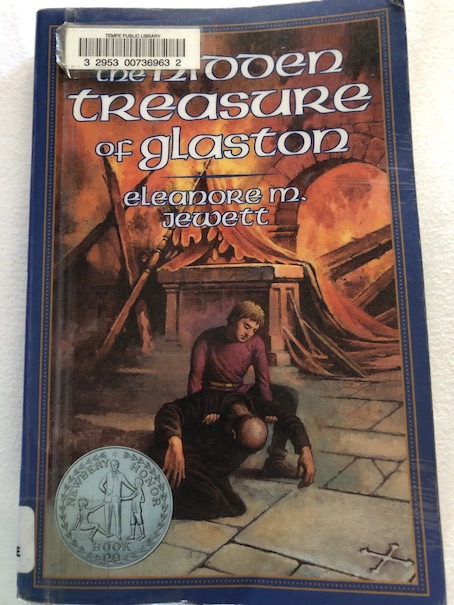
The Hidden Treasure of Glaston by Eleanore M. Jewett, 1946.
The
year is 1171. Twelve-year-old Hugh, a
somewhat frail boy with a lame leg, arrives at the abbey of Glastonbury with
his father on a stormy night. Hugh’s
father is a knight, and in his conversation with Abbot Robert on their arrival,
he makes it known that, although he loves his son, he is disappointed in the
boy’s frail condition because he can never be a fighter, like a knight’s son
should be. The abbot rebukes him, saying
that there is more to life than war and that he, himself, is also of noble
blood. The knight apologizes, and says
that, although it is not really the life that he would wish for his son, he asks
that the abbey take him in and educate him.
Although the knight (who refuses to give his name, only his son’s first
name) says that he cannot explain his circumstances, the abbot senses that the
knight is in trouble and is fleeing the area, perhaps the country of England
entirely.
It is
true that the knight is in trouble, and he is fleeing. Since Hugh’s health is delicate, his father
cannot take him along in his flight.
Realizing that the abbey will provide him with a safer life, Hugh’s
father wants to see him settled there before he leaves and gives the abbey a
handsome gift of expensive, well-crafted books as payment for his son’s
education. The abbot is thrilled by the
gift, although he says that they would have accepted Hugh even without it. Then, the knight leaves, and the monks begin
helping Hugh to get settled in the abbey.
Hugh is upset at his father’s leaving and the upheaval to the life he has always known, although he knows that it is for the best because of his family’s circumstances. Although the story doesn’t explicitly say it at first, Hugh’s father is one of the knights who killed Thomas Becket, believing that by doing so, they were following the king’s wishes. Hugh’s father did not actually kill Beckett himself, but he did help to hold back the crowd that tried to save Beckett while others struck the blows, so he shares in the guilt of the group. Although Hugh loves his father, he knows that his father is an impulsive hothead. Now, because of the murder, Hugh’s father is a hunted man. By extension, every member of his household is also considered a criminal. Their family home was burned by an angry mob, their supporters have fled, and there is no way that Hugh’s father can stay in England. However, the prospect of life at the abbey, even under these bleak circumstances, has some appeal for Hugh.
Hugh has felt his father’s disappointment in him for a long time because his leg has been bad since he was small, and he was never able to participate in the rough training in the martial arts that a knight should have. Even though part of Hugh wishes that he could be tough and strong and become the prestigious and admired knight that his father wishes he could be, deep down, Hugh knows that it isn’t really his nature and that his damaged leg would make it impossible. Hugh really prefers the reading lessons he had with his mother’s clerk before his mother died. His father always scorned book learning because he thought that it was unmanly, something only for weak people, and Hugh’s weakness troubles him. Hugh’s father thinks that the real business of men is war, fighting, and being tough. However, at the abbey, there are plenty of men who spend their lives loving books, reading, art, music, and peace, and no one looks on them scornfully. For the first time in Hugh’s life, he has the chance to live as he really wants to, doing something that he loves where the weakness of his bad leg won’t interfere.
The abbot is pleased that Hugh has been taught to read and arranges for him to be trained as a scribe under the supervision of Brother John. Hugh enjoys his training, although parts are a little dull and repetitive. Hugh confides something of his troubles in Brother John, who listens to the boy with patience and understanding. Although he does not initially know what Hugh’s father has done, Hugh tells his about the burning of his family’s home, how they struggled to save the books that they have now gifted to the abbey, and how there were more in their library that they were unable to save. Hugh tells Brother John how much he hates the people who burned their home and how much he hates the king, who caused the whole problem in the first place. His father would never have done what he did if the king hadn’t said what he said about Thomas Becket, leading his knights to believe that they were obeying an order from their king. Brother John warns Hugh not to say too much about hating the king because that is too close to treason and tells him that, even though he has justification for hating those who destroyed his home, he will not find comfort in harboring hate in his heart. He also says that not all that Hugh has lost is gone forever. People who have left Hugh’s life, like his father, may return, and there are also many other people and things to love in the world that will fill Hugh’s life. Brother John urges Hugh to forget the past and enjoy what he has now. When Hugh says how he loves books but also wishes that he was able to go adventuring, Brother John says that adventures have a way of finding people, even when they do not go looking for them.
One
day, when Brother John sends Hugh out to fish for eels, Hugh meets another boy
who also belongs to the abbey, Dickon.
Dickon is an oblate. He is the
son of a poor man who gave him to the abbey when he was still an infant because
he was spared from the plague and wanted to give thanks to God for it. Dickon really wishes that he could go
adventuring, like Hugh sometimes wishes, although he doesn’t really mind life
at the abbey. Because Dickon is not good
at reading or singing, he helps with the animals on the abbey’s farm. Although he is sometimes treated strictly and
punished physically, he also has a fair amount of freedom on the farm,
sometimes sneaking off to go hunting or fishing. He also goes hunting for holy relics. Dickon tells Hugh about the saints who have
lived or stayed at the abbey and how the place is now known for miracles. He is sure that the miracles of Glaston will
help heal Hugh’s leg, and he offers to take him hunting for holy relics. Hugh wants to be friends with Dickon, but at
first, Dickon is offended that Hugh will not tell him what his last name
is. Dickon soon realizes the reason for
Hugh’s secrecy when a servant from Hugh’s home, Jacques, comes to the abbey to
seek sanctuary from an angry mob that knows of his association with Hugh’s
father.
The abbot
grants Jacques temporary sanctuary but tells him that he should leave the country
soon. When Dickon witnesses Jacques’s
explanation of why the mob was after him, comes to understand his connection to
Hugh. Although the mob does not know
that Hugh is actually connected to Jacques, Dickon spots the connection and
tells Hugh that he forgives his earlier secrecy. Dickon even helps Jacques to leave the abbey
the next day, in secret.
Now
that Dickon knows Hugh’s secret, he lets Hugh in on his secrets and the secrets
of the abbey itself. He shows Hugh a
secret tunnel that he has discovered.
There is an underground chamber between the abbey and the sea where more
parchments and some other precious objects are hidden. Dickon doesn’t know the significance of all
of the objects, although there appear to be holy relics among them. Dickon’s theory was that monks in the past
created this room and tunnel to store their most precious treasures and get
them away to safety in case the abbey was attacked and raided. At some point, part of the tunnel must have
collapsed, blocking the part of the tunnel leading to the abbey. The boys are frightened away when they hear
the ringing of a bell and can’t tell where it’s coming from. Could there have been someone in a part of
the tunnel that is now blocked off from the part where they entered?
Since Hugh is sworn to secrecy concerning Dickon’s discovery, he can’t ask Brother John about it directly, but he gets the chance to learn a little more when Brother John asks him to help clean some old parchments so they can reuse them. Most of them are just old accounting sheets for the abbey that they no longer need. Brother John said that they were stored in an old room under the abbey. Hugh asks Brother John about the room and whether there are other such storage rooms underground. Brother John says that there are rumors about a hidden chamber somewhere between the abbey and the sea where they used to store important objects for safety, but as far as he knows, no living person knows where it is or even if it still exists. Hugh asks Brother John about treasures, but as far as Brother John is concerned, the real treasures of the abbey are spiritual. However, when Hugh notices some strange writing on one of the parchment pieces that doesn’t look like accounting reports and calls it to Brother John’s attention, Brother John becomes very excited and orders him to stop cleaning the parchments so that he can check for more of the same writing. Among the other scrap parchments, they have found pieces that refer to Joseph of Arimathea, who provided the tomb for Jesus after his crucifixion. According to legend, Joseph of Arimathea also took possession of the Holy Grail, the cup that Jesus used at the Last Supper, which was supposed to have special powers, and that he left the Middle East and brought the Holy Grail to Glaston, where it still remains hidden. This story is connected to the legends of King Arthur, who also supposedly sought the Holy Grail. The parchments may contain clues to the truth of the story and where the Holy Grail may be hidden.
This story combines history and legend as Hugh and Dickon unravel the mysteries of Glastonbury and change their lives and destinies forever. Although Hugh and Dickon both talk about how exciting it would be to travel and go on adventures, between them, Hugh is the one whose father would most want and expect his son to follow him on adventures and Dickon is the one who is promised to the abbey. However, Hugh loves the life of the abbey and serious study, and Dickon is a healthy boy who is often restless. Their friendship and shared adventures at the abbey help both Dickon and Hugh to realize more about who they are, the kind of men they want to be, and where they belong. Wherever their lives lead them from this point, they will always be brothers.
There are notes in the back of the book about the historical basis for the story. In the book, the monks find the tomb of King Arthur and Guinevere. Although the story in the book is fictional, the real life monks of Glastonbury also claimed to find the tomb of King Arthur. The bones they claimed to find were lost when the abbey was destroyed later on the orders of Henry VIII, but this documentary (link repaired 2-27-23) explains more about the legends and history of King Arthur. The part about Glastonbury is near the end.
The Door in the Wall by Marguerite de Angeli, 1949.
The story takes place in Medieval England. Robin is the son of a noble family. All his life, there has been the expectation that Robin would learn to be a knight, like his father. Soon after Robin turns ten years old, Robin’s father goes away to fight in Scotland, and Robin’s mother arranges for him to be sent away to begin his training as a knight while she takes a position as lady-in-waiting to the queen. However, soon after his parents’ departure, Robin becomes terribly ill and loses the use of his legs.
Now, Robin is miserable and wishing that his mother was still with him to help him get over his illness. Instead, he is looked after by servants. Then, after Robin throws a fit and refuses to eat, his servants disappear. The next person Robin sees is Brother Luke, a friar from St. Mark’s monastery. The friar tells him that his servants were ill and have fled from the plague, but one of them sent him to care for Robin. He feeds Robin and tells him that he will take him to St. Mark’s and continue to care for him there. Robin tells Brother Luke about how he was supposed to be taken away for training but that he was unable to go because he was ill, and he asks how they will get to St. Mark’s because he cannot walk. Brother Luke says that the man who was supposed to escort him to the castle where he would live and be trained as a knight may be unable to get back into London because travel is restricted due to the plague, so Robin’s training will have to wait. As for how they will travel, Brother Luke has a horse that they can ride.
Before they leave, Brother Luke asks Robin to remember the wall around his father’s garden and the wall around the Tower. He points out that all walls have a door in them somewhere and that if you follow a wall long enough, you will eventually find the door. At first, Robin doesn’t understand what Brother Luke is trying to tell him, but the metaphor is the theme of the book and it becomes clear through the adventures that follow. The wall stands for adversity, and the door stands for solutions to problems, other paths to take, and ways to move forward in life. What Brother Luke is trying to say is that there are many types of problems in life (the walls), but that problems have solutions (doors). There are ways around obstacles, and if you persevere, you will find them. He reminds Robin of this throughout the story.
At St. Mark’s, Robin stays in Brother Luke’s quarters, and Brother Luke takes care of him. When Robin is a little stronger, Brother Luke gives him wood to whittle. When he grows stronger yet, Brother Luke gives him writing lessons. As the plague begins to pass and there are fewer patients to tend to, Brother Luke begins to carry Robin around or push him in a cart, taking him to visit other parts of of the monastery.
Since Robin still cannot walk, Brother Luke thinks it’s important to keep his mind and hands busy, one of the first “doors” that he finds for Robin around his current limitations. Brother Matthew oversees Robin as he learns and practices carving wood, teaching him patience when he has a temper tantrum on ruining one of his first projects. Brother Luke helps Robin to write a letter to his father, in which Robin explains his current situation, and a traveling minstrel, John-go-in-the-Wynd, will carry it to Scotland when he goes there with some soldiers. Later, Brother Luke even takes Robin to go fishing and begins teaching him to swim. In spite of these improvements, Robin still worries about his inability to walk and how it will affect his future and his father’s hopes for him to be a knight.
When John-go-in-the-Wynd returns with a reply from Robin’s father, Robin’s father says that he is distressed to hear that Robin has been ill, although he thankful that Robin did not get the plague and die with so many others. Robin’s illness was severe, but he is already showing signs of recovering. His father has made arrangements for him to travel to the castle of Sir Peter in Shropshire, who is Robin’s godfather and where he was meant to go for his training, accompanied by Brother Luke and John-go-in-the-Wynd, as soon as he is well enough to travel. Since Robin has already become well enough to make himself a pair a crutches with his new woodworking skills and has begun to use them, they decide to proceed with the journey.
On the journey to Sir Peter’s castle, they have adventures, narrowly escaping from thieves and visiting a fair in Oxford. Robin encounters Welsh speakers for the first time. Although Robin is worried about what Sir Peter will think of him when he sees his condition, Sir Peter welcomes the travelers gladly. He has recently been injured in battle and still recovering himself. Robin says that he doesn’t think that he will make a very good page because of his difficulties in walking but that he can read, write, and sing to provide entertainment. Sir Peter says that there are many ways to serve others and that people must do what they can.
Brother Luke and John-go-in-the-Wynd stay at the castle to help Robin settle in, and Sir Peter gives Robin duties that he can perform. Robin asks Brother Luke if he thinks that he will ever be able to walk normally again, and Brother Luke admits that he doesn’t know but that he is sure that Robin will have a fine life ahead of him. People are not perfect, but everyone has to do the best they can with what they have. Robin soon learns to get around well enough to navigate the castle easily and play with the other boys, but he is still bent and unable to walk without crutches. Robin’s disability and the craftsman skills he learned from the monks have taught him patience and that he feels better after accomplishing difficult tasks.
Then, one foggy day, the Welsh surround and attack Sir Peter’s castle. The defenders hold out in the keep, but they begin to run low on food, and strangely, the well seems to be running dry. As they run low on water, hope seems to be lost. They begin to devise a plan for someone to slip out and go for help. Robin volunteers to go. He knows where John-go-in-the-Wynd is staying with his mother nearby, and he can tell him about the situation in the castle and where to go for help. Robin knows that if anyone catches sight of him, he will look like a poor, lame, shepherd boy, and no one will suspect him of coming from the castle.
Robin has felt badly about his new disability, but his youth and disability are actually what allow him to pass unchallenged through the enemy lines. Suddenly, his disability actually becomes an advantage, allowing him to do what others cannot. Robin’s future may not be the one that he first expected, but he has found ways to move forward in his life and ends up a hero!
The book is a Newbery Award Winner. It is available to borrow and read for free online through Internet Archive (multiple copies).
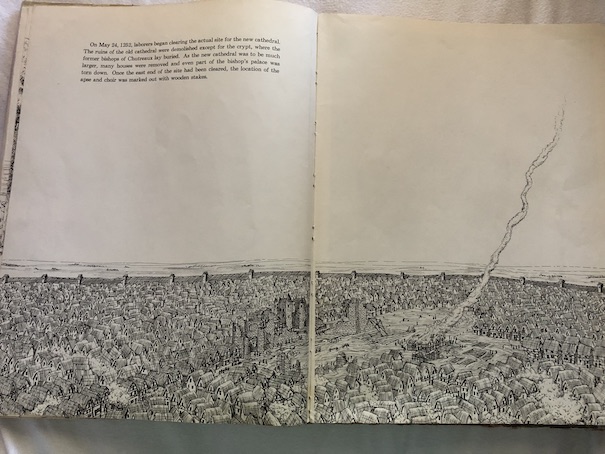
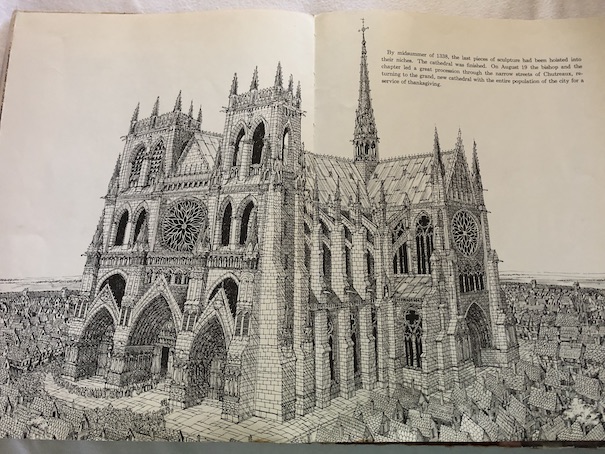
This is the story of the construction of a Medieval cathedral. The story takes place in a fictional town in France, Chutreaux, but it is based on the construction of real Medieval cathedrals.
In 1252, the people of Chutreaux decide to build a new cathedral because their old cathedral was badly damaged by a lightning strike and other towns in their part of France are building grand cathedrals. The people know that it takes decades to construct a grand cathedral, perhaps even more than 100 years. The people making the decision to build the cathedral know that they will never see the end of the construction themselves, but they believe that this is an important undertaking, both for the welfare of their community in the future and for the glory of God.
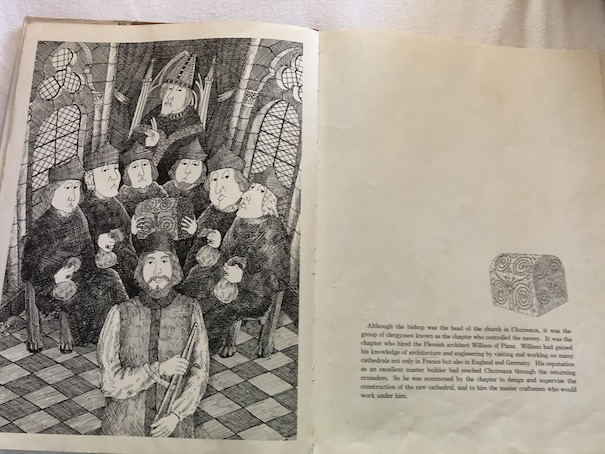
The church leader in Chutreaux is the bishop, but a group of clergymen have been given control of money for the cathedral project. They have chosen to hire a Flemish architect, William of Planz, to create the design for their cathedral and hire the craftsmen who will actually build the cathedral.
Building a cathedral is a massive undertaking that requires many different types of craftsmen and laborers. The book explains that the craftsmen building the cathedral will include a quarryman, a stone cutter, a mason, a sculptor, a mortar maker, a blacksmith, a carpenter, a glass maker, and a roofer. All of these craftsmen are masters of their crafts, with apprentices, assistants, and many general, unskilled laborers doing much of the heavy work.
The building of the cathedral begins with the clearing of the site, marking the basic layout of the building, and building workshops where the craftsmen will be doing their work. The book shows the tools that the various types of craftsmen use. They also need to gather the materials that they will use. There is a quarry where they will cut the limestone blocks they will use to construct the cathedral, and the wood for the roof is brought from Scandinavia by boat.
From there, the cathedral is built in stages, beginning with the foundation and then the walls. The book explains each step of the construction and how it was managed, giving the dates when each phase is completed. It also explains the purpose of various architectural features, such as the flying buttresses that support the walls. There is also a glossary in the back of the book that defines various architectural terms.
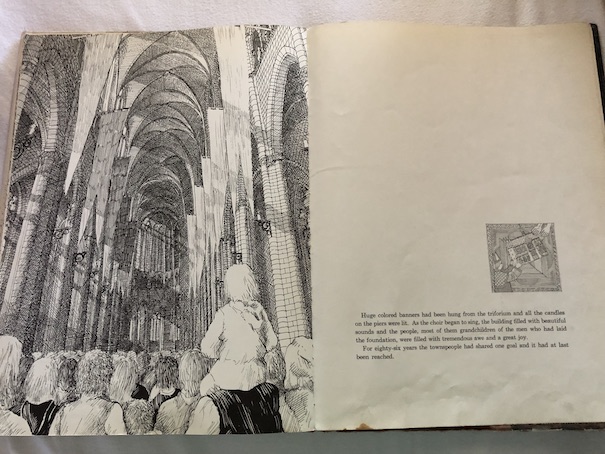
Because this is an extremely long-term project, over the course of the book, William of Planz and various craftsmen age and one person dies in a work-related accident, and they are replaced by younger people. The construction is finally finished 86 years after it was started.
I recommended this book to people after the burning of Notre Dame in Paris last year because this cathedral is similar to Notre Dame and can give people an idea of what went into its construction. I think that the time invested in the cathedral construction is one of the key points of the story. The ability to delay gratification in the pursuit of larger goals is an important life skill, but the people who began the cathedral project showed this ability to an even higher degree than most. The book carefully notes that the people of this town understand that they will never see the final product of their contribution of money and labor because the project will take decades to complete, but they still begin the undertaking because they believe that it is the right thing to do for their community, for future generations, and for God. Their ultimate reward is not in immediately profiting from this project but in their legacy, laying the foundations (literally) for the future. In the end, it is their grandchildren who become the ones to complete the project and enjoy the beauty of the finished cathedral, and they consider it more than worth the wait.
The book was also made into a documentary film. The film follows the basic course of the book but with more focus on the lives of the characters, giving them more personality than the book does and inserting more drama into the construction of the cathedral. The story of the town and townspeople alternates with explanations about the history and architecture of cathedrals. The fictional cathedral serves as an example not only of the process of constructing a Medieval cathedral, but the difficulties and dangers it might involve.
The book is available to borrow and read for free online through Internet Archive (multiple copies).
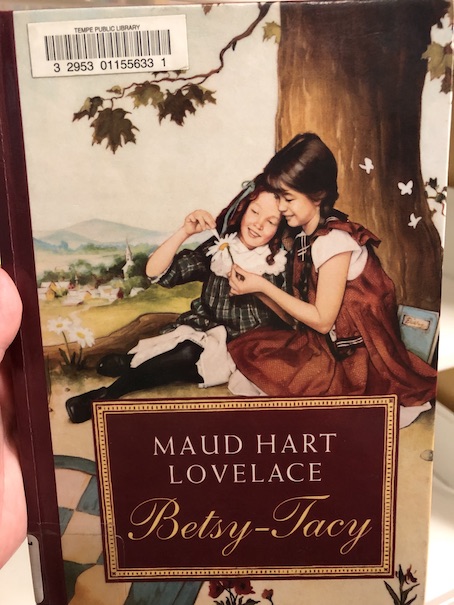
This is the first book in a series about two best friends growing up in Minnesota around the turn of the 20th century. The stories in this book and the rest of the series are based on the author’s own childhood experiences with her best friend.
At the beginning of the book, Betsy meets her best friend, Tacy (short for Anastacia), for the first time after Tacy’s family moves into a house nearby when the girls are both about five years old. Tacy is very shy and doesn’t want to talk to Betsy at first. It isn’t until Betsy’s fifth birthday party, a short time later, that the girls really get to know each other and become friends. After that, they are inseparable, almost to the point where people begin to think of them as one person, Betsy-Tacy.
Each of the chapters in the book is a short story. Some of them are about everyday things, like how Betsy would make up stories about her and her friend, how the girls would play dress up and paper dolls, or how they would have a “store” and sell bottles of colored sand to their friends. Some of the stories are touching, as the girls help each other through some of the most important times of their young lives. Betsy, the more out-going one, helps shy Tacy through the trauma of their first day of school. Tacy, who has many brothers and sisters, reassures Betsy that everything will be alright when Betsy’s younger sister is born. Both girls struggle to come to terms with the death of Tacy’s baby sister.
At the end of the story, the girls make a new friend when a family moves into the chocolate-colored house with the stained glass window that the girls had always admired.
In the 60th anniversary edition of the book, there are pictures of the author and her best friend, Bick, who is the model for Tacy in the stories, and pictures of the author’s family. There is also a description of the author’s early life and how the stories were based off her recollections of her own childhood.
This book is available to borrow for free online through Internet Archive.
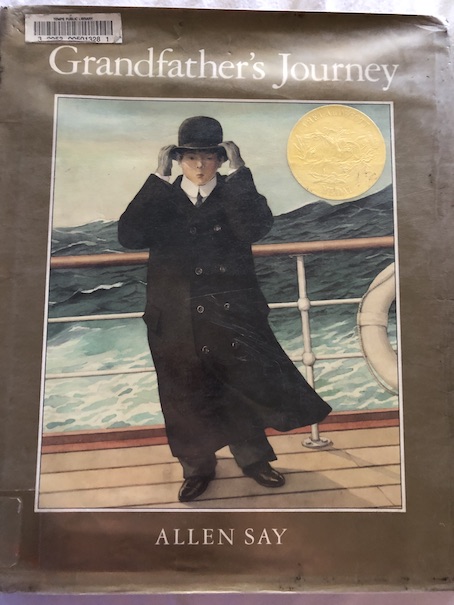
A man describes how his grandfather traveled by ship from his home in Japan to the United States. The time period isn’t specified, but from the context of the story, the grandfather’s original journey would have taken place either at the end of the 19th century or at the beginning of the 20th century.
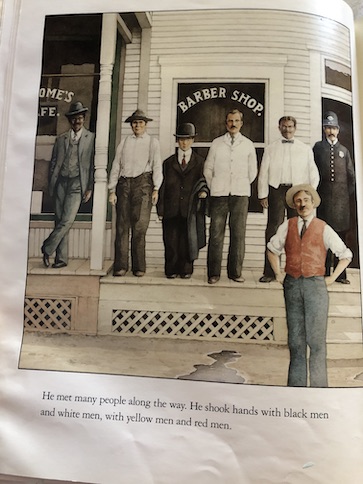
As a young man, the future grandfather travels all over the United States, seeing the sights and meeting all kinds of interesting people. It’s a bit of an adjustment for him, wearing Western style clothing and getting used to life in a new country, but he enjoys the adventure of it. He decides to settle in California, the part of the United States that he likes the best. He briefly returns to Japan to persuade his girlfriend to marry him and return to the United States with him.
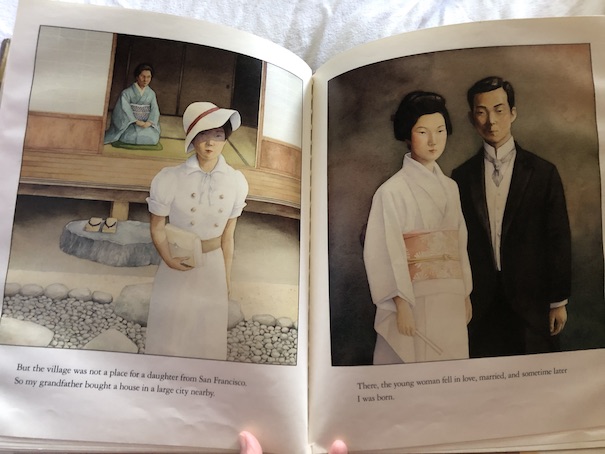
The grandfather and his wife have a daughter in the United States, and they enjoy living there, but as the daughter grows older, the grandfather realizes that he misses Japan and wants to return home. He and his wife move back to Japan with their daughter.
The daughter has to learn to adjust to life in Japan after having lived all of her life so far in America. The family moves to the city because life there is more what their daughter was accustomed to than life in the countryside, where they were originally from.
Later, the daughter grows up, gets married, and has a son, who is the author of the book. The grandson describes being young during World War II and the devastation in Japan during the war. (This is part of what dates the earlier part of the story.)
Toward the end of his life, the grandfather finds himself growing nostalgic about his time as a young man in the United States and wishes that he could return to California one more time. Unfortunately, the grandfather dies before making the trip. Instead, his grandson goes to the United States to see the places that his grandfather told him about.
Like his grandfather, the grandson stays in the United States for a time and has a daughter of his own. He comes to understand how his grandfather felt, missing Japan when he is in the United States and missing the United States when he is in Japan. The world is vast and full of fascinating places to explore, but there is always something to miss and feel nostalgic about, no matter where you are. The grandson continues to travel back and forth between the United States and Japan, enjoying both of them.
The book is a Caldecott Medal winner. It is available to borrow for free online through Internet Archive.




















 Jestress's Forgotten Books and Stories