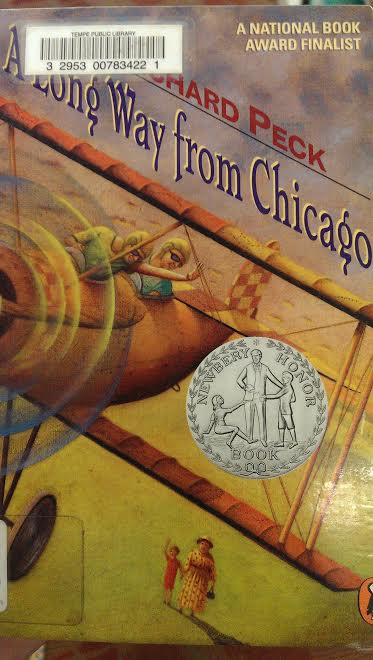
A Long Way from Chicago

LongWayChicagoA Long Way from Chicago by Richard Peck, 1998.

Joey and Mary Alice live in Chicago during the Great Depression, but every summer, they go to stay with their grandmother in a small town in Illinois. At first, the kids think that staying with their grandmother will be boring, but they soon find out that Grandma is anything but. She’s an eccentric woman who doesn’t let anyone boss her around and doesn’t have much respect for any rules but her own. Although she’s pretty tough, Joe and Mary Alice learn that, deep down, Grandma really does care about other people and tries to help them, even though she often gets into a lot of trouble in the process. Each chapter is a short story from each of the summers that the kids spend with their grandmother, from 1929 to 1935:

Shotgun Cheatham’s Last Night Above Ground (1929): When a reporter comes looking for information about a recently deceased local character, Grandma volunteers to hold a wake for him in order to teach everyone a lesson about truth and gossip.

The Mouse in the Milk (1930): When a group of local pranksters needs to be punished, Grandma decides to play a little trick of her own to get even.

A One-Woman Crime Wave (1931): Grandma turns to trespassing and illegal fishing in her quest to feed the hungry.

The Day of Judgment (1932): Grandma enters a baking contest at the county fair for the glory of her home town and a chance to ride in an airplane.

The Phantom Brakeman (1933): Mary Alice tries to help a young woman escape from her abusive mother, and Grandma brings a ghost story to life for the sake of young love.

Things with Wings (1934): Effie Wilcox, a neighbor of Grandma’s, loses her house to the bank, but Grandma comes to the rescue by demonstrating the power of rumors.

Centennial Summer (1935): As Grandma’s town celebrates its centennial, Grandma decides that uppity Mrs. Weidenbach, the banker’s wife, needs to be taught a lesson.

The Troop Train (1942): Joe, now much older, has enlisted in the Army Air Corps during World War II. As the train taking him to his basic training passes Grandma’s town, she’s there to wave to him.

During the course of the stories, the author includes details about how Prohibition and the Great Depression affected people and other details about life in the early 1930s. This book is a Newbery Honor Book.  There are multiple copies available online through Internet Archive.
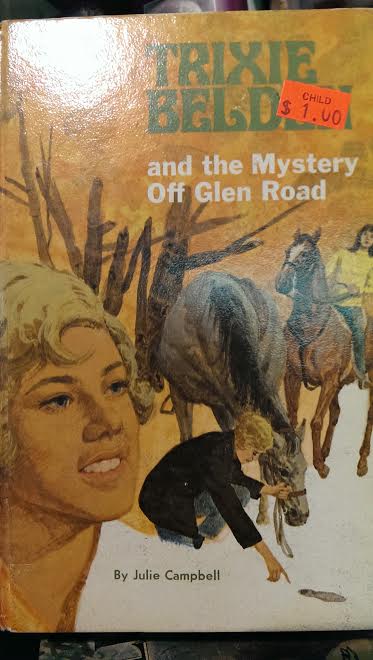
The Mystery Off Glen Road

Trixie Belden

tbglenroad#5 The Mystery Off Glen Road by Julie Campbell, 1956.

When their clubhouse is damaged by a storm shortly before Thanksgiving, the Bob-Whites realize that they will have get some money to fix it soon before the really bad winter weather comes. The Wheelers’ gamekeeper has recently quit, so they offer to patrol Mr. Wheeler’s game preserve for awhile to earn some extra money.

While Trixie and Honey are patrolling, they find a dead deer. They don’t tell anyone about it right away because their dogs, Patch and Reddy, were with the carcass when they found it. If the dogs killed the deer, they might be killed because people would be afraid that the dogs would go wild and start killing more animals. However, Trixie later finds signs that a human butchered and hauled away the carcass. There seems to be a poacher in the wood, and the dogs are innocent of the deer’s death, but how can Trixie and Honey tell the others about it when they tried to cover up the crime in the first place?

To make the situation more complicated, Trixie’s brother, Brian, wants to buy a used car from Mr. Lytell but doesn’t feel that he can spare the money until the clubhouse is fixed. To keep Mr. Lytell from selling the car, Trixie gives him an expensive ring that Jim gave her as security for the car. Since Trixie normally isn’t interested in jewelry at all, she pretends that she wants to wear it to impress Honey’s cousin, Ben, who is visiting for Thanksgiving. Trixie doesn’t actually like Ben at all, but it was the only excuse she could think of for getting her parents to take the ring out of her safe deposit box in the first place. Trixie’s reluctant efforts to fake a crush on Ben and act more girly add humor to the story.

The book is currently available online through Internet Archive.

Soup

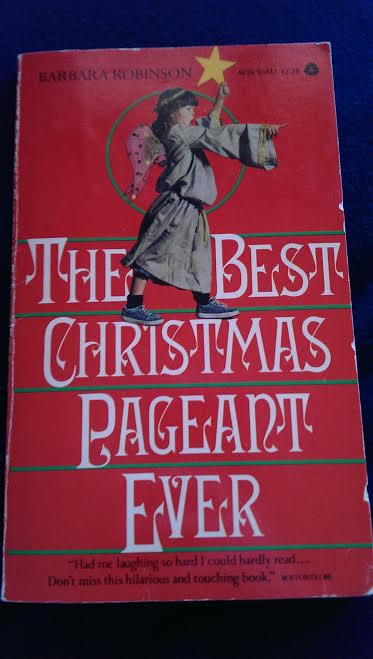
soupSoup by Robert Newton Peck, 1974.

This is the first book in a series about the author’s childhood best friend.  His friend’s real name was Luther Wesley Vison, but he always hated that name.  Because Luther refused to come home whenever his mother called his name for dinner, his mother took to just yelling, “Soup’s on!” when she wanted him to come home to eat.  After that, everyone else just started calling him “Soup”, which he liked a lot better than “Luther.”

Together, Soup and Robert had a reputation for getting into scrapes in their small town in Vermont.  The book is a series of short stories about the funny things they did as kids, like how they got revenge on the school nurse for asking embarrassing questions, how Soup got punished for breaking a window other than the one he’d actually broken, how Soup talked Rob into rolling down a hill in a barrel, and how Robert’s aunt let him tie her to a tree right before a lightning storm.

souppicSome of the stories are laugh-out-loud funny, and some of them have kind of a moral lesson to them, like the time when Rob realized that he didn’t have the heart to lie to his mother even if it would allow him to escape punishment for talking back to the school nurse, the time when Soup and Rob tried to cheat Mr. Diskin out of some money so they would have enough to go to the movies but ended up feeling guilty, and how the boys made themselves sick by attempting to smoke cornsilk.  Others are just stories of childhood events and friendship, like the story of how Rob and Soup played football and how Soup loaned Rob his new shoes when his were ruined.  Even though Soup often got Rob into trouble, he really was a good friend and went out of his way to make Rob feel better when he needed it the most.
Although it is a short chapter book that is easy to read, a couple of the stories might require some further explanations for young children reading them, like the one where the boys smoke cornsilk using homemade pipes and the one where Soup says that someone told him it was all right to cheat Mr. Diskin because he’s a Jew (a belief that they come to rethink when they feel guilty for cheating someone who was always fair with them and was kind to them even when he discovered the deception).  They deal with older practices and prejudices and can be the start of discussions about the lessons people learn by making mistakes. Other than that, these stories present a fascinating look at what it was like to grow up in the country during the 1920s.

The book is available to borrow and read for free online through Internet Archive.

The Best Christmas Pageant Ever

christmaspageantThe Best Christmas Pageant Ever by Barbara Robinson, 1972.
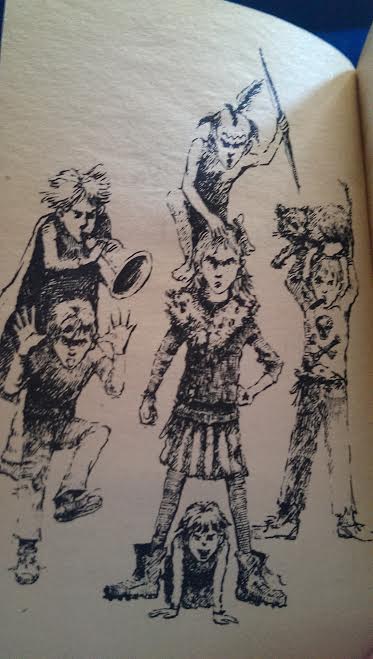
The Herdmans are the meanest, toughest kids in town.  They lie, cheat, steal, and when the mood strikes them, set things on fire.  Their father deserted the family, and their mother works all the time, so the six Herdman kids are pretty much left to their own devices, giving them plenty of opportunity to cause trouble.  Certainly, no one ever made the Herdman kids go to Sunday school.

But, to everyone’s surprise, the Herdmans suddenly show up at Sunday school in time to get cast for the annual Christmas pageant.  It wasn’t because the Herdmans suddenly found religion.  They were mostly there because they heard that there would be snacks.  Charlie told them so when they stole the dessert from his lunch at school.  In reality, Charlie exaggerated the snacks just to get back at the Herdmans.

christmaspageantpic1Although the Herdmans don’t get the cake Charlie mentioned and have little interest in Jesus, they begin to be fascinated by the description of the pageant and decide to stick around.  The Herdmans love movies, and the idea of being in any kind of play strikes them as fun.  Although the Christmas pageant basically goes the same way every year, typically using the same kids for the same parts, once the Herdmans make up their minds that they want the starring roles, they manage to push and bully their way right into the center of everything.
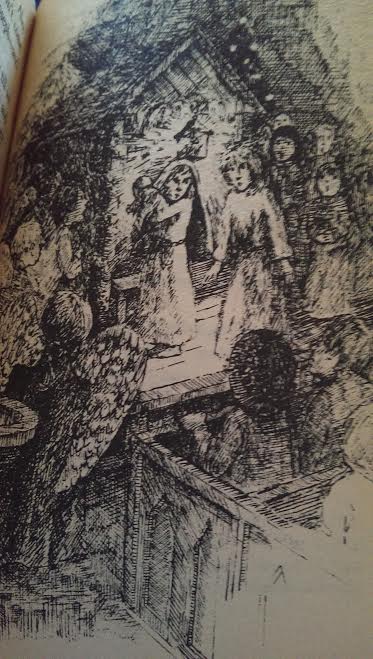
All of the other kids in Sunday school already know the story of Christmas and how the pageant usually goes, and they’re usually bored with the whole thing, but this year, the Herdmans make the pageant so unpredictable that even the kids the Herdmans tend to pick on find it fascinating.  The Herdmans are only hearing the story of Christmas for the first time as they assume their new roles of Mary, Joseph, the three wise men, and the angel.  Because they aren’t as familiar with the story and the routine of the pageant, they end up adding their own little twists to their performance.

christmaspageantpic2At first, the more conservative adults in the church are horrified at the prospect of what the wild Herdmans might do on Christmas itself, but the minister and the lady overseeing the pageant decide to give the Herdmans a chance.  As the title says, it ends up being The Best Christmas Pageant Ever as the Herdmans unexpectedly bring out parts of the Christmas story that the other people who had taken the story for granted hadn’t really thought about much: the simple human reactions of a poor young couple who were strangers in a new town, the fear and expectation that accompany doing something great but unfamiliar and confusing, and the sense of wonder and surprise that are at the heart of the Christmas season.

Parts of the book are laugh-out-loud funny, and parts are actually touching.  While the awful Herdman kids stumble their way through the Christmas pageant, changing things, is it possible that the play is also changing them?

This is the first book in a short series about the Herdmans.  It is available to borrow and read for free online through Internet Archive (multiple copies).  There is also a movie version of the book.  Sometimes, you can find it on YouTube.

Something Fishy at MacDonald Hall

somethingfishySomething Fishy at MacDonald Hall by Gordon Korman, 1995.

Time moves on, and Boots’s little brother, Edward, is just starting school at MacDonald Hall. He’s made it clear that he thinks his older brother and his friends are “over the hill” and uncool.  Mr. Sturgeon is also feeling “over the hill” and thinking about retiring.  Being the headmaster just doesn’t seem that exciting to him anymore.

But, MacDonald Hall just wouldn’t be MacDonald Hall without strange things happening, and some mysterious person has been playing a series of bizarre pranks that rival anything Bruno and Boots have ever done.

Naturally, Mr. Sturgeon suspects them of being the pranksters, but for once, Bruno and Boots aren’t guilty.  On the one hand, they’re a little envious of the prankster’s ingenuity, but on the other, they don’t want to take the rap for something they haven’t done.

Who could the mysterious prankster be?  It is Edward, trying to prove that he’s more clever than Bruno and Boots?  Could it be Cathy and Diane, the girls at Miss Scrimmage’s Finishing School for Young Ladies?  They’ve been somewhat distant this year, for some reason.  Maybe it was Mark, who runs the MacDonald Hall school newspaper, drumming up interest in the paper by creating the phantom joker so he can write stories about it.  Elmer Drimsdale, the school genius, has been acting pretty odd since he developed a crush on a girl at the summer science fair, a girl who also happens to attend Miss Scrimmage’s.

There are plenty of suspects to choose from, and time is running out.  Bruno and Boots may be facing expulsion if they can’t figure out who is behind all the pranks!

This book is part of the MacDonald Hall Series (or Bruno and Boots series).

MacDonald Hall Goes Hollywood

macdonaldhallhollywoodMacDonald Hall Goes Hollywood by Gordon Korman, 1991.

MacDonald Hall has been picked as a location for filming a movie about a boarding school, and people are going crazy (or crazier than normal)!  Bruno hopes that he’ll be discovered and become a movie star. His attempts to insinuate himself (not very subtly) into various scenes keep getting him into trouble.

The girls at Miss Scrimmage’s Finishing School for Young Ladies all have a crush on the teen star of the movie, Jordie Jones, further annoying Bruno.  Cathy and Diane, Bruno and Boots’s friends at Scrimmage’s, are especially getting on his nerves with their wild schemes to meet Jordie in person.

Meanwhile, poor Jordie wishes that he could live life out of the limelight for awhile.  His manager worries about him excessively and never lets him do anything fun.  In spite of his many admirers, Jordie is lonely because he spends all of his time with the movie people and doesn’t have many friends his own age.  Nobody has even remembered his birthday!

Bruno and Boots discover Jordie’s woes when Bruno tries to play a mean trick on Jordie, due to his jealousy of all the attention Jordie gets.  After Jordie opens up to the guys about his problems, Bruno feels more sympathetic toward him and decides to help.  The boys invite Jordie to play poker with them (after lights out and against school rules), take him to a dance at Miss Scrimmage’s (in disguise as a prince from a made-up country), and even get him to help with a hockey game as goalie (which earns Jordie a black eye).

Jordie has been having the time of his life, but the boys still have to conceal his activities as much as possible and deal with his over-protective manager, his rabid fans at Miss Scrimmage’s, and as always, The Fish.  Mr. Sturgeon (aka The Fish), is sympathetic to Jordie because he knows that activities like these are important to his growth as a person, but the movie people crack down on Jordie’s activities because the black eye interferes with his filming.

Although Jordie is supposed to keep quiet and let his eye heal, he runs away to join Bruno and Boots and several other boys on the school’s traditional wilderness survival trip (known to the students as “Die-in-the-Woods”).  It isn’t long before Jordie is discovered among them, but before the trip is over, the others are going to be glad that he’s there.

This book is part of the MacDonald Hall Series (or Bruno and Boots series).  It is currently available online through Internet Archive.

The Zucchini Warriors

zucchiniwarriorsThe Zucchini Warriors by Gordon Korman, 1988.
One of MacDonald Hall’s former students, Hank “the Tank” Carson, has made it big with his zucchini stick snack company.  As a former football player, he also wants to create a winning football team for his old school, funded by his zucchini fortune.

Mr. Sturgeon isn’t happy to see Hank again.  He was in Mr. Sturgeon’s math class, before Mr. Sturgeon became the school’s headmaster.  Hank was always a loud, obnoxious student, and against his morals, Mr. Sturgeon gave him a passing grade even though Hank actually failed the class.  He only did it because he couldn’t stand another year with Hank as his student, although he’s felt guilty about it ever since.

The boys aren’t thrilled about the new football stadium and team, either.  What they really wanted was a new rec hall.  But, when Bruno gets up the nerve to tell Hank about it, Hank makes the kids a deal: if they get a football team together and make a decent showing with it, he’ll fund a rec hall for them, too.  Bruno, as the one who wanted the rec hall the most, becomes the driving force behind the new football team, talking the other guys into playing and even eating Hank’s zucchini sticks even though everyone at school actually hates them.

The biggest stumbling block that the MacDonald Hall Zucchini Warriors faces is that they know nothing about the game.  In fact, the only one around who’s really into football is Cathy, one of the girls across the street at Miss Scrimmage’s Finishing School for Young Ladies.  But, football is a man’s game . . . right?

This book is part of the MacDonald Hall Series (or Bruno and Boots series). It is currently available online through Internet Archive.

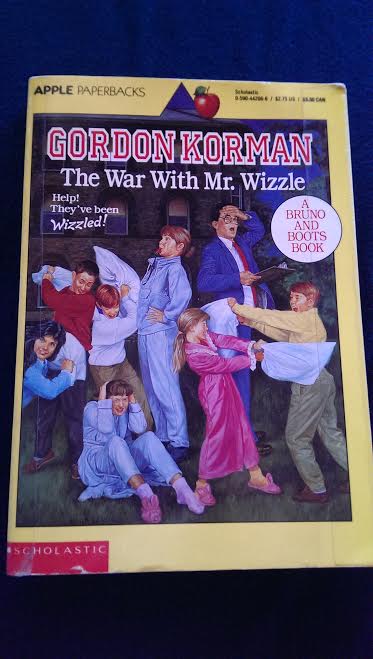
The War with Mr. Wizzle

warwizzleThe War with Mr. Wizzle by Gordon Korman, 1982.
MacDonald Hall hasn’t been the same since Mr. Wizzle came.  He’s obsessed with computers and analyzing and categorizing everyone and everything.  He uses his computers to analyze the boys’ personalities, making changes to their schedules and activities based on the results.  But, no computer could ever understand the wacky and complex personalities of the students at MacDonald Hall.

Mr. Wizzle thinks he can understand everything with his computer, but he doesn’t understand the boys at all.  The boys soon get sick of being tested and analyzed and ordered around and told that they should consider changing their last names because the length is too inconvenient for the computer.  Even Mr. Sturgeon and the other faculty members are getting fed up with Mr. Wizzle, but they can’t do anything about it because the school’s board of directors are still hoping that Mr. Wizzle will modernize the school.

Meanwhile, the boys’ friends across the street at Miss Scrimmage’s Finishing School for Young Ladies are having personnel problems of their own.  Miss Scrimmage’s new athletics teacher, Miss Peabody, used to be a U.S. Marine, and she’s trying to train the girls like they’ve signed up for boot camp.  Like the boys, they would do just about anything to get rid of this new nuisance!

What ensues is a series of hi-jinks in the usual spirit of McDonald Hall as the students at each school attempt to drive out the new faculty, but along the way, the kids are forced to acknowledge that they don’t really want anything bad to happen to these new people.  It’s not that they’re bad people, they’re just not right for the types of schools and the students they’re trying to teach.  Then, a thought occurs to them: Is it possible that Mr. Wizzle and Miss Peabody might be right for . . . each other?

This book is part of the MacDonald Hall Series (or Bruno and Boots series). It is currently available online through Internet Archive.

Beware the Fish!

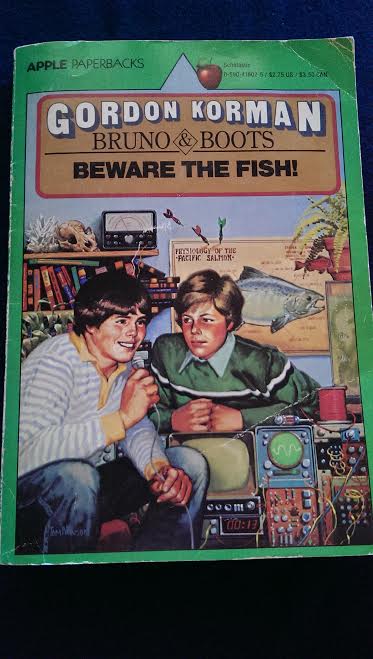
bewarefishBeware the Fish! by Gordon Korman, 1980.
In spite of MacDonald Hall’s prestigious reputation, it is continually plagued by money problems.  The students can’t help but notice all the budget cutbacks, and now, there are rumors that the school might even have to close permanently.  The last thing anyone wants is to leave MacDonald Hall.  Bruno, the school’s resident idea man and master prankster, decides to spearhead a movement to raise money and publicity for MacDonald Hall so they can save the school!

Bruno, his best friend Boots, and their other fellow students try everything they can think of to spread the word about what a great place MacDonald Hall is so that enrollment will go up and the school can earn enough money to stay open.  They enlist the help of the girls at the nearby finishing school to help them break a world record.  The school’s science whiz, Elmer, shows the boys some of his inventions in the hope that one of them will make the school famous.

Unfortunately, as usual, nothing turns out as planned.  World records are extremely difficult to break, and Elmer’s inventions backfire.  One of his inventions backfires in such a way that it comes to the attention of the local police, and even the government becomes convinced that a gang of terrorists may be operating somewhere in the vicinity of MacDonald Hall.

The boys try to keep their activities secret from their headmaster, Mr. Sturgeon (or, as the boys nickname him, “The Fish”), while government agents snoop around, looking for the head of the organization that’s been issuing cryptic messages over television signals, a shadowy figure known only as “The Fish.”

This book is part of the MacDonald Hall Series (or Bruno and Boots series).  It is currently available online through Internet Archive.

This Can’t Be Happening At MacDonald Hall

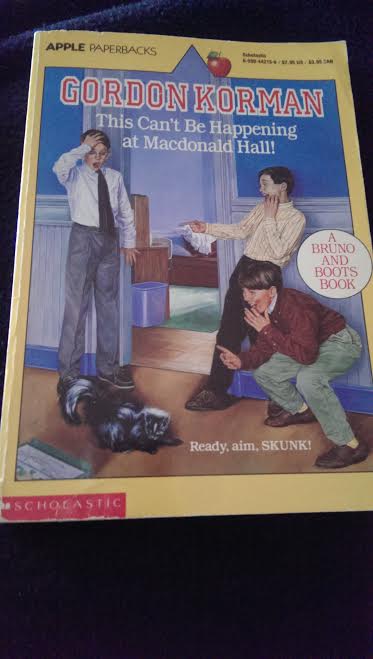
macdonaldhallThis Can’t Be Happening at MacDonald Hall by Gordon Korman, 1978.

Bruno and Melvin (called Boots) have been roommates ever since they began attending boarding school at MacDonald Hall.  The two of them are best friends, and they do everything together.  Quite a lot of what they do involves practical jokes.  But, they’ve really been pushing the limit with their antics, and when they go a little too far during a hockey game, the headmaster gives them the ultimate punishment: they can no longer share a room.  Mr. Sturgeon thinks that they’re a bad influence on each other.  Each of them is assigned to a new roommate, and they won’t even be able to hang out together.

The prospect of losing each other as best friends is too much for Bruno and Boots. Besides, neither of them likes their new roommates.  Boots has to share a room with George, who comes from a wealthy family and is only interested in money.  George is also a germophobe who hates it that Boots sneezes every morning when he wakes up.  Bruno’s new roommate is Elmer, the school’s supreme science nerd.  Elmer isn’t happy about Bruno’s presence, either, because Bruno and his belongings take up valuable space that Elmer requires for his many projects.  Obviously, the situation is completely intolerable for everyone.

Bruno, the idea man of the duo, declares that he will find a way for him and Boots to become roommates again.  They meet secretly at night to discuss their plans.  The boys try every tactic they can think of.  They try making themselves completely obnoxious to their new roommates so that Mr. Sturgeon will have pity on them and give them their old room assignments.  They try framing George and Elmer for some outrageous pranks of their own so Mr. Sturgeon will think that they’re a bad influence on Bruno and Boots.  Bruno and Boots even try (as an extreme measure) behaving themselves!  What will finally work?

This is the first book in the MacDonald Hall Series (or Bruno and Boots) series.  It is currently available online through Internet Archive.