Huggins and Kisses by Susan Creighton, illustrated by Ron C Lipking, 1985.
Mary has been wanting a dog for some time. She admires her neighbor’s dog, Sugar, who is so well behaved.
When her parents finally give her the puppy she’s been wanting, Mary is thrilled, and names the puppy Kisses. However, taking care of a dog and training it turns out to be a lot more work than Mary expected! Kisses doesn’t know how to walk on a leash, and he sometimes chews things he shouldn’t.
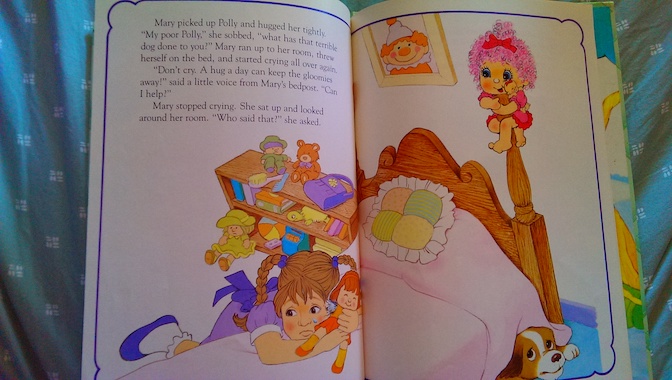
One day, Mary gets angry with Kisses for ripping the arm off of her favorite doll and yells at him. While Kisses is hiding under Mary’s bed, and Mary is crying, one of the Hugga Bunch, Huggins, appears to comfort them. Mary is surprised to see Huggins, and she explains to Mary that she is from Huggaland, which can be reached through her bedroom mirror. She invites Mary to see it for herself, and Kisses follows them.
In Huggaland, Huggins repairs Mary’s doll, which makes her feel better. Then Kisses knocks over the birdbath at Huggins’s house, and Mary gets angry again. Huggins points out to Mary that Kisses hasn’t actually broken anything and that he was probably looking for water because he was thirsty. Huggins gives Kisses more water and a hug.
Mary asks Huggins how she can hug Kisses when he’s been bad, and Huggins explains the importance of gentle discipline. Dogs may be naughty sometimes, but what they really need is love and training. Mary just hasn’t been patient with Kisses and given him the time he needs to learn how to behave.
Mary remembers how much that she really loves Kisses and resolves to give him the time and attention he needs to learn to be a good dog.
It’s a cute picture book, and a nice story about learning to care for pets, giving them the training they need and the time to learn.
A Hugga Bunch Hello by Phyllis Fair Cowell, illustrated by Ron C Lipking, 1985.
Bridget likes having her grandmother living with her and the rest of her family. Her grandmother always has time for her and is willing to give her a hug. Her parents are often too busy, her brother thinks hugs are just for girls, and her Aunt Ruth is too fussy.
Then, Aunt Ruth tries to persuade everyone that Bridget’s grandmother should go live in a nursing home. Bridget doesn’t want her grandmother to leave, but she doesn’t know what to do about it.
While she worries, a strange little person steps out of her bedroom mirror. This little person is Huggins, one of the Hugga Bunch. She says that she knows about Bridget’s problem and thinks that she can help. She invites Bridget to come with her to Huggaland.
In Huggaland, the Hugga Bunch take Bridget to see the Book Worm, who may have the solution that Bridget seeks. Both the Hugga Bunch and the Book Worm say that aging can be slowed by affection and “the knowledge that they are needed,” but Bridget thinks that the only solution is to find a way to actually make her grandmother young again.
The Book Worm says that if that’s what Bridget wants, then her grandmother must eat fruit from the Youngberry Tree. Unfortunately, the tree is in the territory of the Mad Queen of Quartz. Although the Hugga Bunch are afraid of her, Bridget is willing to face her for her grandmother’s sake.
Getting there involves going through a few obstacles, including walking sideways on a sideways sidewalk and facing a frightening beast who turns out to be a baby elephant who was under a spell. When they reach the tree, the mad queen takes them prisoner and turns Bridget into a statue. Fortunately, the others manage to break free and save her.
Bridget is happy at being able to bring the Youngberries to her grandmother, but as she passes through the mirror into her room, she accidentally drops them, and they disappear.
Not knowing what else to do, Bridget runs to give her grandmother a hug before she leaves, encouraging her brother to do the same. Bridget’s father wasn’t happy about her grandmother leaving, either, and seeing how much the children will miss her, he declares that she should stay.
This book was made into a made-for-tv movie. It is currently available on YouTube. It follows the plot of the book pretty closely.
Roxaboxen by Alice McLerran, illustrated by Barbara Cooney, 1991.
This story is based on reminiscences from the author’s family about the games they and their friends played when they were children in Yuma, Arizona. The section in the back about the author and illustrator explains a little about it. The author was born in 1933. Her Aunt Frances (one of the children named in the story) was 80 years old when the creators of the book were writing the story and drawing the pictures, so she was born around 1910. That means that the children in the story probably made up their imaginary town and played in it in during the late 1910s and into the early 1920s. The clothes that the children wear in the pictures appear to be from around that time as well (some of the girls have dresses with dropped waists, and some of the children wear sailor-style outfits).
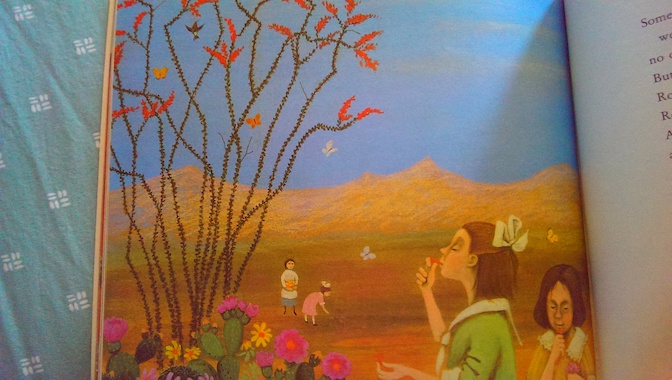
One of the great things about this book is the power of imagination. Readers are not only taken back in time to someone’s remembered childhood, but to the place that the children invented: a town that both isn’t there but yet always is because of the imaginations of the children who once played there. The pictures in this book are beautiful!
A group of neighborhood friends living in a small town in Arizona play games on the edge of the desert. They make a town of their own from stones and old boxes and other things they find, naming it Roxaboxen. Marian, one of the oldest children, names the town and becomes its mayor.
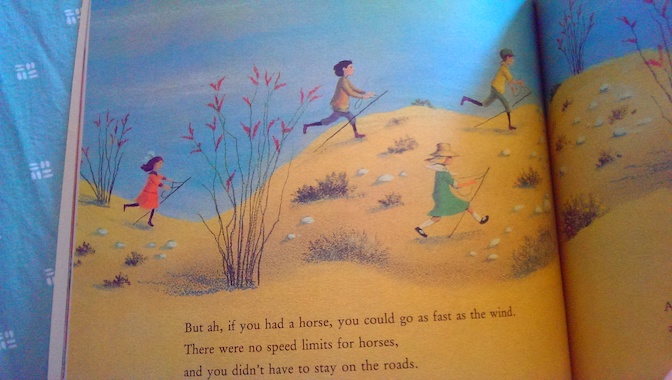
Using stones, the children outline the streets, houses, and shops of their town. They sell things to each other, using little black stones for money, and decorate their “houses” with old bottles and bits of broken glass in different colors. Using other things they find, the kids pretend that they have cars and horses. There are rules against speeding in their “cars”, so they also appoint a policeman and create a “jail.” Sometimes, they have “wars”, boys against girls.
Time passes, but the children continue to play in Roxaboxen year after year, adding to the town and its lore. Even years later, when they’ve grown up and have moved to other places, Roxaboxen still lives in their minds. In a way, they said that their imaginary town always existed, just waiting for those with the imagination to see it, and through the story and illustrations in the book, it now draws in those who read about it but have never seen it themselves.
Another great thing about the book is the sense of freedom that the children have. Many modern children wouldn’t be able to go out on the edges of their town and build something for themselves in the same way that the children in the story did. Although, in the freedom of their own minds and their own backyards, maybe some kids are building their own Roxaboxens as we speak.
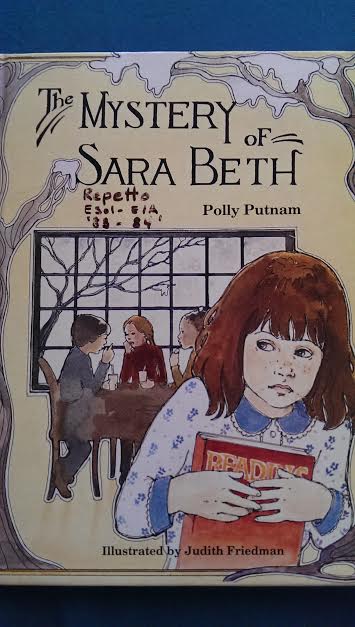
The Mystery of Sara Beth by Polly Putnam, illustrated by Judith Friedman, 1981.
This was one of my favorite books when I was young. It’s a nice mystery story for children in early elementary school.
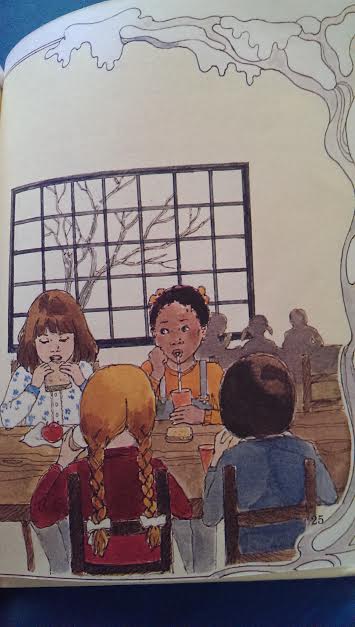
When a new girl named Sara Beth joins their class, Becky and her friends go out of their way to make her feel welcome. However, Sara Beth barely acknowledges their attempts to make friends with her.
Becky becomes concerned about Sara Beth and her lack of interest in making friends at school. Becky also notices some other odd things about Sara Beth’s behavior, which tends to change unexpectedly. Sometimes, Sara Beth likes the class’s pet guinea pig, and sometimes she seems afraid of it. One day, Becky catches Sara Beth taking a reading book home that was supposed to stay in the classroom. Later, she sees Sara Beth hiding a cupcake from a class party to take home. Could these things help explain what Sara Beth is trying to hide?
The book is currently available online through Internet Archive.
My Reaction and Spoilers:
The solution to Sara Beth’s problem is quite simple, but it may seem bigger to younger children. The story presents a good example of the use of observation and logical thinking when approaching a problem. As Becky tries to determine why Sara Beth acts the way she does, Becky watches her closely and makes a list of her observations before coming to her final conclusion. Becky is not only compassionate toward Sara Beth in trying to help her solve her problem and make friends at her new school, but she is also a very logical thinker. I really enjoyed her as a character!
The artwork in the book is nice, and I thought it was clever how the borders of all of the images kind of give a hint to Sara Beth’s problem. Even when the characters are indoors, the pictures are surrounded by snow-covered trees because it’s important to the story that it takes place in winter. The snow is the root of Sara Beth’s problem. The girls live in a cold climate and “Sara Beth” comes from a poor family.
(Spoiler: Becky correctly realizes that “Sara Beth” is actually a set of twins, Sara and Beth, which is why they behave differently each time they switch places. Their family moved to the area from a warmer climate because the twins’ father is looking for work, but they only had enough money for one warm coat for the girls, so one of them has to stay home while the other goes to school. They take turns going to school, and the one who goes to school brings the other one books, school assignment, and class treats so she can follow the lessons and not miss out. When Becky confronts one of the twins, Beth, she admits that they were afraid of making friends at school because they knew that someone would find out the truth. Becky persuades Beth to talk to their teacher, and the teacher arranges for the twins to receive an extra coat that was unclaimed from the school’s lost and found so that they can both come to school.)
In the back of the book, there’s a list of vocabulary words that appear in the story. It does not provide definitions for these words, though. I think that the most unusual words in the book were guinea pig and tetanus shot.
One more thing I thought that I would mention is that Becky, the main character, is African American. This is not mentioned at all in the text of the book and is not important to the story, but it is shown in the pictures. I didn’t think about it much when I first read the book as a kid, but looking back on it, I found it interesting because it reminded me of the character of Adam in the Third Grade Ghosthunters series. It fascinates me that there is something about these characters that people wouldn’t know without looking at the pictures, and I also like it that the characters themselves are not defined by race. It’s just an interesting detail, not central to their characters.
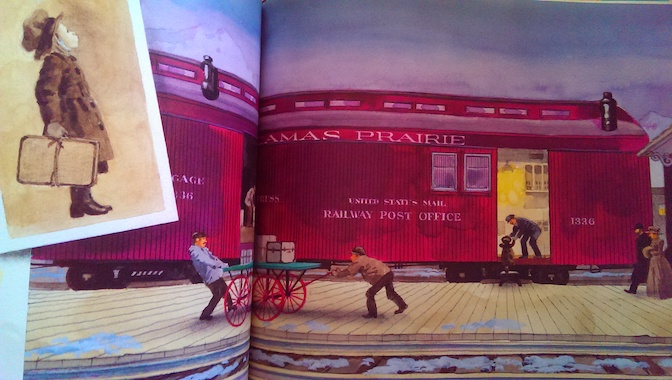
Four-year-old Charlotte May lives in a small town in Idaho in 1914. May, as her family calls her, wants to visit her grandmother in another town, but travel during this time is difficult and expensive. With a lack of roads that are easy to travel, the only comfortable way to get to May’s grandmother’s town is by train. Unfortunately, May’s family can’t afford to buy a train ticket for her.
May wants so badly to go see her grandmother that she even asks at the local general store if the owner can hire her, but he doesn’t have any work that a little girl could do. Then, May’s mother’s cousin helps the family to find a more affordable alternative. If May can’t travel as a passenger, is it possible for her to travel as . . . mail?
It turns out that the rate for mailing a live package the size of May is much cheaper than the fee for a passenger ticket. Because May’s mother’s cousin works in the mail car on the train, he could take responsibility for her during the trip. So, with a label on her clothes, declaring her to be “baby chicks” and the proper postage stuck to her jacket, May undertakes the journey to her unsuspecting grandmother’s house.
This story was based on a real incident. In fact, May wasn’t the only child to be sent through the mail when their parents couldn’t afford to send them as passengers. I also like the book for its glimpse at travel and mail services over 100 years ago.
The book is available to borrow and read for free online through Internet Archive.
The Mysteries of Harris Burdick by Chris Van Allsburg, 1984.
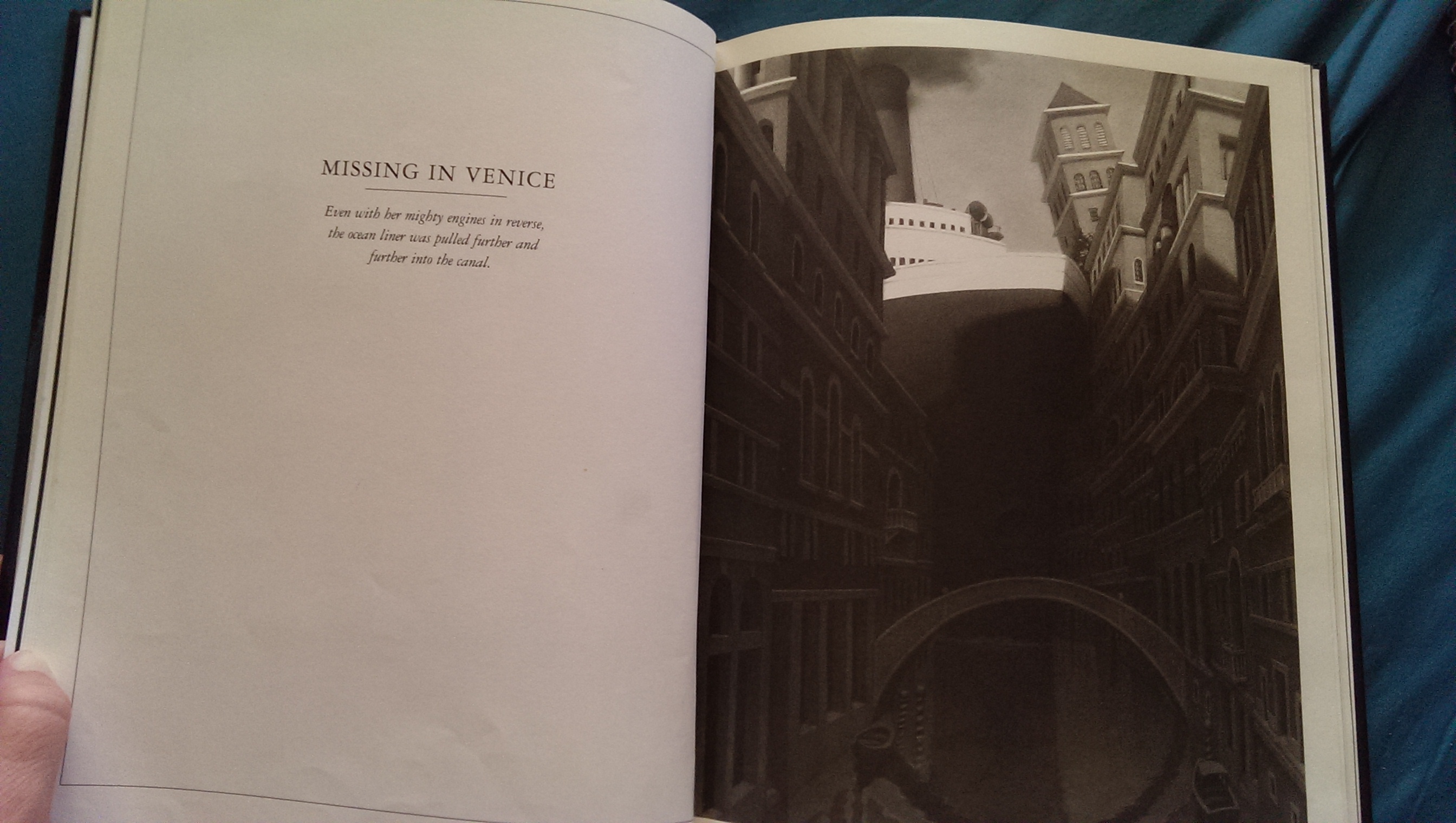
Harris Burdick isn’t exactly a mystery story, not even really a story exactly, but it is mysterious. Most of the book is pictures, and that’s kind of the point. The premise of the book is that a mysterious stranger known only as Harris Burdick approached a publisher about some stories that he had written and illustrated. As examples of his work, he gave the publisher a collection of illustrations he had done for each of his stories with accompanying captions. The publisher loved the illustrations, but Harris Burdick didn’t keep his appointment to bring in the complete stories the next day. When the publisher tried to contact him about the stories, he was never able to find Harris Burdick and never heard from him again. However, the publisher continued to be intrigued by the pictures and wondered what the stories were like, so his children and their friends wrote their own stories about them. The pictures are therefore presented as a collection, and readers are invited to imagine the stories that they are part of.
I remember one of my teachers using this book as part of a writing exercise, having us each choose a picture and write the accompanying story as we imagined it. Over the years, I’ve changed my mind about which picture is my favorite.
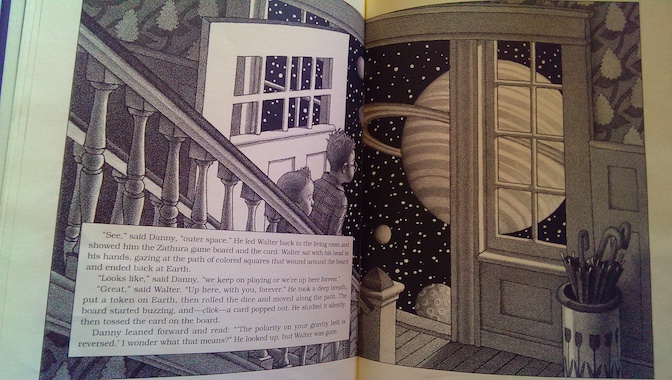
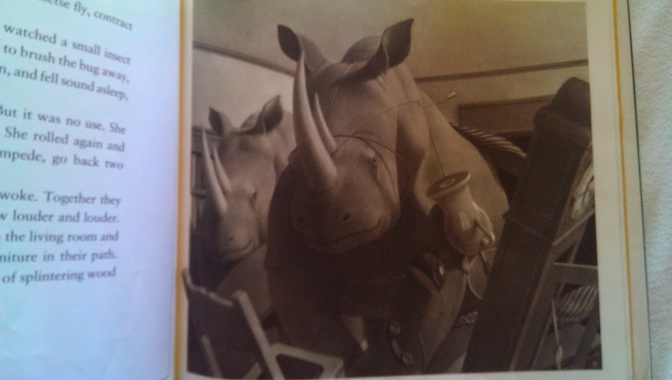
I thought for awhile that “The House on Maple Street” could have inspired the author himself in writing Zathura, the sequel to his other book, Jumanji, although there is apparently no direct link between the two.
The book is currently available online through Internet Archive. There is also a collection of stories called The Chronicles of Harris Burdick in which well-known authors present their own versions of each of the stories.
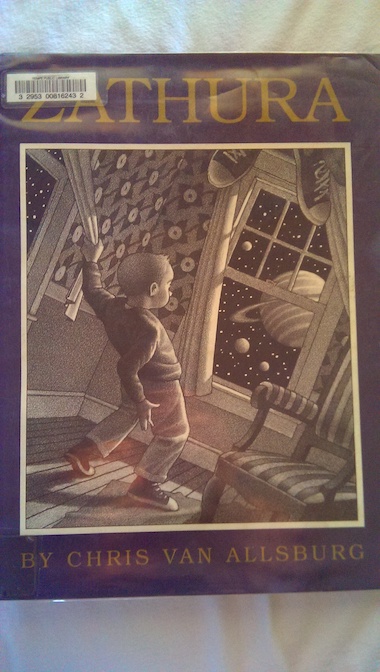
This book begins where Jumanji ends. It’s not completely a sequel because it has a different set of children and a new game, but it’s connected because the two children from Jumanji left the board game in the park again after they finished it, and they saw two boys that they know pick it up and take it home.
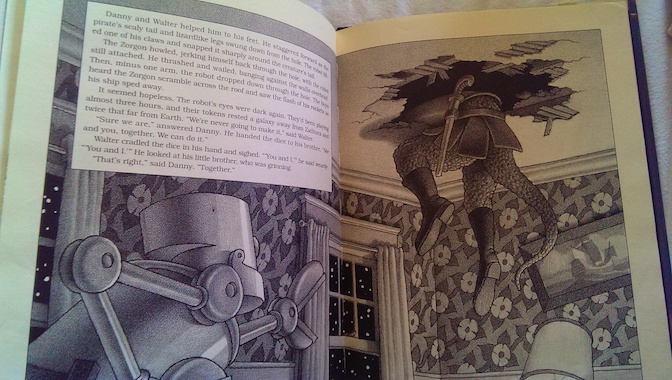
However, the two boys, Danny and Walter, don’t end up playing the same jungle board game, Jumanji, that was in the previous book. They find a second board game in the Jumanji box called Zathura and decide to try it instead. Zathura is a space-themed game where players travel a path from Earth to the planet Zathura. Like in Jumanji, elements from the board game come to life as the boys play, and someone must reach the end in order to end the game.
Danny and Walter, a pair of brothers, fight a lot. Walter hates doing things with Danny. However, when Danny starts playing the game, sending their house into outer space, Walter must join in and play with his brother in order to bring the game to an end so they can go home. The two of them learn teamwork as they help each other face the dangers of the game while trying to reach Zathura.
There is a movie version of this book, but there are major differences between the original book and the movie. The conflicts between the two boys are similar in the book and the movie, but the movie added a subplot about the boys’ parents being divorced (they weren’t in the original book), an older sister for the boys (it was just the two of them originally), and a kind of alternate reality where the older boy was trapped in the game by himself for years because he wished his brother away before finishing the game until his alternate self realized that he cared about his brother and wanted to cooperate with him. In the original book, nobody was trapped in the game.
Chris Van Allsburg illustrations are always good, although I have to admit that I preferred the illustrations in Jumanji to the ones in Zathura. It just seems to me that the pictures in Jumanji were more detailed and realistic.
The book is currently available online through Internet Archive.
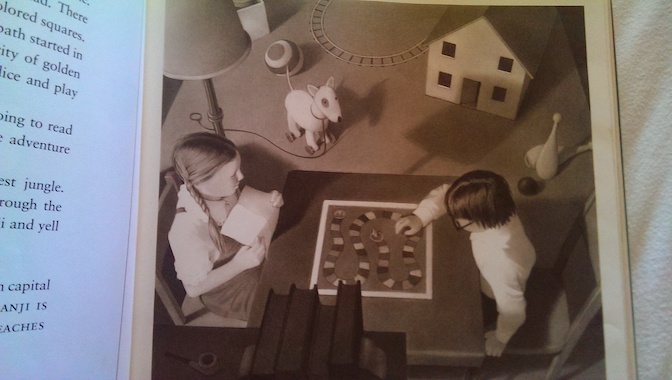
Judy and Peter, a brother and sister, are left home alone while their parents go to an opera. In spite of their parents’ warning not to make a mess because they’ll be bringing guests by later, the kids scatter all of their toys around while playing. Then, the kids go to the park to play for awhile, and they find a board game labeled Jumanji with a note that the game is free to anyone who wants to play it. Judy and Peter decide to give the game a try and take it home.
Jumanji turns out to be a kind of race game. Players are supposed to make their way down a path through a jungle, facing all kinds of dangers, until someone reaches the golden city of Jumanji. The instructions warn them that once a game has begun, it will not be over until one of the players reaches Jumanji.
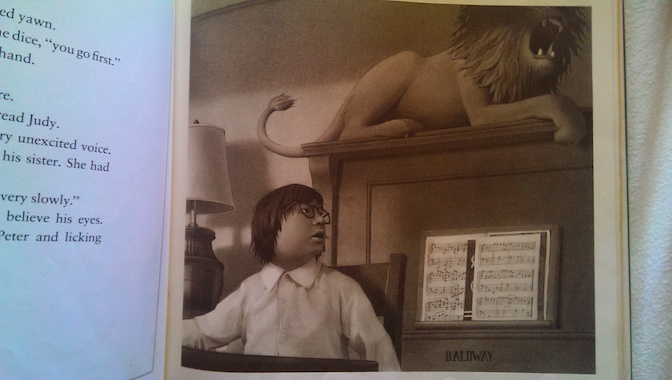
At first, Peter thinks that the game is boring and easy, but it soon becomes apparent that things that happen in the board game are starting to happen in real life when a live lion suddenly appears after an encounter with one on the game board. Peter is scared and wants to stop playing, but Judy reminds him that they can’t stop because the game won’t end until one of them reaches the end of the path on the game board. Until the game ends, they’re stuck with the lion and anything else that happens to appear because of the game. They have no choice but to keep playing, facing each danger as wild animals rampage through their house.
Chris Van Allsburg books always have amazing illustrations, and the pictures in this book are especially good! At the end of the book, the children see two other children find the game, which leads to the sequel, Zathura.
There is a movie version of this book, but the movie differs greatly from the original story. In the movie, the two kids were friends, not brother and sister, and the boy ends up trapped in the game for a period of years until, finally, a new set of kids starts playing and helps the original players to finish their game. When their game ends, the original children are returned to their own time, and no one but them knows that they were ever gone. Things turn out better for the future children as well because the older players make things better for everyone in their own time. There were no players stuck in the game in the original book, and everything takes place during a single day.
The book is currently available online through Internet Archive.
This cute picture book takes place in a Medieval kingdom. Little Hester’s father is the court jester. Then, Hester decides that she wants to be a jester, too. At first, Hester’s parents tell her that she can’t because she’s a girl. (If you’re thinking that you know where this story is headed, wait.)
One day, the king is so sad that Hester’s father can’t cheer him up, no matter what he does. When Hester starts putting on her jester act for her father and makes him happy, he decides to go ahead and have her perform for the king. Hester does cheer the king up, but that isn’t the end of the story.
Hester tells the king that she has discovered that she doesn’t like being a jester after all because it makes her feel too silly. So, the king, now in a much better mood, asks her what she would like to do instead.
This starts a sequence where the king allows Hester to try out various roles and see if she likes them. She tells him that she wants to be a knight because knights are important, but she ends up not liking that when she learns that knights have to go into battle. Then, Hester decides that being a king is even more important, so the king decides to let her try it. But, Hester isn’t good at giving other people wise advice, as the king does.
In the end, when Hester’s mother is sad and doesn’t know what to do now that her daughter has become a king, Hester decides that what she most wants to do is to go home and be her little girl again.
In a way, this book seems like two little stories in one. First, there’s Hester proving that she can be a jester even though she’s a girl, and then, there’s Hester trying to decide what she really wants to be the most, now that the king is letting her try anything she wants. What she decides that she wants most is to be herself and go home.
So, is this little book anti-feminist, saying that girls are better off just forgetting about the other stuff they might want and staying girls? I don’t think so. Basically, this is just a silly little story about a little girl, one too young to have a profession of any kind, who is allowed to see the realities behind some of the things she’s been wanting to try. Some parts, she likes, and some she doesn’t. But, she’s too young and inexperienced for all of them (and some, she will never want to try again because she’s learned that they’re not what she really wants after all), so she’s just going to be what she is: a little girl with plenty of time to grow up, who needs her mother and whose mother needs her. All throughout the book, Hester speaks her mind about what she wants and is honest about the things she doesn’t like, admitting when she changes her mind. As for what might happen when Hester grows up and finds something else she might want to do . . . who knows? By then, she may be willing to try new things again. But, she knows what she wants for now and has a little better idea of some things that she won’t want in the future.
The book is currently available online through Internet Archive.
Happy Holidays and Other Fun Days Around the Year by E. C. Reichert, illustrated by Suzanne Bruce, 1953.
This book explains a little about the origins of various holidays and how they are commonly celebrated. It was written during the 1950s, and the illustrations clearly show it in the style of the people’s clothes. The style of one of the illustrations is one of the charming aspects of the book.
For each holiday in the book, different children talk to their parents or friends about what different holidays mean and how they are planning to celebrate. Many of the explanations are rather simplistic, and I’ve seen books that explain the history of holidays better, but I have some nostalgia for this book because I read it and liked it when I was a young child.
The Holidays:
New Year’s Day — January 1
Sandra talks to her parents about what they’re going to do on New Year’s Day, and her mother explains the purpose of New Year’s resolutions.
Valentine’s Day — February 14
Sally and Billy open valentines they’ve received and talk about Saint Valentine and other Valentine’s traditions.
Washington’s Birthday — February 22
Stevie’s father tells him about George Washington and the famous cherry tree story.
St. Patrick’s Day — March 17
Rickey’s friends explain to him why they’re wearing green on St. Patrick’s Day and his mother tells him a little more about the holiday and what shamrocks are.
Easter — The first Sunday after the first full moon after March 21
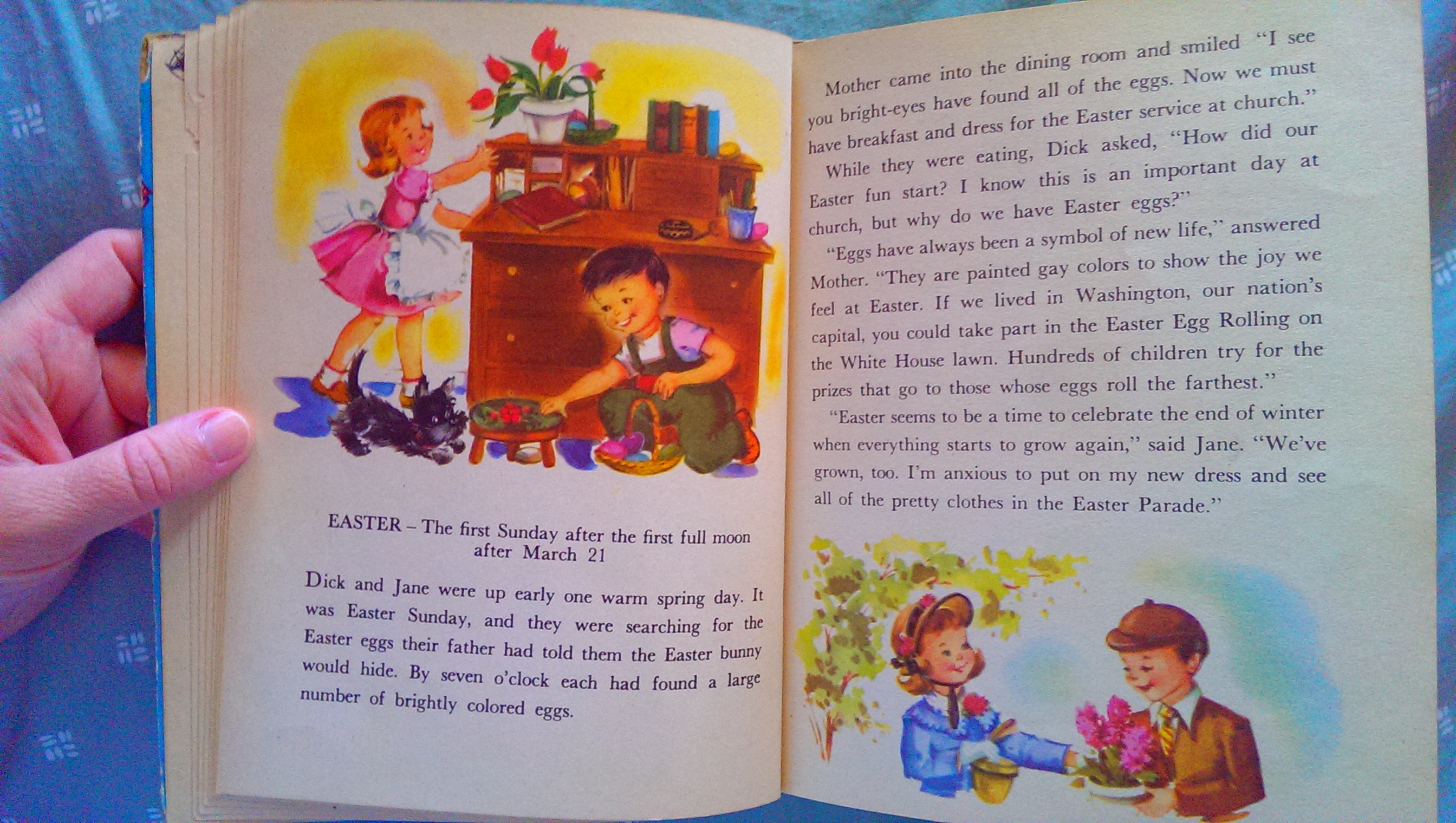
Dick and Jane (not the Dick and Jane from school readers, but yes, those names) hunt for eggs on Easter. They don’t explain the religious reasons behind the holiday, but they talk about popular Easter traditions, like colored eggs and the Easter Egg Rolling at the White House. Congratulations to the book for explaining how to calculate the date of Easter!
April Fool’s Day — April 1
When Artie plays a practical joke on Kathy, their father explains the tradition of April Fool’s Day. (My parents wouldn’t have let my brother give me fake candy because of the choking risk. Just saying. Actually, I never celebrated April Fool’s Day as a kid because both of my parents hated practical jokes because they both resented jokes their parents played when they were kids, coincidentally around the time this little book was published. My knowledge of April Fool’s Day as a kid came from this book and from things I heard at school.)
Independence Day — July 4
Susie and Johnny go to a parade, have a picnic, and watch fireworks on the Fourth of July. Their father explains the significance of the holiday.
Columbus Day — October 12
Miss Nelson’s class at school learns about Christopher Columbus. (This holiday isn’t celebrated as much today as it was when this book was written. I have to admit, I wasn’t that enthusiastic about it as a kid, either. Columbus Day had no costumes, candy, or presents, and I didn’t get the day off school, and thus, it seemed pretty boring to me when I was young.)
Halloween — October 31
Robin and Judy come back from trick-or-treating, and their mother explains a little about the origins of the holiday.
Armistice Day — November 11
Terry and Jimmy watch a parade, and their father explains that November 11 was the day that World War I officially ended in 1918.
Thanksgiving Day — The fourth Thursday in November
Ann and Johnny (a different Johnny from the earlier one, I think they either forgot they’d used that name or just couldn’t think of another – they could have called him Jack to be a little different) have dinner with their family at their grandmother’s house. Johnny talks a little about what he learned in school about the pilgrims and the first Thanksgiving.
Christmas — December 25
Tim and Debbie hang up their stockings, and their mother tells them that it’s Jesus’s birthday and explains the origins of some Christmas traditions.



















 Jestress's Forgotten Books and Stories