Black and White

BlackWhite

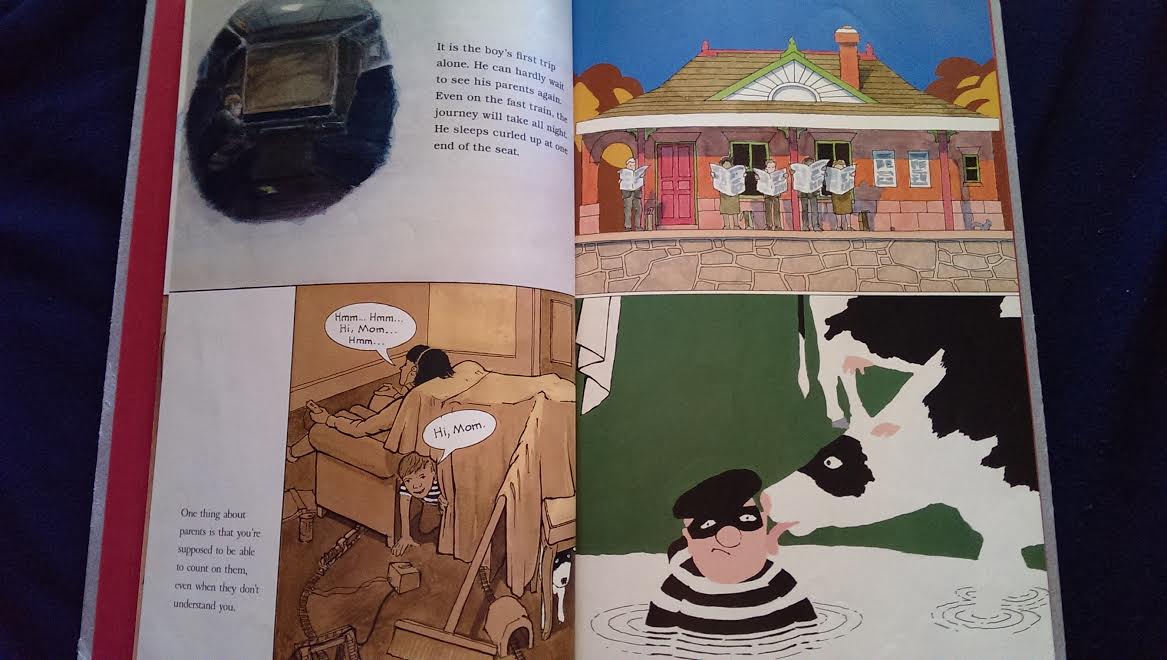
This book is unusual because there are four stories inside, being told at once, but there is one continuous storyline that joins all four of them together.  Two of the stories don’t have many words, but if you pay close attention to the pictures, the connection to the other stories becomes obvious.  The title of the book is also kind of a hint, although those colors apply to more than one aspect of the overall story.

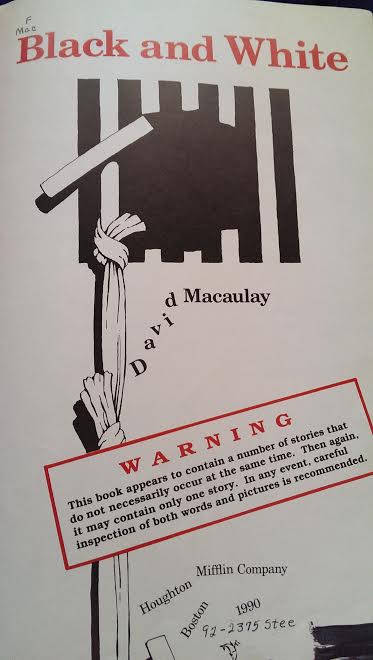
The picture at the right is from the title page, and the title page has the message that explains the concepts behind the stories. One of the fun things about this book is reading it multiple times. You can read the stories and look at the pictures of all four stories as you go through the book the first time, but if you look at each story in isolation, you can experience the continuity of each thread of the bigger stories and notice additional details.

BlackWhiteStories.jpeg

Seeing Things — A young boy takes a train trip by himself, going home to his parents.  He sleeps through most of his long journey, but during the night, he wakes up to some strange happenings.

A Waiting Game — A group of commuters waiting for their train, which has been unexpectedly delayed, find amusing ways to entertain themselves.

Problem Parents — A girl and her brother are convinced that their parents are crazy when they arrive home from their offices in the city wearing weird outfits made of newspapers and singing.

Udder Chaos — An escaped convict hides among a herd of cows.

You might be able to get some of the connections between these stories from what I’ve said and the pictures I’ve shown, but it gets funnier if you keep going through the stories, seeing where each of them lines up with the others.

The book is currently available online through Internet Archive.

BlackWhitePic1
BlackWhitePic2
BlackWhitePic3

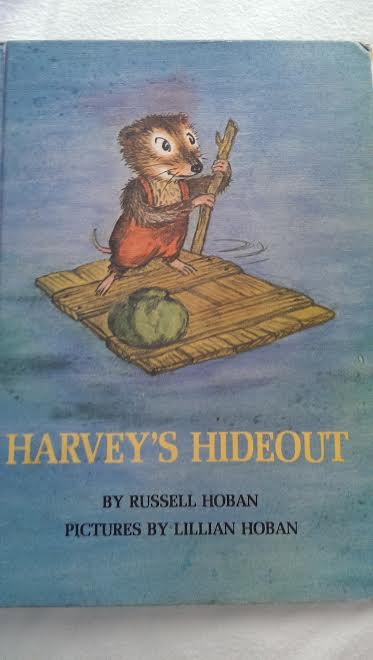
Harvey’s Hideout

HarveysHideout

Harvey’s Hideout by Russell Hoban, illustrated by Lillian Hoban, 1969.

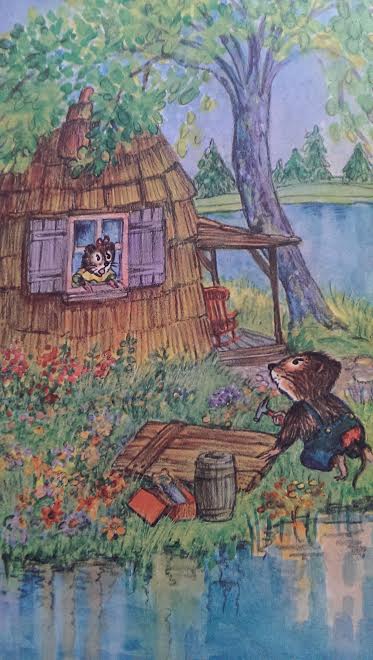
HarveysHideoutHouseSummer is difficult for the Muskrat kids this year.  Their friends are away for the summer, and Harvey and his older sister Mildred are getting on each other’s nerves.  But, there’s nothing that says they have to spend the whole summer with each other.

Harvey builds himself a raft and tells Mildred that he’s going off to meet with members of his secret club for a cookout where annoying big sisters aren’t welcome.  Mildred says that’s fine with her because she’s been invited to a party where there will be no annoying little brothers.  Harvey says that’s fine with him . . . except that it really isn’t.

The secret hideout where Harvey has been spending his time is empty except for him and the comic books he brought with him, and his cookout is for only one person.  He just made up the story about the secret club to make Mildred jealous and to have an excuse to spend time away from the house and her.  Harvey appreciates the freedom, but he’s also bored and lonely and envies Mildred, wondering who she knows who is still in town, inviting her to parties every day.

Then, when Harvey tries to make some improvements to his secret hideout, he discovers that he’s not the only one to dig a secret hideout for himself in the area.  Harvey’s unexpected discovery leads to a change in his relationship with his sister.

HarveyHideoutSecret


The book is available to borrow and read for free online through Internet Archive, and new copies are also available to buy through Plough.  If you try it and like it, consider buying a copy to own!

HarveysHideoutFriends

My Reaction

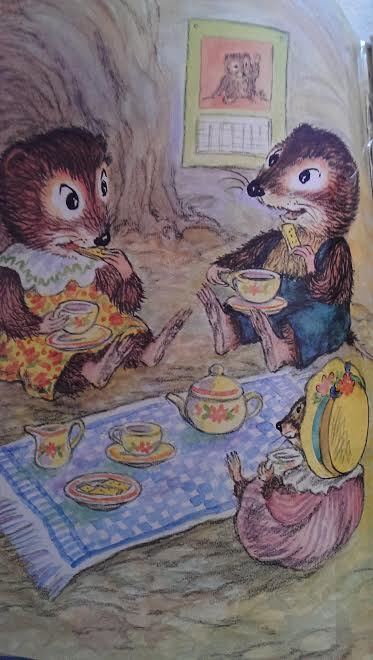
This is a nice story about sibling rivalry and cooperation.  One of the parts I like best is early on in the story when Harvey and Mildred’s father lectures them for fighting and insulting each other. I hated that part when I was a kid, but I kind of like it now because I realize what the father is actually trying to say.  He points out that there is some truth in their insults, but they’re wrong about each other at the same time.  Part of the reason they fight is because they each have their faults (Harvey can be selfish and Mildred can be bossy), but they each unfairly assume that the other is a lost cause and that they can never be friends.  It’s only when they come to realize that they’re equally lonely (Mildred has been having tea parties with just her doll) and Harvey makes the first move in offering to share what he has with Mildred that they realize that they can each be the friends they both need this summer.

When I was a kid, I wished I had a hideout like theirs!  I also love the colorful illustrations in the story.

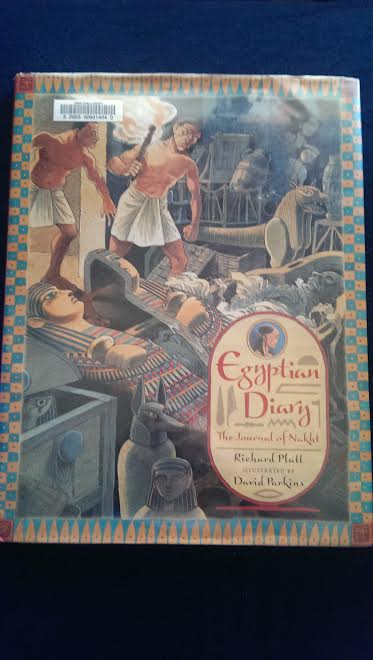
Egyptian Diary

EgyptianDiary

Egyptian Diary: The Journal of Nakht by Richard Platt, 2005.

A young boy in Ancient Egypt, Nakht, is excited because his family will soon move to Memphis because a distant relative has offered his father a job working as a scribe.  Memphis is a large, important city, with more opportunities than Esna, where the family currently lives.  Nakht is also training to be a scribe, so he begins writing an account of his family’s journey to Memphis and what they encounter when they arrive.

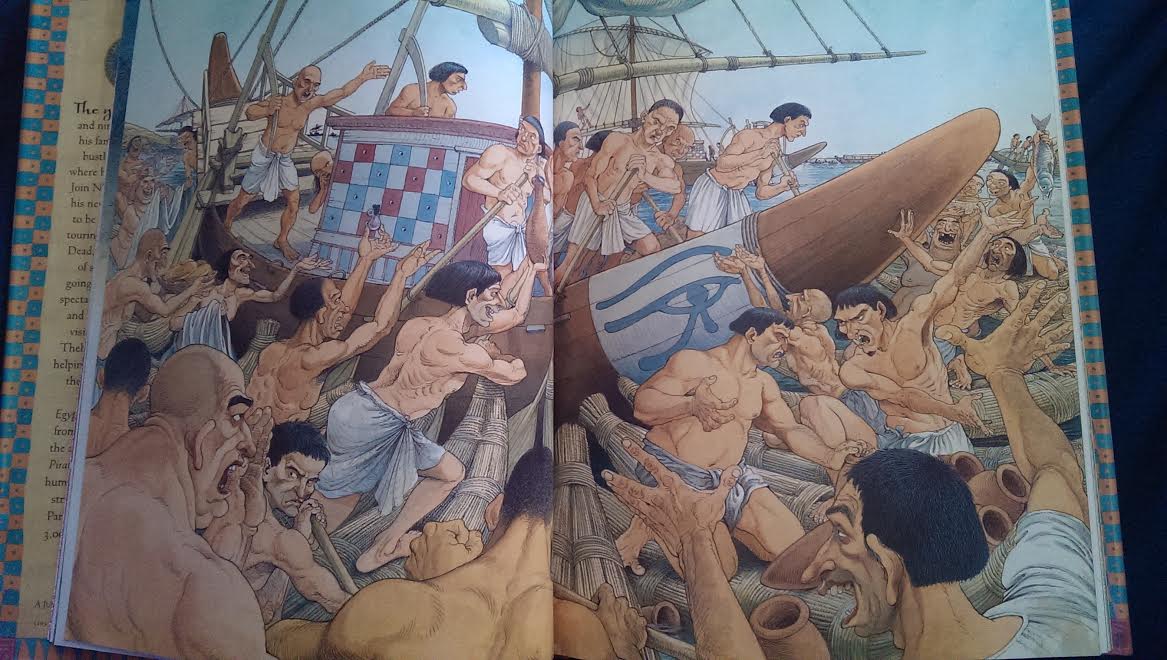
EgyptianDiaryPic1

The journey to Memphis includes a boat trip down the Nile, past the City of the Dead near Thebes, where pharaohs are buried.  When they arrive in Memphis, they make themselves at home in their new house, which is bigger than their old one.  For the first time, Nakht has a private bedroom of his own, and the wall is decorated with a hunting scene.  Nakht also has a bed to sleep in, although he is still more accustomed to sleeping on a mat on the floor, as he did back in Esna.

In Esna, Nakht’s father had taught him his lessons as a scribe, but in Memphis, Nakht begins attending a school with other boys.  There, he practices his writing as always, although he must also learn the older, more formal hieroglyphic form of writing used on the walls of temples and for public inscriptions as well as the less formal writing used more commonly.  Nakht also receives lessons in building and engineering, which includes calculating the weight of the building stones, how many people it would take to move them, and how much food and drink the workers would need during their time of service).  Sometimes, their teacher also takes the students places for lessons, like taking them to the fields near the river so they can see how to build canals and how farmers water their fields.

There are many exciting things going on in Memphis.  Ships come and go from many places.  When the Nile floods, Nakht describes how the Controller of Granaries sets the taxes on grain for the following year by measuring the highest height of the Nile during the flooding time, which is an indicator of how good the next year’s grain harvest will be.  Nakht and his sister Tamyt witness the funeral procession of a scribe, complete with dancers, paid mourners, and a procession of servants carrying all of the furniture and supplies to be loaded into the man’s tomb for him to use in the afterlife.

EgyptDiaryPic2

Then, Nakht learns that his father and other scribes are investigating tomb robberies in Saqqara.  Nakht and Tamyt have never seen the tombs before, but their father refuses to let them come with him.  Instead, the two of them sneak over by themselves to have a look.  While they are there, they witness the robbing of a tomb!  They get a good look at an unusual ring on the finger of one of the robbers and are shocked to later see an identical ring on the finger of a very important person!

EgyptDiaryPic3

At the end of the story, when Nakht and Tamyt are rewarded for their role in catching the thieves, it is revealed that the current king of Egypt is Hatshepsut, who is actually a woman.

EgyptDiaryPic4

Among the other things that Nakht explains about his life are how the doctor treated him when he broke his arm, how grain is harvested, how different types of craftsman work, and how houses are built.  Nakht also undergoes a special hair-cutting ceremony as a coming-of-age ritual.

There is a section in the back that explains more about Ancient Egyptian history and society.  It also explains Egyptian writing, religion, mummies, and tombs.

The book is part of a series of historical picture books.  It is currently available online through Internet Archive.

Pirate Diary

PirateDiary

Pirate Diary: The Journal of Jake Carpenter by Richard Platt, 2001.

Young Jake Carpenter lives with his father in North Carolina in 1716.  His mother is dead, and his father is a medical doctor.  His father wants him to become a doctor as well, but he has decided that it’s important to the boy’s education that he see something of the world first, so he is allowing Jake to go to sea with his uncle, Will, who is a sailor.  Jake is excited about the prospect, and Will has told him many stories about the sea.

PirateDiaryPic1

Jake isn’t allowed to bring much with him because there is limited space on board the ship for personal belongings, and there are many things that Jake has to get used to, like sleeping in a hammock, the names for all the different parts of the ship, seasickness, the poor quality of food on the ship, and using the horn lanterns which are safer for candles on board ship but don’t cast much light.  Jake makes friends with Abraham, the cook’s boy, who promises him extra food in exchange for teaching him to read.  Jake’s main job on the ship is to help the carpenter, so he begins learning his trade.

When the ship is underway, Jake and his uncle learn that the captain is running from debts and that the ship is carrying contraband.  Jake doesn’t think that smuggling is a very serious crime because the main purpose is to avoid paying extra taxes on certain types of goods, and other members of the crew say that it isn’t fair for Americans to continue paying taxes to England when the king doesn’t really care about them or what they want.  The ship sails the Caribbean, but crew members say that they try to avoid docking at English-controlled ports, like the ones in Jamaica, so they won’t have to pay the customs fees. Abraham says that even if they were caught with their contraband, the authorities would likely look the other way if they offer them a share.  Will tells Jake that the captain of the ship will most likely hold back their wages in order to keep them with the ship for as long as possible, like he does with other sailors.

Discipline on board the ship is harsh and arbitrary, according to the captain’s whims.  When Will speaks up to save Jake from a harsh flogging, he himself is flogged and abandoned in a small boat.  Jake believes that his uncle will die because they left him at sea with no provisions!

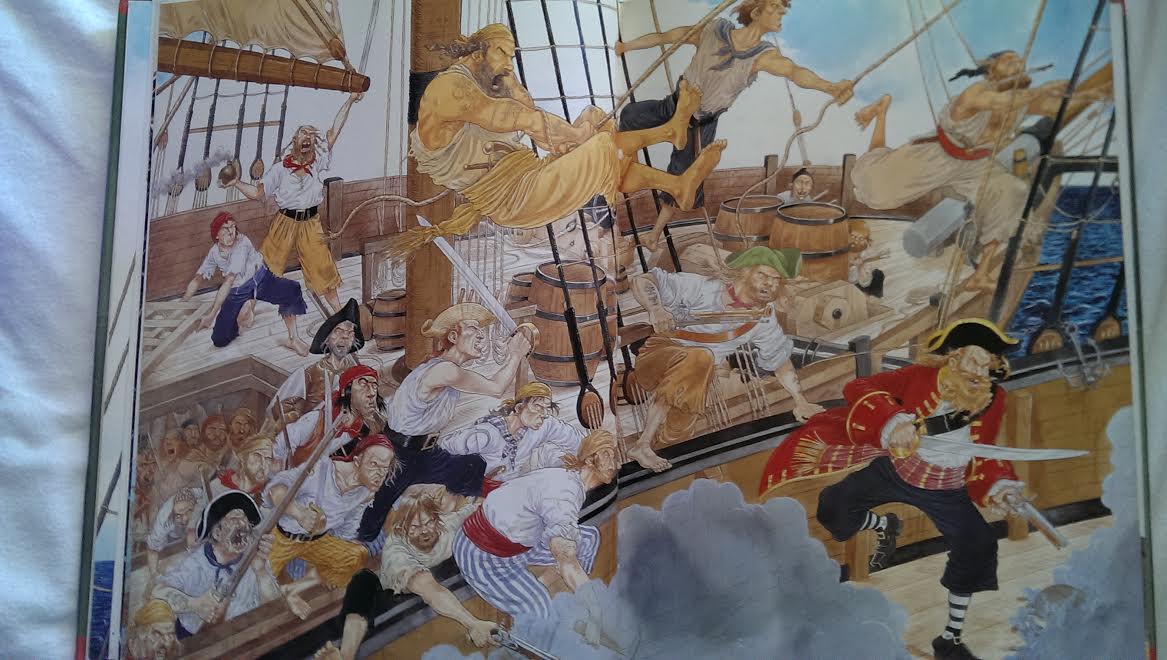
Then, the ship is captured by pirates!
PirateDiaryPic2

Far from making things worse, Jake’s situation and that of the rest of the crew actually improves because of the pirate attack.  With the captain captured, his cruel punishments are over, and members of his crew eagerly join the pirates in the capture.  The pirates ask the crew about the treatment their captain has given them, saying that it will help them to decide what to do with him, and crew members explain the cruelties they have suffered, including what the captain did to Will.  They end up marooning the captain and his equally-cruel second mate on an island with drinking water.

As Jake’s father predicted, Jake gets to see a lot and learn a lot about life and death during his time at sea, perhaps even more than expected while under the command of the pirates.  He gets some experience in dealing with injuries as he has to help the ship’s carpenter saw off the leg of a man whose wound was too infected to treat in any other way, although the man later died anyway.  Later, the pirates join up with other pirate ships, and Jake participates in a raid on a Spanish treasure fleet!
PirateDiaryPic3

It’s not all excitement, and Jake spends some time talking about the routine chores that sailors did and how they would pass the time on board ship when nothing else was going on.  He does get to see St. Elmo’s Fire on the upper rigging of the ship, and the crew spots a “mermaid” once on a misty day.

An offer of amnesty for those willing to give up pirating allows Jake and other members of the crew to return home where he learns that his uncle has managed to survive after all!

PirateDiaryPic4

In the back of the book is a section with historical information.  It explains the history and geography of the American Colonies, where Jake lived and the history of piracy from the first known pirates to the privateers and buccaneers that led to the golden age of piracy in the 18th century.  Jake is a fictional character, but some of the pirates that Jake met in the story were real people, and the section in the back explains more about them.  The book is part of a series of historical picture books.

Castle Diary

CastleDiary

Castle Diary: The Journal of Tobias Burgess, Page by Richard Platt, 1999.

Tobias is an eleven-year-old boy living in England in 1285.  He is from a noble family, and his father is sending him to his uncle to become a page.  As a page, Tobias will learn manners and skills that he will need as he eventually becomes a squire and then a knight.  During the first year of his training that he spends with his uncle, he keeps a diary of everything that happens to him and everything he learns.  Toby is a fictional boy, but his life and family are meant to illustrate what life was like for a young boy from his social level during the Middle Ages.

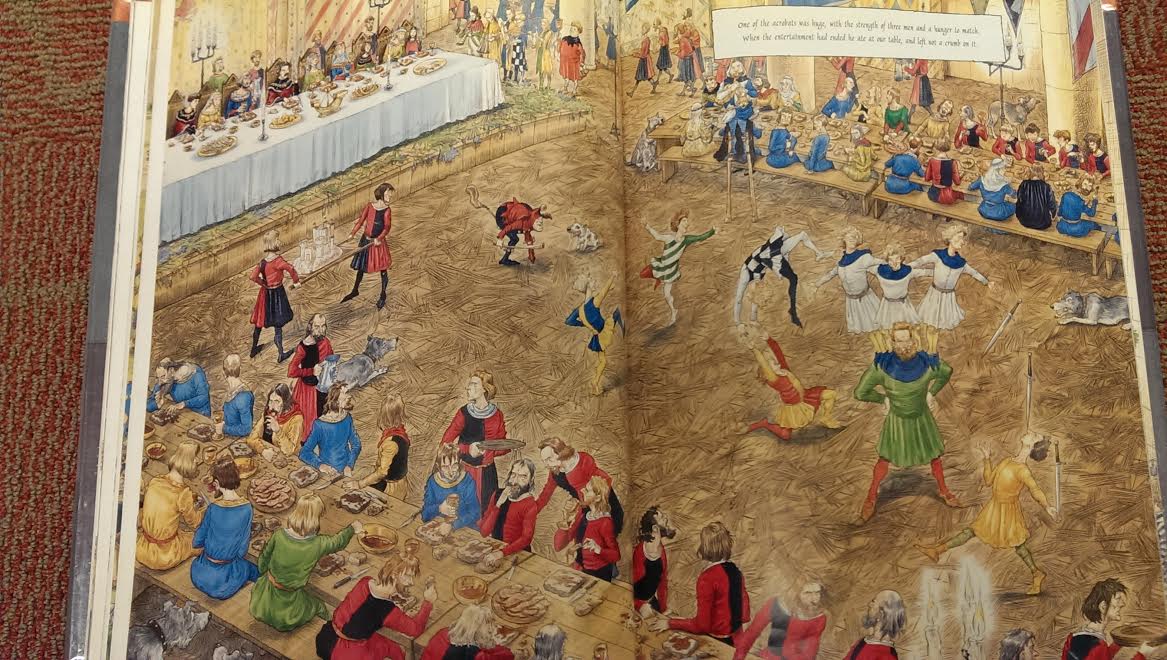
CastleDiaryPic1

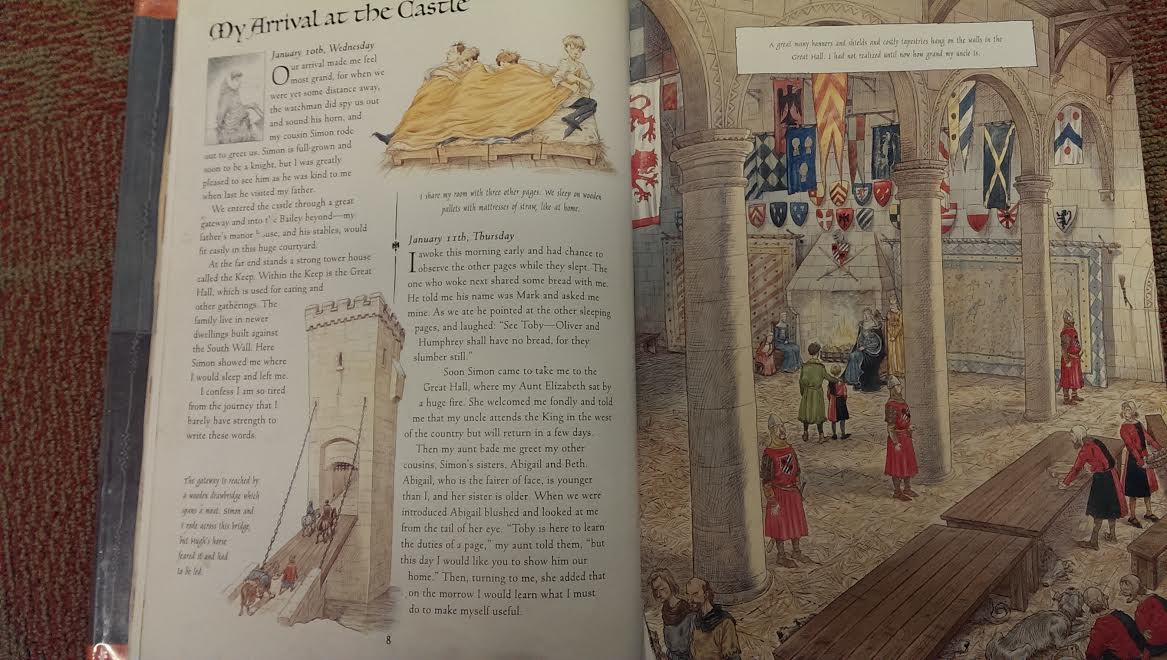
The castle were Toby’s uncle lives is much bigger than his parents’ manor house.  Toby has to learn the roles of all the servants who live there: who is in charge of what and who reports to who.  Not all servants are equal, and some command more respect than others.  Some of them are even from noble families like his, including his aunt’s companion, Isbel.  Toby himself is assigned to do chores for his aunt like running errands, delivering messages, serving food at meals, and holding up the hem of her cloak when she walks outside.

Toby shares a room with the other pages at the castle, all boys of noble families and destined to become knights, just like him.  They have lessons in reading, writing, mathematics, Latin, and scripture from the castle’s chaplain, and he is a harsh disciplinarian.  They practice their lessons on wax tables that can be smoothed out and used again.  The boys also learn manners and start learning archery and about all the weapons and armor that knights use.  When they have time to play, they try walking on stilts and play at being jousting knights by carrying each other on their backs and trying to knock each other off.

CastleDiaryPic2

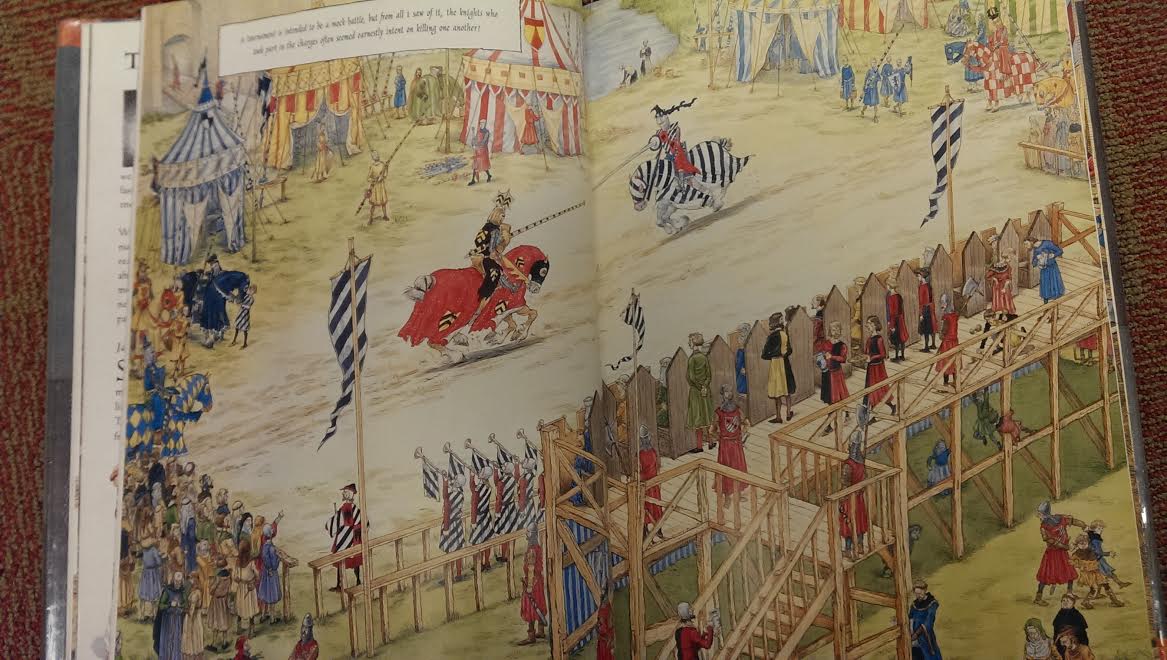
During the course of the year, Toby gets to witness a hunt, a joust, and a banquet with important guests.  At one point, he gets sick and receives treatment from a physician.  He also encounters a poacher on his uncle’s land.  This man is eventually caught (although Toby decides not to turn him in) and put on trial, but in the end, he is not punished because the jurors were sympathetic.  The book ends with a Christmas celebration, after which Toby goes home to visit his parents.

CastleDiaryPic3

In the back of the book, there is a section with more information about Medieval society, castles, sieges, weapons, armor, and the changes that eventually brought an end to feudal system that Toby knew.

The book is part of a series of historical picture books.  It is currently available online through Internet Archive.
CastleDiaryPic4

Something Queer in the Wild West

SQWest

Something Queer in the Wild West by Elizabeth Levy, illustrated by Mordicai Gerstein, 1997.

Gwen and Jill go to visit Gwen’s Uncle Dale, who owns a ranch in New Mexico. The girls enjoy learning to ride horses, but Fletcher seems to be interested in an old barn.  C. J., who works on the ranch, tells the girls that the barn is supposed to be haunted by the spirit of a wild horse and that they should stay away from it.  Uncle Dale confirms the old legend, but the girls think there’s more to the story.

They have hear strange sounds coming from the old barn.  Then, the girls notice that Fletcher seems to be sneaking out during the night.  One night, they see a white horse roaming around when Uncle Dale doesn’t own a white horse. Could it be the spirit of the wild horse, or could it have something to do with a recent horse theft?

Fletcher’s odd behavior is a clue, and there is more to the old barn than the ghost story, as the girls suspected.  The “theft” isn’t quite theft, and the thief is actually trying to do something noble.  In the end, the girls decide to help, but they need Fletcher’s help to do it.

This book is part of the Something Queer Mysteries.  It is currently available online through Internet Archive.

SQWestPic2

Something Queer in the Cafeteria

SQCafeteria

Something Queer in the Cafeteria by Elizabeth Levy, illustrated by Mordicai Gerstein, 1994.

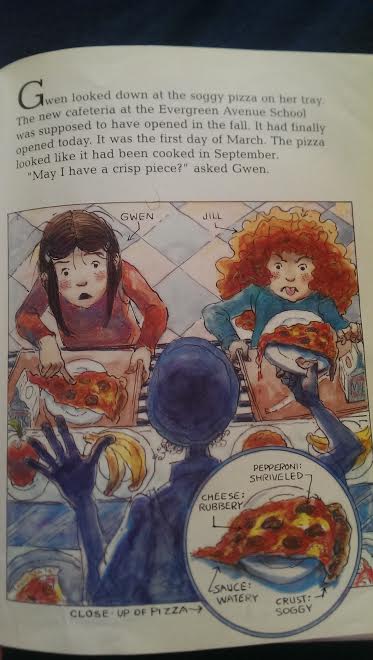
SQCafeteriaPic1Ms. Lensky, the cafeteria lady at Gwen and Jill’s school, is just plain mean. All of the food that the cafeteria serves is yucky, even though the cafeteria is new. There will be a party to celebrate the opening of the new cafeteria, and even the kids’ parents and the mayor are invited. Gwen and Jill are happy because their class will get to help decorate the cake. However, Ms. Lensky, the M.C.L. (Mean Cafeteria Lady), doesn’t like the girls, and she blames them for a number of accidents that happen in the cafeteria.

The first accident was caused by the M.C.L. herself when she was chewing out the girls for being messy (really, the food was messy), and she bumped into other students, causing a food fight to break out.  The M.C.L. blames Jill and Gwen, of course, for starting the fight.  As punishment, the girls are assigned to clean in the cafeteria.  While they’re cleaning up, the M.C.L. blames them when a faucet breaks.

SQCafeteriaFoodFight

Later, when their class visits the cafeteria to prepare for decorating the cake, a counter collapses, throwing frosting all over Gwen.  Then, the girls get in trouble again for criticizing the food.  When the cake burns at the party, and it looks like Fletcher the dog’s bandana is in the burned mess, the girls are blamed once more.

SQCafeteriaFrame

Is the cafeteria jinxed, or is the M.C.L. just out to get the girls?  Or is there another explanation?

This book is part of the Something Queer Mysteries.  It is currently available online through Internet Archive.

Something Queer in Rock ‘n’ Roll

SQRock

Something Queer in Rock ‘n’ Roll by Elizabeth Levy, illustrated by Mordicai Gerstein, 1987.

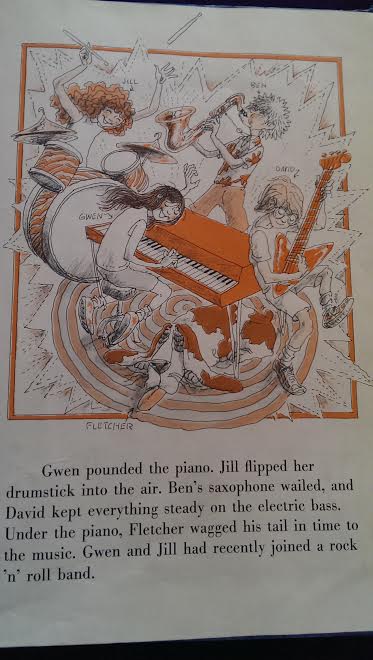
SQRockPic1Gwen and Jill join a couple of other friends in forming a rock band.  They want to enter a rock contest run by a local tv station.  In order to enter, they have to have an original rock song, so they write one about Jill’s dog, Fletcher.  They discover that Fletcher loves pizza so much that he gives a spectacular howl when they offer him some.  They make Fletcher and his wonderful howl part of their act.
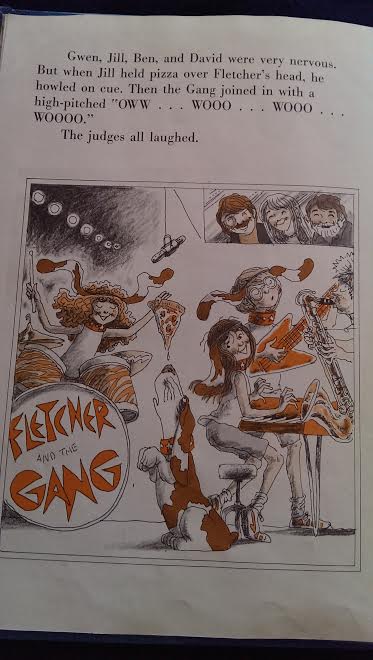
When they audition for the station, the put on dog ear costumes to match Fletcher’s ears and call themselves Fletcher and the Gang.  The people at the station love their act, especially Fletcher’s howl, and they are accepted onto the program.

However, shortly afterward, Fletcher disappears.  They search everywhere for him and put up posters, but no luck.  Jill is convinced that Fletcher must have been abducted because he would never run away.  It turns out to be true, and they discover it for sure when they get a phone call telling them where to find Fletcher.

SQRockPic2Fletcher is all right, but now, he suddenly hates pizza!  It seems that Fletcher’s abductor fed him nothing but pizza until he started to hate it.  Did someone do that on purpose to ruin their act for the contest?  How would this person have even known about their act?  Also, what can they do about the contest now that Fletcher is more likely to run from the sight of pizza than howl for it?
The other rock bands in the contest are all hilarious with themes that include spiders, potatoes, mummies, and clowns.

The book also includes the music and lyrics for the kids’ rock song about Fletcher: “Hungry All the Time.”

It is part of the Something Queer Mysteries.

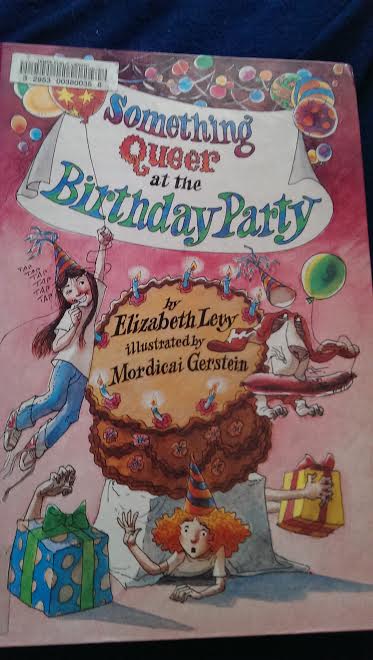
Something Queer at the Birthday Party

SQBirthdaySomething Queer at the Birthday Party by Elizabeth Levy, illustrated by Mordicai Gerstein, 1989.

Jill and some other friends are throwing a surprise birthday party for Gwen. They send out invitations secretly and create a mystery game for Gwen with a series of clues to lead her to the party.  As part of the game, Jill pretends that someone broke into her house and stole a painting of her and her dog, Fletcher.  The clues to the thief lead Gwen into the room where all of their friends are hiding, waiting to surprise her.

Gwen loves their little mystery and the surprise, and the party seems a success. But when it’s time to bring out the cake and open presents, Jill discovers that they are missing from the closet where they were hidden. At first, Gwen thinks that it’s just another mystery game, but Jill tells her that the presents really are missing. Who took the presents, and where are they now?

SQBirthdayPic1Gwen takes her party and all the guests on a hunt across town for her missing presents, but the big clues turn out to be right back where they started, and Fletcher leads them right to what they’re looking for.
The solution to this mystery touches on a problem that children with a birthday near Christmas understand: When your birthday is near a major holiday, people don’t pay as much attention to it or give as many presents.  My grandmother said it was the same with her when she was young, and she was also the eldest child in a large family, so her birthday was never quite what it should have been.  In the story, one of the girls’ friends had this problem, and it was the motive behind this temporary theft.  The culprit didn’t mean to keep the presents forever, they just wanted to pretend that they were all theirs for a little while.  Gwen forgives the culprit and shares the rest of her birthday with this person.

The book is part of the Something Queer Mysteries.

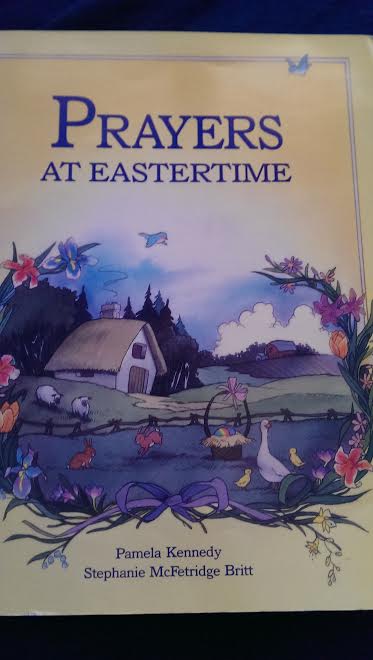
Prayers at Eastertime

PrayersEastertime

Prayers at Eastertime by Pamela Kennedy and Stephanie McFetridge Britt, 1989.

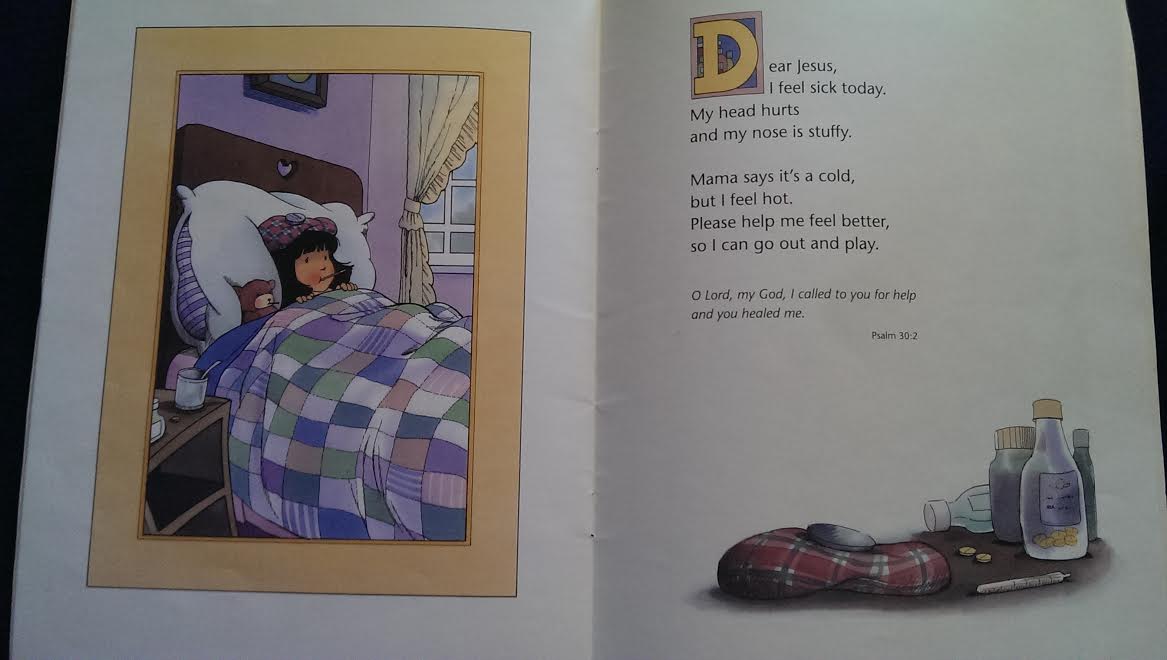
This was a present given to me one Easter many years ago, and I always liked it, especially because of the nice pictures.  Some of the prayers and accompanying Bible quotes are specifically for Easter and springtime, but others are just more general.

There are multiple copies of this book available online through Internet Archive.

Happy Easter!

PrayersEastertimePic1

PrayersEastertimePic2

PrayersEastertimePic3