The books in the series are collections of short mysteries that readers are invited to solve along with the characters before looking at the answers. TACK is an acronym for the names of the main characters. They’re kind of a mystery-solving club of neighborhood kids, although they say that they don’t really have a clubhouse or regular meetings. They just help out members of their community by solving problems whenever they can.
T = Toria – Her full name is Victoria Gardner, but she doesn’t like being called Vicky. She is the one who narrates the stories. She wants to be a newspaper reporter when she grows up, and she considers the journals she keeps of the group’s cases to be good writing practice.
A = Abby – Her full name is Abby Pinkwater. Abby and Toria were best friends before she moved away, which happened before the series even begins. Now, Abby is considered their “Agent-on-Remote” because the others still consider her part of the group, and she still becomes involved with their mysteries, even though she no longer lives close. She sometimes comes to visit or writes letters to the others about problems at her new school.
C = Chuck – His older sister Kate gets married in the first story in this this book, and during the field day story, the other kids say that he’s the best cyclist at school. Toward the end of this book, they mention that Chuck has just gotten a puppy named Duchess, which would actually make this book the first book in the series, before the one that’s often listed first.
K = Will – His full name is Will Roberts, and he’s the leader of the group, although he leads in a very informal way. Will’s initial is the odd one out. They use ‘K’ in place of his initial both because it makes their acronym easier to pronounce and because ‘K’ stands for “SWITCH” in telegraph language, and they think that’s an appropriate code name for him “because of the way his mind can switch all over the place.”
Overall, I like the characters in the stories, and I think they’re well-written. They would be of interest to people who like Encyclopedia Brown and similar types of Solve-It-Yourself style mysteries. Many of the problems and solutions to the mysteries in this book are popular logic puzzle concepts.
The book is available to borrow and read for free online through Internet Archive.
Stories in the Book:
The Case of the Invisible Skunk
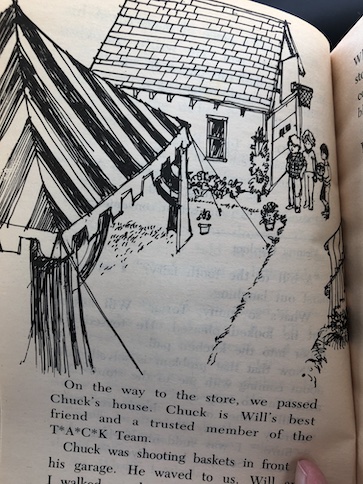
Chuck’s older sister, Kate, is getting married. There’s a big tent in the backyard, and his mother is busy making arrangements for the wedding. Then, something unexpected happens that his mother is afraid will ruin everything: a skunk has somehow found its way into their garage. Chuck’s mom doesn’t know how to get the skunk out of the garage without frightening it, and if it gets scared, it will spray and make the whole yard smell terrible. However, Will has another suggestion for solving the problem.
TACK to the Rescue
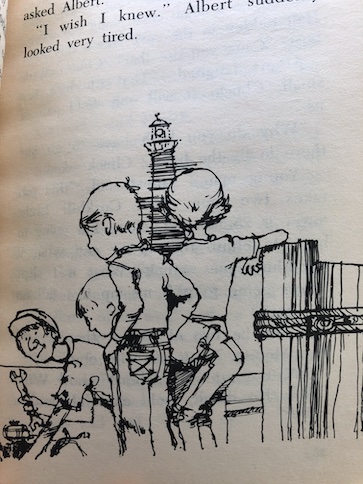
Will calls Toria and tells her that the light at the Corkhill lighthouse is out. It’s important because the lighthouse helps boats navigate around a dangerous area, and if the light is out, boats might crash on the rocks. Ordinarily, they could just take the ferry out to the light and fix it, but the ferry is also broken down. The man who normally runs the ferry is trying to repair it. The local fishing boats are also out, so they can’t even borrow a boat. The only boat the repairmen have is a little dinghy that will only hold one adult, but both of them are needed to repair the light. How can they use the dinghy to get both men out to the lighthouse before dark?
The Jungle Adventure Adventure
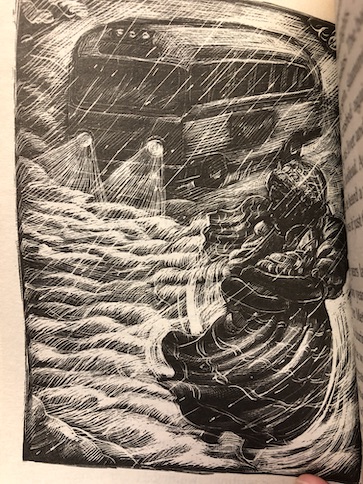
The kids’ class at school is going on a field trip to an amusement park called Jungle Adventure. However, they run into trouble when they encounter a tunnel that the bus is just slightly too high to go through. What are they going to do?
The Disappearing Penny
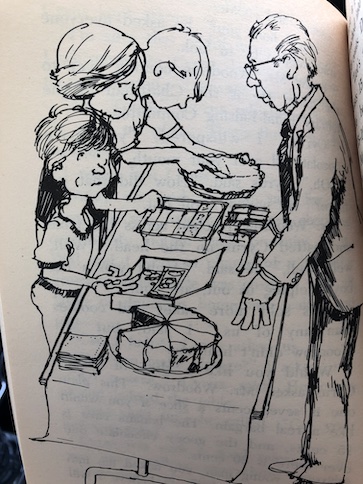
The town of Sandy Harbor is raising money for a new library. Various people are giving shows and holding sales to raise the funds. The kids are helping with a bake sale when Will’s little brother realizes that he accidentally charged three boys the wrong price for a brownie. He goes after them to give them the correct change, but he runs into a problem. He’s supposed to give them five cents, but since there are boys and the money can’t be divided evenly, he gives them three cents and spends the other two on bubble gum. However, he feels guilty about it and can’t figure out how to make the math of the situation come out right. Toria gives him a suggestion to straight it all out.
TACK Tactics
The fund raising for the new library was a success, so everyone is celebrating. However, they quickly realize that there’s a new problem: they forgot about the cost of moving the books from the old library to the new one. They don’t have enough money to cover the costs and buy the new furniture for the children’s room. Fortunately, Will comes up with a straightforward suggestion to solve the problem.
Holly and Her Pet Pingo
Abby returns to town for a visit, and they all take a trip to the nearby state park. Toria’s little sister Holly insists on bringing her pet ping-pong ball Pingo with her. When Pingo gets trapped in a hole, the kids have to figure out how to get it back.
The Day of the Monsters
The Sandy Harbor kids aren’t enthusiastic about the Fall Field Day because they’re competing against kids from a rival school called Monrose. The Monrose Monsters are known for cheating, so the Sandy Harbor kids know that the contests won’t be fair and that they’re going to lose. Will temporary distracts Red Jamieson, the meanest kid at Monrose, with a bet that he can kick a soccer ball so that it will move away from him and then come back to him on its own.
The Day of the Monsters – Part II
As the Fall Field Day continues, the Monrose Monsters are up to their usual tricks. The Monrose players kick the Sandy Harbor players during the soccer game, and Red Jamieson uses a mirror to blind the Sandy Harbor goalie so Monrose can score more goals. When the kids try to tell their gym teacher about it, she doesn’t really listen to them and tells them not to be sore losers. The kids realize that they’re on their own to deal with Monrose. The last race of the day is a bike race, and Chuck has to compete against Monrose mean girl Gretchen. However, there’s a twist to this contest: the gym teacher says that the winner of the contest is the one whose bicycle finishes last. How is that going to work?
The Case of the Telltale Tattletale
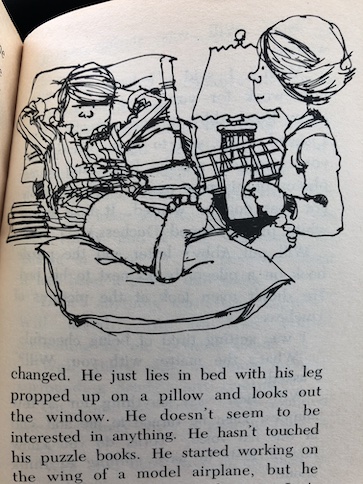
At the end of the tortuous field day, Red Jamieson jumped off the bleachers on top of Will, who was sitting nearby, breaking Will’s leg. The adults are convinced that Red must have fallen, but the kids who witnessed the incident know better. Will has to stay home and rest while his leg heals. His friends bring him his schoolwork and letters from the other kids at school. Soon, Will is bored and restless. He’s tired of the puzzle books his friends have given him because he wants a real puzzle to work on. Fortunately, a letter from Abby brings him the mystery he’s looking for. Someone at her new school is writing nasty notes to her teacher about all the bad things people say about her behind her back. Some of the criticism of their teacher is true, but the other kids in class never meant to make her feel bad because they don’t like her jokes or think she looks funny. They’re also offended that one of the other students is spying on them and revealing things that they said in confidence. Some of the students are being punished by their parents for rude things they’ve said about the teacher, so they have reason to resent the class tattletale. All of the notes are signed with an odd ink blot. Can Will figure out who the poison pen tattletale is from his bed, 300 miles away?
The Dark-Thirty: Southern Tales of the Supernatural by Patricia C. McKissack, 1992.
There are ten short, scary stories in this book, not thirty. The author explains in the beginning that the name of the book comes from an expression kids used when she was young. The “dark-thirty” was the last half hour of light before it became truly dark outside, when the kids had to hurry home so they wouldn’t be out after dark, when the monsters came out. The author was African American, and the stories in this book have African American themes. They were based on stories that the author heard from her grandmother when she was young.
This is a book that I remember a school librarian introducing to us when I was in elementary school, probably around age 10 or 11. My memories of it are a little vague. I had forgotten most of what the stories were about, although the title stuck with me, and I remembered thinking that I should read it again someday. I have to admit that most of the emotions that I experience while reading this book as an adult were anger and frustration. The sad truth is that those are the emotions that permeate much of African American history, from the harsh conditions of slavery to the injustices of racism, and those are the aspects of the stories that stand out to me most as an adult. As I recall, I did think more about the ghost parts of the stories when I was a kid, but I didn’t have as deep an understanding of the background of the stories then. Maybe part of the lesson here is that human monsters are more terrifying than anything supernatural, partly because it’s the people who are or should be closest to you in a shared humanity are the ones who have the most opportunity to cause harm, if that’s what they’ve decided to do. That’s a rather dark thought, but these are dark stories with dark themes.
On a lighter note, I found the stories that introduced pieces of folklore fascinating. I’ve had an interest in folklore since I was a kid, which is part of why this book stuck in my mind for so many years.
I wouldn’t recommend this book for kids younger than 10 years old because of the dark themes. There is also derogatory racial language in the stories (including the n-word), particularly used by the villains, which helps show why they’re villains. I think, before kids are ready for this book, they need to have some background information on the subjects of racism and slavery to understand what’s going on, and they should also know that there are certain words they shouldn’t use themselves, even if other people do.
The book is a Newbery Honor Book. It’s available to borrow and read for free online through Internet Archive.
Stories in the Book:
The Legend of Pin Oak
The story is set during slave days. Harper McAvoy, a plantation owner, has resented one of his slaves, Henri, since they were both young. Harper was neglected by his father after his mother died giving birth to him, and years later, when his father finally returned to their estate, called Pin Oak, he learned that his other had another son with a free black woman, Henri. Their father had hoped that the two boys might be friends and that Henri would help Harper run the estate one day, but Harper always resented Henri for being more like their father than he was and for receiving the attention that his father never showed him. After their father died, Harper thought that he could sell Henri and be rid of him forever, but Henri has actually been a free person all along because his mother was free.
When the slavers try to take Henri anyway, he and his wife run away with their baby. They apparently die jumping to their deaths at a waterfall, although some say that they actually turned into birds and flew away while Harper is killed pursuing them. Others think that Henri and his family may have survived by jumping into a cave behind the waterfall, although there is evidence that Henri didn’t know there was a cave there. Their fate is left ambiguous.
We Organized
As part of the government’s effort to get people back to work during the Great Depression, the Library of Congress employed writers to record the stories of people who had been slaves. This chapter is a poem based on one of those stories.
Justice
This story is about the Ku Klux Klan. A wealthy and influential man called Riley Holt is murdered. The identity of the murderer is unknown, but local people are so shocked and angry at the crime that they are determined to get “justice” … one way or another. A bitter and suspicious local man called Hoop Granger blames a young black man named Alvin Tinsley. However, Alvin has an alibi, and the chief of police, knowing that Hoop is a bully and a liar and has a history of pushing Alvin to take responsibility for things he’s done himself, asks Hoop if he has an alibi, too. He says that he was working at his service station and his friends will vouch for him, but Chief Brown doesn’t think much of any of them as witnesses.
Hoop is a member of the KKK, and to throw suspicion for the murder from himself, he convinces his fellow KKK members that Alvin is guilty and needs to be punished. They capture Alvin and lynch him, but before Alvin dies, he promises to come back and prove his innocence. Hoop and his friends tell everyone that Alvin hanged himself after confessing to Holt’s murder. Not everyone in town believes the story, but they have no way of proving it’s a lie, and the authorities seem satisfied with the explanation (mainly because the mayor’s son was also part of lynch mob, and the mayor is forcing everyone to cover for him). However, Hoop can’t forget what Alvin said about coming back to prove his innocence. He seems haunted by Alvin’s words. Soon, he starts seeing things and becomes convinced that Alvin is coming back for him. Is it really a restless spirit or Hoop’s own guilty conscience?
The 11:59
This story is about train travel and the Brotherhood of Sleeping Car Porters. The Brotherhood of Sleeping Car Porters had stories that they liked to tell each other, like this story about a phantom train called the Death Train or the 11:59.
A retired porter enjoys telling the younger porters stories about how the Brotherhood was formed and the truly great men among the porters. Many of his stories are tall-tales. One of his stories is about the 11:59. When a porter hears the whistle of this phantom train, he only has 24 hours left to live, and nobody can escape it. Not even old Lester.
The Sight
There’s an old superstition that babies who are born with a caul over their heads will have psychic abilities and could be able to see the future or spirits. A boy named Esau gets “the sight” and is able to tell the future from a young age. However, people with “the sight” have to be careful who knows they have that power because some people will try to use them for unethical purposes, which might cause them to lose their gift, and Esau’s father is a con man. Esau knows that his father can’t be trusted, but when he feels compelled to warn his father of danger, his father learns what Esau can do. His father forces him to help him win at gambling with his gift until the gift finally fades. Then, his father deserts him and his mother. Esau’s mother says maybe it’s just as well to lose the sight, and Esau agrees, not liking it when he sees that bad things are about to happen.
Years go by, Esau grows up, and he eventually becomes a soldier in WWII. He manages to make it home safely, but he is surprised by the sudden return of his gift just in time to save his family.
The Woman in the Snow
This story involves the bus boycott in Montgomery, Alabama in the 1950s.
Grady Bishop, a white man with a bad history and a chip on his shoulder, has recently started working as a bus driver, although he’s never happy when he has to take the less prestigious route through the city, where a lot of black people catch the bus. Driving makes him feel powerful, but he considers this route beneath him.
One day, during a bad snow storm, a poor woman with a sick baby begs him for a ride although she doesn’t have money to pay. She’s afraid if she can’t get the baby to the hospital, she’ll die. Grady refuses to give her a free ride, convinced that she’s making too much out of nothing and just trying to get a free ride. Later, he hears that the woman and baby froze to death in the storm. A year after that, he sees the same woman again on the same route. Startled, Grady crashes his bus and is killed.
Years later, a black bus driver has that route, and other drivers tell him about the ghost lady with the baby that they see whenever it starts snowing. He becomes the last person to see the ghost lady … because he’s the first to give her a ride.
The Conjure Brother
This story explains that “conjure women” were women who sold herbal cures and practiced folk magic to help people change their luck.
A girl named Josie is tired of being an only child and wants a brother. However, her mother shows no signs of being pregnant, even though Josie keeps asking her for a brother. When she hears a couple of women talking about the local conjure woman, Josie decides to go see her and ask if she can help her get a brother. The conjure woman gives her a set of instructions to follow, but Josie performs the ritual too early at night. Instead of getting a baby brother, Josie gets an older brother, called Adam. Her parents act like Adam has always been their oldest child. Adam is bossy, and some of the things that used to belong to Josie now belong to Adam. Josie starts to think of Adam as a pest and returns to the conjure woman to ask her to do something about Adam, but instead, she learns an important lesson about sharing her life and house with a sibling.
Boo Mama
This chapter talks about the tumultuous times of the late 1960s and the assassinations of Martin Luther King, Jr. and Robert Kennedy. Some people felt so overwhelmed by everything that was going on that they just wanted to “drop out” of society and ignore the chaos around them.
Leddy has been a social activist since she was in her teens, but then, her husband is killed in the war in Vietnam, leaving her with a young child. After the deaths of Martin Luther King, Jr. and Robert Kennedy soon after her husband’s death, Leddy feels completely overwhelmed. She’s been putting forth all of the effort she has for a long time, and the deaths of the man she loved and the people who inspired her feel like too much. She has a breakdown and starts questioning whether everything she and her friends have done has really accomplished anything. Deciding that she needs a change of scene for her and her son, she moves to a rural community in Tennessee.
At first, her young son seems to do better in the countryside, and Leddy finds the change of pace relaxing, but then, her young son disappears. He wanders away while his mother is hanging out the laundry. The locals put together a search party. They search for days, but all they can find is the boy’s teddy bear. Everyone is convinced that he’s dead, but Leddy can’t give up hope that her son is still alive. Her son does turn up, but he is strangely different. Where has he been, and what has happened to him?
The Gingi
There is an old superstition that “Evil needs an invitation.” Among the Yoruba people of West Africa, there is a belief that evil spirits need someone to welcome them into a house before they can enter, so they will try to trick unsuspecting people into giving them an invitation. They use special talismans called gingi to guard against evil.
A woman named Laura is fascinated by a strange statue that she sees in a shop window. However, when she tries to buy it, the shopkeeper says that she’s never seen it before and warns Laura that evil spirits sometimes disguise themselves to trick people into taking them into their homes. Laura thinks this is just superstition and insists that she wants the statue. The shopkeeper charges her a price that’s too high to discourage her from buying the statue, and it almost works, but for some reason, Laura feels compelled to buy it and pays for it anyway. Seeing that she can’t prevent Laura from taking the statue, the shopkeeper insists that she take a small complementary talisman and keep it with her. The talisman is a small doll, and she gives it to her young daughter to play with.
The Chicken-Coop Monster
The final story in the book is semi-autobiographical, inspired by the author’s feelings when her parents got divorced when she was a child.
A young girl named Melissa is upset about her parents’ divorce. Her parents send her to stay with her grandparents in Tennessee while they’re sorting things out, but she becomes convinced that there’s a monster living in the chicken coop on her grandparents’ property. She and her friends are part of a group called the Monster Watchers of America. Melissa’s grandmother doesn’t believe in the monster, but her grandfather teaches her an important lesson about facing up to life’s monsters.
More Scary Stories to Tell in the Dark collected from folklore and retold by Alvin Schwartz, drawings by Stephen Gammell, 1984.
This is the second book in a series of popular ghost stories and American urban legends. Many of us who were children in the 1980s and 1990s heard these stories on school playgrounds, at summer camps, or at sleepovers, even if we didn’t read them in this book first. I found the stories in the first book in the series to be more familiar to me from my childhood than the ones in the second book, but there are still many popular and familiar ghost stories here. There is a section at the beginning of the book where the author/compiler discusses why stories like these have been popular for generations. In the back of the book, there is another section with more detailed information about the origins of the stories and their variants.
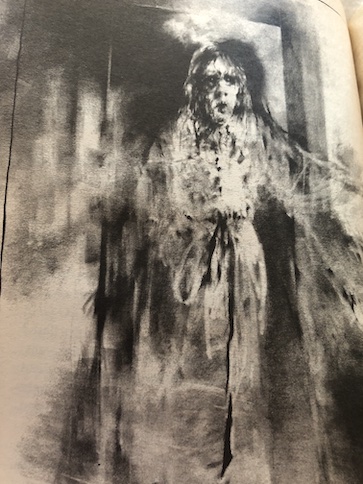
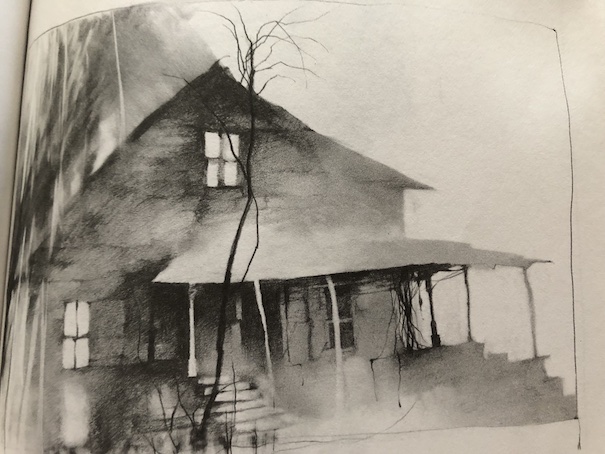
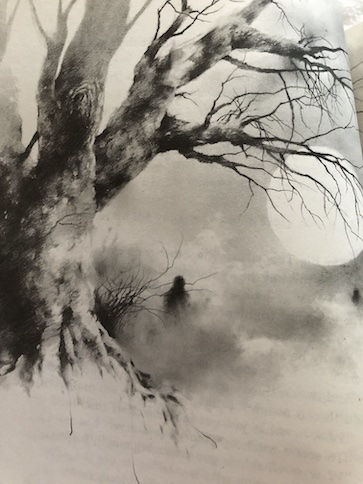
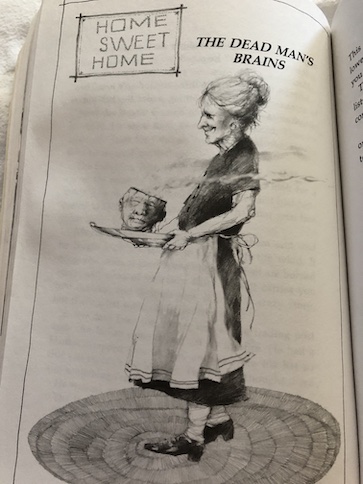
The drawings in the book also complement the stories well. They’re all in black-and-white and have an ethereal look, as those they were composed of spirits or smoke.
The book is available to borrow and read for free online through Internet Archive (multiple copies).
Stories Included in the Book:
The stories are divided into sections by theme or by the effect that the stories are supposed to have.
When She Saw Him, She Screamed and Ran
This section has stories about ghosts.
Something Was Wrong – A man is walking down the street, but for some reason, everybody is afraid of him. What’s wrong?
The Wreck – A guy meets a girl at a dance … only to learn that she was killed before she got there.
One Sunday Morning – A woman goes to church on Sunday but discovers that this isn’t a normal church service.
Sounds – Some fishermen take shelter in an empty house during a storm and hear the sounds of a past murder.
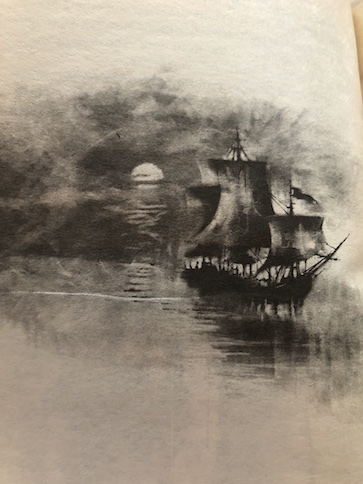
A Weird Blue Light – The crew of a ship during the Civil War witness something very strange, possibly the ghost of a pirate ship.
Somebody Fell From Aloft – The ghost of a murdered sailor gets his revenge.
The Little Black Dog – A murderer is followed by the ghost of a dog.
Clinkity-Clink – A grave digger steals the silver dollars laid on the eyes of a corpse, but the dead woman wants them back. (This story is supposed to end with a jump scare, like ghost stories told aloud around a camp fire.)
She Was Spittin’ and Yowlin’ Just Like a Cat
This is a selection of strange stories about different topics.
The Bride – The famous story about a bride who plays hide-and-seek and accidentally gets locked in a trunk.
Rings on Her Fingers – A thief tries to steal the rings from a dead woman, only she may not be quite as dead as everyone thinks.
The Drum – Two young girls meet a gypsy girl with a special drum that controls dancing figures. The girls want the drum, but the gypsy girl says that she’ll only give it to them if they do bad things.
The Window – One dark night, Margaret sees something with glowing eyes outside her window. What is it?
Wonderful Sausage – A butcher murders his wife and turns her into sausage.
The Cat’s Paw – A woman turns herself into a cat.
The Voice – A girl hears a voice in her room at night, but nobody is there.
When I Wake Up, Everything Will Be All Right
This section has stories about dangerous and scary places.
“Oh, Susannah!” – A university student thinks her roommate is humming at night, but her roommate is already dead.
The Man in the Middle – A girl sees three men on the subway late at night, but something’s wrong with the one in the middle.
The Cat in a Shopping Bag – A woman accidentally runs over a cat, and she puts the body in a bag to dispose of, causing a thief to get a terrible shock.
The Bed by the Window – A room at a nursing home has only one bed by the window. When one man kills another to get the view, he gets a shock.
The Dead Man’s Hand – A group of nursing students resent a fellow student who seems too perfect and decide to play a prank on her.
A Ghost in the Mirror – This story explains the spooky sleepover game Bloody Mary. Kids (typically girls) go into a dark or diml-lit room and look in a mirror to see a scary face appear. (This is actually a psychological trick, sometimes referred to as the “strange-face illusion“. Humans instinctively look for faces and facial emotions, and when someone can’t see their own face in the mirror very well because the room is too dim, their mind will try to reconstruct the missing details and interpret them, creating some strange illusions, like it’s someone else’s face when it’s just their own. The book doesn’t explain that, but that’s basically what “Bloody Mary” really is.) In the game, the identity of “Bloody Mary” and what she’ll supposedly do if you see her varies. This story explains different versions of the ghost story associated with the game.
The Curse – A fraternity initiation results in the deaths of two pledges and a curse on the remaining members.
The Last Laugh
This section has spooky stories with a humorous twist.
The Church – A man takes shelter in an abandoned church during a storm and thinks that he sees ghosts inside, but they aren’t what they appear to be.
The Bad News – Two old friends who love baseball and wonder if there’s baseball in heaven. There’s good news, and bad news.
Cemetery Soup – A woman makes soup with a bone she finds in the cemetery.
The Brown Suit – A woman thinks that her dead husband would look better in a brown suit for his funeral, and the funeral parlor comes up with a bizarre solution.
BA-ROOOM! – A spooky song.
Thumpity-Thump – People move into a spooky house and hear a mysterious thumping noise.
Scary Stories to Tell in the Dark collected from folklore and retold by Alvin Schwartz, drawings by Stephen Gammell, 1981.
This collection of creepy stories was a popular staple of my childhood! The stories included in the book are not original stories but popular ghost stories and American urban legends that were spread around by word of mouth before being collected and written down. Many of us who were children in the 1980s and 1990s heard these stories on school playgrounds, at summer camps, or at sleepovers, even if we didn’t read them in this book first. The very popularity of these stories was part of the popularity of this particular book and others in its series. The stories were frightening yet familiar, and reading them as an adult brings a sense of creepy nostalgia and Halloweens past. There is a section at the beginning of the book where the author/compiler discusses why stories like these have been popular for generations. In the back of the book, there is another section with more detailed information about the origins of the stories and their variants. The back of the book recommends these stories for ages 9 and up.
The drawings in the book also complement the stories well. They’re all in black-and-white and have an ethereal look, as those they were composed of spirits or smoke.
The book is available to borrow and read for free online through Internet Archive (multiple copies). There is also an audiobook copy.
Stories Included in the Book:
The stories are divided into sections by theme or by the effect that the stories are supposed to have.
Aaaaaaaaaaah!
This section has stories that are meant to make listeners jump at the end, like the kind people like to tell around camp fires, and there are tips for how to deliver the jump scares at the end.
The Big Toe – A boy finds a toe that seems to be growing in his garden, and his family decides to eat it (God only knows why), but that’s just the tip of something bigger …
The Walk – Two men walking down a road are each frightened by each other.
“What Do You Come For?” – A ghostly man comes down the chimney, part by part … and he comes for YOU!
Me Tie Dough-ty Walker! – A boy and his dog wait for a ghostly head that falls down a chimney.
A Man Who Lived in Leeds – A spooky rhyme.
Old Woman All Skin and Bone – A popular spooky song.
He Heard Footsteps Coming Up the Cellar Stairs
These are all stories about ghosts.
The Thing – Two friends see a frightening thing crawl out of a field, and it turns out to be prophetic.
Cold as Clay – A farmer separates his daughter from the man she loves, but when the man dies, his ghost makes sure that she gets safely home.
The White Wolf – When wolves are killing farmers’ livestock, a man becomes wealthy by hunting them. Then, a ghostly wolf takes its revenge.
The Haunted House – A preacher rids a haunted house of its ghost and brings her murderer to justice.
The Guests – A pair of travelers are looking for a room for the night. An elderly couple offers to let them stay in their house, but the travlers get a shock the next morning.
They Eat Your Eyes, They Eat Your Nose
These are an assortment of stories, and some are kind of gross-out stories. I never liked the gross-out scary stories when I was a kid, but I know some kids were really into them.
The Hearse Song – An old, traditional scary song that has several variations. “Don’t you ever laugh as the hearse goes by, For you may be the next to die.”
The Girl Who Stood on a Grave – Some kids at a party say that the graveyard down the street is scary, and one of them claims that if you stand on a grave, the person inside will reach up to grab you. A girl at the party doesn’t believe it and accepts a bet to go stand on a grave with frightening results.
A New Horse – A farmhand tells his friend that a witch turns him into a horse and rides him at night, and his friend finds a way to put a stop to it.
Alligators – A woman claims that her husband turns into an alligator at night and is turning their two sons into alligators as well. People don’t believe her, but there’s more truth to her story than they know.
Room for One More – A man has a prophetic dream that saves his life.
The Wendigo – A man on a hunting trip hears the wind calling to his companion. What does it mean?
The Dead Man’s Brains – This story is actually played as a game, and it’s especially popular on Halloween. Many of us have played some version of the game, where someone describes the body of a dead person, giving people weird and creepy things to feel that are supposed to be body parts. In reality, the “body parts” are common things, usually food, like peeled grapes to represent eyes, etc.
“May I Carry Your Basket?” – A man walking home late at night helps a strange woman to carry her basket, but what’s inside the basket is truly terrifying!
Other Dangers
These are more modern horror stories and urban legends than the earlier ones in the book, and they focus less on old ghosts and more on the dangers of modern society.
The Hook – This is a popular story at camps and sleepovers! A young couple is listening the radio in their car when they hear about an escaped murderer. The girl gets frightened and wants to go home, and it’s only when they get there that they realize how close they came to being his next victims.
The White Satin Evening Gown – A girl wants to go to a dance but doesn’t have much money for a dress to wear. When she finds a dress that she can rent cheaply, it turns out that there is something very wrong with it.
High Beams – A girl realizes that she’s being followed as she drives home alone at night, but her pursuer isn’t the one she should be afraid of.
The Babysitter – A young babysitter keeps getting strange calls … and they’re coming from inside the house.
Aaaaaaaaaaah!
Even though this section has the same name as the first section, the stories in the final section of the book have humorous twists.
The Viper – One of my old favorites! The characters in The Haunting of Grade Three tell this story to each other. A woman keeps getting calls from a man calling himself “the viper.” Who is he, and what does he want?
The Attic – Rupert is looking for his dog when something happens to him on the way to check the attic that makes him scream.
The Slithery-Dee – A short rhyme.
Aaron Kelly’s Bones – Aaron Kelly is dead, but he doesn’t feel dead enough to stay in his coffin and won’t go back there until he does.
Wait Till Martin Comes – What will the cats do when Martin finally comes?
The Ghost with the Bloody Fingers – When dealing with a ghost, sometimes the practical approach is best.
#2 The Secret Secret Passage created by A. E. Parker, written by Eric Weiner, 1992.
At the end of the previous book of solve-it-yourself mini-mysteries, it looked like Mr. Boddy had been murdered, but at the beginning of this book, he explains that he was only knocked unconscious. All of the books in the series follow this pattern from this point on – Mr. Boddy seems to be murdered in the final story, but he’s okay again in the next book, mimicking the pattern in the Clue board game, where players solve our host’s murder in his mansion over and over again. There’s generally a humorous twist to how he survives and explains the situation.
The book is available to borrow and read for free online through Internet Archive.
Stories in the Book:
The Secret Secret Passage – Professor Plum accidentally stumbles on a secret passage in the mansion that nobody knows about it. As various other guests either try to rescue Plum or try to follow his explanation of what happened to him, they also get trapped in the secret secret passage, until someone eventually tries to shoot Professor Plum over it.
The Challenge – Colonel Mustard is in a bad mood because he lost a tiddlywinks tournament and starts challenging everyone to a duel. Mr. Boddy and the other guests try to calm him down, but Mr. Green, who won the tournament provokes him into losing his temper. The two of them actually fight a duel, and readers are challenged to keep track of which weapons they use. (Of course, everyone survives the duel to appear in the other stories.)
The Joke Contest – The guests start telling each other jokes, but then they start to argue about who’s the best at telling jokes. To settle the matter, they decide to vote on it by secret ballot. Mrs. White wins, but Miss Scarlet is angry about losing. She wants to get back at whoever voted against her, and then, she realizes who it must be.
Mrs. White’s Horrible Plan – Mrs. White discovers that all of the other guests have left her something in their wills, and she makes a plan to eliminate them, but it has unintended consequences.
Boddy Language – Mrs. Peacock is so obsessed with good manners that she gets upset about the new mystery movie that Mr. Boddy funded and wants to show to his guests when she finds out that there is a scene where a white horse walks through a mud puddle. She just can’t stand any kind of “filth” in films. Mr. Boddy refuses to call off the showing of the movie, so she decides that she’s going to do something about it herself, but various others notice her attempts and thwart her. Readers are asked to figure out which weapon she was holding when she was thwarted for the last time.
Plum’s Plasma – Professor Plum has invented a fantastic cure for injuries, and after a series of injuries involving the knife, the other guests could sure use it … if readers can help Plum remember which room he left it in.
A Show of Talent – Mr. Boddy and his guests are putting on a talent show. Unfortunately, because the guests include the various weapins from the Clue game intheir acts, people end up getting hurt.
Trick or Treat – Mr. Boddy invites his friends to a Halloween party, but when they all show up in costume and start scaring each other, Mr. Boddy has to admit that he’s confused about who is who. Can you figure out who’s wearing each costume?
The Wrong Briefcase – Professor Plum is going to give the guests a scientific lecture about relativity, but when he goes to check his lecture notes, he discovers that he has the wrong briefcase. This briefcase is full of money! Professor Plum’s first thought is that he must have picked up the wrong briefcase while he was at the bank and that he should call the bank to let them know. However, the other guests try to persuade him to keep the money … and share it with them. When that fails, naturally, they decide to steal it from Plum themselves.
Mr. Boddy’s Pyramid – Mr. Boddy has decided that, when he dies, he wants to be buried in the style of an Egyptian pharaoh. He’s had a pyramid built for the purpose on his property with secret doors and hidden chambers full of treasures that he plans to have buried with him. Of course, he tells his guests all about it, asking them to make sure this last request of his is fulfilled. Also of course, someone tries to kill him for the treasure.
#1 Who Killed Mr. Boddy? created by A. E. Parker, written by Eric Weiner, 1992.
This book is a collection of short solve-it-yourself mini-mysteries based on the Clue board game. It’s the first in a series that uses the setting, characters, weapons, and other tropes from the board game. Each book in the series contains short mysteries that the reader is urged to attempt to solve before the characters do. The solutions to the mysteries come after each chapter.
The book, like others in the series begins with Reginald Boddy greeting you and welcoming you to his mansion. Then, he tells you about his other guests and asks you to be on the lookout for clues in case anything suspicious happens.
Most of the mysteries involve a crime of some kind, but not all. In the final chapter of the book, it seems like Boddy, our host, has been murdered, and the reader has to solve his murder, just like in a game of Clue. However, Mr. Boddy doesn’t actually die. It becomes a pattern in the series that he seems to have been killed in each book, but he always survives somehow to reappear in other books in the series.
The book is available to borrow and read for free online through Internet Archive.
Stories in the Book:
Who Killed Pitty-Pat? – Someone has killed Mr. Boddy’s annoying parrot!
Who Stole Miss Scarlet’s Diamonds? – Miss Scarlet asks Mr. Boddy to put her diamonds in his safe. Mr. Boddy is sure that he’s the only one who knows the combination to the safe, but someone else finds out.
Happy Birthday, Mr. Green – It’s Mr. Green’s birthday. Various guests give him presents that are the weapons in the Clue game, but Professor Plum really takes the cake by telling Mr. Green that one of his presents is a time bomb (which he says that he thought would be really exciting), and he can’t remember which room of the mansion it’s in. Can the guests find it before it goes off?
The Ghost of Mrs. Boddy – The guests hold a seance to try to contact Mr. Boddy’s late wife, Bessie. Mr. Boddy is happy when the seance is successful and his wife gives raps to indicate that she’s happy and waiting for Mr. Boddy. However, after he goes to bed, the guests realize that one of them was faking the raps just to make Mr. Boddy happy. (A rare instance where they care about his feelings.) Can you find the faker?
Hide and Seek – During a game of hide-and-seek, Mrs. White is accidentally knocked unconscious at the same time that the mansion catches fire. Can you help the other guests find her in time to save her?
Where There’s Smoke, There’s Fire! – There’s another fire in the mansion, and one of the guests is responsible. Can you determine from their statements which of them caused the fire?
The Secret Changes Hands – Mr. Boddy forms a photography club with his friends. However, Professor Plum, desperate for money to fund his research about which animal blinks the most, takes the opportunity to spy on Mr. Boddy and learn the secret of his discovery for making extra-long-lasting gumdrops to sell to a rival company. Unfortunately, he’s not the only one interested in Mr. Boddy’s secrets, and after he photographs Mr. Boddy’s secret documents, other people try to steal his roll of film. Can you find the person who ends up with it?
The Sleepwalking Killer – A member of Mr. Boddy’s house party starts sleepwalking. After having a midnight snack in the kitchen, this person finds a gun and thinks that they’re supposed to shoot someone. Who is the mysterious sleepwalker?
Miss Feather’s Gossip Column – One of Mr. Boddy’s guests writes a gossip column about the others. Since the gossip columnist is obsessed with analyzing everyone’s manners, it isn’t hard to figure out that it’s Mrs. Peacock. When the others confront her, she refuses to retract the article, and the other guests later try to attack her while wearing masks. Mrs. Peacock demonstrates that she knows who all of the masked people are and invites the reader to figure out who is who.
Who Was Fiddling Around? – Mr. Boddy invites his guests to join him for a musical evening. However, a strange, hunchbacked woman also shows up and plays the violin. Then, Mr. Boddy’s rare Stradivarius violin disappears. It seems that the strange woman took it, but who was the strange woman, really?
The Night the Maid Became a Zombie – Someone hypnotizes Mrs. White to steal Mr. Boddy’s new statuette.
April Fools – A series of April Fools jokes seems to end in murder.
Who Killed Mr. Boddy? – Mr. Boddy tells his friends how much he’s appreciated their companionship since his wife’s death and reveals that he’s made them all heirs in his will. Naturally, someone plots to kill him.
Encyclopedia Brown Gets His Man by Donald J. Sobol, 1967, 1982.
The Idaville police department has an excellent record, but that’s because the chief of police’s ten-year-old son is Encyclopedia Brown. People praise Chief Brown, and Chief Brown doesn’t feel like he can admit how much help his son gives him because he doubts anyone would believe him. Encyclopedia himself doesn’t want to admit to other people that he helps his father figure out tough cases because he doesn’t want to seem too different from the others kids at school. However, Encyclopedia also has a detective business, helping the neighborhood kids to solve their problems for only 25 cents a day, plus expenses.
I always liked Encyclopedia Brown books when I was a kid! There are a couple of instances in this book of underage kids smoking, but I’d like to point out that smoking isn’t portrayed as a good think. Bugs is shown smoking in a picture, but he’s a young hoodlum and Encyclopedia’s nemesis, not one of the good guys in the stories. In another case, there’s a kid who smokes coffee grounds with a homemade pipe because he’s too young to buy tobacco. At first, he thinks he’s clever for figuring out how to do that and sneak a smoke without his mother’s knowledge, but it ends up getting him into trouble, and he promises Encyclopedia that he’ll give it up if he helps him out. Encyclopedia doesn’t lecture him, but he does refer to smoking as “burning your lungs”, so it seems that he isn’t in favor of it.
The book is available to borrow and read for free online through Internet Archive (multiple copies).
Stories in the Book:
The Case of the Marble Shooter
Algernon Kehoe is a master at marbles, but when he beat Bugs Meany, Bugs took all of his marbles, including his best shooters. Can Encyclopedia get Algernon’s marbles back?
The Case of Bugs Meany, Detective
Bugs Meany resents Encyclopedia for interfering with his schemes, but he can’t fight him directly because Encyclopedia’s detective partner, Sally, is the toughest and most athletic girl in their grade at school, and she’s beaten Bugs in a fight before. However, this time, he thinks he’s come up with a great way to get revenge – turn his gang, the Tigers, into a rival detective agency and beat Encyclopedia at his own game.
Someone steals a violin from the kids’ friend, Mario, and Bugs shows off that he can get it back before Encyclopedia and claim the reward for finding it. Of course, the kids’ first thought is that Bugs stole the violin himself. Can they prove it?
The Case of the Underwater Car
Encyclopedia and some friends want to go camping, and his mother tells him that he ought to ask Benny to go as well. Encyclopedia and the other kids like Benny, but they don’t like to camp with him because he snores badly. Sure enough, that night, Benny snores again, and Encyclopedia and the other boys have trouble getting to sleep. Encyclopedia leaves the tent for awhile and witnesses a bizarre car accident. The car misses a turn in the road, and the driver jumps out, screaming for help. The driver claims that he fell asleep at the wheel and that he woke up just in time to save himself. He says that his back is now badly injured, and he’s making a large claim on his insurance. However, Encyclopedia knows how to prove that the whole accident was staged.
The Case of the Whistling Ghost
A boy named Fabius hires Encyclopedia because he thinks his camera was stolen by a ghost. Fabius likes to study bugs, and he went inside the old, abandoned Morgan house to see if he could find any interesting bugs there. He was about to photograph a spider when a white ghost came down the stairs, making scary noises and an odd whistling sound. Fabius got spooked and ran off, leaving his camera behind. Later, when he got up the nerve to go back for his camera, it was gone.
The Case of the Explorer’s Money
A famous explorer dies, and a large amount of his money disappears. With so many people coming to his estate to attend an auction of the explorer’s belongings, how can Encyclopedia figure out how the thief plans to evade the searches being conducted by the police and get the money out of the estate?
The Case of the Coffee Smoker
A friend of the kids is being blackmailed. Someone is threatening to tell his mother that he’s been secretly smoking coffee grounds (because he’s too young to buy tobacco and thinks he’s found a clever way around the problem). He promises to kick the habit if Encyclopedia can stop the blackmailer. It isn’t hard to figure out who the blackmailer might be, but proving it will take more thought.
The Case of the Chinese Vase
A friend of Encyclopedia’s has a job cutting lawns to earn extra money for his family. While he’s working on a job, someone breaks an expensive vase in his client’s house, and they accuse Encyclopedia’s friend of doing it. Encyclopedia knows that it was actually the daughter of the house who did it, even though he wasn’t in the house at the time himself. How?
The Case of the Blueberry Pies
This year, there’s been a change to the pie-eating contest because local mothers think that the usual eating contest is gross and unhealthy. To make it healthier, they’ve limited the eating portion to two pies and added a race portion to the event. (Because running is a good thing to do immediately after eating two whole pies quickly?) However, one of the contestants seems to win too easily. How did they cheat?
The Case of the Murder Man
Cicero, a boy actor, wants to put on a mystery play with himself as the star as entertainment for an interfaith youth gathering. The problem is that he doesn’t have a good mystery story in mind, and he recruits Encyclopedia to write one that the audience can solve along with the characters.
The Case of the Million Pesos
Encyclopedia’s friend, Tim Gomez, is worried about his uncle, who is in jail in Mexico. He’s a famous baseball player, but he’s been accused of robbing a bank. Tim thinks his uncle was framed by a man named Pedro Morales because the woman he loved married Tim’s uncle instead, and he’s jealous. Tim’s uncle has an abili, but it’s not one that would be easy to prove. Even though the robbery occurred in another country, Tim asks Encyclopedia to consider the problem and see if he can think of something that will help.
Encyclopedia Brown, Boy Detective by Donald J. Sobol, 1963, 1982.
The Idaville police department has an excellent record, but that’s because the chief of police’s ten-year-old son is Encyclopedia Brown. People praise Chief Brown, and Chief Brown doesn’t feel like he can admit how much help his son gives him because he doubts anyone would believe him. Encyclopedia himself doesn’t want to admit to other people that he helps his father figure out tough cases because he doesn’t want to seem too different from the others kids at school. However, Encyclopedia also has a detective business, helping the neighborhood kids to solve their problems for only 25 cents a day, plus expenses.
This is the very first book in the series and introduces the character and how he begins solving mysteries. It also explains how he meets his detective partner Sally Kimball and his neighborhood nemesis Bug Meany, who is the leader of a gang of boys called the Tigers.
The book is available to borrow and read for free online through Internet Archive (multiple copies).
Stories in the Book:
The Case of Natty Nat
In Encyclopedia’ first case ever, he helps his father to find the real criminal in a robbery case.
The Case of the Scattered Cards
Deciding after his first success that he wants to be a detective, Encyclopedia starts his own detective business out of his garage. His first client is a boy named Clarence, whose tent has been stolen by Bug Meany and his gang of friends called the Tigers. This is the first time that Encyclopedia meets Bugs, who becomes his neighborhood nemesis.
The Case of the Civil War Sword
Bugs Meany offers to trade a sword that he says dates from the Civil War and was once owned by Stonewall Jackson to a boy in exchange for his bike. A real antique sword would be world a great deal more than a bike, but Encyclopedia can tell that it’s a fake.
The Case of Merko’s Grandson
Sally Kimball is one of the prettiest and most athletic girls at school, and she’s also one of the smartest. She wants to prove that she’s as smart as any boy and challenges Encyclopedia to a mystery-solving contest. It’s boy against girl, with Bugs Meany and the Tigers surprisingly rallying behind Encyclopedia. (Bugs has reason to resent Sally, who beat him in a fight after he was bullying another kid. He resents her more than he resents Encyclopedia.) Encyclopedia solves the mystery that Sally poses for him, but rather than becoming another nemesis, Sally joins Encyclopedia’s detective agency.
The Case of the Bank Robber
Encyclopedia and Sally go down to the bank to open an account for the earnings from the detective business, and they witness a robbery in progress. They see the robber collide with a blind beggar and run off, but when the police catch up with the robber, he doesn’t have the money from the robbery with him. A visit with the blind beggar settles what happened.
The Case of the Happy Nephew
A man with a criminal history is accused of robbing a shop. He says that he’s innocent because he only just returned from a long car trip, but his small nephew accidentally proves that can’t be true.
The Case of the Diamond Necklace
Chief Brown is embarrassed because a necklace that he was supposed to guard was apparently stolen from an event where it was supposed to be auctioned off. Encyclopedia notices an inconsistency in the witness statement that proves what really happened.
The Case of the Knife in the Watermelon
A member of a local gang of kids broke into the storeroom of a grocery store and tried to rob it. (It’s the Lions this time instead of the Tigers. First, I think it’s funny that they have the same name as a benevolent club, and second, I want to make a joke about how there should be a third gang in their town call the Bears – Lions, Tigers, and Bears, oh my!) Fortunately, he was frightened away before he took anything, but in his getaway, he accidentally tripped and stabbed a watermelon with his knife, leaving the knife behind. The owner of the grocery store becomes Encyclopedia’s first adult client (other than his father), hiring him to figure out which kid in the gang it was.
The Case of the Missing Roller Skates
Encyclopedia had Sally’s roller skates because he was fixing them for her, but before he can give them back, they’re stolen from the dentist’s office during his appointment. Encyclopedia tracks down the thief!
The Case of the Champion Egg Spinner
A kid has been winning an egg spinning contest against other kids after convincing them to bet some of their prized possessions. The other kids ask Encyclopedia to find out how he’s been winning.
Mrs. Piggle-Wiggle by Betty MacDonald, 1947, 1957, 1975, 1987.
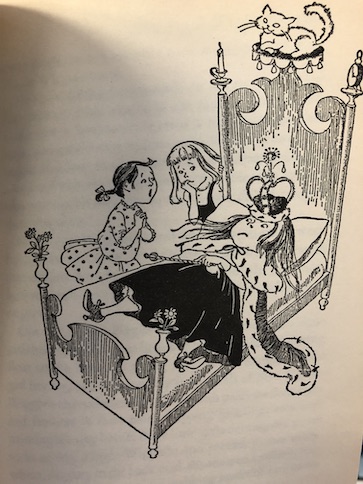
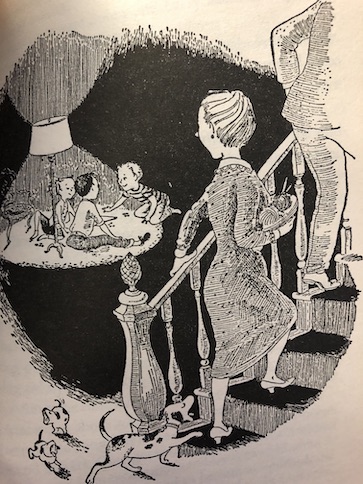
This book has been printed and reprinted many times over the decades. The edition that I used for this review is the same one that I read when I was in elementary school, printed in the 1980s. One of the reasons why the edition matters is that the illustrations were different in the first printings in the book. In 1957, the illustrations were replaced by the ones you see here, which continued to be used in later printings.
Mrs. Piggle-Wiggle is a widow who lives in an upside-down house. Her husband was a pirate, and she has magical cures for the bad habits of the children who live in her neighborhood. Sometimes, she doesn’t need magic for a particular child’s bad habit, just using psychology. Sometimes, certain behaviors, like staying up all night instead of going to bed, are their own punishment, and Mrs. Piggle-Wiggle advises the parents to let the children do them for a certain period of time so they can find out for themselves why these things are a bad idea, usually with very funny results. This book is the first book in the series, and it particularly uses more psychology than magic.
As an adult, I actually prefer the psychological cures to the magical ones. These stories are meant to be humorous rather than practical, and because of that, they’re not realistic. First, they never really go into the psychological reasons why some of these kids do the things they do, like becoming over-protective of their belongings or suddenly becoming afraid of taking baths. Then, when children suffer the consequences of their misbehavior, the consequences are humorous and exaggerated, like the boy whose room gets so messy that he actually traps himself inside until he decides to clean up and the girl who gets so dirty that her parents can grow radishes on her. However, the fact that there are consequences for the children’s behavior is a useful touch of realism. It gives parents or teachers the opportunity to talk to kids about what they expect would happen if they actually did any of the things kids do in the stories and think about some of the consequences of their own actions. These are stories that can make kids chuckle and then make them think.
I think it’s important to point out that Mrs. Piggle-Wiggle never actually blames the children for their bad behavior, seeing it more as an affliction that they need to be cured from. She likes all children in spite of their bad habits and bad behavior (something I admit that I find hard to do with people in real life), and she wants to cure them of their problems so that other people will see how likeable they are underneath. Even though Mrs. Piggle-Wiggle likes the children, she doesn’t spare them from the consequences of their actions because that is part of the cure that the children need to become the best versions of themselves. Sometimes, the consequences are the cure by themselves, and those are the stories I like best. After all, what makes bad habits “bad” is that they have bad consequences to them. They cause problems, both for the person behaving badly and others. Maybe, sometimes, people need to see the problems for themselves and experience the consequences directly before they find the motivation to fix their behavior. I can believe that part of these stories is realistic. The rest of it is just for fun.
The Mrs. Piggle-Wiggle books are collections of short stories, and each one focuses on a different child or set of children, their particular problems or bad habits, and Mrs. Piggle-Wiggle’s solutions for them.
The book is available to borrow and read for free online through Internet Archive (multiple copies).
The Stories in this Book:
Mrs. Piggle-Wiggle, Herself
This section of the book introduces and describes Mrs. Piggle-Wiggle. She is a small woman with a hump on her back, which she says contains magic. (The hump isn’t really shown in the pictures of her in the book, but she’s supposed to have one.) She has very long brown hair, which she usually wears up, but sometimes, she lets it down so that children can comb and braid it or style it in different ways. Her eyes are also brown, and her skin is described as being a “goldy brown.” (Her racial identity is not specified because it’s not important to the stories. The pictures show her as being white, so maybe she just has a tan, but I find the written description interesting because it could leave the character open to different interpretations and playable by different types of actors. Her description could fit quite a lot of people, really.) She wears brown clothing (although that’s not how she’s shown in the pictures) and smells like sugar cookies. She claims not to know her own age, saying that it doesn’t matter, since she’ll never get any bigger than she is now.
Mrs. Piggle-Wiggle is a widow, and she tells the children that her husband was a pirate who buried treasure in the back yard before he died. She has no children of her own, but she loves all the neighborhood children, and she frequently looks after them and has them come over to play. She doesn’t often speak to the children’s parents because she gets nervous around adults. She also has a dog named Wag and a cat named Lightfoot.
Mrs. Piggle-Wiggle lives in a little brown house that is upside down. She says that her house is upside down because, when she was a little girl, she used to look up at the ceiling when she was in bed and wonder what it would be like to walk on the ceiling, so when she grew up, she purposely built her house upside down just to find out. The only parts of the house that are normal are the kitchen, the bathroom, and the stairs because none of them would work properly if they were upside down.
When I was a kid, I thought that the upside-down house was the best part of the stories. When people walk around inside it, they have to step over the sills of the doorways because what should be the tops of doors are not flush with the ceiling the way the bottoms are flush with the floor, and these doorways are upside down. Mrs. Piggle-Wiggle put little steps into and out of doorways to help with that, but kids like to jump the doorways as a challenge. Mrs. Piggle-Wiggle lets them make chalk marks to record the lengths of their jumps. Also, because the ceilings are now the floors, the chandelier is on the floor of the living room, shining upward instead of down, and kids sit around it like it’s a camp fire. The children can also use the slanting ceiling-floors of the house as slides.
Most of this part of the book is backstory for Mrs. Piggle-Wiggle, but it explains that the first neighborhood child she made friends with was a girl named Mary Lou, who was running away from home because she hated doing the dishes so much. Seeing Mary Lou going down the sidewalk in the rain with her suitcase, Mrs. Piggle-Wiggle invited her in for tea and cookies, and Mary Lou told her about her problems. Mrs. Piggle-Wiggle tells Mary Lou that she really likes washing dishes because it’s fun to pretend that she’s a beautiful princess who was captured by an evil witch who makes her do all the cleaning and that the only way she can escape is to have everything clean by the time the clock strikes. Mrs. Piggle-Wiggle draws Mary Lou into a game of pretend, where they both pretend that they’re cleaning the kitchen for the evil witch. Then, Mrs. Piggle-Wiggle puts on her witch’s costume, pretending to be the witch, inspecting the kitchen to make sure that it’s clean.
It’s so much fun that Mary Lou gets over hating washing the dishes. When she tells her parents about Mrs. Piggle-Wiggle, they let her spend time with Mrs. Piggle-Wiggle, and she brings her friend, Kitty, to visit when Kitty says that she hates making the beds at her house. Mrs. Piggle-Wiggle plays a similar game of pretend with Kitty and Mary Lou, where they pretend that they are making beds for a cruel queen who will throw them in the dungeon if the sheets are wrinkled.
Gradually, Mary Lou and Kitty start bringing their siblings and other friends to see Mrs. Piggle-Wiggle, and Mrs. Piggle-Wiggle gets to know all of the children in the neighborhood. She shows them how to make chores fun, teaches them to do things like bake cookies and pies, and lets them dig for pirate treasure in the backyard. Because she is so good with children, parents in the neighborhood call her to ask for help and advice when they’re having problems with their kids.
The Won’t-Pick-Up-Toys Cure
Hubert Prentiss’s grandfather gives him many wonderful toys, but Hubert doesn’t like putting them away. It’s very difficult to get around his room, and the problem gets worse all the time. Hubert’s mother tries asking other mothers what they do with their children, but they either don’t have the same problem or don’t know what to do. Then, one of them suggests asking Mrs. Piggle-Wiggle because she’s so good with children. Mrs. Piggle-Wiggle has met Hubert before because he’s come to her house with the other children.
Mrs. Piggle-Wiggle suggests that Hubert’s mother let Hubert make his room messy and that she not try to pick up after him or even enter his room. Then, when the room gets to the point that it’s difficult for Hubert himself to even go in or out, to give her a call. After a week, Hubert’s room is so bad that he can’t open his bedroom door and can’t even use his bed. His mother has to feed him through his bedroom window. Even though she’s only able to give him things like peanut butter sandwiches through the window and Hubert doesn’t have anywhere comfortable to sleep anymore, he’s still not motivated enough to leave his room and put away all his toys. However, Mrs. Piggle-Wiggle has a plan to motivate Hubert enough that he’s willing to finally clean his room just to get out.
The Answer-Backer Cure
When Mary O’Toole’s teacher picks her to stay in at recess and help clean up the classroom, Mary is so irritated that she tells the teacher to do it herself and to let her go play with the other kids. Her mother tells her that was a rude thing to say to her teacher, but it’s just the beginning of Mary’s bad habit of being rude and impudent to people. Mary thinks that it makes her look smart to contradict people, and her new responses to any order or request her parents and teacher make are “Why should I?” and “I’ll do it because I want to but not because you tell me to.” (Nobody but you cares why you do it, kiddo. They just want it done because they just want to get through the day and accomplish things. You can either be the one who makes that easier or the one who makes that harder or more unpleasant, but things are still going to need to be done either way.)
Mary’s mother goes through the usual routine of calling other mothers for their opinions, and one of them suggests talking to Mrs. Piggle-Wiggle. Mrs. Piggle-Wiggle’s solution is to let Mary keep her parrot, Penelope for awhile. Penelope is as rude as Mary is and repeats many of the things that Mary herself says. At first, Mary thinks it’s funny, but gradually, she begins to see how annoying it is and realizes how she sounds when she talks that way. Her dad actually laughs when he hears how much the parrot sounds like Mary, which makes Mary mad. Penelope also uses remarks that Mary thought that she’d made up herself, but she says them before Mary actually said them around her, making Mary realize that she’s not even as clever and original as she thought she was. When she sees how annoying it is to be around someone as rude and negative as she was, Mary apologizes to her teacher and gives it up.
(Actually, I know a lot of adults who talk just like Mary – “I’ll do it because I want to but not because you tell me to.” If they don’t use those exact words, it’s solidly the exact same attitude. They say they do it specifically because they’re adults and nobody should be telling them what to do under any circumstances, even if it’s something important. For them, it’s a kneejerk reaction to being told something, anything, no matter the circumstances and with little thought or attention to what they’re being told and whether it’s actually worthwhile. I always think of this story whenever I hear them talking that way.)
The Selfishness Cure
Dick Thompson is selfish and greedy. It’s no fun for other kids to come play at his house because he won’t share any of his toys or let anybody touch anything that belongs to him. It’s always “MY” this and “MY” that and everything is “MINE!” Dick’s mother realizes that something must be done when she gives Dick a box of peppermint sticks specifically to share with other kids in order to teach him how to share, and he actually hits Mary O’Toole on the hand with his baseball bat for trying to take one.
When Dick’s mother calls his father at work and asks him what they should do, the father’s first suggestion is a good, hard spanking because that’s something Dick can keep all to himself, but the mother is upset at the idea of more physical violence. The father then suggests that she talk to Mrs. Piggle-Wiggle because she’s helped other children in the neighborhood.
Mrs. Piggle-Wiggle’s Selfishness Cure is her special Selfishness Kit. It contains a variety of padlocks that Dick can use to lock up his stuff. It also has labels and paint that Dick can use to label all of his stuff, and it even has a pastry bag for labeling Dick’s food as his with frosting. The idea is to indulge Dick’s desire to prevent anyone from touching anything that belongs to him until it becomes so much of a hassle that he decides that it’s too much trouble.
At first, Dick is really happy that he can label everything he owns with his name and write “DON’T TOUCH!” on it, but as predicted, it turns out to be a big problem. Because Dick has everything, including his lunch, marked with his name and “DON’T TOUCH”, it isn’t long before everyone at school knows and is laughing at him. Plus, as my mother says, “With some kids, you can tell them not to touch something, and they won’t touch it, but there are also kids who, when you tell them not to touch something, just can’t wait to touch it.”
The Radish Cure
Patsy is a perfectly ordinary girl, but one day, she suddenly decides that she hates baths and refuses to take another one. There is no explanation why, and none of the other mothers in the neighborhood seem to be having that problem with their children, but Mrs. Piggle-Wiggle has a solution.
Mrs. Piggle-Wiggle tells Patsy’s mother to led her go several weeks without washing at all, letting her get as dirty as she wants. Then, she should get a packet of small radish seeds and plant them on Patsy. When Pasty sees that she’s sprouting radishes, she suddenly decides that she’s ready for a bath.
The Never-Want-To-Go-To-Bedders Cure
The three children in the Gray family never like going to bed. Every night, when it’s time for bed, they beg to be allowed to stay up a little later and insist that nobody else in the neighborhood goes to bed as early as they do. It often takes about an hour of whining, complaining, and arguing before their parents are able to get them to bed.
Mrs. Gray goes through the usual routine of asking other parents if they have this problem with their children, but none of her friends do, so she asks Mrs. Piggle-Wiggle what to do.
Mrs. Piggle-Wiggle’s advice is to let the children stay up as late as they want to. Mrs. Gray worries that not getting enough sleep will be bad for the children’s health, but Mrs. Piggle-Wiggle says that a day or two with less sleep won’t make much of a difference, and by that time, they’ll realize why going to bed at night is a good idea.
The Gray children think it’s great at first that their parents no longer tell them to go to bed and even let them stay up half the night, but soon, they’re falling asleep in the middle of the day, missing movies that they go to see when they fall asleep in the theater and missing out on fun activities with other kids either because they’re asleep or too tired to enjoy them.
The Slow-Eater-Tiny-Bite-Taker Cure
A boy named Allen has suddenly become obsessed with eating his food very slowly, taking super-tiny bites. It’s a very odd habit, and it makes meal times difficult because he eats very little and take a very long time to do it. I’d be worried if he was having difficulty swallowing, but his mother calls Mrs. Piggle-Wiggle.
Mrs. Piggle-Wiggle gives his mother sets of dishes in different sizes, from fairly large to ridiculously tiny. At each meal, Allen’s mother uses progressively smaller dishes. Allen is fascinated by the tiny dishes, which fit his new dainty eating, but he’s getting weaker because he’s been hardly eating anything.
I actually found the descriptions of his weakness a little alarming, but his mother then reverses the order of the dishes she gives him, starting with the smallest and then moving to the biggest. As Allen realizes that he feels better when he starts eating more food, his appetite returns, and he gets his strength back.
The Fighter-Quarrelers Cure
Twins Joan and Anne Russell have been fighting with each other a lot, and it’s driving their parents crazy. The twins argue with each other over everything, like who is wearing whose clothing and who had more bacon or the biggest slice of melon on their plate at breakfast, and they even pinch and slap each other. Sibling quarrels are pretty common, but Mrs. Russell asks Mrs. Piggle-Wiggle if there’s anything they can do to end this constant fighting.
Mrs. Piggle-Wiggle advises the girls’ parents to make notes about the types of petty things that the girls argue about and spend a day having staged arguments of their own in front of the girls to show them what it’s like to be around that type of arguing all the time.
From the moment they wake up the next day, the twins suddenly find themselves in the awkward position of trying to reason with their parents and referee their quarrels as they become witnesses to the same kinds of petty behavior they’ve been doing themselves. Finally, the girls have had their fill of fighting, and with their petty quarrels now in perspective, the entire family promises each other that they won’t fight like that again.
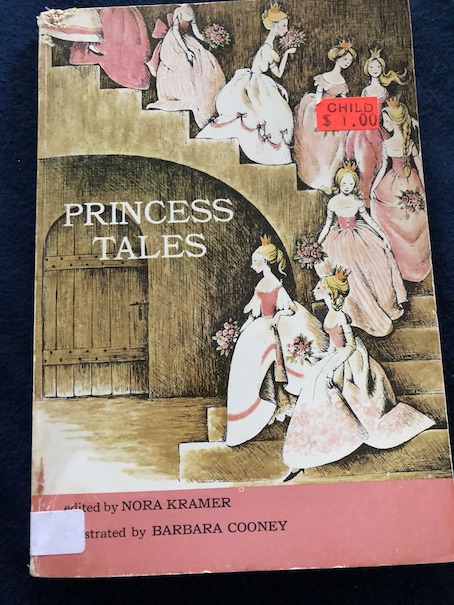
Princess Tales edited by Nora Kramer, illustrated by Barbara Cooney, 1971.
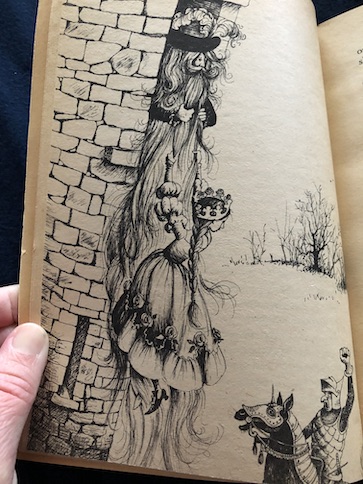
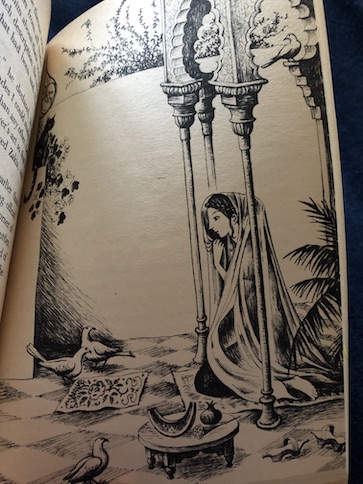
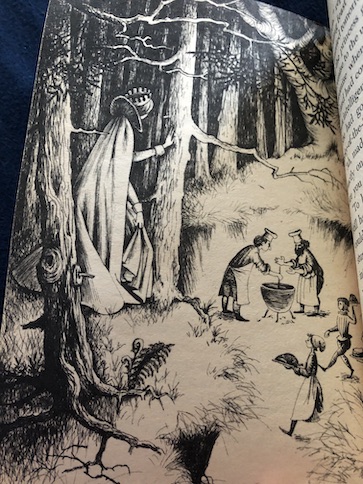
This is a collection of princess stories by various authors, including retellings of some classic fairy tales, some or all of which were printed in other locations before being included in this collection. Although I have encountered some of these stories before this collection, I liked the illustrations in this book because I like Barbara Cooney’s work.
Stories in the Book:
The Practical Princess by Jay Williams (1969) – I know this story from the story collection that is named after it, but it did appear in other printings before either of these. Princess Bedelia was given the gift of common sense as a baby, and she uses her practicality to rid her kingdom of a dragon and save herself from marriage to an evil sorcerer.
The Twelve Dancing Princesses by Virginia Haviland (1959) – A retelling of the classic fairy tale. A French kingdom with twelve beautiful princesses is mystified by how the princesses’ shoes are always worn through every morning even though the door to their room is locked every night when they go to bed. What are the princesses doing every night that ruins their shoes, and how are they doing it? Michel, a young cowherd who has recently taken a gardening job at the castle and who has fallen in love with the youngest of the twelve princesses, discovers the answer. When her sisters want to enchant Michel, as they have others who have discovered their secret to keep them from telling, Princess Lina needs to decide if she loves Michel as much as he loves her.
The Princess and the Vagabone by Ruth Sawyer (1942) – A beautiful but bad-tempered Irish princess learns a lesson in kindness when her father gets fed up with the way she treats her suitors. All of her life, the princess has dealt out criticism and insults to everyone, when she sees a suitor with whom she can find no fault, she doesn’t know what to do (never having practiced kindness or spoken nicely to anyone) and gets angry, hitting him and crying as she runs from the room. Her father, disgusted with her impossible behavior, tells her that he’s had enough, and since she has rejected all the royal suitors, he will force her to marry the next vagabone (vagabond) who comes begging at the castle. As the wife of a vagabond, the princess learns to face hardships she has never experienced before, sees for the first time how much kindness from another person can really mean, and notes positive points about others for the first time, enjoying the ragged vagabone’s song. But, there is still one more surprise when the vagabone turns out to be the perfect suitor the princess thought that she had rejected.
Melisande by E. Nesbit – A king and queen want to avoid the usual messes and curses that often result from holding a christening party for a new princess and forgetting to invite one of the fairies, so they decide that, for their daughter Melisande, they will simply hold an informal christening with no party. However, all of the fairies get mad about this and come to give curses to the princess. Fortunately, the king points out logically that, according to tradition, only one forgotten fairy can offer a bad curse to a princess after being left out of a christening party. Fairies are held to certain rules and can vanish for breaking them, so since the first fairy already cursed the princess with baldness, the others simply agree to count themselves are party guests and leave. Princess Melisande spends her childhood being bald, but the king offers her a fairy wish that he had been saving for something special so that she can wish for hair. However, Melisande foolishly wishes for her hair to grow exceedingly fast and even faster when cut. It’s far too much hair for her, even though people try to help her find uses for it, like weaving it into clothes and stuffing pillows with it. As usual in these cases, the king offers Melisande’s hand in marriage to the prince who can help her to solve her problem. At first, Prince Florizel thinks he’s found the solution when, instead of cutting the princess’s hair from her, he cuts her from her hair. However, that has the unintended side effect of making the princess grow suddenly tall! What will Prince Florizel do to get the princess and her hair to balance? (At one point, this story references Alice in Wonderland.)
The Handkerchief by Robert Gilstrap and Irene Estabrook (1958) – At first, Zakia is not happy when her father, the Grand Vizier of Morocco accepts the sultan’s offer to marry her on her behalf. She doesn’t think that it’s fair for him to order her to marry anyone, and she doesn’t love the sultan. In response, she imposes a requirement on the marriage, that the sultan must learn a trade in case he loses his throne and has to earn a living. To the vizier’s surprise, the sultan thinks that sounds like a clever request, and the sultan learns the art of weaving. He enjoys it, and he makes a beautiful handkerchief for Zakia as a wedding present. Zakia appreciates the gift and marries him. The sultan’s ability as a weaver later saves him when he is in a desperate situation.
The Blackbird’s Song by Barbara Leonie Picard (1964) – An artist paints an unflattering picture of the king and is thrown into prison. However, the princess’s pet blackbird sings to him of the princess’s beauty and kindness, and he is able to paint a marvelous portrait of her without having seen her himself. When the princess falls in love with the artist, her blackbird and its friends help them to make their escape from her father.
Ricky-of-the-Tuft by Polly Curren (1963) – A prince is born ugly, and his mother is worried, but a fairy gives him the gift of wit and intelligence, with the ability to give that gift to someone he loves. In another kingdom, a queen has two daughters. The eldest is beautiful and the youngest is plain. However, a fairy says that the plain girl will be bright and intelligent, and people who talk to her will forget what she looks like. The beautiful girl is less fortunate because she is not intelligent. People will enjoy looking at her, but they will quickly tire of her because she does not speak intelligently and has nothing to say. To compensate the beautiful girl, the fairy says that she will be able to make the person she loves beautiful as well. When the ugly prince, Rick-of-the-Tuft, meets the beautiful princess and falls in love with her, the two of them are able to use their gifts to help each other. The story is based on a Perrault fairy tale.
The Son of the Baker of Barra by Sorche Nic Leodhas (1968) – The baker’s son, Ian Beg, is a nice boy, and sometimes a little too nice. When his father sends him to take a cake to the princess, he is stopped by old women who ask him for a taste of the cake, and he cannot refuse them. However, it turns out to be a fortunate thing. The old women are actually fairy folk, and not only do they handsomely compensate him for the cake that they eat, but they also help him when the princess falls in love with him and the king tries to get rid of him by sending him off to find a castle of his own. The king doesn’t expect that Ian Beg will be able to find a castle and supply the kind of lifestyle that a princess needs, but he doesn’t know that Ian Beg has help.