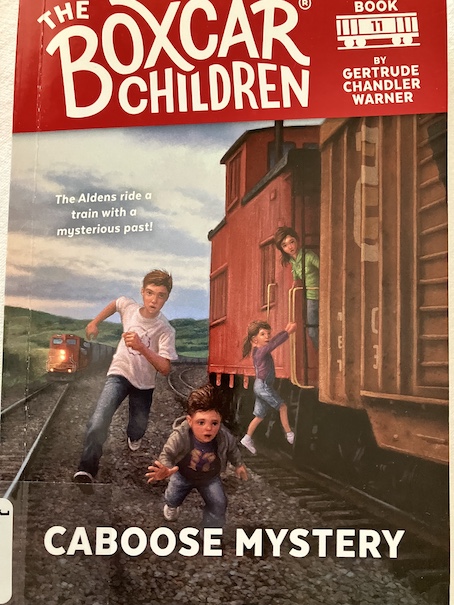
#11 Caboose Mystery by Gertrude Chandler Warner, 1966.
Grandfather Alden has a friend who owns a railroad, and he rents out cabooses to people who want to travel with the railroad. It’s a bit like traveling in a trailer, having a contained living area that includes a small kitchen, but the caboose is attached to a train and travels the rails, no need for driving. This story picks up after the Schoolhouse Mystery, with Grandfather Alden renting two cabooses so he can travel with his grandchildren. He will travel in the bigger caboose with Henry and Benny, and the girls, Jessie and Violet, will travel in the smaller one.
When Grandfather Alden takes the children to see the cabooses, the conductor, Mr. Carr, tells them that the bigger caboose has a history, but they’ll be hearing more about that later. A postman, Sid Weston, is at the station to deliver a letter for Mr. Carr, and he wants to have a look at the bigger caboose, but Mr. Carr doesn’t allow it. The Aldens wonder why he seems so curious about it.
When they embark on their trip, the Aldens are able to travel back and forth between the two cabooses to visit with each other. They enjoy watching the countryside going by while the train is moving. At every place the train stops, there is something interesting to see. At one stop, they get fresh corn to cook, and at another, they see beavers building a dam. There’s a man who lives by Beaver Lake who people call “Old Beaver.” Old Beaver is kind of a hermit, but he’s dedicated himself to protecting the beavers and their habitat. For some reason, when the Aldens tell him about the cabooses they’re traveling in and the number of the bigger caboose, 777, Old Beaver is disturbed and runs away.
Benny can’t forget about what Mr. Carr said about the bigger caboose having a “history,” and everyone wonders why Old Beaver had such a strange reaction to hearing the number of the caboose. They find out from a station master called Shaw that the caboose used to belong to a circus train. The circus owner’s wife lived there. A man who works for the station now used to be a clown with that circus, called Cho-Cho. His wife, Chi-Chi, was a tightrope walker and best friends with the circus owner’s wife, but she died suddenly when she fell during one of her performances. Cho-Cho left the circus after that.
There is a mystery surrounding Chi-Chi’s death because she used to own a beautiful diamond necklace that was given to her mother by royalty. She used to hide it when she wasn’t wearing it, and not even Cho-Cho knew where she kept it. After her death, nobody could find the necklace, and the police believed that it was stolen by the Thin Man who worked for the circus sideshow. Cho-Cho was friends with the Thin Man and didn’t want to think he had taken the necklace, but people had seen Chi-Chi showing him the necklace before she died, and nobody remembers seeing him give it back to her. After he was accused, the Thin Man ran away, and people thought that was an admission of guilt. The man called Old Beaver was the Thin Man’s best friend, and he blames the accusations for making his friend run away. Nobody knows where he is now.
It’s a sad story, but it confirms what Benny suspected, that there’s a mystery surrounding their caboose. Could the necklace be hidden there, or is there something there that could tell them where the necklace is?
My Reaction and Some Spoilers
Like many of the other early Boxcar Children books, there is often more adventure in the story than mystery. The mystery of what happened to the necklace is a definite mystery, but the Aldens end up finding the necklace more by accident than solving the clue that was left behind by Chi-Chi for Cho-Cho. Once they find the necklace, they understand what the clue was supposed to mean rather than figuring out what the clue meant to figure out where the necklace was. Still, it was a nice story. Finding the necklace also solves problems for the unhappy former circus performers they’ve met. Figuring out where the Thin Man is so they can tell him that his name has been cleared adds a secondary mystery for them to solve. The Thin Man’s name is cleared, Old Beaver feels better for knowing that the Thin Man is no longer a suspect, and Cho-Cho gets the necklace.
The idea of traveling in a caboose, or better yet, a pair of cabooses, sounds like the kind of fun adventure that many kids would enjoy! It’s a colorful way to travel, and while the kids travel by railroad, they learn a few things about the train and how it is run. At one point, they get to see the engine of the train and talk to the engineer. The things they see along the way are interesting, too. There is a point where Benny separates from the others to go see a talking horse from the circus while the rest of the family tours a glass factory and gets to pick out some pieces for themselves. The places they visit aren’t always the kinds of things families would seek out as destinations, but it’s charming that they get to travel this way on a train. They have fun along the way, and there’s always something interesting, wherever they stop.
There is a note from the author at the beginning of the book about the inspiration for this story, a trip that she took by caboose herself:
To My Readers The Little North Railroad is a storybook railroad, but the cabooses are real cabooses. With the help of six very kind trainmen, I myself took a trip by caboose, riding on the back platform and feeling just like Benny. I ran the Diesel engine, blew the whistle, rang the bell, and watched as the trainmen set off dynamite on the track, just as it says in these pages. As for the story, the adventures are wholly imaginary.
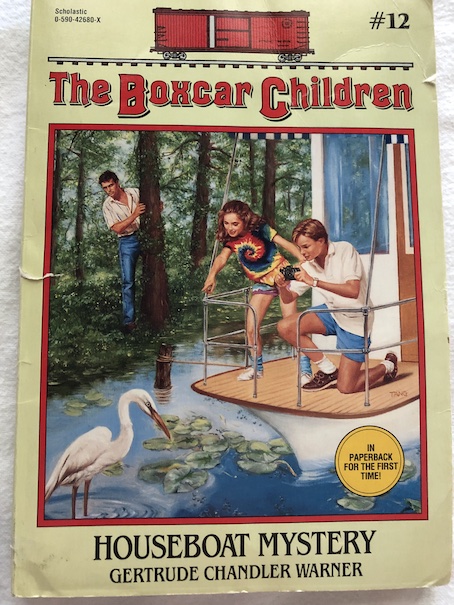
#12 Houseboat Mystery by Gertrude Chandler Warner, 1967.
Mr. Alden takes his grandchildren on a houseboat trip. It’s a peaceful trip at first, but they keep having encounters with someone driving a black car recklessly. It seems like the car turns up every place they go.
Then, Mr. Alden takes the children to an auction because Violet and Benny have never seen an auction before. They think it’s really interesting, but the auction is cut short because a valuable vase has been stolen. The police say it’s just part of a string of thefts that have been going on in the area.
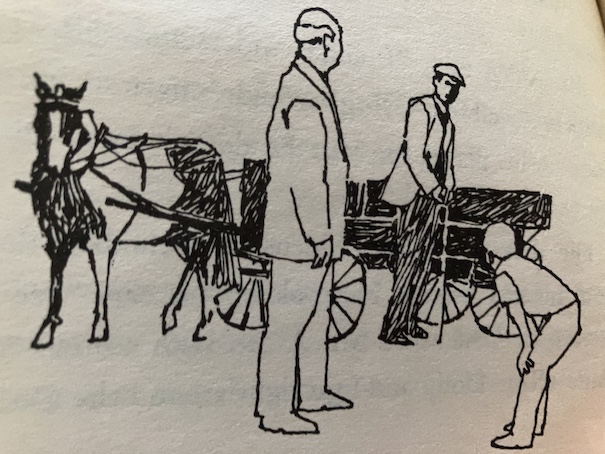
After that, they visit a place called April Center, which is owned by an old friend of Mr. Alden. It’s a sort of mock town/park/tourist center. Cars aren’t allowed inside, so people rent horse-drawn carriages to go around the place and see various attractions. However, Mr. Alden and the kids notice that the horse that draws their carriage looks unusually thin, like it hasn’t been fed well. Mr. Alden knows his old friend loves animals and wouldn’t allow a horse in April Center to starve. He and the children start asking the horse’s owner about it. The horse’s owner, Sam, says that his boss is a nice man who pays him well, but eventually, he admits that he is short of money because he’s being blackmailed. His brother is in some kind of trouble, and someone threatens to go to the police about it if he won’t keep paying him. When the Aldens talk to Sam’s brother, Jeff, they are surprised that he also has an underfed horse, and he tells them the same story of blackmail. Someone has been making each of the brothers think that the other is in trouble, and they’ve both been paying money to hush it up.
Then, someone breaks into the Aldens’ houseboat and steals a clock, which is odd, and the Aldens think that maybe the thief was actually after something else. Could there be a connection between the break-in, the thefts, the blackmail, and the other strange things they’ve been seeing on this trip?
My Reaction
This isn’t one of those mysteries where readers need to figure out which suspect is responsible for something. There aren’t exactly suspects in this story at all. It’s more the case that the Aldens witness a series of strange and suspicious events, and they need to figure out the connection between them. Actually, the story feels more like an adventure than a mystery story. When the culprit is finally caught, it’s nobody we really know, just a random suspicious character that they keep bumping into along the way. To be honest, I really prefer a more traditional mystery, where readers get to know the suspects and have a chance to figure out who is doing what along with the characters.
There is a funny running gag in the story that the Aldens are allowed to name the houseboat anything they want during the time they’re renting it, and they can change the lettering on the boat as often as they want. Every day, they rename the boat after a different member of the family or someone they know. When they give the boat its final name at the end of the story, it’s a joke on reason why someone broke into their boat, which is one of the most mysterious parts of the mystery.
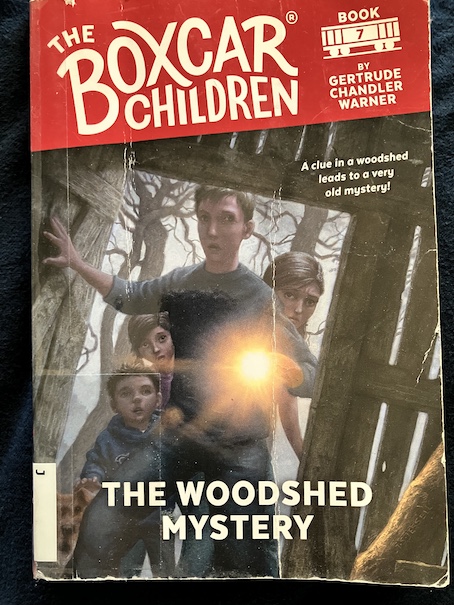
#7 The Woodshed Mystery by Gertrude Chandler Warner, 1962.
Grandfather Alden’s sister, Aunt Jane, calls and tells the family that she’s decided to move back east. She’s been living on the family’s old ranch out west, but she has decided that she would like to return to the east, where Mr. Alden and his grandchildren live. She asks Mr. Alden if he can buy back the old farm where the two of them grew up, so she can move back there. Mr. Alden is pleased that his sister will be moving closer so he and his grandchildren can see her more often and that they have a chance to reclaim their old home.
He calls the man who now owns the farm, Elisha Morse, and finds that he’s selling it pretty cheaply because it’s gotten pretty run down. Mr. Morse says that Mr. Alden probably won’t like the farm now because it’s in rather poor condition and has a leaky roof. He’s selling it because he couldn’t really afford to maintain it. However, Mr. Alden says that’s fine and agrees to buy it. He and his grandchildren go there to get it fixed up and ready for Aunt Jane’s arrival.
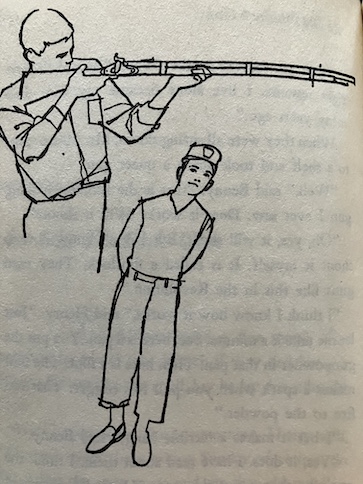
Grandfather Alden tells his grandchildren about the village near the farm and their neighbors as they drive to the farm. One house in particular used to be owned by the Bean family. Aunt Jane was once fond of their son, Andrew, and there was a point when she might have married him, but he got into some serious trouble as a young man and left town over it. Apparently, he used to shoot at trees in the area to scare away trespassers from his family’s farm, but one day, he accidentally set the woods on fire. It was a pretty bad fire, and he felt like he couldn’t show his face in town again. Last they heard of him, he’d gotten a job as a sailor and was traveling around the world. Nobody knows what he did after that or where he is now.
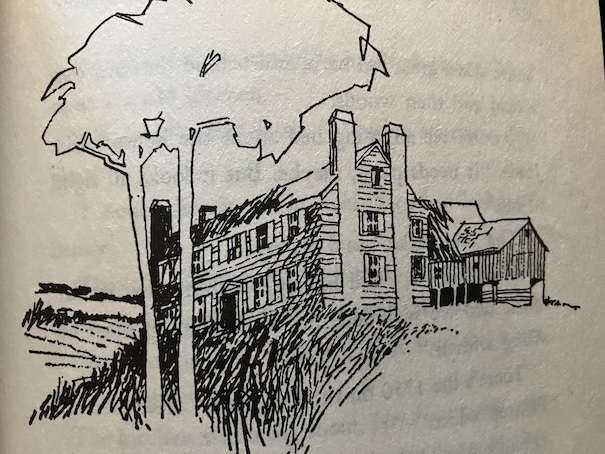
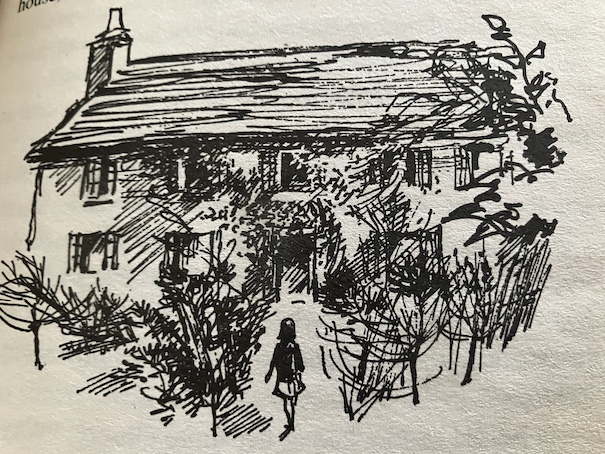
The Alden farm is very old indeed. It was originally built in 1750. The house has four chimneys, a barn, and a woodshed. It’s painted white, and when the Aldens approach it, it doesn’t look like it’s in such bad condition to them. The Aldens go inside and look around, admiring the old-fashioned fireplace and other features. The place is dusty and dirty, so it needs a thorough cleaning, but other than that, they don’t see any serious problems.
They talk to the son of the man who sold them the house, Simeon “Sim” Morse. His father said that he would be able to help them fix the leaky roof, and Mr. Alden presses him to tell him why his father thought the house was in such bad shape when it doesn’t really look that bad. At first, Sim Morse hesitates to say anything, but when Mr. Alden insists, he admits that it’s not so much about the physical condition of the house so much as the feeling it gives people.
People have regarded the area as bad luck since the incident when Andy Bean caused the fire. The rumor is that he did it while playing with a gun that he actually found on the Alden farm, an antique that appears to date from the Revolutionary War. Since then, it seems like people who have tried to live on the Alden farm have had bad luck, and nobody seems comfortable staying there, although nobody seems able to point out anything specific that gives them that odd feeling about the house. Sim Morse’s father still has the antique gun that apparently started the fire, and Mr. Alden says that he’d like to see it. He also arranges with Sim Morse to make some repairs to the house and to add a couple of indoor bathrooms because the house never had indoor bathrooms.
When the Aldens see the antique gun that Mr. Morse has, it turns out to be an old flintlock gun. When Violet reads a book about the Revolutionary War that she found in the farmhouse, she sees a picture of a gun that looks a lot like the one Mr. Morse has. It’s in a section of the book that talks about leaders of the Revolution hiding and their men hiding weapons to use in the war. The Aldens start to wonder if that gun could have been one of those hidden weapons.
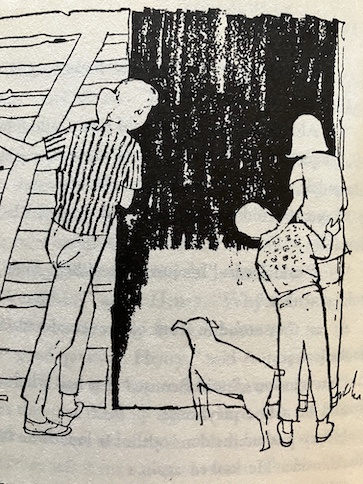
Then, they discover that someone has been hiding and camping out in the old woodshed on the property. When they search the woodshed, they find a hidden cave or tunnel. Could this be the secret of where Andy Bean once found the old gun? Could the person who’s been hiding in the woodshed know something about a secret that dates back to the Revolutionary War?
My Reaction
This book is one of the original 19 books in the Boxcar Children series, written by the original author. Because it is one of the original books in the series, the child characters have aged from the first book. Rather than being the usual ages from the first book and from the later ones, with the children’s ages frozen at Henry being 14, Jessie being 12, Violet being 10, and Benny being 6, we are told at the beginning of the story that Henry is now in college and both of the girls are in high school, Jessie as a senior and Violet just entering. (Although, I kind of quibble with that because there’s supposed to be only 2 years’ difference in age between Jessie and Violet, so if Jessie is a senior, I would expect that Violet would be a sophomore, unless Jessie skipped a grade ahead.) Benny is still in elementary school because he’s much younger than the others, but he’s no longer a little kid.
We also get more of the backstory of the Alden family in this book. They’re not the first family to own the old farmhouse, and during the story, we do learn who owned the farm at the time of the Revolutionary War. However, we also learn some things about the Aldens when Mr. Alden and his sister Jane were young and living on this farm. Jane admits that she made a mistake when she was younger, not marrying Andy Bean when he asked her, and she admits that her primary reason for not wanting to marry him was ridiculous. The fact is, Jane thought that “Bean” was a silly last name, and she just didn’t want to be known as “Mrs. Bean.” Because she put Andy off and because Andy left the area after the incident with the gun and the fire, the two of them went their separate ways for years. Fortunately, the theme of family members or old friends becoming reconciled after years of estrangement crops up a lot in the Boxcar Children books. As the children investigate the matter of the antique gun and the odd things happening around the farm, they eventually learn where Andy is, and he and Jane reconcile. In later books in the series, Jane and Andy are married, although in later books, the children often come to stay with Aunt Jane when Andy is out of town on business, so we don’t always see him and Aunt Jane together.
I didn’t think the mystery was too mysterious, but I enjoyed seeing the Alden children during the books when the children are starting to grow up and seeing the Alden family grow and chance while getting a glimpse of their past. Because Jessie is a teenager in this book, it’s also hinted that she and John Carter, a former FBI agent who works for her grandfather, have a mutual crush. John Carter disappears as a character in later books, especially because the children’s ages become frozen, and it would be inappropriate for him to have a crush on Jessie when she’s only 12 years old for the rest of the series. In this book, if Jessie is a high school senior, she’s probably either 18 years old or almost 18, which is more acceptable.
Similarly, I think it’s worth pointing out that the Alden children are able to do some of the things that they do without adult supervision partly because, especially in these earlier books, they’re aging, and they’re not as young as later books in the series declare them to be. At this point, Henry is a legal adult in college, and Jessie is either at or close to legal adult status. At their ages, they’re not only legally old enough to be on their own in many instances but also old enough to take charge of younger siblings without other adults or local authorities thinking it unusual.
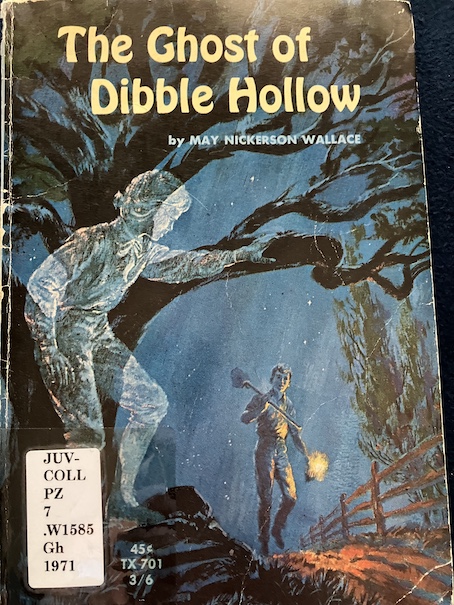
The Ghost of Dibble Hollow by May Nickerson Wallace, 1965.
Elisha Nathanael Dibble Allen, called Pug, is excited to be spending the summer at the old family house called Dibble Hollow that his mother inherited! The summer starts out awkwardly when he gets on the wrong side of old Mr. Smith because his dog, Ricky, chases Mr. Smith’s chickens. When people find out that his family are Dibbles and that they’ll be staying in Dibble Hollow, Pug and his sister Helen learn that the locals in the area are afraid of Dibble Hollow. There are rumors that the house is haunted.
Pug thinks that the house is charming. It was built in 1730, and Pug immediately claims a room for himself with a picture of a boy in old-fashioned clothes who looks a lot like him. It does seem odd, though, that Ricky is afraid to enter that room, no matter how much Pug tries to persuade him.
Then, it seems like the family won’t be able to stay at the house after all because the well is dry, and they can’t get water. Pug is upset about having to leave the house and abandon their summer plans, but things change during the night, when Pug meets the ghost who haunts his room. The ghost is Miles Dibble, the older brother of Nathanael, Pug’s grandfather. Miles died young and still haunts the room that he once shared with Nathanael.
The ghostly Miles explains to Pug that he’s been responsible for the rumors that Dibble Hollow is haunted. He does things to scare strangers away from the house. However, he really wants his relatives to stay at Dibble Hollow, so he explains to Pug that there is actually a second well at Dibble Hollow, and it is connected to the house with pipes, but Pug’s grandfather’s eldest brother, Ezra, turned off the water on purpose to fool people into thinking that there was no water at the house, so he could have the house all to himself. Miles explains to Pug how to find the right pipe in the basement and turn the water back on.
The next morning, Pug follows Miles’s instructions and finds the pipe so the plumber can turn the water back on. His family is amazed how he knew where to look, but Pug is vague about how he knew. He can’t tell them about Miles because Miles tells him that only boys under the age of 15 in the Dibble family can see him, and also one other person who is special to Miles, although Miles doesn’t explain who that is.
Pug is happy that his family will be able to stay at Dibble Hollow for the summer, but he also begins hearing about a feud between the Smith family and the Dibble family. People are unsure exactly how the feud started. The plumber, Mr. Potter, says that there are only a few people who really knew the beginning of it. One of them is Miles, who has been dead for more than 50 years at that point. Another is Eb Smith, who was once Miles’s best friend, and is now the elderly Mr. Smith who was angry that Ricky chased his chickens. Pug is interested in being friends with Eb Smith’s granddaughter, Priscilla, but he thinks that he needs to understand the feud between their families before he can do that.
Since Eb Smith doesn’t want to talk to the Dibbles, Pug and Helen go to see Miss Fanny Woodman, the other person Mr. Potter says would know what happened to start the feud. Miss Woodman explains that the feud started when she was 13 years old, after both the Dibble and Smith families made a lot of money at a fair by winning some prizes and selling livestock. The elder boys in the Dibble and Smith families were supposed to take the money home, but they paid Eb and Miles to do it for them because they wanted to stay longer at the fair. However, Eb thought some suspicious men were following them home, thinking that the younger boys would be easier to rob. To evade the thieves, the two younger boys split up. Eb was supposed to lead the thieves on a wild goose chase while Miles got the money safely home. Eb did manage to lose their followers, but Miles never turned up with the money. The Smiths suspected Miles of running away with the money, but the Dibbles suspected the Smiths of having done something to Miles to get all the money for themselves.
At first, Eb didn’t think the Miles stole the money. He thought maybe Miles was playing some kind of trick on him because the two of them had a rivalry over Miss Woodman. Both boys had a crush on her when they were all kids. Miles was a teaser and a prankster, so it would have been in character for him to pull a trick. However, nobody ever saw the thieves who were supposedly following the boys, and the more Eb thought about it over the years, the more he became convinced that Miles was the one who thought he saw them and was the one who suggested that the two of them split up. Nobody ever found Miles’s body, so there was no proof that he ever died. His family eventually decided that’s what must have happened, so they had a memorial service for him and put a marker for him in the local cemetery, but the Smiths still suspected that Miles just stole the money and ran away.
Eb’s feelings for Miles turned to bitterness when he came to believe that Miles took advantage of their friendship to steal from him and his family, and those feelings only got worse when he suffered a series of misfortunes in his life. Eb’s wife died young, leaving him to raise their son alone. Then, his son and his wife also died, leaving him to care for his granddaughter Priscilla alone. Eb has been struggling for money to help raise Priscilla, and the money that his family lost would have made a difference to him. In fact, it still would make a difference to Eb because he’s in danger of losing his family’s old home because he can’t pay the mortgage. Miss Woodman doesn’t believe that Miles was a thief, but without the town knowing what really happened to Miles, it would be difficult to prove that to Eb Smith.
Pug knows that he has access to a source of information that nobody else does – he’s the only one who can talk to Miles himself about what happened! When Pug sees Miles again, Miles confirms what Miss Woodman said. He says that the thieves followed him instead of Eb that night. Miles tried to get away from them by crossing an old bridge, but he fell into the river and was killed. The thieves were alarmed that he was dead, so after searching him for the money, they pushed his body into the river again and got out of town as fast as they could. Miles says that a man called Mr. Miller later found his body down river and had him buried, but Mr. Miller didn’t know the boy’s identity, so he couldn’t notify his family. Instead, Mr. Miller buried Miles under the name of his own son, who died at sea as a cabin boy and whose body was never recovered. Mr. Miller felt that giving the nameless boy his son’s name and a resting place among his family was a kindness to the drowned boy and a fitting memorial to his own son, who was unable to return to rest with his family. People in the town where the Millers lived and live today know the story about the nameless boy buried with the Millers and Miles’s tombstone recounts it, but so far, nobody has made the connection between that nameless boy and Miles. (Except for one other person, who can’t explain how he knows where Miles is buried for the same reason why Pug can’t tell his family how he knew where the water pipe was.)
Pug asks Miles what happened to the money, and Miles says that he successfully managed to hide it from the thieves before he fell in the river. The problem is that he’s not exactly sure where he hid it. He knows he put it in a tree, but it was night, he was confused and in a hurry, his sense of direction was never good, and then, he died a sudden death. He’s been looking for the tree where he hid the money ever since, but he still can’t find it. He just knows that it’s somewhere around the old Smith place, Twin Maples … where Dibbles aren’t really welcome these days. Miles needs Pug’s help to find that hidden money and repair the relationship between the Smiths and the Dibbles!
The book is available to borrow and read for free online through Internet Archive.
My Reaction and Some Spoilers
Part of the theme of the story is about old grudges. Miss Woodman and Priscilla, among others, tell Eb Smith that the grudge that he’s been holding against Miles and the other Dibbles is only hurting him and that it’s time to let it go, but at the same time, they also understand why he has trouble letting the issue go. The money that Miles was carrying when he disappeared would make a major difference to Eb Smith because he’s been struggling for years to take care of his old family home and his orphaned granddaughter. With the mortgage coming due, the holder of the mortgage, Mr. Pratt, is planning for foreclose and have Eb Smith sent to a retirement home, but that would leave Priscilla without a home. Mr. Pratt says he and his wife would take Priscilla in as a nanny for their four children, but that’s a nightmare job! The Pratts have had trouble keeping a nanny because the children are so badly behaved. Priscilla would be little more than a captive domestic slave to the Pratts. With that much depending on the lost money that would secure the Smiths’ home and future, it’s understandable why Eb Smith has trouble letting the matter go.
Eb doesn’t know that Miles is definitely dead and that he died the night of the fair, when they were chased by thieves. If Miles’s body had been identified and returned to his family shortly after his death, Eb would have accepted years ago that Miles was just the unfortunate victim of the thieves. He would have mourned the loss of his friend and reconciled himself to the loss of the money as something that couldn’t be helped. It was not knowing the truth for years that caused Eb to doubt his old friend and convince himself that Miles was the one responsible for the loss of the money. The restoration of the money is key to helping the Smiths and settling the feud, but knowing the real truth of Miles’s death is also important. As long as Eb doesn’t know the truth, his family’s suspicions, his own suspicions and imagination, and the rumors of the local people are all that Eb has had to fill in the space of what he doesn’t know.
The inability of people to communicate with each other hampers the truth. Pug’s attempts to help the Smiths are hampered because he can’t let Eb Smith know that he’s helping at first. If he did, Eb Smith’s pride and the grudge he holds would probably cause him to refuse the help, even if it hurt him and his granddaughter. Miles refuses to say at first who else besides Pug can see him as a ghost, but Miles later learns that (spoiler) it’s the man who found his body and buried him. Gideon Miller is now a very old man, and he only saw Miles’s ghost once when he was seriously ill, about a year after he buried Miles. That’s the only way that Mr. Miller knows his name and that he is the boy he buried. However, Mr. Miller can’t go to Miles’s family or the Smiths and tell them the truth about Miles because he knows nobody would be likely to believe him. Everyone would just think that he was hallucinating. Mr. Miller and Pug can talk to each other about it because they’ve both experienced Miles and can understand each other’s experiences, but neither of them can convincingly tell anyone else. Pug can’t tell his sister or Priscilla about the things he’s doing to try to help the Smiths, so they think he isn’t really doing much, if anything, although Helen is suspicious that Pug knows things he shouldn’t know and seems to have a hidden source of information. Fortunately, Pug eventually finds a way to show his parents that the unidentified boy buried with the Miller family is Miles.
When Pug has problems with the eldest Pratt boy, Ernie, his father talks to him about grudges and expectations, bringing the story back around to the main theme. People have prejudices against the Dibbles because of what they’ve suspected for years about Miles and the missing money. Pug’s father points out that, while the Pratts definitely have some negative traits, people’s habits of expecting the worst of them just because their family has that reputation, can turn into a self-fulfilling prophecy. If people have the sense that nobody expects anything good about them, they won’t even try to do better. Pug and Ernie do end up getting into a fight, but once they’ve got their feelings out and impressed each other with their fighting ability, they make up and become friends. Ernie helps Pug to understand Mr. Pratt better. Mr. Pratt actually thinks he would be helping Eb Smith by sending him to the county old folks’ home because he genuinely thinks Eb Smith can’t manage his house by himself. It’s not just a ploy to get the property and make a personal profit.
When the truth is revealed and the money found, the adults in the story are mature enough to admit that they were wrong about things, and I thought that was a really good example to present to kids. Eb Smith apologizes to the Dibbles, particularly Pug, about how he treated them when they were only trying to help. He also expresses regret that he came to doubt his best friend, not understanding that something truly tragic happened to him all those years ago. Mr. Pratt, rather than being upset that he won’t get the Smiths’ property after all, is actually relieved that things have worked out well for the Smiths. He tells Mr. Smith that he didn’t mean to make things hard on him, that he really did think that what he was doing was best for him and Priscilla, but Ernie has been talking to him about their situation, and he’s changed his mind.
The time period of the story is dated. Miles’s tombstone and an old diary of his that Pug finds date the year of Miles’s death to 1900. Since he’s been dead for more than 50 years or almost 60 years, the story is set c. 1960, just a few years before the book was published.
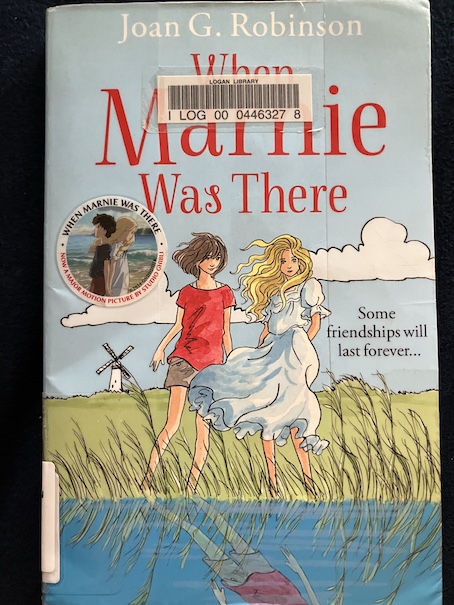
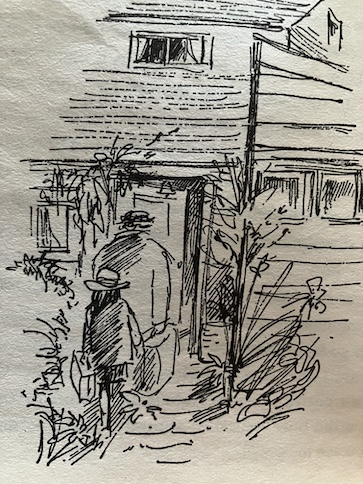
Anna is traveling alone by train to stay with Mr. and Mrs. Pegg for the summer. Anna lives with Mrs. Preston, who she calls her auntie, but the truth is that Anna is a foster child. She knows that her mother and grandmother are dead. Anna feels different from other children and has trouble relating to them. Anna often feels like an outsider around other people. She also suffers from asthma, which gets worse when she is stressed, and it’s been interfering with her going to school. Her vacation in the countryside with the Peggs is meant to help improve her health, but her health problems are partly based on her inner turmoil, which accompanies her to the countryside.
The Peggs are nice. Mrs. Pegg tries to get Anna to be friendly with a local girl, Sandra, but it doesn’t go well. Anna takes offense that Sandra cheats at cards, and she calls Sandra a pig. Sandra insults Anna by saying that she looks like “what she is.” Although the vague insult is probably because Sandra couldn’t think of anything better at the time, it stings because Anna really doesn’t think much of herself, and she constantly worries that it shows on the outside.
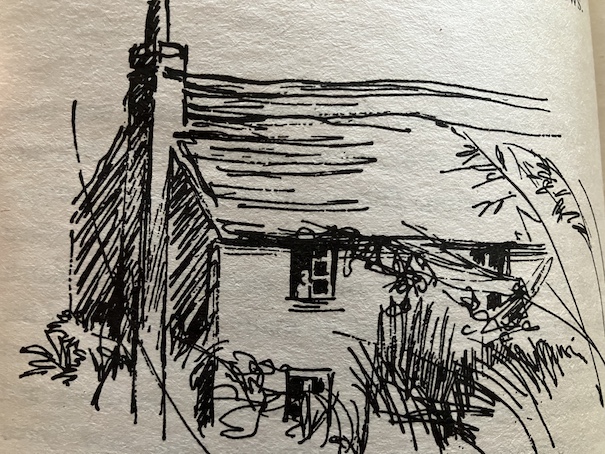
Anna is happiest when she’s left to wander and explore by herself and try not to think about all the things that bother her. As Anna explores the area alone, she finds a large, old house that intrigues her. She has the odd feeling like the house has been waiting for her and an odd sense of familiarity with it. Mr. and Mrs. Pegg say that’s the old Marsh house and that nobody lives there now, although they’ve heard that someone has bought it. Anna likes to imagine that the house belongs to her and that the family that will move into it belong to her, too. She thinks she sees a blonde girl in one of the windows, getting her hair brushed.
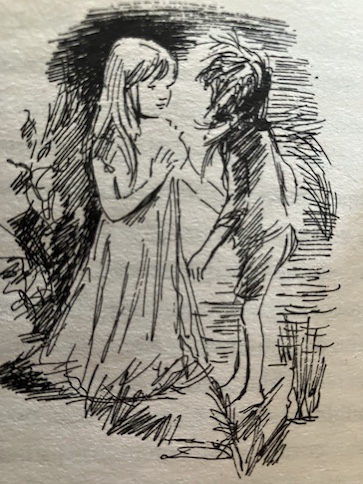
Then, one evening, she meets a pretty blonde girl with a little boat. The two of them hide and listen to the girl’s parents talk, and they begin to develop a kind of odd friendship. The two girls continue to meet in the evenings in the blonde girl’s boat. The blonde girl, who calls herself Marnie, says that she wants to keep their friendship a secret, and she would rather that they get to know each other slowly, only asking one question about each other in turn. For some odd reason, though, when Anna is with Marnie, she has trouble recalling details of her present life, and anytime she stops to focus on the present, Marnie suddenly disappears, although Marnie claims that Anna is the one who suddenly disappears.
Marnie and Anna explore the countryside together, gathering mushrooms, and talking a little to each other about their lives. Anna admits to Marnie what she can’t bring herself to tell anyone else, the reasons why she’s been so upset. She fears that her foster family doesn’t really love her. She thinks they kind of do, but she has recently learned that they’ve been receiving payments from the local council for her support. Since she found out about the money they’re receiving for her, she’s felt a sense of betrayal and abandonment. She used to think they felt like she was their own child, but now, she thinks that they’re mostly just being paid to care for her.
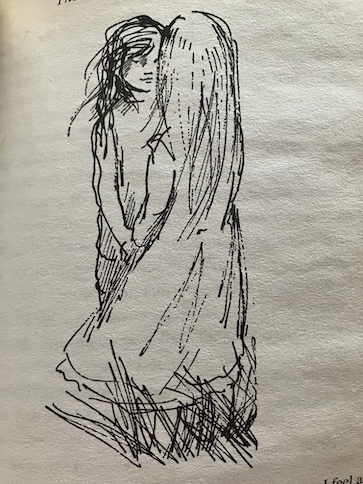
It seems like, all her life, Anna has been abandoned by the people who were supposed to live her the most. She doesn’t really remember her parents at all. She knows that her father abandoned her and her mother when she was small and that her mother remarried but died shortly after that. Anna’s mother had left her with her grandmother while she went away on her honeymoon, but then, she and her new husband were both killed in a car crash, so they never returned for her. Anna remembers a little about her grandmother, who took care of her after her mother died, but then, her grandmother also got sick and died. Anna tells Marnie that she hates them all for going away and leaving her. Marnie points out that dying wasn’t their fault, but Anna says that, before her grandmother went to the hospital, she promised to return soon. She broke her promise by dying. Ever since, Anna has had the feeling that she can’t trust anybody because people leave and break promises. Her feelings of not being able to trust people are at the root of her difficulties in forming friendships and confiding her true feelings to her foster family. Marnie hugs Anna and tells her that she really loves her and that they’ll be friends forever, and for the first time in a long time, Anna feels happy and feels like she can believe Marnie.
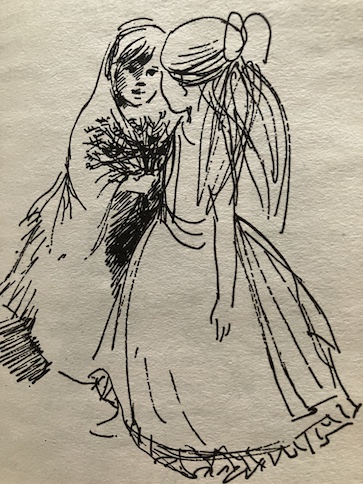
At first, Anna envies Marnie’s privileged life in the big house. Marnie’s father is wealthy, and her mother is beautiful, and it seems like Marnie has everything she could want. Anna even gets to attend one of the parties Marnie’s parents hold at the house when Marnie convinces them to let her in as a little beggar gypsy girl (the book’s description) selling sea lavender for luck. (There is minor alcohol use at this point because the people at the party give Anna a little glass of wine. People are also smoking at the party.) However, when Marnie explains a little more about what her parents are like and what really happens in her house, Anna comes to see that Marnie isn’t fortunate at all. Her parents are rarely home because her father is often away, in the navy, and her mother likes to spend most of her time in London. Marnie doesn’t exactly say what her mother does in London, but the implication seems to be that she spends a lot of time partying and hob-nobbing with high society. While they’re away, Marnie is looked after by her nurse, who can be abusive when she’s angry with Marnie, and sometimes she and the maids threaten to lock Marnie in the old windmill nearby, knowing that she’s afraid of the place. Anna thinks that’s horribly cruel, and she says that no adult in her life has ever hurt her or tried to frighten her on purpose. Marnie doesn’t think of herself as being so unfortunate because this is the only life she’s ever known, but Anna knows that not everybody treats children like that. Her heart goes out to Marnie, and she declares that she loves Marnie, too.
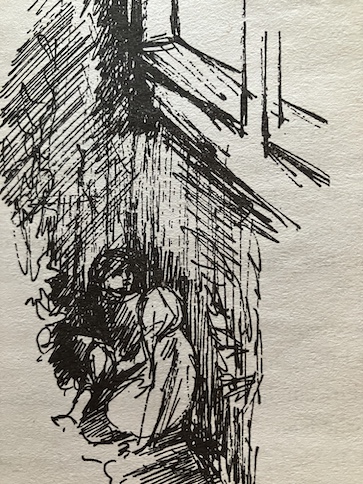
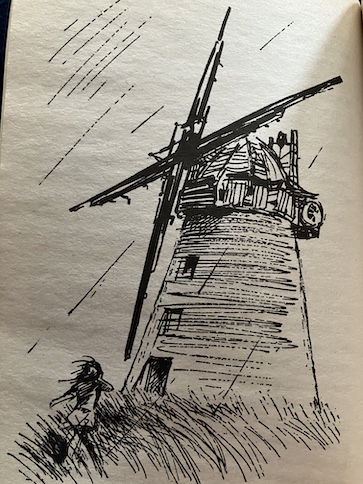
Anna’s relationship with Marnie teaches her how to open up to other people and trust them, but that trust is shaken after a frightening experience at the old windmill. Marnie’s distant cousin Edward, who seems to be the only person in her life who truly looks out for her, is also a bit strict and teasing with her when it comes to the things that she’s afraid of. He thinks that fears should be confronted, so he convinces her that she should be brave and get over her fear of the windmill. In an effort to face her fears, Marnie tries to go inside the windmill alone and climb up the ladder to the loft. However, once she’s up there, she becomes too afraid of the ladder to climb down again. Anna also climbs up and tries to comfort Marnie, but no matter what she says, Marnie is too scared to climb back down. The girls fall asleep in the windmill, and when Anna wakes up, Marnie is suddenly gone. Anna is angry at Marnie for leaving without telling her when both of them had been frightened. Once again, she feels betrayed and abandoned by someone she thought she could trust.
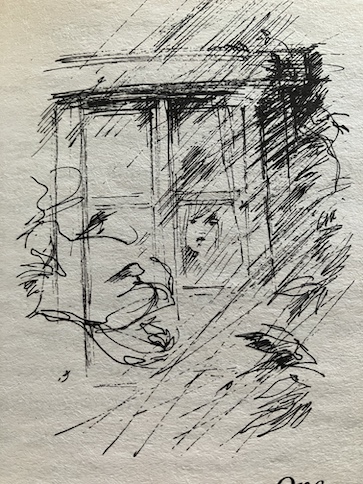
Then, during a storm, Anna sees Marnie gesturing to her from a window of the Marsh house. Marnie calls out to her that she’s sorry about leaving her and that she can’t come out because she’s locked in and is being sent away the next day. She just wants Anna to know that she loves her. Anna, seeing that Marnie didn’t mean to hurt her, forgives her and says she still loves her, too. To Anna’s shock, though, when she tries to look inside the windows of the Marsh house, the place looks empty and abandoned. Confused and upset, Anna stumbles and falls into the water nearby, nearly drowning, but she is rescued by a local man.
After that experience, Anna is ill and sad because she realizes that Marnie is gone from her life. When she recovers, though, she goes to look at the Marsh house again and encounters the children of the new owners, the Lindseys. Anna feels a surprising sense of connection to them, and they to her. As they get to know each other and become friends, one of the Lindsey children, Scilla, reveals that she’s found a diary in the house that tells her about Marnie’s life. At first, she thought Anna was Marnie when they met. Anna is shocked because she’s been starting to think that Marnie was only an imaginary friend of hers. When Anna and Priscilla read the diary, they learn more about the history of the Marsh house and Marnie. The diary is old and refers to the First World War as an event that is currently happening, bringing into question who and what Marnie really was when Anna was becoming her friend. Mrs. Lindsey says that they can ask their family friend, the elderly Gillie about Marnie. Learning about Marnie’s past awakens some of Anna’s memories and reveals some things about Anna’s own past. Understanding who and what Marnie was helps Anna to understand that her birth family, who seemed to have abandoned her, actually loved her. Accepting Marnie’s love helps Anna to understand and accept the love of her foster parents and new friends.
The book is available to borrow and read for free online through Internet Archive. This book has also been made into a Studio Ghibli movie of the same name, although they changed the location of the story from England to Japan. Changing the location of the story changes some of the historical details, but the essential parts of the story are the same as well as the lessons Anna learns from her experiences.
My Reaction and Spoilers
Probably, most people today are familiar with this story because of the Studio Ghibli movie. The movie is pretty faithful to the original book, although changing the setting from England to Japan changes some of the details. It kept the general sense of Anna’s family’s history, her personal connection with Marnie, and the lessons that Anna learns about love, trust, forgiveness, and connecting with other people. In both the book and the movie, Anna comes to realize that the feeling of being “outside” or “inside” relationships with other people is largely a reflection of how the person feels inside themselves. Anna is troubled because she has long-term trauma and inner turmoil that needs to be resolved. Finding out the truth about Marnie and her own past, especially now that she’s old enough to understand the situation, helps to resolve Anna’s feelings.
This is one of those stories where it’s difficult to talk about the book in detail without spoilers, so from this point on there are going to be some major spoilers.
Who is Marnie Really?
Readers will probably get the sense that there’s something odd about Marnie pretty quickly. There are a few odd time discrepancies when Anna’s with Marnie. Marnie vanishes at odd moments, especially when Anna tries to remember details of her present life in Marnie’s presence. For some reason, it takes a lot of effort for Anna to remember her present life when she’s with Marnie, and when she tries to focus on the present day, Marnie disappears.
Why do I keep talking about the “present”? Because this is a time slip story. It’s not immediately obvious to Anna that, when she’s with Marnie, she’s in a different time period because they’re spending time in the countryside with no signs of modern technology or the absence of modern technology, like television or radio, to give away the time periods. Marnie never goes into the Peggs’ household, and the only time Anna goes into the Marsh house with Marnie is during a party, where everyone is dressed up. There are a couple of minor clues, like Marnie referring to what Anna’s wearing as boys’ clothes because she’s wearing pants instead of a dress or skirt, but other than that, there are few references that would clarify the time period for Anna. Anna’s difficulty of thinking of or being in two different time periods at once also keeps her from making the connection.
After Marnie leaves and Anna knows that she is gone, Anna partly concludes that she was only an imaginary friend of hers, but the diary makes it clear that Marnie was a real person. It also adds some details that confirm Anna’s experiences with her and add some extra information that Marnie didn’t discuss with Anna that clarifies when she really lived in the Marsh house.
The truth is that Marnie was Anna’s grandmother, who is now deceased. The Marsh house was familiar to Anna because it was her home with Marnie during her earliest years. The things that Gillie has to say about Marnie help to fill in the blanks and connect Marnie’s story to Anna’s.
As a child herself, Marnie really was the poor little rich girl whose wealthy parents neglected her and frequently left her alone with an abusive nurse. Marnie was somewhat isolated as a child and, like Anna, was frequently happiest exploring the countryside or going out alone in her boat. The only person she felt that she could confide in was her distant cousin, Edward, who was older and tried to look after her, although he was also stern and not as emotionally understanding as he probably should have been. The summer that Anna experiences with Marnie was the summer when Marnie’s life changed forever, partly because of the windmill incident.
Marnie really did go into the windmill by herself in an effort to conquer her fear, and she did get trapped there because she was afraid to come down. Her nurse and the maids, unable to find her and not knowing where she went, finally called for a search party for the missing girl, but it was Edward who figured out where she was. He found her in the mill, unconscious, either passed out from fright or having fallen asleep from exhaustion, and carried her down the ladder himself, which is why Marnie was gone when Anna woke up. Edward didn’t see Anna there, probably because she had either shifted back to her own time while the girls were asleep or because not everybody is able to see Anna when she’s caught between times. The fact that the nurse had no idea where Marnie was exposes her neglect of Marnie, and when Marnie tells Edward about how the nurse and maids made her afraid of the windmill by threatening to lock her in there and how her nurse has given her abusive punishments, he makes sure that the nurse is fired. The reason why Marnie called out to Anna that she was being sent away was that, when the nurse was discharged, her family decided that it would be best for her to go to boarding school instead. Marnie’s father, who was in the navy during WWI/The Great War, was killed during the war, not very long after that party that Anna attended as the little beggar girl, and after boarding school, Marnie married Edward. They moved somewhere else, and they had a daughter of her own.
Unfortunately, Marnie’s life and family were plagued with problems, some of their own making and some beyond their control. When Anna and her new friends, the Lindsey children, try to ask Gilly who was responsible for how things turned out for Marnie, she says that the answer is complicated. The older a person gets, the more they realize that there are many factors involved in how a person’s life turns out, and it’s difficult to point to any one thing as a cause.
Marnie’s parents obviously neglected her, and although Edward really did love her, he wasn’t very understanding about emotional needs. Marnie herself, although she wanted to be a better parent to her daughter than her parents had been to her, didn’t really know how because she didn’t have good parental role models to follow and hadn’t been brought up to understand her own emotional needs, let alone how to care for the emotional needs of a child. She hadn’t fully matured emotionally by the time she became a mother, and outside events complicated her relationship with her daughter, Esme. Esme was young during WWII, and she was sent away to the United States as a child evacuee to escape the threat of bombing. Although Marnie sent Esme away for safety, they were separated for a period of years when Esme was very young. When Esme came back, she didn’t feel much connection to Marnie. She felt abandoned for being sent away from her mother and accused Marnie of never really acting like her mother because she wasn’t there for her, physically or emotionally. Marnie tried to repair her relationship with Esme, but as soon as Esme was out of school, she ran away and got married to Anna’s father.
We never learn who Anna’s father was. He is probably still alive somewhere, but Gillie describes him as having been too young and immature for the role of a husband and father. It wasn’t long before he and Esme divorced, and he was out of Anna’s life forever. The story seems to imply that he might have been from Spain because he has a darker complexion than Marnie or Esme and because he liked the Spanish sound of the name Marianna, the name that Esme originally gave to Anna as a baby and which came from Marnie’s mother. (We are told that Anna was unaware that her legal name is still Marianna and that Anna is a nickname that her foster family gave her.) Because her marriage failed when Anna was only a baby, Esme turned Anna over to Marnie almost immediately, so Marnie really was the one who was raising Anna the entire time. Esme tried to get her life straightened out, and the man she married next seems to have been a nice person. The family might have managed to get themselves back together as a family after that, but Esme and her new husband tragically died in a car accident on their honeymoon. Marnie genuinely loved Anna and tried to continue caring for her, but her own health was failing, and the shock of Esme’s sudden death made it worse. Marnie desperately wanted to recover and return to Anna at the Marsh house, but she really couldn’t help dying. When Anna fully comes to understand all of this, she manages to forgive her mother and grandmother for leaving her, knowing that they loved her and that leaving her the way they did wasn’t what they wanted.
Anna’s new sense of inner peace and acceptance of her family’s love for her, flawed as they all were, helps Anna understand and accept her foster family’s love. She and her foster mother also have a heart-to-heart talk about the payments they’ve been receiving to help support Anna. Mrs. Preston says that she hadn’t wanted to talk to Anna about the payments because she hadn’t wanted Anna to feel self-conscious about them or to think that the Prestons didn’t want to support her themselves, although the money has helped with Anna’s expenses. Mrs. Preston admits that she’s tried to avoid mentioning things that would make Anna seem more separate from the Preston family or less than fully hers, and she had noticed that Anna was uncomfortable when she was younger and Mrs. Preston tried to tell her what she knew about her mother and grandmother. Anna had been uncomfortable hearing about them because she was angry with them for their seeming abandonment of her, but Mrs. Preston hadn’t understood and was too uncomfortable herself to probe Anna’s feelings deeper, although she now sees that it’s better to be open about things, even when they’re uncomfortable. Anna’s relationship with her “auntie” improves because of their new understanding of each other, their feelings, and Anna’s past. I think Anna also sees that Mrs. Preston has treated her much better than Marnie’s own parents ever treated her, which shows that being blood relations isn’t always a guarantee of a close and loving relationship or the best treatment. Although, realizing that she originally did come from a family who loved her as best they could and that her grandmother really was her first real friend helps give Anna the basis she needs to establish loving relationships with other people.
What is Marnie Really?
As I said, this is a time slip story. Anna apparently really does go back in time, speak to Marnie as a living person in her time, and interact with other people at the party when Marnie pretends that she’s a little gypsy beggar girl (the book’s description) selling sea lavender. The beggar girl incident also appears in Marnie’s diary. Marnie doesn’t refer to Anna by name, but it seems to indicate that Marnie actually experienced the incident with Anna and that it wasn’t just a dream.
Although, I have seen other reviewers suggest that Anna could have been dreaming or imagining some of these things as the presence of the house awakens Anna’s memories of living there with Marnie and stories that Marnie might have told her about her childhood. Yet, the fact that Scilla saw Anna once looking up at the house and seeing Marnie in the window while none of her siblings could see Anna at that time suggests that something supernatural was happening and that only certain people can see Anna when she’s caught between time periods.
So, does that mean that Marnie was a ghost or that Anna was a type of ghost when she was slipping between time periods? It’s a possible explanation, and I think one of the characters makes that comparison. We don’t have an exact explanation for how the time slips happen except that Marnie and Anna have a strong emotional connection to each other and to the Marsh house. Marnie’s death and Anna’s unresolved feelings create a need for the two of them to meet again, almost for the first time, and come to understand each other.
I think the movie version somewhat implies Marnie deliberately reaching out across time to reconnect with her granddaughter and assure her of her love, but in the book, it seems as though Marnie is unaware that they are actually family. Marnie just loves Anna as Anna, not trying to justify their family’s circumstances but just being herself as she was when she was young and letting Anna see the person she really was. Just as Anna couldn’t climb down the ladder for Marnie, only trying to help her do it herself, Marnie can’t do all the emotional understanding for Anna. Her presence just helps Anna to come to a new understanding of her and their shared past.
In beginning, Anna was angry that her teachers accused her of “not even trying” at school or at getting along with others, but the truth is that she was missing some important pieces of information and understanding to make the efforts she needs to make. Marnie’s life turned out the way it did partly because she was also missing some understanding about emotions, relationships, and what it takes to be a good parent. We don’t know why Marnie’s mother was the way she was. Perhaps she was similarly raised by neglectful parents and distracting herself from her own past traumas in those constant parties she gives and attends. As Gillie says, it’s hard to know exactly where these things start when you begin to look at the bigger picture. However, Anna’s new understanding indicates that her life is likely to turn out better than the previous generations of her family. In an odd way, it seems she both needed both her connection to them and a kind of separation from them to get there and break their cycle.
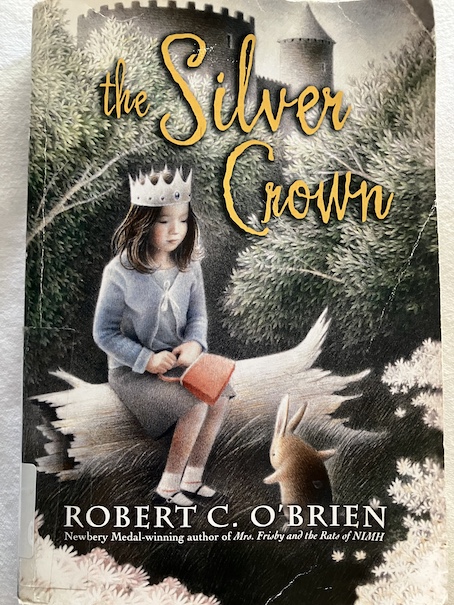
Ellen Carroll has always known, deep down, that she was a queen. Of course, everybody else sees this as a game of pretend, and it kind of is, but on her 10th birthday, her life changes forever, and there may be more behind Ellen’s feeling of being a queen than even she knows.
When Ellen wakes up on her 10th birthday, she finds a letter from her Aunt Sarah and a beautiful silver crown next to her on her pillow. Ellen loves the crown because Aunt Sarah is the only adult who seems to really believe Ellen when she says she’s a queen. Ellen takes the crown and goes for an early walk in the park, daydreaming about being a queen. When Ellen gets back to her house, she gets a real shock. In the brief period that she was gone, the house has completely burned down, and apparently no one else in her family survived!
Ellen, in shock, tries to talk to the firefighters and police about the fire and what happened to her family. She discovers that the fire was surprisingly sudden and fierce, there’s no indication that anyone survived, and they might only find bones when they finish their investigation. Ellen explains that this was her family’s house, but since her family hasn’t lived there very long. Nobody really knew her family, and nobody really knows her, and even the police seem to doubt her identity. However, a policeman says that he will take her to the station.
On the way to the police station, something else shocking happens. Ellen and the police officer witness a murder! A robber shoots a store manager, and when the policeman chases the robber, he is also shot. Alone and forgotten, Ellen watches more police come and investigate the situation, trying to figure out what to do. Ellen realizes that, with her family gone, what she really needs is a guardian or a next of kin. That would be Aunt Sarah. However, Aunt Sarah lives in Kentucky, and that’s hundreds of miles away. Ellen could write to Aunt Sarah, but it would take days for her to get the letter, and in the meantime, Ellen has nowhere else to stay. Then, Ellen decides that the thing to do is to go to Kentucky herself. She writes a letter to her aunt to tell her that she’s coming, and sets out to find a ride.
She accepts a ride from a nice man called Mr. Gates who says he’s a teacher and that he’s going to Kentucky, too. She considers it good luck until, during the ride, she begins to notice that there’s something weird about this man. He seems weirdly happy, all the time, and he sometimes repeats certain stock phrases at inappropriate moments. When Ellen gets a look inside in the glove compartment and sees something disturbing – a gun! Suddenly, something clicks in her mind, and she realizes that Mr. Gates was the man in the green hood who shot the store manager and the policeman! She escapes from Mr. Gates and runs into the woods.
While she hides from him in the dark woods, she hears Mr. Gates searching and calling for her. As she listens to him, he grows more disturbed and more disturbing. First, he tries to tell her that he’s going to take her straight to her Aunt Sarah, and Ellen realizes that she never told him her aunt’s name. Then, he begins raving, trying to command her to come out because “the king” has demanded that he bring her to him, and he will punish them if they don’t come. Ellen doesn’t know what he’s talking about, but in the woods that night, she has a strange vision where a man wearing a black crown that looks like hers seems to be commanding other people.
The next day, Ellen befriends a boy named Otto. Otto lives with his elderly mother in the woods, and they survive partly on things they salvage after trucks wreck on a dangerous section of road nearby. Otto and his mother invite Ellen to stay with them a little while to eat and get some sleep.
Ellen explains everything that’s happened to her to Otto’s mother, Mrs. Fitzpatrick. Mrs. Fitzpatrick is a wise woman, and she and Otto both sense that there’s something odd about Ellen’s crown. They sense that it has a power of some kind, but it’s the kind of power that only particular people can use. Whatever the crown does, Mrs. Fitzpatrick is sure that it will only work for Ellen. She questions Ellen about who gave her the crown, but she admits that she doesn’t really know. All she knows is that it was there when she woke up. Since it was her birthday, she just assumed that it was a birthday present. She talks her Mrs. Fitzpatrick about having this sense that she’s a queen and that her Aunt Sarah thinks so, too. Mrs. Fitzpatrick agrees, but she says the question, is what or where is Ellen the queen of? Ellen will need to figure that out before she can understand what the silver crown really is and what it does.
During the night, Mrs. Fitzpatrick shoots at someone who’s lurking outside their cabin, and they realize that someone is still hunting for Ellen. Ellen can’t stay there, and Mrs. Fitzpatrick points out a road that Ellen can take, and she insists that Otto go with her because he knows how to manage in the woods and can help Ellen. Mrs. Fitzpatrick admits that it’s also best for Otto to leave the area because he’s also in trouble.
At first, she’s vague about what trouble Otto is in, but gradually, Mrs. Fitzpatrick explains that Otto and his past aren’t what he believes or has chosen to believe. Mrs. Fitzpatrick found him as a very small child, abandoned on the nearby highway, and she has no idea who his birth parents are or what happened to them. Mrs. Fitzpatrick says she doesn’t really need the things that Otto has salvaged from the wrecked trucks, but for some reason, Otto believes that she does, so he’s been causing these accidents by using branches to hide the sign warning people of the dangerous curve ahead. It doesn’t seem to affect smaller cars, but bigger trucks can’t make it without warning. Ellen is horrified, but Mrs. Fitzpatrick says that she thinks that Otto needs to leave this place and the dangerous fantasies about himself and his life that he’s build, living alone in the woods.
Mrs. Fitzpatrick lets the children go with a warning to Ellen to keep the crown hidden and not to tell anybody about it. She also warns her to beware of any people or group who use the name Hieronymus. The first Hieronymus was a saint, but others have appropriated the name to study the occult and esoteric knowledge, and not for any holy purpose. Mrs. Fitzpatrick says that she has read about a crown like Ellen’s which is associated with these people, and she thinks this secret society is after Ellen now.
Ellen and Otto set out on a cross-country journey to reach Ellen’s Aunt Sarah, but they eventually find themselves trapped in a disturbing boarding school, run by the secret society they are trying to escape. The students in this school are controlled by the mysterious Hieronymus Machine, and they are being trained as soldiers in the service of “the king” to sow chaos in society. Ellen is close to learning the purpose of her crown, but she and Otto will need their wits to escape and put an end to this secret society’s evil plans!
Robert C. O’Brien is known for Mrs. Frisby and the Rats of NIMH, but The Silver Crown was his first book.
My Reaction and Some Spoilers
I was intrigued by this story from the very beginning. Strange things start happening very quickly – the appearance of the silver crown on Ellen’s birthday, the destruction of her house, the murder she witnesses, Ellen setting out on her journey to her aunt, and the strange and disturbing Mr. Gates attempting to kidnap her – all of these events, while confusing for Ellen, are related and part of a much larger story.
The parts of the book where Ellen and Otto are traveling cross-country, meeting people who help them escape from the people chasing them and continue their journey, seem almost like part of a fantasy book or fairy tale. This story is both fantasy and science fiction. (Spoiler) The Hieronymus Machine is an invention more than a thousand years old that controls minds by broadcasting feelings like radio waves. The school run by the society uses the Hieronymus Machine to control the minds of the “students”, and the students are all part of a larger experiment to test the powers of the machine and the ability of the black crown to control it. There is a pseudo-scientific explanation of how the machine works, which is the science fiction element, but the black and silver crowns that control the machine and the roles of “king” and “queen” associated with the crowns add the fantasy element. When Ellen meets the king, he explains to her how he discovered the machine and that the people who built it, although they called themselves monks, were actually sorcerers. I enjoy stories that are cross-genre, and I thought that this combination of fantasy and science fiction worked well.
Actually, I was surprised when Ellen and Otto ended up at the boarding school and started learning what the Hieronymus Machine is and what it does because it struck me as very similar to the plot of The Mysterious Benedict Society. This book is 40 years older than The Mysterious Benedict Society, and I wouldn’t be surprised if it inspired that later series. Both of them are based around the concept of mind control machines that work like radio waves and strange boarding schools that are used both for mind control experiments and for training/brain-washing people to serve a dark purpose. Both stories feature children who are orphans and/or separated from their parents and people whose identities are uncertain and whose memories are corrupted by the machine. (Spoiler) It turns out that Ellen’s family is still alive but being held captive by the secret society, but we never learn who Otto’s parents were or if they had any connection to the secret society themselves.
There are some differences between The Mysterious Benedict Society and The Silver Crown. Ellen discovers that the king, although seeming to be in control of everything initially, is also controlled by the machine. The machine controls everyone around it, to some extent. The king somewhat controls the machine through the black crown, but at the same time, he’s also carrying out the goals of the machine. Although he seems in command, he’s really just a tool of the machine itself and needs to be freed from it as badly as everyone else. This is a somewhat different scenario from The Mysterious Benedict Society, where there is one person who is definitely in control. Some people, like Ellen, have a natural resistance to the mind control effects because their minds work differently from other people’s, and that’s how Ellen is able to resist the mind control and use the silver crown. The silver crown is the one that actually controls the machine while the black crown allows the machine to control the wearer while giving him the illusion of control, which is why the king wants to control the silver crown and Ellen. On some level, the machine realizes that it needs Ellen and the silver crown to function. Ellen needs to learn how to use the crown and the knowledge it gives her about what to do to establish control over the machine and ensure that it can’t control anyone else again.
There are actually two different endings to this book, depending on whether you read the British version or the American version, and if you listen to Kent Kently’s reading on Youtube, he reads both of them at the end of the book. In the original British version, Ellen’s Aunt Sarah says that she sent Ellen the crown after finding it in a curio shop in Spain, where the shop owner seemed to think it was an old theatrical prop. This ending isn’t very detailed and leaves some things to the imagination. The American version has far more detail, and in that version, they conclude that the secret society had someone break into Ellen’s house and leave the crown for her because they were actively searching for someone who could use it. If you read other reviews of this story, some of them will differ from each other, depending on which version the reviewer read. Personally, I like the American version with its more detailed explanations better, but Kent Kently prefers the shorter, original version.
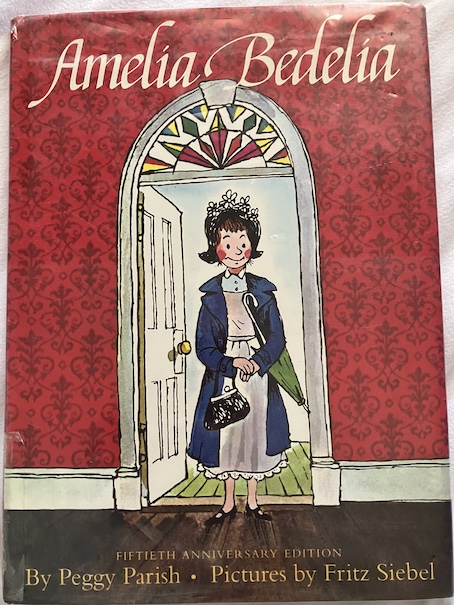
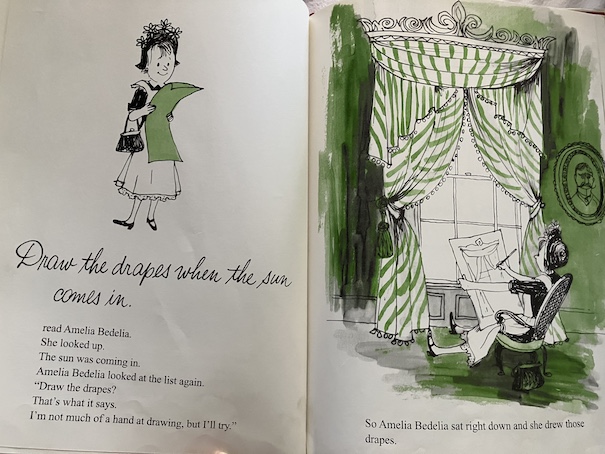
Amelia Bedelia is just starting her new job as a maid with Mr. and Mrs. Rogers! Mr. and Mrs. Rogers can’t be there to supervise her on her first day, but Mrs. Rogers leaves her a list of things to do and tells her to do exactly what the list says. Little does Mrs. Rogers know just how literal Amelia Bedelia can be!
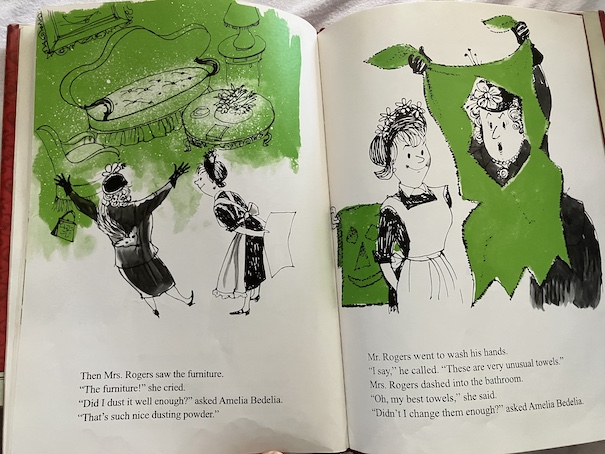
When Amelia Bedelia reads that she’s suppose to “change the towels”, she thinks that she’s supposed to change the way they look instead of replacing them with new ones. To Amelia Bedelia “dust the furniture” means to add dust to the furniture instead of removing it. The instruction to “draw the drapes” sounds like she should draw a picture of them instead of closing them.
When Mr. and Mrs. Rogers return to see how Amelia Bedelia is doing, they are shocked at what she’s done!
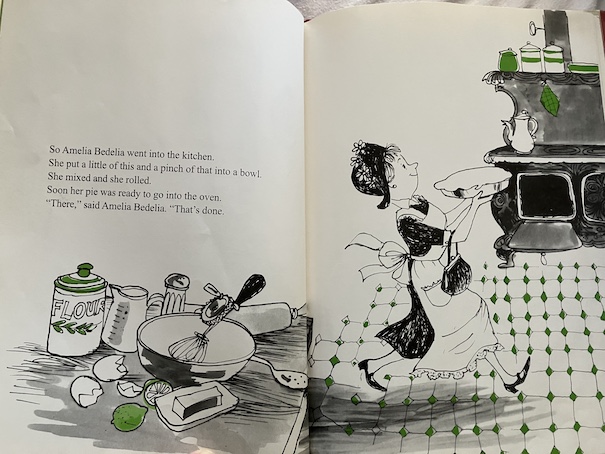
There is only one thing that can save Amelia Bedelia’s job: her ability to make an amazing lemon meringue pie!
The book is available to borrow and read for free online through Internet Archive.
My Reaction
This is the very first book in the Amelia Bedelia series, and I remember reading it when I was a kid. The point of the Amelia Bedelia books is to introduce kids to expressions and words that have multiple meanings. They’re pretty funny to read, although even as a kid, I had trouble believing some of the phrases that Amelia Bedelia takes literally. For example, when she “dusts” the furniture, she thinks that Mrs. Rogers should have told her to “undust” the furniture instead. I see what the author is saying, that it’s funny that we say “dust” the furniture when we’re actually removing dust instead of adding it, but I’ve never heard anybody in real life use the term “undust” the furniture. Amelia Bedelia is funny, but sometimes, it seems like it’s reaching a little to find terms she can credibly misinterpret.
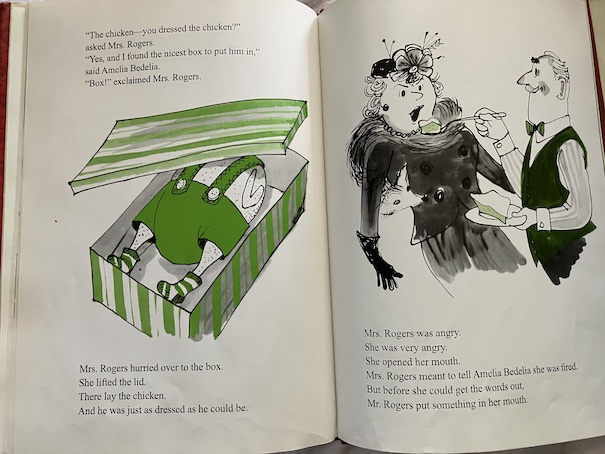
I also don’t think I fully understood the parts about trimming the fat on the steak and dressing the chicken as a kid because I wasn’t used to cooking. I think I got the concept that she was supposed to cut the fat off the steak rather than decorate it as one might trim a Christmas tree (a concept that Amelia Bedelia interprets the opposite way in her Christmas story). What she was supposed to do with the chicken she ended up “dressing” in clothes was a little more confusing. When I was a kid, I knew that people make stuffing or dressing to put in poultry, like chicken or turkey, when they cook it, or they can rub herbs and spices under the skin for flavoring, and I think that’s what Amelia Bedelia was supposed to do here. Even so, there are different types of stuffing or dressing to make and different mixtures of herbs and spices to use, and Mrs. Rogers doesn’t say what kind she wants. Of course, if she was more specific, Amelia Bedelia couldn’t have gotten so confused, and that’s really the point of the story.
I don’t know whether any teachers still use Amelia Bedelia books as examples of words and phrases with multiple meanings, but they are fun in that fashion. A good accompanying activity for these books is a project that I had when I was in school and that I’ve heard students still do – explain how to make a peanut butter sandwich (or any other kind of sandwich) to someone from another planet, who has no idea what a sandwich is or how to make one. Students doing this activity need to be as careful and detailed as they can because some phrases are easy to misinterpret if you assume that the person you’re talking to has no idea how anything works. I remember my old teacher would act out our instructions literally, almost like Amelia Bedelia. For example, if you said, “Put peanut butter on bread” without saying that you need to open the jar first and remove the peanut butter from the jar with a knife, the teacher would set the whole jar of peanut butter on top of the bread and just stare at it. If you explain the peanut butter sandwich instructions well enough that there’s no room for misinterpretation, you may have a future in technical writing!
The pattern established in this first book continues through other books in the series. In many other Amelia Bedelia stories, Amelia Bedelia misinterprets instructions she’s given by taking things too literally or misunderstanding words with multiple meanings, but she always manages to keep her job because she’s really good at baking and makes cakes, pies, and other treats that Mr. and Mrs. Rogers love.
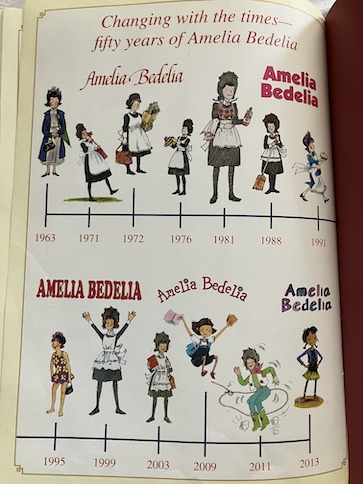
If you read the 50th Anniversary edition of the book, there’s a section in the back about the Amelia Bedelia series and how it’s changed over the years!
#12 The Mystery of the Laughing Shadow by William Arden, 1969.
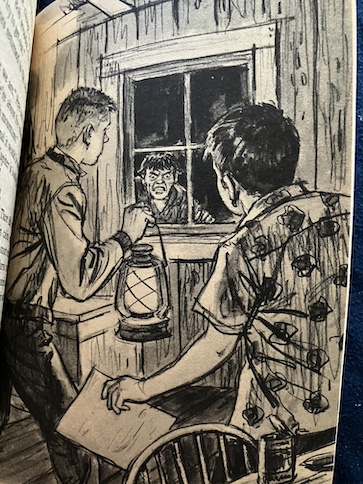
The mystery begins when Bob and Pete are bicycling by the old Sandow estate and they hear a call for help. Although it’s dark they can’t see who yelled for help, they can tell that the person threw something small that lands near them. They pick it up and discover that it is a small gold amulet. Then, Bob and Pete have to hide when a dark, shadowy figure comes looking for the amulet. The figure appears humpbacked and has a weird laugh that Bob and Pete have trouble describing.
They tell Jupiter what happened, and he joins them in searching for the person who called for help and figuring out the significance of the amulet. Someone steals the amulet from Jupiter, although Jupiter manages to save a message that was hidden inside the amulet. Then, they consult an expert in Native American languages and antiquities and learn that the amulet may be part of the Chumash treasure hoard, a treasure stolen from the Spanish settlers of the area many years ago by Chumash Indians (Native Americans) who once lived in the area. People have searched for the treasure for many years, but no one has found it. However, the message that was hidden inside the amulet is written in a language that belongs to the Yaquali Indians of Mexico (this is a fictional group, not the Yaqui), a remote tribe mostly living in isolation but known for their climbing skills. The expert is puzzled because he can’t figure out what the connection can be between the Chumash and the Yaqualis. The two group don’t live in the same area, their languages aren’t related, and the Yaqualis had nothing to do with the lost Chumash treasure hoard.
Jupiter says that their next move should be to investigate the Sandow estate. At first, they plan to make an excuse that they’re researching the Sandow estate for a school project, but to their surprise, Ted Sandow, grandnephew of Sarah Sandow, who owns the Sandow estate, shows up at Jupiter’s uncle salvage yard. Ted is just a few years older than the Three Investigators, and he explains that he came from England to visit his Great-Aunt Sarah after his father died. He says that his aunt wants to clean out a bunch of old things that have been in storage on the estate and that someone recommended the salvage yard to him. He invites the boys to the estate so he can show them some antiques that Jupiter’s uncle might want to buy. It seems like quite a coincidence that Ted Sandow would just come looking for them and give them an invitation to the Sandow estate just when they were planning to investigate the place, but the boys can’t pass up the invitation.
At the Sandow estate, the boys are amazed at the antiques that Sarah Sandow is offering to sell, and they’re sure that Jupiter’s uncle will be interested. They spend some time chatting with Ted, Great-Aunt Sarah, and Mr. Harris, a friend of the Sandows who has started a Vegetarian League with the help of Sarah Sandow. Sarah tells the boys that the reason she wants to clean out some of the clutter around the estate is that they recently had a burglary. They all explain to the boys that a small gold statue (the amulet) was stolen from the estate by an unknown boy. It was one of a pair that used to belong to Sarah’s brother, who was Ted’s grandfather. The boys explain that they are investigators and that they would be happy to help them recover the little statue, without telling them that they had it in their possession at one point or about the message they found with it. The Sandows hire boys to find it, promising them a reward if they’re successful, but some things about their offer don’t ring true.
For one thing, Ted Sandow asks the boys about the meaning of the question marks on their business card before he even looks at the card, indicating that he already knew about their investigation business and that he sought them out for that purpose rather than just to sell things to the salvage yard. It’s also strange that he stresses that they will reward the boys for the return of the amulet with “no questions asked” about how they found it. What are the Sandows hiding, and what is the meaning of the message that was with the amulet? Do they know the location of the Chumash hoard, or do they have it themselves? Who was the mysterious shadow with the weird laugh? Lives may hang in the balance as the boys struggle to learn the identity of the laughing shadow.
The book is available to borrow and read for free online through Internet Archive.
My Reaction
I like books that reference history, but this book bothers me a little because of the introduction of the Yaquali. The Chumash are real, but the Yaquali are a fictional group, and it just feels strange to have the book start with a real group of Native Americans and then incorporate a fictional group. It also makes the story feel a little contrived that the villain needs the Yaquali for their excellent climbing skills to reach the treasure when it doesn’t seem like the Yaquali had anything to do with placing the treasure where it’s hidden.
The explanation behind the laughing shadow also feels a little contrived. There’s a logical explanation but at the same time, it depends on the villain having a pet that makes a sound that sounds like a laugh, and this pet’s origins point to the villain’s origins.
The part of the story that I thought was most interesting was that, while the Three Investigators are suspicious of the Sandows, it’s implied that the suspicious is mutual. The Sandows offer the Three Investigators the job of finding the amulet with “no questions asked” about how they found it, and there is an implication that they suspect that the boys stole it. The implication that the “no questions asked” is actually an invitation to the boys to return what they took with a promised reward and no repercussions. However, at the same time as the boys accept the job from the Sandows, they have their own suspicions about what the Sandows are doing and what the meaning of the message in the amulet is. They see the investigation job as a way to learn more about what’s going on. The interesting part is that, while each of them has some reason to suspect each other, the real culprit in this situation isn’t either of them.
Spoilers
Although the boys suspect Ted at first, the real villain is Harris. Years ago, Sarah Sandow’s brother, Ted’s grandfather, learned that the Chumash hoard was located on their property, but for reasons that no one seems to know, he killed the only person who could tell him where it was and had to leave the country. Ted was born in England, and he has been visiting his Great-Aunt Sarah. He met Mr. Harris on the way here, and Harris introduced himself to Sarah on the pretext of getting a donation to help set up a society for vegetarians in the area. He had already figured out where the hoard was located on her property, and he had convinced some young Yaqualis from Mexico to come to the United States to help him get it.
The treasure is hidden in a cave which can only be reached by experienced climbers, and the Yaqualis are known for their climbing skills. One of the Yaqualis realized that what Harris wanted them to do was illegal and that he was planning to do away with them when it was all over. He managed to get word to his family, and he put the message in the amulet in the hopes that someone would find it later and help him and the others.
Jupiter figures out that Harris is the villain when he realizes that the mysterious laugh isn’t human; it was caused by a kookaburra, a pet of Harris’s from Australia. His shadow only looked humpbacked because the bird was sitting on him at the time. Jupiter gets the police to check with the Australian authorities, and they learn about Harris’s criminal past. By then Harris has taken Bob and Pete hostage, and they must stage a daring rescue to save them. For a while, Bob and the young Yaqualis are trapped in the cave with the treasure, but a couple of other Yaqualis who have been searching for them help to rescue them. At the end of the book, the ownership of the treasure still has to be determined, but many museums are hoping to acquire pieces for their collections.
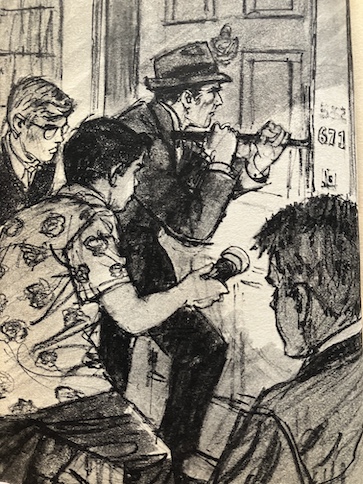
#11 The Mystery of the Talking Skull by Robert Arthur, 1969.
Jupiter reads in the newspaper about a public auction of luggage abandoned at hotels. He is curious about the auction and persuades Bob and Pete to come with him. On a whim, Jupiter bids on an old trunk at the auction and gets it for a dollar. Even the auctioneers don’t know what’s in the trunk because it’s locked. However, shortly after Jupiter buys the trunk, others show up offering to buy it from him.
It turns out that the trunk used to belong to a magician called the Great Gulliver, who disappeared about a year earlier. His signature trick was a talking skull called Socrates, which is still inside the trunk. The Three Investigators study the skull because Jupiter is curious to see how the trick works, but he can’t find anything about the skull that would explain how the trick was done. However, when the skull begins to speak to the boys, it suggests an even more puzzling mystery.
In the middle of the night, the skull tells Jupiter to go to a certain address and use the skull’s name, Socrates, as the password. When Jupiter goes there, he meets a gypsy fortune teller called Zelda, who tells him that Gulliver isn’t dead but he’s no longer among the living. She also tells him that there are people who want money, but the money they want is hidden. Zelda says that maybe Jupiter can help, and she tells him to protect the trunk and listen to anything else the skull might say.
When the Three Investigators look through the trunk again, they find a letter hidden inside, under the lining. The letter is from a man Gulliver once knew in prison, Spike Neely. The man was dying, and he wanted to tell Gulliver where he hid some money he stole years before. Because he knew the authorities would read any letter he sent, he could only hint at the location. The letter was short, and it doesn’t seem to say much, but The Three Investigators are sure that there’s a clue to where Spike hid the money somewhere in the letter.
However, The Three Investigators find themselves questioning how much they want to investigate this particular mystery. Jupiter was followed by a strange car on the way home from Zelda’s, probably the men Zelda spoke of who are looking for the money. Then, Jupiter’s Aunt Mathilda gets spooked by the skull when it says “boo” to her, and she tells Jupiter to get rid of it. The boys decide to sell the trunk to Maximilian, a magician who was interested in buying it for the sake of the talking skull and other tricks inside. When Maximilian takes the trunk, they think that’s going to be the end of the matter for them, but the next day, Police Chief Reynolds comes to see them because Maximilian was in a car accident. He says that another car forced him off the road and a couple of men stole the trunk!
Chief Reynolds tries to see Zelda, since she seemed to know something about the hidden money, but when he goes to the address where Jupiter met her, Zelda and the other gypsies are gone. Then, somebody mails the trunk back to Jupiter! When the boys open the trunk again, Socrates the skull says, “Hurry! Find–the clue.” It looks like they’re on a hunt for stolen money whether they like it or not!
The book is available to borrow and read for free online through Internet Archive (multiple copies).
My Reaction
The idea of a mysterious talking skull that used to belong to a vanished magician is exciting by itself, and I remember liking this story the first time I read it. As an adult, the parts about the gypsies seem a little cringey, the stereotypical stuff of vintage children’s books. A mysterious fortune teller is compelling and reminds me of similar type characters that appeared in the original Scooby-Doo cartoons, but The Three Investigators aren’t really big on accuracy when it comes to cultural representations. That sort of thing never occurred to me as a kid. All I cared about was an interesting story, and this book does have that. It’s just that, when you’re an adult and you know more about the world, you can tell when a character or culture is really just a cardboard cutout with no depth to it, more of a stock element pulled out of an old bag of tricks, and it hits you differently.
The talking skull element was cool, and I loved the idea of buying a mystery trunk cheaply and finding an amazing mystery in side. It’s the sort of thing I would have loved to do or envision doing as a kid, although in real life, the contents of the trunk would probably have turned out to be far less exciting, like a bunch of rusty hardware or somebody’s collection of water-damaged magazines. It’s that sense that, when you open it, there could be anything inside that’s compelling, and the best books have that sense of anticipation, too.
The solution to this mystery involves the Three Investigators examining the letter to figure out where Spike hid the clue to finding his loot. There is one part of his letter that seems to hint at something personal, a person who doesn’t really seem to exist, but that’s only half of the clue. The other part lies in the stamps he used and also in Spike’s distinctive trait of having trouble pronouncing words with the letter ‘L’ in them. It’s the sort of multi-layered clue that might appear in a Sherlock Holmes story. From there, the Three Investigators have to track down the house that Spike’s sister owned, where he was apprehended after the robbery, which proves more difficult than they anticipated because all of the houses from that neighborhood have been moved to a new location and were given new numbers. There were parts of the treasure hunt that were exciting and others that seemed to drag a little, but there are definitely some violent characters looking for the money, too.
Someone is obviously using the Three Investigators to try to find the money on their behalf, urging them on by using the talking skull, and that adds layers to the mystery. Who is trying to use them to solve the mystery, or is it more than one person or group of people? When people approach them with information or ask for their help, who can they trust? By the end of the story, we do learn where Gulliver is (if you haven’t guess it already) and the full story behind Spike hiding the money and what led to Gulliver’s disappearance.
This book is part of the Madeline series about a little girl at a small boarding school in Paris. The son of a Spanish Ambassador, Pepito, lives next door to the girls. He’s a menace to them at first, but the girls make friends with him. However, in this book, Pepito moves to London because his father has been relocated for his job.
When Pepito and his parents go to London, Pepito is unhappy there because he’s lonely for Madeline and the other girls from the boarding school. With Pepito growing thin and depressed from his unhappiness, Pepito’s father arranges for the girls from the boarding school to visit for Pepito’s birthday to cheer him up.
When Miss Clavel and the girls arrive in London, there’s a happy reunion, but then, they remember that they didn’t bring Pepito a present for his birthday. Madeline remembers that Pepito has always wanted a horse, and they find an old, retired army horse who is still healthy and gentle.
However, when they give the horse to Pepito, they quickly discover that there are complications to owning a horse as a pet. The horse hears a trumpet, and reacting to his army training, he runs off with Pepito and Madeline on his back to join a parade.
Then, they forget to feed him, so he eats everything in the garden, making himself sick. It seems like the embassy in London is no place for a horse, but Madeline and her friends may have room for one at their school!
The book is available to borrow and read for free online through Internet Archive (multiple copies).
My Reaction
Giving someone a horse for a present without checking with their parents or making sure that they have what they need to take care of a horse isn’t something that people realistically do, but the Madeline books rarely worry about the practicalities of a situation. It’s all fun and adventure!
I was seriously worried about the horse after they forget to feed him and he helps himself to random plants in the garden, especially when they find him with his feet up in the air. Fortunately, everything works out okay, which is characteristic of Madeline books, too. How the trustees of Madeline’s school will react when they find out that the girls now have a pet horse, since they raised a fuss earlier about the girls having a dog, is anyone’s guess, but the story doesn’t worry about that, either.
Like other books in this series, the pictures in the book alternate between limited color images, mostly in black and yellow, and full color images.