Four Dolls by Rumer Godden, 1983.
This is a collection of four stories about different, special dolls. Each of the stories is from the perspective of the dolls themselves, talking about their owners and their adventures. A common thread through all four stories is the bond between the dolls and their owners and how they make a difference in each other’s lives.
Even though the collection of stories is from 1983, each of the individual stories in the book was written separately, in different years. You can find each of these stories as their own individual books as well as part of other collections. I give the original years of each story next to their titles.
The pictures in the book are wonderful, some of them in black and white and some in full color.
The book is currently available online through Internet Archive.
The four dolls and stories are:
Impunity Jane (1955)
The word “impunity” basically means freedom from harm, and it’s an apt nickname for the doll Jane. She’s a very sturdy little doll, the kind that can stand up to the rough play of children and last for a long time. From the time when she is first bought, she stays with her original owner’s family, passed down through the generations and enjoyed by various girls in the family. However, they mostly keep her in the family doll house and play with her in different ways. One girl likes to sew clothes for her and another, who wants to be a teacher, gives her lessons.
There is just one problem: Jane is frequently bored. More than anything, she wants to be a pocket doll, carried around in her owner’s pocket, seeing the world and experiencing everything. She doesn’t get much excitement in the doll house where the girls keep her, and her latest owner doesn’t seem interested in playing with her at all. But, unexpectedly, a boy in the family comes to her rescue, the younger cousin of her current owner. Although most boys aren’t interested in playing with dolls, Gideon likes to use Jane as his “model”, taking her outside, carrying her around in his pocket, and giving her rides in his toys, giving Jane the adventurous life she’s always dreamed of!
At first, Gideon borrows the doll without his cousin’s permission, and Jane dreads the day that he will give her back, even though she hates to see Gideon feel guilty. Fortunately, when Gideon does take her back, it turns out that his older cousin is getting rid of a lot of her old toys because she’ll soon be heading off to boarding school. She tells Gideon that he can have anything he wants, so he keeps Jane, who continues being Gideon’s model and good luck charm.
The Fairy Doll (1956)
Elizabeth is the youngest of her siblings and feels like she can’t do anything right. She’s always making mistakes and can’t even ride a bicycle. Everyone is used to telling her what to do, and she receives a lot of criticism from teachers and parents and teasing from other children, giving her poor self-confidence. She is clumsy and break things, she forgets things, and she is frequently punished for every little thing she does. The more they all scold her, the more mistakes she makes, and they can’t seem to figure out why.
(It’s painfully obvious while reading it – Elizabeth’s family makes her live in a constant state of nervousness, and she’s afraid of really trying many things because they keep telling her that she can’t do anything. Her siblings seem more outright abusive rather than simply teasing, and her parents seem clueless, not punishing the older siblings for their terrible, bullying behavior. I think that the family is meant to seem merely impatient with Elizabeth because they forgot how much younger she is than the other children and perhaps thoughtless to the effect that they’re having on her, but it seriously looks like they’re actually gaslighting the poor kid, purposely and systematically undermining her self-confidence for their own sick amusement, even the girl’s father. Seriously, I hated all of them (except Elizabeth, whose only real problem is being a little kid) before I was very far into the story.)
However, the Fairy Doll that has been passed down in their family seems to have a kind of magic effect on Elizabeth. No one knows quite where the doll came from because it’s been around for so long, although they use her as a Christmas decoration every year, at the top of the tree. Only Elizabeth’s mother and great-grandmother seem concerned about Elizabeth at all, and it is at the great-grandmother’s insistence that Elizabeth be given the Fairy Doll to play with all year, after Elizabeth accidentally breaks a crystal bowl. (Which she only did because her bratty sister Josie shoved her from behind while she was holding it. Why did the parents never notice and properly punish the little brat Josie like they should? I’m telling you, they’re clueless and useless, and possibly gaslighting her. It really looks like that. The father even makes a big deal about what use it is to give Elizabeth Christmas presents like the other children when she doesn’t ride the bike he gave her. Look, she’s just a little kid, and it takes some kids longer to learn to balance than others. What a weird, oddly vindictive father.)
The Fairy Doll seems to suggest things to Elizabeth. When Elizabeth doesn’t quite know how to do something, the Fairy Doll gives her hints. When Elizabeth is in danger of forgetting something, the Fairy Doll reminds her. In other words, the Fairy Doll does what a family is supposed to do and what her family could do if they weren’t so busy bullying her. The Fairy Doll offers Elizabeth help, support, and guidance. Elizabeth is only seven years old at the oldest in the story, and Elizabeth’s family is too busy yelling at her for doing little things wrong or not knowing things to properly teach her anything. They say that they tried to teach her to ride a bike, but I wonder how much “teaching” actually happened and how much it was really just yelling and mocking her for not already being able to do it. I think they also get kind of a kick out of seeing Elizabeth look bad because they think it makes themselves look better.
(The father in the story seriously disturbed me. What kind of father is that hateful just because a very young child has some trouble riding a bike? Also, what’s the hurry in her riding it right away? Bikes don’t come with an expiration date, so it’s still going to be there when she grows a little more and learns to balance better. Taking a little while to learn to ride a bike is hardly a sin, but Elizabeth’s father makes it clear that he does not care about Elizabeth’s feelings at all. She has to buy his affection by . . . learning to ride a bike? Because only bike riders are truly worthy of love? Elizabeth’s family is really useless and weirdly vindictive. I still hate them. They are that horrible, just hearing about them.)
Little by little, Elizabeth’s small successes add up, and Elizabeth slowly crawls out of her shell, becoming more confident while her nasty, bratty, horrible siblings (yeah, I’m still angry, and I wonder if the father’s favorite little darling is the little psycho Josie) marvel at how she changes.
Little by little, Elizabeth comes to realize that she can do more than she thinks she can.
The Story of Holly and Ivy (1959)
Holly the doll doesn’t like being in the toy shop. Abracadabra the owl frightens her, and she wishes that someone would buy her and give her to some girl as a Christmas present.
Meanwhile, Ivy is a troubled orphan who dreams of a new home with a grandmother who could take care of her. When other children from the orphanage are taken to spend Christmas with families and Ivy is left behind, she tries to take matters into her own hands and find a family for herself. Is there someone who could make wishes come true for both Holly and Ivy?
I worried about Ivy during this story, even though I knew that she and Holly would eventually end up together and okay. She is lucky that she didn’t freeze to death. Abracadabra the owl is also kind of a disturbing character, but they also get rid of him by the end of the story. Apparently, the assistant in the toy stop doesn’t like him, either.
Candy Floss (1960)
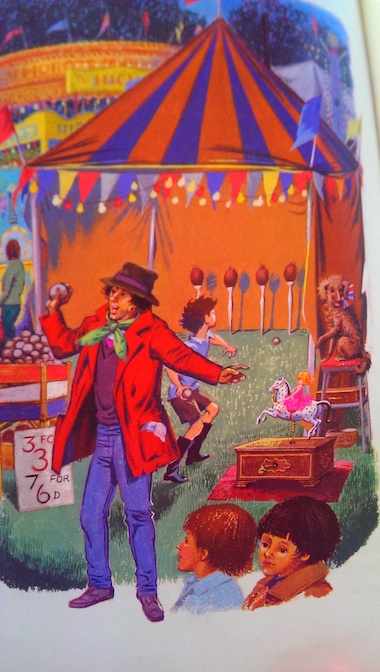
Candy Floss the doll belongs to Jack, who runs a carnival game, a “coconut shy,” where people try to throw balls at coconuts to knock them down and win a prize. She enjoys living with Jack and his dog. Jack has a special music box with a little horse on top, and Candy Floss sits on the horse while the music box plays and Jack’s dog begs nearby. In this way, Candy Floss and the dog earn a little extra money. When Jack is done working, he takes his dog, Cocoa, and Candy Floss the doll with him to see the rest of the carnival, and both of them enjoy it.
One day, a spoiled girl named Clementina attends their carnival. Although Clementina is from a wealthy family, and her parents give her all sorts of things, she finds that she is frequently bored and unhappy. When Clementina sees Candy Floss, she wants her, too, and is angry when Jack says that she can’t have her. It’s the first time in her life that anyone has said “no” to Clementina about anything. Clementina steals Candy Floss just to prove the point that when she wants something, she gets it.
However, Candy Floss wants to return to Jack. She refuses to accept Clementina as her new “owner,” resists Clementina’s efforts to play with her (much to Clementina’s surprise), and finds a way to teach Clementina a lesson about greed.
In the end, Clementina not only returns Candy Floss but helps Jack to run his carnival game for awhile. Part of Clementina’s unhappiness is caused by the fact that, even though she has many toys to play with, she doesn’t have much to do that is really meaningful to her. She is surprised when she discovers how good it can feel to really earn something, like the coins that Jack gives her for helping him.
One of the cute things about this story is that it includes the music and words for the tune in the music box.
The book, which contains all four of these stories, is currently available online through Internet Archive.





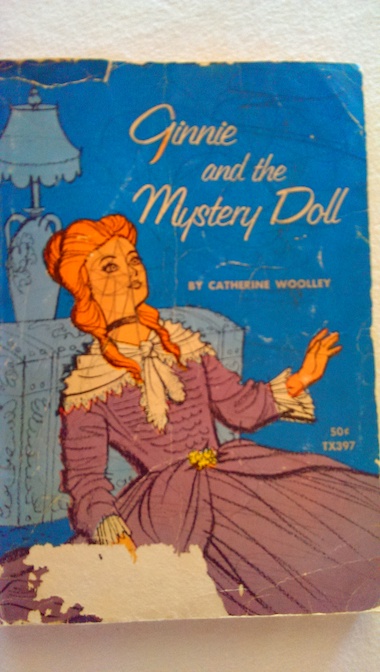
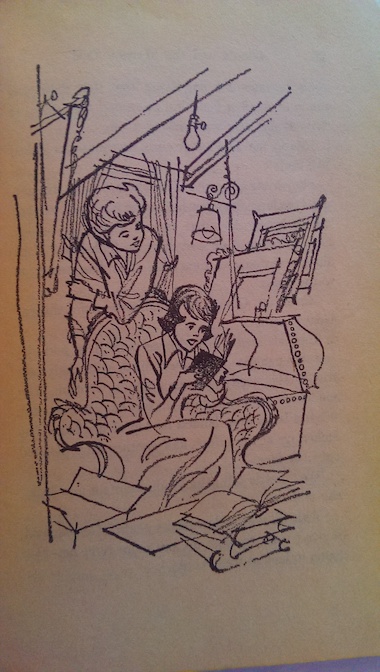 The girls ask Miss Wade about the doll, and she says that she knows the one they mean, but she no longer has it. Her mother’s uncle was the captain of a ship and used to bring her presents from around the world. The doll, called Lady Vanderbilt, was very fancy, and Miss Wade describers her costume to the girls. However, she says that the doll disappeared after she rented her house out to a family one summer while she was traveling. She never found out what happened to the doll, but she assumed that the children of the family probably found her and either took her or broke her. Miss Wade said that she didn’t think that the doll was worth making a fuss about, so she never asked the family about it. The girls note that Miss Wade doesn’t seem to know anything about a precious jewel in the doll, but they decide not to say anything about it since Miss Wade doesn’t have the doll anymore.
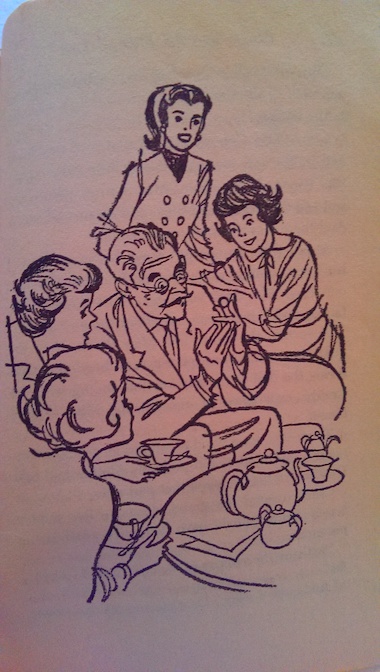 The girls tell Miss Wade and their mothers about the doll, but when they try to ask the people in charge of the auction where the doll came from and who bought her, they learn that the woman who was in charge of organizing the toys has already left on vacation. The only clue that the girls have is that the woman who bought the doll left the auction in a red Jaguar.
 Mystery Back of the Mountain by Mary C. Jane, 1960.
 When they get to Maine, they meet Uncle James’s lawyer, Mr. Palmer, to collect the key to the house. Mr. Palmer tells them that the house has a few items in it that could be considered valuable antiques, including a portrait of the woman that Uncle James had wanted to marry, Drusilla Randall. The children’s father asks Mr. Palmer more about Drusilla Randall, and he says that all he knows is that she had an argument with Uncle James and then disappeared. He thinks that she just left town, although he says that there are rumors that Uncle James may have murdered her. Mr. Palmer thinks that the rumors are ridiculous and doesn’t take them seriously, but Stevie and Anne are disturbed at the idea that their relative may have been a murderer, or that people thought he was. Mr. Palmer also mentions that Drusilla’s sister, Marion, has decided to return to her family’s old house for the summer as well, so she’ll be living close to their farm.
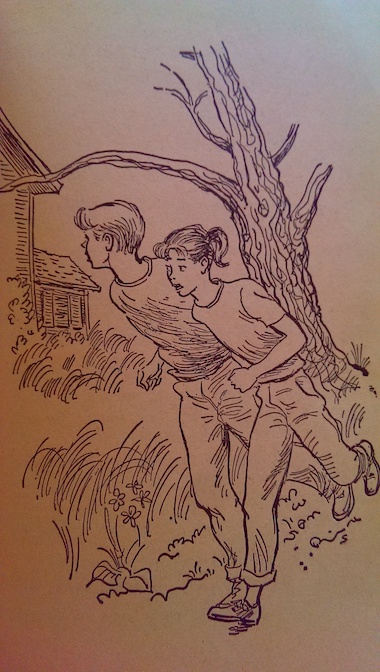 The house is certainly an isolated place, and their closest neighbors, the Hodges have an old grudge against Uncle James. The unethical business deal that Uncle James did years ago involved buying some of the Hodges’s family’s best land. Bert Hodges, who was young at the time, says that the deal ruined his father’s life, and it’s making his miserable, too, because he really needs that land to make his farm profitable. Anne hears this from Bert’s young niece, Oleva, an orphan who has come to live with her aunt and uncle. Although Uncle Bert is strict with her and somewhat bitter about the past and the family’s circumstances, Oleva likes her aunt and uncle and wishes they would adopt her, giving her the stable home she’s longed for since her parents died and she began being traded around among her relatives. However, Bert doesn’t have much faith in other people, and even though he likes his young niece, is afraid to commit to adopting her.
 Anne feels badly that Uncle James’s land deal seems to have ruined people’s lives. Oleva also tells her something disturbing about Drusilla, the girl that Uncle James loved. They were supposed to be married when Drusilla turned twenty, but she disappeared before that happened, and most people think that she drowned in the natural pool on Uncle James’s property. It’s deeper than it appears at first, and some things belonging to her were found nearby, so everyone thinks that she probably drowned and that her body is still somewhere at the bottom of the pool. Whether her death was an accident, suicide, or murder is still unknown.
 Mystery on Nine-Mile Marsh by Mary C. Jane, 1967.
 Lucille and Brent take a bike ride out to the island, but a noise in the barn frightens them away. It isn’t that they really think there’s a ghost, but they’re concerned that someone may be trespassing on the property. They decide to keep an eye on the house to see if they can see anyone sneaking around, but they don’t.
 Mr. Linsday has also heard strange noises around the Moody house, and he asks the children what they know about it. They tell him the ghost stories about the Moody place, but they say that they don’t really believe that there’s a ghost. Mr. Lindsay is fascinated by the stories. He says that his impression was that the noises he heard came from the cellar, but he didn’t see anything when he investigated. He invites the children to help him investigate further sometime.
 Barbara’s father owns a clothing store in town, and she says that some of his customers have been saying bad things about Mr. Lindsay. Some of them have even said that he might be a spy. Lucille thinks that’s ridiculous and that they’re only saying things because they wanted to buy the property or see it go to Clyde. Lucille has to admit that she doesn’t know much about Mr. Lindsay, so she can’t swear that the rumors aren’t true, but she still thinks that he’s probably just a nice guy, and she wants to see him keep the house so that Pedro will have a safe place to live.
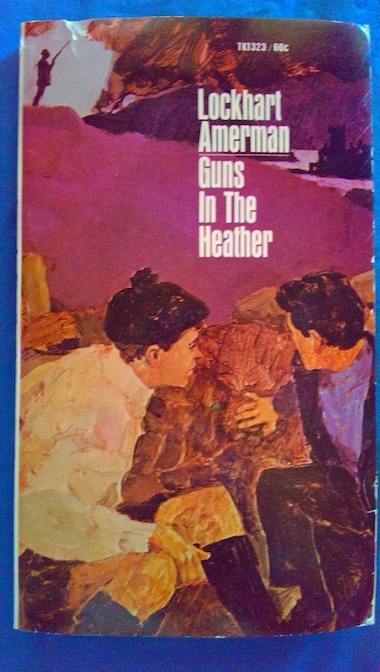 Guns in the Heather by Lockhart Amerman, 1963.





 Jestress's Forgotten Books and Stories