The Richleighs of Tantamount

The Richleighs of Tantamount by Barbara Willard, illustrated by C. Walter Hodges, 1966.

The Richleighs are a wealthy Victorian family in England, their enormous wealth the product of generations of marriages between wealthy families. There are four children in the family (from oldest to youngest): Edwin, Angeline, Sebastian, and Maud. The four Richleigh children are accustomed to their family’s wealthy and luxurious lifestyle, brought up by their fond parents and the governesses and tutors they hire to oversee the children’s education. Overall, the children are happy and appreciate their privileged lifestyle, but there is one thing that bothers all of them. It has bothered them for a long time. They don’t understand why their parents won’t take them to see their family’s ancestral home, Tantamount.
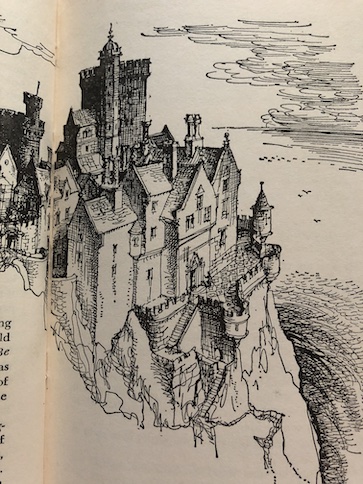
The wealthy Richleigh family owns several grand houses (including one in Scotland and one in Italy), but Tantamount is a mystery to the children. They know it exists because their family has a painting of it, and their grandfather talked about it once. A distant ancestor built this castle-like mansion in Cornwall, on a cliff overlooking the ocean and in a mixture of styles from around the world, and it’s supposed to contain some amazing things. Yet, the children’s father says he has never been there himself. The children’s parents don’t even like to talk about the place, and they’ve never taken the children there. The children know that something mysterious must have happened there at some point, but they have no idea what it is. They just know that they would love to see the place and find out what all the mystery is about! They often speculate about what the place is like, what once happened there, and why they’ve never been allowed to see it.

One day, Sebastian, who is the one who usually asks the most questions, decides to press their mother for answers about Tantamount. She tells him that his great-great-great grandfather, who built the place, was an eccentric and that the mansion is just too big, too inconvenient, and too remote to be of any comfort or use. This inconvenience is one of the reasons why most of the Richleigh family just cannot be bothered to go there. Also, his mother admits that the Richleighs are actually a little ashamed of the house because it is so hideously, overly elaborate and vulgar, even by the luxurious standards of the Richleighs. Sebastian says that he would still like to go there for an adventure, but his mother sees no point to it. She tells him that he can’t always have everything he wants, that he’s already a very indulged boy, and that he should just be happy with what he has. However, the children’s burning desire to see Tantamount and experience what they imagine as its mysteries isn’t really about the physical ownership of the house or the fantastic things that are supposedly kept there but about the spirit of mystery and adventure. As wonderful as everything the Richleigh family has, the children are chasing something else: excitement!
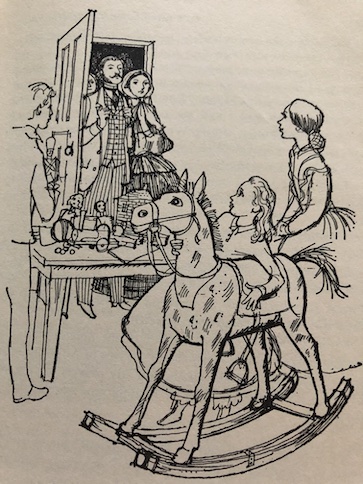
The children’s parents are actually the ones who don’t seem to understand the emotional attachment that people can have to physical belongings. Twice a year, they have their children donated old toys of theirs to the poor, which is a good thing, but poor Maud is traumatized when her parents tell her that she must give up her old rocking horse, Peggy, and that they will replace it with a brand new one. It’s not because Maud has outgrown rocking horses, but Peggy is looking a little shabby from use, and they want the children’s toys to all be in the best condition. They don’t consider the emotional attachment that Maud has to Peggy from her hours of playing with her or that Peggy’s shabbiness is a sign of Maud’s love for her. When they tell Maud that old toys are dangerous for children to play with, Maud asks why they aren’t dangerous for poor children to play with, her mother just tells her not to answer back. (Meaning that she doesn’t have a good answer, and she knows it.) Sebastian says maybe it would be better to just buy the poor children a new rocking horse instead of sending them Peggy, but his father tells him not to be impertinent, showing that this ritual about giving toys to the poor isn’t really about doing something nice for the poor so much as updating the children’s toys for the newest and “best” when that isn’t really what the children themselves want.

Soon after the children’s father gives away Peggy, he falls seriously ill, apparently from something he caught from the family he gave Peggy to. The children worry about what his illness will mean for their family, especially if he dies. Their first thoughts seem fairly petty. They first think that maybe this wouldn’t have happened if he hadn’t decided to give away Peggy. Then, they realize that, with their father ill, they won’t be able to travel to Italy this summer, as the family planned. Then, they think that, if their father dies, they will all have to wear gloomy black, and either Edwin will become head of the family at age 16 or that their uncle will look after the family. Their uncle is a more dour man than their father, so that’s also a gloomy prospect.

Fortunately, the children’s father recovers, and the children are relieved. His doctors advise him to take a sea voyage to recover. The parents will be traveling without the children, and they won’t be going to Italy, but the children say that they understand that this is important to their father’s health. However, this does leave the question of what the children will do while their parents are traveling. The parents ask the children for their opinions about what they would like to do this summer because they want the children to have a pleasant time together while they are gone. There is only one thing that all of the children want, and this time, the children’s parents agree: the children will spend the summer at Tantamount.

The parents make arrangements with Mr. Devine, the agent who manages the property on behalf of the family, for the children to go there for the summer. The children will be chaperoned by their governess, Miss Venus, and Edwin’s tutor, Mr. Gaunt. Before they leave, the children’s father tells Edwin that, since he is 16, he’s no longer just a child, and if any situation should arise which requires him to take charge, he should, as the heir to Tantamount. If anything serious happens, and they need help, they can also send word to Mr. Devine. The children’s mother tells them that there will also be a housekeeper at Tantamount who has a daughter of her own, who will also be helping out.

From the moment their parents leave for their voyage and the children make their final preparations to leave on their trip, they feel like everything is changing. Although they were always aware that they were privileged, they never really noticed much about the details of their lives or home or thought very much about the people who served them. Alone for the first time with Miss Venus and Mr. Gaunt, Angeline is struck with the thought that she never really noticed much about Miss Venus as a person, even what she truly looked like. Before, she was always just the governess, just another part of the steady routine of the children’s lives, but now, dressed for travel and just as excited as the children, she really seems to be a real person. Even Mr. Gaunt is excited and not so much his usual somber self. The children quickly realize that, without their parents there to insist on proper behavior, stiff manners, and a certain appearance, the governess and tutor are relaxing and become more themselves. Mr. Gaunt tells the children stories about his past travels across Europe, and they’re much more fun to hear about than his usual dull lessons. As they step outside of their usual rigid routine, it seems like everything has magically come to life for the children.
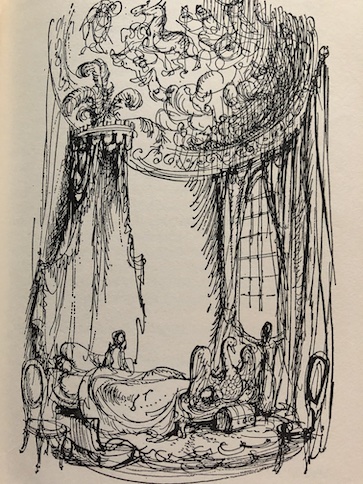
When they first arrive at Tantamount, it’s dark, and the place seems sinister. However, they receive an enthusiastic welcome from the housekeeper, Mrs. Pengelly. In the morning, the children see how grand the place truly is. The rooms are big and elaborately decorated, and there are amazing views of the sea.

Even more exciting than that, the children also quickly realize that life at Tantamount offers them the opportunity for more freedom than they’ve ever had in their lives. Without their usual nurses to pick up after them or fuss over what they’re wearing, they are free to make these simple choices for themselves. The idea of looking after themselves for a change and doing things as they want to do them is exciting by itself. Some parts of looking after themselves seem a little daunting at first, but Angeline realizes that it’s also good for them. Young Maud worries about what “they” will say about things the children are doing, but the older children point out that there is no “they” to worry about. Their parents and nurses aren’t there, and everyone who is there technically works for them.

Eagerly, the children begin to explore Tantamount. It is filled with strange and wonderful things, but most of it is in shabby and neglected condition. There are magnificent statues that are crumbling and a beautiful chandelier lies smashed where it fell on the floor of the ballroom. Angeline first thinks that their father will blame Mr. Devine and Mrs. Pengelly for the condition of the house, but Edwin points out that the house has been neglected for generations by the Richleighs themselves. Who knows how many years ago the chandelier fell when nobody in their family even cared whether it was still hanging or not? Edwin himself says that if their ancestral home was neglected to the point where it started falling apart, their own family was to blame. The children discuss which is more of a “folly”, as Mr. Gaunt put it, to build such a grand place in such a remote location or to forget forget about it and let it fall apart. The word “folly” can refer to an unnecessary building like this, and Edwin says that Tantamount is a “folly” in the sense that the family has done well enough without it for years. Edwin says that their ancestor probably had fun building it and that men like that build grand things for travelers to marvel at, but apart from that, they have little use. Since then, most family members have barely even thought about Tantamount. The children begin to feel sorry for the mansion, almost like it’s a neglected animal with a personality of its own. The place starts to feel sad to them.

Edwin also points out that Tantamount is actually dangerous in its crumbling condition. He even saves Maud from stepping onto a section of floor that would have crumbled underneath her. The children realize that they will have to be very careful of everything they do in Tantamount.

Tantamount is a sad and scary place, but still exciting because the children’s adventure is only just beginning. When Miss Venus and Mr. Gaunt see the condition of Tantamount, they decide that they and the children cannot possibly stay there for the summer. However, the children have only just had their first look at the place and have only just begun to delve into its secrets and consider what might be done with the crumbling old mansion. Even more importantly, they have had their first real taste of the freedom and responsibility that Tantamount has offered them, and they won’t give it up so soon. Edwin asserts himself as the de facto head of the Richleigh family and tells the governess and tutor that they may leave if they find it too uncomfortable, but he and his siblings will be staying because they are family and this is their home.
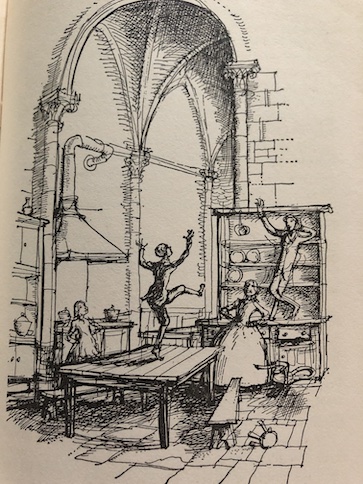
At first, the children are nervous at sending the adults away, but Edwin has thought it out. He has noticed that Miss Venus and Mr. Gaunt are fond of each other, and he suspects that they might take this opportunity to run away and get married. The other children wonder if they will tell their parents that they are at Tantamount alone, but Edwin doubts it. It would take awhile for any message to reach their parents, and the tutor and governess also wouldn’t be too quick to admit that they had abandoned the children, even if the children did request it themselves. The children have also begun to suspect that Tantamount might not be all that it seems. Although their family neglected the place badly themselves, what exactly has Mr. Devine been doing as the steward?

The Richleigh children befriend Nancy and Dick, two sailor’s children who live by themselves nearby. Nancy and Dick are a little afraid of the Richleigh children at first, partly because Edwin attacks them when they first meet, thinking that they’re trespassers, and partly because they know more about the dark history of the Richleighs and Tantamount than the Richleigh children do. However, the children all become friends, and Nancy and Dick teach the Richleighs many things that they need to know to survive on their own at Tantamount. The Richleigh children are happy to get help from Nancy and Dick, and they’re especially happy that, for one in their lives, they’ve made friends on their own instead of just associating with the people their parents have picked out for them to meet. Nancy and Dick are far less fortunate than the Richleighs, and they open the children’s eyes to what poverty really means. Nancy and Dick are also on their own because their mother is dead and their father hasn’t yet returned from the sea.

The Richleighs are impressed with the things that Nancy and Dick know and can teach them, and they also enjoy the carefree summer that they spend with Nancy and Dick. While they’re happy to accept help from them, the last thing the Richleighs want is any adult finding out that they’re living alone at Tantamount. There are still mysteries there for the children to solve, and the last thing they want is to give up the first real freedom that they’ve ever experienced!

The book is available to borrow and read for free online through Internet Archive.

My Reaction and Spoilers

The Richleighs are practically the personification of a privileged Victorian family. Readers are told that the Richleigh children are accustomed to luxury, although the book is also quick to say that they aren’t spoiled because readers might find them insufferable if they were. However, in the first few chapters, readers might also realize that the Richleigh children are living a rather repressed and highly controlled life. They have all kinds of toys to play with but no control over whether or not they get to keep their favorite old toys. Their parents get rid of anything that they personally think is getting too shabby without regard for sentimentality. Peggy wasn’t just a toy to Maud; she was like an old friend, and she and her siblings are sure that her new owner won’t appreciate her as much or might do something horrible, like sell her for drinking money or turn her into firewood. The parents are unconcerned about Maud’s feelings. They and the children’s nurses are always telling children not only what they should do but how they should feel. When Angeline expresses an opinion, her nurses tell her that “Ladies don’t have opinions – they’re nasty things to have.” When Sebastian tries to make his mother understand how much it would mean to him and his siblings to see Tantamount, he talks about “adventure”, but the book hints that he may have also been thinking of “escape” – escape from the luxurious monotony of their lives, from the constant supervision and control of the adults, and from constantly being told who they are, what they should do, and how they should think and feel. The two oldest children, Edwin and Angeline, realize that their parents are prepared to give them anything they want, but only provided that the children want the things their parents think they should want, like the new rocking horse.

When the children are left to the own devices at Tantamount, they have to take responsibility for themselves and manage everything by themselves for the very first time in their lives. Rather than finding it frightening, however, the Richleigh children find it exciting. Young Maud is the one who’s the most worried because there has never been a time in their lives when the children haven’t had someone taking care of them and telling them what to do. Angeline thinks that learning to do things for themselves will be good for them, and she delights in making simple choices, even deciding what to wear without someone to tell them. However, Maud doesn’t even know how to dress herself without help, and she worries about what “they” would say. Sebastian points out that there is no “they” to say anything. The children themselves are in charge, and Sebastian is looking forward to them doing what they want to do. Maud doesn’t know how they’ll even begin to know what to do without someone telling them, but Edwin reassures her that they’ll figure it out.

Since Edwin is the oldest boy and he already has their father’s permission to act as the heir to Tantamount, the children immediately decide that he’s in charge. It fits the general pattern of Victorian society that they’re all accustomed to, and it makes Maud feel a little better that someone’s in charge. However, because Edwin now gets to run things the way he wants, he doesn’t just want to give his siblings orders. He establishes the group as a family council so they can discuss things and make decisions together. Although he maintains his position as the head of the family council, he cares about how the others feel, and over the course of the summer, he particularly comes to value the thoughts and advice of Angeline, who proves herself to be a sensible and practical young lady.
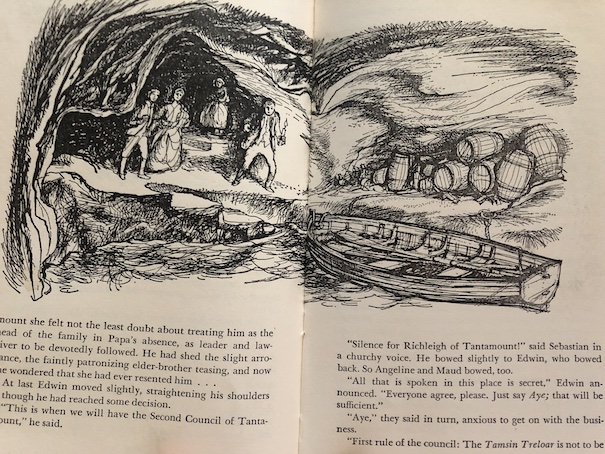
It isn’t long before the children discover the dark secret of Tantamount that they always suspected was there: it is being used as a hideout for smugglers and has been for some time. The reason why Mr. Devine hasn’t tried to maintain the house or a staff there is that he doesn’t want anybody snooping around and learning the truth about what he’s been doing there. When the children figure it out, they also realize that no one else is aware of their discovery yet. The locals might have their suspicions, but so far, nobody knows that the Richleigh children have made this discovery and that the children are staying at Tantamount all by themselves. However, this situation can’t last. Eventually, the smugglers will come back or Mr. Devine is bound to check on them, and the children will have to decide what they will do when that happens.
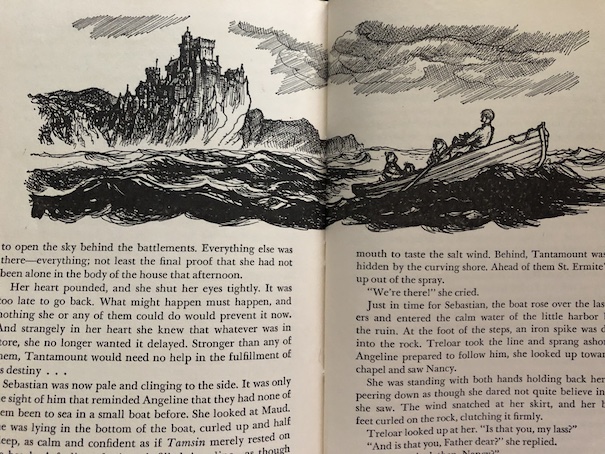
The children also must confront the knowledge that their own ancestors must have been the ones who started the smuggling and wrecking business and were responsible for the deaths of many sailors. There was a hint to the dark history of Tantamount in the painting the children have admired for years, but the children just didn’t understand the meaning of it before. The children’s parents don’t seem to be aware of any of this, or they would never have allowed the children to go to Tantamount at all. The children realize that the reason why Tantamount was abandoned by the family was that, at some point, some of the Richleighs decided that they didn’t want any part of this nefarious business anymore, so they got as far away from Tantamount as they could, created new lives and homes for themselves, and tried to prevent the younger generations of the family from finding out what happened there. This is the dark side of privileged families. Although much of the Richleighs’ wealth has come from wealthy marriages, not all of it has, and some has come from some dark sources.

The children still love Tantamount, even for its darkness, and they wish they could do something to cleanse it of all the bad things that happened there. Tantamount has changed them and allowed them their first tastes of freedom, independence, and self-discovery. The oldest children realize that their time there can’t last because their parents will come for them at the end of the summer, and there is still the matter of the smugglers. They try to think of a way to preserve some of the feelings of this transformative summer even when it’s time for them to go home.

In the end, the real villain eventually brings about his own end while trying to destroy Tantamount and hide its secrets forever, and the children pledge to themselves that they will rebuild it someday, but in their own way and for much better purposes. This is a secret that they keep from their own parents, just between the four of them, because this is something that they want and will pursue independently at some point in the future.

There are sad parts to the story as the children reflect on the abandoned and neglected nature of Tantamount and the evil that has happened there. However, there is also adventure and mystery and the kind of magic that comes from a carefree summer spent in a fantastic place!

The Big Book of Real Trains

The Big Book of Real Trains by Elizabeth Cameron, illustrated by George J. Zaffo, 1949, 1953, 1963.

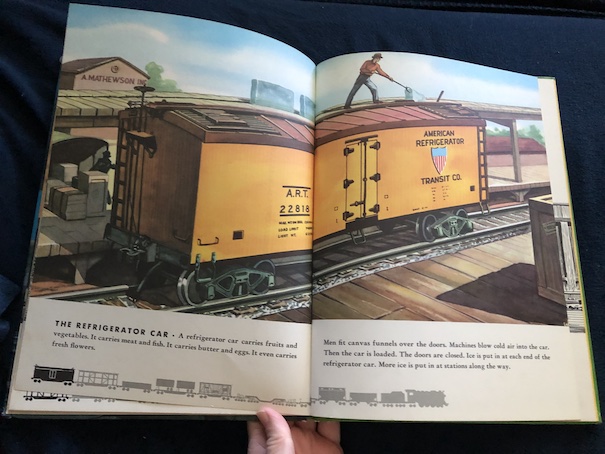
This is a vintage children’s nonfiction book that’s all about trains! It was reprinted and had its copyright renewed many times, which is why I give multiple dates for the book. My edition was the 1973 printing. The pictures are detailed, and they alternate between color and black-and-white.

I thought it was interesting that the first half of the book devotes a page to explaining each specific type of train car and its purpose, so kids can learn to recognize them on sight. If you look at the bottom of each of those pages, you’ll see how they’re slowly building a complete train, from locomotive to caboose, with each new car.

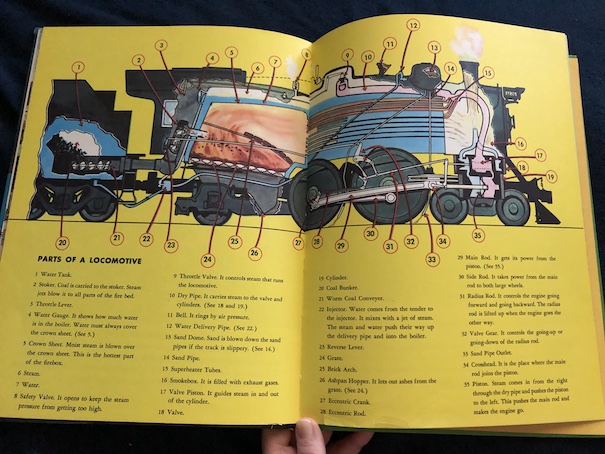
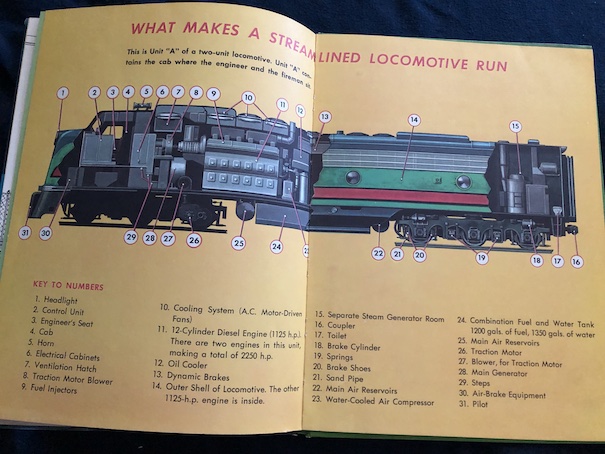
There is a special page that shows the inside of a locomotive to explain each of its parts and how it functions, and there is another picture that shows the parts of a streamlined locomotive.

After the book explains each of the basic train cars, it explains the classification yard, where freight cars are assembled into trains.

I particularly liked the sections of the book that explain the signals railway personal use and all of the types of personnel who work on trains. The signals are old-fashioned manual signals, but it’s still interesting, especially if someone might be writing a story that takes place in the past on a train. Some of the jobs might also be different on modern trains, but I liked how they pointed out just how many types of people who might be working on a train. The book refers to these workers as “men”, which sounds a little old-fashioned, but I noticed that the tiny figures representing different jobs had different skin colors, even for higher-ranking jobs on the train, which is very good for a vintage book. The illustrator made an effort to show diversity! Overall, I thought their explanations were pretty good.

The book is available to borrow and read for free online through Internet Archive, although the copy is listed under an alternate title, The Book of Classic Trains.

The Mystery of the Whispering Mummy

The Three Investigators

The Mystery of the Whispering Mummy by Robert Arthur, 1965.

In the original editions of The Three Investigators, their cases were introduced by Alfred Hitchcock. Later editions of the books in the 1990s were rewritten to remove Alfred Hitchcock, but I’m using the version of this book that includes Alfred Hitchcock’s introduction for my review.

This story begins with two letters address to The Three Investigators. One of them is from an elderly woman in a wealthy area of town, who has heard about how The Three Investigators helped a friend of hers find her lost parrot in the previous book in the series. This lady would like their help to find her missing cat. Bob and Pete thinks that sounds like a simple enough case, but their other letter is from Alfred Hitchcock, so they decide to read that before committing themselves.

Alfred Hitchcock’s letter is incredible! He tells The Three Investigators about an old house that has been turned into a private museum by an archaeology professor. His museum has relics from his archaeological digs in Egypt. Recently, a mummy has arrived at his museum from a museum in Egypt. Professor Yarbrough was the one who originally discovered that particular mummy, but since it arrived at his museum, he has noticed a bizarre phenomenon. The mummy seems to whisper! Professor Yarbrough can’t figure out how the mummy can whisper, but it seems like the mummy is trying to tell him something important. Professor Yarbrough has consulted with a friend, Professor Freeman, who is a language expert, but the mummy only seems to talk when Professor Yarbrough is alone. Knowing how crazy this predicament sounds and what his other colleagues would say if he told them, Professor Yarbrough decides to tell his friend Alfred Hitchcock instead. That is why Alfred Hitchcock decides to tell The Three Investigators and see what they make of it.

Bob and Pete think that the mummy mystery sounds exciting but creepy. Since Jupiter is away on an errand, they decide that they would rather try to find the missing cat first. However, when Jupiter returns, he already knows about their prospective cases, and as predicted, he can’t wait to investigate the mummy. At first, Professor Yarbrough doesn’t have much confidence in the boys because they’re younger than he expected, but Jupiter persuades him to let them try. The professor’s butler, Wilkins, is very nervous and tells the boys that there is a curse on the mummy. Strange things are happening that make Wilkins think that the professor is in danger from the curse. The boys are there when a large statue in the professor’s museum suddenly falls over, almost striking the professor. Wilkins would rather send the mummy back to Egypt, but the professor doesn’t believe in curses. In spite of the talking mummy, the professor is sure that there must be a logical, scientific explanation for everything.

Jupiter also believes in scientific solutions, and his first theory about the whispering is that it’s being transmitted electronically, but they can’t find any electronics on or around the mummy. His next idea is to capture some of the mummy’s speech on a recording, which is successful. Professor Freeman says that the mummy seems to be speaking a form of ancient Arabic.

Then, Wilkins sees someone walking around in a jackal costume. Someone steals the mummy, and strangely, comes back a second time to steal the mummy case. Even the missing cat puts in an appearance.

Who wants the professor to think that the mummy is whispering and believe that it’s cursed? Who wants the mummy case, and why is that case even more important to the thief than the mummy itself?

The book is available to borrow and read for free online through Internet Archive (multiple copies).

My Reaction

From the beginning of the book, I had a couple of theories about who could be responsible for the mummy’s whispering and “curse”, but I was only partially correct. There are different people involved, doing different things and for different reasons. The main villain is one of the people I suspected, but I didn’t know this person’s motive until it became clear that the mummy case is what they really want. The missing cat is part of the mystery, but don’t worry, the cat is fine and being cared for!

Blackbeard’s Ghost

Blackbeard’s Ghost by Ben Stahl, 1965, 1976.

This is the novel that the live action Disney film Blackbeard’s Ghost from 1968 was based on. My copy is a later edition designed as a tie-in with the Disney movie, based on the cover, but it contains the text of the original story.

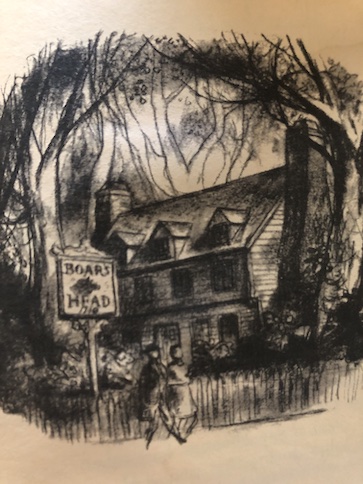
The story begins with a prologue that explains how Blackbeard the pirate evaded execution for piracy by offering to collect tolls from ships on behalf of the colonial governor, Governor Eden, in the town of Godolphin. However, instead of collecting tolls from the ships, he decided to use his position for his own benefit. Knowing that he would eventually need a source of stability on land instead of spending the rest of his life at sea, he looted wood from various ships and used it to build a tavern for himself called the Boar’s Head. He hired a woman rumored to be a witch, Aldetha, to tend the tavern for him. In the end, though, Blackbeard was killed by someone who wanted to collect the bounty on him for piracy. After his death, the poor woman who tended his tavern was burned at the stake for witchcraft.

(Note: The witch burning is historical inaccuracy because no witchcraft executions in North America involved burning, at least not in English-controlled parts of the American colonies. Accused witches in North America were typically hanged. None of this story is meant to be historically accurate, but I always feel compelled to point that out in stories that make that mistake. The town of Godolphin and the Boar’s Head Tavern are fictional. In real life, Blackbeard did receive a pardon from the real Governor Eden in Bath, North Carolina, and he was eventually killed in 1718 in a battle with Lieutenant Robert Maynard and his crew, as he did in this story. However, in the book, the tavern is now owned by a descendant of Maynard’s, and in real life, Maynard didn’t have any children.)

Most of the story takes place in the 20th century, when two 14-year-old boys, J.D. and Hank, talk about how the old Boar’s Head Tavern is about to be torn down because the former owner sold it, and there’s going to be a gas station built on the land instead. They think it’s a shame because they’ve heard ghost stories about the place and think the old tavern is fascinating. The boys go to watch the workmen tearing down the old tavern, but the workmen haven’t made any progress so far. Although they’d love to loot some of the expensive woods from the old tavern, they just can’t seem to dismantle the building. They’ve been able to dismantle some of the newer additions to the building, but somehow, they can’t seem to touch the original structure. The site has been plagued with mysterious accidents. Their equipment fails, heads fall off the ends of their hammers, and workmen keep getting injured in small accidents, not enough to seriously hurt anyone but enough to keep them away from their work for days at a time.

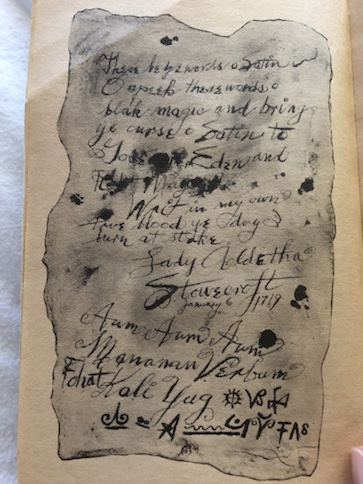
When J.D. and Hank see the workmen leaving the building in frustration soon after arriving, they decide to go inside and look around to satisfy their curiosity and see if there’s anything of value that they can salvage before the tavern is demolished. They don’t find much of value, but they do find their way into Blackbeard’s secret dungeon under the tavern. There, they find a piece of old parchment with a satanic curse written by Aldetha. (So, apparently, people were actually right about her being a witch. Plot twist!) Inspired by this creepy message from the past, the boys realize that they can make money from other kids by capitalizing on the ghost stories about the old tavern and holding seances to contact the spirits. They don’t really believe that seances are real, but they figure that, if they can get enough ghost-story fans to come to their seances, they can make a profit from this enterprise.

Of course, the boys’ seance awakens the ghost of Blackbeard. Blackbeard is invisible to everyone except for the boys, but he’s a solid ghost, who can manipulate physical objects. The boys quickly realize that Blackbeard can be a dangerous ghost, and he’s not at all happy when he finds out that a descendant of the man who killed him wants to have his tavern torn down.

The book is available to borrow and read for free online through Internet Archive. The Disney movie is available to buy or rent through YouTube or Amazon Prime. There is also a sequel to this book called The Secret of Red Skull, which involves spies and is also available online through Internet Archive.

My Reaction and Spoilers

There is some humor in this book because only the boys are able to see and hear Blackbeard, but by the end of the story, adults become aware of Blackbeard’s ghost, too. The boys’ history teacher is helpful in finding a way to appease the ghost by helping him to negotiate to buy back his tavern using his hidden treasure. When it becomes obvious both to Maynard and the company he tried to sell the tavern to that it’s haunted, they’re willing to accept pirate gold in exchange. The company also sees that it can use the building for public relations purposes by sponsoring a pirate museum in the old tavern. It’s good news for the teacher, too, because he gets to be the director of the museum. There, he can show off his collection of pirate memorabilia and indulge his love of pirate history. The tavern continues to be haunted by the ghosts of Blackbeard and his witch friend, leaving the story open for the sequel.

As expected of Disney films, the Disney movie version of the story is quite different from the book. In the movie, the person who can see the ghost is a college track coach who is staying in the old inn, which is still being operated by elderly descendants of Blackbeard’s old crew. There is a track meet in the movie that never appeared in the book, and at the end of the movie, Blackbeard disappears, having been freed from his haunting by performing a good deed.

I prefer the concept of the boys being the ones who accidentally summoned Blackbeard’s ghost, but the boys got on my nerves at first. In the early part of the book, they bickered a lot and didn’t seem to like each other enough to be best friends, although they seemed to be friendlier with each other later, when they were both trying to figure out what to do about Blackbeard. I think the teacher character was my favorite. He takes the matter of the ghost in stride, coming up with a practical solution that helps everyone.

Mystery of the Haunted Pool

Mystery of the Haunted Pool by Phyllis A. Whitney, 1960.

At the beginning of the story, Susan Price is traveling alone to visit her Aunt Edith. Her father is in the hospital, and her mother and brothers are tending to things at home. Her family wants her to make a good impression on Captain Daniel Teague, who lives in Aunt Edith’s town. Her father’s doctor has advised him to move to the country, where there is less air pollution, and the family would like to move to the small town along the Hudson River where Aunt Edith owns an antique store. However, the only available house that would be big enough for the family would be the Teague house, and Captain Dan hasn’t decided whether to rent or sell his house to them or not. Before Susan arrives, she isn’t sure what’s going on with Captain Dan and the arrangements regarding his house, but it turns out to be a complicated situation involving her aunt’s antique business, the Teague family history, and Captain Dan’s grandson, Gene.

When Susan’s bus reaches the bus stop, Aunt Edith isn’t there to meet her, so she walks to her aunt’s store. Aunt Edith apologizes for not meeting her. The reason why she didn’t is that a woman named Altoona was hanging around her shop, and she didn’t want to leave Altoona there alone. Lately, Altoona has been acting suspiciously, snooping around the shop as though she’s looking for something but doesn’t want anyone to know. Aunt Edith doesn’t know what Altoona is looking for, but it’s making her nervous. In particular, Altoona seems interested in a barrel of old books that Aunt Edith is selling on commission for Captain Dan, but Aunt Edith doesn’t want her looking through them until she’s had a chance to examine them herself.

Aunt Edith says that she’s known Altoona since they were children. Altoona was raised by her father and an older sister, both of whom were strict and unloving. Altoona led a very restricted life until her father and sister both drowned in a boating accident. Since then, Altoona has been indulging herself by spending her inheritance on antiques. However, rather than being a good customer of Aunt Edith’s, Altoona has turned into competition. She seems to delight in trying to beat Aunt Edith to some fascinating antique. Altoona seems to be on the trail of some new discovery, but Aunt Edith doesn’t want to give her the chance to poach something that might be right under her nose in her own shop.

Since Aunt Edith’s husband died years before, she’s been living in a back room of her shop. With her brother and his family wanting to move to the country, she’s planning on helping them get a house and living there with them. Aunt Edith has her eye on a particular house owned by Captain Daniel Teague, but he’s been reluctant to sell, which is why it would help if Susan made a good impression on him. Captain Dan has been living in a big old house with his grandson, Gene, but it’s an expensive house to maintain for just the two of them. He’s been considering renting it to Susan’s family with an option for them to purchase it later. However, he’s been dragging his feet on making a final decision because he wants to make sure that he approves of the Price family and that Aunt Edith won’t sell any of the antique furnishings from the house in her shop without permission. Also, Gene is upset at the idea of moving, and Captain Dan is concerned about Gene.

Aunt Edith explains that Gene is just a little older than Susan and that he was injured in an accident a couple of years before. He was hit by a car, and he’s been in and out of the hospital for treatment. Even now, his leg is stiff, and he has to wear a brace. Susan witnesses his frustration when she watches him trying to play basketball alone the first time she meets him. She can tell that he’s been trying really hard to overcome his disability, but things are still very hard for him. Susan is touched by Gene’s struggles and his stubborn efforts to succeed. She also discovers that he has strength and coordination in his arms, even though his left leg is very weak. When she asks Gene to teach her how to shoot baskets so she can impress one of her older brothers, she begins to realize that sometimes Gene tries too hard, and it makes his situation harder on him. When he gets tense, he has more trouble than when he’s relaxed.

Gene confesses to Susan that he feels guilty about being hit by the car, not only because he got hurt but because of what it’s done to his family. He admits that it was his fault for not looking more carefully before crossing a nearby highway. He feels terrible because his grandfather has spent most of his savings to pay for the hospital and doctors’ bills, and his mother had to get a job in New York City to pay the rest. Gene’s reluctance to move out of the family’s old home is that he knows how much his grandfather loves it, and he would feel even more terrible if his family lost the house because of his careless accident. The two of them seem to be getting along until Susan tries to climb a nearby rock, and Gene angrily tells her not to.

Captain Dan turns out to be a nice man. He’s called Captain because he used to be a river boat captain. He comes from a long line of sailors. When Susan tells him about meeting Gene and how Gene got angry at her for trying to climb a rock, Captain Dan tells her not to try too hard to accommodate Gene and his moods. He says that Gene’s biggest improvements have only come recently, when he started pushing Gene to work harder to improve. He thinks that Gene was a bit coddled up to that point and that he was too discouraged by the doctors’ predictions about what he wouldn’t be able to do anymore without really trying to test his limits and see what he could do for himself. In a way, Captain Dan is actually in favor of the Prices moving into their big family home because he knows that Susan has brothers. He thinks that having other boys around will be good for Gene, getting him to participate in more activities and push himself a little more.

One thing that’s making Captain Dan hesitate is the idea of having Aunt Edith in his house. He admits that he finds it difficult to say no to her when she wants something, and she’s been urging him to let her sell some of his old things in her shop. He’s concerned about what she might talk him into parting with next if she were living in his house. When Gene finds out that Aunt Edith talked his grandfather into parting with that barrel of old books, he gets angry again and talks back to his grandfather.

Susan is surprised at Gene’s rudeness and disrespect, but his grandfather says that part of that comes from Gene not liking himself much right now. Because Gene is unhappy with and disparaging of himself, he’s unhappy and disparaging with everyone. That’s part of why Captain Dan has been pushing Gene to improve himself, to give him more confidence and self-respect because he will see that he still has the ability to improve. Captain Dan also realizes that Gene has an intense attachment to their family home and family heirlooms because he takes more pride in their family’s history than in himself, thinking that he’ll never be able to be proud of himself now. Aunt Edith says that Gene’s father, a pilot who died in a crash, was also a decorated pilot during WWII. When Gene was younger, before he was injured, he was a much more active boy, and his father was proud of him for it. Aunt Edith thinks that Gene worries that his father would be ashamed if he saw his current condition.

Susan likes Captain Dan for his kindness and understanding of Gene. She’s not sure how much help her brothers would be with Gene, though. Her brother Adam, the closest in age to Gene, probably wouldn’t have much patience with a boy like him. That’s probably why Susan’s family decided that Susan would be the best person to break the ice with Captain Dan and Gene.

Susan tells Captain Dan that she saw Altoona watching the house when she came up to see him, and he says that he knows about Altoona’s obsession with antiques. He’s not sure what Altoona is looking for, but he thinks it must be some kind of antique. Mrs. Bancroft, Captain Dan’s housekeeper, says that the family has a secret. Aunt Edith says that rumor has been around their small town for years, but she doesn’t know what sort of secret it’s supposed to be, and with a town full of people who all know each other and each other’s family history, she can’t imagine what could still be secret about the Teague family.

Then, Susan finds an old ship’s log book in the bottom of the barrel of books that Aunt Edith got from Captain Dan. It’s the log book for the Flying Sarah, the ship that one of the Teague ancestors sailed. Aunt Edith returns the log book to Gene because she knows it must be a family heirloom, more valuable to the Teague family than anyone else. However, Gene is still sore about Aunt Edith having the barrel of books, and Susan catches him sneaking into the shop one night while Aunt Edith is out. He says that he wants one of the books, but he refuses to say which one he wants or why. Susan thinks that Gene knows more about his family’s secret than he’s telling and that his concern about the books has something to do with it. It seems like Gene may be on the trail of the same thing Altoona is searching for, but what is it? Captain Dan also seems to know, but he tells Gene in Susan’s presence that it doesn’t matter.

Susan gets a hint from Altoona when Altoona tells her that the old Teague house is haunted by the ghost of Sarah Teague, the wife of the captain who sailed the Flying Sarah, which was named for her. Altoona says that Sarah’s husband was murdered on the Flying Sarah and that Sarah took over the family’s shipping business after his death. Then, Sarah drowned in the little pool in the woods near their house. Altoona says that Sarah promised to come back and haunt the house if things didn’t go her way, but what does that mean?

Susan does some research in an old book about ships and discovers that the captain of the Flying Sarah had been carrying a valuable shipment of jewels for a friend when the ship was attacked by pirates. He died from the wounds he received from the pirates, and the pirates apparently took the jewels along with other valuable objects from the ship. After her husband’s death, Sarah Teague insisted on taking responsibility for the lost jewels and repaying the owner for their loss, which was financially crippling for the family. The book also repeats the story about Sarah Teague haunting the old family home. Soon after Susan and Aunt Edith move into the Teague house, someone break in during the night, apparently looking for something. Susan goes to look at the pool where Sarah drowned and thinks that she sees a strange face looking back at her from the water. What message from the past does Sarah Teague have for them, and what secret has the Teague family been hiding for generations?

The book is available to borrow and read for free online through Internet Archive.

My Reaction and Spoilers

For much of the book, the exact nature of the Teague family secret is a mystery to Susan, although readers can probably make a pretty good guess at what Susan eventually finds. Part of the difficulty is that the Teagues themselves don’t seem to quite understand what they really have. They know part of the secret, but only part of it. When Susan discovers the rest, it changes things for Captain Dan and Gene. Susan’s brother, Adam, helps Susan with the mystery for part of the book, but Susan is the one who makes the final discovery.

Altoona is kind of a rival/antagonist for solving the mystery, but not an evil one. She appears to be going through a kind of finding herself phase since the deaths of her father and sister. Her family was repressive, so for the first time in her life, she is taking advantage of opportunities to get involved with community activities and indulge her own whims. She dresses in strange ways because she’s trying out all of the things her father and sister would have never allowed her to wear when she was younger. She volunteers at the local library, but she has trouble deciding which books to recommend to the children who visit the library because she’s never read many of them herself. When Susan suggests to her that she should read some of the children’s books herself so she’ll know what they’re like and what they’re about, Altoona balks at the idea of an adult reading children’s books at first. However, she decides that maybe Susan is right, and when she tries some of the children’s books that Susan recommends, she says that she likes them.

Altoona’s pursuit of the Teague family secrets isn’t malicious. It seems to come from her newfound sense of independence and adventure. Figuring out the old mysteries of the Teague family is a sort of personal challenge for her and something that has fascinated her for her entire life, a fascination that she is now free to indulge. She almost messes things up by taking something that doesn’t belong to her, but it turns out to be an innocent mistake because of something Gene did, and she makes things right in the end. Altoona also comes up with a solution to the Price family’s housing problem. She says that she’s always wanted to travel, and at Adam’s encouragement, she’s decided to take an extended international trip for a year or so. While she’s away, she rents her house to the Price family so the Teague family can have their house to themselves again.

The book mainly focuses on self-discovery for Gene as a side plot to the story. At the end of the book, Gene’s problems aren’t completely solved, but he has become more reconciled to his condition and has a better understanding of things he can and can’t do because of the children’s adventures. By learning to get along with Susan and Adam, Gene becomes more ready to face other people and their reactions to his disability. When things improve for him and his family, he also seems less inclined to keep beating himself up over his accident. Things aren’t perfect for him at the end, and he’s probably never going to have completely normal use of his bad leg again. Still, there are signs that he’s mending, both physically and emotionally, and that things will get easier for him.

I like books that mention other books. In this book, the barrel of books that Aunt Edith gets from Captain Dan includes classics, like Little Women and Treasure Island. There are also books by Washington Irving, Gene Stratton Porter (known for A Girl of the Limberlost), and Harold Bell Wright and some “novels about an imaginary kingdom called Graustark.” These are all real authors and books. Aunt Edith says that some of them aren’t old enough to be considered real antiques, but this book was written more than 60 years, so modern standards would be different. Part of the story also includes books that have hidden pictures drawn on the fore-edges of the pages, which can only be seen when the pages are held at an angle. This type of fore-edge drawing or painting is something that can be found in real antique books.

The Mad Scientists Club

The Mad Scientists Club Series

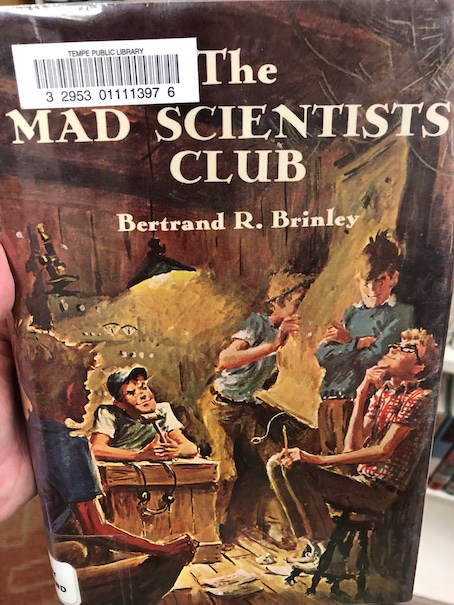
The Mad Scientists Club by Bertrand R. Brinley, 1965, 2001.

The Mad Scientists Club series is about a group of boys who like science and make things in their clubhouse laboratory. Their inventions are often part of pranks that they play on their town, Mammoth Falls, but the boys also use their inventions and skills to help people. People in town are aware that the boys pull pranks and stunts, but they are often unable to prove the boys’ involvement in particular pranks, and the boys typically keep the methods they use secret.

Henry is the idea man of the group, and the club’s rival is a former member named Harmon. Harmon’s cousin is still a member of the Mad Scientists Club, and Harmon likes to spy on them and pump his cousin for information so he can mess up their plans out of spite.

Each chapter in the book is its own short story about the club’s antics. Some of the stories originally appeared in Boys’ Life magazine in the 1960s. The stories are a good fit for Boys’ Life because some of the skills the boys use are skills that are taught in Boy Scouts, like what to do when someone is injured and how to tie different types of knots.

The stories reference scientific and mathematical principles, and the boys are methodical in their approaches to the problems in each story. The technology is old by modern 21st century standards (and so are some cultural references, like McGee’s closet), but the principles are sound. There are no projects for readers to do themselves in the book, but it does occur to me that these types of stories could work well with some included activities or nonfiction accompaniment.

The first story in the book was made into a live action tv movie by Disney, The Strange Monster of Strawberry Cove (1971), but the movie has different characters from the ones in the book. The Disney movie uses the same set of characters they used for their movie version of Secrets of the Pirates’ Inn (based on The Secrets of the Pirate Inn). The plot of The Strange Monster of Strawberry Cove is also very different from the original story because, in the Disney movie, the kids don’t know what the “monster” is at first and need to investigate it, whereas the boys in the Mad Scientist Club know exactly what the monster is in their story because they built it themselves. You can watch the movie online through Internet Archive, but unfortunately, I couldn’t find an online copy of the book.

Stories in the Book:

The Strange Sea Monster of Strawberry Lake

Dinky accidentally starts a town-wide rumor about a sea monster in the lake when he makes up a story about seeing a strange creature in the lake when he needs an excuse for arriving home late. His friends know it’s just a story, but they decide to play along and build a monster of their own out of canvas and chicken wire and scare people as a prank. Even though people in town are scared of the monster, the attention the town receives is so good for local businesses, the boys can’t bring themselves to stop their prank. Instead, they decide to make their monster more elaborate, and things start to get out of hand. How can they end the hoax while saving the town’s image and avoiding punishment?

Night Rescue

An Air Force plane explodes near the town of Mammoth Falls. The pilot escaped from the plane, but he’s now lost in the woods. The local authorities are searching for him, and the boys in the club want to help. The mayor doesn’t want the kids involved, knowing their usual pranks and stunts, but the Air Force colonel is willing to let them help, if they think they can, because he just wants his pilot rescued. The boys use a flare to determine which way the parachuting pilot would have drifted, and then, they calculate about how far he would have drifted to find him.

The Unidentified Flying Man of Mammoth Falls

The boys find an old department store manikin and keep it in their clubhouse until Henry gets the idea for how they can use it in an elaborate prank on the town’s Founder’s Day. They’re going to make the manikin fly!

The Secret of the Old Cannon

The town’s old cannon from the Civil War is a local landmark now. (We don’t know what state Mammoth falls is in, but there are statues of Confederate soldiers next to the cannon.) Years ago, the town filled the barrel with cement, so it can never fire again. Around the time that the cannon was filled in, there was a bank robbery in town, and some of the boys in the Mad Scientists Club think that the money might have been hidden in the cannon before it was filled with cement. The boys try to figure out how they can prove whether or not the money’s in there without removing all of the cement. Someone else also wants to know the answer to that, and the answer may be important to the upcoming race for mayor.

The Great Gas Bag Race

Henry has an idea for a new kind of balloon that he thinks will help the Mad Scientists Club win the balloon race, but the club’s rival, Harmon, is also entering the race.

The Big Egg

The boys are digging for fossils in the local quarry when they find a dinosaur egg! At first, they’re not quite sure what to do with it. They consider selling admission for people to come see it or maybe turning it over to a museum, but Henry announces that he has another idea. Henry wants to bury the egg in the ground and see if it hatches. It seems unlikely, but the other boys agree to try it. Then, when a couple of the boys go to check on the egg, they discover that it’s missing! They bring their friends back to look at it, and suddenly, the egg is there again! What’s going on? Did someone take the egg and then return it? Is this another one of Harmon’s tricks?

The Voice in the Chimney

One day, some of the boys in the club see Harmon throwing stones at an old, abandoned house in town while some girls watch him. Wondering what he’s doing, they get closer and hear him challenging the ghost that supposedly haunts the old house, trying to impress the girls with his bravery. The boys are disgusted because they know Harmon isn’t really that brave, and they hate seeing him show off for the girls. When they hear Harmon brag that he’s going to come back to the house at night, they tell the rest of their club, and the boys decide to put on a haunted house act of their own to scare Harmon. In the process, they also end up scaring the mayor and the chief of police!

Jessamy

Jessamy by Barbara Sleigh, 1967.

I couldn’t find a copy with its dust jacket intact.

Jessamy is a British orphan who is being raised by her two aunts, Millicent and Maggie. The two aunts aren’t really raising her together, though. Jessamy lives with Aunt Millicent during the school year, and she goes to stay with Aunt Maggie during school holidays. Truth be told, Aunt Millicent (her mother’s sister) and Aunt Maggie (her father’s sister) don’t really like each other, and they have different priorities and goals for Jessamy’s future. Aunt Millicent is doing her best to help Jessamy be pretty and popular, making sure that she wears a retainer to straighten her teeth and only allowing her to associate with “nice” children (apparently meaning ones from “good” families in the sense of social connections, who mostly don’t like Jessamy – Jessamy is usually not allowed to play with the children she actually likes and who like her). On the other hand, Aunt Maggie doesn’t care about beauty or popularity and just wants Jessamy to be well-behaved. Jessamy is confident that she is disappointing both of her aunts in all of these qualities. Her aunts are fond of her, but they are also occupied with their own lives. Aunt Millicent has her work, and Aunt Maggie has two children of her own, so Jessamy really has only half of their attention at any particular time.

However, Jessamy’s usual bouncing between her aunts is interrupted one summer when Aunt Maggie’s children, Jessamy’s older cousins Muriel and Edgar, catch whooping cough. Jessamy hasn’t had whooping cough herself, so she wouldn’t have any immunity. Rather than bring Jessamy into the household and have her end up sick, too, Aunt Maggie realizes that she has to find another place for her to stay until the other children are better. Jessamy can’t go back to Aunt Millicent because Aunt Millicent is leaving on a business trip, so Aunt Maggie arranges for Jessamy to stay with Miss Brindle, who is the caretaker of a large old house known to locals as Posset Place.

Miss Brindle is an older woman and is not used to spending time with children. Although Jessamy doesn’t really get along with her cousins, she isn’t sure if she’s going to like staying with Miss Brindle. However, Miss Brindle isn’t bad. She isn’t fond of Muriel or Edgar, either, and she says right up front that she’s glad that Jessamy seems different from her cousins. She also says that she’s going to treat Jessamy like an adult because she doesn’t know much about children, which suits Jessamy fine.

Miss Brindle tells Jessamy a little about the history of the old house. Posset Place was built in 1885 by a man named Nathaniel Parkinson, who made his money from producing a cough syrup called Parkinson’s Expectorant Posset. The house is largely empty now, except for the housekeeper’s quarters, where Miss Brindle now lives. Miss Brindle spends her time making sure the rooms are kept clean and well-aired.

Miss Brindle lets Jessamy explore the house a little before supper, and in particular, Jessamy is fascinated by the empty nursery. She finds herself imagining the children who used to live there and the toys and books the nursery once held. Then, she notices markings on the wall where the children’s heights were recorded, and she sees that one of the children was also named Jessamy. She tries to ask Miss Brindle about it, but Miss Brindle isn’t aware that there were any names written on the nursery wall.

During the night, Jessamy wakes up, still thinking about seeing her own name written on the wall of the nursery. She could have been mistaken, but it bothers her to the point where she feels like she has to go look at it again. Taking her flashlight, she goes upstairs again to look at the names. However, this time, the nursery is not empty, like it was before. There are clothes hanging on the wooden pegs on the wall and a line of shoes on the floor. When she checks the old measuring marks, she sees that there are fewer marks than she remembered before, but one of the names is definitely Jessamy, and the year next to that name is 1914. Jessamy lives in 1966 (contemporary with when the book was written), but the day in 1914 is the same day that she came to stay with Miss Brindle – July 23rd.

Then, to Jessamy’s surprise, she suddenly realizes that she is holding a lit candle instead of her flashlight. At first, Jessamy thinks that she must be dreaming, but then, an angry young woman comes and tells her that she should be in bed because she’s ill, not running around with a candle. The woman threatens to tell her aunt about this. When the woman lights her lamp, Jessamy sees that the nursery is now fully furnished.

It seems that Jessamy has gone back in time to 1914 and has been mistaken for the Jessamy who lived in the house in the past. The woman, who is Miss Matchett, the parlor maid, says that the other children named in the height markings – Marcus, Fanny, and Kitto – are all asleep and that it’s nearly midnight. The Jessamy of the past is the niece of the cook-housekeeper, which is why she is allowed to be with the children of the house. Jessamy’s head hurts, and she realizes that there is suddenly a bandage around it. Miss Matchett says that she fell out of a mulberry tree.

Jessamy realizes that the housemaid is only awake at this late hour and fully dressed because she had just returned from slipping out of the house secretly. When she points it out, Miss Matchett admits that she sneaked out to see her gentleman friend, and she says that if Jessamy doesn’t tell on her for doing that, she won’t tell her aunt that she was out of bed. Jessamy agrees, and Miss Matchett leads her back to her bed in the housekeeper’s quarters.

When Jessamy wakes up in the morning, she expects to find that everything that happened in the nursery during the night was a dream, but it isn’t. The room is the same one Miss Brindle gave her in the housekeeper’s quarters, but the bed and furnishings of the room are different. Jessamy is woken by a woman she’s never met before, not Miss Brindle.

This woman is the past Jessamy’s aunt, who tells her that she has had approval to stay on as the cook-housekeeper for the Parkinson family with Jessamy living with her. Not every household would accept a housekeeper with a young niece to raise, but as Nathaniel Parkinson himself says, the Parkinsons are not an ordinary family. Nathaniel Parkinson is a self-made man, from a humble background in spite of his current fortune, so he doesn’t put on airs, like other men of his current class. His granddaughter, Miss Cecily, at first disapproves of Jessamy, thinking that she might be too “common” (like the friends Jessamy’s Aunt Millicent disapproves of) and that she might not be a good influence on the children of the house, her younger siblings, who she is helping to raise. However, past Jessamy’s aunt defends her, and Nathaniel Parkinson says that she might actually be good for other children. He thinks Fanny has been acting too fine, and Kit could use the company of another child his age.

Jessamy is happy when she learns that past Jessamy has made friends with the Parkinson children and has really become part of the household. She is told that Fanny still thinks of her as being just the niece of a servant, but Kit (aka Kitto) is her special friend. Jessamy also likes this 1914 aunt better than her 1966 aunts because she seems nicer and more her kind of person. The realization that this is not a dream but that she has really traveled back in time is worrying, but Jessamy tells herself that she will somehow find her way back to her own time and that she should enjoy 1914 as much as she can while she can.

From the housemaid, Sarah, Jessamy learns that the Parkinson children live with their grandfather because their parents were killed in a carriage accident. Miss Cecily, the oldest girl in the family, takes care of her younger siblings and tries to manage the household while her oldest brother is away at Oxford. Miss Cecily is still learning about the running of a household, so past Jessamy’s aunt, Mrs. Rumbold, has to help her.

Jessamy also learns that she fell out of a tree house that she and Kit built together and that Fanny, who was also in the tree house at the time, was particularly upset by her accident. Fanny confesses to Jessamy that the reason she fell was because she pushed her. She hadn’t meant to push her out of the tree house or for her to fall, but the two of them were having an argument at the time. Fanny felt guilty about her getting hurt, but she’s still angry that Jessamy will be staying on at the house. She thinks that her grandfather and older sister decided to let her and her aunt stay partly because they felt badly about her getting hurt. Although Fanny is grateful that Jessamy didn’t tell on her for causing her accident, she still isn’t happy that Jessamy will be living with them. Fanny does put on airs, but she openly admits that she does it because everyone seems to be against her. Girls at school teasingly cough around her all the time because her grandfather made his money with his cough syrup, and since Jesssamy came, she feels like her brothers always side with Jessamy instead of her. Fanny has been in trouble before for bad behavior, and her brothers know that their grandfather has said if she does it again, he’ll send her to boarding school. Jessamy thinks that the idea of boarding school sounds exciting, but her brothers say that Fanny would hate it.

In spite of the drama with Fanny, Jessamy enjoys her time in 1914 and the other people there. She has the feeling that something important happened in 1914, and she remembers what it was when Nathaniel Parkinson and Kit talk about the possibility of war with Germany. Jessamy realizes that the coming war is going to be World War I and that it is going to start soon. Harry, the oldest boy in the Parkinson family, is back from Oxford, and he talks about how exciting it would be to be a soldier if there is a war, but Nathaniel Parkinson isn’t excited, understanding more about the nature of war than his grandchildren. Harry’s grandfather wants him to finish college, but Harry is in debt and wants to take his future into his own hands. Harry runs away, and at the same time, a valuable antique book belonging to his grandfather disappears. Jessamy doesn’t like to think that the pleasant young man stole his grandfather’s book, but what other explanation is there?

Just when Jessamy is getting caught up in the events in the Parkinson household and is concerned about the future of the past Jessamy and her aunt, Jessamy finds herself once again in 1966. Is it still possible for her to return to 1914 or learn what happened to the people she’s grown so fond of? Jessamy also begins to wonder who is the current owner of this old house and Mrs. Brindle’s employer? Learning the answers to those questions also explains a few things about Jessamy’s own family and past and gives her the one thing she really wants most.

The book is available to borrow and read for free online through Internet Archive (multiple copies).

My Reaction and Spoilers

This story is a combination of fantasy and mystery, a combination that I always like. In some ways, this story reminds me of Charlotte Sometimes because the time switching takes place between similar eras, but there are some notable differences between the two books. Charlotte Sometimes took place at a boarding school, and Charlotte went back in time to the end of WWI, not the beginning. There was also no mystery plot in Charlotte Sometimes beyond Charlotte trying to figure out how and why she is switching places with a girl in the past. Also, in Charlotte Sometimes, it isn’t clear whether Charlotte influenced or changed anything in the past, but Jessamy definitely does. The modern Jessamy had to be the one to solve the mystery because she has access to information that the past Jessamy didn’t have.

In the past, Jessamy begins investigating the mysterious theft of the valuable book. Although she knows that Harry isn’t the type to steal from his grandfather, it takes a second visit back in time for her to discover who the real thief is and to clear Harry’s name. Unfortunately, she is unable to actually find the stolen book in the past to return it to its first owner. It is through a new friend that she makes in 1966 that she learns what really happened to the book and is able to return it to the current owner of the house … an old friend of hers from 1914.

Along the way, Jessamy also learns a few things about the history of her own family. She realizes at the beginning of the story that Jessamy is an unusual name, which is why she is surprised that the girl in the past is also called Jessamy. It turns out that Jessamy is a name that is passed down through her family. She is not a direct descendant of the past Jessamy, as I first suspected, but the past Jessamy is a relative of hers. She also comes to understand that her family used to be more grand, but during the past, they fell on hard times. This is also important to the story because class differences figure into the plot.

Everyone in 1914 is concerned about class differences, but in different ways. Nathaniel Parkinson is actually the least concerned with class because he has actually shifted to a higher class during his lifetime, making him aware that people from different classes are really just people, only in different circumstances. His granddaughters are more class conscious, although both of them also soften on that after getting to know Jessamy better. Even the servants are also class conscious, with some of the servants putting on airs because they’re above other types of servants.

Something that surprised me in the story is the realization, toward the end of the book, that class differences are partly the reason why Aunt Millicent and Aunt Maggie don’t get along. Aunt Millicent’s efforts to make Jessamy more pretty and popular and have her be friends with certain people are social-climbing efforts, partly because Aunt Millicent is aware of their family’s past and wants the family to climb up from their humbled circumstances. Aunt Maggie’s disapproval of Aunt Millicent seems to come somewhat from her disapproval of Millicent’s efforts at social-climbing or trying to act like she’s more grand than she actually is. It isn’t stated explicitly, but it is heavily implied. We don’t meet Millicent in the book, but from her description, I suspect that she disapproves of Aunt Maggie because she thinks of her as being too “common.” From the characters’ descriptions of Maggie’s children, it seems like people who don’t like them think of them as being “common” or uncreative, indicating that this branch of Jessamy’s family is rather prosaic, being typical in a rather dull way.

The objective reality is probably that Jessamy’s two aunts are not very far apart in their social status, but they have different attitudes toward their social status. Aunt Maggie doesn’t care much about it. She fits in well where she is, she doesn’t care about moving up in society, and she just focuses on the children behaving well within their social status. Aunt Millicent, however, has a high opinion of who she is and where the family ought to be in society, and she is focused on moving up. Jessamy doesn’t really fit with either of her aunts’ philosophies of life. What she really wants is the chance to make real friends and fit in somewhere with people who like her and who like the sort of things she likes. She gets the opportunity at the end of the story when the current owner of the old house becomes her benefactor and arranges for her to attend boarding school, which she has said is something that she’s always wanted to do. At boarding school, Jessamy will be out from under the direct supervision of both of her aunts and will have the opportunity to develop independently and make new friends who suit her, rather than her aunts.

Even Fanny finds boarding school beneficial. We don’t know exactly how her life ended up in the 1960s, but when Fanny realizes that she’s caused problems for the past Jessamy in more ways than one and that she needs to admit the truth to her grandfather and older sister, her character develops for the better. She begins to develop empathy and compassion for the past Jessamy, looking beyond feeling sorry for herself to feeling something for another person she has directly harmed, and she reforms her character. She accepts the consequences for her actions, even though she was afraid to do so before, and it leads her to better things because the consequences are not as bad as she thought and actually help her. Although she was initially afraid of being sent away from her family, when her grandfather decides that she needs the discipline and sends her to boarding school, she discovers that she actually likes it. Going to boarding school allows her to get away from the girls who were bullying her at her local school and make new friends, and she develops some self-confidence from the experience, turning into a young lady who helps her older sister in her volunteer work for the war effort.

One final thought I had is that every time I’ve ever read a book with a sickness like whooping cough in it, I feel like it really dates the book. I know this book does have a specific date by design, and I know people still catch whooping cough in the 21st century if they haven’t been vaccinated (get your tetanus shot – in the US, the tetanus shot includes the whooping cough vaccine), but to me, this type of illness feels like a time travel back to my parents’ youths by itself. My parents and their siblings had whooping cough when they were young, but I’m almost 40 years old and have never seen a case of it myself.

The Mystery of the Disappearing Cat

Five Find-Outers

The Mystery of the Disappearing Cat by Enid Blyton, 1944, 1966.

Bets is happy that her brother, Pip, is coming home from boarding school, and he’s bringing his friends to visit. Now that the children are reunited, Bets and the others hope that they will find another mystery to solve! The others ask Bets if anything interesting has happened since they were home last, and she says not very much, although someone has moved into the empty house next door. The new neighbor is Lady Candling, who keeps Siamese cats.

The boy who helps the gardener, Luke, is nice and allows the children to visit and see the cats. Lady Candling says that the Siamese cats are valuable prize-winning cats. She keeps them in a large cage most of the time for safety, but Miss Harmer, the housekeeper, takes one out to show the children. Unfortunately, one boy, Fatty, owns a Scottie dog named Buster, and Buster comes into the garden looking for him. Buster frightens the cat and chases her! The cat claws Buster after he chases her into the bushes, and they manage to get Buster under control, but they have trouble finding the cat. Miss Harmer is upset that her cat is lost, and Bets goes to search for the cat.

While Bets is looking for the cat, the gardener, Mr. Tupping comes to find out what the fuss is about. Mr. Tupping is a violent and short-tempered man. (They also emphasize that he has a hooked nose, which I think is probably a stereotype. Enid Blyton’s books often contain derogatory racial stereotypes, although later printings have been revised to remove them.) Mr. Tupping hates children and animals, and he grabs Buster and locks him up, threatening to beat him later. The children try to help Buster, but he chases them out of the garden. Bets is left behind, but she locates the missing cat, and Luke helps to free Buster and get Bets out of the garden without Mr. Tupping seeing her. However, Mr. Tupping threatens Luke with dire consequences if he ever lets the children into the garden again.

This is just the beginning of their troubles with Mr. Tupping. When Mr. Tupping finds out that Bets has visited Luke again, he storms into Bets’s own little garden, rips her strawberry plants out of the ground, burns them, and yells at her. Bets is afraid to report him to the adults because she’s afraid that Luke will get in more trouble with Mr. Tupping. Luke is a poor orphan who lives with his stepfather, and he desperately needs the job, which is the only reason why he continues to work with the nasty Mr. Tupping. Mr. Tupping is also friends with the local policeman, and the children know that the local policeman resents them for solving a mystery before he did, so they’re sure that he will side with Mr. Tupping, no matter what they say about him.

Then, Lady Candling’s prize cat, Dark Queen, disappears, and Luke is blamed for stealing her! The children are sure that Luke is being framed for the cat-napping, but the evidence is against him. Pip and Bets’s own mother saw the cat in its cage when she went to tea with Lady Candling, and Luke was working in a garden bed nearby. Even Luke says that no one else went near the cage between then and the time when the cat disappeared. When a wooden whistle Luke made is found in the cats’ cage, the children are sure that it was planted to frame Luke, but how can they prove it? Then, the cat reappears, and later disappears again! What is going on?

The book is available to borrow and read for free online through Internet Archive (multiple copies).

My Reaction and Spoilers

I found this story frustrating because all of the adults in the story are so oblivious to Mr. Tupping’s violence and aggression. He is actively abusive to the children and animals, but nobody seems to notice or even inquire about signs of trouble. Bets’s mother never seems to notice that all of her daughter’s strawberry plants have suddenly disappeared from her garden and never asks her daughter what happened. Mr. Tupping is able to just march onto the family’s property and abuse an 8-year-old girl with complete impunity, and her mother never notices a thing. (Of course, if I were the girl in question, I would have done what I used to do when I was picked on as a kid – take a deep breath, throw back my head, and scream continuously until help arrives. I figured out at a young age that if you scream from your diaphragm, you can get extra volume and keep the scream going for longer without straining your throat, and it’s difficult for the adults to ignore. You can’t scream like that at every inconvenience or people will start to ignore it, but it’s definitely an attention-getter if you use it when it really counts! Just let Mr. Tupping explain his presence and actions when the adults come to find out why their daughter is screaming like she’s being murdered!)

Mr. Tupping is a very obvious villain. He’s also the first person on the scene each time the cat disappears, the one who strategically assigns Luke to work near the cats’ cages just before the prize cat disappears each time, and the keeper of the key to the cats’ cages when Miss Harmer is away, which she is each time the prize cat disappears. Yet, even though he has means (the key), motive (he hates the kids and animals and wants to get rid of Luke), and opportunity (always the first person in the cats’ cages whenever the cat disappears and the one person who controls where Luke is working), all of the adults immediately look at Luke as the thief, never even questioning Mr. Tupping. An adult would be more likely than a kid to know where to sell a prize-winning cat (heck, as a an adult, I wouldn’t even know where to deal in black market animals), but nope, all of the adults first think a kid did it, like kids have those kinds of criminal connections to the prize cat black market. It drove me completely crazy!

It’s worse because Mr. Tupping is friends with the local policeman and gets favoritism because of it. When the kids consult their friend who is a police inspector, he finds out that Mr. Tupping has a police record for being involved in a dog-napping case (surprise, surprise), which establishes his criminal history and connections to people who deal in stolen animals. I was disgusted that the local policeman never looked into his background himself, but I felt a little better when the inspector reprimands him for making friends with a criminal and overlooking evidence that implicated him and trying to prevent the children from bringing evidence and concerns to light. The local policeman is embarrassed, but at that point, I felt like he deserved to be.

The villain was obvious, but what saved this mystery was that he actually used a clever trick to confuse the time when he actually took the cat. I knew from the beginning who the cat thief was, so the real mystery for me was how he got the cat out of its cage without people seeing him. It turns out that Mr. Tupping takes the cat earlier in the day than everyone thought the cat was stolen. The Siamese cats look very much alike, but the one that was stolen had a marking that was different from the others. With a bit of paint, Mr. Tupping makes a different cat look like the missing one for most of the afternoon, quickly using a bit of turpentine to remove the paint at a strategic moment to make it seem like the cat disappeared at a time when Luke was near the cats’ cages.

Five Go to Demon’s Rocks

Famous Five

Five Go to Demon’s Rocks by Enid Blyton, 1961.

Uncle Quentin and Aunt Fanny are expecting their daughter George and her three cousins and dog to come for a visit because their parents are going away on a cruise when Uncle Quentin hears from a friend of his, a professor, who also wants to come for a visit to discuss his latest invention.  Aunt Fanny says that they won’t be able to accommodate the children and the professor at the same time, and Uncle Quentin had better tell the professor not to come. However, Professor Haling is already on his way, and he’s bringing his son with him.  The children have also already left home, so there’s nothing for them to do but try to accommodate their guests as well as they can.

It’s not going to be an easy visit.  Uncle Quentin and Professor Haling both want quiet to discuss their work, but the professor’s nine-year-old son, Tinker, is obsessed with cars and keeps making noises to imitate them.  Tinker has also brought his pet monkey, Mischief, with him.  At first, Mischief and George’s dog, Timmy, don’t get along with each other.  The animals eventually make peace with each other, but Uncle Quentin and Professor Haling decide that they can’t put up with the children’s noise.  Uncle Quentin insists that Aunt Fanny send the children away somewhere so they can continue their important work. 

Aunt Fanny doesn’t like it that such important men, who are admittedly working on things that will help people, don’t seem as interested in making their families happy, and George points out the hypocrisy that Uncle Quentin can’t stand their noise when he often slams doors that interrupt her studies and that he wants to push her out of the home where she lives, too.  Aunt Fanny says that part of the problem is that George and her father are too much alike, but the noise issue and overcrowding in the house are still problems that have to be solved.

The children ask if they can go camping, but Aunt Fanny says that it’s too cold for that.  Tinker suggests that they could all go to his lighthouse. They ask him what he means by “his” lighthouse, and Tinker happily explains that he owns a lighthouse. Actually, his father bought it when he was working on an important project and wanted a quiet place to stay where he wouldn’t be interrupted by phone calls or visitors or other distractions. When his project was finished, he no longer cared about the lighthouse, but Tinker love it, so his father gave him the key and told him that it could be his lighthouse now. The other children are amazed at the idea of a private lighthouse, and they agree to go there. Aunt Fanny agrees to let them go, and they begin planning for the trip. It’s at a place called Demon’s Rocks.

On the way to the lighthouse, their taxi driver, who was born at Demon’s Rocks tells them a little about the history and legends of the place. He says that it’s called Demon’s Rocks because there are formidable rocks there that people say could only have been placed by demons. The old lighthouse was meant to steer ships away from the rocks, but one time, some wreckers captured the lighthouse keeper and turned off the light to intentionally wreck a ship so they could raid the wreck for its cargo. The driver says that his great-grandfather still lives in the area, and if they ask him, he can tell them more stories about the place and maybe show them the cave where the wreckers used to hide out.

When the children meet the taxi driver’s great-grandfather, Jeremiah, he is an eccentric old man, but he likes children and even knows how to get along with Mischief the monkey. The children ask him about the wreckers, and he tells them the story about how One-Ear Bill and his wreckers put out the light in the lighthouse and used a lamp to misdirect a ship to make it crash. Jeremiah says he witnessed what they did and reported them, sending One-Ear Bill to prison. But, he says that One-Ear Bill didn’t care that much about going to prison because he hid the treasure that he took from the wrecked ship and expected to be rich when he got out. However, he died in prison, and nobody ever found the hidden treasure. The relatives of the other wreckers have tried to find it, but nobody has ever succeeded. The children are fascinated by the story and ask Jeremiah if he will show them the wreckers’ cave, and he agrees to show them sometime.

A local shopkeeper says that there is a kind of rivalry between Jeremiah and the descendants of the wreckers because the wreckers’ descendants make a marginal living by giving paid tours of the wreckers’ cave. The children don’t really expect that there’s still a treasure hidden in or around the cave. They think that, probably, someone found the treasure years ago and didn’t tell anyone or that the treasure might have been in some insecure spot and got washed out to sea.

However, strange things soon start happening. Someone steals the key to the lighthouse when Tinker leaves it in the lock and some other things from the lighthouse. The local police discover one of the wreckers’ descendants, Jacob, stole the things from the lighthouse, and the children get them back, but they can’t find the key on Jacob.

Then, when Jeremiah gives the children a tour of the cave, Mischief gets lost and finds a gold coin. The children aren’t sure where Mischief found the coin or if there are any others, but they begin to think that maybe the treasure is still in the cave after all. They also begin to consider that there may be a tunnel that leads from the lighthouse to the cave. However, someone else seems to have the same idea, and they’re trying to stop the children from finding the treasure before they do!

My Reaction

Part of the concept of the Famous Five series is that the children are very independent and have adventures that are unsupervised by adults. Children like stories about independent kids, but as an adult, I’m still struck by the family relationships the children have. I’ve noticed that the adults in Enid Blyton’s stories often have personal issues or dysfunctional relationships.

The reason why the children are having their independent adventure in this story is that the children’s fathers are too absorbed in their work and bothered by the presence of the children, so they just want them out of the house. Although George likes having adventures with her cousins, she does feel a little resentful that her father is basically pushing her and the others out of the house. I particularly noticed the part where Aunt Fanny reflects that important men who are working on things that will help people, don’t seem as interested in making their families happy. Uncle Quentin seems oblivious about the effect he has on his family, and when the children are getting ready to go to the lighthouse, he seems confused about where they are going, apparently having even forgotten that they were going anywhere. I keep getting the feeling that part of the reason why the children are so independent is that the adults in their family aren’t particularly nurturing and don’t make their home lives very pleasant.

Tinker’s home life isn’t terribly happy, either. His father is very permissive, letting him have a pet monkey and even giving him the lighthouse, but he also seems pretty oblivious to the things Tinker does. The other children find out that Tinker’s mother died giving birth to him, and with his father so utterly absorbed in his work, Tinker hasn’t had much supervision or guidance in how to behave, which is why he’s so wild. Tinker’s father takes him places and lets him have things or do things that other children can’t, but he doesn’t seem to get much personal attention or affection from his father. At one point, the other children are sending post cards home, and Tinker says there’s no point in sending one to his father because he won’t read it. That says a lot, and the other children feel sorry for him.

What I’m saying is, while I like the adventure and would have loved that sense of freedom as a kid, as an adult, I recognize that behind the children’s independence in many of the stories are some unresolved family issues and self-absorbed adults. The adults don’t worry as much about the children as most parents would, not only because they trust them on their own, but because they seem too absorbed in their own issues to think that much about what the children are doing and what could happen to them. The children go to boarding school much of the time, but their parents don’t seem too eager to spend time with them and bond as a family during their breaks, content to let them go off by themselves so they can get back to what they were doing. This also seems to be the case in other series by Blyton, like the Adventure series, which starts off with a pair of siblings going to stay with an aunt and uncle who seem to have a dysfunctional marriage and a pair of orphans who live with a strict uncle who seems to see them as a nuisance. Since the kids are fictional and the children’s circumstances are only there to set up their adventures, it’s not that big of an issue to enjoying the adventure, but yet, as an adult, these things do jump out at me.

Mystery of the Inca Cave

Mystery of the Inca Cave by Lilla M. Waltch, 1968.

Thirteen-year-old Richard Granville has been living in Peru for the last two years. His family moved from California to a mining town in the Andes because his father is a manager for a mining company. Richard enjoys living in Peru because he’s developed an interest in archaeology and the history of the Incan civilization. Richard feels like the mountains are a connection to the distant past, and he loves the historical feel of the place. His parents don’t understand how he feels and would rather see him work harder at his schoolwork instead of spending all of his time exploring the mountains. Richard’s father tells him that he won’t become an archaeologist if he doesn’t apply himself to his studies, and his mother worries that something could happen to him in the mountains. They think he should finish school first and then decide if he wants to go into archaeology or not, but Richard’s mind is already made up, and he doesn’t want to waste this golden opportunity to do what he loves most right now. Richard feels hurt that his parents don’t really listen to him, don’t share his interests, and don’t appreciate the finds he’s already made.

Richard loves to explore the area with his friend, Todd Reilly, and see if they can find pieces of Incan relics. They’ve found some interesting bits of pottery and broken tools, but one day, they make a particularly exciting discovery – an ancient stone road mostly covered with grass. Although Richard knows that there are many other remains of Incan roads, this one is particularly tantalizing because it seems more hidden than most. Richard is fascinated with how neatly the stones of the road fit together so precisely without mortar, and he wonders where the road leads.

The boys explore the old road further, but they discover that at least part of the road was buried in a landslide. Todd doubts that they’ll ever be able to find where the road leads, but Richard wants to keep trying. When they return to the spot to try again, Richard spots the remains of an ancient building! Richard is sure that the building was once a chasqui station (also called tambos), which was a place where Incan messengers could stop, rest, and trade off with other messengers, who would continue to carry messages along the route, like the members of the Pony Express used to trade off with each other. Richard knows that stations like that were placed about 2.5 miles apart along roads, so there might be other stations located along this route.

The boys go a little further and find a stairway leading up the side of a cliff to a cave. On the stairs, Richard finds a small doll. The doll is puzzling because Richard isn’t sure if it’s an Incan relic that somehow managed to survive or if it’s a more modern doll made by the South American Indians in the area. He has trouble believing that any more modern person could have been at this spot recently because it’s pretty isolated and rough territory. It looks like other landslides could happen. He can’t tell his parents about his discovery because they probably wouldn’t let him return to the area to explore it further if they knew how dangerous it was, and he can’t bring himself to abandon the most exciting discovery he’s ever made.

On a trip to the marketplace, Richard and Todd spot a mine foreman, Jeb Harbison, yelling at a boy in Quechua. He stops as soon as he sees the other boys watching, and they wonder what that was about. Then, the boys spot a merchant selling dolls that are similar to the one they found at the ruins. They ask the merchant where the dolls came from and who made them, and he gives them the name of the doll maker, a woman named Deza. Todd thinks that the most likely explanation for the doll they found is that some young girl living in the area got a doll from the same doll maker, and she lost it while playing around the cave. However, Richard doesn’t think that’s likely because the cave is such an out-of-the-way place, not somewhere a young child could easily reach alone.

On another visit to the area of their discovery, the boys find a mine shaft that doesn’t belong to the company their fathers work for, even though it’s on land that they know the company owns. There are signs that someone is actively mining there, but who?

The boys also discover that the activity at the cave is connected to the mine when they see some men there, breaking up rocks and stuffing them inside of little dolls, like the one they found earlier. It seems like the miners are smuggling gold or other minerals in the dolls, but when the boys talk to Richard’s dad about what they’ve seen, the situation points to a possibly larger conspiracy.

The book is available to borrow and read for free online through Internet Archive. The book was originally titled Cave of the Incas.

My Reaction

The first thing that I liked about this book was the pieces of information about the ancient Incas. Our knowledge of ancient civilizations has increased since the 1960s, but the information in this book is still good. I liked the book’s descriptions of Inca building techniques, how they used closely-fitted stones instead of mortar, and how their system of messengers was organized. There are also points where the characters notice parallels between the way the ancient Incas lived and the way their descendants live, such as their system of cooperative farming.

However, this story is also about human relationships as well as adventure, mystery, and ancient civilizations. Through most of the book, Richard is troubled about his relationship with his parents, especially his father. His parents are frustrated with him because he is absorbed by his interest in archaeology and exploring the countryside and isn’t applying himself to his schoolwork. At the same time, Richard hates it that his parents don’t understand what interests him and only seem to want him to focus on what they want. They’re having a clash of priorities.

When I was a kid, I hated homework with a vengeance. That might be a surprising revelation about an adult who willingly does what are essentially book reports on a regular basis as a hobby. Reading is fun. Research produces interesting information. I like knowing things and writing to other people about them. Basically, I was always good at the skills necessary for homework, so that wasn’t the problem. The problem is that there were many other things I wanted to do, and homework got in the way. I didn’t always get to read about what I wanted to read about in school because someone else was always choosing the school material for me, and I frequently hated their choices. Even the arts and crafts weren’t always the ones I wanted to learn, and I was usually told what to make instead of getting to make what I wanted. Because I was a good student, I ended up in the honors classes, so I always had more homework to do than everyone else. I was proud that I was a good student, but at the same time, I also hated it because I found it stifling. I’ve always been interested in many different subjects and handicrafts, but all through my childhood, I felt like I could never just take up all the different projects I wanted to do because I had to do my never-ending supply of homework first. Everything I wanted to do always had to wait. Even after I graduated, it was difficult for me to shake off the feeling that I had to wait on things I wanted to do , which was also kind of irritating.

I could sympathize with Richard’s attitude toward his own studies. He knows what he really wants to do, and he finds it infuriating that his parents want him to put it off and finish his homework and his education first. There is something to be said for making the most of finding himself in the very place he wants to be with direct access to what he knows he wants to study seriously. The move to Peru was an enriching experience for Richard that gave him a direction and life ambition, and I think he would regret it forever if he didn’t use this opportunity to explore it as much as possible. At the same time, though, my adult self knows that there is truth to what Richard’s parents say about his explorations in the mountains. The mountains are dangerous, like Richard’s mother says, and even Richard knows it. Also, Richard’s father is correct that if Richard seriously wants to be a professional archaeologist, he’s going to have to finish his education.

Nobody in modern times becomes a serious, professional archaeologist without a college degree, and even archaeologists need to study things beyond their specialist field. Archaeology isn’t just wandering around, digging, and seeing what you find. You have to recognize what you find, study its context, understand its significance, and know how to treat it to preserve it. You can’t study past lives and interpret artifacts without having real life and world knowledge. Archaeology is also where science and history intersect. Archaeologists need to know mathematics, geology, and how humans are affected by climate (which can and does change over time, for various reasons) and access to resources. There are legal and ethical principles to archaeology that Richard will also have to understand. Archaeologists can also benefit from learning drawing and photography to record and interpret finds and perfecting their writing skills to present their findings to the world. Richard has made a good start in his field of interest, but to get serious about it, he will need more education and greater depth and breadth of knowledge.

As annoying and stifling as homework feels, the skills it imparts are necessary for doing many more interesting things. Getting through the studying phase can be a pain, but sometimes, you really have to lay a solid foundation before you can build something solid on it. I still think that my past school assignments could have been more interesting and less stressful if I’d had more flexibility about them and more time for personal projects in between. However, I have realized over the years that, once you’ve really learned something, you will use it, even if you only use it indirectly as part of something else. I don’t regret learning the things I learned because, as hard as it was along the way, I have used things I learned in more interesting ways later in life. I’ve also realized that, if I had spent less time and emotions complaining about how stifling my homework situations were, I also could have used the time I spent lamenting about homework and procrastinating about it to accomplish some of the other things that I complained that I never had enough time to do. Not all of them, but more than I did when I was too busy being upset and resentful about homework. That’s also a lesson that Richard learns in the story.

At one point, Richard talks to Todd about his relationship with his own father, and Todd says that they get along pretty well. Richard realizes that Todd and his father don’t fight over his studies because Todd is an easy-going type who doesn’t mind doing his homework much and takes care of things without making anybody nag him to do it. Todd just accepts that there are some things that just need to be done, so he doesn’t waste time complaining or procrastinating about them. That’s harder for Richard because he feels the strong pull of what he really wants to do.

Todd admits that he and his parents don’t always get along perfectly because he doesn’t always do what he’s supposed to do. There are times when he leaves messes or physically fights with his brother or talks back to his mother, and his parents get angry or irritated about it. When Richard asks Todd what he does in those instances, Todd says that, eventually, after the initial argument, he typically apologizes or cleans up his mess or does whatever he needs to do to fix the situation. Todd’s reasoning is that, while people aren’t perfect and don’t always do what they should, “when you’re wrong, you’re wrong.” He accepts that, sometimes, he screws up and needs to do something to fix it without getting too overwrought about having been in the wrong. He sees it as just a normal part of life. When it happens, he can correct himself and move past it.

In the case of Richard and his father, each of them has to admit to being a little wrong and accept that the other is partly right. Both of them have to do some work to fix their relationship. Richard has to admit to his father that he does need to continue his education and apply himself to getting his work done. In return, his father needs to try harder to understand Richard’s interest in archaeology and allow him some time and opportunities to make the most of his time in Peru, getting the firsthand knowledge and experience he needs for the future he really wants and that won’t come from the standard classes he’s taking.

Through their adventures in the course of the story, Richard and his father come to a better understanding of each other and have an honest conversation about how to manage the conflicts in their relationship. Richard’s father admits that he needs to stop looking at his son as being just a younger version of himself and to see Richard for the independent person he is, with his own interests and goals in life. Meanwhile, Richard connects somewhat to his father’s interests through their investigation of the illegal mining operation he and Todd discovered.

This mystery story is a little unusual for children’s books, where kids often investigate mysteries on their own, having adventures without the adults, because Richard’s father joins the boys in their investigations and he stands up for them and what they’ve discovered when their discovery is challenged. The shared adventure becomes a bonding experience for Richard and his dad. At the end of the story, Richard’s father helps Richard connect with a museum curator, who helps the whole family to see the true value and significance of Richard’s archaeological finds. The curator also emphasizes to Richard that, while he has the potential to excel in his chosen field, he’s going to have to study and move on to higher education to get where he wants to go. Richard agrees, now having a greater understanding of its importance and satisfied that his parents understand the direction he’s chosen for his life.